Buff Biographies: Gerry Burmeister

May 26, 2013
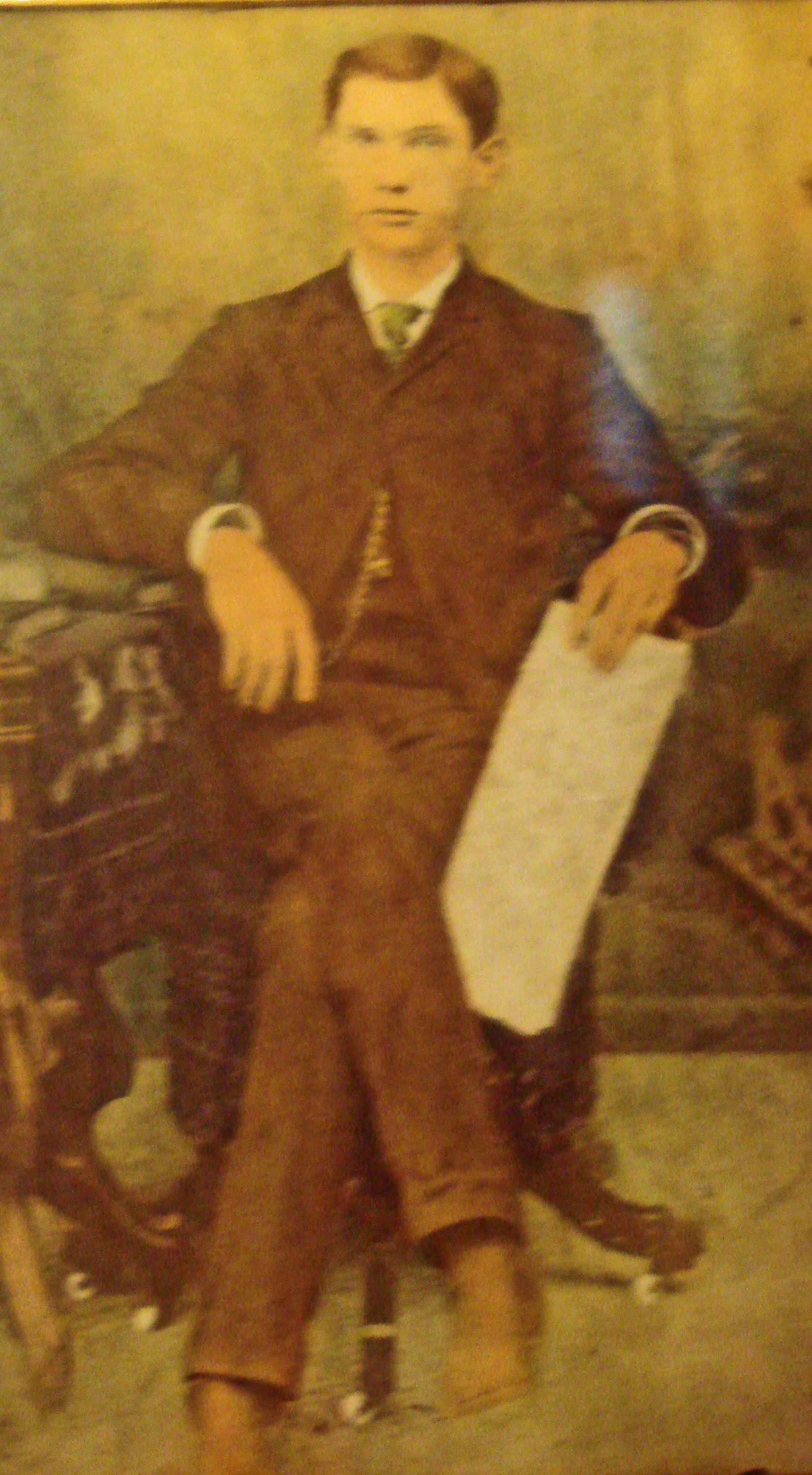
Excerpt from "Your 1948 Houston Buffs, Dixie Champions: Brief Biographies By Morris Frank and Adie Marks (1948).

Excerpt from “Your 1948 Houston Buffs, Dixie Champions: Brief Biographies By Morris Frank and Adie Marks (1948).

Gerry Burmeister (BR/TR) (6’2″, 210 lbs,) was almost everything we always used to think a catcher should be. He was a good career hitter for average, as his .275 BA over 13 seasons (1937-44, 1946-50) showed, but his 66 HR over the long all-minor league haul also revealed his lack of power. He was slow afoot, but his strong throwing arm and mature leadership on defense guided both the Buff pitchers and field defense over the course of 5 seasons (1941, 1946-49) in the Bayou City. Burmeister played one more season after he left Houston and moved up to AAA Syracuse in the Cincinnati farm system after being dealt away by the Cardinals, and that was it. At age 32,  he retired and went back to his now permanent married life home in Houston as just one more pretty fair ballplayer of the reserve clause era. In spite of what it says in the Frank/Marks 1948 sketch above,  Gerry never got that proverbial cup of java in a big league game for so much as even a modest Moonlight Graham or Buddy Hancken one-inning in the field with no trips to the plate major league appearance. It simply didn’t happen.

Burmeister’s signature career stop was with the Houston Buffs, and Gerry’s ‘s best season as a Buff was 1948, when he hit .267 with 8 HR. Gerry did get into 93 games for the 1947 Dixie Series Champion Buffs, but he batted only .210 with a single homer that big team year.

Gerry Burmeister died about 20-25 years ago, but I am unable to confirm his specific date of death at this writing. He’s not showing up in the vital statistics records on-line for Harris County, Texas and I have no data of him passing away elsewhere. If any of you Ancestry.Com whiz kids know how to get it, please post the DOD as a comment on this article. For whatever help it may be, Gerald William Burmeister was born on August 11, 1917 in Harmony, Minnesota and I’m fairly sure he died in the Greater Houston area.

Baseball Reference.Com also mistakenly lists Burmeister as still alive at age 95:

http://www.baseball-reference.com/minors/player.cgi?id=burmei001ger

Happy 57th, STHS Class of 1956!

May 25, 2013
Yesterday, When We Were Young.

Yesterday, When We Were Young.

Dear Fellow Classmates of St. Thomas High School, 1956,

Unless I missed the date by a day or two, it was 57 years ago today, on May 25, 1956, that all of us, and more than a few now of our departed brothers, all graduated from dear old St. Thomas High School to live our lives and grow and love and test our dreams and survive heartbreak and come out the other side stronger for having come through each learning crisis long enough to have harvested all its lessons.

Time bends strangely into irony, with events seeming, more and more, long ago and only yesterday, in the same flash point of recollection.

Fifty-Seven Years! Where has the time gone, friends?

So long ago ~ so near at hand,

It’s not for us ~ to understand,

The dreams that lived ~ the loves that clung,

To us, last night – when we were young.

Happy Memorial Day, Fellow Eagles!

Hope to see all of you again soon!

Love and Peace to all of you now ~ and to all others who understand the harvest of this experience over time,

As Always ~ Regards ~ Bill McCurdy

Buff Biographies: Before Loel Passe

May 25, 2013
Excerpt from "Your 1948 Houston Buffs, Dixie Champions: Brief Biographies By Morris Frank and Adie Marks (1948).

Excerpt from “Your 1948 Houston Buffs, Dixie Champions: Brief Biographies By Morris Frank and Adie Marks (1948).

Lee Hedrick may have received the most publicity of any man who ever served as a play-by-play radio man for the old minor league Houston Buffalos. And he got it when Morris Frank and Adie Marks included him in their 1948 “Brief Buff Biographies” autograph book.

Too bad we don’t know more about early 20th century electronic media coverage of baseball than we do.

There remains a need for further research on the radio station involvement and play-by-play announcing history of Houston Buffs Baseball from 1925 forward. KPRC-AM went on the air in Houston on May 9, 1925 as the oldest surviving commercial radio station in Houston. Another short-lived Houston station, WCAK, existed as early as 1923. The probability that baseball first reached Houston homes via the airways of either WCAK or KPRC hovers at 100%, and even prior to the Buffs move into the new Buff Stadium three years later.

We do know that Bruce Layer of KPRC handled the play-by-play on the first radio game from Buff Stadium on Opening Day of the very first season in the new venue, April 11, 1928, however, further work is needed on the name(s) of those who took over from there. The same Houston Post-Dispatch article that told us of Layer’s splash on that special day also made it implicitly clear that he was simply doing Opening Day 1928 that one time for the sake of going into the books as the first radio game announcer from Buff Stadium. As sports director of host station KPRC, it was Bruce Layer’s prerogative, and he took it as a record that he wanted for himself. The names of those who took over from there were not listed.

Things stay fuzzy from 1928 through 1942 as to which stations and what announcers handled the radio for Buffs games. When the Texas League resumed in 1946, following the three-year shutdown for World War II, some station and announcer must have handled the games, but the same “which” and “what” queries still apply to that first season of the post-war era.

We do know that Lee Hedrick of KATL-AM did the play-by-play for the 1947 Dixie Series champion Buffs and that he continued to broadcast Buff games, at least, through 1950, the first season for Loel Passe at KTHT-AM. I’m not positive that 1950 was the only year for more than one radio station broadcast, but that’s how I remember it. Further work in that area is also needed.

Loel Passe was the lone word in Houston radio game broadcasting after 1950, or when Lee Hedrick actually departed, but Gene Elston did reach town in time to work with Loel in 1961, the last season of minor league baseball in Houston.

Television broadcasts began over KLEE-TV in 1949 with Guy Savage as the first announcer. When the same station became KPRC-TV in 1950, Dick Gottlieb worked himself in as the TV play-by-play man, staying long enough to be the man on duty in 1951 when a mentally disturbed drinking fan shot himself to death on TV during a Buffs game.

Other names come to mind as TV voices from the 1950s Buff games, but in no particular order  – or in complete form. These include: Bruce Layer (again), former big leaguer Gus Mancuso, and KPRC radio guys like Lee Gordon. There were others.

The bottom line? Far more research is needed.

The Beeville Bee

May 24, 2013
The Beeville Bee, Beeville, Texas, Founded in 1886 by W.O. McCurdy, Age 20.

The Beeville Bee, Beeville, Texas, Founded in 1886 by W.O. McCurdy, Age 20.

W.O. McCurdy Publisher & Editor The Beeville, Bee Beeville, Texas

W.O. McCurdy
Publisher & Editor
The Beeville, Bee
Beeville, Texas

I never met my grandfather. He died of tuberculosis at age 47 in a San Antonio hospital in 1913, about 24 and one-half years prior to my birth in 1937. Santa Rosa Hospital was the same place where Hall of Fame pitcher Rube Waddell would also die, just about a year later at age 37.

My grandfather’s name was William Oscar McCurdy. My father and I were both named for him. He came to Texas from Mississippi in 1886 at the age of 20 and, with a lot of street smarts, hustle, and 19th century “buzz energy”, he single-handedly started The Beeville Bee, a newspaper that still exists today as the consolidated Beeville Bee-Picayune.

What a challenge that must have been. Starting out with a simple George Washington hand press in a reasonably rented loft above a barn, grandfather started cranking out a twice weekly paper while serving also as the Bee’s reporter, writer, editor, printer, publisher, subscription salesman, and circulation director.

He brought with him a classic home education by an itinerant “professor” who lived with the family back home for several years as he home-schooled the McCurdy children in exchange for room and board. He was a classicist, teaching math, science, and literary classics on top of the basic three “R’s” from about age six forward. So, after nine years of same, grandfather graduated himself and moved to Texas in search of his own purpose in the world. After four years of apprenticeship in Victoria, he landed in Beeville and started scraping for his place in the sun as a gentleman of the press.

What a challenge that must have been. Prior to the coming of the telegraph to Beeville in about 1887, the Bee had to reply upon the stories that grandfather could either cover or editorialize about on his own, the “write-ups” of local “doings” that people mailed in, and what the industry back then called patent news stories that the paper received by mail of national events that came in blocks of type that were already in print form.

Even in his early 20’s, grandfather was on top of the fact that “timeliness” was important to anything that went to print, important even in the slow backwater currents of a place like Beeville. In the spring of 1887, some readers in Port Lavaca sent Editor McCurdy a “write-up” of their “Christmas doings”, even though it would mean going to print now only days prior to Easter. Grandfather rejected the story, using part of the freed space to explain his reasons in the following way: “Our local contributors to the Bee need to keep in mind this simple fact: The hoary hand of time has quite a different effect upon local news than it does on homemade wildcat whisky or wine. It doesn’t get better with age.”

When Beeville finally got the telegraph on the heels of the S.A.A.P. railroad that now made a local stop on its way in town, media man McCurdy was in seventh heaven. “Now Beeville is in contact with the outside world,” wrote Editor McCurdy.

Sometimes Editor McCurdy got in a little Dutch trouble with his local readers. When the State of Texas was trying to decide where to build another large state insane asylum, grandfather editorialized this appeal in behalf of Beeville: “If the State of Texas is looking for a geographic locale that will save taxpayers a lot of money on the business of moving lunatics from their homes to the nearest nut house, Beeville would be the perfect site for the new state insane asylum.”

In trying to attract more of the industrious immigrants from Germany that came to Texas in the late 1880’s, Editor McCurdy wrote a long piece which extolled the hard-working, organized nature of German character that made them attractive to the City of Beeville as welcome new neighbors. Then he concluded with … “just because the Germans are also known to sometimes get drunk, miss church, and spend the day playing ball on Sundays, it is not our place to judge them harshly.”

On May 3, 1889, Grandfather McCurdy penned an editorial for the Beeville Bee that probably best summarizes his ideas on what the public expected of their newspaper people back in his day:

“The Mason (TX) News wants an editor who can read, write, and argue politics, and, at the same time, be religious, funny, scientific, and historic as well; write to please everybody; know everything without being told; always have something good to say about everybody else; live on wind; and make more money than enemies. For such a man, a good opening will be made in the graveyard.”

Go back to sleep, Grandfather. You apparently did your part – and did it very well. I could never talk with grandmother about you as a kid and young man without walking away wishing that we could have enjoyed, at least, one conscious day with each other. I had to age a little more to wake up  to the fact that I had been wasting my time and energy on that wistful lamentation. You’ve been with me every day of my life.

Does 2017 Super Bowl Force Dome Action?

May 23, 2013
Once Upon a Time, she was was known to one and all as the Eighth Wonder of the World.

Once Upon a Time, she was known to one and all as the Eighth Wonder of the World.

OK. let’s see here. Houston just got awarded the 2017 Super Bowl – and the decision comes in the middle of renewed hot air talk about various futures for that all but abandoned structure to the 1000 feet-immediate east of Reliant Stadium, the home again host of the projected 51st NFL championship game. That other structure, of course, is today a mere ghost of what it once proudly represented itself to be as “The Astrodome: Eighth Wonder of the World.”

Wonder no more.

For developers, the Astrodome today is little more than an ugly spot on the landscape that needs to be torn down as room for a larger Reliant Complex parking lot. For preservationists, the Dome is a place of significant history to both the City of Houston and the world of architecture. They argue that the place needs to be converted to another purpose, but a myriad of their ideas all share a common foundation. They come to light without the massive funding that will be required to get their various plans off the ground. Hence, the earlier “hot air” reference.

Many long-time Houstonians grew up going to Astros and Oilers games at the Astrodome. They feel sad and sentimental about the decline of the old place, often expressing baleful wishes that something needs to be done to save the world’s first domed multi-purpose sports and major event center from the wrecking ball. Unfortunately, the most passionate preservationists seldom have the money needed to do anything personally about expensive problems like the Astrodome.

Two or three months ago, the word was out that Houston might have to tear the Astrodome down and turn it into that parking lot just to have a chance at getting the 2017 Super Bowl award. So, if that were true, what does it say that the Old Folks Dome still sits to the east, blocking the sunrise over Reliant every morning, even though Houston got the Super Bowl bid, anyway?

Was some kind of deal about the Dome reached that we don’t know about? Even if it was not, does the coming Super Bowl now put pressure upon Harris County to make a decision and actually find the money for either the restoration or demolition of the Astrodome by 2017?

What do you think? Will the 2017 Super Bowl force local action on the future of the Astrodome? Or will it just be sitting darkly there, pretty much as it appears in this photo, no business as usual, when the 2017 Super Bowl comes to town?

Please post your ideas here as comments on this story.

Buff Biographies: Jack Creel

May 22, 2013
Jack Creel's best wins season with the Houston came in 1949 when he was 16-10, 3.39 for a 7th place club.

Jack Creel’s best wins season with the Houston came in 1949 when he was 16-10, 3.39 for a 7th place club.

Pitcher Jack Creel enjoyed a 179-157, 3.37 ERA record over 15 seasons (1938-44, 1946-53) in the minor leagues. In his one season with the big league 1945 St. Louis Cardinals, Creel went 5-4 with a 4.14 ERA. Unfortunately, an arm injury stopped Creel in 1945 and he never returned to major league play.

Jack Creel’s story was a familiar one for pitchers during the 16 MLB club, reserve clause era of professional baseball. With so few openings at the top, pitchers often threw as hard or as well as they could, for as long as they could do so without complaint. “Minor” twinges in the arm were most often ignored in deference to the code of manliness, but also in fear of being passed over by some other pitcher who played the game without “complaining”.

Former Buffs outfielder, the late Jim Basso, used to put it this way for ball players in general from that day and time: “We were afraid to take time off for injuries. We were afraid of taking the time off and then coming back to find some other guy using our locker and wearing our jock strap. We just played until we couldn’t play.” For pitcher’s of Basso’s post-World War II period, his advice meant “pitch until your arm fell off and then they dragged a one-armed man from the mound and sent him back to the minors to get well doing the same things that got him hurt in the first place in the bigs.”

Sports medicine wasn’t all that great back in the day either. Pitchers relied a lot on liniments and corrective surgeries were often suspect acts of guesswork that often made things worse. After 1945, Jack Creel was 8-11, 4.19 for the AAA Columbus Redbirds before returning to Houston and posting a 14-10, 2.63 mark for the 1947 TL and Dixie Series Champion Houston Buffs. Creel had some kind of arm surgery during the 1947-48 winter and then followed that step with a 12-10, 3.52 record for the 1948 Buffs. By this time, he was 31 years old and well out of range for another shot in the prospect-rich Cardinals farm system.

Jack Creel pitched five seasons (1942, 1946-49, 1952) for the Houston Buffs, posting an overall record here of  61 wins and 47 defeats. When he was on, the native of Buda, Texas and cousin of big league hurler Tex Hughson was a hard-throwing strikeout artist who sat batters down with a wish that the game was already over.  And he was a good man, just limited in accomplishment by the knowledge, conditions, and expectations of his time in the game. He rode in the boat with everyone else, however, and with much company on the “disappointed outcome” side of things. It was simply the way things were.

Jack Creel died in Houston in 2002 at the age of 86.

John Royal’s Memo to Reid Ryan

May 21, 2013
The Infamous MMP Signs: John Royal of the Houston Press joins The Pecan Park Eagle in Also Saying, "Take 'Em Down!"

The Infamous MMP Signs: ~ John Royal of the Houston Press joins The Pecan Park Eagle in also saying, “Take ‘Em Down!” Put them somewhere they don’t destroy the field view.

John Royal of The Houston Press is a no-nonsense, cut to the chase kind of writer on issues facing Houstonians who has now turned his attentions to the doleful Houston Astros and their bright and shiny new president, Reid Ryan. Royal has come up with five things he believes strongly that the Astros should do immediately to start turning around their descent from public consciousness and caring – while there’s still time for effort to matter in the short-term.

Pick up the current edition of The Houston Press – or check out John Royal’s article at this link:

http://blogs.houstonpress.com/hairballs/2013/05/reid_ryan_fan_suggestions.php

The Pecan Park Eagle stands behind John Royal and the The Houston Press 100% on this one – especially on that number one suggestion for removing the uglification of those view-destroying, putrid gray signs hanging in left field.

Here are the titles for Royal’s Top Five things that President Ryan and the Astros should and could do now, but please read John’s article for the full expression of his viewpoint:

5) No More Dynamic Pricing

4) Get a Deal with CSN Houston Already

3) Celebrate Real Fans

2) Chop Food Prices

1) Get Rid of the Damn Sign(s)

Have a nice Tuesday, Everybody. And please keep your prayers, positive thoughts, and donations heading north to our friends and neighbors in Oklahoma. Ugly views at the ballpark pale measurably in comparison to the real life horror aftermath the tornado victims are facing this morning.

My apologies: Earlier today. I introduced this column with a photo of the late Larry Miggins and a man I mistakenly identified as John Harris, whom I have never met. The other man in the photo was John Lomax, formerly of the Houston Press, whom I have come to fully appreciate for his written works on our Houston Babies and his soulful coverage of the tragic death of our baseball brother, the wonderful Larry Joe Miggins. My apologies to all for a very human mistake – and thank you good friend Mike Vance for catching it on one bounce. Thanks to all of  you too for your understanding. Heck, if I were perfect, I’d be writing for the Houston Chronicle, right?

Vintage Game Played on Historic Ground

May 20, 2013
Houston Babies & Friends, Galveston, Texas, May 18, 2013. ~ On the grounds that once cavorted upon the 19th century pleasure & gaiety offerings of a place called Schmidt's Gardens.

Houston Babies & Friends, Galveston, Texas, May 18, 2013. ~ On the grounds where people once savored upon the 19th century pleasure & gaiety offerings of Schmidt’s Garden.

Thanks to SABR member and Babies photographer, Matt Rejmaniak, the Houston Babies and Katy Combine players are now apprised, after-the-fact, that their Saturday, May 18, 2013 vintage base ball game in Galveston played out on the historic ground of a late 19th century pleasure block of land on the beachfront of the Gulf.

"Bet nobody dressed like me back in the wild and wooly days!"  ~ Beauty Queen Lynn

“Bet nobody dressed like me back in the wild and wooly days!” ~ Beauty Queen Lynn

_____________________________________

Here’s how Matt Rejmaniak revealed the truth to the Pecan Park Eagle yesterday by e-mail:

“From a little research I’ve done, Saturday’s vintage ball game was played on the site of “Schmidt’s Garden”. Amazingly appropriate! It was the first time the Houston Babies ball club has played in Galveston since 1888!!!

“Schmidt’s Garden, located on five acres of ground between Avenue 0 and P and 20th and 21st Streets, was the rendezvous of pleasure seekers in Galveston a century ago. In the 1870s and 1880s parties, picnics and festivals were held within the confines of the garden, dotted with beautiful trees, flowers and shrubbery. The garden was developed and owned by F.W. Schmidt, pioneer settler in Texas…Schmidt’s Garden was one of the most popular places on Galveston Island for outdoor recreation between 1873 and 1887. Dances, athletic events, and beer-drinking contests also were held at the Garden, which boasted an octagon shaped dance hall, a saloon and a refreshment stand.”
— Matt Rejmaniak
_________________________________________
Writer John DeLapp of the Galveston County News also gave the 14-14 tie game great story and pictorial coverage in their Sunday, May 19th edition too. Grab a copy, if you can, or check it out over the Internet through their paid subscriber service.
If you missed our game story here at The Pecan Park Eagle yesterday, or if you haven’t seen the extra photos that were added to it late last night, try this link:
"Us Houston Babies just waited our times to bat on the bench. We didn't know nuthin' 'bout us playin' a game on ground that used to be a beer garden and dance hall!"

“Us Houston Babies just waited our times to bat on the bench. We didn’t know nuthin’ ’bout us playin’ a game on ground that used to be an outdoor saloon!”

Babies-Combine in 14-14 Galveston Tie

May 19, 2013
At Galvez Field, Bob Stevens (L) of the Babies eyes the short fences and predicts to manager Bob Dorrill: "This will be my fist 4-homer day!"

At Galvez Field, Bob Stevens (L) of the Babies eyes the short fences and predicts to manager Bob Dorrill: “This will be my first 4-homer day!”

But let's not get ahead of ourselves. The day started with the Beach Revue Bathing Beauty Contest!

But let’s not get ahead of ourselves. The day started with the Beach Revue Bathing Beauty Contest!

A Beach Revue Babe!

By the sea! By the sea! By the beautiful sea!

Yesterday, the Houston Babies tangled with their growing friendly arch rival, the Katy Combine, on new, but old and familiar grounds. As part of the Hotel Galvez Beach Central here-comes-summer weekend show, the Babies were only outshone by those other babes who showed up as contestants in the beach girl swim suit beauty contest. Even muscle beach Babies personnel like Bill Hale, Larry Hajduk,  and yours truly, Bill McCurdy, couldn’t make the difference this time.

The girls were just too flat-out gorgeous! – Well, the swim suit girls weren’t exactly flat-out, but, I’m just saying – as competition on that level, the Houston Babies weren’t even close to winning any attention-competition with the always alluring and uplifting presence of beautiful ladies.

(Can I say that much without getting into further trouble at home? My gosh, as a veteran of the Spanish-American War, a little slack here would be appreciated.)

As for the game, the Babies and Combine had to make do with a field so small that it brought new sweetness to the old baseball phrase for a park of easy homers. Galvez Field was the juiciest of juice boxes, so much so that Babies Manager Bob Dorrill and Combine Manager Dave Flores agreed prior to the game to an important ground rule: Every ball hit over, past, or through the close-in fence signs would be tagged as a ground rule single. As a result, almost all hits in the game, including those hit on top of the parking garage, were simply singles. A few swinging bunt singles, ground ball worm-burners to the outfield, and copiously repetitious fielding errors also allowed for all the other basemen.

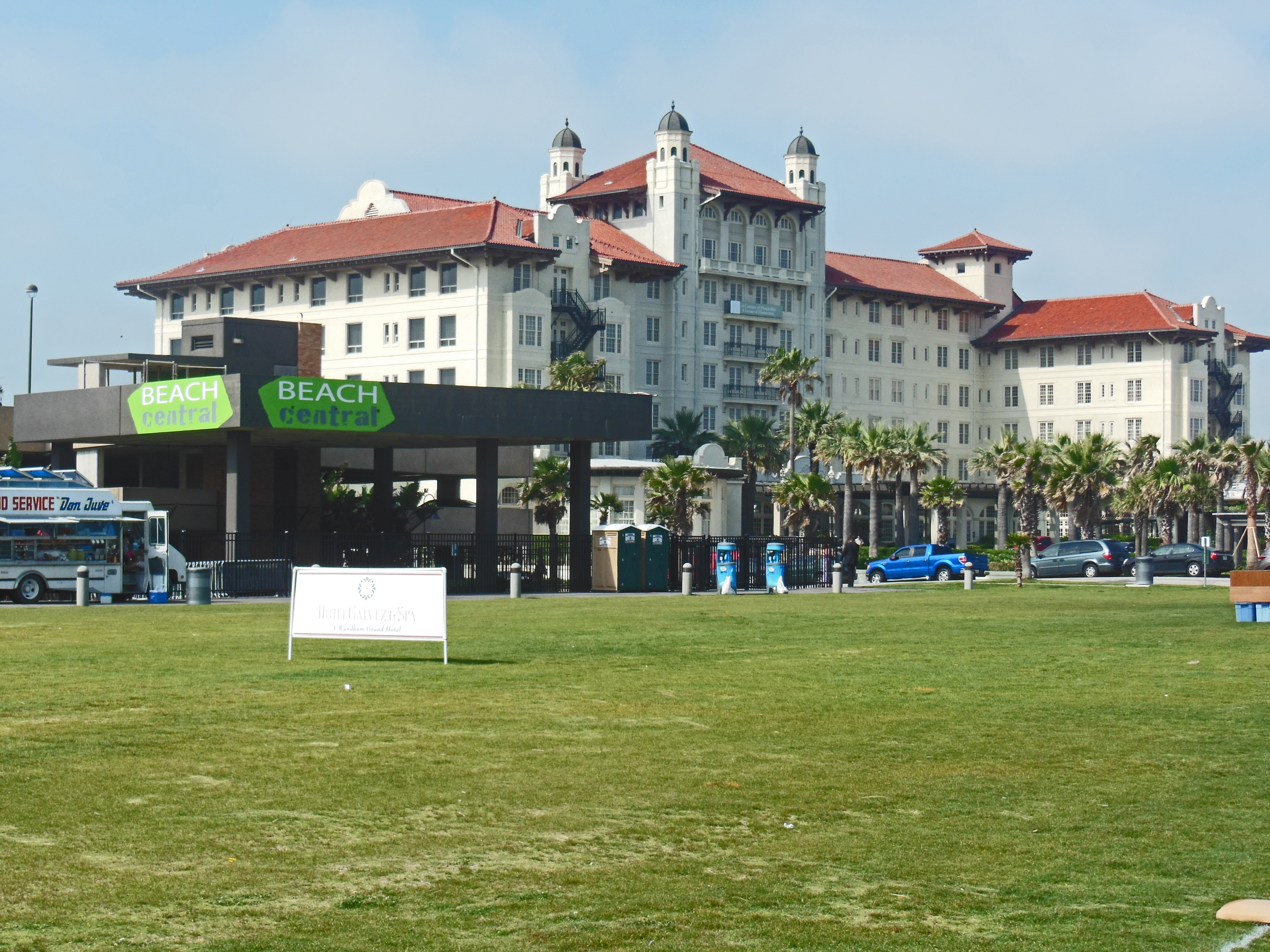
Galvez Field from home plate, looking in to the Hotel Galvez: That sign is one of several that marked the short fence line. It's what Bob Stevens saw when he called his shot that wasn't to be due to ground rules.

Galvez Field from home plate, looking in to the Hotel Galvez: That sign is one of several that marked the short fence line. It’s what Bob Stevens saw when he called his shot that wasn’t to be due to ground rules.

A pretty young lady named Lynn won the swim suit contest and also threw out the first pitch of the game. That's the old Pecan Park Eagle himself calling her perfect shot pitch.for our many listeners.

A pretty young lady named Lynn won the swim suit contest and also threw out the first pitch of the game. That’s the old Pecan Park Eagle himself calling her perfect shot pitch.for our many listeners.

The game was memorable from several standpoints: (1) It was the first the Houston Babies have played in Galveston since 1888; (2) It was a successful demonstration of vintage baseball on The Island, one that we all hope will inspire the resurrection of the Galveston Sand Crabs as the newest of our local area old rules teams; and (3) It gave us all a day at the beach among the beautiful people of Galveston. All participants in the game especially want to thank Adrienne Culpepper and Will Wright of the Beach Central program for the invitation – and also thanks to the Hotel Galvez for their wonderful hospitality.

Beauty Queen Lynn

Beauty Queen Lynn

Murdoch's was the destiny for any supernatural foul balls that went straight back from the batter's box. Fortunately, there were none.Murdoch’s to our SW was the destiny for any supernaturally magiccal foul balls that went straight back from the batter’s box. Fortunately, there were none.

As for the game, it was a barn-burner. Katy jumped out to quick big lead – and they even held a 14-6 edge through the 5th inning of our 7-inning game. With Larry Hajduk replacing starter Bob Blair in the bottom of the 5th, the Babies tallied 5 runs in the top of the 6th to narrow their deficit to 11-14. Buffalo Hajduk then helped his own cause with a sterling bit of defensive play in the bottom of the 6th to keep the score at 14-11, Katy, with one inning to go. The Babies then scored another 3 in their last time up to tie things at 14-14. – Hajduk the Elder then shut down Katy in the bottom of the 7th as regulation play ended and darkness drew near. The two clubs mutually agreed to finish their demo game right there with a well-deserved 14-14 tie as the final score.

To our SE was the target area for foul balls down the right field line. With the kind of lob pitching our batters see, fouls to the right side also were a non-factor.

To our SE was the target area for foul balls down the right field line. With the kind of lob pitching our all BR hittters see, fouls to the right side also were a non-factor.

Larry “Buffalo” Hajduk was named Player of the Game for his late inning relief pitching, his excellent fielding, and his better than average hitting on the day. Way to go, Buffalo!

Babies players batted in this order on the day: Phil Holland, Kyle Burns, Alex Hajduk, Larry Hajduk, Bill Hale, Bob Blair, Robby Martin, Robby Pina, Bob Stevens, and Jo Hale.

Combine players (to the extent that I have them identified) batted in this order: Brandon “Money”  Flores, Jimmy “Hay-hauler” Turner, Dave “Triple Play” Flores, Fernando the Panamanian Slugger, Vince “The Viper” Columbo, Jeff “Slim” Roberts, George “Cypress” Tilton, Jess the Roller-by Girl, Chris “Omega/Red” Flores, and Malcolm (Who?).
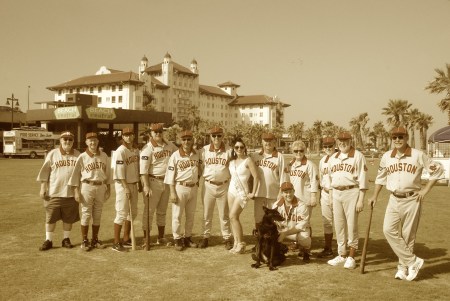
The Houston Babies celebrate a golden day with one of the Beach Revue girls joining them as very much in the picture.

The Houston Babies celebrate a golden day with one of the Beach Revue girls joining them as very much in the picture. That’s Kyle Burns up front with his dog, “Flicka”, who served as our Babies Mascot of the Day.

It was a great fun day. The beauty contest winner, a gorgeous blonde, threw out the first pitch – and earlier, she and another contestant, a beautiful brunette, took numerous photos with each team.

"May 18, 2013? Ah yes! I remember it well!" ~ Babies Mgr., Bob Dorrill.

“May 18, 2013? Ah yes! I remember it well!”
~ Babies Mgr., Bob Dorrill.

The next time you have a chance to watch a vintage baseball game, check it out. As Buddy Holly of the Crickets used to say, “You don’t know what you been a missin’, Oh Boy!”

—————————————————–

Footnote: Thanks to SABR member and long time Babies crank Mark Rejmaniak for the bathing beauty photos. Mark, your camera eye has made this column what it needed to be and totally made my day. The Pecan Park Eagle thanks you for the fine work and lasting contribution. – Bill McCurdy

Browns at Heart

May 18, 2013

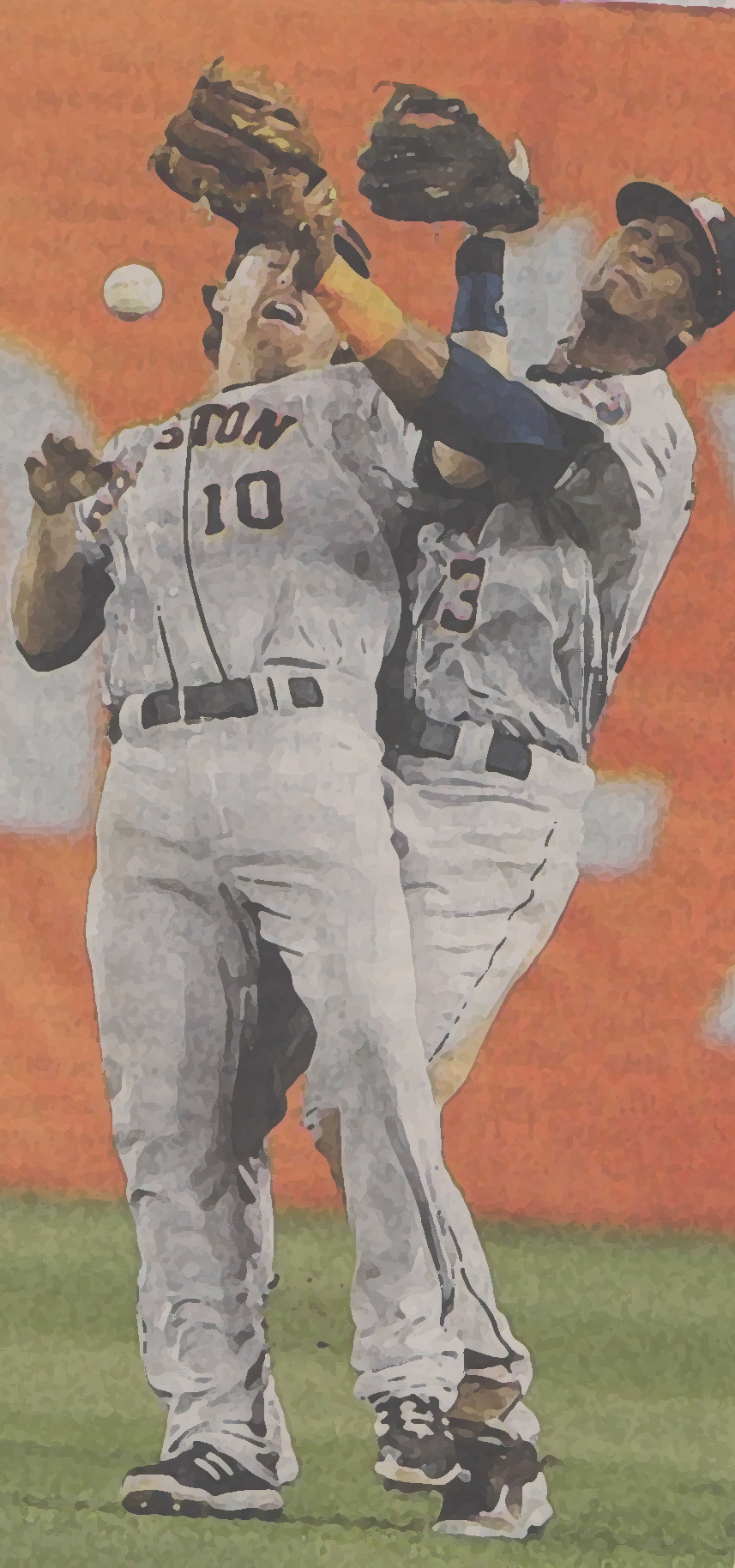
Maybe it was the orange signage in the background at PNC Park that framed their comical losing play. Maybe it was the growing possibility that the Houston Astros may soon go places with season losses that even defied the creative losing capacities of the old St. Louis Browns. Maybe it’s the new orange-tinged Astros uniform scheme that reminds of the Browns. Maybe it’s the fact that both the Browns and the Astros have shown a preference for minor league talent rosters. Maybe it’s the Astros fan fear that the Astros will eventually sell off any player who gets too good to play cheap. Maybe it’s just the way the Astros keep coming up with new ways to lose games. Who knows?

Whatever it is – it’s ringing the connection bell between the Houston Astros and the old St. Louis Browns pretty good.

Are the Astros sort of mutating into something like the “Browns at Heart”?

What follows the art pictorial of last night’s dumb and dumber 5-4 loss to Pittsburgh is a parody of that ancient Frank Sinatra song, “Young at Heart”. The lyrics below will fit that tune as they also pursue the possibility that the Astros may be in motion in 2013 to now becoming the “Browns at Heart”.

With 2 outs in the 9th, Elmore & Paredes of the Astros team up on a dropped pop fly that allows the Pirates to score the winning run from 3rd. Are they "Browns at Heart"?

With 2 outs in the 9th, Elmore & Paredes of the Astros team up on a dropped pop fly that allows the Pirates to score the winning run from 3rd. Are they “Browns at Heart”?

Browns at Heart (a parody set in motion to the tune of that old song, “Young at Heart”

Fairy tales – don’t come true – it won’t  happen for you,
If they’re Browns at Heart.
For it’s hard – you will find – to see fertile of mind,
If they’re – Browns at Heart.

Astro minds – hit extremes – with impossible schemes,
Try to laugh – as your dreams – fall apart at the seams,
And life gets more frustrating – with each passing day,
But you can’t watch ’em on the TV – anyway.

Don’t you know – they’re not worth – every treasure on earth,
If they’re Browns at Heart.
For as old – as you are – it’s just bending your bar,
To see – Browns at Heart.

And if you – should survive – past their loss 105,
Look at all – they’ll deprive – out of being alive!
And here is the worst part – you had a head start,
If you paid your hard-earned bucks on – Browns at Heart.