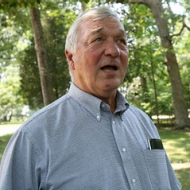
Sumner Hunnewell: Our Vintage Guy in St. Louis

June 5, 2013
Sumner Hunnewell St. Louis Perfectos

Sumner “Moose” Hunnewell
St. Louis Perfectos

Every now and then I just like to write about some of the people who make life in our little close-at-hand and extended family baseball culture so much fun. These are the people who make life on these diamonds of the mind, body, and soul so much fun. I know a bunch of folks who fit this description, but the person I have in mind today is a friend in St. Louis whom I’ve known for several years now through our shared membership in the St. Louis Browns Historical Society and some work he did for Jimmy Wynn and me when we were writing the Astro Icon’s autobiography, “Toy Cannon”.

Sumner Hunnewell was our index creator – and what a great job he did. He did such a great job, in fact, that he’s now back at work with our SABR editorial team as the index creator for our 2014 planned publication, “Houston Baseball, The Early Years: 1861-1961”.

A native of Portland, Maine, Sumner and his family moved to Arnold, Missouri in the Greater St. Louis Area several years ago and quickly settled into the informed St. Louis Cardinal mode of following baseball as though they were either the club’s general manager or the “effin'” (stands for efficacious) Commissioner of Baseball. “Cardinal mode” also means that those who have it are able to think, hear, watch, feel, taste, and talk baseball without coming off as someone who is a blow-hard know-it-all. These people are not arrogant. They are just solid at the seams – and they have no need to prove themselves to anyone.

We have people like Sumner in Houston too. St. Louis just seems to have more. Maybe that’s because the die-hard Cardinal baseball fans simply don’t waste their off-season time on the NFL Rams or the NBA Anybodies. They are twelve months a year baseball fans.

Sumner Hunnewell also introduced me to my first game of vintage base ball during the 2007 National SABR Convention in St. Louis. While there, I trekked on over one block to the banks of the Mississippi River where Sumner’s St. Louis Perfectos were playing an 1860’s rules game against their top competitors, the St. Louis Unions.

And why did the Perfectos and Unions agree to meet and play their game directly under the national Gateway monument that towered over them at this site? It’s like Sumner explained: “It’s because the Perfectos and Unions are arch-rivals!”

There was a lone vintage team in Houston in 2007 called the Montgomery County Saw Dogs, but I had never seen them play – nor had I seen an 1860’s rules game played by anyone. They actually played three games by three different sets of 18th century baseball rules that day, but the 1860s package was the one that struck a chord of joy with me. The following year, 2008, some of us from our Houston SABR chapter and a few of our independent friends got together and formed the Houston Babies as the reincarnation of our city’s first declared professional team in 1888. With a nod to Sumner and his vintage company for the momentum they added to our fire, I’m proud to say that our 21st century versions of the Houston Babies are now playing into their sixth season and that they have now outlasted the life span of our 19th century brothers six times over.

May the future of vintage base ball, the heart of professional baseball, and the spiritual ghosts of the joyful old sandlot be with us forever – and they will be too – if we keep good people like Sumner Hunnewell in our lives.

Thanks for the baseball card, Sumner. I’ll put it in the same shoebox I use to protect my rare 1909 Honus Wagner card and hide it deeper in the closet. j/k

Just in case everyone who reads these words doesn’t understand “j/k”. It means: “I don’t really have a Honus Wagner card. Not even close. But I do have a loaded Smith & Wesson.

Hope your Wednesday hump is a short one, friends. And don’t let work get n the way of joy.

Bill Gilbert: Astros Finish Strong in May

June 4, 2013
Houston Astros 2013 ~ Even though it's not a jazz number, the young Houston Astrocats have started this month with their rendition of "June is Bustin' Out All Over"!

Houston Astros 2013
Even though it’s not a jazz number, the young Houston Astrocats have started this month with their rendition of “June is Bustin’ Out All Over”!

Seasoned observer Bill Gilbert of the Rogers Hornsby Chapter of SABR, the Society for American Baseball Research, is our guest columnist at The Pecan Park Eagle today. Today’s thoughts are Gilbert’s second monthly analysis of the Houston Astros’ first season in the American League. Gilbert will be reporting here monthly on the Astros for the rest of the schedule, finishing the year with his take on the whole season. Enjoy “BG” ‘s more uplifting report on May and stay tuned for the June report sometime prior to the 4th of July.  

Astros Finish Strong in May

By Bill Gilbert

Bill Gilbert

Bill Gilbert

The Astros finished the month of May with 3 straight wins, all on the road and extended the streak to 5 by winning their first two games in June. However this wasn’t enough to offset their poor performance earlier in the month which included a 6 game losing streak.  Their record in May of 10-18 was a slight improvement over the April log of 8-19.

Pitching continues to be the biggest problem although there were some signs of improvement late in the month.  The club’s ERA in May was 5.06 compared to 5.42 in May, the highest in the National League in both months.  Bud Norris and Eric Bedard both pitched well in 4 of their 5 starts and Jordan Lyles pitched well in 5 of his 6 starts but only picked up 2 wins largely due to poor support from the bullpen which has been very inconsistent.  Lucas Harrell, the top starter in April had a poor month in May.

The offense was not as strong in May, averaging 3.89 runs per game vs. 4.11 in April.  However, there were some bright spots.  Jason Castro came into his own in May, hitting .292 with 6 home runs and a slugging average of .573. He was the AL player of the week one week in May.  J.D. Martinez batted .299 in May, and he, Matt Dominguez and backup catcher, Carlos Corporan, also had slugging averages of .500 or better.  Dominguez led the club with 8 home runs and 19 RBIs in May.  Jose Altuve led in stolen bases with 7.

After 2 months, the Astros are on pace to finish with a record of 53-109.  Their record is 4 games better than that of the Miami Marlins and it could be a close race to see which team compiles the best record and loses the opportunity to have the first pick in the draft of amateur players.  This year, the Astros have the first pick in the draft which will be held on Thursday, June 6 where the Astros are expected to select a college pitcher with the first pick.

The Astros four full-season minor league teams continue to play well. All four are well over .500 and contending for the top spot in their leagues.

Bill Gilbert

6/2/13

Buff Biographies: Don Bollweg

June 3, 2013
Excerpt from "Your 1948 Houston Buffs, Dixie Champions: Brief Biographies By Morris Frank and Adie Marks (1948).

Excerpt from “Your 1948 Houston Buffs, Dixie Champions: Brief Biographies By Morris Frank and Adie Marks (1948).

First baseman Don Bollweg (6’1″, 190 lb.) (BL/TL) would go on from his two years with the Houston Buffs (1948-49) to a five-season MLB career with the St. Louis Cardinals (1950-51), New York Yankees (1953), Philadelphia Athletics (1954), and the latter’s transplanted version as the Kansas City Athletics (1955).

In his ten-season minor league career (1942, 1946-52, 1955-56), Bollweg batted .275 with 215 doubles, 83 triples, and 165 home runs. As a 195-game major leaguer, Don batted .243 with 22 doubles, 7 triples, and 11 home runs. He also had two World Series times at bat for the 1953 Yankees, but failed to hit on either occasion.

Bollweg’s home town of Wheaton, Illinois was more famous known as the birthplace of the great Illinois and early NFL football running back star, Red Grange, the so-called “Galloping Ghost”. Wheaton was so big on football that their high school didn’t even offer baseball as a sports option. Bollweg had to settle for a spot on the softball team until he was old enough to tryout for the Cardinals as a regular hardball player. Don must have been pretty good in spite of his limited amateur experience. He signed as a free agent with St. Louis (NL) immediately prior to the 1942 season.

Born in Wheaton, Illinois on Lincoln’s birthday in 1921, Don Bollweg also passed away in his birthplace home town at the age of 75 on 5/26/96. Regrettably, Don missed the previous year’s Last Round Up in Houston of the surviving Buff players, but his memory was there as his name fell quickly from the lips of those who were counting heads that day of the known still living who were absent. As I recall, Bollweg was among those who claimed in declining their invitations that they weren’t up to the job of a cross-country trip to be here.

Like Johnny Hernandez before him and Jerry Witte and Bob Boyd who came after him, I will always remember Don Bollweg as our big hope for the long ball in 1948-49, even if he did only hit 23 homers during his two-season Buffs tenure. He was a first baseman – and bringing a big RBI bat to the plate was simply what we expected of our first sackers back in the day.

Come to think of it, we Houstonians were just like everyone else when it came down to our offensive expectations of first basemen. “Hit it out of here, Mr. Bow Legs! ~ Make it be gone!”


The Astrodome Today

June 2, 2013
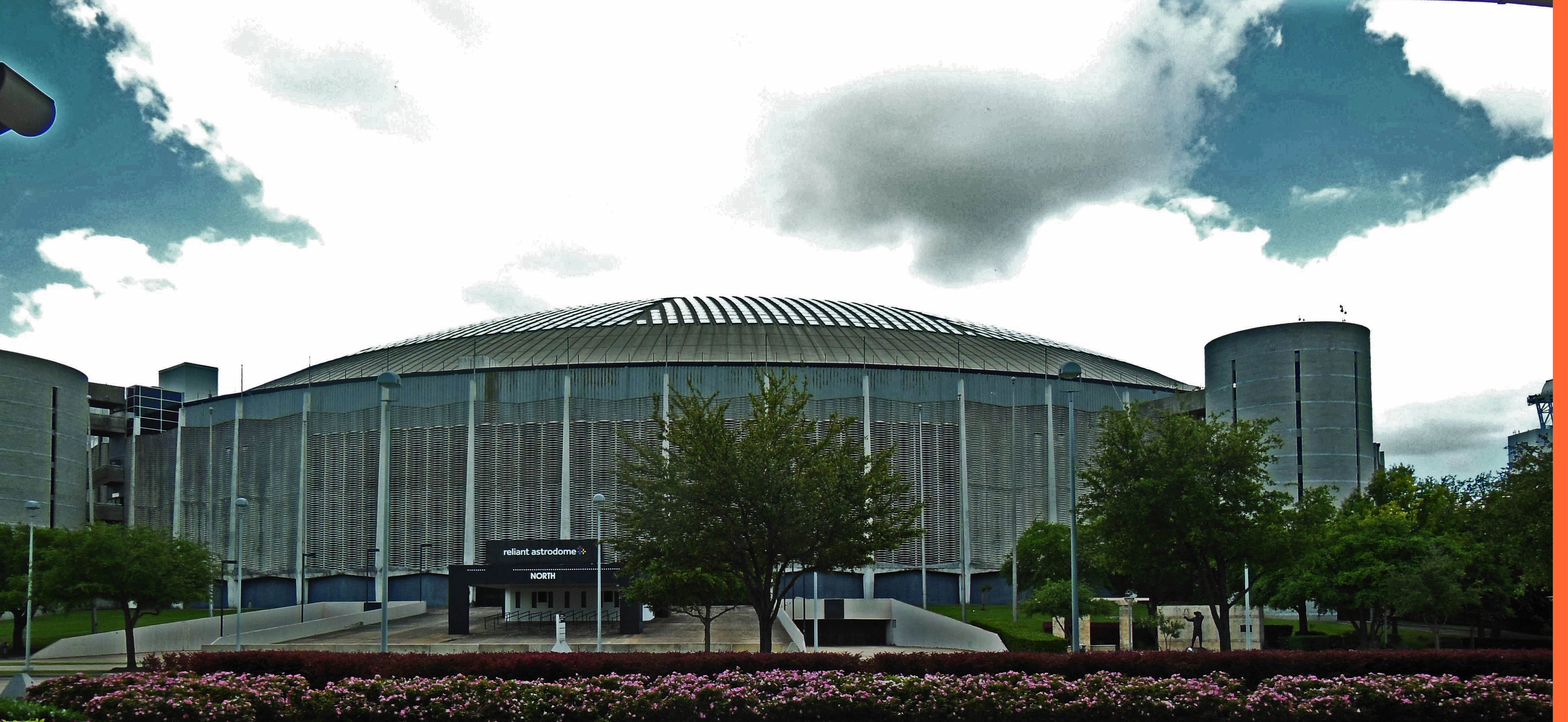
The Astrodome, 12:10 PM, Saturday, June 1, 2013.

The Astrodome, 12:10 PM, Saturday, June 1, 2013.

I meant that column headline literally, The above picture shows how the grand old Astrodome looked today, shortly after noon, this Saturday, the 1st of June, 2013, I was just checking into the TriStar Sports Memorabilia Collector’s Show at Reliant Center on Kirby in Houston and I couldn’t resist facing south and taking her picture.

“Smile, Old Girl!” I thought. “You don’t look half as bad today as some have claimed. Perhaps, the reports of your death have been highly exaggerated. Yeah, I know – and I see – there’s a little black cloud hanging over your head in the short-term, but you mostly always have been good at handling those and, besides, there appear to be plenty of glorious cotton candy clouds and big blue summer skies on the horizons to your south, but rolling north.”

The Astrodome, 12:14 PM, Saturday, June 1, 2013.

The Astrodome, 12:14 PM, Saturday, June 1, 2013.

The chuck wagon statuary on the north side of the Astrodome may be now inviting Houstonians to “come and get it” with a new intent in mind: “Citizens of Greater Houston, if you will only come forth in numbers and help me get a new direction of service going, I’m still strong enough to handle my place in history with dignity in ways that will make each of you happy and proud that you didn’t knock out both me and the flowers that still adorn our life space just so the fat cats could replace us with a parking lot.”

"Come get it on and do it right,, Harris County. The time for positive action on the Astrodome is here and now. History must be saved, - and not 'dozed."

“Come get it on and do it right, Harris County. The time for positive action on the Astrodome is here and now. History must be saved, – and not ‘dozed.”

Buff Biographies: Hal Epps

June 1, 2013
Excerpt from "Your 1948 Houston Buffs, Dixie Champions: Brief Biographies By Morris Frank and Adie Marks (1948).

Excerpt from “Your 1948 Houston Buffs, Dixie Champions: Brief Biographies By Morris Frank and Adie Marks (1948).

Hal Epps (BL/TL) batted .300 with 82 home runs over the course of a 15-season minor league career that included three tours over nine years with the Houston Buffs (1936-39, 1941-42, 1947-49) that somewhere in the mist earned him the much deserved title – The Mayor of Center Field.  The experience also converted Epps to the status of home boy Houstonian for most of his adult 90 years of life – in spite of his sweet background as a peachy native of Athens, Georgia (DOB: 3/26/1914). After his total baseball labor span of years (1934-52), Hal Epps worked as a steelworker in Houston until his retirement.

Epps was a big offensive and defensive star for the 1947 Dixie Series Champion Houston Buffs, teaming with left fielder Eddie Knoblauch and 2nd baseman Solly Hemus as one of the three peskiest table setting hitters in Houston Buffs history.

Hal had a brief spin with the St. Louis Cardinals in 1938 and 1940. He was drafted from the Cards by the St. Louis Browns in November 1942 and made it into the Browns roster for the 1943 and 1944 seasons and their only pennant year, but he was sold to the Philadelphia Athletics on June 11, 1944 and missed the Fall taste of the Browns’ only trip to a World Series. In December 1946, the Cardinals drafted Epps back from the A’s and he spent the rest of his career years back in the minors.

Hal Epps was a shy, modest man who did a lot of quiet, kind things for a lot of people over the years. He lived long enough to participate in the 1995 last reunion round-up of all the living Houston Buffs alumni and he even got to see the dawn of the 21st century before passing away at the age of 90 on August 25, 2004. He was buried in the Houston National Veterans Cemetery.

God Rest Your Soul Forever, Prince Hal. In some of our memories, you are still The Mayor of Center Field.

The Gates of Gumption

May 31, 2013
Inside the Gates of the Astrodome Today: Photo by Pecan Park Eagle Contributor Robert Copus in 2012,

Inside the Gates of the Astrodome:                                                                                           By Pecan Park Eagle Contributor Robert Copus in 2012.

Have you ever been to Gumption? It’s a very special place, a place where common sense and uncommon sense intertwine with a trait we most often today call “street smarts” and a condition we’ve always known as genius. And what is a true “genius”? In Gumption terms, it’s the elite group or singular source in any social community that both holds a vision for what is needed – and also the attention of those that he, she, or they need behind them for the sake of getting things done.

If you are old enough to ever have passed through the gates of the Astrodome  for an Astros, Oilers, Cougars, or Gamblers football game, the big 1968 UH-UCLA basketball game, an appearance by Elvis at the rodeo, an appearance by you as a Republican at that party’s 1992 National Convention, or just somebody who showed up at one of those Monster Truck Demolition Derbies they sometimes held there, then, realize it or not, you have been to Gumption.

Judge Roy Hofheinz was the genius behind the gumption-mix of the Astrodome. Common sense told him that Houston needed a venue that protected the people from our ferocious summer weather and that, without which, Houston would go wanting for major league baseball or football. The Judge also saw with uncommon sense that modern architecture and air conditioning technology could make such a functional domed stadium possible. He also had the political street smarts to know that he had to have the political and financial support of the Greater Houston power structure behind him to succeed.

He saw those things. And he did what he had to do to line up everyone that he needed for a successful operation of the larger-than-everyday-life plan for a facility that would only hatch as “The Harris County Domed Stadium” before it quickly found christening as “The Astrodome – Eighth Wonder of the World”.

Judge Roy Hofheinz was a true genius. He brought about the creation of an architectural landmark that is still, and always will be, the first of its kind – even if the abundant forces of people in our midst with no sniffing hint of gumption take over and mindlessly tear down his once proud work of art and science.

Genius is not to be confused with perfection. Grinders and extremely wealthy individuals may sometimes achieve a perfection of form by making sure they only do safe things on the way to success. Bob McNair, for example, is no genius. It took a genius to see the domed stadium importance in the late 1950s. It didn’t take a genius in the late 1990s to see that Houston wanted the NFL back. McNair saw it and he was rich and well organized enough to leverage his buying credit up to nearly one billion dollars for the sake of returning the NFL to Houston. More power to him.

As some are now proposing, however, McNair may be getting pretty good at grabbing expensive freebies from Harris County, like that dazzling new scoreboard, in exchange for the crack-cocaine-like lure of its importance to either attracting a Super Bowl – or helping the Texans reach a Super Bowl.

Could it be that McNair is now also wishing: “Gee, I sure wish you kind-hearted County People would tear down that ugly old barn standing out there to the east of my place. We could use the extra parking space.”

Bottom Line: I like what Bob McNair has done for Houston with the Texans, but I think the County needs to find the line on how many other freebie perks shall continue  going back to McNair and the Texans from the public coffers without a transparent decision-making process for deciding what they shall and shall not be. I also do not trust Mr. McNair to give a twit about the importance of preserving the Astrodome as a world class icon and artifact in the history of architecture.

Will Biggio Make It Next Time?

May 30, 2013
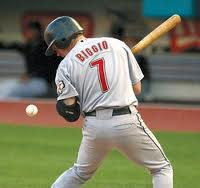
This also happened 284 other times during the 20-season Astros career of the great Craig Biggio.

This also happened 284 other times during the 20-season Astros career of the great Craig Biggio.

In 2013, 569 BBWAA writers held the credentials for voting in the annual selection of inductees into the Baseball Hall of Fame. For selection, an eligible party had to receive a minimum of 75% approval in the voting process for induction. For a voting population of 569, that translated to an eligible party getting a minimum of 427 votes of approval (75.3%).

For eligible parties who fell short of induction in the vote, Craig Biggio finished at the top of the heap with 388 votes (68.2%) – or 39 votes short of the 427 total votes he needed for election on his first eligible ballot. It also means that 181 votes (31.%) of the 569 total were withheld from Biggio in 2013 for one of four basic reasons: (1) the voter did not think that Biggio was deserving; (2) the voter does not think that anyone deserves a first ballot ticket to Cooperstown; (3) the voter views Biggio’s numbers as merely the product of longevity and not the fruits of greatness; or (4) the voter was not paying close attention and did not notice Biggio’s name on the ballot.

What about the 2014 ballot? Will Craig Biggio make it to the Hall of Fame then?

Here’s where “next year” always gets interesting for candidates like Biggio, assuming that he is like all previous retired players in the sense that he is now powerless to improve upon the same career numbers that the voters examined “this year”. – If this voting process were totally a logical matter, one would have to ask: If the career numbers for Biggio haven’t changed in the past year, why should the voting numbers change at all?

The answer’s obvious. – The voting culture in baseball is not all that logical or tied to any one standard of what represents greatness.

So, if Biggio loses votes rom the 388 writers who supported him in 2013, it says what? That those voters have had a change of heart, for whatever reason, on his deservedness for the HOF? That being said, at any rate, it is unlikely that Biggio will lose any of his 388 writer votes from this year, unless they are either dead or physically unable to vote by next year.

No, the big question next year is – how many of those 181 hold-back votes this year were firm negations of Biggio or simply a show of “no hands” from those same kind of writers that didn’t vote for Babe Ruth or Hank Aaron on their first ballots.

All Biggio has to do is hold his 388 “yea” votes from 2013 and add 39 more next time and he goes into the HOF in 2014. I think he will get them next time, if something in the meanwhile doesn’t blow through the world of baseball like the Spanish Flu did to the whole planet back in 1918 to depress the urge and desire for accolading anyone new.

I keep thinking of Biggio’s 3,060 hits – and his twenty seasons as an Astro – and of the fact he was both an All Star catcher and second baseman – and of Craig Biggio and Jeff Bagwell as the “Icons in Bronze” at Minute Maid Park – and of his 285 HBP’s – and of his work with the Sunshine Kids – and of the data reality that only one of the other comparable twenty men who have already made it to “The Hall” as second basemen even came close to amassing – his 668 career doubles total. The great Napoleon Lajoie finished with 657 doubles, eleven shy of the Biggio mark.

Galveston County News Coverage of Vintage Ball

May 29, 2013
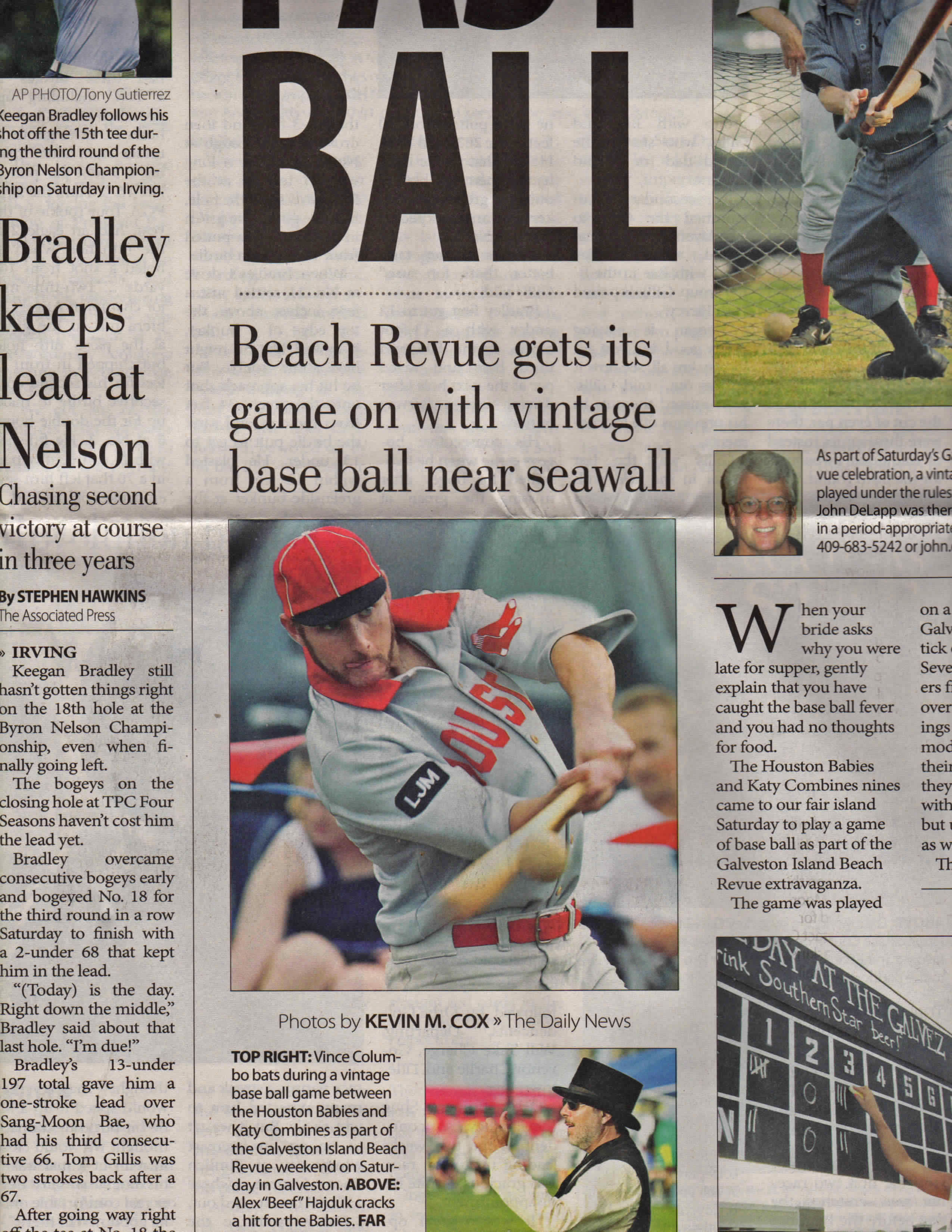
The Daily News gave front page note to the first page Sports Section story on the vintage game in the upper right hand corner. Robbie Martin of the red-vested Babies and Vince Columbo of the ghostly gray Combine are the poster boys for a new story that gets precedence over results from The Preakness on this same date.

The Daily News gave front page note to the first page Sports Section story on the vintage game in the upper right hand corner. Robbie Martin of the red-vested Babies and Vince Columbo of the ghostly gray Combine are the poster boys for a new story that gets precedence over results from The Preakness on this same date. Callie Mulkey, the 5th place contestant in the bathing suit competition, still got front page coverage over all others on the front page the next day. – How does that work?

On Sunday, May 19. 2013, the Galveston County Daily News gave the Houston Babies and the Katy Combine some monster coverage for their appearance at the Island City Beach Revue and Bathing Beauty Competition the previous day – and they did it for the two clubs’ journey to the Gulf for some good old-fashioned vintage base ball on the seawall drive section that goes right past the playing grounds at the iconic Hotel Galvez.

The Babies and the Combine played out a titanic struggle by the sea, one that only ended after the Houston Babies rallied from an 11-4 deficit at one point to make up a final three-run differential in their last time up to tie the Katy Combine at 14-14 and call it a good place to stop in the presence of fading sunlight.

Alex Hajduk tees off for the Babies. That's Tom Flores of the Combine in the lower section. Tom gave it up for all by serving as the game's "Blind Tom" (umpire).

Alex Hajduk tees off for the Babies. That’s Tom Flores of the Combine in the lower section. Tom gave it up for all by serving as the game’s “Blind Tom” (umpire).

Writer John DeLapp and photographer Kevin M. Cox are responsible for the fine coverage in both words and images, doing a good job of capturing the excitement of the crowd and challenges of the game played on a field that was really too small for the game. As a result, colossal drives to the roof of the two-story parking garage next door were contained by agreement as ground rule singles. Power hitting Babies guy Alex Hajduk jacked three Ruthian swats to the parking lot roof. In fact, that’s one of them shown leaving his bat in the photo featured above on Page One of the Sports Section.

PAST BALL is PLAY BALL. The Astros got a higher placement but our vintage game got the larger headline. That's Vince "The Viper" Columbo of the Combine connecting as Babies catcher Robby Martin looks on with great interest and anticipation.

PAST BALL is PLAY BALL. The Astros got a higher placement but our vintage game got the larger headline. That’s Vince “The Viper” Columbo of the Combine connecting as Babies catcher Robby Martin looks on with great interest and anticipation.

“PAST BALL” IS “PLAY BALL!” Those two words say it all as the best summary on vintage base ball. It is a game that is played in happiness, a game that is both competitive and yet, still joyful – the closest experience to all day sandlot baseball that most of us once knew as kids, a contest taken seriously without grown up rules and interference. We all always understood these two facts: “Three strikes and you’re out. Three outs and the other team bats.” Grasping that much, you get to play a game you love with people you value as brothers and sisters of the baseball soul. – Who could want or ask for anything more, except for a cool breeze every now and then and plenty of water, as long as it didn’t fall from the sky on game day?

That Saturday in Galveston was wonderful. I’ve got a feeling that the next time we travel to the Island, there’s a good chance that we shall run into a new/old club – via the resurrection of the Galveston Sand Crabs.

All of us who do anything to bring vintage base ball to life in the Greater Houston Area want to thank John DeLapp and Kevin M. Cox, the Galveston County News, and the planners of the Beach Revue Weekend for bringing vintage base ball to life on the Island that special weekend. Let’s do it again sometime – and let’s get those Sand Crabs in motion again while the iron of passionate interest is hot!

Have a nice hump day, everybody!

Houston: 1st Class? Or No Class?

May 28, 2013
Astrowomb Late 1964 Early 1965

Astrowomb
Late 1964
Early 1965

On Memorial Day, I concluded my column with this unrelated note on a new article about the Astrodome:

… and while we’re at it, let’s also “Remember the Astrodome” beyond today and into all the tomorrows that shall ever be. A writer named Jere Longman has written one of the best articles we’ve ever seen this morning on why the grand old girl of Houston’s place in architectural history should be spared the ignominy of the wrecking ball. We also want to thank friends Tal Smith and Darrell Pittman for alerting The Pecan Park Eagle to the story. The Astrodome truly is – Houston’s Eiffel Tower.

Check it out:

http://www.nytimes.com/2013/05/27/sports/houstons-astrodome-may-be-dirty-and-dated-but-it-is-irreplaceable.html?_r=1&

Longman’s essay makes the case for saving the Astrodome better than any other I’ve seen to date. The author makes the case for how important the venue was to his family in childhood when they made those special trips from Louisiana to Houston for the experience of watching air-conditioned baseball indoors, but he also builds on the special place that the Astrodome holds in architectural history.

Quoting James Glassman, a Houston preservationist, Longman calls the Astrodome “the city’s Eiffel Tower” and the “physical manifestation of Houston’s soul.”  He adds that New York could afford to tear down old Yankee Stadium, according to Glassman, because the Big Apple had hundreds of other signature landmarks. Not Houston. No matter how shabby it now appears in the darkness of abandonment from useful purpose, the Astrodome bears a patina of importance to the history of architecture that the shiny presence of its Reliant Stadium nearby neighbor shall never carry, even if it gets another three Super Bowl awards over the next forty years.

The value of the Astrodome is in what it represents in Houston to the history and forever unfolding future of architecture in this whole world. You don’t take the wrecking ball to the Eiffel Tower equivalent on our hallowed Texas coastal prairie.

The Astrodome must be redeveloped in service to some new purpose. There is no other viable option. Anything less, demolition or the degrading continuation of subsidized abandonment, is unacceptable.

How we answer this question now is then a referendum on Houston as either a world class or no class city. There are no intermediate categories. Restore this grand old girl to some useful new purpose and we are world-class. Tear it down, or continue to subsidize decay, and we are rightfully deserving of the “no class” designation.

Houston did not rise in the world by being a “sit-on-its-rump” do nothing city when it came to economic development through the port, oil, medical, and aerospace industries. And thousands became monetarily rich in the process. Now its time for those who have “done well” to rise above their “make-more-parking-spaces-of-it” mentalities and apply that vision and wealth to the matter of saving the Astrodome for its historical and ongoing value to the world.

If you are going to spend your time, effort, and money for anything worthwhile, folks, please do something this important for history. Save the Astrodome now – and spare the City of Houston the no-can-do/ no class assignation we shall both earn and deserve should we fail in this matter.

Now please go back to the link to Jere Longman’s article from the New York Times and read it again.

Please. Before it really is too late.

Uncle Carroll! Thinking of You and Tyler too!

May 27, 2013
It's Memorial Day, the official day that should really be everyday - the day we recall in honor all those who have given their lives in service to the defense of our country.

It’s Memorial Day, the official day that should really be everyday – the day we recall in honor, all those who have given their lives in service to the defense of our country.

Happy Memorial Day, Everybody!

I can’t express my thoughts any better than I did a few years ago. Here’s a link to the memoir I wrote about my late uncle from World War II, Major Carroll Houston Teas, United State Army Air Corps, Pacific Theater.

https://thepecanparkeagle.wordpress.com/2010/05/30/remembering-uncle-carroll/

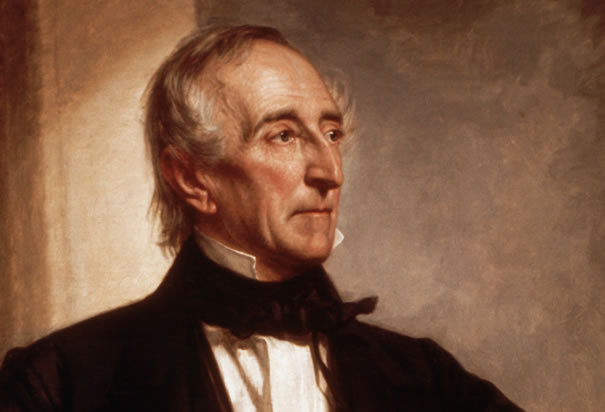
And Tyler too! ... John Tyler, born in 1790 to later serve as 10th President of the United States has two grandsons who are still living.

And Tyler too! … John Tyler, born in 1790 to later serve as 10th President of the United States, has two grandsons who are both still living.

Like me, you may have read or heard the incredible story sometime in the past year that our 10th president, John Tyler, who was born in 1790, still has two living grandsons. Writer Dan Amira wrote an article for the Daily Intelligencer exactly a year ago on May 27, 2012.  Like many things lately, the light was a little late reaching this still eager mind with the tired eyes, but it arrived – and it landed with excited amusement for me over this incredibly improbable news.

http://nymag.com/daily/intelligencer/2012/01/president-tyler-grandson-alive.html

Harrison Tyler, 2006 Grandson of John Tyler

Harrison Tyler, 2006
Grandson of John Tyler

It’s all in the article, but here’s the easiest line to follow on how it matches up for Harrison Tyler, the grandson interviewed by Amira for his column report:

(1) President John Tyler was born in 1790, back in George Washington’s first term.

(2) Tyler’s son, the one who became the father of Harrison Tyler was not born until 1853, when the aging former 10th President was already age 63,

(3) That prolific son of the old president did not become father to Harrison Tyler until 1928, when the mn was already 75 years of age.

(4) Harrison Tyler is now 84 and will turn 85 before 2013 is done. He lives at the Sherwood Forest Plantation in Virginia that once belonged to his grandfather, President John Tyler. This time last year, he was still playing tennis.

The article does not reveal if Mr. Harrison Tyler has plans for having any more children of his own.

… and while we’re at it, let’s also “Remember the Astrodome” beyond today and into all the tomorrows that shall ever be. A writer named named Jere Longman has written one of the best articles we’ve ever seen this morning on why the grand old girl of Houston’s place in architectural history should be spared the ignominy of the wrecking ball. We also want to thank friends Tal Smith and Darrell Pittman for alerting The Pecan Park Eagle to the story. The Astrodome truly is – Houston’s Eiffel Tower.

Check it out:

http://www.nytimes.com/2013/05/27/sports/houstons-astrodome-may-be-dirty-and-dated-but-it-is-irreplaceable.html?_r=1&