The Hugh Roy Cullen Legacy

March 15, 2011


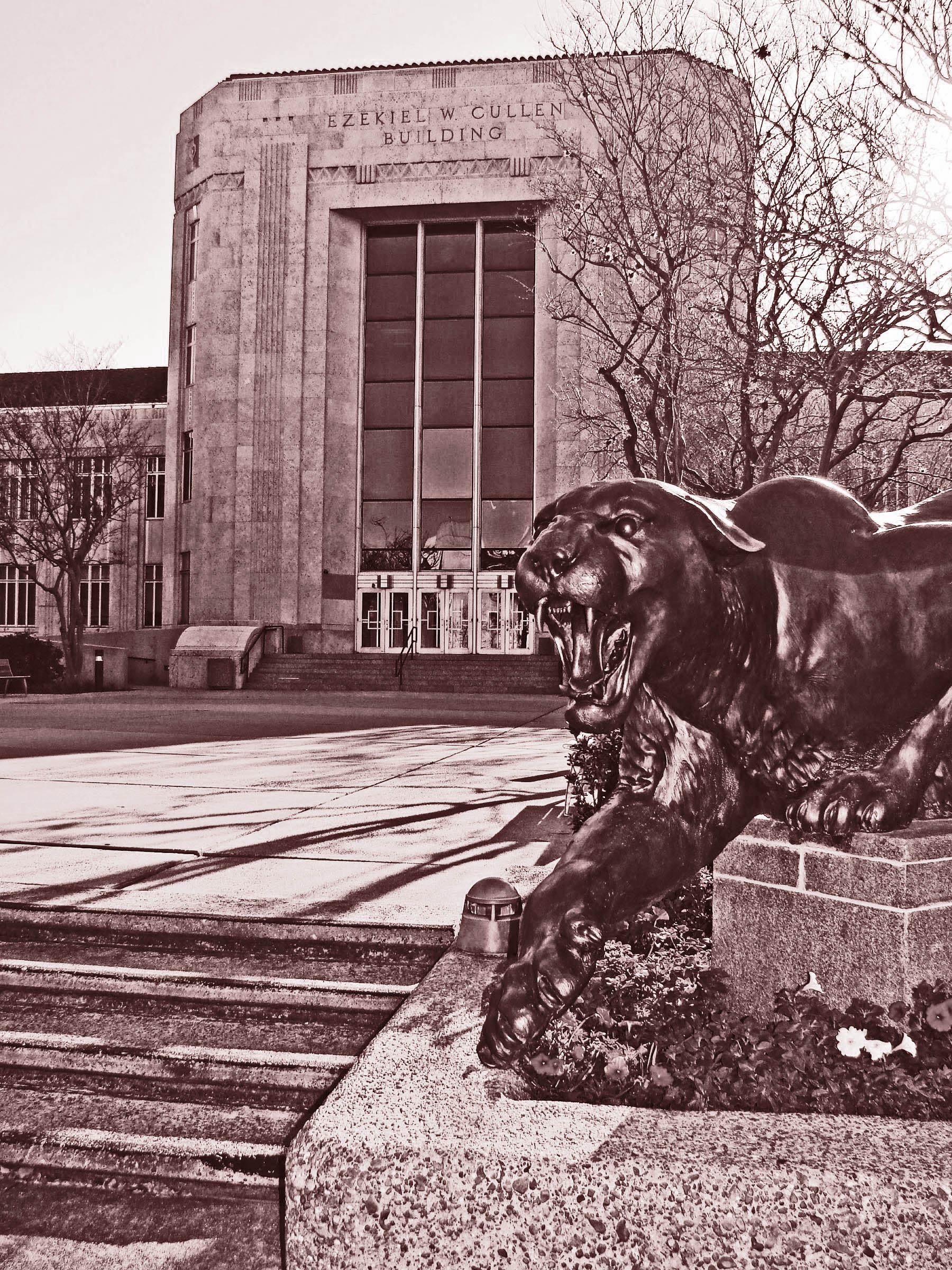
Ezekiel Cullen Building, University of Houston.

Hugh Roy Cullen was one of those people who did very well in life, but who also came to the clear realization that holding on to money that could be used for some noble and larger purpose was the most foolish form of greed and miserliness. No miser was he.

Born July 3, 1881 in Denton County, Texas to Cicero and Louise Beck Cullen, Hugh Roy Cullen was the grandson of Ezekiel Wimberly Cullen. Ezekiel came from Georgia to Texas in 1835 seeking a better life. He. fought in the Texas Revolution against Mexico, eventually settling in San Augustine, Texas the seat of the new revolutionary government.

Raised by his mother in San Antonio, Cullen left school after the fifth grade, taking work at age 12 as a three dollars per week candy counter for a manufacturing concern. Cullen continued to study on his own, reading the classics and also further honing his math and science skills and knowledge. At age 17, he moved to Schulenburg and took to the cotton business like white on rice, becoming a successful agent in the sale and purchase of cotton. In Schulenburg, Cullen also met his future wife of nearly 55 years in the form of Lillie Kranz. The couple was married in 1902.

The Cullens moved to Houston in 1911, where Hugh Roy transferred his discovered skills in the business of land management to the booming new oil exploration industry, and right at the moment it was exploding as the big new American industry, especially in the area around Houston. Bringing in his first successful oil field, Cullen soon formed partnerships that helped him to put together his own oil company, Quintana Petroleum, and, by the mid to late 1930s, he was well on his way to becoming one of the richest men in America,

Then something happened.

Cullen’s only son, Roy, was killed in a tragic oil field accident in 1936, putting a major heartache on the Cullen family, but also opening the Cullen heart to give of himself in ways he may never before imagined possible. Cullen never forgot the obstacles he faced when circumstances limited his early family education. He looked around and found the University of Houston, just as the new school was struggling to find its feet as a provider of higher education to students could not afford to leave home in pursuit of a college education. In 1938, for starters, Cullen donated $260,000 for the construction of the Roy Gustav Cullen Building on the UH campus in honor of his deceased son.

By 1947, and now established as one of the wealthiest men in America, Cullen established the Cullen Foundation to handle the award of gifts to charitable causes, especially to those serving the needs of students with limited means for higher education. The foundation was governed directly by three of Cullen’s adult daughters and, in 1948, further substantial contributions to new building and program expansion at the University of Houston, Without the help of the Cullens, UH could never have become the force it is today in higher education, and a university now legitimately postured for becoming one of America’s designated Tier One universities.

The Cullen Foundation also provided the money and land purchase assistance that led to the establishment of Texas Southern University in the early years following the conclusion of World War II. Cullen Foundation support also provided support for programs served through Baylor University, In the end, most of the Cullen family wealth was donated to their foundation for distribution to worthy educational causes that primarily benefitted the needs of Houston’s college-age population.

Hugh Roy Cullen passed away on July 4, 1957 in Houston, one day after his 76th birthday. He died a complete success as a human being.

The legacy of Hugh Roy Cullen shall always be that he gave of himself to cause that were larger than any his own modest wishes for personal acquisition. That may have come easier for Cullen than some others for he was one of those people whose wealth was merely a by-product of his passion and never the goal in itself.

Cullen put it this way: “Giving away money is no particular credit to me. Most of it came out of the ground – and while I found the oil in the ground, I didn’t put it there. I’ve got a lot more than Lillie and I and our children and grandchildren can use. I don’t think I deserve any great credit for using it to help people. It’s easier for me to give a million dollars now than it was to give five dollars to the Salvation Army twenty-five years ago.”

The Cullen legacy was love. By any other name you may wish to call it, that’s what it still comes down to. As one of those kids you helped make education affordable, I just want to say again: “Thank you, Mr. Cullen, for being the man you were. I couldn’t have done it without you.”
 

Some Firsts in Colt .45 History

March 14, 2011
 

Some "firsts" performed by the nearly anonymous.

Thanks to Bob Hulsey for planting these bees under my bonnet – and thanks also to Bob for supplying The Pecan Park Eagle with his personal Colt .45 notes and those of Gene Elston, the iconic broadcaster and Ford Frick Award winner who was there to see it all happen as well or better than any other figure in Houston MLB franchise history back in the spring of 1962.

Forty-nine years ago, in early to mid March 1962, the brand new Colt .45s took the field in spring training at Apache Junction, Arizona as the first game representatives of Houston in the major leagues. Bob Hulsey’s materials served as a nudge that, while we have done a good job posting all the “regular season official firsts”  from April 10, 1962, the date of the Houston Colt .45s’ Opening Day debut in the National League with an 11-2 win over the Chicago Cubs at Colt Stadium, but not much on capturing the actual firsts from exhibition game play.

This report doesn’t catch them all, but here are a handful of firsts from earliest play that we need to note, or footnote, for Houston baseball game action posterity (and thanks to the notes of Bob Hulsey and Gene Elston on all accounts):

First Game: March 10, 1962; The Colt .45s visit the Los Angeles Angels for a game in Palm Springs, California.

First Starting Lineup: March 10, 1962: (1) Al Heist, cf; (2) Bob Lillis, 2b; (3) Norm Larker, 1b; (4) Roman Mejias, rf; (5) Jim Pendleton, lf; (6) Merritt Ranew, c; (7) Don Buddin, ss; (8) Bob Aspromonte, 3b; (9) Bob Bruce, p.

First Run: March 10, 1962; Bob Aspromonte scores on an error by Marlan Coughtry.

First Hit: March 10, 1962; Roman Mejias singles off Eli Grba. Mejias goes 3 for 4 on the day, with a double that may have been the first extra base hit in franchise history but I would have to see a box score or full game report to accurately report that accomplishment as a fact.

First Team Loss: March 10, 1962; Colt .45’s lose to the Angels, 7-3; first starter Bob Bruce takes the first club pitching loss.

First Home Run: March 11, 1962; In a second game, 8-7 loss to the Angels at Palm Springs, Jim McDaniels blast a three-run home run for the first long ball in franchise history. With 13 hits, it probably also is Houston’s first double-digit hit game, but, again, box score confirmation is needed.

First AB for Rusty Staub: March 12, 1962; back at Geronimo Park in Apache Junction for their first home game, the Colt .45’s lose for the third straight time in their brief history, dropping a 6-1 decision to the San Francisco Giants. Taking over for starter and loser Ken Johnson, Dean Stone becomes the first franchise reliever in history to pitch three perfect innings, retiring all nine men he faces. Rusty Staub strikes out swinging as a pinch hitter in the fourth inning of his professional debut.

Scored 1st team winning run.


First Team Win: March 13, 1962; Houston travels to Tucson, Arizona to pick up their first victory as a major club, a 2-1 win over the Cleveland Indians.

First Pitching Win: March 13, 1962; Starter Jim Umbricht earns the first win in franchise history, helping his own cause with an RBI single in the second inning.

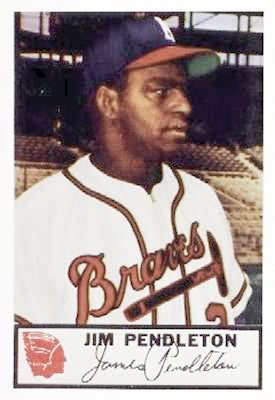
First Team Winning Run & RBI: March 13, 1962, with Jim Pendleton on second base in the third inning, a god of anonymity named Jack Waters singled up the middle to provide what would prove to be the winning run in a 2-1 first ever victory for the Colt .45s over the Indians. Journeyman major leaguer Jim Pendleton scored the first winning run in franchise history and journeyman minor leaguer Jack Waters provided the first game-winning RBI in Houston major league ball.

Jim Pendleton would go on to play often as the left fielder for the 1962 Colt .45’s, batting .248 in 117 game appearances before finishing his career as a Colt .45 minor leaguer in 1963. Pendleton batted .255 for eight seasons (1953-1959, 1962) as a big leaguer and  .293 as a minor leaguer over ten years of ball he played variously for teams below the majors from 1949 through 1963.

Jack Waters ran through a less blessed baseball field of dreams over the years, but his eventual fate matched Pendleton’s retirement after the 1963 season. Waters simply never got a major league at bat in one of the regular season games. Waters batted .279 for twelve seasons (1952-1963) in the minors. His .268 BA with 12 home runs as a BR/TR outfielder for the last 1961 Buffs club helped him get the spring training opportunity with the Colt .45’s the next spring, but his age and lack of impressive productivity in camp eventually got him demoted to the fate of  finishing out his career as a minor leaguer in 1962 and 1963.

At least, Jack Waters can now look back and still know that time will never erase his one major accomplishment in baseball, even if its value has no cash translation. Once upon a time, Jack Waters knocked in the first winning run in Houston major league baseball history. Back then, anything you could do to show that winning baseball existed as a possibility for Houston was important to the fans, even in those early and almost always forgettable early exhibition games, and Jack Waters was the first Colt .45  to pull the trigger on that hope.

As a member of the 1961 Buffs, I only remember Waters now as a non-flashy, unremarkable, but steady guy. It was enough to get him a spin and no one can ever take away from the man that short-lived stroke up the middle that makes Jack Waters today a forever footnote in team history. I would love to show you his picture, but Jack Waters didn’t stay here long enough to leave much of a visual impression that he had ever even been to Houston.

Good day, Jack Waters, wherever you are!

Summer Baseball

March 13, 2011

Summer Baseball

(Sometimes we write on the wind of the days that used to be. It happened to me in the summer of 1969  when, as a young man. the muses working my corner wrote “Summer Baseball” through me the old-fashioned way, preempting my pen and paper when I was supposed to be using them to check the type-written draft of an annual report from my office in the Texas Medical Center.  “Summer Baseball” found its evocation in my constant imagery of the Pecan Park Eagles sandlot home, and especially as we played the game there in the summers of 1949 through 1952, before the climate of high school and other playing opportunities and interests scattered us all from that hallowed ground forever.)

Time was when summer meant baseball on a vacant lot,

Chasing a ragged brown horsehide as it zoomed off

A wooden bat across the white heat of the morning sky,

Only to be pursued by a blue-jeaned boy,

Who knew he would be there when the ball came down.

From the crack of the bat until the thump in his glove,

The boy knew the baseball like one knows an old friend.

They had met so often in play on the sacred neighborhood ground.

Texas leaguers, blue darters, line drive scorchers, grass skinners,

Pop flies, Sunday screamers, worm burners.

It made no difference at all to the boy.

He knew that each pursuit would end securely

In the web of his Rawlings Playmaker.

No thrill could surpass the loud crack of the bat

That signaled to the boy in the field of the far chase to come.

– It was the sure sound of the long ball.

C-R-A-C-K!!!

And the boy would race on bare, calloused feet

To some deep point on the vacant lot.

Then, somehow, as though guided by a mysterious inner radar,

The boy would turn his head and look skyward,

At the very moment his old friend was beginning to descend

From that grand ride through the summer air.

T-H-U-M-P!!!

The chase had ended in a rightful wedding of ball and glove!

Simple innocence – but it was love – and it was free.

And now the boy is a man who sits in an office,

Away from the summer heat and that joyous vacant lot of long ago.

Sometimes, even now, he peers through his sealed workplace window,

And he again feels the white heat of a mid-morning July sun,

And he wishes only for ……………….. one more chance.

One more chance to race the wind,

And to follow the flight of his old friend,

Coming down from the billowing clouds in the blue summer sky,

Coming home to the welcoming glove of a kid in love with baseball.

Come back to me, friend baseball, come home,

And never go away again. …. Ever.

Baseball All Star Game: First and Best

March 12, 2011

The AL won the 1948 Game in St. Louis, 5-2.

All Star Games were the brainchild of a Chicago newspaperman named Arch Ward, and this was back in the early 1930’s, when baseball was pretty much the only game in town and the true national pastime. There was no NBA back then and the NFL survived as hardly anything more than a minor diversion in a handful of midwestern and eastern cities in the dead winter months of a nation that had yet to taste the attractive lure of television. Major League Baseball, sixteen clubs that lived and played in the north from the Atlantic Ocean to St. Louis, plus hundreds of minor league clubs and thousands of semi-pro and amateur teams were the residence of America’s active investment in the game – and all other fan fannies found comfortable places to sit in thousands of great to rickety ballparks across the land.

Mr. Ward saw the intensity of rivalry that  existed between his own two home clubs, the AL Chicago White Sox and the NL Chicago Cubs, and he witnessed the fierce loyalty of each fan group and their equally intense hatred for their opposite numbers in the same city. It didn’t take him long to hatch his plan for an annual baseball all-star game that would capitalize on the appeal of such a contest and to gain support for holding the first MLB All Star Game in Chicago at Comiskey Park on July 6, 1933. Babe Ruth would hit the first home run in All Star Game history on that day and the AL would defeat the NL by a score of 4-2 before a large crowd.

From 1933 through 2010, eighty-one All Star Games have been played out in just about every ballpark that every city in the Big Leagues. Each league has enjoyed runs in which one club dominated for extended periods of time, but the running tally on games won today is about as even as it could be. The National League has won 40 games, the American League has taken 39 contests, and there have been two ties, one in 1961 and the most recent in 2002.

That last tie produced embarrassment too. Essentially, the game had to be stopped in extra innings as a 7-7 tie in Milwaukee on July 9, 2002 because both teams had used up all their pitchers earlier in service to the goal of getting everyone into the game. Commissioner Bud Selig had to make the call of stopping the game as a tie – and he had to do it in own back yard of Milwaukee. There was no place to hide or cover up the fact that baseball, under Selig’s watch, had not come into this situation with an adequate game plan for dealing with this kind of situation.

Disregarding the old adage that “two wrongs don’t make a right,” Commissioner Selig then followed the 2002 All Star mistake by pushing through a change in the All Star Game format. In an effort to make the game more about managers handling their personnel for the sake of winning, the All Star Game winner from 2003 forward  was anointed as the determining factor in which league club would enjoy home field advantage in the World Series.

I hated the new rule then and nothing has changed. Next to the Designated Hitter rule, the All Star Game power over the World Series is my second most hated variance from the traditions of baseball. I didn’t like the annual rotation of World Series home field advantage over giving the honor to the World Series club with the best season record, but even that formula seems more fair than the determination of that important edge by players who most probably will not be in the World Series themselves.

Having said that, I Still think the MLB All Star Game is a better contest than either its NFL or NBA counterparts. The NBA Game is little more than a basketball version of a non-stop home run contest or, borrowing from its own homer form, a non-stop slam dunk contest where it’s all about scoring with flair and playing no defense. The NFL all-star contest is little more than a sandlot game played at the end of the season as the Pro Bowl, using popular players who have survived the season among the walking wounded.

Three MLB All Star Games have been played here in Houston, in 1968, 1986, and 2004. The National League took the first one, 1-0, and the American League has captured the last two, 3-2 and 9-4. The first two of these Houston games were played at the Astrodome; the 2004 game took place at Minute Maid Park.

Over the years, baseball has tried various combinations for selecting their All Star rosters. 1957 proved that job could not be left up to the fans totally. That was the year that Cincinnati fans stuffed the ballot boxes, assuring that their hometown Reds, deserved or not, would be the starting lineup for the National League at seven positions. Only first baseman Stan Musial of the St. Louis Cardinals had survived the voting ruse. The travesty was obvious, and traceable to an organized scheme in Cincinnati to print an overwhelming number of ballots for use by Reds fans. The facts gave  the Commissioner easy, but also embarrassing grounds for intervening and making sure that seven Reds would not start for the National League in 1957. Commissioner Ford Frick appointed Willie Mays of the New York Giants and Hank Aaron of the Milwaukee Braves to replace Reds outfielders Gus Bell and Wally Post in the starting NL All Stars lineup.

The Cincinnati debacle of 1957 resulted in the vote being taken away from the fans until 1970. Until that time, managers, coaches, and players picked the teams, a system I would prefer to the Internet fan-blitz voting en mass we have returned to use through 2011. Let the field personnel pick the position players from their peer opponent teams of their same league. Let the All Star manager pick his own choice group of healthy, deserving, and available pitchers. And forget about fans picking their Mendoza Line (.200 BA) favorites for positions they do not deserve this year – no matter how great they have been in the past. Then play the game as a real game. Don’t substitute to showcase unless you want each club to carry a roster of fifty players each into the game.

And please ditch that hogwash award of World Series home field advantage to the league that wins the All Star Game. While you’re at it, give that deserved advantage to the league champion who finishes with the best season record. It shouldn’t be that hard to figure out the tie-breaker rules that will govern those years when two teams enter the World Series with identical records.

OK, so as baseball fans, we retain the right to dream on, form opinions, and make recommendations to all the baseball moguls who get paid the big bucks to do right by baseball on purpose. We don’t expect you to be perfect. We jut want to see you get it right more often than not. The All Star Game will never be perfect either, but imperfect as it may be, the Baseball All Star Game remains as the first and best of its kind. I believe we can make it better by taking the voting away from Internet geeks and ditching that bogus connection of the All Star Game to the World Series. Fans will still support the game, if they know the most qualified judges, the players, managers, and coaches themselves, are picking the best rosters based on current year productivity.

Freudian Slips Field Psychiatric All Stars

March 11, 2011

"Yes, this is our Freudian Slips team logo. I trust that my open-mindedness shall be duly footnoted for the ages." - Sigmind Freud.

“The Freudian Slips” is the team name I’ve chosen for my greatest psychiatric club of all time. So, here they are, listed by picture, in batting order, and by position, the nine greatest figures in the history of psychology. With each player, also, we have asked each all star to give us a brief soundbite answer to the question: “What is the game of baseball all about on at its deepest level of ontological meaning?” I am convinced that you shall find our Freudian Slips player answers both convincing and appropriately rooted in their individually established credos and previous publicly stated contributions to our understandings of life in general.

Starting Lineup for The Freudian Slips and Their Answers to the Question: “What Is Baseball All About?”:

(1) Sigmund Freud

(1) Sigmund Freud, SS-Mgr. “We all possess only one psychic energy tank for all matters pertaining to love and labor. As a result, I have only two rules for my players: (a) Leave love alone on the days we labor at baseball; and (b) Play the game as though you are trying to beat out your fathers for the undivided attention of your mothers. That’s it. Our time is up.

“Oh, yes! Pay your fee to my mother, the receptionist, on the way out and, by all means, would you like a prescription for cocaine? It will pep you up inside, keep you going till supper.”


(2) Carl Jung

(2) Carl Jung, LF. “For the longest time, I was relegated to left field for my strong beliefs in the collective universal unconscious. This brought about some stigmatization and abandonment of me by Herr Freud and his sexual energy crowd, but that’s of no concern to me now. I’m dead, like almost all of my Slips teammates.

To understand baseball, we must all dig down deep into ourselves for the lessons of the collective unconscious. The wisdom of the ages awaits us there. It is from the collective unconscious that we outfielders first learn how to play the wind, the sun, the effect of different pitchers upon specific hitters in certain game situations, and to always try to throw ahead of the runner and be sure to hit your cut-off man on throws back into the infield.

As for hitting, Yogi Berra said it best. Forget all my theory in volumes of effort at such a game moment. As Herr Berra said, ‘One cannot think and bat at the same time.’ “

(3) B.F. Skinner

(3) B.F. Skinner, 1B. “As the father of operant conditioning, I have proven beyond the shadow of all doubt that change is effected by the consistent introduction of the same stimulus to the same subject over time. If you want to become a better batter, you must get more at bats; if you want to get better at fielding ground balls, you must be willing to take infield practice.

“Summary: Baseball is about doing things over and over again until you either get them right to the best of your ability or otherwise prove that you are too stupid and inept to learn.”


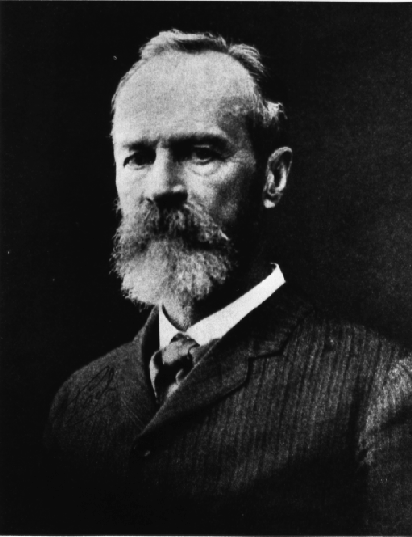
(4) William James


(4) William James, RF. “For me, the value of  truth is always relative to the perception of importance it holds for the individual. As longs as I am able to hold onto and defend that kind of idea, I shall be able to stand in the “right field” no matter where I am.

“So. as for the value of baseball, the truth is. it’s very important to western civilization, but you must perceive that it even matters more than soccer for my words to make any sense.

“Perception is reality. If you don’t believe that its ‘three strikes and you’re out,’ I may only conclude that you shall continue to stay in the batter’s box, awaiting the next pitch.

“Would you like to wind my cuckoo clock?”


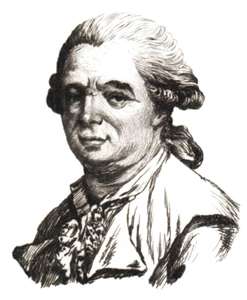
(5) Franz Mesmer

(5) Franz Mesmer, C.  

“As the researcher in charge of all the first studies of  animal magnetism, I was a natural selection for the position of catcher. Other people have always been attracted to me. Some even say that they find my gaze to be downright ‘mesmerizing.” Yes, that’s me, the grandfather of the early work that leads to the later evolution of hypnosis. Pretty nice contribution, don’t you think?

“As for the importance of baseball, it’s big. I didn’t grow up with the game, but I’ve been going to games at all the heavenly parks on a regular basis ever since I discovered hot dogs. For me, hot dogs truly are an ‘out-of-this-world’ experience. That’s how I came to a discovery of my own playing abilities. – Now, if you will excuse me, I need to find a mirror. It’s time for my staring break.”

(6) Eric Fromm


(6) Eric Fromm. 2B. “If I am to play well as the second baseman for the Freudian Slips, it shall not happen because I ‘have’ the position. It will be because I am that man – the best they could find.

Baseball is important, but it should be great based on the extant greatness of the players themselves, and not based as simply another hokum culture in which success is measured by who makes the most money by the aura of their their prospects for greatness in the future and the ways their representatives convert these into stupefying multi-year contracts.


(7) Jacob Moreno


(7) Jacob Moreno, 3b. “As the father of psychodrama, and the starting third baseman for the Freudian Slips, I never saw a game situation that lacked drama. Some players may lack drama, but the game of baseball, never!

Baseball is important because it gives all of us who play it well the chance to be superstar thespians with our emotional investment in the play itself. I love nothing better than those times I have to swagger in on bunts down the line. The barehand pick up is my style. And the horse-whip throw to first in time to nail the runner is my execution. From there it’s a chin in the air gaze of triumph and trash-walking mock of the batter in my saunter back to the bag.

(8) Carl Rogers


(8) Carl Rogers, CF. “Like the core of an onion, the importance of baseball is only revealed when we peel off the layers of everything it is not to discover what remains. – The beauty of baseball is not about how much money you make, or having Cameron Diaz as a girl friend, or being forced by contract to visit sick children in hospitals, it is about the inner passion that flows from the heart of the game itself – and the heart of the game itself operates on the three great pumps of faith, hope, and love.”


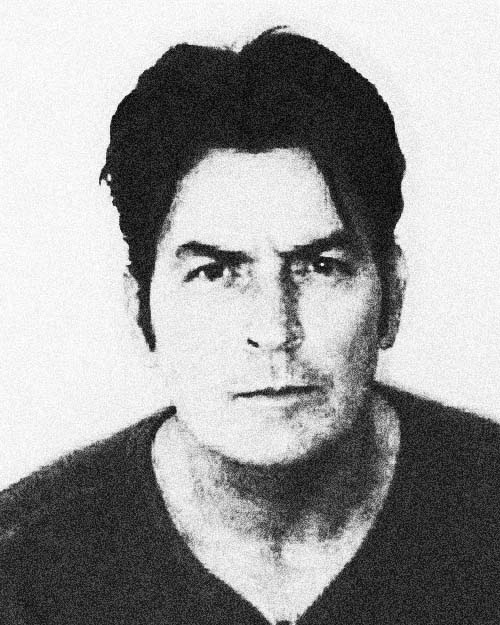
(9) Charlie Sheen


(9) Charlie “WIld Thing” Sheen. “What’s baseball about? … DUH!! ………. WINNING!!!”

Some Pecan Park History Notes

March 10, 2011

Once upon a time, in the late 19th century. there really was a rather large Pecan tree orchard in the area southeast of downtown Houston. As the city grew in that direction, the demand for residential space resulted in the purchase or managerial acquirement of the orchard area for the purpose of building and selling homes. The Magnolia Land Company sat in the middle of this new enterprise and began plating the land for individual property and street construction n 1925. Shell was the original building material for new streets and roads, but asphalt and concrete took over as the major infrastructure upgrades by the mid-1930s..

The larger region soon became known and was advertised as “Pecan Park,” and it covered an area that basically stretched out through multiple smaller neighborhoods that shared these current informal borders: Griggs Road boundaried the northern line; Broadway stood as the eastern wall; and old Winkler Drive and now the Gulf Freeway (I-10 S) covering the southern boundary and, curving around, and also becoming the western frontier of the area.

Most of the homes of Pecan Park were built during the 1930s and 1940s, with all of the original construction of usable space tapping out about 1955. Lot size typically fit into the 5,000 square feet zone, with houses ranging in size from 1,100 to 1,600 square feet. Almost all of them were one-story wood or brick bungalows, with styles ranging from Tudor, Cape Cod, and Ranch class architectures being the preferred choices. Homes typically had two, and sometimes three bedrooms, with a living room, kitchen, one bath, and a one-car garage, Hardly anyone had a “den.” For those of us who grew up there, “dens” and multiple bath rooms were simply an upscale concept, amenities to expect, if you lived in River Oaks, but not in Pecan Park.

My family of origin lived in Pecan Park at 6646 Japonica Street from 1945 to 1958. Mom and Dad paid $5,000 for our little 2-bedroom house when we moved in, but Dad added another bedroom when my little sister was born in 1949. My folks kept the place for a few years as a rental house after we all grew up and moved out. I don’t recall what Dad got for the place when he sold it in the mid-1960s, but it wasn’t a lot. Now I look on the Harris County property valuation site and see that the house is currently appraised at $89,000.

How can that be? With some homes in the nearby neighborhood literally falling down, how can that be? Apparently, it’s mostly, if not all, about location, location, location. The people who now own my childhood home seem to be doing a good job on its upkeep, but that may not be the big deal. Fifteen years ago, the house, and others around it, were appraised in the low 30K range, but something has happened since then.

Some Houstonians apparently are moving back inside the loop from the far suburbs these days. OK. So, Pecan Park is only seven miles from downtown Houston, tops, from my old place on Japonica. The location of these homes is driving up the cost of the land upon which all the old homes still rest. You will even see some evidence of new construction in Pecan Park now, and to the extent that some people are razing older houses and putting up two-stories in their places.

I should have bought my old house back at 30K when it was on the market for same a few years ago, but that thought rests among the least original I’ve ever embraced. When it comes to the “Land of Real Estate Deal Passovers,” how many of us have subsequently found ourselves lost in the land of “Woulda’, Coulda’, Shoulda?”

The shakier our dollar becomes, the harder it gets to think about where we should put the ones we have left, but real estate has a special attraction for me. Unlike stock values, real estate doesn’t disappear with the dawn. You might wake up one morning and read that your land is no longer worth anything, but, at least, you can still look out the window as the sun rises higher in the sky and see that it’s still there.

Being able to see it still counts for something.

As for Pecan Park, she will always be home to me, even if I didn’t buy my old house back when I had the chance, and even with all the changes the neighborhood has gone through over the passage of time. There’s just a part of my early years there that soaked into my bloodstream and never went away.

Have a nice day, everybody, and save some time for your own favorite healthy passions and reveries of life. Pecan Park covers a lot of that ground for me. In many ways, Pecan Park is simply the shell that once held the yolk of everything I am. And I like that idea.

Remembering the Eastwood

March 9, 2011

Eastwood Theatre, Houston, Opened in 1936.

The Eastwood Theatre once stood at the corner of Leeland Avenue and Telephone Road like the gatekeeper to the deep southeastern section of Houston’s even larger Eaat End. Opened in March 1936, the Eastwood stood as merely one of the legion movies houses of the suburbs, one of those close to home places where most Houstonians saw their movies in the days prior to television, dvd, dvr, and Netflick-like movie mail services. If you were a kid back in that day, it was also one of the places where you got your Saturday morning kid movie fix, usually some kind of blended diet of Roy Rogers, Charlie Chan, The East Side Kids, The Crimson Ghost, and Bugs Bunny. How good was that? Words defy description, and, even though my home field for the Saturday morning kid movie fare was the smaller Avalon Theatre at nearby 75th and Lawndale, the Eastwood ranked high on our available list of local movies houses. Others in our territory included the Wayside and Santa Rosa, both located further down the winding tour route that was Telephone Road – and also the Broadway over near Milby High School,

We could list movie places all day long and deep into the night, In the end, it was the part of our childhood in Houston and America that these places played in the lives of us who grew up in the 1930s, 1940s, and 1950s. They were the spark that lit the fuse and fed the hunger of our new and growing imaginations about a better life in a bigger world beyond the fences and gates of our own little cultures. Little did we all know back then how well we already had it on our sandlots, with our friends, and in our families. For the most part, we had it all. Except for the money that could buy us the cars, clothes, travel, and adventure that we saw on the movie screen, we pretty much had it all – and all we had to do was keep up with our homework. We didn’t have to spend January, February, and March either working on, or procrastinating about, filing our federal income tax reports.

In having less, we had more. We just didn’t know it. The fact was beyond our experience of those times. And we felt no tax on our movie-inspired dreams.

My memories of the Eastwood, in particular, include the fact that it was the place I got my first taste of the real world. You see, at age 14 in 1952, I decided to apply for my first job there. I saw being an usher as a nice way to pick up some money and watch even more movies for free. So, I got all dressed up one day.and went down to the Eastwood to talk with the manager, a nice man we all knew as “Mr. Vallone.” I think his full name was Rocco Vallone, but I am only sure of the surname.

Mr. Vallone listened kindly to my job request and then invited me to fill out an employment application. It was about April of 1952 when I applied, hoping to start after the summer break, but June came and I never heard anything. Finally, after a few quick jobs in the neighborhood, I hooked on with A&P Grocery as a package boy and forgot all about the Eastwood.

And now the rest of the story.

Flash forward twenty-five years. I walk into a doughnut shop on Gessner over on the Westside one morning and guess who’s in line ahead of me? Of course, as fate would have it, it’s “Mr. Vallone,” the same guy who took and, for all I knew, was still holding my open application for a job at the Eastwood. Should I just let this moment slide and say nothing?

No way. I could not resist the opportunity for a little fun.

“Excuse me, sir,” I said, “aren’t you Mr. Vallone, the fellow who used to manage the Eastwood Theatre?’

“Why, yes I am,” said the startled, but smiling Vallone, as he turned to shake my hand.

“Well, twenty-five years ago, you took my application for work as an usher and promised to get back with me, but you never called.” I said. “I just wanted to know if you’ve yet made  decision. – Did I get the job or not?”

Mr. Vallone almost fell on the floor laughing. We small talked our way through both our doughnut orders with a few fond shared memories of the Eastwood, but I told Vallone, as we parted, “Nothing will ever top this moment in my Eastwood file.”

We said goodbye and Mr. Vallone, the man who always physically reminded me of William Bendix, this time, was gone from my life forever once he walked out the door of the doughnut shop.

For the record, I didn’t get the job. Some kids who showed up looking for work on the last day of school got the work as ushers. Mr. Vallone told me again what I already knew. “You  should have checked back with me,” he said,

.

My Presidential Baseball Team

March 8, 2011

1860: Lincoln Had a Baseball Cartoon Long Before the Birth of Babe Ruth.

Abe Lincoln may have ben the earliest public figure to ever have been characterized by a cartoon depicting a symbolic baseball theme, but this much is sure: e got there before Babe Ruth or any of the other great stars that were about to break upon the scene of American consciousness. The cartoon here basically depicted Lincoln running for President carrying the heaviest bat (on issues) and making the most of his “time at bat.”

In another arguably quantum waste of time, I decided to design my own expanded presidential roster of the forty-three men wo have held down the forty four places in our history. It’s off by one, as you will recall, because one man, Grover Cleveland, held the job twice as the 22nd and 24th President of the United States.

What I’ve done is assign each president o what I thought would be their best position on the club. The first  man listed at each position is my starter and I’ve also included some comment on how the style of each man on the pitching roster may have effected his performance and style on the mound. Another unique feature of this club is that every man here derives his uniform number from his order in the presidential succession line, a number that de facto is retired from repeated use by others for that very reason. Since Grover Cleveland earned two numbers, he uses 22 on his back for home games – and 24 on the back of his roadie garb.

Here it is: My Presidential Expanded, All Inclusive Baseball Club Roster:

1 George “General” Washington: George owns the #1 hole. He was first in peace, first in war, and usually his namesake Senators were last in the American League back in the day.

40 Ronald “Dutch” Reagan: Dutch never wanted his work on the mound to result in a taxing experience. He always double-checked the catcher’s signs because, as he once said, it is always best to “trust, but verify.”

44 Barak “Aloha” Obama: When his popularity as a starter faded, Obama adopted the public relations strategy of the 1942 Phillies. He bought an advertising sign at the Washington ballpark that read: President Obama uses Life Buoy Soap! A disgruntled unemployed fan quickly scrawled a few more words on the sign. They read: “AND HE STILL STINKS!”

37 Richard Milhous “Tricky Dicky” Nixon: Does not trust any signs from any catcher, manager, or coach. He gets by with some slimey weasel-like pitches that are basically illegal and potentially dangerous to the batter and the public in general. When asked how a brand new ball can end up with four to five cut marks after only one Nixon pitch, all he will say is: “I am not a crook!”

42 William Jefferson “Slick Willie” Clinton: (See previous two entries.)

32 Franklin Delano “FDR” Roosevelt: Every time he finds a rule in the game he doesn’t like, or simply has an argument with an umpire, he stops the game to have the matter investigated by an executive office problem-solving committee. These committee actions inevitably lead to the recommendation that a whole new federal agency be created to deal with the problem from here to eternity. Once the new agency is created, opponents are invited to the White House for a fireside chat on how they have no choice but to get used to it.

35 John F. “Jack” Kennedy: I was a “Kennedy Kid’ new college graduate when JFK won the White House. JFK was my hero. “Ask not…” and all that went with it were the winds that moved my sails. Then. As time went by. Things changed. And I woke up with less gilded faith and trust in any politician, left or right. Before my “awakening,” to the true nature of humanity, I had no idea about JFK and Marilyn Monroe, the gangster lady, or the historical record of Papa Joe Kennedy and his philosophy. All of that alters my perception of JFK as a pitcher for this club. As I see him now as a pitcher, he leans heavily on Papa Joe Kennedy as his pitching coach. And Papa Joe constantly tells him: “Never forget, Jack, it’s not how great a pitcher you are, but how you pitch on the days when the money scouts show up. In pitching, and in all things, it’s not what you are, but what people think you are that counts.”

36 Lyndon Baines “Hand-Crusher” Johnson: A very deceptive mound ace. Makes batters think they are getting something they want and then breaks off pitches they can neither resist nor afford.

22 H/24 A – Grover “Double Duty” Cleveland: “Double your pleasure. Double your fun. Count on Grover and his twin bill gun.”

18 Ulysses S. “Happy Hour” Grant: Goes right after each batter. May choose to dust every man in the opposition’s batting order their first time up. Believes he will always win any battle of attrition over time. Constantly pushes the intimidation button from “play ball” to “last out.”.

33 Harry S. “Give-Em-Hell-Harry” Truman: Harry’s A-Bomb fastball often results in teams throwing in the towel and conceding the game prior to the completion of a full nine innings.

43. George W. “Dubya” Bush: Has pretty good natural ability, but can’t find the words to explain his pitching philosophy. Tends to pitch impulsively and get into jams that he can neither understand nor get out of without great casualty to others. Every time his coaches say that they need to talk with him about the “quagmire” problem, Dubya thinks they are talking about a low spot on his Crawford ranch where water tends to collect and stagnate.

Now, here’s the rest of the roster without further comment:

Catcher

27 William Howard “Billy” Taft

31 Chester A. “Chet” Arthur

23 Benjamin “Benny” Harrison

First Base

41 George Herbert Walker “George” Bush

38 Gerald “Gerry” Ford

20 James A. “Jimmy” Garfield

Second Base

31 Herbert “Suck-Em-Up” Hoover

7 Andrew “Andy” Jackson

25 William “Bill” McKinley

Third Base

26 Theodore “Teddy” Roosevelt

12 Zachary “Zach” Taylor

29 Warren G. “Lover Boy” Harding

Shortstop

3 Thomas “Scribbles” Jefferson

4 James “Shorty” Madison

30 Calvin “Harpo” Coolidge

Left Field

28 Woodrow “Woody” Wilson

13 Millard “Millie” Fillmore

39 Jimmy “Peanuts” Carter

Center Field

34 Dwight David “Ike” Eisenhower

11 James K. “Salad” Polk

19 Rutherford B. “Gabby” Hayes

Right field

16 Abraham “Honest Abe” Lincoln

17 Andrew “Andy” Johnson

15 James “Dude” Buchanan

Utility Infielder

2 John “Big John” Adams

5 James “Jumpin’ Jim” Monroe

6 John Quincy “Little John” Adams

Utility Outfielder

8 Martin “Marty” Van Buren

14 Franklin “Frankie” Pierce

Designated Hitter/Infield-Outfield

9 WIlliam Henry “Hammerin’ Hank” Harrison

10 John “Tomahawk” Tyler

That’s it. Suggested changes or lineups by comment are both requested and welcomed!

Worst. Baseball Team. Forever.

March 7, 2011

Most of you know the story, but it bears repeating for the faint of heart who only now may be digging in to the research feast that is baseball history. The 1899 Cleveland Spiders have almost forever been the worst team of all time – and they likely shall retain that title from here to crack of doom. The reasons for both extreme assignment and prediction is one and the same: The Cleveland Spiders were the unfortunate product of an 1899 condition in baseball that will not (must not) ever occur again,

Here’s how it happened, starting with the bottom line on final results. The 1899 Cleveland Spiders finished their National League season with a record of only 20 wins against 134 losses, bad enough for last place in the 12-club circuit. The Spiders finished the year a full 84 games behind the first place Brooklyn Superbas – and  35 games behind the 11th place Washington Senators. The season was a total waste. Whereas, nearly 389,000 fans showed up to watch the 3rd place Philadelphia Phillies play at home, only 6,088 fans turned out to watch the hapless Spiders play in Cleveland.

Here’s the deal. A fellow named Frank Robison owned the Cleveland Spiders, but then, as the rules of the game then permitted, he also bought the St. Louis Perfectos of the same league. For some reason, the National League could neither spell “conflict of interest” nor foresee the obvious problem coming from this dual ownership situation. All they apparently saw was Robison as the man who would keep the St. Louis franchise from folding.

What they got was deserved.

Robison effectively turned his Spiders club in Cleveland into a farm club of service to the St. Louis Perfectos, almost immediately transferring Cleveland’s biggest stars, including future Hall of Famers Cy Young, Jesse Burkett, and Bobby Wallace, to St. Louis. That pattern was the operative two-way elevator for the balance of the season.  Cleveland players who did well moved up to St. Louis, and vice-versa.

Cleveland rage set in pretty quickly. Fans were so outraged that fear for the safety of available Spider players forced the club to play the balance of their many remaining home games on the road.

Dual franchise ownership was banned after the 1899 season, but that action came too late to alter the role of the Cleveland Spiders as the worst. club. ever.

One Cleveland tradition did take root in 1899 – and it wasn’t losing. In 1899, they signed Chief Sockalexis, the first Native American big leaguer of true big league playing ability and value – and they got keep him in Cleveland beyond their unfortunately unforgettable season. That fact would historical importance for another reason. Once Cleveland got passed naming their new American League club the “Naps” in honor of star player and manager Napoleon Lajoie, they became the Cleveland Indians in 1915, a named adopted in honor of Chief Sockalexis, the only good thing to come out of 1899 in Cleveland beyond the rule against dual team ownership itself.

Spiders may appear sinister, but humans are the really nasty trap-builders. “Oh! What tangled webs we weave!”

Eight Men In: Baseball Movie Managers

March 6, 2011

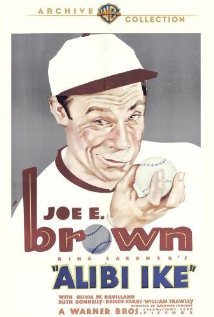
Manager William Frawley (R) with Pitcher Joe E. Brown in the 1935 film, "Alibi Ike.".

Ike was a Prima Donna before baseball paid big money.

Bill Frawley will always be Fred Mertz on “I Love Lucy” and Uncle Bub O’Casey on “My Three Sons,” but those roles will never come close to his true identity. In reality, he was a first tier baseball man, and one who also enjoyed bending the old elbow in the fashion of drinkers from those earlier times. Frawley and the Babe, or manager Joe McCarthy, would have gotten along just fine an their plans for the evenings that followed all those endless days game f the 1920s and early 1930s. He also may have fit into the managerial role as well as any actor from Hollywood ever did – had he ver been given the chance.

Today’s focus for me is upon the eight men I’ve ruled in as realistic type-casting for baseball movie managers. Bill Frawley is only my first choice of eight for this job, and in no particular order. Anytime any of these guys chose to portray managers in a film, I was, as I still am, ready to accept them as guys who came prepared to deal with all the hassles and flack of the challenge, even if one of them would have to deal with an arguably totaled group of six to eight players who were trying to throw the World Series back in the sweet bye-and-bye.

Here are a few words about each:

William Frawley

(1) William Frawley. The guy had the scornful look of the biggest old cranky man the world had ever known. He was blustery, yet sentimental and understanding, the kind of guy who most probably could have given a young players what he needed, whether it was a pat on the back or a kick in the pants. In 1935’s “Alibi Ike,” Frawley played “Cap,” the manager of the Chicago Cubs who had to deal with the talented, but arrogant rookie pitcher Joe E. Brown on the club’s way to a world championship. That’s right. The Cubs won it all, but not because of Frawley’s credible managerial demeanor. The Cubs won it all here because it was only a movie script fantasy of some writer with Cub ties.

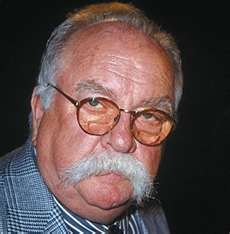
Wilfred Brumley

(2) Wilford Brimley. Once was enough. Brimley’s performance as Pop Fisher, amanger of the struggling New York Knights in 1984’s “The Natural” was a tour de force effort in character portrayal. The droning, honest, and laconic style of old Pop Fisher has a hard time snapping to what he has on his hands when the magical Roy Hobbs shows up to play for the team, but he holds on like  snapping turtle to this incredible talent once he finally see the man literally knock the cover off the ball. You get the feeling from Brimley that serving as his bench coach would mean going to supper every night with the manager and watching him order the same thing every night from the same cafe booth, if it were open.

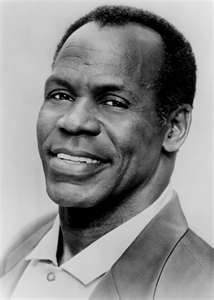
Danny Glover

(3) Danny Glover. In the 1994 re-make of “Angels in the Outfield,” Danny Glover plays the stressed-out manager of the California Angels, George Knox. Know plays every hand in fear that his crummy club is about to cost him his job at any moment. When he meets the kid fan who seems to have the ability to lure helpful angels to the games, Knox’s desire to win, no matter what, easily wins out over any fear that the media is going to portray him as a nut job. His last concession is admitting to himself that he finally had reached a point in life in which he had come to believe in a power greater than his own will. Whoa, Danny! You came close to finding a philosophy that would have allowed you to set up a rehab program for stressed out baseball managers who became obsessed with winning beyond health and family considerations.

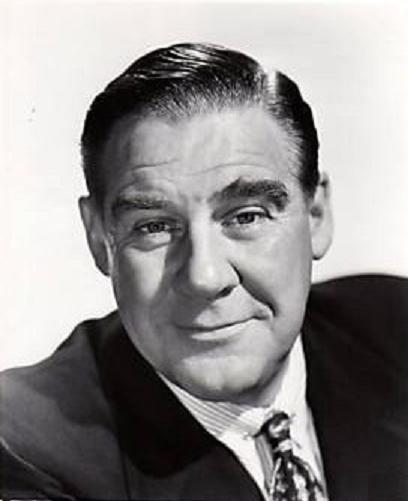
Paul Douglas

(4) Paul Douglas. He played manager Guffy McGovern in the 1951 original version of “Angels in the Outfield,” but unlike Glover’s anxious portrayal, Douglas’s character was lost in hard drinking, unrepentant anger, and surly treatment of others, particularly umpires. You have to cut him some break for his drinking, foul language, and lack of courtesy to one an all.  After all, they cast McGovern as manager of the early 1950s Pittsburgh Pirates – and without a Ralph Kiner onboard. Things work out with the help of angels and the faith of a little orphan girl fan and the loving support of Janet Leigh, who plays an early 1950s female  sports writer. In the end, the Pirates win the pennant. The manager and the sports writer fall in live. And we are left to believe that they marry and then adopt the kid who led the angels to the ballpark in the first place. The movie was too short on time and perspective in 1951. They leave out the part where Guffy’s girl friend has to find out after marriage that winning a pennant doesn’t always  guarantee a life of “happily ever after” with a manager who is hooked on alcohol, unless, of course, he has the blood of a tiger to protect him from the afflictions that down ordinary mortals.

Pat Flaherty

(5) Pat Flaherty. This wonderful old character actor from the 1930s and 1940s usually played cops or drill sargents, but he fit in easily as Bill Carrigan, the manager of the Boston Red Sox in 1948’s “The Babe Ruth Story.” Flaherty could have played any Irishman who managed in the big leagues around the turn and early years of the 20th century because he was that guy. He came across as compassionate, but driving; aware of the Babe’s talent, but equally aware of the great star’s potential for self-destruction. Flaherty represents the face of pragmatism in my book of eight men in. Some of the best managers in history being those who don’t get lost trying to fix what’s beyond their control. Carrigan was a pragmatist. He played Babe Ruth for what he could get out of him while he was still the manager at Boston, even if his overall relationship with the club’s front office apparently was breaking down. Result? The Red Sox took the 1916 pennant and World Series. And then Carrigan was gone. Replaced in 1917 by Jack Barry. Flaherty played the role of Carrigan well, even if all this other stuff never saw the light of day in the movie.

Ted deCorsia

(6) Ted de Corsia. 1949’s “It Happens Every Spring” is the only film I recall ever seeing character Ted de Corsia playing anything for comedy in film, but did a great job here as manager Jimmy Dolan of the St. Louis (don’t say Cardinals) National League club. Usually cast as a gangster of western bad guy. de Corsia plays the hard-nosed manager of a club that needs “one more good arm” to win the pennant. It is an implicit prayer that is answered by a nutty professor/Cardinal fan who accidentally invents a substance that makes anything its rubbed upon repellant to wood. (“Say, how about rubbing it on baseballs, taking a sabbatical from teaching and becoming an unhittable pitcher for your favorite St. Luis team?”) Ray Milland plays the nutty professor/unhittable pitcher Mike Kelly, who grates on de Corsia’s nerves from the start, but that quickly changes when Kelly goes in and strikes batters out in droves. De Corsia’s great comedy scene comes about when he gets hold of a small bottle of Milland’s special wood repellant fluid and, thinking it’s hair tonic, pourd some on his wooden comb and attempts to comb his hair. – Your imagination can handle the rest.

Joseph Crehan

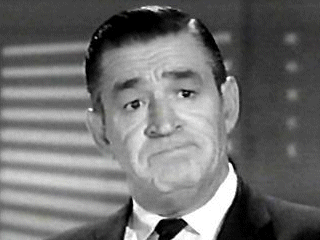
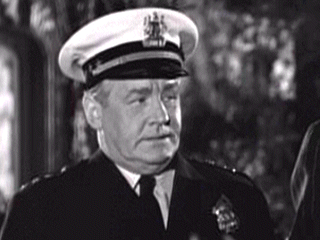
(7) Joseph Crehan. Joe Crehan served more movie time as police commissioner than Rick Parry has put in as Governor of Texas. He was the perfect choice for the role as Tom Dugan, a manager and buddy to William Bendix in the 1950 film, “Kill the Umpire.” Crehan was just another of the wonderful old Irish-American character actors that were as natural a mix as corn beef and cabbage when it came to baseball movies. You really believed that Crehan’s players were going to listen to what he had to say.

John Mahoney

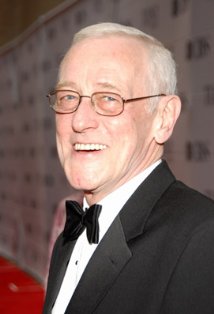
(8) John Mahoney. My eighth man in starred in 1988’s “Eight Men Out” as Chicago White Sox manager Kid Gleason of the more commonly know 1919 Black Sox, the club that threw the World Series to the Cincinnati Reds through gambler Arnold Rothstein and the arguable complicity of six to eight White Sox players. Mahoney comes across as the honest manager who may have been guilty, with several others, of simply looking the other way when some serious shenanigans were taking place between a few 1919 White Sox players and some very serious gamblers. I don’t know what real manager Gleason knew or didn’t know, but I do think actor John Mahoney did a most credible job of portraying his look-away stance in the movie. All of the innocent inside bystanders to the fix in the White Sox Scandal are remindful of Claude Rains as Captain Renault in “Casablanca,” when he shuts down Rick’s Cafe American on a trumped up charge after receiving his own winnings. “I am shocked to find that gambling is going on here,” Renault exclaims. – John Mahoney will always be best remembered as Kelsey Grammer’s dad on “Frazier,” but he will always be my “eighth man in” too when it comes to picking actors who play well as baseball managers.

At any rate, these are my choices. Do you have any favorite movie actor/managers? I did leave Tom Hanks out there, for one, but there others who rate a vote too. Or maybe even give some consideration to actors who never have, but could play managers on the big or little screens. I’d love to hear your thoughts on all the fine thought of my “eight men in,” plus the others I left out..