Cool Hand Luke Prevails Over Astros Future

September 29, 2011

"What we've got here is - failure to communicate." - Captain, Cool Hand Luke.

“What we’ve got here is – failure to communicate.”

The Captain’s immortal lines from 1967’s Paul Newman classic prison road gang film, Cool Hand Luke, live again through the conclusion of this 50th and most disastrous Astros season of 2010. You can read it in everything that’s going on – and not going on. And what’s primarily not going on is a clear understanding in Commissioner Bud Selig’s office (or mind) as to how destructive this mishandled delay in the final approval of new owner Jim Crane is to fan support that’s needed now on top of the worst year in team history.

Drayton McLane, Jr. can go on television daily, if he so chooses, to reassure the world that everything that’s not happening now is simply part of the due diligence process, but that’s not going to halt the suspicions of Crane that are growing among many fans from the few aspersions upon his character that have fallen upon him as a result of the news about his company’s alleged war-price-gouging and unfair racial hiring practices. It isn’t fair to put that kind of information out there into an environment that hungers for trust and gets nothing but gust. – Unless you are trying to bring someone down with slanderous or libelous talk, that’s the deadliest “failure to communicate” that someone in authority can make about a potential member of the corporate (MLB) family. – The longer this decision hangs in the air, unresolved, the more it dissolves into distrust and a failure to communicate anything positive about the group that is willing to pay $680 million dollars for this wonderful opportunity.

How fair is that? And now hard is it now going to be to build trust in the season ticket holders that are being asked to renew for 2011 in the cloud of all this uncertainty – and with the  Astros’ bullpen in the Cardinal series offering a likely preview of what they will be buying into for 2011?

Add to all this “failure to communicate” the growing worm-suspicion that Selig is really just using this extra time to pressure Jim Crane into moving the Astros to the American League West as a condition of his approval as the club’s new owner. – No matter how strongly many of us feel in opposition to an AL-move, Mr. Crane no longer has that option with any of us. If Crane were approved today as the new club owner – and even waited until next year to explain that he has approved the move of Houston to the AL – we would not believe him. We would blame Bud Selig.

Commissioner Selig, and all of those who thrive upon Draconian dances with their hidden agendae, seem to not get the most basic facts about communication: Failure to communicate always communicates distrust in the process of whatever is going on to the very person or people you are trying to reach. In this case, the Commissioner of Baseball risks further alienation from the fans of Houston as he also earns new distrust from a man who has been willing, up until now, to put up $680 million dollars for the opportunity of owning a big league team in Houston.

If I were Jim Crane, I would look at the assets and talent I’m getting for my dollar in October 2011, I would look at the damage that has been done to my clean slate with the fans by this sorry process of “accidental” (at best, clumsy) assault upon my reputation, and I would look at what I’m now facing as the challenge to building positive steam again. Under no circumstances would I agree to move the franchise to the AL as a condition of my approval – and I would very seriously ask myself, bottom line: Is this what I signed on for? Is all this worth $680 million dollars?

No failure to communicate with myself on these two questions. If I don’t get two powerful YES answers, I’m out of here.

Let the Commissioner take out his failure to understand the dynamics of communication on somebody else. He’s already toasted Houston for whomever follows in my wake, should I decide to go.


The Astros’ Next to Last 2011 Hurrah

September 28, 2011

Sept. 27, 2011: In their next to last game of the season, the 2011 Houston Astros blew a 5-0 lead and took a 13-6 whacking from the St. Louis Cardinals for their record (so far) 105th loss of the year.


The outlook wasn’t brilliant for the Astros nine last May,

With Drayton selling off the team and Jim Crane here, they say,

The deal ran into questions on war profits and fair play,

And Selig threw the dad gum thing into profound delay.


Meanwhile, the team kept losing – and trading off its stars,

And losses found the pile-on gear – and towered clear to Mars,

And when the deed was said and done – with one game left to play,

The losses stacked to 105 – with Crane still held at bay.


We’ve got some good young players now – and some of us can wait,

Til they grow up – to play their best. – We’ll still support the gate.

But get Crane in – or get him out. – Let’s get the owner settled.

And cut the AL/DH talk – and don’t mistake our metal.


A bunch of us are NL first – and ONLY NL too,

And we won’t make the games at all – for Selig’s AL brew,

The DH ain’t the game we love – and we won’t hang around,

To watch that sorry rule used here. – On that – we stand our ground.


“Give us baseball – or give us death,” – in Patrick Henry fashion.

An owner we trust – and a passion to bust – and no mo NL trashin.’

Give us the best! – Get out-of-the-way! – Then, watch that gate spin wild.

We’ve still got a champion’s title to take. – We’re tired of baseball-mild.

Michael Hogue’s Portrait of Oscar Charleston

September 27, 2011

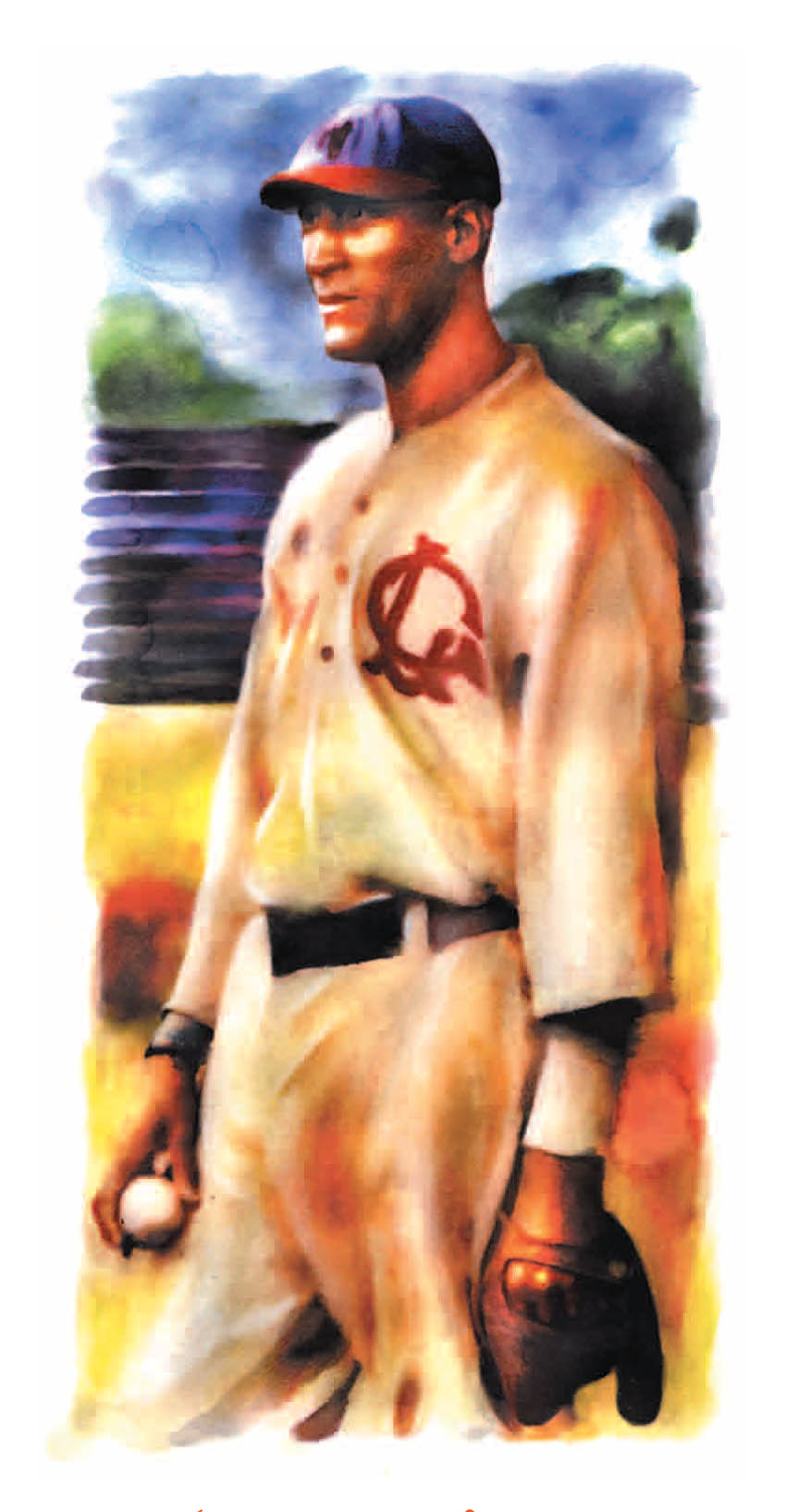
The following art and text by Michael Hogue of The Dallas Morning News is reproduced here in The Pecan Park Eagle by written permission from Michael Hogue. Today’s portrait features a look at the reputedly best player in the history of the Negro Leagues, Oscar Charleston.

Oscar Charleston is our “Offering 7″ in this series and a continuation of this fine Texas artist’s work, Portraits of the Negro Leagues. Thank you again, Michael, for allowing The Pecan Park Eagle to further share the beauty and joy of your work with those who care about the Negro Leagues and their place in baseball history.

For more on Michael Hogue’s work, check out his website:

http://www.michaelhogue.com

Oscar Charleston, Center Fielder, Negro Leagues, 1915-1944, Baseball Hall of Fame, 1976.

Oscar Charleston by Michael Hogue of The Dallas Morning News

In a 1952 Pittsburgh Courier poll, sports writers voted Charleston the greatest Negro Leagues player of all time. A 2000 poll of former Negro League players reached the same conclusion.

He was a versatile player who batted over .300 most years. He combined speed, a strong arm and fielding instincts to become a standout center fielder. He also managed several teams during his 40-year career in black baseball.


Headlining the Texans’ Sainted Loss

September 26, 2011

Heartache’s sad  headlines – all tell the tale,

Sunday was lost – ‘fore our ship could win-sail.

That’s a neaux geaux – read the Chronicle lines,

Houston’s fond hope – must again ride the pines.


Schaub was good, Brees was great,

Stumbling and rumbling, they sounded debate,

With no time to chew – and hard masticate,

Matt lost his cud – in the 4th quarter gate.


Casey earns the spotlight – no question of that,

Big James is a winner – a hard-rumbling cat,

He blocked, caught, and ran – made a diving snatch too,

We’re going to hear more – ‘fore this young man is through.


And sleek man, Sir Andre – was Johnson enough,

To turn out the lights on the “who dat?” crowd stuff,

But he can’t do it all – with a fake – and a bluff,

Gotta get him the ball – when the going gets tough.


The big missing headline – is easy to see,

Even for base-balling people like me,

You can’t win in football – philosophically,

By Going for Seven – and Settling for Three.

Michael Hogue’s Portrait of Cool Papa Bell

September 25, 2011

The following art and text by Michael Hogue of The Dallas Morning News is reproduced here in The Pecan Park Eagle by written permission from Michael Hogue. Today’s portrait features a look at the incredible Negro Leagues speedster base runner, Cool Papa Bell. Satchel Paige offered a number of accounts designed to put Cool Papa’s speed in perspective, but I’ve always preferred this one to all others. According to Satchel, Cool Papa once hit a blazing shot back through the box. It quickly went through Paige’s legs, but never made it to the outfield. “It would’ve gone to center field,” Satchel said, “but it hit Cool Papa Bell in the back as he was sliding into second base.”

Cool Papa Bell is our “Offering 6″ in this series and a continuation of this fine Texas artist’s work, Portraits of the Negro Leagues. Thank you again, Michael, for allowing TPPE to further share the beauty and joy of your work with those who care about the Negro Leagues and their place in baseball history.

For more on Michael Hogue’s work, check out his website:

http://www.michaelhogue.com

James "Cool Papa" Bell, Center Fielder, Negro Leagues, 1922-1950, Baseball Hall of Fame, 1974.

James “Cool Papa” Bell by Michael Hogue of The Dallas Morning News

“Contemporaries considered Bell the fastest man in baseball history. He was once clocked rounding the bases in an astounding 12 seconds. He was so fast that gold medalist Jesse Owens refused to race him.

“A teammate (Satchel Paige) once said, ‘Cool Papa could turn off the lights and be in bed before the room got dark.’

“In exhibition games against major league competition, he compiled a .391 average.

“Bell played until age 43, when he retired with a batting average of .341.

“After his baseball career, he worked as a custodian at the St. Louis City Hall, retiring in 1970.”

Michael Hogue’s Portrait of Josh Gibson

September 24, 2011

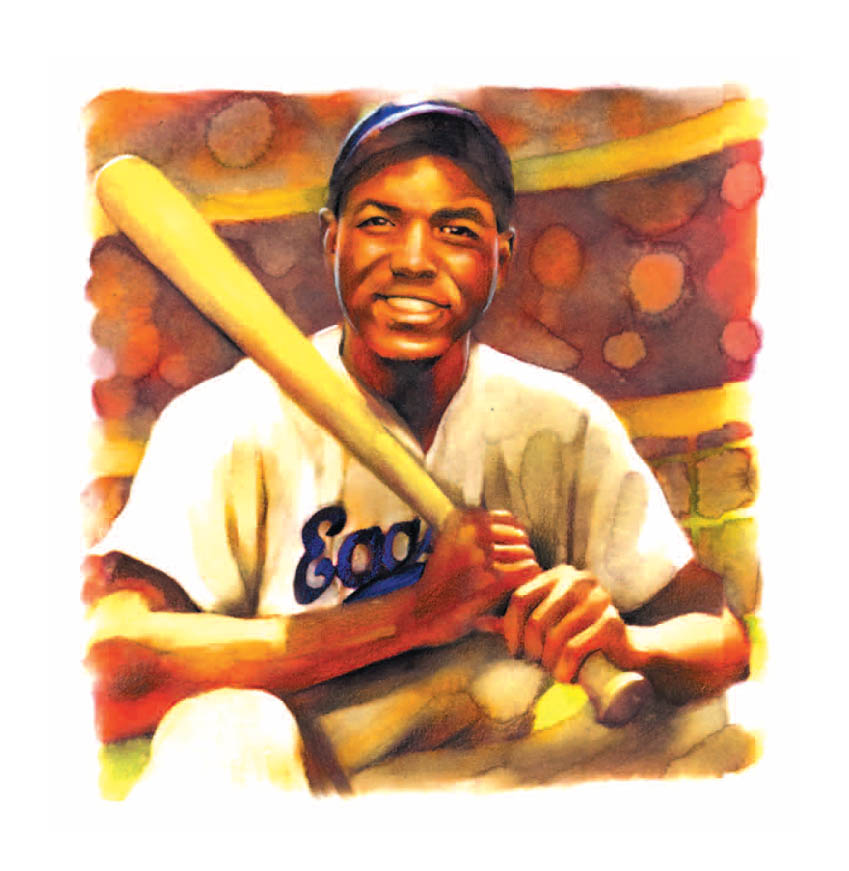
The following art and text by Michael Hogue of The Dallas Morning News is reproduced here in The Pecan Park Eagle by written permission from Michael Hogue. Today’s portrait features a look at the great Negro Leagues slugger, catcher Josh Gibson. It is our “Offering 5″ in this series and a continuation of this fine Texas artist’s work, Portraits of the Negro Leagues. Thank you again, Michael, for allowing TPPE to further share the beauty and joy of your work with those who care about the Negro Leagues and their place in baseball history.

For more on Michael Hogue’s work, check out his website:

http://www.michaelhogue.com

Joshua "Josh" Gibson, Catcher, Negro Leagues, 1930-1946, Hall od Fame, 1972.

Josh Gibson by Michael Hogue of The Dallas Morning News

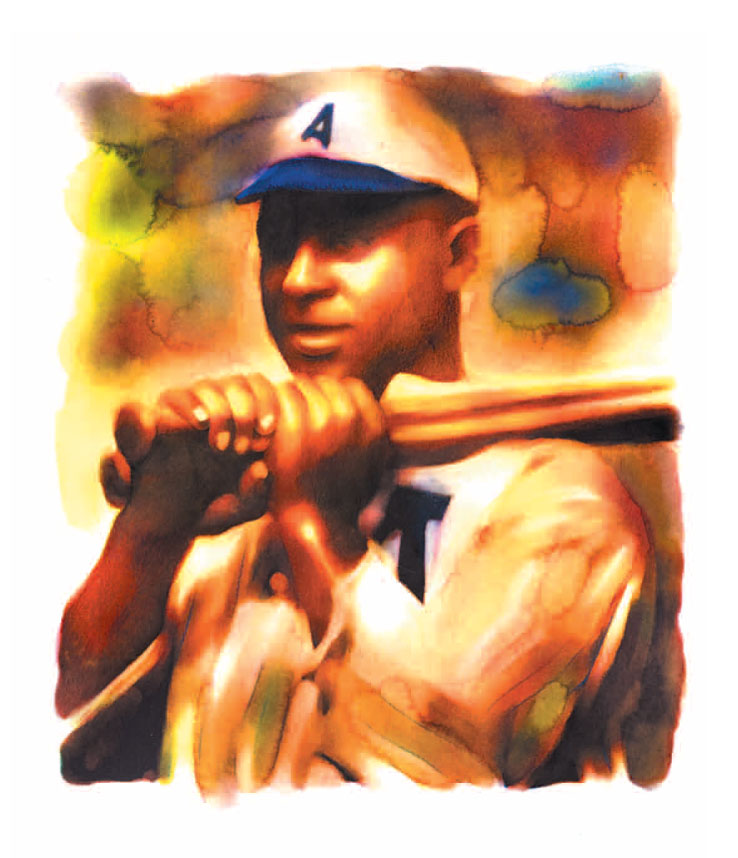
“Called the ‘Black Babe Ruth,’ Gibson was black baseball’s greatest slugger. His tape-measure home runs came so frequently that they were seen as the norm. He is credited with hitting 962 home runs, including 75 in 1931, 69 in 1934 and 84 in 1936.

“He also hit for average, compiling a .354 lifetime batting average in the Negro Leagues while winning four batting titles. In exhibition games against white major leaguers, Gibson hit over .400.

“Gibson’s hitting overshadowed his defense.

“Washington Senators Hall of Fame pitcher Walter Johnson said of Gibson: ‘There’s  catcher that any big-league club would buy for $200,000. — He can hit the ball a mile. He catches the ball so easy he might as well be in a rocking chair. Throws like a rifle.’

“While still clinging to hopes of playing major league ball, Gibson suffered a fatal stroke only a month following his 35th birthday.

“He became the second Negro Leagues star inducted into the National Baseball Hall of Fame.”


Michael Hogue’s Portrait of Willie Wells

September 23, 2011

The following art and text by Michael Hogue of The Dallas Morning News is reproduced here in The Pecan Park Eagle by written permission from Michael Hogue. Today’s portrait features one more look at another Texan, shortstop Willie Wells. It is our “Offering 4″ in this series and a continuation of this fine Texas artist’s work, Portraits of the Negro Leagues. Thank you again, Michael, for allowing TPPE to further share the beauty and joy of your work with those who care about the Negro Leagues and their place in baseball history.

For more on Michael Hogue’s work, check out his website:

http://www.michaelhogue.com


Willie "Devil" Wells, Shortstop, Negro Leagues, 1924-1948, Hall of Fame 1997.

Willie “Devil” Wells by Michael Hogue of The Dallas Morning News.

“Wells, a native of Austin, combined superior batting skills, slick fielding and speed on the bases to become an eight-time All-Star in the Negro Leagues. A power-hitting shortstop with sure hands, he ranks among the all-time Negro League leaders in doubles, triple, home runs and stolen bases. He recorded a lifetime .392 batting average against major leaguers in exhibition games.

“He is also credited with being the first player to wear a batting helmet. One day after being knocked unconscious by a bean ball, the story goes, Wells borrowed a hard hat before a game and wore it to the plate.”

Bob Hulsey: 7 Best Days in Houston Sports History

September 22, 2011

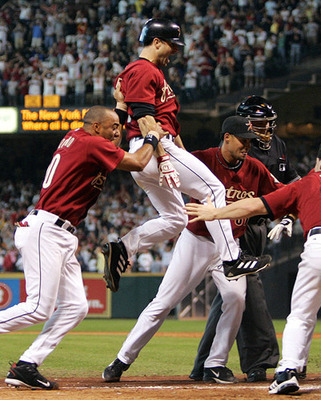
10/09/2005: Astro mates pull Chris Burke to earth so he can score after he rounds 3rd following his iconic 18th inning HR to carry his club to a 7-6 final win over Atlanta in the 2005 NLDS.

Good friend and affable curmudgeon Bob Hulsey of Astros Daily just could not let t e after I wrote that column the other day on the six worst days in Houston sports history. Bob has written to suggest that these following moments were correspondingly also the yang to my ying as the seven best days in Houston sports history – and, we shall presume, in order of their appearance as he has listed them. So. here they are, with the addition of my own interspersed commentary along the way:

Bob Hulsey’s 7 Best Days in Houston Sports History.

(1) June 22, 1994: First NBA Crown / Houston, TX / The Houston Rockets defeat the New York Knicks in Game 7 of the NBA Finals, 90-84, th capture the city’s first major sports title. (Those earlier  AFL titles by the Houston Oilers and old Houston Aeros minor league hockey crowns apparently did not count for diddily by Hulsey’s yardstick.)

(2) October 19, 2005: First National League Pennant / St. Louis, MO / Winning 5-1 behind ace Roy Oswalt, the Houston Astros defeat the St. Louis Cardinals in Game Six of the NLCS to take their first NL pennant and advance to the World Series against the Chicago White Sox. In the process, Oswalt signs up for history as the last winning pitcher in the last two games ever played at old Busch II Stadium in St. Louis. Oswalt also had been the winner in Game Two of the Series. That one was played on October 13th and also went to Houston by a 4-1 score. For all you trivia fans, please note: Jason Lane of the Astros left two marks in Game Six: (a) Jason Lane  hit the last home run in Busch II history, and (b) Lane also recorded the last putout in Busch II when his capture of a fly ball in right field in the ninth ended the game.

(3) December 29, 1979: Oilers Win Playoff Road Game in Spite of Major Injuries / San Diego, CA / Despite injuries that take out starting OB Dan Pastorini, superman RB Earl Campbell, and stellar wide receiver Kenny Burrough, the Houston Oilers defeat the San Diego Chargers on their home turf by 17-14 to advance to the heartbreaking Renfro-incident AFC final game against the Steelers in Pittsburgh, Later, Oilers defensive coordinator Ed Biles admits that the Houston staff had stolen the Chargers’ signals and that the Oilers knew what was coming on every play. That information may have helped seal a win that otherwise seemed improbable at the first half kick off.

(4) September 25, 1986: Mike Scott’s No-Hitter Clinches NLW Title on Last Day / Houston, TX / As San Francisco hitter Will Clark rolled out to Astros first baseman Glenn Davis to end the game and seal Mike Scott’s 2-0 no-hit win and the club’s division title clincher, the Houston ace did a sideways-stepping dance and bunny hop run to first with both hands reaching high for the fountains of joy. It may have been the greatest moment of elation in Astros history, had it not been for the Chris Burke homer that came down the road 19 years later. Any way you slice it, it was a fine, fine, fine day to be resident of Astros Nation.

(5) September 08, 2002: Texans Defeat Cowboys in Their First Official NFL Game / Houston, TX / The Houston Texans defeated the Dallas Cowboys, 19-10, in their first regular season game ever played at Reliant Stadium – or anyplace else. A young rookie QB named David Carr threw for 145 yards against the bad guys from North Texas and all seemed bright for a great future of early success for the newest club in the NFL. It’s a good thing that joy in the moment never has to answer to the hands of the clock.

(6) October 09, 2005: Burke’s Homer in 18th Defeats Braves, Advances Astros to NLCS Versus Cardinals / Houston, TX / Argue the joy meter comparison to Scott’s no-hitter all you want. My only reason for preferring Burke’s feat was that no one saw it coming. We were all pulling for Scott do what he finally did – but Burke just did it – blasting all of us out of the mind-numbing nine extra innings that had stunned us all on the heels of Houston’s dramatic late innings rally to send the game into the baseball netherworld. The relief of all that tension on the sudden win side was exhilarating to the nth degree.

(7) January 20, 1968: UH Stuns UCLA in Game of Century – Changes Face of College Basketball / Houston, TX / The UH Cougars (14-0) and Elvin Hayes defeated UCLA (13-0) and Lew Alcindor (Kareem Abdul Jabbar) before 52,693 people (including TPPE)  by a score of 71-69 to also end the Bruins’ 47-game winning streak and vault the Cougars to the number one ranking in the nation. It was the first nationally televised regular season collegiate basketball game – and it would change the face of how the game was carried on the way to its creation of March Madness. It was also the largest crowd ever assembled to that date to watch a basketball game. So glad I was there. And so happy that the wise Mr. Hulsey had the common sense to include at least one Cougar moment in the general history of the city’s greatest moments. Left to my own devices, I would have included UH’s 1967 football romp over Michigan State at East Lansing by a score of 37-7 on my personal list.

Hulsey adds that “you could also include the 1980 one-game playoff over the Dodgers or Craig Biggio’s 3,000th hit (game).” I agree. Both of those days were happy moments – as were both of Craig Biggio’s state championship moments at St. Thomas High School during his first two years as head coach of my old school, the Eagles.

Wonder how long it’s going to take for the Astros to bring Biggio back as their field manager on the big league level? Now there’s some potential for another great day in Houston sports history.

For now, I say, “Thank you, Bob Hulsey, for helping us to inventory our reasons for Houston sports gratitude during these tough times for our Houston Astros.

Michael Hogue’s Portrait of Smokey Joe Williams

September 21, 2011

The following art and text by Michael Hogue of The Dallas Morning News is reproduced here in The Pecan Park Eagle by written permission from Michael Hogue. It is our “Offering 3” in this series and a continuation of this fine Texas artist’s work, Portraits of the Negro Leagues. Thank you again, Michael, for allowing TPPE to further share the beauty and joy of your work with those who care about the Negro Leagues and their place in baseball history.

Smokey Joe Williams, Pitcher, 1910-1932, Hall of Fame, 1999.

Smokey Joe Williams by Michael Hogue

A tall, lanky right handed native of Seguin, Texas, Williams began his career pitching for the San Antonio Black Bronchos. He was the star pitcher in the early days of the Negro Leagues. Satchel Paige called Williams the best pitcher he had ever seen.

Pitching with exceptional velocity and control, Williams would routinely reach double-digits in strikeouts, once striking out 27 Kansas City Monarchs in a 12-inning game. Available statistics show that he compiled a 20-7 record, inducing 10 shutouts, against major league teams. Williams was voted the top pitcher in Negro League history in a 1952 Pittsburgh Courier poll.

The 6 Worst Days in Houston Sports History.

September 20, 2011

Here’s my list. I stopped at “6” – but not because that was all the moments that came to mind. To my mind, these simply were the worst. And after reaching the devil’s digit, it seemed to me a spurious waste of time to go any further. Of my six killer moments of shock, awe, grief and communal self-flagellation beyond the fact, two are from UH; two are from the Houston Astros; and two are from the Houston Oilers. Three had to do with football; two sprang from baseball; and one other (the biggest one) came from basketball, without it emanating from any of the “Choke City” moments in Houston Rockets history. I’m sure all of you hotter Rockets fans could, and will, find a way to work our pro dribblers higher on your own lists of “worst Houston moments in competitive athletics. In the meanwhile, here’s my painful entourage of self-indulgent sports suffering, my “6 Worst Days in Houston Sports History:”

(1) April 4, 1983, NCAA Basketball Division 1 Championship Game: North Carolina State 54 – University of Houston 52.
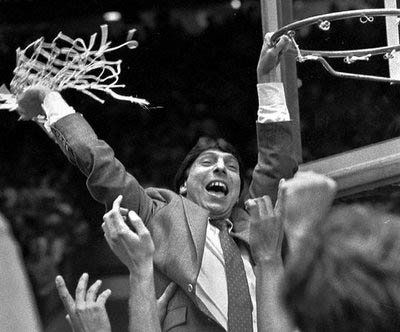
1983 NC State Coach Jimmy Valvano: The Face We Are Forced to Remember.

With the score tied 52-52 and seconds left for one more possible shot, NC State inbounded the all to Derek Whittenbourg on the side in the UH half of the court. Phi Slamma Jama UH center “Akeem” Olajuwon hung back to defend the basket, but suddenly, something happened to distract him from that most important job. – The incoming ball trickled off the fingers of Whittenbourg as he attempted to catch in the inbounds pass. It almost looked like a free ball. It was enough to make Akeem feel he could leave his place and pursue the play. He left his post, advancing toward Whittenbourg and the bouncing away ball. Just as quickly, Whittenbourg pursued and snatched up the ball before anyone else could get it and, just as quickly, he arched a high unmeasured shot at the basket from 30 feet out. The ball fell short, but there was no Olajuwon in the paint to either snatch or bang the ball away so the game could go to overtime. Instead, lanky Lorenzo Charles of NC State raced into the moment, grabbing the air ball lob and slamming it into the hoop as the clock ticked down to the end of the game. The NC State Wolfpack had rallied from a double-digit deficit to defeat the Houston Cougars, 54-52, at the buzzer, setting in motion a stream of soon and forever consequences for blowing a game we should have won going away: The obvious penalties begin with one that fellow sufferer Bob Hulsey recalled the other day when I was writing about another local heartache loss: (a) We are forced to remember the name and image of Coach Jim Valvano running up and down the court in Albuquerque in post-game celebration. They show the dad gum clip every year in prelude to the drama of the NCAA Finals; and (b) this loss, more than any other factor, is the probable reason that UH Coach Guy Lewis steadily has been ignored for induction into the Basketball Hall of Fame, a real shame in itself.

(2) October 15, 1986, Game 6, 1986 NLCS: New York Mets 7 – Houston Astros 6. (16 innings) (Mets win NL Pennant, 4 games to 2.

Mike Scott never got to see Game 7 of the 1986 NLCS.

Going into the top of the 9th, the Astros led the New York Mets, 3-0, behind a dominant effort by starter Bob Knepper. Everything seemed aligned for a Houston victory to tie the Series at 3-3 in games won, forcing the Mets to pee in their pants at the thought of facing nemesis Mike Scott of the Astros in the deciding championship game the next day.
Then, as all these stories today bind together on common ground, here came the “then it happened” part.
The Mets got to Knepper and the Astros in the 9th for 3 runs that tied the game and hurdled things into extra innings. The Astros tied the game again in the 14th on the now famous homer by Bill Hatcher in the 14th – and they almost rallied to tie the game again in the bottom of the 16th. With Glenn Davis running at second and Kevin Bass at the plate, Mets reliever Jessie Orosco leaned in to try to quell all hope. He did it. He got Bass to swing at one in the dirt and all hope was done.
There would be no Mike Scott in Game 7. There would be no tomorrow for the Astros. There would be no first pennant for Houston for another 19 seasons down the road. The knife-twists of championship game losses are often hard to see when they first happen, but they do tend to produce the images of the mind that seem to most often come out on nights down the road when we can’t sleep anyway. It’s a state of mind call hell.
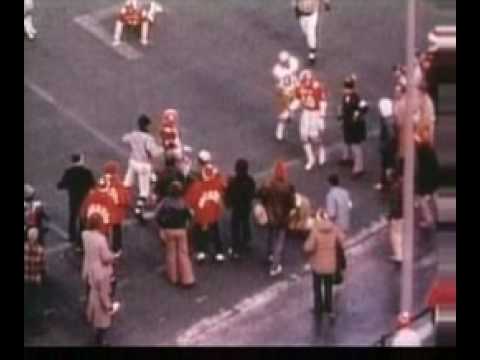
(3) January 1, 1979, The Cotton Bowl: Notre Dame Fighting Irish 35 – Houston Cougars 34.
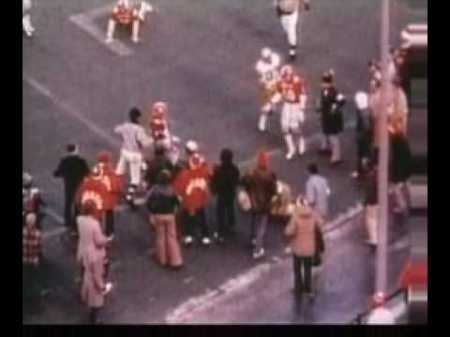
Kris Haines of ND allegedly catches tying TD pass from Joe Montana (with PAT) in-bounds as time expires.

I was there. Along with family and friends that included by best bud and loyal ND fan from New Orleans, Don Marquis. After surviving an icy road slide through the air off I-10 and over a ditch on the way home to Houston, we shall remember that time as our survival of the Ice Bowl. The game temp was 8 degrees with the strong wind chill from the north taking us down to 18 degrees below zero. Sitting in the stands first required an ice breaker on each metal seat, plus, you had to drink your coffee fast. My first cup froze in my gloved hand within two minutes. After that, I fast learned. It was gulp first. Talk later. Long story short. Cold and the powerful north wind ruled all scoring under chalk gray skies If anyone scored, they had to be moving the ball south. And those facts are the tide behind this story. We simply didn’t know it until the very end. With 7:37 left in the game, the Cougars led Notre Dame by 34 12. ND QB Joe Montana was still playing lame from effects of the flu and I was even beginning to feel compassion for my ND friend from New Orleans. He had come all the way from New Orleans to witness his team play and apparently lose under these sorry conditions. Watch out for competitor sympathy. It will get you every time. We forgot. ND may have been losing, but they had the wind at their backs. That’s when Montana woke up and the breaks also started falling ND’s way. With time running out, Montana had brought ND back to a 28-34 deficit – and the Irish had the ball inside the UH 20 with time for one more play. That’s when Joe Montana found receiver Kris Haines in the end zone, allegedly in-bounds as he made a falling away catch on the far right sideline on the last play of the day. The PAT gave the Irish a 35-34 incredible comeback win, sealing Joe Montana’s mystique in his last college game and heading him off to the Pros for a Hall of Fame career as football’s Houdini. There was no National Championship on the line that frozen day in Dallas. It just hurt bad for Cougars to watch a victory over fable Notre Dame slip so tortuously away on the last play of the game.
(4) October 12, 1980, NLCS Game 5: Philadelphia Phillies 8 – Houston Astros 7 (10 innings) (Phillies Win Pennant, 3 games to 1.)
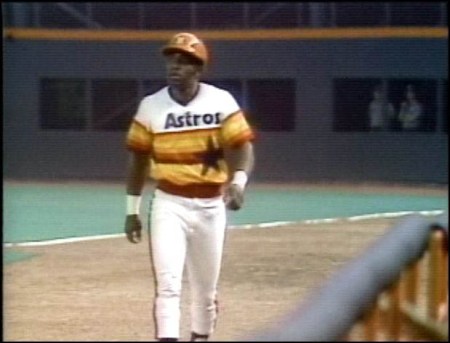
The returning spirit of Little Joe Morgan was not enough medicine for the Astros against the goblins of 1980.

1980 was the year of double duty damnation in Houston Astros history. A day earlier, the Astros had lost another winnable heartbreaker to the Phillies by a score of 5-3 in ten innings. It was best three of five games proposition back in 1980 and the Astros had home team advantage again in Game Six. Things really looked good going into the top of the 8th. The Astros had a 5-2 lead with Nolan Ryan pitching. How could we lose? Right? Then it happened. The Phillies rallied through several flukey plays to score 5 runs in their eight for a 7-5 lead. The Astros did rally to tie the game, but the Phils won it, 8-7, in ten. It would be another six years before the Astros could again break our hearts near the finish line. (5)
(5) January 3, 1993, NFL AFC Wild Card Game: Buffalo Bills 41 – Houston Oilers 38 (OT).
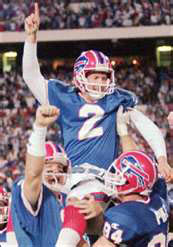
1993: Bills Celebrate 41-38 Over Oilers in NFL Playoff History

The game was at Buffalo, but the Oilers were mangling the Bills. Early in the 3rd quarter, Houston score the first touchdown of the second half to extend their ridiculous lead to 35-3. Even on television, you could see the old “LovYaBlues” beginning to celebrate on the sidelines. They weren’t chest-bumping back then, but the high-fiving fools were out in full blast. Then it happened. Led by back-up QB Frank Reich, the Bills began to battle back like Popeye on a quick-fix spinach high. First they finally scored a TD. Then they did it again. And Again. And again – and as the Oilers kept going three-and-done. A friend called to ask a rhetorical question: “Can you believe what we are seeing?” By game’s end, the score was tied 38-38. The Bills then won it in OT by 41-38. And I had to call my friend back and ask: “Can you believe what just happened?” Silence reigned. After the game, I had to drive down to the landfill. I had to see if I cold find the rest of my heart, or, that is, the parts that were left of it from earlier burns by the Buffs, Astros, Cougars, and Rockets.
(6) January 6, 1980: NFL AFC Championship Game: Pittsburgh Steelers 27- Houston Oilers 13.
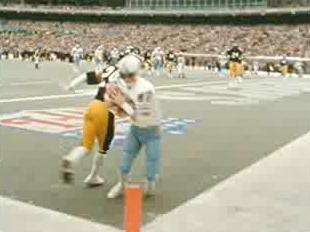
Replays showed Renfro was in, but the refs called him out-of-bounds.

Driving in the second half, but trailing 20-13, Dan Pastorini of Oilers found receiver Mike Renfro in the back of the end zone for an apparent tying touchdown. That’s what the replays seemed to clearly show, anyway, but there was no appeal process in place back then. The field refs called Renfro out-of-bounds. End of story.

Except for one thing. The call just seemed to take the wind out of the Oilers’ sails. They lost old “MO” – even giving up another TD to the home club Steelers – enough to clear the way for a 27-13 Pittsburgh victory on its way to another Super Bowl win.

The disappointment did inspire the famous Bum Phillips “We’re going back next year and kick the door in” speech, but it never happened. Houston was shredded again.

Hope Survives. The Rockets have won a couple of NBA championships since these bleaker days and the Astros have been to their first World Series. Our new pro football Texans are 2-0 in 2011. And all those other fans who go crazy over sports in which hardly anybody ever scores are excited about soccer’s Houston Dynamo and their new downtown stadium.

We’ll get there, if we have to get there in various scattered pieces. Nobody ever said that glory comes cheap.