Archive for the ‘Uncategorized’ Category

1971: Cy Fair Hoosiers Wheatley

January 25, 2011

CY FAIR BOBCATS: 1971 NATIONAL CHAMPIONS

Guest Column Introduction: Today’s column is an iconic story on local basketball history by Randy Foltin. Randy is a fine fellow, one I’ve come to know as a research colleague and a genuine grass roots force on the subject of historical preservation. He devotes countless hours to the most arcane subjects of historical inquiry because he understands that, if a subject has anything to do with the making of Houston, Harris County, and Southeast Texas, ii is the mud and mortar of the house we all built as our community on the way to 2011.

Foltin’s narrative on the 1971 arrival of Cy Fair High School as both a local and national force in basketball is such a story. Enjoy.

1971: CY FAIR “HOOSIERS” WHEATLEY

By Randy Foltin, Guest Columnist to The Pecan Park Eagle

On Friday, January 28, 2011, at the Cy-Fair boys’ home basketball game, Cy-Fair will honor the 1971 state basketball championship team as they take the court as a team for one last hurrah. There are aspects of this team’s accomplishments that are more than noteworthy, and those achievements were recognized as voters across the nation awarded them the votes necessary to lay claim to the national championship.

Prior to 1970, Cy-Fair had been playing varsity sports for about 30 years without any noteworthy achievement of any type, other than just fielding teams. As such, they had been nothing more than just a blip on the radar screen. Still a 3A team in 1970 when the chasm between 3A and 4A was as wide as that between high school and college, Cy-Fair did reach the basketball championship game that year losing to Kerrville Tivy.

Two mainstays of the 1970 team, Larry Matthews (lost to graduation) and Duck Wilson (“lured” to a “name” Houston city team) were now missing in action. Going into the 1971 season, Cy-Fair was very much still a rural area at the time, but they were being cast forward into 4A lvele competition, the top classification in the state, and also into one of the toughest basketball districts in the state at that time. Competition would include the still then thriving Spring Branch schools, Conroe, and Aldine. The braintrusts of high school basketball at the time held little prospect for Cy-Fair’s basketball fortunes to continue.

I had attended most of the games in 1970, and I also went to one playoff game that year, as well, enduring heartbreak at the championship game. In the fall of the 1970-71 year, I was playing over at a friend’s house one Saturday afternoon, when my friend’s mom popped her head outside to announce that Cy-Fair’s first basketball game was to be held that night at the Cy-Fair gym.

Starting that night, and for the remainder of the season, every breaking day was centered around the excitement of knowing that I would be going to a Cy-Fair basketball game, either that day or very soon. I was a 10-year old 5th grader and after basketball practice, my friend and I, without wasting a second, would pull our pants up over our shoes and kneepads (there was not a moment to spare to get to that gym) and run down the outside covered corridor to get to the place where our heros congregated to display their basketball wizardry before packed houses.

People would be sitting on and around the perimeter of the out of bounds area, from the baseline to the wall. Fans camped out overnight to buy tickets for most any game. We in our community knew we had something special, and the bond of community was never more palpable than when we were confined in tight quarters to pull for David, now toe to toe with the Goliaths from 4A at every jump ball.

So, as to let the naysayers be put on notice, Cy-Fair rocked the basketball nation by beating Wheatley, and snapping their 72-game winning streak, at the Arlington tournament that fall. Wheatley at that time was the basketball dynasty of all dynasties, and most certainly in Texas. How could a school that no one has ever heard of pull off such an upset? Surely this was just an anomoly on the road to the state tournament that Wheatley would surely recapture as they had year after year.

And Cy-Fair would be lost in the turmoil of the race to capture the vaunted 16-4A disrtict crown, certainly it would seem. Every district game that year seemed to be of such a critical nature. Spring Woods, Spring Branch, Memorial, Westchester and Cy-Fair all seemed as likely as the other to be in position to take home the laurels. And one must remember that at that time, only one team, that being the district champion, would advance to the state tournament.

Then it happened. Cy-Fair’s fortunes could easily hinge on what seemed a probable loss as they now trailed Memorial 71-69 with only 3 seconds on the clock. Cy-Fair would be taking the ball inbounds from under the Memorial basket with a full court and eternity to go. The Memorial fans were chanting, “71! 71! 71!”, during the timeout that preceded the play, as though the score of 71 was foretelling their “destiny” to go to state in 1971.

I remember where I was sitting, and I did not need to jump into the air as the fans that were jammed into the bleachers jumped so high that it thrust me into the air as if I had indeed jumped myself, when the ball was thrown in to Bobby Metcalf at halfcourt, he pivoted and launched the ball that ripped the net to tie the score at 71. To say that jubilation erupted would be an understatement. But this was 1971 and the 3-point shot was years away. Now the hardwood warriors would go to a 4th, a 5th, and now a 6th overtime period before settling the score with a Cy-Fair victory.

Why did it seem destined that Cy-Fair and Wheatley would meet again in the state finals? They were just Cy-Fair, and Wheatley was ”who we thought they were”. After all, even after the Memorial game, Cy-Fair still had several important district clashes and who was to say that they would even advance through the state brackets if the did win 16-4A? Well, the team and their coach believed it, and the tightly forged Cy Fair community believed it too.

And even up to the very last game some didn’t believe it when, after Cy-Fair had just won their state semi-final game by the score of 58-55, at Gregory Gym in Austin, a little old school, trash-talking took place between the exiting Cy Fair and entering Wheatley fans. The latter group was filing in for their own Wheatley club’s semi-final game and one of them needed to let Cy Fair fans know they weren’t worried. The Wheatley fan was heard to exclaim that 58 points is what Wheatley would score by halftime at any of their games.

The next day, Cy-Fair beat Wheatley for the second time that year to claim the 1971 4A state championship by the score of 72-58.

To say that I and all other Cy-Fair fans were in a state of euphoria would be understating the ecstasy that swelled within our hearts and launched the tears of sheer unbridled joy that ran down our cheeks. As I write this portion now, I can feel some sense of the memory even these 40 years later. It was a dizzying, swirling atmoshpere on the Gregory Gym floor that day in the aftermath of the final buzzer sounding. It seemed such an instantaneous outpooring of events and emotion such as one might see in our ever present video-documented world of today in which something unexpected and shocking happens while the cameras are rolling. I don’t remember any words being exchanged, just the chaos and mass of humanity moving in slow motion, where in the same frame the dejection and bitterness that embroiled the Wheatley players and fans was evenly matched by the Cy-Fair players and fans being lifted higher and higher into basketball heaven.

And there we forever have remained.

Those are the highlights of the season, and you cannot dismiss any school with a national championship banner draped across the rafters. Jerry Mercer, Ronnie and Donald “Red” Dunlap, Bobby Metcalf, Andrew Jones (now deceased), Pat Kasper and the other team members were not only one of Houston’s all-time great teams as a “team” is defined by the performance in one year, but in 1971 when Cy-Fair was an unknown, not only did they give an identity to a growing sports powerhouse when the “city savvy” Spring Branch district supporters referred to Cy-Fair as “Cy-Who” and “Hics from the Sticks”, but they forged a spirit for the school and the community that has never subsided.

You, I am sure, are familiar with “Bobcat Fight Never Dies”, an iconic phrase that symbolizes and captues the identity for all graduates.

I know that everyone in the Cy-Fair community who rallied around the team that year still carries a piece of that magic with them in their hearts and lives. That great things are possible, if only you will believe, and love one another.
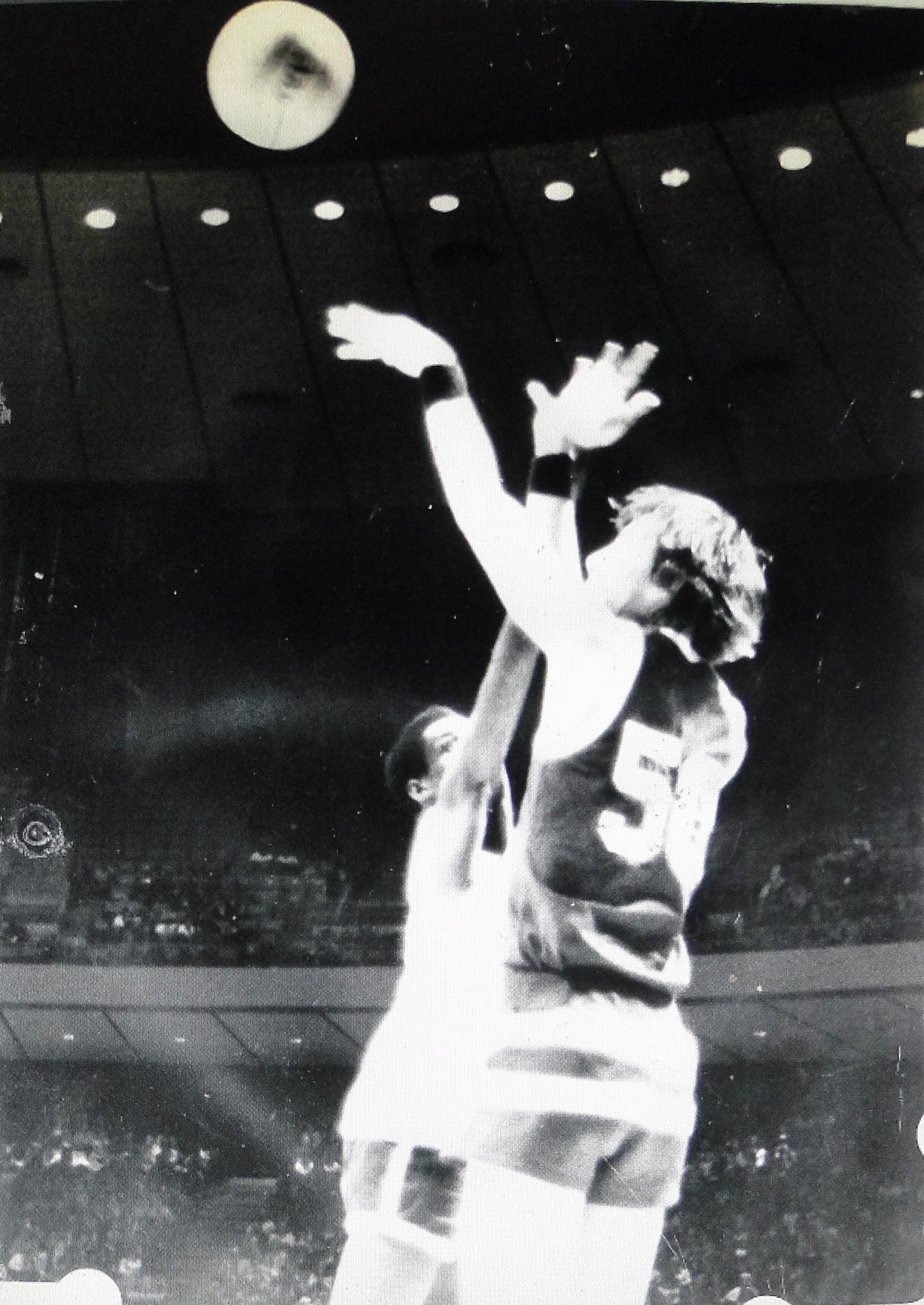
Guest Columnist Randy Foltin takes a shot from downtown for the 1978 Cy Fair Bobcats.

As it concerns touching the lives of the youth and what dreams it would inspire them to achieve. Well, here’s a photo of that 5th grader from 1971 as he shoots a jump shot in a state semi-final game in 1978 against, of course, Wheatley. The 1971 team had a direct bearing on the 1978 Cy-Fair team that also made the final four state tournament on which I was a starter. Their legend and spirit still reverberate now through the halls of the school.

And for this author of this piece, though it is not a daily occurrence, I can say that I think of that team and that time more often than one would think. There’s always a little room for magic in our lives, especially real magic that isn’t hyped, contrived or false. The events that I witnessed in 1971 were all true and came true as if though a fairy tale. In some ways, as time has removed me from the realities of that life from 40 years ago, it does seem more and more though it surely could only have been a myth or a legend, but I know it is true because I, the team, and everyone else at that school and in the community lived it. And I know that for all of those people today, despite adversity and hardship, or when everyone else has abandoned hope in a “lost cause”, that if only you will believe, despite all naysayers, that your dreams can and will come true.

I love those players and all the Cy-Fair community from that time and place. Thanks for the day and a little time to live in that real memory again…………and again and again.

As to the surprise ending that I alluded to early on in this essay, and this is an understanding of that team and that time that I only came to know well after the fact. The coach of that 1971 team, Ronnie Truitt, a man that I admired but did not know as I watched him from afar as he guided the team for the two year of their glory, played on the Milan, Indiana basketball team on which the film “Hoosiers” was based. There would be no film, but Cy-Fair had pulled off one of the greatest “Hoosiers” of all time. Heck, they did it twice in one season.

It seems so natural for our society to honor an Indiana team, as was done through that film, and rightfully so, but it has been such a “tradition” in Houston for we Houstonians to defer to others when our own accomplish the same, if not more, than others.

This coming Friday we celebrate the team’s 40th anniversary recognition at the Cy-Fair, January 28th basketball game so we can celebrate our own as one of the greatest Houston basketball teams in the history of this area

We will give them their just due. They were NATIONAL CHAMPIONS.
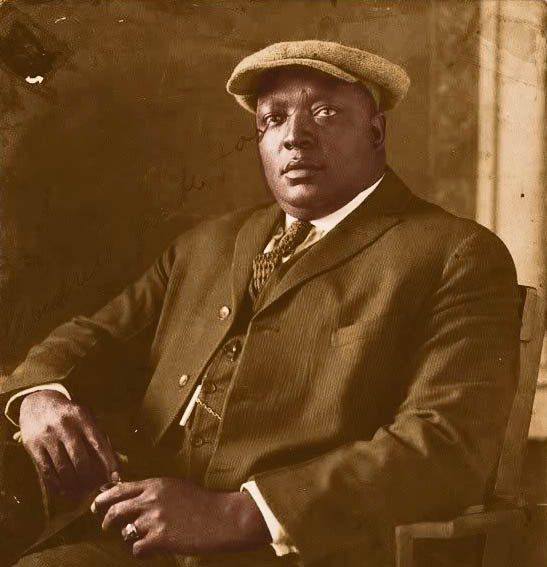

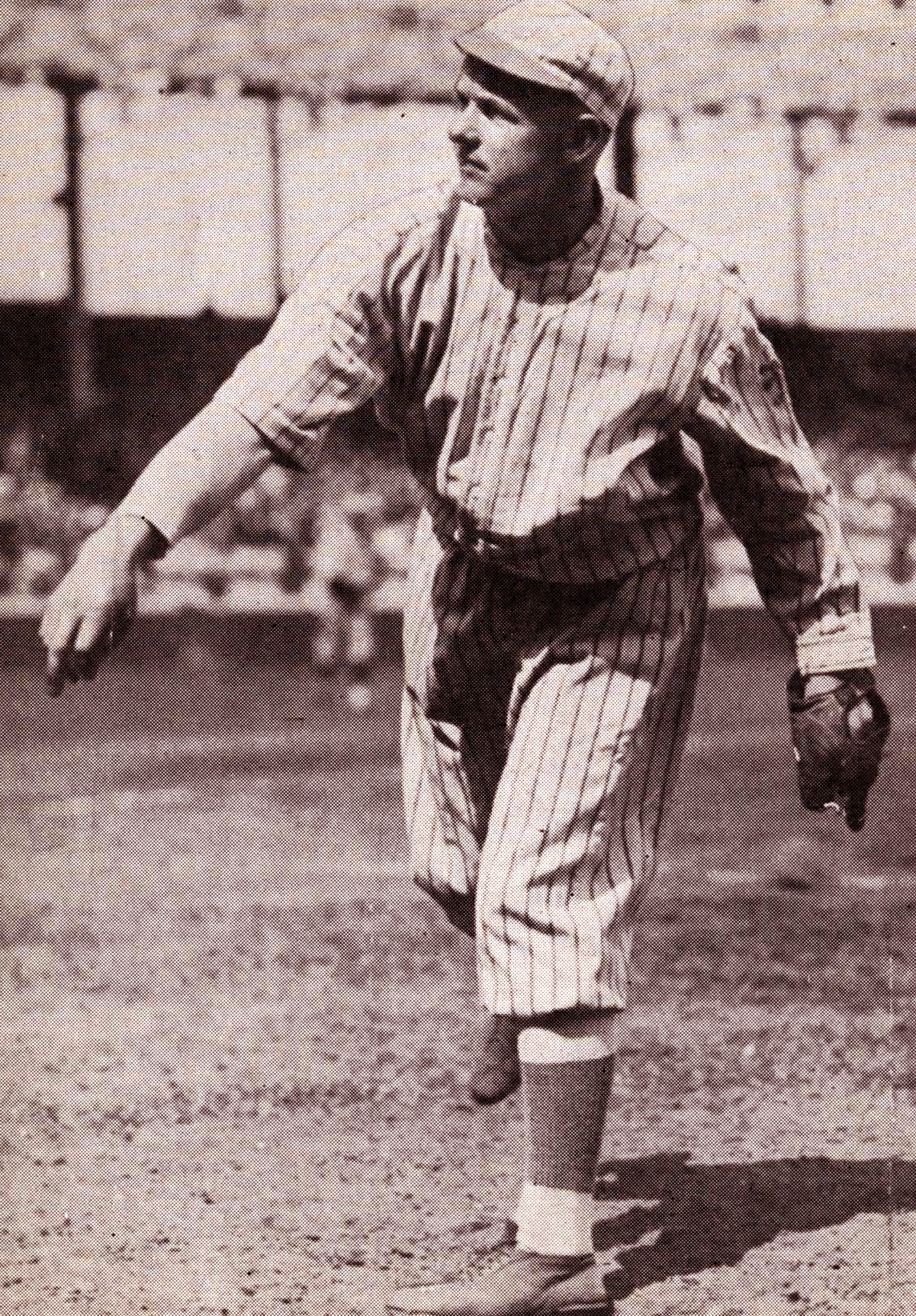
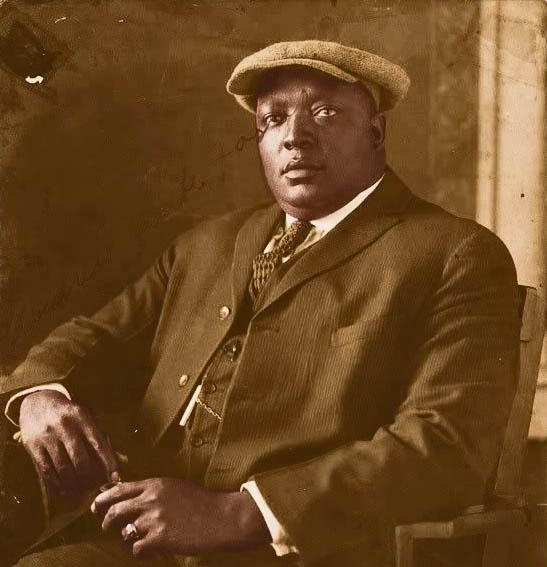
Rube Foster and Christy Mathewson

January 24, 2011

Rube Foster

Christy Mathewson

Rube Foster established himself as one of the great early Negro team pitchers at the very dawn of the 20th century. Foster went on to establish the Negro National League in 1920 as his major contribution to the survival of organized black baseball during the doleful days of wholesale player segregation prior to Jackie Robinson breaking the so-called color line with the Brooklyn Dodgers in 1947.

Christy Mathewson was a contemporary younger lifetime peer to Foster. Pitching mainly for the New York Giants, Mathewson went all the way to the Hall of Fame with a 17-year record of 373 wins, 188 loses, an ERA of 2.13, and 79 career shutouts. Much of his hard and clear success Christy rode on the back of his warhorse pitch, the “fadeaway.” That was Mathewson’s name for a pitch that would eventually spread to others and achieve greater identity as the “screwball.”

An ancient legend, one going all the way back to that early time, is – where did the young Mathewson learn how to throw such a deadly pitch at his at his tender age? Most suspicious eyes turned immediately to his New York Giants manager and close personal mentor, the one and only John McGraw.

The story with greatest adhesion centered on McGraw’s character and his history of trying to recruit talented “Negro” players and then passing them off as either Native Americans or Latin American players with the help of a name change. As far as we know, McGraw never got away with this ruse, but it wasn’t hard to hem that history to either the possibility, or the probability, that McGraw finally settled for the next best thing to actual black player recruitment. – “How about bringing in one of the great Negro pitchers and paying him to teach my greatest young white guy how to throw his best pitch?”

Sounds reasonable and doable to me. It’s also reasonable to assume that a hungry Rube Foster could have used the money and been willing to trade his knowledge for cash. Isn’t that what teachers get paid to do?

Accessibility was no problem for the Foster-Mathewson legend either. In 1903, Rube Foster was pitching for the black club known as the Philadelphia X-Giants. In 1904, he moved over to the Philadelphia Giants, another Negro team of that era. Either way, Foster was just a short train ride away from New York City and the home of McGraw, Mathewson, and the famous New York Giants.

The problem here is the same set we always have with delicious legends that most people hope are true: (1) There’s no proof anywhere that it actually occurred; (2) Everyone who could know the truth is long ago dead; and (3) there is some suggestion that something else happened.

Mathewson says he learned the fadeaway in 1898 while pitching for the semi-pro Honesdale (PA) club. He picked it up from a left handed teammate named Dave Williams, a fellow who later had a short-term stay with the Boston Americans in 1902.

It helps to think of a fadeaway/screwball as a curve ball that breaks the other way because of the inverse twist of the wrist the pitcher applies to the ball at its release point. Viewed from a right-handed pitcher’s perspective, a screwball works basically in this way: Instead of breaking in on a right-handed batter, it falls away from the outside of the plate as it reaches the hitting zone. That fading-away motion, of course, is the reason that Mathewson called it his “fadeaway” pitch. Because it messes with a batter’s head, it later became more famously known as a “screwball.”

People who argue that Mathewson needed the fadeaway to even stick in the big leagues haven’t spent much time researching this incredible athlete’s background. As a fullback in football at Bucknell, for example, Christy Mathewson was named to the Walter Camp All American team in 1900. His baseball pitching success prior to the Giants seemed to be doing pretty well too with a superior fastball and his incredible pitch placement control. Had he not learned the fadeaway, he would have added or improved upon his curve to the extent of making a nice career for himself in the majors, anyway. That’s my guess.

The fadeaway may have been the pitch that exalted Christy Mathewson from good to great, but it wasn’t all he had, – and we’ll never know for sure where his total learning experience began and ended.

Personally, and in spite of Honest Christy’s own proclamations, I would not be surprised to know that Rube Foster may have also later taught something to Christy Mathewson. Christy was a very honest man, but he was also human and subject to the way personal perception interprets reality. For instance, I can see Mathewson taking lessons from Foster and also thinking, “Hey! This is what Dave Williams was trying to show me back in 1898!”

We’ll just never know.

Getting the Most Out of Life

January 23, 2011

Smooth Sailing: The Harvest of Synergy

In the broad field of psychological counseling services, there’s an ancient gauge on patient outcomes called “The Rule of Thirds.” The “rule” is straightforward in its prognostications. It says that, for all people from the general population who seek psychological help, one-third will get better; one-third will get worse; and one-third will stay pretty much the same as they were before services ever started.

So, what does this all mean? Does it mean that counseling and behavioral addiction treatment programs are a waste of time? Not necessarily. And certainly not so for people who possess both the desire and willingness to change, plus an experience that keeps shouting: “Something has to get better or I’m checking it all in.”

Some people live as though they inherently understand that life holds something good for them around the next corner. Other live as though they expect to get hit by a train at the next railroad crossing. Some live blandly, as though they never give hope or despair a single thought.

Recognize the “Rule of Thirds” in that last statement?

A thousand years ago, when I was still working as a very young member of the clinical faculty at Tulane University Medical School in New Orleans for the Department of Psychiatry and Neurology, I was privileged to meet a psychiatrist mentor named Dr. Don Gallant on my road to happy destiny. Dr. Gallant always loved delivering the following message to each new class of residents that came through the department:

“Doctors,” Gallant would say with a smile as he paced back and forth before the class, “most of you will go on from Tulane to private practice and your chosen work with people suffering from all kinds of mental pain. On your way, try to remember this little truism: You’re going to be much more successful, and a lot happier with your life, if you choose to spend most of your time working with people who are already on their ways to getting well. If you get tied down with people who are mostly committed to reaching the cemetery in spite of you and everything else, you are going to hate what you do.”

Dr. Gallant was right. He was also dancing all over the “Rule of Thirds.”

Gallant’s Formula: (1) Work mostly with people who want to get well and grow. (2) Try to help the suicidal group you serve also find reasons to stay alive. (3) Do what you can to help the stuck-in-neutral middle group to see that better or worse tomorrows hinge largely upon how much individual responsibility we each bring to the choices we make in life – over the few things we actually control.

The key behind what I call Gallant’s Formula is the Law of Synergy. Here are a couple of excellent definitions of how this potentiality force of nature works in human behavioral terms: (1) Synergy is the interaction of two or more agents or forces so that their combined effect is greater than the sum of their individual effects. (2) Synergy is the cooperative interaction among groups, especially among the acquired subsidiaries or merged parts of a corporation, that creates an enhanced combined effect.

Read more: http://www.answers.com/topic/synergy#ixzz1BrxVXiey

In other words, two or more positive energy fields, coming together in purpose, are more powerful than one. Working together, we can  avoid self-destruction, get out of neutral, boring ruts, and then go on to the accomplishment of what we were all intended to fulfill as the passion of our lives. Behind the propelling forces of synergy, even small sailing vessels shall find ways to take on the challenge of mighty oceans.

In my own adaptation of these principles to how I try to live my life, what I try to do is (1) only spend my time on activities and goals that I feel passionately about: and (2) do whatever I do, as much as possible, in the company of people who genuinely care as much about me as I do about them.

We don’t have to be on “BFF” terms to experience a synergizing relationship. Synergy is something that leaves us both of feeling fuller at the end of our time together. We may find that happening in a structured work relationship or a lecture hall as easily as we may find it hitting home with our so-called “best friends forever.” (BFF).

Warning! The relationships that hurt us most are the ones that deplete our energy supply on a regular basis. We get enough of that experience as parents going through our children’s’ adolescent periods. We cannot raise the world.

These deadly energy-depleting relationships are the ones we have with “high-maintenance people” – and that’s just another way of describing people who are either excessively dependent upon us – and/or else, those who are simply or complexly trying to use us to achieve their own selfish, often hidden agenda aims.

Stay away from the energy suckers as much as possible. Life’s too short for the invasion these people bring to your peace of mind.

Do all these things and you will transcend the “Rule of Thirds:” (1) You won’t end up as the golden voice who got lost on America’s street corner while waiting for a road map to the cemetery; (2) You won’t live out your boring life with nothing to look forward to beyond retirement; and (3) You will do something with your life that you only dreamed about forever, if you even thought about it at all.


College Football: More Like Wrestling By the Day

January 22, 2011

Which team from the SEC, Big 10, Big 12, or PAC 10 is going to win it all in 2011?

I love college football, even though my school, the University of Houston, goes out there to play every year with s snow ball’s chance in hell of winning the national championship. Still, if I simply resist looking too closely at the growing divide between the “haves” and “have-nots” of the college football world, I can get excited over the fact that QB Case Keenum is coming back for a record sixth year at UH – and pretty much joy-fired over the fact that the Cougars open the season at their home in “The  Rob” against the only club on their schedule with an even remote chance of reaching the top rung of NCAA Division 1 football, the UCLA Bruins. Our other eleven 2011 foes are a tad on the also-ran downside. The Cougars’ 2011 schedule include schools like Mississippi Body & Fender Repair, Tulane, Florida Home for Retired Nuns, and Rice.

Not much traction for digging deep and going faster or further in that dirt.

I don’t want to wear us out thinking too long and hard about this fine mess of undisguised professionalism that passes for college football today, but I do hope to make a point about the system seems to be growing more like professional wrestling by the day.

The beneficiaries of the status quo seem to include only or mainly these groups: the NFL, the Colleges, TV Networks, Media Sponsors, Select Alumni with Deep Pockets and Mountain High Egos, the College Coaching Fraternity, and the few college players who go out there and prove that they are worthy of millions from the professional clubs. I guess we’d also have to include the post-season bowl games and the swarmy confederacy of sleazy agents that also feast on the way things are.

The vast number of college players who participate get nothing beyond their years of playing for alma mater and the show of things. They are of value to their schools for as long as they can play, but a sad and large number of them end up leaving school by age 22 with no degree – and no future in the NFL. Yet, the fact remains, these are the guys who made it all work for the beneficiary class. Had there been no faceless warrior players in the college football trenches, there could have been no canvas to paint with glory for artists like Auburn’s Cam Newton, the 2010 Heisman trophy winner.

Now we get the news that the University of Texas and ESPN are teaming up to launch the “Longhorn Network,” a 24/7 television exposition of UT sports as the land of opportunity for all the world’s best athletes, including the trench-warriors of college football. Now other big schools will be forced to either get their own non-stop TV networks, or else, get buried by the “just-do-like-Nike” familiarity brands of UT Sports Live and the kindred rival school networks that are certain to follow them..

Let’s be practical. There’s not enough channel space on Comcast to house all the Division 1 colleges, even if they all wanted and could afford their own 24/7 sports stations. Providing space would require the cable/satellite  networks to shut down too many of the Spanish-speaking gospel, soap opera, booby-dancing game shows, and Latino soccer channels to make room for American football schools – and that is never going to happen.

Give or take a few more, we may end up with these following schools having their own 24/7 all sports networks: Notre Dame, Texas, Oregon, Boise State,  Oklahoma, Alabama, Florida, LSU, Ohio State, Michigan, Nebraska,  USC, and UCLA.  Then we will be able to simply sit back and watch the forces of market familiarity drive 90% of all the best athletes in the country to these schools alone. In time, some writer may note that all our national championship games consistently include only schools from the TV network group.

On the day that happens, and maybe we are already there without the private network help, college football will be on a level with professional wrestling. Only a few select challengers will get to face off for the title each year. All other schools will simply show up as well-compensated opponents for the sake of drawing a pay-day and helping fill out the regular season as the psychological set up for the “big game.”

GO COOGS! BEAT UCLA!

Friday Morning Lights

January 21, 2011

You don't have to be an astrologist to predict the near future fortunes of the Houston Astros..

Puns are fun and today we have some good ones, thanks largely to a list sent to me last night from good friends John and Lori Crider. Except for a few amusing lines that have been resting in my mind for centuries, most of these contributions come to us today from the Criders.

It’s Friday Morning Lights time – time to sit back in lightness and light for the sake of cruising into the weekend on max-relax speed with a smile on your lips and a chicory kick in your coffee.

Roll these puns over your funny bones like warm buttered oil and prepare yourself to be fried by “we laughed til we cried” – or, at least, until we groan.

Humor is a contact sport. So, be a good sport above all. Allow the plays on words to make contact with the side of you that wants to jump for joy and happiness in the nano-second it takes to reach home plate a flick of the eye faster than that usually deadly downer throw from life’s left field. It’s like we’re up against a team of tormenting demons that are always conspiring to smash hope with the unpleasant news of life that daily assaults us through the headlines of our electronic and print-form sources – and loudly too from the screaming minds of television’s talking heads.

“You gotta accentuate the positive. Eliminate the negative. Latch on to the affirmative. And don’t mess with Mr. In Between.” – Songwriter Johnny Mercer.

Thanks again to John and Lori Crider,  here are a few offerings on the side of positive accentuation:

1. The fattest knight at King Arthur’s round table was Sir Cumference.  He acquired his size from too much pi.

2. I thought I saw an eye doctor on an Alaskan island, but it turned out to be an optical Aleutian .

3. She was only a whiskey maker, but he loved her still.

4. A rubber band pistol was confiscated from algebra class, because it was a weapon of math disruption.

5. No matter how much you push the envelope, it’ll still be stationery.

6. A dog gave birth to puppies near the road and was cited for littering.

7. A grenade thrown into a kitchen in France would result in Linoleum Blownapart.

8. Two silk worms had a race. They ended up in a tie.

9. A hole has been found in the nudist camp wall. The police are looking into it.

10. Time flies like an arrow. Fruit flies like a banana.

11. Atheism is a non-prophet organization.

12. Two hats were hanging on a hat rack in the hallway. One hat said to the other: ‘You stay here; I’ll go on a head.’

13. I wondered why the baseball kept getting bigger.  Then it hit me.

14. A sign on the lawn at a drug rehab center said: ‘Keep off the Grass.’

15. The midget fortune-teller who escaped from prison was a small medium at large.

16. The soldier who survived mustard gas and pepper spray is now a seasoned veteran.

17. A backward poet writes inverse.

18. In a democracy it’s your vote that counts.  In feudalism it’s your count that votes.

19. When cannibals ate a missionary, they got a taste of religion.

20. If you jumped off the bridge in Paris, you’d be in Seine.

21. A vulture boards an airplane, carrying two dead raccoons.  The stewardess looks at him and says, ‘I’m sorry, sir, only one carrion allowed per passenger.’

22. Two fish swim into a concrete wall.  One turns to the other and says ‘Dam!’

23. Two Eskimos sitting in a kayak were chilly, so they lit a fire in the craft.  Unsurprisingly it sank, proving once again that you can’t have your kayak and heat it too.

24. Two hydrogen atoms meet.  One says, ‘I’ve lost my electron.’  The other says ‘Are you sure?’  The first replies, ‘Yes, I’m positive.’

25. Did you hear about the Buddhist who refused Novocaine during a root canal?  His goal: transcend dental medication.

26. The toilet was stolen from the small police station’s only bathroom. The cops have nothing to go on.

27. That did the number “0” say to the number “8”? … “Nice belt!”

28. She was only a stableman’s daughter, but all the horsemen knew her.

29. What do you call a previously owned Volvo? Easy one. It’s called a Revolvo.

30. There was the person who sent ten puns to friends, with the hope that at least one of the puns would make them laugh.  No pun in ten did.


Mrs. Brown’s Possum Tale

January 20, 2011

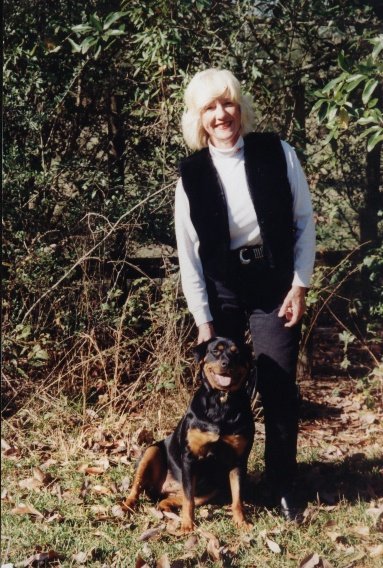
Neal Brown and her dog Kazza

Neal Brown is one of my oldest friends. She’d have to be. We’ve known each other since both of us were young pups. I met her in the months following my master’s degree graduation from Tulane in 1964. Another of my old friends, the late Jerry Brown of Ole Miss University, was back in New Orleans to finish his own degree program and, by then, he was married to Neal. And that’s how we met.

Jerry and Neal eventually settled in a home they built with the help of their two children, Heather and Hillary, in a beautiful forest, somewhere in the piney woods of Mississippi. When I say built it, I mean they literally brought the materials from the city to their homestead site and built everything they could by hand with instruction from books and the advice of live experts. They may have needed to call in electricians and plumbers for help with the more technical aspects, but they did 95% of the hard work themselves. If you ever saw the house, which I once did in June 1982, you would almost sense the love and care that went into the place with every driven nail.

Jerry and Neal always dreamed of a home that came without a mortgage and they found one. It was right at their fingertips. With their own intelligence and willingness to work put in motion, the job got done over time.

And where did “Mrs. Brown” acquire the usually male name “Neal” as her identity?

Neal’s real first name is “Mary,” but she started using “Neal,” a family name, as her personal identity choice way back in high school in Arkansas, long before she went on to Ole Miss and served as the head baton twirler in the school marching band on her way to a degree in education.

The girls grew up, went to college, and moved away to their own lives long ago – Jerry Brown passed away from cancer on 9/11/2005. Neal Brown has stayed on in the house and  her life in the forest, along with her pet Rotweiller, Kazza, and several cats, I believe. She also keeps chickens and other small farm animals, and does most of the maintenance herself, in spite of “her” advanced age. She attends church, does volunteer work at a nursing home, and she socializes with friends in a nearby little town, The rest of the time, she’s out there in the wilderness, having adventures that only the wilds shall bring. Now retired from regular employment as the director of a baton twirling school, Neal stays in close regular contact with her married daughters and several grandchildren – and she also has time for e-mail contact with her distant friends in Texas and other places. These come in the form of true storytelling.

People in Neal’s neck of the woods are usually true storytellers. They read a lot. And they live their lives in narrative contact with the daily flow of things. Neal Brown is one of those true storytellers; so much so that, when Neal sent me this latest tale yesterday morning, I had to ask her permission to reprint it here. She was obligingly willing to allow it’s reproduction here as  guest columnist for The Pecan Park Eagle. All I’ve provided from is the title and the publication space. Hope you enjoy this brief glimpse of the American forest world through the eyes of one resident, my wonderful friend, Neal F. Brown:

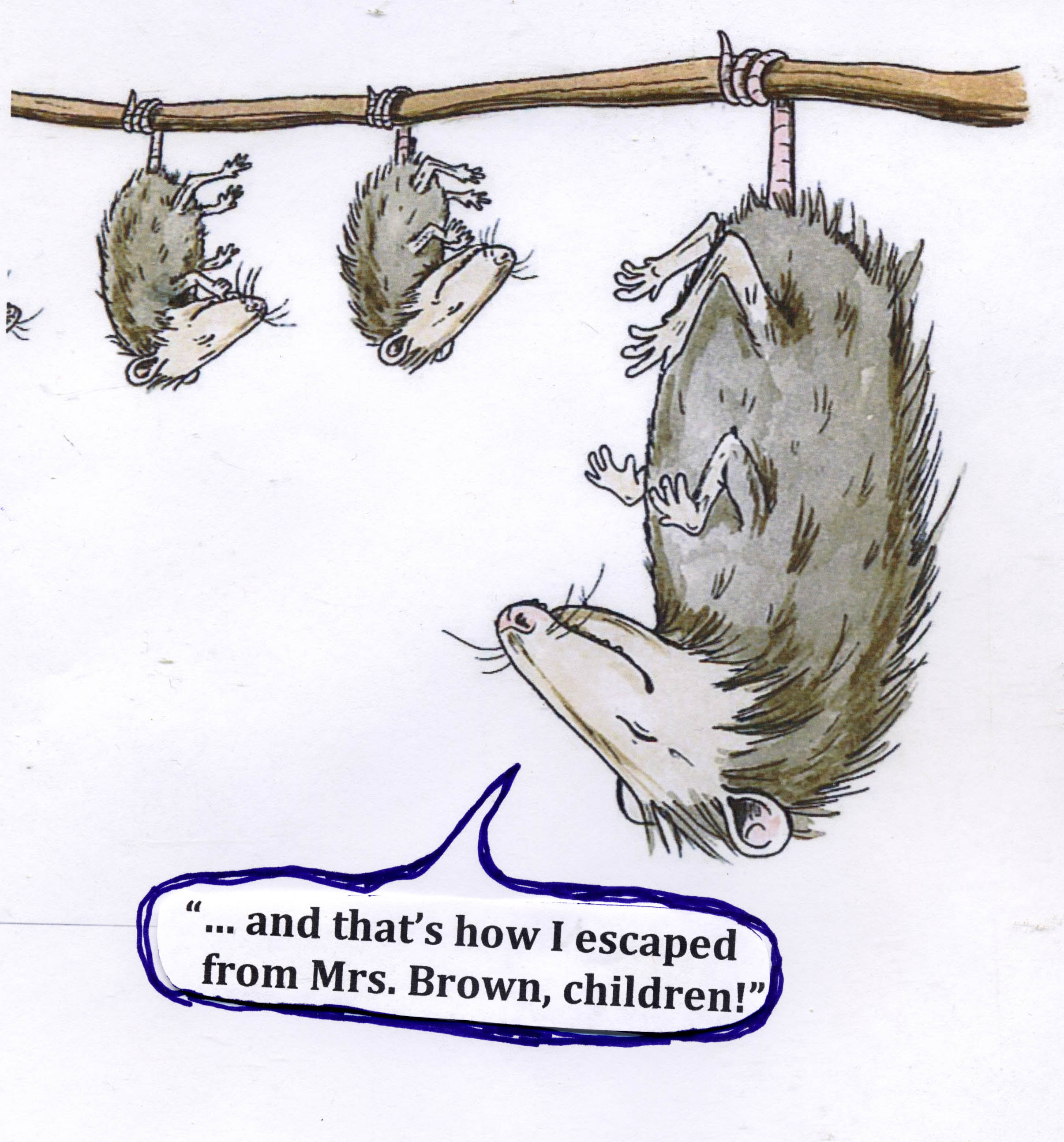
“Mrs. Brown’s Possum Tale”

by Neal F. Brown

At 4:30 a.m. this morning I woke up, went into the kitchen, turned on my coffee, made a cup, picked it up, took it to my bedroom crawled into my bed,  started reading a new book by Stephen Hunter about a cop in Arkansas.

Before I returned to my reading, I saw my one of my cats, Fluffy, outside the kitchen sliding glass doors, begging for breakfast, along with Maw Maw, ( my only cat that I can touch). So, as per usual, I place a small container of cat food by the door.

Whenever I turn on the lights in the kitchen this early, Fluffy shows up for breakfast.

I went back to my book that was turning out to be very entertaining, but about 5:30, I was feeling hungry and decided to get up to start my own breakfast, Kazza the Rotweiller was still asleep on her posturpedic bed in my bedroom. That was when all hell broke loose!!

I went to the sliding glass doors to check out the cats because, when they are finished, I put away the containers because my two pet chickens always get up with the sun and fly down from their tree perch. They will want to finish off the expensive cat food instead of their grain that I put out every day.

I opened the door, just like I do each mourning, but this day was different!! Those were not two cats eating breakfast! They were two POSSUMS!  Suddenly, one of them took off over the veranda, but the other one RAN BETWEEN MY LEGS INTO THE HOUSE~~ My blood pressure was soaring because I don’t like these animals. (They have very sharp teeth, and they can really growl when they get angry!).

Meanwhile, Kazza comes into the kitchen to see what is going on, and she immediately realizes that something has transpired on the veranda, and she takes off leaping off the deck onto the patio, and she is growling, with her hair straight up off her back, and she runs to the red berry tree, and then to the tall oak. She is jumping up and growling, and I think the possum must have climbed the tree!!

Meanwhile, I am up a creek here.  The possum is in the house, and, if he runs upstairs, I will NEVER CATCH HIM.This is a big old farm house with a million places a possum could hide, for YEARS!!

My first instinct is to close all the doors to the two bedrooms down stairs, and the two closets, and the utility room. (Once, many years ago, I went out to the barn to feed the horses in the dark and accidently brought the bucket back into the house, placed it on the floor. Out jumped a HUGE WOOD RAT. He was in the house for a long time, and it was during the winter. He was chewing every night and I was going crazy..Jerry would not do anything except go to the store later and buy a huge trap, but the rat would never go to the trap!!  Then, one night, I had all I could take, and I went downstairs and started yelling. I opened all the sliding glass doors upstairs and downstairs and the front door, and I said,  “WHAT DO YOU WANT?”

Well, even though it was freezing outside, the rat left. He wanted out – and I figured out how to get him out, but that was 20 years ago and Jerry is not here to help me this time!

Back to the possum in the house.

I am not sure where he is, but I know he did not run into those rooms, and they are secure now.  Should I call Kazza back in, or what?

I start looking everywhere, and then I see him..He is hiding next to one of the sliding glass doors that is locked and secure, and he is behind the trash can in the corner, where I keep the bird seed.

How to get him out?

Will he go out or run toward me and escape to the upstairs? Kazza is still outside with the possum up the tree, and she is growling like a mad bear.  If I bring her in, will she start chasing him? If so, up the stairs he may go.

I decide to get a broom and try to unlock the sliding glass door, but before I do that I open the front door, and the other two sliding glass doors (remembering my rat in the house time) in hopes that, if he makes a run for it, he will run through one of them.

The broom may scare him, and I am scared too. I took the broom and tried to get the lock to open, and finally it did. Of course, the possum was  behind the trash can, and hiding, feeling pretty secure there. I was able to get the lock to release, and then open the sliding glass door. All he has to do now is to run out!! But he is very stubborn.

He keeps hiding.

I am beating on the trash can, and trying to reach behind it and hit him, scare him, and make him run out. Suddenly, here comes Kazza.

Kazza runs back up on the veranda, and I tell her to GO AWAY!! Then I try hitting the can again, and FINALLY – he takes off through the door.  I ran around the house closing all the sliding glass doors, and my heart is beating – so fast. I am thanking Jesus that he is here with me because I had few choices. There was no one to call at this hour, and what could they do, anyway?

I was just lucky that I somehow did the right things. However, never again will I go to the sliding glass door in the dark, and open it to check on the cat food.

Forget it!

I don’t care how hungry they are, they will just have to wait until daylight for me next time – since I can’t tell a possum from a cat!

Mythology in Baseball History

January 19, 2011

Rube Foster: Did he really teach the fadeaway pitch to Christy Mathewson?

Speaking of subjects that are way too big for any singular blog column, “mythology in baseball history” probably sits at the mountaintop of those that fit the thesis that such topics even exist. That being said, we shall give it a humble try, anyway.

Why does the subject even matter? Easy. We may as well be asking: What does the game’s attraction feed upon? It isn’t the mere tonnage of stats generated by the game, or the base line scores of all past World Series games. None of these detailed facts even matter unless … unless they spring from or generate some new myth, or some sensational fact that eventually shall evolve into a myth that almost all fans know or help distort further and higher onto some new accepted level of factual assimilation.

Perception is reality, right? Well, it isn’t really, if you break down reality on the basis of discernible and measurable facts, but it sure puts a lot of individually constructed realities on collision courses with each other, which is often. We humans are much more comfortable with the fly-by-our-eyes assumption that how we see things is the way they are – and many are prepared to fight in defense of that idea. Now, given that little hot tonic of human tendency, myths are often the “the straw that stirs the drink” of argument.

One of the lesser known myths in baseball history concerns Rube Foster, the great old Negro League pitcher and later founder of the 1920 Negro National League. Legend has it that New York Giants manager John McGraw once hired Rube Foster to teach the fadeaway, or screwball, pitch to a young hurler named Christy Mathewson. That would be a great fact to nail down, but it cannot. As with almost all myths, the original source of this idea cannot be discernibly identified – nor has extensive research turned up anything in writing from that era to confirm it ever happened. The Foster-Mathewson Connection will continue to hang there on the myth rack of baseball history and, every now and then, someone will write about it as though it actually happened as a proven fact – thus, pumping up the perception’s credibility as pure reality.

Got that?

My guess is that “Ruth’s Called Shot” at Wrigley Field in the 1932 World Series is probably the biggest revered facts-challengeable myth in baseball history, right behind the Red Sox’ infamous “Curse of the Bambino,” which offers no hope for logical proof or disproof beyond the acceptance or rejection of logical thinking itself.

Did Babe Ruth really predict when and where he would hit a home run as he stood in the batter’s box at Wrigley Field that famous day? Just about the time we seemed on our way to putting this one to bed as a practical joke that even Ruth had prolonged for the fun of it a few years ago, a man comes up with a grainy home movie that he claims his grandfather took of Babe Ruth during that time at bat against Charlie Root. The movie clip clearly shows Babe Ruth raising his arm and pointing somewhere in the direction of center field.

Now the called-shot beast will never die.

Happy baseball fact-finding, folks. And try to remember something that even baseball research scholars seem to too often forget: When you see something in print, that fact alone doesn’t make the information true – nor does it make the author of this material either an authority or a primary source. These are the basic facts that serve as the foundational platform for all investigative reading, but they don’t scream out loud for themselves unless you bury them deep in your own researcher bones.

Houston Baseball and Dr. King

January 18, 2011

"I have a dream that my four little children will one day live in a nation where they will not be judged by the color of their skin, but by the content of their character." - Dr. Martin Luther King, Jr., Washington, DC, 8/28/1963.

On the very day that Dr. Martin Luther King, Jr. delivered his iconic “I Have a Dream Speech” in front of the Lincoln Memorial in Washington, DC back on August 28, 1963, the Civil Rights movement in Houston, Texas had barely moved a practical inch since its national inception in 1954. That earlier year had witnessed the end of total segregation in local professional sports with the addition of the wonderful Bob Boyd to the roster of the Houston Buffs in May 1954 as the first black to formally play with whites here in any team sport.

Bob Boyd still had to live and travel on the road to inferior segregated accommodations in 1954. White Houston and Texas were neither ready for greater physical mixture of the races back then. Not all of us white Houstonians felt this fear of integration in 1954, but the vocal majority that ran things for everyone mostly did and, by their actions and inactions, the white-dominated power structure allowed schools, landlords, and local businesses to keep up their courses of racial segregation and outright denial of service to blacks for a while longer in “subtler” ways..

Through 1954, that little uncovered grandstand down the right field line served as the "colored section" and one blight on the good old days at Buff Stadium in Houston.

Segregation continued to breathe in Houston until it could no longer stand up against the joint forces of social protest and the determination of the federal government to support a vigorous new policy on Civil Rights. These mighty forces of support for Constitutional allegiance overwhelmed the most serious forms of public resistance to change. Those of us who supported these changes were largely young and idealistic. We believed in our country as a place where we all maintained our rights to differ from each other, but that we trusted that we were also a nation at the end of the day that would bear forth our identity as The United States of America.

By the time of the famous speech of Dr. King in August 1963, the old Houston Buffs had been dead for two years as a minor league franchise. The City of Houston now played its professional baseball in the National League at Colt Stadium as the Colt .45s. The 1963 Colt .45s were a racially integrated ball club, all right, but young black players from northern cities, players like future star Jimmy Wynn, were also still busy getting their full taste of what life could be like in a transitional “southern city.”

By 1963, the old supporters of full segregation had gotten the hammer and adjusted their tactics. Instead of making it easy for the people to protest or petition against loud statements of “Segregation Spoken Here,” the old guard went to quieter forms of resistance to integratiion.

Residential services put out the “no room in the inn” sign to black applicants; restaurants evoked the assumed power of their ever popular “we reserve the right to refuse service to anyone” signs as a basis for not serving minorities; and some movie theaters put up the “sold out” sign for blacks attempting to buy tickets at previously all white venues.

Bob Boyd broke the "color line" in all Houston sports when he joined the Houston Buffs baseball club in May 1954.

In a perfect world, we would have resolved all these differences by now, but forty-eight years beyond “I Have A Dream,” we have achieved only a smaller victory. Blacks in Houston may now live, work, and commerce as they please in 2011 Houston, but that doesn’t mean that blacks are now impervious to more subtle and intelligently designed forms of discrimination. They are still out there – just waiting for ignition by smarter white racists whose skills for survival exceed their impulses to act in blatant hatred. These monsters do it quieter.

On the big plus side, Houstonians appear to be much more color-blind today about their sports heroes. Maybe when “he runs pretty fast for a white guy” disappears, we’ll know we’ve made real progress. In the meanwhile, we may have to settle for the fact that fans don’t go around saying “that Michael Bourn sure is a great little black center fielder.” Colorblindness is key to really getting to know the person behind the skin, but it only happens individually. Once more, the reminder checks in. Life works a lot easier when we look for signs of practical improvement and not get stuck on how things “should be” in a perfect world.

Houston baseball is what it is as a direct result of the Civil Rights Movement. The same is true of Houston. Today we are poised to become one of the great international cities of the world. All we have to do is keep making progress on our commitment to both “respect difference” and “equalize opportunity.” The cream will rise to the top from there.

Thanks for everything, Dr. King. You weren’t perfect either, but you had more vision, courage, and faith in America than just about anyone else in history . Many leaders put their lives on the line for the sake of power. You put your life on the line in behalf of righteousness. Thank you for the gift of that great love and devotion to God’s Work.

Is Andy Pettitte Done?

January 17, 2011

Milo Hamilton Interviews Andy Pettitte, some time during his Astros sidebar days.

Spring training 2011 is coming on like the dawn, but General Manager Brian Cashman of the New York Yankees is once more on hold for a decision from star lefty pitcher Andy Pettitte of Deer Park, Texas. The 6’5″ greatest winning pitcher in Yankees post-season play is again saying he may retire to be closer to his family and, this time, it sounds as though he may actually mean it. It could still turn out to be a way to avoid the monotony of spring training with a late signing, but we shall have to wait and see. Quit now or keep it up, the man has performed pretty darn well through 2010, no matter what happens next.

Over the course of sixteen seasons (1995-2010), Andy Pettitte has fired a regular season career mark of 240 wins against only 138 losses, with an ERA of 3.88 and 2,251 strikeouts. Although he has registered only two 20-win seasons, Andy has been consistently in the high to mid teen range on season wins over the course of things. Over the long playoff haul with numerous winners, even during his three Thomas Wolfe-ian Houston sidebar/sidetrack seasons as an Astros (2004-2007), Pettitte compiled a wonderful record of 19 wins, 10 losses, and an ERA of 3.83. in his (count ’em) eight World Series appearances, Andy Pettitte has registered a winning mark of 5 wins against 44 losses with a 4.08 ERA.

Along the way, Pettitte also has pitched in three All Star Games (1996, 2001, 2010),

Sadly, Andy Pettitte is a Houston area guy who wanted to come home when he signed with the Astros in 2004, after nine seasons in the The Bronx. It almost worked out. Then (and here’s where we only have public information to go by), after three years as an Astro, Andy couldn’t get more than a one-year contract offer from Houston at another of those times he was supposedly thinking about retirement, That changed when his old Yankee club came back to him with a two-year offer at better money to return to New York.

In the four seasons he’s marked into Yankee Career II (2007-2010), Pettitte has chalked up another 54 wins. Do you think the Astros might have been able to use that “54” productivity over the same course in time? Oh well. It wasn’t to be.

My memory of Andy Pettitte as an Astro will always be framed by the belief that he really wanted to be here. That isn’t true of every ballplayer who ends up with your club, nor is it always important, except in the sense that caring makes bonding and long haul commitments easier to generate. Sometimes, opportunity alone is the main attraction to signing with a club. Opportunity and matching performance can get it done in the short run of a brief contract for most players – and the same formula may even work for a few guys, long-term. It’s just undermining to the interests of a player who wants long-term commitment when he feels the club is only interested in him short-term at a cut-rate price.

I cannot help but feel that Andy Pettitte took the Astros’ one-year, low ball salary offer as a sign of disinterest back in 2007 – and that he then took the Yankees’ two-year, bigger bucks offer as a sign of come home to New York, where you are really wanted. – What else are we to think? Andy took the Bronx bucks.

I do think Andy really felt he was home for good during the time he actually played for the Astros. My signature memory of Andy Pettitte as an Astro came about while he sitting in the dugout. I’ll never forget the look on his face when Albert Pujols of the Cardinals hit that infamous bomb off Brad Lidge in Game Five of the 2005 NLCS game at Minute Maid Park. Andy was sitting on the home club bench when it happened – and as the camera zeroed in on his face for a closeup. In the real-time that the Pujols homer was happening, we got to see this unfolding expression on Andy’s face: First, the eyes get really big as the face drops to an open-mouthed, slack-jawed position. Then the lips start moving, ever so slowly, but the un-hearable words they speak are unmistakable: “OH. MY. GOD.”

As in all things over those three years (2004-2006), Andy Pettitte’s Pujols reaction was pure Astro. He had come home to play, but like Nolan Ryan before him, it wouldn’t be possible for Andy to stay forever. And he won’t be back as a player because, as everyone either already knows, or soon enough gets to find out: You can’t go home again.

That’s life.

SABR Celebrates at 2011 Houston Baseball Dinner

January 15, 2011

(L>R) Bobby Heck, Astros Ass't GM, Scouting; Bob Dorrill, SABR; David Gottfried, Ass't GM, Baseball Operations; Ed Wade, Astros General Manager.

Twenty SABR members at two SABR tables were on hand last night to help celebrate the 2011 version of the annual Houston Baseball Dinner, The numbers did not the include the broad scattering of many other SABR people at various other tables throughout the crowd of 1,000 people in attendance at the Hilton Americas downtown on January 14.

The dinner initiated years ago by the late Allen Russell and his wife Jo Russell, along with the help of longtime supporter and former sportswriter Ivy McLemore, was again a rousing success in honoring the spirit and accomplishments of the Houston Baseball community.

Mike McCroskey of SABR sang Our National Anthem to get the evening started. It was the second year in a row that our man Mike carried out that responsibility in fine voice and form. He must have done all right the first time. Otherwise, it’s not likely there would have been a second time. – Nice job, Michael!

In addition to the individual recognition that the dinner usually accords to the top high school baseball players from the area, the HBBD also recognized the Pearland Little Leaguers for their success in 2010 Little League World Series.

Astros Icon and new SABR member Jimmy Wynn and his wife Marie Wynn were on hand at one of the Astros tables.

Here’s how the special awards for the evening went:

Coach Rick Lynch took the Ray Knoblauch Award.

Anthony Rendon of Rice University won the Houston Area Preseason Major College Player of the Year Award.

Barry Waters of the Astros took the Fred Hartman Long and Meritorious Service Award.

Chris Johnson was named as the Astro Rookie of the Year.

Carl Crawford captured the Houston Area Major League Player of the Year Award.

Mike Rutledge received the Allen Russell Distinguished Achievement Award.

Former Astro and current Padre Geoff Blum took the Darryl Kile Award.

Brett Myers was named as the 2010 Astro Pitcher of the Year.

Hunter Pence took top honors as the 2010 Astro Player of the Year.

Meanwhile, about $18,000 was also raised by an auction set up to support the Grand Slam for Youth Baseball scholarship program.

The Houston Baseball Dinner is also our community’s way of turning the corner in the dead of winter each year and looking forward to the new baseball season. As always, it cannot get here soon enough for many of us, so, we’ll just have to keep on staring out the window or over at our computer screens until it gets here.

These other smiling faces from last night will also help remind us of the springtime that’s coming, with baseballs popping leather hard and bouncing even harder off their contact with real wooden bats. There is no “ping” in major league baseball and there is nothing nothing minor league about the smiles that follow.

C’mon clock! Get us to April, when the games really count. Menahwile, stay out of the cold and damp weather as best you are able.

Phil and Nancy Holland, SABR.

Bob Stevens & Son, Robbie Stevens, SABR

Larry Miggins, Former Houston Buff & St. Louis Cardinal, SABR.

John Miggins, Son of Larry Miggins & Charlie Sheen Look-a-Like.

Marsha Franty & Peggy Dorrill, SABR.

Peggy & Bob Dorrill, Deep in the Heart of SABR.