 On August 18-19 of this week, my wife and I, accompanied by my wife’s sister and her husband, took a little nostalgia trip on the train for an overnighter to the L’Auberge Hotel and Casino in Lake Charles. It wasn’t nostalgic from the standpoint of some unrequited need to visit our money in the casino. None of us are really gamblers. We simply wanted to recharge the memory cells on what it feels like to travel by rail. It had been near forever for all of us. For me, the year was 1955.
In short, we booked our way on Amtrak and then pre-arranged for a rental car to be ready for us at the station in Lake Charles.
 The economics of this little trip were within reason to many household budgets. With my brother-in-law and I both qualifying (by a long shot) for the “62 and over” senior discount, our round-trip train tickets averaged about $35.00 each. The Budget Rental Car tab in Lake Charles ran about $53.00 (including all the taxes) for a 24-hours-from-pick-up daily cycle; and our very luxurious rooms at L’Auberge were $109.00 each. Lunch at the rather expansive L’Auberge buffet was $13.00 a person and another restaurant there called “The Cafe” did breakfast for about the same price as the buffet. – The cost of walking ino the casino will have your bottom, if you don’t enter there with a bottom limit on how much you’re willing to lose. They don’t build these monuments to the illusion of easy money upon the foundational thought of very many people named John Q. Public going home rich.
Leaving Houston by rail takes you down tracks that are a real reminder of the jungle that is our town, and I’m not just talking about trees or social problems alone and separately. I’m talking about both together. It didn’t take that long to find the graffiti or the swaddling mass of trees and brush that surround the tracks in so many places on the route out of town.
At one point, we suddenly burst forth from the trees and were then riding across the surface of Lake Houston. That was little different too from the everything-looks-the-same-waltz down the never-ending sameness of an I-10 automobile drive. It also was nice to have the time away from driving on a summer day that was tailor-made for cloud-watching.
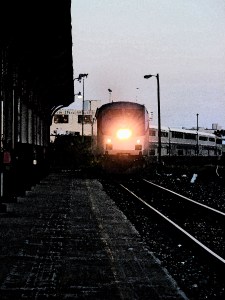 I forgot to mention that the 6:15 AM train to Lake Charles didn’t actually leave until 7:15 AM. It was late getting there due to some back-up along the lines from freighters near San Antonio. That was OK with us. We came prepared to leave our 21st century clocks and mindsets at home as we boarded the train for this ride into yesterday.
The seats were quite comfortable. They come with adjustments for leg and foot support, along with back support and reclining potential. Amtrak serves food and snacks in their dining car and lounge, but they also don’t mind you bringing yur own food and drinks with you. We brought egg salad sandwiches and bought Pepsis and coffee in the lounge. We also spent time in the observation car, a place with mostly glass ceilings and wide comfortable chairs for looking out the windows.
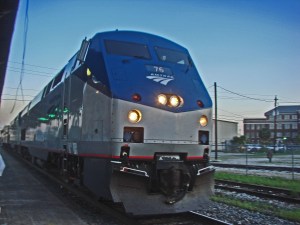
This train route began in Los Angeles on its way to the terminal in downtown New Orleans. It ued to run all the way to Miami, but Hurricane Katrina changed that plan in 2005 by damaging the tracks east of New Orleans. I have no idea if the old full service line to Florida will ever be resumed.
 We met a couple sitting near us that had been in the coach since LA on their way to New Orleans. Other than the fact that each were unable to hold their heads erect, they, otherwise, seemed to be OK. Sleeping berths are available, but at a much higher rate.
 Even on the short three hour ride from Houston to Lake Charles, it was my take that people on trains are much friendlier toward each other than they are on planes. Maybe a lot of factors kick in here to make that so beyond the trains themselves, but all these other varaiables hinge on the common ground that no one I met three days ago brought a sense of urgency with them on the train ride. We just got on the old iron horse prepared, for the most part, to just accept whatever happened to the train’s ETA at various points along the way. Any traveler with a close-call meeting schedule in another city wasn’t on our train the other day. They were at the airport.
 The train is pretty comfortable. With air conditioning and quiet engines, we’re not talking any longer about those long, hot rides of soot-belching noise and dust that we see in the old western movies. Once you adjust to the gentle back and forth sway along the tracks, most of you will be either gently reading or falling asleep over much of the long distances you plan to cover.
 Our train made only one six-minute stop in Beaumont on the way over to Lake Charles.
The weather was so typical of those long summer days when rain is possible on an every afternoon basis. We haven’t had that kind of weather in Houston this year due to the demonic high that sits in residence over our city, but they have been a little luckier than us in the near areas just east of us in Louisiana. It’s still hot there, but the promise of rain in the afternoon just places a whole diffferent outlook on the rest of the day.
 The little station in Lake Charles was about the size of two brick-walled telephone booths, place side-by-side, but there were benches outside for those of us waiting on rides. Because of our late departure from Houston, we had to wait about fifteen more minutes for our rental car.
You don’t really need a rental car in Lake Charles, if you’re just going straight to the hotel and back. For the price of a return trip, however, it’s about as cheap to rent a car. Then you have the flexibility to go anywhere you want.
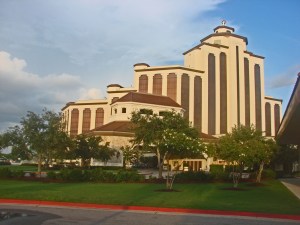 L’auberge was great, relative to its accomodations. This place has all the amenities of a family oriented destination site, along with the casino and a lot of shops built ino the facility. They also offer a magnificent swimming pool facility and there’s an 18-hole golf course thrown in for guest use as well. There were also several other eateries in the building that we didn’t have time to try, including a steak house owned by Jack Daniels.
 Just one word of advice to fellow Texans. They do not have good Mexican food in Lake Charles, no matter what the locals may try to tell you. We ate at a place on Churchill Street called Cancun that had been recomended. Two days later, I’m still recovering from the grease.
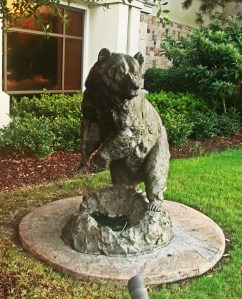 I think L’Auberge has a meaning that translates into “bear.” Otherwise, I could find no other reason for the statue of a bear that they have posted outside the front door. At any rate, this was one of those stories that’s more about the journey than the destination. Travelling by train was relaxing and a lot of fun.You may also want to think about taking a train sometime. I think you may enjoy it more than you imagine. Heck! Houstonians don’t really have to stop in Lake Charles. This train goes to New Orleans too.
Enjoy your own journey. Enjoy your own road. Let someone else do the driving, while you shed the load. That’s what a vacation is supposed to be about.



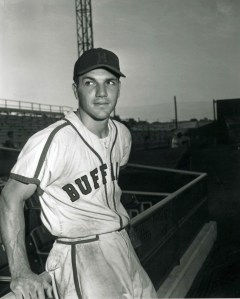 Ken Boyer was neither the first nor the last of the baseball playing Boyer boys. He was simply the best of the six brothers who ventured into the arena of the professional over the two decades that followed World War II. The Alba, Missouri native was also just one among the pack of the fourteen kids born to the rural Boyer family who discovered baseball as a way up and out to the larger world when he began his career with Class D Lebanon in 1949. Ken started as a pitcher, going 5-1 with a 3.42 ERA in ’49, but he also did something else that first year that distracted the parent Cardinal organization from seeing his future on the mound. He hit .455 for the season. Once Boyer’s pitching record slipped to 6-8 with a 4.39 ERA in 1950 with Class D Hamilton, while his battting average stayed up there at .342, the Cardinals felt that they had to keep the guy in the lineup as a position player. Ken made the transition just fine as a third baseman for Class A Omaha in 1951. He batted .306 with 14 HR and 90 RBI before going into the service for two two years (1952-53) during the Korean War. Ken Boyer resumed his career in 1954 as a third baseman for the Houston Buffs. His career took off like a rocket. Batting .319 with 21 homers and 116 runs batted in for the ’54 Buffs, Boyer led the club to the Texas League championship – as he also launched his own career to the major league level in 1955.
 Producers/Directors/Writers Peter and Bobby Farrelly have been trying to put together a biographical movie on the lives and careers of the infamous “Three Stooges” for about ten years now. Just when it appeared that they had nailed down their cast and were ready to go into August 2009 production in time to make a 2010 release date, the cast commitments are falling apart. First to back out was Sean Penn, who had been set to play “Larry,” the bald-on-top, fuzzy-on-the -sides character in the right of our photo. Penn cited personal reasons and a desire to spend more time with his family as the causes behind his decision.
 John Hernandez was the star lefthanded battting and throwing first baseman of the 1947 Texas League and Dixie Series Champion Houston Buffs. After an early acquisition from Oklahoma City in 1947, Hernandez did very well in Houston. His .301 batting average, 17 home runs, and 78 runs batted in were a big part of the reason the Buffs enjoyed one of their finest seasons of all time that year, and that doesn’t even take into account his defensive contributions with the glove. The guy was a sweet fielding wizard at his position.
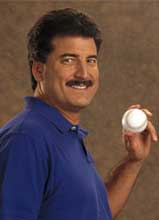 John Hernandez’s son Keith grew up to be one of the greatest defensive first baseman in major league history. Keith Hernandez’s 11 straight gold glove awards is a mjor league record. He also wan’t too shabby as a hitter either, leading the National League in hitting in 1979 with a .344 average at St. Louis. Keith Hernandez also was a leading force on two World Series ball clubs, the 1982 St. Louis Cardinals and the 1986 New York Mets. What a lot of people don’t know is that Keith Hernandez always used his dad as his anchor man coach for helping him straighten out anything that was getting in the way of his best game, and that assistance covers a lot of ground in this instance.
 We just returned last night from a two-day train trip to Lake Charles, but that’s a story for another day. This morning I want to tell you about another ex-Cardinal and former Buff pitcher who also just happened to be a good friend. His name was George “Red” Munger, a name that won’t be lost to the memories of anyone who was around during all those 1940s years of great Cardinal teams. Red Munger just happened to be a big part of that success. The native Houstonian and lifelong East Ender was smack dab in the middle of that zenith era in Cardinal history, even though he lost all of 1945 and most of the championship 1946 season to military service. Red still managed to return in time to make his own contributions to the Cardinals’ victory over the Boston Red Sox in the 1946 World Series.
 achieved some great, but unsurprising success in service baseball. He was just too good for the competition he faced at that rank amateur level. Once Red obtained his second lieutenant’s commission and was assigned to developing the baseball program at his base in Germany, he just stopped playing in favor of full time teaching. He even said that he had no heart for pitching or hitting against competitors who were too young, too green, and too unable to compete against him.
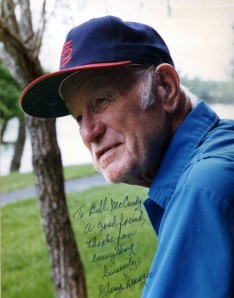 After baseball, Red Munger worked as a minor league pitching coach and also as a private investigator for the Pinkerton agency. He later developed diabetes and passed away from us on July 23, 1996 at age 77. I took that last picture of him in the 1946 Cardinals replica cap on a visit to his home, about two weeks before he died. Red gave me that cap that he wore in the picture at left on the same day. I have treasured it ever since.
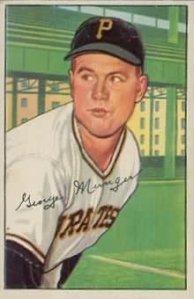 Red Munger enjoyed watching position players with strong arms and then imagining how effective they might be as pitchers. His favorite subject that last summer of 1996 was Ken Caminiti – and this was long before all the disclosures about Ken’s mind-altering and performace-enhancing drug abuse. Red Munger just liked the man as a gifted athlete. Caminiti fit the bill on what Red Munger was looking for in pitching potential. “Give me a guy with a strong arm and I can probably teach him the other things he needs to know about pitching. I can’t teach a guy how to have a strong arm – and as far as I can see, no one else can do that either beyond telling him to work out and hope for the best. As far as I’m concerned in the matter of good arms, you’ve either got one or you don’t.”
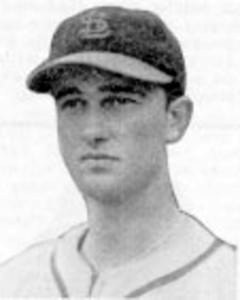 From the late 1920s through the early 1950s, the St. Louis Cardinals operated a farm system that pretty much resembled the good and growing business of a fabled Hempstead, Texas watermelon grower. – Everything they harvested came out tasting sweet – with very little hassle from unwanted seeds.
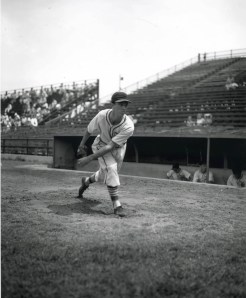 Back with Houston in 1941, the now 20-year old lefty showed that he had little left to prove in the minor leagues, even at his still tender age. In 1941, Pollet posted a 20-3 record for the Buffs and a league leading ERA of only 1.16. In all of Texas League history through 2008, only Walt Dickson’s 1.06 ERA, also posted with Houston back in 1916, beats the 1941 mark of Howie Pollet. Pollet also led the Texas League in strikeouts in 1941 with 151. The Buffs again won the Texas League straightaway race, this time by 16.5 games, but they lost in the first round of the playoffs for the Texas League pennant.
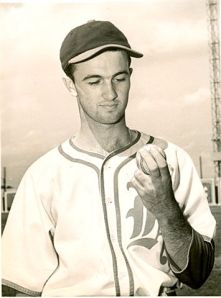 After baseball, Howie Pollet returned to his adopted home of Houston and went into the insurance business with his former Buffs and Cardinals manager, Eddie Dyer. He even returned to baseball one year to serve as pitching coach for the Houston Astros. He was only age 53 when he died of cancer in 1974. Sometimes the good guys who arrive early also make an early exit. Baseball and Houston were the poorer from the early passing of the great Howie Pollet, but we’re glad we had him while we did.
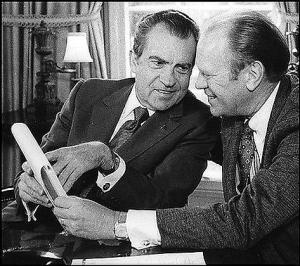 Over the years, writing parody has always been one of the main ways I sought rest from a particular research subject for a day or so. The practice rejuvenated me. It felt like the written equivalent to doodling. I followed this pattern all through school too – and also over the heaviest years of my private practice work – when I practically had no other energy left over at the end of the day for writing anything beyond case record notes. – Even then, I could write parody, if nothing else. Wow! – Talk about “all work and no play making Jack a dull boy!” I had some nadir-level years with writing much beyond my own signature in that regard back then. I may still be duller than dishwater as a writer, but I’m enjoying it a whole lot more these days.
 His name was Paul Boesch. By the time the 35-year old Brooklyn native reached Houston in 1947, he had already lived the fullest life of a great adventurer and real life hero. Born on October 2, 1912, this son of a New York street car conductor was one of seven children. When his father died before Paul reached age 5, the business of survival fell upon his mother and older siblings. His mother worked as a domestic servant to well-to-do families and the struggling Boesch household survived. Graduating from high school in 1929, according to one report, young Paul Boesch soon found excellence in his pursuit of achievements that required a combination of mental and physical skills. In 1932, he placed third in the highly regarded North Atlantic Coast Lifeguard Competition. Paul soon followed that success by choosing to join professional wrestling as his career. It was a choice that eventually led him to a 2005 posthumous induction into the Wrestling Hall of Fame.
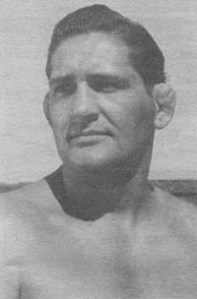 Some reports say that Paul didn’t even finish high school, but whatever the case, his education on physical and emotional survival in a difficult world was far superior to that of most kids who grew up back then with the full protection of two stable parents. He began working as a lifeguard on the Alantic Coast by age 14. Over the course of his mostly adolescent career in that field, he was credited with saving about five hundred lives.
 Paul Boesch returned to wrestling after World War II, but that all ended with a near fatal car crash in 1947 that combined with old back injuries from wrestling to effectively end his active career. He would still appear infrequently in grudge matches over the years, but the damage from the wreck removed him from full-time wrestling.
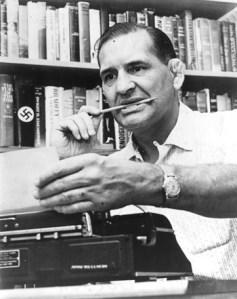 Paul Boesch took to TV like honey sticks to peanut butter. After Morris Sigel died, Paul Boesch took his place as the local promoter of wrestling at the City Auditorium while continuing as the creative director of all the “good guy / bad guy” melodrama matches through his television broadcasts and wrestler interviews. When they tore the auditorium down in the mid-1960s and replaced it with Jones Hall, wrestling moved to the Sam Houston Coliseum and Boesch went with it. Paul Boesch and Houston Wrestling were continuously on the air from 1949 through 1989, mostly on Channel 39, although Boesch had to retire from broadcasting in 1987 due to a heart condition. On March 7, 1989, the gentle man with cauliflower ears passed away, leaving Houston and all the children’s charities he supported the poorer for it.
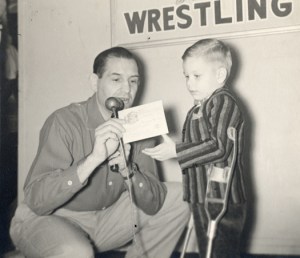 Paul Boesch was an anomaly. He was a genuine man of character – building a life on a stage that was totally sports fiction. Only the injuries and the knuckle-peppered cauliflower ears were firmly real in wrestling, but Paul Boesch was the “real deal” as a great and giving human being to the very core of his soul. The stuff he did for the neglected kids of Houston was legendary. And Houston lost a class act when this man passed from our midst.
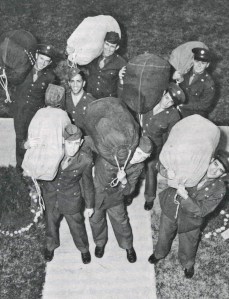 In the picture at left, that’s former Houston Buff and St. Louis Brown first baseman Jerry Witte toting his US Army duffel bag in the top center, back row position of the scene. Witte was merely one of hundreds of professsional baseball players who poured themselves into the business of fighting World War II from the very start of it all. The great Bob Feller was on his way to Cleveland to sign his 1942 playing contract with the Indians when the Japanese pulled off their sneak bombing of Pearl Harbor on December 7, 1941. Instead of signing another baseball contract, Feller took the first opportunity the very next day to join the Navy and the fight.
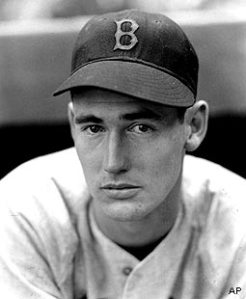 Joe DiMaggio and Bob Feller lost three seasons to World War II; Hank Greenberg (thanks to a correction supplied me by fellow SABR buddy Bob Kienzle of Dayton, Ohio) lost the better part of four and one-half seasons; Stan Musial only lost one year. Ted Williams, on the other hand, lost three seasons to World War II and almost all of two more years later when he was called back to fly combat fighter missions in Korea. You can play all day with the numbers on what they each lost to military service, but you know dadgum what? So did all our no-big-name parents and grandparents from everyday life who also put down their ploughs and welding rods at home to serve this country in wartime. They didn’t call them the “greatest generation” for any lighthanded reason.
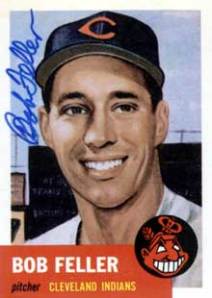 I recently saw Bob Feller at the July 31st “Knuckle Ball” in Houston. Nearing age 91, the man still possesses amazing energy and alertness. I think if you asked Bob Feller today how he felt about the baseball time he lost to World War II, he’d answer with something like, “I didn’t lose anything. I gave my time to my country when it needed me to be there on the fighting line for America.”
 Houston, Baseball, & Other Musings.
