How The Time Flies.

January 18, 2010

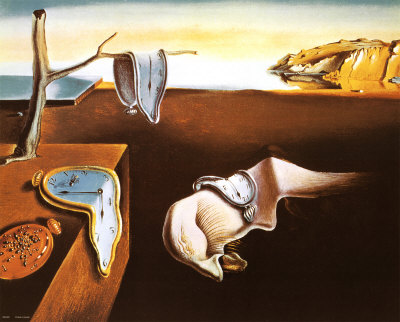
"The Persistence of Memory" by Salvador Dali (1931).

Somewhere out there, in the far reaches of space, light images of yesterday’s life on Earth are only now reaching the vantage point of perspective that is available over light years-measured time at that far-removed-from-us point in linear distance from our planet. We cannot presently capture those images to see what yesterday looked like here, but we, of course, already have that view of other worldly pasts coming to us constantly from stellar bodies that either exist or once existed in those same faraway regions of the universe.

In other words, if we had the ability to capture those images from afar, we could finally get a good high-definition video of Abraham Lincoln delivering “The Gettysburg Address”. Solving that issue would be far easier that finding the answer to our greatest barrier, material travel and image transmission over linear time. By the time we got the equipment out there and received the images it captured back here, we would all be long gone by a few million generations from today.

Unless some of our mathematical and quantum physics geniuses are able to solve the practical problems surrounding matter and energy transmission beyond the speed of light, we shall stay stuck with that one grainy picture of Lincoln from afar at Gettysburg that was taken in real-time on November 19, 1863 in low light by  a photographer named John B. Bacholder. Other harder to identify photos occasionally surface, but so far, the Bacholder long shot is the only confirmed of Lincoln on the speakers’ platform from that day.
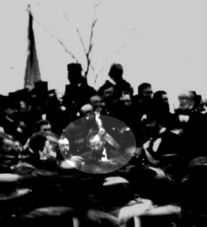
The figure in the stovepipe hat, just right of the steeple, is Lincoln.

Taking photos in 1863 was technically tough and expensive to do. Bacholder had trouble with his camera that day and the one shown here is all he got. In 2010, this would have been one for the digital delete pile. Back then, it was the best the man could do in that given time and place. Even the Bacholder photo has its detractors, but that’s a subject for another day. The subject today is really “time” and how we experience it in our personal lives. Maybe something is a lot more important to our experience of time than developing a way to get better photos of Lincoln.

Here’s what I mean: I’m 72 now and, as some of you other elders also realize, perspective changes over time. Time also sometimes confirms things we’ve always suspected. In that regard, I have one personal example I’d like to try to share with you here too.

From the time I was kid, feeling my most immortal self, another thought kept crowding in:

One of these days, if you live so long, you’re just going to wake up an old man. It really isn’t going to take so long. We are all only here for a blinking of the eye on Father Time’s face and then we are gone.

That creeper idea prevailed. It didn’t mean that I just sat around, waiting to wake up old. I’ve spent my life as I continue to live it, growing in appreciation and bonding with the people and passions I really love, trying as best I’m able to learn from my mistakes, and living each day with as much gratitude and appreciation for the fact that this beautiful “here and now” is again available to me for one more day.

Bobby Doyle was a blind pianist and composer here in Houston back in the 1950s and 1960s. I don’t even know what happened to him since then, but I do know that I enjoyed his work around town back in the day that Kenny Rogers was still around here as a member of the Bobby Doyle Trio. One line from a Bobby Doyle song that better sums up my point today in a lot fewer words than I’ve already used goes simply like this:

“Life’s only what we make it, so take it, and make it beautiful.”

So, no matter how long it feels it took you to reach your present age, do what you can now to take today and make it beautiful. You can do it, no matter what. We all get sand in our sandals every once in a while, but if we just keep walking in a here-and-now right direction, one filled with love and passion for who we are, who we’re with, and what we do, the clouds go away – and the sun comes out.

Have a great Monday, everybody!

Oxymorons at Play.

January 17, 2010

The Perfect Oxymoron.

Beyond the classic definition of oxymoron, there may be at least two others in my never finished complete Dictionary of Words as We Phonetically Understand them. Take a look:

(1) Oxymoron. (noun) definitions: (1) any expression in words or placement of objects or combination of both that conveys a contradictory meaning; (2) the dumbest guy at Oxford; (3) anyone who fails to grasp the cleansing power of Oxydol soap after seventy years of its broad commercial exposure to one and all.

That first one was mine, but I can neither take nor offer credit for the rest of these items on the list below because they came to me via e-mail with a lot of beautiful graphics and no acknowledgement of authorship by a living or deceased soul. Some of these figures of speech have been around these parts for a very long time so I suspect that even this list is little more than a collection of “oxy-morons” from all those places on this electronic planet where jokes and whimsy pop up as often and surprisingly as those little life-energy lightning bugs of Pandora in the movie “Avatar”.

Here’s the Sunday Working Day of Rest List of All the Rest:

(2) Is it good if a vacuüm really sucks?

(3) Why is the third hand on the watch called the second-hand?

(4) If a word is misspelled in the dictionary, how would we ever know?

(5) If Webster wrote the first dictionary, where did he find the words?

(6) Why does “slow down” and “slow up” mean the same thing?

(7) Why does “fat chance” and “slim chance” mean the same thing?

(8) Why do “tug” boats push their barges?

(9) Why do we sing “Take Me Out To The Ballgame” when we are already there?

(10) Why are the benches and chairs at the ballpark called “stands” when they are made for sitting?

(11) Why do we say an evening time for something is “after dark” when it is really “after light”?

(12) Doesn’t “expect the unexpected” make the unexpected expected?

(13) Why are a “wise man” and a “wise guy” perceived as opposites?

(14) Why do “overlook” and “oversee” mean opposite applications of attention?

(15) Why is “phonics” not spelled the way it sounds?

(16) If work is so good for you, why do they have to pay you to do it?

(17) If all the world’s a stage, where is the audience sitting?

(18) If love is blind, why is lingerie so popular?

(19) If you are cross-eyed, but you also have dyslexia, can you read all right?

(20) Why is a “bra” singular and “panties” plural?

(21) Why do we press harder on the buttons of a remote control when we know the batteries are dying or dead?

(22) Why do we put suits in garment bags and garments in a suitcase?

(23) How come “abbreviated” is such a long word?

(24) Why do we wash bath towels? Aren’t we clean when we use them?

(25) Why doesn’t glue stick to the inside of the bottle?

(26) Why do we drive on a parkway, but we park on a driveway? I don’t know. The first person I ever heard who raised this question was Larry Andersen, a former Houston Astros relief pitcher that the club traded to the Boston Red Sox in 1990 for an untested rookie named Jeff Bagwell. Forget the play of “oxymoronic” thought for a minute. In the trading of hot prospect Bagwell for Andersen, even though they did it for one of the ancient best reasons in baseball trading lore, a pennant was on the line, the pennant-failing Red Sox turned out to be the real morons in this long ago deal. There was nothing “oxi” about it, as things turned out.

Bonus Question on Oxymorons: Assuming this could have happened during their shared lifetimes on Planet Earth, would the following event qualify as a legitimate  oxymoron – or would it simply be the unsurprising fulfillment of our long-held suspicions?

Bonus Question Event: Little Stevie Wonder, Ray Charles, George Shearing, and singer Al Hibbler all show up at Fenway Park to umpire a game between the Red Sox and the Yankees.

Have a restful Sunday, everybody, and, as I suggested earlier, don’t work too hard.


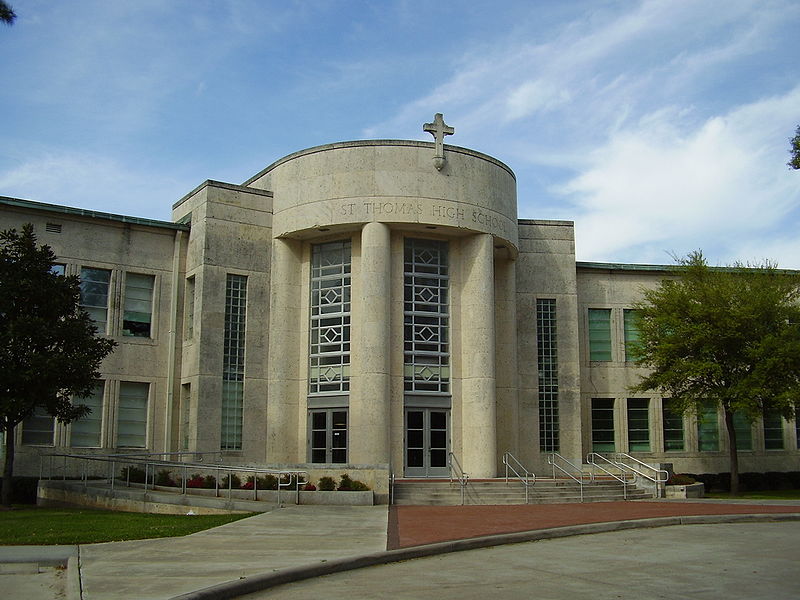
Thank You, St. Thomas High School!

January 16, 2010

4500 Memorial Drive, Houston, Texas

“Teach Me Goodness, Discipline, and Knowledge.”

Many of us who went west along Buffalo Bayou to attend St. Thomas High in Houston back in the day had to grow into an understanding of how important those words of our school motto really were. All we knew wat that it was the only private Catholic school choice for boys in Houston when I started there in 1952 and you had to take an entrance exam to get in.

The Basilian fathers opened St. Thomas High School in Houston back in 1900 at a site on Austin Street in a residential area south of downtown. In 1940, the school moved to its present site on the north side of Buffalo Bayou at what is now the corner of Memorial and Shepherd Drives. Heading east, Memorial Drive ended at Shepherd back in 1952. The extention construction of Memorial Drive from Shepherd all the way to town only took place during and after the time I was in high school at St. Thomas (1952-56). We students used that closed completed  stretch of Memorial in front of our school in 1954-55 (for a while) as a parking lot and drag strip. That was a lot of fun while it lasted.

In the 1950s, St. Thomas was heavy on math and science – and the belief that students should take whatever courses their testing says they can handle. As a result, my course plan loaded me up with science and math courses that I would never have chosen for myself, if I had been given a choice. None of us at STHS had a choice beyond “perform or fail” at the level the school expected of us.

Was that message really so bad or so different from the one we would all soon enough see in the competitive real world that lay ahead? I don’t think so.

It also was a different era. And our world reeked with even more imperfection than we find today. The Jim Crow reach of  segregation kept us all Anglo with a smattering of Hispanics and no Blacks at dear old STHS while I was there. That separation of the races never made a lot of sense to me. Because of segregation, we were all living a life in reality that differed greatly from what we were being taught, especially in Catholic and other Christian schools, as the principles of brotherly love, tolerance, and acceptance. It wasn’t just a STHS thing. St. Thomas was simply part of the mainstream acceptance of segregation that sadly existed in Houston and throughout the Old South states back then.

What a sorry situation! What would Jesus have done? Well, I’m thinking about the “Sermon on the Mount” here. I do not remember ever reading or hearing that Jesus said anything like, “Before we get started, let’s get the colored section filled in over here on my right!”

All of segregated Houston was like that on the surface of our mainstream culture back in the 1950s. Some supported segregation because they really believed in the separation of the races. Others just went along with it because it was either all they had ever known, or because it seemed easier to go with the flow than stand up against it.

Thank God it changed.

The hypocrisy of our mainstream culture in the 1950s came very close to driving me far away from conventional religious practice for all time. Until we started the civil rights changes that are ongoing to this day, I couldn’t find any good in the idea of a heaven that developed from the concept of an afterlife version of a “colored section” admission for Blacks.

How stupid could our mainstream culture  have been back in the day? Pretty stupid. We also did an ashamedly good job of denying power access and opportunity to the large number of Hispanics and few Asians in our midst back then too. It makes me embarrassed as a Caucasian to this day to think back and admit to how things were for minorities in the times prior to Brown versus The Board of Education.

Still, STHS, and certain teachers there, helped me build a picture of a better world, one in which racial prejudice and social class preferential treatment would not prevail over equality of opportunity for all. To those special mentors, I shall be forever grateful. As for those few teachers, and one in particular, who seemed fine with segregation and the class status quo, I’ve learned to write them all off as the unfortunate products of those times. They’re all dead now, just as their prejudicial ideas need to be. The cemetery is a good place for them all.

We have come out of the dark ages of racial prejudice and grown into an important international city of vast opportunity for anyone with a dream and a willingness to work. Without “goodness, discipline, and knowledge,” none of that growth in the balance of opportunity for all could have been possible. I’m just proud to have been a product of one local institution that was willing to grow in its own right and then lead the way for its happening.

Thank you, St. Thomas High School, for all you were able to teach some of us about a world in which the products of successful living hinge upon our ability to live the three qualities of our school motto. “Good”” means we have to live with integrity. “Discipline” means we need to learn how to do what we are supposed to be doing and just do it. “Knowledge” means we have to keep on learning forever about our world, others, ourselves, and God’s Will for us in this life. Put all those things together in one basket of action and we are bound to do some things that are right and in greater service to a public goal beyond our own selfish needs, no matter how imperfect we are in the process of getting there.

Oh well, that’s all the philosphy time I have open to me this morning, anyway. Hope all of you have an enjoyable weekend.

Gone But Not Forgotten Houston Eateries.

January 15, 2010

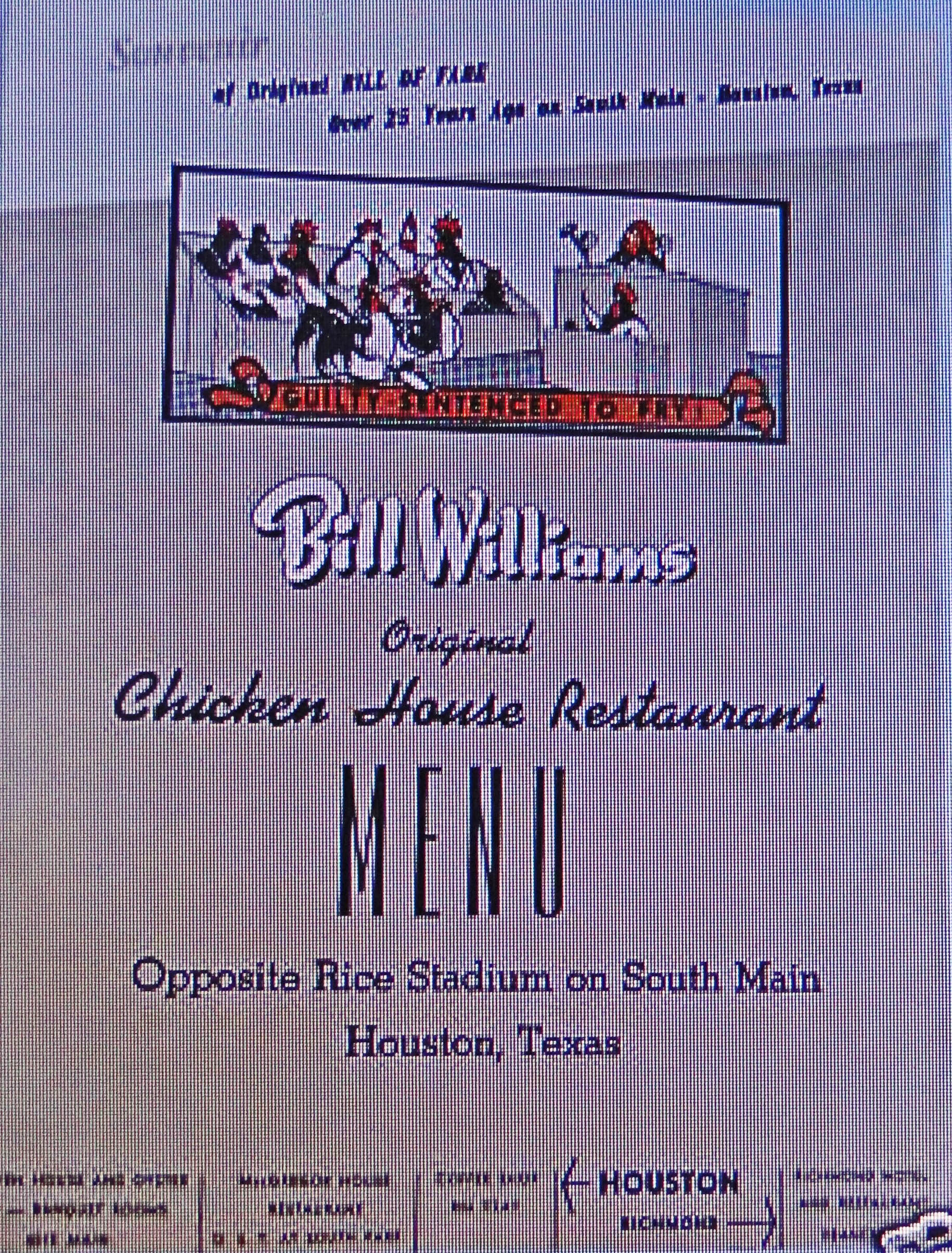
Bill Williams Chicken House. We haven’t exactly forgotten the Bill Williams Chicken House that used to advertise chicken fried “savage style” with the neon image of a Native American brave (formerly Indian warrior) squatting and cooking over a campfire. In fact, I’ve mentioned the place here in the past.  Today I simply ran across an old restaurant menu that recently went to auction on Ebay. Based upon what we can see in the photo, the menu had to be from the 1940s at the latest. It advertises “BWCH” as “opposite Rice Stadium on South Main.” That means it was produced during the period in which Rice still used the old Rice Stadium on South Main as their football venue. Football moved to the “new” 70,000 seat Rice Stadium in 1950.

It’s an interesting graphic. A chicken is on trial. We must presume that the bird was charged with being plump, juicy, and delicious because the heartless chicken judge and jury have just found him guilty and “sentenced (him) to fry.” The Internet piece also notes the availability of soft drinks, coffee, and iced tea available at nickel and dime size prices. Iced tea today in most Houston restaurants probably costs more than a whole fried chicken meal for two at Bill Williams back in the day.

Of course, I always have to mention her when it comes to Bill Williams memories, I’ll never forget the fortune-teller robot woman in the glass box near the door. For a dime or so you could have your fortune read before you walked out the door after a Bill Williams chicken dinner. I should have listened to her. I think she’s was trying to tell me: “Cut back on the fried food, boy! One of these days, your pipes are going to clog!” Professional buildings surrounding the Texas Medical Center swallowed Bill Williams years ago. They didn’t even pause long enough to fry him savage style.

Weldon’s Cafeteria. Heading north from Bill Williams, we wind our way to my all-time favorite cafeteria back in the 1940s and 1950s. Weldon’s served the most delicious chicken and dumplings I ever tasted outside my mom’s own kitchen. Weldon’s was located on the site and in the same building that later housed the Massey Business College for years. I’m not sure what’s there now.

Kelly’s Steakhouse. Just up the road and barely south of downtown on South Main, we had Kelly’s Steakhouse, one of best early steakhouses I ever visited as a kid. I’m not sure how Dad swung it, but he took us there once in a blue moon on Sundays. I can’t recall what’s there now in 2010.

Bill Bennett’s Grill. Thanks to fellow St. Thomas High School Class of 1956 classmate A.J. Garney for opening the memory door on this favorite haunt. Wow! How could I have forgotten. In our trip up South Main, we turn right on Pierce and head to LaBranch. At LaBranch near St. Joseph Hospital, we turn right again and take another right at Jefferson (now St. Joseph Parkway) and there it is on the left: Bill Bennett’s Grill. As A.J. so fondly recalls, Bill Bennett’s served these great homemade all-you-can-eat biscuits and practically everything else that could be grilled or fried – and at the modest prices we could all afford as high school guys out there on the original rock-n-roll boogie trail. I’m not sure when Bill Bennett’s closed, but it came down when TXDOT acted to use that space for that section of the downtown freeway we now call the Pierce Elevator. Oh well. It was great while it lasted – as were we and the times of our youth. Thanks for the memories, AJ!

If you can think of any other places that have breezed through the sieve of my memory bank about the 1940s or 1950s, please let me know what they are and what you remember of them. As always, I’ll do what I can here to help Houston remember what we’ve lost or given up in the name of progress over time.

Martin Dihigo: Virtuoso in a Vacuum.

January 14, 2010

He was born of humble circumstances in Matanzas, Cuba on May 25, 1905. He grew up to be a 6’4″, 190 lb. professional baseball player who, batting and throwing right,  handled all nine field positions with exceptional skill. Most of those who saw him seem to agree that pitcher and second base were his best positions.

Dihigo never had a chance to play in the old white big leagues because of the color line, but he eventually earned his way into the baseball halls of fame of the Dominican Republic, Venezuela, Mexico, Cuba, and Cooperstown by 1977, or by six years after his death at age 66 on May 20, 1971 in Cienfuegos, Cuba.

He was Martin Dihigo. He played baseball so well that stars like Buck Leonard, Johnny Mize, and Monte Irvin hint that he may have been the greatest baseball player that ever lived.

Dihigo was the consummate five-tool, do-it-all guy. He hit for power and average – and “they” say he could run, throw and catch with the best of the rest in the white majors and Negro leagues.

Here’s where it always gets tough when it comes to making an objective case for greatness based upon performance records of Negro leaguers. Record-keeping in the Negro leagues was often spotty and, because of segregation, it’s impossible to use data that shows how Negro leaguers have performed in direct competition with the white major leaguers of that their era over the long season. We are left with the testimonials of others as to their greatness and to the statistics we can find for the sake of drawing our own conclusions.

In the matter of Martin Dihigo, all I know is that I’ve never run across anything in writing that ever came close to describing him as anything less than phenomenal in all phases of the game. I decided to place my trust in these massive anecdotal references and to select Martin Dihigo as my all time third baseman. I only placed him on third base because I had the other bases covered well. Dihigo probably could have made the team at virtually any position. That’s how good these testimonial remarks imply that he was.

Martin Dihigo posted a .307 batting average and a .511 slugging average over the course of his twelve season career in the Negro League. His greatest year as a pitcher, however, came as a 1938 Mexican Leaguer when he won 18, lost 2, and posted a 0.90 earned run average, From the early 1920s through 1950. Martin Dihigo performed in the Negro American League and every baseball league that existed in Latin America, gathering all-star and MVP awards as though they were a bag of sunflower seeds. He may as well have performed in a vacuüm tube. Few observers of any credible power in the white media saw him play and, as we know, there is little moving film material and no electronic tape or digital moving photo record of Negro League action from back in the day.

Fortunately for Martin Dihigo, the few who did see or play with or against Martin Dihigo never forgot what they saw. To them, his eye-witness advocates, we say thank you for telling us all about a guy who may have been the greatest all round baseball player of all time.

A Monte Irvin Baseball Quiz.

January 13, 2010

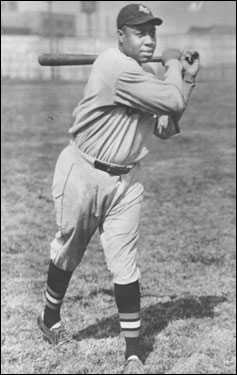
Monte Irvin, Baseball Hall of Fame, 1973.

This little quiz focuses upon Hall of Famer Monte Irvin as the key to all its answers. If you are a deep water port baseball fan, it will be tough. If you are a casual fan to a non-fan, it will be impossible. Either way, don’t take the test, or yourself, all that seriously. Life isn’t fun for self-important people. And who needs that plague in particular or those boring people in general?

Just have fun with it.

The answers to this quiz are below. I wrote it honor of Hall of Famer Monte Irvin’s appearance and discussion at our December 2009 meeting of SABR, the Society for American Baseball Research. We didn’t get to the quiz until last night at our January 2010 meeting. Unfortunately, I neglected to bring the answer sheet with me, thus causing me to into brain-freeze on a couple of the answers until I got help from some of the members who hung with me long enough to take the test. I think that’s what Wee Willie Shakespeare had in mind when he came up with the phonetic expression, “hoisted upon my petard.”

This petard is a booger if you don’t have the answer sheet handy, but that will not be a problem here. The answers really are listed below. Just try to resist scrolling too fast past the opportunity of giving the quiz your best shot.

Before you take the quiz, please make a note of the built-in clue. Since I originally wrote the quiz to honor Monte Irvin, the answers to the ten questions, in order, are each preceded by the letters of his first and last names: M-O-N-T-E  I-R-V-I-N. These letters each represent the first letters of the last names of each person that is the answer to each specific question.

Got it? Good! Here is the question that applies to each of the ten “Monte Irvin” statements: What is the first and last name of the person we are talking about here? Remember, his last name will start with the bold-typed letter that precedes that particular statement. One more small hint: Each answer will contain the name of a Baseball Hall of Fame member, going all the way back in some cases to the 19th century.

M. He was no Bugs Bunny, but he had a lot of staying power.

O. His quirky batting style only got him into the Hall of Fame.

N. It’s not how fast you throw, but what happens when you do.

T. He was last National Leaguer to hit .400 in one season.

E. In 18 years, he played every field position and hit .303 life.


I. His middle name is Merrill, but call him “Mr. Murder.”

R. “The Hoosier Thunderbolt” won 31 plus, 4 straight years.

V. Reached the HOF with only 197 wins from 1916 to 1935.

I. Invert Route 66 upside down for his MLB career HR total.

N. Won 30 plus 7 times and won 361 games in MLB career.

Scroll down for the answers >>>>

>>>>>>>>>>>>

>>>>>>>>>>>>

>>>>>>>>>>>>

>>>>>>>>>>>>

>>>>>>>>>>>>

>>>>>>>>>>>>

ANSWERS:

M. Rabbit Maranville

O. Mel Ott

N. Phil Niekro

T. Bill Terry

E. Buck Ewing

I. Monte Irvin

R. Amos Rusie

V. Dazzy Vance

I. Monte Irvin

N. Kid Nichols

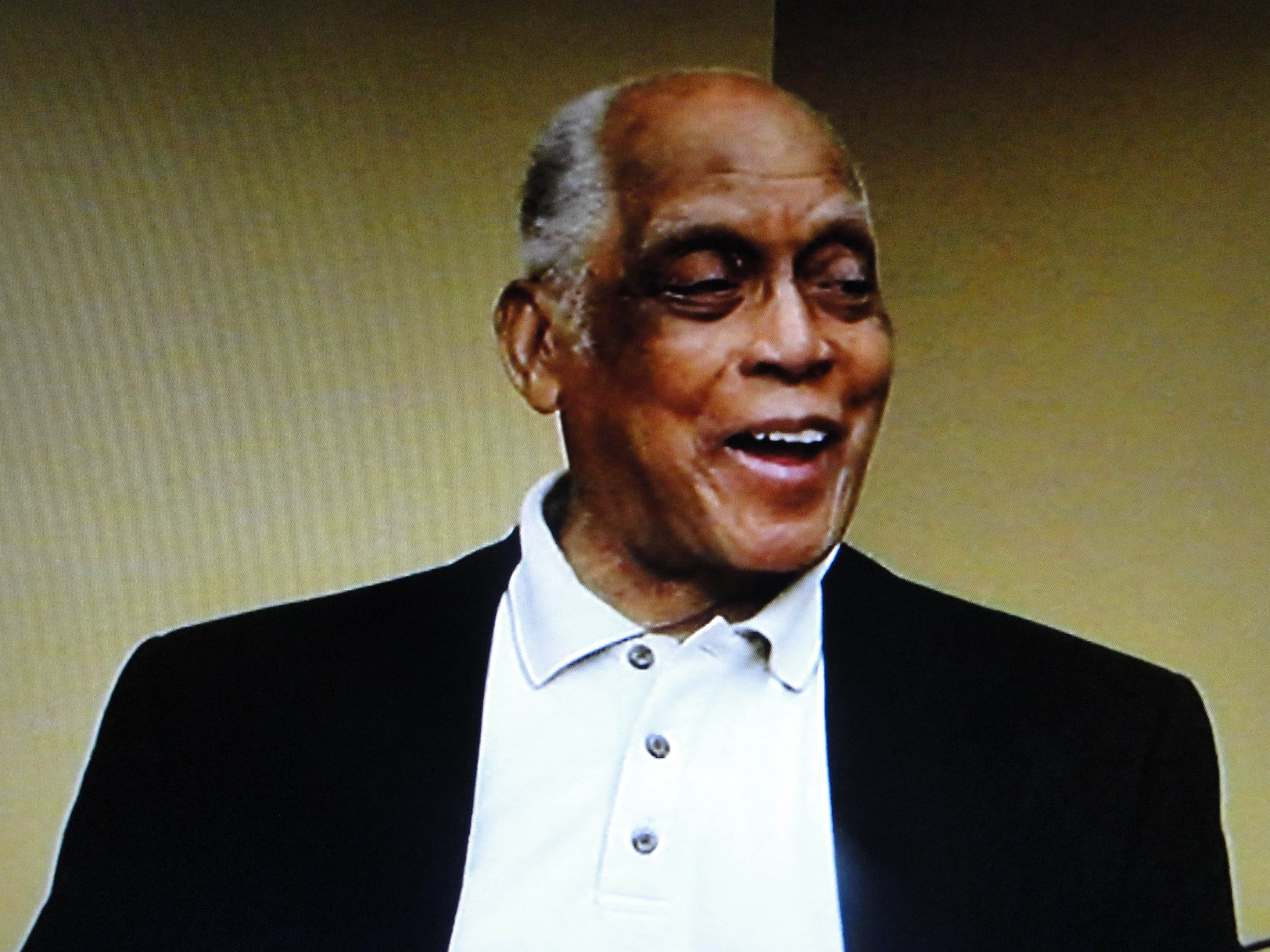
Monte Irvin Notes: During his eight season MLB career (1949-56), Monte Irvin compiled a career slugging average of .475 and a career batting average of .295. His best season for a high batting average was 1953 when he hit .329. On February 25, 2010, God Willing, Monte Irvin will celebrate his 91st birthday.

Early Happy Birthday # 91, Monte Irvin, and thanks too for all the happy memories you’ve brought to us by your willingness to spend time with our SABR group. As a piece of baseball history, that two-hour DVD we did of you and Larry Dierker with interviwer Dave Raymond at our December 8, 2009 SABR meeting is a treasure that reaches far beyond all of our lifetimes as an item of historical value.

Texas League Birth Came by C Section.

January 12, 2010

The early years of the Texas League of Professional Baseball Clubs were anything but smooth. In fact, it’s even hard to believe that the league that launched the storied history of professional baseball in Houston through the team that finally came to be known as the Houston Buffaloes even survived its first 1888 season of operations. By all contemporary standards and expectations, in fact, we would be forced to write it off as an abysmal failure. except for one thing: Playing somebody somewhere was apparently more important in 1888 than the accuracy of the league standings, the exact composition of the league by teams on any given day, or the statistical accomplishments of each player.

In brief, here’s how the Texas League got started and how its first season of operations played out for history:

In the fall of 1887, the champion St. Louis Browns of the American Association, led by Charlie Comiskey, toured Texas for s series of exhibition games against their traveling companion, the New York Giants of the National League, led by John Montgomery Ward. At the same time, a minor league club from Joplin, Missouri, led by fiery young John J. McCloskey, also invaded Texas to pick up some loose change playing local amateur clubs. Like the boys from Joplin, the Browns and Giants also played more games against local groups than they did against each other.

When the minor league star Joplins finally crossed paths with the major league  Giants in Austin for a series of exhibitions, the passion of the cranks (fans) for these games was hardly lost to the watchful eye of the energetic 25-year old McCloskey. After his Joplins soundly defeated the Giants in the first two games of a schedule three-game series, New York declined to play the last contest. These results caused Austin businessmen to go after McCloskey to start professional baseball in Austin and Texas, something he wanted to do anyway. McCloskey already had appraised that Texas was ready for a professional league of its own. Now he had Texas power and money to back him and he quickly harvested the good contacts he had cultivated around the state on his tour and added to these the names of other influential people supplied by his Austin contacts.

Big John went right to work.

John J. McCloskey of Louisville, Kentucky was a charismatic guy, one that just oozed with passion for the game of baseball. In a way, many people caught the baseball “bug” directly from their 1887 contact with John McCloskey.

A much longer story made short: Instead of returning to Missouri for Christmas, McCloskey’s business in Texas simply segued from playing the game to promoting the start of a new league. For the amazing work he did in a relatively short period of time, John J. McCloskey is remembered today as the Father of the Texas League. By December 15, 1887, McCloskey had pulled together a group of prominent business people from all over the state and the City of New Orleans for a Texas League organizational meeting in Austin.

Houston, Dallas, Austin, and New Orleans were represented in person at the December 15th meeting. San Antonio, Galveston, and Fort Worth were also on board with the idea, even if their people couldn’t get to the meeting. New Orleans pulled out in favor of joining the “closer to home” league forming in the South as the Southern Association. The others held together to form the six-club all Texas city group now forevermore known by charter as The Texas League of Baseball Clubs. Waco also sent a letter of support for the idea to the meeting, but was unable to form a local plan for competition during the league’s proposed first season in 1888. The new league had hoped to start with eight clubs, but had to settle for the six groups that held together. One of those clubs, the Austin group, was really the old Joplin club. McCloskey had simply relocated his established group of young stars to the Texas capital city.

The Texas League started with a fairly organized plan. Salaries were established at $1,000 per season and playing rules were adopted to fit the club into the growing pattern of organized baseball. Ticket prices were set at 25 cents per game and a contract was reached with the A.J. Reach Company of Philadelphia for the production of the official Texas Leagye ball. Umpires (one per game) would be paid $75 plus train fare. The league secretary was approved for a salary of $50 per month for the entire year.

The league secretary needed a pencil and eraser fund. Most of the first year would be spent making and rearranging schedules and trying to keep up with game outcomes that were frequently unreported or not reported accurately. The biggest problem would be the crashing of franchises in mid-stream of the league’s first active season.

Season play started on April 5, 1888. By early June, every club, but Dallas, was in financial trouble and San Antonio was forced to fold. This fatality required a schedule revision to accomodate five teams. The effect was to leave one team idle for three or four days each week as the other four played.

Shortly aftr the San Antonio collapse, Fort Worth also folded its tent as a professional club. They didn’t disband. They simply declared themselves “amateurs” and started playing other local teams in their home area. The Texas League now had to survive as a four-club loop.

Change was far from done. When Austin began to fail, San Antonio rose from the dead and took it over, becoming the first city in baseball history to sponsor two different teams in the same league during the same season. That relocation was quickly followed by the return of New Orleans as a mid-season entry into the pennant race as a brand new fifth team. Any connection between game outcomes and a credible standing of the teams had now been totally removed. The goal now was staying alive as an organization, but how was the Texas League to do that with the plug now pulled on believability?

By September 1888, Houston and Galveston both dropped out of the league for financial reasons. This move prompted New Orleans to quit again rather than continua their trips into Texas to play the two remaining teams.

With no clubs other than Dallas and San Antonio remaining, the Texas League simply stopped playing ball in early October. The Dallas Hams reorganized as the “State Fair and Exposition team” and kept on playing ball against amateur teams at the state fairgrounds. This was back in the pre-Big Tex days at the State Fair, if you recall.

With a record of 55 wins and 27 losses, and a winning percentage of .671, Dallas had the best reported record for 1888, but no official champion was named for that first season, although the Dallas club always felt that it had justly earned it. The Houston Mudcats of 1889 would become the first recognized official champions of the Texas League.

Before we can keep score of anything that matters, we have to survive, and that’s the position that the Texas League faced when they first opened their doors to competition in 1888.

Because Houston, led by S.L. Hain, had been the last group to aign on with an approved plan, they briefly acquired the ignominious initial nickname of “Babies.” By popular demand from all fronts, the Babies quickly renamed themselves as the Houston Red Stockings in 1888. They would become the Mudcats in 1889 and go through Magnolias and Wanderers ovr the early years before finally finding their permanent identity as the Buffs in the first decade of the 20th century.

The 1888 season was zany. For the league founders and everybody else.

Your Time Machine Choice.

January 11, 2010

Here's your vehicle. Where do you want to go?

Remember that 1960 movie, “The Time Machine,” starring Rod Taylor and based upon the famous 1895 novel by early sci-fi writer H.G. Wells? The story basically unfolds as an early example of a theme we would see in many books and movies to come about man’s limitless capacity for greed and self-destruction. The blockbuster movie hit, “Avatar,” qualifies as the latest example of that heavy beat, but that theme has nothing to do with my interest in bringing you the time machine premise this day.

My question is simple: If you possessed the ability to travel back through time, with or without a HD DVD video camera, for a 24-hour trip to any point in American History, or your personal history, from October 12, 1492 forward, just once, where would you go?

Think a bit before you answer. The choice is yours. It could well be to a time-point in which they had no recording devices. It might be to a major event  in this nation’s history. It could be to a big moment in invention, sports, or the arts. It might even be to an event that wasn’t recognized as important at the time. Or it could be to a moment that only had importance to your personal history.

You pick it. Pick it because it’s important to you and it will be the trip of a lifetime.

Oh yeah. The usual principles of time travel prevail here. You will have no power to change anything. In fact, you will be invisible and also exempt from the usual laws of physics that govern trans-solid state mobility. Like a ghost, you, and any equipment you bring with you, will have the power to pass through walls and not be harmed by such moving objects as speeding vehicles that would ordinarily flatten and splatter other living matter. You are only there to witness, vicariously experience, record, and hopefully learn from a more direct experience with public or personal history.

The creative fun of today’s blog is now in your hands. If all or most of you readers are willing to briefly report on your choices as comments below, the sum of these ideas could be of interest to all of us. If no one responds, than I will just have to plead guilty of overestimating people’s willingness to share their positive inner wishes within the safety of this non-threatening civil forum.

I’ll  try to stay 100% out of the way. The only comments I won’t ignore are those that amount to little more than expressions of prejudicial hatred and violence toward others. Those kinds, should  they occur, will be deleted. Everything else is welcomed.

Have fun. Even if you elect not to share, I hope you enjoy and benefit from the trip you select for yourself.

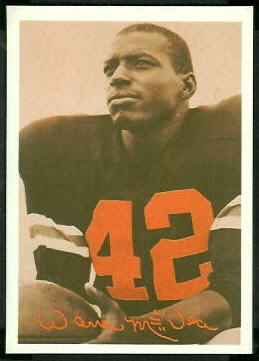
Wondrous Warren McVea.

January 10, 2010

He was a human water bug as a running back. Try to trap him with your hands as a defensive lineman and he will simply relax the muscles in his legs and torso, allowing your touches to suddenly slide off his body as though they were spoons slipping off a buttered noodle. You are left in the lurch, grasping at air as the water bug quickly squirts off in another burst of animated motion down the field behind you.

If you then, as one of three linebackers, pick up all this happening before your disbelieving eyes, you have about one nanosecond to make eye contact with the tiny approaching figure as he looks you one way and then dashes around you another. By the time you have all relocated your jock straps, the water bug has gone again, moving deeper into your team’s side of the fifty, and now heading on a left angled diagonal trek across the field and into the intercepting pathways of four quick, cunning, and converging defensive backs.

As interceptor one, you make a calculated dive for the dancing legs. They boogie by your empty-armed grasp and you are left tumbling on a teeth-clinching roll into the turf.

As interceptors two and three, you pick up the bug in your sites and attack from cross angles. One of you reaches a left shoulder, causing the bug to spin back. The other of you explodes against the right calf of the bug as it turns back from you in response to the other side assault. Another nanosecond later and the two of you joint interceptors are crashing into each other. A near 360 degree spin by the water bug has first freed him from your almost deadly grasp and then propelled him on a course to the opposite right pylon corner of the now even evermore inviting goal line.

As the fourth, last, and greatest interceptor. you close in upon the water bug from an angle that is slightly to his left. Your paths converge at the one yard line. Just as you are about to finally bring down the elusive bug, he stares and you blink. A quick frame later, the water bug has braked just long enough to cut behind you and step over the goal line for an 84-yard touchdown run.

At journey’s end, no ball-slamming or end zone dancing takes place. The water bug simply discards  the no-longer-needed football with a gently releasing toss and trots back to his team’s sideline.

“What an incredible run! How does the guy do it?” As a fan, your dual points of exclamation and wonder about the water bug helped invent the word redundancy as it came to apply to sports page expression in the 1960s.

That human water bug, of course, was a diminutive running back from the University of Houston named Warren McVea. Between the lines, there’s never been another one like him. His ability to escape capture in an open field made him something like the Harry Houdini of college football back in the salad days of “once upon a time.”

Here’s how it all began, once upon a time in San Antonio, just days after the John F. Kennedy assassination in November 1963. Brackenridge and Lee high schools of San Antonio met in the Alamo City in a state football bi district playoff game that is still regarded by many (and all of us who saw it) as the greatest playoff game in Texas High School Football history. It also marked the very daybreak of television’s power to make overnight stars of high school kids. The image-building job was made easier by the fact that this game featured two kids who were doing pretty darn good on their own without the face of television.

Linus Baer of Lee and Warren McVea of Brackenridge were each the star running backs of their two schools, propelling their teams over all comers with virtually unstoppable running attacks. Now they had to play each other and it was anyone’s guess as to which team would prevail. The demand for tickets was so great that the game was put on television by a San Antonio station. I’m not sure how far their TV coverage reached into other markets, but I was fortunate to have been visiting with my folks in Beeville following the Kennedy death and I got to watch it with my dad.

Both clubs put their stars back to receive on kickoffs. As a result, both clubs avoided kicking deep. The one time that Lee made the mistake of doing so, Warren McVea ran it back something close to 100 yards for a touchdown. McVea collected over 200 yards rushing in the game and both stars scored multiple touchdowns before Lee finally prevailed on a last second touchdown by 55-48.

Linus Baer went on to play for the University of Texas Longhorns. Warren McVea had his pick of any top school in the country that then accepted black players. Above 73 others, McVea chose to sign with the University of Houston and to become the first black football player in the school’s history.

At UH from 1965-1967, McVea played masterfully in multiple rolls as a running back, wide receiver, and kick returner. On September 23, 1966, McVea took a pass from QB Bo Burris and went 99 yards for an unbreakable one-play distance TD catch-and-run record against Washington State. In 1967, McVea’s 84 some-odd yard touchdown run against Michigan State led the visiting Cougars to national prominence with a 37-7 win on the road at East Lansing. He made two first team All American teams in 1966-67 and then left UH for an NFL career.

After a six-year stint with Cincinnati and Kansas City of the NFL, McVea played briefly with the Detroit Wheels and old Houston Texans of the now long defunct World Football League. By this time, the 5’8″ 160 pounds soaking wet water bug had seen his better jiggling days.

Sinking into a life dominated by domestic violence, petty crime, and heavy drug addiction, Warren McVea sadly found himself sentenced to twenty-years in the Texas Department of Corrections penitentiary system.  After several years of incarceration, McVea was paroled and left to pick up the pieces of his once promising life. From all appearances, he apparently has done that neatest escape from ignominy.

Warren McVea today is sober and living in San Antonio. He works as a courier/delivery guy in the Alamo City . He came to Houston and was admitted to the University of Houston Athletic Hall of Honor in 2004 and he has since also been inducted into the San Antonio Athletic Hall of Fame.

Life’s one day a time now. If Warren McVea can avoid a relapse into that lost dark hall of the soul, it will be the greatest escape of the water bug’s life. With God’s help, it will be done.

U TOOT WE TOTE.

January 9, 2010

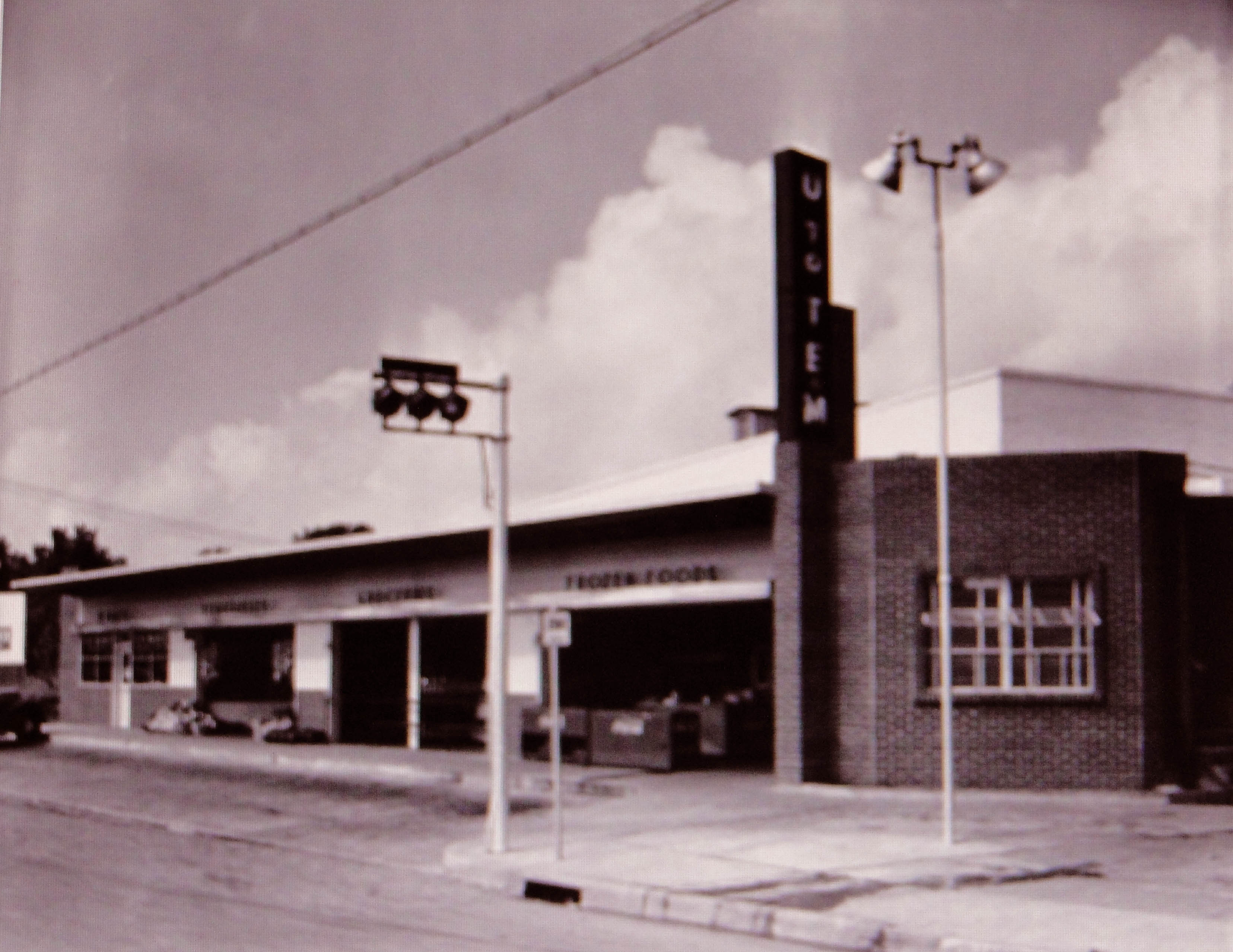
U Totem used to be one of the Big Two convenience store chains in the Houston area. Along with 7-11, there was little room in this market for competition from the growing Circle K chain that seemed to be taking over the rural market all across rural Texas and the greater southwest.

LeRoy Melcher (1912-1999) of Houston bought controlling interest in the U Totem chain in 1950, becoming its president in 1953. He expanded the chain to a network of one thousand stores over thirteen states, solidifying the company’s control with the acquisition of Fairmont Foods in 1969. Circle K finally caught up with U Totem in 1983 when it purchased all the company’s stock for $225 million dollars. All the stores were subsequently renamed Circle K as the brand “U Totem” faded from the retail food business.

My memories of U Totem go back to one of the early stores in their chain. – Let me qualify that claim. I don’t know for sure how this particular place actually became part of the eventual U Totem chain, but the name similarities are hard to write off as purely “coincidental.”

This place existed in Houston in the years immediately following World War II. It was the first convenience store of personal memory, although I was far too young then to be concerned with issues of convenience when it came to shopping. I was the just the right age, however,  to be duly  impressed by a catchy business name.

The name of the place was U TOOT WE TOTE.

U TOO WE TOTE was located on the south side of Lawndale in the block just east of the 75th and Lawndale intersection. It was an early convenience store and its name was also its original marketing message: Shop here in the convenience of your own car. Just drive up and honk your horn (U TOOT). We will come out and take your order and then bring it to your car for you. (WE TOTE).

At some point, the store decided it didn’t need to provide curb service to be attractive to customers seeking an easy way at odd hours to purchase the grocery items they needed. This one eventually became a U Totem. I just don’t know if U Totem took over U TOOT WE TOTE – or if the U TOOT WE TOTE name simply evolved into U Totem. I’m betting on the latter.

Convenience was not the operative word for Houston shopping in 1954. Full service grocery stores usually closed at 8:00 PM and stayed closed all day Sunday due to the old blue laws. You also could not purchase many items beyond pure groceries in these stores during that era. Drugs, clothes, and music were items you had to purchase in specialty stores that handled those kinds of products, and these places also operated on more limited opening hour schedules.

By the late 1950s, the time was right for convenience stores. Next up would be the diversification of products offered through grocery stores. Then came Sam Walton and everything changed forever.