The Simplicity of a Baseball Sim Game Joy

March 19, 2015
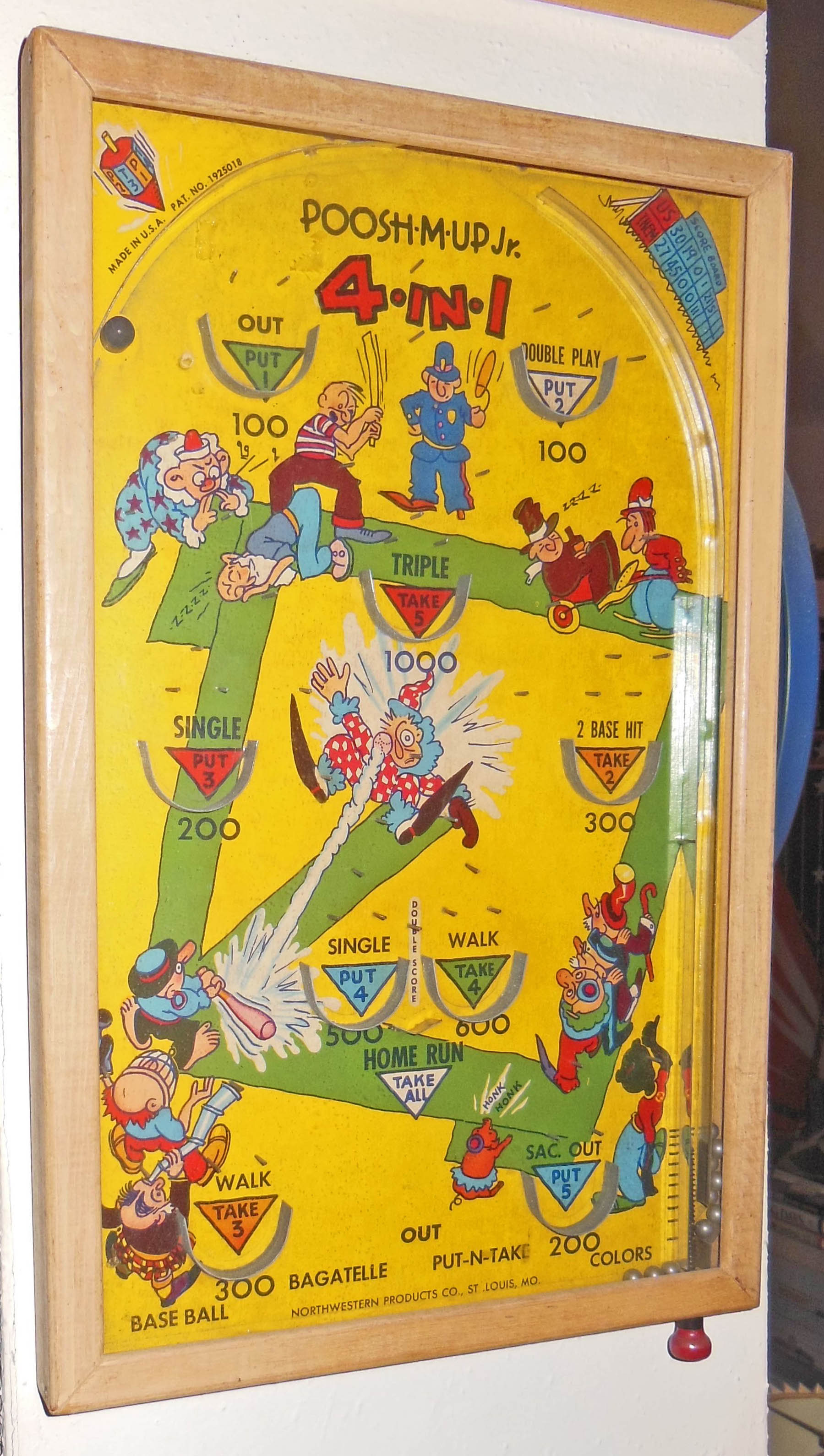
As a young kid, his was/is the pin-ball game that started me on the trail to APBA Baseball.

As a young kid, his was/is the pin-ball game that started me on the trail to APBA Baseball.

Many of us lifelong baseball fans started out as gamers. And we have remained so. I never played Stratomatic Baseball, but I latched on to the cards and dice version of APBA Baseball at a pretty tender age and was simply swallowed up by the idea of playing a baseball game based upon my growing understanding of the mathematical probabilities. To think that I now could actually manage simulated big leaguers on the hard wood of my bedroom floor on rainy summer days or anytime during the school year – players who would actually come through in the competition very close to their actual performances on the real life diamond over a full season – just swept me up to a new level of Ecstasy.

APBA was/is wonderful. When I first discovered it, it lifted me up from “pin ball” baseball – which was totally about the laws of motion and energy from physics and a player’s developing skill to pull the game knob at just the right time and release speed to achieve the best results. I didn’t want the game to be about me – or chance – or special effects.

As a kid, I once briefly owned the baseball version of that old vibrating field football game – the one where the players moved on little metal fins across a vibrating metal surface to only appear as players in action, but it was physics at its worst. Football carriers in this “electric” game would often turn around and run the other way. Baseball runners – who traveled the bases in a little grooved track, would sometimes do the improbable. For example, on a base hit to right field, a runner on first might stop a few steps from 2nd base because of some litter or defect-scratch on the base paths that halted him – and then – here would come the batter/runner – racing to 2nd base behind him – only to be halted by the obstructively stuck first base runner so both could be tagged out on a double play possibility that most probably has never occurred in reality. “Electric Baseball” was the only game I ever threw away personally – and it didn’t take long for me to make the discard.

When the computer version of APBA Baseball came out some twenty-five years ago, some lifetime players remained bonded to the cumbersome nostalgia of the cards and dice original version of “the game”. Not me. I took to the computer version immediately. I didn’t need all the additional audio/visuals that came with the new version, but, I must admit, listening to the game in the play-by-play voice of the great Ernie Harwell, plus appropriate crowd noises in the background was a nice supportive touch. However, when I started playing my early dawn games as the rest of the family slept, I found that I could turn off the sound and just follow the printed play-by play script on the screen as each play occurred ad enjoy the action as I have always enjoyed baseball on radio. – Just tell what is happening in real time – as APBA computer baseball does – and I can create the pictures of this action in my own mind with no additional help.

The APBA computer baseball game also allows the player to organize season schedules for practically any year in baseball history, to create teams and players of your own design and then play out a full season schedule manually for months – or within five minutes by a 162 game season replay, if results are your thing. If you create your own teams and players, you are even free to place yourself in the starting lineup of the 1927 Yankees, if private self-aggrandizement is your major bag. Meanwhile, APBA will compile copious statistics on the results of you organizations play.

APBA technology is great. When I am in a multitasking mood, which happens fairly often, I can enjoy playing APBA baseball at the same time I’m researching something else – or writing a column. Over time, I’ve come to respect those APBA players who prefer the old dice and cards version of the game with the same regard I hold for those of my generation who still prefer land-line telephones, the typewriter, and snail mail to the 21st century options available to them through the computer and its ever-expanding wunderkind child  – the Internet.

To each, his or her own.

To me, APBA Computer Baseball is simply pure joy.

Here are the standings of a league season I’m now playing with created teams and a combination of real and created players:

The Houston Area Vintage Ball Fantasy Sandlot League

TEAMS W L PCT. GB M#
Pecan Park Eagles 87 36 .707 21
Katy Combine 77 47 .621 10.5
Houston Babies 75 49 .605 12.5
Boerne White Sox 69 55 .556 18.5
Conroe Saw Dogs 59 64 .480 28.0
George Ranch Longhorns 44 80 .355 43.5
Tusculum Freethinkers 43 81 .347 44.5
Richmond Giants 41 83 .331 46.5

There will be a two-round, best of 7 Shaughnessy Playoff Series schedule following the completion of the 154 game schedule, pitting the #4 team versus the # 1 team and the # 3 team versus the # 2 team in Round One – and the winners of these two series then meeting in a best of 7 series for the league championship. As per usual, the higher seed always gets the home field advantage in each series.

Have a nice, simple, uncomplicated, peaceful and delicious Thursday, Everybody!

Rest In Peace, Al Rosen

March 18, 2015
Al Rosen, 3B Cleveland Indians 1947-1956 192 HR, BA .285

Al Rosen, 3B
Cleveland Indians
1947-1956
192 HR, BA .285

When former Cleveland Indian slugger Al Rosen passed away at age 91 last Friday, the 13th of March, baseball surrendered one its hardest hitting third basemen of record to a much deserved paean-ride into the hall’s of the game’s rich history. Rosen had a very good brief career in the big leagues, but one that was shortened by injury. The Sunday, March 15, 2015 New York Times featured the kind of obituary that befits the deceased of Al Rosen’s level of fame and achievement:

http://www.nytimes.com/2015/03/15/sports/baseball/al-rosen-who-missed-triple-crown-by-a-hit-dies-at-91.html?_r=0

As a ten year member of the Cleveland Indians (1947-1956), Al Rosen batted .285 with 192 career home runs and 717 runs batted in. He led the American twice in home runs, hitting 37 in 1950 and 43 in 1953, when he also led league with 115 runs scored and 145 runs batted in. In that stellar 1953 best year, he also batted .336, falling only .o0161 points behind Mickey Vernon of Washington for the batting championship and a “Triple Crown accomplishment that, as most of you know only goes to the rare player who registers the highest HR and RBI numbers, plus the highest batting average in the same year.

How Rosen lost the 1953 Triple Crown came down to his last time at bat in the season. Richard Goldstein’s article in the March 14, 2015  NY Times article covers it well:

____________________

Going into the final game of the 1953 season, Rosen was battling Mickey Vernon, the Washington Senators’ first baseman, for the batting title. In Rosen’s last at-bat, against the Detroit Tigers at Municipal Stadium in Cleveland, he hit a slow ground ball to third base and seemed to have beaten the throw on a close play.

“Everybody on the bench thought I was safe,” Rosen told Baseball Digest in 2002. But the umpire, Hank Soar, called Rosen out, and he agreed.

“I tried to leap to first base,” Rosen recalled. “But I did a quick step and missed the bag.”

Had Rosen been safe, he would have won the battling title and the triple crown. But Vernon edged him for the batting title, finishing with a .337 average.

~ Richard Goldstein, New York Times, Saturday, March 14, 2015

____________________

Because he missed the bag at first and clearly was out, Al Rosen finished the 1953 season with a .336 BA, falling to Mickey Vernon at .337 for the battle title. If Rosen had made it to first with a bum luck, angel-guided infield single on that same last time at bat, he would have won the batting title and Triple Crown for 1953 by a fly speck margin. Here are a couple of tables that best show the almost infinitely small margin of difference between the two AL batting title contenders, as they actually finished in 1953:

As Rosen and Vernon actually finished in 1953:

PLAYER AT BATS HITS B.A.
Mickey Vernon 608 205 .33717105263
Al Rosen 599 201 .33555926544
Differentials-> 009 004 .00161178719

As Rosen and Vernon would have finished, had Rosen been safe on that last close play at 1st base:

PLAYER AT BATS HITS B.A.
Al Rosen 599 202 .33722871452
Mickey Vernon 608 205 .33717105263
Differentials-> 009 003 .00005766189

Had Rosen beat out that last infield hit, he would have won the AL batting title and Triple Crown for 1953, alright, but his margin of victory over Vernon would have been even smaller than the margin that Mickey Vernon achieved over Al Rosen in reality. All that proves, as it does so often in every day life, is that most of the time, a near miss really is as big as a mile. All the more reason to hope too that our modern investment in always improving instant replay technology may spare us from near misses in baseball that are due to subjective errors of the human mind and eye.

Thanks for leading us into this renewed awareness, Al Rosen, and rest in peace. For those of you newer Houstonians who may not know, Al Rosen also had an important local connection during his years as a baseball executive. He was President and General Manager of the Houston Astros from 1980 through September 1985, when he left for San Francisco to administratively lead the Giants out of the skids through 1992.

Al Rosen also batted .349 with 25 HR in 146 games for the 1947 Oklahoma City Indians of the Texas League. What a great minor league year Al had on his way to the majors that same season. Too bad too that injuries shortened his career. He may have found his way to Cooperstown had he played longer.

Happy St. Patrick’s Day 2015

March 17, 2015

irish-shamrocks1


Happy St. Patrick’s Day 2015, Everybody!

Charlie Pallilo Sports Talk Show Host 790 AM Radio SABR"s March 16th Speaker Was Big Hit

Charlie Pallilo
Sports Talk Show Host
790 AM Radio
SABR”s March 16th Speaker Was Big Hit

Unless you attended last night’s meeting of SABR’s Larry Dierker Chapter at the Spaghetti Western Ristorante on Shepherd, you missed out on a great baseball talk by Charlie Pallilo of 790 AM sports talk radio. The young man who came to Houston from Syracuse NY and Syracuse University has grown up with us since moving his career here in 1989, wrapping his expansive intellect around all sports in a manner that few other media types ever attain as aspiring experts. He is known for his logically constructed ideas on all subjects he feels equipped to speak, but never hesitates to halt if he feels he does not have enough information to offer s worthwhile opinion on a given subject. He is known for building opinions on carefully constructed pillars of factual logic – and for never attacking his callers when he disagrees with an unfounded or poorly constructed opinion that a fan may offer – or simply shouts – over the air. He innately understands that you cannot really resolve anything in an emotional word fight – and I’ve never heard him attempt to do so. Instead, Charlie simply “lets the whirling dervishes whirl” – and he only argues with the constructs of another’s argument when he disagrees with another’s rationally offered opinion. Thanks for a great evening, Charlie Pallilo! The members of SABR enjoyed their time with you last night.

Folks, if you weren’t at the SABR meeting last night, you also missed out a on a fun-to-take, Irish-flavored and Lesser-Hall-of-Fame bloated St. Patrick’s Day Quiz. But no fear, here it follows for all of you who were not, or could not, be with us Monday evening.

The Quiz follows – and the answers will be found as the first entry in the comment section. Don’t go there until you’ve given your chance to answer the questions without the help of the answer sheet, Google, or any other source beyond the material already contained between you ears.

And please post your “honest” total scores as comments when you are done. Tal Smith of the Sugar Land Skeeters won the live version of the quiz. Let’s see if there is anyone out there who can beat Tal – and there may be. Tal got 20 of the 28 possible points that are out there, so, who knows? Maybe you can do it. – If you do, just do it honestly.

Here we go – and remember – don’t scroll down past the shamrocks falling from the leprechaun’s hat until you’ve given the quiz your honest best shot.:

A St. Patrick’s Day Baseball, Etc. Quiz


1) Who was the 19th century MLB pitcher from Ireland who finished his career in 1894 with a record of 284 wins and 220 losses, who was known also by either of his two nicknames – “The Count” or “The Apollo of The Box”?                                              


2) Who was the Irish-American catcher who went on to the Hall of Fame after an outstanding American League career at Philadelphia and Detroit?


3) Name the hard-playing, hard-drinking 19th century Hall of Fame Irishman whose name became the middle part of the famous “Slide, _______, Slide” exhortation?


4) Who was the Irish-American third baseman who played against Jackie Robinson in the latter’s first organized baseball game for Montreal in 1946?


5) Who was the Irish-American catcher who also made it to the Hall of Fame, but who is less often remembered as the player who popularized the early use of protective gear for receivers behind the plate? He also developed the first batting helmet.


Name this Irish-blooded Edison of early catchers: _________________        


6) Name the city in Ireland that is also the name of an ingredient that has been used legally and illegally in two essential pieces of baseball equipment:


7) What famous major leaguer’s physical stature would have allowed him to fit in most easily with the leprechauns on St. Patrick’s Day?


8) From the poem, “Casey at the Bat”, name the two Irishman who were on base when Casey struck out to kill the hopes for joy in Mudville? (One point for each correct name answer.)


______________________ and _______________________


9) Place the correct names on the correct bases where these players each resided when Casey took his swing into the historical realm of failure. (One point for each correct match. – (Each correct match is worth 2 points each)


_____________ was on ______ and ______________ was on ______


10) In the old movie, “Take Me Out to the Ball Game”, the “Wolves” had a 6-4-3 double play combination to rival Tinker to Evers to Chance, and two of their surnames were as Irish as they come. Name all three, for a point on each correct answer:


________________ to ________________ to ___________________


11) What former major leaguer could have been the author and screenplay writer for the book and movie, “Cheaper By the Dozen”?        


Name him: ____________________        


12) What was the legal first name of the early 20th century ball player known best as “Irish” Meusel?


Name him: ____________________


13) Ten Lesser Known Halls of “Fame” and the Groups They Each Serve: All of the answers are easy. Match the lettered group from Table Two to the numbered Hall in Table One:


Each correct answer is worth a single point addition to your test score on the St. Patrick’s Day Quiz:


No. Our Ten Halls Letter Answer, A-J
1 Hall of Flames  
2 Hall of Dames  
3 Hall of Maims  
4 Hall of Shames  
5 Hall of Blames  
6 Hall of Sames  
7 Hall of Seines  
8 Hall of Janes  
9 Hall of Brains  
10 Hall of Claims  


Choice Group Description
A Most Identical Twins
B Most Embarrassing Moments
C Einstein, Hawking, DaVinci, Etc.
D Hottest Girls of the 1950s
E Famous Insurance Files
F Biggest Historical Fires
G Russell, Powell, Curtin, Etc.
H Greatest Fishing Nets
I Most One-Sided Fights Ever
J U.S. Congress


Scoring: 28 points are available for correctly answering all questions in the entire quiz.


irish-shamrocks2

Three Texas Clubs Open AAA Play in 1959

March 16, 2015
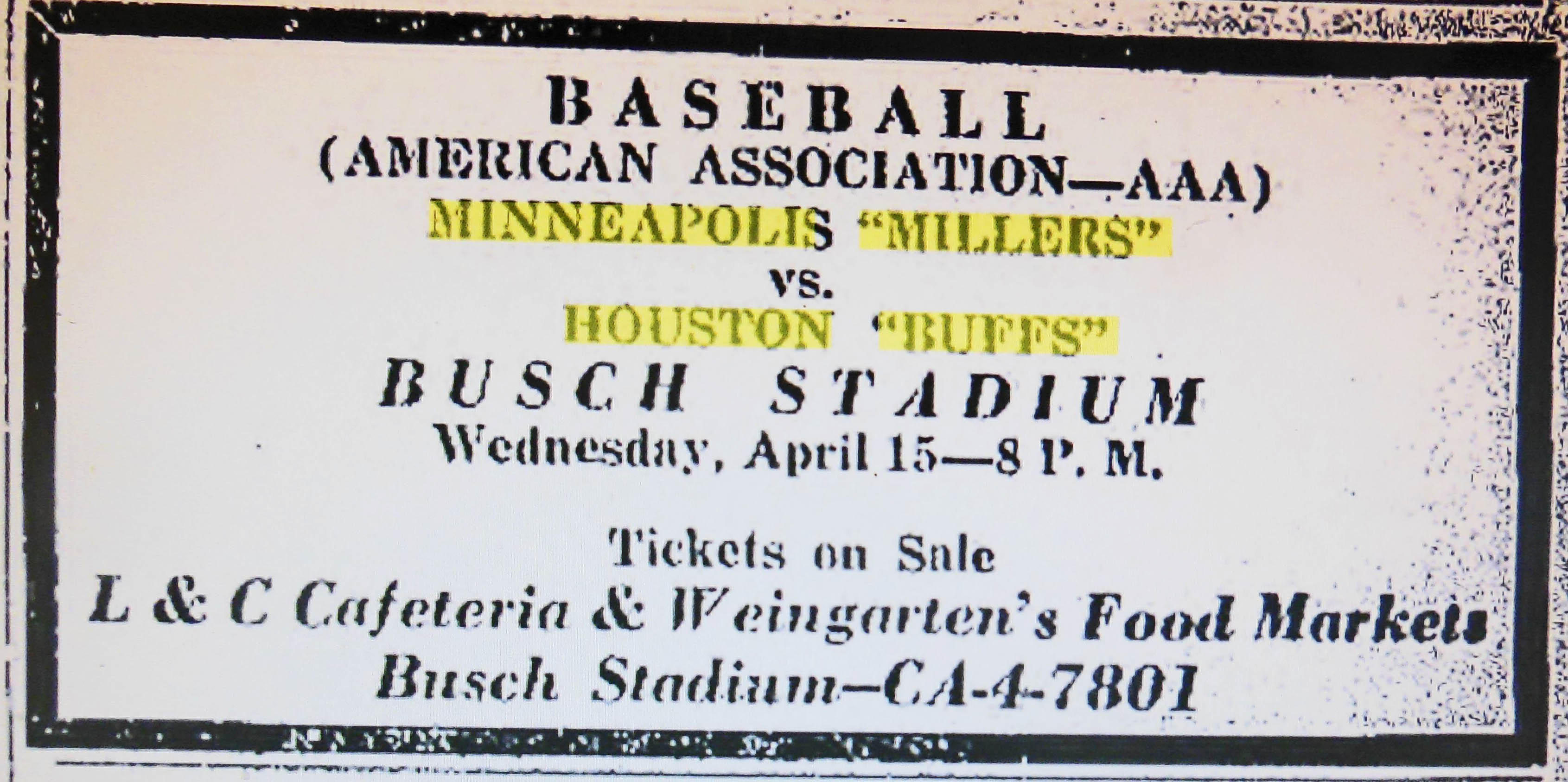
April 12, 1959: Chuck Tanner, then of the Minneapolis Millers, helped crush Houston debut in the American Association with a HR and two other hits in his club's 13 hit assault upon Buffs pitching.

April 12, 1959: Chuck Tanner, then of the Minneapolis Millers, helped crush Houston’s debut in the American Association with a HR and two other hits in his club’s 13 hit assault upon Buffs pitching.

The Dallas Rangers, the Fort Worth Cats and the Houston Buffaloes all moved up from their decades old membership in the AA Texas League in 1959 to become members together in the five-club “West Division” of the AAA American Association, For Houston, it would be a short run of three seasons (1959-62) before the Buffs faded into baseball history (but not from reverent memory) and Houston the City moved up the big time as the expansion club  “Colt .45s”, and new membership in the National League.

Details of the first Opening Day results on Sunday, April 12, 1959 are sketchy here at The Pecan Park Eagle, unfortunately,  because our New Archives resource subscription does not include digital copies of the old Houston newspapers. We do, however, enough sketchy information from this sparse Association Press article that appeared in the Monday, April 13, 1959 edition of the San Antonio Light to shed a few rays of daylight on how each of the new AAA league members from Texas fared at home in their three first Opening Day games as members of the American Association:

Dallas Rangers 3 – Denver Bears 2 (10 innings), Attendance: 4,704. The fans were described by AP as “chilled” on a night that undoubtedly smacked more of a lingering winter than the onset of  Texas spring baseball time. Dallas was the only one of the three Texas home teams to celebrate a victory on its first rattle out of the AAA Opening Day chute for the first time. “A Dallas native, Kal Segrist, was the hero of the Rangers’ victory over Denver.” With the bases loaded, Segrist “lined a 2-run double with two outs in the (bottom of) the tenth inning” to warm the hearts of over four thousand Dallas fan bodies. “A hit batsman, a walk, and Carl Powis‘ single had loaded the bases and set the stage for Segrist’s second hit of the game. Big John Juciuk and John Schaive had five of Denver’s nine safeties.”

St. Paul Saints 8 – Fort Worth Cats 6, Attendance: 3,377. “Right-hander Larry Sherry (St. Paul) fanned 11 batters, but needed relief in the 9th at Fort Worth. where St. Paul broke a 4-4 tie in the eighth. Jim Gentile‘s 2-run homer touched off a 4-run inning for the Saints.”

Minneapolis Millers 9 – Houston Buffaloes 5, Attendance: 7,453. Bad weather may have held own the Sunday crowd at Houston. The Buffs and Millers were originally scheduled to open the season on Saturday night, ahead of everyone else, but heavy rains wiped out the game and that plan. “Thirteen hits were good for 23 total bases in the Miller’s romp at Houston (Sunday). Chuck Tanner and Art Schult each had a homer and two other safeties for the Millers, who needed three hurlers to quell the Buffs.” Once more, no clear mention of winning and losing pitchers was mentioned in the report, nor were box scores made available. From what was reported, we may imagine that any surviving Buff pitchers would be grateful if nothing more specific could be found in the downtown Houston Public Library or Harris County Archive files. On the other hand, after the passage of close to 66 years, most of the participants in this long ago Opening Days have either checked out – or long ago put their egos out to pasture.

~ Quotes excerpted from Associated Press Story, The San Antonio Light, Monday, 4/13/1959, Page 16.

____________________

One Common Interesting Note.  All six of the cities involved here are now represented directly by MLB market teams, but it only took four franchises to absorb all six metro areas listed in this report. Next time we go on another cadaverous historical file search, we shall try to make it on a day in which we have more time to a pursue a subject with more readily available meat on the bones.

____________________

Addendum: Post Original Publication: Once again, friend and Maryland SABR colleague, Bill Hickman, has come to the rescue with additional flesh for the bones of this carrion-quality news source about an event in Houston and Texas baseball history that deserves a little more attention. After all, it was April 12, 1959, the day that three of the state’s largest cities made the transition together to the highest rung on the minor league baseball ladder en route to the Major Leagues in 1962 (Houston Colt .45s) and 1972 (Texas Rangers, in behalf of Dallas and Fort Worth, but physically located between the two hearts of the Metroplex in the smaller community of Arlington, Texas.)

Bill posted his information in the comment section, but it’s too primary to the central subject to be left there alone:

“The box score of that opening game between the Millers and the Buffs in 1959 was published on page 26 of the April 22, 1959 issue of The Sporting News, which may be viewed on-line in Paper of Record, for those who have access to it. The winning pitcher was Nelson Chittum and the losing pitcher was Lloyd Merritt.”

~ Bill Hickman, SABR, 3/16/2015.

____________________

Thanks, Bill Hickman! ~ The Pecan Park Eagle.


A “New” Jersey Mystery: Was it the ’59 Buffs?

March 15, 2015
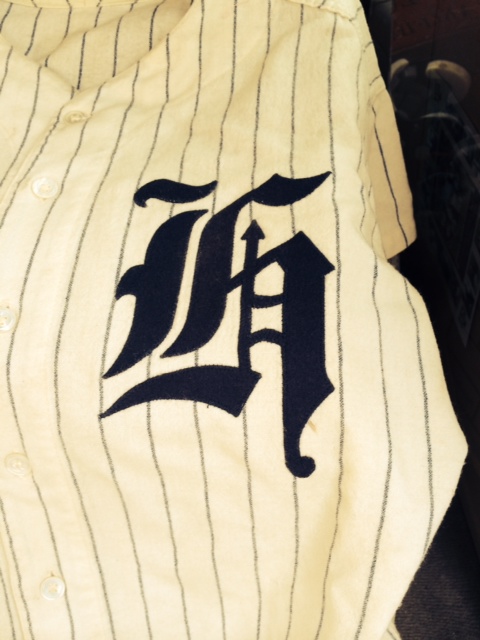
Is this item a 1959 Houston Buffs jersey? Or is it some other team - or even a later made retro jersey in honor of some team from 1959?

Is this item a 1959 Houston Buffs jersey? Or is it some other team – or even a later made retro jersey in honor of some team from 1959?

Our “New Jersey Mystery” here at The Pecan Park Eagle lacks the romance and intrigue that remains to this day around the question – “Whatever happened to the body of Jimmy Hoffa?” – but it also holds the promise of an accomplishable certain answer – one that is far less likely anytime soon, if ever, in the older, far more famous case.

In fact, as plotted in our headline, but misdirected in our first paragraph here for the sake of pun-level comparison to the Hoffa case, ours is a “new” jersey mystery – and not a “New Jersey” mystery. Even more truly stated, we could say that what we have here is – not “failure to communicate” on the level of “Col Hand Luke”, – but a “new mystery” about another “old jersey” that has come to our Houston baseball community’s attention in need of accurate identification.

The Eagle got involved exactly one month ago as one of the recipients of this e-mail appeal from friend and fellow SABR colleague, Bob Dorrill, who also happens to be our Larry Dierker Chapter leader and a man who cares deeply about the way we treat real artifacts of the game’s history. In reference to the jersey featured at the top of today’s article, Bob had written the following in his general e-mail of 2/15/15:

A local friend of mine who sells baseball jerseys came upon the flannel in the photo below which was issued by Rawlings in i959 and has an old English letter “H” on the front and number 9 on the back.  My friend thinks it is a Buffs jersey.
 
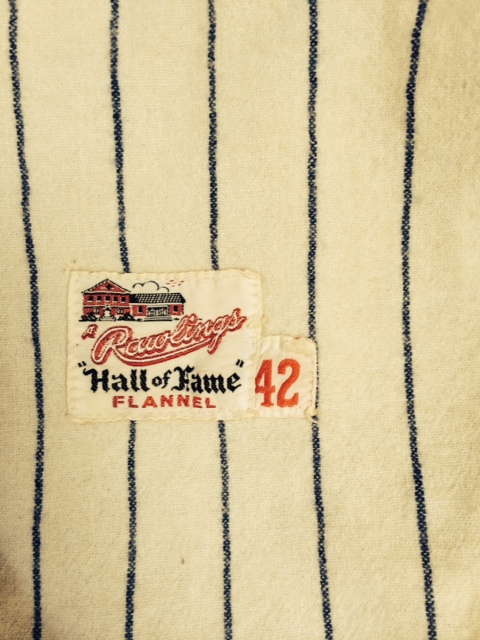
If I recall properly Hall of Fame flannels were only issued to Hall of Famers and only after they had been elected to the Hall.. Perhaps the jersey was worn at an old timers game here. Do you have any idea of who might have worn this jersey, what team he played and in what year?  
 
The Buffs did wear a uniform with the Old English “H” in the early 1940’s (a photo of Danny Murtaugh in “Houston Baseball The Early Years” shows the letter) but the uniform does not have pin stripes. He also was not in the HOF in 1959. 
Any thoughts or suggestions would be appreciated.
Thanks, Bob Dorrill       bdorrill@aol.com
________________
What’s Happened Since 2/15/15?
Not much and quite a bit:
(1) Rule out Danny Murtaugh’s appearance in such a jersey for all of the reasons that Bob Dorrill suggested in his appeal for help. The old “H” uniforms of Murtaugh’s early Buffs career did not have pinstripes – and Murtaugh never played or managed the 1959 Buffs – nor did he ever find himself inducted into the Hall of Fame in 1959, or any other year since, and then had such a jersey created in his memory.
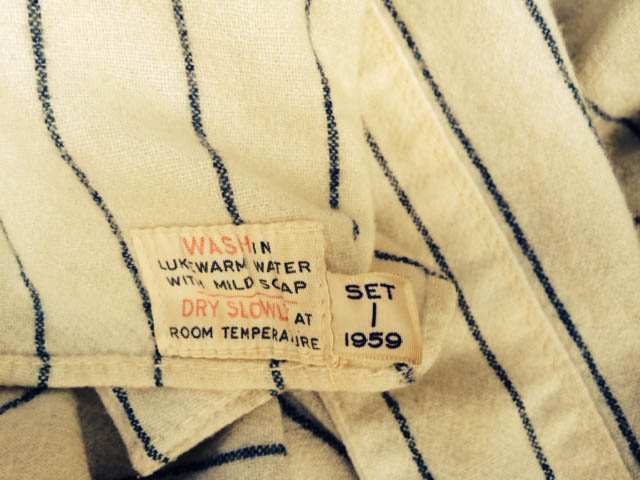
(2) The following two detailed photos have suggested to my own memory that the 1959 Houston Buffs may have worn this jersey (dark pin stripes and the Olde English “H” on the left breast jersey pate. It was the Buffs’ first season in AAA ball, and more importantly, their first year of independence in decades from the red-dominant color theme of their St. Louis Cardinal overseers. I still recall walking into Buff Stadium in 1959 and being immediately taken aback by the absence of red and the presence of pinstripes and – I’m almost certain, but have no photos to prove it, the imprint of that Old English “H” on the left side of the jersey chest.
The use of "Hall of Fame" by Rawlings makes this items seem more like a "long-after-1959" commercial retro jersey. We would probably find all we need to know from the company.

The use of “Hall of Fame” by Rawlings makes this item seem more like a “long-after-1959” commercial retail store retro jersey. We would probably find all we need to know from the company.

This tag on the jersey is what leads me to believe that it could be either a 1959 Houston Buffs jersey or some kind of retro jersey made to commemorate some "H" team from that year.

This tag on the jersey is what leads me to believe that it could be either a 1959 Houston Buffs jersey or some kind of retro jersey made to commemorate some “H” team from that year.

My memory is pretty good about this sort of thing, but it’s not proof and I don’t trust it for another reason in 1959, By this time, I was in my junior to senior years at Uh taking 15 hours per semester, 12 semester hours in the summer, and also working 40 hours a week, first in clothing sales downtown and then in water and parking meter sales for Rockwell Manufacturing. I saw fewer games and had less time to watch baseball or play baseball in 1959-60 than at any other time in my life. We need to find a photo of the 1959 Houston Buffs that is accurately cataloged. Perhaps, Joel Draut, the photo archivist for the Julia Ideson Library Collection downtown can be of help.
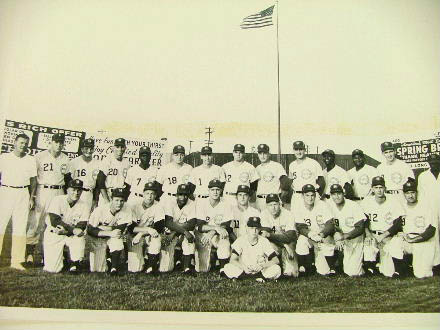
When I say “accurately cataloged”, I especially mean “watch out for what you pull up on Google. Today I found the following image on Goggle identified as the “1928 Houston Buffs”. For a lot of reasons that should jump right out at anyone who has followed the Buffs or been in Houston long enough to know the difference between our weather in January and our weather in August, this picture clearly wasn’t taken in 1928, For one thing, Houston was still playing in the stone age of segregated baseball back in 1928, but there are other give away features of error that show up that mistake pretty quickly upon inspection.
This photo is misidentified on Google as the 1928 Houston Buffs. - It could be either the 1960 or 1961 Houston Buffs. I'm not sure.

This photo is misidentified on Google as the 1928 Houston Buffs. – It could be either the 1960 or 1961 Houston Buffs. I’m not sure.

We’ve since met the collector who owns this jersey and whose passion for this sort of thing has launched this search. Since I don’t know if he wants to go public here, I will leave it up to him to either drop me an e-mail or post his own comment on this article. In the meanwhile, if any of you have any ideas, we would appreciate receiving them as public comments here on this article too at The Pecan Park Eagle website.
Thank You, Bill McCurdy, Publisher and Editor, The Pecan Park Eagle


Buffs Take Millers, 4-1. in Early 1959 Game

March 14, 2015

Buffs 1959 m

Millers Stopped, 4-1, By Houston Rookie

By Associated Press

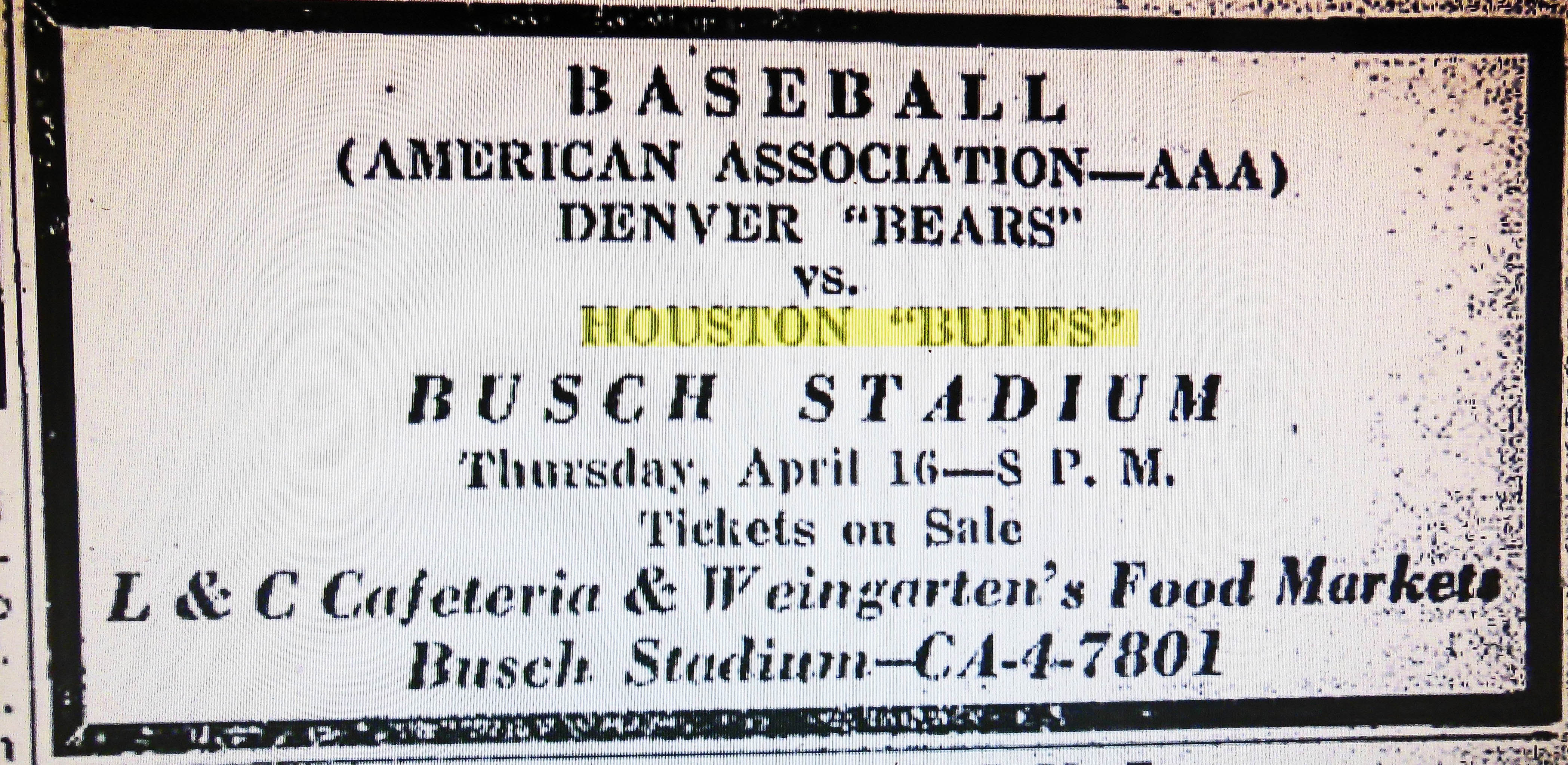
Houston tossed rookie Alvin Spearman at Minneapolis and the Buffs won their American Assn. match 4-1 on a five-hitter Wednesday.

St. Paul continued unbeaten taking Fort Worth 4-3, Omaha outslugged Charleston 10-9, Dallas turned back Denver 6-4 and Indianapolis defeated Louisville 8-12 (12-8?) in 10 innings.

BUFFS 59

Thursday Denver is at Houston, St. Paul plays at Dallas, Minneapolis (is at) Fort Worth and Omaha (is) at Louisville.

~ Kerrville (TX) Daily Times, Thursday, April 16, 1959, Page 6.

____________________

“Rookie” right hander Alvin Spearman was 27 years old and in the last year of his six-season minor league career that began in 1952. He also pitched a year in Japan during the 1955 season, but never did anything to make for daybreak in the major leagues. Spearman was 3-9 with a 3.64 ERA for the 1959 Houston Buffs in their debut season at the AAA American Association level.

http://www.baseball-reference.com/minors/player.cgi?id=spearm001alv

This particular “Alvin Spearman” is not to be confused with an older player from the Negro Leagues who shared the same name.

Have a nice and hopefully dry weekend in Houston, local readers. Things are a little soggy for us out here on our side of the creek.

1928: UT Solves Student Alcohol Abuse Problem

March 13, 2015
HE: "Are you going back to Corpus after you graduate from UT?" SHE: Don't know. Daddy's oil-richer than Midas. I may just go live in Paris for a while."

HE: “Are you going back to Corpus after you graduate from UT?”
SHE: “Daddy’s oil-richer than Midas. I may just go live in Paris.”

Liquor Cause for Removal From Dances

__________

“Any person under the influence of intoxicating liquor to any degree will be put off the dance floor and his name will be turned in to the Dean of Student Life,” was the decision of the (UT) Students’ Assembly yesterday in regard to German Club Dances. This decision also applies to first offenses, according to Potty McCullough, dance manager.

(The ruling also stated) That anyone who is not a student in good standing in the University will be removed from the floor was also decided by the Assembly.

~ Austin Daily Texan, March 10, 1928, Page 1.

__________

The UT Students’ Assembly may have thought they had solved the alcohol abuse problem on campus – and, at least, they may have turned down the “Roaring” part of  the “Roaring Twenties” buzz at German Club dances, but their failure to do so may have been helped along by their Zeitgeist view of alcohol abuse and public drunkenness as an exclusively male problem. Our clue to that possible conclusion is even telegraphed for us readers from the future by the Daily Texan’s choice of wording in the first sentence of the above report: “Any person under the influence of intoxicating liquor to any degree will be put off the dance floor and his name will be turned in to the Dean of Student Life.”

Unless my own memory of those glorious youthful times is now blurred, I seem to remember the early life collegiate drinking I may have enjoyed as having everything to do with either the female company I pursued – or the female company I found. Fortunately for me, I was also exposed to the learning opportunity in my own early life experiences with wine, women, and song that alcohol was not the adhesive one needs to build or maintain a relationship that is worth keeping over time. To put it mildly, I got to learn that the heart of everything – real love and the passionate pursuit of life’s sweet spot for creative engagement with the stuff that matters – has nothing to do with alcohol.

Congratulations, anyway, to the 1928 UT Student Assembly for reminding us that alcohol consumption at public social functions probably was the real “Apple of Eden”  – as far as our earliest consumable temptations are concerned. The 1928 UT Student Assembly simply “forgot” that women like alcohol too.


Happy Birthday, Jimmy Wynn!

March 12, 2015
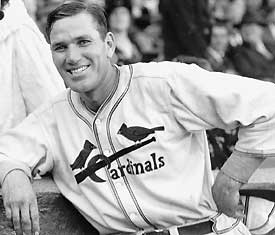
"Happy Birthday. Jimmy Wynn! Podnah, a few years down the road, you're going to be askin' for my autograph down there in Houston, a special place to both of us, and I'm gonna give it to you! _ Heck! I oughta be askin' for yours!"  ~ Dizzy Dean, March 12, 1937

“Happy Birthday. Jimmy Wynn! Podnah, a few years down the road, you’re going to be askin’ for my autograph down there in Houston, a special place to both of us, and I’m gonna give it to you! – Heck! I oughta be askin’ for yours!”
~ Dizzy Dean, March 12, 1937


Happy Birthday, Jimmy Wynn! Before we say more, however, let’s take a brief look at the baseball news that was going on exactly five years prior to the day you were born in Cincinnati.

Seventy-eight years ago today, on March 12, 1937, an AP spring training briefs story by Eddie Brietz for the Amarillo News Globe does much to confirm, that over the passage of time, some things change, but a whole lot of other things pretty much stay the same. In fact, the money holdouts by players back in 1937  just seemed to fulcrum on differences with management over hundreds of dollars for one contract year – versus differences today over millions, multi-years, guaranteed money, and aggregate salaries penalty caps. OK, we concede. It’s a lot different today on the money volume side – and we also know the players have much more leverage today in this era of free agency, but disagreements are still mostly about money valuations on a player’s worth to any club.

____________________

SPORTS ROUNDUP By Eddie Brietz

(March 3, 1937)

ST. PETERSBURG, Fla., March 12 (AP) – On the way to Daytona Beach to talk things over with the Cards yesterday, Dizzy Dean stopped off at the filling station at Bradenton and in fifteen minutes won $15 pitching quarters with the boys. …. “Looks like I can pick up that $50,000 dollars a year right here at home,” commented Dizzy as he pocketed the dough. …. Loneliest camp in Florida is Detroit’s because of (manager) Mickey Cochrane’s “no wives allowed” edict. … You should have seen the almost bald head of (Reds) General Manager Warren C. Giles after he had celebrated his first day in the Cincinnati camp by sitting in the bleachers throughout the Reds’ first full nine innings practice game.

_____

The Yankees haven’t given up on Lou Gehrig yet. … They recall the last Lou was a hold-out, he and Col. Ruppert (Yankees owner) rode South on the same train. … Not a word has been heard from Joe DiMaggio. …  Baseball men, who can’t imagine a Yankee exhibition tour through the south and southwest without Gehrig to draw the customers, believe Lou will get his $40,000 if he waits long enough, but one and all say Ruppert is just stubborn enough to let DiMaggio sit at home a year before paying (him) the $25,000 he demands.

~ Amarillo News Globe, March 12, 1937, Page 13.

____________________

FAST FORWARD FROM 1937 TO 1968 ~ An older DIZZY DEAN  signs n autograph for 26 year old JIMMY WYNN of the Astros. Wish Jimmy Happy Birthday! He turned 73 today, March 12, 2015!

FAST FORWARD FROM 1937 TO 1968 ~
An older DIZZY DEAN, at the Dome for an Oldtimers Game,  signs an autograph for 26 year old JIMMY WYNN of the Houston Astros.
Wish Jimmy Happy Birthday! He turned 73 today, March 12, 2015!


MARCH 12, 2015: HAPPY BIRTHDAY TO ONE OF OUR TRUE HOUSTON BASEBALL ICONS AND COMMUNITY TREASURES, THE ONE AND ONLY, JIMMY “THE TOY CANNON” WYNN!

Jimmy Wynn has given of himself to this community in the right spirit ever since his arrival in Houston 52 years ago. Please leave a public comment wishing Jimmy a HAPPY BIRTHDAY here at this column space – and also drop him an e-mail birthday wish today at the following e-mail address: toycannon24@msn.com


Great Player! Great Man! Great Story!

Great Player!
Great Man!
Great Story!


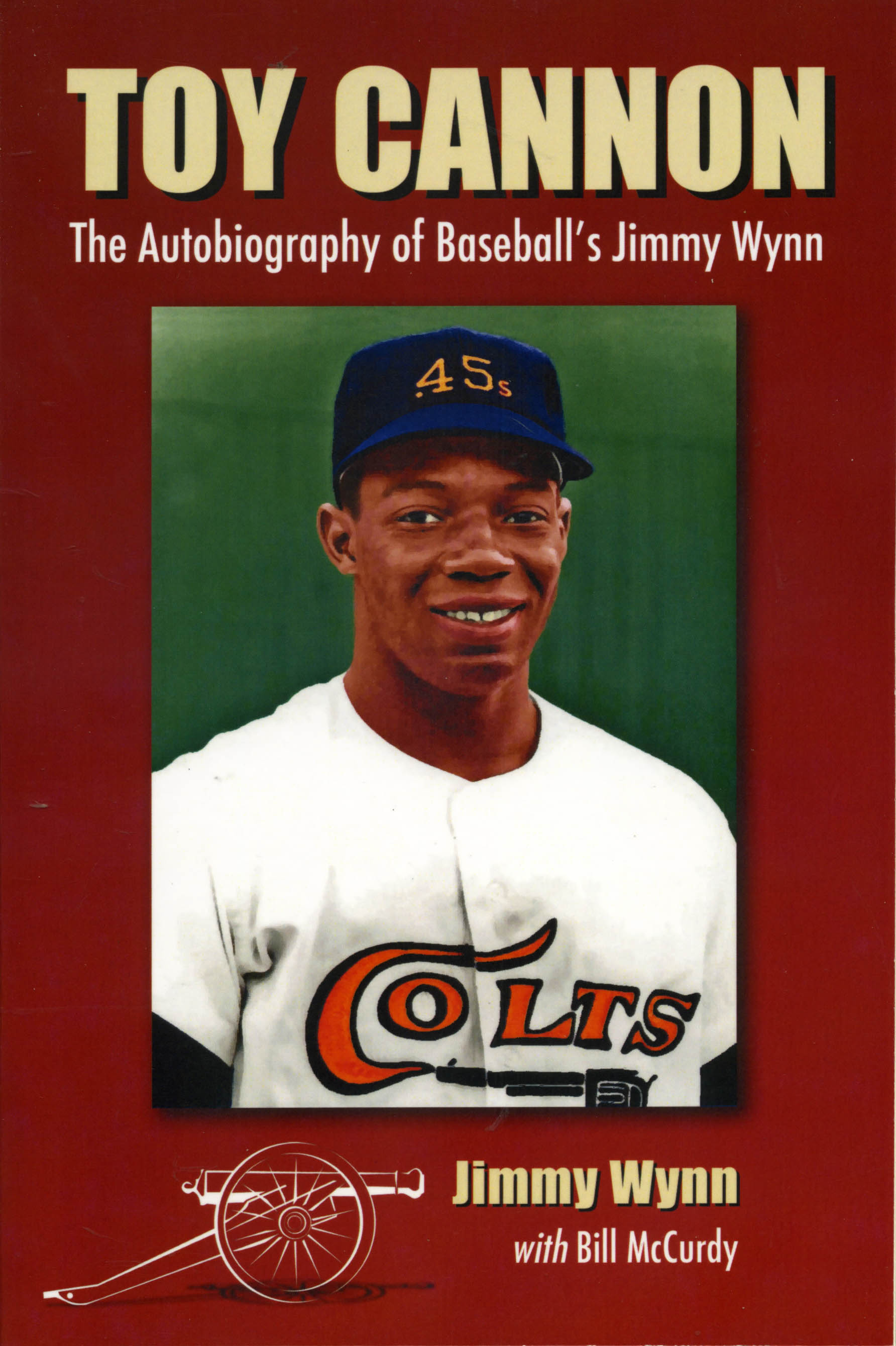
Not just “by the way”, if you never acquired your copy of Jimmy Wynn’s wonderful life story, “Toy Cannon”, or if you would like to own or purchase a gift copy, signed by the man himself, personally to you or another, now is time to fill that void in your library.

“Toy Cannon” is available for $30.00, plus sales tax and shipping from Amazon.Com, but Jimmy and I have a much better offer.

Jimmy Wynn and I still have less than 80 copies of the book that we wrote in 2010 that we are now selling directly for $30.00 – a complete price that includes the full cost of the book, sales tax, and book rate shipping – PLUSJimmy Wynn will also autograph it to whomever you wish to designate for that special honor by written instruction. Amazon cannot provide autographed fresh copies at a discounted rate. We can. For a short while.

If you are interested, feel free to submit multiple orders in one envelope for the same rate times however many copies you order. We  have not been very aggressive in selling away our personal copies until now, but we do not expect our small supply to last for  long at this discounted rate – especially with Jimmy Wynn’s personal signature attached to each treasured copy.

If you are interested, send $30.00 total for each autographed copy of “Toy Cannon”, with payment by check or money order. Endorse payment to “Bill McCurdy” and include a clear return mailing address and any special written instructions on how you wish Jimmy to sign the book for you. If no instructions are included, Jimmy will simply sign his name in the appropriate place on the interior title page.

Please: Send no cash payments!

Mail your check and any signage instructions for each book you order to:

Bill McCurdy, Publisher

Pecan Park Eagle Press

P.O. Box 940871

Houston, TX 77094-7871

____________________

Regards, Godspeed, and Happy Birthday, Jimmy Wynn!

Van Lingle Mungo: Pitcher and Song Title Too

March 11, 2015
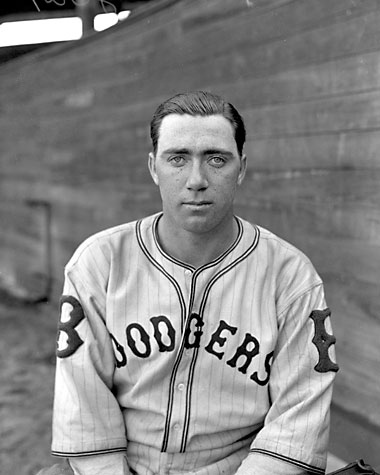
Van Lingle Mungo ~ If they ever make his movie, The Pecan Park Eagle recommends Nicholas Cage for the title role.

Van Lingle Mungo
 If they ever make his movie, The Pecan Park Eagle recommends
Nicholas Cage
for the title role.

The story of Van Lingle Mungo is a case in which two passions of the same person finally merged and transformed one of the most interesting baseball player names into the title of a song that has been acclaimed as one of the most important jazz numbers of the very late 1960s through the entirety of the 1970s.  The fellow whose creative forces put it all together was Dave Frishberg, a jazz pianist and composer who just happened to also have gone on to become of the early members of SABR because his fascination with the game we don’t even need to name in this part of the universe, but probably will, anyway. Baseball is a love that rests as comfortably on the muse farms and in the hearts of the artfully inclined creative types as it does in the scientific minds of those saber-metric mathematicians who have formulated their “money game” ways into decision-making roles with almost every MLB club these days.

Dave Frishberg Composer "Van Lingle Mungo"

Dave Frishberg
Composer
“Van Lingle Mungo”

Back in 1969, Frishberg apparently was going through one of those little pre-natal labor pains that comes with creative writing. He had a little melody that had been rolling through his head that would then be filled with interesting name that he pulled from the Baseball Encyclopedia. There was one little five-note hole to be filled at the end of the repetitive melody stanza that he needed as memorable punchline. Frishberg found his solution when he ran across the wonderful name of a 1930s Brooklyn Dodger pitcher named Van Lingle Mungo.

In case you might care for the countdown on the syllables of that fabled moniker – that name again was Van-Ling-le-Mun-go! Five! Five syllables! Five Notes! It sounded strange, but fit so well, it earned its way up to song title too. First released as a 1969 single, Frishberg later that same year included “Van Lingle Mungo” as one of the numbers of his new album, “Oklahoma Toad”.

There are forty MLB ballplayers named in “Van Lingle Mungo” – the light piano jazz number that both sounds and plays well as a “for listening and background music only” that was once so popular during the “Lizard Lounge Era” that saw its best days from post-WWII through the 1970s. The song has been incorporated into the National Baseball Library Archives at Cooperstown – and much information is available on the Internet about the history of the song.

Here’s a nice summary on the history of the song that includes the names of ballplayers it included as lyrics:

http://en.wikipedia.org/wiki/Van_Lingle_Mungo_%28song%29

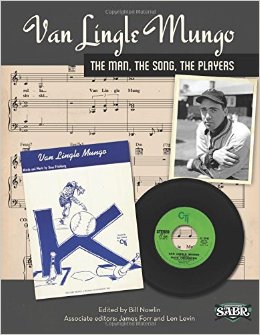
"Van Lingle Mungo" The Book A SABR Production

“Van Lingle Mungo”
The Book
A SABR Production

A book also has been written by 32 SABR members, with Bill Nowlin acting as the primary editor, and it is entitled “Van Lingle Mungo: The Man, The Song, The Players”. It is available in paperback and e-book versions. Also, at this same link, look for the link midway down the page that will transfer you to You-Tube to hear Dave Frishberg performing the song and playing the piano.

http://sabr.org/latest/sabr-digital-library-van-lingle-mungo

Last, but not least, here’s the Baseball Almanac link to Van Lingle Mungo’s MLB career pitching record (1941-43, 1945) with the Brooklyn Dodgers and New York Giants. All but the last three years were spent as either a Brooklyn Robin, during the clubs last season as Robins in 1931. From 1932 to 1941, Mungo played as a Brooklyn Dodger for all of ten years.

http://www.baseball-almanac.com/players/player.php?p=mungova01

Baseball – you are a mighty river that carries all who ride with you to the ocean of everything else that is truly good and important in life. If you don’t understand what I’m talking about, it is probably because you are not that deeply involved with the soul of the game, but that’s OK too. Find your own river to the sea. This one just happens to work fine for me.


The 1st Problem of Perfection is Its Measurability

March 10, 2015
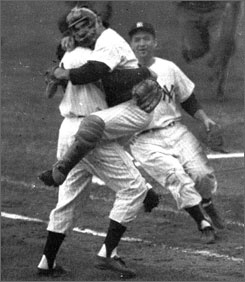
Don Larsen, New York Yankees World Series Perfect Game Pitcher October 3, 1956

Don Larsen, New York Yankees
World Series Perfect Game Pitcher
October 3, 1956

While looking over the linked list of all the perfect games in MLB history this morning, I stumbled totally into a lifelong question about that truly unattainable state. All I know for sure at this time in my life, the afternoon of the late and long shadows, is that whatever it may be, it sure isn’t me. And, truth to tell, it probably isn’t you either. Neither of us are capable of attaining true perfection – nor should we be shackled to the ruinous pressure of trying to pursue it. And the first problem of perfection, in life or baseball, is the always present challenge of finding a way to measure the unmeasurable because – whatever you come up with – and vice versa, you to me, the other person will always have some solid reason for finding another’s definition of perfection as either lacking some key element – or incomplete in its’ conceptual design.

In the end, as we have done with the so-called “perfect game” in baseball, we have to come up with working definitions of perfection that are realistically achievable on a rarity basis, but achievable, nonetheless.

http://mlb.mlb.com/mlb/history/rare_feats/index.jsp?feature=perfect_game

The names on that referenced list of perfect game pitchers in regular season MLB history makes the point. By our everyday, easy-to-see, perfect game standard, one only occurs to the credit of a pitcher when he faces the minimum 27 batters in nine innings – without giving up a hit or allowing a batter to reach base in any other way, even if it is by a teammate’s error – and the nine innings conclude with the pitcher’s team having more runs than the “0” runs posted by the opposition.

Clear, Very difficult to achieve, but doable on a rare basis. Just look at the list again relative to the total number of games played in MLB history for an easy confirmation of the point. So, how could we have come up with a “closer” definition of “perfect game” that would have made it truer of a condition that would confirm our original premise –  that none of us are really even close to perfect?

Easy. I can think of two further stipulations that would surely elevate the perfect game to the status of perfection, but at the cost of making it virtually certain of never happening in the future because, with either of these additions, it never has – so far – happened at all. Simply add either or both of these stipulations to the ones that already define “perfect game”:

A “perfect game” will only occur when either (1) the pitcher retires every batter he faces on one pitch; or else (2) the pitcher strikes out all 27 betters he faces on three pitches, without ever throwing a called “ball pitch” – or allowing even a single foul ball.

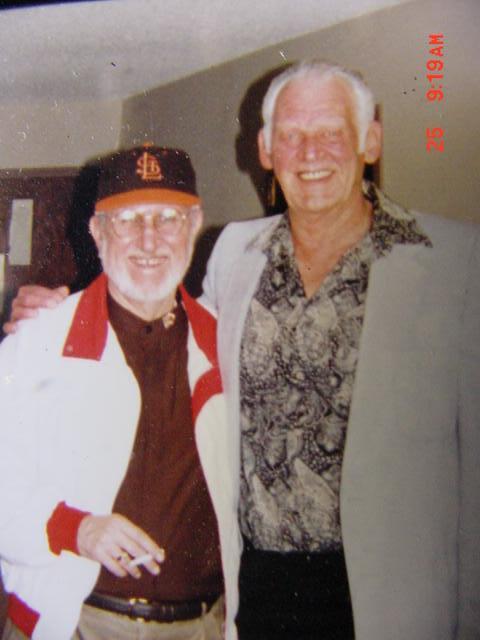
Nobody's Perfect. Don Larsen and I were both still smoking when I interviewed him in St. Louis years ago. I quit smoking in 2006, but it wasn't easy. Now I wouldn't touch one for anything.

Nobody’s Perfect.
Don Larsen and I were both still smoking when I interviewed him in St. Louis years ago. I quit smoking on March 24, 2006, but it wasn’t easy. Now I wouldn’t touch one for anything.

Conclusion: Our current definition of “perfect game” is close enough for us flawed mortals, even for those of us who actually possess the ability to “once in a very blue moon” pitch a major league game and retire all 27 batters we face without a man reaching base while playing for a team that possesses the ability to score a single run for us on a day in which our curves and sliders are “breaking bad”.