A Baseball Snapshot of the Ebony-Ivory Era

April 23, 2015

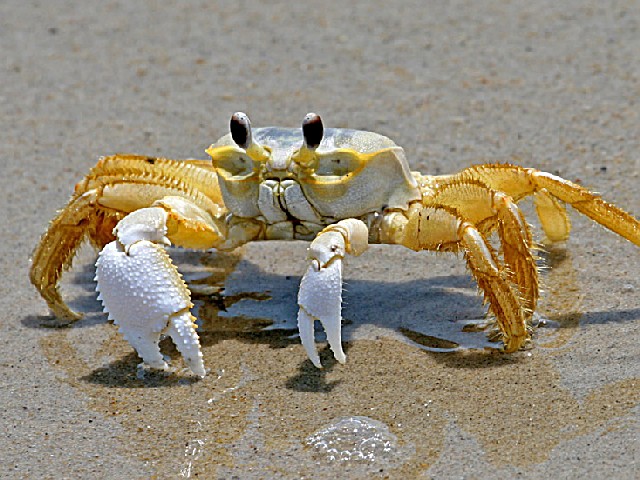
“My claws are white, but my eye are black. Call me what you will, if you like the name ‘Sand Crabs’ for your club! – What I want to know is – if you call your team the ‘Sand Crabs’ – black or white – are you going to require your hitters to run the bases sideways on a batted ball?”

Back in the days of segregated baseball, before Jackie Robinson broke the color line in 1946-47 that kept identifiable black players from playing ball with whites at any level of organized (“white”) baseball, the white clubs even seemed to have “first dibs” on team nick names. If the Galveston white club was named for the Sand Crabs. a species that still lives abundantly upon the beaches of the Island City on the Gulf Of Mexico, south of Houston, the professional black club from that same community was then honor bound or “culturally coerced” into calling themselves the “Black Sand Crabs”, if they so chose (which they did) to identify their own athletic efforts with the same local creature. It was a distinction made by the prefacing word “Black” that both separated and explained their club’s distinct identity from the “White” version of the same animal namesake.

Here’s a game summary for a contest played in Galveston between the Black Sandcrabs and the Black Oilers on April 24, 1921 (The article expresses “sand crabs” in one word as “sandcrabs”.):
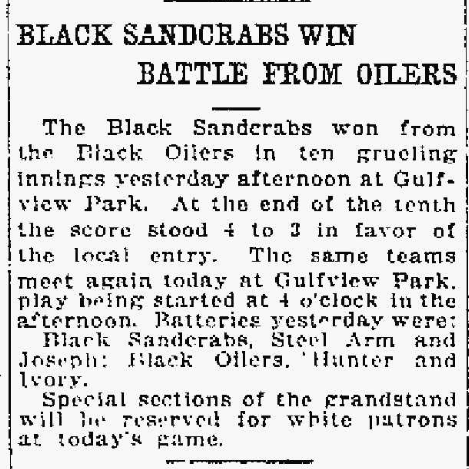
Galveston Daily News April 25, 1921 Contributed by Darrell Pittman

Galveston Daily News
April 25, 1921
Contributed by Darrell Pittman

That same year, the 1921 Galveston (White) Sandcrabs opened their Texas League season in Houston as guests of the Houston Buffaloes at West End Park as shown in the following panorama of both clubs lined up for a festive celebratory photograph prior to their game. The Houston club occupies the left of the space facing the camera to center page – and the Galveston side-crawlers occupy the right side of the picture section in this featured image:
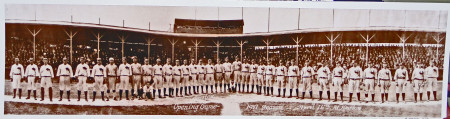
buffs-sand crabs21

Our apologies for the fact that the panorama photo fades almost down to an ant-size line of figures in our presentation here, but that’s OK. Photographic quality is not the point of this column.

The point here is that it is important for us to remember that the so-called “good old days” may have been simpler for some, but not all. And that today, in spite of our new technological ability to rush to even quicker, often wrong judgments of others, we also are now more strongly committed as a culture to battle against discrimination which keeps any of our people disenfranchised due to their differences from our mainstream river of opportunity in this great country. As far as I’m concerned, we haven’t lost “The American Dream” that many now mourn as having passed. We simply have found a way to deal more openly, even if we disagree on measures of change, with our search for a way to make sure that the American Dream is available fairly to all of its citizens.

Our wonderful game of Baseball (and I love to capitalize that word every time I write about it specifically in the name of love)  was part of the problem for decades. From the 19th century opposition of Hall of Famer Cap Anson through the strong-hand administration of Commissioner Kenesaw Mountain Landis through the early to mid-1940s, an invisible, unwritten barrier to blacks kept some of the greatest ballplayers of all time from competing directly with all others at the major league level. That finally ended with the death of Landis, the surging support of Branch Rickey, and the gutsy day-to-day courage of Jackie Robinson breaking the major league color line with Brooklyn in 1947. He actually broke the color line at AAA Montreal in 1946, but had to do it also at the major league level the following season to make it stick.

The major snapshot here is not simply that all black clubs once had to use the word “black” as part of their separating identity from local clubs using the same mascot name. Those days are done. The snapshot here is that the battle against evil intent and discrimination against others for all kinds of reasons is never done. As long as ignorance, insecurity and the human ego work so well together, we shall always need to remain on guard against injustice and a retreat into old cultural fears of difference that get in the way of any hope for a shared peace and prosperity that is equivalently available to all.
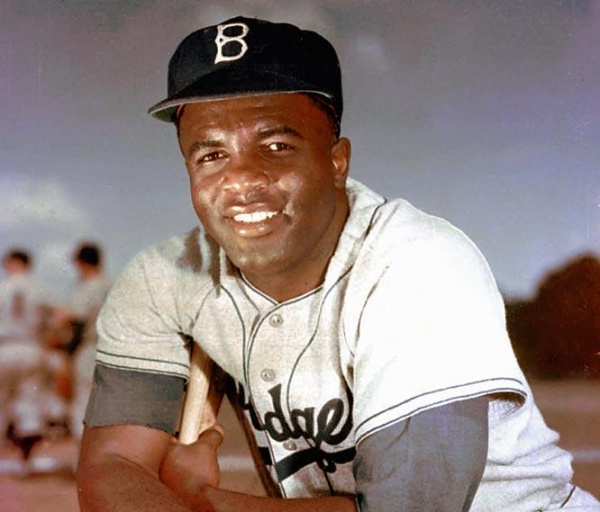
Jackie Robinson # 42

Jackie Robinson
# 42

Jackie Robinson Day – and the wearing of #42 on each player’s jersey on that date in the baseball season – is undoubtedly the most important date in the season. If the day ever comes that we don’t do it any longer – and we start having a lot of young players coming up who don’t remember who Jackie Robinson was – or what he did – we are all stepping back into the deep dew of yesteryear. And I do mean “all” of us.

Jackie Robinson was not merely a figure of black liberation in American history. He also was a liberator of whites and all other races from segregation, a cultural way of life that forced us all to live in hypocrisy from the greater-sounding language of our Declaration of Independence and Constitution. All of us whites who ate in restaurants and attended movies and ballgames during the era of segregation, at best, were passive participants in a system which was totally unfair to our black brothers and sisters – who either weren’t allowed to be there too – or to have anything close to a full range of choice on event seats that matched our own “whites only” options.

Discrimination is the devil we all have to keep killing because there always seems to be someone around who keeps trying to bring it back in some new or remodeled form.

My favorite black baseball club nickname from those days of ebony and ivory separation was the Galveston Flyaways. To me, it stood out as a model of hope for soaring spiritual deliverance from this world’s limitations. And they did not have to call themselves the Galveston Black Flyaways either – because there absolutely was no such white team animal.

God Bless! – The Pecan Park Eagle!
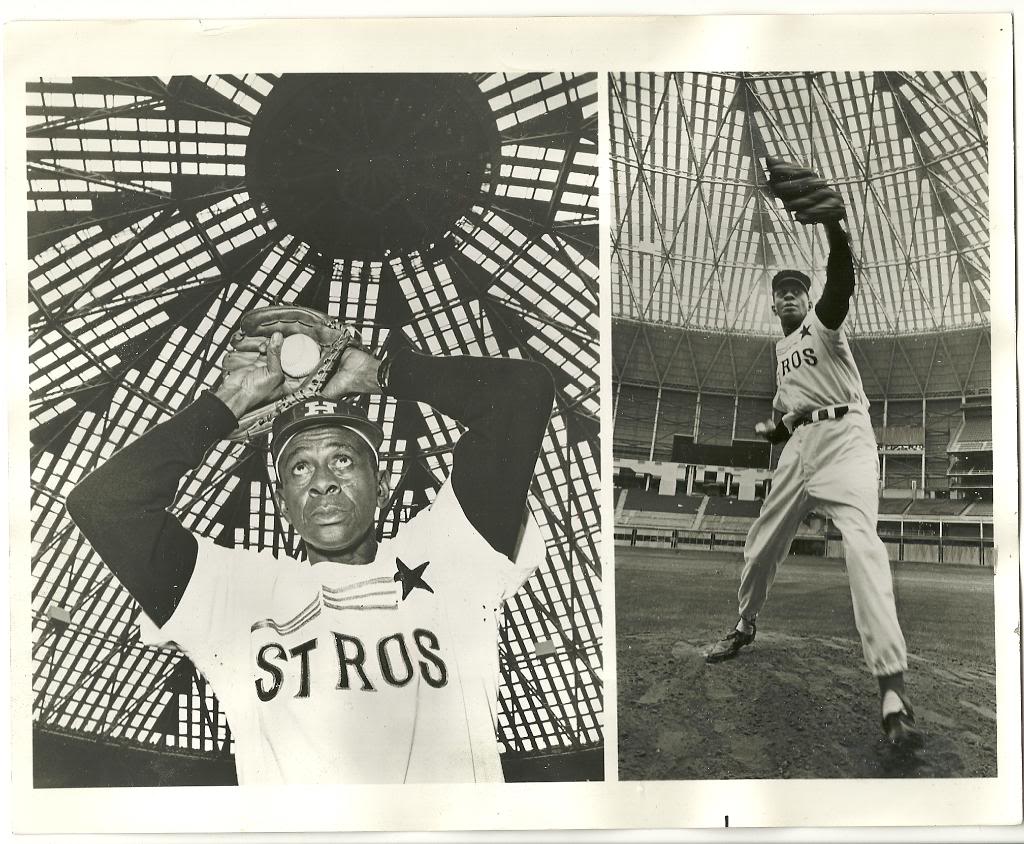
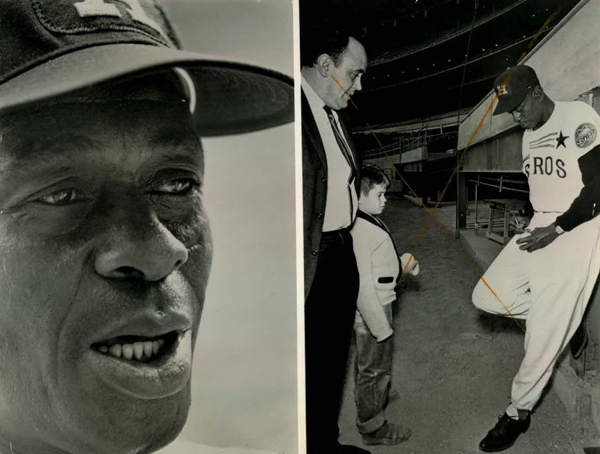
Satchel Paige’s 1965 Visit to the Astrodome

April 22, 2015
Leroy

Leroy “Satchel” Paige
Dreaming Away in the Astrodome Prior to It’s Opening in 1965
February 7, 1965 (Photo located by Darrell Pittman; Date Authenticated by Mike Acosta, Astros.)

We finally found a printed form – or, at least, most of it – of the truth about Satchel Paige’s visit to the Astrodome. It happened prior to the official opening of “The Eighth Wonder of the World”, but, judging from old Satchel’s published comments, the new domed stadium quickly won him over in wonder to the attractive idea of pitching inside the awesome facility. How much of that appearance was due to his recruitment by some Astros publicist – or Judge Hofheinz, himself – and how much of it generated from Paige’s never-failing knack for finding and stealing a few rays of limelight is the principal fact that goes unstated. Our Pecan Park Eagle  guess is that it was the formidable force of both needs, coming together on the eve of the most exciting stadium opening since the early days of the Coliseum in Rome, that arranged for this meeting between human and human-made forms of awesome originality.

“There’s no place to pitch like the Astrodome Stadium. … Man, that place is something else!”
~ Satchel Paige, 1965 (Photo located by Darrell Pittman.)

____________________

Frank A. Godsoe Column, Amarillo Daily News , April 8, 1965

Dots on the Dome Leroy “Satchel” Paige, who didn’t dream up the Astrodome Stadium which opens in Houston this weekend and didn’t promote it wishes someone had 30 years sooner. … Satch estimates that it would have added 10 years to his career. … Paige recently put on a Houston uniform and explored the premises of the super baseball barn.

“I’ve pitched baseball in all kinds of weather,” he said. … “Up in Canada where the wind is strong and cold enough to freeze a fast ball on its way to the plate … I’ve pitched in the tropics where the air’s kind of thick and heavy and there ain’t much breeze to worry about.

“I also pitched in high up places, such as Mexico City and Denver, where the ball’s supposed to carry better because the air’s so light. … I’ve pitched in more places than any other man, living or dead. … I also can throw any pitch you can name, and that’s not bragging because baseball’s my business. … I never had no job.

“But there’s no place to pitch like the Astrodome Stadium in Houston. … Man, that place is something else!”

~ Frank A. Godsoe Column, Amarillo Daily News, Thursday, April 8, 1965, Page 21.

____________________

Addendum: Clarification and Authentication of the Paige Appearance (Same Day as Publication)

Regarding the Satchel Paige Appearance in the Astrodome on February 7, 1965:

“This was right before the press preview with Anita Bryant. Paige was in town for something else and the team asked him to come in, do some publicity and give his opinion of the Astrodome. I have this date as 2/7/65.”

Mike Acosta

Authentication Manager
Houston Astros

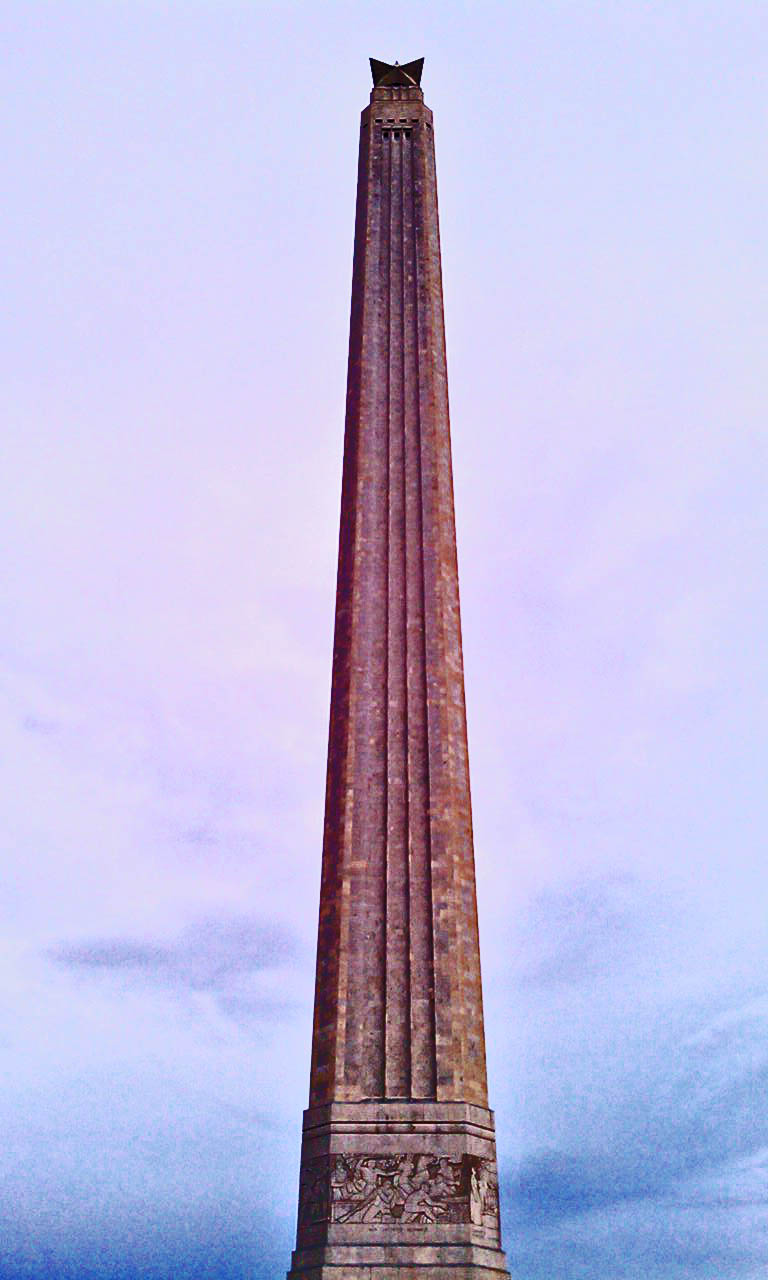
Happy San Jacinto Day!

April 21, 2015
San Jacinto Monument East of Houston, Texas September 13, 2012

San Jacinto Monument
East of Houston, Texas
September 13, 2012

Today, Tuesday, April 21, 2015 is the 179th anniversary of the Battle of San Jacinto, the eighteen-minute battle that took place back on April 21, 1836 on the marshy plains east of Houston and Pasadena in which an again outnumbered army of dedicated revolutionaries, led by General Sam Houston, defeated General Antonio Lopez de Santa Anna and the Army of Mexico, to free Texas from their sovereign rule.

San Jacinto Battlegrounds A View from the Monument Observation Floor September 13, 2012

San Jacinto Battlegrounds
A View from the Monument Observation Floor
September 13, 2012

This past Saturday, was another fine day of celebration and reenactment at the San Jacinto Battlegrounds, east of Houston – and a real day of history, music, food, and celebration, sponsored by the San Jacinto Museum Association and made possible by a legion of loyal to the bone volunteers and battle reenactors of the brief, but history-altering clash.

http://www.sanjacinto-museum.org/The_Battle/Our_Annual_Reenactment/

If you’ve never attended, come out next year and taste what you have been missing! If you are a regular attendee, come again to share the fun and joy!

Remember Goliad! ~ Remember the Alamo! ~ Remember San Jacinto!

Stay the Course Always – of Working Together to Build a Better Texas for all its citizens!

And keep the Spirit of Texas and all its people as free and responsible for the peace – as we always thirst to be!

(Also, writer, next time remember to check your planned activity facts more closely. My Apologies for missing the date of the celebration in my original version of this too hurried publication. The celebration was this past Saturday – not this coming Saturday, as I first thought and loudly touted here.  – For that grievous error of information, I can only throw myself on my own sword and say again that I am very, very sorry. But that error of fact and human eyesight doesn’t make a difference to what I’ve tried to convey here about the Spirit of Texas and the caring we should all share for Texas and its people. Thanks for you patience and forgiveness.)

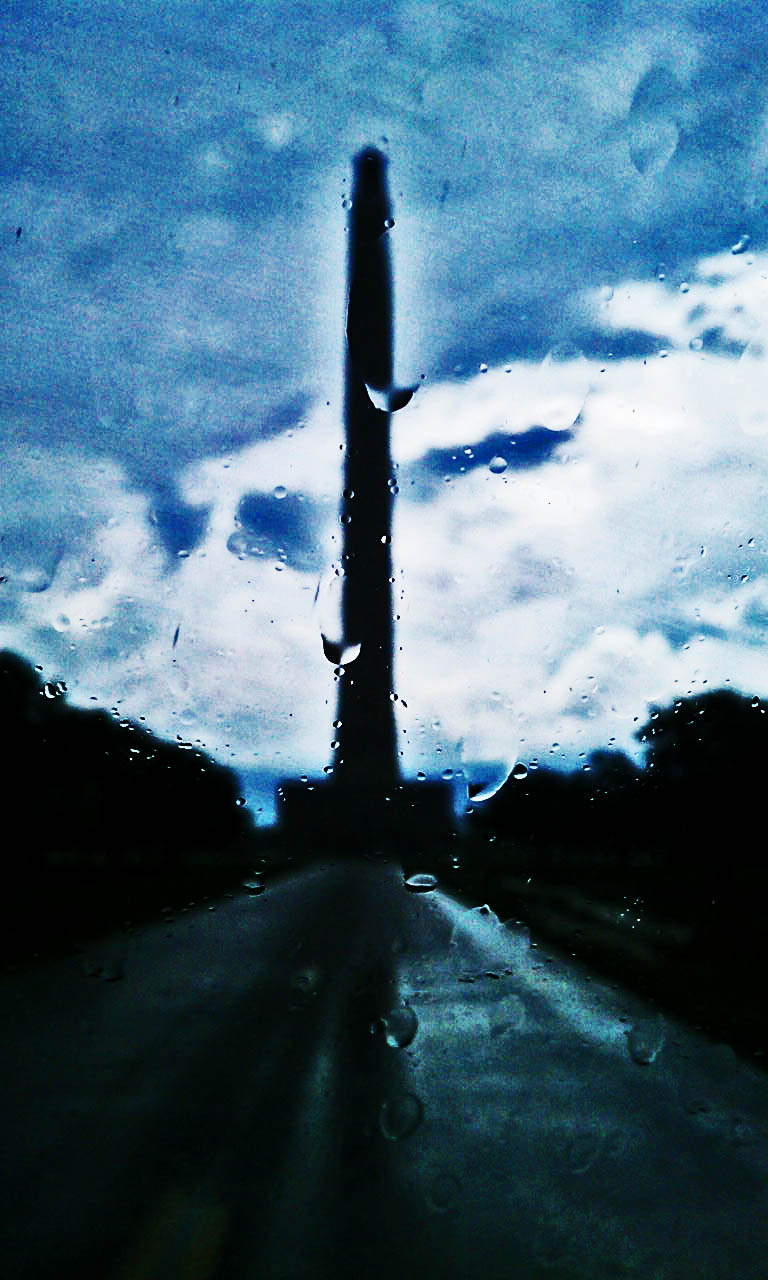
Texas Forever Rain or Shine

Texas Forever
Rain or Shine


Join the Houston Area Vintage Base Ball Fun

April 21, 2015
Vintage Base Ball in Greater Houston is Calling You!

Vintage Base Ball in Greater Houston is Calling You to Help Organize New Teams and Get In on the 1860 Rules Base Ball Fun!

A Brief Local History. The Houston Babies are now in their seventh year of reincarnation. Starting in 2008, the heavily SABER-loaded, but not exclusively SABR rostered vintage base ball club came into being in honor of the first professional base ball team in Houston, the 1888 Houston Babies of the brand new Texas League. Yours truly served as the club’s original, and still titular-status General Manager.

Bob Dorrill was, and still is, the Babies’ Field Manager and the real driving force and operational General Manager  behind the sustainable health and success of the Babies’ modern history. Behind Bob Dorrill’s leadership role as the director of the Larry Dierker Chapter of SABR, his coordination of the publication needs of the first and only ancient history book on baseball in Houston, his planning for the 2014 National Convention of SABR in Houston, his work for the “Save the Astrodome” group, his involvement with the Houston Astros as a season-ticket holder, his voluntary service activities through his church, and, last, but not least, his devotion of time to family. We think Bob sleeps about four hours a night – and still wakes up with a smile and a handshake for all who deserve it.

The man is retired. He had to be retired. Otherwise, he could not have had the time he does to accomplish what’s really important to a passionate pursuit of life.

That being said, the Houston Babies of 2008 got started playing several games against the already established Montgomery County/Lone Star College Saw Dogs.

Over the years, the field opposition first expanded to include clubs from Boerne, Texas, the Boerne White Sox and Tusculum Freethinkers, and the Richmond Giants.

It did not take us far into our new page of vintage base ball history on a local basis to discover that scheduling games would suffer some of the same problems suffered by the early base ball clubs of the 19th century.

The Saw Dogs and Giants both blossomed and faded – and the still very active Boerne clubs were simply too far away to schedule on a frequent basis. – And we mean no fault to Boerne on that score. Located near San Antonio, the Boerne White Sox have been willing travelers to the Houston area for vintage games on several occasions. Our Babies, on the other hand, have never traveled farther than Sealy, Texas to play a game.

Our good friends, the Katy Combine, were sparked into lively and friendly-fierce competitive existence by Tom and Dave Flores & Company about four years ago and they have become our regular running mates and gentlemanly foes at tourneys and festivals played everywhere from the Combine’s home field at Katy, to the spring festival games in Sealy, to the vacant lot next to the Galvez Hotel at the beach in Galveston, to other celebrations at the George Ranch State Park near Sugar Land, and even to Constellation Field, home of the professional Sugar Land Skeeters.

Weather permitting, we also are hoping to expand play into the Hempstead, Texas area in the foreseeable future.

We could not have made this progress without the active help of the Katy Combine. They are wonderful competitors and worthy adversaries who have more often than we care to remember – handed our Babies club its tail on a silver platter.

The Combine and the Babies, for now, also are the only solvent ongoing vintage base ball clubs in the greater Houston area.

We need some real focus on the growth of this really rewarding exercise/hobby. In our brief experience, we have learned that vintage base ball, played without gloves by the 1860 rules, is about the closest thing we have to a time machine for recreating the joy of sandlot baseball from childhood. We’ve also learned from our real time experience with the Houston summer heat, that a vintage base ball game is best enjoyed on Saturdays in the early spring and late fall.

Back in 2012, vintage base ball and our Houston Babies received some nice coverage by Channel 13, but we weren’t prepared then to follow up the tout with a plan for reaching others. Now we seem to have reached a point in which a marketing plan of some broad input and support will be needed to keep things rolling toward a situation of easier, more interesting schedule-making. Otherwise, some of us are concerned for the sport’s ongoing future. If vintage ball fails to take hold and grow in Houston, it will not be for want of the joy it brings, but because we failed to get enough support behind the activity to make it attractive to others on a broader scale.

Once people play this game, they want to keep playing it. It’s like a second childhood – without all the negative and judgmental connotations that phrase contains in our culture. You have fun again. – You don’t worry about taxes or business problems – or all those other things you may waste time trying to control – like the decisions of your near adult and adult children. – You just find joy – as you once found it as a kid – and you get to inhale the deep breath of fresh air that comes from knowing that – love lives forever!

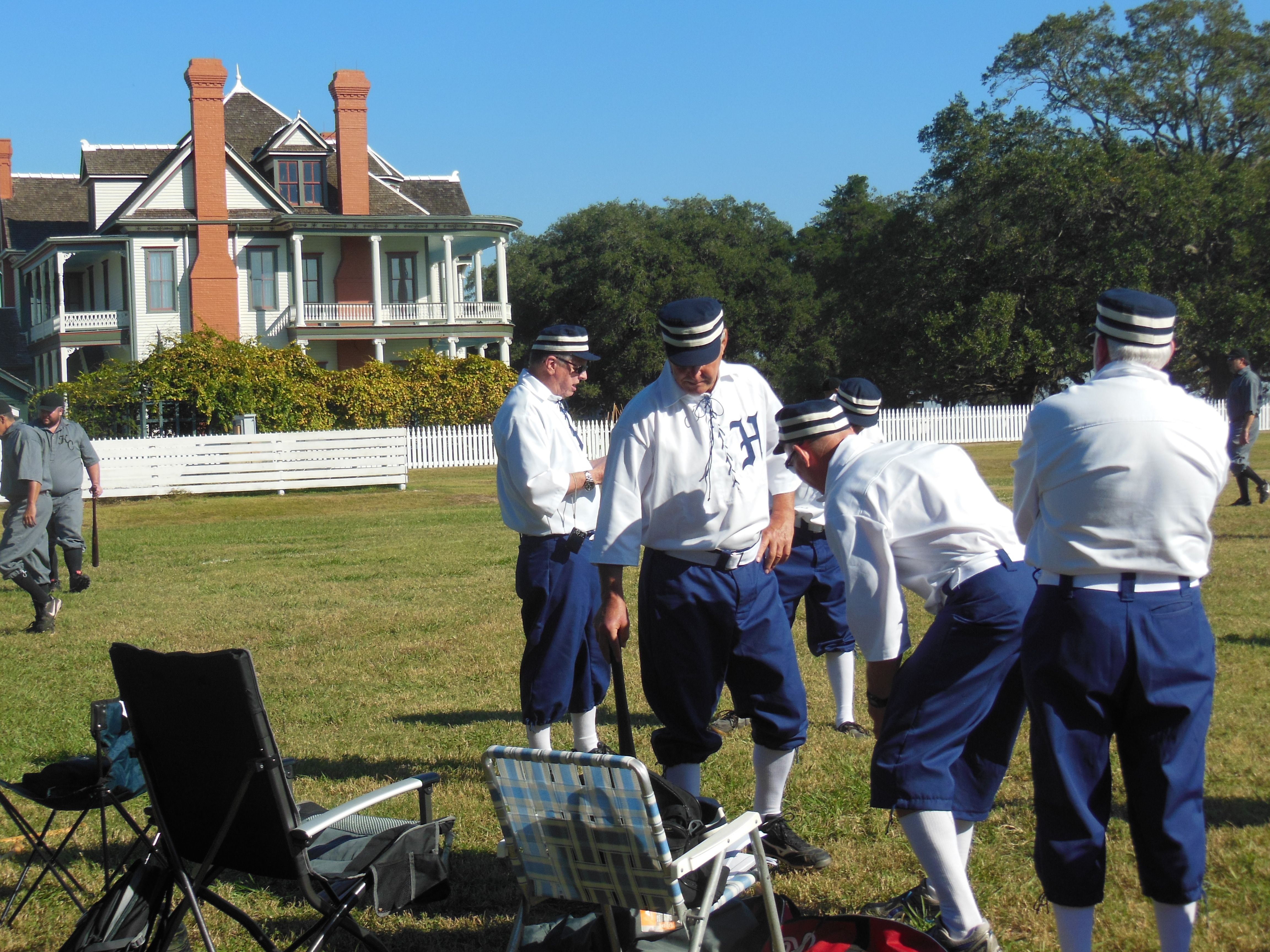
Houston Babies (foreground) prepare for a vntage game against the Katy Combine at George Ranch State Park near Sugar Land.

Houston Babies (foreground) prepare for a vintage game against the Katy Combine at George Ranch State Park near Sugar Land.

A Proposal. Here’s a brief staring point suggestion: If we could get two more active vintage ball clubs going in our area, we could have our then four clubs play each other on three doubleheader Saturdays in the spring and again, on another three doubleheader Saturdays in the fall.

At the end of those six games, the two clubs with the best overall records could play on a seventh Saturdays for the championship – one that would be followed by the awarding of championship and runner-up trophies – and a league celebration party.

For those who love baseball, but no little to nothing about the 19th century game, here’s one of many links that explains the rules of 1860 base ball:

http://www.sev.org/gbsfrogs/rules.html

If you have questions about the rules, or if you think you may be interested in organizing or playing for a vintage baseball club in the Houston area:

(1) Please Contact either …

Bob Dorrill (Houston Babies) @… bdorrill@aol.com

 or

Dave Flores (Katy Combine) @… david.flores@mdanderson.org

It doesn’t matter which club leader you contact, we are all in this Greater Houston Area Vintage Base Ball Association expansion movement together!

or

(2) Make plans to come out an watch the Houston Babies and Katy Combine play at Constellation Field in Sugar Land prior to the Atlantic League game that follows the same night in the home of the Sugar Land Skeeters. Come early and stay late. Give yourself a chance to see a vintage ball game and make contact with the leadership of the two groups who will do all they can to help you get started learning the game and starting your own teams.

Do yourself a favor too. Allow us to help you find the fun you have been missing out on. – And, oh yes, our clubs dress in the uniforms of that earlier period in the game’s history! We can teach you easiest, best ways of outfiiting your own clubs and getting sponsorship support for the few “balls and bats” equipment you will need.

The date and time for the Constellation Field game is Friday, June 12, 2015, at 5:15 PM. Stay tuned here for further details on how you get in the stadium as we approach the game date – or make contact now with either Bob and Dave and give either your e-mail address or phone number for more direct, and probably earlier information on plans as they develop for that evening.

Huzzah!!! – That means “hurrah” in the 19th century etiquette language of emotional expression for athletic joy!!!

Snug as a Bug in a Glove

April 20, 2015
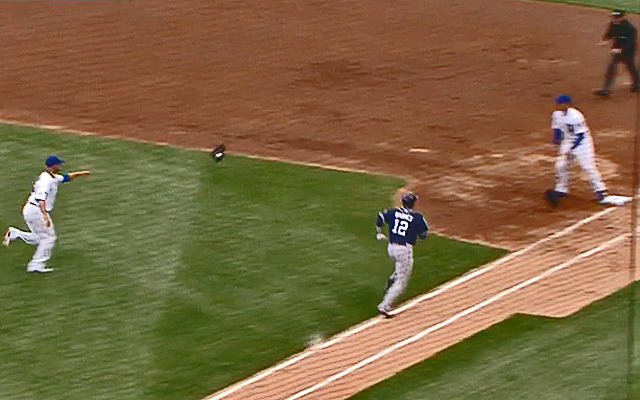
Sunday, 4/19/15: Jon Lester of the Cubs flips ball and glove to first baseman Franie Rizzo in time to get Cliff Barmes of the Padres for the out.

Sunday, 4/19/15: Jon Lester of the Cubs flips ball and glove to first baseman Anthony Rizzo in time to get Cliff Barmes of the Padres for the out.

In Sunday’s 5-2 loss to the Padres, Cubs’ lefty ace Jon Lester was on the mound with a runner on first when a ball was hit sharply back to him by Clint Barmes.  Lester snared it, intent on turning his stop into the start of a 1-6-3 double play, except for one problem. He couldn’t get the ball out of his glove. With hitter Barmes churning down the line to first base, Lester started to run in that direction too, removing the ball-enclosed glove from his right hand as he neared first base and teammate Anthony Rizzo. With Barmes now closing hard on first too, Lester heaved the ball underhanded to first baseman Rizzo, who now has his foot on the bag. awaiting a throw, but not the one he gets. As the glove floats fast to first, it begins to separate from the ball, which is also now holding true on that direction itself. Rizzo drops his own first baseman’s mitt in anticipation of a different kind of catch, one he may never have seen before or will ever see again at that position on the infield – or at any position on the infield, for that matter. The ball floats into Rizzo’s two-handed soft grasp for an out call on the runner, just before Barmes reaches the bag with his foot. Meanwhile, the glove has fallen short of reaching first base in an almost apologetic gesture for having gotten in the way of a clean double play opportunity in the first place.

Here’s link to a video on the play:

http://www.nydailynews.com/sports/baseball/video-cubs-jon-lester-throws-entire-glove-article-1.2191023

The rules questions are many:

(1) If it’s illegal to throw your glove at a ball in play, why is it legal to throw a glove which contains a ball while it’s still in play?

(2) If the ball had remained inside the pitcher’s glove and the first baseman had caught and only made contact with the glove itself, would the play still have resulted in an out? After all, Rizzo wasn’t actually wearing the glove – it wasn’t even his glove! Is it OK to use anything that is neither you nor your personal properly worn equipment to trap a ball in play for an out? For example, if Rizzo had used a runaway hot dog wrapper to trap the ball without making direct contact with his hands, would that also have been an out? If so, how so? The hot dog wrapper is no more a part of Rizzo’s personal fielding equipment than another player’s glove – even if the other fielder’s glove actually does look a lot more official as personal equipment than a hot dog wrapper.

(3)  For that matter, ould it be OK for a sliding outfielder to accidentally grab hold of a misplaced other player’s glove laying in foul territory to get credit for an out if he was still touching the alien glove when the ball came down and landed in its pocket an instant later?

(4) If first baseman Rizzo had thrown his own glove away into the baseline before he made the soft bare-handed out catch, would the runner have been ruled “safe” on an interference call?

Gotta stop. The possibilities simply grow more ridiculous as we think about it. Cute as it may have been, however, throwing the glove to first with the ball inside still sounds like something that ought to be illegal, if it’s not already – which it apparently isn’t.

Astros in First Place! Give Up, Everybody Else?

April 20, 2015
AL WEST W L PCT. GB L10 STRK
HOUSTON 6 6 .500 5-5 W2
OAKLAND 6 7 .462 0.5 4-6 L1
LOS ANGELES 5 7 .417 1.0 4-6 L2
SEATTLE 5 7 .417 1.0 4-6 W2
TEXAS 5 8 .385 1.5 4-6 L2
"I'm not really Mr. Spock, but I certainly don't mind the logical comparison."

“I’m not really Mr. Spock, but I certainly don’t mind the logical comparison.”

Well, what else can we say? If you haven’t been paying close attention, the Astros just took the Los Angeles at Anaheim Angels at Minute Maid Park over the weekend, winning Saturday, 4-0,before adding a 4-3 squeaker win on Sunday. It was enough to give the Astros a 2-1 series win and an early vault into first place in the American League West with the only .500 or above record in their division.

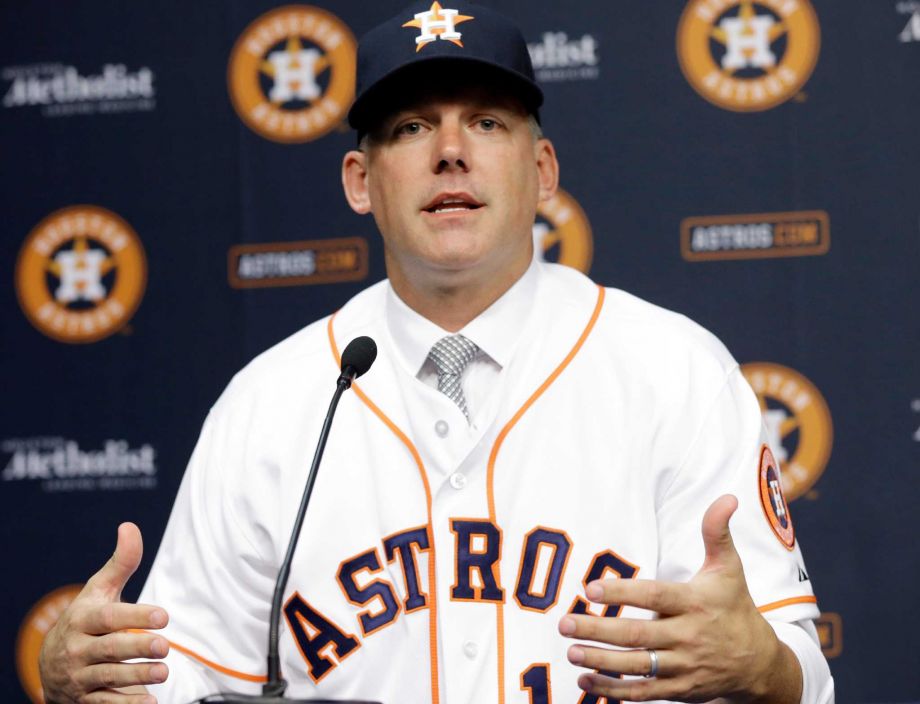
How long can it last? It could last all season. With the long ball hitters coming around and the young pitchers finding their grooves with some help from a much stronger looking bullpen – and Manager Hinch giving us the best performance as a logical man since the days of Leonard Nimoy as Mr. Spock, we’re on a boat ride now that could take us Astros fans all the way to the World series – or maybe, even as far as China. Better yet, perhaps this Astros are about “to boldly go where no Astros club has gone before.”

Now, if Mr. Gattis comes around soon and also morphs back into the home run “gadabout” we know he can be, we just may find ourselves with a pretty good run for the money that Mr. Luhnow has invested in roster improvement this year.

Anyway, this is still spring. As Astros fans, let’s be genuinely real fans – and hope for the best. Old man “Reality” is who he is – but nobody has rained on our parade as of yet. And the reality today is, on Monday, April 20, 2015, that the Houston Astros are in first place in the AL West – and that they are all by themselves in that catbird seat. Enjoy the view!

Have a great week too, all of you first place Astros fan winners!

Scoring Variables Tough Back in The Day

April 19, 2015
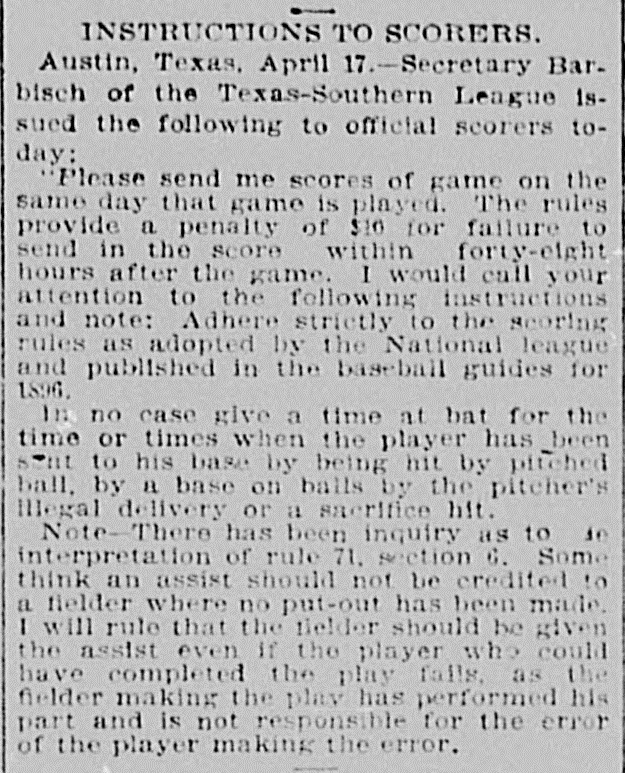
Houston Post April 18, 1896 Contributed By Researcher Darrell Pittman

Houston Post
April 18, 1896
Contributed By Researcher Darrell Pittman

We’re talking “baseball” here, of course.

No big news. Statistical records consistency always has been a bugaboo to player comparisons, especially of players from different eras, due to several variables, including, but not limited to several key considerations: the presence of clearly stated rules on the scoring of certain plays; the clear enforcement of the rules in place; the intelligence, baseball knowledge and training of the people used to serve as official scorers; of course, and actual changes in the rules, back and forth, that shall always taint comparisons by the way these differences alter the statistical records of players who were active during different rule interpretation periods.

The changing face of the sacrifice fly rule over time is a prime example. During Ted Williams’ last day surge to .406 in 1941, the sac fly rule was not in effect and Williams was charged on several occasions for a “time at bat” on fly outs that scored a runner from third base. Had the sac fly rule been in place that season, Williams’ last minute, gutsy call to go for .400 would have been totally unnecessary. His pure-grade .400 batting average would have been secured in advance by the times at bat the sac fly rule that would already have subtracted enough “at bats” from his numbers over the season. The great Ted Williams could have spent his last day of the season planning his celebration for the evening. So, for the sake of the great drama that actually played out on the last day of the ’41 season, I guess we are all better off that things worked out as they did. Anything less would have been a major loss to the legend of Ted Williams.

Today’s feature article from the April 18, 1896 Houston Post simply underscores how much tougher it must have been to achieve consistency in scoring interpretations. For one thing, universal authority for rules-making had not yet developed to the level it has now reached in 21st century organized baseball – and for another – the communication technology and cost of using the telegraph and the early telephone long distance lines was not always up to the immediacy of game reporting expected by league officials. It is easy to presume from our general knowledge of human behavior that game reports and box scores that arrived in the league offices 48 to 72 hours late may have escaped the same scrutiny of those arriving in time for newspaper publication.

The featured flashback piece also poses an interesting view in at least two other respects: (1) The league office seems to be using the opportunity to instruct official scorers how to credit fielders with assists on plays in which another player’s error prevents a “putout”. Makes you wonder: How were the local people scoring assists prior to this interpretation by the Texas-Southern League Secretary? And how many batters were being charged with a “time at bat” after being hit by a pitch or because they had been awarded a walk because of an “illegal pitch” (whatever that means), or having sacrificed to move a runner up a base? (2) How often too were rules simply made by administrative edict. The league secretary in the report is credited with saying “I will rule that” a fielder should be given credit for an assist, regardless, if no out results because of another fielder’s error.

Somewhere along the way, and we make no claims as rules historians, that support for assist credit to fielders on plays that did not result in an out died for want of support. In other areas, we also know that baseball leaders would continue to waver back and forth for years on the “AB” charge exemption on fly balls that scored runners from third base. Hopefully, that issue is now settled for good, but who knows.

In some ways, baseball will always be a work in progress. We keep finding ways to tweak the rules just enough to keep the game on the field in shape as the one we want to see, but, every now and then, some group comes along to deliver a rules change that is the equivalent of a major disease in humans.

Let’s talk about the “DH” some other time!

Radio Nights

April 18, 2015
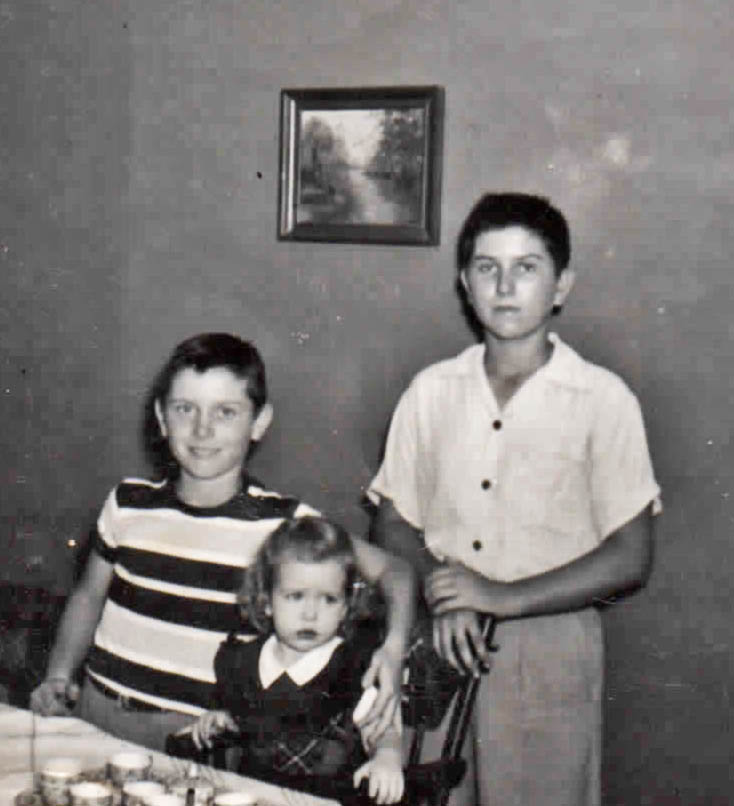
John, Margie, & Bill McCurdy Pecan Park, 1951 Two Years Past the End of the Radio Nights Era

John, Margie, & Bill McCurdy
Pecan Park, 1951
Two Years Past the End of the Radio Nights Era

Sometimes memories are like loose sheets of paper in an otherwise categorically organized mental hard drive file. They just float there through the mind in bright detail of ordinary events that never lose their richness over time. And maybe the reason they never get filed is simply the fact that they already exist as files themselves – files that already serve as the umbrella for any number of other specific memories that their general flavor already embraces.

We have one example for you here from personal experience, plus a few examples of items that follow behind it like ducklings trailing the mother duck. We call this one “Radio Nights”:

Radio Nights

The Timeline. The year probably was 1945, but it could have been any night in Pecan Park from 1945 through 1949. I choose to remember this one event as “Radio Nights” and I have to place the time as being from 1945, our first year in the little house at 6646 Japonica Street in the Houston east end, to 1949, the last year we had no television in my childhood family home. Television reached Houston on January 1, 1949, but we didn’t get a set until the following year. After television came into our lives, our family evenings, like the evenings of most other Americans, were changed forever.  Whether it was really one memory, or so many similar nights synthesizing themselves into one memory, we shall never know. It simply was whatever it was, but it was probably closer to 1945, when I was still young enough at age 7 to be crawling around on the floor as we listened to our favorite radio programs.

Our Parents. Dad is stretched out in his easy chair. His feet are extended into comfortable house shoes and braced upon what most fathers used prior to recliners, placement on the trusty foot stool. Dad was a voracious reader, so h always had a standing reading lamp behind him, plus a magazine/book rack on the left  side of his chair plus a smoking table on the other side of him. Sometimes Dad smoked a pipe, but most of the time he spent the evenings chain-smoking Camels and depositing them in the large ash tray that he filled every evening. He was the quintessential archetype of the 1940’s father. He was gentle, but firm, and, if you were his kid, you tried not to bother him too much when he was busy reading. And he read a lot – about war, sports, history, and politics. – Mom was the stereotypical small town Texas girl – sort of like Lucille Ball, but with a South Texas twang. There wasn’t a song from the 1930s that I didn’t learn because of Mom’s constant singing of them at home. She would even use a song to answer our requests for bottled cokes, or whatever, from the store. “Please, Mom!” would be answered by Mom singing, “Please, lend a little ear to my pleas…” She could be so frustrating at times.

Mom and Dad both had short trips into fantasized careers as a singer and a composer. In fact, that’s how they met. Dad heard Mom singing “Paper Moon” in her ever so brief experience as a radio singer for a little station in our original home town of Beeville, Texas back in 1936. He drove over to the station to meet her. Two weeks later, they eloped to Mexico after a secret marriage they arranged through Dad’s songwriting partner, a young catholic priest named Father Dan Lanning. Mom and Dad were married for 58 years. They died five weeks apart in 1994.

And, oh yes, Dad’s songwriting career included only one published song that he and Dan Lanning wrote together. It was another song with lunar leanings called “The Moon Is Here”. The young writers even took it to New York City in the early 1930s, hoping to get Rudy Vallee to sing it on his radio show. They got through to Vallee’s “people”, but had to drive home with no commitment. A friend later told Dad that he heard Vallee sing the song over the air during their drive home, but there was never any corroboration from others – and more solidly – never any royalty check from Rudy Vallee for its use. “I’d like to think it happened,” Dad always said, when asked about Rudy Vallee’s use of the song, but Dad was always a practical man. He knew that it never got off the ground or over the air. At any rate, he and Mom still seemed happy with the simpler life they found together. With sons born in 1937 and 1941, and a daughter coming along later in 1949, my sweet parents had their hands full, raising their family on an ordinary workingman’s weekly wages as the parts department manager  for the Bill Lee Motors Studebaker dealership on Lawndale near 75th in Houston.

The Moon Is Here 1930 By Dan Lanning and Bill McCurdy

The Moon Is Here
1930
By
Dan A. Lanning and Bill McCurdy

We McCurdy kids were lucky. We all knew always that our parents were each there for us.

The Memory. Dad is smoking and reading away in his special chair. Mom is up and down between the living room and kitchen, usually singing along with anyone attempting a solo over the radio. My little brother John and I are all over the living and dining room hardwood floors, racing our little steel metal cars in what have been the first unofficial Grand Prix 50 house course race in Houston. We are also multitasking, listening to the stream of half hour radio shows as we play. We probably were not too quiet about our passionate pursuit of victory, but, when Dad was reading, he possessed this incredible ability to tune out noise, especially as it generated from the racket of his two rambunctious sons. My brother and I were OK with that condition too because we both knew the rest of the truth. – When we had Dad’s attention, we had all of it. Thanks to Dad, a former school boy and amateur player, we both learned to love and play the game of baseball – and also thanks to Dad – we connected with the Houston Buffs and even got to watch the Buffs take on the New York Yankees in 1951, when they had Joe DiMaggio in center field and Mickey Mantle in right. But that’s jumping way ahead.

On this evening, the transfixing object in our lives is a tall, wooden console model “Philco” AM radio. It’s amber dial contains a needle that is lighted for us all to see. And the glow of its illumination is a magical pass to some of the funniest, scariest, or most mysterious shows ever presented for fantasy visualization by the human mind:

Boston Blackie, “friend of those who have no friends; enemy of those who make him an enemy”

Duffy’s Tavern, “where the elite meet to eat; Archie, the manager speaking, Duffy ain’t here”

The Aldridge Family – “Henry! – Henry Aldridge!” ……. “Coming, Mother!”

Inner Sanctum, (a squeaking door opens slowly) “Good evening, friend! This is your host, Raymond, speaking, and also warning you! – Do not listen to tonight’s story of horror alone! – Make sure you have a “ghoul friend” with you for this story – ‘Hayride with an Axe-Wielding Driver!’ – HaHaHaHaHaHa! – Just remember – when the ride is all over – I’ll be back to tell you what I always do – ‘Goodnight, Friend! – And Pleasant Dreams, Hmmm?’ ….HaHaHaHaHaHa!”

So much more. Jack Benny, Fred Allen, Bob Hope, Red Skelton, Fibber McGee and Molly, The Great Gildersleeve, Eddie Cantor, Abbott and Costello, Burns and Allen, Life with Luigi, Charlie McCarthy and Edgar Bergen, Gangbusters, The Lone Ranger, Mr. District Attorney, G-Men, Lux Theater – and the beat goes on.

And they all lived behind the amber light on the radio dial in all of our homes – just waiting to dance through our minds – creating pictures that still play in our memories today – of another era in our culture – and for some of us – a very happy time in our early lives.

The world stretched out for us like an infinite lawn of garden fresh hope – and all things good in life seemed both right and possible – and much of what seemed attainable came to us younger ones through the stretches of imagery that filled our souls from the forces behind those millions of amber radio lights that once fed the theaters of the American mind with something other than bad news, political agenda quacks, and countless donkey-kong sports hosts who now fill the radio airwaves with nothing but sports crapola gossip and ignorant, often malicious “news” about famous athletes.

Have a nice weekend, everybody!

April 7, 1979: Forsch Pitches 6th Astros No-No

April 17, 2015
April 7, 1979: Ken Forsch No-Hits Braves, 6-0, in 2nd Game of Season! Larry Dierker arrives to offer congratulations with an inscription he wrote on his score card. ~ Houston Post Photo Courtesy of Houston Public Library

April 7, 1979: Ken Forsch No-Hits Braves, 6-0, in 2nd Game of Season!
Larry Dierker arrives to offer congratulations with an inscription he wrote on his score card.
~ Both Houston Post Photos Used Here Courtesy of The Houston Public Library

Back on April 7, 1979, Ken Forsch pitched a no-hitter in the Astrodome, shutting out the Atlanta Braves, 6-0, in the second game of the season, while striking out 3 and walking only 2. After the game, relatively new media man Larry Dierker caught up with Forsch for post-game congratulations and an interview. Cub reporter (not Cubs” reporter) Dierker seemed almost as pulled into the rosy afterglow of his former teammate’s accomplishment as Forsch himself. And why not? After all, it had been less than three years since Dierker, the former franchise pitching ace, had pitched the last Houston Astros no-hitter in the Astrodome in another early season period of local hopefulness. On 7/09/76, Larry had shut down the Montreal Expos, coincidentally or fatefully, (take your pick) by the same 6-0 epitaph that the club had put on the Canadians this early season evening in 1979.
The empathic course of the two men’s emotions on that post game night in 1979 is obvious from the two featured photos of the two file copies from the Houston Post made available to The Pecan Park Eagle for this article by archivist Joel Draut of the Houston Public Library downtown site.

Based upon the euphoric smiles of each man in both pictures, each also seems to be somewhat joyfully numbed by the magic of the moment. In fact, and in associative deference to Mr. Dierker’s up-to-date hairdo of that era, we are inspired to call this moment as we see it – and in satirical deference to a similarly entitled Jim Carrey and Jeff Daniels movie from the later year of 1994 – we are respectfully inclined to re-baptize these photos for what they show, at least,  as we see them both through these ancient, but always searching-for-meaningfulness eyes.

How does “Numb and Number” sound? – Numbed by the shared jubilation of joy! – Even better, how does Larry Dierker’s explanation of his emotions in that moment fit the circumstances of what both he and Ken Forsch were going through at this golden moment in time and Astros history?

When I shared these photos with Larry Dierker prior to writing this column, he responded with the following brief comment about 1979, his rookie year as a broadcaster – and one that found him keeping score for the first time in his life during the second game of the season – and then having it turn out to be the first Astros no-hitter in the Astrodome since he last threw one himself, three seasons earlier:

“(1979 was) my first year to broadcast (road TV games only),” Dierker wrote.  “Second home game and I thought I would keep a scorecard for practice.  First time I even kept one.  After my no-no, Don Nottebart sent me a telegram that read, “feels good doesn’t it?”  I took my scorecard down to Kenny after the game with the same inscription.  It feels good just thinking about it.”

Thanks for contributing to this wonderful memory, Dierk! You and Ken Forsch each contributed many great memories to so many thousands of us Astros fans in those days. Please know too that both of you – and other people like Jimmy Wynn, Jose Cruz, J.R. Richard, and others too numerous to mention are the same guys who fused the “H” letter of Hope into the same H” letter that begins the name of our dear home town – a very long time ago.

And the “H” still stands for the blend of both!

Larry Dierker's written message on the scorecard (still (in his left hand in the joyful moment of this photo) he soon gave to Ken Forsch that night was short and sweet: "It feels good, doesn't it?"

Larry Dierker’s written message on the scorecard (still (in his left hand in the joyful moment of this photo) he soon gave to Ken Forsch that night was short and sweet: “It feels good, doesn’t it?”

For those who don’t know, there have been ten no-hitters involving Houston MLB pitchers. Amazingly, our record in these is only 9 wins against one loss. You see, we lost one of them, but that’s another story for another time. That tenth and most recent no hit Astros win against the New York Yankees at Yankee Stadium is also another story, but also one with a short version explanation: The Astros used six pitchers in that game – and every one of them held the Yankees hitless over nine shared innings to take an 8-0 win that was credited to Brad Lidge, who worked the 6th and 7th. Here’s the list:

Houston Colt .45s/Astros No Hitters:

No. Date Name IP FOE Stadium K W HB RESULT
1 5/17/63 Don Nottebart 9.0 Phillies Colt 8 3 0 W, 4-1
2 4/23/64 Ken Johnson 9.0 Reds Colt 9 2 0 L, 0-1
3 6/18/67 Don Wilson 9.0 Braves Astrodome 15 3 0 W, 2-0
4 5/01/69 Don Wilson 9.0 Reds Crosley Field 13 6 1 W, 4-0
5 7/09/76 Larry Dierker 9.0 Expos Astrodome 8 4 0 W, 6-0
6 4/07/79 Ken Forsch 9.0 Braves Astrodome 3 2 0 W, 6-0
7 9/26/81 Nolan Ryan 9.0 Dodgers Astrodome 11 3 0 W, 5-0
8 9/25/86 Mike Scott 9.0 Giants Astrodome 13 2 1 W, 2-0
9 9/08/93 Darryl Kile 9.0 Mets Astrodome 9 1 0 W, 7-1
10 6/11/03 Roy Oswalt 1.0 Yankees Yankee Stad. 2 0 0
Pete Munro 2.2 2 3 1
Kirk Saarloos 1.1 1 0 0
Brad Lidge 2.0 2 0 0 W, 8-0
Octavio Dotel 1.0 4 0 0
Billy Wagner 1.0 2 0 0

____________________

Twins: Mickey Rourke and Donald Sterling

April 16, 2015

The Pecan Park Eagle takes no credit for first recognition on this one. It’s been Twittered to pieces and we never even thought of it – or learned about how “out” the comparison already is until my son brought it to my attention this morning. Still, it’s too unbelievably creepy good to pass up for publication here too, even if the word is out already to most readership circles.

If Quentin Tarantino ever wants to make one of his “really-dire-consequences-for-the-leading-man” movies, based upon the life of Donald Sterling, 60ish Mickey Rourke is the only man to pursue for the role the 80ish Sterling. – And I would also think there should be written roles and casting room for Samuel L. Jackson, Spike Lee, and Charles Barkley in the film too.

Just look at these four side-by-sides of Rourke and Sterling. If you can’t tell one from the other, you just made the case for this casting choice being a “done deal”.

Have a great afternoon, everybody! If you live in Houston, we hope too that you are able to miss the hail showers that are waving over the west side at 1:00 PM, heading northeast, as we write.

In each pairing below, which one is Mickey? – And which one is Donald?

rourke-sterlingrourke-sterling3rourke-sterling2

rourke-sterling4