Archive for the ‘Uncategorized’ Category

Two Hall of Fame Member Facts

May 15, 2015
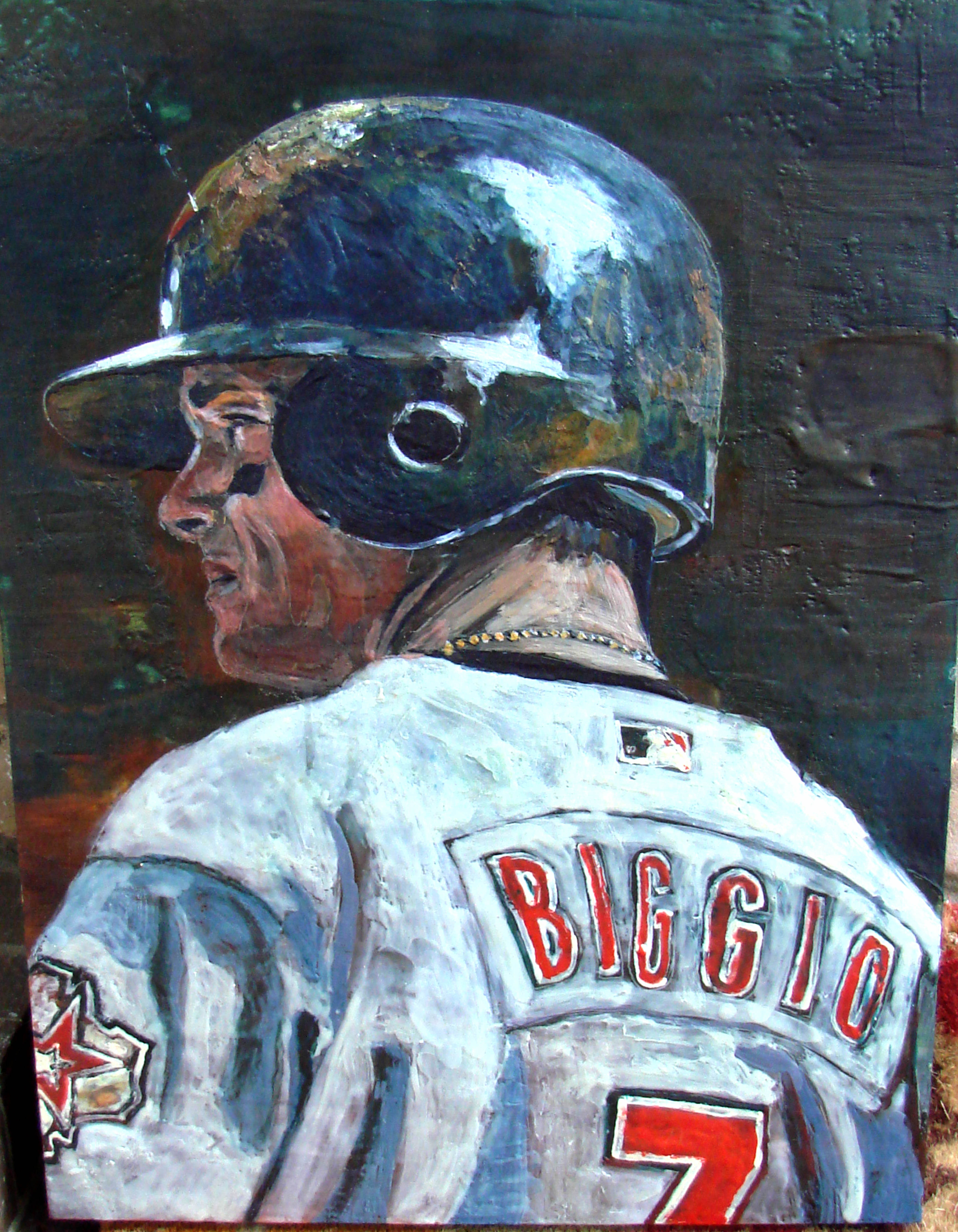
Craig Biggip Art by Opie Otterstad (2004) HOF, 2015

Craig Biggio
Art by Opie Otterstad (2004)
HOF, 2015

The 2015 Baseball Hall of Fame Yearbook is a ready source for coming up with your own list of “fun facts” about the membership. Of course, I do have to start with one that most of us already know about our very first 100% pure and fully declared Houston Astros inductee, Craig Biggio:

(1) Craig Biggio is a Houston Astro in the same sense that Stan Musial was a St. Louis Cardinal, Joe DiMaggio was a New York Yankee, Ernie Banks was a Chicago Cub, Johnny Bench was a Cincinnati Red and Ted Williams was a member of the Boston Red Sox. They were all one-team guys. There were others like them, but today’s game and the financial considerations facing both players and clubs in this 21st century huge money big business culture make “loyalty and mutual contentment” less powerful as the factors keeping athletes on the same team for all of a double-digit years career. In light of the fact, we say, “Hail, Biggio, one of the last of a vanishing breed of MLB players!” Not only that, your 668 doubles were the 5th most, all-time, and the most ever compiled by a right-handed batter in baseball history.

(2) With Yogi Berra turning 90 two days ago, we now have four living members of the Hall of Fame still with us – and apparently too healthy and happy with their current missions in life to leave the rest of us short-handed for proof that love is forever – and that nice guys either finish last or go home first. All of these four men are a handful of the nicest people ever documented by the legion of baseball writers who still cover their tracks.
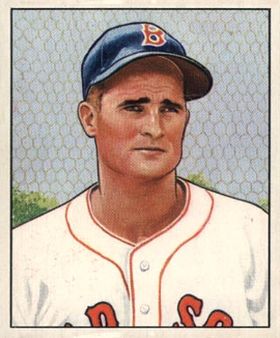
Bobby Doerr Age 97 HOF, 1986

Bobby Doerr
Age 97
HOF, 1986

Bobby Doerr, 97 years (DOB: April 7, 1918)  is the oldest. As a second baseman and another of those one-team-only fellows is described by his late former manager ad fellow Hall of Famer Joe Cronin as “fine a man who ever wore a spike shoe.” He also played a pretty darn good second base for the Boston Red Sox for 14 years (1937-44, 1946-51). Doerr’s best hitting year was 1944, when he batted .325 and led the AL in slugging with a percentage of .528.
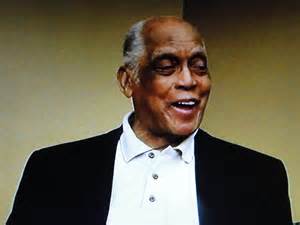
Monte Irvin Age 96 HOF, 1973

Monte Irvin
Age 96
HOF, 1973

Monte Irvin, 96 years (DOB: February 25, 1919) is right behind Doerr as the second oldest. As a primarily left fielder, this current Houston resident of several years played all but one of his eight big league seasons with the New York Giants before a last season with the Chicago Cubs topped things off (1949-56). Monte’s big league career had been shortened by the old racial color line and he spent most of east productive early years as one of the most feared hitters in the Negro League. In fact, he came very close to playing the role that Jackie Robinson then so ably filled in breaking the color line with the Brooklyn Dodgers in 1947.

Monte Irvin didn’t believe in leaving those ducks on the pond. In 1951, he batted .312  with 24 HR for the Giants while also leading the NL in RBI with 121.  He also batted .329 with 97 RBI in 1953.

Irvin is beloved today as one of baseball’s great ambassadors and one of the nicest gentlemen you could ever hope to meet. I still highly value the day he rode with me to a SABR meeting in Houston back in 2010. I was totally smitten by his generous sharing of great baseball stories, but I was mindful also to do the best job of driving possible as we talked and navigated the freeways of Houston. After all, I was transporting a national treasure. – Thanks for that special day memory, Monte Irvin!
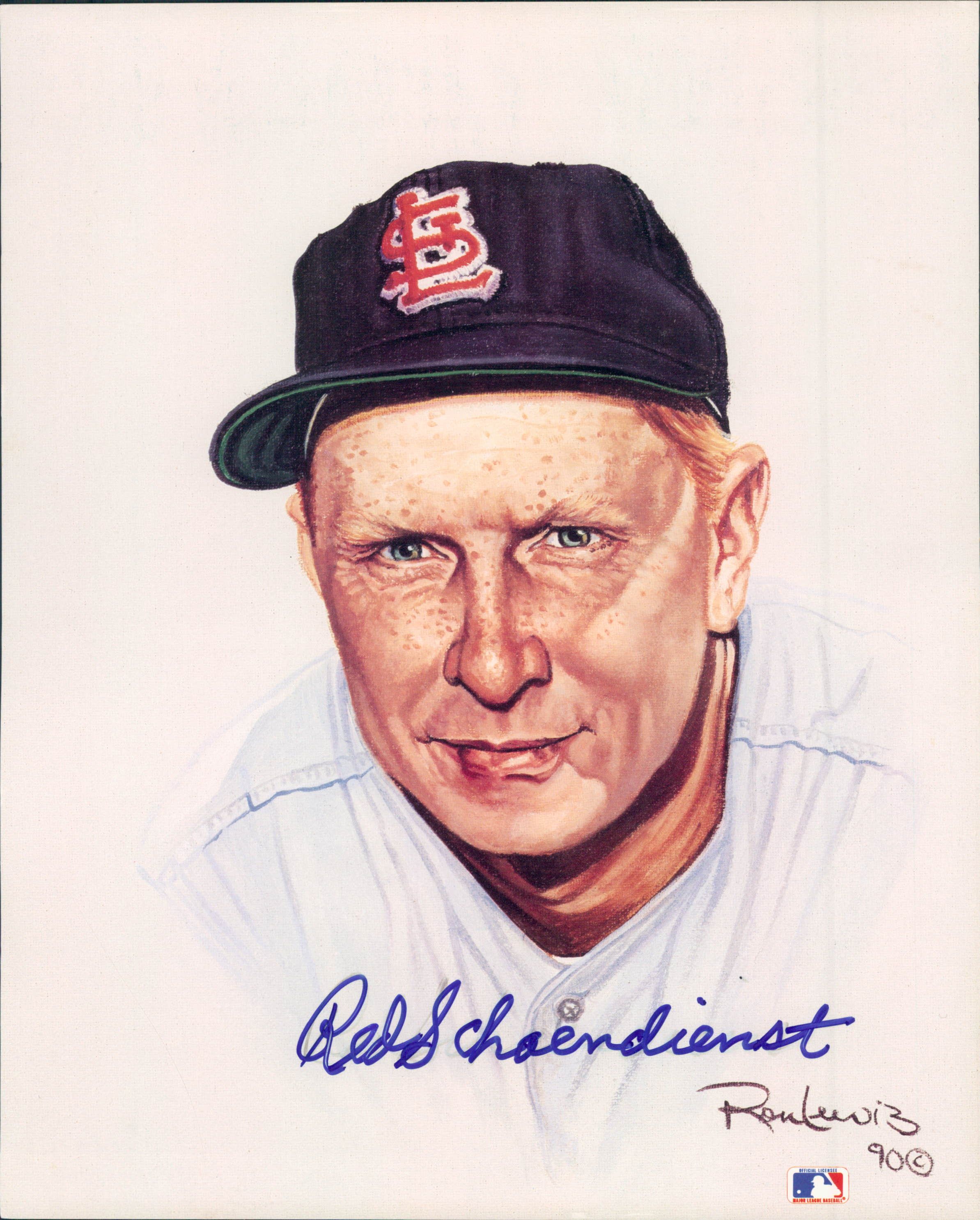
Red Schoendienst Age 92 HOF 1989

Red Schoendienst
Age 92
HOF 1989

Red Schoendienst, 92 years (DOB: February 2, 1923) 2nd Baseman Red Schoendienst is one of those nice guys who should have been a career St. Louis Cardinal, but he wasn’t able to escape the needs of Cardinal General Manager “Trader Frank” Lane to trade players the way some people need to rearrange the home furniture on a frequent basis. As a result, one of the greatest, nicest infielders of all time, and a tenacious guy who would still beat the hell out of you, if you were on the other side, got shuttled away during his 12th season as a Cardinal for a brief stay with the New York Giants in 1956 before being traded away again to the Milwaukee Braves in 1957 and a four-year run (1957-60) with a serious contender and champion. Red then returned to the Cardinals for limited service over three seasons (1961-63) to complete his 19-season (1945-63) total MLB career. He also did well in a couple of terms as Cardinals manager and he remains active in his support of the Cards and the City of St. Louis. – Keep it going, Red!
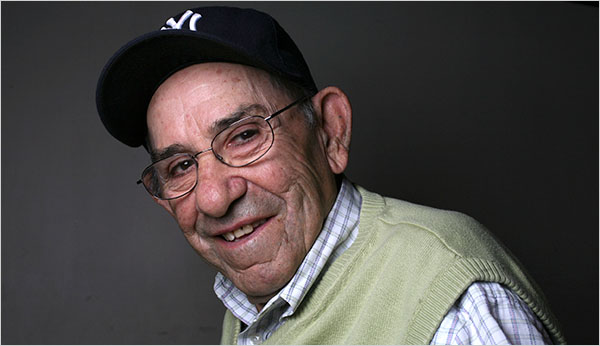
Yogi Berra Age 90 HOF 1972

Yogi Berra
Age 90
HOF 1972

Yogi Berra, 90 years (DOB: May 15, 1925) Like Craig Biggio of the Astros, Yogi Berra, of course, was a a pure-blood career member of the New York Yankees, even though he was always a native St. Louisan that Cardinals misjudged as a potential MLB talent. *  Rumor was that Frank Lane also tried to trade Stan Musial to the Yankees for Yogi Berra at one point, but that the Busch ownership put quash of sanity on that deal before the trigger could be pulled. What a bloated error that would have been – and what a blight that would have been upon the “Baseball Spirit of St. Louis.”

My favorite Yogi story is still the one about the time he attended a day lunch function sponsored by Mayor Wagner of New York, wearing a spring-colored line suit and bright accent tie. Mrs. Wagner greeted Berra with much approval for his choice of dress. “Good Morning, Yogi,” the mayor’s wife exclaimed. “You really look cool today!”

“Thank you, Madam Mrs. Mayor,” Yogi responded. “You don’t look so hot yourself!”

* Footnote Correction: See how easy it is to make an “E” in the reporting of baseball history. As Jim Stokes points out in his comment on this column, he and I were both wrong about Yogi Berra being a Yankee one-team career lifer, even though I do think we both did know somewhere in the murky files of memory that Yogi spoiled that pedigree for all time when, as manager of the 1965 New York Mets, he went 2 for 9 in 4 games as a hitter for his club and spoiled the purity of his previously secured all-Yankee career. – Way to go, Yogi!

An Act of Contraction

May 14, 2015

“Bless me, Father, for I have slimmed!”
~ Homer Simpson Look-a-Like

An Act of Contraction


By Bill McCurdy (2015)


Bless me, Father – for I have slimmed.

I’ve lost ten pounds – and one of my chins.


It’s been ten days – since my last “Mac and Cheese”,

But you know me so well – always anxious to please.


I really miss pizza – chicken dumplings and such,

Apple pie lives on too – as a memory crunch.


But I firmly resolve – with the help of pure grapes,

To change those sin foods – to the diet of apes.


And just eat the green stuff – no sugar – no salt,

And lock all the fun stuff – in my memory vault.


For these big amends – to my many food sins,

I pray that this penance – finds its sweet starchy end.


But – one day in Heaven – when the cows find God’s Gate,

I still pray they end up – on everyone’s plate.


Amen.

Baseball HOF Yearbook for 2015 Is Now Available

May 13, 2015
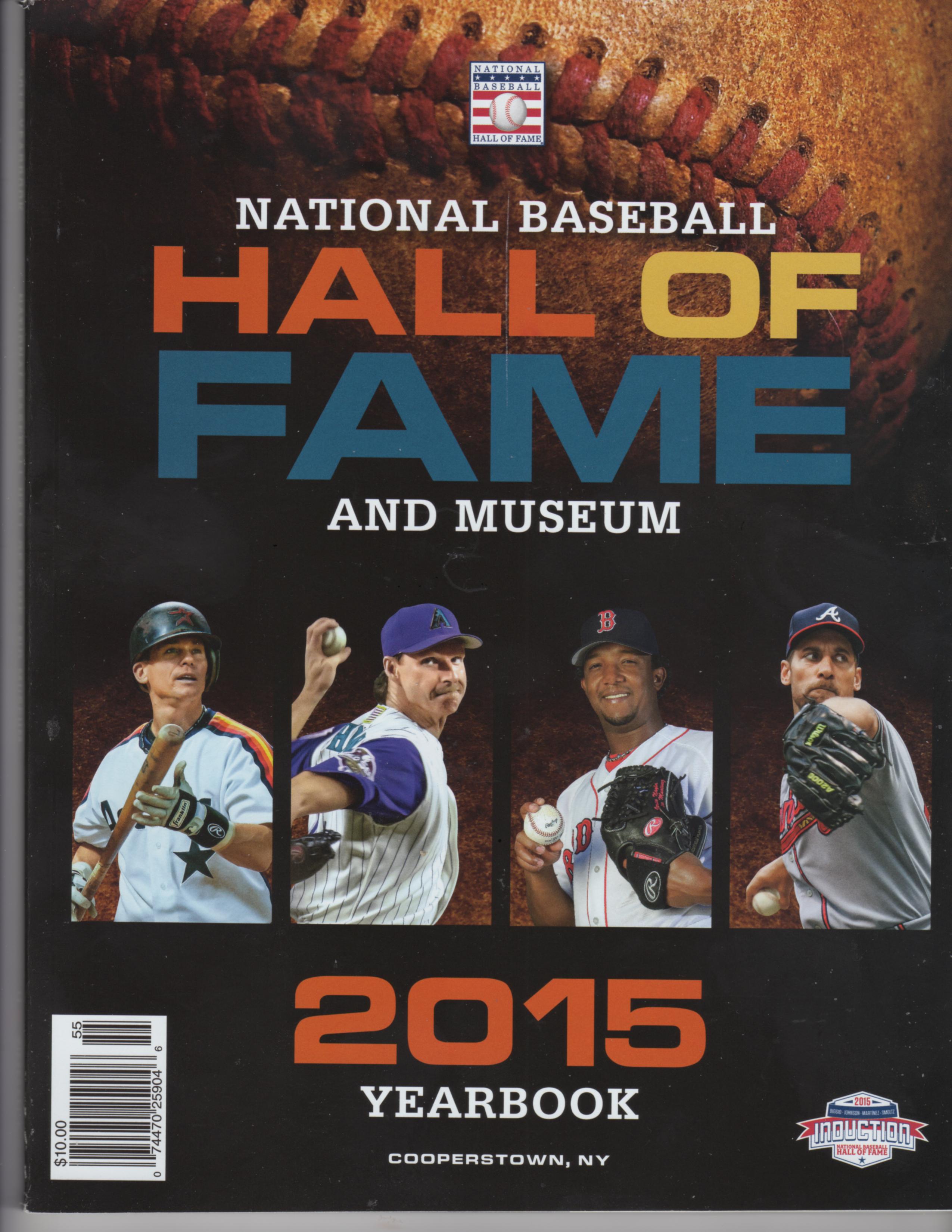
The Hall of Fame 2015 Yearbook Is Now Available.

The Hall of Fame
2015 Yearbook
Is Now Available.


Plans at Cooperstown for the 2015 Hall of Fame Induction Class are building steam. My membership copy of the 144 page “2015 Yearbook”, featuring full layouts in words and pictures of the 2015 Class (Craig Biggio, Randy Johnson, Pedro Martinez, and John Smoltz) arrived by mail yesterday – and it also included nice summary profile information, that included their year of induction, for all members of “The Hall” – plus ample information on how anyone who plans to make the trip this year in support of Craig Biggio, any of the others, or simply, to show their love for the great game of baseball can be there too this summer as an observer-participant of this very special inclusion of the first pure-blood inductee from the Houston Astros.

http://baseballhall.org/visit/hall-of-fame-weekend

While you are visiting the HOF website, give some thought to becoming a supportive member of this very worthwhile 501 C (3) non-profit corporation that exists to acquire, protect, preserve, and display the grand history of baseball in ways that far exceed the original foundation of the idea that the game was invented in Cooperstown by Abner Doubleday. The place reminds us of 19th century rural America and it is symbolic of baseball building its early small town roots. Include The Pecan Park Eagle among those who contend: “If baseball wasn’t invented in Cooperstown, it should have been!”

The HOF 2015 Yearbook also includes an article on the Astrodome by Jose de Jesus Ortiz of The Houston Chronicle entitled “50 Years of Indoor Games”, published, of course, by another external-to-Houston authoritative source on the importance of our architectural icon to a world much larger than Harris County. – Check it out. Mr. Ortiz did a fine job.

The individual order instructions on the HOF 2015 Yearbook are not immediately available to me this morning, but membership in the Hall will also make it available to you, I’m sure. After all, I got one yesterday. And we never ordered it.

At any rate, HOF membership for fans doesn’t cost much – and it opens the door for pleasant little surprises like the annual yearbook featured here as a benefit, along with other discounts and ongoing information about other special offers from the HOF throughout the year. And it all goes into supporting the institution that supports the accurate and positive memory of baseball.

Although we have been to Cooperstown only once, and never for an induction ceremony weekend, we cannot be there this year for personal reasons that have nothing to do with baseball, but with some considerable regret that.we will not be there to witness Craig Biggio inducted as a Houston Astro. We are assured, however, that the contingent of fans from Houston will be there in full glory appreciation and support of No.#7 and all he has done as a player and citizen of Houston to represent our community in the first-class style that is Craig Biggio.

There is till ample time to make arrangements for your own passage to the big July 24-27 Induction Weekend celebration, but please check out the HOF website on the best ways to contain the expense and arrangements hassle of traveling to Cooperstown for the most popular event on the HOF calendar every year. The upside is – if you make the trip this year – you will always know that you were there among the group of Houston fans who came in support of Craig Biggio at the highlight moment of his baseball life.

Long Live Baseball! Long Live the Hall of Fame! And Long Live the Memory of Craig Biggio, a very special Houstonian!

I’ll Be Glad When You’re Dead, You Rascal You

May 12, 2015
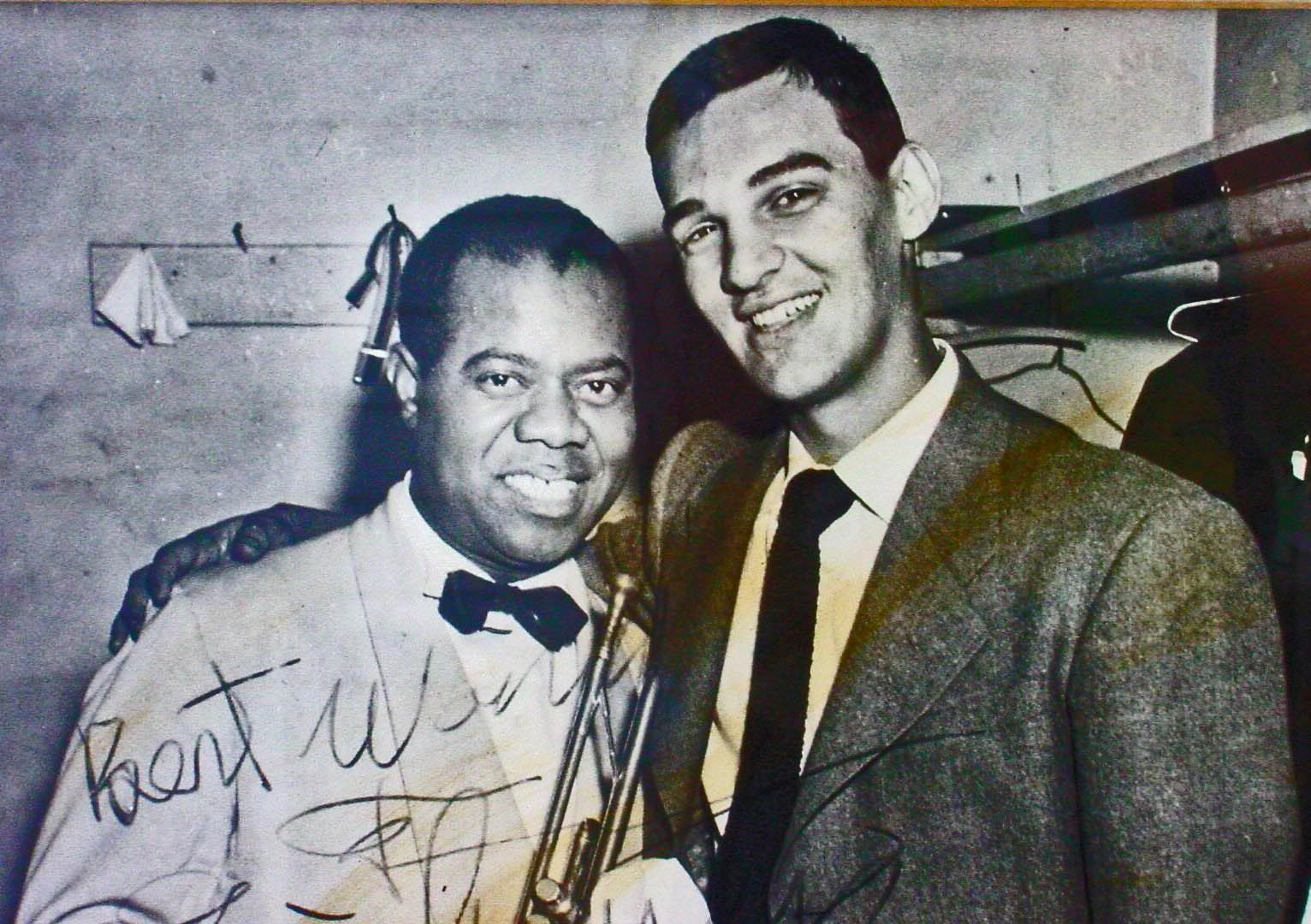
Louis Armstrong with friend and New Orleans Jazz historian Don Marquis (1951)

Louis Armstrong with friend and New Orleans Jazz historian Don Marquis (1951)

Glad He Is Dead.

Sunday afternoon last Judge Knapp passed in his checks after an illness of only two weeks. His wife had supported him by laundry work for the last two years, and although the widow has donned the weeds and is figuring on a tombstone with a lamb on top of it, we’ve got a dollar which says she’s glad the old loafer has gone to a better [hotter?] country. If she isn’t, we are, for he made our office his loafing place, and the tobacco stains he left after him will keep his memory green for a year to come. [Arizona Kicker]

Galveston Daily News, May 19, 1888

Perhaps songwriter Sam Theard was around early enough to have known the story of the little beloved or mourned Judge Knapp who so spitefully finds his memorial in this 1888 story of his passing as it appeared in the Arizona Kicker and then found its way into the May 19, 1888 edition of the Galveston Daily News. Of course, lazy old cusses who leave all the work to their soldiering, beloved, and angry wives and office secretaries have never been hard to find so the greater probability remains that the apparent relatedness of the old judge to the later song are simply the result of a hard-to-miss coincidence. Thanks again to researcher-friend Darrell Pittman for forwarding an old news clipping that juiced the notion for this column subject.

Here are the lyrics to the song that spiked our associative memories file:

I’ll Be Glad When You’re Dead, You Rascal You

Words and Music By Sam Theard (1931)

Now I’ll be glad when you’re dead, you rascal you, uh-huh
I’ll be glad when you’re dead, you rascal you, oh yeah
Well I let into my home, you gonna leave my woman alone
I’ll be glad when you’re dead, you rascal you

Now I’ll be glad when you die, you rascal you, uh-huh
I’ll be glad, oh I’ll be tickled to death when you leave this earth it’s true, oh yeah
When you’re lyin’ down six feet deep, no more fried chicken will you eat
I’ll be glad when you’re dead, you rascal you, oh yeah

Ah, you just ain’t no good! oh, you dog

Now listen here, I’ll be glad when you’re dead, you rascal you, uh-huh
I’ll be glad when you’re dead, you rascal you, oh yeah
I’ll be standin’ on the corner high, when they drag your body by
I’ll be glad when you’re dead, you know I’m gonna be so happy when you’re gone you dog
I’ll be glad when you’re dead, you rascal you

And if you care to hear old “Louie” sing it, here’s the link for listening:

https://www.youtube.com/watch?v=PgiJ0OS9LwU

Bill MsCurdy with Don Marquis During a New Orleans visit (2005)

Bill MsCurdy with Don Marquis
During a New Orleans visit
(2005)

Happy Mother’s Day, But Remember Too

May 10, 2015

mothers day

Happy Mother’s Day, But Remember Too: All Mothers are not the same. Make sure you know what you’re celebrating – and even more importantly – whether or not you even need to celebrate. Some of the “mothers’ in our lives are more in tune with our reasons for sadness, a sense of burden, or a moment of umpleasurable pain.

Here are a few examples of what we mean. In reality, it’s up to each of us individually to spot on “nail” the major mothers of our lives and to respond accordingly to the feeling state that each specifically one specifically inspires:

1) First, let’s clear the deck on our popular understanding of the term. – If you had a genetic or adoptive mother in your life who raised you to be a good, honest, responsible and loving person, by all means, celebrate that lady today, and every day, to the high heavens. Even if she fell far short of perfection and looms stronger in your memory today as one of the obstacles that stood in the way of you standing up and breathing on your own in 2015, at least, give even that lady credit for doing the best she could and go visit her this Mothers Day, if they allow for visitors in her particular nursing home, psychiatric facility, or criminal detention center.

2) Sometimes a “mother” is a hangover that descends upon us after another heavy night of celebration or mourning. Nothing to celebrate when it comes to this kind of mother. Either wise up and get well or go insane or die. Just try not to take anyone else with you as a drunk or drugged driver. There is a coward’s way out here. That is, when a hangover hits, take another bite of the hair from the animal that bit you. It doesn’t take much to end the pain of withdrawal from alcohol (which is what a hangover is all about) – and it will work quickly in the moment of the short run  – for as long as your liver holds out for another game of “spend the bottle”.

3) Many of us Houston sports fans also have discovered over time that the aggregate baggage weight of being a local fan of the Astros, Oilers/Texans, Rockets, Cougars, Owls,and/ or Tigers is pretty much of  a “mother” load upon one’s mind, body, and soul too. Not much to celebrate there. We just keep waking up with each new coming team season, ruminating on thoughts of  our numerous past painful losses – and shaking out some new versions of the same old question that is always on our minds: “Are we having fun yet?”

4) There are a lot of “mothers’ connected with work. Some of them flow from the “mother weight” of work our bosses give us in relation to the “feather weight” of the rewards we see for ourselves down the road for trying to get ahead by pleasing the boss. “People pleasing” is a mother unto itself and – as you already know – it is not a behavior that is confined to the work area of our lives. Sometimes “people-pleasing” behavior itself is the very ignition button that converts bosses, coworkers, friends, or even spouses into “ungrateful mothers” that a “people pleaser” actually hates to engage. Again – nothing to celebrate here – but a loud awakening call to the need for recovery, if one recognizes the dominance of any feeling that tells them that “I always have to please everyone in my life – whether they ask for my help or not.” This one is probably the crown jewel of all “mothers” we do not celebrate on this special day.

5) A “mother” may also be the driver of a shiny black pick up truck – like the one that cut me off on the freeway yesterday. – Just don’t honk your horn or shake your fist at such a driver. – That kind of  “mother” may have a gun and think nothing of the trouble he may buy for himself by shooting you straight between the eyes before he goes down in a news channel TV car chase “breaking news” report.

6) Albert Pujols is the biggest “mother” in the recent history of Astros baseball. We are pretty sure he hangs on the wall of closer Brad Lidge’s mind also as another of those “mothers” we care not to celebrate.

7) Every person elected to Congress to save our country, but who later leaves office with things in a bigger mess for us, but better for themselves, with benefit entitlements that the rest of us can only dream of having, upon their departures from public service, is a bigger “mother” than just about anyone else I can personally list, so please allow me to summarize it in my next and final entry.

8) Politicians are “mothers”.

Please take over the list-building from here. We all know the generic term. And we all have our own ideas of who and what most deserves the appellation.  Anyone or anything can be the kind of  “mother” we do not ever want to celebrate.

Spend today respecting the mothers who deserve the attention every day that this annual Sunday was designed to honor and remember. – It will be OK to get back to fighting those “bad mothers” on Monday.

Happy Mother’s Day, Everybody!

Happy-Mothers-Day

The 1933 Houston Buffs

May 8, 2015
The 1933 Houston Buffs from an online photo find by John Watkine, SABR

The 1933 Houston Buffs
from an online photo find by
John Watkins, SABR

____________________

Thank you, John Watkins, for providing the visual that made this column desirable. Even if the figures appear smaller in the photo size we are forced to use here, we shall begin with your identification of the players and two club executives featured in this picture from old Buff Stadium in Houston:

“1933 Houston Buffs

Front Row, L-R: Mike Cvengros (P), Bill Beckmann (P), Gene Moore (OF), Ernie Parker (OF), Tommy West (C).
Middle Row, L-R: George Payne (P), Ken O’Dea (C), Carey Selph (Manager), Ival Goodman (OF), George Binder (SS), Ed Hock (3B).
Back Row, L-R: Fred Ankenman (President), Stan Keyes (OF), Oscar Fuhr (P), Ed Greer (P), Robert Kalbitz (1B), Albert Fisher (P), Andy French (Secretary).”

– John Watkins, SABR (and great-nephew of Watty Watkins, the famous former Houston Buff and St. Louis Cardinal).

____________________

The 1933 Houston Buffs were a nifty little ball club. They simply ran into the Shaughnessy Playoffs and the hazard of losing everything in a short series down period. Ever hear of that happening since 1933?

The ’33 Buffs posted some pretty fair individual marks. Playing manager 2nd baseman Carey Selph played in 149 games, led the Buffs with 184 hits, 40 doubles and a .310 batting average.

Outfielder Gene Moore led the Buffs with 13 homers. His .299 batting average and 38 doubles were second highest on the club among players who were on the roster for most of the season and who regularly played. It was the ’33 Buffs’ pitching, speed and defense, however, plus the do-as-I-do leadership modeling of Manger Selph that propelled the club to a first place finish in the Texas League with a record of 94 wins, 67 losses and a .623 winning percentage.

Their pitching strength included Ed Greer (22-10, 2.75), former Pittsburgh Pirate Mike Cvengros ( 21-11, 2.38), veteran ace George Payne (19-11, 2.56), Bill Beckmann (14-11, 2.75) and Elmer Hanson (8-2, 1.96).

The Buffs were well represented on the postseason 1933 Texas League All Star team: Houston members included: Jimmy O’Dea (.269 BA), one of two catchers; Carey Selph, 2nd Base; George Binder (.235 BA), shortstop; and Ed Greer, pitcher.

Among 1933 Texas League statistical leaders, Ed “Bear Tracks” Greer tied another for most pitching wins with 22, and pitcher Mike Cvengros owned the league’s lowest earned run average at 2.38.

Unfortunately for the 1st place 1932 Houston Buffs, they fell in three games to the 4th place San Antonio Missions in the first round of the post-season playoffs, as the 2nd place Galveston Buccaneers were eliminating the 3rd Dallas Steers, 3 games to 2. San Antonio went on to defeat Galveston, 4 games to 2 in the finals for the 1933 Texas League championship pennant before going on to a six game loss to the New Orleans Saints of the Southern Association in the Dixie Series.

Anatomy of 20 Wins Pitcher for 102-Loss Club

May 7, 2015
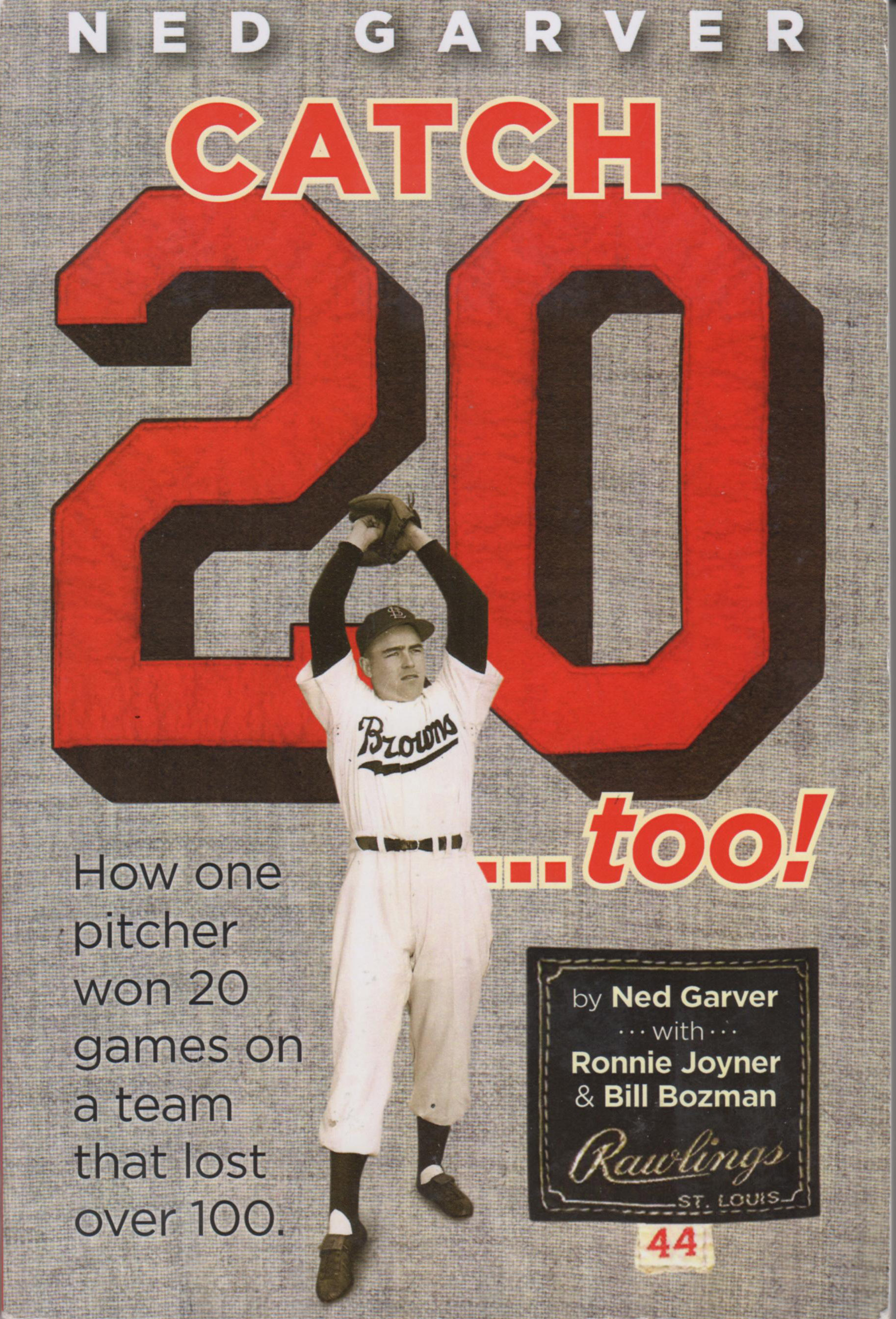
Book Order Information: Autographed Copy “Ned Garver: Catch 20…Too” for $25: http://thestlbrowns.blogspot.com/2013/12/ned-garver-catch-22.html

Book Order Information:
Autographed Copy “Ned Garver: Catch 20…Too” for $25:
http://thestlbrowns.blogspot.com/2013/12/ned-garver-catch-22.html

As we noted in our column on former pitcher Ned Garver, he won 20 games for the last place St. Louis Browns over the course of a 154-game schedule in the eight-club 1951 American League. Garver’s final record for that remarkable season was a final record of 20 wins, 12 losses, an E.R.A. of 3.73, over 30 starts, 3 relief appearances, an AL leading 24 complete games, and a total of 246.0 innings pitched.

Garver’s club, the 1951 St. Louis Browns, finished the season in eighth and last place with a record of 52 wins, 102 losses, and a full 46 games behind the AL and eventual World Series Champion New York Yankees.

It was a season marked by the exploits of super promoter-owner Bill Veeck to boost the horrendous attendance at Sportsman’s Park in St. Louis by the few remaining fans of the American League’s most chronic historical loser with all kinds of gimmicky evenings like “Fans Management Night” when Veeck set up a color card system behind the Browns’ third base home team dugout and allowed a group of fans there to vote on certain game-time decisions, like – should a runner at first attempt to steal second base or not – by flashing th designated stop or go cards. Nothing really helped. Even the surprise insertion of 3 feet, 7 inch little person Eddie Gaedel into their lineup as a batter in a home game played against the Detroit Tigers on August 19, 1951 failed to motivate larger future crowds to come out see the same old losing Browns. By season’s end, the Browns game attendance closed at 293,790.

Ironically, the great legitimate attraction that could have been better exploited for marketing purposes, right handed pitcher Ned Garver, sort of flew by under the radar on his compelling flight into baseball destiny as a man who end the season with 20 wins for a 102 game losing last place club.

To understand how that worked better, you must read Ned Garver’s second book, “Ned Garver: Catch 20…Too” (2013) that he wrote with baseball researcher-historians, Ronnie Joyner and Bill Bozman. Short of that far more dynamic presentation by Garver on how it happened, here is our linkage anatomy of each winning game box score from Baseball Almanac for Ned Garver in 1951 and, if you check each box score carefully, you will be able to see how many games that Garver lost in between victories – and please note too – that last win number 20 came in the last game of the 1951 season.

Of course, I’m pretty sure you’ve already heard what club owner Bill Veeck supposedly told Ned Garver hen the latter tried to parlay his very good season into a raise for 1952. Veeck turned him down. But why?

According to Bill Veeck’s often quoted words to Ned Garver, after acknowledging that Garver had pitched brilliantly  in 1951, Veeck supposedly added, but, “we could have finished last without you!”

Box Score Anatomy, Ned Garver: 20 Wins for the 102-Loss St. Louis Browns in 1951:

Win # 1: April 21, Browns 9 – Indians 1 (Garver Record 1-1) (Browns Record 1-3)

http://www.baseball-almanac.com/box-scores/boxscore.php?boxid=195104210CLE

Win # 2: April 25, Browns 7 – White Sox 4 (Garver Record 2-1) (Browns Record 2-7)

http://www.baseball-almanac.com/box-scores/boxscore.php?boxid=195104252CHA

Win # 3: April 29, Browns 6 – Indians 3 (Garver Record 3-1) (Browns Record 3-8)

http://www.baseball-almanac.com/box-scores/boxscore.php?boxid=195104291SLA

Win # 4: May 13, Browns 13 – Tigers 10 (Garver Record 4-2) (Browns Record 6-18)

http://www.baseball-almanac.com/box-scores/boxscore.php?boxid=195105131SLA

Win # 5: May 15, Browns 11 – Athletics 8 (Garver Record 5-2) (Browns Record 7-19)

http://www.baseball-almanac.com/box-scores/boxscore.php?boxid=195105150PHA

Win # 6: May 27, Browns 8 – Tigers 3 (Garver Record 6-3) (Browns Record 11-25)

http://www.baseball-almanac.com/box-scores/boxscore.php?boxid=195105272DET

Win # 7: June 1, Browns 4 – Red Sox 0 (Garver Record 7-3) (Browns Record 12-29)

http://www.baseball-almanac.com/box-scores/boxscore.php?boxid=195106010SLA

Win # 8: June 5, Browns 10 – Athletics 1 (Garver Record 8-3) (Browns Record 14-32)

http://www.baseball-almanac.com/box-scores/boxscore.php?boxid=195106050SLA

Win # 9: June 10, Browns 10 – Senators 9 (Garver Record 9-3) (Browns Record 17-33)

http://www.baseball-almanac.com/box-scores/boxscore.php?boxid=195106101SLA

Win # 10: July 1, Browns 3 – White Sox 1 (Garver Record 10-4) (Browns Record 21-47)

http://www.baseball-almanac.com/box-scores/boxscore.php?boxid=195107012CHA

Win # 11: July 6, Browns 4 – White Sox 1 (Garver Record 11-4) (Browns Record 22-50)

http://www.baseball-almanac.com/box-scores/boxscore.php?boxid=195107062SLA

Win # 12: July 15, Browns 3 – Red Sox 1 (Garver Record 12-4) (Browns Record 24-55)

http://www.baseball-almanac.com/box-scores/boxscore.php?boxid=195107151SLA

Win # 13: July 25, Browns 5 – Athletics 4 (Garver Record 13-5) (Browns Record 28-52)

http://www.baseball-almanac.com/box-scores/boxscore.php?boxid=195107250PHA

Win # 14: August 10, Browns 4 – Tigers 2 (Garver Record 14-6) (Browns Record 34-73)

http://www.baseball-almanac.com/box-scores/boxscore.php?boxid=195108100DET

Win # 15: August 24, Browns 5 – Athletics 3 (Garver Record 15-8) (Browns Record 38-81)

http://www.baseball-almanac.com/box-scores/boxscore.php?boxid=195108240SLA

Win # 16: September 7, Browns 4 – Indians 2 (Garver Record 16-11) (Browns Record 41-90)

http://www.baseball-almanac.com/box-scores/boxscore.php?boxid=195109071SLA

Win # 17: September 18, Browns 3 – Senators  2 (Garver Record 17-12) (Browns Record 46-97)

http://www.baseball-almanac.com/box-scores/boxscore.php?boxid=195109182WS1

Win # 18: September 22, Browns 5 – White Sox 1  (Garver Record 18-12) (Browns Record 48-98)

http://www.baseball-almanac.com/box-scores/boxscore.php?boxid=195109220CHA

Win # 19: September 26, Browns 7 – Tigers 1  (Garver Record 19-12) (Browns Record 50-99)

http://www.baseball-almanac.com/box-scores/boxscore.php?boxid=195109260SLA

Win # 20: September 30, Browns 9 – White Sox 5  (Garver Record 20-12) (Browns Record 52-102)

http://www.baseball-almanac.com/box-scores/boxscore.php?boxid=195109300SLA

That’s it. Ned Garver’s 20 victories in 1951 included 5 wins over the Chicago White Sox, 4 wins each over the Detroit Tigers and Philadelphia Athletics, three wins over the Cleveland Indians, and 2 wins each over the Boston Red Sox and the Washington Senators. – The only team to escape Garver’s grasp in the winner’s circle in 1951, who else, were the New York Yankees.

First Sweep and Streak in Houston MLB History

May 6, 2015
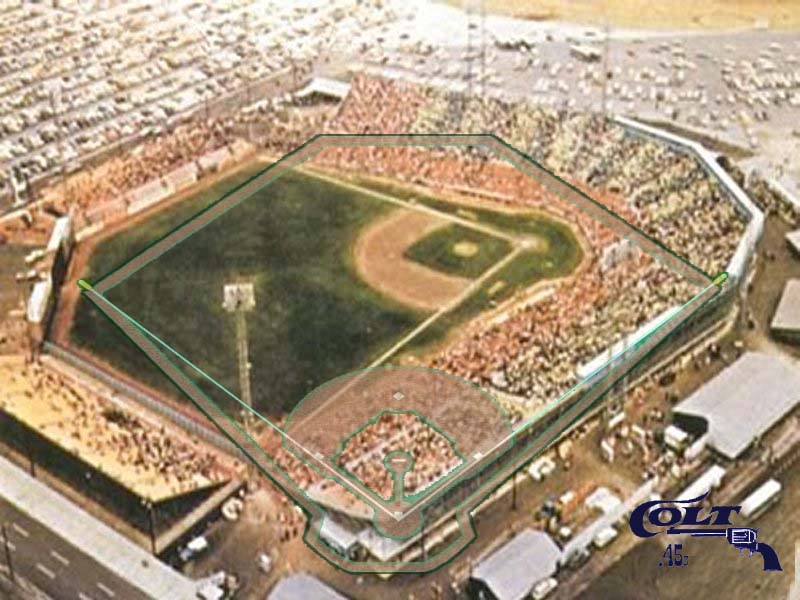
Houston's First MLB Sweep and Winning Streak Came Early at Colt stadium In April 1962.

Houston’s First MLB Sweep and Winning Streak Came Early at Colt stadium In April 1962.

It didn’t take long. Nor did it last long, But it happened right off the bat in Houston’s MLB history.

From April 10 through April 12, 1962, Houston began its major league history with a three-game sweep of the Chicago Cubs in Houston at a temporary home on the parking lot of the property that would also become the future location of the Harris County Domed Stadium, or, as we know it today – the Astrodome, “Eighth Wonder of the World!”

April 10th: Houston Colt .45s 11- Chicago Cubs 2.

The Astros won their opener on April 10th, 11-2, behind the 3-hit bats of Bob Aspromonte and Roman Mejias and the 2-hit wands of Al Spangler and Hal Smith. Aspromonte recorded the first hit and run in Houston MLB history, among other firsts that are always only there once for a short while at the start of any new franchise expansion club’s history. And Mejias nailed with great power the first and third home runs in club history. In between, Hal Smith hit the second HR that Houston ever earned credit for achieving in an official game.

Of course, it was only the first game, but that’s all it took for Houston to have racked up their first double-digit run and hit game at the same earliest possible time. Add their two errors to the list and the “Houstons” also had achieved their first negative note of the defensive side as well.

Little lefty Bobby Shantz was the first starter, first winner, first strike out recorder, first pitcher to issue  a walk, and so much of the other fairly meaningless records that are always there for first-game participants to bag. Among these, are two that are joined together by one unique common thread: Shantz faced future Hall of Famer Lou Brock as the first batter to ever hit against Houston in a big league game. Shantz also surrendered the first homer in Houston history to future Hall of Famer Ernie Banks in the seventh inning, on his way to pitching the first complete game in Houston MLB history.

Most of the other “firsts” are discoverable from the box scores of these three games and the ones that follow at this link to the Baseball Almanac record page of the 1962 Houston Colt. 45s’ first season:

(To stay on the Houston page, simply click on the date of each game for a look at the box score. If you click on the opponent club’s name, the site will take you to that team’s season long journey of record.)

http://www.baseball-almanac.com/teamstats/schedule.php?y=1962&t=HO1

April 11th: Houston Colt .45s 2 – Chicago Cubs 0.

Lefty Hal Woodeshick started and pitched the first eight innings for the 2nd win in both history and the three game streak. By working the ninth in relief, Turk Farrell recorded both the first save as he also became the first right-handed pitcher to take the mound for a Houston big league club. Farrell got the first save in history – as winning pitcher Woodeschick and Farrell combined for the first shutout in Houston MLB history.

See how extraneous, if not downright tedious, this sort of early record-keeping quickly becomes? It almost rises to the level of fingernails on the chalkboard, unless your baseball mind OCD patterns are simply out the gate and not likely coming back in this lifetime.

April 12th: Houston Colt .45s 2 – Chicago Cubs 0.

Dean Stone pitched this second consecutive 2-0 shutout by himself, becoming the first right-handed starter in club history, the first right-handed complete game pitcher, and the first pitcher of either hand to pitch a complete game shutout for Houston.

Doing it again by the same score in the third and final game of their home series with the Cubs, the Houston Colt .45s shut the door successfully on their first series sweep in history – while expanding their record club winning streak to three games, a feat that allowed Houston one more sunrise as the only club in big league history to go undefeated as the only team in big league history to never have lost a big league regulation season game. – Wow!

Alas, Houston would not be the first club in big league history to be deluded by their success against the Cubs into thinking that greatness against all was near at hand. The club would suffer their first loss the next day in Philadelphia by 3-2 and go on from there to finish the season as the 8th place club in the 10-team National League with a record of 64 wins and 96 losses. The only teams they bettered in that first season were the 9th place Cubs and the 10th place Mets.

Forty-three years later, in 2005, the Houston “Astros” – as they were soon enough renamed in 1965 – would finally win a National League pennant and make it to a World Series against the Chicago White Sox. A return trip to the World Series still leaves the door open for our club’s first recorded game win at that level.

Those of us who have followed Houston in person forever are hoping that 2015 and the club’s recent 10-game winning streak are a sign of hope that our next return to the World Series will not take so long as the first one did.

Buffs Win ’47 Dixie Series over Mobile in Six

May 5, 2015
With 2 outs and two strikes on him in the bottom of the 9th of Games Six of the 1947 Dixie Series, Hal Epps spiked a single between shor and second that scored Billy Costa from 2nd base for 1-0 Buffs' Dixie series win.

With 2 outs and two strikes on him in the bottom of the 9th of Game Six of the 1947 Dixie Series, Hal Epps spiked a single between short and second that scored Billy Costa from 2nd base for 1-0 Series win at Buff Stadium.

____________________

Houston Buffs Win Dixie Title

Houston, Oct. 3 (AP) – Hal Epps, veteran center fielder, slipped a single between short and second after two were out here (Buff Stadium) in the ninth tonight to give the Houston Buffaloes of the Texas League 1-0 shutout over the Mobile Bears in the deciding (sixth) game of the Dixie Series.

Epps’ second single of the night climaxed an uphill battle for the Buffs in a mound duel between Clarence Beers of Houston and Frank Laga of Mobile.

Beers permitted four singles, permitting only one to reach second base and retiring twenty in order from the second inning to two outs in the eighth.

Laga, prior to retiring after one out in the ninth in favor of Paul Minner, had allowed three singles, but had issued 10 walks.

Solly Hemus started off the Houston ninth by popping out to Third Baseman Bill Hart and Laga then walked Billy Costa and Eddie Knoblauch,

Minner came in to relieve Laga and immediately struck out Stan Benjamin.

Epps took a two-strike count and then hit the sizzler that scored Costa from second with the winning score.

The victory enabled the Buffs to win their first Dixie (Series) championship. After taking the first game here last week, Houston then dropped two to the Bears before coming back to take three straight to finish with a four games to two record. *

~ Lubbock (TX) Morning Avalanche, Saturday, October 4, 1947, P. 8.

* Proof again that we must never believe everything we read in the newspapers. The 1947 Dixie Series victory was not the first, as reported here by the Morning Avalanche. Houston’s 1947 win was  its second championship in this annual competition between the pennant winners of he Texas League and the Southern Association (1920-1958). Houston won its first appearance n 1928 in six games over the Birmingham Barons, before then losing in seven games to the 1931 Birmingham club – and then falling to the 1940 Nashville Vols in five games prior to their second Dixie win in the ’47 Series.

Dixie Series losses by Houston in 1951 to the Birmingham Bears in six, and then to the 1954 Atlanta Crackers in seven, moved the Buffs’ post-season mark in the Classic to two wins and four losses.

Back-to-back six game Dixie Series wins over the Atlanta Crackers in 1956 and 1957 leveled the Houston Buffs’ all-time record in this post-season classic at four wins and four losses. The Dixie Series ceased to exist after 1958, a non-pennant year for the Houston AA Texas League club. The Houston Buffs moved up to the American Association for three final seasons of AAA-level  minor league ball (1959-61) before dissolving in favor of Houston’s entry into the big leagues in 1962.

For much more detail on Houston’s record in the Dixie Series  from 1928 through 1957, you owe it to yourself to pick up a copy of “Houston Baseball: The Early Years, 1861-1961” (By The Larry Dierker Chapter of SABR, 2014), available for sale through Barnes and Noble, Amazon, and other major book sales outlets.

____________________

Will Instant Replay Call Reversals Help or Hurt?

May 4, 2015
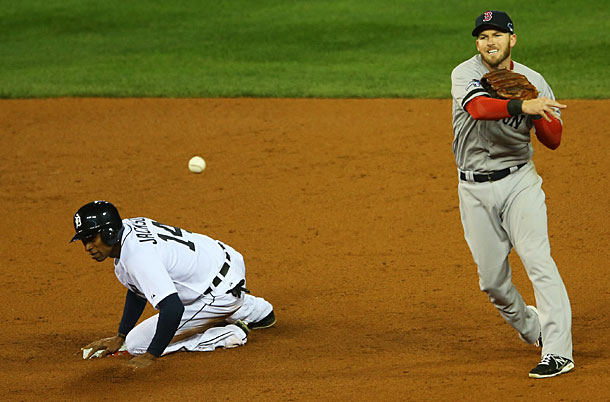
It's even harder to tell from still shots, but it makes you wonder how close the second baseman here was to the base when he tagged it for the force on the runner now sliding in.

It’s even harder to tell from still shots, but it makes you wonder how close the second baseman here was to the base when he tagged it for the force on the runner now sliding in.

Thank you, Mark Wernick for the SABR e-mail you sent about an hour ago. It frames the essence of this column:

____________________

From Mark Wernick, SABR Member …

Brad Miller hit an RBI triple in the third for Seattle’s first run.  He later tried to score on a fly by Seth Smith to right fielder George Springer,  and was originally ruled safe. The Astros challenged, and the replay showed he was tagged out before touching the plate.
“We’re going to check on it, but we were told that when a foot is hovering over the plate, it’s the same as touching it,” Seattle manager Lloyd McClendon said. “We’ll see what they say about this rule, but it is what it is.”
When a foot is hovering over the plate, it’s the same as touching it
I’m sure that frequently was the call back in the day before instant replay challenges,  much like the phantom tag used to be an out most of the time.  However,  I can’t recall ever reading specific language in the rule book saying such could be the case.  Please enlighten me if that language was/is there.
Things are going to be a lot different in the era of overturned rulings based on instant replay.  For example,  look for the number of ejections to go way down,  as well as the number of long angry tirades disputing calls.  Will this development add to,  or subtract from,  our appreciation of the game?
____________________

Like Mark Wernick, I cannot recall any “casting foot shadow” rule language that qualifies “close” being good enough for an out call, although we all know the rule-bypass-winks we had to freeze on everyone’s faces to put up with all those phantom tags at second on the double play forever prior to instant replay.

I can only think that instant replay will continue to improve and correct many calls from human error. This will be easier to accept over time as umpires, managers and players alike become more accustomed to the regularity of call reversals by a technology that should be superior to the unrecordable one-perspective decision of a highly trained human being who still cannot overcome the limitations of human frailty under close play circumstances.

Once it stops being a man versus machine challenge to the egos of umpires, it stands to reason that the technology becomes the ally of the umpire under all those previously heated encounters that were a matter of ego – and totally irreversible.

Now even the umpire can come to say, “Well, if you disagree, let’s let the replay people check it out and see what they think.”

Expanded use of instant replay gets my vote as a great aid to the game. As technology and our ability to use it well increases, it can only help the game improve. It doesn’t take much time for a serious review and I do not mind time spent on making the game better, anyway.

If we want to save time, go back to the things are now being tried. Cut down on the wastes that don’t matter – like batters stepping away from the plate to scratch themselves or pick their ears and noses..

Fewer fights. Fewer protests. More accurate calls. And, hopefully, no more going home from a game that your team just lost on a phantom foot contact of second base on a game-ending double play. And those are just some of the bigger rewards from the use of instant replay on the horizon, as I see them.

What do you think?