Archive for the ‘Uncategorized’ Category

Worst. Big League Teams. Ever.

May 28, 2011

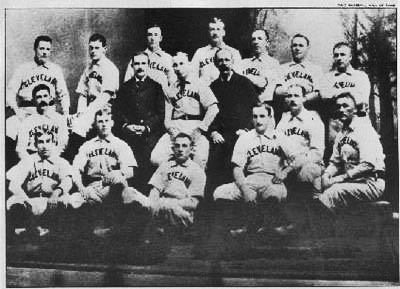
The Cleveland Spiders and their rope-providers, Frank & Stanley Robison. This photo actually was taken of the 1895 Spiders in the year they won the Temple Cup. Those better days melted away completely in 1899.

In the history of major league baseball seasons extending to a minimum of 140 games, a few clubs have distinguished themselves to the nth degree of failure and notoriety, but none more so that the 1898 Cleveland Spiders.  Their “Arachnidish” record of 20 wins and 134 losses for a paltry .130 winning percentage and a twelfth place cellar finish in the National League, some 84 games behind the pennant winners is not likely ever to be broken, even if a new horrible club comes along with only eight legs total to stands upon.

The 1898 Spiders brought a new unbreakable shade of bold to the word “bad” also with their 24-game team record consecutive losing streak, their ML record 27 one-month losses in July, and their 6 double-digit losing streaks are hard to top for notoriety, but the Spiders managed to do so by dropping 40 of their final 41 games of the 1898 season.

So, how did so much out-of-the-norm terrible performance happen in 1899? It isn’t hard to  figure – and it’s also the heart, body, and soul reason why the result of this season-long spider stomp led to a change in the ownership rules that should have been obvious from the start. You see, the 1899 Cleveland Spiders and the 1899 St. Louis Perfectos were both owned jointly by two brothers, Frank and Stanley Robison.

Before the 1899 season, the Robison brothers, who already owned the Spiders, also bought the old St. Louis Browns from St. Louis brewer Chris von der Ahe. Then, because they really wanted to succeed in St. Louis and weren’t all that thrilled with fan support in Cleveland, anyway, the Robisons moved all their best players from Cleveland to St. Louis, leaving the Spiders spinning for talent with a few scraps from the bottom of the barrel.

After 1899, the rules changed and ownership of more than one team by the same individual or group became illegal. The SPiders disappeared in 1900, but a new club resurfaced that same season in the American League as the Cleveland Lake Shores under new singular-team ownership. The example of the 1899 season was all the lesson in the primary peril of joint ownership that baseball apparently needed.

The 1899 Perfectos finished in fifth place with an 84-67 record, but these were not the 20th century famous American League losers also known as the St. Louis Browns. These NL Browns were renamed the “Perfectos” for 1899 before moving on in 1900 to the identity that would seal their forthcoming place in baseball history forever as the St. Louis Cardinals. – When the original American League Milwaukee Brewers also moved to St. Louis in 1902 as part of the fledgling-fresh American League,, they picked up the old “St. Louis Browns” moniker for their own taunting new identity. The new AL Browns soon embarked upon a history of losing, over time, that would almost make any old Spider feel un-squashed by comparison.

The rest of the biggest baddies roster follows below. Notice how often the name “Philadelphia” appears on the list. Maybe it’s no wonder that the City of Brotherly Love has mutated over the years into a “culture of contempt” among fans that is unrivaled by any other major league city.

The Worst Single Season Teams of All Time:

Season

Franchise

League

Wins

Losses

Pct.

GB

1899

Cleveland Spiders

National

20

134

.130

84

1890

Pittsburgh Alleghenys

National

23

113

.169

66½

1916

Philadelphia Athletics

American

36

117

.235

54½

1935

Boston Braves

National

38

115

.248

61½

1962

New York Mets

National

40

120

.250

60½

1904

Washington Senators

American

38

113

.252

55½

1919

Philadelphia Athletics

American

36

104

.257

52

1898

St. Louis Browns

National

39

111

.260

63½

2003

Detroit Tigers

American

43

119

.265

47

1952

Pittsburgh Pirates

National

42

112

.273

54½

1909

Washington Senators

American

42

110

.276

56

1942

Philadelphia Phillies

National

42

109

.278

62½

1932

Boston Red Sox

American

43

111

.279

64

1941

Philadelphia Phillies

National

43

111

.279

57

1928

Philadelphia Phillies

National

43

109

.283

51

1915

Philadelphia Athletics

American

43

109

.283

58½

1911

Boston Rustlers

National

44

107

.291

54

1909

Boston Doves

National

45

108

.294

65½

1911

St. Louis Browns

American

45

107

.296

56½

1939

Philadelphia Phillies

National

45

106

.298

50½

1937

St. Louis Browns

American

43

111

.279

56

1945

Philadelphia Phillies

National

46

108

.299

52

1938

Philadelphia Phillies

National

45

105

.300

43

1926

Boston Red Sox

American

46

107

.300

44½

2004

Arizona Diamondbacks

National

51

111

.315

42

In The Big Inning …

May 27, 2011

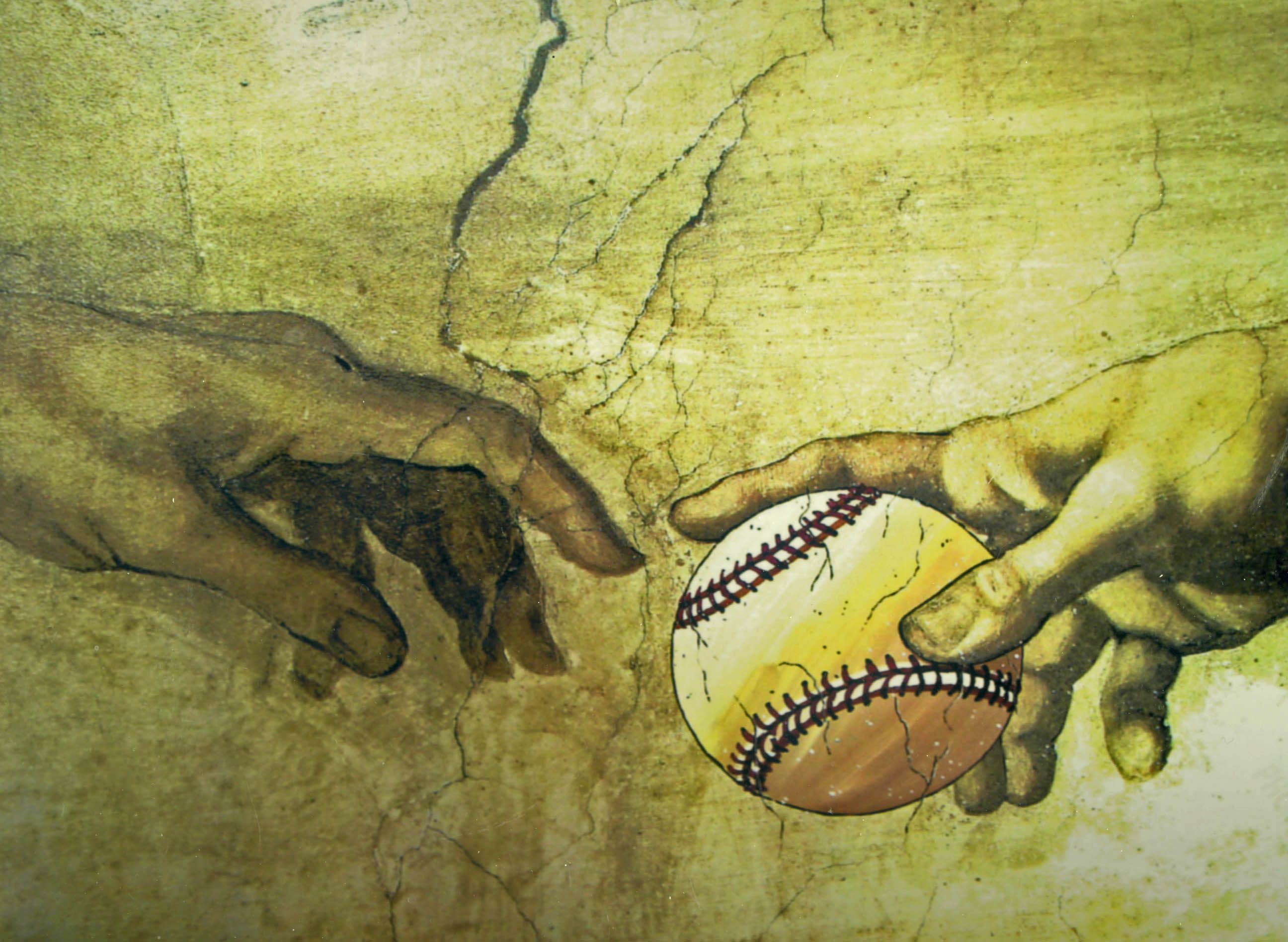
In the beginning, the Lord said: “Adam, take these two baseballs and this crazy old lady Eve with you – and go out into that lush and feral pasture that I have already given unto you earlier – and thusly, amuse your hearts, minds, and souls to the brink of rapture by playing  the greatest game I shall ever invent for you – now or ever.

And so Adam and Eve did as God bade unto them. Adam took up  his two balls – and his old bat Eve – and they each strolled hand-in-hand together – down Paradise Lane at the break of this new dawn – and out into the Garden of Eden – the one finely manicured pasture with a Green Monster in left field.

“Who – or what – is that emerald shaded creature, anyway,” Adam cried aloud to Eve as he beheld the attractive creature-structure located some 315 feet away from the dish located nearby where they happened to have stopped, at the place they would learn in time that God called Home.

“its name is Temptation,” Eve answered wryly. “God placed it there to remind all of us swingers that we are each free to flail away at life’s juiciest apples all we want – just as long as we shall also recall, each time we do, the consequences of short-distance, or short-term, thinking.”

“And what, pray tell, does that mean?” Adam asked quizzically.

“It simply means that anytime we try to drench ourselves with instant ecstasy, glory, or satiation by one mighty swing of the bat, simply because happiness suddenly appears to be an easy distance away, that we are more likely to come up short in our actions – and left painfully yearning for more of  the wrong thing – and bringing us one more fang-lock closer to the same snake that bit us in the first place,” Eve answered.

“Durn you!” cried Adam, as he dropped to his haunches, with his elbows now braced on his knees – and with his knuckled hands now supporting  his jaws for a long, baleful look out onto the field of play.

“”What’s the matter with you, Adam,” whispered Eve ,as she placed a supportive left hand upon his slumped over right shoulder.

“You gave me too much to think about,” Adam answered.

“So?” Eve asked.

“So, now I won’t be able to hit at all,” Adam mumbled. “A man can’t be expected hit and think at the same time, can he?”

“I suppose not,” Eve mused. Then they both paused, falling into silence as easily as butter melting into hot toast..

For a long while, the hunched-over Adam and the standing-still Eve remained quietly  together,  gazing collectively across the playing field, but never losing their attractive awareness of the green enigma in left.

Finally, Eve broke the silence with a smile..

“Hand me your stick, Adam,” Eve said.”Maybe I can teach you how to use it intelligently.”

And that’s the way things were – as Adam and Eve first headed toward the big inning.

Floyd Bevens: The Legacy of Disappointment

May 26, 2011

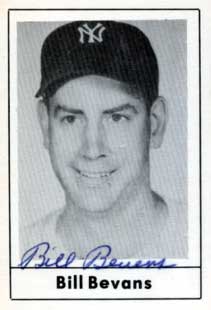
World Series Game 4, Oct. 3, 1947, Yankees vs. Dodgers at Brooklyn. Dodgers win, 3-2, on last pitch with their first hit of the game. Lavagetto's double ties Series. Pitcher Floyd Bevens & Joe DiMaggio walk away from heartbreaking loss at Ebbets Field.

Had it not been for a single pitch on a singular afternoon on an Indian Summer day back in Brooklyn in 1947, it’s likely that even fewer people would remember the name of the late Floyd “Bill” Bevens these 63 plus years later. But baseball people remember him – for what he did and didn’t do.

With the Yankees tying into their second World Series competition against their down-from- “snob hill” neighbors, the Brooklyn Dodgers,  the Yankees were leading the Series, 2-1, through three games, but their pitching corps was running thin do a combination cause of injury, tiredness, and a general lack of normal Yankee talent. As a result, Manager Bucky Harris made the call to go with a little known, but not-too-accomplished right hander named Floyd “Bill” Bevens.

Bill Bevens brought a 1947 season record of 7-13 and a 3.82 ERA into Game Four. In his four seasons in the major leagues (1944-1947), all played as a WWII talent shortage Yankee roster guy, Bevens had achieved the unremarkable record of 40-36 and a 3.08 career ERA.

Bevens settled on Game Four to have the best stuff of his life. He had control problems, walking 10 against only 5 strikeouts, but had surrendered no hits in guiding the Yankees into the bottom of the 9th with a 2-1 lead. He also had thrown a ton of pitches, far more than his tired aching arm could handle, but this was 1947 and nobody did pitch counts back then. On top of the cultural value from that era that said “pitchers should finish what they start,” the man had a no-hitter going. No way Harris was going to take him out in favor of ace reliever Joe Page.

Then came the 9th.

With two outs, Bevens walked center fielder Carl Furillo. Dodger Manager Burt Shotton then quickly subbed the speedy Al Gionfriddo as a pinch runner for Furillo. Gionfriddo then quickly took off for 2nd, getting there about the same time a great throw from catcher Yogi Berra to shortstop Phil Rizzuto.

The Yankees thought for sure they had the third out – the win – the first World Series no-hitter in history – and a 3-1 lead in games for the 1947 World Series!

No. No. No. Much to the Yankees’ dismay, Gionfriddo got the safe call.  The game would play on – with the tying run now on 2nd and the dangerous Pete Reiser coming to bat for Brooklyn.

That’s when Yankee manager broke the yolk of baseball wisdom that usually bridled these situations. He made the call to Bevens for an intentional  walk of the once speedy, but now more hobbled Pete Reiser, putting the winning run on 1st with two outs in the bottom of the 9th.

Bevens would face the pesky, but powerless Eddie Stanky with the tying runner on 2nd and the winning run at 1st, needing only that one more out to nail down his place in World Series history.

Hold up again. Dodger mentor Shotton had other ideas. Instead of facing Stanky, Bevens would face the right-handed veteran Cookie Lavagetto as a pinch hitter. Cookie wasn’t a power hitter, but he did possess some pop in his bat that Stanky could only have dreamed about. Shotton’s move provoked no further adjustments by Harris. It would be left up to righty Bevens and righty Lavagetto to write the next big moment in World Series history.

Shotton of Dem Bums had one more move. He inserted the faster Eddie Miksis at 1st as a pinch runner for the intentionally walked Reiser.

The final battle was now joined. Bevens vs. Lavagetto, with young Yankee catcher Yogi Berra relying upon the clubs book that said they could get Cookie with a fastball, high and away. And that’s what Bevens threw. And Lavagetto flailed away and missed for strike one on the very first pitch.

Yogi called for another hard one, high and away on the second pitch to Cookie. Bevens had second thoughts, but he delivered it anyway. This time, Lavagetto reach our and up and got it. A loud crack resounded, inciting a moment of stunned silence, then a roaring wave of euphoria from the home crowd as the ball bounced high off the screen in right field.

Gionfriddo easily scored the tying run. And here came Miksis from first on his teammate’s heels with the winning run. The Dodgers got only their first hit of the game from Lavagetto, but it was enough to produce a 3-2 Dodger win, tying the Series at 2-2 in games, and destroying Bill Bevens’s bid to become the first pitcher in history to throw a no-hitter in a World Series.

Bill Bevens lost more than a no-hitter that day. He pretty much ruined his arm pitching that game. Aside from some brief relief work after Game Four, Bevens would never pitch for the Yankees, or any other big league club again after 1947. The Yankees did win the Series in seven games, of course, and Bevens will always have that association to his credit, but all he would get from the Yankees in 1948 is his unconditional release in spring training.

The stories of Bill Bevens walking off the mound in tears that day at Ebbets Field, as well as those memories of Bevens and Yogi crying together in the clubhouse, all fly in the face of that “no crying in baseball” myth. That loss had to hurt bad. I concede the guy’s right to his expression of pain from that very hurtful experience.

Like no other sport, baseball moves deliberately through a succession of events that eventually determine winning or losing, joy or despair. Can you imagine the nanosecond of joy that must have spawned in the Yankee dugout when they thought they had thrown out Gionfriddo at 2nd for the final out of the game?

Didn’t happen. Keep playing. Keep playing until the cracking sound of Lavagetto’s bat is your final memory of this game, for better or worse.

Floyd “Bill” Bevens kept on playing minor league ball beyond 1947. In fact, in his 14 seasons as a minor leaguer from 1937 to 1953, he compiled a minor league record of 117-118 and a career ERA of 3.76. He could have retired with a winning record in 1952 but he came back in 1953,  just long enough to take it into the negative side with an 0-2 mark at Salem  of the Class A Western International league.

Bevens’s minor league history even included a brief stopover in 1949 with the Houston Buffs. Bevens was a Buff only long enough to give up six hits in four innings and two games with no record before moving on to Seattle of the Pacific Coast League that same season.

In the end, it was the legacy of Floyd “Bill” Bevens to be the man who lost a chance to post the first no-hitter in World Series history with two outs in the 9th inning. Perhaps, the question is: Did Bevens really lose his no-hitter to Lavagetto’s walk-off double – or did he earlier in the 9th lose it to Gionfriddo’s safe call on the steal of 2nd?

Bill Bevens passed away at his home in Salem, Oregon on October 26, 1991 at the age of 75.

Baseball Games: How Long Is Too Long?

May 25, 2011

"Astros have the tying and winning runs on 3rd and 2nd with two outs in the bottom of the 9th. ... Can Pence bring them in? ... We'll soon find out .... right after we see the answer to this question: 'Can Geico save you $1500 on car insurance?' ... Let's find out. ... Back soon."

I received a refreshing e-mail note from Houston Astros President Tal Smith yesterday in response to my column about the first May 6, 1888 Houston professional game played by a Houston team in Houston as Houston. Houston lost to Cincinnati, 22-3, in one hour and forty-five minutes that day, prompting Tal Smith to write this comment: “Given the score, it’s interesting that they played this in 1:45.  Goes to show pace of the game when you don’t make a lot of pitching changes.”

Thanks for ringing the bell on that whole recycling subject, Tal!

I responded to Tal as follows: “It’s long been my contention that it’s not the playing of the game that makes baseball games run longer, but all the non-playing moments that are given over to mound conferences, pitching changes, and all those photo-op argument moments that some managers seem to feed their egos upon.”

In my short-form reply, I totally left out the big clock killer of all those lengthy and extensive time-out sectors that the networks riddle through the game to show all those television commercials they need to show to pay for all that money they shipped to Major League Baseball for the rights to show games so that teams could then turn around and use gobs of that dough to make multi-millionaires of pillow-heads like Alex Rodriguez!

Today is not like the early days of Yogi Berra’s career when the kid from “The Hill” in St. Louis went home in the off-season and worked as a nuts and bolts salesman at his local Sears store to help compensate his meager (by today’s standards) baseball salary. Today its a rich man’s game that depends upon the pipeline of that media money that has paid for all the changes that have come down upon the baseball culture over the past thirty-five years. If you want to follow the TV Man piper, you have to march to his tune. And that pretty much describes everything that now slows down the game.

A Rod is a pillow head for numerous reasons, but this subject provides a good example: It was TV money in the first place  that gave him the bucks he needed to pursue his lifestyle of attraction to dating movie stars, and easily what also attracted the film fatale crowd to him in the first place.

Do you really think that a Kate Hudson or a Cameron Diaz would have been available to A Rod had he been topping out on Babe Ruth’s $80,000 per year? Then Rodriquez gets upset because the same tool that made him rich, the TV camera, catches a candid shot of diva Diaz feeding him pop corn as a spectator at some other sporting venue during the off-season. – Alex, TV is the god that butters your pop corn! Don’t you know that?

So, can the games really be shortened from their near three-hour average, given the fact that all these non-playing issues that lengthen the game are tailor-made for the appetites of TV networks that cover the game?

Probably not.

Pitching changes provide natural commercial breaks. Egoists who play the camera with their arguments on the field provide the kind of drama that TV feeds upon, sort of like those real-life car chases that take up the whole TV news hour. On days we maybe need to be paying more rapt  attention to the actions of Congress, the stock market, or the terrorists, we are hooked into watching from a helicopter’s POV while the police chase some guy who simultaneously speeding down Westheimer Road while he tries to eat a few nickel bags of crack that he happened to have with him as he knocked off that convenience store in Pearland.

Putting a clock on the playing of the game itself to me is also tantamount to sacrilege. I would rather have it as is than to see it changed artificially for the sake of today’s shortened attention spans. We could shorten the non-playing delays, but we will not because they are tied in to the needs of great gobbling benefactor – network television.

As for me, I’ll take baseball as it is, however long it runs. When I’m at the ballpark, I’m one of those people in our sport’s anthem throng.

I don’t care if I never get back!”

Houston’s 1st Game: March 6, 1888

May 24, 2011

Houston Babies, 1889: Uniforms were olive green, The lettering & trim were red.

March 6, 1888 in Houston came to light in the middle of a rainy period. The new Houston base ball club was set to play what we think was their first competitive professional game against a team from elsewhere, the Cincinnati Red Stockings, at 3:30 PM that same afternoon. The game would be played at the Houston Base Ball Park at a still unconfirmed location near our present downtown area.

Some say Houston came into stick and ball battle that day decked out as the Houston Babies, a tribute to the fact that they were the last of the new Texas League clubs to get their organizational act together to join the loop. Others say that the Houston club, like their guests from Ohio, hit the field that first time as the Houston Red Stockings. Still others contend that our first local professional team may not have even bothered to drag a nickname with them for those first few games. These guys wore their team identity splashed in large red letters across the jerseys covering their hearts – and, as was the case for the men in today’s photo of the 1889 club, the letters in 1888 also spelled out “HOUSTON.”

Houston didn’t fare too well in that first game. A pitcher named “Flood” went the distance for Houston, but Cincinnati still won big, 22-3. Deep water puddles dotted the playing field that day, necessitating a search for several lost balls in play. Apparently the game ball lacked a certain buoyant quality – and probably aided by their use of the same ball for the whole soggy game.

Here’s the first box score from that first Houston professional game in town played between a team representing Houston against a club from another city on March 6. 1888:

Cincinnati Red Stockings – 22

REDS AB R H PO A E
Nicol. RF   7   4   3     1   0 0
McThee, 2B   7   4   4     2   4 0
Fennelly, SS   5   1   1     0   0 1
Riley, 1B   5   3   1   13   0 0
Kappel, CF   5   3   1     1   0 0
Keenan, C   6   2   4     8   2 0
Tebeau, LF   5   1   1     1   0 0
Carpenter, 3B   6   3   3     1   1 0
Serad, P (W)   6   1   2     0   9 2
   TOTALS 52 22 20   27 16 3

Houston Babies – 3

BABIES AB R H PO A E
Harry Howard, 2B    4   1   1    1  1  2
H.B. Dauthett, CF    4   0   3    3  0  1
Pat Flaherty, LF    4   0   0    1  0  0
Daniel Murphy, 3B    4   0   0    2  0  2
James Vogel, RF    4   0   1    1  0  0
Thomas J. Flood, P (L)    3   0   0    1 10  6
R.H. Craig, 1B    3   1   0  11   0  0
Joseph Lohbeck, C    3   0   0    7   4  2
Jack Horan, SS    3   1   1    0   5  1
  TOTALS  32   3   6   27 20 13

Earned Runs: Cincinnati 8, Houston 3.

Bases on Balls: Cincinnati 4, Houston 2.

Strike Outs By: Flood 7, Serad 5.

Left On Base: Cincinnati 7, Houston 4.

2BH: McThee (2), Kappel, Serad, Dauthett, Horan.

3BH: Fennelly

HR: none.

Passed Balls: Lohbeck 6, Keenan 1.

Wild Pitches: Flood 3.

Stolen Bases: Howard, Dauthett, Craig (1 each), Cincinnati 8.

Umpire: Kid Baldwin.

Time of Game: 1 Hour & 45 minutes.

Assuming this contest really was the first Houston professional home game, first baseman R.H. Craig scored the first run in home game (or any game) history in the fourth inning. Already trailing 4-0, Craig led off with a walk and then stole second. After Lobeck then flew out to right and Horan was retired in some unspecified way, second baseman Harry Howard singled to left to plate Craig for the locals’ first run in history. The boys would score two more on the day before going down hard by  finl tally of 22 to 3.

Our anonymous Houston Post reporter described Howard’s historic RBI line drive over the Cincy shortstop’s head as “a corker.” The same reporter left this comment for the ages about Houston pitcher Thomas Flood: “Flood’s speed surprised (Cincinnati), but owing to a sore finger he could not control his balls or get in any of his deceptive curves.”

The Post reporter also admitted to giving up scorekeeping in the sixth inning, His opinion of the Houston team pretty much imbedded itself in this throwaway comment about the fielding of second baseman Howard: “…like every other man in the (Houston) team, (Howard) appeared to be stiff.”

Unfortunately, 1888 would not be the last year that a bunch of stiffs took the field for Houston.

The Winds from Hell

May 23, 2011

Like most of you, I awoke this morning to the news of those latest devastating tornadoes that struck Joplin, Missouri yesterday. On the heels of the previous destruction in Alabama and other parts of the southeastern and eastern United States from these winds of hell, it’s hard not believe that something is seriously wrong with our weather here in the second decade of the 21st century. Unfortunately the apparent reality of global warming has been too caught up in the vortex of our usually polarized arguments between liberals and conservatives to be seriously addressed as a matter of our responsibility for doing the right thing.

Too many people are too worried about casting or taking the blame here for us to have any kind of constructive dialogue on what, if anything,  we might be able to do about our own energy use to ease the patterns of weather that are forming these violent storms. Like most of you, again, I am no meteorologist, climatologist, energy mogul, or politician. I just sense that we are ignoring some things these days because the weight of special interest politics again stands in the way of correct action.

As a result, add 89 people, at least, from Joplin to the list of Americans who have now lost their lives to this apparently unstoppable (by present standards) juggernaut of death from “natural” disaster in 2011. Maybe there isn’t anything we can do about it, but I sure think we need to open the door on what we might do to help ease the situation. As it is, our enemies don’t even need planes, bombs, and missiles. All they have to do is wait long enough for us to have our next stretch of bad weather. Then they may simply watch whole American towns and cities fall hard to the wrath of Mother Nature.

"I tried to tell him about the storm, but I couldn't find the words!" - Babe

I’ll never forget my own closest call with an apparently small tornado. It happened here in Houston back in 1979, I think. I was living in a little town home on Briar Forest near Dairy Ashford back then. I had just moved in there with with my one-year old English Bulldog, Babe.

Due to the move, Babe was having trouble with my absence during the day. I was working a pretty heavy schedule back then, but that mattered not to my sweet Babe. Because she had chewed off one window sill staring out the window watching for me to return, in momentary desperation, I tied her to a leash that I fastened to the locked-inside area near the front door with a bowl of water when I left for work the net day. It was only for the day. I knew that I would need a better solution.

It turned out to be a move that led to my first clue about an awesome close call with a potentially killer wind that came by our house before I got home. Driving home, I heard on the radio about a tornado that had touched down somewhere in my area and then jumped over Dairy Ashford and destroyed several homes near the Briar Forest intersection.

A feeling of ill-ease came over me. “That’s too close for comfort,” I thought.

Turns out it was closer than close. Driving into my cul de sac neighborhood, my house was always first visible from the rear on the corner. “Holy crap!” fell easily from my lips as I drove up to see my entire back fence laying scattered in the yard and the street. I quickly parked in the garage and  called out, “BABE!”

There was no answer.

I walked through the kitchen into the living room. There was Babe, still tied to the inside knob of the front door. She turned and gave me a mellow bark hello as she remained seated facing the sunlight out front.

Sunlight out front?

Yes! The tornado apparently had pushed in the lock, opened the door, pushed it open, and then, rather go through my house, it simply knocked down my front side fence, jumped over my house, knocked down all of the back fence, and then jumped over Dairy Ashford on its way to wiping out several houses.

When it all sank in, I simply dropped to the floor and started hugging Babe. I got a lot of gooey kisses for that move. She wouldn’t tell me what happen, but she had a look on her face that pretty much told me what I heard her trying to communicate:

“Daddy, you had to be here to believe it!”

I just hope that some people in Joplin were as lucky as Babe and I were that crazy day in Houston back in 1979.

Zippity Doo Dah! World Still Rolls!

May 22, 2011

NEWS UPDATE FROM THE ANCHOR DESK OF THE REALITY TV NETWORK …

This just in …

Yesterday, Saturday, May 21, 2011, the world reached 6:00 PM at all of its possible time zone points and in no instance along the way did the earth or any of its time-measured sectors come to an end or simply disappear. Rev. Harold Camping, the Christian evangelical broadcaster who predicted, wrongly for the second time, that the world would, indeed, end yesterday, so far, has failed to comment on this second coming of a major non-event.

Dr. Stephen Hawking, the world’s arguably greatest physicist issued his own response in the wake of an inundating request for comment on this sideshow non-matter of blur to the world’s real and far more serious issues: “It’s a simple matter of geometry,” Hawking stated. “Relatively round objects in space, like the earth, rarely, if ever, roll their way to an end. They either continue on an imperceptibly changing orbit around their particular star of attraction until they break off into free flight to what many call doomsday – or else, they remain in orbit until they wear down in mass weight enough to be sucked into their sun and incinerated. By the laws of science, nothing like that could have happened here yesterday.”

And what does this non-end of the world mean for all of us? Simply put, it’s back to business as usual: warring against the violent weight of the world’s mad men, both of domestic resource and international import; battling to raise and educate our children in a world that becomes more of a spiritual and financial challenge by the day; trying to stay healthy on a planet mutating under the weight of debate over the reality and effects of global warming; hoping to find passion in our spiritual, creative, inventive, and recreational pursuits; and making our peace individually with the inevitability of our personal mortality.

In the meanwhile, we all have something like the World Series or the Super Bowl or the National Spelling Bee to look forward to each morning that we awaken as qualifiers for the sunny side, and not the root side, of the grass. Perhaps our next major distraction will also be the next guy who comes along to tell us that “the world shall end tomorrow.” The year 2012 lays ahead of us – and many of the doomsday dealers are saving their pitches of distraction for the gloomy skies of next year. So, don’t be surprised by what you shall continue to hear as 2011 draws closer to an end.

That’s it for this news update. Now we take you back to the Reality TV Network’s program in progress, “Dancing with the Narcissists and Biggest Losers.” – Have a nice Sunday, everyone!

Down in the Dumps on Doomsday

May 21, 2011

The Astros picked Doomsday Eve to halt their 5-game losing streak.

Damnation! The world is supposed to end today!

Curtain time is 6:00 PM, but I’m not sure if that’s standard or daylight savings, Eastern or Central! All I know is that it doesn’t take me long to come up with my Top Ten Reasons that I shall personally regret that none of us will be around to see Sunday, May 22, 2011.

And here they are:

(10) My Houston Astros are going to finish last in the National League Central in this eternally abbreviated 2011 season.

(9) 2011 will go into the books as only the third time in history that the World Series has been cancelled for cause. The other two years were 1904 and 1994. The difference is: The first two cancellations came as a result of human will. This one is apparently landing upon us by the WIll of God.

(8) We just got our thirty-year home mortgage paid off last year. What was the point?

(7) I’ve been working out to get in better shape. I’m not in shape for the end of the world. For that matter, I’m not in shape for the continuation of the world, either.

(6) I think I’ve led a pretty good, decent, and productive life. I haven’t come close to perfection, but I have always tried to consider others and not do hurtful things. Still, it’s Judgment Day too – the day when God sends some of us to Heaven and others of us to Hell. Not that it matters, but I don’t think that most old people should be sent to Hell. Growing old is Hell enough.

(5) Judgment Day shapes us as the most brain-numbing day in history. Can you imagine what it’s going to be like as we all sit around and listen to everyone else go on trial before God for their past sins? How many stories of greed, obsession, and infidelity do you think its going to take before we are all bored out of our gourds from their soap opera sameness? Our human egos always want us to believe that we are all so unique. Judgment Day shall reveal that we are not. I’m not ready for that little gauntlet of purgatory today. Never will be because none of us shall ever truly be ready for anything like Judgment Day. Those who claim they are must be speaking from prideful humility.

(4) I had hoped to get back to Cooperstown and the Baseball Hall of Fame one more time before I die. It’s going to be kind of hard to get there before sundown today.

(3) I’m very attached to the life I now enjoy with my family and friends. I’m not ready to give that up by 6:00 PM today, even though I’ve sort of made my peace with the fact that I have no guarantees about any of the days I hope to think lay ahead. Age and health issues take you to those levels of reckoning, Today will be the end of the world for millions of us. It’s simply too early into Saturday’s light to know for whom those bells shall toll.

(2) I like the feeling of human love – love  for each other – and love for our various causes of expression and passion. I can’t imagine an existence or a state of being that did not include literature, art, sports, and invention. Those are the stuff that dreams are made of – and I do not want to see the pursuit of dreams disappear today, if we can avoid it.

(1) God, please don’t end the world today. We’re still looking for another bite of the real Valian’s Pizza down here in Houston. Raia’s  makes a decent tribute pizza to the great one, but it’s still a case of “close, but no cigar.”

By the way, God, will there be a food and drink concession service at the Judgment Day hearings? And will they serve Valian’s Pizza? If so, I might be willing to feel better about this being the last day in the history of the world.

See you tomorrow, everybody! – Or not.

Mariano Rivera: The Duke of Deception

May 19, 2011

Mo Rivera's active career ERA of 2.22 is now 11th best, all time.

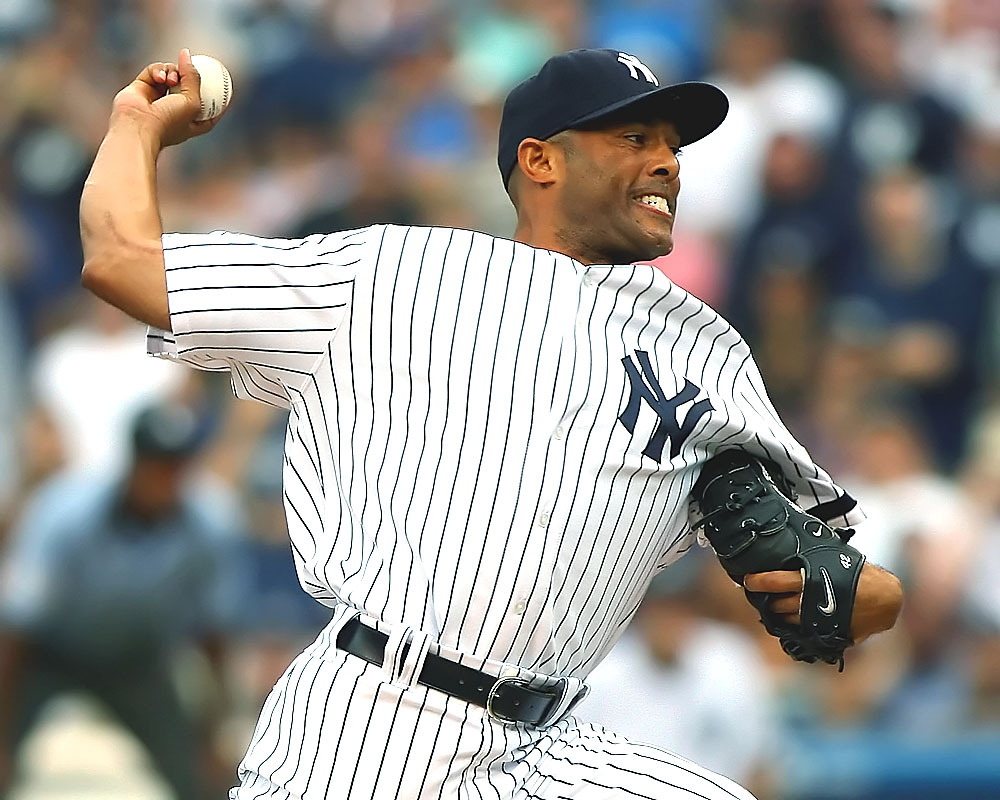
Mariano Rivera may well be the quietest speaking baseball superstar of all time, but that’s OK. His greatness isn’t measured by words, but by the action results of his brilliant arm and his incredible ability to get batters out with one pitch that simply changes speeds and almost always goes exactly where Rivera wants it to go.

At age 41 and now pitching into his 17th season as a big leaguer, Rivera will be playing in his 1,000th game with his next appearance. In 20 innings of work in 2011, Mo has added another 13 save to his career total and he done it with a 1.80 ERA that has now dropped his career ERA mark to 2.22, good enough for 11th place in the top twenty lowest ERA crowd. Everyone else on this list played in the earlier decades of the 20th century, with the guy just above Rivera being Walter Johnson himself.

Earned Run Average 
All Time Leaders‘Top 20’
Name ERA (Raw ERA) Rank
Ed Walsh 1.82 (1.816) 1
Addie Joss 1.89 (1.887) 2
Jim Devlin 1.89 (1.890) 3
Jack Pfiester 2.02 (2.024) 4
Joe Wood 2.03 (2.030) 5
Mordecai Brown 2.06 (2.057) 6
John Ward 2.10 (2.102) 7
Christy Mathewson 2.13 (2.133) 8
Rube Waddell 2.16 (2.161) 9
Walter Johnson 2.17 (2.167) 10
Mariano Rivera 2.22 (5/19/11) 11
Jake Weimer 2.23 (2.231 12
Orval Overall 2.23 (2.233) 13
Tommy Bond 2.25 (2.254) 14
Will White 2.28 (2.276) 15
Babe Ruth 2.28 (2.277) 16
Ed Reulbach 2.28 (2.284) 17
Jim Scott 2.30 (2.298) 18
Red Russell 2.33 (2.334) 19
Andy Coakley 2.35 (2.350) 20

Mariano’s 13 saves from this year alone have elevated his career total to 572 – or 29 behind recently retired career saves leader Trevor Hoffman. Unless Rivera’s arm suddenly ages, or falls off, he most likely will surpass Hoffman’s 601 career saves total before the battle of the day is done.

I’ve been a Mariano Rivera fan, if not a Yankees fan, from early in his career. “Mo”, “Super Mariano”, and “The Sandman’ were all almost the inevitable nicknames for Rivera during his generation in the sun, although, he held no exclusivity on that Sandman tag. Houston fans bestowed it upon closer Billy Wagner, as well. The popularity of “Enter Sandman” by Metallica cast a broad blanket over the minds and eyes of baseball fans everywhere during the late 1990s and early 21st century. Apparently everybody who heard it thought they were the only members of the audience.

It doesn’t matter. Greatness by any name spells the same. I think Will Shakespeare said something far more eloquently about roses and it’s too bad we don’t have old Will here today to help characterize the incredible career of the great Mariano Rivera, a fellow who s well on his way to a first ballot shot into the Baseball Hall of Fame someday.

How about either “The Prince of Panama” or “The Panamanian Prince” as tags for Mariano Rivera? Have either of those been offered,? I haven’t heard them, but they work, as would “The Duke of Deception” or “The Swami of Swerve.”

I’d better stop on those offerings. I need to save a few brain cells for the remainder of a very long day.

Killebrew: Another Good Man Gone

May 18, 2011

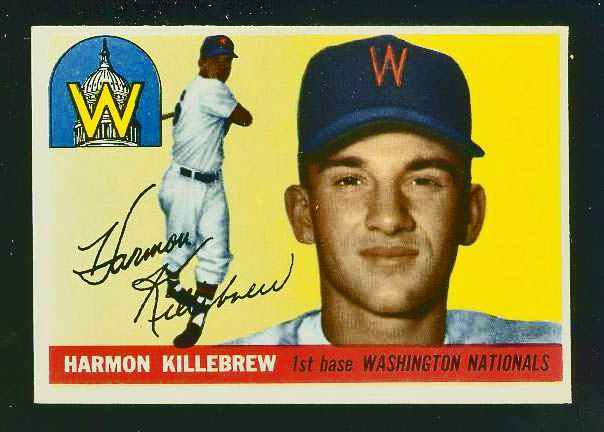
11 Times an All Star; 573 HR in 22 years; Hall of Fame in 1984.

As you’ve no doubt heard by now, Harmon Killebrew died yesterday in a Scottsdale, Arizona hospice of cancer at the age of 74. In giving up another great one in its recent stream of losses among the Hall of Fame living, baseball gave up, perhaps, one of its most dedicated special singular talent players of all time.

My own partiality to Harmon Killebrew goes back to the fact that he came of age in the big leagues at just about the same time I was growing into my own adult world beyond kid baseball life. Killebrew was special in many ways, but one thing has stuck out in my own recognition and now memory of him through this very moment. Back when my generation was growing up, and we were also being told, ad nauseum, to pick out something we wanted to do in life and go do it, Harmon Killebrew was living those words.

Killebrew broke into the big leagues with the Washington Senators in 1954 at the age of 18. Except for one last limited-use  season as a Kansas City Royal in 1975, he spent his entire big league career as a fantastic slugger for the Washington Senators (7 years) and Minnesota Twins (14 years) franchise, anchoring both as the last great Senator and the first great Twin. Along the way, “the man they called ‘The Killer’ banged out 573 home runs, good enough for 11th place on the all time big league career home run list.

Coming to the Senators almost straight from high school in Payette, Idaho, Killebrew recognized early that he possessed an ability to hit a baseball a very long way – and longer than most other players he encountered. As such, hitting baseballs a long way became his early passion, the thing he wanted to do in life.

It was the sort of thing that paid the big bucks, if a player had both the passion for it and the matching ability to do it – and Harmon Killebrew did. By his own admission, he never gave much thought to batting average, but he never forgot either what his bosses paid him to do. Hitting the very long ball into space when he did catch up with a pitch was both his everyday meal ticket and, based upon the spectacular results of his effort over time, his eventual passport in 1984 to the Baseball Hall of Fame.

Home Runs 
All Time Leaders‘Top 11 Players’
Name Home Runs Rank
Barry Bonds 762 1
Hank Aaron 755 2
Babe Ruth 714 3
Willie Mays 660 4
Ken Griffey 630 5
Alex Rodriguez 613 6
Sammy Sosa 609 7
Jim Thome 589 8
Frank Robinson 586 9
Mark McGwire 583 10
Harmon Killebrew 573 11

Killebrew’s .256 lifetime batting average is testimony to his lack of concern for hitting percentage. Had he tried to become a placement or Punch and Judy style hitter for the sake of keeping defenses honest and helping his batting average to climb, he knew from early on that it would not have been worth the damage to his power production – and power was not merely measured by his homer total alone. Killebrew also concluded his career with 1,584 runs batted in – and driving runners across the home plate pay station is what owners really pay their slugging stars  to do. It also doesn’t hurt if those home runs are Goliath-level works of power art that leave the ballpark on jaw-dropping arches into the wild blue yonder.

Oh, Harmon, since you’re up there in Heaven now, would you mind taking batting practice over Houston today, and maybe for a few weeks to come? We could use the rain produced by the thunder of your bat.