Posts Tagged ‘Houston’

Speaking of Fingers…

November 18, 2009

"Have a Nice Day, Buffalo Bills!"

What was Bud Adams thinking last Sunday in Nashville?

His NFL club, the Tennessee Titans, had just dispatched the visiting Buffalo Bills, 41-17, for their third win in a row and all looked well for America’s favorite hillbilly team. Why oh why then did the 86-year old Budman suddenly feel the need to rise from his suite box seat and issue the visiting Bills the universally unpleasant one-finger salute goodbye, serially, and with both hands?

NFL Commissioner Roger Goodell just happened to be present in Nashville for the game and had spent most of his time on Sunday watching it with Adams from his private suite box on the upper level of the stadium. Goodell had left Adams in the 4th quarter to smooze a little time away with fans before game’s end. He did not see the actual salute performance, but he sure got a load of the images made available to him later from some fan in the lower deck’s cell phone camera.

As a result of all these circumstances, Commissioner Goodell quickly levied a fine upon Titans owner Bud Adams of $250,000. Wow! That works out to a quarter million dollars, or, breaking it down, $125,000 a finger! The fine also derived an apology from Adams to everyone in the conceivably offended universe as he waxed away also on the notion that his actions were among those that never should have happened in the first place.

Gee whiz! You think so, Bud? ‘Cause if you do, that’s a monumental piece of insight all onto itself! It never should have happened in the first place, but what the heck. You’re only 86 years old, going on 87. You’ve got plenty of time to reckon with the basic questions that face us all on the spiritual plane. May as well get cranked with anger and spite in the meanwhile and either curse or one-finger salute someone else’s football team for losing to or beating up on your own club while there’s still plenty of time to waste.

The one-finger salute is a lot like drinking too much. In fact, those two human events often go hand-in-hand down the aisle of violent promise. They are things some people do to punctuate both the thrill of victory and the agony of defeat in the face of some identified enemy. Even though they seem to be very different actions, one arising from celebration and the other emanating from consternation, they are really the same thing – and they each are expressions of violence. One salute says “take this for what I did to you” and the other says “take this for what you did to me.” Both are put forth like bulletin board material to further inspire the anger and desire for revenge that will dominate our next meeting on the field of battle or play.

Sometimes the one-finger salute comes in the form of a few more muscles being put into play then the few it takes to raise the big digit on either hand. Bud Adams knows about that kind of salute too. Back in the mid-1990s, when the city refused to finance Adams’ plan for a new stadium downtown to house his Houston Oilers, Bud gave us all a much more painful version of the one-finger salute. He took his NFL team out of Houston and turned them into the Tennessee Titans.

Keep that in mind when the Titans come to town next Monday night to play our Houston Texans, folks. – It’s time to salute Bud and the boys again.

"When you're smilin' - when you're smilin' - the whole world smiles at you!"

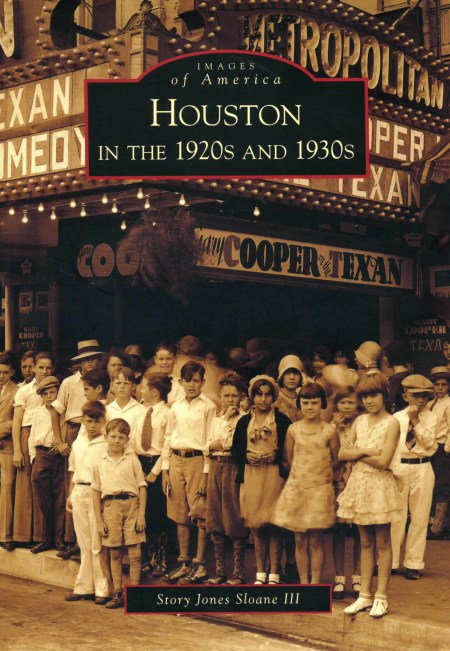
“Houston in the 1920s and 1930s” Book is Great!

October 23, 2009

Sloane HoustonSome of you know about the Sloane Family. Their photographc gallery at 7616 Fondren in Houston has been offering the visual history of early 20th century Houston for quite a few years through singular prints and now – Story Sloane III has put together, in words and pictures, and through Arcadia Publishing Company, one of the finest quick views of life in Houston during the 1920s and 1930s that’s ever been produced.

The book is available at Brazos Bookstore on Bissonnet in the Rice University area and most probably at the other local chain bookstores too. If you wish to order a signed copy, give Sloane’s a call (713-782-5011) or check them out at their website, http://www.sloanegallery.com/ .

The book offers many photos I’ve never seen anywhere else, and on such chaptered subjects as Main Street; Home Life; Working for a Living; Houstonians at Play; Community Life; Getting Around Town; and Oil.

Oil? Yeah! Remember? We used to be an oil town, but this book isn’t simply another glorification of the oil capitol of the world days. This book features the work of Calvin Wheat and other professional photographers on all aspects of  Houston life. As an amateur photographer, I am figuratively blown away by the composition and high technical quality of these works.

I won’t attempt to show you any of the interior shots here due to copyright considerations, but this cover photo of all these school children standing in front of the old Metropolitan Theatre on Main near Lamar will give you a peek at what’s inside – where it simply gets better and better. Sloane even features some photos of our old Houston Buffs Texas League baseball club that even I, a relentless Buffs artifact collector,  have never seen. For me, finding any new view on the old Buffs is sort of like finding a new time warp crack trail into full escape into the era depicted. I just love the heck out of that experience of the soul – and I’m also mindful of the fact that old photographs are our time machine into history. – Wouldn’t it have been great if, at least one spirited citizen had been able to take and use a digital camera at San Jacinto in 1836 – or, say,  at Gettysburg in 1863? How about a small digital video camera too? While we’re lost in that dream doorway of what might have been, let’s not forget the history of sound, either.

Fortunately, the Sloanes were collecting photos and valuing the history of “our town” for most of the “coming of age” era  in 20th century visual-image-capture technology.  If you also like this sort of thing, this little book will light up the sky in the park areas of your imagination too. At $21.99, I think  it’s well worth the price.

Ode to Prince’s Drive Inn

October 1, 2009

PRINCES 02

PRINCES 01

When the long day’s done, when nostalgia seaps through, there’s still time left, for a burger and brew, at the one place in town, that’s pulled Houston  through – the Depression, the wars, and the freeways.

“Fit for a King,” don’t mean a thing, if it ain’t got that fling, that original sauce bling, that seeded bun sting, that all crisply tells us, “you’re eating at Prince’s tonight!”

 From 1934, through the ’80s or so, your good taste in burgers, was all we could know, of a meal that was laid out, quite perfectly so,  in a kitchen just this side of heaven. 

With rings on the side, as the onions were fried, you charmed us with carhops and Elvis. – We flocked to your gate, and we always stayed late, but the smooching was hard on the pelvis. 

On South Main you were royal, to your subjects so loyal, and you soon built a thousand locations. – Then hitting them all, ‘came our gist of it all, as our favorite on-the-go avocation. 

You closed down for a while, but you came back in style, with a plan for the new generation.  No carhops this time, just burgers sublime, and a dab of the ’50s, in sweet spiritual decoration.  

And now that you’re back, with a storefront or two, it’s still nice to taste, a great burger from you, but I still have to ask, ‘fore the clock on me, gently, I hope – just slips me away too:

“Who is that beautiful girl whose carhop cutout figure now hangs on the wall of your Briar Forest place? I remember her from the old days, but I never got her name!”

Houston: A Grocery Store Memoir.

September 26, 2009

Haenel's Groceries

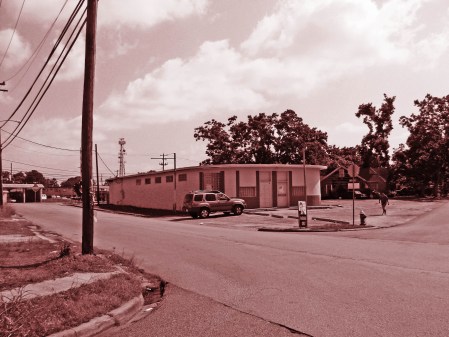
Once upon a time, about 1950, this now fairly abandoned site at the corner of Myrtle and Redwood in Pecan Park thrived as Haenel’s Grocieries, one of the many small family-run grocery stores that threaded their way all over the Houston East End. In fact, Haenel’s was located directly across the street on the Redwood side from Graves’ Groceries. There was room enough for both little stores, in spite of the nearby competitive presence of larger grocers, like Weingarten’s, Henke & Pillot, Piggily Wiggiily, A&P, and Minimax.

Right around the corner from Haenel’s and Graves was the Griggs Road Butcher Shop, where they sold only fresh cuts of meat from beef cattle, chickens, and pigs. You could also buy fish there, sometimes, but special fish markets stores also took care of those items for most people.

Saturday was the big day for family shopping back in that era. Most people didn’t have time to shop fully during the week because of work schedules and limited shopping hours. Most stores opened from 8 AM to 8 PM. Monday through Saturday, with all stores being closed on Sundays. Some of the smaller stores, like Haenel’s, even shut down at 6 PM, Monday through Thursday. So, since most families only had one car that dad used for work during the week, and mom was busy watching kids and fixing meals during the week, most of the family shopping for a whole week pushed toward Friday nights and, especially, all day Saturday.

As a veteran checker, sacker, and stocker at the A&P on Lawndale near 75th, all I can tell you is that there was nothing quite like a Saturday morning at the grocery store back in 1954-56 era I worked the trade. In so many ways, it was the most enjoyable job I ever had – and also the most challenging.

Starting pay back then was  50¢ per hour as a “package boy” (sacker) – with a raise to 75¢ possible upon one’s promotion to checker. That wasn’t bad for the times. Some customers tipped 25-50¢ for help with a heavy load of groceries. What was bad for us was the lesson in economics we faced with promotion. By getting a raise to checker status, we also lost money by losing the opportunity for tips.

One Saturday morning, as I was contemplating my lost income to my checker promotion, an elderly woman customer stopped me as I was walking away from my register on break. It was a case of best/worst timing for the question she shouted my way. “Young man,” screetched the woman, “can you tell me where this store keeps its all day suckers?”

“Well, you’re talking to one of them,” I replied.

Unfortunately, our store manager in 1955-56, Mr. Wright was coming around the aisle just in time to hear both parts of our brief exchange. I received a severe lecture for trying to be funny on the job and summarily ordered to finish the afternoon “mopping the slop” all the rest of the day at the freight dock behind the store. At the end of the day, Mr. Wright wanted to know if I still thought that my  grocery store job was a place for funny business. What could I say? Short of “take this job and shove it,” there was nothing funny about “mopping the slop” for several hours in 100 degree temperatures, but I was too stubborn to let Mr. Wright run me off from a job I sorely needed. And I also saw his humorless point and learned more about working with uptight, authoritarian bosses at the A&P than I would ever see anywhere else. It’s also why I’ve spent most of my adult life, as much as possible, self-employed.

Nearing Christmas of 1954, I convinced my previous A&P manager, Mr. Dodgen, that some seasonal music owuld help sales by putting customers in the right buying spirit. Mr. Dodgen allowed me to bring down a record player and put on a little Bing Crosby Christmas album that belonged to my parents. It played very well over the loudspeaker system, bringing praise to Mr. Dodgen from customers – and looks of managerical approval to me. I thought, “Oh Boy! I’ve finally done something that’s going to help me around here!”

Then, one day, Mr. Dodgen had to be out of the store for a district meeting. We used the opportunity to remove Bing Crosby and started playing Little Richard at the A&P. When Mr. Dodgen came back earlier than expected, rock and roll was still blasting away, but the customers didn’t seem to mind. In fact, some of the younger mothers were even bopping in the aisles – and our little adolescent task force didn’t mind that action at all.

Mr. Dodgen was no music expert. If he were, he wouldn’t been down at the A&P, approving checks, but even he knew that some change had taken place in his absence.

“That doesn’t sound like Christms music to me!” Mr. Dodgen said.

“”No, but look at how happy the customers are, sir!” I replied.

Mr. Dodgen looked, smiled, and walked away. After that time, it didn’t matter what we played. We had music in the store. And I’ve always guessed that we may have been the first in Houston to do so.

The store Christmas party of 1954 couldn’t have happened in 2009. Once the store closed, several days before Christmas, all of us employees were invited to stay and help celebrate the season with Mr. Dodgen and our other bosses. Beer and hard liquor was available to everyone, including those of us who were only 16.

Well, everyone ended up grossly overserved and, for me, it was my first experience with having way too much to drink. It was also my first opportunity to slide into a level of thinking that can only come from alcohol or similar mind-altering chemicals. We decided that it would be a good idea to take an unopened bottle of Jim Beam bourbon and stuff it into one of the turkeys we had on sale at the meat counter. My companions and I carried out this immature act – and then spent the next two days waiting to see who actually ended up purchasing our “bonus surprise bird.”

Someone did buy the loaded bird, but we failed to see it happen. Then we started worrying that such a customer might actually bring the loaded bird back to the A&P and start complaining. That didn’t happen either. We never knew who got the bird. We just knew that we were lucky. Had it become public, a lot us could have gotten the bird from A&P. As I matured, I always worried that we may have passed on the loaded bird to someone who was looking for a sign from Heaven that they needed to stop drinking. Hell! What we passed on was the Devil’s green light. All I can say now is – I’m sorry for any real harm we may have caused by our immaturity.

I still loved the camaraderie with my co-workers – and I loved my favorite customers. Fifty-five years later, I still see their faces in the check-out line of my mind, as they waited for me to manually ring up their groceries and make change, using little more than my ability to do addition and subtraction in my head. Hey! I had to have something going for me! Without mathematical accuracy, I wouldn’t have been able to keep my job.

I might have survived at A&P without change, anyway, had Mr. Dodgen remained our manager, but not with Mr. Wright around. Mr. Wright needed to know that everyone at A&P understood that there’s nothing funny or enjoyable about selling groceries. I didn’t get that lesson, but I did learn a lot about taking personal responsibility for my behavior from Mr. Wright. He turned out to be a pretty cool old school guy afer all.

Buff Stadium: The Fair Maid Moon!

September 24, 2009

Fair Maid 001

Some of us called it “The Fair Maid Moon.”  By evening game time at Buff Stadium during the Post World War II last days of Houston’s minor league history (1946-61), the old bread bakery sign hung faithfully, and lovingly, and hopefully too, in the summer night sky. Suspended in full view of Buff fans, and hanging like an ascending astral body, just above the left center field fence line, and even though it never actually moved, the neon-lighted Fair Maid sign always seemed ready to take off in celebration of the Buffs  across the Houston evening air. What is sent to us in compensation for its own lack of movement was a fragrance usually reserved for the baker man himself.  The aroma of freshly baking bread came wafting into the stands at Buff Stadium like clockwork, peaking appetites, and probably boosting hot dog and hamburger sales many times over President Allen Russell’s wildest dreams.

Fair Maid 004

The photo that yields this typical glimpse of a night at Buff Stadium reveals through the above crop-shot that that season  of its taking had be wither 1956 or 1957. Those were the only two times that the league included Austin, Dallas, Fort Worth, Houston, Oklahoma City, San Antonio, Shreveport, and Tulsa. From a larger copy of this shot than I am able to include here, I can give you this rundown on the three line scores on display: Dallas @ San Antonio, San Antonio leads 1-0 through 6 innings; Fort Worth @ Austin, Austin leads 7-2 through 3 innings; Tulsa @ Shreveport, game is tied 4-4 though 4 1/2 innings. That leaves Oklahoma City, playing in the field, against Houston, the home club. I can’t tell you the score because we cannot see the Buff Stadium home scoreboard in far left field.

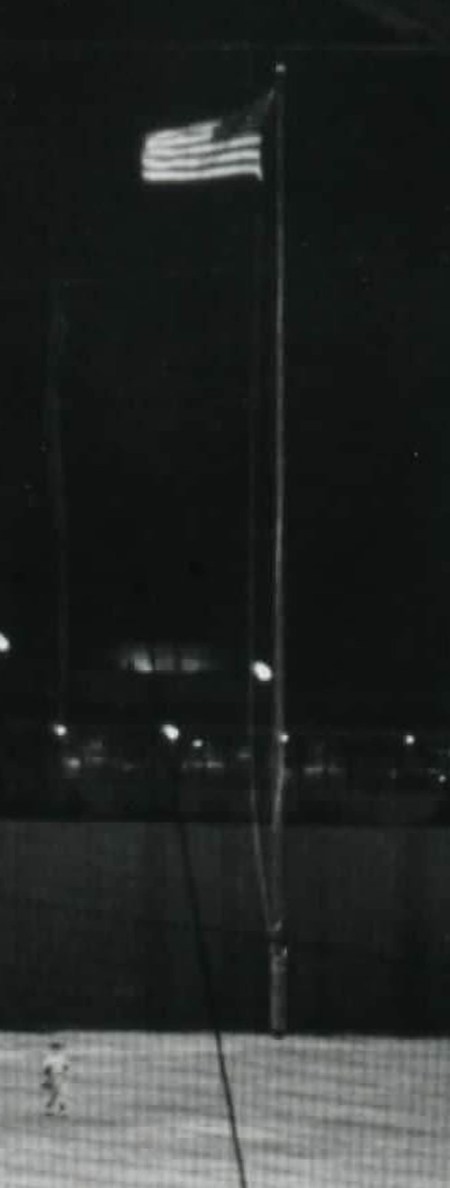
Fair Maid 005 Dead center field in Buff Stadium was 424 feet from home plate. and the outfield pasture also included a free-standing flagpole of some considerable similarity to the one that now resides in Minute Maid Park. It was located about five feet in from the outer wall, but there was no hill to climb.

Note the prevailing wind that typically blew the flag from right to left as the breeze came across the right field fence from the gulf.

Fair Maid 006

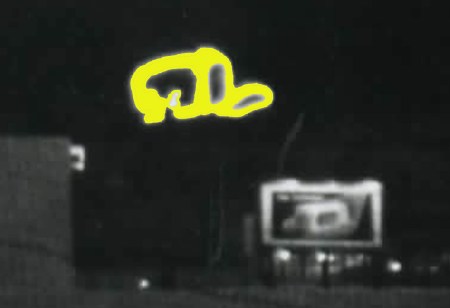
That’s the Fair Maid Moon close up, hanging low in the sky behind Buff Stadium from its perch above the Fair Maid Bakery, a long two blocks north of the ballpark at the corner of Leeland and Cullen and burning much brighter than its product image on the billboard to its right. The happy face of an old friend, even in a photograph, is a mighty comfort that peels away so much loss over time. I thank you for being there again today, old friend.

Good night again, Fair Maid Moon, wherever you now are. The memory of your fragrance tells us, heaven’s not far. – Buff Stadium and Heaven, they were once and always, and forevermore they remain the same, the place we once both planted and harvested the seeds and fruits of our fondest baseball dreams about hope and possibility in a once more beautiful world.

Bob Boyd: Houston’s Jackie Robinson.

September 18, 2009

BoydBob2625.72_HS_NBL When Cecil Cooper was named manager of the Houston Astros in late 2007, the fact that he’s black was not covered by the current media as even an interesting footnote to the fact that it then had been a little more than fifty-three years since Houston saw it’s first black baseball player take the field to play for a racially integrated Houston sports team. – Think about it. From the time Houston “welcomed” it’s first black baseball player to the time it saw its first black manager in baseball, fifty-three years and three months had passed.

Thursday, May 27, 1954 shall forever remain a special date in my personal memories of the Houston Buffs. That was the date that Bob “The Rope” Boyd made his debut as a first baseman for the Houston Buffs in old Buff Stadium. (They called it Busch Stadium by then, but I stood among those who never bought into the name change when August Busch bought the St. Louis Cardinals and all their organizational holdings, including the Houston Buffs and the ballpark, a year earlier in 1953.)

Buffs General Manager Art Routzong had purchased the contract of Boyd from the Chicago White Sox about a week earlier than his debut in an effort to help the club make their eventually successful run at the 1954 Texas League championship. That was quite a club, one that also featured a rising future Cardinal star at third base named Ken Boyer.

Bob Boyd would prove to be the hitting and defensive specialist that the club needed to anchor the right side of the Buffs infield as strongly as young Boyer held down the left side. Boyd hit .321 for the ’54 season and he followed that production with the ’55 Buffs by posting a .309 mark.

It all started on a night of great change in the face of Houston sports.

I was drawn to the ballpark that 1954 twilight eve as a 16-year old kid who wanted to see Bob Boyd break the color line and, hopefully, have a good first night for the Houston Buffs. TheBob Boyd 003 fact that I had just started to drive by that time and needed a good excuse to borrow the family car also factored into the equation. When I borrowed the car, I told my dad why I needed to be there at the ballpark that night. I wanted to see Bob Boyd play for the Buffs as the man who broke the color line in Houston.
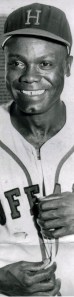
Although I had grown up in segregated Houston, I was blessed with parents who taught love and acceptance over hate, even though they also had been raised with that blind acceptance of segregation as the way of life. Whatever it was, my parents held beliefs that left the door open for me to actively question the unfairness of segregation and to also embrace Jackie Robinson as a hero when he broke the big league color line in 1947.

No one in the family or the neighborhood wanted to go with me that night, so I went alone. I also bought a good ticket on the first base side with a little money I had earned that week from my after-school job at the A&P grocery store. I also had to buy a dollar’s worth of gas as my rental on the use of dad’s car.

There were only about 5,000 fans at the game that night and almost half of them were the blacks who were then still forced to sit separately in the “colored section” bleachers down the right field line.

The atmosphere was contrasting and electric. The so-called “colored section” fans were rocking from the earliest moment that Bob Boyd first appeared on the field in his glaringly white and clean home Houston Buffs uniform to take infield with the club. While we felt the rumble of all the foot stomping that was going on in the “colored section,” only a few of us white fans stood to show our support with the understated and reserved applause that we white people always do best at times when more raw-boned enthusiasm would have been better.

“Enthusiasm” evened into a loud foot-stomping roar from all parts of Buff Stadium when Bob Boyd finally came to bat in the second inning for his first trip to the plate as a Houston Buff and promptly laced a rope-lined triple off the right field wall. Even those whites who had been sitting on their wary haunches prior to the game rose to cheer for Bob Boyd and his first contributions to a Buffs victory, and, whether they realized it or not, to cheer for another hole in the overt face of segregation in Houston.

Here’s a taste of how iconic sports writer Clark Nealon covered it the next morning in the Houston Post:

“Bob Boyd Sparkles in Debut As Buffs Wallop Sports, 11-4”

by Clark Nealon, Post Sports Editor

“Bob Boyd, the first Negro in the history of the Houston club, made an impressive debut Thursday night.

“The former Chicago White Sox player banged a triple and a double and drove home two runs as the Buffs pounded the Shreveport Sports, 11-4, and Willard Schmidt recorded his sixth victory without a defeat.

“Before one of the largest gatherings of the year – 5.006 paid including 2,297 Negroes – the Buffs started like they were going to fall flat on their faces again, got back in the ball game on bases on balls, then sprinted away with some solid hitting that featured Dick Rand, Kenny Boyer, and Boyd.

“Rand singled home the two go ahead runs in the first, added another later. Boyer tripled with the bases load for three runs batted in and Boyd tripled in a run in the second and doubled in another to start a five-run outburst in the fourth that settled the issue. …

” … Boyd was the center of attention Thursday night, got the wild acclaim of Negro fans, and the plaudits of all for his two safeties and blazing speed on the bases.”

Yes Sir! Yes Maam! May 27, 1954 was a big day in Houston baseball, Houston sports in general, and a moment of positive change in local cultural history. So was Tuesday, August 28,Bob Boyd 002 2007, the day that Cecil Cooper made his debut as a manager for the Houston Astros, a day for change, but it had nothing to do with race. Cecil just didn’t get here quite as loudly and, for reasons that have nothing to do with race, he also may leave soon, just as quietly, but maybe not. Maybe the Astros won’t unload all of the 2009 Astros’ failures on the back of their skipper.
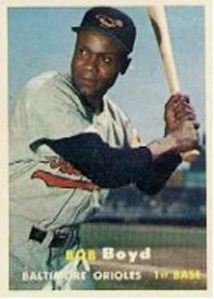
In Houston baseball and general sports history, there was only one Bob Boyd. By the time professional football and basketball arrived here, integration was already a part of the total team package. The job of proving that race should not be a factor never had to ride again on the back of one individual player. Bob Boyd already had unlocked, opened, and oiled that gate for all who have come after him – and he did it all back in 1954.

After the 1955 Buffs season, Boyd’s performance at AA Houston earned him a second shot at the big leagues with the Baltimore Orioles. Bob had made a promising start with the Chicago White Sox (1951, 1953-54), but now. after Houston, the now 29-year old lefthanded first bagger seemed primed for a really fine major league career.

In 1956, it was time for Bob Boyd to shine in the big leagues, indeed!

Bob Boyd roped off full season batting averages of .311, .318, and .309 in his first three Oriole seasons (1956-58). His 1959 full season average dropped to .265, but he bounced back in 1960 to hit .317 in 71 games for Baltimore. Boyd played one more limited time season in 1961 for Kansas City and Milwaukee, completing his 693-game big league career with a total batting average of .293 with 19 home runs over nine seasons. Bob Boyd played three more seasons in the minors after 1961 (1962-64) and then retired completely as an active player. Interestingly too, most of Boyd’s last three  years were spent in the minor league farm system of the then baby new National League Houston Colt .45s at San Antonio and Oklahoma City.
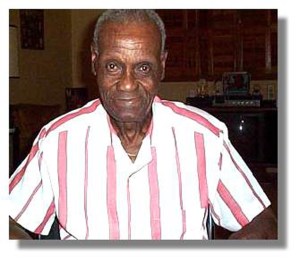
Bob Boyd 001 Following his far better than average baseball career, Bob Boyd returned to his home in Wichita, Kansas, where he worked without complaint as a bus driver until he reached retirement age. Bob died in Wichita at age 84 on September 27, 2004. Today, the man who started his career with the Memphis Red Sox (1947-49) of the Negro Leagues is honored as a member of the Negro League Hall of Fame and also the National Baseball Congress Hall of Fame. Hopefully, we shall always continue to remember and honor Bob Boyd and all others who took the first step toward changing things that needed to change. Bob Boyd did his job with grace, dignity, and tremendously unignorable ability.

Former Buffs – Movin’ On Up!

September 7, 2009

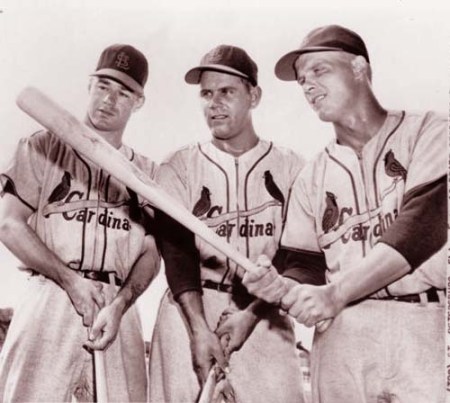
Three BuffsThe goal of every young and upcoming Houston Buff from 1923 through 1958 was to play well enough in the Texas League to either move up the following season to AAA ball, or even better, to do so well that that they went straight on up to the roster of the St. Louis Cardinals. I’m bracketing the era as 1923 through 1958 for one simple reason: That’s the time period in Buffs history in which the Cardinals either controlled or owned the futures of all ballplayers who passed through Houston professional baseball.
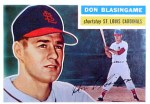
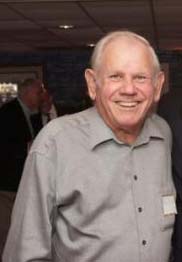
In our featured photo, shortstop Don Blasingame (far left), outfielder Russell Rac (center), and outfielder Rip Repulski (far right) were certainly no variants from that common aspirational goal. In this picture, from what most likely is the spring of 1955, the three eager Buffs shown here pause together for their own “raring-to-go” pictorial on baseball ambition. Two of the three young men shown here would play on to see that dream come true.

Three Buffs BlasingameThree Buffs Repulski

Don Blasingame enjoyed a 12-year MLB career (1955-66) as a middle infielder for the the Cardinals, Giants, Reds, Senators, and Athletics, one that was highlighted by a 1961 World Series appearance with the Reds. Rip Repulski hit .269 with 106 homers over nine seasons (1953-61) with the Cardinals, Phillies, Dodgers, and Red Sox.

Three Buffs Rac2 The third man, Russell Rac, never got a single time at bat in the big leagues in spite of some pretty good hitting and fielding success with the Buffs in seven of his eleven season (1948-58) all minor league career. He began in Houston in 1948 – and he left as a Buff ten years later with a .312 season average, 12 homers, and 71 runs batted in for 1958. Few, if any, other players spent as many seasons as an active member of the Houston Buffs roster. Russell Rac went back to Galveston and into business from baseball following the 1958 season, where he continues to live in retirement as a man whose heart still belongs to baseball.
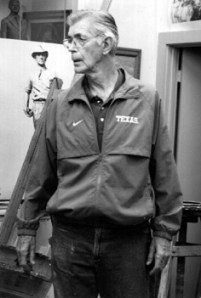
Once upon a time, Russell Rac also had a moment in Latin American winter ball that few hitters ever have, anywhere. He hit four home runs in a single game. I know he did because he told me he did once at a baseball dinner reception and I have no reason to doubt the word of this very good man. If I can ever recapture the details of where, when, and for whom he performed this rarest of baseball feats, I promise to report the whole story here on WordPress.Com in a fresh article about what had to be the most amazing day in the career of former Houston Buff Russell Rac.

Russell Rac was certainly good enough over time to have earned an opportunity to play in the big leagues, but the breaks simply weren’t there for him in the crowded talent pipeline that once was the St. Louis Cardinals farm system – and during an era in which there were only sixteen major league clubs, not the thirty separate organizations that exist today.

Many of the older players who remain with us from the 1940s and 1950s will tell you. – You had be both good and lucky to make it to the big leagues back in the day. – You also had to play hurt. A former Houston Buff, the late Jim Basso, once put it to me this way: “You take a day off to heal a sore arm or a leg cramp back then and some other guy’s going to be wearing your jock strap and sitting at your locker when you come back!”

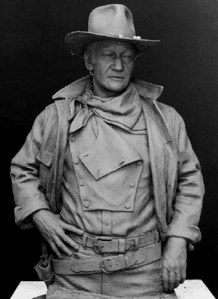
Another former player from the Dodger organization, Larry (now Lawrence) Ludtke, told me the same thing in these words: “I pitched for the big club down in Florida until my arm fell off. When it finally didn’t heal, I just had to look for another line of work. That’s how things were back then. You tell them your arm hurt back then and they would just look behind you in line to the next guy and holler out, ‘Next!’ ” Ludtke may have caught his career break right there in 1956 when a damaged arm forced him off the pitching mound and out of baseball. He went on from there to become Lawrence Ludtke, a Houston-based, world renowned sculptor.

Ludtke 2 Ludtke 1

God’s Grace through serendipity works things out in it’s own curious, but always amazing way – and that’s a truth that lands on all of us, not just professional baseball players. We only need open eyes to see it working in all things. If we don’t see it, it’s just because we are still in the painful lessons tunnel and haven’t yet come to the light on the other side of whatever the big obstacle mountain may be.

My Greatest Buff Stadium Memory: 1951.

September 4, 2009

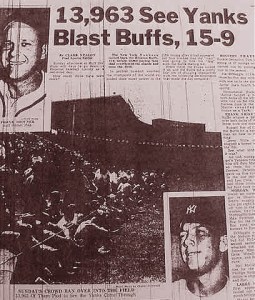
NYY@HOU 51 Sunday, April 8, 1951 was the date of the most memorable game I ever watched at old Buff Stadium – and it didn’t even count in the standings. It didn’t have to count, except in the heart of play we witnessed that day – and in the pictures it imprinted upon the minds of the record crowd of 13,963 fans who attended that hot and sunny spring afternoon exhbition game.
I was only 13 at the time, but I was already seriously interested in photography. Unfortunately, I never had the money needed to pay for film and development of my pictures down at Mading’s Drug Store. Had I been able to spring for those costs back then, I would be showing you the pictures I took with the family’s Kodak Brownie box camera – not just trying to tell you about the images that remain on my soul-mind’s eye to this day, some fifty-eight years later.

First let me offer some perspective on where these pictures were taken.

Because my dad felt we wouldn’t need to buy tickets in advance, he, my kid brother John, my best friend Billy Sanders, and I all ended up standing behind the section of left center field that had been roped off for all of the other SRO fans who thought like my dad, but that turned out to be way more than just OK. First of all, we caught space on a section that was directly on the rope in the front row. There were four or five rows of other fans standing behind us. My dad was only 5’6″ and the rest of us were kids. We’d have been lost any further back, but that’s not how it happened. Next, and most importantly, we were standing no more than about ninety feet away from Joe DiMaggio in center field, to our left – and Gene Woodling in left field, to our right. They were wearing their blousy gray road uniforms with the words “NEW YORK” arching in dark letters across the breast plates of their jerseys. I don’t have a physical picture of DiMaggio wearing his road uniform that day, but I’ll never forget the one that plays on forever in my mind. DiMaggio was as graceful as the writers always described him in The Sporting News.

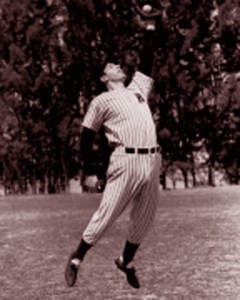
DIMAGGIO JOE 001I watched every single nuanced thing DiMaggio did in the field – and I loved it when he had to run over near us for a fly ball. He was close enough for us to hear the ball pop leather on the catch many times. I even thought we made eye contact once.

I watched the way Joe DiMaggio leaned in from center field prior to each pitch, getting some kind of instinctual/visual/baseball savvy gauge on which way he needed to lean in anticipation of a batted ball. Sometimes I would lean in with him and close my right eye. That closed eye blocked out my sight of Woodling and allowed me to pretend my way into the left field spot next to the great DiMaggio. And why not? There was a kid that was only five years older than me playing over in right field that day – an eighteen year old “phenom” from Oklahoma named Mickey Mantle. He was catching all the ink back then as the logical successor to Joe DiMaggio on the Yankee rosary chain of greatness.

Before the day was done, we would hear much more from both Mantle and DiMaggio. Mickey got the Yankees on the board for their first three runs by slamming a home run over our heads and over the double deck wall in left field in the fifth inning. Mantle nailed it off Buffs lefty starter Pete Mazar. Mantle’s blow almost swallowed the entire 4-0 Buff lead and with it, the player/fan delusion that the Buffs might actually defeat the World Champions that afternoon.

Not to be.

After Mantle’s reality blow landed, everybody else in the Yankees lineup began to hit Houston pitching awfully hard. We could have injured our necks watching balls fly over and into the walls that stood behind us that day. Joe DiMaggio also later homered with one on  in the ninth off  Buff reliever Lou Ciola.

buff Stadium 03

Wierd! And I learned about this later from dear friend and former slugger Jerry Witte. – After Joe DiMaggio’s top of the 9th inning homer, he sent the same home run bat over to the Buffs’ Jerry Witte as delivery on a promised gift. – Jerry Witte then immediately used it to hit a three-run homer to left for Houston in the bottom of the ninth. This may have been the only time in history, at least, at this level of professional baseball competition, that players from different teams have used the same physical bat to homer in the same inning of the same game they were playing against each other.

Mickey Mantle

Franks Shofner and Russell Rac also homered for the Buffs that day. Gil McDougald of the Yankees had three hits and teammates Johnny Mize, Yogi Berra, and Gene Woodling each had two bingles in the game. Mize’s hits included a double and Yogi’s production produced four runs batted in. The Buffs broke Yankee starter Tom Morgan’s streak of 27 innings pitched without giving up an earned run. The Yankees won the game, 15-9, and they out-hit the Buffs, 19-14.

I went home mildly disappointed that the Buffs had lost, but even at 13, I was proud of our boys for giving the fabled Yankees all they could handle. Wish I could say that I made a total return to reality by the time we got home, but I probably didn’t. You see, I’ll always remember that day as the game in which I sort of got to play left field next to DiMaggio in center – and Mantle in right. – In my most cherished baseball memory box, I even have the pictures to prove it.

Wilmer David Mizell: The Buff from Vinegar Bend!

September 2, 2009

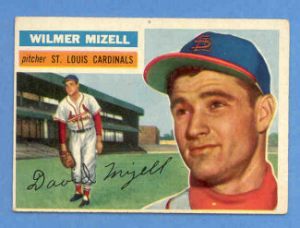
Mizell 003The young man they were already calling Vinegar Bend Mizell arrived in Houston with the Buffs  in the spring of 1951, heralded full bore as the lefthanded second coming of Dizzy Dean from twenty years earlier. Buff fans, sportswriters, club president Allen Russell, and the parent team St. Louis Cardinals all hoped the “Lil Abner Look-n-Sound-Alike” would turn out to be everything his growing legend screamed out that he was going to be: a sure-fire and consistent twenty game wins per season superstar and future Hall of Famer. Mizell wasn’t quite the young braggart that Dean had been, but he opened his mouth enough to create words that some writers ran to type as promises for use as future nails, should he fail to deliver.

Born in Leakesville, Mississippi on August 13, 1930, the still 20-year old new 1951 Houston Buffs pitching “phenom” claimed the nearby community of Vinegar Bend, Alabama as his hometown. When Cardinals superscout Buddy Lewis went to Vinegar Bend to sign Wilmer a couple of years earlier, he found him just where his mother said he was: literally up a creek in the nearby woods, killing squirrels from about sixty feet away with small thrown stones. “Wait a minte,” the observant Lewis quickly cried out, “I thought you were lefthanded! You’re killing those squirrels with righthanded throws! What’s the deal?

“I am lefthanded,” Mizell supposedly replied, “but I had to give up squirrel-huntin’ with my left hand. – It messes ’em up too bad!”

Lewis had Mizell’s signature on a Cardinals contract before nightfall.

Mizell’s first two seasons of minor league seasoning had marinated all the hope in his future to the “nth” degree. Pitching for Class D Albany, Georgia in 1949, Mizell posted an very impressive record of 12-3 with a lights out ERA of 1.98. His promotion to Class B Winston-Salem, NC in 1950 just pumped expectations all the higher, as Wilmer finished there with a record of 17-7 and an ERA of 2.48.

Mizell 001Mizell was critical to the success of Houston’s 1951 Texas League pennant drive, posting a 16-14 record that wasn’t altogether his fault on the short side of his wins to losses ratio. The club just had one of those seasons in which they often had trouble giving Mizell the offensive support he needed to take the win. His 1951 Earned Run Average of 1.96 still spoke volumes about his bright future as a prospect.

In appreciation of Mizell, and as a late season gate pump, Buffs President Allen Russell declared September 7, 1951 at Buff Stadium as “Vingear Bend Night.” Russell crowned the night such by picking up the bus travel and overnight room tab to bring all eighty residents of Vinegar Bend, Alabama to Houston to watch their favorite son pitch. Unfortunately, it turned out to be one of those nights I just mentioned. Mizell struck out 15 of the Shreveport Sports he faced that night, but he gave up three runs. Buff bats were absent and Mizell took the loss, 3-1.

A mysterious stomach ailment caused Mizell to be hospitalized for part of the playffs and all of the Dixie Series content with the Brimingham Barons. As a result, the Buffs lost to Brimingham, but Mizell was well and well on his majors the following spring.

The pattern from here flattened out for Mizell. He became a competent big league pitcher with a mediocre career record over nine seasons with the Cardinals (1952-53, 1956-60), the Pirates (1960-62), and the Mets (1962). He finished with  areer mark of 90 wins, 88 lossess, and an ERA of 3.85 – not the kind of stuff that gets any pitcher to Cooperstown.

After baseball, Vinegar Bend Mizell had a few surprises left up his sleeve. He ran for Congress from his adopted home state of North Carolina and was then elected for several terms as a Republican.

Mizell 002I had the good fortune of finally meeting Wilmer David Mizell when we were seated together at the same table at the banquet hall for the Spetember 1995 “Last Round Up of the Houston Buffs.” I had a chance to ask him if the squirrel hunting story were true. “Did you like the story?” Mizell asked me in return?” “Oh yeah! I always loved it!” I told Mizell. “In that case, it was absolutely true!” Mizell shot back with a wink and a smile.
“Here’s another one for you!” Mizell said, and I will leave you toady on this Mizell story note:

“The worst thing that happened to us back home in Vinegar Bend was the time we had the fire. – It started in the bathroom. – Fortunately, we were able to put it out before it reached the house.”

Sadly, we lost Wilmer Mizell early. At age 68,  he dropped dead of a heart atack on February 21, 1999 while visiting with friends in Kerrville, Texas. We miss you, Wilmer. And we miss all your funny true stories. We will also never forget how great you once were as a member of the 1951 Houston Buffs. Thanks for the memories.

6646 Japonica Street!

August 26, 2009

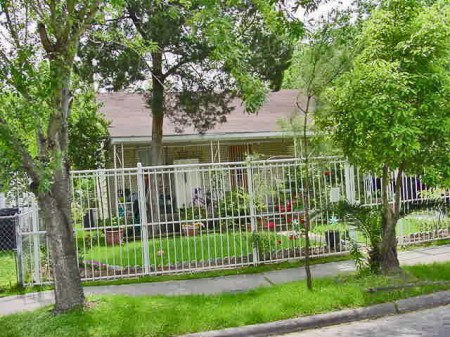
PPE 006 The front of our little house bore no resemblance to the one that now features a long porch across the street-side portion that faces north – nor did we possess or have any need for a museum quality fence across the front yard. – but it was home. From February 1945 to October 1958, from the time I was 7 and just finishing the first grade at Southmayd Elementery until the time I was a 20-year old junior and full-time working student at the University of Houston, “6646 Japonica” Street in Pecan Park, in the Houston East End, just east of the Gulf Freeway off the Griggs Road intersection, was the place where I hung both my baseball cap and my heart.  I lived there with two parents who stayed together 58 years in marriage until death took each of them just five weeks apart in 1994.
I grew up with a funny little red-headed brother named John, who was fours years my junior, and a cute little blonde-headed sister named Margie, who got here late enough to be my eleven year junior sibling in 1949. With the arrival of Margie, Dad added a third bedroom, but we still had to make do with only one bathroom, a one-car garage, and no air conditioning. That was OK. Up until about 1957, everybody in our part of town pretty much lived the same way. It didn’t really bother us because none of us knew any better. Besides, we all had attic fans that did a pretty good job of sucking hot air through every window in the house during the humid summer months. The fact this method of cooling also brought dust, allergens, and the smell of rotting figs mixed in with the aroma of the Champions Paper Mill perfume didn’t seem to get to us either.

We were tough old birds back in the day.

PPE 015

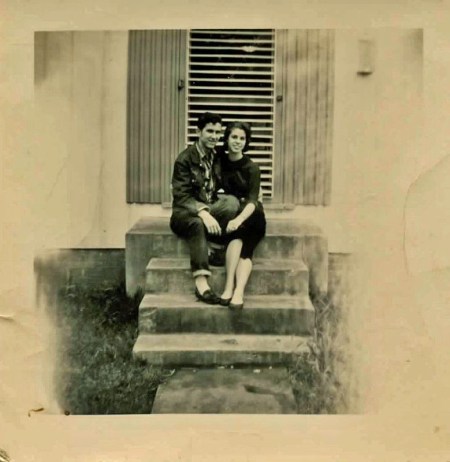
The picture of me sitting on our front porch with my 1957 girl friend will give you a little better idea of how our house actually looked back in the day. No frills. Most of the houses in our block were built back in 1939 or 1940. We were the second occupants of the house when we moved to Pecan Park from our rental house on Oxford Street in the Heights back in 1945. My dad had worked as a welder at the Brown Shipyard during World War II. We moved to the East End after he took a post-war job as Parts Manager for the Jess Allen Chrysler-Plymouth dealership on Harrisburg.

Dad had owned his own Dodge-Plymouth dealership in our original hometown of Beeville, Texas prior to the war and was hoping to work his way back to that kind of situation again. We didn’t care what he did. He was our dad and we loved him. He was the dad who played catch with us after he came home from work. He was the dad who introduced us to Houston Buffs baseball at old Buff Stadium in 1947. He was the guy we could count on as a guide to how we handled responsibility, as was Mom the lady we could depend upon to help us dream of a world that was bigger than the little house on Japonica Street.

The irony is that neither Mom nor Dad seemed to really understand that what they were giving to us at 6646 Japonica was already bigger and more important than anything else we were going to find out there in the larger world of greater achievement and attainment. All of us grew up and moved away from Pecan Park, but my heart never really left the place. Everything I am and everything I value started there. And it never left me.

My dad told me that he bought “6646 Japonica” for something like $5,000 back in 1945. Today it’s material and locational worth is valued by the Harris County Appraisal District at close to $88,000.  As for me, I couldn’t even put a dollar mark on what that little site is worth to the value of my life.

All I can say is, “Long live Pecan Park! And long live the champion eagle heart spirit that stills soars the skies of that special place – and all the other special ‘6646 Japonica’ addresses in history where we each got launched, one way or another, for better or worse, on the path of becoming the persons we are today.”

If it was a good trip, we need to celebrate it. If it wasn’t so easy, we need to make our peace with it. Both are important to moving on.