Posts Tagged ‘Houston Astros’

The Trouble with Oswalt’s Trade Request.

May 22, 2010

Astros Ace Roy Oswalt Turns 33 on Aug. 29th.

If you look at the wall he’s been up against over the past couple of years, but especially this season, you can’t blame Roy Oswalt for wanting out of his situation with the Houston Astros. Everybody remotely close to things here in Houston and how these things work in baseball can see his point – but also the trouble the Astros are going to have fulfilling his request.

In his 9 games pitched in 2010, Oswalt has pitched well enough to have been 9-0 with a club that can both hit and protect late inning leads. With an ERA of 2.66 and a WHIP score of 1.066, Roy has done the same job this year that he’s done 7  times in his first 8 seasons (2001-08) of putting at least 14 wins in the success column for each of those seasons. This year, as you no doubt already know, he’s off to a 2-6 record that threatens to end up worse than his 8-6 fall in the injury-filled year that was 2009. The victories that eluded Oswalt in 2009 were largely due to his own inability to pitch deep and the pen’s inability to hold narrow leads. In 2010, the problem has been the almost total failure of the offense to give Roy any run support.

Now that Oswalt has finally had enough to shout “get me out of here,” it isn’t hard to see how that might be best for the player and a club that needs total rebuilding. On the surface, it says, “Hey, let’s move Roy to a club where he has a chance of winning and maybe reaching another World Series while the Astros accept  some good prospects in return that will help the team begin to paint a clearer picture of the future.

The troubles facing Astros General Manger Ed Wade in this matter hit fast and hard:

(1) Roy Oswalt turns 33 on August 29th and he now has a back injury history that has never been fully resolved. (2) Oswalt is owed 31 million over the next two seasons with a 2 million dollar buyout for the 2012 season. (3) Only a select group of teams have a great chance at the World Series over the next three years, but do those clubs both want to deal and have anything to offer that makes it really worthwhile to the Astros? (4) Are there any qualified clubs out there who want to trade a couple of good young prospects for a 33-year old ace with back trouble history and a heavy salary baggage that comes with him, even if the Astros agree to absorb some of it?

If any of us had the answers here, we could probably be of benefit to Ed Wade, but things don’t work that way. The fact is, Ed Wade may not be able to do anything constructive with Oswalt’s request. In that case, only two choices will remain and neither smacks as good news.

If General Manager Wade can’t move Oswalt in a deal that will at least help the Astros too, he will be forced to (1) appeal to Oswalt’s sense of pride and professionalism for making the best of it here as an Astro, while trying to quell any backlash from teammates; or (2) making a giveaway/salary dump deal just to get Roy out of Dodge because of the morale issue he could become for some of the others.

Jerry Witte & Roy Oswalt, 2001.

I have liked Roy Oswalt from his rookie season and I wish that things had never come down to this kind of situation. The rookie 2001 version of Roy was so nice and respectful to my old friend, the late Jerry Witte, on that night in August that great old former Houston slugger got to throw out the first pitch and Roy Oswalt served as his “catcher.”

“Young man,” Jerry asked of young Roy, “where did you learn to pitch like you do?” “My daddy taught me, sir,” Oswalt said.

“Well, you just keep up the good work,” Jerry added. “You’re a credit to your daddy and you’re going to be big credit to the game of baseball.”

Jerry Witte was right about Roy Oswalt. When I think about Roy and how he so respectfully helped Jerry that night in his one and only trip to the new downtown ballpark, even standing with him through the National Anthem, I hate the thought of knowing that the young gentleman from Weir, Mississippi will soon be moving on.

I know. Business is business. But Astro fans are going to miss Roy Oswalt once he’s gone. At least he’s not leaving over money. He’s leaving, or wants to leave, so he can have a taste of winning the big one again. No matter who the Astros may get for him, it will be our loss, the fans’ loss.

The status of Jeff Bagwell and Craig Biggio as career Astros is about to grow even larger as a baseball rarity.


Keppinger’s a Keeper!

April 16, 2010

Jeff Keppinger

Yesterday Houston Astro utility infielder Jeff Keppinger jumped in there one more time as a major contributor to his club’s need for offense. Now hitting .391, Keppinger went 2 for 4 with a double, a run scored, and 3 runs batted in to pace the Astros to a 5-1 win over the Cardinals in St. Louis. The victory halted an eight-game, out-of-the-gate losing streak by the club, saving the Astros from a franchise history tie with the 1983 team for most consecutive losses to begin a season.

Keppinger played shortstop in yesterday’s game, but he is perfectly capable of filling in adequately at second base, third base, or in the outfield. Teammates laud his attitude and preparation for all games on the schedule. His 2009 year with the Astros already had shown his ability to play clutch ball as a late in the game or last inning pinch hitter, sometimes being the guy whose final at bat produced the hit that won the game for the Astros.

What a grab he was when the Astros obtained him in a minor deal with the Reds prior to the 2009 season. As others have pointed out, Keppinger is exactly the kind of guy you need on a club that is committed to a 12-man pitching roster. That commitment leaves room for only five extra players and one of them will always need to be a catcher. With Keppinger, you get the kind of guy who possesses the attitude, the versatility, and the capability of filling in on offense or defense, in the infield or the  outfield, as needed. Who could ask for anything more.

If the Astros’ 2010 season had to end after only nine games, and there may be some gloomy souls out there who still wish that it could, the rest of us would be torn between choosing star center fielder Michael Bourn or steady backup Jeff Keppinger as the club’s most valuable player in 2010. Through games of April 15th, Bourn is hitting .394 and Keppinger is good for .391. No one else is close.

How did we get this guy? Give some credit to General Manager Ed Wade and the Astros scouts who touted him as a choice pick up when he became available in Cincinnati. Keppinger appears to be one of those talented guys who just seemed to slip through the cracks several times over as clubs dealt him away in trades that were governed by factors beyond his individual ability. It happens all the time.

Jeff Keppinger originally was drafted out of the University of Georgia as a shortstop by the Pittsburgh Pirates back in 2001. He was subsequently traded to the New York Mets in 2004, then to the Kansas City Royals in 2006, and next to the Cincinnati Reds in 2007. He was always the back up guy who played adequately, but not enough to distract from or compete with some other “starting” player at either shortstop or second base. At New York, current Astro second baseman Kaz Matsui was his obstacle to playing more often.

Then, when Keppinger landed in Houston last year, he wasn’t going to replace either Miguel Tejada or Kaz Matsui at the keystone bag, but he did prove to be a more than adequate platoon partner with Geoff Blum at third base and the go-to guy when it came to facing lefties. Through the 2009 season, Jeff Keppinger has built a .341 batting average against lefthanders. If that kind of production doesn’t buy a guy a few starts somewhere, I can’t imagine what else might move the participation level over what ordinarily falls to good glove men backup types over the long season. Keppinger earned more playing time in 2009 by virtue of his building offensive record as a producer and by his big moments in key games against Chicago and St. Louis.

In his six-season MLB career (2004, 2006-2010), to date, Jeff Keppinger is batting .281 with 20 homers in 358 games and 1,204 official times at bat. The other good news is that Keppinger only turns 30 on his April 21st birthday next week. With a little luck, and a few grains of destiny dust, Jeff Keppinger could be around Houston long enough to help the Astros build their way back into NLC  contention for years to come.

At any rate, Jeff Keppinger’s contributions to stopping the season-start tailspin of 2010 will not be soon forgotten.

Eight is Enough (We Hope)!

April 15, 2010

Has the Astros' Losing Streak Gone Far Enough?

Question (1): Are the Astros really  in danger of tying  the club’s 1983 record of nine lost games to start the season? Answer (1): Say it 8 so, Joe!

Question (2): Can you give me one good reason why the Astros losing streak should not extend to nine losses and open the door for going beyond? Answer (2): 8 is enough.

Question (3): In the middle of all this frustration, what can the Astro hitters do about all the batted balls that are now being caught? Answer (3): Hit ’em where they 8!

Question (4): How did the Astro losing streak even reach this point? Answer (4): Maybe it was something they 8!

Question (5): How would you assess the Astros’ pennant chances in view of this horrendous start? Answer (5): That’s easy. The boys are behind the 8 ball.

Question (6): What are the odds that the Astros will now suddenly turn this thing around and run away with the National League Central division championship? Answer (6): 8 going to happen.

Question (7): How far do you plan to go with this ridiculous probe? Answer (7): In this case, unless you guys have something to add along these same lines, 8 questions and answers should be more than enough. (Your own Q&A “8” parlays are encouraged as comments on this article.)

Question (8): Has the Astros’ Losing Streak Gone Far Enough? Answer (8): We Astros fans are hoping it has, but the truth is: “It 8 necessarily so!”

Today’s afternoon getaway game from St. Louis should be most educational on the subject of where we go from here with this unwanted Astros flirtation with new season infamy. It’s so educational, in fact, that they ought to move the telecast to PBS on Channel 8!

An Ode to the End of Our Losing Streak Curse

Eight ain’t great,

When you stumble out the gate,

On a most important date with sweet destiny.

But it’s better than nine,

With the slaughter pen swine,

That’s a thought that really makes a fine mess of me.

… Go Astros. Stop at 8 – Before it’s too Late!

UPDATE: 3:14 PM CDT, April 15, 2010: IT WORKED! THE ACCURSED STREAK IS DEAD AT 8 AND AIN’T THAT GR8!

THE HOUSTON ASTROS DEFEATED THE ST. LOUIS CARDINALS, 5-1, AT BUSCH STADIUM TO END THEIR 8-GAME LOSING SLIDE TO START THE 2010 SEASON! CONGRATULATIONS TO BRAD MILLS ON HIS FIRST WIN AS A MAJOR LEAGUE MANAGER!

Kids Today and Baseball.

April 14, 2010

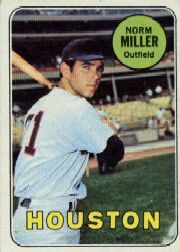
Former Astro Norm Miller, 2010.

Former Astros outfielder spoke to our Larry Dierker Chapter of SABR last night. His speech lit a fire that almost burns by spontaneous combustion for most of us elder folk. The topic, put simply, is the subject of kids and baseball today. It’s a  much bigger subject than baseball alone.

Miller began his talk with the disclaimer that he knows nothing about baseball’s history or the rules, claiming to be just a guy who played the game. As most of you know, you need to watch out when you hear that kind of opening disclaimer by a public figure in a public talk. It usually means you are about to take “a good old country lawyer” spraying of the speaker’s thoughts on the topic at hand. As per thesis, Norm Miller proved himself capable of delivering a ton of words on the subject he sort of chose for himself: Baseball Today.

Norm began with his opening question to the audience: “How do you feel about baseball today?”

Miller proceeded to take us through the facts that he was an old school Southern California guy who participated in baseball, football, basketball, and surfing during their appropriate seasons and times of day, but that baseball today is more about kids being controlled into playing baseball 24 hours a day, twelve months per year, and all in the parents’ invested hopes that the training experience will lead to a successful professional career in the big leagues. He mentioned the Select Baseball program as an approach that panders to that exalted expectation.

Norm also talkeed about his brief experience coaching in Select before he fully realized what he was getting into and being blown away by the attitude of so many kids he tried to coach. These kids on Norm’s watch resented being told what to do and some had the kind of sailor-vocabulary mouths to express themselves on the subject. One kid walked away from a practice order from Miller. When Miller then tried to stop him, the kid just looked up at Norm and said something like, “Get out of my way, you blankety-blank old man!”

Norm says it took all he had within him to keep from whacking the kid, but it proved to be the incident that led Norm to getting out. In general, he now feels that the pressure there to win and get better is so relentless that the kids can’t stand it, even though the parents seem to be buying into the hope that their child’s participation is going to lead to a big breakthrough career in baseball.

To me, it all simply sounded like too much baseball for all the wrong reasons. Those of us from the sandlot generation played the game all day during the season because we chose it for ourselves. We weren’t playing the game for the purpose of becoming big leaguers, even though we dreamed a lot about that sort of thing. There was no pressure to get better or die.

We simply had the good fortune back in the day to have grown up in a world in which it was still safe for kids to play in the neighborhood on their own without any over-the-shoulder supervision from all the adults in our lives. Because we did live in that safer world, parents didn’t feel so much that they had to control and supervise our time and guide our activities as preparations for the adult world to come.

Most of us got the message: It’s up to you to learn something that will allow you to support yourself when you’re grown. You have some talents inside, but it’s up to you to find out what they are and to then develop them by your own dedication to learning. College is a good way to go, but you’re going to have to help find a way to pay for it and, even if you get there through college, you are still going to have to decide what it is you want to do and make the most of your talents and opportunities. Not having an honest way to take care of yourself is the only unacceptable outcome of your childhood.

Pretty basic stuff was at play for us, but we got it.

Norm Miller, MLB, 1965-74.

Now the combination of an unsafe world and the additional discretionary resources of ambitious parents seem to be taking over the lives of many kids. And that’s really too bad. Way beyond the loss of the sandlot itself, kids have lost the relatively safe opportunity to simply work things out on the street with other kids without adult involvement. It’s really too bad.

Parents today can’t buy the kind of healing childhood experiences that our post World War II generation got for free.

Thank you, Norm Miller, for reminding us on the larger plane of what was so important about the sandlot. It went way beyond baseball alone to everything we did and tried to become.

By the way, Norm Miller has written and self-published a book recently on his big league experience. It’s entitled “To all my fans…from Norm Who?” You may purchase the book over the Internet or through your local bookstore.

Top 10 Best Things To Keep in Mind About the Day After Opening Day.

April 6, 2010

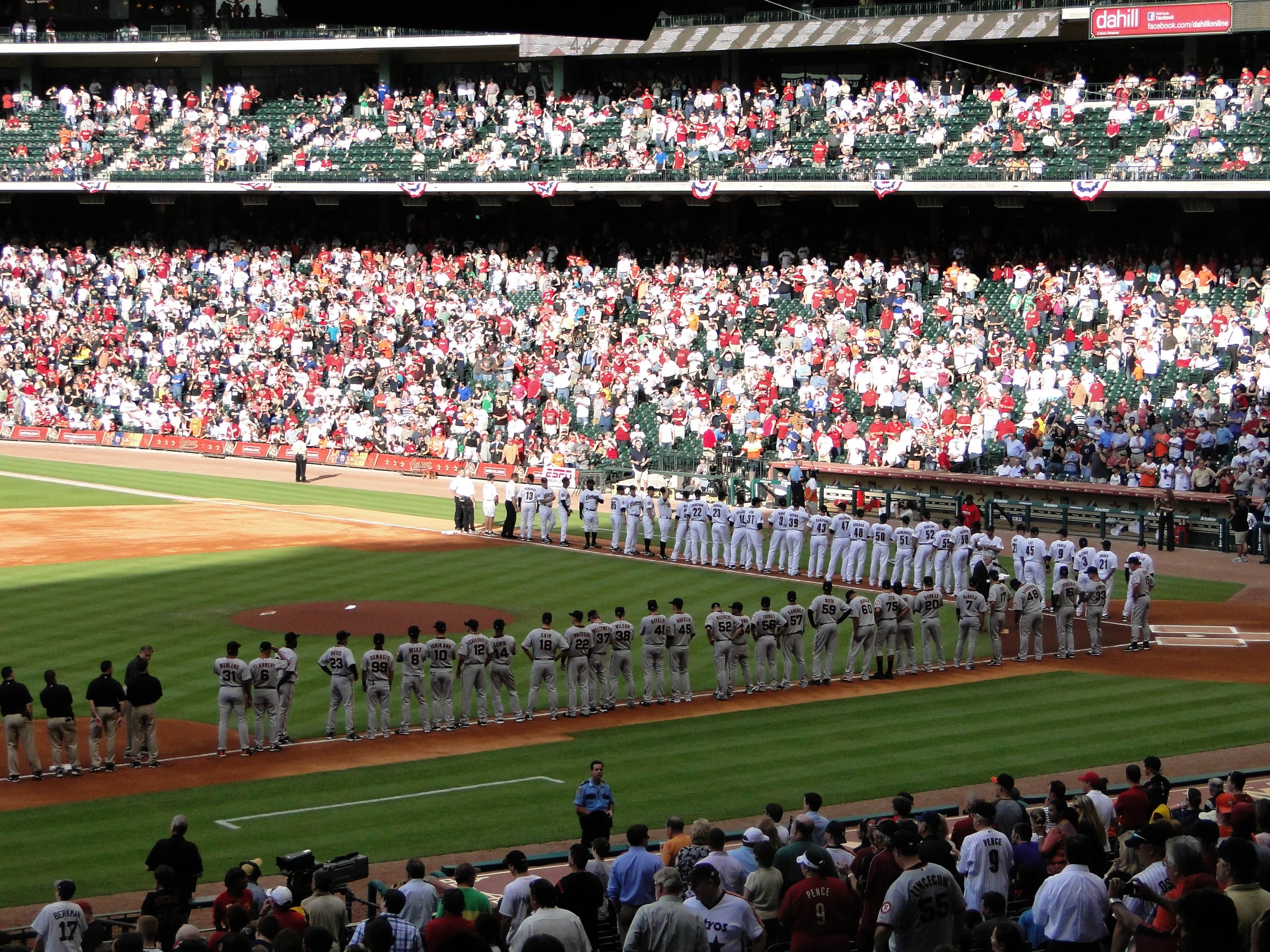
10. Even though the Astros lost, the memory of Opening Day is still a thing of beauty..

9. Roy Oswalt's 1st pitch of the season will always be the producer of an easy out.

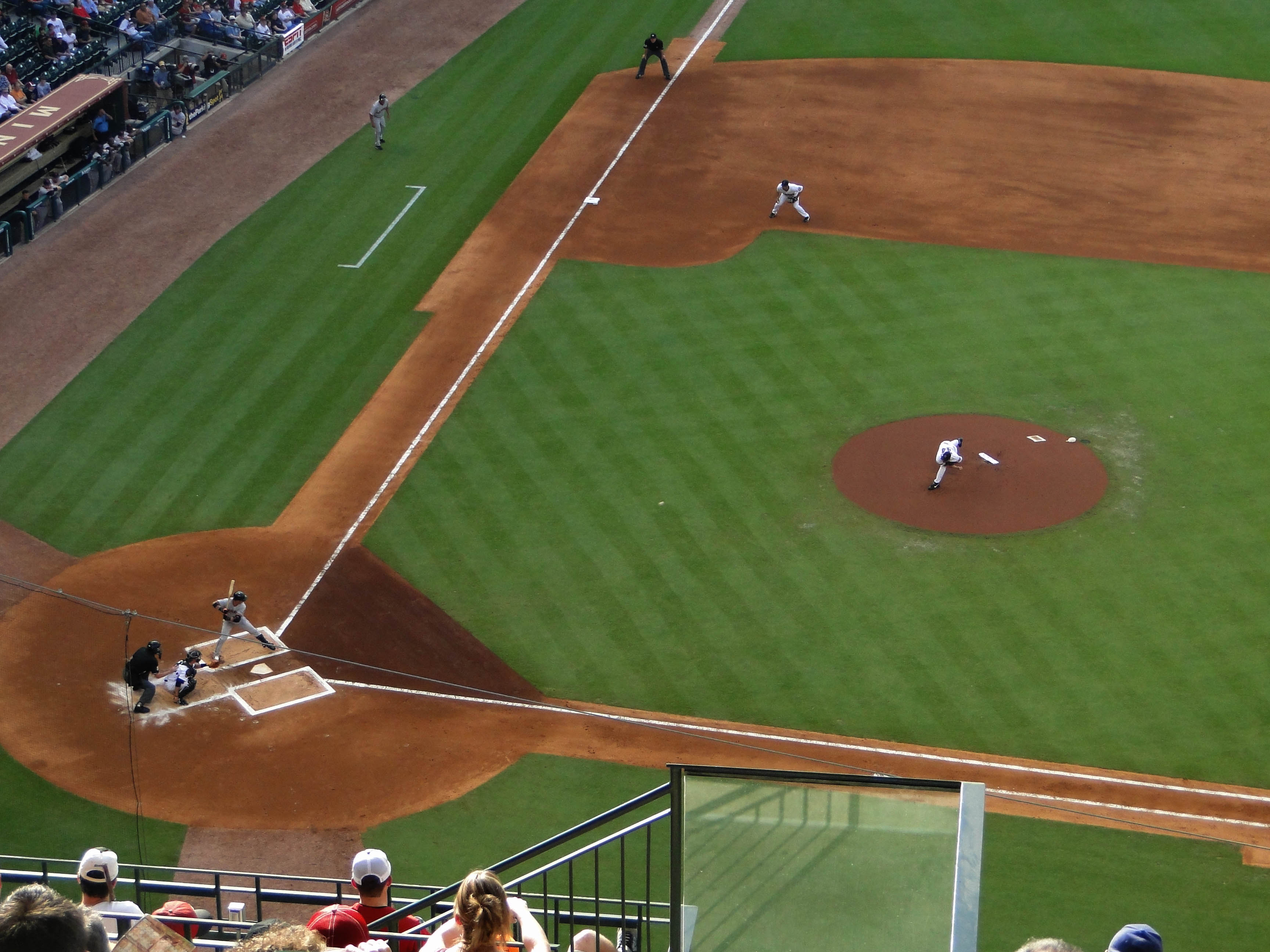
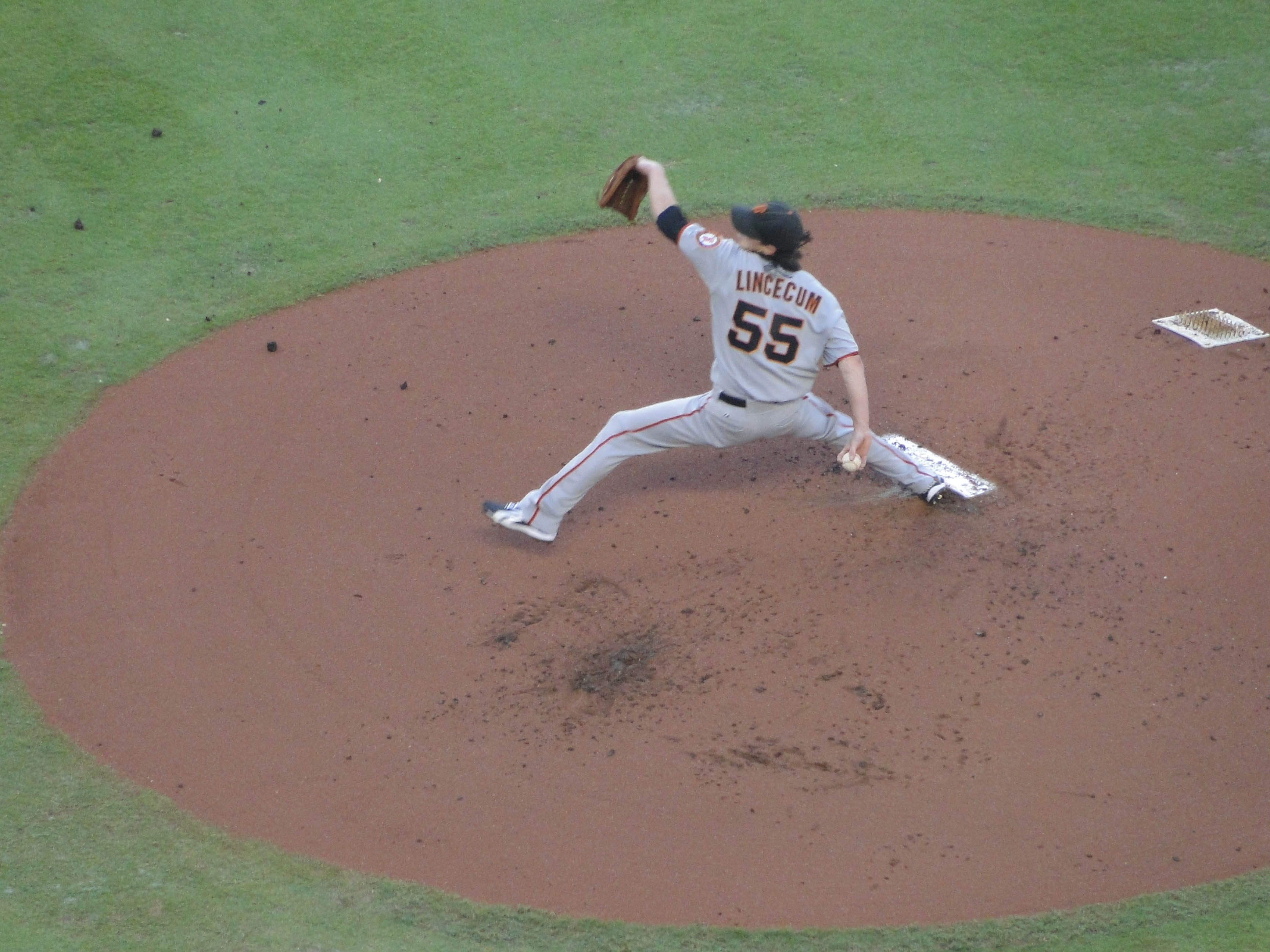
8. The Astros don't have to face Tim Lincecum again in Game Two.

7. Astro fans still outnumber the Giant fans who showed up for the Opener.

6. The Astros and Giants still have an equal number of players for Game Two.

5. Roy Oswalt's farm sign will still be there in left center for Game Two.

4. The Opener Astro loss did nothing to hurt the train's future in transportation.

3. The Astros watched a lot in Game One. They should be ready to swing in Game Two.

2. Led by Brad Mills, the Astros enter Day Two only one game back in the NLC.

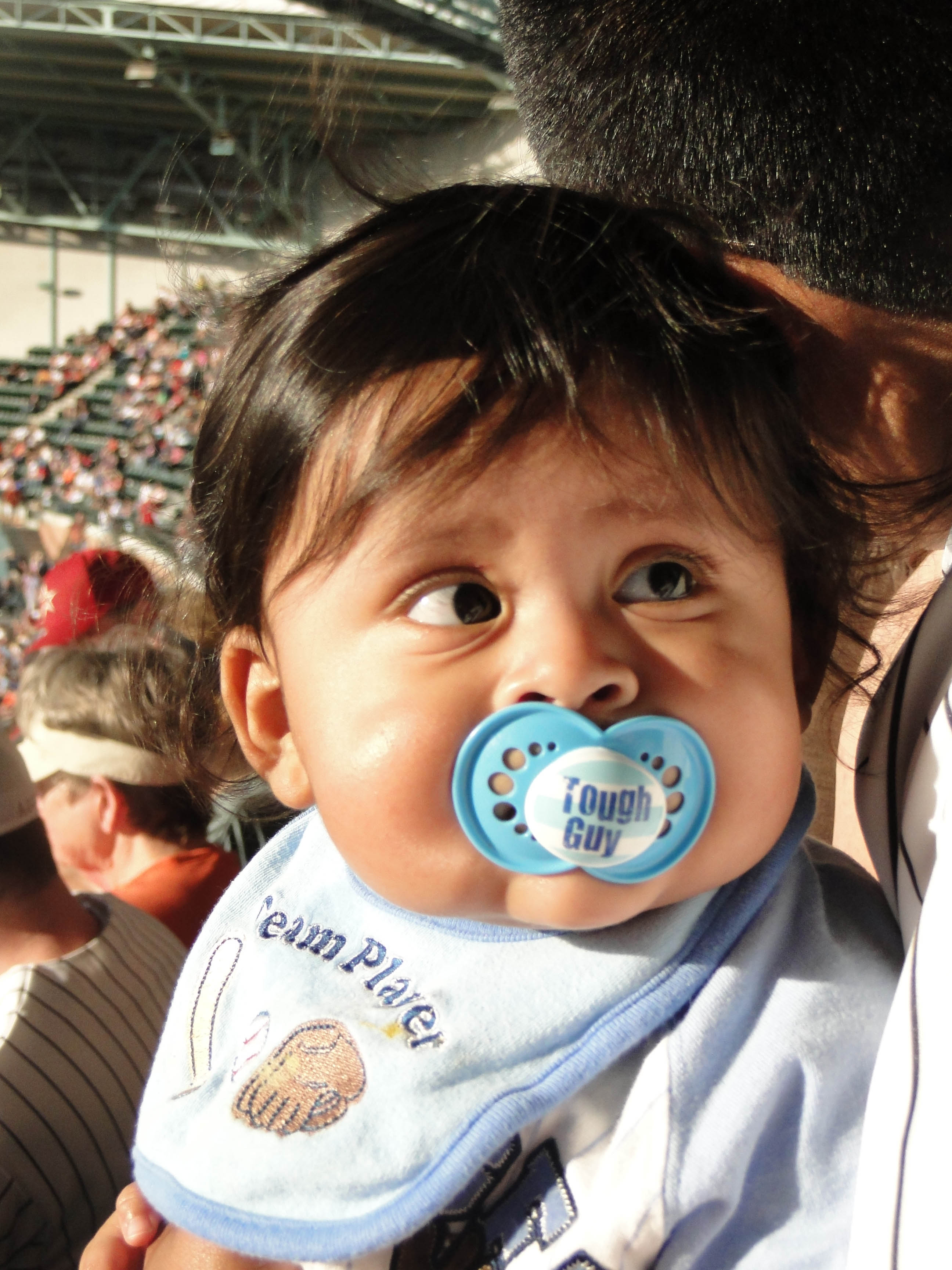
1. Attending his 1st ballgame, Little Ivan won't remember a thing about Opening Day 2010.


Easter Saturday Fanfest at Minute Maid Park.

April 4, 2010

HAPPY EASTER, EVERYBODY!

Saturday, April 3, 2010.

It was a great day for baseball. Unfortunately, it wasn’t a day in which a lot of great baseball found its way to Minute Maid Park in Houston in behalf of the home team. In their spring training finale against the Toronto Blue Jays, the Houston Astros combined hittable pitching, goofy fielding, an early evaporation of critical hitting, all the lobsters that failed critical hitting inevitably produces, and a questionable waste of reliever Jeff Fulcino for 31 pitches over two-thirds of an inning at work to fall together as a dead pigeon does on any street in downtown Houston.

Splat! After four innings of play, it was Toronto by 11-0; at the end of the day, it was the Blue Jays by 13-6.

On the bright side? At least we got spring training done without putting anyone else on the disabled list. Other than that, we shall only h0pe that this team responds with greater life, moxie, and production than they’ve shown for the most part, so far.

You may put this question in my “what the heck does this guy know?”  file any time you please, but I really didn’t see the sense of wasting Jeff Fulcino for 31 pitches over two-thirds of an inning in the top of the seventh. It was obvious much earlier in the pitch count that he had no control Saturday and that further use of that wild wing was only going to make him even more questionable for the coming up Opener that counts on Monday night.

To me, this season is really about building for the future. Sure, we need the Big Three of Berkman, Oswalt, and Lee to come through for any real hope of success this season, but the bigger long run questions are about our lack of proven production at catcher and shortstop – and the need for a vision beyond this season as to where we go at second and third base. If Chris Johnson is able to maintain anything close to the pace he’s set this spring, Johnson’s the obvious man for the long-range run at third, but we will also need to soon start grooming someone as Matsui’s replacement at second base too.

Then there’s the matter of pitching. Oswalt cannot be the ace forever. And we don’t know for sure how firm Wandy’s progress is until we see a little more of same in 2010. Either way, neither Oswalt or Rodriguez is likely to be our ace card over the next five seasons. Let’s hope our scouts are out there sifting the seeds of our talent pool crop, “looking for the next Lincecum or the potential of lightning in a bottle.” I have a hunch that we are not far away from needing a new ace yesterday, plus two or three other better than average starters who not either too young or too long of tooth today.

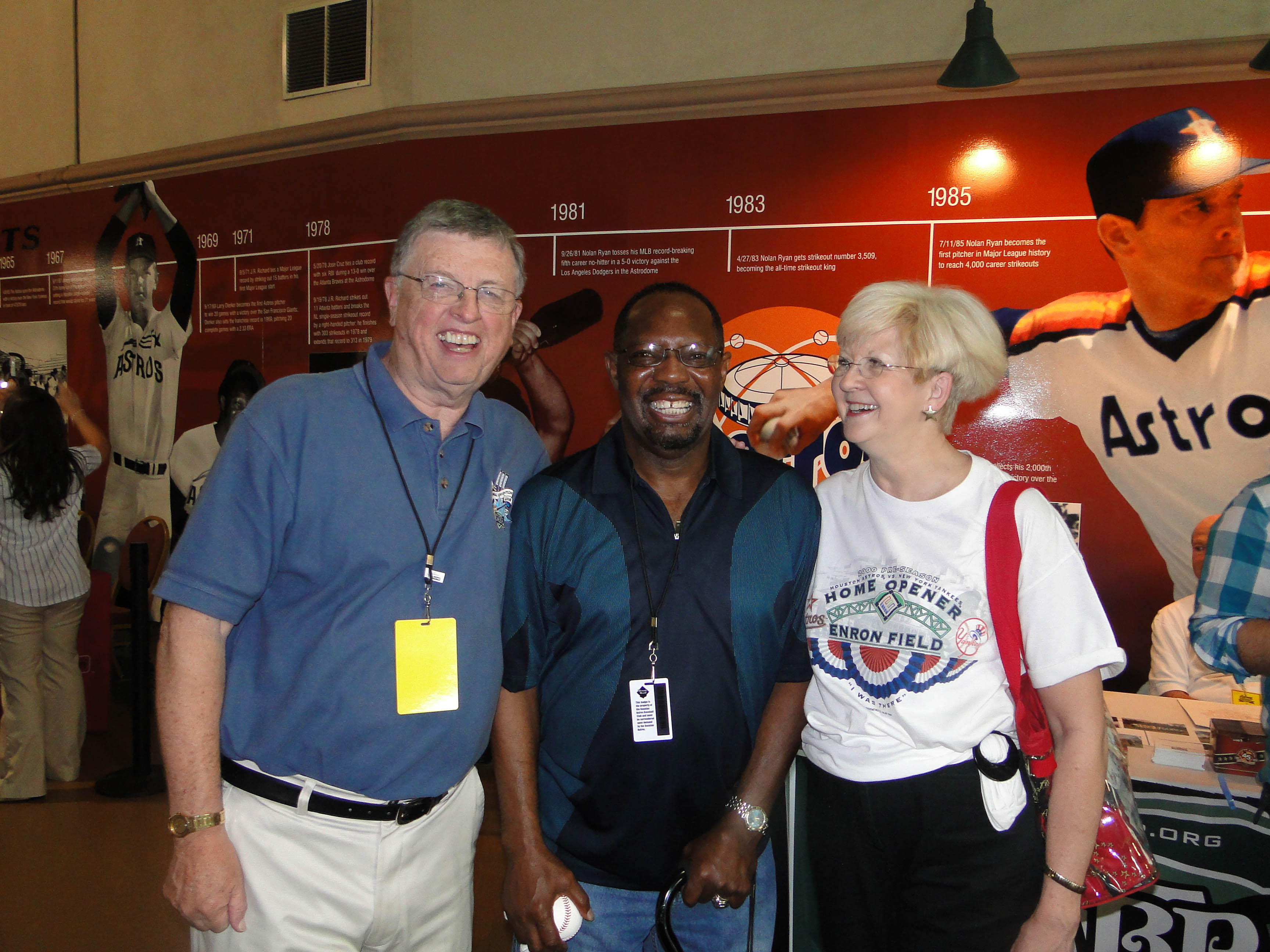
Bob Dorrill, Jimmy Wynn, & Marsha Franty share some smiles for SABR!

If you noticed how quickly I slide from “they” to “we” when discussing the Astros, it’s because I don’t work for the Houston Chronicle or FOX or anyone else who might require me to put on the mask of objective reporting, Like many of you, I’m just an Astros fan who wants my team to win it all every game, series, and season they take the field. I can accept whatever they each do, as long as I feel they are each giving it the best of their abilities. I will never rally to the defense of any player or team, however,  that “mails it in” with no apparent enthusiasm for winning. Let’s hope we see some life on the field come Monday night.
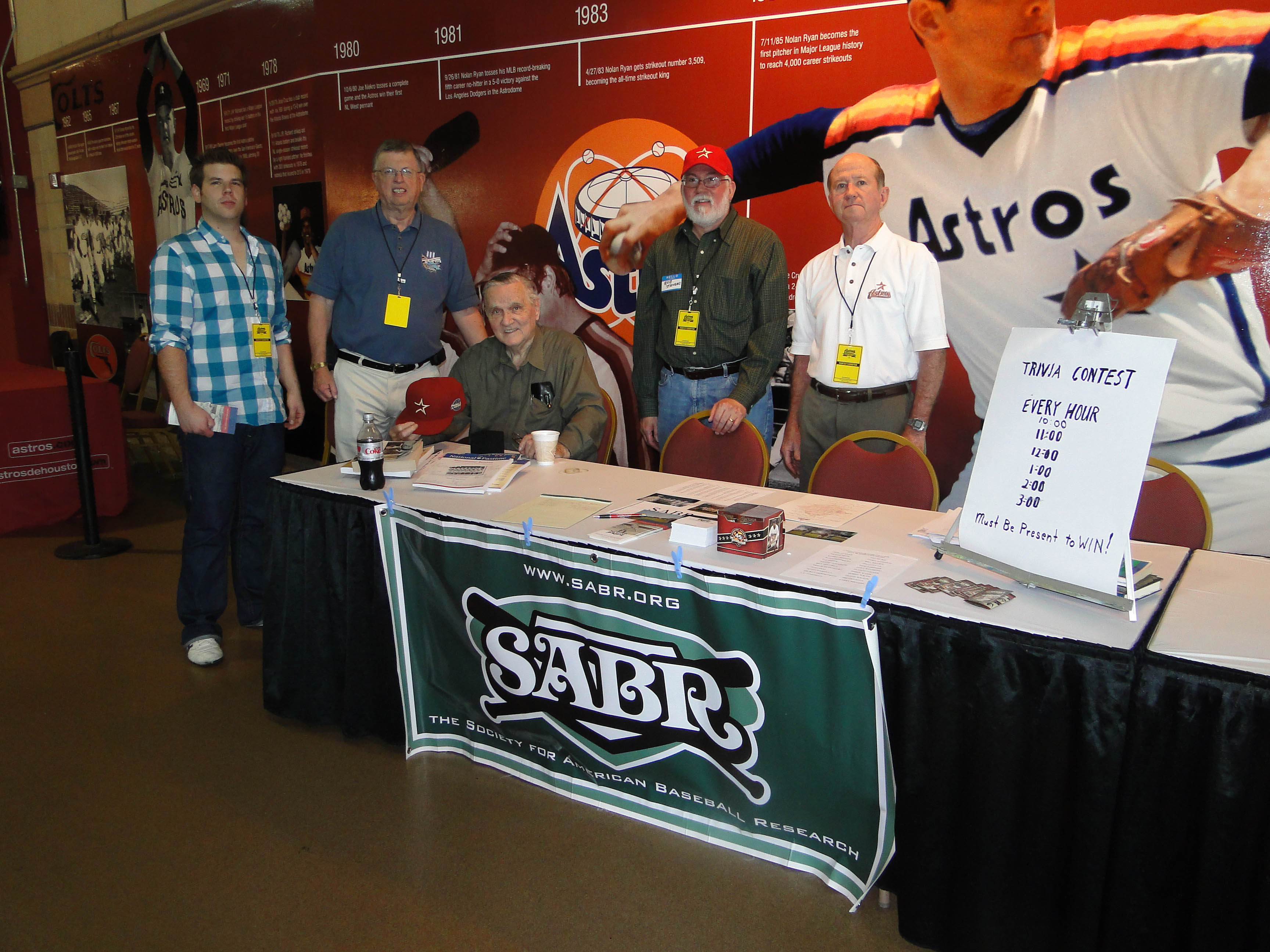
Saturday’s beautiful weather day at the ballpark also featured Fanfest, the Astros annual fun day for fans who want to collect autographs, shop for memorabilia from independent vendors, and maybe, just maybe, hear some good reasons us SABR members who manned a table to explains the benefits of belonging to the Society for American Baseball Research to other Houstonians.
Under the fine leadership of our Larry Dierker Chapter director, Bob Dorrill, a number of us showed up Saturday to pass out membership information brochures, explain SABR, show people the lights-out baseball publications available for free with membership, and have some fun with several trivia contests we used to stoke interest. Trivia contest winners won the right to select a SABR book as their prize.
Interest in SABR led to a double-digit lst of names and e-mail addresses that we shall pursue with all vigor, Once people find out the benefits, SABR sells itself.
Annual dues are only $55 for people from age 31 to 65. If you are 30 or under, or over 65, membership fees drop to $45 a year. In Houston, that will buy you monthly meetings, ten months a year, with some of the brightest stars and most entertaining figures in Houston baseball history, plus the annual arrival of several out-of-the-blue-and-into-the-mailbox baseball publications from SABR. You will get to meet and hear from great baseball people like former Astro and ongoing icon Jimmy Wynn, plus rub elbows with former Houston Buff and fellow SABR member Larry Miggins. – You will be about as deep into the bosom of the Houston baseball family that you can reach without signing your own personal services contract with the Astros.

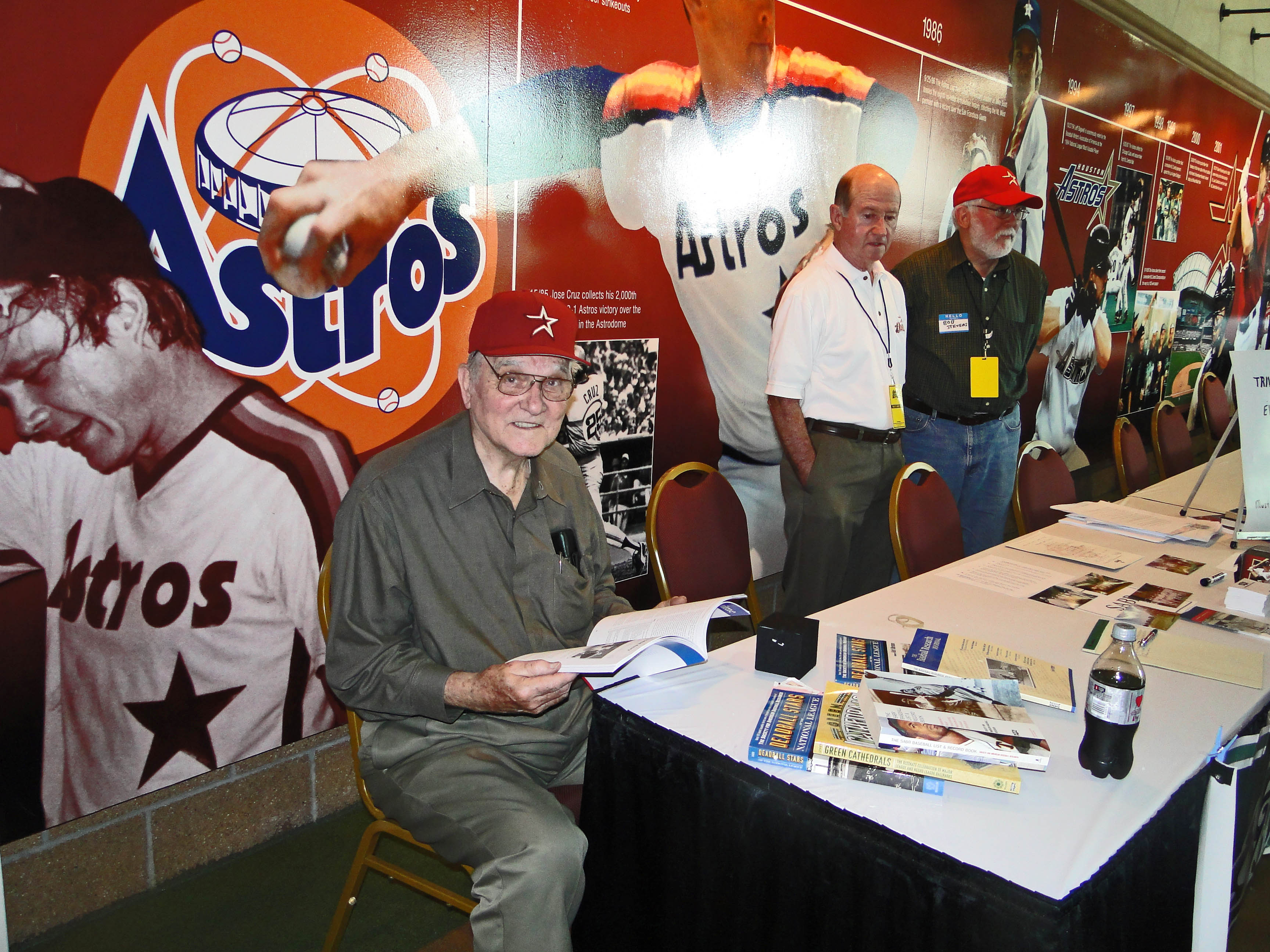
Former Buff Larry Miggins (L), Phil Holland, & Bob Stevens man the SABR table during this shift at Fanfest.

For more information about SABR and how you may join a local chapter near you practically anywhere in the United States , check out the national organization website.

http://www.sabr.org/

SABR: For more information on the Houston Larry Dierker SABR chapter, contact our chapter leader, Bob Dorrill, at 281-361-7874.

Our thanks go out to the Houston Astros for making Fanfest possible.

Happy Easter, Everybody! Starting Monday, we’ll see you at the ballpark for the games that count!

Baseball’s Back in Town!

April 3, 2010

April 2, 2010: Astros serve up lobsters in 3-3 tie with Blue Jays.

Baseball’s back in Houston, friends. That is, if you consider a ten inning “tie” played with the DH rule in place in a National League park in a game that didn’t count, but the prices for tickets and concessions did on a night in which the Astros served up more lobsters than  a Kennedy family campaign dinner in Boston a real game.

All kidding aside, it was good to back in Minute Maid Park, and in all fairness, it was a little too little too soon to see the whole flow of this season unfolding with Berkman still out, Oswalt and Wandy yet tested under fire in games that count, and Manzella with a little more time under his belt at shortstop. What we saw is what we don’t want to see too often this year:

The starting pitcher gives up 3 runs in the first and then settles down. The offense then starts pecking away, loading the bases and, inning by inning, it starts racking up the lobsters, but no runs. The starter settles down, but the relievers are forced into being perfect as the Astros 1,1,1 their scoring way back into a 3-3 tie through nine. The ‘Stros might have taken the game in the bottom of the ninth, but a stumble-bum running older rookie named Shelton tripa on second base after doubling in the tying run and is retired to save the night for the Blue Jays. The game plays out uneventfully in the tenth as a 3-3 tie by common sense and mutual team agreement. There’s no point in wearing out arms and legs in extra innings on the last weekend of games that mean nothing in the 2010 standings.

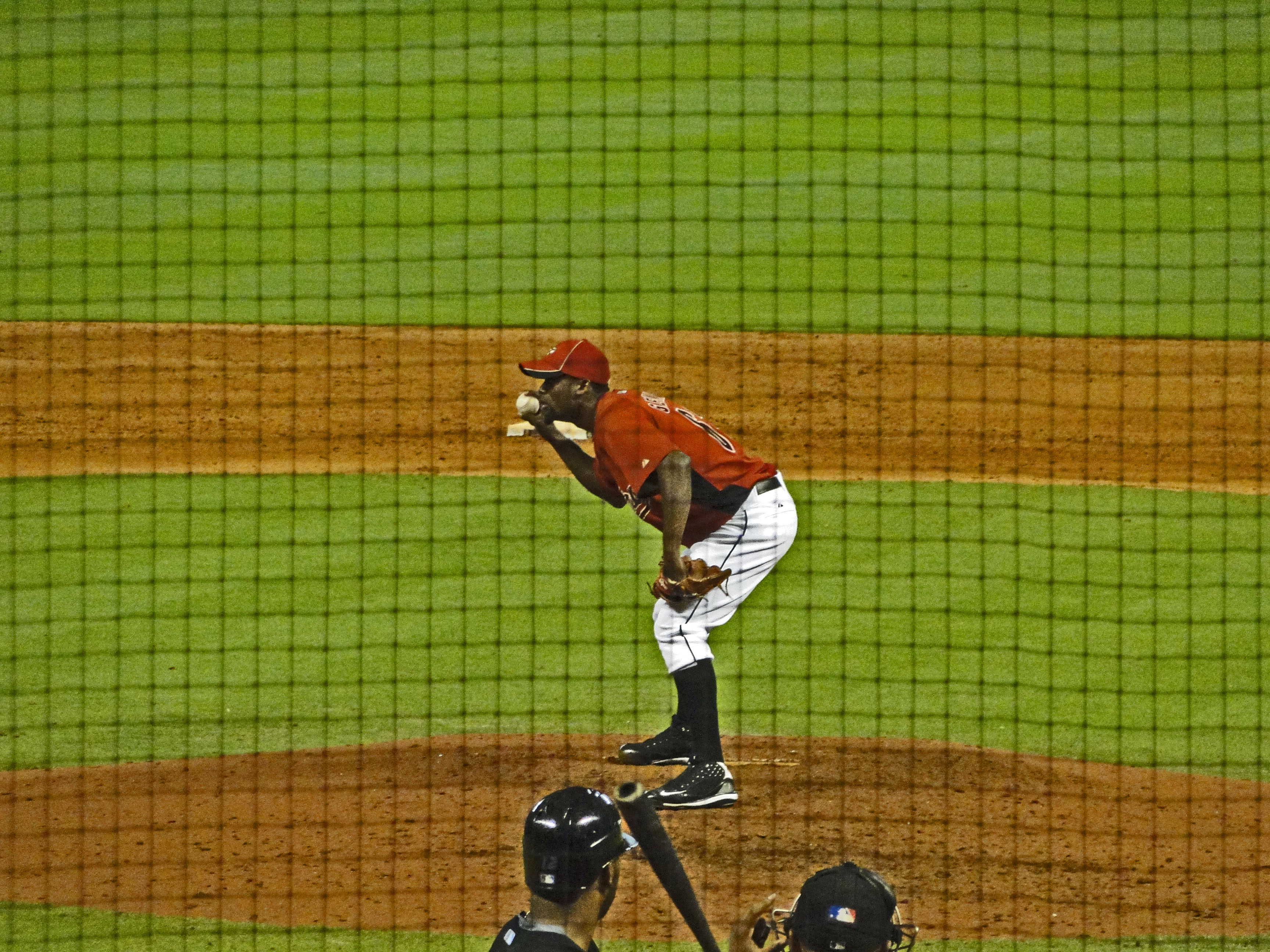
Sammy Gervacio is straight out of the Mark Fydrich school of dramatic posturing.

I really hope that reliever Sammy Gervacio makes the bullpen roster over time this season. He is already, by far, one of the most entertaining pitchers to come down the Crawford- Street-Texas Avenue pike in years, as things stand. Gervacio’s full wind-up ritual is a thing of beauty to behold, one that would make oldtimers like Mark Fydrich and Al “The Mad Hungarian” Hrabosky quite proud. As you may be able to see in the picture, Sammy seems to listen to his baseballs before he turns with a menacing glare toward the plate and lets them fly with more body-torqing movement off the herky-jerky fulcrum area of the hip that you are likely to ever have seen.

Nobody scored on Sammy and his reliever pals, but starter Brett Myers gave us too much of a copy on a bad Wandy Day. The three-runs that Myers gave up in the first, but they proved enough to keep us from winning on a night that critical hitting failed all over the place. Hopefully, the Astros will get better before Tim Lincecum and the San Francisco Giants hit town for Opening Day on Monday, April 5th. Like it or not, the 2010 Astros are going to have to prove themselves better than mediocre. That means they can’t have too many games that are accented by early bad innings from starters and the appearance of termite bats in critical offensive situations.

Check out SABR at Fanfest Today, Saturday, April 3rd.

Just a note: Don’t miss SABR today! Our Larry Dierker Chapter of SABR (the Society for American Baseball Research) will man an information table at the Minute Maid Park Fanfest today. We will be located next to the player autograph area on the first floor concourse behind home plate. If you’re at the park this morning or later for the 1:00 PM Astros game with the Blue Jays, drop by and say hello. Find out the simple and affordable benefits of SABR membership and consider joining us. SABR is for every fan that enjoys close up contact with the people who play and run the game – and it thrives for folks who like their baseball news served up on a year round basis. There’s also plenty of room for those who want to do research or writing on baseball, but those aren’t the main things you have to crave to enjoy SABR. You simply have to love baseball in a way that never tires your desire for more.

Former Astros slugger Jimmy Wynn and others have promised to dropped by our table today, so please join us, if possible. You never know who you may run into and have a chance to meet.

Meanwhile, Happy Easter! And GO ASTROS!

The Buffs-Colts-Astros Player Chain.

March 26, 2010

Dave Giusti, P

Aaron Pointer, OF

Ron Davis, OF

If this idea catches on, we may soon be able to use an adaptation of the “Seven Degrees from Kevin Bacon” movie actor test to determine which Astros players are closest to the only three pioneering baseballers who each played for the minor league Houston Buffs and also for the major League Colt .45s and Houston Astros during the specific years the big league club was nicknamed differently. These three Houston big leaguers included successful major league pitcher Dave Giusti and two barely-made-it, short-time outfielders, Aaron Pointer and Ron Davis.

If you are unfamiliar with the Kevin Bacon test, it goes like this. A few years ago, when the Internet Movie Data Base first went online, actor Kevin Bacon was used as the contemporary actor goal line for seeing how quickly players could link other actors, especially from the old days, by the fewest number of links in roles played with other movie performers to Bacon, The theory and game killer rule was that anyone should be able to make the connection between Kevin Bacon and, say, John Barrymore in seven links (degrees) or fewer. Otherwise, you lose.  The link trace here might go something like this: Craig Biggio played with Billy Doran (1 degree) who played with Terry Puhl (2 degrees) who played with Bob Watson (3 degrees) who played with Ron Davis (4 degrees), one of our all-Houston-clubs trio. Maybe there’s an even shorter route to Davis, Pointer, or Giusti that you will find.

Here’s a quick sketch of the Buffs-Colts-Astros Player Chain Trifecta!

(1) Dave Giusti went 2-0 with a 3.00 ERA in his only three games for the 1961 Buffs. He then went 2-3 with the 1962 and 1964 Colt .45s and 45-50 with the 1965-68 Astros before moving on for a long run at Pittsburgh and a closing year split between Oakland the Cubs, Over his full major league career, Dave Giusti compiled a career record of 100 wins, 93 losses, and ERA of 3.60.

(2) Aaron Pointer will always be remembered best as the little brother of the famous Pointer Sisters singing group. After that, Aaron was a 3 for 8 (.375) hitter in four games for the 1961 Buffs and a .208 career hitter in a 40-game, three season big league career as an outfielder for both the 1963 Colt .45s and 1966-67 Astros.

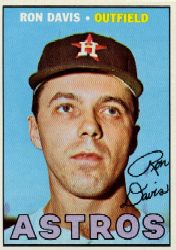
(3) Ron Davis bit .179 in eleven games for the 1961 Houston Buffs before going on to bat .214 in seven games for the 1962 Houston Colt. 45s. Davis completed his Houston baseball nickname trilogy by batting .247 and .256 for the 1966 and 1967 Houston Astros. Over his total five seasons in the big leagues (1962, 1966-69), Ron Davis batted .233 with 10 HR. Sadly, he passed away in 1992.

There is also a shorter, more numerous player chain link between Houston’s minor league and major league histories. The following men either played for or managed both the last 1961 Houston Buffs club and the first 1962 Houston Colt .45s major league team. Except for three aforementioned players, The rest of these guys never completed the trilogy trip as Astros, but these men did each participate officially in both Houston’s last minor league season and first major league season. Aaron Davis is not listed here because he did not make his Colt .45 debut until the second year, 1963 big league season:

Last Buffs/First Colt .45s Club ~ “The Magnificent Seven”

(1) Pidge Browne, 1B: Buffs 1956-57, 1959, 1961; Colt .45s 1962.

(2) Jim Campbell, C: Buffs 1961; Colt .45s 1962-63.

(3) Harry Craft, Manager: Buffs 1961; Colt .45s 1962-64. *

(4) Ron Davis, OF: Buffs 1961; Colt .45s 1962; Astros 1966-67.

(5) Dave Giusti, P: Buffs 1961; Colt .45s 1962, 1964; Astros 1965-68.

(6) J.C. Hartman, SS: Buffs 1961; Colt .45s 1962-63.

(7) Dave Roberts, OF-1B: Buffs 1961; Colt .45s 1962; Astros 1966-67.

* NOTE: Harry Craft took over as the fourth and final manager of the last 1961 Buffs team. Craft was replaced in mid-season by Luman Harris as manager of the 1964 Colt .45s.

Presuming our research is accurate in this matter, we could find no Houston Buffs who jumped over the experience of playing for the Colt .45s to later play for the renamed (1965 or later) Astros. Old Buffs had to play their way through the Colt .45 years and only three of them survived the four-year gap (1961-65) to surface again as Astros – and only one of these former Buffs, Dave Giusti, actually thrived as a major leaguer.

Have a nice weekend, everybody, and take my advice on this one. Give yourselves a little break from small detailed baseball research questions that are the psychological equivalent of blind-stitching or sewing up Nike shoes in Jakarta.

I’ll catch you later. I’m off to the walking track now.

Jerry Grote: One of the Guys Who Got Away!

March 12, 2010

One the Astros lost.

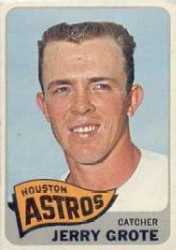
For 21-year old Jerry Grote of San Antonio, Christmas of 1963 must have been an especially joyous holiday season. After all, the young Houston Colt .45 signee at catcher had just finished his first full year of professional baseball, even got to play for his home town San Antonio Bullets, batting .268 on the year with 14 homers. Even though he made 18 errors in 867 chances in the field, all of his miscues were correctable with experience and he seemed to have a way of building confidence in his pitchers, even at that early age.

Grote made it up to the Astros for a few times at bat in September of 1963, but I didn’t get to see him play until the summer of 1964. I was completing my graduate school studies at Tulane University in New Orleans at the time and had to hook short trips to Houston to see the Colt .45s for a few games. I liked what I saw in Grote, even though he wasn’t hitting “Mendoza” in his first real major league trial. He was a little guy who played with a lot of energy and with an attitude of alertness about what was going on with his pitcher and everywhere else. He played on top of the ball; he didn’t allow the ball to play him; same for the game. Grote was on top of what was going on. He held runners at first and he threw a bunch of them out when they tried to steal. He talked to his pitchers constantly with his body language and I don’t know how many times I saw him follow a quick mound trip with a called or swinging strike on the batter. I thought: “Forget the batting average for now. This guy is going to be a leader. He already knows how to handle pitchers.”

It didn’t happen. Not for Houston, anyway. After a .265, 11 HR season for AAA Oklahoma City, the newly renamed Houston Astros dealt Grote away to the New York Mets on October 19, 1965 for a pitcher named Tom Parsons, some cash, and, I presume, the conventional bag of balls. Parsons was out of baseball before he ever threw an official pitch for the Astros and Jerry Grote was on his way to a different destiny among the “Amazin’ Mets.”

I had a bad feeling about the trade when it came down. I had just seen too many things in Grote that I

He was good enough for Seaver and Ryan in 1969.

liked to feel nothing about a transaction that basically came down as a player dump. Sadly, Mr. Grote proved a lot of us Astros fans who felt that way justified in our concerns. Soon enough, Jerry Grote found an acceptable level of offensive production with the Mets. By 1968, he even batted .282, his second best average for a full season. He had no power, but he could handle pitchers, hold or throw out base runners, and play the game on top of the ball. In 1969, Grote handled two future Hall of Famers, Tom Seaver and Nolan Ryan, on the Amazin’ Mets march to a World Series title in their ninth year of existence. He also made only 11 errors in 788 chances in the field that championship year too.

Grote ended up playing on a second Mets National League pennant winner in 1973 and, all tolled, he played for 16 seasons in the big leagues (1963, 64-81) with Houston, the Mets, the Dodgers, and Royals.

Jerry Grote finished his major league career with a batting average of .252, but he clouted only 39 homers in 4,339 times at bat. Slugging definitely was not one of the tools in Jerry’s war chest, but it didn’t matter. He had so many others.

Anyway, I doubt that the bag of balls the Astros got for Jerry Grote in the deal with the Mets lasted quite as long as he did. Oh well. We can’t get ’em all right, can we?

Top Ten Reasons Why The Astros Have a Better Chance of Reaching the World Series Than the Texans Do of Reaching the Super Bowl.

January 24, 2010

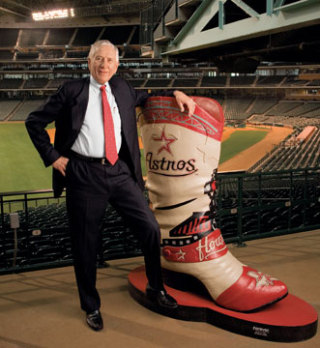
Drayton McLane, Houston Astros.

10. The Astros don’t have to worry about finding a running game. If there’s any running to be done, the Astros have Michael Bourn.

9. The Astros play their games in Minute Maid Park, which already saw a World Series in its sixth year of play. The Texans, however, play their games at Reliant Stadium, which has only seen the Carolina Panthers play there and the New England Patriots win there in a Super Bowl. Reliant is also too close to the moribund and without-a-Super-Bowl-action-champion-site-of-any-kind as the Astrodome for over forty years,

8. The Astrodome and Reliant Stadium are rumored to have been built on the site of a Native American burial ground. Minute Maid Park was built on the site  of the former Union Station, a ground walked upon by every major champion from all sports and all walks of life in the 20th century who ever visited Houston.

7. Lightning regularly strikes Minute Maid Park at 3:00 AM following every Astros home-stand opening game win. These events are usually followed by double-digit win streaks by the Astros and instant wealth and social good fortune for all fans who happened to have been sitting in the area of the ballpark that was later that night struck by lightning.

6. Relative to each other geographically in Houston, the Astros are located to the north and the Texans are situated to the south. As everybody who has studied history already knows, the North always wins. Right?

Bob McNair, Houston Texans.

5. Astro fans main-gate the ballpark, going inside and pouring all of their positive energies into pulling for the Astros live at the actual game. Many Texan fans simply tail-gate in the parking lots next to Reliant Stadium and never go inside. They watch the game on portable television sets and are too busy pouring beer down their gullets to pour positive energy live into the Texans.

4. As a source of good-buddy-knowledge talent, the Astros rely upon outcasts from the lately very successful Philadelphia Phillies. The Texans rely upon refugees from the so-so Denver Broncos.

3. The Astros once traded Larry Andersen to Boston for a rookie named Jeff Bagwell. The Texans once used the top pick in the NFL draft to select Mario Williams over either Vince Young or Reggie Bush.

2. Astros owner Drayton McLane is in the wholesale grocery business. He could afford to feed his club during hard times. Astros owner Bob McNair is into oil and horse racing Axle grease on horse meat burgers does not sound like a diet that many Texans could sustain over time.

1. Tal Smith is President of Baseball Operations for the MLB Astros. Rick Smith is General Manager of the NFL Texans. Astros take home the “Senior Smithsonian of Sports Award.”