Posts Tagged ‘History’

Gerry Burmeister: Five Times a Buff!

May 27, 2010

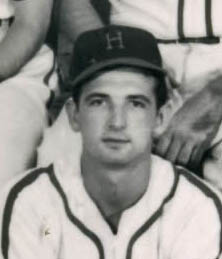
Gerry Burmeister, Catcher, Houston Buffs, 1941, 1946-49.

Gerry Burmeister was already in place as catcher of the Houston Buffs when I first plugged into paying attention to baseball back in 1947. He had joined the Buffs in 1941, returning after World War II to begin a four-season run as the main man with the mask in 1946. For the last three seasons of his Buffs tenure, I couldn’t imagine the day coming when some other guy would hold his spot. Gerry Burmeister was our man – the man who led and took good care of great Buff pitchers like Al Papai, Clarence Beers, Cloyd Boyer, Jack Creel, and Pete Mazar.

Burmeister was another of those talent-rich Cardinals farm hands of the post World War II era that never got so much as a single time at bat in the major leagues, but, as a catcher, he was extremely important to the parent club in bringing along mound talent for National League competition. A catcher with his field accomplishments in 2010 would surely be expecting a direct shot in the big leagues, but, as we always ending saying in some form – that was then and this is now.

The 6’2″, 205 lb. Gerry Burmeister was born on August 11, 1917. He’s been dead for several years now, but I simply do not hand that specific data on hand or accessible at this writing.

In his 13-season minor league career (1937-44, 1956-50), and all but the last year spent in the Cardinal organization, Gerry Burmeister (BR/TR) batted .275 with 66 career home runs. Those were pretty good stats for that era. Heck. They are pretty good production for a catcher from any era, especially one who managed pitchers well and also exercised pretty good control over runaway baserunner wannabes. Burmeister was a winner of the first order as a performer in the higher levels of minor league baseball back in the most popular period of public attention to professional baseball at every level of play.

Gerry Burmeister retired to life in the Houston area following his baseball career and he was a regular at old-timer games and Houston Buff reunions through the remaining period of his life. He was well liked and highly respected by all the former Buffs I know.

Caps are off to your memory this morning. Mr. Burmeister. As a kid who grew up watching you play as I tried to learn all I could about our wonderful game of baseball, I just want to say, “Thanks for the memories!”  And thanks for the lessons too!

Baseball’s Biggest Losers.

May 26, 2010

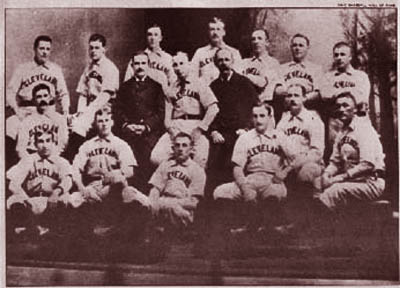
The 1899 Cleveland Spiders Own the Biggest Loser Title for their Worst-Season-Record-Ever mark of 20 wins and 134 losses for a.130 winning percentage and also for their All Time Consecutive Game Losing Streak of 24 Games in a Row.

No, this article isn’t about the 2010 Houston Astros – not yet, anyway. It isn’t even about “losing” as a new social convention. In fact, if we examine the scoreboard of both biblical and scientific history, it doesn’t take long to see that losing has been going on for a very long time. A short look there is all we shall need to confirm that reality:

History’s Scoreboard

Temptation 2 – Adam & Eve 0.

Jealousy 1 – Cain 0. (As a result, Abel moved to the “DL” – the permanent one).

Meteors 25 – Dinosaurs 0.

Sinai Commandment 10 – Golden Calves 1.

Jesus Christ 1 – Original Sin 0.

Lions 48 – Christians 0 (on any given Sunday at the Coliseum in Rome).

Brutus 1 – Caesar 0.

Renaissance 8 – Dark Ages 7.

Darwin 4 – Fundamental Opposition (still evolving).

Baseball 1 – Football 0.

Technology 15 – Intimacy 0.

Present Year 2010 – Time Travel Destination 1927 (The year Ruth hit 60).

There. That pretty much covers the big historical events. Let’s get to baseball. I’m only looking at the worst season records and longest losing single game losing streaks. Otherwise, we could get stuck here all day talking about the St. Louis Browns.

The two big records for all time are held by one of the last clubs to play baseball in the 19th century pre-modern era, the notorious 1899 Cleveland Spiders of the National League.

The 1899 Spiders were so bad that they literally had to finish their season on the road to avoid the wrath of a community that felt betrayed by the club’s ownership – and because other clubs refused to lose money by coming to Cleveland to play before empty houses. What happened to make Cleveland the perfect storm atmosphere for losing 1899 is simple enough to explain.

The Robison brothers who owned the Spiders also bought the St. Louis Browns of the same league and simply renamed them the “Perfectos.”  Then (and here comes the best reason in the world why multiple club ownership is now prohibited) the Robisons poured all their talent into making their St. Louis club a success. The best talent from both rosters was sent to St. Louis; the culls and dregs were sent to Cleveland. The result pulled St. Louis slightly above mediocrity (5th place with a 84-67 mark while Cleveland sank like lead to 12th and last place at 20-134. Along the way, ’99 Spiders also set the single game all-time losing mark of 24 losses in a row. The experience also stomped the itsy-bitsy Spiders into extinction.

Cleveland would emerge with a new team under new ownership in the new American League in 1900, but the Spiders were dead forever. The 1899 Cleveland Spiders may be the only team in baseball history that actually played like an extinct entity while active unplayed games still remained on their schedule.

20th century losing marks received constant heat from clubs like the St. Louis Browns and Washington Senators in the early part of the century, but the two game and season losing marks did not finally register until 1961-62.

The 1961 Philadelphia Phillies made an incredible run at the single game losing mark of the old Spiders, falling one game short of a tie, when they came up with only 23 straight losses from July 26th to August 20th. Their 47-107 season record, however, fell far short of Cleveland’s record for futility.

The 20th century, modern era worst season record sprang forth the following 1962 season in the first year of National League expansion, and it wasn’t our new Houston Colt .45’s who pulled the trigger. “Honors” for amazing ineptitude went tour city’s brotherly new franchise, the New York Mets, who finished in 10th place n the national League in 1962 with a modern worst season record of 40-120, but still a steamy 17 games better than those 1899 Cleveland Spiders.

Mets Manager Casey Stengel was finally moved to ask of his Mets, “Can anybody here play this game?” If you’re a Houston fan, let’s just hope that 2010 Astros manager Brad Mills isn’t moved anytime soon to pose the same question.

Losing is losing – and unlike fine wine, it doesn’t taste better with age.

Quo Vadis, Craig Biggio?

May 25, 2010

5/15/10: The Craig Biggio-coached St. Thomas Eagles defeated Houston Christian, 7-5, in the finals at Waco to take the 5-A State of Texas TAPPS baseball championship.

It only took Craig Biggio two years to lead the St. Thomas Eagles to a state title in baseball, but he and the boys did it in typical Biggio-Astros style over the 2010 season, weathering a phase of doubt and coming back strong to fare even better than Houston’s professional standard bearers. The Eagles went all the way to the top, winning their 23rd state baseball title in the 110th year of the school’s history.

Biggio got involved in helping out as volunteer assistant coach with St. Thomas football while he was still playing for the Astros after his oldest son Conor Biggio entered the school as a freshman. Conor was followed two years later by younger brother Cavan. What a dream opportunity this all turned out to be for retiring super big leaguer Biggio – a chance to watch and even be involved in the ongoing education of his sons as young men and serious ballplayers.

Biggio accepted employment as the St. Thomas baseball coach on May 18, 2008. Three days short of two years later, on May 15, 2010, Biggio and Company were wrapping up that most special prize in Texas high school competition, a state championship. St. Thomas defeated season-long nemesis Houston Christian, 7-5, in the 5-A TAPPS state baseball championship finals at Waco to bring home that very special prize.

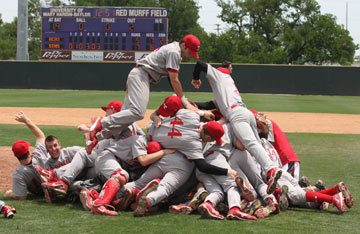
Craig Biggio (4th from right in red jacket) & St. Thomas Good Company!

Our hats go off to Craig Biggio and the gang from old St. Thomas (my old high school too) – along with all the questions that Craig Biggio’s coaching success at this level now adds to all those queries that continue to float around about his future as a major league manager.

After Craig Biggio’s probable first ballot induction into the Hall of Fame in 2013, will he be open to managing in the big leagues? If so, will it have to be a term with the Astros – or will he be open to other offers? – Or will Craig Biggio simply prefer to stay where he is – close to home and family, and close to the handles on his favorite charities and involvement in the Sunshine Kids Foundation? I’m sure that St. Thomas High School wouldn’t mind it either if Biggio decided to stay at the helm of our baseball program at STHS far beyond the years that his sons are enrolled as students. He brings class, positive energy, and success to everything he does.

The final answers to all questions about the future of Craig Biggio rest down the road – and that’s where I think he places them too. As with all the rest of us, his best choices rest firmly in the Hand of God – and in his ongoing discovery of God’s Will for him in this lifetime.

God Bless you too now, Craig Biggio, for all you do to make the Houston community a better place.

Goodbye, Mr. Lima!

May 24, 2010

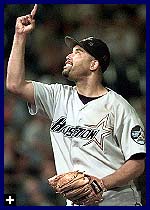
Jose Lima: He leaves some happy memories and a short record of great accomplishment in baseball..

The news of Jose Lima’s death at age 37 hits all of us who followed his baseball career with equal amounts of shock and sadness. This is one of those times in which the written words of immediate reaction are coming out in all kinds of ways on the mind crank of familiarity.

A fellow who “lived life to the fullest,” Jose Lima walked through each day as a happy man, making everyone around him happy too. At his foremost in the 1999 Astros season, he performed as one of the best starting pitchers in the big leagues, winning 21 games against 10 losses and registering a 3.58 earned run average for his playoff-bound club. He also sold the benefits of delicious Mexican food from Casa Ole restaurants on television commercials with a peppery song, a Latin-moves dance, and a universal happy-face smile thrown in to boot for good measure. It all came together and worked beautifully.

The man had tremendous ability, but like a number of other fine and potentially great pitchers, he also possessed a vulnerable psyche to the prospect of  moving from the spacious Astrodome, the scene of his great 1999 season, to pitching in a new ballpark with a short left field porch with the opening of Enron Field in 2000.

In his last 1999 Astrodome year, Jose Lima (BR/TR) have up 0only 30 home runs in 246.1 innings pitched.In his first 2000 Enron Field year, with the 315-feet away Crawford Boxes looming out there from him down the left field line, Lima surrendered 48 home runs in only 196.1 innings of work.

Now, in fairness, all the homers that Lima gave up in those two season were not hit only at the Astrodome and Enron Field, and all the Enron Field homers were not simply dink-and-drop blows that barely lipped the 315-feet mark. Homers were hit elsewhere – and many of the Enron Field long balls at Enron would have just about cleared the Grand Canyon walls on a north-to-south tim track.

The point was in (or on) Lima’s head. From his first sight of the park that we used to squeeze into as “Enron Field,” Jose Lima was psychologically defeated. He simply could not pitch there. I don’t how many times it happened, but it often worked out that Jose Lima would respond to giving up a critical long ball by surrendering another to the very next man, and sometimes, on the very next pitch.

One time, when the pattern was already established,  my then 15-year old son Neal and I were there for a 2000 Enron Field game when Lima gave up a monster shot to left center. “Just watch out for what happens on the first pitch to the next guy,” I told Neal. “He’s going to hit one out too!”

When it then happened, Neal grabbed me by the arm and asked, “Dad, how did you you know that was going to happen?”

“Just lucky,” I told Neal. Then I went on to explain how many time we had seen Lima just groove a pitch down the middle of the plate after giving up a home run. And that’s what he had done again here. Neal seemed both relieved and distressed to know that one didn’t have to possess psychic abilities to predict a home run off a pitch from Jose Lima during the 2000 season. It happened too often to be wrong a lot – and these weren’t cheap shots either.

By the early part of 2001, as you may recall, Jose Lima was sent dancing back to Detroit, from whence he had come to Houston after the 1996 season. Other than an 8-3 year with the Royals in 2003 and a 13-5 mark with the Dodgers in 2004, Jose Lima would never have another big league season that came even close to his 1999 record year with the Astros.

Somewhere along the way, Jose Lima also organized a Latin rhythm band and installed himself as the lead singer. Unlike Cuba’s Desi Arnaz, however, it wasn’t in the cards for happy Jose Lima of the Dominican Republic to be looking for a Lucille Ball equivalent to help him make the transition to big time success in show business. Besides, as far as we know, Jose had a happy marriage and family life and wasn’t even looking for a Lucy to love. He just loved baseball and he had happy feet for music and dancing,

I met Jose Lima only once at an RBI banquet dinner in 2005. He was as happy that night as I always imagined him to be – and he came dressed in an outfit that seemed to express that upbeat mood. It looked like one of those zoot suits from the 1940s, but what do I know? It probably was just one of those new trendy styles that never reaches the extant attention of people like me.

All I know is that Jose Lima was nice and friendly, with a bright smile, and that he greeted me like a long lost friend. He just made you feel good all over – and right away.

Jose Lima was born on September 30, 1972 in Santiago, Dominican Republic. He died in his sleep in Los Angeles on May 23, 2010 at his home in Los Angeles, California. At the time of his death, Lima was still on board to play winter ball in his native country. He had concluded his 13-season major league career (1994-2006) with a record of 89 wins, 102 losses, and ERA of 5.26 in variable stints with the Tigers, Astros, Royals, Dodgers, and Mets.

The world needs more people like Jose Lima. His death at age 37 comes as a saddening shock and yes, another wake-up-and-smell-the-roses reminder. – Breathe life deep everyday, folks. Nobody has a guarantee on tomorrow. And nobody lives forever.
Bob Clear: The Rest of the Story.

May 23, 2010

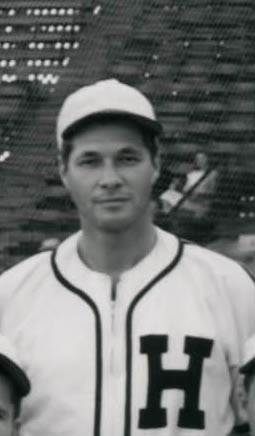
Bob Clear wore 17 different club uniforms from 1946-1967.

I had a very interesting comment from a fellow named Mike Ross in response to a brief piece I wrote three days ago on the death of the late Bob Clear. It reminded me again of how much there is to wonder about in the way human energy moves forward, for better and worse, in its play of influence upon others.

So much hinges on whether we give or withhold from others.

As a longtime minor league instructor and bullpen coach for the Angels, Bob Clear was one of the two main voices who suggested that the club take a bad-hitting catcher named Troy Percival and convert him into a relief pitcher. Of course, we know what happened from there. Percival went on to become one of the top closers in the game.

Clear also exerted an enormous amount of influence upon a young catcher in the Angels system. Although this particular player never made it to the big leagues as a player, he learned how to be a teacher of others from another fellow who never played in the big leagues either. Today that young catcher is now middle-aged but quite successful as the manager of the Tampa Bay Rays. According to Mike Ross, Maddon credits the late Bob Clear with being the most important mentor in his baseball life.

It’s a small world, except for one big always-present wild card crazy thing. – The more we become willing to share what we have to give with others, the more our world of connection grows and spreads across the lily pond of human experience on how to improve upon and solve all kinds of human-initiated problems.

Maybe if we had more Bob Clears working in offshore drilling technology we wouldn’t be facing the mess we now have on our hands. Who knows?

All I know for sure is that I just had to bring you this rest of the Bob Clear story. The details of Bob’s later baseball career are beautifully covered in an article about him on Wikipedia. Just Google “Bob Clear” and go there for further details.

Roy Broome’s Unforgettable Homer!

May 21, 2010

In 1951, Houston Buff Roy Broome hit a monster opposite field HR to right field at Buff Stadium. Anyone who saw it leave the planet could not possibly forget it.

For better or worse, how many big league ballplayers are remembered mostly for that one thing they did that changed the course of baseball history? Bobby Thomson (New York Giants, 1951) and Bill Buckner (Boston Red Sox, 1986) jump immediately to mind. Others abound.

Move the same question to career minor leaguers and you have to reshape the consequence end of it too. At least, for me, you do. I can’t think of any single act by a career minor leaguer that both totally shaped the way fans see him and also altered the course of baseball history, but I can sure call to mind a former Houston Buff who surely framed the way five to six thousand people at Buff Stadium on a summer night in 1951 remembered him forever.

The guy I have in mind is the late Roy Broome (BR/TR) (5’11”, 160 lbs.), an eleven-season minor leaguer, mainly in the Cardinal system from 1940-42 and 1946-53. Broome hit pretty well as a minor leaguer, finishing with a .290 career batting average. He only hit 89 career home runs in 5,419 official times at bat and he managed only 2 long balls for the 1951 Buffs in his short, 41-game, 157-times at bat tour as a Buff hitter.

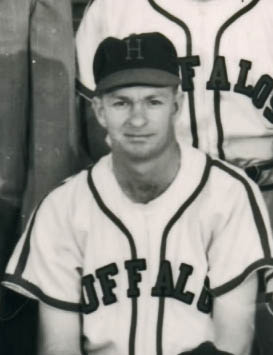
Roy Broome was a 1951 Buff long enough to do two memorable things: (1) he was here long enough to be included in the official Buffs team photo; and (2) while he was here, he hit one of the longest, most surprising opposite field home runs in Houston Buffs history.

Time has erased everything else about that game moment in my mind except for the act itself. That much of it, I’ll never forget, as my dad and I watched from the first base grandstands. I don’t recall the opposing team or the game situation, or even the impact of the home run on the game itself, I simply remember what I saw. and that the game was played at night. Because right-handed batter Broome hit the home run to right field, I’ve often imagined over the years that it was cracked off some power pitcher like Bob Turley of the San Antonio Missions, but I don’t know that. One of these days I need to research the specifics of this event at the library. After all, he only hit two of them as a Buff – and it would be interesting to read whatever Clark Nealon or others said about it.

On a typical summer night at Buff Stadium, the wind blowing in and across from right field was not friendly to aspiring home runs. “Broome’s Blow” rose above the obstacle.

The mighty blow from Roy Broome’s bat took off on a Ruthian high arch toward the far right field wall, reaching an apex almost instantly and then gently floating above the low to the ground winds, riding them like a surfer takes on the big waves of Oahu’s eastern shores. It danced on the winds as a small speck of white and then it just seemed to vanish in the high-in-the-sky darkness beyond the right field wall. It must have come down some 500-600 feet away on the other side of Cullen, too far back into the world beyond baseball for us to track it by the light of the Buff Stadium arc lamps.

The reaction of fans to “Broome’s Blow” was not your typical fairly immediate cheer. The resounding crack of the bat and startling visual that I just so inadequately tried to describe here had a hushing effect upon all of us. I’m sure any camera focused upon us fans in that moment would have revealed a sea-face of dropping jaws and startled bug eyes. We were all too amazed to express much of anything. Add to it the fact that none of us expected anything like this from little Roy Broome – and to the opposite field, no less. By the time Broome had rounded third base, head for home, Buff fans had risen to their feet to applaud him what he had just done. As I recall, a smiling, blushing Roy Broome was then called upon by the continuation of that applause to make a couple or three curtain doffs of the cap from the Buffs dugout too as teammates slapped his back and playfully kidded him.

Broome was hitting .268 for the Buffs when he was soon promoted after this event to AAA Columbus of the American Association. We Houston fans hated to see him go. Unfortunately, Roy Broome turned out to be another talented Cardinal prospect who never got to see the light of day in the big leagues.

Roy Wilson Broome was born on February 17, 1921 in Norwood, North Carolina. He died on October 11, 1993 in Gastonia, North Carolina.

Thank you, Roy, for once upon a time in 1951 being that blind hog that Darrell Royal of UT used to talk about. You found your acorn in the woods as a Houston Buff. It didn’t change baseball history, but it left a lot of us with an awesome lifetime memory.

In Memoriam: The Late Bob Clear.

May 20, 2010

Former Houston Buff Pitcher Bob Clear Passed Away on April 6, 2010 at Age 82.

I only this morning learned that former Houston Buff pitcher Bob Clear (1951-53) passed away on April 6th at his home in California. He was 82 years old.

Bob Clear (BR/TR) (5’9″, 170 lbs.) never was a guy fans confused with the second coming of Dizzy Dean. He was never little more than a short-time, fill-in spot starter/reliever on the 1951 Texas League championship Buffs club and a regular low performing guy with the not-so-hot Buff teams of 1952 and 1953, but he was a hard worker who got by on guile and an ability to mix and locate his pitches.

Bob never made it up to the big club Cardinals during those pitcher loaded farm stock years, but he managed to ping out a pretty fair record for himself over 16 seasons in the minors (1946, 1948-61, 1967). Overall he won 162, lost 115, and posted a 3.72 career earned run average.

As a Houston Buff, Bob Clear was 1-2, 8.13 in only nine games in 1951. In 1952, Clear was 9-12, 3.45 – and 4-6, 3.35 in 1953 – and all together, not a lot to write home about.

Clear experienced his best season in baseball the year following his last 1953 Buffs year. Moving up to the 1954 AAA Omaha Cardinals, Bob recorded a 20-11 season with a 2.93 ERA. The showing still failed to earn his shot with the ’55 St. Louis club and his record for that season at Omaha slipped back to 1-10 and 4.42 in partial time service. Clear may have been injured in 1955, but I have no way to check that out at this writing.

For his career, Bob Clear posted two additional 20-plus win seasons (at Class C- level each time) for 1957 Douglas and 1960 Grand Forks. Clear’s career had a chance to end quietly in 1961 with a 4-5, 5.05 final season, but he came back on a two-game lark in 1967 at age 39 to go 1-0 with a 1.64 ERA in two relief jobs for Class A Clinton.

After 1967, Bob Clear never played another inning. He eventually retired to civilian life and lived out his final days in Rancho Palos Verdes, California.

Bob Clear was born on December 14, 1927 in Denver, Colorado. He gave his early productive life to baseball and he played three seasons for our Houston Buffs. That’s enough resume to make it into my memory bank.

Time flies. The last time I saw Bob Clear he was the same age and about the same size as my 25-year old son Neal is now. (Yep, my kid’s only 25. I was a late bloomer in several areas.)

Now I suddenly learn from an Internet data site on minor league baseball that young Bob Clear has recently died at age 82. Where has the time gone – for Bob Clear – and all the rest of us too, for that matter? We really don’t have a long time to be here, do we?

The death of anyone I’ve ever known always makes me think of that old poem by some anonymous author. It begins with this line: “The clock of life is wound but once and no one has the power, to know just when the hands will stop, at late or early hour.”

My positive thoughts and prayers go out to the Bob Clear family this morning.

Long live our memory of the Houston Buffs. All of them.

The “Over-The House” Drill.

May 19, 2010

Writer's rendition of the "Over The House Drill." No real graphic artists were used in the low tech production of this visual aide nor were they harmed in the presentation of this simplified depiction of the even simpler Pecan Park game.

Some days around here are simpler than others. In fact, most days are pretty simple and quiet around here and that’s the way we like it. These days are a little louder than usual because we are now in the middle of having our house Hardee-planked to make up for the fact that the builder of our home some thirty years ago chose a siding material for the homes in out neighborhood that turned out to be over time little more than cheap cardboard-in-disguise. Regardless of how today’s drawing may appear, I have no respect for people who do shoddy work at the expense of others, but we sadly don’t seem to be running out of these sorry folk, do we?

The short of it is that a lot of inside work is happening here today too and that doesn’t make for good writing space. So, I need to tell you about something that will not require additional research or composition time. I wanted to include this material, anyway, when I wrote the article on our Pecan Park sandlot baseball drills and this is a good time to do it.

The “Over-The-House” drill is my personal invention by the following rules. Anyone else could have thought of it just as easily and probably did, but these were the rules we used to govern its play on our block:

(1) Pick a house in which both parents are gone. i.e., Dad is working; Mom is shopping. The reason for this one is simple. Parents always said “no” to the “Over the House” drill because they feared what a baseball might do to the windows, roof, and walls of their houses.

(2) Play was limited to singles or doubles games, very similar to tennis. I always preferred singles play.

(3) The object of the game was to throw the ball over the house without touching the roof and get it to land in the opposite front or back yard where your opponent stood. A ball that hit the ground of your opponent’s field without being first caught counted as a run and entitled the thrower to “go again” until a ball was finally caught on the fly for an out.

(4) Balls that first touched the roof or landed out-of-bounds (off the house property) were also counted as outs, turning the ball over to the other player for a turn at throwing.

(5) The game lasted for a total of 27 outs, no matter who made them.

(6) Whoever had the most runs at game’s end was the winner.

That was it. And it was lots of fun. When you were waiting, you never knew for sure where the ball was going to land until you saw it crest over the top of the roof. Some balls came on a high bloop and others traveled more as line drive darters. (Since all our houses were one-story jobs, you didn’t have to throw the ball too high to make it over.)

If memory serves, we never broke any windows and we rarely hit the roofs of any houses we used for the game, although we did manage to thump some nearby cars that had been parked on the street and in adjacent driveways. We could sort of see why our parents didn’t much care for “Over the House.”

Depending on how much we trusted each other, we either got by on the honor system or we used two other kids to make the calls on house hits, fair falls, and out catches. You could get by with one umpire, but that required a lot of back and forth running – and sometimes, some repetitive fence-jumping. Almost nobody who could do the job really wanted to take it on, especially since hard feelings toward umpires who determine the outcome of any competitive situation so rarely go away over night. Even as kids, we understood that becoming an umpire, even for “Over the House,” was the pathway to unpopularity.

Gotta go for now. If you can’t get your dreams over the rainbow today, folks, now you have another choice. You and a friend can go play a fun game of “Over the House.”

Just don’t tell your parents.

World’s Oldest Ex-Big Leaguer: 05-18-2010.

May 18, 2010

Tony Malinosky, DOB: 10-07-1909.

Don’t blink. Don’t pause. Just honor Tony Malinosky for what he’s done and now represents while he’s still here. He is the current owner of the most tenuous distinction that any human being can hold in any field for very long. Born on October 7, 1909 in Collinsville, Illinois, and now age 100 years, 7 months, 2 weeks, and 4 days old, Tony Malinosky (5’10.5″, 165 lbs,, BR/TR) is our current holder of the title, “world’s oldest former major league baseball player.”

As a stroke of common irony in these matters, Malinosky was more of a journeyman minor leaguer for seven years (1932-38) as a shortstop/third baseman, but he managed to reach the big leagues for 35 games and 79 official at bats with the 1937 Brooklyn Dodgers in time to hit .228 with only two doubles to show for his extra base hit production. After 1937, Tony played out his last season of professional baseball with three minor league clubs before retiring from the game. His minor league career stats included a .282 batting average with 12 home runs.

Malinosky served in World War II and fought in the battle of the Bulge. He now lives alone in the Los Angeles area after being widowed from his wife of 64 years several years ago. A niece now looks after him on a regular basis, sometimes even taking Tony to ballgames at Dodger Stadium.

Malinosky says he follows the Dodgers on a regular basis and, from recent  interviews I’ve read, he seems to be in very good possession of his faculties about current events and the meaning of his status as “oldest ballplayer” to other people.

When asked the inevitable question about his personal secrets for longevity, Tony is totally practical in his response. “Just keep breathing and be associated with a good doctor.”

After World War, Malinosky worked several years for a company that built jet plane engines. After his retirement, he and his late wife, Vi, spent a lot of time traveling the country as “roadies.” One time in Minneapolis during the late 60s, they happened to hit town at the same time former Whittier College classmates was speaking to a group there. That former classmate just happened to be the then current President of the United States, Richard M. Nixon.

Somehow, Malinosky managed to work his way through security for a brief semi-public reunion with President Nixon. The Chief Executive was all smiles until Malinosky turned to leave. That’s when Nixon pulled Tony aside to whisper a mild admonition in his ear. The next time they met under these kinds of circumstances, Nixon told Tony that he preferred not to be addressed as “Dick” in public. “If we ever meet again under these circumstances, please call me ‘Mr. President’,” Nixon supposedly asked.

In 2005, Larry Dierker and I visited with the then world's oldest former big leaguer, 100-year old Raymond Lee Cunningham of Pearland, Texas,

Malinosky said he regrets never having played a full season in the big leagues, but he looks back with joy at the time he did enjoy at Ebbets Field. The pay was only $400 per month, but Tony had a cheap room he rented and he got by OK on a daily food allowance that went a long way at the corner store White Castle burger shop.

Malinosky’s proudest big league memories were getting singles off future Hall of Fame pitchers Dizzy Dean and Carl Hubbell. Hey! Good for Tony! That’s two more singles off future Hall of Famers than most of the rest of us here will ever be able to claim.

Good luck, Mr, Malinosky! Hope you hang in there with us for a while. Just keep breathing, watching the Dodgers, listening to your niece, and keep getting checked out by your doctors too.

The Wings of Summer.

May 17, 2010

1950: The Wings of Summer Were Mainly Named Schwinn.

Back in 1950, summer spread out upon the imaginations of us kids in Houston as though it had been sent to us from God as a little time slice of Heaven and a virtually endless lawn of non-stop sandlot baseball, a game we all loved and played with poor equipment and virtually no adult interference for as long as the light came upon us with the dawn and lasted for us through the dusk.

Parental fears about the relationship between summer temperatures and the possible onset and development of infantile paralysis hit us hard. We ran into the “Heat of the Day” requirement in the Summer of 1950 – and that amounted to a three-hour parental suspension of outside play from 12 Noon to 3:00 PM daily in the belief that we were being protected from polio by this action. With five hundred cases of polio hitting Houston children in the summer of 1950, it was hard to argue against the time-out call, even though we actually knew very little back then about the virus that actually had spawned the epidemic.

Summer had time limits, but we also soared through the vast free space available to us in that time on the wings of summer, our mainly classic big-wheeled Schwinn bicycles. I owned one of these bright red beauties, one that looked very much like the model depicted in today’s article. As was true with all of us, that Schwinn bike and me were pretty much one unit together once we hit the road. I could lean myself around corners with hands on a comic book and almost never crash, except for the time that a lady over on Keller Street also turned onto Flowers from the other direction and scared me into a last second plunge into a drainage ditch.

She did stop to make sure I wasn’t dead and, of course, I never said anything about the near miss when I much later in the day finally found my way home. You just didn’t report things that might limit your future freedom back then, but I think that kid code is still in effect. Some things never change.

We wore no bike helmets back in the day – and, yes, we probably did destroy a few now-sacred Mickey Mantle cards as noisemakers that we clothes-pinned to play against the spokes of our wheels.

We  never surrendered our bikes voluntarily. Those wonderful machines really were our wings through summer and out to the larger universe beyond our East End homes and neighborhoods.

When Little League Baseball came to Houston in 1950, a large bunch of us rode our bikes over to Canada Dry Park on the Gulf Freeway for the city-wide tryout. Hundreds and hundreds of kids had shown up to tryout for the few team rosters that were going to be available to all Houston kids that first year. I think I got to catch one fly ball, but got no times at bat before I was told “thanks for coming.” I felt pretty bad about it until I learned that none of us from Pecan Park had been given the chance to hit. That privilege seemed to be going to those kids whose fathers had the freedom to come with their sons to the tryout during the work week. None of our Pecan Park dads had that kind of time luxury on the morning of a weekday – and we could figure that the dad-presence factor was a big fat difference-maker in a situation like this one. We didn’t blame our dads, but we did lose a lot of respect for those first year Little League people running the show. Over time, I grew to see what a no-win situation those early Houston Little League founders faced here that first 1950 season, but I was nowhere close to understanding or forgiving the way we were treated that particular day.

Collectively, those of us from Pecan Park knew we weren’t that undeserving, but we could see what we were up against with the numbers and the daddy-presence factor. So, we did as we were told. We went home.

We rode home as a squadron of dejected East Enders, but that also happened to be the day the Pecan Park Eagles were born. By the time we got home, we had gone to the sandlot and reorganized our identity as the Pecan Park Eagles. We also named our home as Eagle Field for the first time and we recruited one of our adult neighbors to serve as our coach. We then organized a simple schedule of games against other nearby sandlot clubs and played once a week at Mason Park for a short while.

Our efforts made us feel better about the jobbing we took at the Canada Dry tryout. That much is sure, but the experience also taught us that you have to rally from disappointment and do whatever you can do to learn from setbacks and go forward in a different way.

The End of Schwinn, 1954.

We still travelled by bike for quite a while beyond the summer of 1950. The end of Schwinn as the Wings of Summer Era didn’t arrive until we aged enough to start dating girls. Once that little shift in priorities settled in, we traded in our summer wings for the four wheels of summer that we found on those spontaneous combustion engine-powered muscle cars that now consumed our imaginations.

I lost my heart, and my freedom from debt, to a 1951 Oldsmobile 88. “Ain’t that a shame” that those kinds of changes also signal the death of childhood’s freedom wings, at least, for a while.

Over time, I recaptured my freedom wings of summer and, this time, they came without a bicycle. The formula may vary for each of us who want those wings back may vary a little, but basically, I think it goes like this:

(1) Put yourself in a position as much as possible in which you control your time. Make sure your time does not control you; (2) Give yourself to causes that go beyond making money and acquiring things, replacing these with activities which aim for the betterment of something bigger than the fulfillment of your own selfish goals; (3) Do things you can really give your heart to doing; (4) Stay away from selfish people who want to use you for their personal gain at the sacrifice of your health and well-being; (5) Enjoy each day that comes your way and make the most of honoring each day for whatever it is; (6) Never make promises you don’t plan to keep; (7) Let go of all resentment and regret about the past, but learn from your mistakes; (8) Hang out with happy people who share some of your particular joys in life; (9) Keep your priorities in order and live life from there; and (10) Love baseball.

I just threw that last one in to see if you were paying attention, but you should be able to get the drift of what I’m suggesting overall. The better I get at these things, the more my happiness grows – and my personal list really does include all ten listed items.