Posts Tagged ‘Baseball’

Ray Dandridge: The Greatest 3B, All Time

January 31, 2011
 

Color Line Quota System Robbed Ray Dandridge of Big League Time.

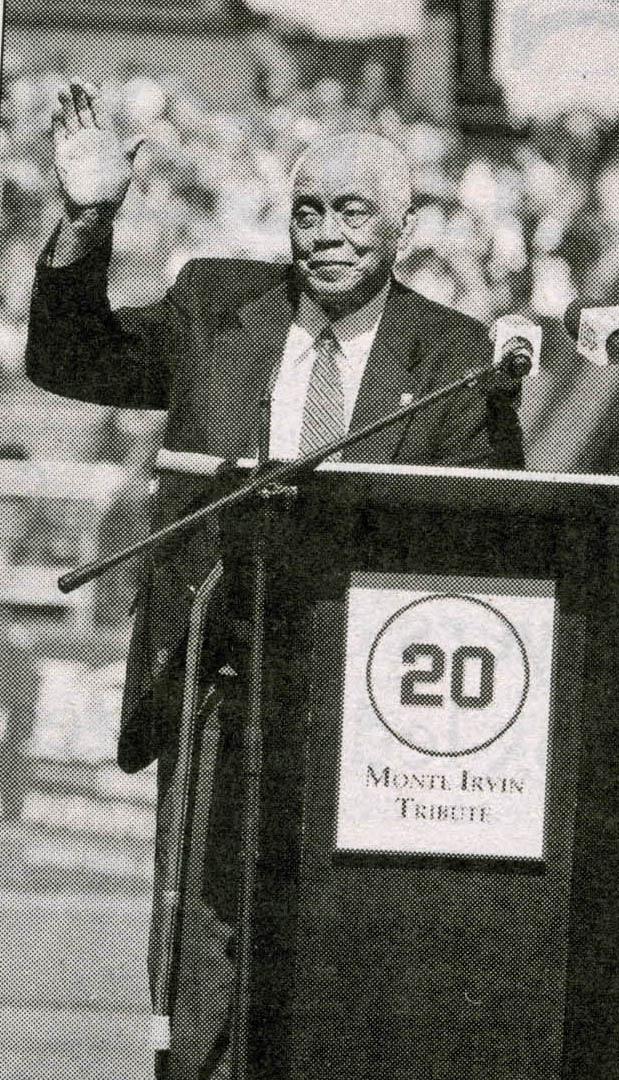
Two days ago, while I was transporting the nearly age 92 years old Hall of Famer Monte Irvin to the National SABR Day program at the Houston Sports Museum at Finger Furniture, things were going calmly in our discussions until I brought up the name of Ray Dandridge. I told Monte that I always wondered and felt sad about the fact that a great former Negro Leaguer like Ray Dandridge never got his chance to play in a single major league game.

I could sense the change in Monte’s passenger-seat posture as I spoke these words, but Irvin’s own voice soon enough took control of the floor.

“Oh my,” Monte sighed. “That was so wrong that Ray Dandridge never got his chance. We (The New York Giants) could have won it a lot easier in ’51 had we been able to bring up Dandridge from Minneapolis to play third base early enough. Heck! We could won the pennant in 1950, had we been allowed bring him up from the same Millers club, but it just never happened.”

And why not? Why didn’t the Giants ever call up Dandridge? They controlled his contract from 1949 through 1952 – and all he did in that time was tear up AAA with a .362 average in ’49, a .311 mark with 11 homers in ’50, a .324 BA in ’51 and a final .291 in ’52, when he was then age 39.

Did the Giant consider Dandridge too old for the big league jump?

“That wasn’t it,” Monte Irvin says. “I pled with (manager) Leo (Durocher) to call up Ray in 1951. He’d always just fumble around for an answer as to why we were standing pat, but I felt I already knew the answer. You see, we may have broken the color line in 1947, but there was still an unspoken quota system in place in the late ’40s and early ’50s. The Giants already had me and infielder Hank Thompson as their black players and they were reluctant to add more.”

As one result of this color cautious culture, the great Ray Dandridge was denied his performance-earned twilight shot at big league playing time while he was still performing better than most others between ages 36 and 39. Dandridge crossed the age 40 mark late in the 1953 season, finishing out his last season as an active player by hitting .268 with Oakland and Sacramento of the Pacific Coast League.

Ray Dandridge broke into the Negro Leagues with the 1933 Detroit Stars. He spent the next five seasons with clubs in Newark (1934-38) before jumping to the Mexican League for nine of the next ten seasons, returning only in 1944 for another year at Newark. He returned to the States to take over as the playing manager of the New York Cubans before signing with the Giants and a minor league assignment in 1949.

Ray Dandridge, Hall of Fame, 1987.

After his playing career, Dandridge did some scouting for the San Francisco Giants and he also ran some other businesses outside of baseball. He retired in Florida and passed away there in early 1994 at the age of 80. Before he died, Ray Dandridge enjoyed one day for hollow redemption when he was inducted into the Hall of Fame in 1987. How much sweeter could that moment have been had Ray Dandridge been allowed to help the New York Giants win a pennant or two or three in his talented twilight years?

A short time ago, I picked Judy Johnson as my All Negro League Third Baseman, but Monte Irvin has now dented that choice for me in favor of Ray Dandridge. “He was simply the greatest there ever was,” Irvin says. “Ray could out-field and out-hit any other third baseman I ever saw in the Negro Leagues – and the New York Giants really missed out by not bringing him up while he was at Minneapolis.”

I can’t argue with Monte Irvin. I always liked the guy, anyway, but now I’m a full-blown Ray Dandridge fan. Move over, Judy Johnson. My eyesight for greater talent just received a major boost from somebody who ought to know.

SABR DAY IS FOUR-BAGGER

January 30, 2011

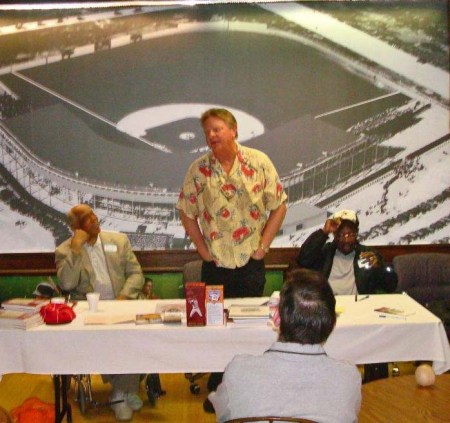
L>R: MONTE IRVIN, LARRY DIERKER, JIMMY WYNN.

The Larry Dierker Chapter of SABR (The Society for American Baseball Research) had a tag-em-all meeting yesterday, Saturday, January 29th, from 2-4 PM in celebration of our National SABR Day gathering at the Houston Sports Museum inside the Finger Furniture Store located on the historic site of old Buff Stadium (1928-1961) on the north side of the Gulf Freeway at Cullen. Sixty-eight members and guest signed the reception book and another twenty to thirty later unregistered show-ups ran the attendance count close to 100. Those who stayed for the whole baseball rodeo hardly missed a subject that had anything to do with the game, and especially with Houston history of same.

Chapter Leader Bob Dorrill

Chapter leader Bob Dorrill spoke about the importance of National SABR Day as the one day of the year that all chapters unite through out the land in a united effort to promote the purposes of SABR to all persons interested in the preservation and celebration of baseball’s history.

As General Manager of our vintage base ball club, The Houston Babies, I received a beautifully framed team photo of the unforgettable club itself, thanks to a brief, but forever appreciated acknowledgment from field Manager Bob Dorrill. All I can say is thanks. I love you guys to pieces. – I just wish that you’d stop going to pieces in the middle of a game. Maybe this year will be better. Go further – I really think it will be. Take it one more foot slide forward: I believe in you, Babies! This year we are going to scorch the pastures of Southeast Texas with all the power of our innate, but, so far, unused playing ability.

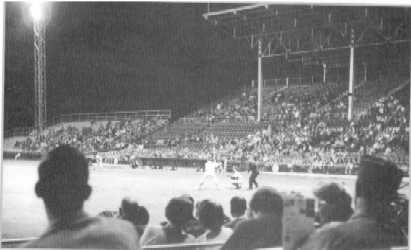
In that light, Chapter namesake Larry Dierker talked about Houston’s early professional start in the 19th century as the Houston Babies. On a kidding note, Dierker wondered if any city or town ever began with a more humiliating nickname. Seriously, he then launched into an interesting summary of how Houston flowed and ebbed as a baseball town over the years. He painted a moving picture of the mind with his account of how Houston Buffs fans once started out from homes as far away as five miles away and began their walks to the ball games played at Buff Stadium, the park pictured in the mural behind the table in first featured photo. – By the time these walking fans reached the ball park, their singular steps had flowed together into a river of Buff fans, now converging upon that earlier version of our baseball heaven.

Jimmy Wynn and Monte Irvin both talked openly about their playing days in response to questions from the crowd. Scott Barzilla of SABR spoke briefly about his new book, “The Hall of Fame Index,” and visitor Dick “Lefty” O’Neal was also recognized for his book, “Dreaming of the Majors; Living in the Bush.” Those two gentlemen, along with Jimmy Wynn and SABR’s Bill McCurdy, who recently collaborated on “Toy Cannon: The Autobiography of Baseball’s Jimmy Wynn,” were also on hand after the meeting to sign copies of their various works.

Former Houston Buff Larry Miggins told some of his best anecdotal baseball stories. No one tell ’em quite as well as the old Irishman. Miggins and Vin Scully attended the same high school in New York City. While they were there, Scully predicted that he would be broadcasting major league games and would be behind the mike on the date that Miggins broke into the big leagues with a home run –  and that’s exactly what happened. Scully was calling the game for the Brooklyn Dodgers when Larry Miggins broke into the big leagues for the St. Lois cardinals by hitting a home run off Preacher Roe. – How’s that one for A SABR Day spine-chiller?

Ton Kleinworth of SABR designed and presented a brand new trivia contest called “Name That Player.” SABR’s Mack WIlson then followed Tom with a nice little multiple choice trivia contest. The winner, Mark Wernick of SABR, received a Larry Dierker action figure donated by Mike Acosta of the Houston Astros.

Dave Raymond of SABR and the Houston Astros radio broadcasting crew gave us a nice conservative, but optimistic evaluation of the 2011 club. Dave sees the Astros as having a lot more pop up the middle with the additions of Cliff Barnes at shortstop and Bill Hall at second base. Both are hardscrabble infielders with long ball capacity, but low OBP figures. Low OBP was a problem last year and needs to improve, according to both Raymond anyone else who is paying attention. The pitching is adequate and we may be only a key player development breakthrouh away from getting back into the thick of things.

Greg Lucas of SABR and Fox Sports followed Raymond with a nice cap on the NL Central for 2011. According to Greg, the Cards, Brewers, and Reds are the frontrunners, but the Astros and Cubs may get back into contention on an eye-flick. Lucas only discounts the Pirates due to their bad pitching.

Between the lines of these comments from Raymond and Lucas, the gentle hum of spring hope was beginning to germinate – and isn’t that exactly what it’s supposed to do this time of year?

As for me, I dove deep into history. I (Bill McCurdy) offered the challenge that we need to develop a chapter plan for researching and accurately writing Houston early baseball history from 1861 to 1961. That century span covers the documentable era of time that passed between the formation of the first Houston Base Ball Club through the last season of our minor league Houston Buffs.

Curator Tom Kennedy welcomed one and all to the beautifully refurbished Houston Museum of Sports History. Couched on the site of the still embedded home plate from Buff Stadium on its original spot, owner Rodney Finger and the Finger family deserve incredible appreciation for all they have done and continue to do to preserve this important artifact marking on the trail of Houston’s baseball history. Now, if we can only rouse the same effort on the task of tagging and noting the significance of earlier venues, where the first Houston Base Ball Club was formed in a room above J.H. Evans’s store on Market Square in 1861; where the Houston Base Ball Park existed downtown when our first professional club took the field here in 1888; and when and where, for sure, the first game was played at West End Park on Andrews Street. I refuse to go in the ground until those facts are sorted out and published somewhere by someone who cares about Houston baseball history.

The Giants finally retired Monte Irvin's #20 in 2010.

My extra treat was all tied into the ninety minutes or so that I spent driving Hall of Famer Monte Irvin to and from the meeting, between downtown and the west side. I couldn’t begin to share everything we talked about in the space we have here – and I wouldn’t, anyway, on the grounds that he spoke to me in confidence on a lot of baseball subjects with opinions that are his and his alone to divulge in a public forum.

You probably have figured this one out from hearing him speak: Monte Irvin is one of the kindest, truest gentleman you could ever hope to meet. He attributes his long life to having a wonderful, guiding mother and a whole lot of luck. When pressed, he will concede that genes help out too, but he clings pretty close to the wisdom too that “to become an older person you first have to survive being a younger person” and, as far as Monte is concerned, that’s where the luck comes in.

I can share one Monte Irvin Story. Almost apologetically, I asked Monte about that 1951 steal of home in the first inning of Game One in the Giants’ 5-1 World Series victory over the Yankees. I realize that I probably was about the 5,000th fan to ask, but I couldn’t help myself.

Monte was on third with a triple. Allie Reynolds and Yogi Berra were the battery for the Yankees. And Bobby Thomson, a right-handed batter, as you well better know by now, was at the plate. All of a sudden, Monte breaks for the plate. He is stealing home, and he does so successfully, sliding under Berra’s tag for the Giants’ second run in the first stanza on one of the too few days the ’51 Series went the Giants’ way,

“When did you know for sure you were going to try that steal of home?” I asked.

“I pretty much knew it going in,” Monte says. “I had stolen home five or six times during the season and I also was quite familiar with that slow deliberate delivery style of Allie Reynolds. Reynolds threw hard to make up for the slow delivery, but he usually threw high, which was what he was doing in that moment with our batter, Bobby Thomson. I knew I had a good chance of making it. I also had talked with Leo Durocher prior to the game and he had given me the green light to try, if I saw the opportunity.  By the time Reynolds saw what I was doing, he was already in motion to launch another high, hard one. That didn’t change. The pitch came in high and hard. I came in low and hard. By the time Yogi can get his glove down to tag me, I’m safe. Had Allie thrown it low and hard, he probably would had me. It didn’t work out that way.”

Near 90 showed up for SABR Day in Houston

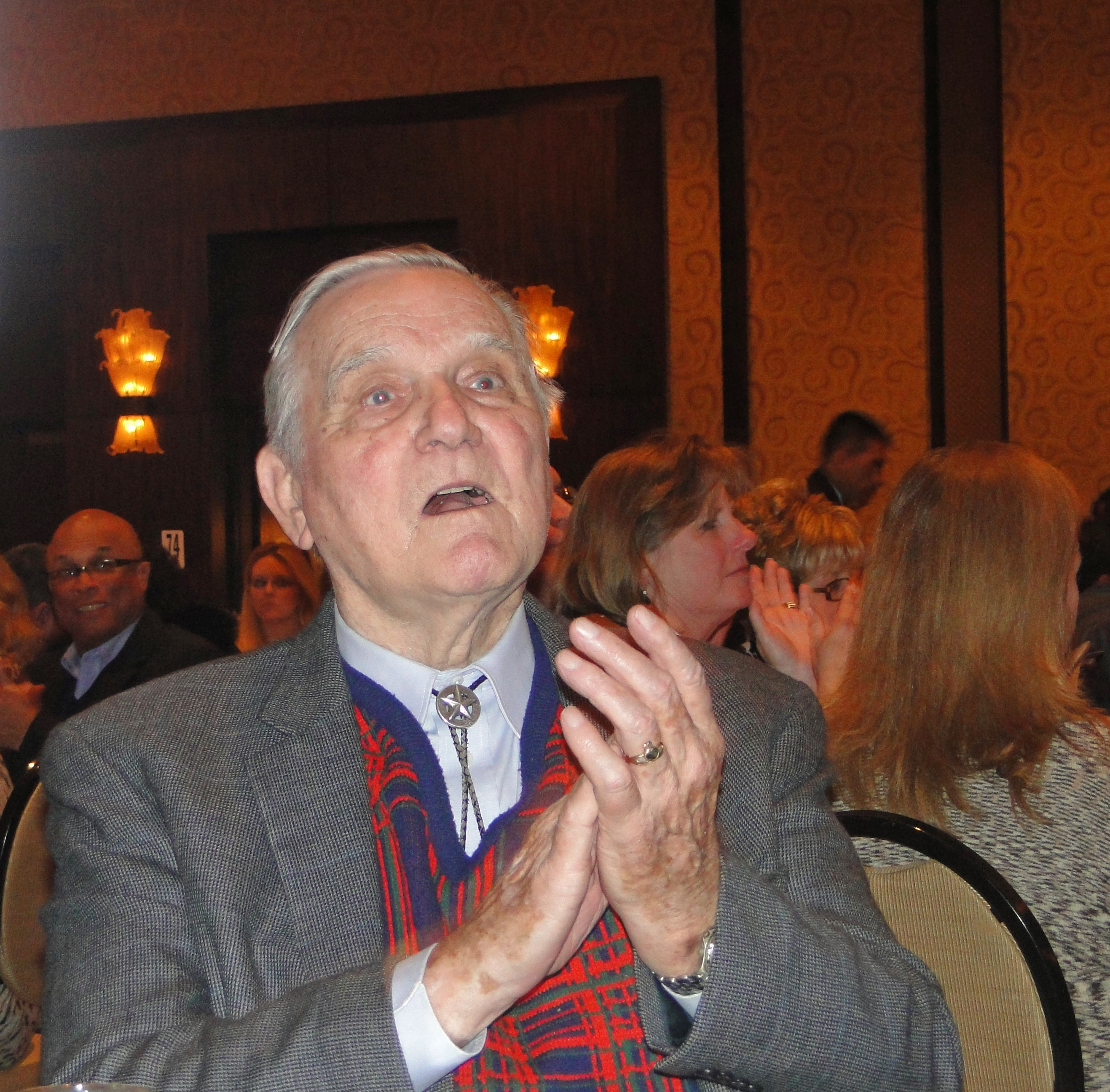
Before we arrived back at Monte’s place at the end of the day, he had started reminiscing about the many Giant teammates that are now gone. That pretty much is going to happen when you live as long as Monte has. He turns 92 on February 25th.

I finally blurted out, “Listen, Monte, you may have gotten this far by being lucky, but you are here for a reason. And part of that reason, as I see it, is to help baseball people remember what’s really important about the game and life itself. We need you to hang around forever as our role model, our teacher, and our national treasure.”

Monte smiled. “I’ll give it my best shot,” he promised.

SABR Day in Houston was a great day in general. A lucky day for some of us. And a blessed day for us all.

Rube Foster and Christy Mathewson

January 24, 2011

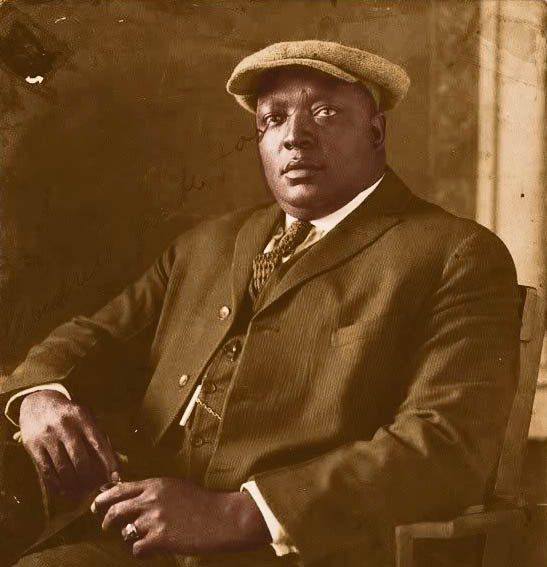
Rube Foster

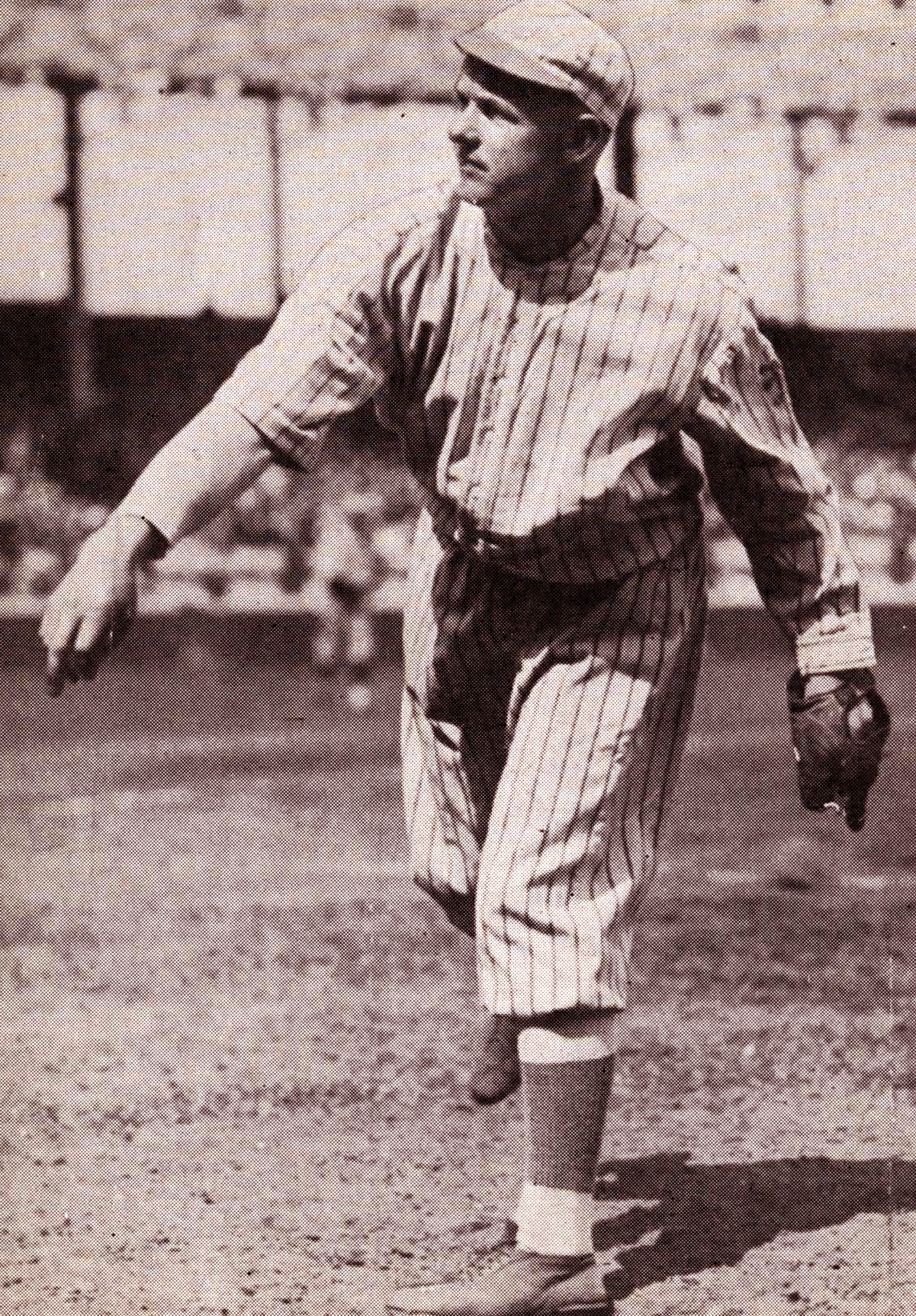
Christy Mathewson

Rube Foster established himself as one of the great early Negro team pitchers at the very dawn of the 20th century. Foster went on to establish the Negro National League in 1920 as his major contribution to the survival of organized black baseball during the doleful days of wholesale player segregation prior to Jackie Robinson breaking the so-called color line with the Brooklyn Dodgers in 1947.

Christy Mathewson was a contemporary younger lifetime peer to Foster. Pitching mainly for the New York Giants, Mathewson went all the way to the Hall of Fame with a 17-year record of 373 wins, 188 loses, an ERA of 2.13, and 79 career shutouts. Much of his hard and clear success Christy rode on the back of his warhorse pitch, the “fadeaway.” That was Mathewson’s name for a pitch that would eventually spread to others and achieve greater identity as the “screwball.”

An ancient legend, one going all the way back to that early time, is – where did the young Mathewson learn how to throw such a deadly pitch at his at his tender age? Most suspicious eyes turned immediately to his New York Giants manager and close personal mentor, the one and only John McGraw.

The story with greatest adhesion centered on McGraw’s character and his history of trying to recruit talented “Negro” players and then passing them off as either Native Americans or Latin American players with the help of a name change. As far as we know, McGraw never got away with this ruse, but it wasn’t hard to hem that history to either the possibility, or the probability, that McGraw finally settled for the next best thing to actual black player recruitment. – “How about bringing in one of the great Negro pitchers and paying him to teach my greatest young white guy how to throw his best pitch?”

Sounds reasonable and doable to me. It’s also reasonable to assume that a hungry Rube Foster could have used the money and been willing to trade his knowledge for cash. Isn’t that what teachers get paid to do?

Accessibility was no problem for the Foster-Mathewson legend either. In 1903, Rube Foster was pitching for the black club known as the Philadelphia X-Giants. In 1904, he moved over to the Philadelphia Giants, another Negro team of that era. Either way, Foster was just a short train ride away from New York City and the home of McGraw, Mathewson, and the famous New York Giants.

The problem here is the same set we always have with delicious legends that most people hope are true: (1) There’s no proof anywhere that it actually occurred; (2) Everyone who could know the truth is long ago dead; and (3) there is some suggestion that something else happened.

Mathewson says he learned the fadeaway in 1898 while pitching for the semi-pro Honesdale (PA) club. He picked it up from a left handed teammate named Dave Williams, a fellow who later had a short-term stay with the Boston Americans in 1902.

It helps to think of a fadeaway/screwball as a curve ball that breaks the other way because of the inverse twist of the wrist the pitcher applies to the ball at its release point. Viewed from a right-handed pitcher’s perspective, a screwball works basically in this way: Instead of breaking in on a right-handed batter, it falls away from the outside of the plate as it reaches the hitting zone. That fading-away motion, of course, is the reason that Mathewson called it his “fadeaway” pitch. Because it messes with a batter’s head, it later became more famously known as a “screwball.”

People who argue that Mathewson needed the fadeaway to even stick in the big leagues haven’t spent much time researching this incredible athlete’s background. As a fullback in football at Bucknell, for example, Christy Mathewson was named to the Walter Camp All American team in 1900. His baseball pitching success prior to the Giants seemed to be doing pretty well too with a superior fastball and his incredible pitch placement control. Had he not learned the fadeaway, he would have added or improved upon his curve to the extent of making a nice career for himself in the majors, anyway. That’s my guess.

The fadeaway may have been the pitch that exalted Christy Mathewson from good to great, but it wasn’t all he had, – and we’ll never know for sure where his total learning experience began and ended.

Personally, and in spite of Honest Christy’s own proclamations, I would not be surprised to know that Rube Foster may have also later taught something to Christy Mathewson. Christy was a very honest man, but he was also human and subject to the way personal perception interprets reality. For instance, I can see Mathewson taking lessons from Foster and also thinking, “Hey! This is what Dave Williams was trying to show me back in 1898!”

We’ll just never know.

Mythology in Baseball History

January 19, 2011

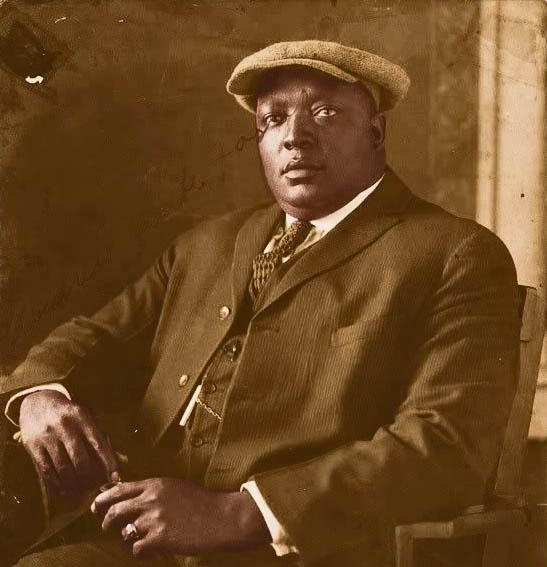
Rube Foster: Did he really teach the fadeaway pitch to Christy Mathewson?

Speaking of subjects that are way too big for any singular blog column, “mythology in baseball history” probably sits at the mountaintop of those that fit the thesis that such topics even exist. That being said, we shall give it a humble try, anyway.

Why does the subject even matter? Easy. We may as well be asking: What does the game’s attraction feed upon? It isn’t the mere tonnage of stats generated by the game, or the base line scores of all past World Series games. None of these detailed facts even matter unless … unless they spring from or generate some new myth, or some sensational fact that eventually shall evolve into a myth that almost all fans know or help distort further and higher onto some new accepted level of factual assimilation.

Perception is reality, right? Well, it isn’t really, if you break down reality on the basis of discernible and measurable facts, but it sure puts a lot of individually constructed realities on collision courses with each other, which is often. We humans are much more comfortable with the fly-by-our-eyes assumption that how we see things is the way they are – and many are prepared to fight in defense of that idea. Now, given that little hot tonic of human tendency, myths are often the “the straw that stirs the drink” of argument.

One of the lesser known myths in baseball history concerns Rube Foster, the great old Negro League pitcher and later founder of the 1920 Negro National League. Legend has it that New York Giants manager John McGraw once hired Rube Foster to teach the fadeaway, or screwball, pitch to a young hurler named Christy Mathewson. That would be a great fact to nail down, but it cannot. As with almost all myths, the original source of this idea cannot be discernibly identified – nor has extensive research turned up anything in writing from that era to confirm it ever happened. The Foster-Mathewson Connection will continue to hang there on the myth rack of baseball history and, every now and then, someone will write about it as though it actually happened as a proven fact – thus, pumping up the perception’s credibility as pure reality.

Got that?

My guess is that “Ruth’s Called Shot” at Wrigley Field in the 1932 World Series is probably the biggest revered facts-challengeable myth in baseball history, right behind the Red Sox’ infamous “Curse of the Bambino,” which offers no hope for logical proof or disproof beyond the acceptance or rejection of logical thinking itself.

Did Babe Ruth really predict when and where he would hit a home run as he stood in the batter’s box at Wrigley Field that famous day? Just about the time we seemed on our way to putting this one to bed as a practical joke that even Ruth had prolonged for the fun of it a few years ago, a man comes up with a grainy home movie that he claims his grandfather took of Babe Ruth during that time at bat against Charlie Root. The movie clip clearly shows Babe Ruth raising his arm and pointing somewhere in the direction of center field.

Now the called-shot beast will never die.

Happy baseball fact-finding, folks. And try to remember something that even baseball research scholars seem to too often forget: When you see something in print, that fact alone doesn’t make the information true – nor does it make the author of this material either an authority or a primary source. These are the basic facts that serve as the foundational platform for all investigative reading, but they don’t scream out loud for themselves unless you bury them deep in your own researcher bones.

Houston Baseball and Dr. King

January 18, 2011

"I have a dream that my four little children will one day live in a nation where they will not be judged by the color of their skin, but by the content of their character." - Dr. Martin Luther King, Jr., Washington, DC, 8/28/1963.

On the very day that Dr. Martin Luther King, Jr. delivered his iconic “I Have a Dream Speech” in front of the Lincoln Memorial in Washington, DC back on August 28, 1963, the Civil Rights movement in Houston, Texas had barely moved a practical inch since its national inception in 1954. That earlier year had witnessed the end of total segregation in local professional sports with the addition of the wonderful Bob Boyd to the roster of the Houston Buffs in May 1954 as the first black to formally play with whites here in any team sport.

Bob Boyd still had to live and travel on the road to inferior segregated accommodations in 1954. White Houston and Texas were neither ready for greater physical mixture of the races back then. Not all of us white Houstonians felt this fear of integration in 1954, but the vocal majority that ran things for everyone mostly did and, by their actions and inactions, the white-dominated power structure allowed schools, landlords, and local businesses to keep up their courses of racial segregation and outright denial of service to blacks for a while longer in “subtler” ways..

Through 1954, that little uncovered grandstand down the right field line served as the "colored section" and one blight on the good old days at Buff Stadium in Houston.

Segregation continued to breathe in Houston until it could no longer stand up against the joint forces of social protest and the determination of the federal government to support a vigorous new policy on Civil Rights. These mighty forces of support for Constitutional allegiance overwhelmed the most serious forms of public resistance to change. Those of us who supported these changes were largely young and idealistic. We believed in our country as a place where we all maintained our rights to differ from each other, but that we trusted that we were also a nation at the end of the day that would bear forth our identity as The United States of America.

By the time of the famous speech of Dr. King in August 1963, the old Houston Buffs had been dead for two years as a minor league franchise. The City of Houston now played its professional baseball in the National League at Colt Stadium as the Colt .45s. The 1963 Colt .45s were a racially integrated ball club, all right, but young black players from northern cities, players like future star Jimmy Wynn, were also still busy getting their full taste of what life could be like in a transitional “southern city.”

By 1963, the old supporters of full segregation had gotten the hammer and adjusted their tactics. Instead of making it easy for the people to protest or petition against loud statements of “Segregation Spoken Here,” the old guard went to quieter forms of resistance to integratiion.

Residential services put out the “no room in the inn” sign to black applicants; restaurants evoked the assumed power of their ever popular “we reserve the right to refuse service to anyone” signs as a basis for not serving minorities; and some movie theaters put up the “sold out” sign for blacks attempting to buy tickets at previously all white venues.

Bob Boyd broke the "color line" in all Houston sports when he joined the Houston Buffs baseball club in May 1954.

In a perfect world, we would have resolved all these differences by now, but forty-eight years beyond “I Have A Dream,” we have achieved only a smaller victory. Blacks in Houston may now live, work, and commerce as they please in 2011 Houston, but that doesn’t mean that blacks are now impervious to more subtle and intelligently designed forms of discrimination. They are still out there – just waiting for ignition by smarter white racists whose skills for survival exceed their impulses to act in blatant hatred. These monsters do it quieter.

On the big plus side, Houstonians appear to be much more color-blind today about their sports heroes. Maybe when “he runs pretty fast for a white guy” disappears, we’ll know we’ve made real progress. In the meanwhile, we may have to settle for the fact that fans don’t go around saying “that Michael Bourn sure is a great little black center fielder.” Colorblindness is key to really getting to know the person behind the skin, but it only happens individually. Once more, the reminder checks in. Life works a lot easier when we look for signs of practical improvement and not get stuck on how things “should be” in a perfect world.

Houston baseball is what it is as a direct result of the Civil Rights Movement. The same is true of Houston. Today we are poised to become one of the great international cities of the world. All we have to do is keep making progress on our commitment to both “respect difference” and “equalize opportunity.” The cream will rise to the top from there.

Thanks for everything, Dr. King. You weren’t perfect either, but you had more vision, courage, and faith in America than just about anyone else in history . Many leaders put their lives on the line for the sake of power. You put your life on the line in behalf of righteousness. Thank you for the gift of that great love and devotion to God’s Work.

Is Andy Pettitte Done?

January 17, 2011

Milo Hamilton Interviews Andy Pettitte, some time during his Astros sidebar days.

Spring training 2011 is coming on like the dawn, but General Manager Brian Cashman of the New York Yankees is once more on hold for a decision from star lefty pitcher Andy Pettitte of Deer Park, Texas. The 6’5″ greatest winning pitcher in Yankees post-season play is again saying he may retire to be closer to his family and, this time, it sounds as though he may actually mean it. It could still turn out to be a way to avoid the monotony of spring training with a late signing, but we shall have to wait and see. Quit now or keep it up, the man has performed pretty darn well through 2010, no matter what happens next.

Over the course of sixteen seasons (1995-2010), Andy Pettitte has fired a regular season career mark of 240 wins against only 138 losses, with an ERA of 3.88 and 2,251 strikeouts. Although he has registered only two 20-win seasons, Andy has been consistently in the high to mid teen range on season wins over the course of things. Over the long playoff haul with numerous winners, even during his three Thomas Wolfe-ian Houston sidebar/sidetrack seasons as an Astros (2004-2007), Pettitte compiled a wonderful record of 19 wins, 10 losses, and an ERA of 3.83. in his (count ’em) eight World Series appearances, Andy Pettitte has registered a winning mark of 5 wins against 44 losses with a 4.08 ERA.

Along the way, Pettitte also has pitched in three All Star Games (1996, 2001, 2010),

Sadly, Andy Pettitte is a Houston area guy who wanted to come home when he signed with the Astros in 2004, after nine seasons in the The Bronx. It almost worked out. Then (and here’s where we only have public information to go by), after three years as an Astro, Andy couldn’t get more than a one-year contract offer from Houston at another of those times he was supposedly thinking about retirement, That changed when his old Yankee club came back to him with a two-year offer at better money to return to New York.

In the four seasons he’s marked into Yankee Career II (2007-2010), Pettitte has chalked up another 54 wins. Do you think the Astros might have been able to use that “54” productivity over the same course in time? Oh well. It wasn’t to be.

My memory of Andy Pettitte as an Astro will always be framed by the belief that he really wanted to be here. That isn’t true of every ballplayer who ends up with your club, nor is it always important, except in the sense that caring makes bonding and long haul commitments easier to generate. Sometimes, opportunity alone is the main attraction to signing with a club. Opportunity and matching performance can get it done in the short run of a brief contract for most players – and the same formula may even work for a few guys, long-term. It’s just undermining to the interests of a player who wants long-term commitment when he feels the club is only interested in him short-term at a cut-rate price.

I cannot help but feel that Andy Pettitte took the Astros’ one-year, low ball salary offer as a sign of disinterest back in 2007 – and that he then took the Yankees’ two-year, bigger bucks offer as a sign of come home to New York, where you are really wanted. – What else are we to think? Andy took the Bronx bucks.

I do think Andy really felt he was home for good during the time he actually played for the Astros. My signature memory of Andy Pettitte as an Astro came about while he sitting in the dugout. I’ll never forget the look on his face when Albert Pujols of the Cardinals hit that infamous bomb off Brad Lidge in Game Five of the 2005 NLCS game at Minute Maid Park. Andy was sitting on the home club bench when it happened – and as the camera zeroed in on his face for a closeup. In the real-time that the Pujols homer was happening, we got to see this unfolding expression on Andy’s face: First, the eyes get really big as the face drops to an open-mouthed, slack-jawed position. Then the lips start moving, ever so slowly, but the un-hearable words they speak are unmistakable: “OH. MY. GOD.”

As in all things over those three years (2004-2006), Andy Pettitte’s Pujols reaction was pure Astro. He had come home to play, but like Nolan Ryan before him, it wouldn’t be possible for Andy to stay forever. And he won’t be back as a player because, as everyone either already knows, or soon enough gets to find out: You can’t go home again.

That’s life.

SABR Celebrates at 2011 Houston Baseball Dinner

January 15, 2011

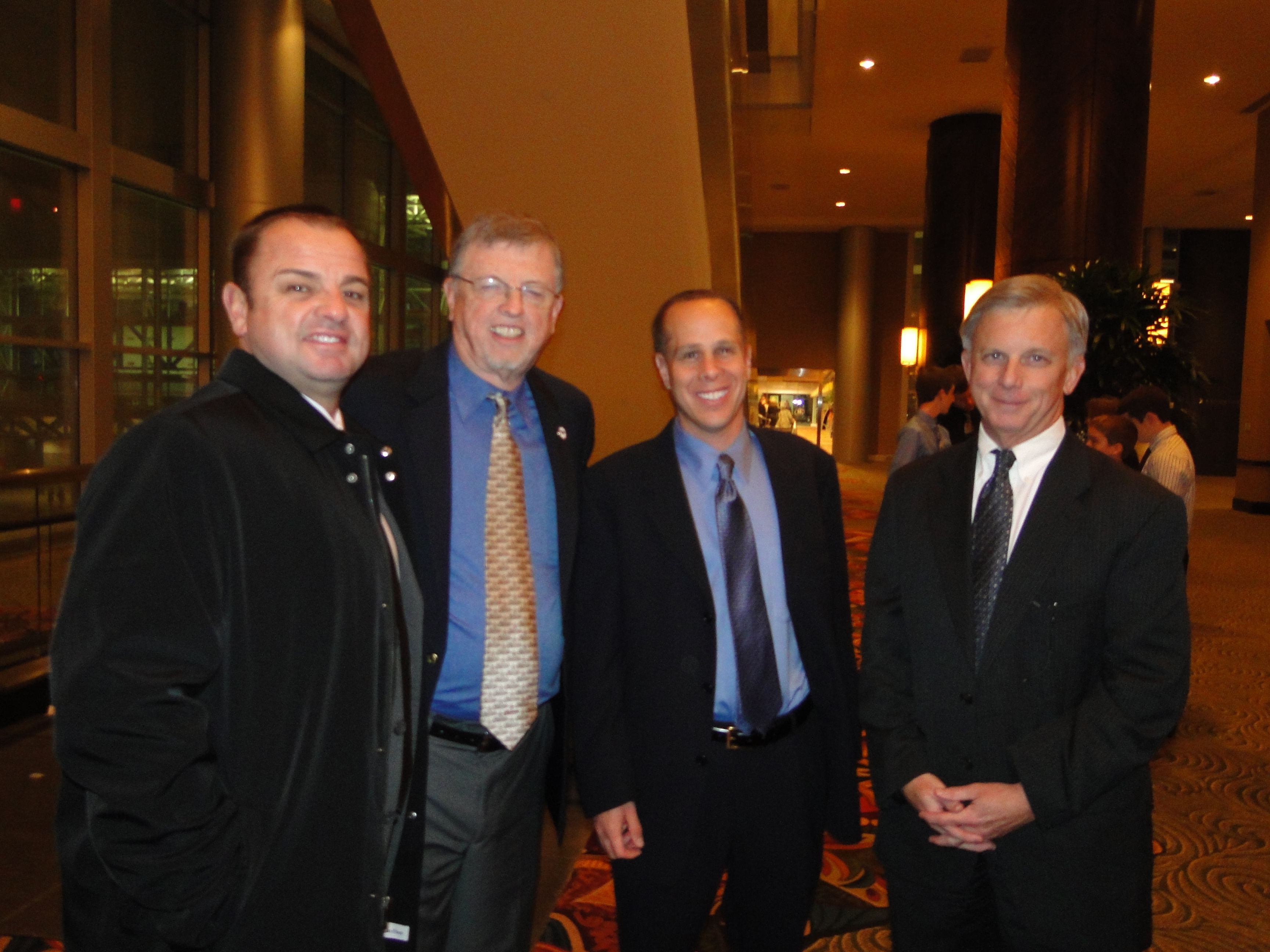
(L>R) Bobby Heck, Astros Ass't GM, Scouting; Bob Dorrill, SABR; David Gottfried, Ass't GM, Baseball Operations; Ed Wade, Astros General Manager.

Twenty SABR members at two SABR tables were on hand last night to help celebrate the 2011 version of the annual Houston Baseball Dinner, The numbers did not the include the broad scattering of many other SABR people at various other tables throughout the crowd of 1,000 people in attendance at the Hilton Americas downtown on January 14.

The dinner initiated years ago by the late Allen Russell and his wife Jo Russell, along with the help of longtime supporter and former sportswriter Ivy McLemore, was again a rousing success in honoring the spirit and accomplishments of the Houston Baseball community.

Mike McCroskey of SABR sang Our National Anthem to get the evening started. It was the second year in a row that our man Mike carried out that responsibility in fine voice and form. He must have done all right the first time. Otherwise, it’s not likely there would have been a second time. – Nice job, Michael!

In addition to the individual recognition that the dinner usually accords to the top high school baseball players from the area, the HBBD also recognized the Pearland Little Leaguers for their success in 2010 Little League World Series.

Astros Icon and new SABR member Jimmy Wynn and his wife Marie Wynn were on hand at one of the Astros tables.

Here’s how the special awards for the evening went:

Coach Rick Lynch took the Ray Knoblauch Award.

Anthony Rendon of Rice University won the Houston Area Preseason Major College Player of the Year Award.

Barry Waters of the Astros took the Fred Hartman Long and Meritorious Service Award.

Chris Johnson was named as the Astro Rookie of the Year.

Carl Crawford captured the Houston Area Major League Player of the Year Award.

Mike Rutledge received the Allen Russell Distinguished Achievement Award.

Former Astro and current Padre Geoff Blum took the Darryl Kile Award.

Brett Myers was named as the 2010 Astro Pitcher of the Year.

Hunter Pence took top honors as the 2010 Astro Player of the Year.

Meanwhile, about $18,000 was also raised by an auction set up to support the Grand Slam for Youth Baseball scholarship program.

The Houston Baseball Dinner is also our community’s way of turning the corner in the dead of winter each year and looking forward to the new baseball season. As always, it cannot get here soon enough for many of us, so, we’ll just have to keep on staring out the window or over at our computer screens until it gets here.

These other smiling faces from last night will also help remind us of the springtime that’s coming, with baseballs popping leather hard and bouncing even harder off their contact with real wooden bats. There is no “ping” in major league baseball and there is nothing nothing minor league about the smiles that follow.

C’mon clock! Get us to April, when the games really count. Menahwile, stay out of the cold and damp weather as best you are able.

Phil and Nancy Holland, SABR.

Bob Stevens & Son, Robbie Stevens, SABR

Larry Miggins, Former Houston Buff & St. Louis Cardinal, SABR.

John Miggins, Son of Larry Miggins & Charlie Sheen Look-a-Like.

Marsha Franty & Peggy Dorrill, SABR.

Peggy & Bob Dorrill, Deep in the Heart of SABR.

Top Ten Sidekicks in Baseball

January 13, 2011

Roy Rogers & Gabby Hayes (R) were saddle-up hero & sidekick buddies.

“Sidekicks” have always been the glue that made movie western, mystery, and comedy heros stick in the minds of film-watchers. Roy Rogers had his Gabby Hayes; Sherlock Holmes had his Dr. Watson; and Abbott and Costello, well, they both had each other. The net effect for all is that every fictional serial movie story always contains an attractive central hero-sidekick relationship in some form.

Yesterday the MSN Internet Search Site published their Top Ten List of the Greatest Sidekicks of All Time. Their choices ll derived from movies, television, radio, and (ever-s0-slightly) literature, but they were a fun exercise, even if you disagreed, as did I, with all their choices and their relative placement in order to each other:

MSN List of Top Ten  Sidekicks-Principals:

10. Chewbacca – Han Solo (from the movie “Star Wars”)

9. Kato – The Green Hornet (from radio, tv, & the movies)

8. Garth Algar – Wayne Campbell (from the “Wayne’s World” skit on Saturday Night Live, TV)

7. Tattoo – Mr. Roarke (from “Fantasy Island”, TV)

6. Dr. John Watson – Sherlock Holmes (from movies and literature)

5. Ethel Mertz – Lucy Ricardo (from TV’s “I Love Lucy”)

4. Robin – Batman (from comic books, radio, tv, and movies)

3. Ed Norton – Ralph Kramden (from TV’s “The Honeymooners”)

2. Deputy Barney Fife – Sheriff Andy Taylor (from TV’s “The Andy Griffith Show”)

1. Tonto – The Lone Ranger (from radio, tv, and the movies)

Billy Martin & Mickey Mantle: Who's sidekicking who?

I thought it would be kind of fun to open up this whole idea of sidekicks to pairings that go beyond simple human relationships and to come up with a list of My Top Ten Favorite Sidekick Pairings in Baseball. My list includes some flat out human matches, but it also takes in a few chemicals, substances, and conditions that are sometimes the sine qua non on total experience in one thing or another.

What I’m talking about should clear up as we go through the list:

10. Lou Gehrig – Babe Ruth. Great as he was, Lou Gehrig signed with the wrong club at the wrong time to be its leading man or major hero. As a junior teammate of The Bambino, Lou Gehrig was destined to do all of his great things from the sidekick seat in this Hall 0f Fame bound cycle.

9. Red Schoendienst – Stan Musial. Even his late career trade to Milwaukee failed to get the old redhead completely out of The Man’s shadow.

8. Billy Martin – Mickey Mantle. Who’s sidekicking who – or whom? Maybe I should have thrown in Whitey Ford and made it a three-way question.

7. Jack Daniels – Paul Waner. Paul Waner drank a lot, but he also hit safely a lot. He rounded first, heading for second, many a time with old Jack breath filling the air along his warpath. Paul Waner was not the only big league star that ever side-kicked his way into live action with assistance from Jack Daniels. He’s just the first guy that comes to my mind when I think of great players who succeeded in spite of themselves.

6. Peanuts – Cracker Jack. One sidekicks the other and they are both ballpark reasons why we fans don’t care if we ever get back.

5. Slippery Elm – Burleigh Grimes. As one of the spitball pitchers who got grandfathered into a lifetime pass on the new prohibitions against the use of saliva and other foreign substances on a baseball, I’ve always pictured Grimes walking to the mound with a pocketful of Slippery Elm bark and ready to snap at any young umpire who checked him out: “I’m Burleigh Grimes and I can do what I damn well please. Now just move along. I’ve got a ballgame to pitch.”

4. Mustard – Hot Dogs. (See #6 above. Mustard and hot dogs travel on the same level, They just aren’t mentioned in the game’s anthem.)

3. Change of Pace – Fastball. “Because, Mr. Fastball, you are absolutely nothing to fear without me!” – Change of Pace.

2. Absorbine Jr. – Athlete’s Foot. This one stands as an historic tribute to the kinds of clubhouse showers we had back in the day.

1. Bud Abbott & Lou Costello – Baseball. Who’s on First? These two funny guys became baseball’s ultimate sidekicks with their famous routine. They are priceless and ageless through their landmark contribution and they most likely will be the first voices you hear on your first visit inside the Hall of Fame Museum in Cooperstown, NY.

Have a great Thursday, everybody!

Good Old APBA Baseball

January 12, 2011


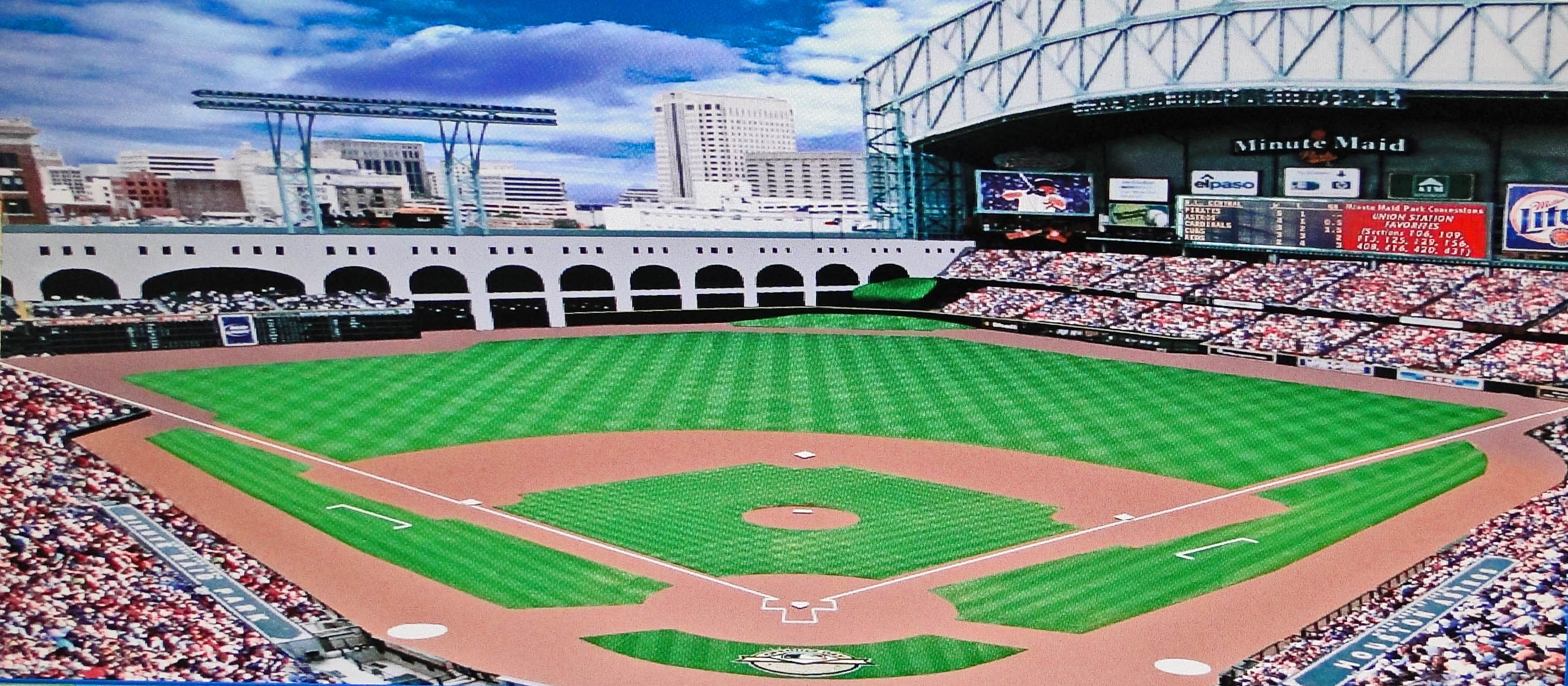
The APBA Baseball View of Minute Maid Park.


APBA Baseball has been around as a board game since 1951. I bought my first game set from the company in June 1953. I know that to be true because APBA  still has a record of my purchase by mail from our home in Pecan Park. I was 15 years old and still quite involved in anything that pulled me closer to baseball on a 24/7 basis.

Hey! I’m still that way! I never got over it, I suppose, except for the enjoyable, but testosterone-driven dating experience of my middle to later adolescent and young adult years – and all the time and energy I spent working my way through three college degrees and getting started in private practice. Whenever I settled down to life domestically and professionally, I always came back to baseball – and in whatever forms it may have been available to me as a player, fan, reader, researcher, and writer.

APBA Baseball was always a part of the flow. As one of the game’s earliest, most consistently realistic baseball results games, I was able to play the old dice and board deciphering codes to replay whole major league seasons and arrive at outcomes in the standings and individual hitting, pitching, and fielding accomplishments that were statistically in line with whatever happened to the same teams and players in reality.

APBA developed football, hockey, and golf versions of their game over the years, but these held no interest for me – nor did the simpler game of Strat-o-Matic Baseball. In APBA, I trusted. It was all I needed. No more. And no less.

Sometime in the late 1980s, APBA made the quantum leap into computerizing their game. I never played the board and dice version again.

Today I have ballpark settings for every park in the big leagues that APBA manufactures, a number of season disks for some of the greatest seasons in baseball history, and one player disk that contains the data for every major league player from 1876 through 1996. (APBA stopped making this disk once they woke up to the fact that it was hurting sales of the season disks. WIth APBA’s draft and wizard features, it’s pretty easy to put together whole seasons, make up your own players, and even pit your homeboy Pecan Park Eagles club into a desperate World Series contest against the 1927 New York Yankees.

I prefer to play the straight real-team match-ups. In a recent replay I did of the 2005 World Series, I started with a rested Roy Oswalt pitching for the Astros in the cool night opener in Chicago. The Astros ended up winning the Series in seven games in a match that was far more alive, interesting, and satisfying to us Houston fans than the reality contest was back then.

In APBA, players are effected by injury and fatigue, as well as their handling by different style managers. Ballparks are home run friendly and alien, depending on where you play – and games without roofs can be effected by wind and rain out threats.

After each play, a great written narrative tells you what happened on the play. If you are playing the game as an active manager, you may have to make decisions about what batters do, or how fielders play, but games are never turned over to your personal dexterity as the determining factor in play outcomes. Players ar noted on the field and on the bases by a name-line, but there is no visual animation. The action part of the game has to take place in your own brain as you witness an outcome that is credible to what’s probable in reality.

Here’s a link to information on the APBA computer baseball game. There are many other sources available with a few Googles:

http://apba.stores.yahoo.net/miasprapbafo.html

APBA Baseball beats the heck out of Rogers Hornsby’s prescription for winter: “Stare out the window and wait for spring training.” Of course, old Rajah would never have played APBA on the computer. He’d be worried about it hurting his batting eye.

My Negro League All Stars

January 9, 2011

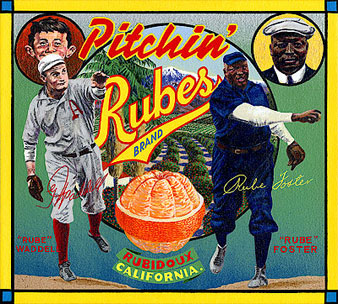
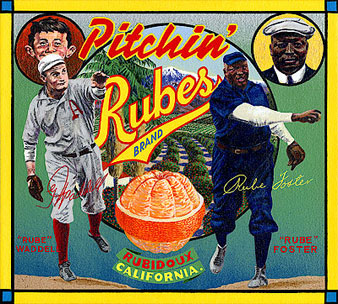
Back in the early 20th century, two Rubes, one black and one white, hit the winter barnstorming trail on their own terms, and mostly in the west, where white America was less bothered by the mixture of races. Note the images behind pitchers Rube Waddell and Rube Foster. The Waddell image is the same one that was later used to characterize the “Mad Magazine” comic book.” As the founder of the 1920 Negro National League, Rube Foster stands tall and alone as my all time favorite Negro League executive.

In picking my starting nine players from the old Negro Leagues, I worked with two simple parameters: (1) I restricted my choices to only those former Negro Leaguers who never made it, or had a chance to make it to the major leagues of organized baseball due to segregation; and (2) I made my selections from those players who also have since been inducted into the Baseball Hall of Fame at Cooperstown. As a result, I found that, with the exceptions of Hank Aaron and Willie Mays, and only perhaps, I would not have picked any differently without these restrictions. And, from what I’ve read, I would not have taken Satchel Paige over Smoky Joe Williams as my starting pitcher.

At any rate, here are my choices, by position. For a thumbnail on their career strengths and accomplishments, check out the Hall of Fame website link for further facts and commentary:

http://baseballhall.org/hall-famers/members/bios

My Negro League Starting Nine All Stars

Smoky Joe Williams, Pitcher

Josh Gibson, Catcher

Oscar Charleston, First Base

Martin Dihigo, Second Base

Judy Johnson, Third Base

Willie Wells, Shortstop

Turkey Stearnes, Left Field

Pete Hill, Center Field

Cool Papa Bell, Right Field

Notes: Most players from the Negro League era possessed and developed great versatility at several positions. It was a survival thing. The more you did, the longer you lasted. Some, however, went far beyond the call to greater utility into a rarefied territory of all around playing genius. The greatest of these greats was most likely a Cuban fellow named Martin Dihigo, now regarded by many historians as possibly the greatest player of all time. I put him on second base because he had to go somewhere for the sake of making sure this lineup contained all my choices for the best team I could put on the field, given the self-imposed restrictions I first place upon my selections. I also ended up with an outfield of speedy guys with strong arms who could all play center field well and easily handle the spots down each line.

Have a nice Sunday, everybody!