Posts Tagged ‘Baseball’

Best Pitcher Money Ever Bought.

May 11, 2010

Old Hoss Radbourn left a salute from here to eternity in this photo. Check out the finger positioning on his left hand. It wasn't the only time he pulled this same stunt, but what's a club to do? Some 59-wins in one season pitchers are simply eccentric on the grumpy side..

In 1884, Old Hoss Radbourn almost singlehandedly pitched the Providence Grays to a 10.5 game edge over the Boston Beaneaters for the National League pennant. He won 59 games for a club that finished 84-28, .750. At a salary of $3,000 per season, plus gaining the balance of Charlie Sweeney’s $2,700 salary after Sweeney was first suspended and then left the club, Radbourn turned out to be the deal on a pitcher that any club owner ever bought.

In 1884, Old Hoss Radbourn finished the year with 73 complete games in 73 starts. He won 59 while losing only 12, and he registered an earned run average of 1.38.

How do you like those apples? Over his career, he produced an orchard of sweet baseball fruit. In eleven seasons of big league ball, Hoss Radbourn won 309 games, lost 195, and had an ERA of 2.67. Deservedly so, he was inducted into the Baseball Hall of Fame at Cooperstown in 1939.

In the incredible 1884 season, Radbourn was credited with 60 wins for about a hundred years. That figure changed late in the 20th century when it was discovered by researchers that Old Hoss Radbourn had been given credit for a win in one game in which he entered in relief after his club had regained the lead.  That win was returned as credit to starter Cyclone Miller, even though Miller had pitched poorly and Radbourn had retired every man he faced in his three to four innings of work. The reasoning for the change was consistent with the current long-time policy on win assignments, even though Radbourn, like many relievers today, pitched more deservedly than the shaky starter he replaced, he wasn’t in the game when Providence took the lead that they never again surrendered.

Now let’s do the simplest math on the bargain that was Old Hoss Radbourn. When you combine his $3,000 salary with the approximate $2,000 he picked up from defector Sweeney’s salary, that still only a season income of about $5,000. Big by the standards of those times, but barely meal money on a short road trip for today’s big leaguers.

For $5,000, the ownership of the 1884 Providence Grays bought 59 wins at cost of about $84.75 per “W”.

Now there’s a baseball bargain that will never again be matched. Would you agree, Drayton?

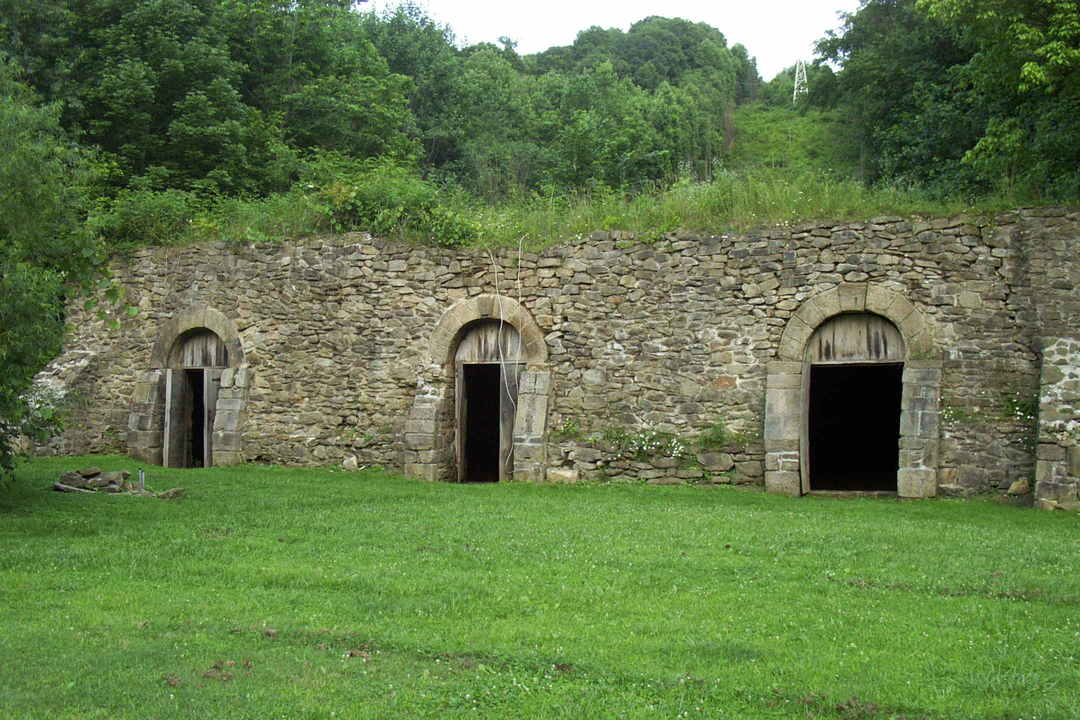
The Code of the Baseball Cellar.

May 8, 2010

In a vineyard cellar, sweet grapes transform over time into fine wines. In a baseball cellar, bitter whines transform over time into sour grapes.

Fellow SABR member Bob Stevens sent me two interesting links yesterday to new articles on the unwritten codes of baseball. The first of these is a piece by Jerry Crasnick of ESPN.COM; the second is the work of Jason Turbow, who’s also written a new book on the subject that he is calls  “The Baseball Codes.” Both are entertaining and fun. Check ’em out:

http://sports.espn.go.com/mlb/columns/story?columnist=crasnick_jerry&page=starting9/100505

http://sports.yahoo.com/mlb/blog/big_league_stew/post/The-Code-Ten-unwritten-baseball-rules-you-mig?urn=mlb,238853

These articles have inspired me to write a brief piece on the unwritten codes and truths that govern life for teams on their not-so-merry-ways to that residential place in the season standings we call the cellar. The first of these I’ve already written above as the caption to the vineyard cellar doors photo, but I shall repeat it here for the sake of putting all our storied eggs in one basket.

Ten Truths and Codes that Govern Everyday Life in Any MLB Division Cellar:

1) In a vineyard cellar, sweet grapes transform over time into fine wines. In a baseball cellar, bitter whines transform over time into sour grapes.

(2) Buyer’s Regret is a condition that multiplies exponentially for club owners and general managers of cellar-dwelling teams. If you have somewhere along the way signed a 200-pound outfielder to a multi-year contract to hit .300, but you now find him on the way to weighing 300 pounds, while hitting .200, you’re going to be much more aware of this inversely developing set of facts as a cellar-dweller.

(3) The players on your cellar-dwelling 25-man roster suffer from one of two immediately incurable conditions: They are either too young or two old.

(4) Over time, and it doesn’t take many losing streaks to get there, your cellar-dwelling players stop thinking of ways to win – and they start asking themselves in the field, by the second inning at the latest: “I wonder how we’re going to lose this one? All I can do is try to get my hits and stay out of the way of disaster. If I’m lucky, maybe they’ll trade me to a contender late in the season.”

(5) Your stalwart pitching ace may become disheartened by the absence of support over time and start thinking these kinds of thoughts prior to each start: “OK, I’ve got a chance to win, if I can keep the other team from scoring, if my defense only has to make routine plays, and if I can either pitch a whole game, or else, turn the ball over to the pen with no less than a four-run lead to protect.”

(6) The other clubs above the cellar dwellers all start looking more and more like the ’27 Yankees and you start hearing these kinds of comments off the cuff from some of the guys: “Uh-Oh! The Pirates are coming to town tonight. Hate to see it. They are starting to play us like we’re the eggs and they are the egg-beaters!”

(7) On cellar dwelling clubs, players start talking about post-season hunting and fishing plans by the First of June. Of course, in this instance, except for the Yankees, even the front-running clubs are doing the same thing. In New York, the players are talking more about their international business plans and how playing ball sometimes gets in the way of keeping an eye on their global industries and celebrity girl friends. Cellar dwelling club players don’t have celebrity girl friends – not for long, anyway.

(8) In homage to humility, cellar dwelling managers eventually get around to using something like a table of random numbers as a strategy for making out new lineup combinations. Eventually the goal of coming up with a winning lineup simply mutates into the challenge of finding a different lineup for every game that remains on the schedule from August 1st forward.

(9) By late August, cellar dwellers have figured out that they can finish last without the presence of any high-salaried players who remain on the roster. Anybody whose performance has not totally stunk is then traded as a cost-saving strategy for addressing the big and growing red-dollar deficit on the club’s profit and loss statement.

(10) Cellar dwellers eventually settle in to a nice quiet season play-out with their few remaining loyal fans who still attend games in person. These fans always show up, but they never boo, as was the case long ago with a famous cellar dwelling team we once knew as the St. Louis Browns before they moved to Baltimore and morphed into the Orioles in 1954.

”Our fans never booed us,” said former Browns pitching ace Ned Garver. “They wouldn’t dare boo us,” he added, “we outnumbered ‘em!”

Have a nice weekend, everybody, and stay away from the cellar, unless you’re going down there for some good wine.


Baseball Loses Robin Roberts.

May 7, 2010

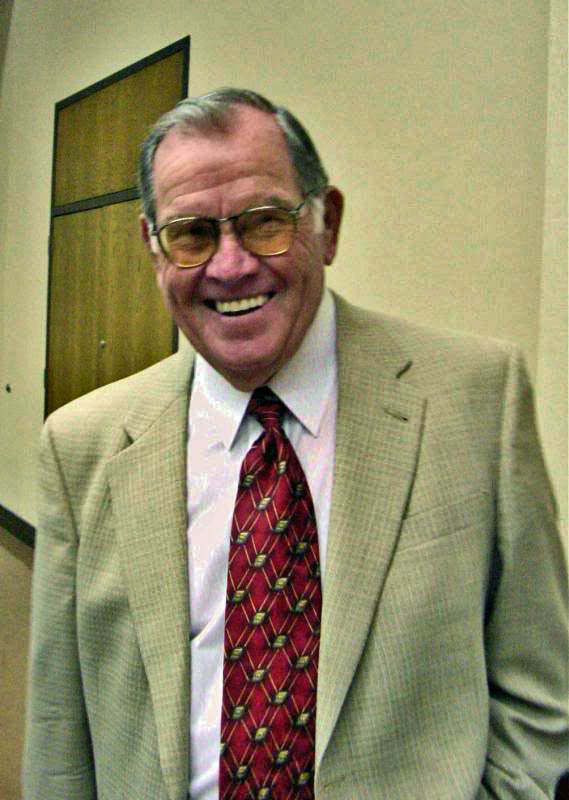
"C'mon, Robin! Give us that great old Whiz Kids smile!" -2001.

The news that we had given up Hall of Fame pitcher Robin Roberts at age 83 yesterday, May 6, 2010, hit me pretty hard. I was only a passing acquaintance of the former Phillies great, but he was really big to me back in the summer of 1950. That was the year that the 23-year old Roberts and his phellow band of Philadelphia Phillie juveniles pulled together to nip the Brooklyn Dodgers on the last day of the season for their city’s first National League pennant in thirty-five years. The Phillies then got swept by the New York Yankees in the 1950 World Series, but they had left their mark for all time upon the hopes of young people everywhere.

Robin Roberts (BR/TR) was born on September 30, 1926 in Springfield, Illinois. Before turning pro, he pitched for Michigan State University as a widely heralded future star, one of those that did not disappoint.

Starting with the 1950 Whiz Kids season, Robin Roberts rang up six consecutive seasons of twenty wins or more (1950-55). His best statistical season turned out to be 1952, when he compiled a 28-7 wins-losses record and an earned run average of 2.59.

Robin Roberts: The way I'll always remember him.

Robin Roberts had a 19-year major league career with the Phillies (1948-61), Orioles (1962-65), Astros 1965-66), and Cubs 1966. He had 45 career shutouts, 2,357 strikeouts, and he pitched 305 complete games. Pitchers worth their salt finished what they started back in Roberts’s day. In the past 25 years, Phillies pitchers have thrown a total of 300 complete games — five fewer than Robin Roberts worked by himself. Roberts made 609 starts, finishing more than half of those he began.

Roberts also gave up more home runs than any other major league pitcher in history. Chalk that one up to his tenacity for challenging the hitters and his ability to locate his pitches in the “I win or you win” zones. Current Phillies pitcher Jamie Moyer is on the verge of breaking that mark. Moyer, 47, has given up 498 homers, seven fewer than Robin Roberts at 505.

In his two partial seasons as Astro, Roberts went 5-2 with a 1.89 ERA in 1965 and 3-5 with a 3.82 ERA in 1966. For many of us Astro fans, he was just part of a baseball world that appeared to be headed toward some kind of new perfection. We had the first domed stadium that was big enough to handle major league baseball and we had THE Robin Roberts pitching for our newly rechristened Houston Astros. How right could we expect the world to get from here? What a great feeling that was, while it lasted.

Robin Roberts was inducted into the National Baseball Hall of Fame in 1976. He had been a regular annual supporter by his presence at Cooperstown induction ceremonies ever since and a passionate fan in retirement of his old club, the Phillies. It offers some small comfort to this diehard Astros fan to know that Robin Roberts lived to see his old club finally succeed in the World Series, but that’s as far as that kind wish goes. I wish it could have been the Astros, and not the Phillies, that had taken that 1980 playoff series, but that’s a horse of another color on this particular day. The subject today is one of the great right-handers of all time.

I always saw Roberts as one of those rare fastballers who also possessed strong finesse and ball location skills. In a way, as implied earlier, it may have been Robin’s ability to consistently locate his pitches in challenging places that inversely helped hitters to take him deep fairly often. Roberts didn’t seem to care enough to change his style. He still won the balance of his encounters and he did it often enough to make it to the Hall of Fame.

I first met Robin Roberts in 2001 at the reception prior to inductions into the Texas Baseball Hall of Fame in Fort Worth. That’s where I took the civilian shot of Roberts that appears in this post. When I asked Robin’s permission to take the photo, he responded willingly, but grimly, until  I posed the the request put forth in caption with the photo. After that photo, it was my pleasure to talk a few minutes with Robin Roberts about that magical 1950 season. That Phillies smile never left him in the process.

I last saw Robin Roberts only last year at the Joe Niekro Knuckle Ball banquet at Minute Maid Park. I remember thinking how well he looked. His passing this week at age 83 just drives home the point one more time: Live today. Never takes tomorrow for granted.

Goodbye, Robin Roberts. We shall miss your smiling presence at our baseball gatherings, but we shall keep you in our baseball memories forever.

1861: Baseball Comes to Houston.

May 6, 2010

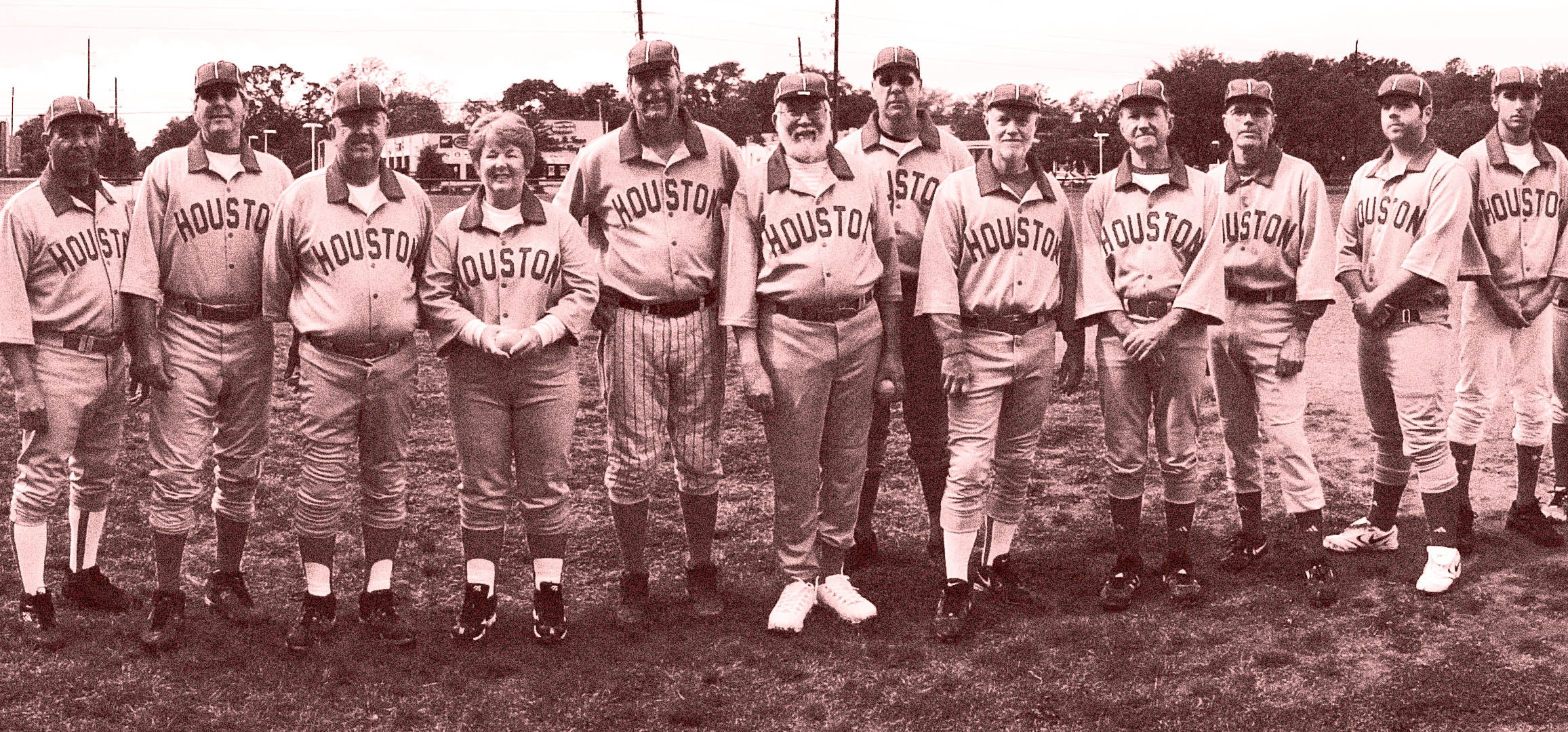
(L>R): 1861 Houston Mayor Will Hutchins. Major Abner Doubleday, Darrell Evans, J.H. Evans, CSA Capt. Dick Dowling, CSA Gen. Robert E. Lee, Glen McCarthy, 1st Houston Base Ball Club Board President F.A. Rice, Ike Clanton, Bat Masterson, Doc Holliday, & William H. Bonney. (J/K. The rest of the article is for real.)

1861 was a pretty tough, but dynamic year for the 25-year old City of Houston. The town was growing hard and fast as in inland port city and railroad transportation depot. At the same time, the winds of secession and civil war were blowing hard in the face of progress.

Local hero and city namesake Sam Houston stood strong and fast against the idea of Texas seceding from the Union that it fought so hard to join and then defend, but his was a voice of the minority in a struggle that seemed to most Houstonians as a battle between state rights versus federal authority – or more practically – the right of southern and new states to continue building their good fortunes on the backs of slave labor versus the national outcry against the hypocrisy of our American words in the Declaration of Independence and Constitution.

On the local level, Houston’s interest in the game of base ball kept on growing, in spite of the heavy hand that was about to fall on the future of all America. Houston had been founded by the Allen brothers of New York and it had been attracting settlers from the east coast region that already knew and loved the game before they arrived in Houston.

On April 16, 1861, just four days after the first shot of the Civil War had been fired at Fort Sumter in South Carolina, a core group of Houstonians met in a second-floor room above J.H. Evans’s store on Market Square for the purpose of organizing the first official “Houston Base Ball Club.” Mr. F.A. Rice was elected to serve as the club’s first Board President, but it took a while to actually get things going for actual play. Base Ball’s competition for manpower with the rapidly forming Confederate Army  would effectively delay regular play until after the Civil War’s conclusion in 1865. By then, the influx of new base ball fans from migrating Union soldiers and the return of Confederate military men to Houston had sweetened the pot of local talent.

For quite a few years, the flavor of Civil War sympathies continued to pour through the naming of local area amateur teams. On Texas Independence Day, April 21, 1867, the Houston Stonewalls defeated the Galveston Robert E. Lees in what has to be one of the great lopsided base ball games of all time. The final score was Houston 35 – Galveston 2.

One of our local SABR Chapter research goals is to confirm the exact site of the 1861 J.H. Evans store on Market Square. Regardless of what is there now, the site alone is certainly deserving of a plaque that notes the location as the birthplace of baseball in Houston. It’s time to get the job done now before this quiet, but important Houston historical fact slips through everyone’s fingers from here to eternity.

Note: In case you have not figured it out by now, or simply had no way of knowing, the folks in the gag photo above are really members of the Houston Babies, a reincarnation of the 1888 first professional baseball team in the Bayou City.

Have a nice Thursday, Everybody!

Ode to The 2010 Astros!

May 5, 2010

Frozen balls don't go far, but that's pretty much where we are.

Ode to The 2010 Astros: A Right and Tight Offense!

(lyrically sing-able to the tune of “White Christmas”)

I’m … dreaming … of a RIGHT … offense,

Just like the ONE we used to know,

Where the bats all GLISTEN,

As fans all LISTEN … to hear …

Three-hits-in-a-row,

… So …

I’m … dreaming … of a TIGHT … offense,

With every lineup card Brad writes.

May our Astros … once more … shine BRIGHT,

And may all our … losing streaks … be SLIGHT.

Clark Nealon: Houston Sportswriter DeLuxe.

May 2, 2010

Clark Nealon: He wrote what he saw.

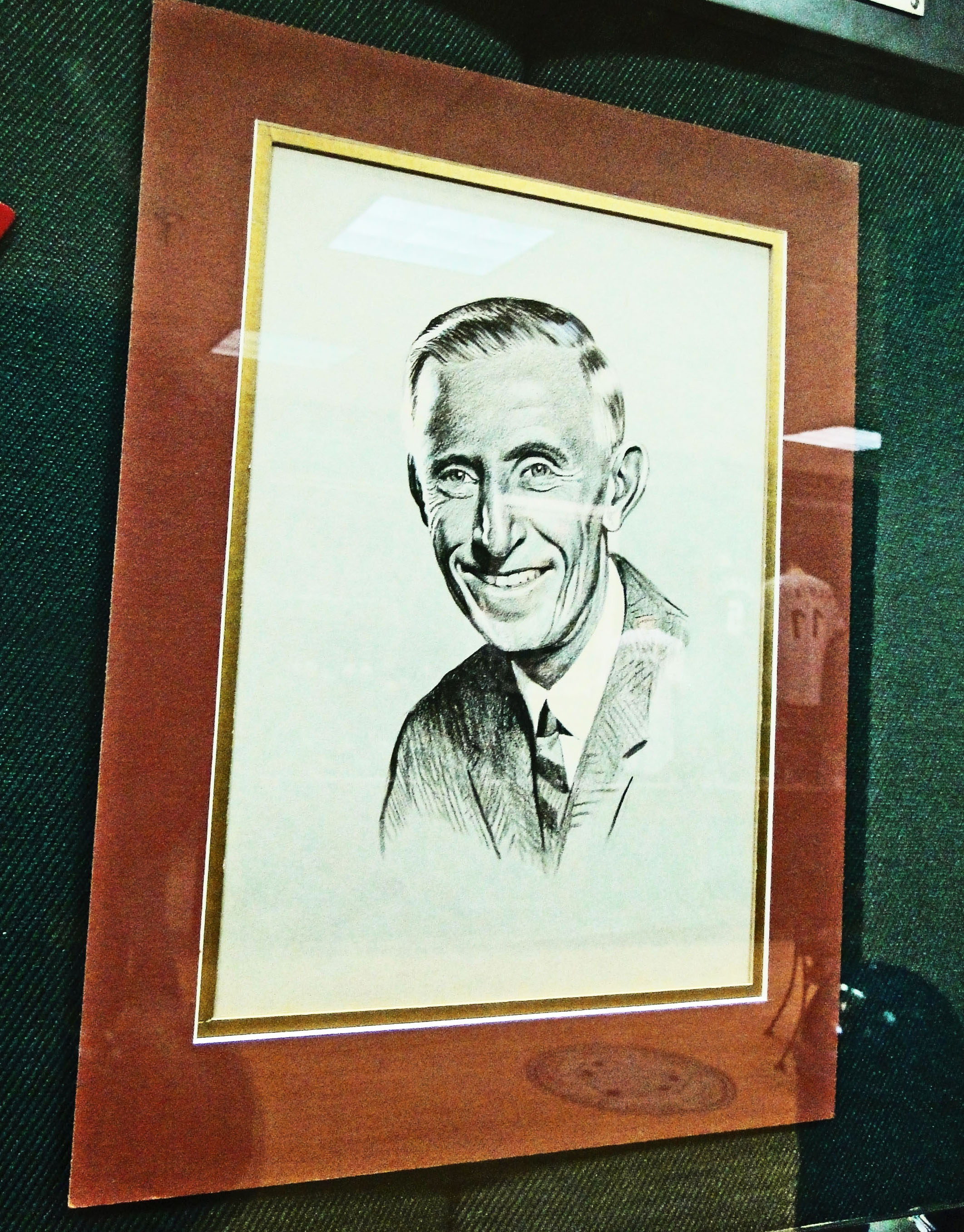
The late Clark Nealon was a Houston sportswriter back in the time of honest reporting on the games themselves. He didn’t write to gain his readers’ accolades or ire. He wrote to tell us what he saw – what we would have seen, had we been at the particular game he was covering. The difference between Clark Nealon and today’s “pay attention to me” writers was the proverbial difference between night and day. Clark didn’t hit the pings on his typewriter keys just to get people writing into the editor about his wiseacre commentary. He wrote to give us as accurate and down-to-earth an account as he could about the specific game in progress.

I missed the privilege of ever meeting Clark Nealon in person during his lifetime, but it’s hard to have grown up having breakfast with his writings without feeling as though he were a member of the family, anyway. I grew up going to Buff Stadium as often as possible,  The rest of the time, I got to fill in the blanks from radio accounts by broadcaster Loel Passe and by the game stories in the Houston Post written by Clark Nealon. Those two men talked and wrote their way into the kitchen table conversations of Buff fans all over Houston.

There is a nice exhibit on the late Clark Nealon at the new and revived Houston Sports Museum at Finger Furniture on the Gulf Freeway. Check it out when you visit the place. I’m not for sure by any specific dates when Clark Nealon started, when he retired, or when he passed away. I only know that he did a great job while he was here and that he is sorely missed today. It was fun reading the work of someone who actually knew something about the sport he was covering – and who could write on sports without throwing his ego in the way of everything he did, as is more often the case in today’s fast-food mentality of Internet electronic sports coverage.

We also have Clark Nealon to thank for being the significant mentor to the funniest, most literate and educational  writer to ever cover sports in Houston, the great Mickey Herskowitz. The fact that both men later found honor by admission to the Texas Baseball Hall of Fame comes as no surprise. Both were consummate professionals as everyday beat writers and each is richly deserving of our fondest Houston Buff memories. Today the attention is simply focused on Nealon.

Thank you, Clark Nealon, for teaching me much about baseball – and for making breakfast about yesterday’s sports action an interlocked experience for as long as I can remember.

Addendum: I just discovered at mid-morning that David Barron has written a nice account of the Houston Sports Museum reopening at Finger Furniture on the Gulf freeway for today’s Sunday, May 2, 2010 Houston Chronicle Sports Section. Way to go, David!

Check it out.

The 1931 Dixie Series: Houston v. Birmingham.

May 1, 2010

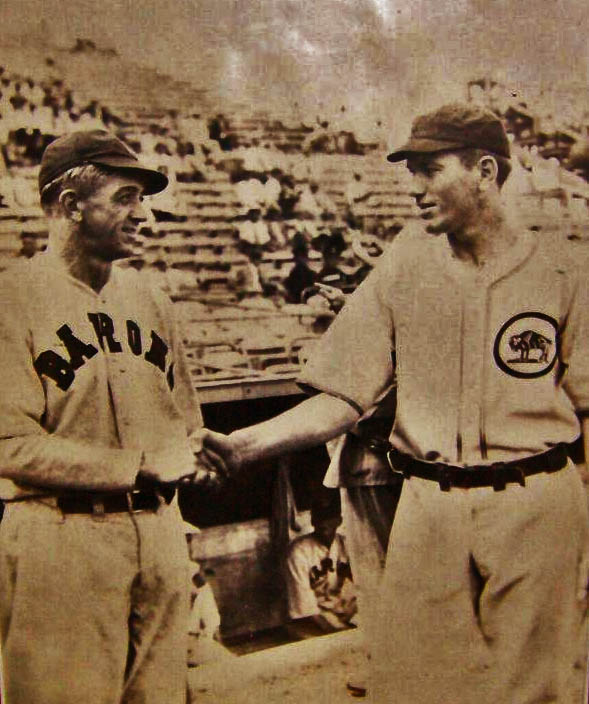
Ray Caldwell (age 43) of the Barons faced Dizzy Dean (age 21) of the Buffs in Game One.

The 1931 Texas League Champion Houston Buffs (108-51, .679) were supposed to walk all over the Southern Association Champion Birmingham Barons (97-55, .638) in the Dixie Series, but it did not happen. Led by rising star hurler, the 21-year old Dizzy Dean (26-10, 1.57) and the slugging young outfielder and next great future Gas House Gangster Joe Medwick (.305, 19 HR), the Buffs were on the tab as heavy favorites to take it all, but this would be another of those Aesop examples of the race going to the wiser over the swift.

Game One: 9/16/1931. Rickwood Field, Birmingham, Alabama: Barons 1 – Buffs 0.

43-year old Ray Caldwell (19-7, 3.45) wins a pitcher’s duel with Dizzy Dean. Barons lead the Series, 1 game to 0.

Game Two: 9/17/1931. Rickwood Field, Birmingham, Alabama: Buffs 3 – Barons 0.

Because Tex Carleton (20-7, 1.90) is injured and unable to play, the Buffs are allowed to borrow 25-year old Dick McCabe (23-7, 1.97) from Texas League rival Fort Worth as Carleton’s replacement for the Dixie Series. McCabe promptly shuts out the Barons to square the Series at 1-1. (The quality of mercy overflowed back in those days, I guess. Can you imagine last year’s 2009 Yankees allowing the Phillies to borrow Valverde from Houston, had Lidge been injured and unable to play in the World Series?)

Game Three: 9/19/1931. Buff Stadium, Houston, Texas: Buffs 1 – Barons 0.

The Buffs shut out the Barons again behind 42-year old George Washington Payne (23-23, 2.75) to take a 2-1 led in Series games won.

Game Four: 9/20/1931. Buff Stadium, Houston Texas: Buffs 2 – Barons 0.

Dizzy Dean comes back with a vengeance, His shutout of the Barons takes the Buffs to  3-1 Series lead and an over-confident cliff of hoping they will finish the Series at home the next day.

Game Five: 9/21/1931. Buff Stadium, Houston, Texas: Barons 3 – Buffs 1.

Clay Touchstone (15-11, 4.76) saves the day for Birmingham as the Barons win to force the Series back to Alabama with a 3-2 Houston lead, but with “Mr. Mo” now shifting back to the Southern Association boys.

Game Six: 9/23/1931. Rickwood Field, Birmingham, Alabama: Barons 14 – Buffs 10.

The Barons rack four Buff pitchers for 23 hits to even the Series and set up one final winner-take-all game featuring Dizzy Dean going up against 35-year old Bob Hasty (21-13. 3.67). The 3-3 Tie in the Series has Buff fans back home pulling their hair. Their major consolations are that Dean is pitching the deciding contest and that Game Seven will be played at home in Buff Stadium.

Game Seven: 9/25/1931, Buff Stadium, Houston, Texas: Barons 6 – Buffs 3.

Dizzy Dean strikes out five in the first two innings, but he cannot hold onto his dominance of the Barons. By the end of eight innings, the Barons led by 3-2. The visitors add three more runs in the top of the ninth, even though it’s not all on Dean. Two of the runs are unearned, but they still add up to a 6-2 Birmingham lead with the Buffs coming up for a final time at bat. – Once the Buffs push across a run with one out in the bottom of the ninth, Barons manager Clyde Milan pulls Hasty for an unnamed save opportunity that he hands to old warrior Ray Caldwell. Buffs manager Joe Schultz plays the hand he owns, sending Joe Medwick and Homer Peel out to face the old run-stopper. – Medwick fans and Peel slips easily into a 4-3 ground out to end the game and the Series.

Houston and Buff Stadium are stunned into silence. The Birmingham Barons go home to Alabama as the 1931 Dixie Series Champions.

Like a legion of other Buff fans, my (Grand) Papa Willis Teas was very unhappy with the outcome of the 1931 Dixie Series.

My Mom’s family lived in the Heights in 1931. My maternal grandfather Willis Teas, the man we all called “Papa”, was very unhappy with the Buffs loss, but he also liked to later use this story as an example of how we can never take anything for granted in life. The Buffs may have won this Series in their own minds in advance, but they didn’t then go out and win it on the field, according to Papa.

These also were the early years of the Great Depression, when some even harder lessons about taking things for granted were raining down on Papa and lot of other folks caught up in the great economic and agricultural dust storm. I think Papa saw that comparison too. He just didn’t talk with me about it in the years that followed. I wasn’t even around in 1931 – and I was still too little to learn much of anything about economics during Papa’s lifetime.

The lesson for me came down to this statement by Papa: “Don’t count your chickens before they hatch, even if you have Dizzy Dean sitting on the eggs.”

Astros as Baseball Bad Guys? C’Mon! Get Real!

April 30, 2010

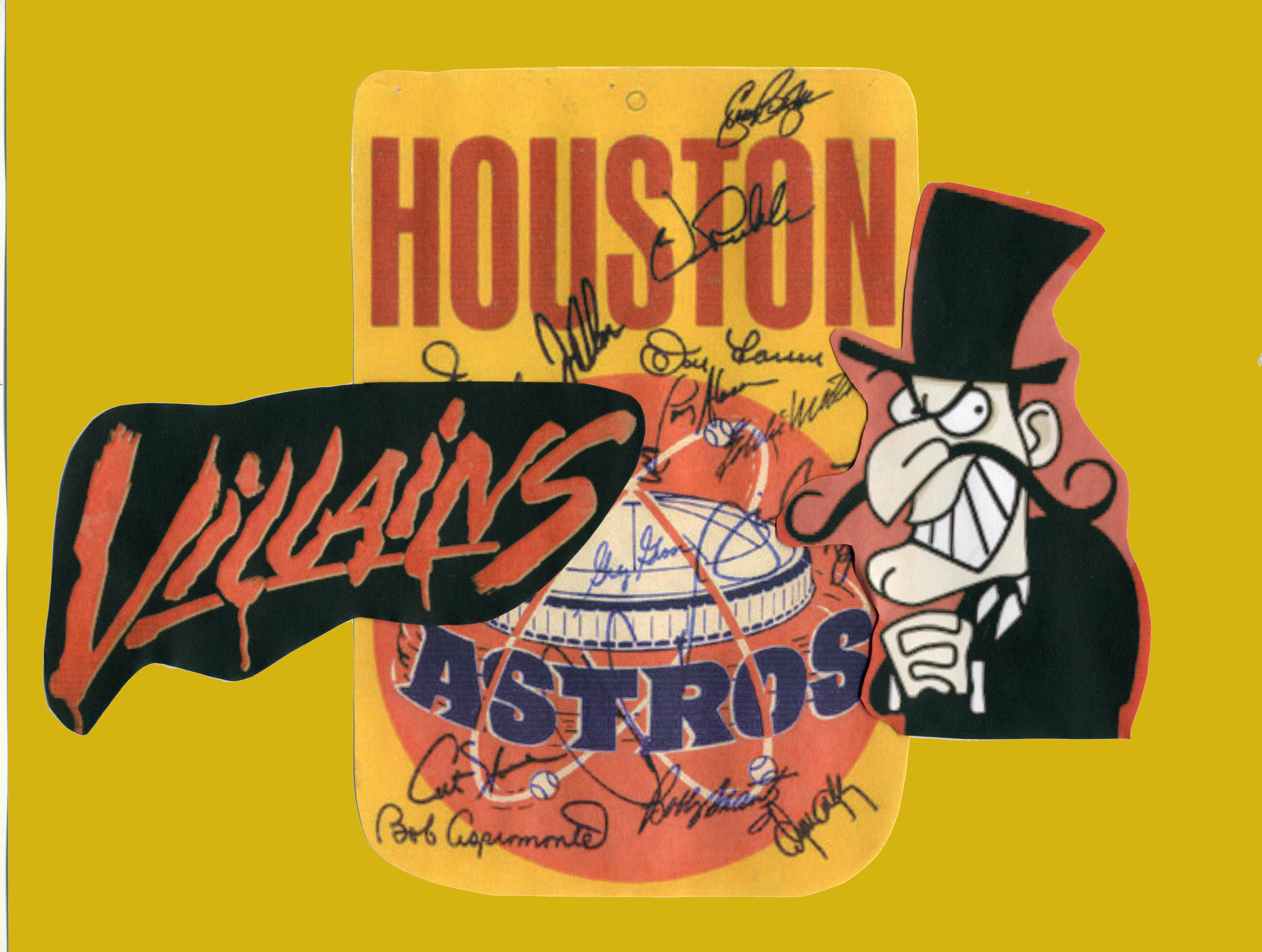
Are the Houston Astros really the 4th most despised team in Baseball?

So you think the New York Yankees are the most hated team in baseball? Think a dam-gin if you care to place any credibility in a new “Internet algorithm” built by the famous Nielsen Co. for analyzing various keywords that people use in describing MLB teams. Nielsen uses the same approach here on MLB teams that they famously use in business studies  to “find out” whether people hold positive, negative, or neutral reactions to different brands and products under marketing study.

The Internet report for Fox Sports by David Biderman of the Wall Street Journal does not go into the details of the Nielsen study’s key words or methods here in the MLB Spite Study. The report simply lays out the Top Ten list of the most despised teams in Major League Baseball and then leaves the unguided digestion of such to the reader. Read the whole list before you break into full laughter:

Nielsen’s Top Ten Most Despised MLB Teams

(The 10 most despised teams in baseball scale is -5 to 5)

Team Score
Cleveland Indians 0.9
Boston Red Sox 1.1
Cincinnati Reds 1.1
Houston Astros 1.8
New York Yankees 1.8
Washington Nationals 1.9
Chicago White Sox 2.0
Baltimore Orioles 2.0
New York Mets 2.3
Los Angeles Dodgers 2.4

The raw figures show that Houston and the New York Yankees both have recorded raw scores of 1.8, but the Astros are assigned 4th place in the narrative and the Yankees are identified as 5th. When you see this kind of report in most research journals, the researcher normally will carry out the raw scores to enough decimal places to reach a differential tally. It simply wasn’t reported that clearly here.

As far as I’m concerned, the whole study is laughable. Look at the team that ended up on top as the most despised club in baseball – the poor little old Cleveland Indians, a baseball tribe that hasn’t won the World Series since 1948. If the Indians are really all that despicable, they ought to be packing the house all over the American League when they go on the road.

I can see the Boston Red Sox in the two hole. They’ve had enough success in recent years to have earned that spot, especially in light of the fact that their success has come at the personal expense of their greatest rival and truly most despised club in the world, the New York Yankees.

The bland band known as the Cincinnati Reds at #3 is right in there as a dual laugh stop with the #4 Houston Astros. The Reds have earned spite from a World Series victory since 1990 and the Astros have yet to win their first.

The New York Yankees at #5? Please. I can’t hold the contents of my breakfast on that read. These guys are again the reigning World Champions with a gazillion World Series titles in their trophy case. C’mon! Forget the words that people use in describing them and don’t even go near the words that non-Yankee fans refrain from expressing as their feelings toward the Bronx Bombers. The New York Yankees are the biggest winners of all time – and that’s how a club gets to be the most despised.

The Washington Nationals at #6 and the Baltimore Orioles at #8 are also fish-out-0f-hate-waters in my book. I thin Nielsen may be confusing hate with the very large apathy/frustration quotient that we could just as easily assign to clubs like the Indians, Reds, Astros, Nationals, and Orioles. All of us who live in cities outside the media centers of New York, Los Angeles, and Chicago can only aspire to the languish of general apathy when our clubs don’t win. Cincinnati versus Baltimore in the 2010 World Series is probably the last match up the networks would want to see. Fortunately for the networks, it isn’t likely to happen on the field.

The Chicago White Sox at #7, the New York Mets at # 9, and the Los Angeles Dodgers at #10 all deserve to be near the top of any legitimate ranking of our most despised teams. For winning often or winning ungraciously, each of these three have put their own media market town brand of abject despicability on the map.

The real hate-for-east-coast snobs button is pushed for me when writer David Biderman concludes his brief, but poorly presented report with this sentence: “The good news for the Yankees is that their low score is better than the only team that really matters: The rival Boston Red Sox, who are the second most-despised team.”

My Houston Astros may be as frustrating as the just concluded sweep loss at home to the Reds again proves, but they cannot be held up as the fourth most despicable team in America. They haven’t won enough to have earned spite.

Now, just watch the Astros win thirty World Series between now and the year 2050 and hate us all you want. Those of us Astros fans who are still on the top side of the dirt by then won’t care because that’s really the only lasting way to earn the hatred of other clubs in baseball. You have to beat the other guys early, late, and often.

Here’s the link to the piece that inspired this rebuttal article:

http://msn.foxsports.com/mlb/story/Are-the-Yankees-baseballs-most-hated-team-042810?GT1=39002

What do you think of the Nielsen study? Feel free to comment all you want.

A Houston Buffs Souvenir Mitt Mystery.

April 29, 2010

The Souvenir Buffs Mitt is About 5″ Tall. When was it sold at Buff Stadium?

Yesterday an acquaintance got in touch with me about a souvenir Houston Buffs catcher’s mitt he had just acquired from another collector. This person is a solid Houston Buffs and City of Houston history fan, but he wishes to remain anonymous in this matter that he now shares with everybody else. The question we both have is: When, if ever, was this little (pictured above) item sold at Buff Stadium?  My own guesses are only speculative.

I never saw anything along the line of souvenir gloves for sale at Buff Stadium during the Post World II Era. I recall a few miniature bats and pennants for sale, but I never acquired anything like that as a kid. We weren’t thinking about souvenirs when we went to Buff Stadium back in my day and it’s just as well. Remember what I’ve written here many times over. We played in the sandlot with baseballs held together by electrical tape. There was no money for thinking about souvenirs.

Besides, the style of the glove looks older to me, like something from the early 30s. That sort of works against the idea that souvenirs could have been very appealing to the average Buffs Baseball fans of Houston during the Great Depression Era, but who knows? Maybe they were. We simply lack the proof that this item ever sold at Buff Stadium during any period, in spite of what it says broad as all daylight on the souvenir glove itself. I personally believe that it was once a Buff Stadium souvenir. I just can’t prove it.

Fred Ankenman served as President of the Houston Buffs from 1925 through 1942, the beginning of the World War II Texas League shutdown. Allen Russell took over as President of the Buffs in 1946 and served through 1952. I’m fairly convinced that the souvenir glove in question sold at Buff Stadium somewhere during one of these two periods. It’s too antiquated to have sold beyond the Russell Era – and it’s simply a little impractical to think it sold earlier at West End Park. Buff Stadium didn’t open until 1928.

The back side of the souvenir glove appears to have once been stuck to something.

My friend and I both observed that the marketing decision to actually write the word “souvenir” on the mitt seems a little primitive and unsophisticated by today’s marketing standards, but a lot of items could be judged that way in comparison to the promotion of uniform replica and game-authentic sale of ballpark material in 2010. We have to remember that game replica jerseys and caps have only been around as sales items to fans since the early 1980s. (We sold an authentic game jersey to fans at the University of Houston in 1979, but that’s a much longer story about what probably was the first sale of game-style apparel items to the general  public in America.)

The buffalo figure is remindful of the logo used during the late 20s and early 30s.

If you ever saw this featured Buffs item for sale at Buff Stadium, or if you have any of your own theories on when it might have appeared there, please post them below as comments on this article. Like so many other artifacts of baseball history, the Houston Buffs souvenir mitt comes to light raising more questions than it answers.

Hopefully, it will someday find its way into proper public exhibition and not just get stuck in someone else’s attic or closet for another sixty or seventy years.

The 1950 San Antonio Missions.

April 26, 2010

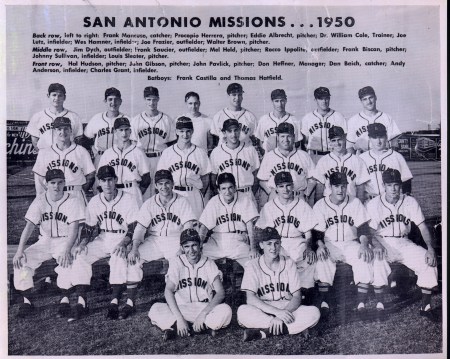
The 1950 Texas League Champion San Antonio Missions.

When I was growing up as a Post World War II of the Houston Buffs, my second favorite Texas League club (and I do mean a far second place, one with no chance of ever being number one) was the San Antonio Missions. My cousins Jim and Mel Hunt of San Antonio were big Mission fans, so I threw my support behind the boys from the Alamo City once in a while, if it were late in the season in one of those rare years that the Buffs were out of it with no chance for a comeback.

1950 was one of those saddest of Buff seasons. My boys were on their way to an 8th place last place finish behind Shreveport while San Antonio was squeaking into a fourth place finish and a shot at the pennant through the Shaughnessy Playoffs. The hope for San Antonio didn’t stop me from secretly crying myself to sleep on the night that Houston clinched last place, but it did reach a spot on the “item of interest” shelf of my mind as school started again on the Tuesday after Labor Day.

Besides, I needed a diversion from the pain I felt for my fallen Buffs. I was getting ready to start the 7th grade. Big boys don’t cry. I really needed to kill even the quiet crying over my favorite team’s painful  losses. If I were going to do any crying in the future over any disappointment, whether it be over a baseball disappointment, or lost love, it would have to take place deeper inside, silently, in that place called my heart. It wasn’t the world’s business anyway, but mine alone. Period.

I learned. And it’s good that I did. The Colt .45s and Astros were coming our way in a decade or so.

Meanwhile, the 1950 Missions were doing their very best to buoy the spirits of my loyal cousins over in San Antonio. The Missions surprised the first place Beaumont Roughnecks of manager Rogers Hornsby in a four-game sweep in the first round, a feat that surprised everybody. The Roughnecks featured pitcher Ernie Nevel, one of the three 21-game winners of the 1950 Texas League season, a young fellow named Gil McDougald at second base who led the TL in hits with 189, and a fiery young catcher named Clint Courtney. They had all this power and talent going for them by way of their New York Yankees player pipeline, but to no avail. Beaumont just fell flat against San Antonio in 1950, leaving the pennant open to the finals match series between 4th place San Antonio and 3rd place Tulsa, who also had swept 2nd place Fort Worth in the first round.

San Antonio then took Tulsa, 4 games to 2, capturing the 1950 Texas League pennant.

The 1950 San Antonio Missions weren’t done. They went on from their pennant victory in the Texas League to defeat the Southern Association champion Nashville Vols in a seven-game 1950 Dixie Series championship round that brought even greater honor to their city and the State of Texas. And they did it all as a farm team of the notoriously win-challenged major league club known as the St. Louis Browns.

A brief look at some of the headliners from that 1950 Missions team is in order:
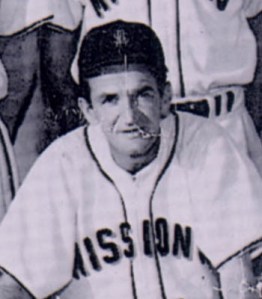
Don Heffner, Manager

Don Heffner enjoyed an eleven season major league career (1934-44) with the New York Yankees, the St. Louis Browns, the Philadelphia Athletics, and the Detroit Tigers. For his MLB career as a middle infielder, Heffner batted .241.

For the next 23 years (1947-69), Heffner filed his time as a major league coach, minor league manager,  and developer of young talent. The ’50 Missions were lucky to have the right man at the right time.

Lou Sleater, Pitcher

Lou Sleater led the ’50 Missions pitching staff statistically, finishing with a record of 12 wins, 5 losses, and earned run average of  2.82. The lefty went on to a seven season career (1950-58) as a major leaguer, posting a total record of 12 wins, 18 losses and an ERA of 4.70.

Frank Mancuso, Catcher

Frank Mancuso served as the voice of veteran experience on this 1950 championship club. At age 32, he was six seasons removed from his American League championship season with the St. Louis Browns and was now the back up man to both manager Don Heffner and catcher Dan Baich. Frank would come home to Houston as a Buff in 1953. For 1950, he would bat .238 in a backup role.
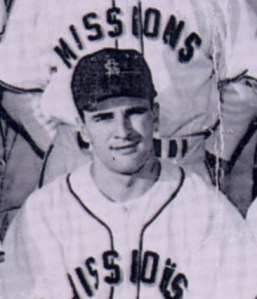
Dan Baich, Catcher

Dan Baich would hit .258 with 17 home runs for the 1950 Missions. He also had a chance to briefly handle a young late season arrival named Bob Turley in his 0-2 start with the Missions. In spite of his power and pretty good stick for average, Baich would never see  a single time at bat in the big leagues. Go figure. His 16 season minor league career allowed him to produce a career batting average of .267 and slam 107 home runs. Why Baich never got even a major league look-see is beyond what I know of his career without further research. I know just enough about him to want to dig deeper. I just don’t have the answer today.

Frank Saucier, Outfield

Frank Saucier led the 1950 Texas League season in hitting with a .343 batting average. As we discussed the other day in the first article on Eddie Gaedel, Saucier was the Browns outfielder who suffered humiliation over his removal from a game in 1951 for a midget pinch hitter. The experience apparently chased him from baseball after he went only 1 for 14 in 18 games in 1951. Too bad. Saucier tore up the Texas League in 1950. The Missions could not have rallied to win it all without the presence of Frank Saucier in their lineup.
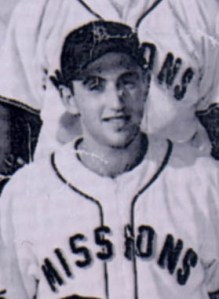
Rocco Ippolito, Outfield

Rocco Ippolito banged out 24 homers in 1950 to pace the Missions, even though his .235 batting average was nothing to write home about. He batted .283 over the course of his eight season minor league career, but neither that improvement nor his 135 total HR were enough to buy him  single shot in the big leagues either. In the fewer MLB teams structure of the reserve clause era, a lot of talented players never got a big league shot – and that may be the best explanation we shall find to explain what happened to guys like Baich and Ippolito. You didn’t need many weaknesses to get scratched off the “prospect” list back then, especially if an MLB club needed your body to help fill out their overall minor league roster plans. You either did the club’s bidding or went home to pump gas. Swell choice that was.

Jim Dyck, Third Base

Jim Dyck was a hitter. He batted .321 for the ’50 Missions and he posted a lifetime minor league batting average of .293 over a 16-season career (1941-1961) that finally did result in major league time. In six major league seasons, Dyck batted .246, far below his value as a contributor to numerous minor league clubs over the years. At least, Jimmy got his shot, even it came late and fell short of what he always hoped it would be. I know from some talk with him that he suffered disappointment in his big league production, but he loved the game – and he left this world with no other regrets.
The 1950 San Antonio Missions had a number of other good players, but these guys featured here speak well for the lot of them. They were champions when it was time to show that worth on the field and they got the job done. Even us Houston Buff fans had to appreciate the power of their accomplishments.