A Greg Lucas Reminder of a Dierker DH Proposal

December 8, 2016
If all pitchers could hit like The Babe once did, there wouldn't be any dadgum DH rule today.

If all pitchers could hit like The Babe once did, there wouldn’t be any dad-gum DH rule around today to mess things up.

In responding to yesterday’s column on the DH as one of MLB’s major ignored issues, broadcaster/author Greg Lucas aptly reminded us with a comment of support for former Astros icon Larry Dierker’s recent times suggestion as a resolution to the splintering effect this game-changing DH rule has had at the MLB level since 1973.

Problems That MLB Chooses to Ignore or Bury

Here’s what Greg Lucas had to say early this morning:

“I like Larry Dierker’s suggestion that the DH (should) die, but that pinch hitters COULD be used for the pitcher without the pitcher having to come out of the game. (That satisfies those who don’t like the pitcher hitting as well as those who don’t like the DH concept for a single player.) The negotiating ploy would be to offer the union one or two more spots on active rosters. Like Dierk, I just don’t like the concept of a player doing nothing but hit for a whole game. But I agree with most that #4: Cost of attending games could ultimately be the biggest threat to the sport as we know it. That actually applies to all sports since once you price the younger generation out of being able to afford tickets themselves you are cutting off the future.” – Greg Lucas.

The Pecan Park Eagle personally agrees with Larry Dierker and Greg Lucas. If we cannot have our first choice – go back to baseball as it was played prior to the DH period – and then give us a rule that doesn’t include rosters with players who only bat and never field. One of these days, we may actually have a DH up for the Hall of Fame because of his bat who has never taken a single ground ball in the field at any defensive station. And we don’t like that possibility at all.

What of the rest of you think?

____________________

eagle-0range
 Bill McCurdy

Publisher, Editor, Writer

The Pecan Park Eagle

Houston, Texas

Problems That MLB Chooses to Ignore or Bury

December 7, 2016


MLB Problem Resolutions Group Home Office Death Valley, CA

MLB Problem Resolutions Group Signage
Home Office
Death Valley, CA


MLB – or “Baseball” – if you prefer – seems to have a knack for both creating and then ignoring problems that – over time – tend to splinter the game and become more resistant to anything resembling an easy correction.

Our Pecan Park Eagle list is not presumptuously the complete whole thought in this matter, nor are we suggesting that “solving” any of these identified issues will get baseball off the hook that most ignored changes over time are too late to eliminate all the harm that’s already been done.

We welcome your help in the proposal of any changes that may help resolve any or all of these problems – or shed more light on the expressions of others we’ve missed here. And please – please, please, please – feel free to restate any of these issues in ways that make more sense to you as you also bear in mind: We fans are not burdened personally with the conflict of interest problems that continuously haunt the public messages of everyone from the Commissioner’s Office to Club Ownership and Management and the MLB Players’ Association.

What follows here is our list of the most condensed statements we choose to make about problems that go on unattended in ways we think are made even more harmful by baseball’s inability to show any awareness that any change is actually needed in any of these areas.

A  Few of Baseball’s Worst Openly Rotting or Shallow Grave Buried Issues

  1. The Designated Hitter in the American League. After 40 plus years, MLB has become two similar, but very different games because of the DH usage in the AL, but not in the NL.  Each version has its powerful support now and it is unlikely that either league would peacefully agree to any solution that resulted in an all-DH – or a complete no-DH – version of baseball. Do we really have any choice but to live with the Frankenstein Monster like two-version sports that have resulted from the early 1970’s trial of the DH in the AL that never went away – but never firmly decided which version of the game would be used in both major leagues?
  2. The HGH Shadow Barring Several Accomplishment-Deserving Players from the Hall of Fame. In 1998, sluggers Mark McGwire and Sammy Sosa made the cover of Time Magazine as the “Saviors of Baseball” for drawing fans back to the game after the management-labor problems of 1994 took a good shot at driving fans away for good by bringing about a late season cancellation of the balance of the season and the World Series for that year. – Are we fans still supposed to believe that no one from that time period suspected anything beyond divine intervention for the sudden incredible jump in the powers of each man to hit home runs in numbers and distance never heretofore seen? And was the internal cost and transparency too high a price for those who run the game to own the real reason that these two players, and many others, were left to hang as “guilty” in the court of public opinion to hang and die at the hands of the sanctimonious American Baseball Writers Association when it came time to consider or disregard HOF induction in the shadow of HGH association with each in this matter? The current flow of things is not unusual for baseball in this area. – Baseball seems determined to hang with doing nothing until the issue either resolves itself on an unlikely case-by-case basis or simply is forgotten and goes away. Meanwhile, we fans are expected to continue supporting a HOF induction process that ignores, as examples, the man with 73 HR, the most home runs per season, and 762 HR, the most career home runs in the history of the game – and also a pitcher who won 354 games and 7 Cy Young Awards. Any fair resolution of this particular “state of denial” begs the question: Shouldn’t the culture of baseball that allowed this horrendous consequence to happen also hold those in charge of the game to have been responsible for tacitly looking the other way – at first – with some even going so far as to temporarily glorify some of the very players they would later crucify as the villains of the game?
  3. Finding the Best Balance Between Management and Labor. Prior to the abolition of the reserve clause, only the greatest of the great players had any leverage over the salaries their teams paid them. Everyone else was pretty much a resident of the salve labor camp. As an average or untried players, you could either take the minimal pay that was offered or leave the game. Your last team got to hold on to their exclusive rights to you, even if you declined their salary offer. Management controlled everything. The players controlled only the decision to play or not to play on the terms offered by their team. Today, with all of the changes that have evolved over the past forty something years, the pendulum has swung way back to the players’ side of things with an establishment of a strong union, The Players’ Union has negotiated veto power over a number of items that once belonged to the clubs alone – and they have also obtained health care and other benefits that were never present during the old days. The problem has been the rising cost of player salaries and the driving effect it’s had upon operations and ticket prices. In spite of the “luxury tax”  program that’s designed to theoretically keep wealthy teams from controlling the player market, it doesn’t seem to be working. We need something to bring about a better power balance between clubs and players. Much too complex to discuss further here, I’ll put it this way: Baseball needs a labor/management deal that keeps salaries inside the “sanity” side of the word “insanity.” I still have trouble with the idea that each club has bench reserve players that make seven or eight times as much per year as Babe Ruth did in his greatest salary season. – It isn’t all due to inflation!
  4. Allowing the All Star Game to Determine Home Field Advantage in the World Series. “Selig’s Silliest Solution” is not to be confused with “Selig’s Most Insidious Solution” – and that was the 2013 condition that the former Baseball Commissioner placed upon the sale of the Houston Astros from Drayton McLane to Jim Crane and his group. To gain Commissioner Selig’s essential approval of the sale, all Houston interests had to pre-approve the transfer of the Houston franchise from the National League to the American League. His “Silliest Solution happened after the 2002 All Star Game in Selig’s native Milwaukee ended in a 7-7 tie after 11 innings when neither manager ended up with pitchers they could continue to use in extra innings. Irony of ironies time struck hard. – It was because nobody was taking the game seriously that both managers using all the pitchers earlier in a way that resulted in no remaining arms being left to finish a serious game beyond the 11 innings already played. Selig, on the other hand, saw the problem as one that could only be resolved by making the All Star Game more relevant to baseball’s goal of “winning”, and, as a result, Selig proclaimed, henceforth from 2003 forward, that the All Star Game would determine which league had the home field advantage in the World Series of that same season. Now it doesn’t matter if your club wins a league pennant with 100 plus wins or more while the other league pennant got their flag with a little luck and 89 wins on the season. The lesser winner’s luck is now further enhanced by the fact that Selig’s stupidity has now helped them even further by his new All Star Game winner rule. Players that now mostly have nothing to do with winning or losing the pennant for either qualifying World Series team are going to settle that matter for them in the All Star Game.  – This needs to be stopped in the name of cause and effect sensibility. The only fair ways to settle home field advantage in the World Series are to (1) give it to the club with the best winning season record that includes a back up stat solution for tie-breaker years; or (2) simply alternate it annually between leagues as we once did back in the time prior to the “B.S.” days.
  5. The Cost of a Good Baseball Game Ticket. Unless baseball comes up with some better answers to the first four items on this short list, the only fair summary for this subject manner can be answered with a now familiar question – “What’s in your wallet?”


____________________

eagle-0range
 Bill McCurdy

Publisher, Editor, Writer

The Pecan Park Eagle

Houston, Texas

Hang In There with Heart, Steve

December 6, 2016
When you have good friends like Bob Blair, life itself is s day at the park.

When you have good friends like Bob Blair, life itself is s day at the park.


Hang in There with Heart, Steve! ….

Yesterday I received an e-mail from Bob Blair about a friend of his from the local senior baseball program – a fellow named Steve. From the spot-on title of “Sometimes things just change” that Bob Blair gave his cover e-mail, it became quickly obvious as to how much he cares about his buddy Steve. As for me I don’t know Steve personally, but all the wonder I first held about Bob’s reasons for sharing this story with me were erased once I read the letter from Steve that he had received and forwarded to me yesterday with this simple request: “If you have time would you have any interest in helping us by creating a little history about the baseball life of a good teammate who is in the battle for his life?”

Yes! Love is a bigger circle than the one that includes only the people we actually know. The full circle of love includes our full capacity for empathy with others, even physical strangers that are going through a difficult human experience that also may have been ours in the past – or simply “out there still”, awaiting us in the future. None of us own a “pass card” on the biggest threats to humanity.

On matters affecting us all. One more time. United we stand. Divided we fall. In our search for both solutions and resolutions to pain and the continuous, often silent assault upon our ongoing condition of mortality. The thing belongs to us all.

Steve’s Story. Here’s what Steve wrote the other day to Bob Blair, who in turn passed it on to me. It’s lengthy, but I could not condense it. Every word from this fellow Steve here is important to us all.

Judge for yourself:

Good Evening My Friends,

    Over the past week, or so, y’all may have noticed that I have not been quite as active on the Social Media Pages where we seem to communicate. In this case, I feel as if I owe, and want to give an explanation.

     Friday morning, November 18th, I began to wake up and as I was rolling over in bed I felt probably the worst pain in my lower back, on the left side below the rib cage, that I had ever felt. I woke Kaye up and ask if she would drive me to the emergency room at Woodlands Hospital to attempt to find the source of the problem. At first the thought was that it was a severe muscle spasm and with test, and treatment, things would get better. That was when the testing began. Long story short, I was released from the hospital the night before Thanksgiving with notification that I could actually leave the following morning. By that point, as I said, after many tests I was diagnosed as having both lung and liver cancer, to me, a pretty far cry from a muscle spasm. Sent home, all I could do was wait for results of a liver biopsy which would not be available until this past Tuesday afternoon.

     On Tuesday, I met with my oncologist to receive the results. I have what is called “Small Cell Lung and Liver Cancer”. It probably has been active within my system for about nine months which is why it was not discovered during my last annual physical. This type of cancer is very fast moving and, without treatment I would be given about 3 to six months to live. Well, it’s something I cannot accept so today we began a plan of attack. If everything is approved by insurance I will begin Chemo treatments this coming Monday, December 5th. Each round of the Chemo is 3 straight days, every three weeks. My first review to evaluate the treatment will be on, or around, the 13th of December to see if there is any response. And, with whatever happens we move forward from there. Am I surprised, no – not really but it’s not something I think any of us wants to hear, as some of you have already done before. Each of you has always been part of my inspiration.

     So there you have it. I had hoped to be able to at least attend our game today but, it was just not meant to be. After all this time together I wanted to let y’all know I love y’all from the bottom of my heart. I have been so very blessed to have y’all in my family and right now I’m reminded of the very old Jimmy Durante song, “Thanks for the Memories”. There are bonds that can never be broken and, never will. I am so very lucky to have love from so many who have come into my life and will cherish every thought. We will continue this fight, and fight to win. Having your support just makes the fight worthwhile for Kaye and I. We are indeed, blessed.

 Steve

What a Champion This Guy Steve Truly Is.

The truth is in his words. In spite of the sudden mega-pain, the reach for medical help, in spite of having to wait throughout the long Thanksgiving weekend for some answers to his foreboding human fear of the unknown, in spite of the news that finally came that he had “Small Cell Lung and Liver Cancer” and that he probably was looking at no more than 3 to 4 months left to live, Steve then wrote: “Well, it’s something I cannot accept so today we began a plan of attack.” – He then admits to the absence of surprise about his diagnosis, but he implicitly holds fast to the fact that he has both a choice about how he responds to this situation as he also thanks his known friends for the inspiration and caring presences they each have been in his life.

We will continue this fight, and fight to win. Having your support just makes the fight worthwhile for Kaye and I. We are indeed, blessed.”

The Blessing of People Like Steve to All of Us

Even those of us who do not know Steve personally can speak to this point. – Are we not all truly blessed also – just to know that there are people like our unmet friend Steve out there – walking this planet with us – who still count the blessings of friendship and love in the face of what just may be the biggest challenge of his mortal life? Baseball people are not the only ones who recognize that how we deal with sudden issues depends a lot on how we’ve been dealing with the long seasons of both baseball and life. In either case, it’s not easy, but much easier to fight back against adversity when we already know the importance of love and support in our lives – full-time, all the time.

As we learned from these beautiful lyrics in the great Broadway musical and movie, “Damn Yankees” ~

“You’ve gotta have hope
Mustn’t sit around and mope
Nothin’s half as bad as it may appear
Wait’ll next year and hope
When your luck is battin’ zero
Get your chin up off the floor
Mister you can be a hero
You can open any door, there’s nothin’ to it but to do it
You’ve gotta have heart
Miles ‘n miles n’ miles of heart”

Steve, we just want you to know that your circle of heart friends is broader than you may have realized. Those of us who pray, will pray for you. Those who do not pray, per se, will offer you their most positive words of love and support. Those of us who fear the uncertain storms of life are now less afraid of whomever Darth Vader is bringing into the game from the pen in a critical game of life situation because we now know that a guy like you is on our side as a teammate. And those of us who are willing to speak to you for themselves from the comment section that follows this column will do so.

Peace and Love from The Pecan Park Eagle – and from the entire baseball family of Planet Earth

Keep us posted, Steve, on how things go from here. If you ever want to write your own story here as either a summary or serial column, just let me know – and we will make it happen for you.

We will do whatever we can to let you know how much love and support we now are willing to put behind your determination to not only fight the good fight here with cancer – but to win it as well.

 And May God Bless You – every step of the way!

____________________
eagle-0range
 Bill McCurdy

Publisher, Editor, Writer

The Pecan Park Eagle

Houston, Texas
Red Munger’s Great Jackie Robinson Story

December 5, 2016
George

George “Red” Munger
St. Louis Cardinals
Pittsburgh Pirates
(77 Wins -56 Losses, 3.83 ERA)

Shortly before his death twenty years ago on July 23, 1996, native Houstonian and former Cardinal and Pirate pitcher George “Red Munger” shared this beautiful story about Jackie Robinson with me on an afternoon trip to his place to simply hang out, watch some Astros on TV with Red and former Buff and Browns slugger Jerry Witte – and just talk some baseball. We got around to talking about 1997 coming up as the 5oth anniversary of Jackie Robinson breaking the big league color line when Red suddenly pulled us into this great personal story about a man he both respected and admired as a competitor. It happened on the very first game the Cardinals played at Ebbets Field, I’m pretty sure, but I cannot float that out there as fact since I failed to confirm the date with Red.

Researcher’s Regret Duly Noted: Try to avoid talking with storytellers without writing instrument of recorder handy. I had neither item with me that day. And, when Red died less than two weeks later, my opportunities for date confirmation had elapsed.  All I know is that Red told the story as though it were the first time he had faced Jackie as a batter. And, according to Baseball Almanac.com, that would have made it the first meeting of the season between the Cardinals and Dodgers at Ebbets Field on May 6, 1947.  Red Munger started to game, but left after giving up 6 runs through 2 outs in the bottom of the 6th. The Dodgers would go on to win the game, 7-6, but the loss would go to reliever John Grodzicki – but all these details are simply the fat on the meat of a story that otherwise rings true.

The Story. The National League wasn’t ready for a man of Robinson’s courageous, quick-thinking, talented, and aggressive spirit. Robinson was getting on base and stealing bases without consequence. That is, until that day he faced Munger and the St. Louis Cardinals.

Oh, Robinson started fine. Reaching first base on a single and then stealing 2nd base with a mind-set that now turned to 3rd. But that’s when Cardinal Shortstop Marty Marion called time out and sprinted to the mound for a brief heads-up chat with pitcher Munger.

Marion had right away noted the bouncing bunny hop cadence of how Robinson led off and returned to 2nd base on a couple of pitches. Beyond mentally noting them, he counted the steps Robinson had taken, from and back to the bag. – So many steps hopped off*- the bag. – So many steps hopped back to bag. – “Hmmm!” Marion thought.

And Marty had drawn a conclusion: Jackie’s lead from 2nd was excessive. A good throw to the bag at 2nd from Munger and they would nail him for his first “welcome to the big leagues, picked-off-out experience.”

Marion communicated his news to Munger and asked for a good low throw on the 3rd base side of 2nd base before he threw another pitch to the plate. Marion didn’t promise where he would be at the time of the throw. Munger already knew that he would be right there at the base with his glove, waiting for the low pitch on the 3rd base side of 2nd when it came.

It worked. Marion was right. Munger’s blind-trust throw was true. Marion was there to catch it. And Robinson got back just in time to be called out on the awaiting.

The Dodger crowd released a down beat growl of disappointment. Munger and Marion did all they could to restrain their smiles of satisfaction. They didn’t want to make Robinson mad, but it was too late for that kind of thing to be prevented. Robinson was already mad – and embarrassed too. – Was stirring up Jackie Robinson worth one little out?

“I expected to see Robinson running straight back to the Dodgers dugout after the ‘out’ call,” Munger said, “but that’s not what happened. He got up from the dirt and started running straight at me. I wasn’t sure what to make of that move for a minute, but I soon enough found out. Looking straight ahead as he passed me, Robinson says, loud and clear out of the side of his mouth, as he otherwise appeared to ignore me to the crowd, ‘You’ll never do that again!’

“And, you know what?” Munger added with a smile. “We never did.”

RED MUNGER St. Louis Cardinals 1943-44, 1946-52

RED MUNGER
St. Louis Cardinals
1943-44, 1946-52

RED MUNGER Pittsburgh Pirates 1952, 1956

RED MUNGER
Pittsburgh Pirates
1952, 1956


____________________

eagle-0range
 Bill McCurdy

Publisher, Editor, Writer

The Pecan Park Eagle

Houston, Texas
Astros Having HOT Hot Stove League Season

December 4, 2016
Carlos Beltran Returning to Houston in 2017 After 11 Years Away.

Carlos Beltran
Returning to Houston in 2017
After 11 Years Away.

How does this staring offensive lineup for the Houston Astros sound, so far? And let’s bear in mind. – It’s still only early December of 2016. Maybe things will get even better, but where’s the dire need? It’s with the reliability of the Astros pitching staff, especially, but not confined to problems with the starting rotation.

One Possible 2017 Opening Day Lineup for the Houston Astros

  1. George Springer (BR/TR), CF
  2. Alex Bregman (BR/TR), 3B
  3. Jose Altuve (BR/TR), 2B
  4. Carlos Correa (BR/TR), SS
  5. Carlos Beltran (BB/TR), DH
  6. Josh Reddick (BL/TR), RF
  7. Yulieski Gurriel (BR/TR), 1B
  8. Norichika Aoki (BL/TR), LF
  9. Brian McCann (BL/TR), C

____________________

Have a nice and restful rainy Sunday in Houston on this 4th day of December 2016, Astros fans. The sun shall arise through billowing clouds of hope early enough – next Spring.

____________________

eagle-0range
 Bill McCurdy

Publisher, Editor, Writer

The Pecan Park Eagle

Houston, Texas
Old Time Baseball Terms

December 3, 2016

worm-burner-3

Some came from the players, coaches, and stadium fans. Some came later from the early radio broadcasters in their invention of phrases that might help the radio fans at home to see what was going on at the game this moment without the help of instant eye-flash vision.

Searching for the etiology of each is recommended only to those with great intuitive and research talents, plus the patience to undergo frustration and the presence of conflicting opinion from others who never admit to being wrong about anything.

For us here at The Pecan Park Eagle, we will be content with the simple compilation of an ongoing list that highlights those terms that truly do help us see a play on the field in a game that we were not actually present to see with our own eyes. And that statement alone reveals both our bias that they probably did come to life originally through the spoken words of a radio broadcaster – and that no such list of its kind will ever be offered as a complete display of all terms imaginable. So many of these phrases already have been floated into common usage. Add to that idea the fact that, even in this highly digital eye covered era, that human imagination will continue to interplay with the minds of others to come up with new popular terms and phrases.

The following is a list of some favorites we’ve known since our Post-WWII childhood. We welcome additional contributions and even credit for same, if you think you know who originated any of them. Except for entry number (6) below, we simply like these favorites for the “eye presence” they gave us on radio game events we could not see on summer nights from our bedrooms at homes across America during the middle of the 20th century.

Our Eleven Favorite Visualizing Baseball Phrases

  1. Seeing Eye Single. A seeing eye dog allows a blind person to escape a crowded store of people without running into anyone or anything that might trap his exit. A seeing eye single is a batted baseball that behaves as though it were in the company of a fast and tiny seeing eye dog as it eludes the grasp of two enemy infielders (to the left, right, or up the middle) as it bounces or rolls unobstructed between their cross-reaching gloves and finds life in the outfield as a rolling base hit.
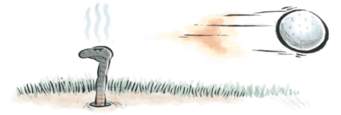
  2. Worm Burner. A worm burner is a hard hit single through the infield that seems to never bounce on its way to the outfield surface as it quickly makes its way to hit status. As the phrase implies, it is a ball that should have badly torched the oozing skin of any near earth surface worm that may have been crossing its direct exit route during its speedy exodus. What do we call “worm burners” that are trapped by an infielder’ glove? Nothing fancy. If they are well -played, we called them “hard hit ground outs”. If they are misplayed on the infield throw attempt, we call them “errors”.
  3. Frozen Rope. A hard hit line drive that seems to either maintain its shoulder-high trajectory in a straight lightning-speed path to the outfield wall for a double – or else – the ball rises only enough to barely clear the outfield wall for a home run. Former Chicago White Sox, Houston Buffs, and Baltimore Orioles hitter Bob Boyd won his nickname as “The Rope” for being this kind of hitter.
  4. Can of Corn. A lazy fly ball to the outfield that’s as easy to catch as opening a can of corn. This one escaped my understanding as a literal-thinking little kid. “Wow! If I have to open my glove with a can opener before I catch a fly ball,” or so I first thought, “I’m not going to catch too many balls for outs!” Once I grew to understand the meaning of the phrase, all others like it also became a “can of corn” to my new powers of symbolic comprehension.
  5. Greased Lightning. Power fastball pitches that left a trail of sparkling stars and shards of electricity in their wakes. The picture in my radio mind was better than any pitch that I ever saw Bob Turley of the San Antonio Missions pitch at Buff Stadium. I kept the literal imagery by choice when listening to Buffs radio games at home. And these were much more beautiful than any of the “greased lightening” pitches I saw in person at Buff Stadium.
  6. Courtesy Runner. Never saw or heard of any “courtesy runners” in my early times, but I had learned of the term on the sandlot. We all understood it there. A “courtesy runner” was a guy who took over as the base runner when the actual player that got there on batting merit got suddenly called home by his mother.
  7. Pinch Runner. Saw and heard of these guys all the time at Buff Stadium in Houston, circa late 1940s and early 1950s. These were fast runners, usually pitchers, that came into games when a guy on base either got hurt or was considered too slow to be of much help in a critical late game situation. Never held the next thought seriously, but always thought of it as a young kid: ” Wouldn’t it be funny if ‘pinch runner’ meant that the first baseman better watch out for wherever the pinch runner puts his hands when they are both standing together near the bag.You never know when he might actually try to pinch you as a distraction to the fact that he was just about to make an attempted steal of second base.”
  8. Grand Slam. It is the sight and sound of eight feet triumphantly trotting in unison around the bases. If you need further explication, you probably would not be reading this far into day’s column anyway.
  9. Fadeaway. A pitch that falls low and fades away from the batter’s reach. If not invented by the man who made the pitch famous, it was most probably first described as such by the great Christy Mathewson after the turn of the 20th century.
  10. Rubber Arm. A virtually extinct sub-species of pitcher in this era of controlled pitch count usage of pitchers in MLB games. Rubber Arms like HOF lefty Warren Spahn were once capable of pitching 16-18 innings in tight games of the 1950s and 1960s. No more. Today’s MLB clubs pay millions to starters who can most often only keep the game close through five innings of play.
  11. Frog Strangler. Not unique to baseball, but it has one clear meaning as a rain upon a scheduled uncovered MLB baseball game. It means No Game Today.

Let us hear of your own contributions or comments upon those offered here.

____________________

eagle-0range
 Bill McCurdy

Publisher, Editor, Writer

The Pecan Park Eagle

Houston, Texas
Politically Correct MLB Nicknames to the Extreme

December 2, 2016
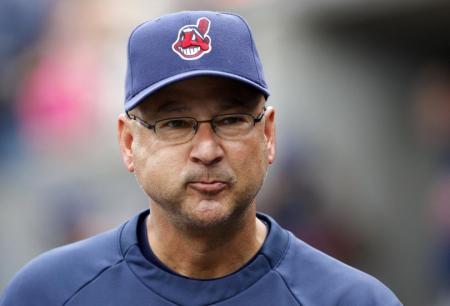
In this photo of Cleveland Indians Manager Terry Francona, can you spot the two things it contains that are potentially bad for baseball and those who play the game?

In this photo of Cleveland Indians Manager Terry Francona, can you spot the two things it contains that are potentially bad for baseball and those who play the game?

Tom Hunter called our attention this morning to a nice article in Chron.com from yesterday by Craig Hlavaty entitled, “When the Colt .45s became the Astros and the origins of other Houston sports team names”. It’s worth a quick look, so here’s the link:

http://www.chron.com/sports/article/When-the-Colt-45s-became-the-Astros-and-the-10647526.php

The article reminded me of the fun my late father and I used to have playing the “PC Game” with current big league club names. Always working together, and this probably happened about once every five years over the last twenty years of his life, we would strive to come up with new reasons why each MLB team probably has a mascot name that is offensive to someone out here and to then state our suggestions for more acceptable alternative mascot identities. The fun thing was – I can’t remember a single other time I came up with the same list of new alernatives. And, well, guess what happened when I did the exercise on my own this morning? That part of the result panned almost totally true, one more time. Other than the always repeating attraction I seem to have for resurrecting the “Phoenix Firebirds”, I really don’t remember coming up with any of these other suggested changes previously – with or without Dad’s help. They all seem driven by more current events – and Dad died back in 1994.

Maybe you will have some suggestions of your own to offer and record in the comment section below. Just ask yourself: Who might be offended by any current MLB team nickname now in use? – And what is a more PC friendly answer as an alternative in however many cases you take on.

Here are our Pecan Park Eagle newest (as of this morning) suggestions:

New Politically Correct Suggested Nicknames for Each of  the 30 MLB Teams

No. TEAM PC OBJECTION NEW NAME
01 Arizona Diamondbacks Too long Phoenix Firebirds
02 Atlanta Braves Native Americans Georgia Peaches
03 Baltimore Orioles Naturalists Baltimore Hops
04 Boston Red Sox Color Blind Boston Gray Sox
05 Chi Cubs long wait curse Chicago W’s
06 Chi White Sox Cultural Diversity Chicago 50 Shades of Gray Sox
07 Cin Reds Color Blindness Cin B&Ws
08 Cleveland Indians Native Americans Cleveland Spiders
09 Colorado Rockies Spirit of Denver Denver Highs
10 Detroit Tigers ASPCA Detroit Wheels
11 Houston Astros Flat Earth Society Houston Babies
12 KC Royals Commoners Kansas City Cockneys
13 LA Angels Atheists LA Kharmics
14 LA Dodgers Jaywalkers LA Goodies
15 Miami Marlins Naturalists Miami Moods
16 Milwaukee Brewers Anti-Alcohol Milwaukee Milkmen
17 Minnesota Twins Planned Parenthood Minnesota Pregnots
18 NY Mets Anti-Urban Bias NY Hayseeds
19 NY Yankees Anti-Yankees. NY Anons
20 Oakland Athletics Political Taunt Oakland Zombies
21 Phil. Phillies Anti-Horse Racing Fhil. Follies
22 Pittsburgh Pirates Law Enforcement Pittsburgh Parolees
23 SD Padres Atheists SD Salesmen
24 SF Giants Little People SF Norms
25 Seattle Mariners Old Pilot Fans Seattle Pilots
26 SL Cardinals Naturalists SL Arches
27 Tampa B Rays Naturalists Tampa B Smokers
28 Texas Rangers City of Arlington Arlington Rangers
29 Tor. Blue Jays Naturalists Tor. Flying Things
30 Washington Nationals MLB Purists Washington Americans; move them or Brewers to AL in exchange for Houston.

____________________

eagle-0range
 Bill McCurdy

Publisher, Editor, Writer

The Pecan Park Eagle

Houston, Texas

Stan Opdyke: A Fine Tribute to Vin Scully

December 1, 2016
Stan Opdyke (Stan from Tacoma) A SABR BioProject Biographies Contributor

Stan Opdyke
(Stan from Tacoma)
A SABR BioProject Biographies Contributor


Yesterday The Pecan Park Eagle received a link to a wonderful article that one of our longtime readers wrote about Vin Scully and Connie Mack back in 2009, when the iconic broadcaster’s incredible career had reached the 60th anniversary point, but actual retirement was still uncertain. The piece by Stan Opdyke was simply too good not to share with readers at this watering hole. Opdyke writes with a deep awareness of how Scully and Mack became unsuspecting career links in baseball history in the first game of spring training in 1950. The link was cinched when the young announcer worked his first game for the Dodgers – and Connie Mack’s Philadelphia Athletics just happened to be the Brooklyn Dodgers’ first foe in the spring season.

How little could either man have realized what their brief path crossing that 1950 day had recorded for them in the great hall of baseball history. Together, the managerial personification of apparent eternal service and the arguably greatest broadcaster of all time were about to link by their own career contact in a simple, seemingly meaningless ST opener in Florida the possibly longest continuous span of service to the game ever recorded by two men and their own one-game joint participation. Connie Mack began his professional baseball career in 1886 and would not retire as manager of the A’s until the end of the 1950 season. Vin Scully would begin his MLB/Dodgers broadcasting career in that same ST game that united him as a participant with Mack in 1950 and would not retire until the end of the 2016 baseball season.

From the 19th to the 21st century (1886-2016), Mack and Scully were the direct links in a history chain spanning three centuries and a total of 130 years.

WOW!

As his tag identification from the piece he wrote in 2009 clearly states, “Stan Opdyke was a Dodgers fan as a kid during the Sandy Koufax, Don Drysdale, and Maury Wills era. His biggest baseball thrill was watching Koufax pitch the Dodgers to the National League pennant on the last day of the season at Connie Mack Stadium in 1966. He also got Vin Scully’s autograph at Connie Mack Stadium in the mid-1960s. Vin was standing in the dugout before the game, and he called out his name and asked him to sign his autograph book. Scully graciously did. Meanwhile, the other kids looked at him like he was nuts. Why would he want an autograph of someone who looked and dressed like their father?”

Here’s the link to Stan Opdyke’s wonderful December 17, 2009 “Designated Hitter” story for Baseball Analyst, entitled, “Connie Mack and Vin Scully”:

http://baseballanalysts.com/archives/2009/12/connie_mack_and.php

Email for direct comments and questions for Stan Opdyke …. popup22nd@aol.com

Thanks for your contribution to the Scully footnoting that we are all now so caught up in recognizing, Stan – and please keep on hanging with us here at “The Eagle”. The voice of your quiet eloquence about all things baseball is very much appreciated – as is your baseball friendship.

____________________

eagle-0range
 Bill McCurdy

Publisher, Editor, Writer

The Pecan Park Eagle

Houston, Texas
Bill Gilbert: Triple Milestones 2016

November 30, 2016
Analyst and Commentator on the Astros for The Pecan Park Eagle has some smiling hopeful things to say about the club's performance in August 2016.

Analyst and Commentator on the Astros for The Pecan Park Eagle presents his always eagerly awaited triple milestone analysis for the 2016 season.

Bill Gilbert’s annual analysis of the triple milestone hitters in baseball is another fascinating production in 2016. Focusing on MLB performances, Gilbert’s list includes all hitters with a minimal qualifying season batting average of .300 who also hit at least 30 home runs and recorded no less than 100 runs batted in over the course of the season.

Normally, we would include the entire column and all of its tabular data here on the front page of The Pecan Park Eagle, but the volume of stats included will not line up properly here without far more editorial time than we have time today to reconstruct in tables that work on this site.

Not wanting to deprive our readers of the joy that comes with looking over the several fine numerical presentations that always come with this sort of Gilbert data analysis, and that fun would be missing from the data if we copied it here in unedited form. As is, it scatters the data into chaos when we attempt to post the numerical parts without further extensive editorial reconstruction into the formats needed here on WordPress.

Never fear. Simply click the following link and read the full Bill Gilbert Article as it was sent to us by e-mail attachment and intended to be read. In this format, you will have the choice of opening the column for reading only, and you may also download the Bill Gilbert material for future reference:

https://mail.google.com/mail/u/0/#inbox/158b2dae8bc5357a

Thanks again, Bill Gilbert! – Triple Milestones 2016 is another marvelous, well-done baseball assessment of how power baseball seems to change and stay the same in the near time annual picture of the game’s history. The same kind of dual presence of the status quo and change in the short term view was most probably also present back in the turn of the 20th century so-called dead ball era. There simply were not as many, if any, dedicated stat analysts back in those earlier times.

____________________

eagle-0range
 Bill McCurdy

Publisher, Editor, Writer

The Pecan Park Eagle

Houston, Texas
 

Vin Scully on Face the Nation, 11/27/2016

November 29, 2016
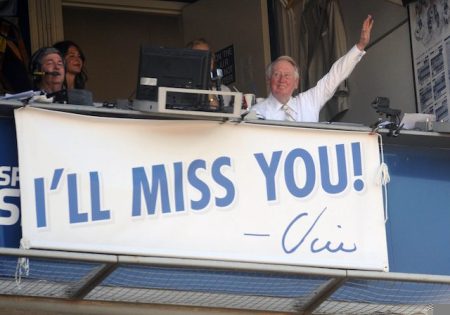
Vin Scully Says Goodbye ~ Some Goodbyes Are Never Quite Done When They Are Performed in the Name of Love..

Vin Scully Says Goodbye at Dodger Stadium in LA
~ Some Goodbyes Are Never Quite Done When They Are Performed in the Name of Love.

We didn’t think CBS would mind our presentation of this excerpt from the interview that CBS’ Face the Nation host John Dickerson did with Vin Scully this past Sunday morning, November 27, 2016. CBS did us all proud with their handling of this rare moment with the great American baseball broadcasting icon. Vin Scully is the kind of deep blue light-burning soul who might have just as easily built the same kind of reputation over a lifetime of dedicated service as a coach, a spiritual leader, a business man, a writer, an actor, a statesman, a lawyer or jurist, a country doctor from the art pages of Norman Rockwell, or the retired and wizened former machinist who now serves as a street-crossing guard as his neighborhood elementary school.

____________________

Vin Scully spent 67 years as the voice of the Los Angeles Dodgers.

(BEGIN VIDEO CLIP)

VIN SCULLY, LOS ANGELES DODGERS BROADCASTER: It’s time for Dodger baseball.

(CHEERING AND APPLAUSE)

(END VIDEO CLIP)

JOHN DICKERSON: Before he retired this year.

Last week, the president awarded him the Medal of Freedom.

And we caught up with him outside the White House.

(BEGIN VIDEOTAPE)

DICKERSON: What is the trick to calling a game, or what is the — if you had to teach me how do it, what would you do?

SCULLY: I would quote Laurence Olivier, because I have lived by his quote.

Apparently, some actor asked him about his success. And he said: “My success comes from a humility to prepare and a confidence to bring it off.”

And I think, the more you prepare, the more confidence you have, and they go hand in hand. That is the best of all.

DICKERSON: You also have a sense of joy in what you do and wonder.

(CROSSTALK)

DICKERSON: How do you get that every time? You have watched so many games.

SCULLY: I have a secret.

When I was about 8 years old, we had a big radio, four-legged radio, crosspiece underneath. I would get a pillow, crawl under the radio. And the loudspeaker would be right over my head. And I would be listening to Tennessee-Alabama, which meant nothing to a little kid in New York.

But what I loved was the roar of the crowd. And so, when I do the game, my philosophy is, do it quickly, call the play accurately, and then shut up. And for a little while, when that crowd is roaring, I am 8 years old.

DICKERSON: When Hank Aaron hit that famous home run, you called that.

SCULLY: Yes. I was…

DICKERSON: What — remember that for us. What was that like?

SCULLY: Well, it was building up, of course, all year long.

And now here we are in Atlanta. And our left-hander, Henry Aaron, is batting against Al Downing. And, of course, you are wondering about the home run. But I did not want to prepare anything. I did not want to think of all the home runs he hit or how many against the Dodgers or — and so, when he hit the home run, I did what I really do best. I shut up.

And I went back to the booth, and the crowd was roaring. It was magnificent. And while I stood there, it suddenly dawned on me. So, when I went back to the microphone, I said:

(BEGIN VIDEO CLIP)

SCULLY: What a marvelous moment for baseball. What a marvelous moment for Atlanta and the state of Georgia. What a marvelous moment for the country and the world. A black man is getting a standing ovation in the Deep South for breaking a record of an all-time baseball idol.

(END VIDEO CLIP)

SCULLY: And to me, of all the home runs, that is the most important one I ever saw.

DICKERSON: And you hadn’t thought about that connection before?

SCULLY: No, no, not at all.

DICKERSON: You were quiet, you said nothing, I think, for a minute and 44 seconds.

SCULLY: I’m good at that.

(LAUGHTER)

SCULLY: Really.

DICKERSON: And that was you getting out of the way of the moment?

SCULLY: I did not want to get near it.

DICKERSON: What speaks baseball to you more, the crack of the bat or the snap of the glove?

SCULLY: The roar of the crowd. I have been in love with that ever since I was a little boy.

DICKERSON: What would you tell that little boy? He is under the radio. He’s 8 years old. What would you tell him now with the award you have just received? What would you tell him?

SCULLY: I would tell him, don’t be afraid to dream.

DICKERSON: What are you grateful for?

SCULLY: I am grateful for God’s grace to allow me to do what I have done for 67 years.

I’m grateful for my wife, my 16 grandchildren, my three great- grandchildren, for a life that has been beyond fulfillment of a dream. Yes, I am deeply thankful.

DICKERSON: You wrote in your farewell letter to fans, you said you would miss the fans.

Some people might think, well, wouldn’t you miss the game and the excitement? Why the fans?

SCULLY: Well, again, we get back to, when they roar, I get goose bumps. And that is why I have kept young, I believe, because every time they roar, I go back to being 8 years old. I don’t have a painting, like Dorian Gray, on the wall, but the crowd fulfills everything for me.

DICKERSON: Is there any other moment from your career that, when you look back, you say — the Hank Aaron home run would obviously be one. Is there another moment where you say, that — boy, that was a great moment?

SCULLY: I will be very brief.

I was in high school at the time sitting in the back of the auditorium with the best athlete on campus. * And we were chatting. And he said, what would you like to do when you get out? And I said, I would love to be a baseball announcer. He said, I would love to be a baseball player. I said, wouldn’t it be amazing if I became a baseball announcer and you become a Major League player?

It happened. Three years into my career, he came up to bat. I was on the air. And he hit a home run. And I had to call my friend’s home run in the big leagues. And that is why I would always say to kids, don’t be afraid to dream, because it can happen.

DICKERSON: Vin Scully, this was a pleasure. Thank you. And happy Thanksgiving.

SCULLY: John, and the very same to you and yours.

(END VIDEOTAPE)

  • That unnamed “best athlete on campus” in this interview, of course, was the now 91-year old Bronx-born Irish legend and iconic Houstonian, former Houston Buff and St. Louis Cardinal, Larry Miggins. On May 13, 1952, Miggins made an appearance at Ebbets Field for the Cards in a game against the Dodgers. He homered off Preacher Roe as his former classmate from high school, Vin Scully, broadcasted the event as the fulfillment of his once upon a time amazing wish. – And, as Vin tallied it for young people – and for  the young at heart from everywhere – “don’t be afraid to dream, because it can happen.”

____________________

eagle-0range
 Bill McCurdy

Publisher, Editor, Writer

The Pecan Park Eagle

Houston, Texas