Mysteries of American Life!

October 12, 2009

Excuse me! I don’t want to take up a lot of your time because I know you’re a busy person, but I do have a few questions I wish somebody like you could help me answer. – I promise to keep it brief. OK?

Colombo(1) Why is it that we pay into Social Security with money that’s already been taxed, but then, when we start getting it back in monthly retirement payments, we have to pay income tax on simply reclaiming the same money that was already ours? Can you explain that to me? I wasn’t too good at math in school. I figure I missed out on something.

(2.) Why is it that women say to their husbands, “if you want to have a better love life with me, you’ll first try to do a better job of getting close to me emotionally,” but the men turn right around and say to their wives, “if you want to get close to me emotionally, you’ll first help me make sure we have a better love life!” I tried to get Mrs. Colombo to answer this one, but she just said, “if I have to explain it to you, it doesn’t really matter!”

(3.) Why does being born on American soil to non-American parents automatically make you an American citizen who will be eligible to run for President at  age 35 while an immigrant naturalized American, born elsewhere, is automatically disqualifed by place of birth from ever serving as President? Isn’t place of birth more of a coincidence than it is a statement of how American or Un-American you are as a baby? – Unless one of your parents is already an American citizen , shouldn’t you just be a citizen of whatever country your parents come from, no matter where you first see the light of day? Otherwise, doesn’t the present law of the land pretty much establish a “running back headed for the end zone” relationship between some  foreign pregnant women and American soil?

(4) Why do we allow members of Congress to establish and benefit from retirement and health care plans that are so far superior to our own? Don’t you think they might find some better answers quicker to these two great national issues if they were stuck in the same retirement and health care boiling pot with the rest of us? What do you say we figure out a way to “rein in” Congress to Social Security and Medicare with the rest of us and press Congress to pass an amendment that prevents our lawmakers from ever again establishing retirement and health care plans that are separate and superior to those available to us “Everyday Joe and Jane” American citizens? Don’t you think those steps my light a fire in their desire to find better solutions for “our” plans?

(5) Why do “John and Kate Plus Eight” matter to anyone? Oh well. maybe they have the answer to that man and woman relationship question I asked earlier. John and Kate, please listen up. – Mrs. Colombo and I need an answer here. What’s most important first in a marriage? – Good loving? – Or good feelings?

(6) Why do we bother to have smoking sections in restaurants when we don’t have urinating sections in swimming pools? Wouldn’t the latter be about as ineffective as the former, even when people play by the rules? I guess the only difference is – at least – in the case of smoking sections, we can see who’s violating the rules.

(7) When I first reached the age of eligibility for Medicare, I didn’t sign up for Part B, the part that pays some your office visit and prescription drug bills. I didn’t take it out because I first misunderstood that my other very good private insurance would make it fairly meaningless as help and just cost me money deducted from my new Social Security payments. Then I said to myself, “I’ll just save the system some money by holding off taking Part B until later. – Well, it’s later now. – Now I’m being told that I’m going to be penalized on the cost of my Part B plan because I didn’t start it when I first had the chance! Nobody told me that earlier. Am I that dumb? Doesn’t the government ever want to save money? Why should I be penalized for doing something the bureaucrats in Social Security ought to be rewarding me for doing? Oh, that’s right. I keep forgetting. The bureaucrats get their pay regardless of whether or not the programs they run make, save, or lose money for the taxpaper. Forgive me. I’m taking way too much of your valuable time with matters that should be very obvious to a smart guy like me. After all, I’m Colombo!

(8) Why do we live in neighbborhoods that pay good money to management firms to preserve quality of life when all they do is snoop through our streets, noting things we need to do with our money, on their short-time schedules, to fix up our properties – or else? Oh yeah, these little weasling micromanagers are straight out of George Orwell’s “1984” too. They let you know by anonymus letter (what they call a “courtesy contact”) that they have been watching your house and that they have observed certain things “you need to fix” to move out of harm’s way from possible legal action. – This kind of thing is only important to the quality of life enjoyed by the little anal-retentive people who snoop through the neighborhood, squinting at everyone else’s houses, enjoying the only power they have to abuse others! – Why can’t we just tar and feather people who do this kind of dirty work and get back to the simple enjoyment of living in our own homes? We’re not talking cars parked on the front lawn here on my block. We’re talking, in the case of one neighbo, about an ivy vine that managed to run a strand out of bounds down the side of a front yard rain gutter. Now, I gotta ask. – Is that one little vine really going to ruin mine and all my other neighbors’ days? Man! Do we really want to hop to the tune of some chicken-livered overseer who doesn’t even have the guts to ask us face-to-face about things he or she finds wrong at our houses, preferring only to send us an unsigned “couresy contact” ultimatum? What’s wrong with this picture, anyway?

(9) So how come so much of life seems controlled by bad timing? When we’re young and in good health, but broke, we miss out on a lot things we can’t afford to do.  Then, by the time we can afford these things, we’re either too old or too ill to even entertain the idea of travelling far from home. – With Mrs. Colombo and me, it works more lke this. She says to me: “You never take anywhere!” I say: “OK, let’s drive over to Nevada to see your sister.” Then she says: “Do you really think I’d want to drive all the way to Vegas in a car with you?” – Why is she like that? I’m damned if I do, and damned if I don’t. – You tell me!  I may be smart enough to solve a lot of crimes – but not this one!

(10) Why do they call the game of baseball “America’s Pastime” when, for a lot of us, we’re not passing time at all when we go to the ballpark. When we’re at the ballpark, we’re pretty much living our lives as we want to live them. So how come Mrs. Colombo doesn’t understand that?  She can’t figure out why they don’t do something to shorten the games. As for me, I don’t care how long the game runs. When I’m at the ballpark, in fact, I don’t care if I never get back. In fact, don’t you think life would be simply so much easier if Mrs. C. could just think more like me?

(BONUS 11) How is technology helping us to communicate better when the Internet, cell phones, and texting only encourage us to reach out to talk with people who are not with us while we simultaneously ignore the people who are with us? Mrs. Colombo thinks that she and I have a problem in this area. I told her to call me about it sometime. Is that so bad?

Sorry I took so much time here after I promised to be brief. I’ll tell the Pecan Park Eagle man to get back to baseball tomorrow.

The Niekro Family: Love Never Forgets Nor Says Goodbye!

October 10, 2009

Niekro Joe & Nat

I’ve been a fan of Joe and Phil Niekro forever it seems, but I never met either of the two great knucleballers until Joe’s November 4, 2005 induction into the Texas Baseball Hall of Fame. This happened during my tenure as board president of that organization, making it my great honor and pleasure to have some spare time with these wonderful people during the day leading up to the banquet ceremony at the J.W. Marriott near the Galleria.

Upon meeting the Niekro brothers in front of the hotel, it took about thirty seconds to feel as though we had all been close personal friends for a lifetime. I’ll never forget the fun we had, just standing around, kicking back, and talking baseball. Later I got to meet the entire Niekro entourage. Joe was accompanied by his wife Debbie and their ten-year old son J.J. His oldest son Lance, then a first baseman for the San Francisco Giants, also was present, as was Joe’s  grown daughter, Natalie Niekro. What a beautiful lady she turned out to be, but hey, the whole family was handosme and congenial. Joe had every reason in the world to be proud. The day after the banquet, I drove Joe, Debbie, J.J., and Lance to the airport.  We talked about staying in touch – and Joe even gave me a great big hug of thanks before leaving. I looked forward to seeing Joe Niekro again as a new, but very old and dear friend.

Niekro Phil Bill Joe

It was not to be.

A little less than a year later, on October 26, 2006, Joe Niekro collapsed at his Florida  home from  what turned out to be a ruptured aneurysm. He was rushed to a local hospital and placed on life support, but there was nothing that could be done to save him. Suddenly, abruptly, with no fair early warning to him or his family, Joe Niekro  passed away on October 27, 2006 from the same silent killer that takes away thousands each year, and leaving loved ones behind to helplessly ache and grieve.

There was a difference this time. The “resident medical evil” that is aneurysm had not counted on the enormous, all-out pushback from personal pain that resides in the soul of Joe’s daughter Natalie.

In 2007, Natalie Niekro established The Joe Niekro Foundation to promote fundraising for aneurym diagnostic and treatment research. Operating as a new 501 C (3) non-profit chartered organization, Natalie installed herself as President and CEO from her Scottsdale, Arizona home and flew into action of fundraising plans.

Natalie worked out an arrangement with the Houston Astros to hold the organization’s first “Knuckle Ball” banquet at Minute Maid Park in Houston during the fall of 2008, but that plan had to be postponed because of Hurricane Ike. That awful storm didn’t stop Natalie Niekro for long. It just held her up on time a little.

Promoted as “The Knuckle Ball: Now a Pitch for Life Against Sudden Death,” this first annual event finally unfolded at Minute Maid Park on Friday evening, July 31, 2009. All proceeds from the banquet and auction activities of that evening were dedicated to the support of aneurysm research at the Neurological Center of Methodist Hospital in Houston.  It turned out be the biggest star-studded sports draw in Houston athletic banquet history. With Hall of Famer Joe Morgan serving as Master of Ceremonies, other baseball greats from Cooperstown on hand for the evening included Joe’s brother Phil Niekro, of course, along with Sparky Anderson, Bob Feller, Robin Roberts, and Ozzie Smith; plus all of the Astros brass – Drayton McLane, Tal Smith, and Pam Gardner; four former Astros managers – Bill Virdon, Art Howe, Larry Dierker, and Phil Garner; former Colt .45 and Astro stars Jimmy Wynn, Carl Warwick, Mike Scott, Enos Cabell, Joe Sambito, Craig Reynolds. Kevin Bass, Dave Bergman, Enos Cabell, Ed Herman, and others I’m surely missing; former UH great basketballer and NBA Rocket and Hall of Famer Elvin Hayes, plus Mario Elle; and former Houston Oiler quarterback  Dan Pastorini.

The first annual Knuckle Ball raised $400,000 for aneurysm research, but Natalie Niekro didn’t stop there to wait on next year’s banquet to raise more money. Check out her latest  blog to see the plan she has worked out with Major League Baseball to raise money through the Arizona Fall League. While you’re there, give yourself the time and opportunity to explore the whole website for full reports and photos of the foundations past events and future plans. If you want to help too, there is ample room on this bandwagon for you. Just stay open to the possiiblity.

http://joeniekro.wordpress.com/2009/10/08/arizona-fall-league-partners-with-the-joe-niekro-foundation/

Natalie Niekro is one amazing human being, as was her dad. Natalie’s love for her father is forever. And Joe’s spiritual inspiration to his daughter is eternal. These inseparable forces of unconditional love between a father and his daughter, a motivation born in the pain of unacceptable loss, and an apparently genetic commitment to fighting the good fight all the way are what all add up to making the Joe Niekro Foundation’s dedication to the research war on aneurysms something that is, well, most simply expressed, flat out relentless.

If you can help too, please do. Get in touch with Natalie Niekro at the Joe Niekro Foundation website at your earliest opportunity. Whatever you are able to do counts big.

http://joeniekro.wordpress.com/about/

Ken O’Dea: Buffs QB Back in ’33!

October 9, 2009

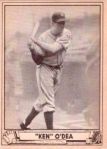
Ken O'Dea Sometimes I’m reminded of certain former members of the Houston Buffs by the e-mails I get from people with a special interest in same. Yesterday I received a request for research assistance from a fellow named Ken Hogan, a guy whose doing background work right now for what he describes as a “booklet” on a cousin who played for the Houston Buffs in 1933, a BL/TR catcher named Ken O’Dea.
What I told Neil Hogan I can tell you here. – Even I am not old enough to have seen Ken O’Dea play ball in Buff Stadium back in 1933, but I’ve read of him over the years in my scannings of ancient Houston Buff history. Ken O’Dea was much more than adequate as the field captain of the ’33 Buffs. He was the guy that the Texas League media selected as their post-season All Star catcher for both his bat and his fielding ability. O’Dea batted .269 with one homer and 65 runs batted in for the ’33 Buffs, and he shared field leadership duties with second baseman and playing manager Carey Selph, who also made the the ’33 Texas League All Star club. Ed “Bear Tracks” Greer, a 22-game winning pitcher for the ’33 Buffs, was the third club member to make the Texas League All Star team that season.

The ’33 Buffs finished in first place with a Texas League record of 94-57, but they lost in the first round of the playoffs for the league championship. O’Dea would move on to Columbus the next season, completing his four-year minor league run (1931-34) with a minor league career batting average of .288 with 12 HR and 177 RBI.

The balance of Ken O’Dea’s baseball career beyond 1934 was all major league. In a 12-season big league career with the Cubs, Giants, Cardinals, and Braves (1935-46), O’Dea batted .255 with 40 HR and 323 RBI.

Ken O’Dea died on December 17, 1985 in his birth home town of Lima, New York at the age of 72. Good luck to Neil Hogan on writing something that will bring the acomplishments of his talented cousin back to life in the minds of those fans who care about baseball history as something larger than a canvas for myriad new books on Babe Ruth, the New York Yankees, and the Boston Red Sox.

Nick Cullop: Baseball’s Mr. “Tomato Face!”

October 8, 2009

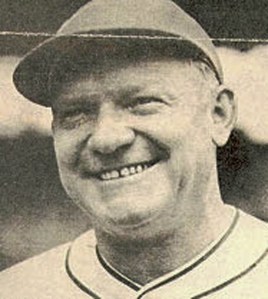
Nick CullopSo, how does a guy get a nickname like “Tomato Face?” Let us count the ways he may have earned it honestly from the baseball culture, especially back in the old days.
He may get it (1) if he’s one of those fair-skinned ethnicity folks who spend too much time in direct sunlight during the day; (2) if he’s one of those fair-skinned ethnicity folks who spend too much time in bars and saloons during the night; (3) if he’s one of those fair-skinned ethnicity folks whose diets and genetics promote high blood pressure; (4) if he’s one of those fair skinned ethnicity folks who decides to take on the stress and pressure of managing a professional baseball club; and (5) he may get it, for sure, if he’s a little bit of everything described above, plus a guy who chose to work and play his heart out in baseball back in the 20’s, 30’s, and 40’s.  – Baseball simply loved handing out outrageous and unflattering nicknames back in the day.

At any rate, such was the nickname-fate of Nick Cullop, one of our Houston Buff twilight time heros of the 1939-40 seasons. The BR/TR outfielder Cullop joined the Buffs at age 38 during his 19th season as a professional baseball player. Nick Cullop then proceeded to hit .318 with 25 homers and and 112 runs batted in for the ’39 first place Buffs, leading the Texas League in HR and RBI and earning for himself the nod as the circuit’s MVP. The Eddie Dyer-managed Buffs lost in the first round of the 1939 league championship playoffs, but they came back in 1940 to repeat their first place finish and, this time, to also take the playoffs, the Texas League pennant, and the Dixie Series championship. Nick Cullop’s production fell to .272 with 21 HR and 96 RBI for the ’40 Buffs, but, hey, the man was 39 years old by this time!

Nick Cullop played four more limited action seasons of minor league ball following his two years as a Buff, completing his 26 total season career as an active player (1920-44) with some interesting major and minor league results. For his five seasons as a major leaguer (1926-27, 1929-31) with the Yankees, Indians, Senators, Dodgers, and Reds, Cullop batted only .249 with 11 HR and 67 RBI. For his 23 seasons as a minor leaguer (1920-26, 1928-30, 1932-44), the stocky 6’0″ “Tomato Face” batted a healthy .312 with a grand total of 420 minor league HR and 1,857 minor league RBI, the second highest total in recorded minor league history.

In segue from his playing days, Nick Cullop beacme best known as a successful minor league manager, working 17 seasons as a skipper (1941-52, 1954-57, 1959) and winning four league championships along the way. Cullop also won two “Minor League Manager of the Year” awards in 1943 for the Columbus (Ohio) Redbirds and in 1947 for the minor league Milwaukee Brewers.

Nick Cullop passed away on December 8, 1978 at the age of 78. Maybe old “Tomato Face” simply died of redfaced humility over his many field accomplishments and a life well lived and enjoyed  in baseball.

MLB Teams: Rename Some; Realign All!

October 7, 2009

map-united-states

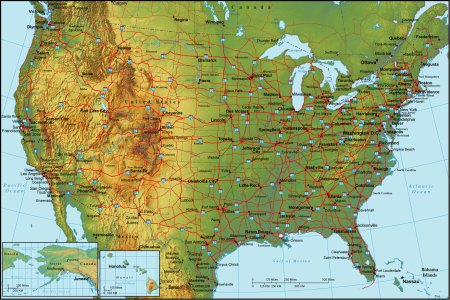
About once every decade, I come back to three of my favorite intertwined baseball topics. I sometimes write about these, but not so much because I think mine or any of our opinions will change the baseball powers-that-be on these subjects. I write because it’s much more like Hank Williams, Jr. explains when he talks about his need to boogie-woogie: “It’s in me and I gotta get it out!”

The topics are the Designated Hitter (DH) rule,  team renaming, and league and division realignment along sensible regional lines. Years ago, I wouldn’t have considered realignment. I was always a National League guy who wanted to keep the Senior Circuit as close to the way it had always been set up as possible. Now it doesn’t matter anymore. MLB has gotten rid of the two league offices; eliminated their separate league umpiring crews; done away with each of their uniquely labeled American and National League baseballs; and, oh my gosh, added inter-league play to the schedule. So, why bother defending a distinction of traditional league identities that no longer truly exists – nor matters – except for one thorny real difference: The American League still has the dadgum “Designated Hitter” rule while  the National League continues to play real baseball by the same basic rules that once governed the careers of great pitchers like Walter Johnson and Christy Mathewson.  Those two guys pitched in different leagues, but they both also had to bat on their ways to the future Hall of Fame. And managers back then, as they still do in the National League, had to take into account his pitcher as a batter as he planned his strategy for the whole game. As for as I’m concerned, all the “DH” rule does is gut the major strategy question any manager has to face in every tight game and throw the whole thing closer into autopilot play.

My realignment plan brushes aside the reality of the “DH” rule and treats it as resolved on the side of dissolution, Players’ Unon protests be damned. Just add a player to the roster in exchange for abandoning the “DH” rule before some foot-stumbling hitting bozo bats his way into the Hall of Fame without ever taking the field of play on defense in a big league game. If you can’t play offense and defense, you’re not a whole ballplayer in my book. Hey! If you want to get involved in a platoon sport, go play in or stay home and watch the National Football League, but get the heck away from the traditional game of baseball that so many of us still love for its expectation of wholeness from the players and managers.

That being said, here’s my League and Division Realignment Plan, one that excludes the “DH” rule and inter-league play. I don’t need to see the Yankees in the regular season. I want to see my club, the Houston Astros, play the Yankees for all the marbles in the main event, that big show I hope we shall always call and honor as The World Series. That’s when you want to play the Yankees, when your club has earned its way to the big showdown – and not just because it’s my team’s rotating time to have a big gate because the Yankees, or Red Sox, or on the schedule this year.

One more thing: My plan renames some of the teams to what they should’ve been called from the start. My renamings take away these marketing stretches that presume naming your club for the entire state, or some nearby larger city, will increase a club’s fan base. To that, I say, let the clubs be who they really are – and people will still come see them – and in even greater numbers because the fans always know when they are going to see a team that is now flying its true geographic identity.

I only make two exceptions to this basic identity rule that favors city name and traditional mascot adoptions. The Minnesota Twins and Texas Rangers are perfectly named for the dual major city fan bases they each serve. The rest of the “state and next-door big city” named clubs need to shake off the phoniness and just be who they really are.

Here’s my current realignment suggestion, based on the present thirty existing (but some now renamed) big league clubs:

AMERICAN LEAGUE

East Division: Boston Red Sox, New York Yankees, New York Mets, Cleveland Indians, Philadelphia Phillies.

South Division: Atlanta Braves,  Baltimore Orioles, Miami Marlins, Tampa Tarpons, Washington Nationals.

Central Division: Detroit Tigers, Milwaukee Brewers, Minnesota Twins, Pittsburgh Pirates, Toronto Blue Jays.

NATIONAL LEAGUE

Central  Division: Chicago Cubs, Chicago White Sox, Cincinnati Reds, Houston Astros, Texas Rangers.

Gateway West Division: Denver Bears, Kansas City Royals, Phoenix Firebirds, San Diego Padres, St. Louis Cardinals.

Far West Division: Anaheim Angels, Los Angeles Dodgers, Oakland A’s, San Francisco Giants, Seattle Mariners.

There. I got it out. Now I feel better about this whole first decade of the 21st Century. It’s not perfect. Nothing is. Pittsburgh isn’t exactly “central” to anything in the contiguous USA, nor is San Diego anything close to a western “gateway,” except to and from Mexico, but the whole plan is still, overall, a lot closer to a geographic fit than anything we have going for us now, I think. Please feel free to comment below with your own thoughts on team names, the “DH”, and realignment. I’d love to hear them.

.

Dave Clark: Going Home as Interim Astros Manager.

October 5, 2009

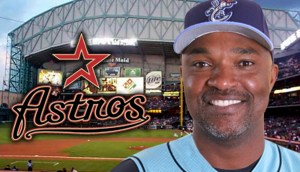
Sometime early this morning, maybe even as I write, Interim Manager Dave Clark of the Houston Astros will take off for home from New York City by automobile. The ten-hour drive to Memphis, TennesseeDave-Clark should be a welcome breeze after all that Clark has been through over the course of 2009 and his brief thirteen-game career as the guy who was appointed to bring this train-wreck of a season into the station over the last few miles of its beleaguered journey.
There was nothing publicly remarkable or particularly great about the shut-em-down final ride of the 2009 Astros under Dave Clark. The Astros won 4 and lost 9 under his watch, finishing the season in New York with a mostly mailed-in, three-game series sweep-loss to the Mets that simply died with a thud on Sunday – with no Astros runs scored, and only four mild  Houston hits to show for the last on-field lost cause of a season that sltready brimmed with many lost causes, too many nagging injuries,  and too frustrating and far too many agonizing personal performances.

Does Dave Clark drive home today with much of a chance of coming back without the “interim” descriptor written in front of his managerial title? Who knows? Sometimes an interim manager is so associated with the train wreck of his predecessor’s record that he doesn’t really have much chance for a fair consideration against those candidates who will be much easier to sell as fresh answers to the same old problems. Like Clark himself, we’ll just have to wait on the Astros to answer that one.

All we can know, as fans, is that Dave Clark does seem to enjoy the trust and respect of his players. On surface, in fact, he seems to fit many of the favorable dispositional factors that I wrote about in my article on Bill Virdon a couple of days ago. He defiinitely seems to hold the respect of players like Hunter Pence, who played for Dave Clark at Corpus Christi. His strong reputation as a teacher/mentor to younger players seems to be one of his strong assets, but its hard to draw any realistic conclusions about his management of pitchers and other personnel over the final two weeks just concluded. It was a time, after all,  for experimentation and not for starting pitcher and regular lineup solidification.

Who is Dave Clark, anyway?

47-year old Dave Clark is a native of Elvis Presley’s hometown, Tupelo, Mississippi. He was the 11th round 1983 draft choice of the Cleveland Indians as a BL/TR outfielder and he would go on to a 13-season career with six clubs (1986-1998), including his final season as an Astros hitter off the bench, and batting .264 with 62 career homers over the long course.

After his playing days, Clark spent three years in the Pirates organization as a hitting ocach (2000-02) and two years as a minor league manager (2003-2004) in the Pirates’ lower minor league system. He then shifted over to the Astros, managing for three years at Class AA Corpus Christi (2005-07) and one year at AAA Round Rock (2008). In 2009, Clark joined the major league staff at Houston under Cecil Cooper, the man he succeeded a little over two weeks ago.

As Astros fans, let’s just hope that Dave Clark gets a fair shake – and, most importantly,  that we end up with the best man for the  job of leading the Astros out of the wilderness in 2010. It may say nothing about his long term ability to lead the Astros to that elusive World Series victory we’ve all been seeking forever, but I like the fact that Dave Clark started Aaron Boone at second base in that 4-0 finale loss to the Mets. Boone was making his bid to become the only man in big league history to go through heart surgery and then get a hit during the same season of his medical crisis.

Aaron Boone already had gone zero for ten trying to accomplish same and he really had nothing to prove to others. Boone  had already come back, but he still wanted that hit as a symbol of personal validation and Clark knew it –  so he put him in the game. Boone went oh for three, but that’s OK too. He gave it his best final shot, and thanks in larger part to interim manager Dave Clark, a guy who thinks with the heart of a player.

Drive safe on the way home today, Dave! OK? Regardless of what happens from here, you can drive away from 2009 with respect in your hip pocket.

.

Speechless.

October 4, 2009

UH 100309

Bill Virdon: Too Bad He’s Now Too Old!

October 3, 2009

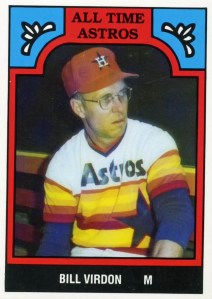
Bill VirdonAs all Astros fans await the decision on who will take over the reins as the new full-time field manager of the club in 2010, it’s fair game time to talk about the kind of man who might best fill the bill. I sure can’t talk about it as a baseball insider, but as a forever Houston major league team fan since that first season in 1962, I’m like the rest of my crowd in the sense that I have my own strong opinions – and the first is easiest to express:

(1) Put Bill Virdon in an Age Regression Machine. If 78 year old former Astros manager Bill Virdon were only thirty years younger, I’d say, “Hire Virdon. End of discussion.” With a club record number of managerial wins (544 wins, 522 losses, and a .510 winning percentage), Bill Virdon led the Astros to two playoff appearances in 1980 and 1981. During his nearly eight seasons at the Astros helm (1975-82), the club didn’t have the big breakthrough we all still hope for (a World Series win), but they learned how to coalesce into a winning team. They reached the playoffs for the first time of their history in 1980, falling one still very  disappointing loss short of reaching the World Series, through no bigger picture fault of Virdon. I’ll always believe that the late season loss of star pitcher J.R. Richard to a stroke was the real hammer on our 1980 pennant hopes. With Niekro, Richard, Ryan, Ruhle, and Forsch all healthy and available for starting duty in the 1980 NLCS, there would’ve been no Philadelphia Phillies first World Series victory that year.

(2) Use Bill Virdon as a Role Model or Prototype. Since Virdon’s off the table as a serious candidate, let’s hope the Astros find a manager whose most like him. The rest of my comments are about qualities that I think Bill Virdon brought to the club during his tenure with the Astros:

(3) Respect. Players need to see their manager as someone they respect for his knowledge of the game, for his integrity as a man, and for his trustworthiness as someone who has their backs when bad games and slumps leave them wide open to shark bites from the media.

(4) Ability to Handle Pitchers and Young Players. Knowing how to balance the work between starters and relievers, and handling the often fragile confidences in younger players as a protective, but results-expectant mentor are essential. The Astros don’t need a mule team whip guy, nor do they need a too sympathetic wet nurse. They need a man whose brain is attached to the three demands of the real world in his understanding of the great lessons about breaking in to any field: (a) young talent still needs room to learn from their mistakes on the job; (b) young talent needs management that is capable of teaching them what they didn’t learn in “school;” and (c) young talent needs to understand that production eventually is the only thing that will keep them in their jobs. – A good manager has to be able to handle all three areas – or else, be eaten alive in time by failure, low team morale, chaos, and rebellion.

(5) Communication with the Media and the Public. This may have been the one area where Virdon may have been a little weak. I don’t remember him being very verbal or extroverted in his relations with people outside the club. I also don’t recall him ever making a big gaffe with his words. A lesser communicator can survive to fulfill the important team missions, if (a) his skin is thick enough to take the flack he will catch from those glib writers who will always enjoy playing games with sports people who are dean-pan serious – or not too quick on their mental feet; (b) he doesn’t use the media conference as a place to criticize his own players in defense of protecting his own posterior; and/or (c) he doesn’t suffer from verbal diarhea and foot-in-mouth disease.

(6) Bottom Line: In this crazy world of baseball managers, nobody’s perfect, but a Bill Virdon with “HD 2010” communication skills comes close – at least, he does in the eyes of this longtime Astros fan observer.

Houston Buffs: Fireballing Jack Creel!

October 2, 2009

Jack CreelThe six foot tall, 164 pound stringbean righthander named Jack Dalton Creel was born on April 23, 1915 in a little place called Kyle, Texas. From 1938 through 1953, Creel amassed a fifteen season record of 179 wins, 157 losses, and an earned run average of 3.37 Throw in the 5-4, 4.74 W-L, ERA record he recorded in his one 1945 season with the St. Louis Cardinals and you’re looking at a pretty fair country resume’ for a fellow who played it all out during one of baseball’s most heavily talented personnel eras.

Creel broke in with two 15-win seasons in Class D Ball (1938, Taft, 15-7 & 1939 New Iberia, 15-11). He then capped that great start with his best season ever at Class D Daytona Beach with a 22-7, 1.50 ERA record.

Creel struggled with three clubs at Class B and AA in 1941, going a combined 10-11 in the win-loss column. His move to the then A1-level Houston Buffs in 1942, however, saw Jack Creel grab hold of his good stuff and battle forward to a 13-6, 1.92 ERA year.

After going a combined 19-28 in two seasons at AA Cloumbus, Ohio in 1943-44, Creel moved up to the parent club St. Louis Cardinals in 1945, posting a 5-4, 4.74 ERA record as the whole signature on his big league career.

The return of many talenetd Cardinal picthers from World War II in 1946 sent Jack Creel, and many others, back to the minors, where he posted an 8-11, 4.19 ERA record with the now AAA Columbus club.

Jack Creel then returned to the Houston Buffs for three of his most productive years in the minors (1947-49). Jack’s 14-10, 2.63 ERA mark with the Buffs’ ’47 Texas League and Dixie Series championship club was critical to Houston’s success. His work on two far less talented Buff clubs (1948: 12-10, 3.52; 1949: 16-10, 3.38) was important as the bathtub stopper on two teams that headed mainly toward a fuller drain. Thank God for the presence of Jack Creel in lean times. His ability always made victory a possibility and it drew fans to Buff Stadium who might otherwise have stayed home.

Creel spent the next two years with Portland of the AAA Pacific Coast League (1950-51), combining for a record of 21-20 and an ERA in the “low 4s.” Jack Creel returned to Houston to post a 6-11, 3.12 ERA record for a a very bad last place Buffs team. He then moved over to Beaumont of the Texas League in 1952, where he finished his last season in professional baseball with a record of 8 wins, 15 losses, and and ERA of of 5.20.

After baseball, Jack Creel made his home in Houston. He passed away here on August 13, 2002 at the age of 86.

In the end, I look upon Jack Creel as one of those pitchers from my childhood years who always inspired my desire to go to Buff Stadium on the nights he was scheduled to work. The hope of winning gets planted early in baseball fans and its tease about the harvest lasts a lifetime. Pitchers like Jack Creel were excellent gardeners.

Ode to Prince’s Drive Inn

October 1, 2009

PRINCES 02

PRINCES 01

When the long day’s done, when nostalgia seaps through, there’s still time left, for a burger and brew, at the one place in town, that’s pulled Houston  through – the Depression, the wars, and the freeways.

“Fit for a King,” don’t mean a thing, if it ain’t got that fling, that original sauce bling, that seeded bun sting, that all crisply tells us, “you’re eating at Prince’s tonight!”

 From 1934, through the ’80s or so, your good taste in burgers, was all we could know, of a meal that was laid out, quite perfectly so,  in a kitchen just this side of heaven. 

With rings on the side, as the onions were fried, you charmed us with carhops and Elvis. – We flocked to your gate, and we always stayed late, but the smooching was hard on the pelvis. 

On South Main you were royal, to your subjects so loyal, and you soon built a thousand locations. – Then hitting them all, ‘came our gist of it all, as our favorite on-the-go avocation. 

You closed down for a while, but you came back in style, with a plan for the new generation.  No carhops this time, just burgers sublime, and a dab of the ’50s, in sweet spiritual decoration.  

And now that you’re back, with a storefront or two, it’s still nice to taste, a great burger from you, but I still have to ask, ‘fore the clock on me, gently, I hope – just slips me away too:

“Who is that beautiful girl whose carhop cutout figure now hangs on the wall of your Briar Forest place? I remember her from the old days, but I never got her name!”