Frank Shofner: An Everyday Guy.

March 2, 2010

Frank Shofner Hit .241 for the '51 Buffs.

Every field of human endeavour has them. Most of us are them. We are the minions of the masses that make every clock of human effort tic. Without us, there would be no night sky in place for all the stars to shine. There would be no cars fixed by the side of the road when really important people are late for meetings in the halls of power. There would be no torch bearers streaming through the darkness when it was time to storm Dr. Frankenstein’s castle. There would be no  Rosencrantz or Guildenstern lending quiet body and soul to the telling of Hamlet.

Frank Shofner of the 1951 Houston Buffs was such a character in baseball. We may talk and write of Ruth and Aaron all we want, but we simply could not play the game without the multitudes of mediocre performances supplied much more frequently by ordinary guys like Frank Shofner of the minor leagues and Ray Oyler of the majors (See Ray’s stats for Detroit, 1968, or just check out his general career.)

Frank Shofner hit .241 with 6 homers as a back up to rising star Eddie Kazak as third baseman for the ’51 Houston Buffs, He delivered a few key pinch hits along the way and he battled every opportunity that came his way as though it were the chance of a lifetime. At 6’1″ and 185 pounds, Shofner had a stockier appearance and not much speed, but he had quick hands and a frog-and-the-June-bug relationship with balls dribbled or bunted down the third base line.

From the stands, you could often hear him barking support, laughing, kidding encouragement to his mates, doing whatever he could to help everybody keep their heads in the game. As a torch bearer, he lit his own and tried hard to ignite the lights of all the other Buffs. Put that personality and temperament into the same guy who batted .241 and you sure would prefer to have Frank Shofner on your bench than some guy who batted .300, but only cared in a dead pan way about his own stats and credit.

In his nine season career (1944-1952) as a minor leaguer, Frank Shofner batted .278 with 49 home runs. He was 2 for 13 (.154) with a single and a triple in his only major league action for the 1947 Boston Red Sox, but that’s OK. The rule of the minions still applies: Without the Frank Shofners of this world, there would be no stage for the Ted William’s and Stan Musials of the hardball game.

Shofner and Oyler shall live on through the ages as Rosencrantz and Guildenstern characters in Baseball’s Hamlet.

Remembering Wee Willie.

March 1, 2010

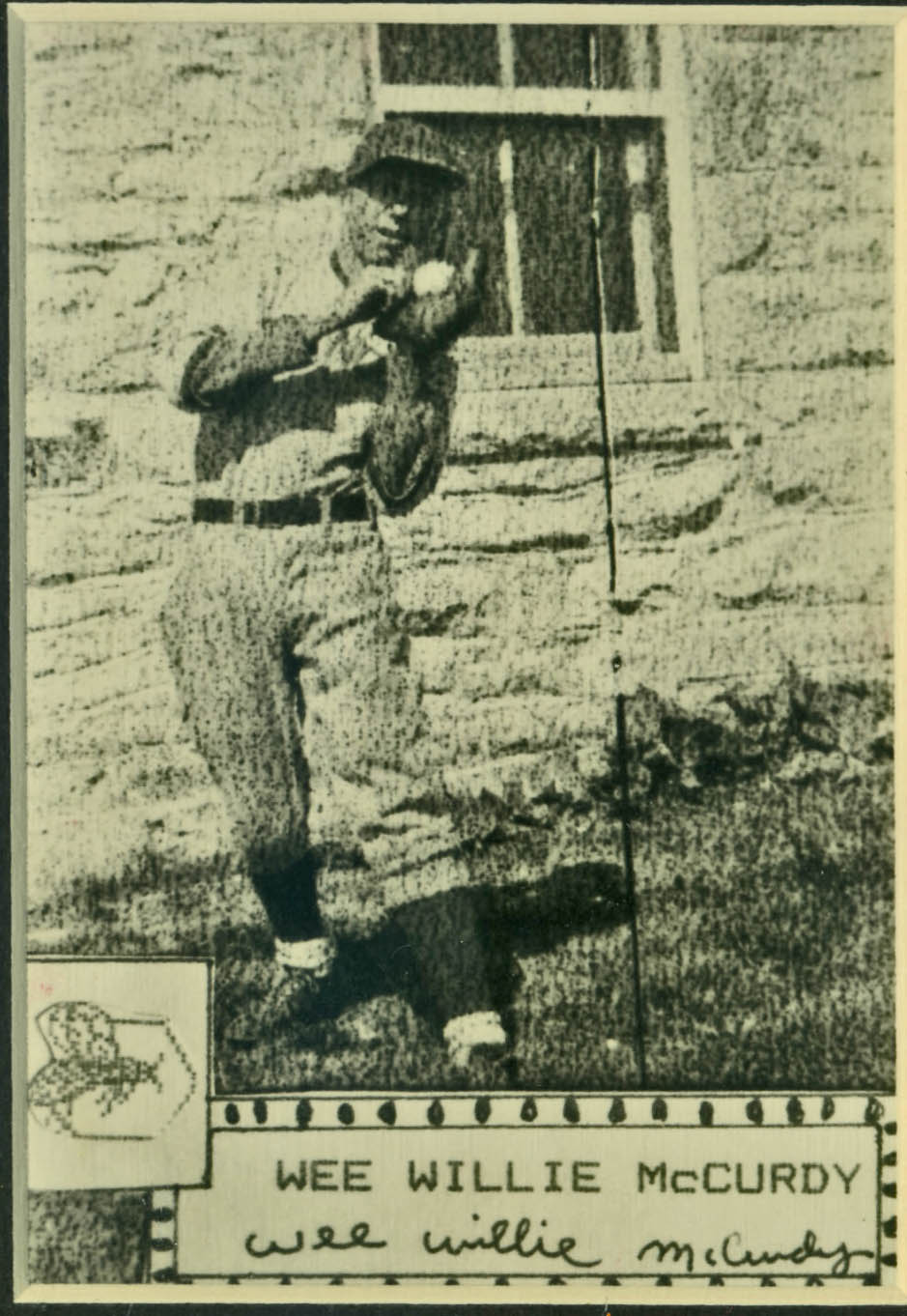
Dad played CF for the 1928 St. Edward's Broncos. He loved this card I made for him a few thousand years ago.

“You’re the baby, Bill! – You’re the baby!”

One of my earliest memories trails back to the year 1939, when I was only about one and a half years old. I’m stomping around the right field wooden grandstands of the old ballpark at the Bee County Fairgrounds with my mom sitting nearby. My dad is coming to bat from the  left side of the plate and his Beeville Bee teammates are yelling encouragement to the baby on the team. Then I see Dad swinging the bat and lacing a base hit to right field. There is cheering. Then all goes to black down memory lane. That little snippet is all that remains, but it is as clear as the bad lighting of the old field back home allows it to be.

Of course, all my descriptions of what just happened came later. I didn’t know baseball from base hit back then. I just knew that people were cheering for my dad and that he had done something to make most of them happy. I saw it all happen.

Three and one half years later, on my New Years Eve fifth birthday, we would move from Beeville to the place that would become my home forever – a place called Houston – and I would learn a lot more about baseball from my dad, the Houston Buffs, and almost endless summer days on the sandlots of Houston’s East End.

Dad was first and best ever teacher. Then he got out of the way and allowed me to learn the rest of the game on my own with my summertime sandlot buddies. None of us had eager parents leaning over our shoulders or buying us things back in the day. In the East End, at least, we either inherited bats, balls, and gloves or we got little jobs to buy them over time. Uniforms, even caps, were a luxury we didn’t even dream about possessing.

One year my mom made me a Houston Buffs uniform. In fact, she steam-ironed those letters onto the front of the jersey, “Houston Buffs.” It came with a little blue cap that had four red stripes evenly descending from the button top of the cap crown.

I wore the homemade Buffs uniform at home. Even paused long enough for Mom to take a picture of me in it once. I simply wouldn’t wear it to the sandlot. None of my teammates had one and I didn’t want to be different from them. I only wanted  to be one of them, as I already was. Knowing in our hearts and minds that we were the Pecan Park Eagles was good enough for us. We didn’t need a Houston Buff uniform Christmas present to play baseball.

We once got into a turf war with the kids from Kernel Street over the use of our field on Japonica. We had even taken to using pipe guns that shot gravel (made for us by one of our adult machinist neighbors) to defend our territory. I can’t believe we took it that far, but we did.

When the war broke out, my dad came flying out of the house and put a stop to all of it. I never learned what happened to our pipe guns, or how he handled it with the neighbor who built them for us, but we never got any more “help” from the machinist after this episode. That much I know.

Dad made us all assemble on the sandlot and play out our differences in a game of baseball, Japonica versus Kernel streets. We did. And we whacked ’em pretty good. After that, we all played together on the same field with no further trouble.

I had further trouble. Dad still wailed the tar out of me at home after the game for my involvement in the production of those pipe guns, but I deserved it. How he put up with my shenanigans as well as he did, I’ll never know. I’ll just always be grateful he was there.

“You were the baby, dad. Thanks for being in my life for as long as I was privileged to have you here with me. I’m old now, but I’ll never grow too old to say thank you. You taught me much more than baseball. You taught me tough love, honesty, integrity, loyalty, and commitment.

The one thing you didn’t teach me is how to get over missing you.

Houston Babies Fall in 2010 Opening DH!

February 28, 2010

The Houston Babies Lost by Scores of 9-0, 29-4 on Saturday, Feb. 27th.

Forget the highlights from yesterday’s opening day doubleheader of vintage base ball for the Houston Babies. There weren’t any.

The Babies dropped a twin bill to the Richmond Giants at George Ranch on Saturday, February 27th, by the scores referenced here only once in the caption to our featured team photo. I will not mention them a second time. The memory itself is sufficiently painful as a reminder of how far the Babies have to go to get back into the shape they were in at the close of the 2009 campaign. These losses brought a six-game win streak by the Babies to a train-wreck level close on a sunny, brisk, and windy Saturday at a game played in the greater Houston area. Even the historic site of the wonderful George Ranch State Park failed to halt the pain or relieve the injury of our club’s 2010 embarrassing start.

To put it mildly: “We wuz awful!”

On the bright side, the Babies problems were few and easy to diagnose: (1) We couldn’t hit; (2) We couldn’t run the bases when we did reach; and (3) We couldn’t make basic plays in the field.

Silent Bats! Unholy Sight! All Laid Calm! Far into the Night!

The brighter news is that we can only get better from here, but we’ve got to recapture the heart we found in our first two seasons of 21st century revival. Remember! The original Babies got bombed by the Cincinnati Red Stockings in their first game back on March 6, 1888 and they came back with heart to play decently. By 1889, the Babies had captured their first pennant as champions of the Texas League.

Babies General Manager Bill McCurdy assured the post-game media that he has every confidence in the world that Babies field manager Bob Dorrill will be able to pull the Babies out of their starting gate swoon and get them back into their winning ways. “We are extremely fortunate to have a man of Bob Dorrill’s savvy and wisdom guiding our Babies team out there on the field. He has my complete vote of confidence as general manager. In fact, if Bob ever gets in trouble as manager, I’ll probably be getting a call on the same day too. …. What’s that, you say? ….  You say I’m wanted on the phone? …. Forget it for now. …. Whoever it is, tell ’em to call back and go to voice mail. ….. Thanks.”

Nobody’s losing confidence in you Babies players either, guys and dolls! Hope that doesn’t register as too unbecoming to today’s PC standards, but there has to be room for a little Damon Runyan perspective on a plight like our current one – and not just maybe, but hell yes, a lot of Douglass Wallop too. (Wallop is the guy who wrote “The Year the Yankees Lost the Pennant,” the inspiration for “Damn Yankees.”)

In their honor, I want to leave you with these words, Babies. Carry them with you into our next game on April 10th. There’s something important here about baseball and I want to try to get it across to all of you in the words of the great Broadway song lyricist Benny Van Buren. In the musical “Damn Yankees,” the manager of the Washington Senators is talking, then singing to his team after they’ve just been drubbed again by the New York Yankees. I’ll also simply close my words to you all today on these lyrical notes of how I feel we generally have to face all disappointments in life:

See boys, that’s what I’m talking about. Baseball is only one half skill, the other half is something else…..something bigger!

You’ve gotta have….Heart! All you really need is heart! When the odds are sayin’ you’ll never win, that’s when the grin should start! You’ve gotta have hope! Musn’t sit around and mope. Nuthin’ half as bad as
it may appear, wait’ll next year and hope.

When your luck is battin’ zero, get your chin up off the floor. Mister, you can be a hero. You can open any door.There’s nothin’ to it, but to do it.You’ve gotta have heart! Miles and miles and miles of heart!  Oh, it’s fine to be a genius of corse!But keep that ol’ horse before the cart! First you’ve got to have heart!

Smokey: A great pitcher, we haven’t got!
Rocky: A great slugger, we haven’t got
Sohovic: A great pitcher, we haven’t got!

All: What’ve we got? We’ve got heart! All you really need is heart! When the odds are sayin’, You’ll never win, that’s when the grin should start! We’ve got hope! We don’t sit around and mope! Not a solitary sob do we heave, mister’- cause we’ve got hope.

Rocky: We’re so happy, that we’re hummin’.

All: Hmm, Hmm, Hmm

Manager: That’s the heart-y thing to do.

Smokey: ‘Cause we know our ship will come in!

All: Hmm, hmm, hmm

Sohovic: So it’s ten years over due!

All: Hoo, hoo, hoo.We’ve got heart! Miles and miles and miles of heart! Oh it’s fine to be a genius of course, but keep that old horse before the cart!

Smokey: So what the heck’s the use of cryin’?

Manager: Why should we curse?

Sohovic: We’ve got to get better……

Rocky:….’cause we can’t get worse!

All: And to add to it; we’ve got heart! – We’ve got heart! – We’ve got Heart!

WE, THE HOUSTON BABIES, HAVE GOT HEART TOO!


Vintage Base Ball Today!

February 28, 2010

Houston Babies in Action at George Ranch Today, February 27th!

The Houston Babies spring into vintage base ball action today at the George Ranch Field in Sugar Land. The SABR-sponsored club will be facing the Richmond Giants and Lone Star College Saw Dogs in a round robin tourney doubleheader beginning at 10:30 AM. The second game will start about noon.

Led by dauntless manager Bob Dorrill, the Babies will be putting a six-game winning streak on the line as they throw out the first pitch of the 2010 season. This marks the third year of the resurrection of the club that last took the fields for Houston in the late 1880’s as the first professional base ball team in Houston.

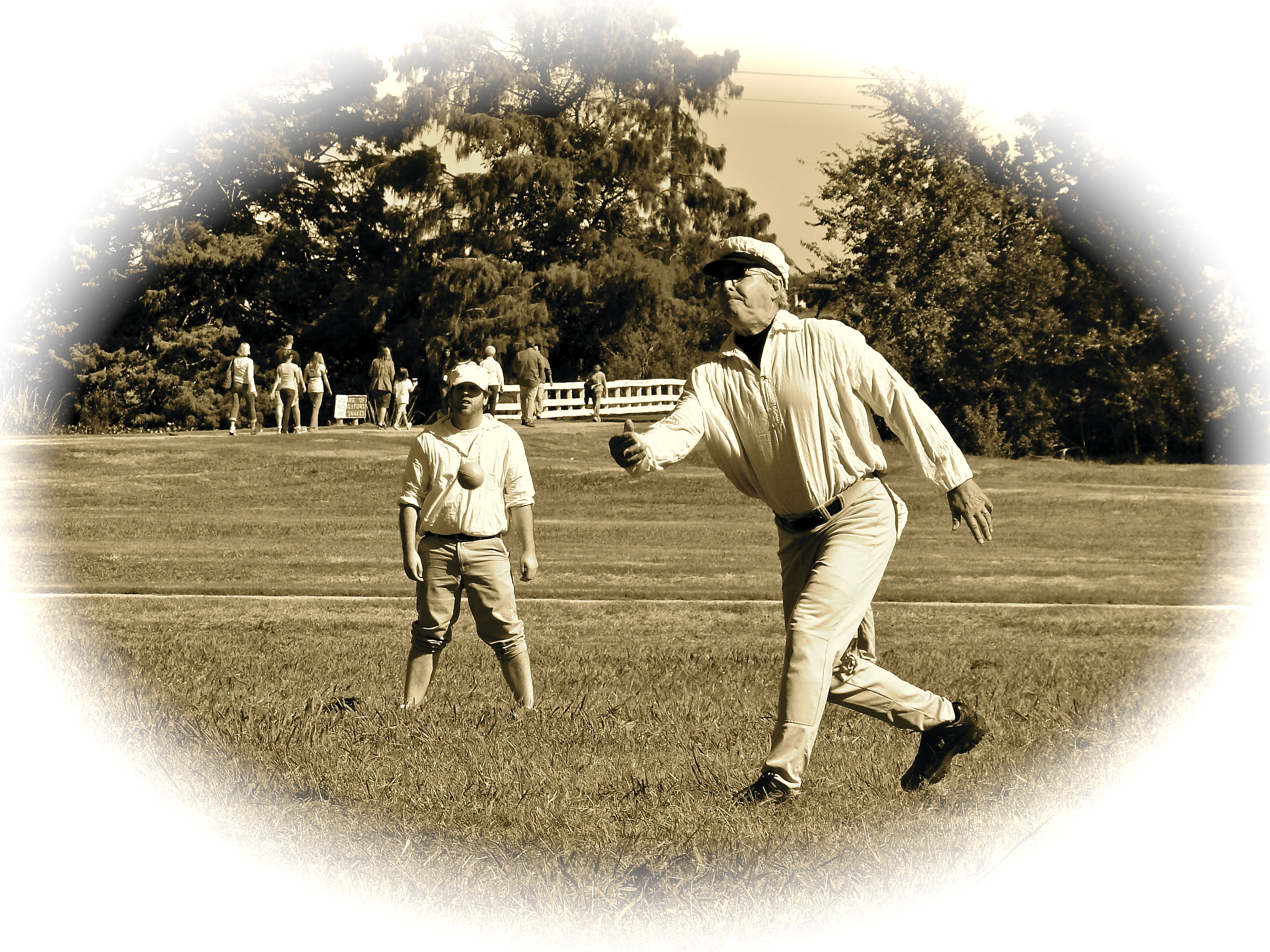
These games are played by the 1860 rules of baseball. The principle differences from the modern game are that we use no gloves. You have to catch the balls bare handed and, the one-bounce out rule is in effect.

If you’ve never seen a vintage base ball game, come join us today. It’s free and very satisfying, the closest thing to sandlot baseball expression that any of us have ever known. I am no longer able to play, but I just enjoy being there. We even play ball in vintage uniforms that cover us a little better than the attire worn by the Babies in our featured picture.

Come on out. We’d love to meet you too!

Sincerely,

Bill McCurdy , General Manager, Houston Babies


Beeville’s Five Native Big Leaguers, Part 2.

February 26, 2010

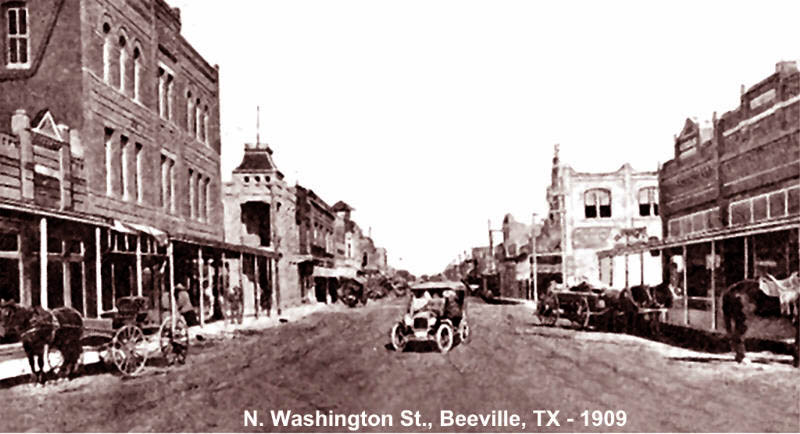
Beeville's roots as a community go back to the 1830s. It had a population of 2,500 in 1909.

The South Texas city of 13,000 now known as Beeville was first settled in the 1830s by by the Heffernan family, The Heffernans lost their lives in a Native American attack, but other European settlers soon came in sufficient numbers to survive the objections of local tribes. An infusion of immigrants from Mexico also fed the population pipeline and the place began to thrive.

After several name trials, the community settled on “Beeville” in honor of Bernard E. Bee., Sr. the Secretary of State and Secretary of War for the Republic of Texas. By 1859, the town had its own post office. The first newspaper was started by 20-year old W.O. McCurdy of Claiborne, Mississippi in 1886, the same year that the city got its first railroad. There were only 300 people in town in 1880, but the railroad and the growth of agriculture and cattle ranching soon enough changed all that. By 1908, the city reincorporated with a population nearing 2,500. The city had first incorporated in 1890, but that soon fell apart. The city wasn’t ready for that much organization. By 1908, they were big enough to require it.

The oil field boom of the 1920s caused a leap in growth and a demand for new services and forms of social entertainment. The streets were paved in 1921. The Rialto movie theatre (“picture show”) was built and opened in 1922. And a lot of people were playing forms of organized baseball.

For two seasons, the Beeville Orange Growers played baseball as members of the short-lived Southwest Texas League. It was an appropriate outcome for a team so-named. The attempt to grow oranges in Beeville also soon ended on the bitter cold realization that the winter climate of Beeville was too frigid for citrus crop survival most years.

Beeville next attempted professional ball as the Beeville Bees of the Gulf Coast League in 1926, but they moved to Laredo after getting off to a 4-9 start before sparse crowds. Beeville loved baseball, but the people weren’t spectators. They preferred playing the game for free to watching the game for pay.

A half century later, the Beeville Bees returned as members of the new independent Gulf Coast League for two seasons (1977-78). This time the club was wildly popular as an attraction at Joe Hunter Field, but the overall insolvency and lack of planning by the league sadly ended Beeville’s last venture into professional play.

Over the years, the vitality of Beeville’s love of the game is best measured by the fact it has sent four men to the major leagues as players and another as an esteemed batting coach. Here’s brief capsule on each:
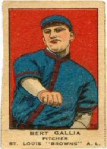
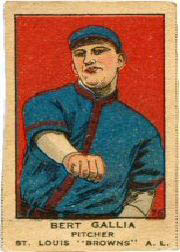
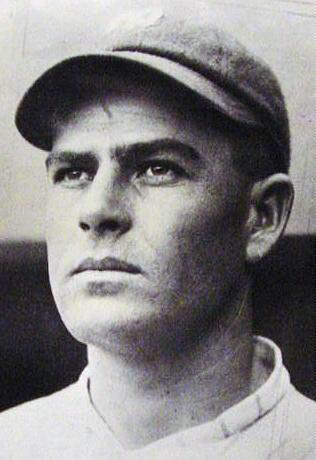
Melvin "Bert" Gallia, (MLB 1912-20)

Melvin “Bert” Gallia (BR/TR), born 10/14/1891 in Beeville, Texas,  posted a pitching record of 66 wind and 68 losses, with an earned run average of 3.14 for his nine MLB seasons with the Washington Senators, St. Louis Browns, and Philadelphia Phillies. He struck out 550 and walked 494 in 1,277 innings of work. He completed 61 of his 135 starts and he is credited with 10 saves in relief.
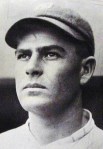
Curt Walker (MLB 1919-30)

Curt Walker (BL/TR), born in Beeville, Texas on July 3, 1896, was a speedy outfielder with a strong arm. Over his twelve-season career with the New York Yankees, New York Giants, Philadelphia Phillies, and Cincinnati Reds, Curt batted .304, striking out only 254 times in 4,858 official times at bat. He collected 235 doubles, 117 triples, and 64 home runs, and once hit two triples in the same inning against the Braves in 1926.  Walker also had 20 triples for the year in 1926. In 2001, Curt Walker was inducted into the Texas Baseball Hall of Fame.
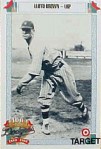
Lefty Lloyd Brown (MLB 1925, 1928-37, 1940)

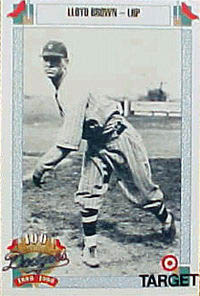
Lefty Lloyd Brown (BL/TL), born in Beeville, Texas on December 25, 1904, won 91 games, lost 105, and recorded an earned run average of 4.20 in twelve seasons of work for the Brooklyn Robins, St. Louis Browns, Boston Red Sox, Cleveland Indians, and Philadelphia Phillies. He struck out 510 and walked 590 in 1,693 innings, completing 77 of the 181 games he started. He also is retroactively credited with 21 saves in relief, a stat they didn’t keep back in those days. Brown also holds the ignominious record of having surrendered four of the twenty-three record grand slam homers belted by the great Lou Gehrig.
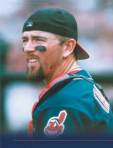
Eddie Taubensee (MLB 1991-2001)

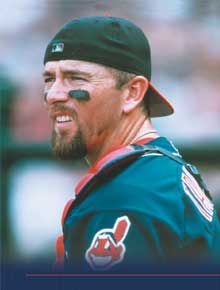
In his eleven big league seasons, Eddie Taubensee (BL/TR) was born in Beeville, Texas on October 31, 1968. Eddie was a good hitting catcher, posting a career batting average of .273 with 151 doubles, 9 triples, and 94 homers. He struck out 574 times in 2,874 times at bat, walking 255 times. He played for the Cleveland Indians, the Houston Astros, the Cincinnati Reds, and a final short season again with the Indians, the club that gave him his start.
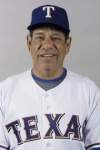
Rudy Jaramillo (Minor Leagues, 1973-76)

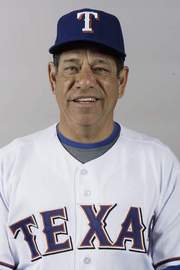
Rudy Jaramillo (BL/TR) is a Beevillian by family background, but he actually was born in Dallas, Texas on September 20, 1950. After a so-so four seasons as a .258 minor league hitter, Rudy and others discovered that he had a personal talent for teaching others what he had not been able to do himself. He became a successful hitting coach for the Houston Astros and Texas Rangers and will now serve in that same capacity for the 2010 Chicago Cubs. The list of men who were actually better teachers of hitting than they were producers of hits is a long and interesting one – and Beevillian Rudy Jaramillo deserves an honored place in that company. He’s already done well enough teaching others to have been inducted into the Texas Baseball Hall of Fame in 2002.

Overall, these men speak for a pretty fair record of baseball achievement for a small Texas town. For these and many other reasons, I’ll always be proud of my birthplace. Second to Houston, Beeville once was home.

Beeville’s Five Native Big Leaguers, Part 1.

February 25, 2010

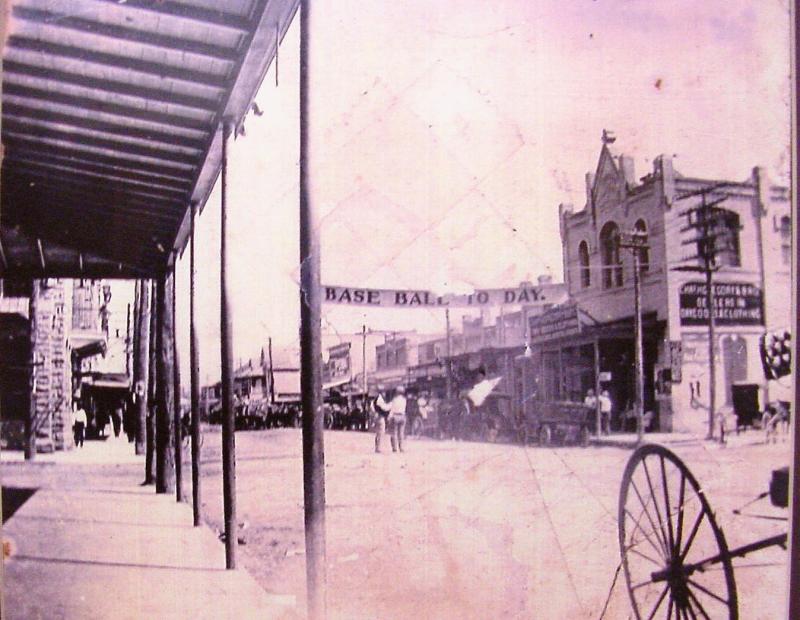
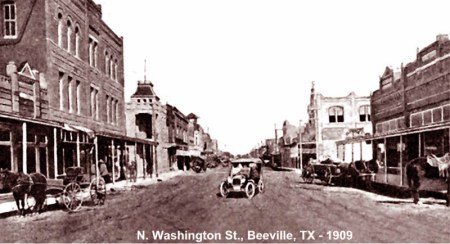
Beeville Bee Publisher/Editor W.O. McCurdy Took This Photo Around 1896.

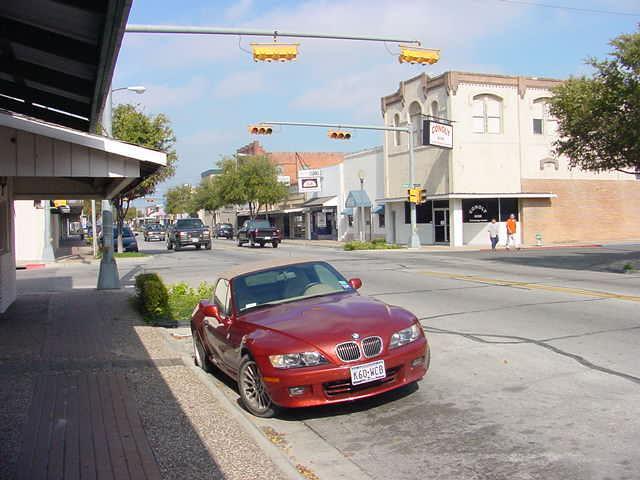
My grandfather took this photo of Beeville, Texas about 9:30 AM, judging from the shadows. When I retraced the location of this shot, this is the perspective he would have had from the front door of his newspaper office on Washington Street, the main street in Beeville. I’m guessing the year must have been around 1896, but it could have been slightly later. I doubt it was anywhere close to 1906. Beeville had a few automobiles by that time. These would have been visible on market day. The big banner announcing “BASE BALL TO DAY” would have been a big deal back then, but I’ve never had the time in recent years to go to Beeville long enough to search the old newspaper files at the local library. I simply inherited this photo through my late father several years ago.

Here's the same perspective from above. I took this one in 1997,

Notice all the change in things over a century passage of time. Somewhere along the way, someone removed the ornate architectural street facing atop the drugstore up in the far right corner and, of course, there are no more horses and wagon wheels on Washington, except on the annual Western Days rodeo parade each October,

Beeville is my birthplace, but it’s also the birthplace of five former major leaguers who played a heck of a lot better than I ever did. Four of them played in the big leagues for extended career time. The other never played in the big leagues, but he’s made an active career for himself over recent years as a respected team batting coach.

Tomorrow I will continue this little trip to the place of my birth with some capsule information about Beeville’s five big leaguers: Bert Gallia, Curt Walker, Lefty Lloyd Brown, Eddie Taubensee, and Rudy Jaramillo.

Five major leaguers? That’s pretty good production for the sleepy little oil and cattle town that rests 53 miles west of Victoria and 50 miles north of Corpus Christi. Back in 1920, at the heart of the time that one of them was wrapping up a big league career and two others were just starting, Beeville only had a city population of 3,062 hardy souls and there were only 16 major league clubs.

More tomorrow.

A Place Called Hope.

February 24, 2010

Coming Soon. A Place Called Hope.

Coming soon:

Springtime. Opening Day. Warm weather. The sound of baseballs crashing into wooden bats. Blue skies and white billowing clouds. The pop of baseballs coming to rest in limber leather gloves. The rich, sweet, and fat-enriched aroma of hot dogs grilling near the mustard bowl. Shorts and tee shirts and soft rubber soled shoes and Astro caps. Tickets to the game. Affordable beer and soft drinks (before the game). Scorecards and a No. 2 lead pencil. Roy Oswalt coming back strong as the Astros ace. Joel Castro getting to Houston fast as the second coming of Johnny Bench. Lance Berkman hitting again like crazy and making friends at first base with every enemy batter who reaches safely. Kaz Matsui playing second base as though he just dropped six years off his age. Pedro Feliz handling the hot corner like a Latin Pie Traynor from 1927. Tommy Manzella at shortstop, fielding like Adam Everett, hitting like a younger Miguel Tejada. Carlos Lee, still bopping the ball, but now light enough in left field to catch routine fly balls. Michael Bourn in center field, continuing to do what Gold Glovers with a hot bat always do. Hunter Pence, still smiling in right field, throwing out runners who dare to run, and hitting and tearing around the bases himself  with wildly passionate abandon and success. Brandon Lyon closing Astro games in a way that leaves us fans asking, “Jose Who?” We are living in a place that blossoms in hope. It’s called springtime.

Joe Hunter Field, Beeville, Texas.

February 23, 2010

Joe Hunter Field, Beeville, Texas.

When Coastal Bend College first opened as Bee County College in Beeville, Texas back in 1967, funds for an athletic department of any kind did not exist beyond marginal money for basketball and baseball. The first “Cougar” teams had to share the playing facilities of A.C. Jones High School, home of the mighty Beeville Trojans.

In case you’ve never heard of it, Beeville is located about fifty-three miles west of Victoria and fifty miles north of Corpus Christi. It’s special to me as the original home of my family, the place I was born. My brother and sister live there and my parents are buried there. It’s just not all the way home for me. Home for me is Houston, the place where I grew up from age five, the place where my old bones will someday be interred. I’m still attached to Beeville as the home of my people since the 19th century.

Beeville also is the birthplace of four former major leaguers: outfielder Curt Walker (1919-30) .304 lifetime, struck out only 254 times in 4,858 times at bat, Texas Baseball Hall of Fame, 2001; pitcher Melvin “Bert” Gallia (1912-20) 66-68, 3.14 ERA; pitcher “Lefty” Lloyd Brown (1925, 1928-37, 1940) 91-105, 4.20; and Eddie Taubensee (1991-2001) .273 BA, 94 HR. Major league hitting coach Rudy Jaramillo also is a native of Beeville. That’s a pretty good baseball production record for a little cattle, oil and gas, and now penitentiary town in South Texas. Don’t you think?

Joe Hunter Field was a Ranching Widow’s Gift.

The college acquired its beautiful baseball park in the early 1970s as a construction gift on land they owned at campus site north of Beeville. The Joe Hunter family donated the funds needed to construct the stands and cultivate the playing field, but the oral history of how the gift took shape is even richer as a gift.

The story is that Mrs. Joe Hunter went to the college after her rancher husband died, saying that she wanted to make a contribution to the school in her husband’s name. Someone from the college suggested that she consider donating money for the construction of a college library, but Mrs. Hunter apparently killed that idea right off the bat and then got down to business on what she really wanted to do.

“Old Joe never read a book or went near a library in his whole life,” she supposedly said, “but he loved baseball. I’d love to build you a baseball park and put Joe’s name on it.” And that’s exactly what she did.

For years, “Bee County College” operated from one of the finest small school baseball parks in the nation. They even leased Joe Hunter Field for use by the professional Beeville Bees in the short-lived independent Gulf Coast League (1976-77) and also made it available to Jones High School and various spring high school playoff games. The place had an enclosed press box, a PA system, and seating capacity for about 1,000 fans.

Unfortunately, the first recession in the oil market of 1983 soon took its economic toll on what the college could afford and they dropped both their baseball and basketball programs. The ballpark stayed afloat as the Home of the Beeville Trojan high school team and an occasional playoff game. In spite of the missing college program, Coastal Bend College maintained the field and protected “Joe Hunter” from going to seed.

The left field line is 26 feet further than Minute Maid Park.

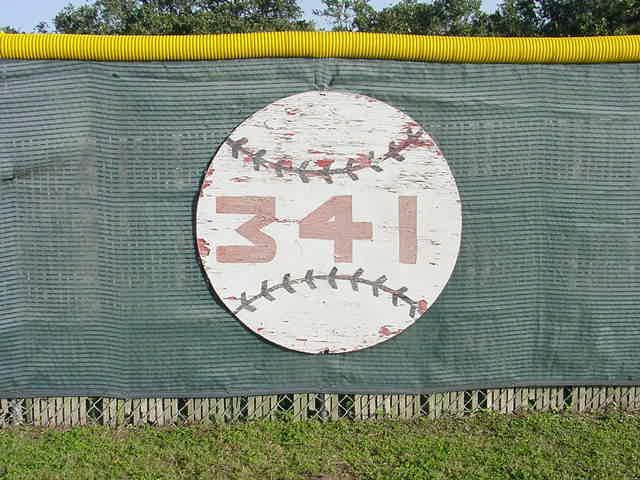
Joe Hunter was and is – a pitcher’s park. Facing southeast, the springtime winds from Copano Bay only have about thirty crow-fly miles to travel before they blow in over the outfield walls in center and right, and these distances aren’t cheap. The distances are about 341 down the line, 375 in the power alleys, and 400 in straight away center.

The good news is that junior college baseball may be returning soon to Joe Hunter Field. I’m not sure if that means we’re looking at a patch of blue in the gray skies of this economic recession – or if it means that Beevillians are just tired of missing their baseball. Maybe it’s a little of both.

Beeville has always been a baseball town.

Eckhardt: A Tale of Two Oxen.

February 22, 2010

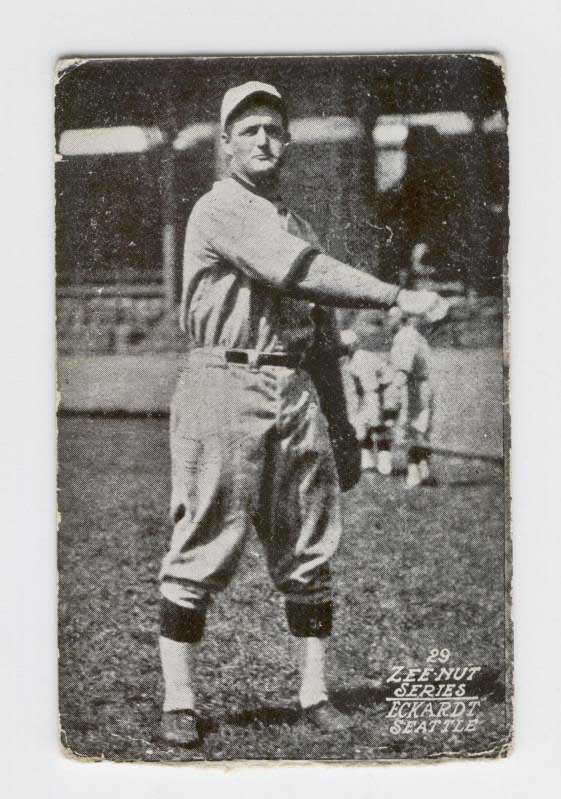
Ox Eckhardt's .367 lifetime BA Beats Cobb by Fractions for Best All Time in Professional Baseball. He also played Football for the Texas Longhorns & New York (NFL) Giants.

Professional baseball player Oscar “Ox” Eckhardt (BL/TR) was born in Yorktown, Texas on December 23, 1901. At 6’1″ and 185 pounds, Ox was big enough in his time to also have played quarterback, halfback, and fullback in football for the Texas Longhorns and then briefly for the New York (NFL) Giants.

In 14 seasons (1925, 1928-1940) as a minor leaguer, Ox also hit .367, compiling 2,773 hits in 7.563 official times at bat. By a measure of some fractions, Ox Eckhardt edges Ty Cobb for the highest career batting average in professional baseball history.

Ox was a high batting average terror in the Pacific Coast League for years, winning several batting championships, once hitting .414 with 315 hits for Mission in 1933. What a terror he must have been to the pitchers on the West Coast that year.

Maybe “pest” is a better word for Ox. Years ago, I asked my dear friend, the late Red Munger, if he remembered Ox Eckhardt from those days. “Oh sure,” Red said, “Ox was the kind of guy who just liked to stick his lefthanded bat out there and hit the ball to the opposite left field. He had no power at all, but he had a great ability to just bloop that little hit to a soft spot over the infielders’ heads. If I could get him to top the ball on the ground, he made for an easy out. It just wasn’t easy getting him to do that.”

Red’s words stayed with me when I first started reading about Eckhardt’s two failures at the major league level. There really weren’t two Ox Eckhardts. It was a matter of the one Ox getting a very different result with his “Punch and Judy” dedication as a hitter at the major league level. In his first time up with the Boston Braves in 1932, Ox only got eight official at bats for two hits before he was shuffled back to the Pacific Coast League. His second and final trial came in spring training with manager Casey Stengel and the 1936 Brooklyn Dodgers. Things started auspiciously too.

Anxious to get any kind of pop into their lineup, the Dodgers agreed to Ox’s advance request for a double room in Florida, one of the concessions they made to a guy who just hit .399 with 283 season hits during the 1935 PCL season. The Dodgers assumed that Ox was bringing his wife to spring training with him.

(There’s that assumption flaw again. We don’t simply fall trap to it in research. It’s also an everyday error possibility.)

Ox showed up with his pet, a very large St. Bernard dog. “I thought he’d enjoy seeing how a major league club setup works in spring training,” Ox explained.

Ox and his dog got through spring training, but they did not survive Ox’s inability to adapt to major league pitching and defenses, nor could he use manager Stengel’s counsel to pull the ball.  All Ox knew how to do was hit the ball the other way. The major league third basemen simply played him down the line and the major league pitchers got him to hit the ball on the ground at the fielders.

On defense, Ox lived up to his name.

Ox was 8 for 44 with 6 singles, 1 double, 1 homer, a .182 batting average, and 1 ticket back to the Pacific Coast League by the middle of May 1936. He never got another big league trial, but he continued to bust ’em at the minor league level.

Ox Eckhardt passed away in Yorktown, Texas on April 22, 1951 at the age of 49. He is buried in the Oakwood Cemetery in Austin, Texas. His memory lives on as one of the most colorful hitters in baseball history. A .367 lifetime batting average is nothing to sneeze at as we walk away. It deserves attention, no matter how Ox’s style may have limited his full potential as a productive major league hitter, one who might have achieved  a major league career that could have been comparable to his minor league attainments.

As things turned out, we will just have to leave Ox Eckhardt over there in that large mountain we all know pretty much in the same way as the “might have been/woulda, coulda, shoulda” pile.

Good luck, Ghost of Ox, wherever you may be. Hope you finally found some new ways to hit ’em where they ain’t.

Research 101: WATCH YOUR ASSumptions!

February 21, 2010

19th Century Base Ball? Don't Assume that either Third Baseman John Civitello or Hurler Robert Blair of the Houston Babies are Really That Old!

People have asked me why I spend so much free time researching Houston history, especially Houston baseball history. My answer is simple: I love Houston. I love baseball. I love research. And I have an unquenchable fire in my belly for separating what’s true from what we assume is true.

Rule Number One in Social Research 101 is “Never Assume.” And what does that mean? It means just about everything. It means: (1) Never assume that secondary sources of information are good enough if you can get to the primary sources these secondary sources examined to form their own conclusions. (2) Never assume that what we don’t know, we can’t find out. (3) Never assume that we shall ever discover all possible sources of information on a given subject. The work goes on forever. We just have to close the gate every now and then and report “what we know, so far.”

Here’s the major problem by comparison to a court of law on current criminal allegations. In a court of law, the court will examine the direct evidence, the direct witnesses, and maybe even hear directly from the people who are being charged with a criminal act. In historical research, we are examining events that took place years and sometimes lifetimes ago. All the living human sources of primary testimony are most likely dead. That leaves us with witness writings, and mainly newspaper accounts, as testimony of what happened long ago as our primary sources of the facts about the past – and these are always affected by the infusion of personal opinion and what the writer from long ago thought was important to share with us about the facts of a situation – and these are also affected by his or her agenda for writing in the first place.

Here’s what you learn quickly, if your research efforts are serious – and let’s use baseball research about Houston as an example. We’ll simply name it for what it is. Rule Number Two in Social Research is “Newspapers write to sell newspapers. They don’t write for the sake of preserving facts for history.” The best example from my local baseball research is over the question of certainty about the location of the first Houston baseball field of our 1888 first professional Houston team. A nameless writer for the Houston Post covered the first exhibition game played at “Houston Base Ball Park,” but he (gender assumption) never recorded in his story where it was located. As a news writer writing news for those times, he was free to assume that his readers already had that information from their personal experience. The assumption carried forward, at least, in all the game stories I’ve found to date. No one actually writes down the address or specific location of the park. Peripheral research “suggests” that the first park was located on the same site that became West End Park in 1907, but that’s only an assumption. It’s not proof certain.

So what? So what if we don’t ever know where the first ballpark was located?

If you have to ask those questions, you’re part of the problem, not part of the solution. All I can offer is going to sound like some kind of Jughead research professor talking, but that’s OK with me. As far as I’m concerned, the answers are this simple: The more we know about who, when, where, what, and how people came together in the past to do anything of note, the more we know about the birth of ideas and decisions that continue to shape our lives through today.

On April 16, 1861, a man named F.A. Rice led a group of Houstonians in a meeting room above J.H. Evans’s Store on Market Square to form the first Houston Base Ball Club. Because of Texas’s very recent secession from the Union, further recruitment of players for organized play was effectively delayed until after the Civil War, but the fact of this group’s actions verifies the formal existence of baseball in Houston to that date of some 149 years ago. Baseball was born in Houston prior to the Civil War, and not as a result of the great conflict, as previously assumed. That fact is big. Any story of Houston baseball history begins with it.

Research Number Three in Social Research: “If you forget anything, see Rule One.”