Happy Father’s Day 2013!

June 16, 2013
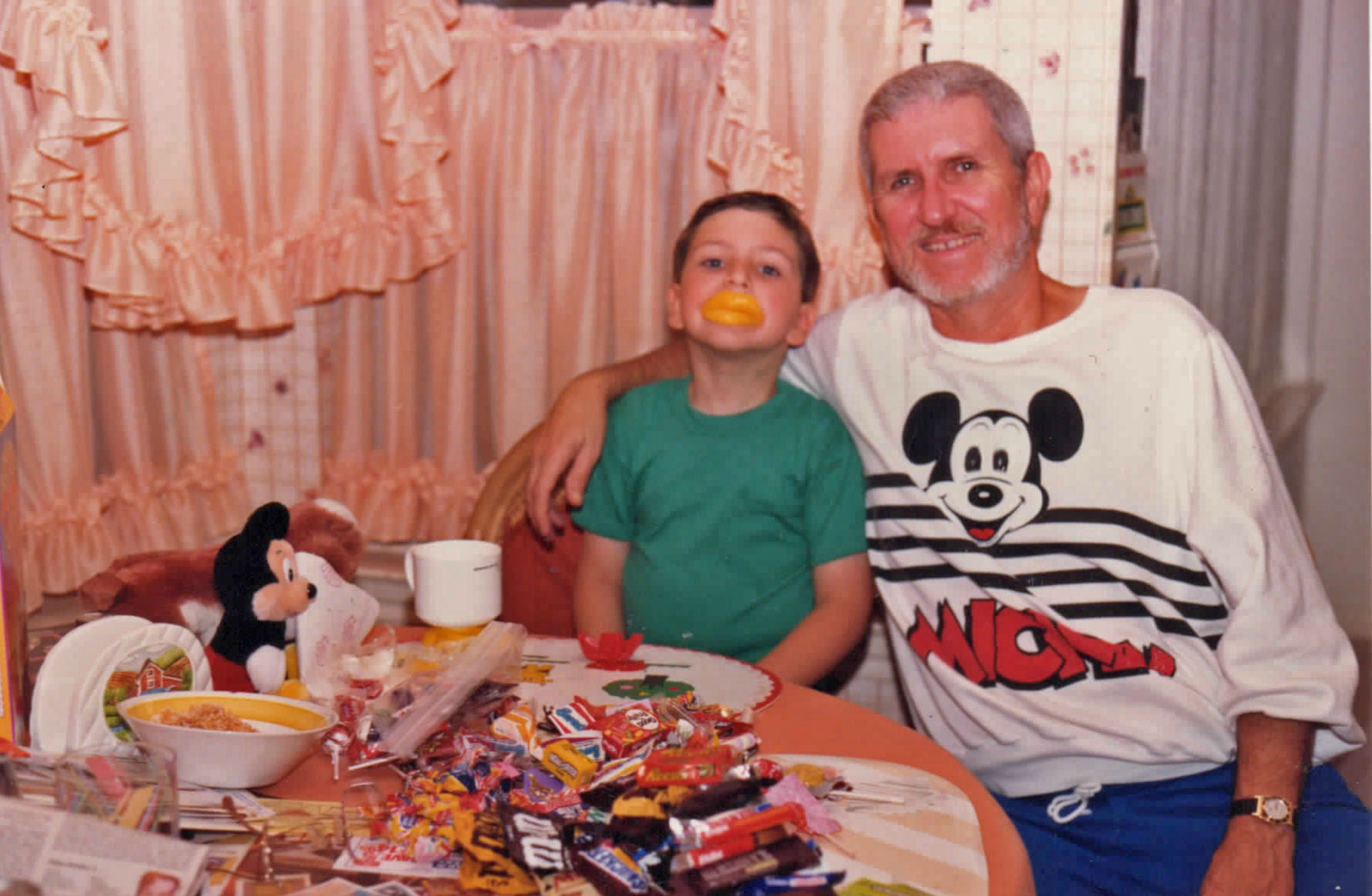
Neal & Dad, 1988.

Neal & Dad, 1988.

The Days Flew By – Before We Knew,

Two Weeks – Six Months – A Year or Two.

From Toothbrush – To School Choice – And Artful Glue,

We Sought Out A Way – That Worked Best For You.


But While We All Scurried – Each Fall – As A Rule,

Halloween – Thanksgiving – And Soon Came The Yule,

To Roll In Upon Us – At A Pace Kindly Cruel,

That Roared Us Through Springtime – To Summer’s Cool Pool.


The Clock Kept on Ticking – In Its Quiet Quick Way,

It Sped Us Overnight – To Graduation Day,

And Your Life Moved Forward – On Your Own – As They Say,

On A Course You’re Still Carving – As The Lessons Portray.


Mom And I Still Remember – The Gift of Your Birth,

And We Both Want To Say – For What It Is Worth,

That Had We Both Known – ‘Bout The Spin of Life’s Earth,

We’d Have Slowed Things Down Fast – And Got Lost In The Mirth,

… While We Could.


Thank You, Neal, For Being The Sweet Spot Reason That It’s Both A Happy Mother’s Day For Mom And A Happy Father’s Day For Me!

Love. ~ Forever. ~ Dad.

Happy Father’s Day, Everybody!

Happy Father's Day 2013! From Norma, Neal, Bill, Gateway the Longhorn, & Handler Taste of Texas Restaurant Houston, Texas

Happy Father’s Day 2013!
From Norma, Neal, Bill, Gateway the Longhorn, & Handler
Taste of Texas Restaurant
Houston, Texas

Buff Biographies: Jerry Witte

June 15, 2013

Buff Logo 12

Jerry Witte, First Base Houston Buffs, 1950-52

Jerry Witte, First Base
Houston Buffs, 1950-52

The 1950  wonderful morning that I read in the Houston Post that first baseman Jerry Witte was joining the Houston Buffs on assignment from the Cardinal AAA club in Rochester, I was doing just about the same thing that I’m doing this June Saturday morning in 2013, drinking my wake-up cup of hot tea and reading the sports page reports and columns of the wonderful old Houston Post and writer Clark Nealon.

Those were the days, my friend, but that’s a much longer story for a different day. The point here is that I suddenly found my self stunned into happiness over the thought of Jerry Witte joining my Buffs. He had been something akin to Darth Vader in my childhood mind since he came to town with the 1949 Dallas Eagles and made Houston one of the places he cranked out those 50 home runs in a single season. Now it seemed that old Darth had decided to come on over to fight for the Light side against the forces of evil darkness.

We didn’t have Star Wars as a base metaphor in 1950, of course, but it retroactively fits Jerry Witte coming to Houston back then better than any other frame of reference available to our experience as Buff fans of that era. I am right about Jerry joining the light side in 1950 Houston. The Buffs were about as “light” on talent that year as they could be. Even the 30  home runs that Witte brought to the Buffs lineup from June 11, 1950 forward did not matter that much as the club went on to a 61-93 record and a last place finish.

The next season, Jerry Witte’s 38 homers paced the Texas League as the Buffs rose to first place and also captured the playoff league pennant before losing the 1951 Dixie Series in six games to the Birmingham Barons. Jerry played one more season for another bad Buffs team in 1952 before retiring from baseball at age 37.

Jerry Witte and his wonderful wife, Mary Witte, settled in the Houston East End following the end of his baseball career and proceeded to raise a family of seven bright and beautiful girls. Jerry operated his own successful landscaping business until some time in the 1980s, but he never forgot his earliest roots as a contributing member of the working class.

Many had a bigger wallet. None had a bigger heart.

Late in life, Jerry  and I teamed to write his autobiography, “A Kid From St. Louis”. The book was published in 2003, a year following Jerry’s death in 2002 at the age of 86. It is an engaging story of the man and his times. Born in Wellston County, west of St. Louis, on June 30, 1915 as the 6th born of 10 surviving children,  Jerry grew up as the child of  a hardworking German-Polish family who also just happened to have been blessed with a special talent for crushing baseballs into flight across the summer skies of St.  Louis, Missouri.

Signed originally by the St. Louis Browns in 1937, Jerry Witte had a 13-season minor league career (1937-42, 1946-52) in which he batted .276 with 308 HR. After three years of Army service in World War II, Jerry had brief cracks with the Browns in 1946 and 1947, but didn’t stick.  His best minor league years were 1939 at Lafayette when he batted .354 with 14 homers and won the Evangeline League MVP award and 1946 at AAA Toledo when he batted .312 with 46 home runs, plus also crushing 3 HR in the All Star Game that season. His 50 and 38 homer seasons with 1949 Dallas and 1951 Houston were pretty good too.

Jerry’s downfalls were the high inside pitches he could neither resist or hit and the fact that he placed way too much pressure on himself to perform instantly during his 46-47 call ups with the Browns. Late in life. he was quite accepting and philosophical about the way things turned out.

“My life worked out the way the Good Lord wanted it to work out,” Jerry once told me. “The Lord gave me baseball and landscaping as my ways in life. He delivered me to a happy lifetime of marriage to the only woman I ever loved. And He blessed us both with seven wonderful daughters and our whole family with happy times and the support of truly good friends and a faith in Jesus Christ that makes sense about why we are all here, anyway. – Money can’t buy those things. So, how could more time in the big leagues have made any real difference? It wouldn’t have mattered one iota. No sir! I’m happy with the whole thing and the way it played out as it did. – Who knows? God may have been saving me from myself.  Had I made it big in the big leagues, I might have been one of those guys who got so full of himself that I screwed it all up!”

I don’t think so, Mr. Witte. As one of your dear friends in later life, there was no way you would have ever screwed up everything that was so right as rain about the loving state of mind, heart, and soul that was your marriage, your family life, your friendships, and you as a man. You just weren’t destined to be one of those dumb turkeys who made all the stupid self-serving choices.

Everyone should be so “lucky” as you and your good friend, Mr. Larry Miggins. If we all could, what a wonderful world this would be, indeed.

Note: For any who may be interested, hard cover copies of Jerry Witte’s autobiography, “A Kid From St. Louis”, are still available. Do not send cash. If you would like one, please make out a check for $26.70 and send it to “Bill McCurdy” to cover the book, sales tax, shipping, and handling and send your order with clear mailing address instructions to:

Bill McCurdy, Publisher

Pecan Park Eagle Press

PO BOX 940871

Houston, TX 77094-7871

Jerry Witte is deceased, but I will be happy to sign the book for you as his co-author, if you would like or just send it as is. If you do want me to sign as a gift to someone or just want a dedication message, simply let me know your wishes and I will be happy to oblige.

For further information or order follow-up, I can be reached at 713.823.4864.

My apologies, but I am not set up to handle credit card orders.

Thank you for your interest.
Buff Biographies: Cloyd Boyer

June 14, 2013
Excerpt from "Your 1948 Houston Buffs, Dixie Champions: Brief Biographies By Morris Frank and Adie Marks (1948).

Excerpt from “Your 1948 Houston Buffs, Dixie Champions: Brief Biographies By Morris Frank and Adie Marks (1948).

One of eleven Boyer children and the oldest of three brothers who grew up to reach the baseball major leagues, Cloyd Boyer started off his pitching career with a hummer of a fastball and a scary quick delivery.

Born in Alba, Missouri on September 1, 1927, the 6’1″, 188 lb. right hander played most of the 1948 Houston Buff season as the still 20-year-old ace of the pitching staff, powering his way to a 16-10, 3.14 ERA record. In a 14-season minor league career (1945-49, 1951, 1953-54, 1956-61) Cloyd registered a career mark of 117-97, 3.50 that included, of course, his two years with the Buffs (1948, 1953).

In four seasons with the St. Louis Cardinals (1947-52) and one with the Kansas City Athletics (1955), Cloyd Boyer finished his big league business with an MLB record of 20-23 and 4.73.

Remember what we said about every player having his level of competitive ascension largely determined by  the drag of his personal gravity? Cloyd Boyer is simply another example at a higher level than most. At the MLB level, Boyer’s abilities faded a couple of notches in accomplishment from what they were at the higher minor league levels – and for whatever reason. Boyer’s 1948 “stuff” at Houston looked like the stuff of a future major leaguer of exceptional ability, but it never happened. Whether it was pure ability or some combination of psychological or injury factors that activated Boyer’s resistance  to excellence in his higher level performance we cannot now know or recover beyond irresistible speculation.

But speculation is irresistible, indeed.

Younger brothers Ken and Clete Boyer made it big as successful third base men, even meeting each other as third base men for the Cardinals and Yankees in the 1964 World Series. Hmmm. Cloyd Boyer played most of his amateur life as a shortstop. Speculation stop: Maybe Cloyd Boyer should have kept that strong right arm and used it to keep playing shortstop at the professional level. We’ll never know.

According to Baseball Reference.Com, Cloyd Boyer is still alive at 85 – and headed toward 86, come September.

http://www.baseball-reference.com/players/b/boyercl01.shtml

Buff Biographies: Remy LeBlanc

June 13, 2013
Excerpt from "Your 1948 Houston Buffs, Dixie Champions: Brief Biographies By Morris Frank and Adie Marks (1948).

Excerpt from “Your 1948 Houston Buffs, Dixie Champions: Brief Biographies By Morris Frank and Adie Marks (1948)

Remy LeBlanc was a Cajun outfielder who hailed from the heart of Cajun country. Born in New Iberia, Louisiana on March 7, 1925, “The Flying Frenchman” ended up playing out a minor league baseball career that may have helped his speed in the game, but had nothing to do with using wings that could fly him to the more rarefied air of the big leagues. Like thousands of others who played with him, before, him, and after him, Remy LeBlanc of the 1948 Houston Buffs was still looking for his highest level of joy and productivity in the game.

In baseball, the limits on “up” are determined by a player’s personal gravity.

Ascension wouldn’t last for Remy LeBlanc in Houston. LeBlanc hit .235 with only 2 homers in 43 games as an extra outfielder for the AA level 1948 Buffs. The parent club St. Louis Cardinals then sold Remy’s contract to the C level club they owned in his hometown of New Iberia. Home cooked boiled crawfish and gumbo apparently were just what good old Dr. Foucheaux ordered. Remy remained at home for the next three seasons. LeBlanc hit 14 HR and .261 starting with New Iberia in 1949; 24 HR with a .291 BA in 1950; and 42 HR with a .298 tab in 1951. The following year, he moved up to Class B ball at Wichita Falls on a sale to the Boston Braves organization. In that 1952 season, he crashed 30 HR with a .291 BA.

In 1953, LeBlanc found his ceiling and gravity again when the Braves sold him to San Diego of Open Class (AAA) San Diego Padres. A .143 BA with only a single homer in 30 games earned Remy a trip to Paris (Paris, Texas). LeBlanc played for the Class B Paris/Greenville/Bryan club for the rest of 1953, batting .295 with 5 homers in 49 games.

Remy LeBlanc went home to play for New Iberia in 1954. It was his last season as a professional ballplayer, but it was also his best. He hit 42 homers and batted .319 in 140 games. At age 29, Remy Leblanc hung ’em up. It was time to play life more laid back and let the zydeco drift through his Cajun soul. 1954 was a season to celebrate for the rest of his life.

In 10 minor league seasons (1942, 1946-54), outfielder Remy Leblanc (6’2″, 175 lbs.) (BR/TR) batted .287 with 180 HR. He died in January of 1986 at the age of 60.

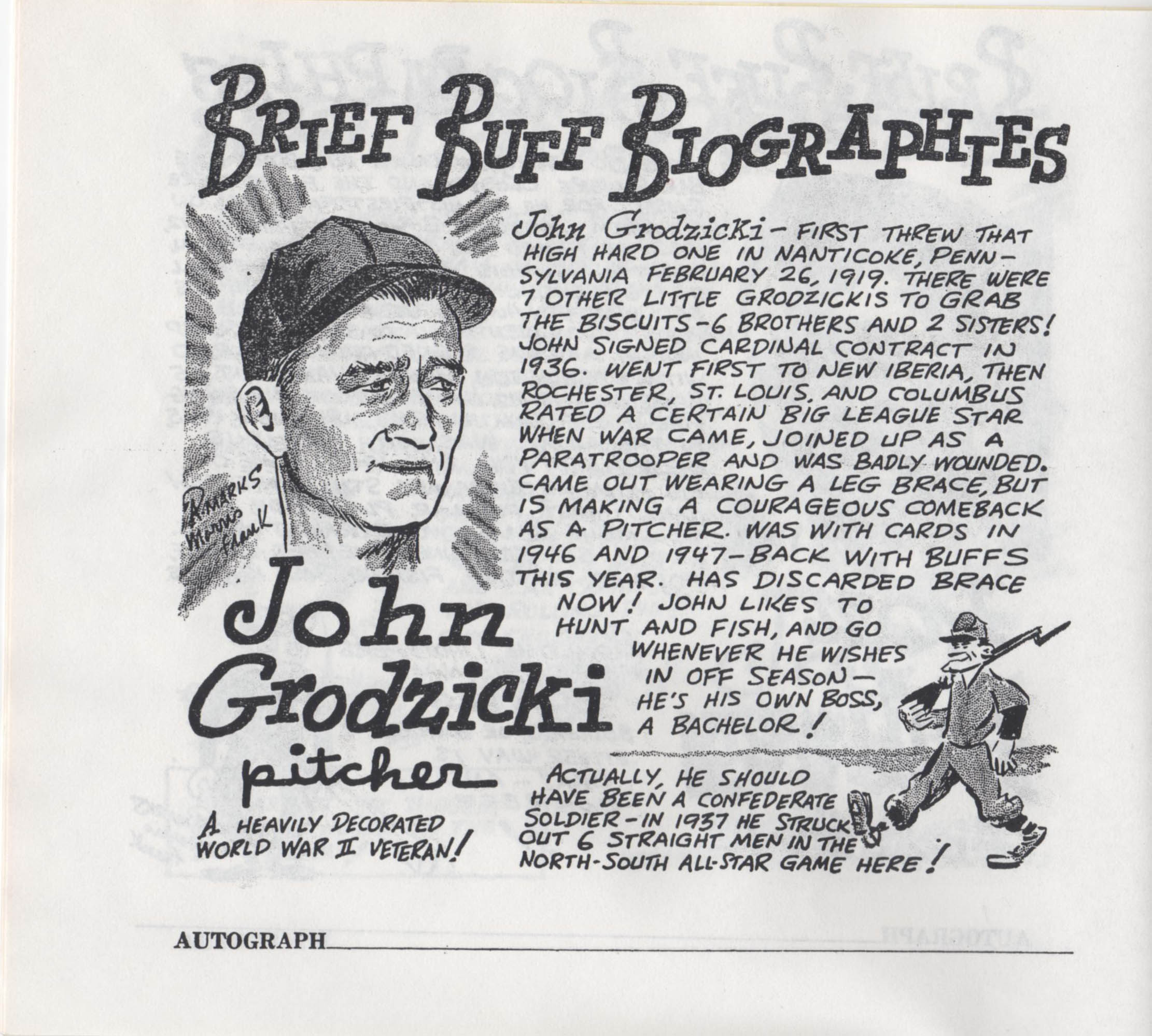
Buff Biographies: Johnny Grodzicki

June 12, 2013
Excerpt from "Your 1948 Houston Buffs, Dixie Champions: Brief Biographies By Morris Frank and Adie Marks (1948).

Excerpt from “Your 1948 Houston Buffs, Dixie Champions: Brief Biographies By Morris Frank and Adie Marks (1948).

Johnny Grodzicki is one of those “might have been” stories that overflow the narrative file on individual careers. He also was a pitcher, and he could have been one the legion who lost their baseball futures after a sudden blip or twang in the arm following an average game or warm up pitch, but that sad mystery  was not his story.

Johnny Grodzicki was a Wold War II casualty.

Six years (1936-41) into his all Cardinal farm club minor league career, Johnny Grodzicki went into the Army for four years of service (1942-45) as a member of the 17th Airborne Division.  In combat in Germany on March 29, 1945, Grodzicki sustained shrapnel wounds to both legs. He was awarded a Purple Heart. He also required surgery and extensive rehabilitation to resume his baseball career after the war’s end.

Due to age and injury, Grodzicki no longer had it as an MLB prospect when he came back to Houston as a 1948 Buff, but he was still good enough to register a 6-5 mark and a 2.05 ERA that year in the Texas League.

Grodzicki’s entire playing career was spent with the Cardinal organization. He was a Buff for whole or partial spots of five seasons (1936-38, 1948-49). His best Buffs season was 1937 when he went 18-11 with a 2.88 ERA. Over his eleven minor league seasons (1936-41, 1948-52), and spanning from age 19 to age 35, Johnny Grodzicki compiled a total minor league record of 108-63, 3.65. In 24 games over three seasons as a Cardinal (1941, 1946-47), Grodzicki was 2-2 with a 4.43 ERA.

After his playing days were done, Johnny spent the rest of his working life as a coach and scout for both the Cardinals and others. He passed away on May 2, 1998 as t the age of 81.

The Buffs in Panama

June 10, 2013
Run, Larry, Run!

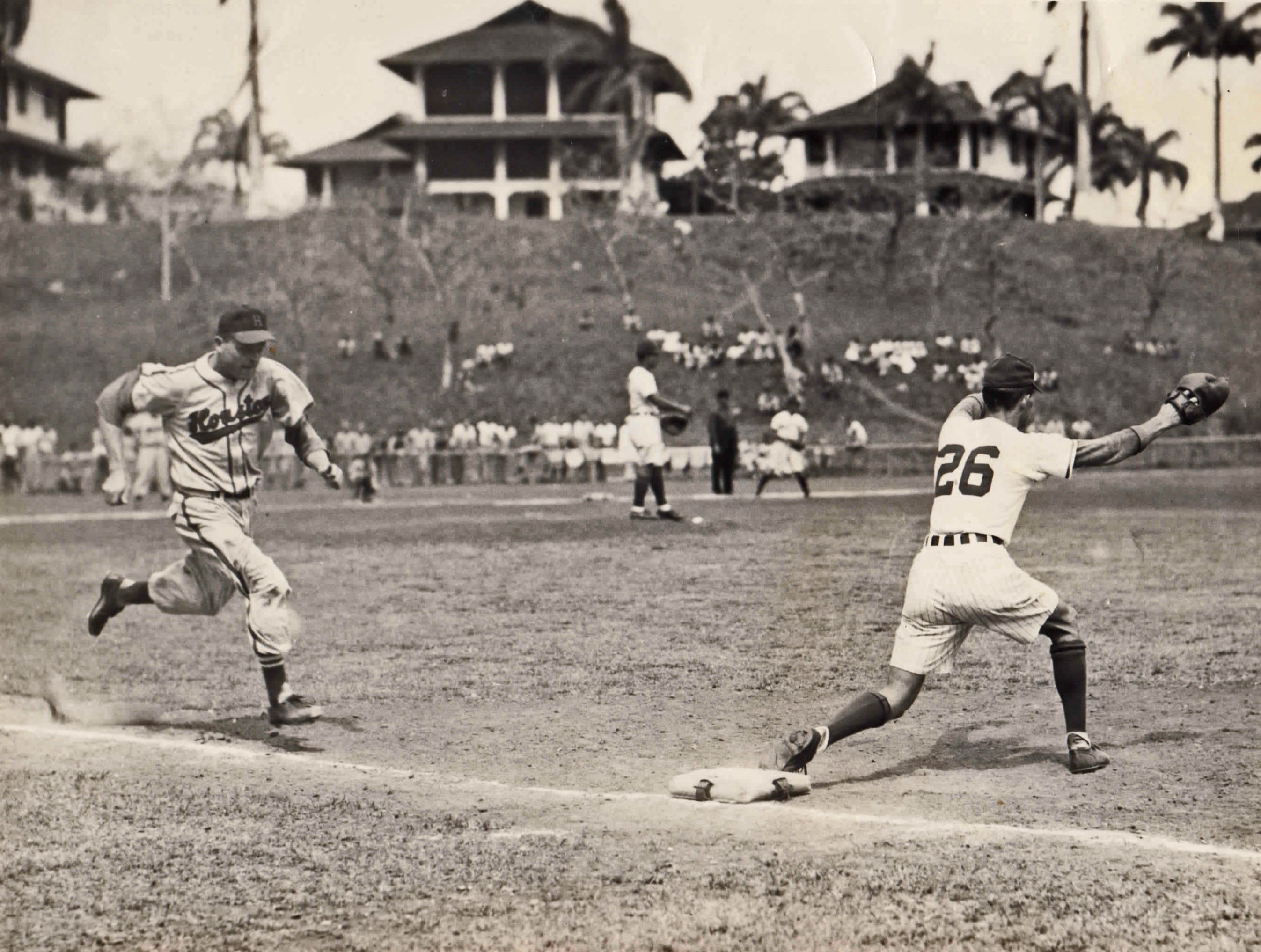
Run, Unidentified Buff Player, Run!

In the spring of 1951, the Houston Buffs trained in Panama, playing several games against the Albrook U.S. Air Force Base Flyers. Here we see a now unidentified member of the 1951 Buffs legging out a ground ball in a game in which the Flyers wore their cool short pants leg uniforms. It looks too much like Larry Miggins to not be him, but for one thing: Larry says he wasn’t assigned to the Buffs in 1951 until after spring training and that delay by the Cardinals caused him to miss the trip to Panama. By the way, the Flyers also had a conventional baseball outfit they wore, but living near the Equator made the brief version popular.

The Buffs wore shorts for less than a month, late in the previous bad season of 1950, but their motives were driven as much by President Allen Russell’s desire to pump the gate with the female fans as it was for player comfort.

Short pants didn’t work in Houston. Nothing can compensate for losing baseball in the long run.

Speaking of heat, we are supposed to get triple digit temps here in Houston by the end of the week. Have fun staying cool, everybody. Whatever it takes to get you there is now in play as the challenge of the day.

We Once Had a Home Where the Buffalo Roamed

June 9, 2013
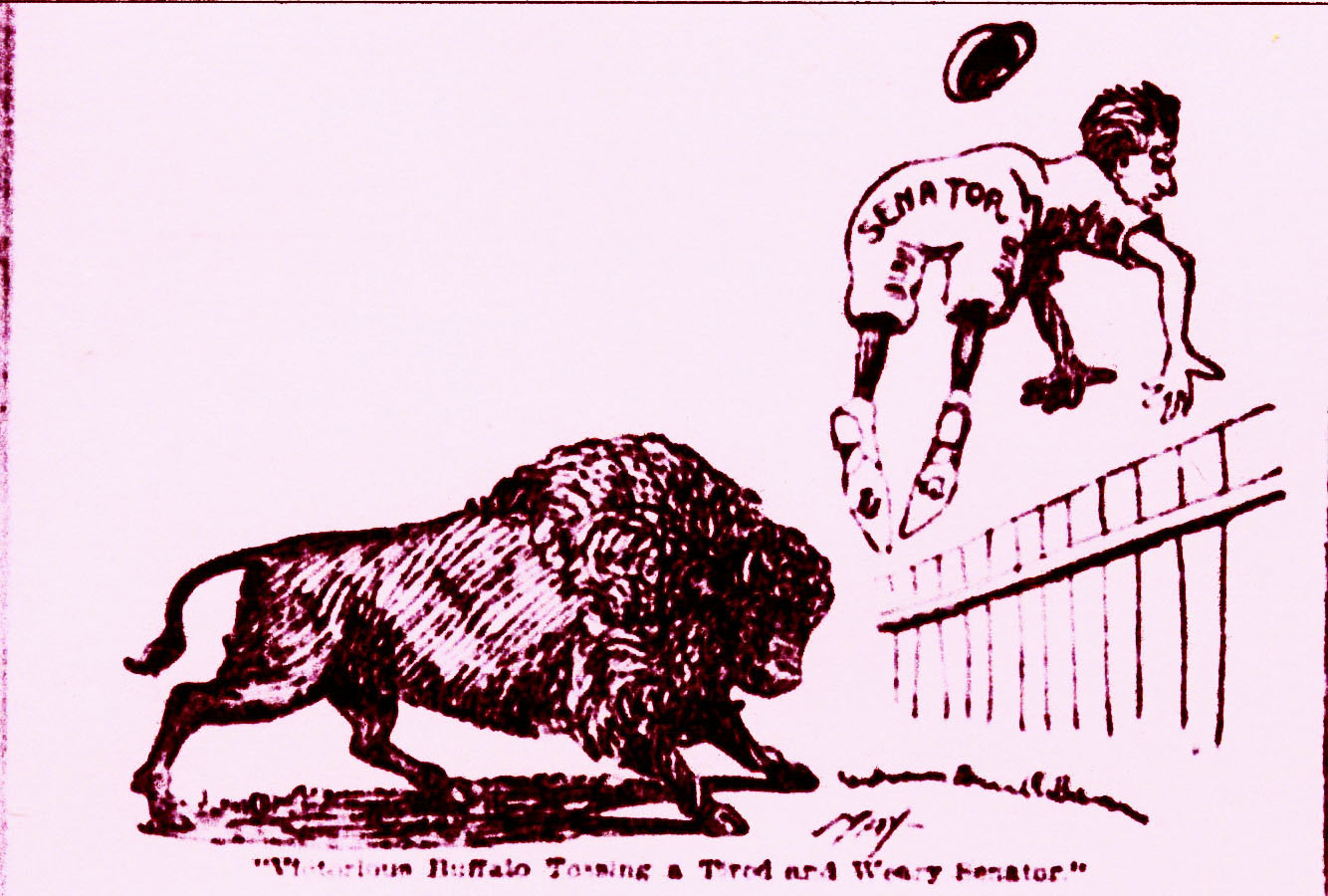
"You Can't Roller Skate in a Buffalo Herd!"

“You Can’t Roller Skate in a Buffalo Herd!”

It was good to see Randy Harvey of the Houston Chronicle check in today on the side of doing something with the Astrodome other than tearing it down for more McNair/Rodeo parking space. His commentary is on the front page of the Sports Section in this morning’s Sunday, June 9, 2013 Houston Chronicle.

Perhaps, we may draw some lessons from the last great demolition of a venerable baseball park in Houston, and I don’t mean Colt Stadium, that fry-your-brains-in-the-sun skillet of a temporary venue that served as home to the new Houston big league club for three seasons from 1962 to 1964. The place wasn’t here long enough to have earned “venerable” as an attributed state of its emotional attraction to fans, nor was it ever intended as anything other than a game site drooling pad for fans to watch major league baseball (of sorts) as they also watched the birth of the Astrodome over a 36-month gestation period.

No. I’m talking about the loss of Buff Stadium, home of the Houston Buffs from 1928 through 1961. Not counting the three Texas League World War II seasons in which no Buff games were played (1943-45), Buff/Busch Stadium served as home of Buffs league play for 31 active seasons.

31 seasons was long enough for the patina of all that is venerable to have settled deeply into place cam over time to watch the fates of Buffs baseball rise and fall and rise again, over time.

When “Buff” Stadium went down to the wrecking ball in 1962, Houston was still neck-deep in the psyche of tear-it-down-and-build-a-parking-lot in almost every instance of anything “old”, but it escaped total ignominy because the baseball friendly Finger family bought the stadium and grounds for a new furniture store on the Gulf Freeway at Cullen that would include a new sports museum within the new facility. It was also built in an area that included an accurately retained spot where home plate at the ballpark actually still resided.

It was great. We almost forgot, at first, that we had lost the ballpark. Then the newness of this fairly good idea began to wear down. Long before curator Tom Kennedy came on board to breed new, dynamic life into the artifact displays at the Finger’s Museum, people began to tire of seeing the same old things each time they visited.

If you had seen it a few times in the 1960’s, you’d only have seen it grow slowly as the place began to add football and basketball items as it tried to become the “Houston Sports Museum.” There was nothing churning at the museum that would inspire a taste for return visits and this was happening at the same time that the furniture-shopping baseball public was beginning to shop differently and elsewhere.

Baseball historian, writer, and curator Tom Kennedy arrived in time to restore the museum beautifully, and dynamically, with the help of multi-media basic disks and recordings to its baseball roots, but the timing was unfortunate. The furniture store site was not working and would have to close, taking the museum with it.

The Finger family, aided by Mr. Kennedy, are now in the process of looking at ways to re-open the museum in some conjunctive partnership with the Sugarland Skeeters independent baseball organization.

My stadium point is much simpler. When Buff Stadium went down, it was lucky to have had anything done in its memory. The Finger family deserves the credit here, even if their desire to save the heart of Buff Stadium history was eventually consumed by other business realities. It went down because back in 1962, Buff Stadium was about the past and only the Astrodome was about the future. Today Buff Stadium might have survived to have served some other end, perhaps, as an athletic facility site for the neighboring UH program.

And today the developers do a little more public relations dancing in Houston before they call in the old wrecking ball. They have to. The voices of savvy, politically connected preservationists are alive and growing into a force of some reckoning power.

If you are among those who want to see the Astrodome preserved, pay attention to what’s going on in the near days to come – and especially to how Commissioners Court words any referendum they may propose to the voters.

Buff Biographies: Bud Hardin

June 8, 2013
Excerpt from "Your 1948 Houston Buffs, Dixie Champions: Brief Biographies By Morris Frank and Adie Marks (1948).

Excerpt from “Your 1948 Houston Buffs, Dixie Champions: Brief Biographies By Morris Frank and Adie Marks (1948).

If you like your MLB coffee served fast, hot, and one time only, you must be walking in the company of former  Houston Buffs shortstop Bud Hardin. The three-season (1948-50) Buffs infielder picked up one single in seven times at bat for the 1952 Chicago Cubs for a .143 career big league batting average and a small fissure spot on the wall of North Side Chicago baseball failure that is now 105 years old and still counting in 2013.

Bud Hardin’s 13-season minor league career (1942, 1946-57) resulted in a minor league career batting average of .253 and 15 home runs. After baseball, Hardin settled in Ranch Santa Fe, California where he died in 1997 at the age of 75.

As a kid, I remember Bud Hardin as a quiet kind of guy who always seemed to have time for a smile, a wave, or a head nod of acknowledgement for those of us in the Knothole Gang as he was coming out of the Houston clubhouse to take the field at old Buff Stadium. That kindness was never mistaken by us kids as ability. We never dared tell the Buffs shortstop that even the Knothole Gang held no great hope for victory whenever Bud Hardin came to bat in a crucial late inning game situation.We only cheered for results. We never cheered out of expectation until we saw a Buff player prove he could get the job done, but that never happened for Bud Hardin during his time here in Houston.

Too bad. Bud Hardin was a nice guy of considerable bravery. On the front lines in Italy during World War II, Bud earned a Purple Heart for his combat injuries. And that says far more about the man than his long-term batting skills ever did. I also like to remember too whenever the subject is a player’s particular skill deficiencies: Bud Hardin was far better than a few million others of us who only wished for the chances he got in baseball. At least, he played professional baseball. At least, he got to the big leagues, even if it were – only for a cup of coffee.

God rest your soul, friendly Bud! I appreciate you even more today than I ever could have as a kid.

Buff Biographies: Solly Hemus

June 7, 2013
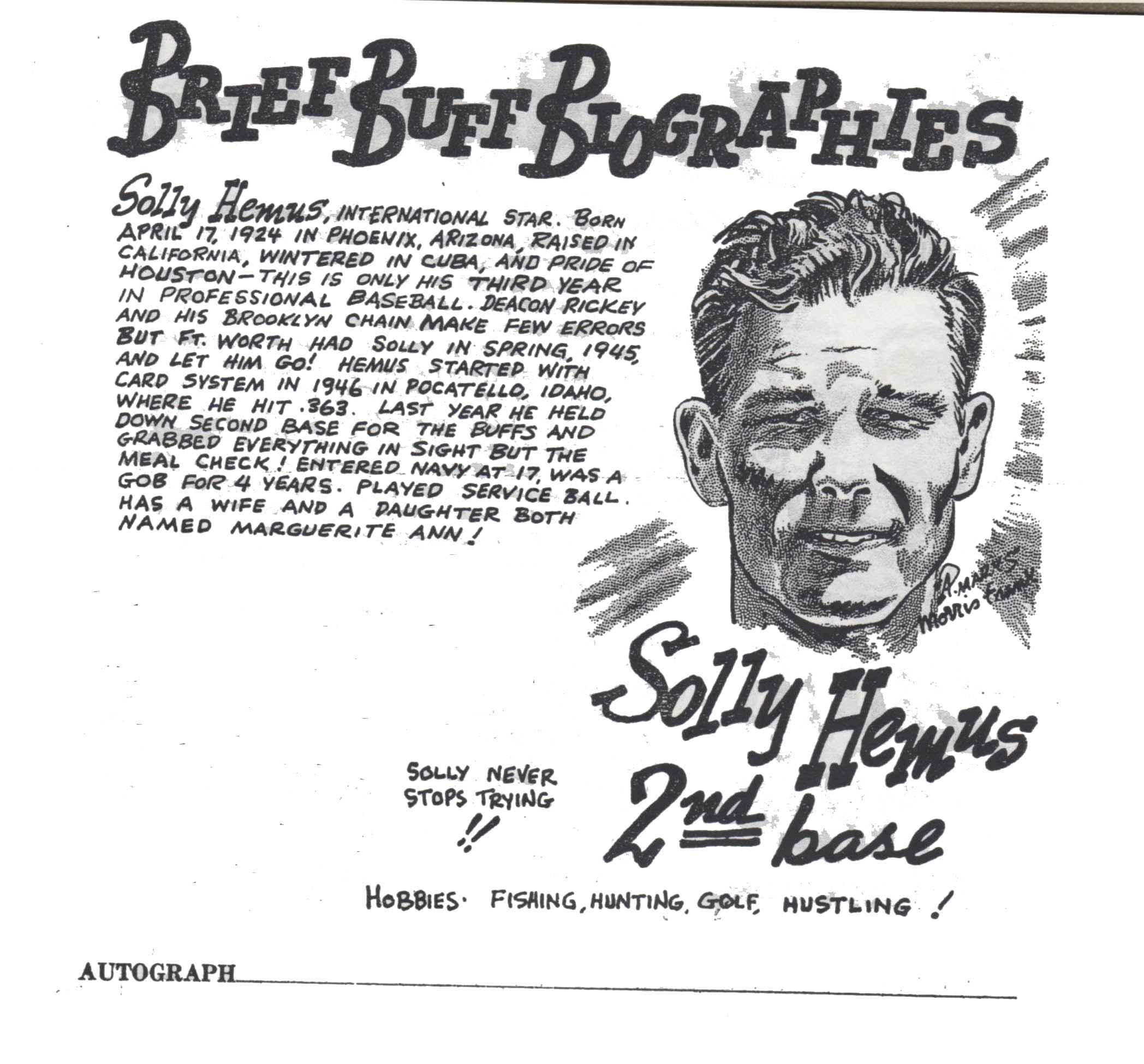
Excerpt from "Your 1948 Houston Buffs, Dixie Champions: Brief Biographies By Morris Frank and Adie Marks (1948).

Excerpt from “Your 1948 Houston Buffs, Dixie Champions: Brief Biographies By Morris Frank and Adie Marks (1948).

From the time I first saw him play during my original season of watching the Houston Buffs at old Buff Stadium in 1947, Solly Hemus was my star, my first baseball hero. He just seemed to be the guy that got everything going on offense and defense.  He played the game of baseball with a fire in his belly and a relentless hustle for whatever edge he could find. Houston writers and fans called him “the little pepper pot”  as a tip of the cap to both his game time personality and his diminutive, but wiry physique. At 5’9″ and 165 lbs,, Hemus was all muscle and momentum, leaning into action as a force to be reckoned with.

As a second baseman for the 1947 Buffs, Hemus batted .277 with 0 home runs in 140 games as a key table setting hitter in the lead off spot. After the ’47 Buffs won both the Texas League pennant and the Dixie Series crown, Solly played two more seasons with the Buffs (1948-49) and one more year at Columbus, Ohio (1950) before heading up to his eleven-season MLB playing career with the St. Louis Cardinals (1951-56, 1959) and Philadelphia Phillies (1956-58) as a key shortstop and utility infielder. Prior to coming to Houston, by the way, Solly had broken into professional baseball at Class C Pocatello in 1946 with a .363 average in 120 games. He would again surpass the .300 level in minor league ball with a .328 average for the 1949 Buffs in 109 games. Solly’s highest full season MLB average would be the .304 he posted in 124 games for the 1954 Cardinals.

Solly led the National League in runs scored with 105 in 1952. He also developed a little more pop in his bat, slugging 15 HR in 1952 and 14 HR in 1953. Whereas, Hemus only hit 16 homers in 5 minor league seasons, he ended up with 55 long balls in the majors.

Solly Hemus finished his MLB career with a batting average of .273.

Solly took over as manager of the Cardinals prior to the 1959 season, but the club finished 7th. In 1960, the Hemus-led Redbirds rose to 3rd place, but a struggle for a spot in the first division the next year led to a stumble over the word “irony” for Solly in 1961. He was replaced during that 1961 season by his old Buffs mentor at Houston, Johnny Keane, as manager of the Cardinals.

After a little time with the expansion franchise New York Mets as a coach in the early 1960s, Solly Hemus turned his considerable smarts and energies to the development of his oil exploration company. Hemus Limited became quite successful as Solly moved onto a very special place of honor and respect in the entire Houston community for his giving low profile and private  support of so many worthy causes.

Today, at age 90, Solly Hemus is still my hero.

It Was A Dark and Stormy Night

June 6, 2013
June 5, 2013: It Was A Dark and Stormy Night at Minute Maid Park.

June 5, 2013: It Was A Dark and Stormy Night at Minute Maid Park.

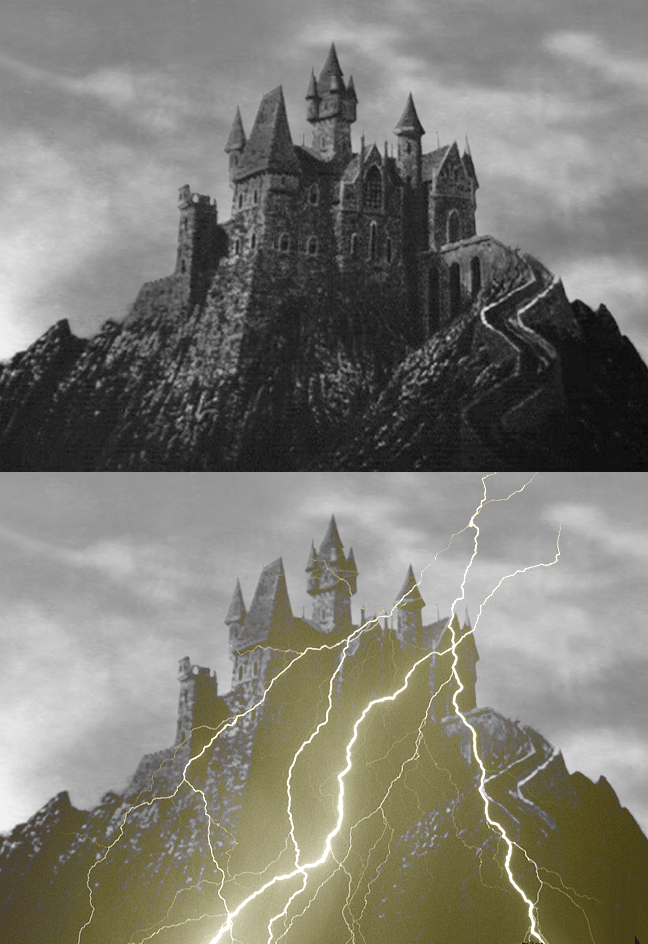
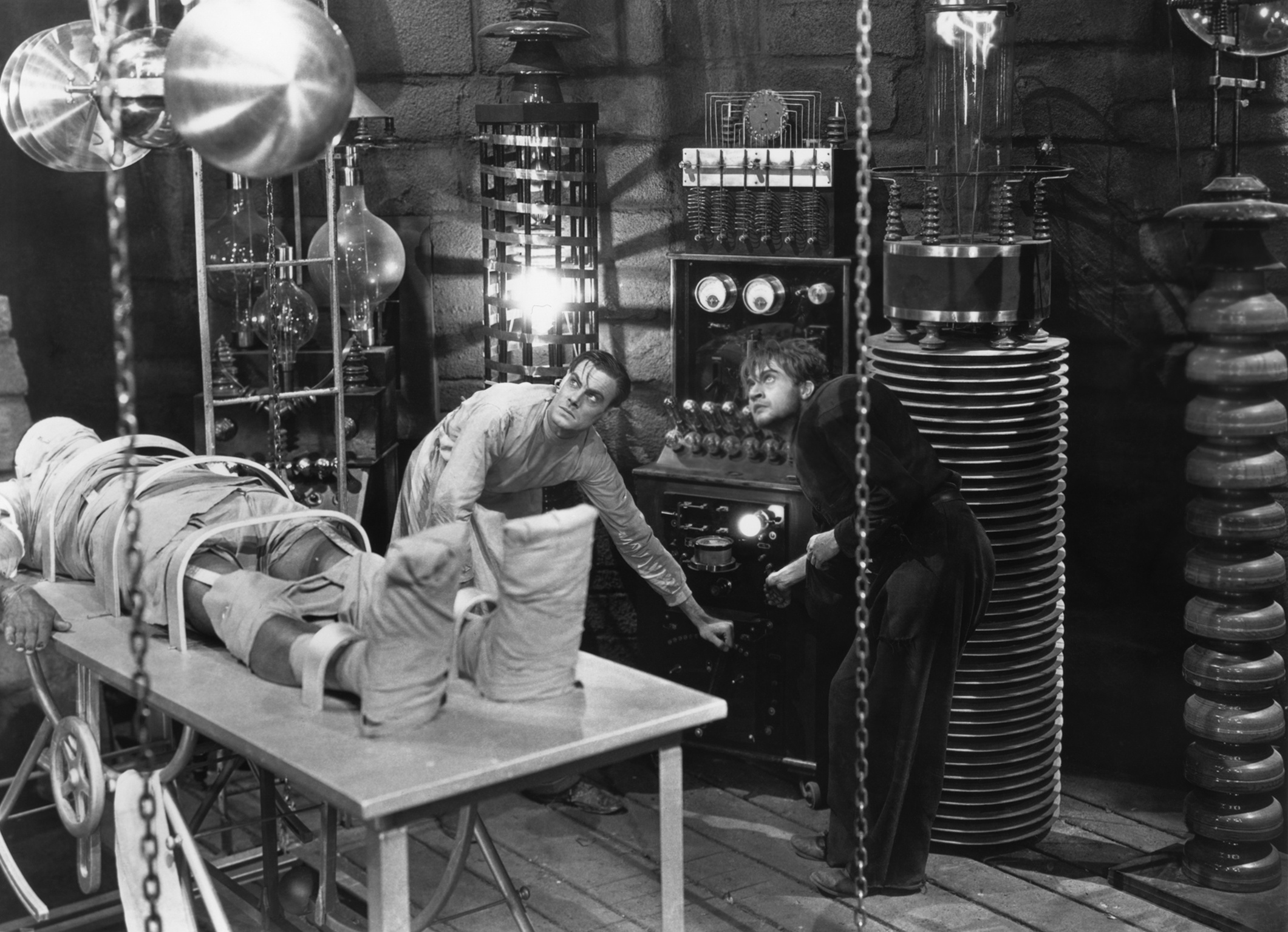
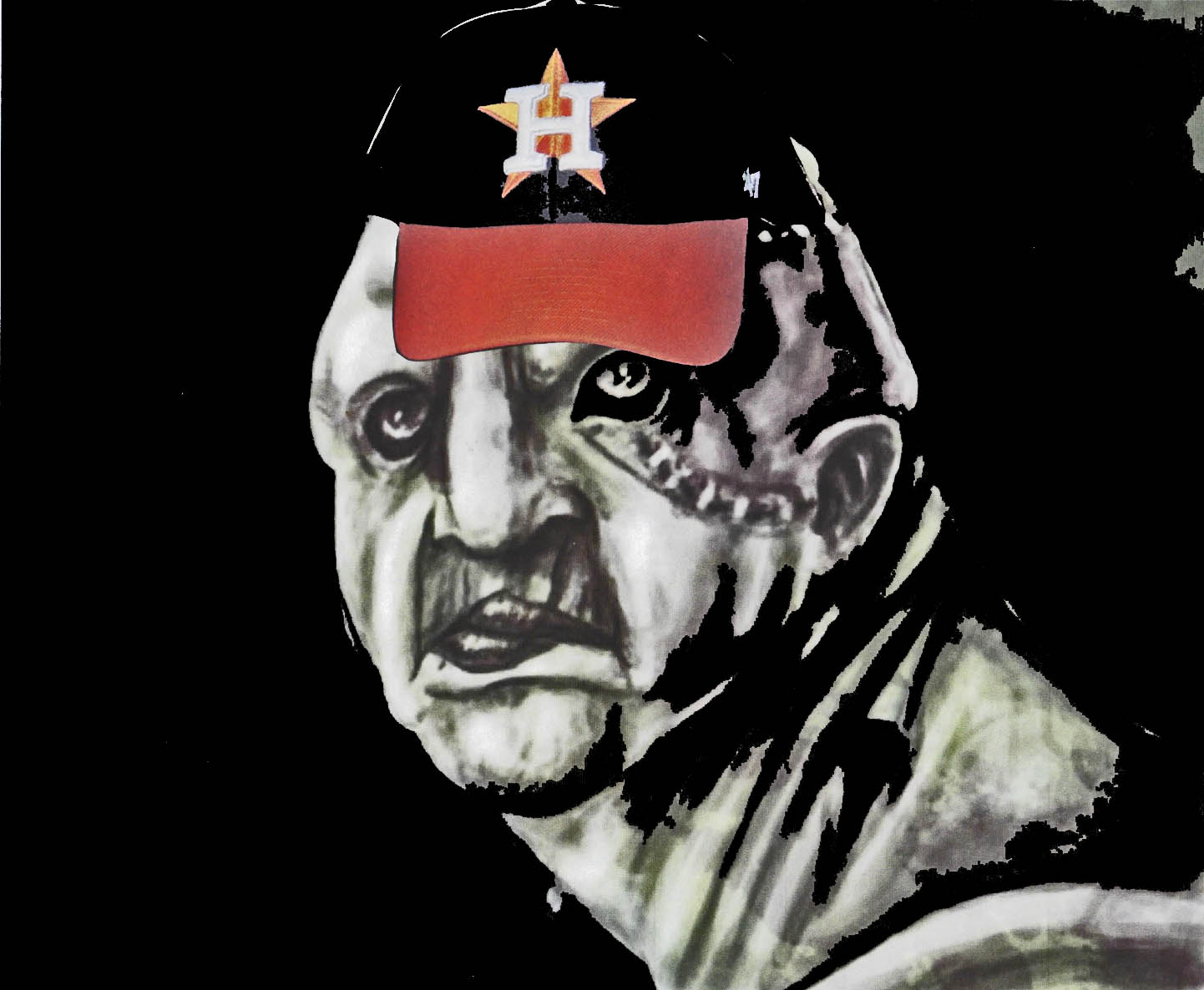
It must have been a dark and stormy night. Houston Astros fans haven’t seen that much electricity firing its shocking way into Minute Maid Park since the Twelfth of Never. – If Ever! With only 15,000 faithful villagers reportedly showing up for the highly unanticipated big life-synergizing explosion,  the Cicada-dormant home boys woke up like their summer-howling namesakes last night in time to make home runs start flying out of the ballpark like they were in the final season of Jeffrey Von Frankenstein Luhnow’s seventeen-year rebuilding program.

Houston Astros GM Jeffrey Von Frankenstein Luhnow (L) and Director of Scouting Mike Elias (R) are keeping today's No. 1 pick in the amateur draft under wraps until tonight.

Houston Astros GM Jeffrey Von Frankenstein Luhnow (L) and Director of Scouting Mike Elias (R) are keeping today’s No. 1 pick in the amateur draft under wraps until tonight.

In their first four innings on Tuesday, June 5th, the Astros electrified six home runs to take a dominant 9-1 lead over the visiting Baltimore Orioles. In the bottom of the first, Astros designated hitter Jason Castro belted a two-run homer, his 8th of the season, over the right-center wall off starter Freddy Garcia and then catcher Carlos Pena followed with another two-run homer over the right-center wall off Garcia for his 6th of the year.  Shortstop Marwin Gonzalez then led off the Astros second inning with a solo shot over the right-center wall, again against Garcia, for his 4th of the season. Third Baseman Matt Dominguez later followed with another lead off homer to start the fourth against Garcia. It was the 9th home run of the season for Dominguez and the last of four homers off the rightfully now departing Freddy Garcia in this shocking explosion of the Astros over the stunned Orioles.

Two outs later, second baseman Jose Altuve belted his solo-shot 3rd homer of the year off Orioles reliever Steve Johnson. Then, after Castro walked, left fielder J.D. Martinez ripped another two-run homer, his 6th of the season, off Johnson for the club’s sixth long ball of the game and a 9-1 Astros lead.

The Orioles would rally late to narrow the final margin of victory to 11-7, but their “too little, too late” try for a comeback only served to remind one and all of this franchise’s identity prior to 1954. From 1902 to 1953, these guys were the longtime losing St. Louis Browns and they sometimes play today as though that recessive loser’s gene were still in control. Our joy over the Astros’ newly found life is tempered by the fact that we know that these other historic forces are still at play in the Orioles franchise brain.

Lefty  Dallas Keuchel (W, 3-2) went six to capture the win for the Astros, giving up 1 run on 5 hits.

It’s still nice to know that the Astros have now won seven of their last eight games for a winning percentage of .875. At 22 and 38 in the win/loss columns, they also now have 102 games left on the schedule to play,

"If the Astros can keep playing at our current .875 clip. I see no reason why we cannot continue to shock the baseball world!" - Astros Manager Bo "Seamhead" Porter.

“If the Astros can keep playing at our current .875 clip. I see no reason why we cannot continue to shock the baseball world!” – Houston Astros Manager Bo “Seamhead” Porter.

Let’s see here, I don’t want to get too far ahead of reality, but, if the Astros could now get stuck in the winning percentage gear of .875 that they have found (102 games X .875), they would win 89 of their remaining games and finish the season at 111-51, .685.

What a Monster Year that would be!

(Don’t worry. I’m due to take my meds at 11. Things should be fine by noon.)