Who’s on First?

July 16, 2014

Hu's On First e

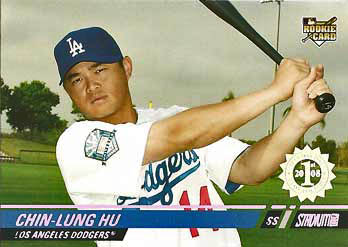
Thanks to contributor Bob Blair for this pictorial reminder that it finally happened back on September 23, 2007. When back-up shortstop Chin-lung Hu took the field in Arizona for the Los Angeles Dodgers, he was playing in only his sixth MLB game in a brief career that only began on September 1, 2007. He entered this game with only one career hit, a solo home run in Dodger Stadium  off  Brett Tomko in the 9th inning of a 9-4 losing cause to the San Diego Padres on September 11, 2007. Hu also had been on base once previously as a pinch runner for Olmedo Saenz in a September 5, 2007, 8-2 loss to the Chicago Cubs in Wrigley Field, but that was at second base, following Saenz’s pinch hit double..

Through all five games he played through September 22, 2007, Hu never had been on first in any official capacity.

Then things changed.

On September 23, 2007, it came to be for Hu in a 7-1 romp for the Dodgers at Arizona. Chin-lung Hu went one for four, a single, with one run scored and one RBI. At last, we could all ask the famous question in the light of a fiction that now had transformed into a reality:

Hu’s on first?


chin-lung-hu

Happy Under-Celebrated (and, perhaps, even unrecognized) Memories of 2007 from the year 2014, Chin-lung Hu, wherever you now may be!


Baseball Almanac Box ScoreLos Angeles Dodgers 7, Arizona Diamondbacks 1
Los Angeles Dodgers ab   r   h rbi
Pierre cf 4 1 4 0
Abreu 2b 3 1 1 1
  Valdez 2b 2 0 0 0
Kemp rf 5 0 1 0
Loney 1b 5 2 3 2
Martin c 4 1 2 0
Ethier lf 4 0 1 1
LaRoche 3b 3 1 1 1
Hu ss 4 1 1 1
Billingsley p 3 0 0 0
  Beimel p 0 0 0 0
  Young ph 1 0 1 0
  Broxton p 0 0 0 0
  Saito p 0 0 0 0
Totals 38 7 15 6
Arizona Diamondbacks ab   r   h rbi
Young cf 4 1 1 0
Salazar rf 3 0 1 0
Byrnes lf 3 0 0 0
Clark 1b 4 0 1 0
Reynolds 3b 2 0 1 1
Snyder c 4 0 0 0
Drew ss 3 0 0 0
Ojeda 2b 4 0 1 0
Gonzalez p 0 0 0 0
  Cruz p 0 0 0 0
  Quentin ph 1 0 0 0
  Nippert p 0 0 0 0
  Murphy p 0 0 0 0
  Medders p 0 0 0 0
  Cirillo ph 1 0 0 0
  Peguero p 0 0 0 0
  Wickman p 0 0 0 0
  Petit p 0 0 0 0
Totals 29 1 5 1
Los Angeles 1 0 0 2 2 0 0 2 0 7 15 0
Arizona 1 0 0 0 0 0 0 0 0 1 5 1
  Los Angeles Dodgers IP H R ER BB SO
Billingsley  W (12-5) 5.2 5 1 1 4 6
  Beimel 1.1 0 0 0 0 0
  Broxton 1.0 0 0 0 0 2
  Saito 1.0 0 0 0 0 1
Totals
9.0
5
1
1
4
9
  Arizona Diamondbacks IP H R ER BB SO
Gonzalez  L (8-3) 3.1 8 3 3 0 2
  Cruz 1.2 1 2 2 1 5
  Nippert 1.0 1 0 0 0 2
  Murphy 0.1 1 0 0 0 0
  Medders 0.2 0 0 0 0 0
  Peguero 0.2 0 1 1 2 0
  Wickman 0.1 3 1 0 0 0
  Petit 1.0 1 0 0 0 1
Totals
9.0
15
7
6
3
10

E–Drew (17).  DP–Los Angeles 2. Abreu-Hu-Loney, Abreu-Hu-Loney, Arizona 1. Reynolds-Ojeda-Clark.  HR–Los Angeles Abreu (2,1st inning off Edgar Gonzalez 0 on 1 out); Loney (13,5th inning off Cruz 1 on 2 out).  SF–Ethier (8,off Edgar Gonzalez).  Team LOB–8.  SH–Edgar Gonzalez (3,off Billingsley).  HBP–Drew (3,by Saito).  Team–7.  SB–LaRoche (2,2nd base off Wickman/Snyder).  CS–Pierre (14,2nd base by Edgar Gonzalez/Snyder); Martin (9,2nd base by Peguero/Snyder).  U-HP–Paul Emmel, 1B–Dan Iassogna, 2B–Dale Scott, 3B–Ron Kulpa.  T–3:21.  A–43,372.

Baseball Almanac Box Score | Printer Friendly Box Scores


The Rest of the Story ...

As dear old Paul Harvey used to love saying near the conclusion of his radio tales, “now here’s the rest of the story…!”

Shortly after this story was published this morning, The Pecan Park Eagle received a private e-mail from Ira Liebman, the radio and ESPN telecaster for the Sugar Land Skeeters. Ira had a point  to make  about his own lesser known, but primary role in the “Hu’s on First?” materialization. Had I know of it previously, it would have been included in our original story copy, but I sure as heck cannot let it go – now that I do know.

Ira Liebman wrote: “When I was at Triple-A, broadcasting for the Colorado Springs Sky Sox (2006), I waited for three games for him (Hu) of the Jacksonville Suns) to get on first. He (finally) did on a force at  second and I said “who is literally on first” before Vin Scully ever saw him in the majors and did it.

The rest of the rest of the story is known to us today. If we are going to take the origin of this wonderful writers and broadcaster called shot to the minor league level, we also have to take into account that Hu broke into minor league ball with 67 hits for the Ogden Raptors even earlier back in 2003. We may not know the answer today, but we do have to allow for the probability that someone in that year or those that followed through 204-05 may even earlier had uttered, spoken, or written  the famous Abbott and Costello question into public play.

In the meanwhile, let’s give Ira Liebman his due. If he says he got there on the famous question call earlier than Vin Scully, that’s good enough for me.

…And that’s the rest of the story … for now. …… Good day!


A Recipe for Craig Biggio’s HOF Induction

July 16, 2014
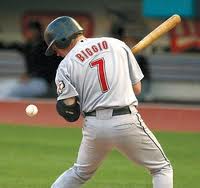
Craig Biggio is a close 2nd place in the all time career HBP category.

Craig Biggio is a close 2nd place in the all time career HBP category.

One Recipe for Craig Biggio’s Hall of Fame Induction.

Please follow the instructions carefully:

1) Take all the active voting members of the Baseball Writers of America and boil their heads in water for three to five years.

2) At the same time, marinate Craig Biggio’s qualifications through an audio visual device that will be ready for presentation whenever the voters’ brains have been softened to a receptivity level on the matter  of Mr. Biggio’s deserved induction into the Baseball Hall f Fame.

3) After the head-boiling period, take any remaining resistance from voters with a grain of salt.

4) The brain-softening and well-marinated material presentation will come together as the perfect time for a positive vote in Mr. Biggio’s behalf.

5) Take the vote and wait three minutes for a persuasive ballot in favor of Mr. Biggio.

6) Wait for at least one of the voters to shout: “Why didn’t we think of this man three to five years ago – when he first became eligible for our vote?”

7) Place the news of Craig Biggio.s  HOF selection on social media and wait five minutes for the first one million tweets of approval.

7) Allow Mr Biggio 24 hours for a normal resumption of all bodily functions and , Voila, prepare the candidate’s plaque for installment in Cooperstown.

Too bad it’s not that simple. Last night during the 5-3 Jose Altuve-aided 5-3 American League victory, I kept up my multitasking hobby of playing with stats while I’m watching televised baseball. I decided to check on how many of the straightforward offensive career categories I could find that included Craig Biggio among the Top 100 Players of All Time. I came up 13 categories in which that were true. Only one of the main categories, strikeouts, was a negative achievement. The rest were all a combination of longevity and ability. Here’s a table that best illustrates them:

The 13 Career Categories in Which Craig Biggio is among the Top 100 Players of All Time

CATEGORY NUMBERS ALL TME RANK
PLATE APPEARANCES 12,503 10
AT BATS 10,876 13
RUNS 1,844 14
HITS 3,060 20
DOUBLES 668 5
EXTRA BASE HITS 1,014 32
GAMES PLAYED 2,850 16
HIT BY THE PITCH 285 2
STOLEN BASES 414 66
WALKS 1,160 65
STRIKE OUTS 1,753 20
SACRIFICE FLIES 81 84
TOTAL BASES 4,711 33
Craig Biggio: During his post-career St. Thomas High School caching peios in which he led the Eagles to two state championships.

Craig Biggio: During his post-career St. Thomas High School caching peios in which he led the Eagles to two state championships.

Craig Biggio could have finished first in the HBP category had he managed 3 more arm bunts off his protective sleeve. As it played out, however, he had to settle for 2nd behind Hugh Jennings of the dead ball era who had 287.

As for those who brush away any positive record that spawns from longevity, I take issue. A guy doesn’t play for 20 years and earn top dollar without being far better than good, I don’t think.If you care to labor over the way Baseball Almanac portrays the data in every category, you will find the place over run with Hall of Famers in the top 100 groups for each positive category.

Craig Biggio deserves to be n the Baseball Hall of Fame and let’s hope the BBWA members soften their heads to see it that way too in 2015. Otherwise, we may need to think about boiling over 200 plus big pots of water. Like a lot of other fans, The Pecan Park Eagle’s angst is undoubtedly going to continue experiencing these little flare-ups until the writers make it right and vote Craig Biggio into Cooperstown where he already belongs.

Have a nice hump day, everybody!


91-Year Old Lacy Rocks at Houston SABR Meeting

July 15, 2014
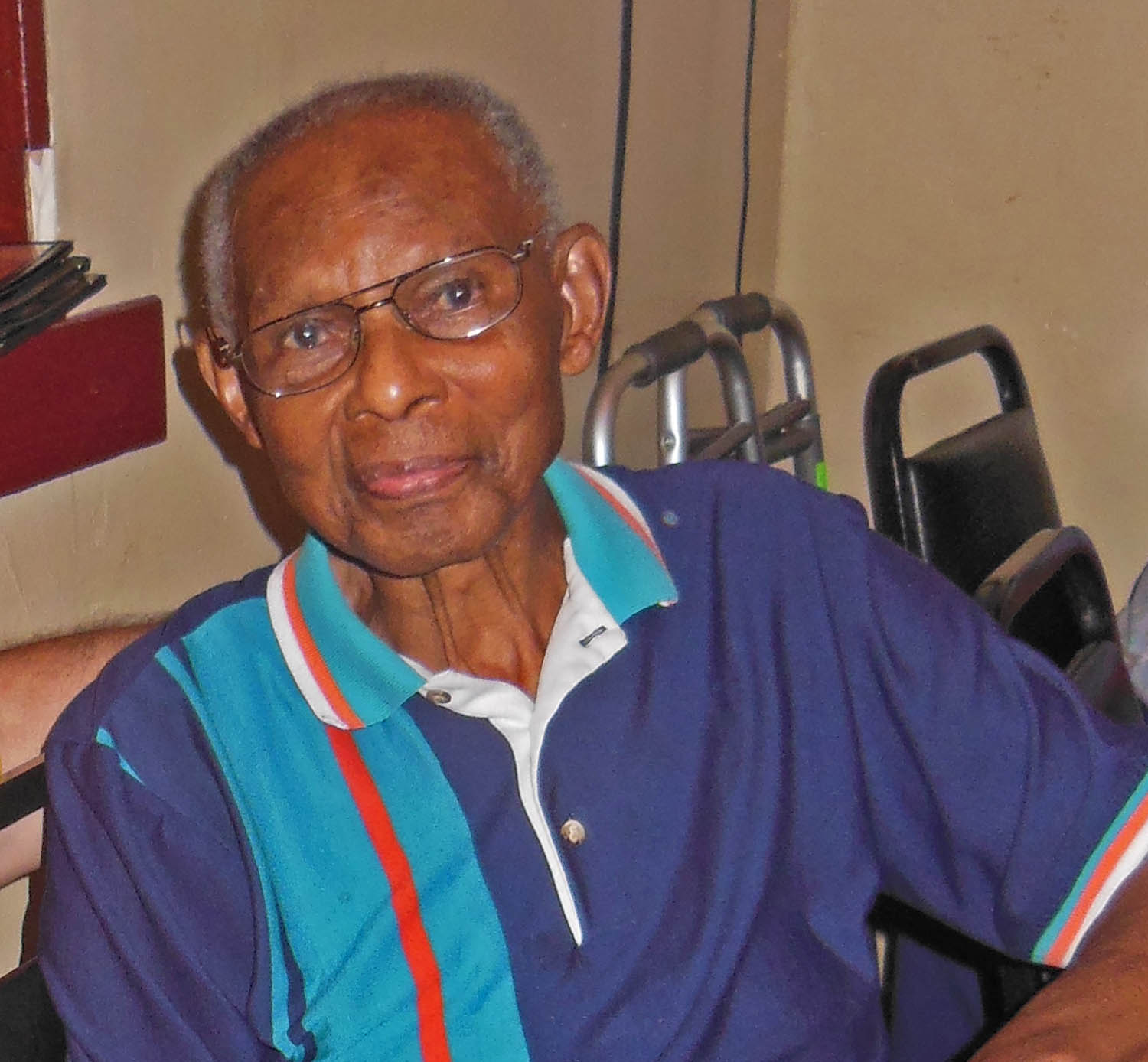
91-year old Raymond Lacy: native Texan; college graduate and educator; survivor of racism; Negro League veteran of clubs like the Homestead Grays and Houston Eagles; high school coach in baseball, football, and basketball; man of faith; role model; family man; and one of the wisest men any of us could ever hope to meet.

91-year old Raymon Lacy: native Texan; college graduate and educator; survivor of racism; Negro League veteran of clubs like the Homestead Grays and Houston Eagles; high school coach in baseball, football, and basketball; man of faith; role model; family man; and one of the wisest human beings any of us could ever hope to meet.

Wisdom and love flows through his ancient being as if it were the technicolor stream of all life-blood currents, but, when Larry Dierker SABR chapter chair Bob Dorrill introduced the diminutive veteran of the Negro Leagues to the large crowd that was privileged to hear  him speak this unforgettable night, few of us knew what to expect. All most us knew was that his name was Raymon Lacy – and most us were spelling “Raymon” as though it had the expected “d” at its end. – It did not..

Once handed the mike at the special meeting area we occupied at the Spaghetti Western Cafe on Shepherd Drive, however, the whole room quickly focused entirely upon the small and stoic face that now now took the conductor’s role as to where the mind and soul will travel when we listeners pay close notice to the words a speaker chooses to make his points.

“My brother and I were born in the country near Tyler, Texas,” Lacy said, “and we were raised by a mother who worked like a convict to keep us fed and on the right path until we finished high school.”

Lacy loved baseball from way before the time he and his brother could afford any real equipment.

“We used broomsticks and the like for bats and shucked corn to throw as balls,” Lacy explained. With a barn as our backstop, we took turns pitching and batting. Sometimes we even threw bottle caps because of the swerves they made in the air. It was good preparation for me. By the time I’m hitting against real curve balls, those real pitchers weren’t fooling me. Those bottle caps were a lot harder to hit.”

The details of Lacy’s long and winding road covered more ground than this single pair of ears could retain, but it wasn’t simply the facts of this man’s journey that  jumped off the page at us. By the words this man chose, one could almost count and name the stones on the path of this man’s life travels. It was the path of a committed seeker. It was the wisdom that this man had accumulated in his nearly 92 years that still spoke clearly from his aged frame.  And once he had finished talking, he moved in almost school teacher fashion to a “next question” searchlight focus on what the crowd wanted to ask of him.

Along the way, Raymon Lacy also earned two college degrees that lifted him down the main line of his career activity beyond baseball as a teacher, principal, coach, and school board member.

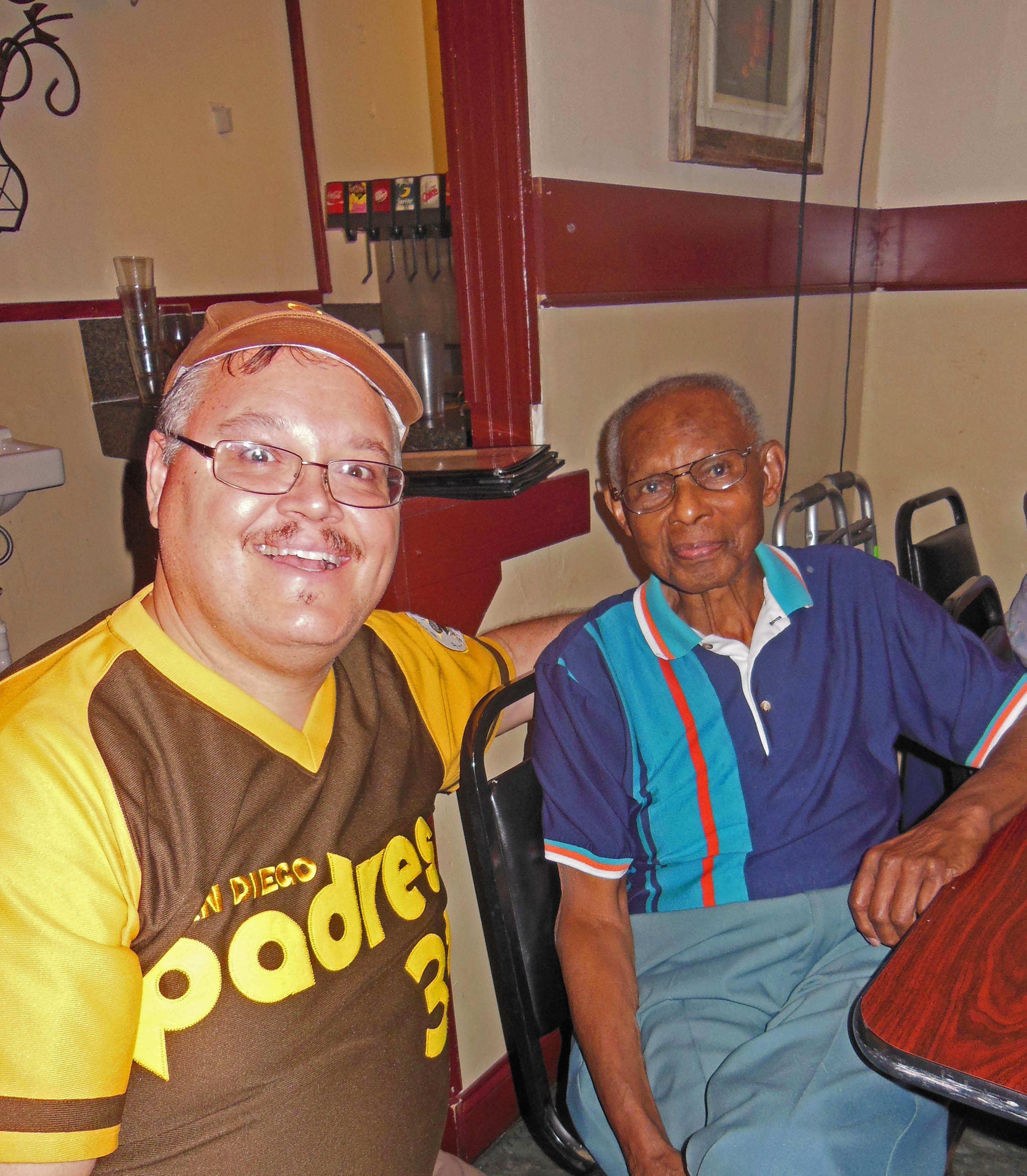
Matt Rejmaniak was among those who personally thanked Raymond Lacy for his presentation at the July 19, 2014 Houston SABR meeting.

Matt Rejmaniak was among those who personally thanked Raymon Lacy for his presentation at the July 19, 2014 Houston SABR meeting.

Here are snippets of the wisdom that poured forth from this literal and figurative “Little Big Man” speaker:

On Failure. There is no failure if we get the lessons that spring from our mistakes. If we don’t pick them up, we will just get to see them again until they either get us thrown in jail, buried early, or, finally, to learn and change our lives according to the hard knocks edge of truth.

On Kids Today. Kids need to hear from their parents and teachers that they are loved. If a child doesn’t know he or she is loved, they aren’t likely to learn much from the role model who doesn’t let them know. I knew I was loved because my mama told me she loved me. She also showed me she loved me every time she punished me for getting out of line.”

On Biggest characters he ever met. Lacy answered that question by saying, “that depends on what kind of characters you mean. If you mean good characters, it’s a short list. If it’s bad characters, we could be here all night.”

On Negro League Greats. Raymon Lacy knew them all. Playing third base and right field for or against everyone from Josh Gibson to Hank Aaron to Willie Mays to Jackie Robinson, whom Lacy credits as the greatest because of his ability to hold up under the vicious assault of racial hatred. Lacy gives great weight of value  to those who are willing to face the adversities of life with the courage that all obstacles can be overcome with the willingness of the individual to hang in there and really commit to change.

On picking a Vocation. “I always told my students – ‘You don’t want to end up as one of those people who dreads the thought of going to a job that you hate, but you do it anyway because you need the money. Ask the question that no one else can answer for you: What do I really love? What do I want to do? If it will take more education to qualify, then go back to school and get what you need to move on. It doesn’t have to be college, but it needs to be enough to get you in the door of the line of work you say want to pursue.’ – In the end, if it’s not hurting anyone else, do what makes you happy. And nothing less.”

After the meeting, a number of us made a point of coming forth to thank Mr. Raymon Lacy for being with us. This morning, The Pecan Park Eagle wants to make it clear again, as I think we did last night. We aren’t simply thanking you, Mr. Lacy, for being with us last night. Our appreciation of you extends to the nearly 92 years you have been here as an important resident of Planet Earth.

God Bless You, Raymon Lacy!

In addition to making the Raymon Lacy presentation possible, chair Bob Dorrill also led us through a successful process of filling in many of the critical work assignments with new volunteers to the SABR 44 Plan for the SABR National Convention that is coming to Houston from July 30 through August 03.

Thank You, Bob Dorrill, for all you do!


West End Park Memorialized for the Ages

July 13, 2014


(Photo by Greg Lucas).

(Photo by Greg Lucas).


Preliminary Notes and Remarks

Thank you Greg Lucas, Mark Rejmaniak, and Mike McCroskey for the photos and brief accounts of the West End Park Plaque Dedication hosted in downtown Houston today by the Harris County Historical Commission through the capable hands of emcee/historian Mike Vance. The Pecan Park Eagle could not attend directly due to healing repercussions from a home accident.

Here are some brief comments from SABR member photo contributors to this column:

“Sorry you could not be on hand. Ceremony held in the shade, the everyone moved a couple blocks to the unshaded and quite hot area where the plaque had been installed.  Sort of a back street, but accurate along what would have been the left field line.  As Mike explained (and you no doubt already know) home plate and the grandstand area would have been pretty much right where the freeway is now.” ~ Greg Lucas.

Thank you to Mike Vance, Harris County, SABR, and all who came out to support the historical marker dedication for West End Park near Antioch Baptist Church in Downtown Houston.”  ~ Mark Rejmaniak.

“The plaque unveiled on Clay street, just east of I-45. Located at what would have been the left field foul pole of the old West End Park. The foul line would have headed east, paralleling  Clay street which now dead ends into 45. Home Plate would be located somewhere in the middle of the HOV lane, adding a new element of suspense to the game.” ~ Mike McCroskey.

Wish I could have been there too, friends. The same WEP grounds that helped incubate the blooming baseball talents of Houstonians Gus and Frank Mancuso, George “Red” Munger, and so many others in baseball and football during their 1930’s high school and other amateur player growths had its moment in the sun again yesterday – and now, hopefully, that shall continue to be so forever among all of us who care about such things, once they are given this important vital notice that historic places  like West End Park actually once existed. My special thanks goes out to Mike Vance for all the hard work he put in to make this happen, and to the Harris County Historical Commission and City of Houston for making this wonderful yesterday happen by plaque and acclamation.

Let’s also try to remember that plaques only have the power to awaken notice to history. It’s still up to us, the people, to absorb and keep the lessons of history alive.

West End Park Marker Dedication July 12, 2014

by SABR Chair Bob Dorrill

SABR Chair Bob Dorrill, in Houston Babies gar, was our Pecan Park Eagle coverage reporter at West End Park.

SABR Chair Bob Dorrill, in 1888 Houston Babies gear, was our Pecan Park Eagle coverage reporter at West End Park. (Photo by Matt Rejmaniak)

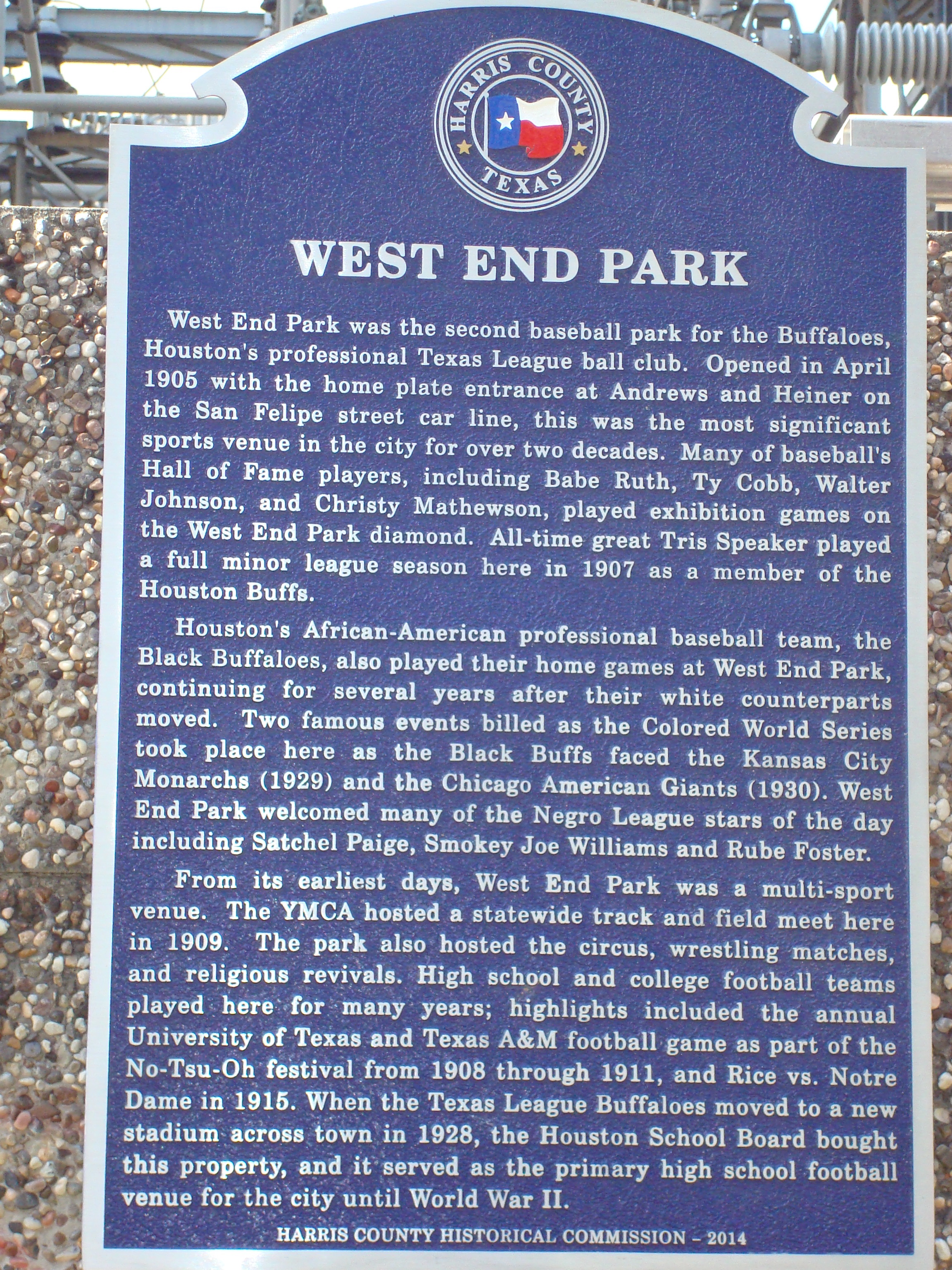
On a bright sunny morning some 35 baseball fans travelled back through time to Antioch Park at Allen Center at the corner of Smith and Clay in downtown Houston to celebrate the unveiling of a marker commemorating West End Park, a ballpark that hosted Texas League baseball in Houston from 1905 to 1927 and used for multiple other activities, including professional black baseball, until 1942.

MIKE VANCE was both the program MC and the driving force behind the West End Park plaque memorial.. (Photo by Matt Rejmaniak).

MIKE VANCE was both the program MC and the driving force behind the West End Park plaque memorial.. (Photo by Matt Rejmaniak).

The marker, actually located a block from Antioch Park on Andrews, was sponsored by CenterPoint Energy. It was unveiled by Mike Vance, president and executive director of Houston Arts and Media, and Debra Sloan, Marker Dedication Chair of the Harris County Historical Commission. First pitch honors went to Minnette Boesel who represented Houston Mayor Annise Parker with Mr. Vance doing the catching duties.

Vance, who was instrumental in the design and acquisition of the marker, emceed the event starting with the Pledge of Allegiance to both the United States and Texas flags. He recognized many of the distinguished visitors on site before telling the group about key activities and fun facts that occurred at West End Park over the years. Janet Wagner, Chair of the CHCH, also spoke to the group.

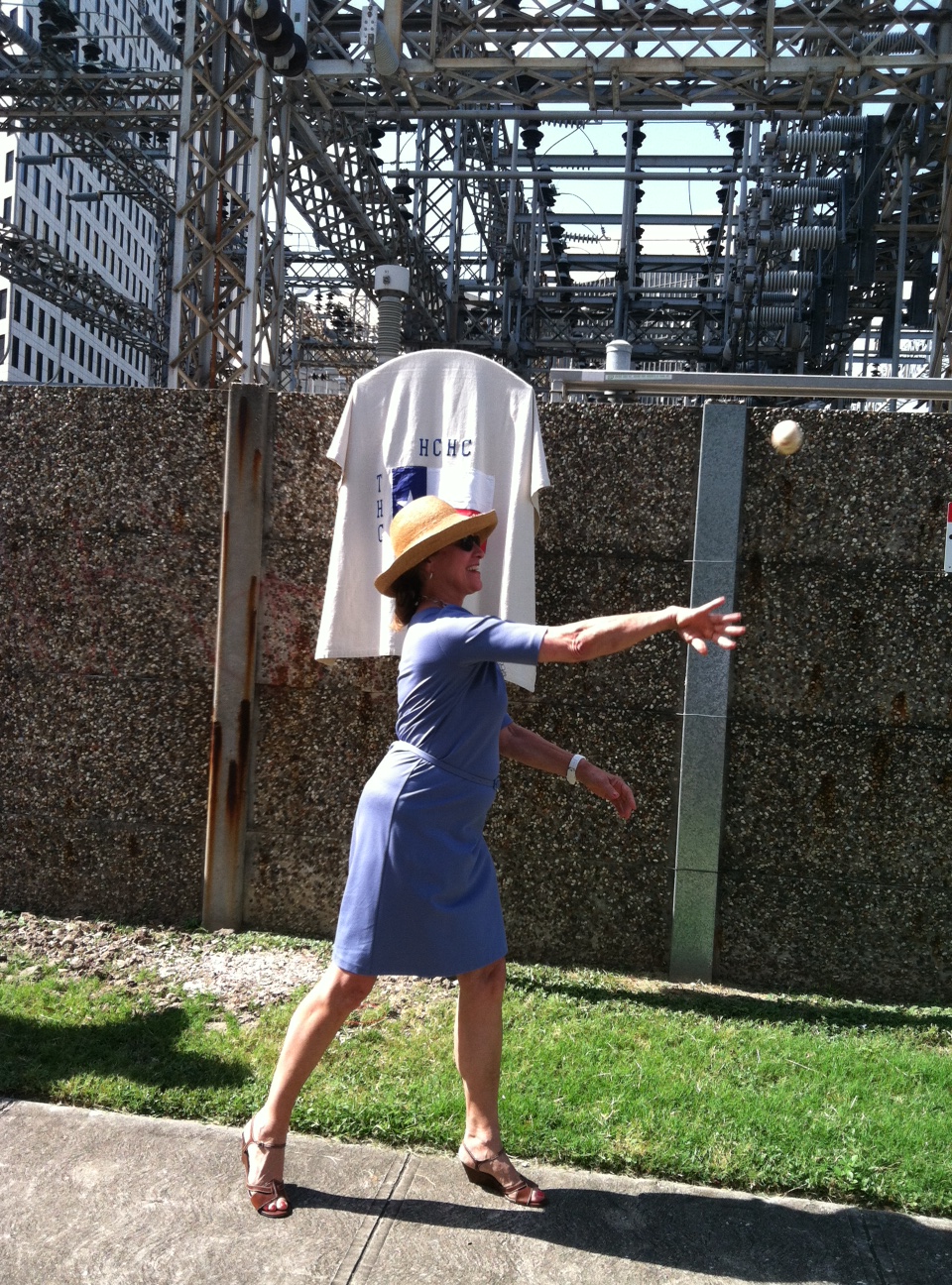
The mayor's assitant throws a commerotive first pitch to Mike Vance at the site of the plaque. (Photo by Mike McCroskey).

Minnette Boesel, who represented the Mayor of Houston, Annise Parker, throws a commerotive first pitch to Mike Vance at the site of the plaque. (Photo by Mike McCroskey).

On hand were 15 members of the local Society for American Baseball Research Chapter. (SABR). Local chapter chair Bob Dorrill, dressed in an authentic reproduction uniform of Houston’s first professional Baseball Team in 1888, the Houston Babies, spoke on the many Hall of Fame baseball players who had played on this field, including Ty Cobb, Christie Mathewson, John McGraw, Connie Mack, Walter Johnson and Rube Waddell, to name a few, and then expounded on why so many people continue to have a love affair with baseball.

After the ceremony at the park we proceeded to the actual ballpark location for the marker unveiling.

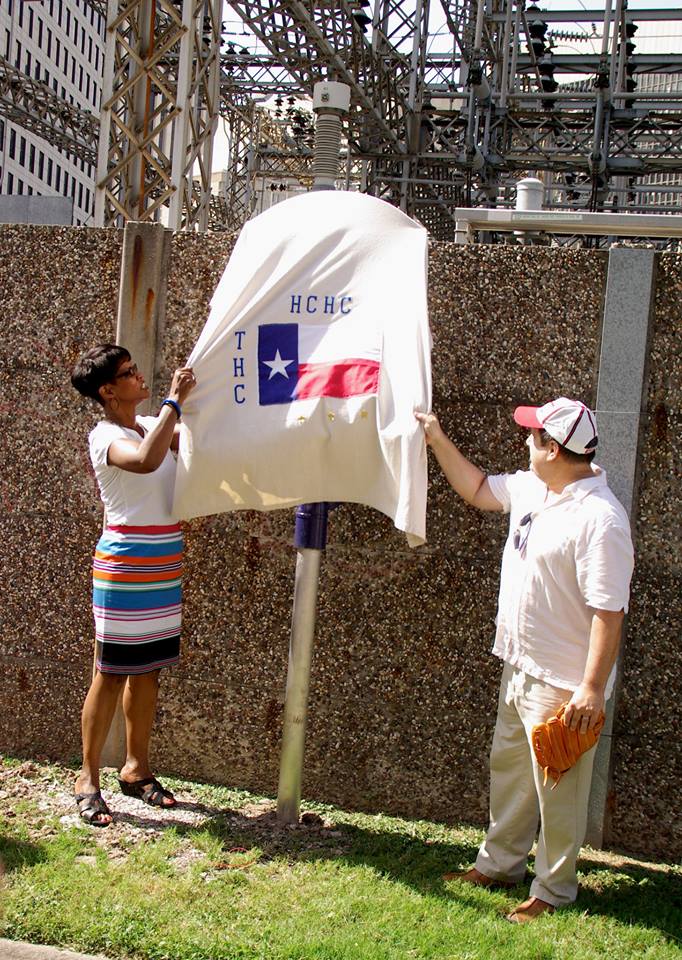
Ms. M and Mr. Vance also unveiled the plaque. (Photo by Mike McCroskey).

Debra Sloan  of the Harris County Historical Commission helps Mike Vance unveil the plaque. (Photo by Mike McCroskey).

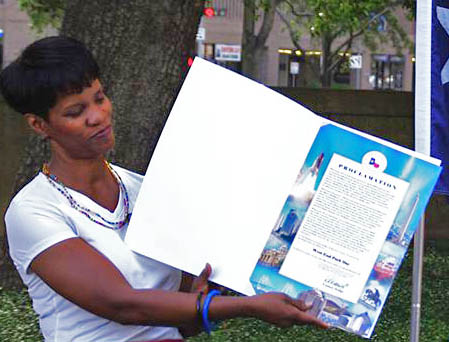
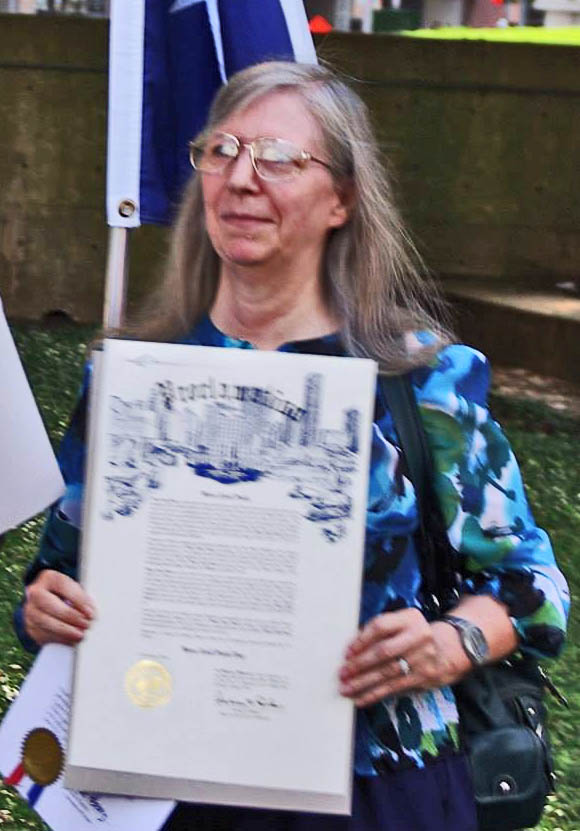
Debra Sloan of the Harris County Historical Commission displays the City of Houston Proclamation that July 12, 2014 has been dubbed as "West End Park Day" in Houston. ~ (Photo by Matt Rejmaniak).

Debra Sloan of the Harris County Historical Commission displays the City of Houston Proclamation that July 12, 2014 has been dubbed as “West End Park Day” in Houston. ~ (Photo by Matt Rejmaniak).

Janet Wagner represented the Harris County Preservation Commission. (Photo by Mark Rejmaniak).

Bernice Mistrot  also represented the Harris County Historical Commission. at the West End Park plaque dedication. (Photo by Mark Rejmaniak).

It was a great day for historic sharing, teaching, and learning. (Photo by Bob Dorrill).

It was a great day for historic sharing, teaching, and learning. (Photo by Bob Dorrill).


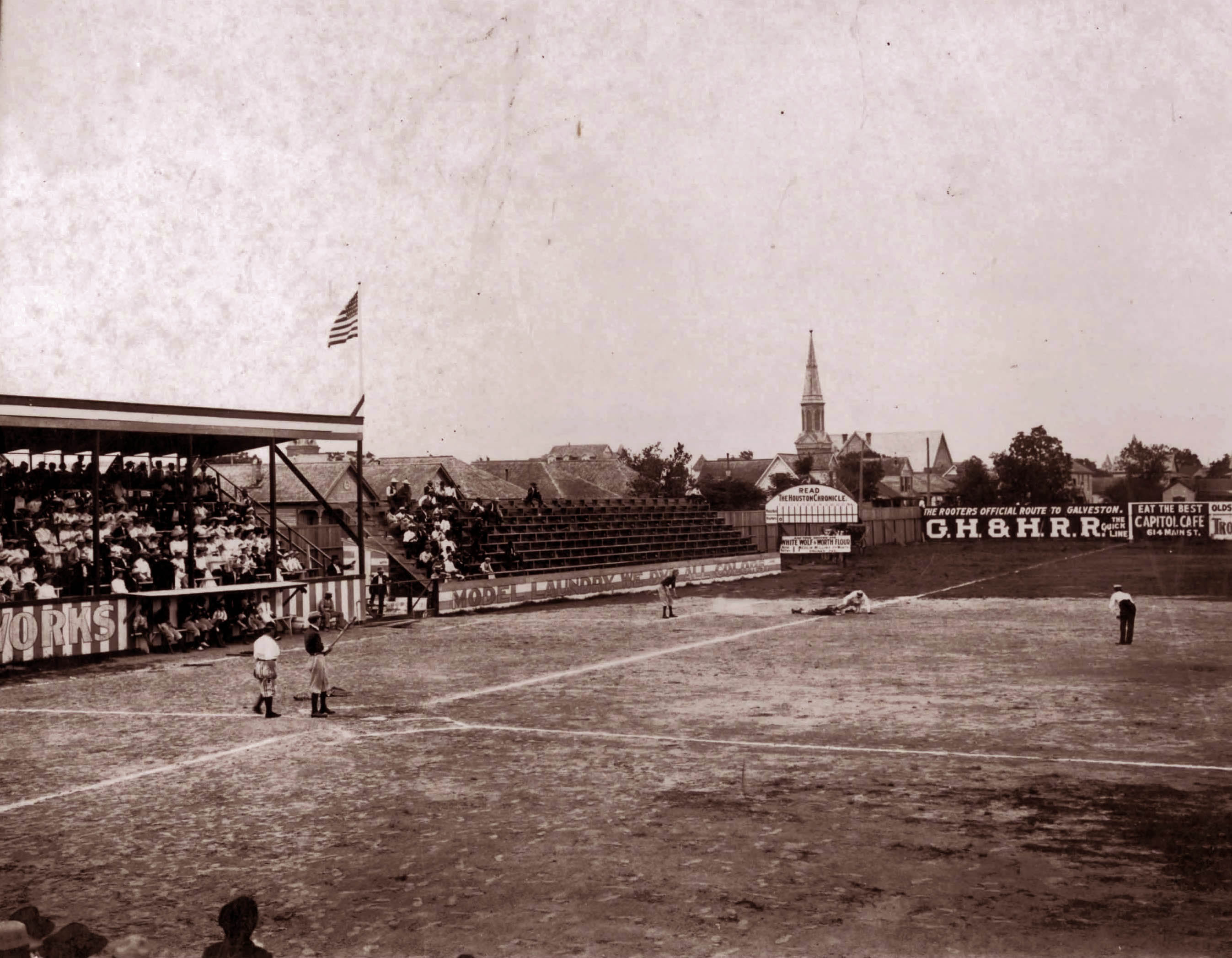
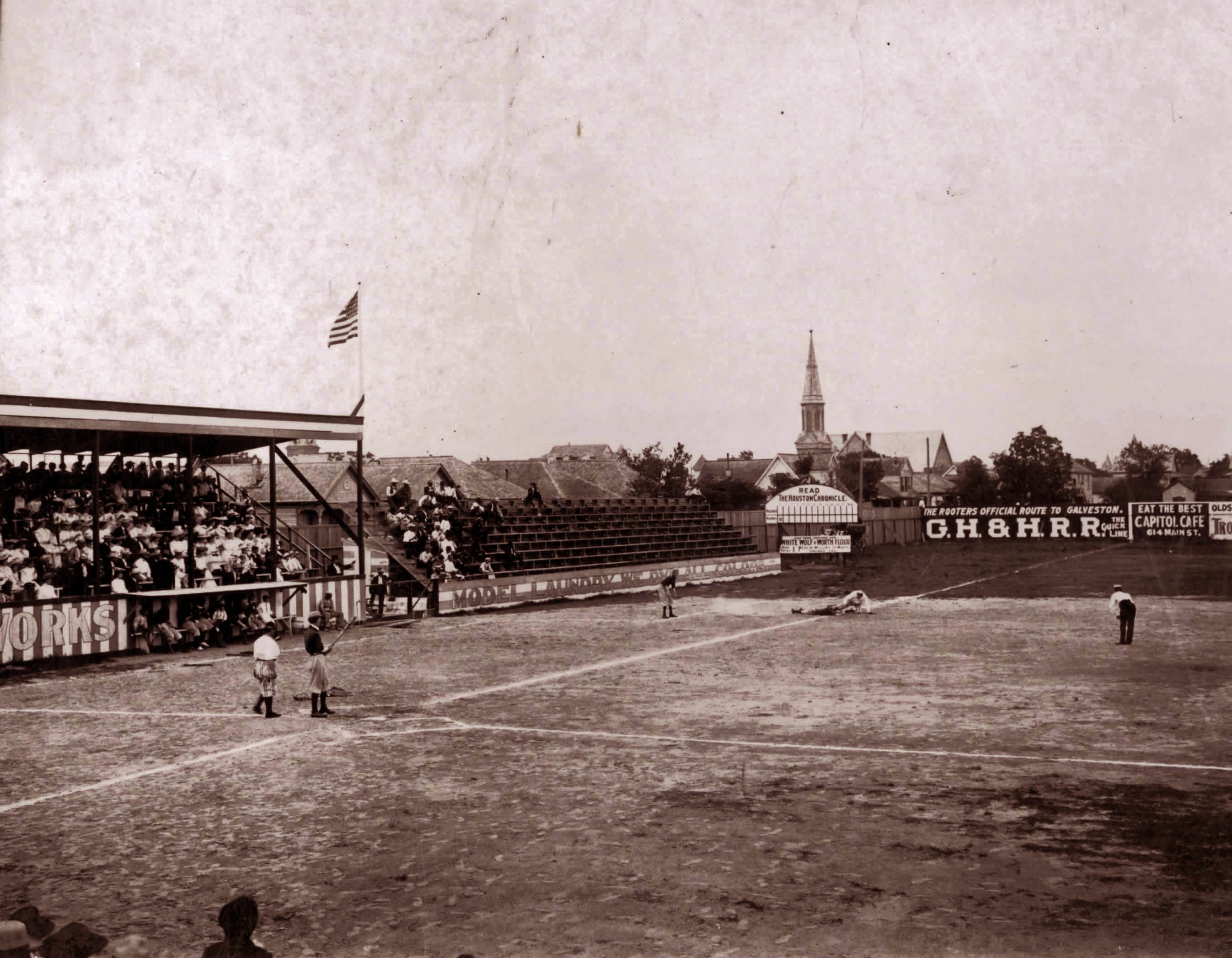
West End Park, The Early Years. (Thanks to the Houston Public Library)

West End Park, The Early Years. (Thanks to the Houston Public Library)

If you care to see a whole album of photos from the dedication ceremony, check out Matt Rejmaniak’s on-line album of the July 12th festivities:

https://www.facebook.com/matt.rejmaniak/media_set?set=a.10204507452073351.1073741841.1444220201&type=1

Why “further research” is sometimes needed

July 12, 2014
When Chick Flet' played an inning in right back in the 2008 first game of he resurrected Houston Houston Babies,  we pretty much knew what we were getting. That's why he never played again. On the other hand, what do we know about the early athletic backgrounds of others we hang out with. It's time to do some research.

When Chick Filet’ played an inning in right back in the 2008 first game of the resurrected Houston Babies, we pretty much knew what we were getting. That’s why Chick never played again. On the other hand, what do we know about the early athletic backgrounds of others we hang out with? – It’s time to do some research.

Late Friday, we decided to do some research on what some of our Pecan Park Eagle friends and colleagues may have done during their presumed early athletic careers. Here’s what we had time to learn in a once over lightly review of digital news file services:

1) “Connellsville beat host Colonial, 12-6, in Fayette County (PA) American Legion Baseball League activity yesterday. … Greg Lucas was the most troublesome Colonial batter, with a double, single, and three runs driven across.” ~ Connellsville (PA) Daily Mirror, July 15, 1976, Page 8.

2) In a state high school basketball title hopes elimination game, the Hillsboro Indians fell to the Miami Trace Panthers by a score of 65-62. “Mike Vance had an outstanding night for the Indians, hitting on 13 of 19 field goals for 26 points. It was the second half though where Vance was phenomenal as he made 9 of 11 shots including eight in a row.at one point.” ~ Hillsboro (OH) Press Gazette, February 4, 1974, Page 7.

3) “What do Ernest Wagner, Marion Crawley, Herm Keller, Ray Crowe, Bill Green, Bill Harrell, Tom May and Mike McCroskey have in common? – They are the eight individuals in the 83-years of Indiana high school boys and girls basketball to win back-to-back state championships.” ~ Kokomo (IN) Tribune, March 11, 1993, Page 33.

4) “Four tilts have been reported (but only one here) of Tuesday night action of  the city recreation women’s slow pitch softball league. – Piney Grove was a 20-5 winner over First Baptist-Garfield as Phil Holland had two home runs, Gloria Turner had three hits, and Marlene Holland and Mary Ann Gaither paired hits.” ~ Statesville (NC) Record, July 20, 1977, Page 32.

5) In a 14-6 loss to West Branch, “Clayburg got the board early in the fourth quarter, when Hileman connected with Tony Cavender for a 23-yard touchdown pass to highlight a 12-play 74 yard drive. The conversion failed, giving West Branch a 14-6 lead (that held up as the final score).” ~ Bedford (PA) Gazette, September 29, 1997, Page 4.

6) “Terrace hurdler Bill Hale set a new school record in the high hurdles event against Englemoor last Friday,  covering the distance in 15.5 seconds. Hale also took first in the low hurdle event>” – Lynnwood (WA) Enterprise, March 26, 1969, Page 15.

7) In the first round of Van Wert city tennis tournament at Jubilee Park, “Bob Stevens and Steve Keister defeated Dale Wheeler and Kirbey Brown, 7-5, 4-6, 7-5.”  ~ Van Wert (OH) Times Bulletin, September 20, 1974, Page 11.

8) Larry Hajduk kicked six extra points and also caught a 22-yard TD pass in the third quarter as his Beth-Center Bulldogs “ran wild last night as it (they) raced to a 50-12 win over Clairton.” ~ Uniontown (PA) Evening Standard, September 21, 1974, Page 10.

9) The Lamar Redskins defeated the Baytown Ganders, 5-3, in Galveston at the Ball High baseball tournament. Jimmy Disch played right field for Lamar, going 2 for 3 on the day with a single to left in the fifth that loaded the bases and spurred Lamar to the two runs that inning that supplied his club with their final margin of victory.  ~  Baytown (TX) Sun, March 22, 1964, Page 5.

Hmmm! That last one looks like it really may have been the same Jimmy Disch that now plays for our Houston Babies. As for the others, further research is needed.


P.S.: Mets Get Busted in ’86 Houston Bar Fight

July 11, 2014
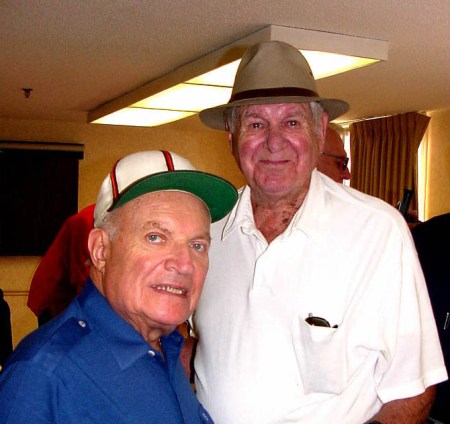
Art Richman and his famous Browns cap with Marty Marion, St. Louis, 1953.

Art Richman and his famous Browns cap with Marty Marion, St. Louis, 2003.

The 1986 Mets Houston arrest story will make a little different impression upon you if you also know a little more about the man who was travel secretary for the club back in 1986.

The late Arthur Richman. a former New York writer, Yankee executive, and, earlier, travel secretary for the New York Mets during our heartbreaking 1986 Astros season, was quite a guy. He and his brother Milton Richman, a former Ford C. Frick Award winner, had grown up as Bronx street urchins back in the 1930’s who lived and breathed playing street ball and seeking the attention of big leaguers before and after games at Yankee Stadium. And that’s how they became Browns fans of players like 3rd baseman Harland Clift and, later, catcher Frank Mancuso of Houston.

I was fortunate to have met and become friends of Art Richman through our mutual membership in the St. Louis Browns club. His answer to how he and Milton became Browns always rolled easily off the tongue in that “Guys and Dolls” way of speaking that most Texans recognize as “you’re not from here, are you?”

“The Browns were an easy pick for Milton and me,” Arthur would say. “The Yankees walked right past us. The Browns stopped to shake hands, sign autographs, and talk with us on the way from the subway to the stadium. Sometimes they even bought us a meal from some street place, if they saw that we were hungry. It was an easy choice.”

“By the time that Milton was off in the service during WWII, and I was a teenager, the league went bad and the Browns got good enough to win the 1944 American League pennant. So, guess what? I took off on bus and hitchhike trip to St. Louis, just hoping to catch up with some of the Browns to see if they could me in to watch the Series games there. I found Frank Mancuso at home at his apartment – and why not? – I had his address all along. Frank and the guys took me in and worked it. I was able to see the Browns play in the World Series, even though they lost to the Cardinals, 4 games to 2.”

Arthur spent his early years as a young adult working as a sportswriter for the New York Daily Mirror. It was then that he finally had a chance to hob-nob with some of the Yankees – and one of those was pitcher Don Larsen, a former Brown. Arthur enjoyed his peripheral role in setting the table for the 1956 and the only perfect game in World Series history. So what was Arthur’s claim in this regard? “I was Larsen’s drinking buddy deep into the New York night before his big game. Didn’t hurt him a bit.”

Later in life, Arthur was hired by George Steinbrenner as a vice-president of media relaions for the New York Yankees. With a slight pause for appropriate modesty of expression, Arthur also enjoyed giving himself credit in the mid-1990’s that the Yankees name Joe Torre as their new manager. – Not a bad pick, Arthur. Not a bad pick.

Over the years prior to his  2009 death in his sleep at age 84, Arthur Richman still attended our annual Browns club banquets in St. Louis. He invariably came around to telling people a familiar line: “You see this cap?” He’d ask, as he removed it from his head and pointed at it. “This is a real 1944 St. Louis Browns cap ad it’s going with me in the casket whenever it’s my time to go ‘Bye, Bye Babylon!” I’ve given my wife, Martha, clear instructions to guard it with her eyes until they’ve closed and locked my casket too. I don’t want some S.O.B. souvenir hunter snatching it away from its rightful ride with me into eternity.

One banquet year, Don Larsen also came to St. Louis and, even though I no longer drink, I went out to the hotel bar with Arthur Richman to the hotel club and bar to talk some more baseball and old times. I got more bang for my Shirley Temple buck than I ever might have hoped for in my younger drinking day. Books on baseball literally drifted away in the air of hanging out with those two guys holding court. Wish I had been smart enough to get the whole thing on tape too. By the two o’clock AM closing time, Larsen was still begging the waitress to let us stay for another round. It wasn’t to be. And I was ready check in too, but not without realizing that I had just been treated to probably my greatest night in baseball of all time.

Goodbye again, Arthur. Hope you got away with your cap OK.

One more story here leads into the inclusion below of a news report on the time in 1986 that three New York Mets pitchers and second baseman Tim Teufel for a post-Astros game bar fight they got into with Houston police. In compliance with Houston’s “hit a cop/go to jail policy” the NY boys quickly found themselves locked up downtown.

Then Mets travel secretary Richman got on the phone right away and placed a middle of the night call to his old St. Louis Browns buddy, Frank Mancuso, who by that time in life had been well established in his post-baseball career as a Houston City Council member.

“Frank,” the desperate Richman pleaded. “You gotta help me out here. I can’t wait 24 hours to get these guys out and still have enough men left to handle our needs.on the field. Frank Mancuso just listened and promised to do what he could.

Early the next morning, all four Mets players were released on bail and they were made available for immediate play. I’m not sure what happened to the charges against the men, but they somehow just went away.

Now, here’s one Associated Press treatment of the incident as it played out in real time:

___________________________________________________________
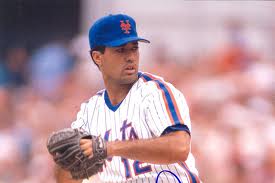
Ron Darling didn't exactly live up to his name in the wee hours of July 19, 1986, but no big harm came of it.

Ron Darling didn’t exactly live up to his name in the wee hours of July 19, 1986, but no big harm came of it.

FOUR METS ARRESTED (Saturday, 19, 1986, 2:00 AM)

HOUSTON (AP) – Four New York Mets – starting pitchers Ron Darling, Bob Ojeda, and Rick Aguilera, and second baseman Tim Teufel were arrested early Saturday after a disturbance at a Houston disco.

Darling and Teufel were charged with aggravated assault on a policemen and Ojeda and Aguilera with hindering an arrest.

All were released on bond, each after spending the night in the Houston  city jail.

The incident took place at about 2 a.m. in a disco called Cooter’s after the Mets lost to the Houston Astros 3-0 Friday night. Darling was the losing pitcher for the Mets who have a 12 game lead in the National League East.

According to Houston Police Sgt. Daniel Moorman, Teufel was creating a disturbance and was asked to leave by the club’s management.

“On his way out, he attempted to carry the beer he was drinking outside,” said Moorman.Texas law prohibits the drinking of alcoholic beverages outside public establishments.

Moorman said Teufel, who appeared to be intoxicated, “was released to his friends so they could take him home,” Moorman said. Instead, Teufel went outside and started another disturbance, according to the police spokesman.

When police tried to arrest him, Moorman said Teufel started hitting the arresting police officers and Darling joined in.

“Teufel and Darling actually hit the arresting officers, Moorman said. The officers, however, were not seriously hurt.

Teufel and Darling were released on $2,000 bond each about 11:30 a.m. Saturday. Ojeda ad Aguilar were released on $800 bond each.

~ Elyria (OH) Chronicle Telegram, July 20, 1986, Page 28.

——————————————————————————————————-

Ron Darling had been the losing pitcher in the 3-0 loss by the Mets to the Astros in the Friday night game that preceded their Cooter’s bust. None of the four players got into the Saturday night game that followed their bonding out of jail. And only Tim Teufel participated in the Sunday,  July 20, 1986 game that the Astros also captured for a 9-8 win and series sweep. Teufel went 2 for 2 at 2nd base in the final game of the weekend.

 

Big Easy Baseball

July 10, 2014
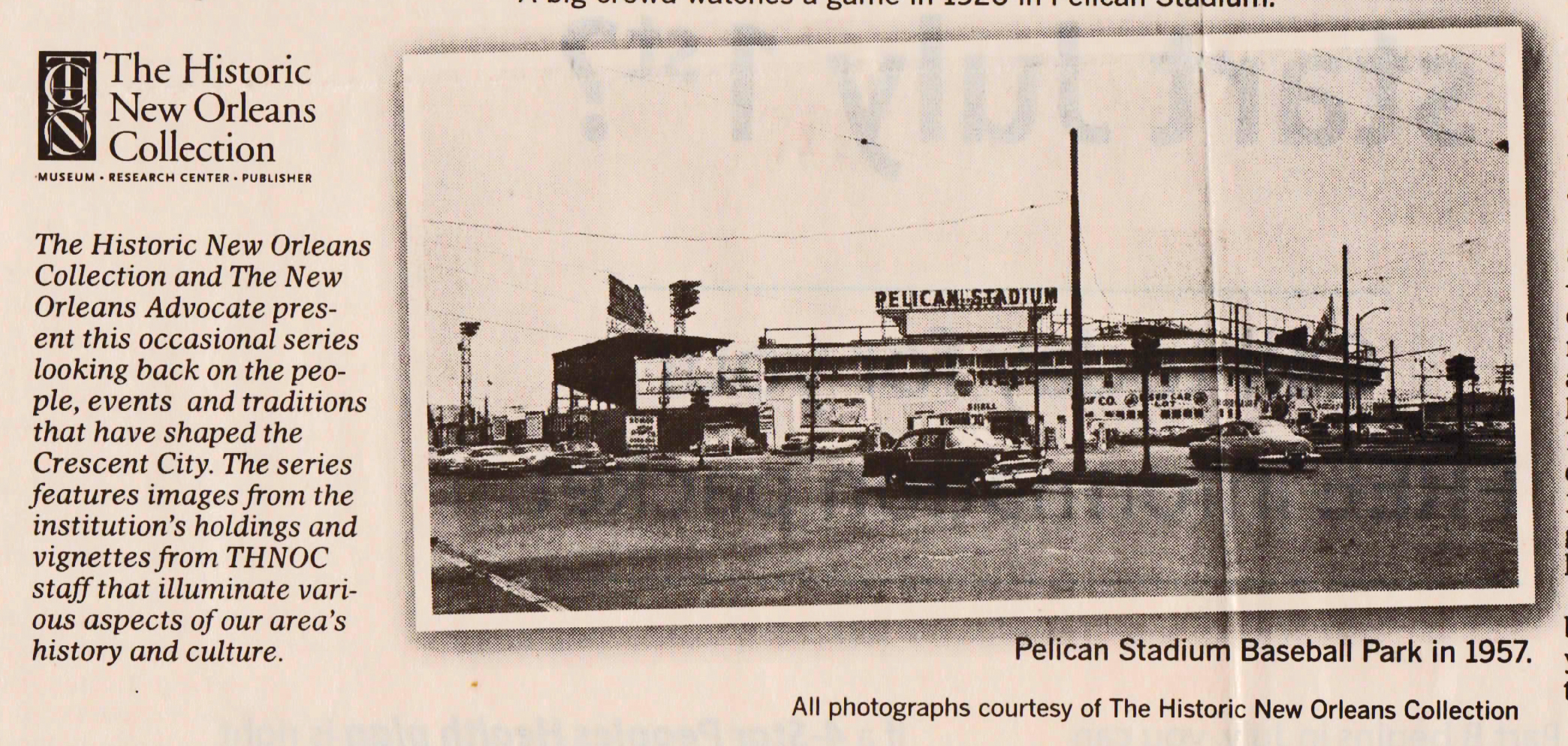
Pelican Stadium in New Orleans with an insert shot of the great Mel Ott.

Pelican Stadium in New Orleans with an insert shot of the great Mel Ott.


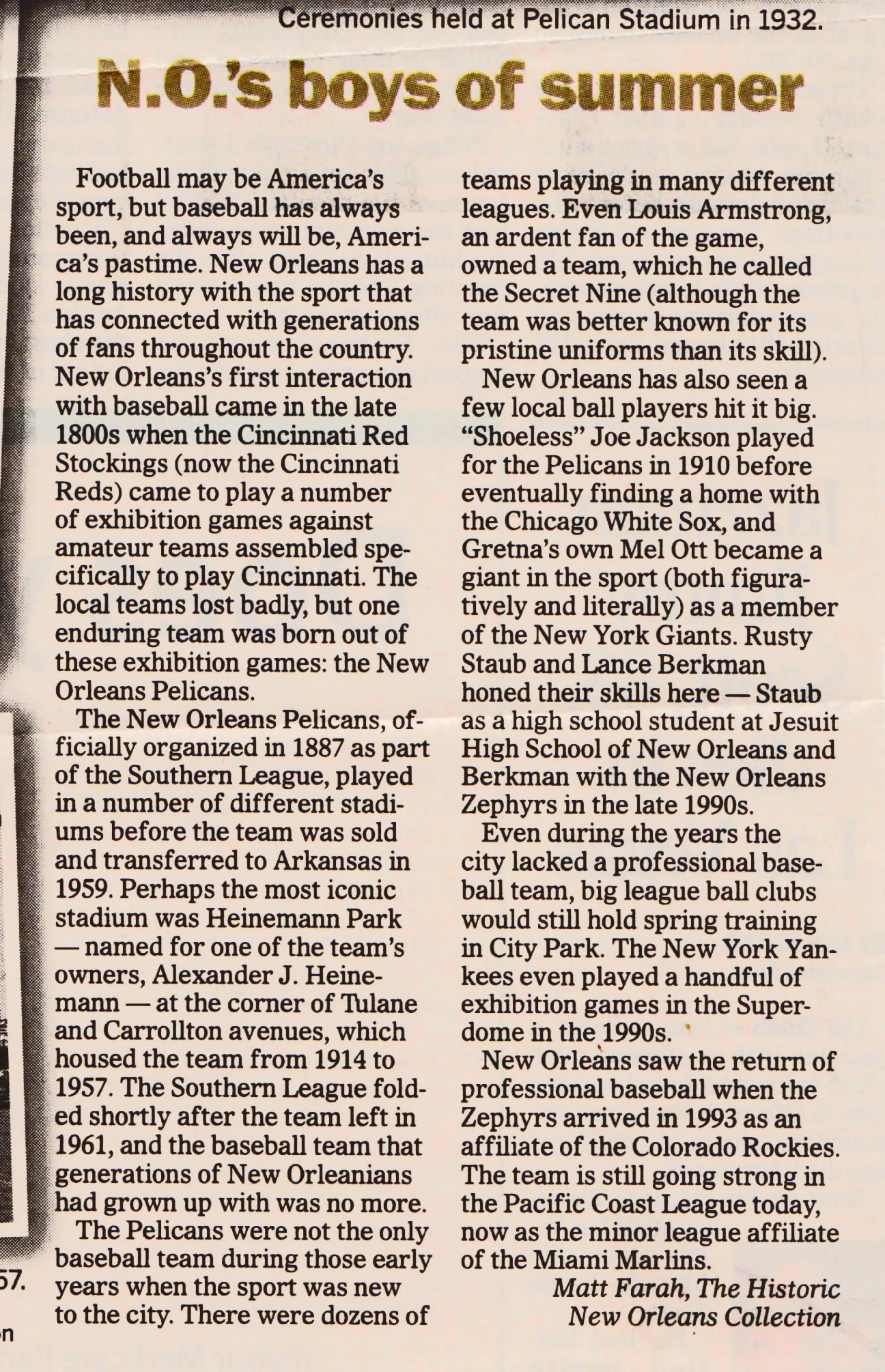
A friend in New Orleans has sent me a baseball history clipping that unfortunately contains no news source or publication date, something I’ve patiently learned to almost expect from the scrapbooks of many former ballplayers. Players, or their book-building wives, often save big game and personal accomplishment reports without saving the source or date from the clippings on the floor. After all, they know where and when they read the keeper and see no need for this other documentation until …. sixty years later you are viewing the same material with one of their surviving adult children and the best answer to time and date comes back as “sometime in the late 1930’s in either Savannah or Memphis or, maybe, St. Paul.

This interesting piece wasn’t that hard to figure. I’d give my guess, based upon the other items and time references, that it was taken from the New Orleans Times-Picayune in either June or possibly May. The data it contains, although limited and incomplete, was too good to pass by without notice. It’s only a short two column history synopsis by Matt Farah of baseball in New Orleans as it is now being remembered by The New Orleans Collection group.

Here’s how the article reads by scan:

NO 04

Although I make no claim of expertise on the history of baseball in New Orleans, one error of omission jumps out at me from the above synopsis and it was noted in our recently completed three-year SABR study (2011-14) and publication (2014) of “Houston Baseball, The Early Years, 1861-1961.”  The article neglects to mention that New Orleans was under consideration for membership in the 1888 inaugural Texas League season, but that they elected to remain with the Southern Association group. Then, when the Southern Association briefly collapsed around New Orleans in the same 1888 season, the team joined up temporarily with the 1888 Texas League for the sake of meeting their mutual needs for games to play.

PELICAN STADIUM, 1957.

PELICAN STADIUM, 1957.

All I’m saying is this. – If one ever takes on the history of New Orleans baseball on the level of high research standards, they will most probably find both their missing pieces, their lingering mysteries, and more than a few myths that fail to bear up as provable facts. It’s what makes the effort sometimes difficult, but always fun. Along the way, there are many assassins of the truth in any unexamined history – and many of the myth makers were the same people who drove large parts of  fundamental change in the subject of study.

———————————————

DON'T FORGET THE WEST END PARK HISTORIC PLAQUE DEDICATION THIS SATURDAY, JULY 12, @ 10 AM.

DON’T FORGET THE WEST END PARK HISTORIC PLAQUE DEDICATION THIS SATURDAY, JULY 12, @ 10 AM.

Don’t forget the West End Park Dedication! This Saturday, July 12th, at 10:00 AM, a plaque will be placed at the original site of West End Park. The site of the ceremony has now been changed to Antioch Park at Allen Center at the corner of Smith and Clay in downtown Houston. Please pass the word to any friends you know who are coming – and please make plans to be there. Mike Vance of HAM and our SABR chapter has worked long and hard to get this done and will be our MC for this victorious moment. As I’ve said previously, these kinds of days are always a moment of dual celebration – of an important memory of Houston history that is being saved for the ages, even when the wrecking ball of time and other priorities have wiped all physical evidence of its being from our sight.- and in appreciation for our fellow Houstonians who work so hard to make sure that important historical places are not lost to the bad memory of Father Time.

Unfortunately for me, a little home accident probably is going to keep me away on the “DL” Saturday, All the more reason for me asking of you: Please sign and send me your own photos and/or brief reports on the day. Do that much and I promise to make all contributors of my second-hand coverage of “Remembering West Park” the group co-authors of this story in The Pecan Park Eagle.

Just e-mail your WEP Ceremony pix and comments @ houston.buff37@gmail.com


TDECU Stadium. – Say What?

July 9, 2014
rtist Rendering of the new 40,000 seat football stadium at UH - but what do we call it?

Artist rendering of the new 40,000 seat football stadium at UH – but what do we call it?

With UH announcing that they have now sold the naming rights to their new football stadium to the Texas Dow Employees Credit Union, we Cougar alums are left to find the lyric of how the new name, TDECU Stadium, rings anything beyond the cash register when it comes to mystical aspirations of greatness on the gridiron. But that’s already covered by the money part, isn’t it? In the particular realm of amateur sports called college football and basketball, the only people who pay the price of amateurism are the athletes themselves. “No money for you,” sayest the holier than all NCAA governing board to the athletes. “Most of you are going to need that college education that came with your decision to play here once you figure out that only a handful of you are going to be good enough make it to the NFL or NBA.”

How about TDECU Stadium? For $15 million dollars over 10 years, that's pretty catchy and inspirational.

How about TDECU Stadium? For $15 million dollars over 10 years, that’s pretty catchy and inspirational.

Look. I get it. Everything in sports spins on big  money today. That TDECU deal guarantees UH an extra $1.5 million dollars per year for the next ten years that the Cougars, otherwise, would not have had. But as for the aspirational challenge of the “TDECU” name, It is doubtful that even the great Grantland Rice could do anything with that mostly consonant acronym mouthful.


Take me out to the TD-E-C-U,

Take me out with the CROWD!

Thanks for the money that we always LACK,

I’ll say the name if you then say it BACK!.

Let’s have fun at TDECU STADIUM!

If the COOGS don’t win it’s a SHAME,

‘Cause it’s ONE … TWO … THREE punts you’re OUT,

In the PARK … NAME… GAME!


The only thing worse than the acceptance of an unspeakable venue name would be those cases in which certain universities sold their venue names to inappropriately sounding sponsors.

For example, what if …

…. Rice played at Hooter’s Field?

…. Texas played at Whataburger Field? … Or even the Longhorn Steakhouse Park?

Army played at Old Navy Field? or,

Houston played at Kitty Litter Field?

I could sit here all day and watch the possibilities come to mind, but the point’s already made. This naming rights thing is not the biggest deal that ever  came down the pike and we shall all survive it’s growth, even if we cannot pronounce the name that’s been purchased for one of our facilities that we built as the funding alumni group.


Happy Hump Day!


Echoes of the Houston Eagles

July 8, 2014

Eddie Brooks In 1949-50, the old Newark Eagles of eastern seaboard negro league fame briefly housed themselves in this city as the Houston Eagles. Like all of the negro league teams, the future of this noble institution had been born on the sting of racial segregation and would now soon enough be driven into extinction once all the greatest black players started integrating MLB with a level of talent that previously had been denied them as an opportunity by racism and all of its various manifestations of cultural belief and stupidity.

The Eagles were already losing big at the gate in Newark. With stars like Monte Irvin now playing for the New York Giants of the MLB National League, former Eagles fans crossed the river in droves to watch the best of them all still play rather than continue to support for their hometown, lesser talented  Eagles.

The Eagles moved to Houston in 1949 in preference to folding their tent for all time. They barely captured a ripple of media or fan support as I recall from childhood,  Houston was five years away from Bob Boyd’s integration of the Texas League’s Houston Buffs in 1954., The Eagles were in flight from the inevitable when they got here. – And that kind of move was not one that even earned them a curious nod from local fans. There may have a brief flurry of support from black fans of the Third Ward area, which is right  across the freeway from Buff Stadium, where the Eagles played their games around the schedule of the Buffs, but I don’t think anyone has ever done any kind of detailed research into the flow of support that existed for the Eagles during their  moment in time at home in Houston.

Mike Vance has written the most in-depth piece on negro league baseball in Houston as a chapter for our new multiple author SABR book, “Houston Baseball: The Early Years, 1861-1961.” As the only detailed and documented history of the game in Houston prior to the 1962 coming of major league baseball, ours is a book for all who desire an excellent resource on local baseball history that also happens to be an entertaining read.

Snippets of Information Seem to be What Remains

From what I can tell, we cannot go the major Houston news files of 1949-50 and turn up anything that looks like ongoing full coverage of the Eagles’ time in Houston. It is possible to pick little snippets of info about an upcoming game or the scores from a Sunday doubleheader, but the stuff I’ve found is very short on player information or team’s ebb and flow pattern over the long season. You know what I mean. – I’m talking about the kinds of articles and columns that we baseball fans consume as breakfast data on our favorite teams. – That condition apparently never took hold in Houston for the Eagles.

Here are some snippets from an article that appeared in The St. Joseph Herald Press on Page 10 of their July 19, 1949 edition:

“The Houston Eagles, reportedly one of the finest clubs in the Negro American league, will be at Edgewater park Thursday night (to play the hometown St. Joseph Auscos)………….

……….. The Houston Eagles, formerly the Newark Eagles of the Negro National League nut now affiliated with the Negro American League, are reported to be the top showmen in their circuit.

“Recently the Eagles defeated the Philadelphia Stars, 5 to 1, as Jehosie Heard gave up but four hits. The Texans finished the first half race, which ended July 4th, tied with the Birmingham Black Barons tied for third place.

“The Houston club, when going under the banner of the Newark Eagles, are proud of the fact that they sent Roy Campanella to the Brooklyn Dodgers, Larry Doby to the Cleveland Indians, and Monte Irvin to the New York Giants.”

The Houston Eagles were done beyond 1950, but their pulse still beats in the stories told by their most famous living alumnus, Monte Irvin. Stay with us, Monte. We need the light your presence shines on all things baseball.


Born on July 4th to Also Pitch July 4th No-Hitter

July 6, 2014
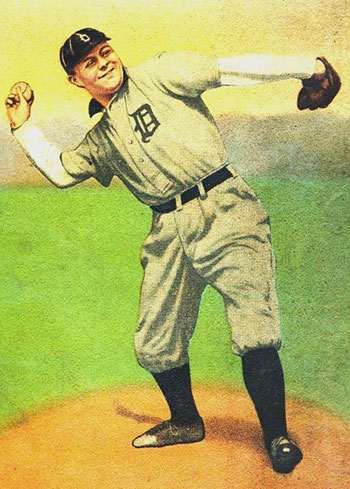
Maybe it was George Mullin's way ahead of his time"Gagnum Style" delivery that helped him wrap up that July 4, 1912 no-hitter.

Maybe it was George Mullin’s way ahead of his time”gagnum style” delivery that helped him wrap up that July 4, 1912 no-hitter.

Thanks to Baseball Almanac this weekend for the great reminder that George Mullin of the Detroit Tigers. born July 4, 1880. is he only man of that special birth date to later pitch a no-hitter on the 4th of July, which, as things turn out, happened against the St. Louis Browns on July 4, 1912. Impressively, it was also the first no-hit win in Detroit Tiger history.

Mullin was only a 6 wins, 7 losses pitcher going into into that stellar performance game, but, as destiny sometimes prescribes, close calls and bad jams wee all going to go George’s way on that special date.

For his 14 year career (1902-13, Tigers), (1913, Senators), and (1914-15, Federal League) George Mullin finished with a record of 228 wins, 196 losses, and ERA of 2.82, with 1,482 strikeouts. He also won 20 or more games in five seasons with his 29-8, 2.22 ERA 1909 year standing as his highest win and lowest ERA year.

For a full description of the July 4th no-hitter by George Mullin, check out the account offered by Rich Westcott that also appears on Page 67 of the 2007 McFarland book “No Hitters” at the following link and scroll to the bottom of the career stats page:

http://www.baseball-almanac.com/players/player.php?p=mullige01

At any rate, back on July 4, 1912, it was Happy 4th of July, Happy Birthday, America, and Happy Birthday George Mullin – all rolled into one big happy All American baseball moment.