Bill Gilbert: Where Have All The Hitters Gone?

July 4, 2014
Have a Safe and Happy Independence Day!

Have a Safe and Happy Independence Day!

Happy 4th of July, Everyone! Today The Pecan Park Eagle is pleased to present  a second consecutive column by Bill Gilbert of the SABR Austin Chapter named for Rogers Hornsby. on how the triple milestone competition among batters and pitchers in MLB looks at mid-season. What an appropriate day it is to examine this material. On a day generally given over to celebration by fireworks, Bill Gilbert looks at the big leagues and invites the rest of us to join him in wondering: Where have all the fireworks gone?

Thanks, Bill for another fine job of analysis and clear writing.


Bill Gilbert is a vetrean member of SABR and a regular contributing writer for The Pecan Park Eagle,

Bill Gilbert is a vetrean member of SABR and a regular contributing writer for The Pecan Park Eagle,

Where Have All the Hitters Gone?

 By Bill Gilbert

With major league teams reaching the season’s mid-point by playing are on target for the triple milestones of a .300 batting average, 30 home runs and 100 RBIs and pitchers on target for 20 wins, 200 strikeouts and an ERA below 3.00.

Times have changed. In 2000, 26 hitters achieved all three triple milestones but no pitchers achieved all three of their milestones. Last year only three hitters and one pitcher (Max Scherzer) reached all three. Similar numbers are being recorded at mid-season in 2014 with 3 hitters and 2 pitchers on target.


Table 1: HITTERS IN LINE TO GET 3X MILESTONE IN 2014

1ST TIME TRIPLE MILESTONERS BA HR RBI
VICTOR MARTINEZ .328 20 52
MIKE TROUT .313 `8 59
GIANCARLO STANTON .312 21 59


TABLE 2: OTHER HITTERS CLOSE TO 3X MILESTONE NOW

CLOSE TO 3Milestones BA HR RBI NEEDS
TROY TULOWITZKI .351 18 45 MORE RBI
MIGUEL CABRERA .321 13 64 GOING FOR 8; HR
JOSE BATISTA .305 15 49 SHOULD MAKE IT
ADAM JONES .302 14 47 STRONG 2ND HALF
PAUL GOLDSCHMIDT .299 15 53 Made it last year
NELSON CRUZ .289 25 66 BOOST BA


TABLE 3: PITCHERS IN LINE FOR 3X MILESTONE IN 2014

3X MILESTONE PITCHERS W K ERA COMMENT
MASAHIRO TANAKA 11 119 2.11 ROOKIE
ADAM WAINWRIGHT 10 105 2.01 CLOSE IN 2013


TABLE 4: OTHER PITCHERS WHO ARE CLOSE, BUT NEED W’S

CLOSE = NO CIGAR W K ERA COMMENT
FELIX HERNANDEZ 9 128 2.24 NEVER WON 20
ZACK GREINKE 9 101 2.89 GOING FOR 1ST
MADISON BUMGARNER 9 114 2.90 ANOTHER 1ST TIMER
CLAYTON KERSHAW 8 94 2.24 DID IT IN 2012
JOHNNY CUETO 8 122 1.88 CAREER YEAR
YU DARVISH 7 118 2.62 20 WINS A REACH
JULIO TEHERAN 7 103 2.34 ACE OF BRAVES


The most difficult targets to hit are the .300 batting average for hitters and 20 wins for pitchers. There are reasons for both. Hitters are now generally more inclined to go for power rather than average which results in more strikeouts and lower batting averages. Most analysts would agree that we are in a strong pitching era. However, pitcher’s wins are frequently not necessarily controllable by the starting pitcher, especially if he pitches only 6 or 7 innings, which is now frequently the case.


Bill Gilbert

bgilbert35@yahoo.com

7/4/14


Hope your 2014 4th of July  weekend is healthy and happy, peaceful, and free.

Hope your 2014 4th of July weekend is healthy and happy, peaceful, and free.

Bill Gilbert: Astros Remain Competitive in June

July 3, 2014
Bill Gilbert is a vetrean member of SABR and a regular contributing writer for The Pecan Park Eagle,

Bill Gilbert is a veteran member of SABR and a regular contributing writer for The Pecan Park Eagle,

­Astros Remain Competitive in June

By Bill Gilbert

After posting their first winning month in May since September, 2010, the Astros didn’t quite duplicate the feat in June with a 12-15 record. The strong finish in May carried over to the beginning of June as the team started the month with a record of 7-5, including a streak of winning or splitting 7 straight series. However two 4-game losing streaks later in the month brought the club back to earth. The biggest thorn in their side was the only team in the American League with a record worse than the Astros, the Tampa Bay Rays, who came out on top in 5 of 7 games with the Astros in June.

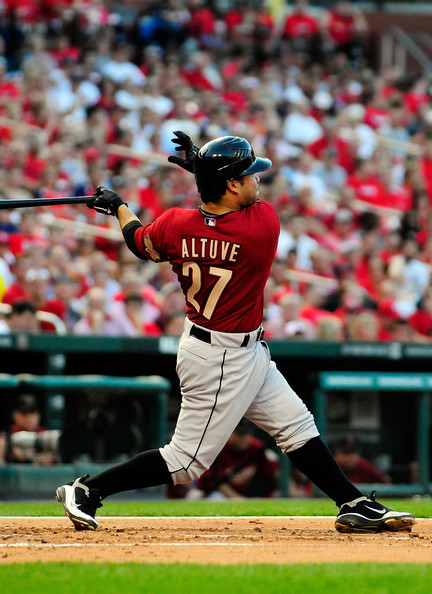
The Astros completed the first half of their 162-game season last Friday with a record of 35-46 putting them on a pace for 70-92, an improvement of 19 games over the   51-111 record last year. The improvement can be largely attributed to much better starting pitching, a spectacular season from Jose Altuve and the arrival of prospects, George Springer and Jon Singleton from the minor leagues.

Altuve had an exceptional month in June, batting .411 with an on-base percentage of .447 and a slugging average of .495. He stole 17 bases and struck out only 4 times and leads the American league in batting average, stolen bases and hits at the midway point. Dexter Fowler, now on the disabled list with a rib cage strain, also had an excellent month in June batting .307 with an on-base percentage of .377. Unfortunately, Altuve and Fowler are the only Astro regulars with batting averages over .250 for the season.

The prospects acquired by former General Manager, Ed Wade, notably Springer, Singleton and pitcher Jarred Cosart, are making their presence felt and another, Domingo Santana, a slugging outfielder, is joining the team for the second half of the season. To take the next step, a wave of prospects from the Jeff Luhnow era will be needed.

The Astros still have some glaring weaknesses at the bottom of the lineup and in the bullpen. Releasing J. D. Martinez appears to have been a mistake as he has played very well after being picked up by Detroit while left field has been a black hole for the Astros (that hopefully Santana will fill). The bullpen has been hurt by lengthy injury downtimes by pitchers Jesse Crain, Matt Albers and Anthony Bass. If they can return for most of the second half, the Astros may be able to hold their own.

For the season, Astro starting pitchers have an ERA of 3.78 compared to the major league average of 3.90. However, the relief pitchers have an ERA of 4.83 compared to the major league average of 3.58, a difference of over one run per game

A cover story in Sports Illustrated in June with a headline that suggested the Astros as 2017 World Champions, received a great deal of attention. It was largely pitched to highlight the analytical approach taken by Luhnow and his staff. This would appear to be premature since the results are not yet evident.

June was not a good month in the minor leagues for the Astros. Oklahoma City (AAA) and Lancaster (Class A+) still have winning records but have slipped back. Corpus Christi (AA) and Quad Cities (Class A-) had disappointing months and dropped back in their races. The three short-season clubs that began play after the recent first-year player draft are off to so-so starts. However, the biggest blow was the broken leg suffered by top prospect, Carlos Correa, which ended his season and may delay his development. He was having an outstanding season at Lancaster.

The second half of the season should be interesting to determine if the Astros can build on their modest success in the first half and also to see if it results in growth in the fan base. In my blueprint for the future after the 2012 season, I projected the Astros to be “respectable” in 2014 with 70-80 wins. After a significant setback in 2013, this now seems to be a reasonable projection.


Bill Gilbert

bgilbert35@yahoo.com

7/3/14


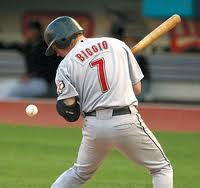
An Early Squint at Biggio/Altuve at 2B

July 2, 2014
Craig Biggio

Craig Biggio

It’s way too early to make any big calls on a comparison of Craig Biggio and Jose Altuve as the potentially greatest second baseman in Astros franchise history, but the speculation aspect is still a lot fun when we look at the kind of offensive year that Altuve is having in his fourth season (2011-14) as the club’s keystone man. Little in physical stature only, Jose Altuve is hitting a hot, league-leading  .344. His 116  hits and 37 stolen bases also led the AL in all games through 7/01/14. By comparison, Craig Biggio had yet to even sniff the .300 plus territory by his fourth season and only had played a handful of games at second base, playing mostly as a highly regarded young catcher and a once-in-a-while experimental outfielder.

The little box table comparisons say a lot, even if the numbers through 2014 can speak nothing but early statistical probability about the long term wind of young Altuve’s actual ability to keep playing at the level he as reached today by the middle of his fourth season. Check out the following box tables and note. At mid-season 2014, Jose Altuve even leads Craig Biggio in his cherished doubles and hit-by-the pitcher (HBP) categories.

Tabular Comparisons of Craig Biggio and Jose Altuve through July 1, 2014 of the latter’s fourth MLB season:

NAME MLB TIME G AB R H RBI 2BH 3BH HR BA
CRAIG BIGGIO 1988-91 483 1667 210 454 153 74 9 24 .272
JOSE ALTUVE 2011-14 437 1760 211 521 127 100 9 16 ..296
Jose Altuve

Jose Altuve


NAME MLB TIME BB SO SB CS HBP
CRAIG BIGGIO 1988-91 162 243 71 21 11
JOSE ALTUVE 2011-14 98 211 112 30 13

The truth still rests down the line. Too bad some of us will have to live well into ancient human antiquity to hear the arguments twenty years from now over “who was the greatest second baseman in Houston MLB franchise history?”

Who’s your pick, if you have one? Hall of Famer Craig Biggio? Or little Jose Altuve? And we also need to remember – Who’s to say the Astros won’t trade Altuve before he even has a chance to establish himself here long enough as the greatest second baseman in Houston franchise history?


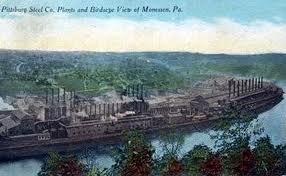
Once Upon a Time in Monessen

June 30, 2014
Monesen, PA ~ as it always shall be ~

Monesen, PA
~ as it always shall be ~

Most young men who play their first professional baseball game in the lower minors ever get good enough to even smell a cup of coffee in the big leagues. My guess, nevertheless, that they still come in new waves of hope for the reason I just posed. They’re hoping to be the ones that catch lightning in a bottle, or a firm grip on the tail of some suddenly exploding talent that powers them into notice in the skies of baseball as if they were riding their way to the Hall of Fame by the energy-thrust of their very own signature-signed bottle rocket.

What brought this prosaic wishfulness thought into mind was a nice note I received Sunday from Ron Paglia, a new long-time free-lance writing colleague I met through Ron Necciai, the legendary author of the 27 K no-hitter as a pitcher for Bristol, Tennessee back on May 13, 1952. After all this time, Ron Necciai is being inducted into the Pennsylvania Sports Hall of Fame in 2014 for doing something in baseball that no one else had ever done before him or has done since him – strike out 27 in one nine-inning no-hitter. To my knowledge, no one else has done it in a game than carried a variable spray of hits either – but that’s a story for another day that I’ve already covered in previous columns.

Ron Paglia is a resident of Charleroi, PA, a town located about thirty miles south of Pittsburgh. He is also the consummate historian of that special region in western Pennsylvania known as the Monongahela Valley. That’s that not-so- little, but culturally tied area in coal mining country that includes little towns like Donora – the birthplace of Stan Musial, and later, both generations of the Ken Griffey father-son tandem, among several others from baseball and other sports.

Ron wrote to let me know implicitly  that The Eagle’s  readership has spread to several new communities in the Mon Valley – and to remind me that Harry Craft, the last manager of the Houston Buffs and first manager of the Houston Colt.45’s, got his start as a rookie outfielder for the Monessen Reds of the Class D Penn State Association back in 1935. Monessen is located across the river, from that little town of Donora. This was, is, baseball country, folks., but they also like football, hockey, and basketball in the Mon Valley. How could they not? They live in the shadows of Pittsburgh, home of the Steelers, Penguins, and several elite college bounce ball teams back east.

Of course, I had to research Monessen as best I could from home with my accessible print and digital resources. Not surprisingly, I learned that the Monessen Reds were a farm club of the Cincinnati Reds back in 1935. And that made sense that Craft would have spent his rookie season at Monessen. He later broke into the big leagues  and played for the Cincinnati  Reds in the 1939 World Series –  and was always most identified with the Reds by most serious fans, – Thank you, Baseball Reference, for making that kind of research so easy these days. The “BR” research time-saving act and the nudge from Ron Paglia set in motion the idea that the 1935 Monessen Reds, chock-full of rookies roster that finished first and also won the Penn State Association  pennant that year would always be a good place to research how many mainly rookies (and all the rest second year men) that became champions from a Class D League because they had enough talent, luck, and ability to get all the way from there to the big leagues?

monessen bend

In a nutshell, here’s what The Pecan Park Eagle found out about the 1935 Monessen Reds::

1) Roster Demographics: 23 men participated as players for the ’35 Reds. 15 were position players; 8 were pitchers. Their age range was 18-23. The average age for position players was 21.1 years; the average age for pitchers was 20.3. 18 player were in their rookie professional seasons; 5 were sophomores. The Monessen Reds finished in first place in the six-team Penn State Association and then took the pennant in a six-game series with the Washington Generals. Their season record was 68 wins, 39 loses, and a winning percentage of .639.

2) The manager was 41-year old Milt Stock, a 14-season (1913-26) utility infielder for the Giants, Phillies, Cardinals, and Dodgers. Stock finished with a respectable career batting average of .289 and 22 home runs.

3) The eight best performers on the 1935 Reds included: catcher Clyde Chell (.308, 1 HR); center fielder Harry Craft (.317, 14 HR); first baseman Joe Mack (.321, 12 HR); shortstop Ashley McDaniel (.325, 5 HR); third base/utility man Al Rubeling (.312, 11 HR); pitcher Ralph Williams (16-8, 2.81); pitcher Walter Purcey (16-6, 3.50); and pitcher James McMullen, 14-6, 4.11).

4) Four of the best Monessen Reds players also led the league in various categories:

Ashley McDaniel led the league in runs batted in with 87;

Harry Craft led the league in home runs with 14; and,

Pitchers Ralph Williams and Walter Purcey tied for the league lead in pitching wins with 16 each.

5) Only 4 of the 1935 Monessen Reds out of 23 total possibilities, a percentage of 17.4%,  went on to any playing time in the big leagues;

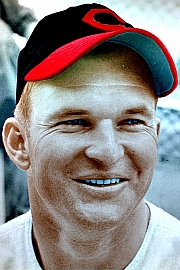
Harry Craft

Harry Craft

 5a) Harry Craft Made it to the big leagues with the parent Cincinnati Reds in 1937. He was there to play center field for the 1939 National League champions Reds in their World Series loss to one of the greatest New York Yankee teams of all time, and he also picked up an historical footnote in baseball history when his disputable, but lasting home run call down the right field line at the Polo Grounds led to the installation of the interior pole screen as an aide to close fair/foul calls down the line. Harry Craft played six seasons for the Reds (1937-42) as his total big league experience, hitting .253 and a career 44 HR in which he was mainly noted for his defense. Craft entered military service in 1944-45 and afterward returned to play three final seasons of minor league ball with Kansas City (1946-48). Harry’s intelligence, amiability and baseball savvy led him into a pretty good run as a coach and manager and, today, he is probably best remembered as the first manager of the new 1962 Houston Colt ..45’s. Harry never forgot -that his fine baseball life all started for him as a 1935 rookie for the Monessen Reds.


Joe Mack

Joe Mack

 5b) Joe Mack managed to squeeze in a 66-game one-season MLB career with the 1945 Boston Braves, hitting .231 with 3 homers in 260 official times at bat. Mack’s MLB time was helped or completely caused by the numbers of qualified big leaguers who were still on leave for military service in the wrapping up of World War II. Still, by luck or not, the  Monessen first sacker from 1935 did get to realize his dream, if only for a short season.


Al Rubeling

Al Rubeling

 5c) Al Rubeling went forth as a Monessen sophomore to a four-season MLB utility man career with the Philadelphia Athletics (1940-41) and the Philadelphia Phillies (1943-44). His career stats included a a .249 batting average with 8 HR in 747 MLB times at bat. Like his other minor league Monessen Reds teammates, Harry Craft and Joe Mack, Al Rubeling did his best to both fulfill his own big league dream and also help Baseball Commissioner Landis keep his promise to the letter from President Franklin Delano Roosevelt requesting that MLB keep the major league seasons going for the morale of servicemen and citizens at home alike as we fought our way to victory over the Axis forces in World War II.
 

Gene Thompson

Gene Thompson

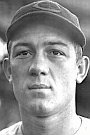
5d) Gene Thompson is the only 1935 Monessen Reds player whose abilities transcended the talent shortage created by WWII and still found some roster space for himself beyond the post-war talent return from service duty. In fact. Thompson was part of the talent resurgence, having served in the military between his his two tenures totaling 6 MLB seasons. He pitched four years for Cincinnati (1939-42), went in the service, and then returned to pitch two post WWII years (1946-47) with the New York Giants. Gene even had enough gas in the tank after he left the Giants to play minor league ball through the 1950 season. His MLB record included 47 wins, 35 losses, and an ERA of 3.26.


In Summary: What I learned about Monessen turned out to be what I already knew about my native home town of Beeville, Texas. That is, that the little towns and lesser players in little towns are just as important as the big stars and major cities of the big leagues. Beeville has produced five native major leaguers over the past 100 years, but look where the town of Monessen nestles. It’s right on the river and in that mountainous place in western Pennsylvania known as the Monongahela Valley. There’s the river of that hard to spell name bending all around the town and reaching out to places like the little town across the river they call Donora, the birthplace of Stan Musial and both generations of the great Ken Griffeys, as noted earlier.

Every one of these places are just as important to baseball history as Pittsburgh or Houston are today – and every member of the 1935 Monessen Reds is as important to the history of baseball as the stars of the 1927 New York Yankees or the 2004 Boston Red Sox ever will be. From the small backwater places that ever played Class D or town ball came the people, the nuances of change, and the pastime culture that remains the foundation of whatever baseball has become in its reshaping by our new technically-driven culture – the one we live in – the one that seems to care more about the business of baseball than the old foundational joy that brought the game to life just a few rural pasture and city street game generations ago.

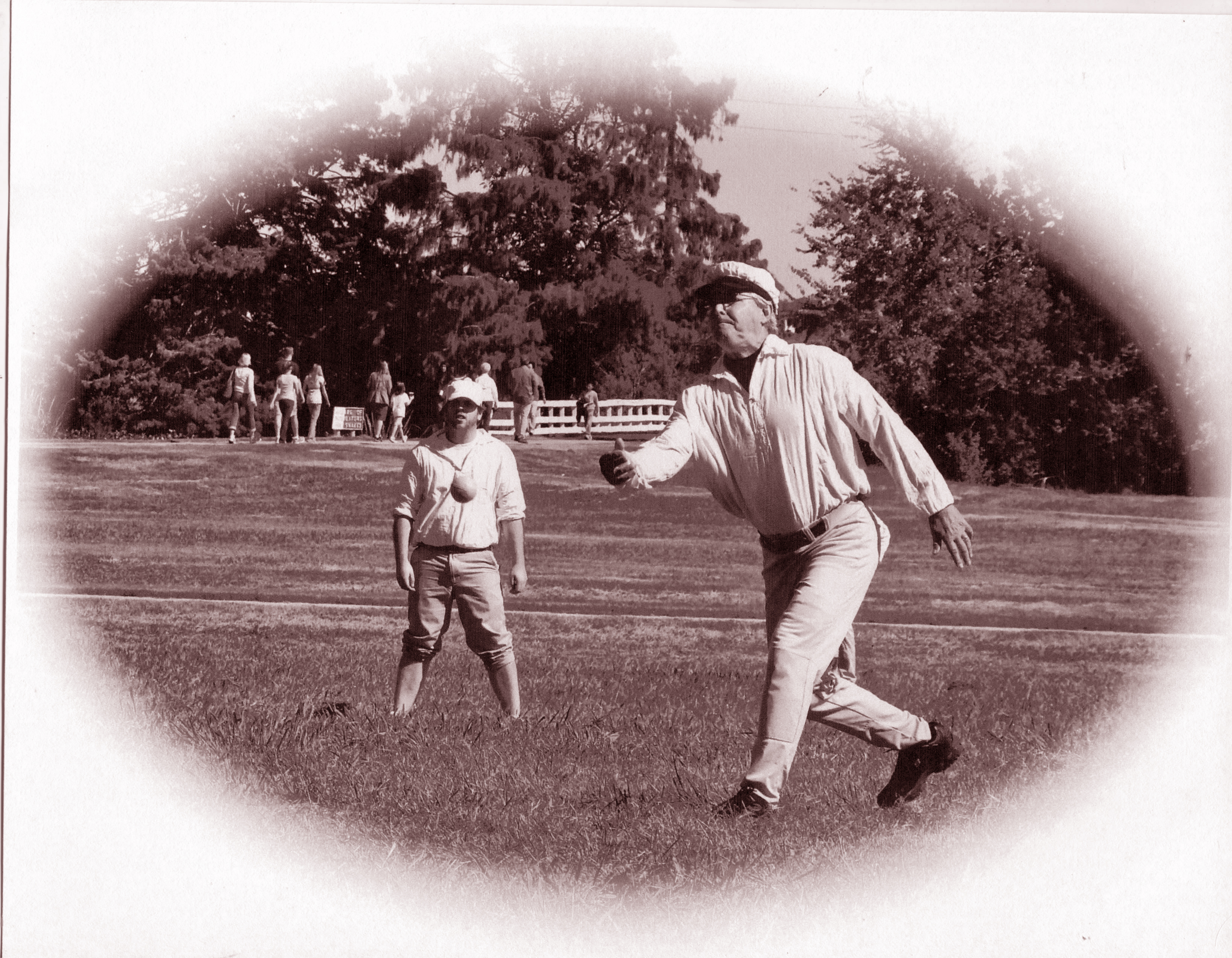
If you doubt me, get involved in playing vintage baseball by 1860 rules. If you’re too old and infirm to play, just go hang out with those who can play. It’s the new Elysian Fields in my life. It’s like Kevin Costner’s Field of Dreams although you don’t have to go to Iowa to feel that sandlot peace and joy again. And that anchors me to baseball in ways that the cold-blooded news about steroids and tv games blocked by greed ever will.

Come join those of us who have found the new old baseball joy. Too bad this isn’t 1935. We could have taken in a Monessen Reds game today.

——————————————————————————

Footnote: Two years ago, an 1800 word article of this scope would have been virtually impossible to research, write, and publish in a single day. Now, however, the minor league database provided by Baseball Reference.Com makes it possible for baseball writers to immediately access far-flung team and roster data on practically every man and team that has taken the field in the name of professional baseball, but the thanks don’t stop with “BBRef.Com”. Their minor league data is the product of SABR research and it was largely produced from the donated data collections of an iconic SABR baseball researcher named Ed Washuta.

Ed, thanks from me and all the thousands of others out here who are now benefiting from what you and your SABR colleagues have done.

Thanks too to my trusty old copy of the Minor League Baseball Encyclopedia, home library. – To all others, let it be known: “Don’t go back in baseball time without it!”

1961: Richards Picks Craft as 1st Colts Manager

June 29, 2014


Craft Named Manager of N.L.’s Houston Club

Harry Craft: Who said he was the only man for the job as first manager of the Houston Colt .45's?

Harry Craft: Who said he was the only man for the job as first manager of the Houston Colt .45’s?

 Houston, Tex, (UPI) – Houston Colt General Manager Paul Richards has named veteran Harry Craft as manager of the new Houston Colts of the National League.

Craft, currently manager of the Houston Buffs of the American Association and former manager of the Kansas City Athletics, was given a one-year contract.

Craft began the 1962 season (correction of print to 1961 season) as a coach with the Chicago Cubs. He took over at Houston July 16 and lifted the Buffs from fifth place in the American Assn. to the finals of the league playoffs.


Houston Colt .45 GM Paul Richards said it. That's who.

Houston Colt .45 GM Paul Richards said it. That’s who.

 Richards called Craft “the only man for the job.”

“Of all the managers I worked against in my years in the American League, Craft, while he was at Kansas City, impressed me most with his moves,” said Richards.

Craft managed three seventh-place Kansas City clubs from 1957-59.

“The only way I know to judge managers,” Richards said, “is how he handled his team and his resources in games I played against him.”

“Although there were better teams in the American League, Harry always made it tougher on us with his moves.”

“As it turned out, he was the only man for the job.”

~ United Press International, Pacific Stars and Stripes, September 22, 1961, Page 32.


9/21/1961: The Last Buffs Picture Show

June 28, 2014

Buff Stadium 003

After the last 1961 minor league season of the Houston Buffs, it wasn't long before Hurricane Carla, time, economics, and the wrecking ball took out olld Buff Stadium for good.

After the last 1961 minor league season of the Houston Buffs, it wasn’t long before the weeds of neglect, damage from Hurricane Carla, economics, and the wrecking ball took out old Buff Stadium forever.

Three writers captured my attention more than all others during the post World War II era of the Houston Buffs. One was the late Clark Nealon of the Houston Post and Houston Press. A second was the man who now has become over the years my friend and role model, the great Houston writer, Mickey Herskowitz; and a third has been that fellow out east in the county of the Baytown Sun, the man who always seemed to write what we Buffs fans were thinking and feeling, the late, but still wonderful in print Fred Hartman. – Harris County named a tall bridge over busy waters after him. Remember? And that high bridge is a fitting tribute. The man had the ability to lift Buffs fan spirits, indeed, like a high bridge over deeply troubled emotional waters. And one of those times happened in the last game ever played by the Houston Buffs back on Thursday, September 21, 1961, when the club lost in Game Six of their American Association Championship Playoff Series with the Louisville Colonels at Busch/Buff Stadium.

September 21, 1961 was the date of The Last Buffs Picture Show as a minor league city. Here’s how Fred Hartman covered it for the following morning edition of the Baytown Sun:

______________________________

Defeated Buffs Bow Out

By Fred Hartman

Houston (Sp) – Twenty-one years ago, at the end of the 1940 baseball season, the Baytown Oilers were fighting for the Houston Post semi-pro championship.

Jack Waters hit the last Houston Buff HR of all time on 9/21/1961.

Jack Waters hit the last Houston Buff HR of all time on 9/21/1961.

They fought their way into the semi-finals, and promoters of the tournament stupidly forced the Oilers to have to win three games in one day to win the title.

They won the first two in brilliant fashion, Then their weary muscles failed them, and they fell apart in the finale.

It was a sad thing to see – just as sad as the complete fall(ing) apart of the Houston Buffs Thursday night as they were shellacked, 11-4, by the Louisville Colonels.

It was a historical defeat for it came in the last game of professional minor league baseball ever to be played at Busch (f0rmerly Buff) Stadium. Next year the fledgeling Houston Colts will begin play on a new south end field in the National League.

Busch/Buff Stadium has been the scene of some great evens and now they are gone.

It was at home plate that Dizzy Dean and his bride were married. It was there that Joe Medwick used to rattle the boards as 1961 Buff first baseman Pidge Browne has been doing. It was there that Carey Selph battled to the death as a great inspirational star. It was there that Bill Hallahan’s southpaw plans won him big league opportunities. It was there that Kenny Boyer began his climb to fame.

And all that is left is memories and the ignoming (ignominy) of the final game, when the Buffs, trying too hard, fell apart. How else, for instance, can you explain the seven errors, five by  the hustling shortstop, J.C. Hartman,

If you want one lingering memory of better things, Mrs. Calabash, wherever you are, you can always remember the home run stroked by Jack Waters in the ninth with a Buff on board and the homelings behind, 11-2.

In Jerry Witte fashion, Waters hit a circuit clout far over the left field wall, It soared high and far, and Jack took only three steps from home plate before he knew he had the big one. He trotted around the bases with feeble applause of only the faithful who were there at the end.

And the last record(ed) play was a brilliant one. Jim Campbell slashed a hard hit ball through the box. The Colonels second baseman had been edging that way. He made a great play on the ball, and an even greater throw to first to beat the Buff catcher by a step.

Thus did Buff Stadium – we never did like the Busch appellation – stumble in(to) the past on a sour note that never could replace the sweeter moments that victory and sensational plays had produced in the 33 years since that opener in the summer of 1928.

Baytown is now a live and highly expectant major league suburb. It couldn’t have happened until that final out wrote finish Thursday night.

~ Fred Hartman, Baytown Sun, Friday, September 22, 1961, Page 7.

______________________________

The old stadium had barely weathered Hiurricane Carla only days earlier than the Buffs last home game. It's sligtly amazing that the place could have been repaired for play the Games there of September 20th and 21st.

The old stadium had barely weathered Hurricane Carla only days earlier than the Buffs’  last home game. It’s slightly amazing that the place could have been repaired for play by the last games played there against Louisville on September 20th and 21st of 1961.

Thoughts from the College World Series

June 27, 2014

aa question marks

Hope Tal Smith Adds this Factor into His Current “Pace of Game” Study by the Skeeters.

The CWS Finals ran three to four hours on the clock, or so it seemed. The biggest factor to me in slowing down the game was both Vanderbilt and Virginia had the ability to run the count high almost every time, from 2-2 to 3-2, often with multiple full count fouls, before they were done. Rarely did batters try t make contact on first pitches. That may have been influenced by the fact that the 2014 college season has been played with a dead ball, dictating that clubs play small-ball rather than waste a time at bat on on a long fly ball out. Ironically, it was Vandy’s Norwood’s homer in the 8th of the final game taht delivered the Commodores to vistory over Cavaliers. That homer came ff a 97 mph fastball and it was the only home run for either of the finalists in the entire CWS.

What’s the difference between altering the ball or bat to make the batted ball go farther than players using steroids to make the batted ball travel farther?

I asked my son, Neal, that question after Vanderbilt defeated Virginia, 3-2, on a rare collegiate HR in the 2014 final game. Neal immediately answered that “it’s that no one dies,” necessarily, when baseball alters the equipment, but, implicitly, that some are going to die early from the use of steroids,

The CWS broadcasters were reporting that the NCAA will introduce a new ball in 2015 that they claim will travel 20-25 feet further upon contact. At the same time, the NCAA plans to kep the same new ally bays that have reduced the travel distance of the batted ball by 20-25 feet.

Am I missing something? Is there  any logic behind actions that seem more like an NCAA political reenactment of an old vaudeville joke:

Customer, To Sam the Tailor: “Hey, Sam, you made the pants too long!”

Sam the Tailor: “OK! Take “em off! I’ll make ’em shorter!”

(next day)

Customer: “Hey, Sam! You made the pants too short!”

Sam: OK! Take ’em off again! This time I’ll cut the basting and make ’em longer!”

Something needs to be done. The new stadium in Omaha is very large and has a prevailing wind that blows into the batters’ faces. And several of the elite college baseball programs have similar new large venues. The Texas Longhorns, for example, hit only 8 home runs in 33 home games in 2014.

Something needs to be done to keep the amateur game at this level from becoming what it probably already is – a slow-moving game that builds slowly around pitching and small ball offenses.


Norm Cash’s Table Leg Banned Against Nolan Ryan

June 26, 2014
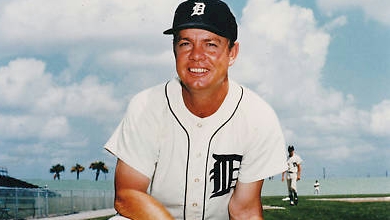
Norm Cash, 1B Detroit Tigers

Norm Cash, 1B
Detroit Tigers


Thank to a nudge from friend and contributor Robert Blair yesterday, I was advised of an article by a fellow named Bill Dow.

Bill Dow reports that he has been searching for years for a still photo of the time that Norm Cash of the Detroit Tigers took a table leg to the plate as his choice of weapons in a 9th inning time at bat against Nolan Ryan of the California Angels at Tiger Stadium on July 15, 1973.  The special, but little remembered and hardly recorded circumstance that set up this odd event was simple to explain. Nolan Ryan was throwing a second career no-hitter against the Tigers that day and he only needed Mr. Cash’s scalp to finish off the job. And Norm Cash being Norm Cash didn’t exactly relish the fate of going quietly and surely.

The act/resolve/stunt of Mr. Cash just didn’t register far above the din of attention in that moment from the coming achievement of Mr. Ryan. Even iconic Tiger broadcaster missed it as he failed to report the Cash action at all in his broadcast. Neither, apparently, did the still camera and print reporting media as the next day came with only stories and pictures of the 2nd Ryan no-no.

Only Bob Costas apparently picked it up live for the MLB television coverage and reported it to an apparently not too interested public. And there was no Twitter in those days, remember?

At any rate, when Cash reached the plate, home plate umpire told Cash that he couldn’t use the bat. “Why not? – I won’t hit him anyway!” Cash chimed in  before tossing the clubhouse remnant aside and proving himself wrong by popping out to end the game with his MLB-sanctioned Louisville model bat.

Here’s a link to videotape report that writer Bill Dow discovered:

https://www.youtube.com/watch?v=Je8tttn017Q

And here’s a link to article by Bill Dow that Robert Blair sent me:

When Norm Cash took a table leg to the plate for the Detroit Tigers


Bob Blair, P Houston Babies

Bob Blair, P
Houston Babies

Thanks, Bob, you old Tiger fan to the bone!. Norm Cash was quite a character, wasn’t he?

An AP Coverage of Musial’s Last Game

June 25, 2014
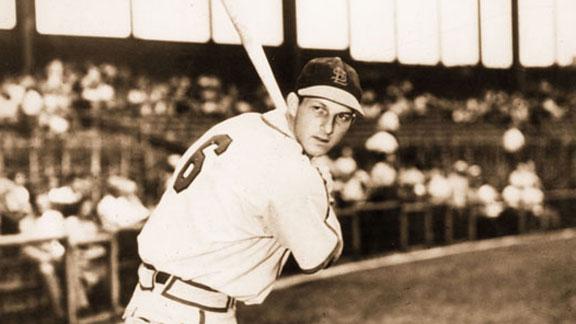
Stan Musial in His Prime Gotta Love the Peekaboo Stance

Stan Musial in His Prime
Gotta Love the Peekaboo Stance


Final Regular-Season Date Highlighted By Musial, Spahn Efforts

By The Associated Press

The pennants belonged to the New York Yankees and the Los Angeles Dodgers. But 1963’S final day belonged to Stan Musial and Warren Spahn.

Musial finished his record-studded career with the St. Louis Cardinals Sunday the same way he started it 22 years ago, with two hits in a 3-2 victory.The Man left his 3,026th game in the sixth inning after helping the Cards to a 2-0 lead over Cincinnati. The Reds tied it in the ninth, but St. Louis won in the 14th on Dal Maxvill’s run-scoring double.

Spahn, 42, pitched a masterful four-hitter for the Milwaukee Braves in a 2-0 triumph over the Chicago Cubs, winning his 350th game and matching his best previous season’s record – 23-7. He also hit that mark in 1953.

It was a day of anticlimax for the pennant winners. The National League champion Dodgers were beaten for the third straight time by Philadelphia. 3-1, and the American League champion Yankees were rained out of their regular season finale, at New York against Minnesota.

Next on the agenda for the two champions – their eighth Word Series showdown, starting Wednesday at Yankee Stadium.

In other NL action Sunday – Felipe Alou’s three-run homer in the eighth inning carried the San Francisco Giants over Pittsburgh 4-1; and Houston’s frisky young Colts, led by 18-year-old John Paciorek in his first big league competition, belted New York’s Mets 13-4.

Elsewhere in the AL – Detroit and Cleveland both won, finishing tied for fifth, with the Tigers whipping Baltimore 7-3 and the Indians edging Kansas City 2-1 behind Jim Grant’s six-hit pitching. Washington’s tail-end Senators clouted the Chicago White Sox 9-2. The wind-up at Boston, between the Red Sox and the Los Angeles Angels, was cancelled by rain.

Baltimore’s loss had an unhappy aftermath for Billy Hitchcock. He was fired after two years as manager of the Orioles after two seasons. Sam Mele was signed for another season as manager of the Minnesota Twins.

Musial, who broke in on Sept. 17, 1941 with two hits that helped St. Louis down Boston 3-2, bowed out with his last two singles.

Musial’s two hits gave him a 1963 average of .251, well below his sparkling lifetime mark of .331.

Spahn was magnificent against the Cubs, registering his 62nd career shutout. The ageless marvel finished his 18th full season with the Braves with an amazing 22 complete games, an earned run average of 2.60 and seven shutouts.

Hank Aaron hit his 44th homer in the first for Milwaukee, tying San Francisco’s Willie McCovey for the league high, and (he) scored the game’s other run in the third after a single and a steal of second.

~ Associated Press, Lebanon (PA) Daily News, September 30, 1963, Page 15

________________________________________________________

Memory Joggers

That last day Houston Colt .45s rout of the New York Mets by 13-4 is forever characterize by the 3 for 3, 4 runs scored, and 3 RBI of 18-year-od rookie John Paciorek. Because of a back injury, Paciorek’s first MLB game of September 29, 1963 turned out to be his only appearance in a big league game, thus, forcing the disappointed young man to retire from active play wih a 1.000 career batting average.

1963 was also the year that Sandy Koufax and the Dodgers swept the Yankees in the World Series, four games to none.


The First and Last Games of Stan Musial

June 24, 2014
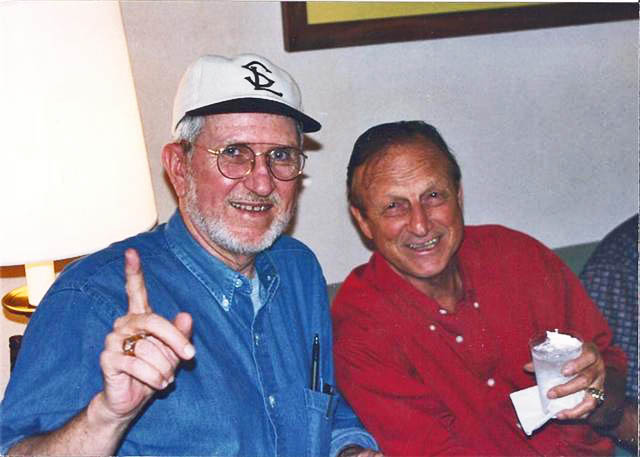
1996: I was lucky to meet Stan Musial at the annual banquet of the st. Louis Browns Fans Club.

1996: I was lucky to meet Stan Musial at the annual banquet of the st. Louis Browns Fans Club.

In The Beginning, September 17, 1941: Stan Musial broke into the big leagues at the age of 20 as the third-batting left fielder of the St. Louis Cardinals in the second game of  a doubleheader against the Boston Braves at Braves Field in Boston on September 17, 1941. The Cardinals won, 3-2, for a DH sweep and a 91-51 record that proved good enough at season’s end for for a close-of-day mark of 97-56, .634 second place finish behind the Brooklyn Dodgers by 2.5 games. Young Musial would go 2 for 4 in his debut game. His production included a double and two runs batted in.

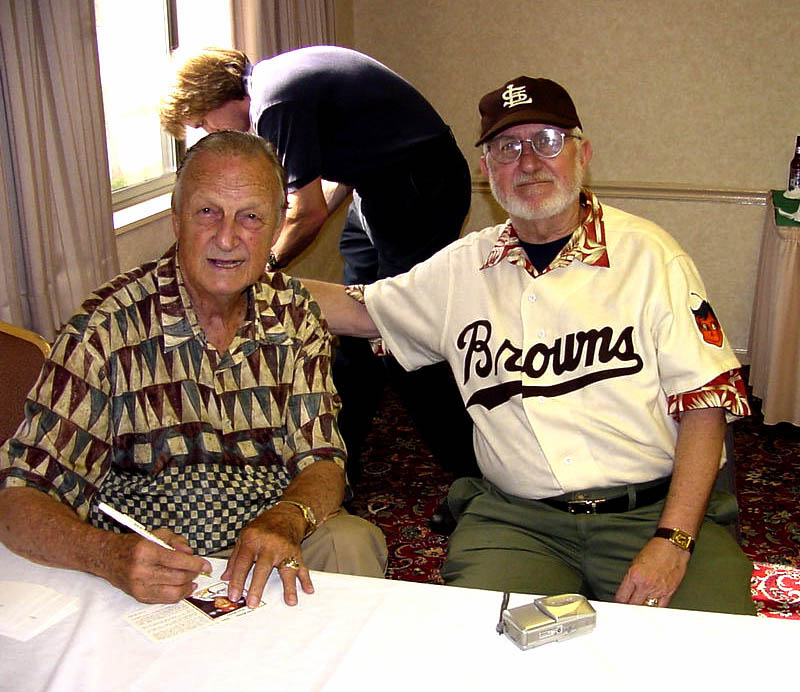
2002: The next time I got a picture with Stan was year following the 2011 tragedy. Fewer people flew to St. Louis that year.

2002: The next time I got a picture with Stan was the year following the 2011 tragedy. Fewer people flew to St. Louis that year.

At Journey’s End, September 29, 1963: At age 42, Stan Musial is playing the last game of his career on the final day of the 1963 season. He hasn’t tasted a World Series victory since 1946, but he has been a St. Louis Cardinal for all of his 23 MLB seasons. The date was September 29, 1963 and the Cardinals were hosting the Cincinnati Reds at Busch Stadium I (Sportsman’s Park III) in the last game of the season and the long reign of the Stan Musial era. In another of life’s ironies, Stan would go out the way he came in.  The Man’s 2 hits and 1 RBI would help the Cards to another 3-2 win, the same score that registered in favor of St. Louis in Musial’s first MLB game back in 1941. The 1963 Cardinals finished with a record of 93-69, .574, good enough again, as in 1941, for a 2nd place finish in the NL behind the Dodgers,who now resided in Los Angeles, but this time, by 6 games. Stan finished where he started, playing left field and hitting third.

2003: That was the year of my first book, "A Kid From St. Louis," Stan was quite aware of my story subject, the wonderful Jerry Witte. I was most comforted by Stan's kind words.

2003: That was the year of my first book, “A Kid From St. Louis,” Stan was quite aware of my story subject, the wonderful Jerry Witte. I was most comforted by Stan’s kind words.

The Sum of it: Stan Musial’s first and last games came 22 years apart, but they both opened and shut the case for his Hall of Fame greatness. Stan was 4 for 7 with a double and 3 RBI in those two games, and, if you’ve ever had a kid’s league season start that began with 4 for 7, you already know that, no matter how short-lived, holding onto the memory of a .571 batting average to us ordinary, but sometimes lucky-dog folks can be the thrill of a lifetime. I feel sure that Mr. Musial never spent any time dreaming of what his batting average should be. When you are a “see the ball/hit the ball” baseball hitting genius, like Stan Musial, you just go out there and do what you do – and the job of calculating your batting average and other records falls to the media and other geniuses of math and probability.

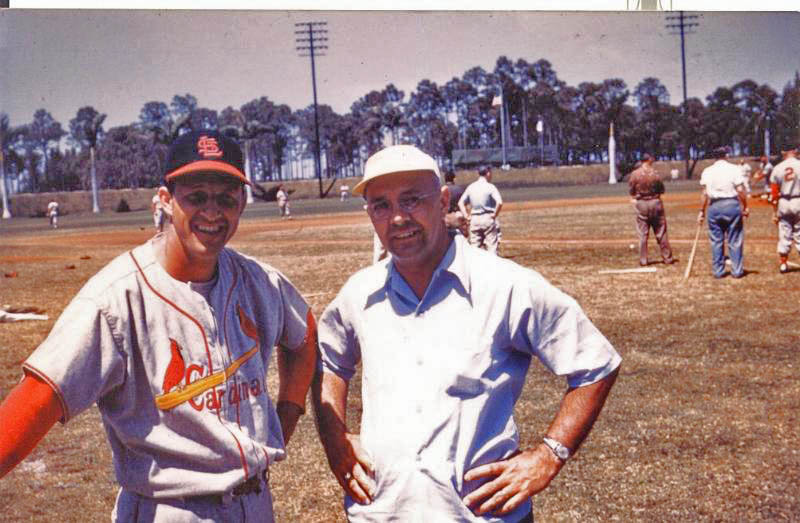
1954: Stan Musial and buddy Chuck Schmidt meet up at Spring Training in Florida.

1954: Stan Musial and buddy Chuck Schmidt meet up at Spring Training in Florida.

My Regret, Not Stan’s: Stan left when it was time to go. Had he stayed another year, he might have been a member of that miraculous ’64 Cardinal team that overhauled the Phillies as though the Cardinals were the Kentucky Derby’s great Native Dancer, charging down the stretch, but it wasn’t meant to be. Who knows? Maybe Musial’s presence on the 1964 team might have kept Carl Warwick off the roster – and look at what Warwick contributed to the club down the stretch and as a pinch hitter in the 1964 World Series win over the Yankees. My regret was pure fan stuff. I wanted him to have the World Series ring as the crown on his career. But I finally came around. Stan Musial didn’t need that ring to go out a winner. He was a winner coming in, and going out, and on his own terms. Stan Musial didn’t need a great singular feat to be remembered for his greatness. He was just great for who he was and what he did most of the time by baseball accounting terms.

1941: We lost Stan Musial on January 1, 1913, but  he will live on in our hearts and minds forever.- as will his deeds on and off the field as a great athlete and and even greater human being.

1941: We lost Stan Musial on January 19, 2013, but he will live on in our hearts and minds forever.- as will his deeds on and off the field as a great athlete and an even greater human being.

The Numbers Speak: Stan Musial finished with a  career batting average of .331, an on base percentage of .417, and a slugging average of ,559. He had 725 doubles, 177 triples, and 475 home runs. He won 7 batting titles and compiled 3,630 hits in his big league lifetime. The data and all his other honors and actions as a down-to-earth human being are simply true and immeasurable in math terms.

How I Met Stan Musial: I met Stan Musial for the first time n 1996, when I went to St. Louis for the annual banquet of the St. Louis Browns Fan Club. Stan showed up at the afternoon reception and I actually got to meet and talk with him as if we were old friends from some distant early life neighborhood. It blew me away that I got to repeat these annual contacts with “The Man” for about five additional times on my trips to St. Louis.

When I got back to Houston the first time, I couldn’t wait to tell our parish priest in Houston. My priest friend had just returned to Houston from Rome.

“Guess what, Father Joe?” I exclaimed, “While in St. Louis, I got to meet one of the most important Polish Catholics in the world!”

“Guess what, yourself,” Father Joe answered gleefully, “I got to meet the most important Polish Catholic in the world – Pope John Paul II himself!”

“Oh really? Most important, eh?” I asked half jokingly, “Well, what’s his batting average?” I asked, in an attempt to come across as sincere before I laid the name “Stan Musial” upon him.

Box Scores: Here are the box scores for Stan Musial’s first and last ball games as a big leaguer:

Stan Musial’s First MLB Game:

Baseball Almanac Box ScoresSt. Louis Cardinals 3 – Boston Braves 2
Boston Braves ab   r   h rbi
Sisti 3b 4 0 0 0
Rowell lf 4 0 1 0
Dudra 1b 4 0 1 0
Demaree rf 4 1 0 0
Miller ss 3 1 1 1
Moore cf 3 0 1 1
  Cooney cf 1 0 0 0
Roberge 2b 3 0 0 0
Berres c 3 0 0 0
Tobin p 3 0 1 0
Totals 32 2 5 2
St. Louis Cardinals ab   r   h rbi
Brown 3b 4 0 1 0
Hopp cf 3 1 0 0
Musial rf 4 0 2 2
Mize 1b 4 0 0 0
Crabtree lf 4 1 1 1
Crespi 2b 3 0 1 0
Marion ss 2 0 0 0
Mancuso c 2 0 0 0
Lanier p 3 1 1 0
Totals 29 3 6 3
Boston 0 0 0 0 0 0 2 0 0 2 5 0
St. Louis 0 0 2 0 0 0 0 0 1 3 6 1
  Boston Braves IP H R ER BB SO
Tobin  L(12-10) 8.0 6 3 3 3 2
Totals
8.0
6
3
3
3
2
  St. Louis Cardinals IP H R ER BB SO
Lanier  W(9-8) 9.0 5 2 1 1 3
Totals
9.0
5
2
1
1
3

E–Crespi (29).  DP–Boston 1. Moore-Miller-Dudra, St. Louis 1. Marion-Mize.  2B–Boston Rowell (23), St. Louis Musial (1).  3B–Boston Miller (3).  HR–St. Louis Crabtree (4,9th inning off Tobin 0 on).  Team LOB–4.  Team–5.  U–Larry Goetz, Beans Reardon, Jocko Conlan.  T–1:37.  A–7,713.

Baseball Almanac Box Score | Printer Friendly Box Scores


Stan Musial’s Last Game:

Baseball Almanac Box ScoresSt. Louis Cardinals 3 – Cincinnati Reds 2
Cincinnati Reds ab   r   h rbi
Rose 2b,lf 6 0 3 0
Harper rf 6 0 0 0
Pinson cf 5 0 1 0
  Neal 2b 0 0 0 0
Robinson lf,cf 6 0 0 0
Coleman 1b 5 1 2 0
Edwards c 2 0 0 0
  Keough ph 1 0 0 0
  Pavletich c 3 1 1 0
Cardenas ss 6 0 2 2
Kasko 3b 5 0 0 0
Maloney p 2 0 0 0
  Skinner ph 1 0 1 0
  O’Toole p 0 0 0 0
  Green ph 1 0 0 0
  Worthington p 0 0 0 0
  Henry p 0 0 0 0
  Walters ph 1 0 0 0
  Jay p 1 0 0 0
Totals 51 2 10 2
St. Louis Cardinals ab   r   h rbi
Flood cf 7 1 2 0
Groat ss 4 0 0 0
  Maxvill ss,2b 3 0 1 1
Musial lf 3 0 2 1
  Kolb pr,rf 1 1 0 0
  Beauchamp ph 1 0 0 0
  Shannon rf 1 0 0 0
Boyer 3b 6 0 4 0
White 1b 5 0 2 0
James rf,lf 5 0 0 1
McCarver c 5 0 0 0
Javier 2b 3 0 0 0
  Altman ph 1 0 1 0
  Buchek ss 2 0 1 0
Gibson p 2 0 0 0
  Clemens ph 0 0 0 0
  Taylor p 0 0 0 0
  Sawatski ph 1 0 0 0
  Broglio p 1 1 0 0
Totals 51 3 13 3
Cincinnati 0 0 0 0 0 0 0 0 2 0 0 0 0 0 2 10 0
St. Louis 0 0 0 0 0 2 0 0 0 0 0 0 0 1 3 13 2
  Cincinnati Reds IP H R ER BB SO
Maloney 7.0 5 2 2 2 11
  O’Toole 1.0 1 0 0 0 0
  Worthington 0.1 1 0 0 2 1
  Henry 1.2 1 0 0 0 1
  Jay  L (7-18) 3.1 5 1 1 0 3
Totals
13.1
13
3
3
4
16
  St. Louis Cardinals IP H R ER BB SO
Gibson 9.0 7 2 2 1 11
  Taylor 2.0 1 0 0 2 1
  Broglio  W (18-8) 3.0 2 0 0 1 2
Totals
14.0
10
2
2
4
14

E–Groat (26), Boyer (34).  DP–Cincinnati 1, St. Louis 2.  2B–Cincinnati Rose (25,off Taylor), St. Louis Flood (34,off Maloney); Maxvill (2,off Jay).  SH–Harper (8,off Taylor).  IBB–Pinson (3,by Taylor).  Team LOB–12.  SF–James (2,off Maloney).  Team–13.  CS–Rose (15,2nd base by Gibson/McCarver).  WP–Maloney (19), Gibson (7), Broglio 2 (13).  IBB–Taylor (6,Pinson).  U-HP–Al Barlick, 1B–Lee Weyer, 2B–Ed Vargo, 3B–Bill Williams.  T–3:45.  A–27,576.

Baseball Almanac Box Score | Printer Friendly Box Scores