Burned Biscuits

December 17, 2014
burned biscuits

burned biscuits

Thank you, Unknown Person, who sent that beautiful little parable, “Burned Biscuits,” to Father Gerald Beirne of Narragansett, RI – who then forwarded it on to others including this editor of The Pecan Park Eagle. And Bless You too, Father Gerald for doing so! It was too beautiful to pass up as our guest column subject of the day, even if we do not yet know who he or she is taht brought it to life. Please! If you are the author, or if you know who is, please get in touch with me, Bill McCurdy, at houston.buff37@gmail.com

The Pecan Park Eagle would very much like to retroactively extend credit here to the actual composer of these pristinely clear lessons of life by name, if at all possible. We will be sending you a notification of this publication by your recorded e-mail address, BENJIE@aol.com

Please get in touch. And Godspeed to you – whomever you are!

~ Bill McCurdy, Publisher, Editor, Columnist, & Chief Bottle Washer for The Pecan Park Eagle

____________________

Burned Biscuits

When I was a kid, my Grandma liked to make breakfast food for dinner every now and then. And I remember one night in particular when she had made breakfast after a long, hard day. On that evening so long ago, she had placed a plate of eggs, sausage and extremely burned biscuits in front of my Granddad. I remember waiting to see if anyone noticed!

Yet all my Granddad did was reach for his biscuit, smile at my Grandma and ask me how my day was at school. I don’t remember what I told him that night but I do remember watching him smear butter and jelly on that ugly burned biscuit. He ate every bite of that thing… never made a face nor uttered a word about it!

When I got up from the table that evening, I remember hearing my Grandma apologize to my Granddad for burning the biscuits. And I’ll never forget what he said: “Honey, I love burned biscuits every now and then.”

Later that night, I went to kiss Granddaddy good night and I asked him if he really liked his biscuits burned. He wrapped me in his arms and said, “Your Grandma put in a hard day of work today and she’s real tired. And besides – a little burned biscuit never hurt anyone!”

As I’ve grown older, I’ve thought about that many times. Life is full of imperfect things and imperfect people. I’m not the best at anything, and I forget birthdays and anniversaries just like everyone else. But what I’ve learned over the years is that learning to accept each other’s faults, and choosing to celebrate each other’s differences, is one of the most important keys to creating a healthy, growing, and lasting relationship.

And that’s my prayer for you today… that you will learn to take the good, the bad, and the ugly parts of your life and lay them at the feet of God. Because in the end, He’s the only One who will be able to give you a relationship where a burnt biscuit isn’t a deal-breaker!

We could extend this to any relationship. In fact, understanding is the basis of any relationship, be it a husband-wife or parent-child or friendship!

So, please pass me a biscuit, and yes, the burned one will do just fine.


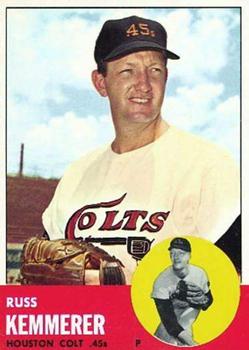
Russ Kemmerer of Colt .45s; Dead at Age 84

December 16, 2014

russ kemmerer

The Pecan Park Eagle learned yesterday from Robert Band, his son-in-law, that former Houston Colt .45s pitcher Russ Kemmerer has died. He passed away at age 83 on December 8, 2014. Further details are unavailable to us at this time, but we have invited Mr. Band to supply us with additional information on Russ’ passing and his personal insight on his father-in-law’s life after baseball for a more extensive column. Should Mr. Band take us up on our request, we shall return Russ to these pages for a more personal look at the man’s life.

An already extensive biography already exists, thanks to writer John F. Green for the SABR Baseball Biography Project.  Please pursue this link and check it out for yourselves:

http://sabr.org/bioproj/person/54e7c02b

Russ Kemmerer posted a 43-59, 4.46 ERA record in a nine season MLB career (1954-1955, 1957-1963). He won 5 and lost 3 (all in his first year of two seasons (1962-1963) with the original Houston Colt .45s. and was well liked by all who knew him.

Rest in Peace and Love, Russ Kemmerer! Your life and baseball record now belong on its own shelf in the Hall of Ages!

____________________

After our early morning publication, I received an e-mail from Russ Kemmerer’s son, Darrel Kemmerer, who left the following personal note, along with a copy of his father’s obituary. – Thank you, Darrel. Please know that those of us I know who remember your dad from his days in Houston still recall him fondly. Our sympathies for your loss go out to you and the entire Kemmerer family – Bill McCurdy:

____________________

“Bill:

 “Robert Band asked me to contact you. I am Russ Kemmerer’s youngest son, Darrel. I remember participating in a family event at the ballpark when I was younger. Probably around 3 or 4 years of age. I still have the wool uniform from back in the day and it was so small they had to abbreviate Kemmerer on the back of the jersey. I am forwarding a copy of his obituary. If you have any additional questions, just drop me a note. – Darrel Kemmerer”
____________________

OBITUARY

Russell Russell Kemmerer, former MLB player, completed his final innings in the game of life on 12/08/2014 at 8:32 pm.  He was born in Pittsburgh Pa, on 11/01/1930 to Frederick and Thursa Mae Kemmerer.  He was the youngest of 5 children. He signed his 1st Major League contract with the Boston Red Sox at the age of 18. His big league career spanned a total of 11 years pitching for Boston, Washington, Chicago and Houston. Following his retirement from baseball, Russ’s passion for his fellow man led him into the ministry, where he pastored several area churches. It was his work with various youth programs,  which led Russ to pursue a career in teaching and coaching, which gave him an opportunity to not only share his faith with young people but to also teach life lessons that Russ so often found in athletics. His career path carried him to several areas of the state including Indiana University, Ellettsville, Milan, Heritage Christian, and Lawrence Central where he retired from in 1998. Shortly after that he became a published author when he penned the book entitled”Hey Kid, Just Get It Over The Plate”, a book about his major league experiences and humorous stories about the twinkling stars of his era. He is survived by his wife, Susannah Kemmerer, sons Russell (Rita) Kemmerer of Indianapolis, Darrel (Julie) Kemmerer of North Vernon, daughters Cheryl (Doug) Ray of Seymour, and Kim (Bob) Band of Cicero, Brad (Kim) Potter, Brian (Rebekah) and MaKayla Potter, and Renee (Doug Cannon) Potter. He was a beloved grandfather to Matt, Jami, Molly, Adam, Ryan, Tyler, Josh, Leah and Brooke as well as a great grandfather to Malory and Andrew. He was preceded in death by his first wife Elizabeth Kemmerer and a grandson, Robbie Band. There will be a celebration of his life and his memories on Friday evening December 12th from 5:00 to 8:00pm at the Harry Moore Chapel located at 8151 Allisonville Rd in Indianapolis In followed by a memorial service on Saturday at 11:00 am at the Abundant Life Church located at 82nd and Hague Rd in Indianapolis.

____________________

Our Baseball Christmas Card Lineup

December 15, 2014

Here’s a brief run on the best Baseball Christmas Card Lineup that we could scout and sign here at The Pecan Park Eagle in less than an hour. Wish we could have found those three guys named Gold, Frankincense, and Muir. We know that Gold is in there conjunctively as Golden, Goldman and the like, like but it didn’t make a lot of sense in that conjoined-to-other-letters form without his two less commonly named companions.

Have a great week everybody – and just remember too – you’ve still got all the time in the world to get ready for Christmas!

"We saw Luhnow pitching Santa Claus..." ~singable to the obvious melody ~

“We saw Luhnow pitching Santa Claus…”
~singable to the obvious melody ~

The Baseball Christmas Club Lineup

Pitcher #1 – Dewayne Wise 92000-2013)

Pitcher #2 – Matt Wise (2000-2008)

Pitcher#3 – Roy Wise (1944)

Pitcher #4 – Johnny Angelini (1972-1973)

Pitcher #5 – Dennis Dove (2007)

Pitcher #6 – Dick Starr (19477-1951)

Pitcher #7 – Tony Faeth (1919-1920)

Pitcher #8 – John Hope (1993-1996)

Pitcher #9 – Slim Love (1913, 1916-1920)

Catcher – Steve Christmas (1983-1984, 1986)

1st Base – Pop Joy (1884)

2nd Base – Lyman Lamb (1920-1921)

3rd Base – Alex Infante (1987-1990)

Shortstop – Bug Holiday (1892, 1896)

Left Field – Jesus Alou (1963-1979)

Center Field – Ron Shepherd (1984-1986)

Right Field – Joe Stabell (1885)


Tal Smith: On 1962 Colt Rookie Prospects

December 14, 2014
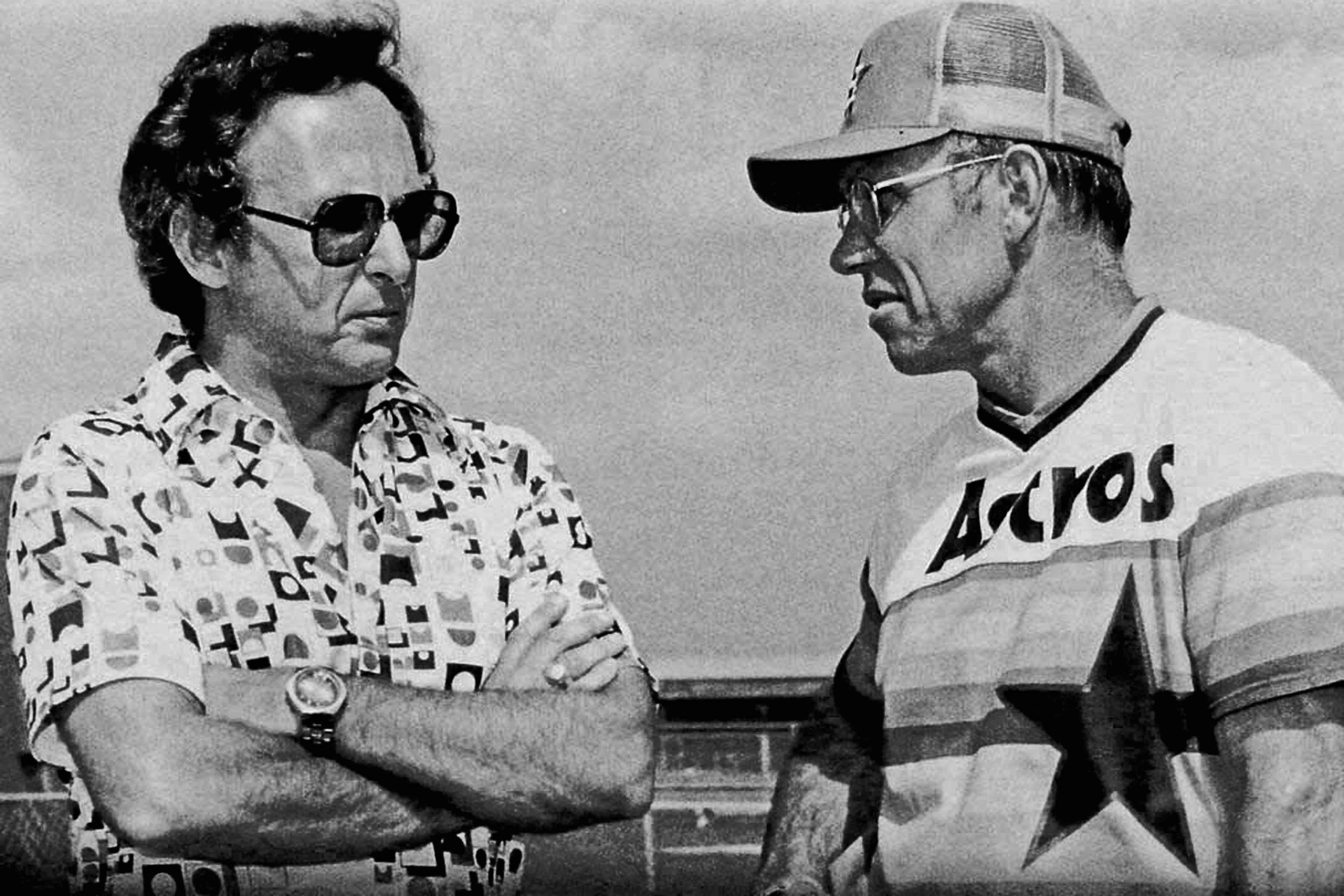
TAL SMITH AND BILL VIRDON ~SOMETIME IN THE LATE 1970'S PERIOD IN WHICH THESE TWO MEN, AS PRESIDENT/GM AND FIELD MANAGER WERE GERAING UP THE HOUSTON ASTROS FOR THEIR FIRST 1980 DIVISION CROWN. ~

TAL SMITH AND BILL VIRDON
~ SOMETIME IN THE LATE 1970’S PERIOD IN WHICH THESE TWO MEN, AS PRESIDENT/GM AND FIELD MANAGER WERE GEARING UP THE HOUSTON ASTROS FOR THEIR FIRST DIVISION CROWN IN 1980. ~

Every now and then, one of my research friends drops a little almost lost baseball history angel dust on the the doorstep of The Pecan Park Eagle. The credit today, as so often is the case, goes to Darrell Pittman of Astros Daily.Com, who found this precious jewel by Tal Smith on the pages of the March 14, 1962 edition of the Lewiston (ME) Evening Journal. It is Tal’s exclusive personally written report to the Lewiston newspaper on the brand new Houston Colt .45s’ rookie prospects, going into their first season of play at a time in which Smith served the brand new MLB club as their Farm Club Director.

Thank you, Darrell Pittman! And enjoy the literacy and quick mind that always has been Tal Smith, everyone! “1962” was only an eye-blinking half century plus two years ago.

___________________


HOUSTON COLTS HAVE 17 WITH NO LEAGUE EXPERIENCE

____________________

This is another National League “Rookie Prospects” series prepared with the cooperation of the Farm Directors, each of whom has written an “exclusive” on his club.

____________________

By TAL SMITH

Houston Farm Director

The Colt .45s boast the largest crop of rookie prospects in the recent history of any Major League club as they embark on their initial season in the National League. Seventeen youngsters without any previous major league experience are listed on the Houston roster.

Nine of the 17 rookies were signed originally as free agents and are pure products of the Houston farm system. Five were acquired during recent months through draft, purchase or trade from other major league organizations. The remaining three were among the 23 players selected in the National League player pool. In addition, two other players acquired in the pool, infielder George Williams and outfielder Ed Olivares, saw only limited major league action late in the 1961 season.

Rookie Pitchers

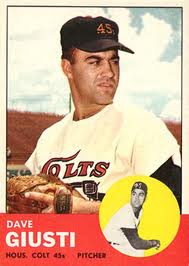
DAVE GIUSTI

DAVE GIUSTI

Ten rookie pitchers are numbered among the hurlers that will report to Manager Harry Craft this spring. Dave Giusti and Gerry Nelson, in particular, are considered prime candidates for a berth on the major league staff.

Giusti, a 22 year-old righthander, was signed following his graduation from Syracuse University last June. In his professional debut with Jacksonville, he hurled a one-hit shutout and went on the win 7 games in two months and post a 2.29 earned-run average in the South Atlantic League. He struck out 82 batters while allowing only 87 hits and 42 walks in 118 innings. He was promoted to the Houston Buffs in the American Association late in the 1961 season and complied a 2-0 record. In the Arizona Instructional League this past winter, he continued to impress by winning 3 of 4 decisions. Dave possesses all the attributes to become a winning pitcher in the majors in short order despite the fact he has had just half a season in organized ball.

Nelson is a righthander who won 9 game for the Buffs in little more than half a season. Gerry was inactive during the 1960 season and was subsequently purchased by the Houston organization. He showed definite signs last year that he was ready to attain the major league status predicted for him throughout his six-year minor league career.

Not Ready Yet

Don Altman, Joe Clement, and Wallace “Butch” Mixon are three other righthanders signed during 1961 that are highly regarded as major league prospects. However, their availability during the coming season is questionable. Altman and Clement face Army calls and Mixon will be sidelined temporarily with minor surgery.

Altman, the former Duke quarterback, displayed exceptional control and poise that belie his brief experience. He walked only 32 batters in 116 innings at Jacksonville and went on to record a 3.52 ERA in the strong Arizona Instructional League.

Clement, an All-America baseball selection at the University of Connecticut had a 2.12 ERA at Jacksonville ad hurled 2 shutouts in 7 starts.

Mixon, a product of L.S.U, also made the jump directly from college campus to the Class A South Atlantic League. After half a season at Jacksonville, he earned promotion to the AAA Buffs and his composite record in A and AAA showed a total of 13 wins in his first pro season.

Wolf is Like Duren

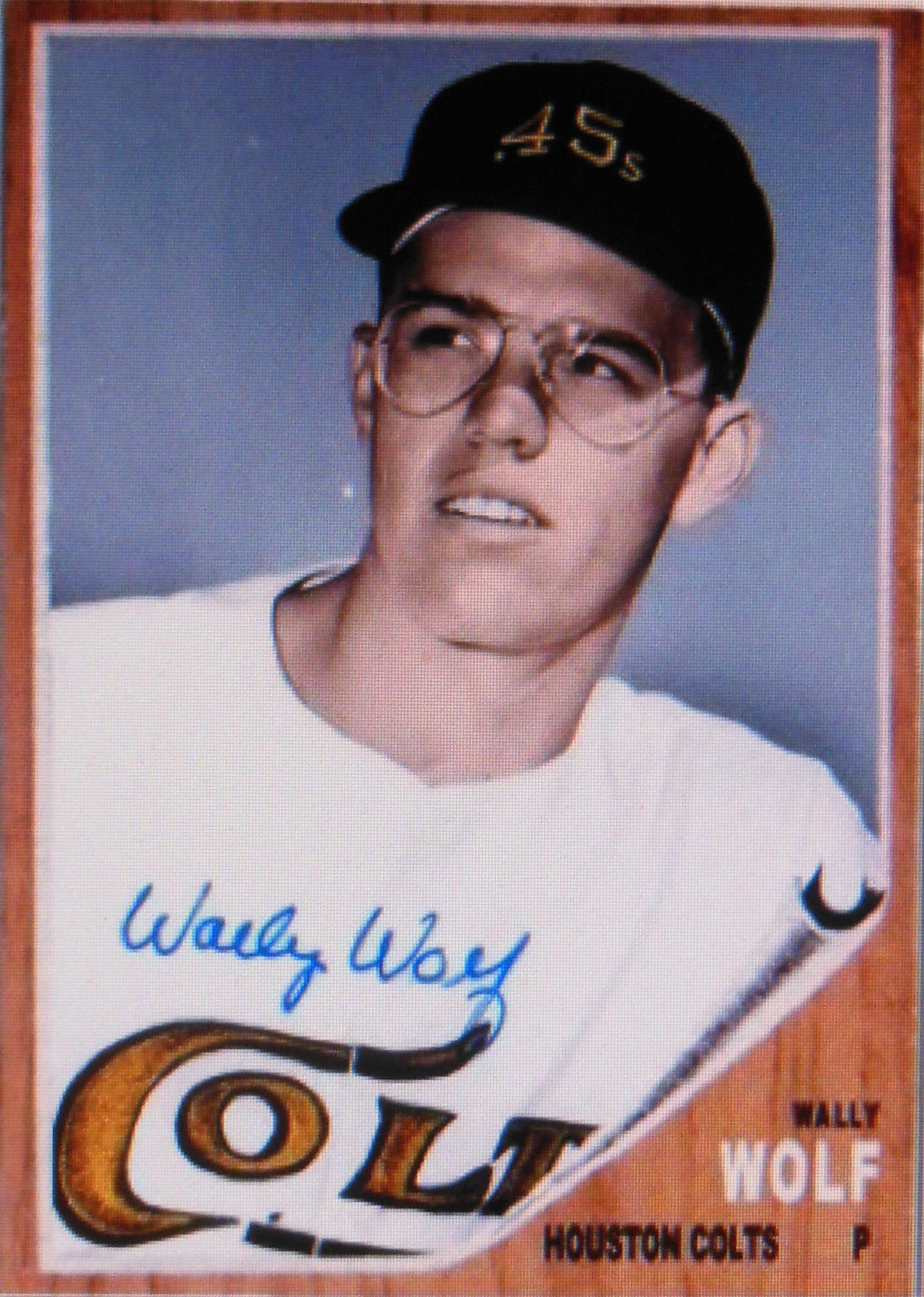
WALLY WOLF

WALLY WOLF

Wally Wolf, 20-year old righthander from the University of Southern California, and Kenny Pate, a 19-year old southpaw, are other hurlers with excellent potential.

Wolf resembles Ryne Duren with his thick glasses and wildness. He has a live fast ball that sinks and showed marked improvement in his control in Arizona this fall. Once he masters his control problems, he should advance rapidly.

Pate, who was also highly sought after as a free agent, has an exceptional curve ball and made good progress at Jacksonville and in the Arizona Winter League.

Other pitchers receiving a trial this spring are Don Arlich, a 19-year old left-hander signed late last season and righthanders Paul Roof and Jesse Hickman who were selected in the player pool. All three possess major league arms and are considered outstanding prospects.

Catchers

Catchers Jim Campbell and Merritt Ranew figure to have an excellent chance with the Colts in 1962. Both are regarded as fine hitters and capable receivers.

Ranew, acquired in the player pool, is a 23-year old lefthanded hitter. He hit .347 with Louisville in the American Association in 1961 and .364 with Yakima in 1960.

Campbell, who was also acquired from Louisville early in 1961, is a righthanded hitter with good power. He hit .261 with the Buffs last year after making the jump from Class A.

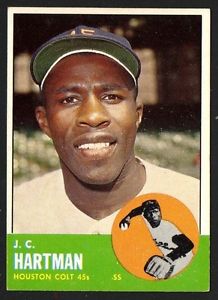
J.C. HARTMAN

J.C. HARTMAN

 J.C. Hartman, acquired in a trade from the Cubs organization, figures to wage a good battle for an infield position with the big club. A steady fielder and tough at the plate in the clutch, J.C. has great desire and aggressiveness, and makes the most of his ability.

Jim McDaniel, Johnny Weekly, and Aaron Pointer are strong outfield prospects.

McDaniel, a recent acquisition, has an impressive minor league background and is counted on to provide the long ball.The 29-year old McDaniel hit 30 home runs and drove home 114 runs at Denver in the American Association in 1961. He hit .282 and is considered a fine outfielder. In his last ten years in the minor leagues, Jim has hit 259 home runs and batted in 100 or more runs in five of those seasons.

The 24-year old Weekly was drafted by Houston this past winter. Johnny was considered a top prospect before dislocating his leg in spring  training in 1960. He bounced back last year to hit .287 at Victoria in the Texas League with 21 home runs, 82 RBI’s and 18 stolen bases.

Pointer potentially should become one of our brightest stars. Only 19-years old, he is a consistent line drive hitter with good power and great speed. In a full season with Salisbury, he hit .402 and also led the Class D league in stolen bases (40), hits, total bases, triples and runs scored. Advanced to the Houston Buffs at the close of the season, he hit .375 and then continued his assault upon opposing pitchers by hitting .300 in the fast Arizona Winter League. Aaron played first base in 1961, but was converted to an outfielder in the winter league to further capitalize on his great speed.

Ronnie Davis, another rookie outfielder, will not report until the close of the spring semester at Duke University. At Jacksonville last year, Ronnie showed promise of developing into one of the game’s most brilliant and colorful centerfielders.

“30”

____________________

Here’s the link to the original article that Darrell Pittman sent to The Pecan Park Eagle. The above text is an exact copy of the original in a hopefully more readable form.

http://news.google.com/newspapers?nid=1913&dat=19620314&id=aFEpAAAAIBAJ&sjid=-GkFAAAAIBAJ&pg=3227,1247829

Thanks again, Darrell Pittman for being the good friend and great baseball researcher you really are! And thank you too, Tal Smith, for being a good friend to all of us in the baseball community, as well as an iconic spokesperson for the best interests of baseball in the 21st century!

Next UH Football Coach is Crossroads Pick

December 13, 2014
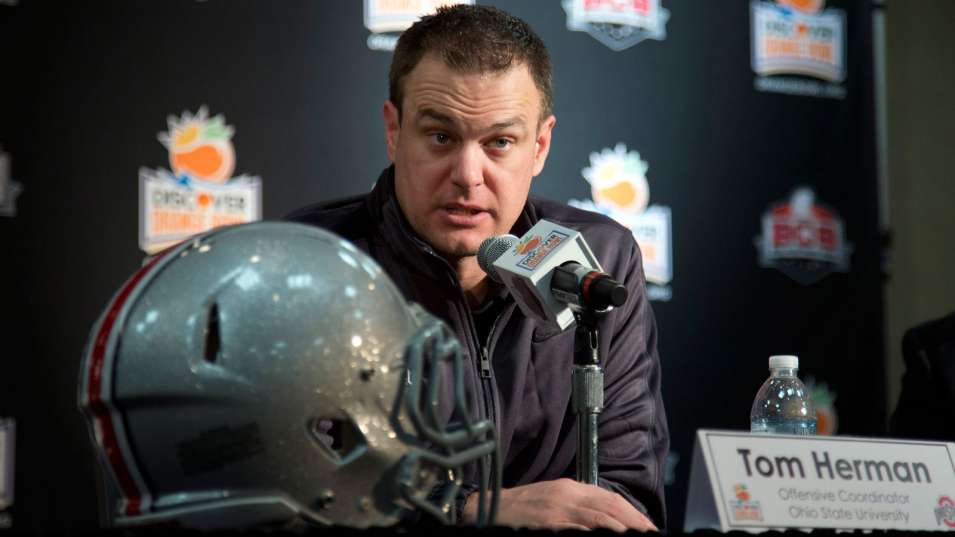
Tom Herman Offensive Coordinator Ohio State

Tom Herman
Offensive Coordinator
Ohio State

The next University of Houston football coach hiring is pretty much something of a directional crossroads pick. Do the Cougars go with a candidate like the 39 year old genius Tom Herman, the offensive coordinator for Ohio State and 2014 winner of the Frank Broyles Award that goes each year to the man designated as assistant college coach of the year? Or do they try to wrap up 67 year old former Cougar linebacker (1966-68) Wade Phillips and his established local bond and great record as a pretty fair defensive coach at all levels of the game?

A guy like 39 year old Herman could give UH an immediate short-time boost with a return of the lights-out offensive game that has been the Cougar signature in football in recent years. A fellow like 67 year old Phillips could give the Cougars what they thought they had found during the tenure of current Baylor coach Art Briles – a Cougar alum whose bond with UH would count more than cash and allow him to stay at the helm for years to come – in spite of better opportunities elsewhere.

Of course, it’s pretty much a given that the UH “internship” of a man like Herman would last only so long as his accomplishments propelled him to a much better paying job in a more prestigious football-playing school in one of the five big conferences in college football. That’s just the nature of the beast at UH. Playing a full schedule of games against teams that don’t mean much as a member of a conference that really doesn’t matter has a sobering effect over time on blind fan loyalty.

As Marshall University of C-USA learned this year, their 12-1 record against other cream puff conference schools only allowed them to crack the outer branches of most Top 25 polls, earning them a place in one of the numerous meaningless bowls that may have some appeal to the players, their families, and a few alums, but few others. It’s pretty much the same gig for members of the new UH conference, the American Alliance. – If you win, so what? If you lose, so what?

When UH got whacked in their very first home opener at the new TDECU Stadium on campus this season, it was to UTSA of C-USA by a score of 27-7. I will never forget walking out of the place that hot late August night and talking with another grumbling geezer Coog – who looked old enough to have there as a student in the late 1950s period when I was on campus too.

The guy kept saying: “This never should have happened. – We gotta get a new coach.” He was ready then to nail the just-fired Tony Levine to the wall.

I mumbled something back along the lines that it doesn’t seem to do us much good since the really good ones always leave UH after a couple of good years because the money and the prestige is better elsewhere.

“That’s OK with me,” the other old Cougar shot back in quick response. “I’d rather have a good coach for two years – than a bad coach for ten!”

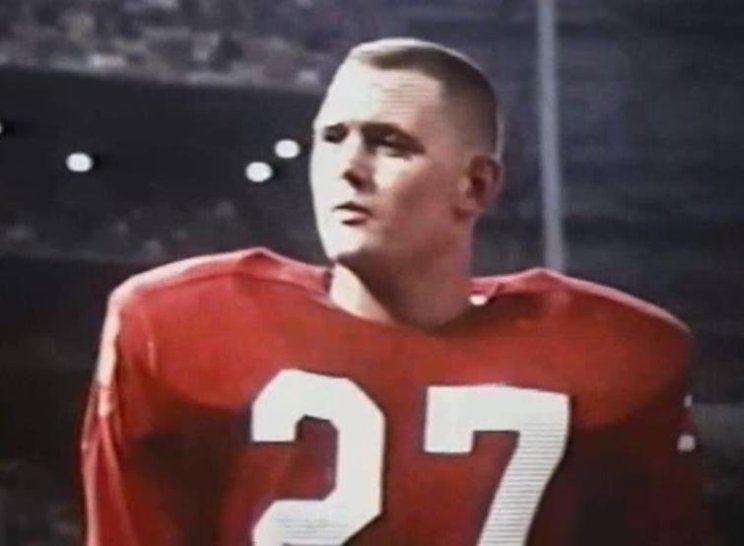
Wade Phillips UH Linebacker 1966-1968

Wade Phillips
UH Linebacker
1966-1968

Maybe in my old age I’m finally getting the kind of perspective that has allowed me to continue my enjoyment of college football. What I got from my days of growing up near the UH campus and then actually attending school there as a working student who still graduated in four years (1956-60) was golden. It was the foundation for everything else good that’s happened for me in my academic and professional life. Nothing in life can ever take that away from me. I simply no longer die a thousand deaths as though it were my own  each time UH loses a game. That’s just not what this business of sports is really all about for me – although I know it is for many, if not most sports fans at all levels.

Would I like to see the SEC or Big 12 open the door of membership to UH? You betcha, I would! That will happen when either of those big time conferences decides that inviting UH to be a member is worth the risk of opening the door to broader competition from UH for talent recruitment in the Houston area.

To me, the two candidates mentioned here today are the argument against my nameless old Cougar walking companion’s objections, even though they are 180 degrees apart from each other on the “what are we looking for” specs. – With a guy like Tom Herman, we could land a good coach for two years. With Wade Phillips, we could land a different kind of good coach for ten years.

Have an enjoyable Saturday, everybody!


College Football Playoffs Better with 8 Teams

December 12, 2014
Robotic Voice Speaking: "Before casting your vote for the 4 teams in the college football playoffs, please pay attention to these instructions as our options have recently changed. ..."

Robotic Voice Speaking:
“Before casting your vote for the 4 teams in the college football playoffs, please pay attention to these instructions as our options have recently changed. …”

How much academic damage could have befallen college football this year had the NCAA Division 1 teams had an 8-team field, rather than the controversial 4-team pairings that led to so much subjective conflict and resentment over “the Committee’s” selection of Ohio State over Baylor or TCU? As things broke from reason at the end, ….

….#3 TCU bombed a poor Iowa State team, 55-3, for a co-championship tie with Baylor for the Big 12 title. The Committee rewarded their achievement by dropping the Frogs from the top 4 playoff team bracket to an out-of-the money 6th place in the final standings.

….#6 Baylor captured their share of the Big 12 crown by beating a very good Kansas State team at home, 38-27, also laying claim to the idea that they should have been declared the outright league champion for having tied the 11-1 season record of TCU, while also having won their head-to-head game with the Frogs, 61-58, also in Waco back on October 11th. The Committee rewarded Baylor for their achievement by moving them up to #5 in the final poll. leaving the Bears a spot also outside the playoff bracket, but, at least, ahead of TCU.

….#5 Ohio State won the Big 10 championship game with highly ranked Wisconsin by the blow-out score of 59-0, in spite of the fact that they had been forced to play the game with a 3rd string quarterback due to injuries that had taken out all others – and regardless of the fact that they had entered the game as a 5-point underdog. As compensation for their all-out total team, underdog scorching victory over an excellent Badger club, The Committee rewarded the Buckeyes by moving Florida State up from #4 to the #3 slot in the final poll – before giving the #4 spot to Ohio State over the descending TCU brand.

The field was set. The Committee may have gotten it right, but there was no way they stood a chance to escape the cries of bias against southern, Midwestern, or Texas teams by passing on both Baylor and TCU. The finger pointing season had begun, with both The Committee, the Big 12 Commissioner, and the Big 12 itself taking some whacks for not having a true single champion process in place that might have given their league something better than a snowball’s chance in hell of getting a team into the mix.

What a waste of time and effort, but let’s face it. There will always be some unhappy outsiders in college football. The violence of the sport and the impossibility of playing a 64-plus team field like basketball does just isn’t in the cards for football.

I would argue now. however, as I more quietly thought when the 4-team/committee selection plan was put in place that an 8-club field would be far better. In spite of all the spurious arguments about it ruining the college educations of all the players who would be involved, I will argue that the change could be made by giving existing big bowls a chance to host the four extra games it would require to handle an eight-team playoff:

Round One: 4 bowls would handle the 8-team first round in the Dec. 31st/Jan. 1st time frame.

Round Two: 2 bowls would handle the semifinal round on Jan. 10th (or the first Saturday that follows a full week or more in time from Round One.

Round Three: 1 bowl could handle the championship game on Jan. 19th (or the 2nd Monday following the semi-final round.

* They don’t call the 2015 championship contest a “bowl game,” but it could be rotated through the bowls too in the future as yet another pot-sweetener to system change.

Using “The Committee’s” Top Eight Picks in their final poll, let’s see how the plan could have worked, even this year, had anyone bothered to give the idea earlier thought and done the nitty-gritty political work it would have taken to get the bowls and big sponsors behind the idea that an eight-team field is a real market improvement over the roll call of meaningless games they now have on tap.

College Football Playoff Rankings
RK TEAM RECORD
1 Alabama 12-1
2 Oregon 12-1
3 Florida State 13-0
4 Ohio State 12-1
5 Baylor 11-1
6 TCU 11-1
7 Mississippi State 10-2
8 Michigan State 10-2

The current bowl schedule could have been used to take care of all eight teams without changing the time frame for a single game. Only the seedings would change:

 ROUND ONE

Dec 31st: FIESTA BOWL, 4:00 PM EST, #3 FLORIDA STATE vs. #6 TCU

DEC 31st: ORANGE BOWL, 8:00 PM EST, #4 OHIO STATE vs. #5 BAYLOR

JAN. 1ST: SUGAR BOWL: 4:00 PM EST, “1 ALABAMA vs. “8 MICHIGAN STATE

JAN. 1ST : ROSE BOWL: 8:00 PM, #2 OREGON vs. #7 MISSISSIPPI STATE

SEMI-FINALS

JAN 10TH: PEACH BOWL, 4:00 PM, EST, ROSE BOWL WINNER vs. ORANGE BOWL WINNER

JAN 10TH: TEXAS BOWL, 8:00 PM, EST. SUGAR BOWL WINNER vs. FIESTA BOWL WINNER

CHAMPIONSHIP GAME

JAN 19TH: NATIONAL CHAMPIONSHIP GAME, 8:00 EST @ AT&T STADIUM, Arlington, Texas

The NCAA and Bowl people will have to work out the money politics of how the games move around from year to year, but the point of reason must come back to someone in there along the way. – An eight-team field gives more schools a fair opportunity to settle the national championship of Division 1 college football on the field – while also giving more bowls the opportunity to host games that actually mean something.

My only concern about the eight-team field in college football is a singular one. – It may make too much sense to sprout wings and fly.


1961 Buffs Program Loaded with Famous Buff Sigs

December 11, 2014
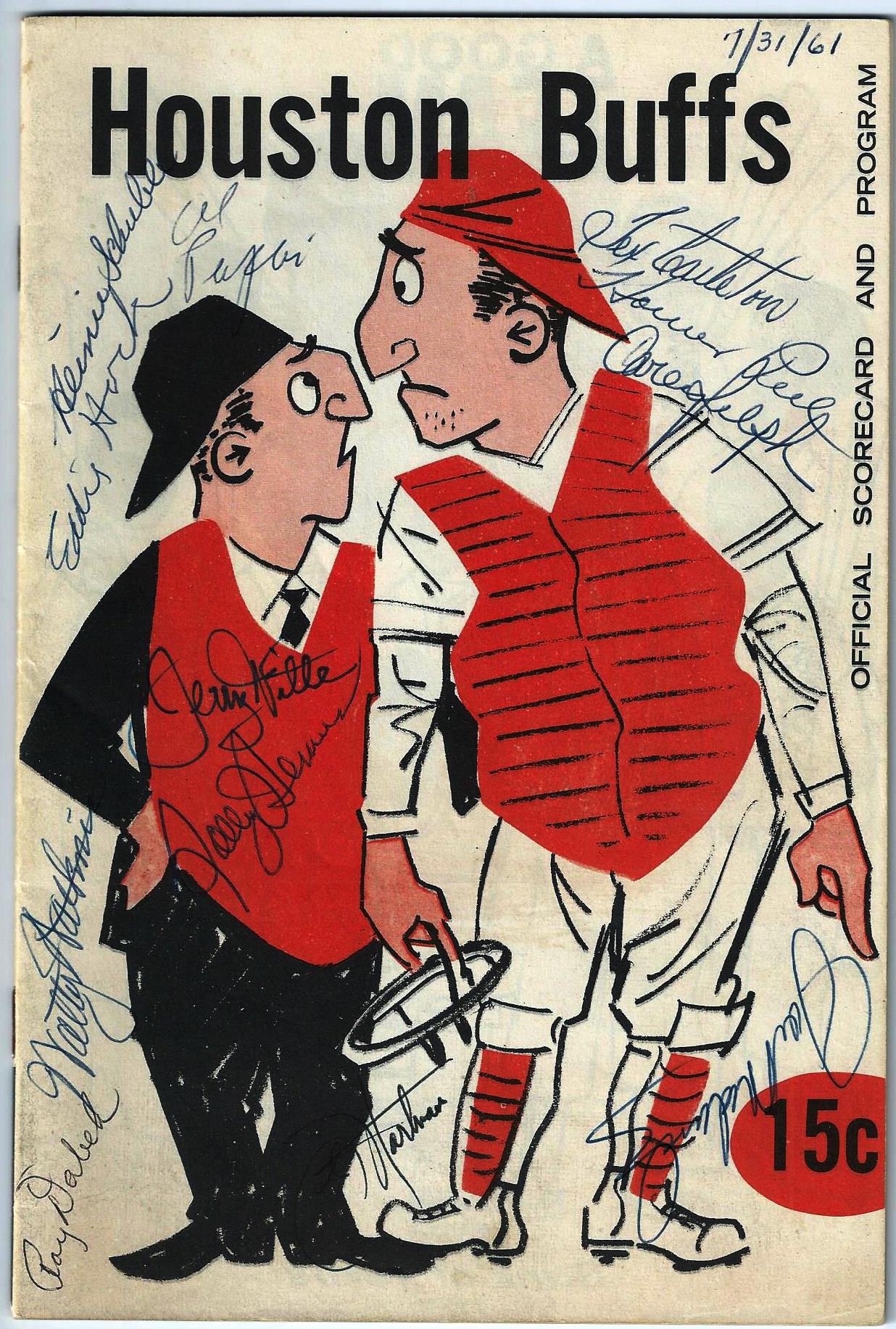
Many historical Buffs signed this Buff scorecard on 7/31/1961. The questions is: WHY? What was special about that Monday of Houston's last minor league season?

Many historical Buffs signed this Buff scorecard on 7/31/1961. The question is: WHY? What was special about that otherwise ordinary Monday of Houston’s last minor league season?It almost certainly had to be one of those nights in which an Old Timers All Star Game was played in conjunction with the Buffs’ regular season American Association game.

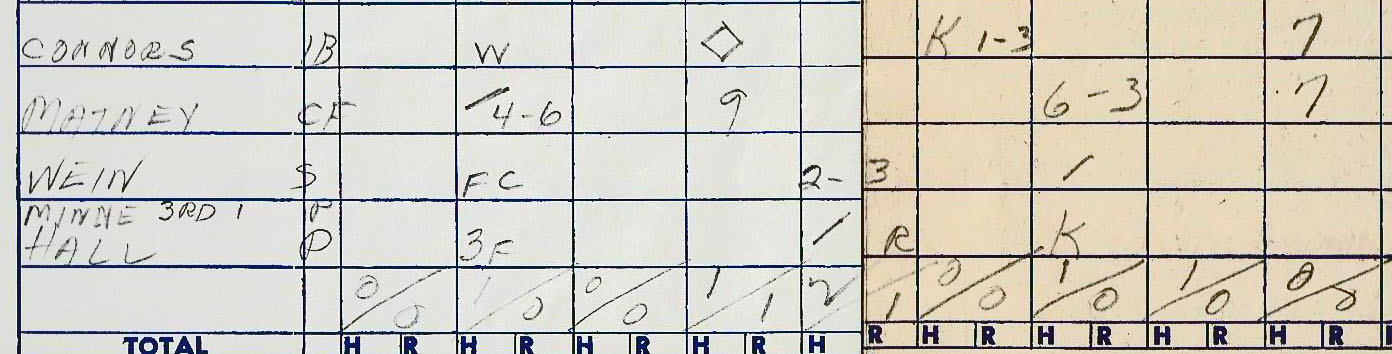
Wonderful fellow SABR member Mark Wernick e-mailed me an overnight gold mine for my kind of baseball column topics this morning. His request came with four attachments of old Buff game programs from 1947 and 1961. The first three pictures came from a 1947 Dixie Series game at Buff Stadium between the host Houston Buffs and the guest Mobile Bears of the American Association. That one featured the cover, plus the scored games pages for both Houston and Mobile of Game One. The Buffs won that game behind knuckleballer Al Papai on their way to victory in a six-game series. Game One also was notable for the duly scored home run by Mobile first baseman Chuck Connors – the same guy who later starred on TV as “The Rifleman,”

Here's Connors' name at the top line of the 1947 Mobile Bears' game record. Hope you can see the diamond signal for his HR.

Here’s Chuck Connors’ name at the top line of the 1947 Mobile Bears’ game record. Hope you can see the diamond signal for his HR.

The autographs on the cover page of the 1961 Houston Buffs home game program include my identification of everyone who signed it that day – for whatever reason. I was in graduate school at Tulane in New Orleans during the last season of the Buffs and have no recollection of the reason for that gathering of so many greats other than the logical reason that they probably were there to play a gate-pumping old-timers game in the dog days of Houston’s minor league death rattle time.

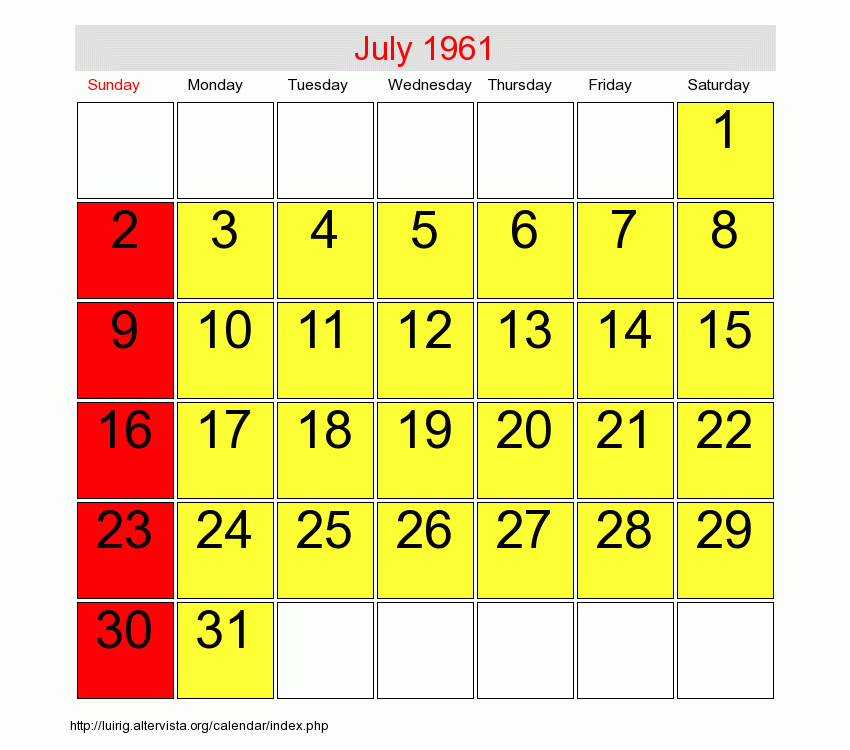
July 31, 1961 was a Monday game date at home for the Houson Buffs.

July 31, 1961 was a Monday game date at home for the Houston Buffs.

Here is our identification of them all in pretty much a clockwork sweep from the upper left hand corner, shown below by their normal positions and playing years with the Houston Buffs. I doubt they all will be discernible to you in the size of the largest photo we can use in these columns:

1) Heinie Schuble: SS-3B (1928, 1936)

2) Eddie Hock: 3B (1928-1933)

3) Al Papai: P (1947, 1951-1953)

4) Tex Carleton: P (1927-1928, 1931)

5) Homer Peel: OF (1924-1925, 1928, 1930-1932)

6) Carey Selph: 2B (1928, 1930-1931, 1933-1934)

7) Jerry Witte: 1B (1950-1952)

8) Solly Hemus: 2B (1947-1949)

9) Ray Dabek: C (1956-1958)

10) Watty Watkins: OF (1925, 1928, 1937)

11) J.C. Hartman: SS (1961)

12) Joe Medwick: OF (1931-1932, 1948)

Wow, Mark! That’s a nice collection of some great autographs from Houston Buffs history. Hold on to these items. Don’t sell them or give them away until Houston finally builds a program that really cares about preserving the artifact collection and rich narrative history of Houston baseball. Museums started on a handshake and run for years without a clear record of whether items are donated as gifts or loans – or protected by a plan for preservation in perpetuity –  is no plan at all. We do not need another private interest museum that eventually feels they are entitled to sell away items that really should belong to the Houston public for the purpose of settling their personal debts.

The St. Louis Cardinals and the City of St. Louis found a way to accomplish the infrastructure needed. If we cannot do something on that level in Houston, shame on us. Non-action on a true baseball museum movement in Houston speaks volumes for one or all of these conditions: We are either too apathetic, too stupid, or too miserly to get the job done.

Soak on that thought, Houston. We are what we are. And who we are is spoken loudly or quietly by what we do – and what we fail to do.

Have a nice hump day, Houston.


A Nose Is A Nose Is a Nose – And They All Smell!

December 10, 2014
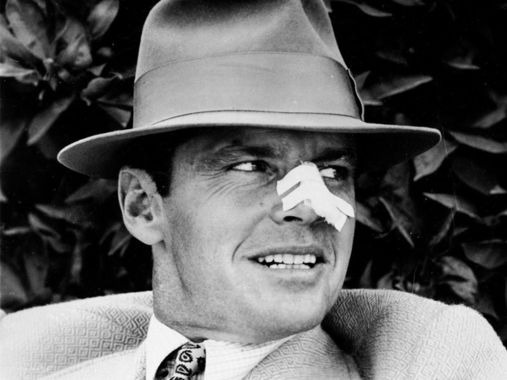
After surgery vaulted The Pecan Park Eagle into an older version of Jack Nicholson in 1974's "Chinatown" last week, we have been giving some thought to our prosthetic and magical options for a new nose.

After surgery vaulted The Pecan Park Eagle into an older version of Jack Nicholson in 1974’s “Chinatown” last week, we have been giving some thought to our prosthetic and magical options for a new nose.

At first, we could do nothing but mourn he loss of our finely chiseled, pre-surgical profile, but, since vanity has always been a short waltz on our dance card, we rapidly moved on to the thought of the new doors that have now opened to us by fate.

At first, I could do nothing but mourn the loss of my finely chiseled, pre-surgical profile, but, since vanity has always been a short waltz on my dance card, I rapidly moved on to my hopes and dreams for a new nose – and all of the exciting doors that have now opened to me by fate with each unfolding option.

We quickly paused at the most obvious choice of simply learning to live with the altered face that now rests upon the same still whole self that we truly are - If our friend in Egypt can live without a nose for a millennium or two, shouldn't we able to do the same for a far shorter period of time?

I quickly paused at the most obvious choice of simply learning to live with the altered face that now rests upon the same still whole self that I truly am! – If our millennial-age-measured old friend in Egypt can live without a nose for a couple of centuries because of Napoleon’s cannons, shouldn’t we able to do the same for a far shorter period of time?

Still, at first, we could not resist the attraction to other compensatory  choices. As a lover of travel and eating on the go, we strongly considered the utility of the anteater's nose. It was a quick pass. We like to get our protein from the flesh of higher life forms.

Still, at first, I could not resist the attraction to other compensatory choices. As a lover of travel and eating on the go, I strongly considered the utility of the anteater’s nose. It was a quick pass. I like to get my protein from the cooked flesh of higher life forms.

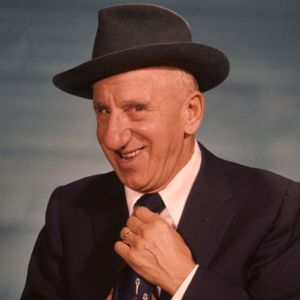
A copy of the famous Jimmy Durante nose caught our eye. And why not? If it could inspire that famously happy Durante smile every time Jimmy looked in the mirror, look what it could do for us. Why we could "start of each day with a song, even when things go wrong!"

A copy of the famous Jimmy Durante nose caught my eye. And why not? If it could inspire that famously happy Durante smile every time Jimmy looked in the mirror, look what it could do for any of us. Why we could “start of each day with a song, even when things go wrong!”

A copy of the chrome nose of our literally favorite driving llfe force drew some brief rumbling and shiny consideration, but that would made our presence in the driver's seat a sheer act of redundancy.

A copy of the chrome nose of my literally favorite driving life force drew some brief rumbling and shiny consideration, but that step would have made my presence in the driver’s seat seem to be  a sheer act of redundancy.

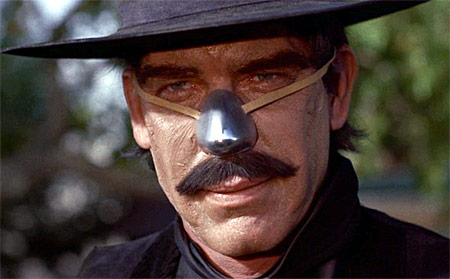
The design of Lee Marvin's silver nose in "Cat Ballou" drew my interest because of its no-surgery-required wearing simplicity, but those attachment straps riding beneath the eyes also got my attention as distractions to peripheral vision.

The design of Lee Marvin’s silver nose in “Cat Ballou” drew my interest because of its no-surgery-required wearing simplicity, but those attachment straps riding beneath the eyes also caught my attention as serious distractions to peripheral vision.

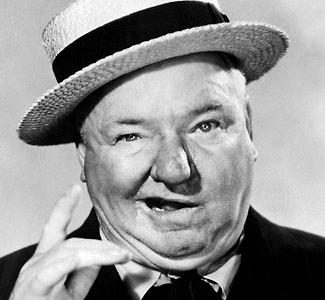
The humor of W.C. Field's nose as a humorous model for my replacement was almost irresistible! W.C. Fields to Bartender: "OH, bartender, did I spend a twenty dollar bill in here last night?" Bartender: "You sure did!:" W.C. Fields: "What a relief! I was afraid I had lost it!"

The laughter of W.C. Field’s nose as a humorous model for my replacement was almost irresistible!
W.C. Fields to Bartender: “Oh, bartender, did I spend a twenty dollar bill in here last night?”
Bartender: “You sure did!:”
W.C. Fields: “What a relief! I was afraid I had lost it!”

I always liked Pinocchio's nose until it stretched his conscience for telling lies. - I never lie, but I am concerned that the nose-growing effect might also be triggered by the occasional use of hyperbole in my written  storytelling.

I always liked Pinocchio’s nose until it stretched his conscience for telling lies. – I never lie, but I am concerned that the nose-growing effect might also be triggered by the occasional use of hyperbole in my written storytelling.

In spite of everything else, I always liked Nixon for his passionate interest in baseball. I also liked his nose as a model, but decided against it too as a bad choice. I could not use it. - I am not a crook!

In spite of everything else, I always liked Nixon for his passionate interest in baseball. I also liked his nose as a model, but decided against it too as a bad choice. I could not use it. – I am not a crook!

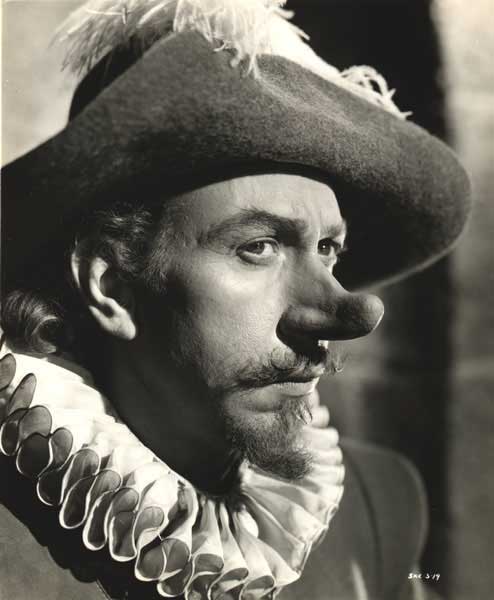
The nose of Cyrano de Bergerac caused him to hide in the shadows from love and to write for the hearts of others who could not express their passions as he did. I'd simply love to have his talent for expressing passion for myself. Love is the biggest message that needs to get out there, even it comes at the price of having a nose that looks a lot like the nose of Bob Hope!

The nose of Cyrano de Bergerac caused him to hide in the shadows from love and to write for the hearts of others who could not express their passions as he did. I’d simply love to have his talent for expressing passion for myself. Love is the biggest message that needs to get out there, even if it comes at the price of having a proboscis that looks a lot like the nose of Bob Hope!

Truth to tell, I haven't really lost my nose. It's just being reconfigured by surgery. My decision is to simply accept what I cannot change, let my pal Rudy keep leading the team, while I sit back in the sleigh with everyone else who drives their own sleigh too - and just keep on giving back what I am able to give to life - for as long as I can do it. -  ~ Happy Holidays, Everybody! ~

Truth to tell, I haven’t really lost my nose. It’s just being reconfigured by surgery. My decision is to simply accept what I cannot change, let my pal Rudy keep leading the team, while I sit back in the sleigh with everyone else who drives their own sleigh too – and just keep on giving back what I am able to give to life – for as long as I can do it. –
~ Happy Holidays, Everybody! ~

Most Productive Offensive Players in 2014?

December 9, 2014
Veteran SABR Baseball Researcher/Writer Bill Gilbert today explains the BPA as a tool for evaluating offensive productivity as he looks at how it identifies some of the leading offense producers since 1992.

Veteran SABR Baseball Researcher/Writer Bill Gilbert today explains the BPA as a tool for evaluating offensive productivity as he also looks at how it identifies some of the leading offense producers since 1992.

Who Were the Most Productive Offensive Players in 2014?

By Bill Gilbert

Numerous methods have been devised to measure offensive performance. The most common are batting average, on-base percentage and slugging average. Since none of these averages provides a complete picture by itself, a more comprehensive measure of offensive performance is useful. Such a measure would include the following elements:

  1. The ability to get on base.
  2. The ability to hit with power.
  3. The ability to add value through base running.

The first two elements are measured by on-base percentage and slugging average. A measure of offensive performance, which encompasses both as well as base running achievements, is Bases per Plate Appearance (BPA). This measure accounts for the net bases accumulated by a player per plate appearance. It is calculated as follows:

BPA = (TB + BB + HB + SB – CS – GIDP) / (AB + BB + HB + SF)

Where: BPA = Bases per Plate Appearance

TB   = Total Bases

BB   = Bases on Balls

HB   = Hit by Pitch

SB   = Stolen Bases

CS   = Caught Stealing

GIDP = Grounded into Double Plays

AB   = At Bats

SF   = Sacrifice Flies

The numerator accounts for all of the bases accumulated by a player, reduced by the number of times he is caught stealing or erases another runner by grounding into a double play. The denominator accounts for the plate appearances when the player is trying to generate bases for himself. Sacrifice hits are not included as plate appearances, since they represent the successful execution of the batter’s attempts to advance another runner.

Major league BPA for the past fifteen years are shown below along with the number of players with BPA over .550 and .600:

Year   2000 2001 2002 2003 2004 2005 2006 2007 2008 2009 2010 2011 2012 2013 2014

BPA .481 .468 .457 .461 .468 .456 .470 .463 .458 .461 .446 .442 .447 .440 .426

.550    50   46   39 42   33   34   46   34 41  42 19   25   12   14     9

.600   30   26   17 15   18   13   14   15 11   16 7   7   5     3     4

Offensive production peaked in 2000 before declining in the early years of this century. BPA declined significantly in 2014 and was the lowest in over 15 year.

In the 1990s, there were 14 individual .700 BPA seasons. In the eight year period from 2000 to 2007, there were 18. The highest BPA in the 1990s was recorded by Mark McGwire in 1998 (.799). Barry Bonds shattered that with .907 in 2001, the highest figure ever recorded, topping Babe Ruth’s best two years (1920 and 1921). Bonds followed that with .869 in 2002, .818 in 2003 and .882 in 2004. There have not been any hitters with a BPA of .700 since 2007. The last player to make it was Alex Rodriguez (.702) in 2007. Surprisingly, Albert Pujols has not had a .700 BPA in his fourteen seasons.

The .700 BPA (BASES PER PLATE APPEARANCE) seasons from 2000 to 2013 are listed as follows:

Player Team Year BPA
Barry Bonds San Francisco 2001 .907
Barry Bonds San Francisco 2004 .882
Barry Bonds San Francisco 2002 .869
Barry Bonds San Francisco 2003 .818
Sammy Sosa Chicago Cubs 2001 .758
Barry Bonds San Francisco 2000 .745
Jim Thome Cleveland 2002 .728
Manny Rameriz Cleveland 2000 .726
Todd Helton Colorado 2000 .720
Luis Gonzalez Arizona 2001 .713
Todd Helton Colorado 2001 .709
Carlos Delgado Toronto 2000 .707
Larry Walker Colorado 2001 .707
Jason Giambi Oakland 2001 .706
Travis Hafner Cleveland 2006 .703
Alex Rodriguez NY Yankees 2007 .702
Jason Giambi Oakland 2001 .700
Ryan Howard Philadelphia 2006 .700

The yearly BPA leaders from 1992 through 2014 are as follows:

1992 Bonds, .734

1993 Bonds, .740

1994 Bagwell, .768

1995 Belle, .692

1996 McGwire, .765

1997 Walker,  .770

1998 McGwire, .799

1999 McGwire,   .735 2000 Bonds  .745

2001 Bonds, .907

2002 Bonds, .869

2003 Bonds, .818

2004 Bonds, .882

2005 D. Lee, .699

2006 Hafner, .703

2007 A. Rodriguez, .702

2008 Pujols, .685

2009 Pujols, .696

2010 Bautista, .671

2011 Bautista, .681

2012 Trout, .665

2013 C. Davis, .670

2014 Trout, .623

The benchmark for an outstanding individual season is .600. Following is a list of only four players with enough plate appearances to qualify for the batting title and with a BPA of .600 in 2014. The list is topped by Mike Trout of the Los Angeles Angels who also led in 2012.

Bases per Plate Appearance (BPA) of .600+ in 2014

————————————————-

List of 4 2014 Players with .600+ BPAs and enough at bats to qualify for the battle title in 2014

   Player           BPA   BPA LG Seasons Comments

  1. Mike Trout   .623 .649   A   3   Over .600 in each of his 3 full seasons.
  2. Giancarlo Stanton .614 .542   N   2   Big season led to big bucks.
  3. Andrew McCutchen .613 .574   N   1  Better than MVP season in 2013.
  4. Jose Abreu       .600  —   A   1   Cuban rookie did it all.

Two other players had a BPA over .600 in 2013 but fell short in 2014.

No. of 2013   2014     .600+

   Player           BPA  BPA LG Seasons Comments            

1 Chris Davis    .670 .477  A   1   .196 BAVG and suspension.

2 Miguel Cabrera   .663 .528   A   5   An off-year by his standards.

Three active players have a BPA over .600 for their careers:

2014          Career

Player            Age            BPA           BPA   Comments

————-      —      —-       —-   —————————

Mike Trout           22      .623       .623   Quick rise to the top.

Albert Pujols         34    .466       .611  In decline phase of career.

Alex Rodriguez         38     —       .609   Suspended for 2014.

Another list of interest is of players with a BPA of over .600 in 2014 who did not have enough plate appearances (PA) to qualify for the batting title.

Player           Age BPA   PA   Comments

————— —  —- —   —————————

Troy Tulowitzki 29 .643 375   Would have been first with more playing time.

Steve Pearce     27 .608 383 Entered 2014 with career BPA of .427

Looking at the other end of the spectrum, twenty five players who earned enough playing time to qualify for the batting title had a BPA less than .400 in 2014. With the decline in offensive production, this list gets longer every year and now includes some players who were previously near the top (David Wright, Derek Jeter).

Player                           BPA   Team

—————–               —-   ——————————

117 Jason Kipnis                 .399   Indians

118 Jason Castro                 .397   Astros

119 Gerardo Parra                .394   Diamondbacks/Brewers

120 James Loney                 .393   Rays

121 Salvador Perez               .391   Royals

122 Jed Lowrie                   .390   A’s

123 Austin Jackson               .389   Tigers/Mariners

124 Xander Bogaerts             .389   Red Sox

125 David Wright                 .387   Mets

126 Billy Butler                 .386   Royals

127 J.J. Hardy                   .385   Orioles

128 Domonic Brown               .385   Phillies

129 Casey McGehee               .375   Marlins

130 Aaron Hill                   .373   Diamondbacks

131 Omar Infante                 .372   Royals

132 Yunel Escobar               .370   Rays

133 D.J. LeMahieu               .365   Rockies

134 Elvis Andrus                 .364   Rangers

135 Jean Segura                 .360   Brewers

136 Chris Johnson               .358   Braves

137 Adeiny Hechavarria           .350   Marlins

138 Derek Jeter                 .345   Yankees

139 Zack Cozart                 .331   Reds

140 Matt Dominguez               .324   Astros

141 Andrelton Simmons           .322   Braves

Only one player compiled a batting average over .300, an on-base average over .400, a slugging percentage over .500 and bases per plate appearance over .600 in 2014.

Player             BAVG       OBA       SLG       BPA      OPS

Andrew McCutchen     .314     .410     .542     .613       .952

Another player has these numbers for his career.

Player             BAVG       OBA       SLG       BPA       OPS

Albert Pujols       .317     .403     .588      .611     .991

Another means of measuring offensive performance is Bases per Out, also called Total Average. The top 10 players on both lists for 2014 are shown below.

Bases per Plate

Appearance                             Bases per Out

1 Mike Trout         .623   Angels     1 Andrew McCutchen 1.046 Pirates

2 Giancarlo Stanton   .614   Marlins     2 Mike Trout       1.018 Angels

3 Andrew McCutchen   .613   Pirates     3 Giancarlo Stanton 1.017 Marlins

4 Jose Abreu         .600   White Sox   4 Victor Martinez   1.000 Tigers

5 Victor Martinez     .585   Tigers     5 Jose Bautista     .981 Blue jays

6 Anthony Rizzo     .580   Cubs      6 Jose Abreu         .980 White Sox

7 Jose Bautista     .579   Blue Jays   7 Anthony Rizzo     .946 Cubs

8 Edwin Encarnacion   .570   Blue Jays   8 Michael Brantley   .914 Indians

9 Michael Brantley   .555   Indians     9 Edwin Encarnacion .891 Blue Jays

10 Carlos Gomez       .546   Brewers   10 Jayson Werth       .884 Nationals

Both methods confirm that three players (Trout, McCutchen and Stanton) separated themselves offensively from the pack in 2014.

Nine players appear on both lists but not in the same order. Carlos Gomez is on the first list and Jayson Werth is on the second one. They are different type players. Gomez gets his production largely from extra base hits and stolen bases while Werth gets a lot of his from bases on balls which results in fewer outs.

Bill Gilbert

bgilbert35@yahoo.com

12/8/14

____________________

Editor’s Note: Please refer all questions to Bill Gilbert at the email address listed beneath his name at the end of the article.

Thank you. ~ The Pecan Park Eagle.



At Any Age, Baseball’s a Sweet Game of the Mind

December 8, 2014

The Different Outcomes and Consequences of Playing Baseball at Ages 16 and 76

old-timer-baseball At age 76 (I’ll be 77 on New Years Eve), every neuron impulse in my body tells me that I could still play center field. At the same time, every rational conclusion I reach in the logical sector of my brain tells me – loud and clear – “don’t even think about it!”

But I will think about it – until I put the whole possibility totally to bed – or die – whichever comes first. It’s worth the risk to me. I may be a fool sometimes when it comes to some matters of misplaced trust, but I’m no idiot when it comes to the perilous limitations that descend upon the physical body with age. I’m still fascinated by the mental images of what might happen if I actually tried to play at my age.

Here are a few of my never-to-be tested theoretical conclusions of what might happen to me in certain everyday game situations if I went to spring training with the Astros in 2015 as a center field candidate:

(1) Can-of-Corn Pop Flies. If I could get to them, I think I could still catch them. I might mistake their paths of descent by twenty to thirty feet the first four or five times I tried, but I’d find the range – if I didn’t run out of breath first.

(2) Wall Banger Line Drives. No problem. I’d never get there in time to make a Pete Reiser catch and be carried unconscious off the field.

(3) Shoe String Catches. These were my specialty back in my parochial school ball days. Although my cervical back issues today might allow a single attempt to place me in traction for a period of time that could range from three months to the rest of my life.

(4) Pick Off Plays on Me as a 1st Base Runner. Well, for starters, I can’t imagine how I would even get to first base these days, but logic tells me that some pitcher’s mean bitter-old-timer-baseballstreak or wildness could make the trip possible via an HBP award. Once at first, they will never pick me off. With my diminished motor skills for judging the speed of flying objects, I wouldn’t even take a lead. I’d revert to what they taught us in little league: “Stay on the base until the batter hits the ball. Then run.”

(5) Dealing with Pitchers Who Throw Hard and Inside. Why would I change the beautiful formula I always used? I’d step in the bucket as I was falling out of the box and simultaneously swinging the bat. A couple of coaches tried to tell me that my style was flawed – and that I had no future in baseball unless I corrected it, but I wasn’t worried. My main plan was to become a pitcher – and pitchers don’t have to be good hitters. After all, in real baseball, fans love watching pitchers come to bat who can’t hit worth a flip.

(6) Stealing Bases. I haven’t stolen a base since the 1956 summer CYO League season. I made it safely on a feet first slide into 2nd base with some help from my nose. My nose interrupted the catcher’s throw to the covering shortstop. In fact, my nose literally “bent over backwards” to help me – with the tip of my nose only stopping once it made contact with my right cheek. I saw stars and lost consciousness. The next thing I knew, I was  waking up in an ER treatment room at nearby St. Joseph’s Hospital with an ice pack on my face. I was lucky. My girl friend didn’t even leave me for looking worse than normal for about six weeks. “You look like Paul Newman in that movie in which he played Rocky Graziano,” she said. – “Remember, Bill? We saw it downtown. –  ‘Somebody Up There Likes Me.’ – Well, you didn’t actually look like Paul Newman with your broken nose. – You looked like a beat-up Rocky Graziano.” – If that statement wasn’t love, what is?

All things considered, I guess I’d better stay retired from actually playing baseball on the field, but I will continue to hope that baseball remains the play in my mind it is now for the rest of my life. If it does not, I fear that “the rest of my life” would be forever missing the sweet spot that baseball is today – and always has been. – It is the game of my soul.

Play Ball – all you fertile baseball minds!