The Steroids Era Legacy Includes HOF Purgatory

December 7, 2014
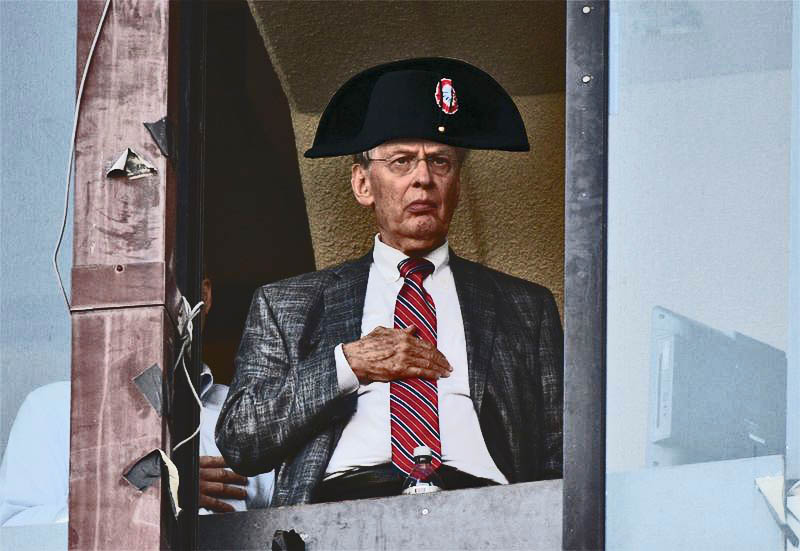
Had he not already signed up at an assisted living facility on the Isle of Elba, what would Bud Selig have done about Hall of Fame voting in the so-called post-steroids era?

Had he not already signed up at an assisted living facility on the Isle of Elba, what would Baseball Commissioner Bud Selig have done about Hall of Fame voting in the so-called post-steroids era?

As we tried to express yesterday, the current HOF policy that restricts BBWAA voters from choosing no more than ten names from of a ballot of thirty something candidates annually may have an impact on Craig Biggio’s chances for getting the 75% support he needs in his third time on the ballot in January 2015.

For those of you whose shopping or college football watching came ahead of reading on Saturday, here’s the link to yesterday’s column:

https://thepecanparkeagle.wordpress.com/2014/12/06/hof-voting-system-works-against-fairness/

The gist of this issue is easily stated, but not so easily corrected, given baseball’s history of playing policy dodge ball and hot potato with unpleasantness. With steroids-tainted Barry Bonds and Roger Clemens now on the ballot for the first time this year, both men could be the negative difference makers for the former Astro lifer, draining off enough votes to deny Biggio the honor, but far short of the votes they each would have garnered as easy clean first ballot picks for baseball’s highest honor prior to each of their separate PED-drug stainings.

And Craig Biggio is surely not the only “clean rep” candidate who may either miss out or have his selection seriously delayed on a Hall of Fame induction due to the combined forces of (1) a 10 vote maximum allowed on a ballot that includes a total of 30 plus; and (2) the presence on the ballot of great, but otherwise unpunished PED-associated stars as they now stream onto the list of eligible candidates.

The days of a despotic commissioner declaring “eight men out” of the game for life are over in this far more litigious  era of all the special interests that rise to fight any action against the rights of the individual, but the game may have found their own purgatory for non convicted offenders – and purgatory may prove even more painful than the certain eternity of hell. With hell, we have forever to get used to a pain that isn’t going away. The upside of hell is that there is no rising and falling expectation of relief or forgiveness that will free us from our chains.

In baseball, being good enough as a player to get on the ballot for the Hall of Fame is one of the most painful rooms in the purgatory that has been provided for PED-stained stars like Clemens and Bonds. Both men will be capable of mustering enough votes to stay on the ballot, but they will not come close to the 75% needed for induction, nor will they fall any time soon, if at all, beneath the 5% mark that would remove them from next year’s candidate list. Many of these purgatorial greats will simply remain on the ballot for their full ten year runs – often stealing votes that might have gone to steroids-clean candidates. After they are bounced for having failed to receive 5% support, or have run their ten year maximum stay on the BBWAA ballot, they will be moved to the Veterans Committee for consideration – only to be ignored after some possible dangling of new false hope for redemption.

Purgatory is hell, but with the added painful twist of a fairly regular dashing of hope.

To keep the presence of PED-stained HOF candidates from draining support for “PED-clean” HOF candidates, NY Times writer Tyler Kempner makes sense. To keep the PED-stained candidates from effecting the normal flow of campaigns for legitimate non-PED-stained quality players, the HOF needs to allow BBWAA electors to vote  for whomever and however many they each believe are qualified.

The only other choices are not practical, nor recommended. Those would be to (1) ban by some measure of proof all PED-using candidates from the ballot; or (2) making a decision that, proven acts of performance drug use, like admissions of gambling on baseball, are strong enough reasons for banning players from baseball and the Hall of Fame for life.

What a mess the so-called steroids era turned out to be – and now its consequences also will include more cloudiness to the already muddy waters of membership in the Baseball Hall of Fame. Who should be there? And who should not? – Those will always be the questions that cry out for answers – even if baseball tries to put the steroids era to sleep in the fond hope that someone will come along in the night and smother the life out of its memory.

 

HOF Voting System Works Against Fairness

December 6, 2014
Under the present HOF voting system, a few votes for Roger Clemens this time could cost Craig Biggio his 3rd shot at the 75% vote he needs for induction.

Under the present HOF voting system, a few votes for Roger Clemens this time could cost Craig Biggio his 3rd shot at the 75% support he needs from the BBWAA voters  for induction.

Fellow SABR member Father Gerald Beirne of Rhode Island called our attention this week to an excellent Dec. 4th article in the New York Times by Tyler Kempner.  It’s all about how our present BBWAA  system of selecting candidates for the Baseball Hall of Fame is likely working against the fair consideration of some deserving former players because of the clutter on the annual ballot of former steroids-tainted people who may take up  space that others could occupy, but now cannot.

http://www.nytimes.com/2014/12/05/sports/baseball/in-hall-of-fame-vote-split-tickets-and-tainted-candidates.html?_r=0

In Kempner’s view, the problem stems from the structure of the current initial voting system: At the present time, supposedly based upon field performances, the BBWAA each year chooses a ballot of candidates for consideration. Based upon a HOF limitation, BBWAA voters may only vote for ten candidates on the ballot. This year (2015), the ballot contains 34 nominations. Each voting writer may choose from 0 to 10 names from this list, but they may not vote for any former player (defined as retired for five years) if that player is not on the ballot. As a result, some deserving players may be denied support because of the more popular names on the ballot.

The problem now is sharpened by the presence of so many names from the so-called steroids era. Barry Bonds and Roger Clemens are on the ballot for only the third year, but, as  we already have seen with log-timers Mark McGwire and Sammy Sosa, they are likely to experience the same voter treatment. They will not come close to getting the 75% they would need for induction, but they will not either come close to dropping below the 5% minimum support total that would remove them from the ballot next year. They will simply take away two of the votes from their voting supporters that could have gone to a candidate that has a chance for election this year. (Craig Biggio jumps to mind as a perfect example.) These lost steroid souls could also manage to stay on the ballot for ten total years, blocking others, as long as they continue to receive support from at least 5% of the voters. *

Kempner’s major problem with the present system is best summarized in these five paragraphs from his article:

“Yet it is equally hard to imagine the names of Bonds and Clemens coming off the ballot. It seems as if there will always be a modest percentage of voters — certainly more than 5 percent — who look past the steroid question when it pertains to players as dominant as Bonds and Clemens were.

“So unless the Hall of Fame repeals the arbitrary limit of 10 names, voters could face still more years of a ballot logjam, with Clemens and Bonds taking up just enough space on just enough ballots to squeeze other strong candidates from remaining there.

“Perhaps, then, it is time to face this reality: Vote for Bonds and Clemens, and you are throwing those votes away. The veterans’ committee, not the writers, is destined to be their final arbiter. The writers should focus on the candidates who actually have a chance.

“Of course, for voters willing to overlook possible steroid use, it seems to defy logic to pass on the best players up for election. For them — on a ballot not limited to 10 choices — the boxes next to Bonds and Clemens should be the first checked.

“But under the current system, if they continue to vote for Bonds and Clemens, they are effectively limiting their ballot to eight spaces — not nearly enough for a field this crowded. And too many strong candidates will disappear as a casualty.”

Kempner’s piece is a thoughtful, wholistic examination of the problems that baseball now faces with the Hall of Fame voting in the steroids alumni era. Do we keep the steroids players on the ballot, knowing reasonably that their presence will only block or skew the process of legitimate consideration of others? Do we implore the Hall of Fame to drop their 10 player limit per year in the interest of making sure that legitimate candidates are not abandoned due to the throwaway votes cast for steroids-afflicted former players? Or do we find a way to simply eliminate the taint of steroids use and only judge candidates on the basis of their playing performance numbers?

Anyone who loves the idea of preserving an accurate baseball history should be thinking about this one. It’s too big to ignore.

* Footnote: I originally reported in error that this was the first year on the HOF ballot for Bonds and Clemens. Thank you, Dennis Corcoran, author of “Induction Day a Cooperstown…”, for bringing that mistake to my attention.

Shadows Over Chinatown

December 5, 2014
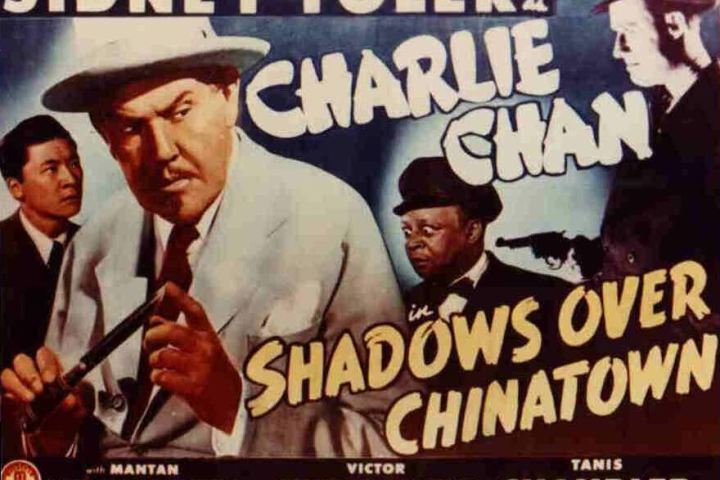
Victor Sen Yung as Jimmy Chan Sidney Toler as Charlie Chan Mantan Moreland as Birmingham Brown

Victor Sen Yung as Jimmy Chan
Sidney Toler as Charlie Chan
Mantan Moreland as Birmingham Brown

As a kid, the Sidney Toler movie version of Charlie Chan was one of my favorite Saturday Specials at the Avalon Theater’s weekly double feature, action serial, and cartoon package. From 1946 to 1952, the Avalon at 75th and Lawndale in Houston’s East End was the second largest theater of the mind that many of us could ever imagine or hope to embrace with our dreams for grand adventure. The “sandlot” remained our largest playground for the muses in those days because, after all, the act of playing the game of baseball in our bare feet was an even shorter hop in the mind to our imaginings of the big league uniforms we would one day wear on our way through the roaring crowds that would be cheering us on to the Hall of Fame.

Those black and white kid movies, always served weekly as one western and one contemporary action or comedy flick, simply oiled the mind to all other possibilities.

I especially loved Sidney Toler’s characterization of the Chinese-Hawaiian detective, Charlie Chan, even though it never occurred to me as a product of my times and culture to wonder why the movie-makers did not simply hire an Asian actor to play an Asian character. My fine-tuner on racism in movie role casting was not so definitive in those days. All I got from Toler’s Chan was the belief that older Chinese detectives must be just about the smartest people in the world.

Charlie Chan usually had one of his many young adult children tagging along with on new cases as a bungling, but bright (sort of) apprentice who often frustrates, but eventually helps wise old Dad to solve a tough case. The son assistant I remember best was called “Jimmy” – who curiously enough, like the rest of Charlie’s kids, was beautifully played by a young Asian actor, Victor Sen Yung.

The other assistant was a fellow they called “Birmingham Brown” – played by the very funny comedic actor, Mantan Moreland – who played the regula role of Chan’s chauffeur, complete with cap and uniform. That casting ruse simply got Brown into the mix. Birmingham’s real job was to portray a man who is reluctantly and fearfully pulled into the job of assisting the Chan family solve their latest murder mystery or other story of broad scale intrigue.

Back in the 1970s, many writers criticized Moreland’s portrayal of Birmingham Brown as a demeaning exposition of Uncle Tomism – one that portrayed black males as fearful and less intelligent, but I refuse to insult the man’s comedic genius with such an overly sensitive judgment. Birmingham Brown was often the only character expressing the real danger of the situations that came along with his involvement with the Chans. As an actor who understood the role of timing in comedy, the man was a master.

My favorite example of a sound byte quote from Birmingham Brown came at the end of one movie in which Charlie and Jimmy Chan are seen driving away from a spooky old mansion in the woods after solving a murder there in spite of constant “ghost” threats from the perpetrator that were designed to scare them away and avoid apprehension.

Somewhere near the end, Charlie and Jimmy Chan have become separated from Birmingham Brown and are driving back to town at about 50 MPH down a two-lane country highway in the dead of night. All of a sudden, as we are looking through the passenger front seat window at Charlie riding and Jimmy driving, we see the look of surprise and wonder on their faces as the top form and face of Birmingham Brown appears on the other side of the car, apparently running along with them at this improbable-for-humans rate of speed.

“Birmingham,” Jimmy shouts, “what are you doing?”

“I’m getting away from them ghosts,” Birmingham answers.

“Don’t worry, Birmingham,” Jimmy adds, “we’re safe now!”

Birmingham suddenly hears a strange howl coming from the nearby woods.

“Feet, don’t fail me now!”

Moreland leaves his iconic exit line as we see him rapidly accelerating in his run beside the Chan auto, leaving the speeding car far behind as he races ahead of them down the highway.

Those were the days, my friends. Movies were one and the same, escapist fun and dream houses for our imaginations.

Have a great Friday and a wonderful weekend!


Remembering the Eastwood Theater, Etc.

December 4, 2014
Eastwood Theater Houston, Texas 1936-1960

Eastwood Theater
Houston, Texas
1936-1960

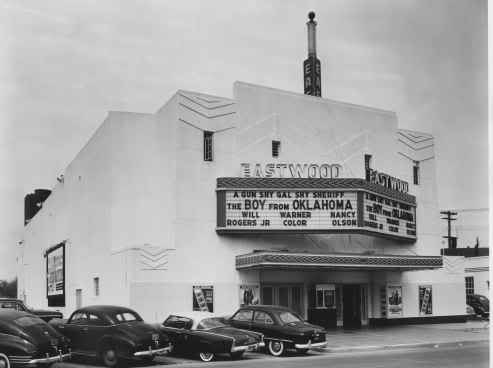
Remembering the Eastwood. While looking for something else this morning, I ran across this brief post and response thread about the old Eastwood Theater on Leeland Avenue at Telephone Road. It was by Stan Gilmore and six reader contributors who apparently also experienced the post WWII fun of that iconic movie house in the East End. The other large ones for most of us East Enders back in that era included the Wayside on Telephone Road near Wayside Drive (that one later became home to the Jimmy Menutis Club), the Santa Rosa, further south on Telephone near Park Place Boulevard, and the Broadway on Broadway Boulevard near Milby High School. Several other smaller movie theaters also operated in the East End and throughout the city back in that time and all of you survivors from that period will know immediately the ones I write about here. As I’ve written previously, my home base smaller movie theater, the one that held me and many of the kids from Pecan Park and Mason Park spellbound at their Saturday double features, plus action serials and cartoons, was the Avalon, on 75th near Lawndale. Unfortunately, only one of these suburban, mostly art deco sculpted houses of Houston history, the Santa Rosa, survived the wrecking balls beyond the 1960s. The Santa Rosa, which also was located near the home of my old Houston Buff friend Jerry Witte at the time of his death in 2002, was still around then as an “adult” movie theater, but it too may be gone by now. I haven’t been back to the specific area of Jerry’s home since his death to know for sure about the fate of the Santa Rosa.

The oft-repeated punchline to this story is a familiar sad one for so much of Houston’s history until now. Each wonderful place of cultural and architectural history went down without a whimper of protest from Houstonians favoring preservation. Buff Stadium went down the same way. At least, today, we have a fairly well organized voice of protest in Houston against turning landmark places into parking spaces or strip centers. It’s only because we now have an activist movement in favor of sensible preservation today that a problem with “what to do with the Astrodome” even exists. Back in that earlier time, a vacant, unused and unusable building without the funds to resurrect it to a legitimate use would have long ago already added up to “no problem at all.” By this much time of standing idle, an Astrodome structure back then would have become additional parking space for whatever else new that was going on at the same property site.

Here’s a link to the Eastwood reference piece:

http://cinematreasures.org/theaters/29034

Best Oxymoron of 2014. I saw it on a bumper sticker yesterday while waiting for the light to change at the east bound I-10 feeder road intersection at Echo Lane. It simply read “VEGAN TEXAN”. ~ How oxymoronic is that one, friends? And was the author of this impossibility simply pulling our chains – or was he or she attempting to defecate us on some rudimentary level? (i.e., “Are you ‘defecating’ me?”)

Congratulations to Channel 11. Hardly anyone these days could argue with the fact that the anchor personnel at all three of the major network connected TV stations in Houston (Channels 2, 11, and 13) have certainly improved the visual landscape at 5:00 AM. They have done it with faces and bodies that are far easier on the eye when simply waking viewers up during the work week. It’s not an easy job. Their challenge is a little bit of a struggle with the still grasping sandman for audience attention.

Darby Douglas Traffic Reporter Channel 11, Houston

Darby Douglas
Traffic Reporter
Channel 11, Houston

Until recently in Houston, all of the traffic advisory positions were being staffed by attractive younger females like Jennifer Reyna at Channel 2, who does a good job, by the way. Her job, also apparently, is to make sure that her male viewers, at least, get lost in her charms long enough to get good info on their best choices for reaching work any given day while standing pat as a viewer long enough beyond the traffic reports to watch at least a commercial or two.

In that light, congratulations to Channel 11 for bringing back Darby Douglas, a slightly pudgy middle aged male staffer as their traffic “expert” in spite of the building all-cute-female pattern that has dominated TV traffic reporting figures since the time a few years ago that it swept male reporters like poor witty and bright Darby onto the street from the same Channel 11 (unofficially, of course) for not being a sexy female.

Jennifer Reyna Traffic Reporter Channel 2, Houston

Jennifer Reyna
Traffic Reporter
Channel 2, Houston

OK, guys, we know what you are thinking. Attention to Darby’s Channel 11 traffic reports won’t spike higher in reader attention ratings as Darby turns his body sideways and sticks his chest out to point at the traffic map. It doesn’t matter. His grasp of various Houston traffic problems places him at the head of the TV traffic experts class. You may actually get some information from Darby that could help you find a better way to work in Houston, Texas. (Talk about oxymorons and we have to place anything that alludes to “easy driving” in Houston on our list.)

At any rate, the point is this simple. – Darby Douglas seems to do a good job of  offering alternatives around specific congestions that pile up normally and variably from day to day on Houston strrets and freeways.

Now that we’ve presented our short case in favor of Darby Douglas for local TV early morning traffic reports, give us at least two reasons why some of you will continue to watch Jennifer Reyna at Channel 2 – even on days you have no plans to go anywhere.

Have a nice Thursday, everybody – and hold onto your sense of humor wherever you go!

Chinatown II (2014)

December 3, 2014
Chinatown (1974)

Chinatown (1974)


Chinatown II (2014)

Chinatown II (2014)

Today didn’t start well. I set my alarm for six to make sure I’d be on time for my eight o’clock appointment for day surgery with the skin cancer doctor, but I awoke at five and was already downstairs slugging down a cup of of hot tea when it dawned on me in the dark that I had forgotten to shut off the now pointless alarm. But being the good guy that I am, and not wanting to awaken anyone else, I went back upstairs just to turn the dad-gum thing off. – I hate it when that sort of thing happens.

Leaving the house about 7:30, I could see that we were in for a cold, grey, windy day – the kind of day that makes you think the City of Houston forgot to pay their technicolor bill to that big climate manager in the sky. If it were January or February, the chalky grey skies would make sense. We sometimes never see the sun at all in either of those two months, but this is friggin’ November for gosh sakes. The golfers and other sun worshipers in this town aren’t going like this weather for sure.

As for me, I no longer care. I grew up playing ball in the sweaty hot sun of Houston springs and summers in the belief that the sun was good for me – my best pal, so to speak. And all of those new beach seasons in Galveston were the time and place for good fun and falling in love, but we all had to pay the entrance fee to dance and swim in that little paradise – and that gate tab was sunburn on the first time or two out there. After that, we got to peel away the dead fair skin outer layer and start tanning the natural way. “Be Brown and Get Around” could have been our tee shirt anthem back in the day – if we had been hip to the quick literacy of clothing and tattoo slogans back in the 1950s. – We just didn’t have time to be hip in 1957. We were too busy being cool – and bopping the night away as the Duke and Duchess of Earl. That worked for us.

For us, the children of the 50s, phones were just something that plugged into the wall of all our homes that we had to fight or trick our parents into using. We saw no need for phones once we were out and about and away from parental control. We had no need to call others who weren’t with us – because we hung out with the person or persons that we enjoyed. – Sure, we had stuff come up, social stuff that we had to work out, but we had no concept of polling people (our friends?) from all over the world on how to work out a social problem. We either came up with our own answers and moved on – or else, we kept repeating the same mistakes until we became willing to see our pattern and learn from it.

But I digress. – Today I was going to the skin cancer doctor to have my second recent skin cancer surgery performed, with another one probable before the year ends. For the past 19 years, since my first botched nose surgery for a basal cell cancer, I’ve just been one of the millions who now pays for not knowing the dangers of the sun while I was younger.

Today was a doozy! I was there from 8 o’clock in the morning until 1 o’clock in the afternoon. Attacking another basal cell in my nose all this time, the doctor kept calling me back to go back under the anesthetic so he could get a little more of the cancer that had gone deeper. Each time he did an excavation, I had to await the lab analyses that kept coming back “needs a little more digging” after more anesthetic needle shots in the nose to deaden the pain after it inflicted a brief piercing pain of its own.

When we finally went back for the fourth and final dig on this well, I couldn’t resist laying an impatient comment on my surgeon that pretty much summed up the mystery in my own mind as to why this whole process required all these baby step digs.

“You know, Doc, I do appreciate what you are doing” I said, “but, if you were able to perform surgery the way I dip ice cream, we could have been out of here hours ago.

“How so?” The doctor asked. (I couldn’t believe he had to ask and then lob the ball back to me for an explanation.)

“Simple enough, Doc,” I said. “You see, when I dip ice cream, I always scoop up a little more than I know I need.”

Well, Mr. Smart Aleck me got his answer when the fourth medical scoop got all the cancer that could be found. Now I have to go back next Tuesday for a skin graft to the nose because of all the tissue my doctor was forced to remove in pursuit of the spreading malignancy in four digs. If that first lesser excavation had been enough, they could have just sutured me up – and I’d have been good to go. My dermatologist didn’t take any short cuts. He was trying to get all the cancer in a way that might have spared me the procedure that now will be necessary.

Now I appreciably know the difference between dipping ice cream and excavating skin cancer from the nose – and I respect my surgeon all the more.

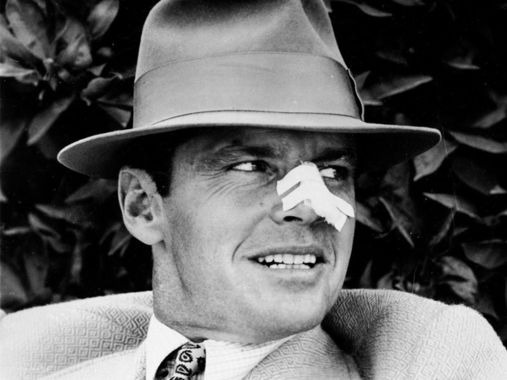
I still walked out of there at 1 PM today feeling like an older Jack Nicholson getting ready for a sequel to the forty-year old movie classic, “Chinatown.”

Friends, please watch those little blood spots that come and go in the same locations on your body. They are especially prevalent on the face. Anyone who has lived much of their lives in the sun also needs to see a dermatologist at some point – and don’t dismiss it because there’s no pain, – Getting cancer is painless, but skin cancers are one of the most controllable families of cancer if you catch them before they spread. And know this too – these lesions do not simply appear on parts of the skin that have been exposed to the sun normally. They can also appear on those parts of the body that are usually clothed and never seen directly by you, except in a mirror, if at all. That fact alone is worth a medical evaluation.


You Sort of Had To Be There

December 2, 2014

little old man8

Sometimes our perspective is helped more by the little ordinary things that happen in everyday life. Take today for example.

I had to run to the post office and then stop by Randall’s on Memorial at Dairy Ashford to do a little grocery shopping. It was nearing noon and the weather on the Houston west side was starting to come at us with a little rain and much brisker temperatures.  I had not dressed for the occasion and was only wearing a pair of my out of character but oh-so-dadgum-comfortable NBA droopy drawers and an orange tee shirt.

My wife refuses to be seen with me when I dress for comfort when going out.  I respect her wishes on the occasions we do go somewhere together these days, but the rest of the time, I’m thinking: “Hey! I’ll be 77 this New Year’s Eve. When I go out, I want to be comfortable. It’s not like I’m trying to pick up girls or something. Know what I mean?

One of these days, I may paint me a little sign. Maybe I’ll starve myself in the process, but I think I’ll have it say something like “Will Blog for Food.” Then I’ll post myself out at Kirkwood and I-10 with regular comfy clothes and start working my sign. Then, by prior arrangement, I will get my son Neal to drive Norma by the corner I was working so that he can’t point me out as though I were one of those “Oh look, Mom, there’s Dad” accidental sightings.

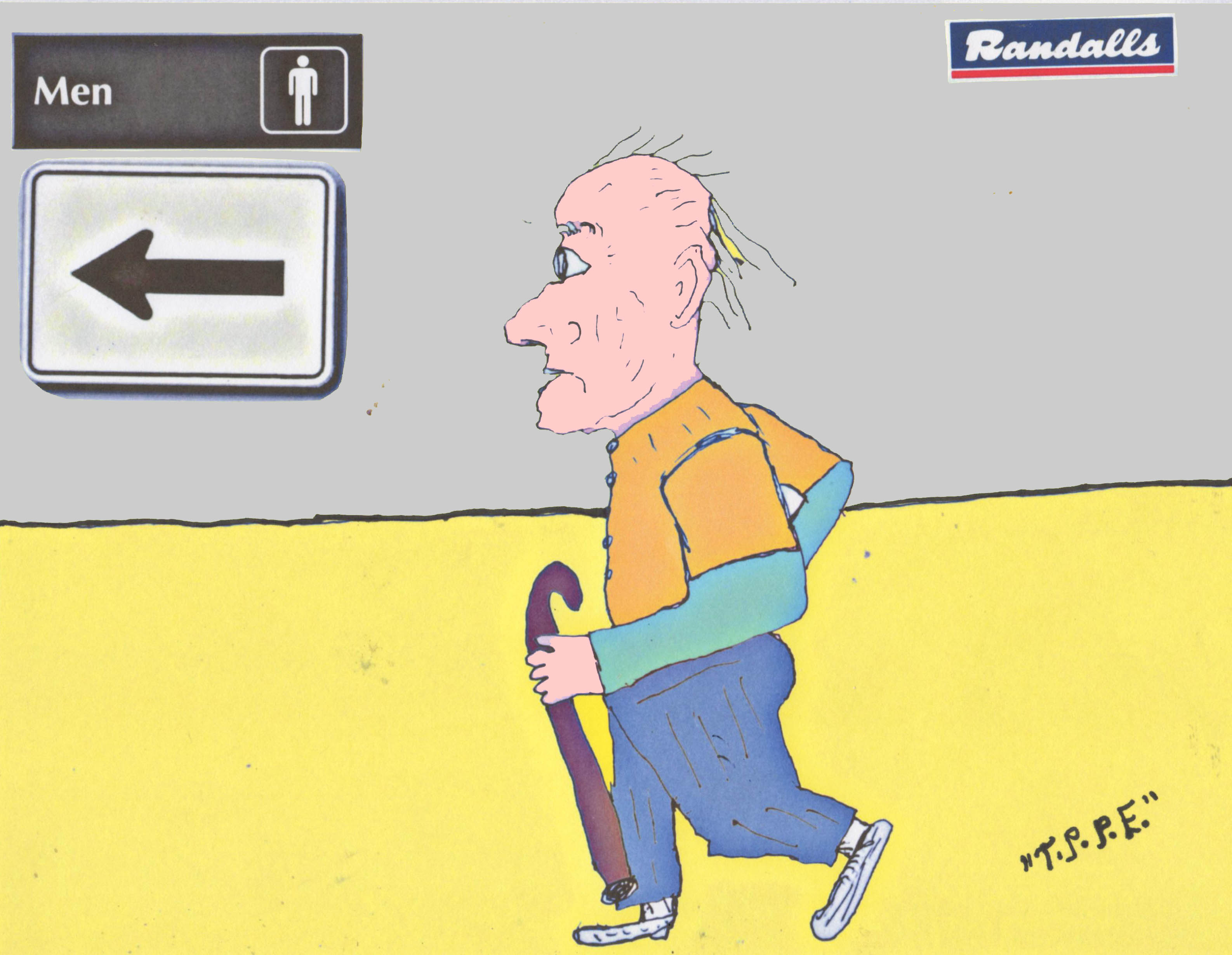
Oh, No! – It will never happen. Norma would have me placed in an assisted living home by sundown if I ever pulled a stunt on that level. At any rate, those were just some of the playful thoughts that floated through my head as I made my way from the Addicks post office to the Randall’s parking lot today. When I stepped out of the car into the flush of all that cool wind, I was duly reminded that I had consumed two large cups of hit tea this morning. “I’d better make a pit stop before I start shopping,” I thought to myself as I began my walk to the store’s front door and almost ran into a poor old fellow making his dedicated, but very slow walk in the same direction. The guy must have been 100 if he was a day, but more power to him. He’s still out moving around – even if it as at snail’s pace. We were still a good fifty feet from the front door when our near collision occurred.

“Excuse me, sir,” I said, as I pulled away and avoided a collision at the last second, but he didn’t bat an eye. He just continued on his straight, intrepid, but perceptibly almost not moving way. I was around him in no time flat and on my now hurried way to the men’s room.

Wouldn’t you know it. As soon as I entered Randall’s, I ran into a friend I haven’t seen in a very long time. We must have talked for only five or ten minutes, but it was starting to feel like the dawning of eternity. Without much adieu, we quickly wrapped up the break with one of those “well have to get together sometime” moving on promises and parted company.

By now, what had started as a good idea had now grown into an essential. All I could think about was getting to the men’s room. On the way, I figuratively almost ran into the little old man again. We didn’t even come close this time. I sped around him across the store to the west side location of the rest rooms. Once inside the rest room, I quickly noted that all the few available urinals were busy. That’s OK. The men’s handicapped stall was wide open, more private, and lot more clean and dry, anyway.

Plop! Plop! Fizz! Fuzz! Oh what a relief it was! – And I don’t mean Alka Seltzer. It could have gone on forever. And there was one of those little lessons. When we are getting relief in the most basic of ways, the clock means nothing. But even that one wasn’t the lesson that stirred me to write an article that would take you with me on a trip to the men’s room at a Randall’s grocery store.

As I pushed open the stall door, guess who was there, waiting to take my place?

That’s right. It was the little old man. “It’s all yours,” I said, but again, he said nothing. He simply began the last lap of what apparently had been his goal from the time I first saw him in the parking lot while I was pulling to a stop and parking my car.

God Bless him! If any of us “younger” folk ever are lucky enough to live as long as this little old man apparently has – and we can still move on our own accord at any speed – no matter how slow –  toward any goal – no matter how basic that goal may be – we shall be most fortunate.

What I still cannot figure out is – how did he ever get to the Randall’s parking lot in the first place. Good grief! I did see a beautiful red Corvette parked back there in the general direction from which he had to have come, given the beeline course I found him treading upon my own arrival.

Some mysteries are best left in the arena of our wildest hopes and dreams for what may still be possible in old age.

In the long run, one thing never changes, whether we are 20 or 120. All that matters at any age is how we handle each day, from moment to moment. We cannot capture what is yet to be with our promises – and we cannot regain what might have been with our regrets. Now is the only real time we ever own. Now is the only time in which we have the power to act on those matters that are within our control – even if it’s simply trying to get to the “john” on time. I like to think the little old man I saw today understood those truths.


Northwestern University Revisited. – Go Wildcats!

December 1, 2014
Northwestern boats one of the foremost design schools in America among a wide range of other leading academic programs of study and research.

Northwestern boats one of the foremost design schools in America among a wide range of other leading academic programs of study and research.

This Sunday evening, a SABR friend of mine whom I respect very much wrote me the following after apparently reading Sunday morning’s Pecan Park Eagle column, “Wake Up the Echoes?” …

“Northwestern is far from rinky-dink.  While its Drama Department has indeed produced some notable actors and actresses, its Schools of Journalism, Engineering, Business, Arts & Sciences, and Music have all received their shares of acclaim. And that’s merely citing some of the undergraduate programs. It has graduate programs like medicine and law with exceptionally strong reputations as well.  Perhaps you already realize this, and your blog today was written simply to mouth off about UH losses, but it wasn’t very nice to see a slur like this against my alma mater being presented to those readers who may know nothing about the institution.”

Northwestern Wildcats 2012 poster schedule

Dear Northwestern Friend,

My apologies. Yesterday’s column, “Wake Up the Echoes?”, was merely and only something I tried to write in good spirit for an ancient Notre Dame friend of mine who has enjoyed more than his share of good luck over the years, including his joy and my agony over that Joe Montana rally of the Irish in the January 1, 1979 Cotton “Ice” Bowl that brought ND back from a 34-14 deficit with 7:30 left on the 4th quarter clock to a winning TD pass to Chris Haynes on the last play of the game that gave the Boys from South Bend another 35-34 “miracle” win over my UH Cougars – as we both sat together in the frigid stadium watching my horror show unfold on the frozen, football field-striped tundra before us.

This year, the worm took a sharp turn on ND fortunes – and I was merely tracking his slimy, legless path in mock remorse in the “Echoes” column. I don’t really think that your Northwestern University is a “rink-dink” theatrical school at all. In fact, had I been able to afford it after high school back in 1956, Northwestern would have been my choice as the place to study journalism. Unfortunately, I could not swing it, but fortunately for people like me at that time, UH and my ability to handle work and a full-time academic load nearer to home made my undergraduate degree possible in four years.

No harm was intended in my article.

Now I can’t wait to hear from my Arizona State friends. They are going to love my reference to their Alma Mater as a “cactus patch” school.

Northwestern friend, just know too that I meant no serious denigration of Northwestern, Florida, State, Arizona State, Louisville, USC, Notre Dame, the Louisville Slugger Bat Company, or Churchill Downs in yesterday’s column.

My regrets also include my deluded belief that what I thought was an obvious attempt at humor may have been taken as a serious slam or slight by anyone of any of the fine institutions listed in the previous paragraph.

Sincere apologies extended,

Bill McCurdy, Editor

The Pecan Park Eagle
For more information about Northwestern University, check out their website at this link: http://www.northwestern.edu/

For more information about Northwestern University, check out their website at this link:
http://www.northwestern.edu/

Wake Up The Echoes?

November 30, 2014

knute-rockne

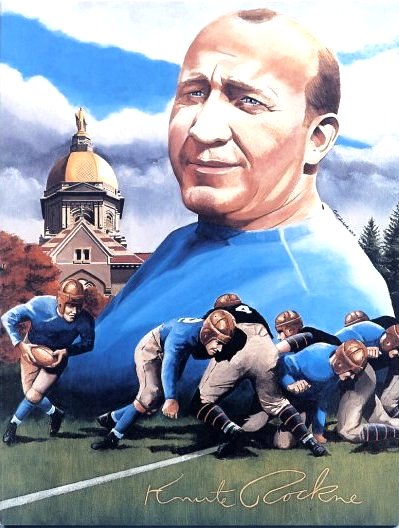
Back in The Day … We didn’t get cheated out of victory by the refs, as we were this year at Florida State! …We didn’t get blown away by some cactus-patch school like Arizona State!…Nor did we allow any rinky-dink theatrical school like Northwestern to jump up and bite us in the backside at the last minute!….And we sure as hellfire didn’t miss chip shot field goals on the last play of the game that would have caused us to lose to any school from Louisville, a town far more famous for making baseball bats and racing horses than it is for playing the game of football!!…And we for certain didn’t cap off a sorry and disappointing season by crumbling before those devils from USC!!!What in all tarnation happened to waking up the echoes and shaking down the thunder for heaven’s sake, Fighting Irish family of 2014?? ~ Turning over in my grave as I type, Knute Rockne.

Baseball Language for 9 Early Dating Lessons

November 29, 2014

DOCTOR McCURDY INBaseball Language for 9 Early Dating Lessons
By Dr. Bill McCurdy, Research Director
The Pecan Park Eagle Human Behavioral Studies Institute

1) Total and Immediate Rejection: ~ “I couldn’t get to first base with her. Could my chewing tobacco have anything to do with that?”

2) A Slap in the Face for Moving Too Fast: ~ “Overeager effort leads to leaning over the plate and that leads to a guy taking the HBP he deserves.”

3) “Be Cool. Take it Easy on the Approach.”: ~  “Sometimes it’s better to lay down a bunt.”

4) “Girls, sometimes you run into a few jerks in a row.”: ~ “Keep fouling them off until the sweet spot shows up on your batting eye.”

5) “She pushed me away as a Pete Reiser type.”: ~ “And you had it coming. You have all the style and patience of an obvious wall-banger.”

6) “What should guys look out for?”: “Watch out for the curve ball. She will have several versions of them and they all are designed to fool you.”

7) “What if she wants to suddenly talk with me in the middle of a date?”: ~ “Be careful of that. Remember, you won’t have an umpire to break it up – and you may say something that tells her to take you out of the game.”

8) “Why is early dating so much like the experience of the young fast ball pitcher?”: ~ “Because, like the young fast ball pitcher who can only throw it ‘as hard as he can for as long as he can’, a young dating couple can wear themselves out early and end up with nothing good left for the years to come in which a relationship is open to a deeper level of appreciation.”

9) “She prefers sitting with me in her parents’ living room over parking with me on Lovers’ Lane.”: ~ “And that’s because she knows she’s safe at home.”


Corporate Speak at the Big League Level

November 28, 2014
 You can't go swimming in a baseball pool."


“You can’t go swimming in a baseball pool.”

Seven Terms from the Pecan Park Eagle’s Special Thesaurus for Corporate Baseball Speak at the Big League Level:

1) A Player To Be Named Later: (1) One of our South American Baseball School signees who bombs out in the Arizona Rookie League; (2) One of our long term contract, but pricey pitchers who started getting hit about as often as a bottle of cheap bourbon* , but was unmovable until he reached the last year of an eight-year deal and also agreed to pay for 80% of his due contract pay, plus the cost of Tommy John surgery; (3) Any fellow we cannot announce by name until we learn how to pronounce it without embarrassment.

* (Does the name “Tom Moore” ring a bell?)

2) Baseball Pool: A term first used as an expression for the “talent” made available by draft from the existing National League clubs to the brand new Houston Colt .45s and New York Mets prior to their first 1962 season as members of the senior circuit. Today the term is best remembered as this lyric from the 1962 C&W hit by Roger Miller, “You Can’t Roller Skate in a Buffalo Herd”:

“You can’t go swimming in a baseball pool,

But you can be happy, if you’ve a mind to.”

3) Deselecting: A “let him and his family down easy” path that a team chooses when the player they picked as No. One in the Amateur Player Draft turns out to be a guy whose too-late-received genetic study shows that his killer fastball and curve have a shelf life of no more than three years – or the time equivalent of how long it would have taken him in the minors to hone these assets into MLB weapons, had they not failed him at that level from the git-go. Upon discovery, the team effectively “deselects” the draft choice by showing him and his parents the fine print in the initial contract that reads: “Drafted and signed players who later show some kind of defect that was not obvious from the start, but was revealed as a potential problem prior to ever pitching in the big leagues, shall be free to stay with the club, but only if they are willing to remain under this contract for 10% of the contractual amount specified in their original document – or else, they may deselect themselves from ever having any contractual relationship with the club by returning 100% of the funds paid to them by the club beyond a $50.00 per day cost of living subsidy already paid to them for all the days that have passed since this instrument was signed and notarized.”

4) Misremembering: (1) In arbitration, a condition in play in which general managers forget all the assets a subject player brings to the team goal of winning, but remember very well all of the reasons that he’s now as unwelcome in the clubhouse as someone with all the symptoms of Ebola.

5) On-The-Same-Page: Whenever a general manager says of his newly hired field manager that he has found a guy who is on the same page with the general manager’s goals, it simply means that he has hired someone for the field who will not offer disagreement to anything the GM does, even if the GM’s actions effect the team on the field in a way that the field manager later feels is negative to the club’s morale and/or production.

You also can't play baseball in a buffalo herd.

You also can’t play baseball in a buffalo herd.

6) Rebuilding Process: Germane especially to small market clubs, the rebuilding era “R” word is a term used by club administrators in the little towns of big league baseball when the club is trying to save what’s left of a fan base that is fed up with losing and 100-plus loss, last place finishes in their division. An often misunderstood term here is the word “rebuilding” itself.  To better understand what rebuilding is – it is first important to understand what it is not.

Rebuilding IS NOT a restoration of the small market club to the dynastic winning level of the New York Yankees, or, more recently, the Boston Red Sox. In the first place, small market clubs cannot return to a level they never have achieved, anyway. They will they likely not have the money to get there for a first or only time – and they certainly will not have the income potential for anything resembling so much as an orange-blossom scent of dynasty winning over several consecutive seasons.

Rebuilding IS, however, the restoration of hope among the fans that “winning it all” is not only possible, but probable. Season ticket holders must buy into the idea to a degree in which they are no longer able to discern the difference that still exists between giving up on the club and giving up on themselves. For season ticket holders to be attracted on the basis of a a three to five year rebuilding plan, they must be sold on the idea that “patience with losing for the sake of the future” is the club’s real drumbeat – and they must never begin to see the campaign as a plan to restore fans without really changing anything on the field that significantly alters the club’s realistically slim chances of winning big with a small budget roster.

The concepts of “Money Ball” are the small market teams’ greatest booster shots. To believe in “Money Ball” is to believe it is possible that a mathematical shortcut to affordable young talent is both a producer of champions – and a process for regenerating talent at the same level once the established producers become too expensive to keep at the lower budget club salary level.

In the end, “Money Ball” or not, rebuilding is just what we said it is: It is the restoration of hope in the fan base. Only one club has been able to maintain a fan base based upon the quaint station of suffering with a perennial loser, but we don’t have to name them. They haven’t won a World Series since 1908. And someday, these same fans also shall get to add to the patina of their cherished anguish by adding this piercing cry: “We couldn’t even win with Epstein ad Maddon at the wheel.”

7) Reimagining: Whenever a club owner and president say that they are “reimagining the direction and plan that their team has in place, it means that they are about to fire the current field manager, his staff, and several non-productive players by season’s end. Whenever the club owner alone muses that he is reimagining, it simply means that he is about to fire the guy who now serves as president and everyone else beneath him.


Invitation: Please feel free to leave your own germane terms and definitions as a comment below on this column.