Our City: One for All and All For One

January 1, 2016
Happy New Year, Everybody!

Happy New Year, Everybody!

Late last night, I added the following three paragraphs as an addendum to yesterday’s brief, apparently singular topic column, “All I Want for New Years is a Cougar Win”:

____________________

Thanks, Houston Cougars, for making my New Years wish come true. Your 38-24 win over a good Florida State Seminoles team earlier this afternoon not only sweetened New Years, it also turned out to be the happiest New Years Eve birthday gift I’ve ever received.

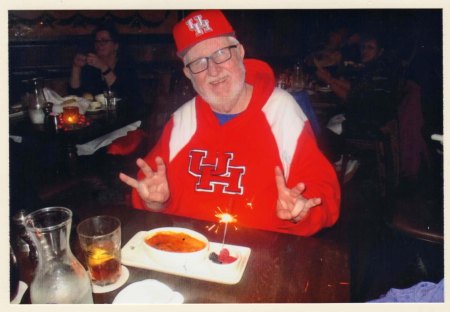
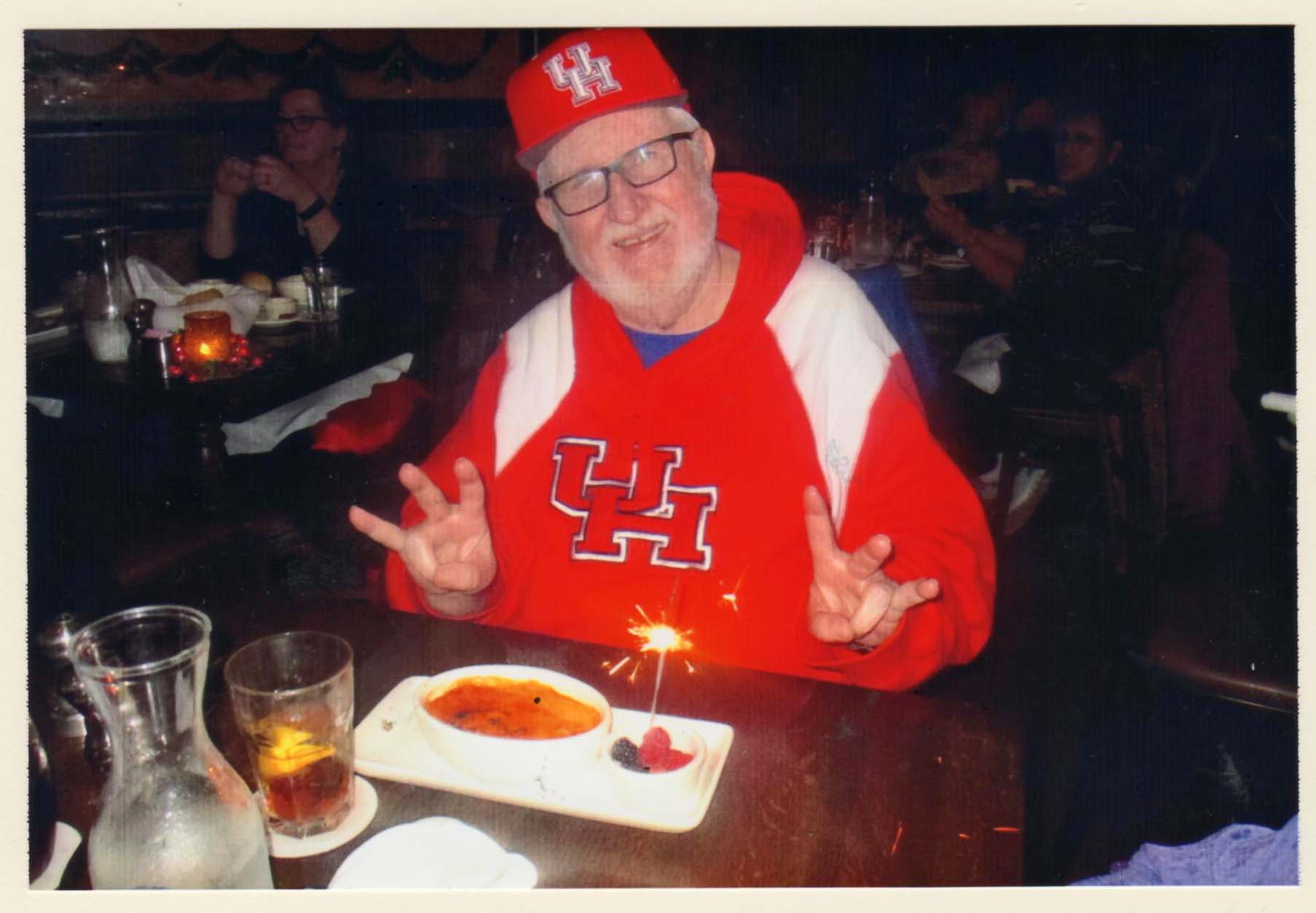
After the game, my family treated me to a terrific steak dinner at Taste of Texas, one that came complete with a complimentary birthday dessert and sparkler-lighted natal day photo salute to me making it through another year. These birthdays days always hum with hope and rejuvenation for me, anyway, but this one really came upon me with an extra special wallop charge.

Thanks, dear family! ~ And thanks again, you growling, rolling Cougars of Coach Tom Herman, thanks  for putting the special buzz on bliss for everybody in Cougar Nation this time around the birthday horn.

____________________

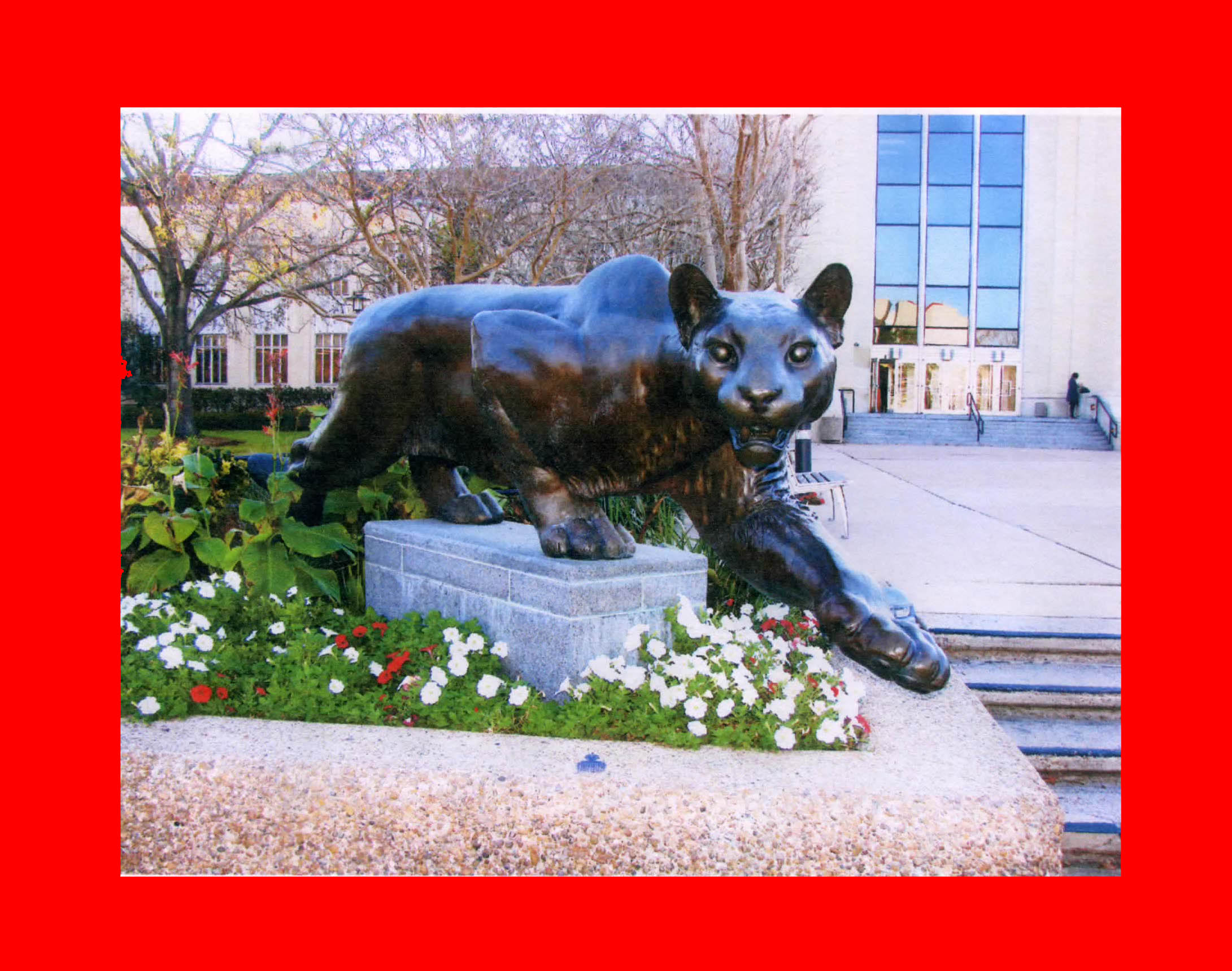
The lesson of UH’s win over Florida State, however, was much larger than a monumental game in the history of Cougar football and its hopefully now sooner return to national respect as big time player. It was an event that enhances the City of Houston brand as a place where people not only dream big, it is a culture where people also put their hopes into action with character, hard work, and a determination for success that actually gets the job done.

The Tom Herman story alone is the dynamo that stirs this energy drink. – How many schools anywhere have had Don Quixote come in as a football coach and take a previously lackluster group of young men in one season to 13 wins and victory over a major foe in their first year at the helm? Stop right there. You already have the list. And his name is Tom Herman. Whether he stays with us three years, five years, or a most welcome forever, by what we’ve seen, so far, Tom Herman already has placed UH on a track to restored national respect, an eventual Top Five conference home, and made UH an immediately much stronger recruitment attraction for the nation’s top high school players.

Tom Herman was no psychotic Don Quixote who only idly led any who followed him into tilting their swords at windmills they could not hope to topple with dreams alone. This UH Don Quixote came prepared to lead the Cougars into knocking down the windmills of resistance that have stood in the way of long-term success since the Yeoman years. Herman even got to the UH Board of Regents on the oblique. UH finally saw that they had to start paying their coaches at a level that would give the university a chance of retaining winners. The elevation of Herman’s salary wasn’t all that will be needed, but it was a significant step up from the “stepping stone” salary level that previously cost them Art Briles to Baylor and Kevin Sumlin to Texas A&M.

The first general point we hope to make this morning is that UH made the City of Houston look good yesterday – and anything that makes our city more respected in a legitimate way benefits us all. UH football success is not going to hurt UT, A&M, or any other Texas university. It will only help us all. It may make recruiting a little tougher, but tougher competition makes every school, including UH, stronger. – Without competition, many young student athletes will simply make the dead-head decision to just sign up with “THE” school to go to – and then lapse into the sort of entitlement culture that makes some four and five-star recruits show up at their chosen special school expecting stardom to just kick in as soon as they turn on the game cameras in the fall.

Note: UH beat talent-loaded FSU yesterday without any big five stars. Fortunately, UH was not short of players who had been taught by Tom Herman to learn and take passionate personal responsibility for playing the game to the best of their abilities for the team goal of winning.

The second point today makes sense too, but only if you see and agree that anything legitimate that makes any part of Houston look better to the world also makes the whole of Houston look better too. It is important to the issue of how we finally settle the future of the Astrodome question, hopefully, in 2016.

They may be distant and silent for now, but the whole world really is watching what we are about to do with a structure that is revered by others as an architectural icon. Will the larger reward from re-purposing the Dome’s utilization destiny for the sake of history help Houston build a new reputation as a city with the character to care about historical preservation?

Yes! You bet it will!

Astros-Emojis 01

Will the demolition of the Astrodome only serve to reinforce the impression of many others that Houston is strictly a marketplace that cares nothing about history – and a city where some developers would pave over cemeteries for additional parking space, if they could get away with it?

Yes! You bet it will!

Refresh the Happy New Year! button on that note, friends.

____________________
Temple@UH 120515 07


All I Want for New Years is a Cougar Win

December 31, 2015

EPSON MFP image

All I want for New Years is a Cougar win!

A Cougar win! ~ A Cougar win!

All I want for New Years is a Cougar WINNNNNNNNN!

So my heart can dance with Lady Shas ~ ta!

shasta

____________________

A Post-Game Reflection, Thursday, December 31, 2015, 11:15 PM CST

taste-of-tx-12-31-15a

Thanks, Houston Cougars, for making my New Years wish come true. Your 38-24 win over a good Florida State Seminoles team earlier this afternoon not only sweetened New Years, it also turned out to be the happiest New Years Eve birthday gift I’ve ever received.

After the game, my family treated me to a terrific steak dinner at Taste of Texas, one that came complete with a complimentary birthday dessert and sparkler-lighted natal day photo salute to me making it through another year. These birthdays days always hum with hope and rejuvenation for me, anyway, but this one really came upon me with an extra special wallop charge.

Thanks, dear family! ~ And thanks again you growling, rolling Cougars of Coach Tom Herman for putting the special buzz on bliss for everybody in Cougar Nation this time around the birthday horn.

____________________

Happy-New-Year-Clip-Art-Free

Happy New Year

December 30, 2015

Happy-New-Year-Clip-Art-Free

Auld Lang Syne for unforgettable friends and acquaintances, plus a certain reverie for personal experience, all take on a richer, sometimes sad or now settled “what might have been” quality with age, but that’s not our original discovery. It lived in recognition among the ancient Greeks.

As humans, we have the capacity to grieve over anything. From what is now done and gone forever, we may grieve. But we may also grieve for all those things we once valued that were either never done – or left alone and unfulfilled.

These are the stuff, including the people involved, that are the producers of Auld Lang Syne. What we did, and didn’t do; whom we engaged as mates and partners in any life mission; and those we separated from, for reason or whim – all of these  are the fodder for our personal Auld Lang Syne.

And so our personal Auld Lang Syne rests within each of us as either the seed of wisdom that blooms over time – or sadly, if it is not absorbed, it becomes a major missed golden opportunity for those who never do get it. The absence of wisdom gained from personal experience is the major tax on those who live by the “Ignorance is Bliss” adage.

In fact, the tax on our rejection of the lessons from painful experience is to live in a state of redundancy, going through the same painful experience repeatedly over time for as long as we refuse the lesson –  or until we either get the lesson and make changes – or grow broke, mad, or die from the experience of avoidance.

We don’t like to think about this sort of thing, especially  on New Years Eve, but it is what it is. It’s with us as the driving wheel in our repetition of any pattern of similar disappointing consequence which fails us  as a teacher of the lesson it carries.

Behind every resolution we make at the new year is the energy we have used in the past to avoid the thing we now say we want to change.

longfellow_stamp

The other day, St. Thomas friend and author Rob Sangster sent me “The Meeting,” a lesser known poem by Henry Wadsworth Longfellow. This work by an iconic 19th century American poet implicitly personifies how aging too may inspire and enrich our appreciation for both the things our minds tell us that we did and did not do with our lives.

Our memories of “experiences fulfilled” and “experiences missed” work together to shape our abilities for greeting the new year on some level of peace with ourselves – or not.

In the end, as Longfellow describes it, it’s hard for us to distinguish the ghosts from the guests among our reverie ~ “and a mist and shadow of sadness steals over our merriest jests.”

The Meeting

by Henry Wadsworth Longfellow

After so long an absence
At last we meet again:
Does the meeting give us pleasure,
Or does it give us pain?

The tree of life has been shaken,
And but few of us linger now,
Like the Prophet’s two or three berries
In the top of the uttermost bough.

We cordially greet each other
In the old, familiar tone;
And we think, though we do not say it,
How old and gray he is grown!

We speak of a Merry Christmas
And many a Happy New Year
But each in his heart is thinking
Of those that are not here.

We speak of friends and their fortunes,
And of what they did and said,
Till the dead alone seem living,
And the living alone seem dead.

And at last we hardly distinguish
Between the ghosts and the guests;

And a mist and shadow of sadness
Steals over our merriest jests.

____________________

Happy New Year, Everybody!

10_14_07-039


Remembering Abner Haynes

December 30, 2015

Thanks, John “Big Foot” Phillips for reminding me what a great column this story would make.

If you watched the New England Patriots’ 26-20 OT loss to the New York Jets on December 26, 2015, you saw how important those pre-OT coin toss calls are to winning and losing. To fully appreciate the mistake in this instance, if Patriots Coach Bill Belichick was on the level with his post-game attempt to explain the confusion, we need to begin with a clear statement of what the two choices are for the team that wins the coin toss.

Coin Toss Winner Options: Winning the coin toss gives the winning team the right to (1) either receive or kick off on the first possession; or (2) choose which goal your team will defend.  If a team chooses to kick off, as the Pats did Saturday, the other team automatically earns the right to receive the ball, without doing anything else, and also now has the right to choose which goal they will defend as the receiving team. That choice is not always a big deal, especially in indoor venues, but it can also be huge this time of the year when fields have a north-south layout and some tough winds are roaring in from the north.

When Pats special teams captain Matthew Slater jogged out to make the coin toss call for the Pats, he says he had clear instructions from Coach Belichick to tell the officials that his team wanted to kick off, although his need to confirm that choice three of four times suggests that even Slater may have privately questioned the wisdom of kicking off and giving the Jets a chance to win the game with a sudden death TD on the first possession.

“We thought it was the best thing to do,” Belichick said in his post game press conference, reinforcing his statement that Slater’s call was not a mistake, even if still remained a mistake on another level.

You see, Slater expressed his team choice in these words: “We want to kick, that way.”

It took a few moments to clarify for Slater that he didn’t own the choice of goals too since he had already used it first as the team that would choose to kick off.

As fate sometimes dictates, the choice to kick off was fatal. A few plays later, the Jets scored a a touchdown which, under the modified rules governing scoring in NFL OT games, immediately made the Jets the winners by 26-20.

Slater apparently had confused the choice call to the more normal way a team uses it when they want the ball second. The coin toss winner  states which goal they choose to defend in almost 100% certainty that the other team will use their default choice to receive. It’s hard to figure what Belichick was thinking. He knows that better than of us. Sure, the Jets might have chosen to kick, but it’s not probable they would have done so. Technically, however, Belichick was correct. – The only certain way to assure that your team kicks off is to win the coin toss and have your representative say “We want to kick,” as Slater did. He simply didn’t own the “that way” portion of the selection.

Abner Haynes Dallas Texans AFL, 1962

Abner Haynes
Dallas Texans
AFL, 1962

If you are old enough, the Pats-Jets coin toss call mix-up is remindful of one that great running back Abner Haynes made in behalf of his Dallas Texans club in their 20-17 double OT AFL 3rd Championship game over the Huston Oilers at Jeppesen (later Robertson) Stadium on the UH campus back on December 23, 1962. The Oilers had won the first two new AFL crowns in 1960-61 under QB George Blanda and were battling hard to continue their string against the hated foes from Dallas. No true Houstonian cared at all for these Texans back in 1962. As you also probably know, owner Lamar Hunt got squeezed out of his market by the Cowboys, transferring his first Texans team to Kansas City and re-naming them as the Chiefs.

A crowd of 37,981 showed up at “The Jep” to cheer the Oilers. Yours truly was young, single, and down in Beeville, Texas in 1962 with my girl friend for a family Christmas visit. We watched the game on ABC-TV with my dad, hoping that the Oilers would win one for him on his birthday, but they did not.

After falling behind 17-0 in the first half, George Blanda brought the Oilers back to a 17-17 tie at the end of regulation time. It was also time for Abner Hayne’s signature call of the coin toss as the Texans’ representative.

Because of strong winds from the north, Coach Hank Stram wanted to defend the north goal in OT and to move toward the goal that held the large scoreboard to the south. (Remember, this is one of those things in which you “can’t never get what you want you want if you don’t say it right.”)

Wanting to defend the north goal and allow Houston the right to receive, Haynes won the pre-OT coin toss, expressing his wishes in these words: “We’ll kick to the clock!”

Haynes got what he asked for, not what he wanted. – The Oilers got to receive the ball by default and then use their pick to defend the goal with the wind at their backs.

Fortunately for Abner Haynes, the Oilers weren’t able to convert their good fortune on the call into a third straight AFL championship. The absence of scoring in the extra quarter simply carried the game into professional football history as the first double overtime game ever played. The Dallas Texans won it all on a Tommy Brooker field goal in double OT, 20-17.

Happy New Year Again, Everybody! – Hope your Christmas time was as peaceful, simple, and blessed as ours!

____________________

happy-new-year-2016b


Bill Gilbert: Triple Milestones – 2015

December 29, 2015
Astros analyst Bill Gilbert light the fires of the Hot Stove League season with a look at Triple Milestone winners from 2015.

Astros analyst Bill Gilbert lights the fires of the Hot Stove League season with a look at Triple Milestone winners from 2015.


Triple Milestones – 2015

 By Bill Gilbert

      Offensive production in the major leagues increased slightly in 2015. The number of runs and home runs per game increased in 2015 and batting average, on-base percentage and slugging average also increased in 2015 after steadily declining since 2000.

Year      Runs/Game HR/Game BAVG      OBA   SLG   OPS      Triple Milestone Hitters

—-      ——— ——- —-   —-   —- —     ————————

1990     8.51     1.58   .258 .324   .386   .710                  2

1991     8.62     1.61   .255 .323   .384   .707                  3

1992     8.23     1.44   .256 .322   .377   .699                  2

1993     9.20     1.78   .266 .332   .404   .736                  5

1994     9.85     2.07   .270 .339   .424 .763                  3

1995    9.69     2.02   .267 .338   .417   .755                  8

1996      10.07      2.19   .270      .340      .427   .767                 21

1997         9.53      2.05   .267      .337      .419   .756                  7

1998         9.58      2.08   .266      .335      .420   .755                 14

1999      10.17      2.28   .271 .345   .434   .779                 19

2000   10.28     2.34   .271 .345   .437   .782                 26

2001     9.55     2.25   .264 .332   .427   .759                 21

2002     9.24     2.09   .261 .331   .417   .748                 12

2003         9.46      2.14      .264      .332   .422   .754                  8

2004     9.63     2.25   .266 .335   .428   .763                 12

2005     9.18     2.06   .265 .330   .419   .749                 10

2006     9.72     2.22   .269 .336   .432   .768                 13

2007         9.59     2.04   .268 .336   .423   .759                  8

2008         9.30      2.01      .264 .333   .417   .750                   7

2009     9.23     2.02   .262 .333   .418   .751                 6

2010    8.77     1.90   .257 .325   .403   .728                 6

2011    8.57     1.87   .255 .321   .399   .720                 7

2012     8.64     2.03   .255 .319   .405   .724                 4

2013     8.33     1.92   .253 .318   .396   .714                 3

2014     8.13     1.73   .251 .314  .386   .700                 2

2015    8.50     2.02   .254 .317   .405   .721                 1

      Runs and home runs were up in 2015 to the highest level in 3 years. Nine players hit 40 or more home runs in 2015 compared to one in 2014 and two in 2013. The 30 home run level was reached by 20 players in 2015 compared to 11 in 2014 and 14 in 2013.

      A useful indicator for tracking offense is the number of players who hit for both power and average by achieving a .300 batting average, 30 home runs and 100 runs batted in. A record 26 players reached all three milestones in 2000, but that figure has dropped significantly in recent years. Only one player achieved all three in 2015, the lowest since 1989 when no players did it. Of the 20 players with 30+ home runs, only three batted over .300 and eleven had 100+ RBIs. Maintaining a .300 batting average is clearly the major problem in achieving triple milestones.

            The player that made the .300-30-100 club in 2015 was Paul Goldschmidt of Arizona, who did it for the second time

Player           Times BAVG-HR-RBI            Comments

Paul Goldschmidt      2      .321-33-110             Also stole 21 bases.

      The two MVP players just missed as did four others.

Player           Times BAVG-HR-RBI            Comments

Bryce Harper       0   .330-42- 99            Needed one more RBI.        

Josh Donaldson     0   .297-41-123         Lost .300 average in last week.

Mike Trout         0   .299-41- 90         Hasn’t made it yet.

Nelson Cruz       0   .302-44- 93         Better numbers than Trout.

Yoenis Cespedes   0   .291-35-105         Split between both leagues.

Jose Abreu         1   .290-30-101         Made it as rookie in 2014.

One other player made it in 2014 in addition to Abreu.

                           2014           2015

   Player           Times BAVG-HR-RBI   BAVG-HR-RBI  

Jose Abreu         1   .317-36-107   .290-30-101

Victor Martinez  1   .335-32-103   .245-11- 6

      The following list contains the names of players, active in 2015, who have had multiple .300-30-100 seasons in the past but have not done it in the last three years. Many have been limited by injuries. Some are still productive players like Albert Pujols, Ryan Braun and Adrian Beltre, but not at the same level as in their peak years. Since this list was started in 2004, David Ortiz is the only player that has come back with another triple milestone season.

                                Last

               .300-30-100 .300-30-100

Player           Seasons      Season     2015    Comments

Albert Pujols       10           2010   .244-40- 95   Five straight years under .300

Mark Teixeira       3           2008   .255-31- 79  Injuries have taken toll.

Ryan Braun           3         .2012   .285-25- 84   Minor comeback in 2015,

Aramis Ramirez       2           2004   .246-17- 75  Plans to retire.

Matt Holliday       2          2007   .279- 4- 35  Slowed by injuries.

David Wright         2           2008   .289- 5- 17 Injured most of season.

Josh Hamilton       2           2010   .253- 8- 25   No longer a superstar.

Adrian Beltre       2           2012   .287-18- 83   Slow start, strong finish.

      Twenty nine of the thirty major league teams have had at least one triple milestone hitter since the year 2000. Kansas City has not had a triple milestone hitter since Danny Tartabull in 1991.

      Only one minor league player recorded a triple milestone season in 2015.  

Player            Team (Level)         Organization Age      BAVG-HR-RBI

A.J. Reed            Lancaster (HiA)       Houston Astros 22         .346-23- 81                    

                 Corpus Christi (AA)                               .332-11- 46

                                                                     .340-34-127

     Another player, who split time between the majors and minors, just missed:

Carlos Correa     Corpus Christi (AA)   Houston Astros   20        .385- 7- 32      

                 Fresno (AAA)                                      .276- 3- 12

                 Houston (MAJ)                                      .279-22- 68

                                                                     .299-32-112                               

      No college players achieved triple milestones in 2015.

      Pitchers also strive for triple milestones – 20 wins, 200 strikeouts and an ERA under 3.00. Only two pitchers made all three in 2015 and they were the Cy Young Award winners:

               Wins-SO-ERA

Jake Arrieta     22-236-1.77

Dallas Keuchel   20-216-2.48

      Four other pitchers came close:

Gerrit Cole     19-202-2.60

Zack Greinke     19-200-1.66

Madison Bumgarner 18-234-2.93

David Price       18-225-2.45

      Of these six pitchers, Price is the only one with a previous triple milestone season. Arrieta and Keuchel were the only 20-game winners in 2015 but there were 12 pitchers with an ERA under 3.00 and 15 pitchers with 200 strikeouts. Winning 20 games is clearly the biggest obstacle in achieving a triple milestone season.

Bill Gilbert

bgilbert35@yahoo.com

12/28/15


____________________

Happy New Year to all from The Pecan Park Eagle!

happy-new-year-2016b

Remember Our Troops, Now and Forever

December 23, 2015

remember-our-troops

Overnight, going into Tuesday, 12/22/15, I received a really fascinating poetic seasonal tribute to the service of our military to the rest of us Americans. It was sent to George Comiskey, one of my classmates from the St. Thomas High School in Houston Class of 1956, by an old friend named Patrick McEnroe, but there had been no specific identification of the work’s author.

That being said, here’s how George Comiskey presented the e-mail gift to me and a mass list of other recipients: “Thank you Admiral Patrick McEnroe, my shipmate on the USS Howard D. Crow Galveston Bay, from Admiral George A. Comiskey Texas Navy and the U.S. Navy, Merry Christmas and Happy New Years.” ~ George Comiskey.

George latter added these details about his friendship history with Patrick McEnroe, adding his own resolve to help find the name of the poem’s author: “Admiral Pat McEnroe graduated from Stephen F. Austin High school (Houston). We met when I was a junior at St. Thomas and joined the Naval Reserve and Pat was in my class at the Naval Reserves. Pat’s son graduated from St. Thomas and went to the Air Force Academy and just retired from the Air Force. As an enlisted man, I had appointments to the Naval Academy and Air Force Academy. I chose the Naval Academy, where I served with Bill Gillespie from the class of 1955. I will find out Pat’s source of the poem.”

I forwarded the poem package to a number of you Tuesday morning, but your resounding positive reaction told me loudly that this piece truly deserved its own place as a Pecan Park Eagle Christmas tribute column to our military service people, complete with all the photos (except for the last one, added here) that had been worked into the cyber space presentation by its unnamed visual creator.

In time, when the author’s identity is learned, it will be added here. The writer who heard the muses for the sake of bringing life to this beautifully “different Christmas poem” deserves both our credit and appreciation.

Along the way, so far, we have been able to also clarify the side issue  that our George Comiskey, indeed, is a distant cousin of Charles Comiskey, the Baseball Hall of Fame player and early twentieth century owner of the Chicago White Sox. George explained his connection in these words:

“Charles Comiskey (of the Baseball Hall of Fame and Chicago Whites Sox ownership note) is my Grandfather James Comiskey’s cousin from Ireland. I was raised a White Sox fan in Cleveland.” – George Comiskey.

George left out the part of his family moving to Houston in time for his attendance and graduation from dear old St. Thomas.

A very special tribute and expression of gratitude flows from this work for those few of us who are specially called to defend the rest of us. This poem is not about the politicians and leaders who make mistakes with both our use, and non-use, of military power. It is about all the glorious men and women in uniform who give up their lives to the idea that America is deserving of their service, even if it means surrendering their own lives for the greater good.

Read it well. And listen mindfully to its message.

We cannot thank you enough, men and women of our American military services. Indeed, each of you who faithfully serves this nation are the polar opposites of those whose  base personal greed dictates all.


Peace and Love to All at Christmas Time!

c1-unnamed

A Different Christmas Poem

By Author Unknown (For Now, 12/22/2015)

c2mail.google.com

The embers glowed softly, and in their dim light,
I gazed round the room and I cherished the sight,
My wife was asleep, her head on my chest,
My daughter beside me, angelic in rest,
Outside the snow fell, a blanket of white,
Transforming the yard to a winter delight.

c3 mail.google.com

The sparkling lights in the tree I believe,
Completed the magic that was Christmas Eve.
My eyelids were heavy, my breathing was deep,
Secure and surrounded by love I would sleep.
In perfect contentment, or so it would seem,
So slumbered I, perhaps I started to dream.

c4 mail.google.com

The sound wasn’t loud, and it wasn’t too near,
But I opened my eyes when it tickled my ear.

Perhaps just a cough, I didn’t quite know,
Then the sure sound of footsteps outside in the snow.

My soul gave a tremble, I struggled to hear,
And I crept to the door just to see who was near.

Standing out in the cold and the dark of the night,
A lone figure stood, his face weary and tight.

c5 mail.google.com

A soldier, I puzzled, some twenty years old,
Perhaps a Trooper, huddled here in the cold.

Alone in the dark, he looked up and smiled,
Standing watch over me, and my wife and my child.

“What are you doing?” I asked without fear,
“Come in this moment. It’s freezing out here!

Put down your pack, brush the snow from your sleeve,
You should be at home on a cold Christmas Eve!”

For barely a moment I saw his eyes shift,
Away from the cold and the snow blown in drifts.

To the window that danced with a warm fire’s light
Then he sighed and he said, “It’s really all right,
I’m out here by choice. I’m here every night.”​

c6 mail.google.com


“It’s my duty to stand at the front of the line,
That separates you from the darkest of times.

No one had to ask or beg or implore me,
I’m proud to stand here like my fathers before me.
My Gramps died in Europe on a day in December,
Then he said, “That’s a Christmas ‘Gram always remembers.”
I’ve not seen my own son in more than a while,
But my wife sends me pictures. He’s sure got her smile.

Then he bent and he carefully pulled from his bag,
The red, white, and Blue American Flag.
I can live through the cold and the being alone,
Away from my family, my house and my home,
I can stand at my post through the rain and the sleet,
I can sleep in a foxhole with little to eat,
I can carry the weight of killing another,
Or lay down my life with my sister and brother,
Who stand at the front against any and all,
To ensure for all time that this flag will not fall.”

“So go back inside,” he said, “harbor no fright,
Your family is waiting and I’ll be all right.”
“But isn’t there something I can do, at the least,
“Give you money,” I asked, “or prepare you a feast?
It seems all too little for all that you’ve done,
For being away from your wife and your son.”
Then his eye welled a tear that held no regret,
“Just tell us you love us, and never forget.

c7 mail.google.com

To fight for our rights back at home while we’re gone,
To stand your own watch, no matter how long.
For when we come home, either standing or dead,
To know you remember we fought and we bled.
Is payment enough, and with that we will trust,
That we mattered to you as you mattered to us.”

_____________________

carol18cb


EPSON MFP image

Old Age is Not for Sissies

December 22, 2015

old-man

No Baseball Game Today!

But thanks to friend Earl Aldridge in Missouri, here are a few geriatric anecdotes for those who have lived long enough to be prepared for the lesson that “growing old is not for sissies,” nor is it an adventure that will be at all pleasant without the presence of a sense of humor.

Thanks for the following stories, Earl. We don’t know where you got them, but who cares? They are right on point to some fairly common experiences we all may get to see a piece of in ourselves or loved ones over time. My late mom introduced me to the territory about 25 years ago when I attended a St. Patrick’s Day party in San Patricio, Texas, where the purest Irish blood in my family comes from.

Early in the day, Mom called me over for introductions one of her friends. “Bill,” Mom said, “I want you to meet a lady who is one of my dearest friends in the world ….” (A long pause followed as Mom turned to the woman standing beside us.) …. “Excuse me, dear,” Mom said to the lady, “what did you say your name was?”

You betcha! That was quite a party. – It was good that the woman was compassionate, understanding, and in possession of a sense of humor. After she then introduced herself to me, the friend turned back to Mom. “Don’t worry about it, Doris,” she said. “I forget all about you all the time,”  she added, as they both laughed and hugged.

These stories from Missouri should resonate everywhere:

1) The Ice Cream Bowl Request

A couple in their nineties are both having problems remembering things. During a check-up, the doctor tells them that they’re physically okay, but they might want to start writing things down to help them remember. Later that night, while watching TV, the old man gets up from his chair ‘Want anything while I’m in the kitchen?’ he asks.

‘Will you get me a bowl of ice cream?’

‘Sure.’

‘Don’t you think you should write it down so you can remember it?’ she asks.


‘No, I can remember it.’


‘Well, I’d like some strawberries on top, too. Maybe you should write it down, so as not to forget it?’


He says, ‘I can remember that. You want a bowl of ice cream with strawberries.’


‘I’d also like whipped cream. I’m certain you’ll forget that, write it down?’ she asks.


Irritated, he says, ‘I don’t need to write it down, I can remember it! Ice cream with strawberries and whipped cream – I got it, for goodness sake!’


Then he toddles into the kitchen. After about 20 minutes, the old man returns from the kitchen and hands his wife a plate of bacon and eggs. She stares at the plate for a moment.

‘Where’s my toast?’


2) A Rose is Not Always the Rose that Comes to Mind

An elderly couple had dinner at another couple’s house, and after eating, the wives left the table and went into the kitchen. The two gentlemen were talking, and one said, ‘Last night we went out to a new restaurant and it was really great. I would recommend it very highly.’ The other man said, ‘What is the name of the restaurant?’

The first man thought and thought and finally said, ‘What’s the name of that flower you give to someone you love? You know, the one that’s red and has thorns.’ 

‘Do you mean a rose?’

‘Yes, that’s the one,’ replied the man. He then turned towards the kitchen and yelled, ‘Rose, what’s the name of that restaurant we went to last night?’


3) Never Assume from the Obvious

Hospital regulations require a wheel chair for patients being discharged. However, while working as a student nurse, I found one elderly gentleman already dressed and sitting on the bed with a suitcase at his feet, who insisted he didn’t need my help to leave the hospital. After a chat about rules being rules, he reluctantly let me wheel him to the elevator.  On the way down I asked him if his wife was meeting him. ‘I don’t know,’ he said. ‘She’s still upstairs in the bathroom changing out of her hospital gown.’


4) Necessity is the Mother of Invention

A senior citizen said to his eighty-year old buddy: ‘So I hear you’re getting married?’

‘Yep!’

‘Do I know her?’

‘Nope!’

‘This woman, is she good looking?’

‘Not really.’

‘Is she a good cook?’

‘Naw, she can’t cook too well.’

‘Does she have lots of money?’

‘Nope! Poor as a church mouse.’

‘Why in the world do you want to marry her then?’

‘Because she can still drive!’


5) Say again


A man was telling his neighbor, ‘I just bought a new hearing aid. It cost me four thousand dollars, but it’s state of the art. It’s perfect.’

‘Really,’ answered the neighbor. ‘What kind is it?’

‘Twelve thirty.’


6) Get the Doctor to Write It Down


Morris , an 82 year-old man, went to the doctor to get a physical. 


A few days later, the doctor saw Morris walking down the street with a gorgeous young woman on his arm. A couple of days later, the doctor spoke to Morris and said, ‘You’re really doing great, aren’t you?’  Morris replied, ‘Just doing what you said, Doc: ‘Get a hot mamma and be cheerful.”

The doctor said, ‘I didn’t say that! ….  I said, ‘You’ve got a heart murmur; be careful.!’

Two more ….


7) Falling …. It’s one way of getting to where you often think you need to be.

You know you’re getting older when you fall in your own house and the first thought that comes to mind upon hitting the floor  is – ‘I wonder what else I can get done as long as I’m down here?’


8) Nuts to You

A little old man shuffled slowly into an ice cream parlor and pulled himself slowly, painfully, up onto a stool. … After catching his breath, he ordered a banana split. The waitress asked kindly, ‘Crushed nuts?’

‘No,’ he replied, ‘Arthritis.’

____________________

"Don't forget to keep moving, folks. Christmas is only 3 days away!"

“Don’t forget to keep moving, folks. Christmas is only 3 days away!”


1963-64 Colt .45 “Skinny” Brown Dies

December 21, 2015
Hal "Skinny Brown pitched for the Chicago White Sox, the Boston Red Sox, the Baltimore Orioles, the New York Yankees, and Houston Colt .45s (1951-1964).

Hal “Skinny Brown pitched for the Chicago White Sox, the Boston Red Sox, the Baltimore Orioles, the New York Yankees, and Houston Colt .45s (1951-1964).


Thanks to an alert from Darrell Pittman of Astros Daily.com, The Pecan Park Eagle notes the passing of Hall “Skinny” Brown last Thursday, December 17, 2015 at age 91 in Greensboro, NC. Brown was a right-handed veteran knuckleballer who worked the last 2 years of his 14 seasons in the big leagues with the Houston Colt .45s. Skinny wasn’t a member of the original first year 1962 team, but he got there in time to see his final two seasons translate into a career losing record of 85 wins and 92 losses. His two-year record of 8 wins and 26 losses for the Colt .45s were the difference between Brown retiring with a losing rather than winning mark at age 39.

Rest in Peace, Skinny Brown! And thank you for your service to the establishment of Major League Baseball in Houston, even if the poor support you were given most often brought the roof down on your knuckle-balling head. Every great battle in life produces its casualties and your record here was one of those unfortunate consequences.

Here’s a link to an excellent obituary article on the career and death of Harold “Skinny” Brown at Greensboro.com

http://www.greensboro.com/sports/greensboro-knuckleballer-skinny-brown-lived-hall-of-fame-life/article_a6ecc0cc-1f68-5cc4-8cc8-af1c1def5dec.html

And here are two additional links to coverage given to Hal Brown at Astros Daily.com:

http://astrosdaily.com/history/deceased.html#Brown_Hal

http://astrosdaily.com/players/Brown_Hal.html

____________________

1094

You had to be a Musial to see it Early and Often

December 20, 2015
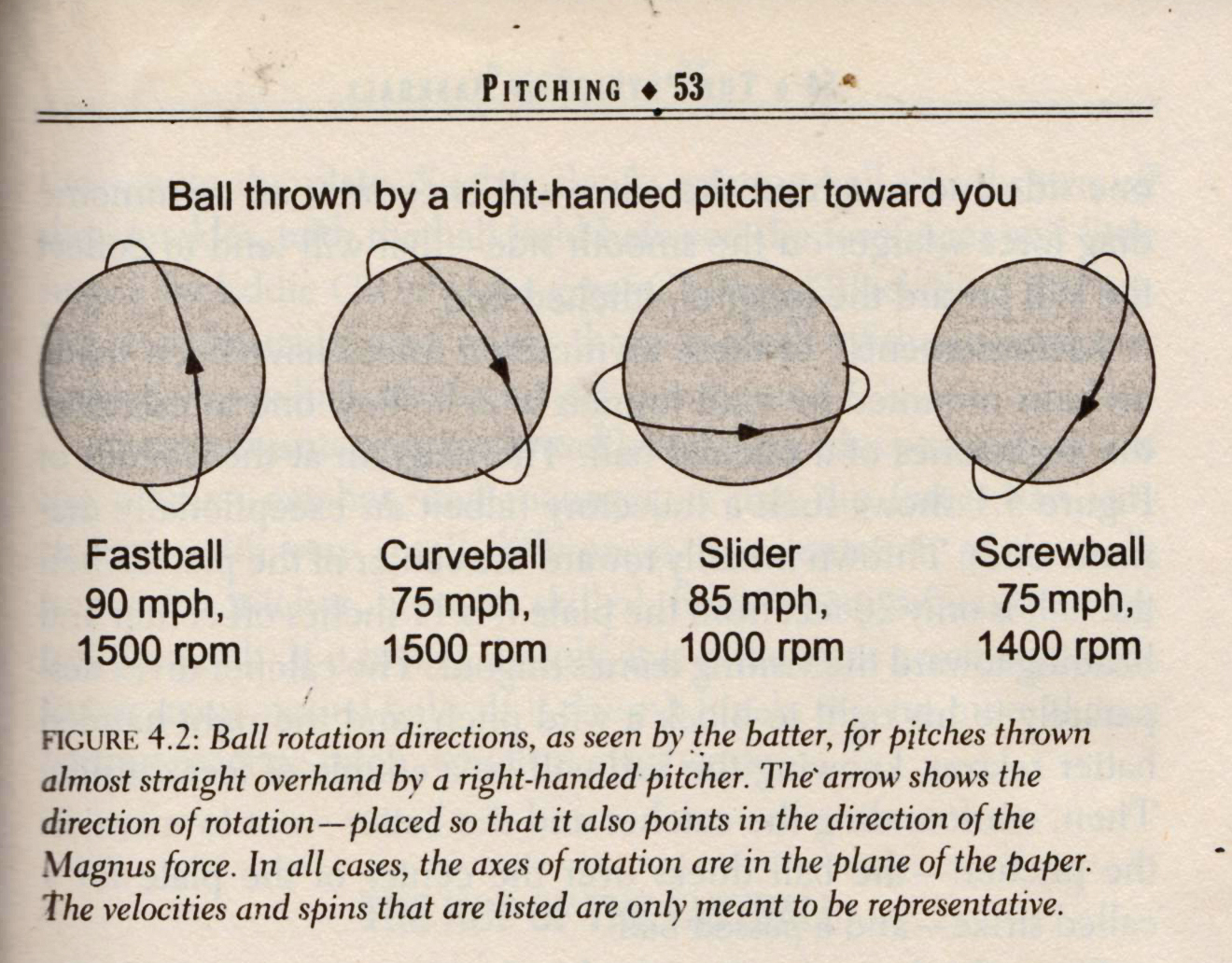
a presentational excerpt from "The Physics of Baseball" by Robert K. Adair, Ph.D.

The featured illustration above is a presentational excerpt here from “The Physics of Baseball” by Robert K. Adair, Ph.D.


Stan Musial was no physicist by degree, but he often spoke about hitting in ways that went way beyond the suggestion that he possessed an uncanny ability to see pitches early in the delivery and to know from memory what their direction of spin meant for him by the time they each reached the plate. Musial denied that he could actually see the spin of the ball.

In a 2009 Joint interview for Sporting News Magazine with Musial and Tony Gwynn, both denied that they could see the spin of the ball coming in, but neither may be able to report accurately what great vision and the unconscious mind is picking up in that minuscule lapse of time that it takes for the ball to reach the plate over the course of pitches in the thousands they have each seen as incredible batters. It almost  goes without saying that a hitter that understands where the ball is going by its spin, who also senses or sees the ball’s directional spin on an  unconscious level, may be processing that information neurologically and be directing him to make almost reflexive adjustments to posture and swing based on where the brain now thinks the ball is going.

The fact that neither Musial nor Gwynn report any conscious ability to see the spin of a pitched ball doesn’t mean they aren’t processing that information subliminally on an unconscious sensory/sight level. And that’s my theory. The TSN article does not address the point.

http://www.sportingnews.com/mlb-news/108638-talking-hitting-stan-musial-and-tony-gwynn

In “The Physics of Baseball”, physics scholar Robert K. Adair goes into detail about the laws governing motion and the action that these various releases of a pitched baseball have to the batters that face them by the time each reaches the plate.

For the featured pitches, as the illustration shows, energy and force builds in the direction of the ball’s spin in a way that causes the ball to break in the direction of the spin by the time it reaches the plate (in this case) from a pitch thrown by a right-handed pitcher to a right-handed batter.

And that’s leaving out all of the other variables of physics that really good pitchers and batters have to learn by trial and error over time of seeing the ball thrown in all these ways in ball parks where little things like local altitude, humidity, game time temperature and wind matter in the successful execution of both hitting and pitching.

Great players don’t have to be physicists to excel at a game which is totally controlled by the laws of physics at its base level, but, like Stan Musial, they have to be really superior on the sensory level to hold the edge over all others. Let’s use Stan Musial as an example here. We could have used Ted Williams or any other Hall of Fame player of noted superior eye sight.

Good pitchers, of course, are not dummies. They know that the batter’s ability to see their grip on the ball or any changes in delivery based upon the pitch that is coming, are advantages they must not give away to the batter, if at all possible. The really smart pitchers also build a pretty good book on the few with “Hall of Fame” conscious or subliminal vision for the early spin – as opposed to all the “cat and mouse” batters who have to rely a lot more on “next pitch guessing” and “Lady Luck” in making bat contact with the ball, where and when it arrives.

Like most, if not all brilliant science writers, Dr. Adair keeps on talking and writing, even when he early to often loses his audience. He still makes some points along the way that enrich our understanding the real base of our game. When a player gets injured running out a triple that turns out to be a foul ball call and a negation of the hit by the umpire, the player remains injured. He’s playing first in line with the laws of physics – and only second in allegiance to the laws of baseball. There are no “do-overs” for broken legs.

We read or listen to brilliant people in the hope of gleaming what we can absorb. Dr. Robert Adair is that kind of source. And he has given us a pretty varied view of the game at its scientific core. He certainly gets my admiration for his easy-to-understand rotation of the ball factor that I have humbly tried to present here in my own language – and we didn’t even get to what he said about knuckle balls.

Addendum: My thanks to Tom Hunter for the inclusion of the material from Sports Illustrated.

One Final Note: Jon Leonoudakis is a wonderful collector of published and verbally expressed baseball quotations. After reading this column today, Jon  sent me one he described as an “Apocryphal Musial story”

I knew I’d heard this story before, but could I not reference it to anything prior to hearing from Jon by e-mail. – Thanks, Jon! – You made my day!

According to Jon, the Musial story goes like this:

A younger guy on the Cards purportedly once asked Stan how to hit the curve ball: Stan (said): “Well, you watch the ball coming out of the pitcher’s hand, pick up the rotation of the ball, and then you whack the shit out of it!”

____________________

"Merry Christmas!"

“Merry Christmas!”

What Happened To The Bench Jockeys?

December 19, 2015
Leo Durocher The Lip wasn't quite as rough during his last managerial stop, but he was never mistaken for the Dalia Lama, even during his brief Astros tenure.

Leo Durocher
The Lip wasn’t quite as rough during his last managerial stop, but he was never mistaken for the Dalia Lama, even during his brief 1972-1973 Houston Astros tenure.


As a kid fan at Buff Stadium in the post WWII years, but only when my dad got his hands on the boss’s seats behind the Buffs dugout, I got an accelerated education on language and phrases that I just never heard much elsewhere – even in the blue collar culture of Houston’s east end, soap worked on tongues as well as hands.

The words and phrases I’m remembering here in technicolor and high quality sound were often to always concepts that were unavailable in the Merriam-Webster Dictionary. In fact, my early childhood lapse of full knowledge on the use of hyphens in formal speech had misled me to believe that “Merriam Webster” probably was somebody’s mom – and that she probably frowned on using words, singularly or roped to each other as expressions, that most people would hear and take in as dirty words and insults.

I learned these words and phrases on one abrupt trip that Buffs manager Al Hollingsworth made onto the field to have a discussion with Frenchy Arceneaux, the home plate umpire. Because this is basically a G-rated column, I won’t reveal the actual words that Al used and expressed in a voice tone loud enough to cover the first ten rows of the immediate area grandstands, but you should be able to figure them out from some brief descriptions:

According to Manager Al, Umpire Frenchy was “the son of a not-so-nice ‘b-word’ lady – asserting also that he was blind as a bat (the night-flying kind). The Buffs manager proceeded to further suggest that the umpire may have also been hampered in his vision of a pitched ball he called strike three because “he had his eyes closed and his head buried in another part of his anatomy during the time the ball sailed low and outside to batter Larry Miggins for what should have been a bases loaded walk with two outs – instead of an outrageously called strike three that killed a vigorous Buffs rally.

Before Al the Manager could get too far beyond his attempt to further canonize Frenchy the Ump “with the other ‘b-word’ that typifies all babies born out of wedlock,” Arceneaux interrupted Hollingsworth long enough to impart his own opinion on the tone of this ‘discussion’. Frenchy raised his right hand and used it to first point at Al – then to the Buffs clubhouse down the left field line. But Frenchy couldn’t stop there. Even though his reasons were obvious to all who could both see and hear, Frenchie felt that Al deserved an explanation for his abrupt ejection from the game.

“This is for being that part of the body that we all sit down upon in this matter, Al,” Frenchy roared. “Besides, as you should know by now, you don’t get to argue balls and strikes in baseball! – What’s the matter with you? Do you have excrement in place as the organic executive in charge of your decision-making?”

Things were brutal back in the day. Bench jockeys was the phrase that best  described those players who excelled at playing with the minds of the other team’s players on the field. We even had it full scale in organized kid ball – and some of the kid team managers would coach third base when their club was batting in an attempt to rattle the other team’s pitcher with the things they said to their man at the plate: “C’mon, Joey, get ready to hit this kid! He’s got nothing but hits to give away with that stuff he’s throwing!” It often worked. And in the little baseball sub-culture of my limited experience, people seldom objected. You were expected to just tune it out and play through it, when it happened.

And here’s a great example from World Series history.

On September 13, 1934, star Detroit Tiger pitcher Schoolboy Rowe made a guest appearance on the Eddie Cantor national radio show. Rowe got so caught up in the enjoyment of things that he finally blurted out to his wife over over the air: “How am I doing Edna?”

It was a salutation that come back to haunt him once the Tigers hooked up with the St. Louis Cardinals in the 1934 World Series.

The Tigers took on the Cardinals in Game Six at Detroit leading in the Series, 3 games to 2, and with Schoolboy Rowe going up against Paul Dean. Rowe would lose to the younger Dean, 4-3, surrendering 10 hits and enduring taunts of “How am I doing, Edna?” from Leo Durocher and the Cardinal bench for the bulk of the day – and worst of all – sending the Series to a Game Seven the following afternoon, October 9, 1934. Apparently the Cardinals had been listening to Rowe on the radio the night he made his affectionate plea to Edna at home.

Game Seven will always be recalled in Detroit as a Tiger nightmare. In the top of the 3rd inning, the Cardinals got to Tiger starter Elden Auker for four runs – and bringing Rowe back into action in this tense game of “no tomorrows” to hopefully stop the bleeding. It immediately rained more of the “How am I doing, Edna?” taunts as Rowe gave up two more of the final three runs scored by the Cardinals for a 7-run tab and, had it been boxing, a TKO win for the Cardinals. The Cardinals would go on to take Game Seven behind Dizzy Dean by 11-0, sending poor Schoolboy Rowe and his den of Tiger mates into a winter of discontent.

And it most probably sent Cardinals shortstop Leo Durocher home with a broad grin of happiness that he had been the leader of the pack in the “How a I doing, Edna?” taunt. “How am I doing, Edna – indeed!”

Were it possible, wouldn’t you love to hear Durocher’s self-congratulatory version of how he pulled off the “How am I doing, Edna?” heckle upon poor Schoolboy Rowe?

At any rate, where are these hecklers of the game in 2015? You see so much palsy-walsy stuff today between base-runners and fielders that it’s hard to imagine a lot of bitter stuff pouring from either dugout during most games.

Has the game simply lost most of its posterior-face people in the 21st century?

You tell me. I’d like to know.

Writer’s Note. In the original version of this column, please forgive me for incorrectly remembering the victim in the “How am I doing, Edna?” story as Elden Auker. I do know better. I forgot so well on a rush-to-publish day that I bypassed my usually tight fact check on anything questionable. I also want to credit and thank friend and legendary baseball man Tal Smith for e-mailing me of my most egregious error. Thanks for your understanding and support, dear readers.

____________________

ppebaseball7


.