Interesting Article on Ruth Sale to Yankees

March 8, 2016
Young Babe Ruth ~ He didn't choke the bat forever.

Young Babe Ruth
~ He didn’t choke the bat forever.

Interesting Article on Ruth Sale to Yankees

Larry Getlen has written a nice concise, in-depth piece summary review of Glen Stout’s new book, “The Selling of the Babe: The Deal That Changed Baseball and Created a Legend.” The piece was published this week, March 6, 2016, in the New York Post.

Book author Stout apparently argues that the Red Sox and most of the baseball world still didn’t realize what they had on their hands in Ruth when they dealt him in January of 1920.

So, why did Boston deal Babe Ruth away? He was a one-on-one likable guy, but he also was a totally impulsive and self-centered fellow whose vulnerabilities to self-destruction by decadent behavior touched all the bases off the field – from gluttony to heavy drinking to carousing that centered upon brothel patronage  all over the American League – to blowing all his money on gambling and other impulsive wasteful spending. For Ruth, there were no rainy days to save for. – For the Babe, life was an everyday hedonistic holiday. Life was to be lived to the end of “having fun” all the time – regardless of consequences – even if you had to miss part, or all, of a ball game to do it.

Sure, Ruth had this perverse ability to hit home runs like no one else, but the Red Sox reaction was first to resent the fact that Babe Ruth’s increasing power production as a hitter seemed to be distracting him from being the excellent pitcher he had been in his first four years. Then, when Boston tried to convert him into an outfielder, and removed him from pitching altogether, Ruth pouted over the change, claiming that he got bored standing in the outfield all the time, when he could be pitching sometimes too.

In the end, the Ruth sale to New York was not as simple as Harry Frazee needing the money for his Broadway production of  “No, No, Nanette.” – On many levels, the Red Sox wanted to unload the guy because he was very high maintenance. They failed to realize the one-of-a-kind-gem they had on their hands. Without full awareness, if any at all, the Red Sox were dealing away the man from Boston who already had begun the offensive process of changing the game with his new uppercut power swing at the ball.

Once Ruth did his thing in the 1920s, and it became obvious what Ruth had meant to the birth and spread of power-hitting baseball, the Red Sox only found consolation in the thought that he would not have hit as many home runs, had he been forced to remain in Boston and play all of his home games at Fenway Park.

As far as “The Curse of the Bambino” that kept the Sox out of the winner’s circle for 86 years, Stout says forget about it. The Red Sox problems for decades were poor player development in general and the kind of organizational racism that allowed players like Jackie Robinson and Willie Mays to escape their grasp when each was available right under their noses as prospects.

Here’s the link to the New York Post book review by Larry Getlen:

http://nypost.com/2016/03/06/the-real-reason-the-red-sox-sold-babe-ruth/


Thanks to Darrell Pittman for sending me this story link earlier today.

____________________

 eagle-0range Bill McCurdy

Publisher, Editor, Writer

The Pecan Park Eagle

Houston, Texas

https://bill37mccurdy.com/

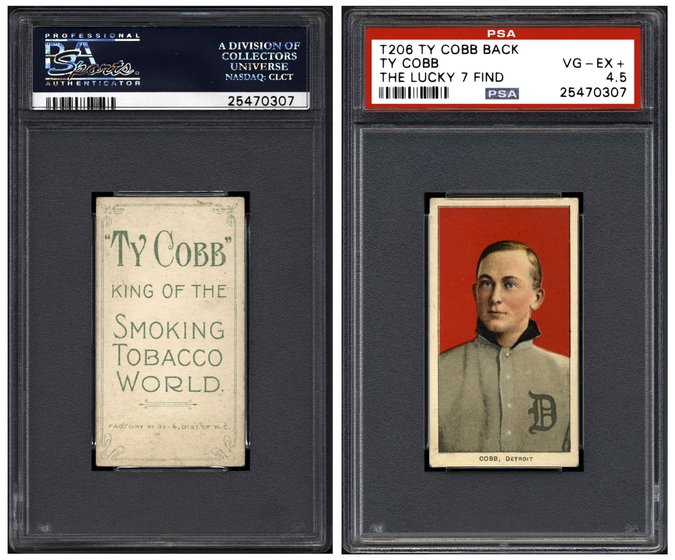
7-TY-COBB-CARDS-IN-ATTIC-BAG-MIRACLE-FIND

March 7, 2016

Cobb-in-the-box

7-TY-COBB-CARDS-IN-ATTIC-BAG-MIRACLE-FIND

Thank you, SABR friend Tony Cavender, for this delicious story of baseball card collectors’ wish-fulfillment. The linked article speaks for itself: Here’s the first paragraph to whet your appetites, followed by the link to the full course article:

“The unattended bag found while cleaning out a great-grandparent’s home looked like trash, and it was nearly discarded. But someone decided to root through the pile of postcards and paper products, and was rewarded by finding seven baseball cards from 1909 to 1911 featuring the Hall of Fame player Ty Cobb. …. (to continue, click link)”

____________________

 eagle-0range Bill McCurdy

Publisher, Editor, Writer

The Pecan Park Eagle

Houston, Texas

https://bill37mccurdy.com/

Take Me Out of the “Pol” Game

March 6, 2016
  • No pitcher would ever
Take Me Out of the Pol Game ~ Dr. Ben Carson

Take Me Out of the Pol Game
~ Dr. Ben Carson

Another wonderful suggestion by the always informed and entertaining contributor, Darrell Pittman, landed at The Pecan Park Eagle yesterday, Saturday morning, and it carried with it a double impact. It has provided us with an entertaining historical footnote from the State of Pennsylvania about the 1937 initiation of a political baseball game, a “pol-game”, by our way of thinking, if you please, but one that sprang from a base of meritorious need and purpose. – It also spurred the writing of today’s column take on this year’s political debate candidates and their own adventures in a fictional baseball game played yesterday on the White House south lawn.

Political Debates? Politicians stage cruel, often juvenile, unforgiving, and relentlessly expressed ones. If that’s really the case, let’s allow our politicians to have some playful outlet contact too. Nothing’s more fun than baseball, even if it altogether doesn’t in itself answer these questions about politicians and their relationships with work and play.

When politicians say terribly condemning and doom-loaded things about each other in a campaign, do they always really mean them – or are they just trying to bring the other candidate down for the sake of getting themselves elected? Is that really work for career politicians – or is that simply their form of public display – the kind that often does not get in the way of the same adversaries sleeping and eating together at night – and sucking together at the same big special interest money sources every fine morning that their mail or direct bank deposits arrive?

That reality baseball game back in 1937 Pennsylvania proposed a contest between the single and married members of the State House of Representatives, with the losers buying dinner for the winners at a first-class restaurant – and expressly not at a place called “Peanut Joe’s,” a referentially cheap hash-house, implicitly located in the Capitol of Harrisburg, PA. No follow-up note was found to confirm that the game was actually won – or even played.

Would a baseball game today between the Republican Red State Elephants and the Democratic Blue State Donkeys, each led by their various presidential candidates, be an activity of play – or would the Pols find a way to turn it into work? You decide.

Based upon the simulation game we moments ago ran in our mind, the red-clad Elephants and the blue-clad Donkeys just finished such a game on the south lawn of the White House. Since the Dems control the Executive Branch, for now, the Donkeys got to play as the home team. Donald Trump, the heralded schoolboy athlete, pitched the whole nine innings for the “Dumbos,” while Hillary Clinton hearkened back to her ancient experience with the Whitewater Backlashers to go all the way on the mound for the “Asses.”

It was battle of Titans, but one that ended in frustration when the Dems rallied for 5 runs in the bottom of the 9th to force a 9-9 tie in a game that had to be called as such due to darkness. The decision to call the game was made by home plate umpire Barack Obama. When asked by Pitcher Trump why the White House ground lights could not be turned on to allow the game to continue until a winning team conclusion could be reached, Obama gave this answer: “When you guys asked me to umpire your game, I made it clear that I would divorce myself completely from all my presidential powers in the interest of assuring neutrality in this matter. Turning on the lights would be a violation of that commitment. – Good evening, ladies and gentlemen, and be careful where you walk as you are leaving the grounds. It’s getting awfully dark out here without our normal lighting.”

Trump-Card2

The Post Game Press Conference

After this unusual and mostly unsatisfying conclusion, both teams, their entourages, close fans, and the media all retired a few blocks away to Willard’s Hotel for a previously agreed upon post-game press conference that aired on FOX, with moderators Megyn Kelly and Bill O’Reilly.

Here’s a sample of the major questions and answers provided:

(1) Q – Kelly: “Mr. Trump, do you think it was fair of President Obama to refuse lighting the grounds so the game could be played out to a decisive conclusion?”

A – Trump: “I don’t think it was fair, pretty lady, but few things in life are fair these days, sweetheart! … Uh, Megyn, Baby … what are you looking at? … Are you listening to all my deep thoughts … or are you watching the flow of my enormous hands?”

(2) Q – O’Reilly: “Mrs. Clinton, you don’t seem to be taking Umpire Obama’s actions to heart! – Your “Asses” made a fine rally to tie it all up in the 9th, but they didn’t win. Doesn’t that bother you at all that Obama’s decision about the ground lights cost your club a potential win – just when you had all the momentum going your way?”

 A – Clinton: “Not really, Bill. If you have been paying any attention to my campaign at all, you would know that I already think that America is still great – and that what we really need is to re-discover the joy of working together toward a common goal – and what better way to do that in baseball than to stop the game while the score was still tied. A tie gives both teams a small taste of victory and a lesser taste of defeat. In the tie game, we Dems get to feel a little progress on our way to making all Americans happy and taken care of – while the “Dumbos” sort of get to feel that they’ve made progress on their way to protecting the super rich on the backs of the rest of us again.”

(3) Q – O’Reilly: Mrs. Clinton, do you ever lie?”

A – Clinton: “I don’t think so, Bill. I always try not to lie. … Although I may have been lying to Harry Reed today. After he made 9 errors in right field, I told him that I thought that he could have done better. I may have been fibbing a little on that one, but when it comes to personal feelings, I always prefer a little bend on the truth to the truth itself. After all, as President of the United States, I don’t really want to hurt anyone else’s feelings. And, as for today, I’m making sure that even Harry Reed gets a participation trophy that is a dead ringer for MLB’s Golden Glove Award.”

(4) Q – Kelly: “Mrs. Clinton, you are aware, or are you not, that, if elected, you will become the first female President in the History of the United States?”

A – Clinton: “Thank you for telling me that, Megyn. I’ve been too busy serving the people to keep up with whatever my place in history may turn out to be.”

(5) Q – Kelly: “Mr. Cruz, four times today, you hit opposite field singles to right field that went through the legs of that Ass right fielder, Harry Reed. I actually have three questions here: (a) Were you trying to avoid left field? Nancy Pelosi was out there most of the game and, as we all know, a lot gets by her too. (b) Wouldn’t she also have been a good weak spot to pick on? And (c) Everybody wants to know the answer to this one. – You could have reached 3rd base or even home on all four of Reed’s errors. – Why on earth did you always stop at first?”

A – Cruz: “Megyn, as I think you well know, what you see in me is always what you get. I’m to the “right” on everything. I wouldn’t hit to “left” if Stephen Hawking was playing left field – and – as for my four singles, that’s all I would ever earn on my own, if my full-time job was playing baseball. See, I can get to first by running to my right. Going further than first on a ball I may have hit would require me to make up to three left turns – and that will never happen with me. If I’m on first, however, and someone else draws a walk, an HBP, or otherwise puts the ball in play for a hit or error, I can run as far as I can get because the burden is now off me. I didn’t hit the ball. Somebody else did. Same goes for wild pitches, passed balls, catcher interference calls, or bad throws by anybody trying to pick me off base. I am free to go on those misplays too. – On my own, however, I am forever a right-turn only guy. As such, no team would ever catch me even trying to steal – and that fact in itself is a pretty classy comment on true right wing conservatives. – We don’t steal.”

(6) Q – O’Reilly: “Mr. Rubio, when you came to bat in the top of the 9th, your Dumbos team had a 9-4 lead, with nobody out and the bases loaded. It was great time for you to put the game on ice, but you seemed too distracted by the argument you were having with a fan behind the backstop to even notice. As a direct result, Mrs. Clinton was able to hit your bat while you were standing legally in the box, but looking behind you and yelling at the fan – as you also flailed the bat in the air. We’re now sure how Hillary managed to hit the bat for an infield nubber back to the mound, but we do know that she’s had a lot of experience dealing with men who have plenty of crooked moves. This time her efforts were good for a 1-2-3-5 triple play that killed the runs that would have squelched the Ass team rally in the bottom of the 9th that tied the game and left everyone but Mrs. Clinton unhappy. In brief, you probably cost your team in the top of the 9th. – What was going on, sir, and what does your vulnerability to distraction say about your fitness for being the POTUS?”

A – Trump (Speaking before Rubio can answer O’Reilly’s question): “Little Marco’s a lightweight, Bill! – And, as far as distractibility is concerned, he’s got the biggest ears I’ve ever seen.”

Rubio: “You’re mean to me!”

Trump: “No, I’m not!”

Rubio: “YES! YOU! ARE!”

(7) Q – Kelly: “Governor Christie, how could you turn around and throw your support to Mr. Trump after all of the bad things you’ve both said about each other before your lack of support made it obvious to you that you needed to drop out of the race?”

A – Christie: “That’s easy, Ms. Kelly, this is politics. I picked up a few expenses in my own failed bid and figured it was time to hitch my wagon to the rising new party star. Maybe Mr. Trump can help me get out of debt – and maybe even find a place for me to serve in his cabinet, if he’s elected. In the meanwhile, positioning me behind “The Donald” when he makes new speeches kills two birds with one stone. – I am a visual reminder of what his campaign hopes the voters will view as the building, turning political tide of bandwagon support for Trump – and, yeah, I also look like a bodyguard!”

(8) Q – O’Reilly: “Mr. Bush – JEB! – if you prefer, what was the deal in the top of the 7th? Why did you try stealing home from 3rd base while riding on the back of a 140 year old Galapagos turtle?”

A – JEB!: “Well, I figured I didn’t have the speed to make it on my own – and – even if it did turn into an easy put out of me, I do want to try that turtle ride again. – WHEE – it was fun – fast fun!”

(9) Q – Kelly: “Governor Kasich, aside from your fine play at first base for the Dumbos today, how do you feel about the campaign news that you’ve actually taken the lead from Donald Trump on this same day of primary voting in Michigan?

A – Kasich: “Ms. Kelly, I’ve been telling everyone to watch out for my presence in the race once we got into the primary voting by northern states – and Michigan just proves my point. If a state that calls the University of Michigan home will vote for the Governor of the state that serves as home to “The” Ohio State University – in preference to Donald Trump – then watch out, America, this race isn’t over til it’s over – and we are not about to settle for a tie as our conclusion in this one!”

(10) Q – O’Reilly: “Mr. Sanders, as the shortstop for eight – and far left fielder in relief of Potosi in the 9th, what do you take away from the game today, including the fact that the game was forced to stop as a tie due to darkness because of “Umpire” Obama’s decision not to turn on the lights at The White House south lawn? And why did you play left field with both feet as far left as possible, with left foot kicking right, and on the line?”

A – Sanders: “I’ll take the last part first since it’s the easiest. I played on the left field line simply because that was as far left as I could go! Another inch left and I would have been in foul territory by today’s rules. – That’s a rule that needs to be liberalized, by the way. As for the game itself, it made me think about the big money that big leaguers are making – and their own need for revolution. Look! The richest big leaguers get millions a year, whereas, the poor rookies have to work for about $500,000 a year! – True, the rookies are getting paid more than 100% of all American wage earners of any age – and more than 98% of all other young people, except for the NFL and NBA youngsters – and certain others, like singer Taylor Swift – but you get my point. – Every player in MLB should get paid the same, regardless of any differences in playing ability or time on the field – just to make things fair. As for the tie in our game today – I saw it as prophetic. The day has to come when there are no losers. And the only way to honor that truth is to make sure that every American citizen – and every immigrant who gets here – however they get here – has the same opportunity. All people are equally valuable – whether they are out there searching for a cure to cancer – or just staying home drinking a few beers as they watch Days of Our Lives all week. – When I become the POTUS, it will be both my job and my honor to do everything that’s possible to get us there to that all-fair status.”

(11) Q – Kelly: “Dr. Carson, we don’t have much time left tonight, but could you take us to the top of the news hour with a simple explanation of why you even came today. You dropped out of the race only a few days ago – with a hopelessly low percentage of voter support overall – and yet – you show up today – and then refuse to play in the game. – Can you tell us what that’s all about?”

A – Carson: “I will be most happy to tell you, Ms. Kelly. I only came today – and did what I did – because I knew you would later have to ask me precisely the question you have just posed. I will answer with my own singing parody of ‘Take Me Out to The Ball Game:”

Take me out of the Pol Game,

Take me out of the crowd!

Grant me some Soul Peace in great big sacks,

I don’t care – if I ne-ver-come-back!

I’ll still root, Root, ROOT for my country,

If the Pols bring it down that’s our shame!

Should be ONE! … TWO! … THREE lies they’re out,

Or we’re ALL – TO – BLAME!

____________________

Political Postscript: It took me way too long to figure this one political wisdom out, but, once I got it, it made it hard for me to trust what almost any political candidate says:

In politics, it’s not who they know that allows an ambitious politician to get ahead. – It’s what they know about who they know that becomes their sociopathic bargaining chip.

Dr. Ben Carson was not a politician. He was a gentleman and a scholar who cared about his country.

____________________

 eagle-0range Bill McCurdy

Publisher, Editor, Writer

The Pecan Park Eagle

Houston, Texas

https://bill37mccurdy.com/


“Rode Bases on a Cloud,” Thomson Says

March 5, 2016
Bobby Thomson New York Giants October 3, 1951

Bobby Thomson
New York Giants
October 3, 1951


United Press, October 4, 1951

“Rode Bases on a Cloud,” Thomson Says

By Bobby Thomson (As Told to the United Press)

(Bobby Thomson’s ninth-inning homer with two on gave the Giants a 5-4 victory over Brooklyn yesterday and the National League pennant along with it in one of the most storied finishes of all time. In the following dispatch, Thomson tells how he did it.)

New York, Oct. 4 (UP) – I didn’t run around the bases – I rode around ’em on a cloud.

“I still don’t know what time it is or where I am. Frankly, I don’t care.

Going around those bases in the ninth inning, I just couldn’t believe what was happening to me. I felt as if I was actually living one of those middle-of-the-night dreams.  You know, everything was hazy.

I heard yells … I saw paper flying … I saw people jumping in the air, but through it all, I just kept riding high on that cloud.

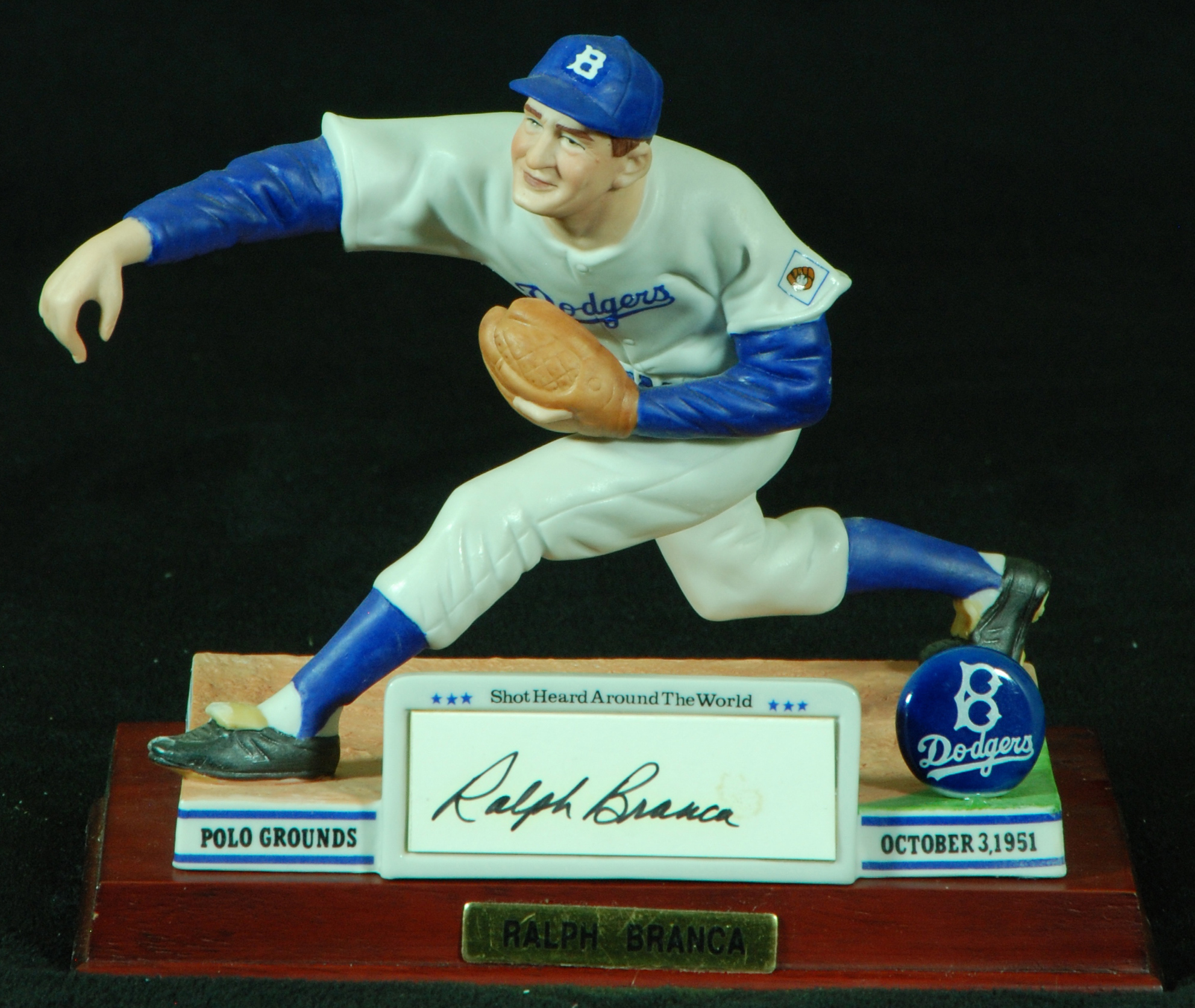
Ralph Branca Brooklyn Dodgers October 3, 1951

Ralph Branca
Brooklyn Dodgers
October 3, 1951

The pitch I hit off Ralph Branca for that home run was a high, inside pitch. I mean it was real high – high and bad, almost up to my head – but it’s the best pitch I ever hit in my life, the best, by far.

After I swung, I knew I hit it real well, but I wasn’t at all sure it was gone. It seemed to me it was sinking as it neared the stands, but how could I be sure? I just kept riding until I came to the end of the line.

Everything seemed to come out all right yesterday, even though I was looking for a place to hide after I overran first base and got caught in the second inning. That was just a bad mistake on my part and I’m glad I did something to help the fans forget that bit of bad base-running.

While I’m about it, I’d like to point out that this ball club never gave up. … But even after Brooklyn got three runs in the eighth, we all felt we would still win.

But I don’t want to write in too serious a vein now. I feel too light and happy for that.

I feel so swell, as a matter of fact, that I love everybody – even Charlie Dressen.

What a feeling!”

~ Bobby Thomson, United Press, As Printed in the East Liverpool (Ontario) Review, October 4, 1951, Page 18.

And on the same newspaper page as the Thomson account, Monte Irvin of the New York Giants gave us this great quote, only moments after the Thomson Shot Heard ‘Round the World rang out for the first time to the hearts and minds of the entire baseball planet:

“I’m numb! – Tell me, what happened?” ~ Monte Irvin, Polo Grounds, around 4:00 PM, October 3, 1951.

____________________

 eagle-0range Bill McCurdy

Publisher, Editor, Writer

The Pecan Park Eagle

Houston, Texas

https://bill37mccurdy.com/

Fifty-Two Shades of Great Baseball Drama

March 4, 2016
"You want drama??? ~ I'll give you all the drama you can handle!!!" ~ George Brett

“You want drama??? ~ I’ll give you all the drama you can handle!!!”
~ George Brett


Fifty-Two Shades of Great Baseball Drama.

They weren’t all great on the happy side of life. As long as baseball remains a “joy of victory” vs. “the agony of defeat” kind of polarizing-result activity, which it always shall be, if it is to remain the game of baseball we all love, no list of this nature could ever be completely happy for everyone.

This one-column-of-limited-time-thought list also is not held out here as any kind of final word on the 50 greatest dramatic moments or sagas in baseball history, so, again, as we did with the greatest home run column inquiry yesterday, please let us know, from among these, or your own picks, what you hold onto as some of the most dramatic moments or mentions in baseball history. What are the most spellbinding or intriguing memories do you hold for any magical mark, event, process, or outcome in baseball history?

The Story line of baseball is not fiction, but it often plays out as better than anything our most brilliant novel writers could ever hope to create.

Here is our list of 50 magically written Moments in Great Baseball Drama. You may find some of our Pecan Park Eagle picks to be favorites of your own, as well.

  1. Mathewson Pitches 3rd shutout win in same World Series (1905)
  2. Merkle Bonehead Play; Failure to Touch 2nd on game-winning single becomes force out that negates Giants win, leading to pennant loss (1908)
  3. Misjudged Fly Ball by Snodgrass in 10th Contributes to World Series Loss by Giants in Game 7 (1912)
  4. Red S0x Trade Babe Ruth to Yankees (1920)
  5. Black Sox Scandal of 1919 Culminates in Lifetime Ban for Eight Chicago White Sox Players (1921)
  6. Senators use pebble-bounce single to tie game and another bad hop bounce hit in 12th to win World Series (1924)
  7. Alexander Strike Out of Lazzeri in 7th with Bases Loaded in Game 7 is key to Cardinal Series Win (1926)
  8. Babe Ruth Hits 60th HR of Seas0n (1927)
  9. Cubs suffer Biggest World Series Blown Lead of 8-0 when A’s Rally for 10 in 7th Inning of Game 4 (1929)
  10. Lou Gehrig Joins Short List of Those with 4 HR in One Game (1932)
  11. Carl Hubbell Strikes Out 5 Consecutive Future HOF Great Hitters in 2nd All Star Game (1934)
  12. Babe Ruth’s 3-HR Game Goodbye to Baseball in Pittsburgh (1935)
  13. Johnny Vander Meer Wins 2nd Consecutive No Hitter (1938)
  14. Gabby Hartnett’s Walk-Off  ‘Homer in the Gloamin’ vaults Cubs into 1st Place on way to pennant (1938)
  15. Ted Williams’ Walk-Off 3-Run Homer with 2 outs in 9th Wins All Star Game for AL (1941)
  16. Joe DiMaggio Hits safely in 56 straight games (1941)
  17. Ted Williams Homer Wins All Star Game for AL (1941)
  18. Ted Williams Risks Losing .400 BA; Refuses to sit out last day DH and goes 6 for 8 to finish at .406 (1941)
  19. Mickey Owens’ passed ball effectively loses World Series for Dodgers (1941)
  20. St. Louis Browns (1902-1953) Win Their Only AL Pennant in History. (1944)
  21. Slaughter’s Mad Dash Home from 1st is the “sight-byte” on Cardinals Win over Red Sox (1946)
  22. Jackie Robinson Breaks the Color Line with Brooklyn Dodgers (1947)
  23. Cookie Lavagetto of the Dodgers breaks up No-Hitter of Yankees’ Bill Bevins in 9th with double off RF Wall (1947)
  24. Cleveland Defeats Boston in One Game Playoff for AL Pennant (1948)
  25. New York Defeats Boston on Last Day of Season for AL Pennant (1949)
  26. Sisler’s 3-Run HR in 10th paces Phillies over Dodgers for NL pennant on last day of season. (1950)
  27. Eddie Gaedel of the Browns becomes the first and only genetically qualified person to appear in a game as the sole “vertically challenged” batter in MLB history (1951)
  28. Billy Martin’s Dramatic Infield Fly Catch in World Series (1952)
  29. “The Catch” by Willie Mays in Polo Grounds World Series Game (1954)
  30. Brooklyn Dodgers win their only World Series (1955)
  31. Don Larsen’s World Series Perfect Game, (1956)
  32. Mazeroski and Game 7 of the World Series (1960)
  33. The Dramatic Assault Upon Ruth’s 60 HR Mark by Maris and Mantle (1961)
  34. Koufax and Co. Limit Yankees to 4 runs in 4 game Dodgers Series Sweep (1963)
  35. Cardinals Pass “Foldin’ Phillies” to take 7-Game World Series over Yankees (1964)
  36. The Astrodome Joins Baseball as the Eighth Wonder of the World (1965)
  37. Denny McClain wins 30, but Mickey Lolich wins 3 to lead Tigers over Cardinals in World Series Rally (1968)
  38. The Miracle Mets’ first World Series and Championship Season (1969)
  39. Hank Aaron passes Babe Ruth on Career HR list by hitting #715 on April 8 (1974)
  40. Carlton Fisk’s Hand-Coached-Fair HR wins G6 for Boston, Allowing Red Sox One More Day of Life in World Series (1975)
  41. Reggie Jackson’s 3 HR in 6-Game Yankees World Series win over Dodgers vaults him into “Mr. October” identity (1977)
  42. Bucky Dent HR paces Yankees past Red Sox in one-game AL pennant playoff (1978)
  43. Astros meltdown to Phillies in NLCS (1980)
  44. George Brett, Billy Martin, and “The Pine Tar Incident” (1983)
  45. Pete Rose passes Ty Cobb as all time hit leader when he gets #4,192 on September 8 (1985)
  46. Umpire Don Denkinger’s blown call at first kills Cardinal Series win in G6; Royals blow STL away in G7 (1985)
  47. Mets Rally to Beat Astros, 7-6, in 16th inning of NLCS G6 to take NL pennant (1986)
  48. Bill Buckner and the World Series batted ball that went between his legs (1986)
  49. The Lost World Series Year (1994)
  50. The Assault by Mark McGwire and Sammy Sosa upon Roger Maris’s record 61* HR season (1998)
  51. D-Backs defeat Yankees in 9th inning of G7 with soft RBI single up middle by Luis Gonzalez off Mariano Rivera (2001)
  52. Astros’ 18-inning win over the Braves in the NLDS; the game is won by the eventual pennant winners when Chris Burke of the Astros hits a walk-off homer in the bottom of the final frame (2005)

Have fun. And please comment.

____________________

 eagle-0range Bill McCurdy

Publisher, Editor, Writer

The Pecan Park Eagle

Houston, Texas

https://bill37mccurdy.com/


Biggest Home Run In Baseball History?

March 3, 2016
Had it not been for a home run he hit in the Polo Grounds back on on October 3, 1951, how many fans today would remember Bobby Thomson any better than they probably do another old New York Giant teammate named Hank Thompson?

Had it not been for a home run he hit in the Polo Grounds back on October 3, 1951, how many fans today would remember Bobby Thomson any better than they probably do today another old New York Giant teammate named Hank Thompson?

We don’t expect agreement on the answer to this question, but please tell us what you think, anyway. – What was the biggest home run in baseball history? Was it a miracle shot, the singular kind requiring a rare moment in which arrogance and special powers work together with either destiny or dumb luck to actually happen? Or was it one of those blasts that elevates the doer of that distant past deed into the memory of fans, and maybe even into the Hall of Fame, in a way that may not otherwise have happened? Was it that asterisk-plastered mark that became part of our baseball language because the Commissioner at that time didn’t like the fact that the doer had an 8-games longer season to accomplish what the biggest legend in baseball history did in fewer than 154 games? Or was it just one of those season or career HR marks that came along in more recent times by a couple of men still suspected of having some steroid assistance?

What was it? – What do you think it was? – Or, let’s be exhaustive here – was there ever even a single HR that stands out above all others in baseball history?

(1) Was it the one we’ve been talking about for two days, Babe Ruth’s Called Shot in Game 3 of the World Series at Wrigley Field in Chicago on October 1, 1932?

(2) How about Bill Mazeroski’s 10th inning homer in the 10th inning of Game 7 of the 1960 World Series, the one that gave the Pirates their dramatic win over the favored Yankees?

(3) Does Bobby Thomson’s “Shot Heard ‘Round the World” in Games 3 of the New York Giants’ 1951 remarkable comeback story in the NL pennant race with the Brooklyn Dodgers ring the bell?

Or maybe it was one of these season or career record-breaking homers:

(4) Babe Ruth hits No. 60 in 1927 for the new single season record?

(5) Roger Maris breaks Ruth’s single season HR record with No. 61* in 1961?

(6) Hank Aaron breaks Babe Ruth’s career HR mark when he hits No. 715 in 1974?

(7) Hank Aaron extends the career HR mark to 755 in 1976?

(8) Mark McGwire breaks Maris’s single season HR mark with No. 62 in 1998?

(9) Mark McGwire extends the single season HR mark to 70 in 1998?

(10) Barry Bonds breaks McGwire’s single season HR mark when he hits No. 71 in 2001?

(11) Barry Bonds extends the single season HR mark to 73 in 2001?

(12) Barry Bonds breaks Hank Aaron’s career HR mark when he hits No. 756 in 2007?

(13) Barry Bonds extends the career HR mark to 762 in 2007?

(14) Or is it some other famous or monumental HR not listed here? Please answer by comment.


* The footnote notation in choice No. 5 above is only present because all we ever got personally from Commissioner Ford Frick was the inability to type 61* without adding an asterisk.

__________________

 eagle-0range Bill McCurdy

Publisher, Editor, Writer

The Pecan Park Eagle

Houston, Texas

https://bill37mccurdy.com/


Beam Us Back, Babe! We Need the Truth!

March 2, 2016
"GROUND CONTROL FROM MAJOR TOM!" ~ With Help from Salvador Dali

“GROUND CONTROL TO MAJOR TOM!”
~ With Help from Salvador Dali


For a fuller appreciation of this material, you may want to first read The Pecan Park Eagle column I wrote on Babe Ruth’s Called Shot, with a fine addendum by SABR friend and colleague, Mark Wernick. Here’s the link:

Did Ruth Really Call His Shot in the 1932 Series?

If you don’t have time to read the first column too, this one will make sense on its own. It’s a hypothetical letter that I’ve written to Mark Wernick about what it may take to clearly prove, one way or the other, whether or not Babe Ruth really did call his shot against Charlie Root of the Cubs in Game Three of the 1932 World Series at Wrigley Field in Chicago:

To my SABR friend, Mark Wernick:

Dear Mark,

I’ve never heard the articulate detailed argument that you have put forth in the column addendum from observations of the Kandle and Warp home movies. I also have not seen either in study-time-mode, but I am 100% behind the attention you paid to both pitcher Root and catcher Hartnett at the exact moment Ruth made his alleged (but now arguably documentable) point to center field. Both those men had to have missed anything that looked or sounded like Ruth calling his shot on the next pitch. Otherwise, it’s back to my agreement with the popular argument that pitcher Root would have put him down on the next pitch in retribution for audacity.

Like you, I’d love to see a modern HDTV camera, multi-angle replay of Ruth’s historical time at bat against Root in 1932 Chicago. While we’re in this dream, let’s wish even bigger. – Let’s wish that batter Ruth, pitcher Root, and catcher Hartnett had all been wired for sound during this most legendary time at bat in baseball history. After all, there were thousands of unprepared witnesses at Wrigley that day – and none of them were like us in one probably universal way. – Of the thousands who came to Wrigley Field on October 1, 1932 to see the Cubs host the Yankees in Game Three of the World Series, it’s not likely that any came to the ballpark expecting Babe Ruth to clearly predict that he was going to hit a home run on the next pitch from a guy like Charlie Root – and then do it. We have to hedge a little bit on the  universality of this lack of real-time fan preparation, just a tad. The presence of alcoholics and psychotics at ball games always leaves the door open to the possibility that  one or two of those 1932 fans may have come, indeed, expecting the result that we fans of a future point in time are still debating as real or not, in the absence of clear evidence, either way.

A good guess is that most fans at Wrigley that day left the game knowing nothing about Ruth calling his shot, or even pointing, until the rumor-kindled legend began its quick spread in the newspapers. When was the last time you ever sat in the cheap seats of any large ballpark without the benefits of a jumbo screen, a hand-held device that shows the game to you personally, or even a radio to keep you plugged in to what the pundits were seeing and thinking? ~ It’s been a long time for us here too. Back in the day, and as I’ve said elsewhere recently, from the outfield bleachers and far down the sidelines, the players at home or on the infield looked like the fastest little sugar ants you ever saw unleashed on a kitchen food storage area. For many of those fans, their first eyewitness experience with Ruth’s “called shot” was maybe hearing the bat contact – and then shifting their eyes to the bleacher area that was standing up – just to get a bead on where the ball seemed to be heading.

Getting proof, yes or no, would require us to (1) possess the science that does not currently exist; and (2) using that newfound science, be able to time travel back to the game ourselves – and get there early enough to hurdle the culture shock of explaining the modern tv and audio technology and crew we brought with us to the political and media powers-that-existed back then – and, of course, if we survived the first big ego wall, a wall that might even include J. Edgar Hoover because of the suspicions we could expect to generate from our story – and from our Buck Rogers-like equipment load, we would (3) have to get Commissioner Landis to grant us usage approval in the game itself. If we got that far, which is far from certain, we would have to strategically decide in advance how much Landis really needed to know of our specific reasons for wanting to demonstrate our incredible HD television equipment at this particular game.

If our “Ruth is (maybe) going to call his shot today” story were to take Baseball Commissioner Landis beyond his commonly shared capacity for believing that life only takes place on a linear “space and action, moving over time” basis, he might conclude that we were either nuts or con men. Taken both ways, that joined-at-the-hips conclusion could fire up the old judge to (a) have our whole crew committed to the Cook County Hospital Psych Ward; (b) ban you and me from baseball for life; and (c) suspend Ruth, Root, and Hartnett from playing in Game Three, or the rest of the World Series, while his office begins a relentlessly thorough investigation of all three star players for possible collusion with gamblers.

Conclusions: (1) Our time machine is not quite ready to go.

(2) If it were, dragging all of our contemporary recording equipment, including player sound-wirings, does sound like our best shot at learning the truth. Sound-wiring, however, will only work if we can figure out a way to keep the players from knowing they are wired. Knowledge of the wirings would most likely influence what they each say – or don’t say – or even do. It would also be far better if none of the players knew about the television coverage, but faith in that possibility is also melting in my mind as I write.

(3) Without making this trip, as prescribed, we will never have the truth to prove, one way or the other, what actually happened on October 1, 1932 at Wrigley Field. Even if our best plan to time travel there worked, and we recorded it ourselves, the probability is high that our bold presence there would somehow effect what happened in the game – and also the flow of all history. After all, we weren’t exactly coming into 1932 from 2016 on the wings of a butterfly – and they say that a single movement of even one butterfly’s wings changes everything else.

(4) We don’t really want to be banned from baseball for something we didn’t do. We also don’t want to be committed to the Cook County Psych Ward in 1932. It was really bad news back in the early years of the Great Depression.

(6), We don’t really want to be trapped in 1932. That would mean that we would not be around and available for our birth dates as free souls. And that means we never would have been born into our present lives – or even existed – and, finally.

(7) If we never existed, the time trip to 1932 never happened.

(8) If the 1932 time trip never happened, our free soul births would not have been blocked.

(9) Unblocked, we would be right where we are today, except for whatever subtle changes that may have occurred within us from even thinking about a time travel trip to 1932.

(10) The biggest event on our agenda, for now, at least, is our eager wait for the start of the 2016 MLB baseball season.

Take care, Mark. And keep the door open on what we may do next. We will keep you posted on progress we are making with the time travel prototype XPM-2016.

Regards, Bill

____________________

3/02/2016, Addendum: Mark Wernick’s Reply to the above featured letter:

          Ah,  time travel.  Where are Christopher Lloyd and Michael J. Fox when you need them?
          We can be sure of one thing – something out of the ordinary happened that day,  and we know that not just because we now can watch film of Babe Ruth pointing toward center field.  We know it because people were arguing about this issue long before it was known that such film existed.  And we knew about it previously because many people who were there at the time had their eyes on Ruth when he pointed,  and reported back to others what they observed. That’s how we learned about Chesbro’s wild pitch in  1904,  Merkle’s boner in 1908,  Snodgrass’  muff in  1912,  Stengel’s inside-the-park game-winning homer in the 1921 world series,  Gabby Hartnett’s walk-off homer in the gloamin’ in  1938, Al Gionfriddo’s game-saving catch on DiMaggio’s  400+ foot drive in the  1947 world series,  Mickey Mantle’s  565′  (or so)  homer in Griffith Stadium in  1953,  Jackie Robinson’s alleged steal of home in the  1955 world series,  Don Larsen’s perfect world series game in  1956, the baseball smudged with polish from Nippy Jones’  shoe in the  1957 world series,  Bill Mazeroski’s world series winning homer in  1960,  Ozzie Smith’s backflips,  and Derek Jeter’s front flip vs. Oakland in  2001.  People saw these things,  and they talked about them,  and they became legend and lore of baseball. I suspect it’s a genuine rarity for such legend and lore to spring as a complete fiction from the imaginations  (and then mouths and pens)  of thousands upon thousands of participant observers who were there to bear witness on the fateful day.
~ Mark Wernick
____________________

 eagle-0range Bill McCurdy

Publisher, Editor, Writer

The Pecan Park Eagle

Houston, Texas

https://bill37mccurdy.com/


Did Ruth Really Call His Shot in the 1932 Series?

March 1, 2016
The Sultan of Swat Did he or didn't he, call his shot?

The Sultan of Swat
Did he or didn’t he, call his shot?

Did Babe Ruth really call his shot at Wrigley Field in the 1932 World Series?

The answer may rest with what you most prefer, a good story or the certifiable truth? Or you may simply be too bowled over by the volume of romantic writing that has come down upon us over the eighty plus years that have passed since Ruth supposedly called his shot on Cubs pitcher Charlie Root by pointing his finger toward the center field wall and then, following that arguably real display of arrogance, crushing the very next pitch from Root over that same central fence for a home run.

https://www.youtube.com/results?search_query=BABE+RUTH%27S+%281932+WS%29+CALLED+HOME+RUN+SHOT%27+RARE+VIDEO+%26+COMMENTARY

How much light this little film shines upon the truth about what really happened is hard to gleam from either the pictures or the comments of these ancient thinkers and eyewitnesses to history. Ruth’s teammate, pitcher Lefty Gomez, apparently acknowledges that the argument may never be settled, but that he prefers to believe that Ruth truly did call his shot. Billy Herman, the Cubs’ future Hall of Fame 2nd baseman, states that Ruth used his arm-extended pointed finger at the Cubs’ dugout to note that he only had two strikes on him after the umpire’s last call.”

My favorite reason for disbelieving Ruth’s called shot isn’t covered in the film. Pitcher Charlie Root convinced me years ago in far fewer words than we shall use here to paraphrase his answer to the question: “Did Babe Ruth call his shot in Chicago?”

“You gotta be kidding me,” Root uttered, but in far less genteel words that I am paraphrasing here. “If Ruth had jabbed his fist and finger in the air as his signal that he planned to hit the next pitch for a home run to center field, do you really think I would have given him the pitch he got in the film to hit for that homer? – I saw him pointing to the dugout. The Cubs bench was really going after him, but he wasn’t pointing at me. If I had thought that Ruth was calling me out – in any bragging way, the next pitch he would have gotten from me would have left him sprawling in the dirt around home plate – and unable to hit anything!”

Charlie’s reasoning simply made a whole lot of sense. It doesn’t feed our hunger for romance, but it sure fits well with how the game used to be played by pitchers, even if the batter was the great Babe Ruth.

____________________

MARCH 1, 2016 ~ ADDENDUM MATERIAL BY SABR FRIEND AND COLLEAGUE, MARK WERNICK

Mark tried to leave all of this material in two posts as a comment upon this article, but due to a glitch in the WordPress website, he was thrown into one of those damnable Internet digital loops in which the more you try, the harder you stand still.

Our lucky break. Mark Wernick’s comments deserve to be up here as an addendum to the Ruth Called Shot story. ~ They could easily stand alone as a column unto themselves, but they substance they contribute here is a wonderful expansion of the topic started here. ~ Thanks, Mark, for this real contribution of merit:

Roger Snell,  who wrote a book about the  1929 Cubs and Charlie Root,  said the following:  “I actually viewed the entire original film in Kirk Kandle’s Louisville home. Babe was waving his hand toward the Cub dugout and also made a motion like pointing a handgun at Charlie before the pitch when Hartnett said he had one more pitch. “Highly controversial” means two strongly opposing views of honest and earnest factions. My book was about the 1929 season. Charlie Root should be remembered for more than this one pitch in 1932. I read every single same-day newspaper account I could find of reporters actually at the game. All details are in the conclusion of my book. It is sad that Root’s name is never mentioned as the winningest Cub pitcher in franchise history.”  
          I wrote back to him and said the following:
          I have a copy of the Kandle home movie, and I have seen the Harold Warp home movie of the called shot as well. The first home movie of the event was discovered by the Kandle family among the effects of their grandfather after his death in the 1970s. It’s likely his relatives didn’t immediately realize that he had recorded on film the most hotly debated event in baseball history, even after multiple viewings, because the film didn’t come to public attention until the 1980s. Prior to the widespread awareness of these films, the controversy and debate was over the question of pointing, with naysayers insisting that Ruth never pointed or gestured, and others insisting he did. After seeing the irrefutable evidence of Ruth pointing, the naysayers shifted their argument, insisting that Ruth was pointing at the Cubs dugout or towards the stands in left field. But this argument was easily refuted by simple geometry. The still photo of the point shows a lengthy shadow cast along the lower portion of the frame, and the angle of the shadow cuts across the foul line. If Ruth was pointing towards the dugout, his arm would be at least parallel to the shadow,  if not intersecting it; instead, the position of his arm near the socket is about 30 degrees above the shadow and angles upward and away from the shadow, reaching about 40 degrees at his fingertip.
          So once the evidence clearly showed that Ruth was pointing in the direction of Root and center field, the naysayers insisted that Ruth was pointing at Root. (Which is a helluva gesture unto itself, don’t you think?) However, Root’s back is to Ruth and Ruth easily must be aware that Root doesn’t see him at that moment, standing as he is in the center of Ruth’s field of vision. It seems rather unlikely that Ruth would be pointing at a man who wasn’t looking at him. What’s left is for naysayers to complain that it’s a disservice to Root to make such a fuss about Ruth pointing defiantly at center field and then hitting a home run, forcing people to remember Root for the wrong thing. Roger, I wish with great respect to differ from that belief. I can’t speak for Charlie Root, but speaking for myself, I would be greatly honored to be associated with the memory of this event if I was the pitcher. Root was a fine pitcher and perhaps he was the greatest pitcher in Cubs history. (Jake Arrieta may yet have something to say about that.) But I’d say it’s a very reasonable bet that had Ruth never pointed in that ballgame, Root would at best be remembered by members of his family and maybe some close friends and a few Chicago baseball aficionados, but most folks wouldn’t remember him any better than they remember Tony Freitas, who won 373 games in his professional career. Now Root is an immortal and respected part of baseball lore.”
          So,  to reiterate,  if you look closely at the still photo of Ruth pointing,  three important things are immediately evident:  1) Charlie Root’s back is to Ruth.  Root is facing the outfield while Ruth is pointing,  so Root could not have seen Ruth point.  2) Gabby Hartnett is facing umpire Roy Van Graflan.  So Hartnett’s back also is to Root.    And so,  they could not have seen where Ruth was pointing.  (How ironic it is that neither the Cubs pitcher nor their catcher was looking at Ruth at precisely one of baseball’s most historically significant moments.)  3) The geometry of the photo,  as detailed above,  confirms the direction of the pointing towards center field.  
          All my nay saying friends can take comfort in knowing that we’ll probably never unearth audio evidence of precisely what Ruth said at that moment.  So for now,  Gabby Hartnett’s insistence that Ruth’s words were:  “It only takes one to hit it”,  while pointing towards center field with two strikes on him,  can be construed as evidence that Ruth didn’t really call his shot.  Consider, however,  that while it’s mighty unlikely Ruth said he’s going to put the next pitch over the center field fence next to the flag pole,  as he asserts in his retrospective comments,  what he did do, as visually evident and as asserted by Gabby Hartnett,  is plenty audacious enough.  
         
          Who else in the universe points to center field with two strikes in a world series game in front of a furious, screaming full house road audience and says loud enough for the opposing catcher to hear him,  “It only takes one to hit it”?  Is that not audacious enough for all eternity?  And we have him pointing – towards center field – on film!  I’d love to have that on color video replay,  but I feel blessed that we have the celluloid of Mr. Kandle and Mr. Warp.  And it only took 50 years to discover those films.
          There is an alleged surviving radio broadcast,  although I’ve heard pro and con re: whether it’s a reproduction or the real thing.  I’ll see if I can find a link.
~Above Addendum material (in Italicized lettering) by Mark Wernick.

____________________

 eagle-0range Bill McCurdy

Publisher, Editor, Writer

The Pecan Park Eagle

Houston, Texas

https://bill37mccurdy.com/


Baseball and The Oscars

February 29, 2016
Frank Lovejoy: "Well, Ronnie I gotta be honest with you. - You will never picth even a scripted no-hitter - nor will you ever win an Oscar for your acting, but ... let me ask you something ... have you ever thought about going into politics?"

Frank Lovejoy: “Well, Ronnie, I gotta be honest with you. – You will never pitch even a scripted no-hitter – nor will you ever win an Oscar for your acting, but … let me ask you something … have you ever thought about going into politics?”


Eight baseball movies have been nominated for various and sometimes multiple Academy Awards:

(1) Pride of the Yankees (1942) – Gary Cooper starred as Lou Gehrig. Cooper and the movie were both nominated for Best Actor and Best Picture, but neither won. Other nominations also included Best Actress (Theresa Wright), Best Screenplay, Best Writing, Best Cinematography (Black-and-White), Best Art Direction, Best Sound Recording, Best Special Effects, and Best Music. None of those listed won, but Daniel Mandell did take home the Oscar for Best Film Editing to crack the shell on an otherwise goose-egg finish for the film team on an evening of recognition. To the surprise of no one, neither Babe Ruth nor Bill Dickey were nominated for the each did portraying themselves. Ruth’s “oversight” was a little disappointing in the sense that he was much better as himself in “Pride” than either William Bendix or John Goodman would be in their later and much later film portrayals of The great Bambino.

(2) The Stratton Story (1949) – Jimmy Stewart starred as Monty Stratton, the Texas farm boy who showed promise as a pitcher for the Chicago White Sox before he lost a leg in a hunting accident. Unfortunately, Jimmy didn’t have the athleticism it takes to be convincing. Frank Morgan’s portrayal of the down-and-out bird dog scout who falls off a freight train just in time to discover and sign Stratton after watching him pitch in a Texas town ball game, unfortunately, was a virtual replay of his character in “The Wizard of Oz” as “Professor Marvel”, the shadow character to his later star appearance in the same classic OZ film as “The Wizard”. – In the “Stratton” film, when the lead character shoots himself while hunting alone and has to straggle back to his house with no help, we almost expected Professor Marvel to appear as a distant witness to utter his immortal lines from “The Wizard of Oz”: “Poor little kid! I hope he gets home all right!”  – At the 1950 Academy Awards, another shutout was avoided when Douglas Morrow took home the Oscar for Best Screenplay for his story.

(3) Bang the Drum Slowly (1973) – This color film is notable as one of Robert De Niro’s earliest performances. After Bang the Drum Slowly, De Niro starred in Mean Streets, The Godfather: Part II and Taxi Driver, consecutively. Vincent Gardenia earned an Oscar nomination for Best Supporting Actor, but did not win. De Niro was brilliant in the role of a limited ability, not-too-bright aspiring catcher, but his absent star power in those days probably kept him from getting the nomination and possibly the Oscar. (This brings up why baseball is so much fairer than acting or practically anything else in life away from sports. If you are Carlos Correa, and not an unknown Robert Di Nero, you don’t have to wait for the powers-that-be to nominate you for great rewards. In baseball, and most team sports, you get those rewards from your measurable performance on the field. If you can do it right away, you get it right away.)

(4) The Natural (1984) – It was the movie that made hitting the cover off the ball a literal event – and a home run slam that breaks a lighting arc and sets off a shower of exploding light the symbol of ultimate triumph in baseball. Roy Hobbs could do it all, even get himself shot by a crazed female fan, ala Eddie Waitkus, while being a far greater loss to the game than Waitkus ever would be as a contributor. Robert Redford was perfect for the part of this super hero, of course, and maybe, along with Kevin Costner in other baseball roles, one of the two most “naturally” gifted athletes whoever asked an audience to suspend their editorial brains and accept them each as real baseball players on the screen. Glenn Close earned a Best Supporting Actress Oscar nomination for her portrayal of Iris Gaines, the childhood sweetheart of Roy Hobbs on his road to baseball redemption. The Natural was also nominated for Best Original Score, Best Cinematography and Best Art Direction-Set Decoration. – The movie hit the “snider” – and took home no Oscars.

(5) Bull Durham (1988) – This was the movie that made a lot of us wish for some early might-have-been-time memories also as players on the roster of the Durham Bulls with Crash Davis and Nuke LaLoosh. Surely, Annie Savoy either had some extra friends or extra time.  Crash Davis’ passionate plea to Annie Savoy was, at least, memorable. Crash told Annie that “the small of a woman’s back, the hanging curve ball, high fiber, good scotch, that the novels of Susan Sontag are self-indulgent, overrated crap.” Ron Shelton wrote that line along with all the other dialogue and story and that earned him a nomination for Best Original Screenplay. He didn’t win, but he left us wishing forever that we might get to see again another pitcher beaning a sidelines mascot at some point in our baseball fan lifetimes.

(6) Field of Dreams (1989) – “If you build it, they will come.” ~ Whispers in an Iowa cornfield. ~ Shoeless Joe Jackson and friends coming out of a corn field to play baseball on field that had been built for them on good faith and a young man’s love for the game. ~ The presence and authoritative voice of James Earl Jones, lending his holy book sanctifying expressions to everything that transpired there. ~ Moonlight Graham, showing up to get that time at bat he missed decades earlier, only to cross the line and be transformed again into his elder identity as Doc Graham for the sake of saving an injured child. ~ A father and son reunion to beat all others on a field of dreams. ~ The stream of cars that finally come ~ bearing souls who seek for themselves ~ a chance to bathe their hearts and minds in the visual waters ~ of the place that fast became known to fans from all over ~ as the Lourdes of Baseball. ~ And, in 2016, they still come, in the hope of finding themselves again.

At the 1990 Academy Awards, Field of Dreams was nominated for three awards, including Best Picture, Best Adapted Screenplay, and Best Original Score. The profound baseball theme must have been lost on the non-baseball fan award voters. Remarkably, Field of Dreams won nothing.

(7) Hank Aaron: Chasing the Dream (1995) – We never personally saw this documentary by Michael Tollin. It supposedly was about the life and career of Hank Aaron and it featured such luminaries as Ken Griffey Jr., Dusty Baker, Yogi Berra, President Jimmy Carter, David Justice and Frank Thomas. It was nominated for Best Documentary Feature, but did not win.

(8) Moneyball (2011) – Aaron Sorkin wrote the adapted screenplay of Michael Lewis’ best-selling book about Billy Beane and the use of sabermetrics by modern baseball clubs. The film earned a total of six nominations at the 2012 Oscars. Brad Pitt and Jonah Hill were nominated for Best Actor (Pitt) and Best Supporting Actor (Hill). Moneyball also earned nominations for Best Picture, Best Achievement in Film Editing, Best Achievement in Sound Mixing and Best Adapted Screenplay (Sorkin). The sabermetric path to victory at the Oscars apparently is still a work-in-progress. – Moneyball won nothing.

____________________

Five Famous Actors That Never Made The Oscar Nomination Cut: *

(1) William Bendix as Babe Ruth in “The Babe Ruth Story” (1948) ~ although it remains my sentimental favorite baseball movie from childhood.

(2) Ray Milland as Mike Kelly in “It Happens Every Spring” (1949) ~ Pitcher Kelly had that wood-repellent juice he rubbed into balls that helped him lead the Cardinals to a National League pennant.

(3) Ronald Reagan as Grover Cleveland Alexander in “The Winning Team” (1952) ~ Like the rest of the actors on this list, Reagan wasn’t athletically credible.

(4) Dan Dailey as Dizzy Dean in “The Pride of St. Louis” (1952) ~ Also got what he deserved from the Academy.

(5) Anthony Perkins as Jimmy Piersall in “Fear Strikes Out” (1957) ~ Worst impersonation of a ballplayer. Ever.

  • The first four listed movies were enjoyable, but none of the five had a shot at an Oscar as credible bodies of writing, acting, or historically accurate works.

____________________

Have a nice Monday, everybody!

 eagle-0range Bill McCurdy

Publisher, Editor, Writer

The Pecan Park Eagle

Houston, Texas

https://bill37mccurdy.com/

Breaking the Color Line on Possibility

February 28, 2016
Fair Maid Bakery Sign Buffalo Stadium Beyond the Center Field Wall

Fair Maid Bakery Sign
Buffalo Stadium
Beyond the Center Field Wall


Like many kids of the Post-World War II Era, I grew up thinking that photography, if not life itself, was all black and white until after the defeat of Adolph Hitler in 1945. Even shortly after that time, the sandlot home of the Pecan Park Eagles was still pretty much a black and white world, as black and white as the Saturday movie fare at the Avalon Theatre on 75th Street in East Houston, until the baseball season of 1947, when my dad took my brother John and me to see our first Houston Buffs game at old Buff Stadium, near the University of Houston.

I’ve told the bare bones of this story before. I’m trying here to explain why it was important to me.

Let’s just start with the facts.

It was a night game. I no longer remember the foe, but I’m totally sure we won. I never left Buff Stadium feeling great when we lost, even the first time.  – When the Buffs lost, I went home feeling inconsolable. And that early summer night in 1947, I went home feeling that I had just been delivered to a brand new world of hope and joy and color too. Which, of course, I had.

When we walked up the ramp into the left field stands for the first time, and I first laid eyes upon the sights of all that manicured green grass, and my ears heard the sounds of the organ playing peppy pre-game music, and my nose picked up the smell of hot dogs mixing with the aroma of the freshly baked bread from the Fair Maid Bakery across the street and a block to the north, it was all akin to something like the deja vu resonance of Dorothy Gale landing her house on the witch in Oz – and opening the door of a black and white (or sepia tone) world into the context of a new one that screamed with the color and soul-taste of genuine vitality.

“Johnny,” I felt like saying to my little brother, as we reached field level, “I don’t think we’re in Pecan Park, anymore.”

pecan park

Pecan Park was not abandoned from the experience. It was enhanced into the Technicolor world too. After the Buff Stadium experience, I discovered that baseballs weren’t really white with black stitching. They were beige to smeared-green to yellow-brown with frayed, fading red stitching. Calloused bare feet were not gradient grey with splotches of black. Our feet were beige to brown to black with tinges of yellow in the calloused areas – and dark dried red in the bloodied cut-injury sections.

The billowing clouds remained white, but now they floated across a periwinkle blue sky over Eagle Field. They were the upper stratosphere of our Pecan Park Eagle hopes – and a good place for us Eagles to try our wings at flying – and using our eyes to survey the horizons – for the larger world that best fit our singular passions for a future life.

All my hoopla here comes down to this simple conclusion: Through the black and white view of our childhood training, we may find the future we’ve been taught to think “should be.” If we want to find ourselves, however, we have to have the color vision that is only available once we figuratively “get the heck out of Dodge City, Kansas.”

Buff Stadium did it for me at an early age. I didn’t understand it at the time, but Buff Stadium actually turned on the idea of beautiful possibilities for me at an early age, lighting a fire for baseball that will never go out.

Astromde Attachment 10: The Pecan Park Eagle

Thanks for putting up with my Saturday night rambling. I only hope that what I’m trying to explain comes through in this brief discourse. It’s a subject that touches us all, but, at my age, I can live with the conclusions I’ve reached. – I’m totally OK being who I am – even, if I run out of time on some of the things I still hope to research or write. I am still just me, regardless. My writing, and everything else I take action upon in the name of historical or artful fulfillment, is simply what I do – out of my particular passion for living.

We all have our own thing to bring to the table. It’s up to each of us to tap into whatever those healthy passions may be – and then to use, abuse, or lose them to the great thief of all untried dreams – the clock on the wall that measures out secretly our time on earth to do anything.

May God Bless All of You in your own pursuits, even if the word “God” messes with some of your minds.

____________________

 eagle-0range Bill McCurdy

Publisher, Editor, Writer

The Pecan Park Eagle

Houston, Texas

https://bill37mccurdy.com/