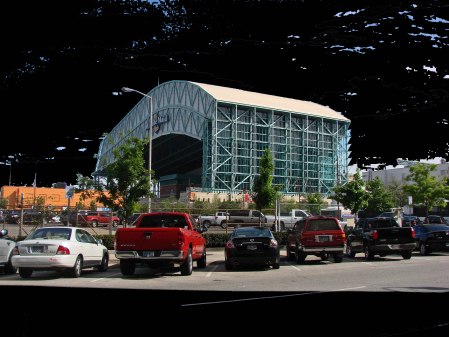
“TLTR” – I Get It – But It Doesn’t Mean I’ll Change

April 25, 2016
words will always be the wheat upon the wind and space of all those blank page fields, but only if the crop is irrigated with passion, truth, imagination, positivity, and humor will it be worth a harvest. And some days are better than others.

Words will always be the wheat upon the wind and space of all those blank page fields, but only if the crop is irrigated with passion, truth, imagination, positivity, and humor will it be worth a harvest. And some days are better than others.


Sunday, April 24, 2016, I received the following message from a deeply involved baseball reader on the west coast, someone I’ve never met, but hope to stay in touch with, even beyond this honest and enjoyable exchange of messages:

  1. Reader ‘Demosthenes’ to The Pecan Park Eagle: “Hi Bill, Thanks for sharing your stories with me, but I must request you  take me off your email list. I just don’t have the time to read everything I’d like these days. Thanks, ‘Demosthenes’ (our renaming of the reader in service to his privacy).”
  2. The Pecan Park Eagle to “Demosthenes’: “
    “Hi Demosthenes! I understand and will remove your name from the mailing list today.
    “Had you been a millennial, you could have just written “TLTR”. (“Too Long To Read”) 😊

    “… To which I would have responded “MNTWINDBOIIRWIHTS”

    (“My Need To Write Is Not Determined By Others’ Interest In Reading What I Have To Say”.) 😚

    “… See, I can’t even use abbreviation as the preferred Internet language without “wind” finding it way into the one-word sentence thought. 😈

    “Just having fun here, Demosthenes. – Keep up your good work. And drop in and see me sometime.

    “site link … https://bill37mccurdy.com/

    “Regards, Bill”

  3. Reader ‘Demosthenes’ to The Pecan Park Eagle: “Many thanks, Bill. You do good work. Keep it going!”

The Lessons? The truth is – nobody has to read or listen to anything that anyone else has to write or say today. Some of us simply have a need to write that’s akin to breathing, but it’s not always because we think we are so brilliant or in need of validation from others. For me, it’s because “writing” is the outlet for mental rumblings that sometimes only become whole thoughts when they find expression in written form. Other times, it may be something we simply want to share with others who may also be interested. It’s a sort of seeking for what readers think of the same issue. The best example of that type column is the one I just wrote on my regrets about how the culture of baseball has changed over the past fifty to seventy years. Those of you who shared your own reactions to the same questions about baseball cultural changes as public comments were insightful,  supportive, and sometimes down right funny. I would love to visit the Louvre that Larry Dierker described as it might have been – had Bud Selig been its curator. – What a hoot!

The bottom line for me? I feel less lonely when I write. And I feel more focused on a game that brings such joy, and sometimes the rusty gate of disappointment, to our lives.

If I write something you find to be “TLTR” – by all means – skip it. You don’t have to read them all. On the other hand, if being on the mailing list is nothing more than an annoyance, just let me know – and I will remove your name right away. I only want to be in the lives of those who choose to keep me company too. I may experiment with shorter, more visual columns at some point in the near future, but I can’t see myself ever becoming a Tweeter guy. I simply don’t care for symbolic speech, but I do confess to an occasional column indulgence in emoticons.

To me, words will always be the wheat upon the wind and space of all those blank page fields, but only if the crop is irrigated with passion, truth, imagination, positivity, and humor will it be worth a harvest – no matter who’s writing it. And, for all writers who do columns, articles, or books, some days in the wheat field are better than others.

Have a great week – and a bountiful yield, everybody!

_____________________

eagle-0rangeBill McCurdy

Publisher, Editor, Writer

The Pecan Park Eagle

Houston, Texas

https://bill37mccurdy.com/

Changes in the Baseball Culture We Regret

April 24, 2016
What changes in the baseball culture over the past sixty years bother you most, if at all?

What changes in the baseball culture over the past sixty years bother you most, if at all?


Change is inevitable, but here is our personal Pecan Park Eagle List of things we miss from the baseball culture of our anciently long ago 1950s and earlier period.

  1. The Game We Had Prior to the Designated Hitter. The DH is not on my list for the usual reasons. I’ve gotten used to not seeing the pitcher bat since Houston moved to the AL and I don’t miss him. I’ve also come to see that the lost strategy opportunity in which the NL manager has to choose between leaving a bad-hitting pitcher in the game or removing him for a pinch hitter is vastly overrated. As Larry Dierker also has stated, it would have been better from the start had the DH rule changers simply allowed a manager to pinch hit for the pitcher a couple of times per game without having to remove a pitcher from the game. The DH is on this list because it seems to have mainly become a roster spot for “big boppers” who can’t play the field – and it has become an influence upon the growth of power baseball and highly specialized pitching – and not on pitchers who can go the distance – or keeping many bench players and batters who understand and can do situational hitting.
  2. Sandlot Ball. Kids are no longer free to play sandlot baseball on their own. They probably would not choose it anyway today over the digital game diversions they prefer – and the organized adult protective Little League Baseball that 21st century parents prefer for them.
  3. The Ballpark Organ. The ballpark organ used to do all the musical scoring for everything that happened at ballpark. From fouls ball running up and down the scale – to themes for various players, umpires, and game situations. The organist had to be careful what he or she played in reference to the umpires. Our Buff Stadium organist, Ms. Lou Mahan, was once ejected for playing “Three Blind Mice” for the umpires as they walked together to the infield from their dressing room prior to a game. Lou learned to stick with safer stuff, like “Smoke Gets In Your Eyes”, when an umpire’s call went badly against the Buffs. And she couldn’t be ejected for that call, given all the blue cigarette smoke that hung around under the covered grandstands on still nights.
  4. Pepper Games. Prior to games at Buff Stadium in Houston, each club would have one or two pepper games going to loosen up reflexes prior to infield practice.
  5. Infield Practice. Every team did it prior to every game. It was beautiful to watch and seemed important to us kids – as important as batting practice. – Guess we were wrong. It ended, somehow, and so did pepper games.
  6. Pitchers who could throw complete games. They reminded us kids that good pitchers hung in there for the distance ride. And pitchers with “rubber arms” could even pitch extra inning games, even extended game shutouts and no-hitters. We never heard of pitch counts. Of course, today we need pitch counts that are long enough to cover the five frames a starter needs for a win, but not so long as to deny the relief specialists all the work they need to do to justify getting paid their own salaries.
  7. Batters who could put the ball in play. Most guys back then knew how to hit behind the runner – and do all the other little situational things that generate runs; things like making pitchers work harder, fouling balls off to tire the pitcher and play with his nerves. One coach we had in grade school put it this way: “Nothing good for the team is going to happen if you strike out a lot, but every time you put the ball in play, it creates chances for a hit or an error by the other team that may help us get the runs we need to win.”
  8. Outfielders who throw the ball to the right base, especially with runners on base. If you don’t know what I’m talking about, watch a few televised MLB games and see how often you see outfielders throwing behind a base runner – or missing the cut-off man on throws to the plate. – Again, same grade school coach as before, used to tell us this way: After each change in batters, or each change caused by stolen bases, always ask yourselves: ‘What’s the situation? – How many outs?- Are there any runners on base – and where are they?’ And where am I going to throw the ball, if it’s hit to me and I get to it? – And if it’s hit over your head, who on our team am I going to be looking for to throw it to, if I do catch up to it.’ “
  9. The Absence of Blaring Loud Music, Tee Shirt Cannons, and Other Sideline Distractions. The old baseball park was no mausoleum. It was drenched with the sights and sounds of baseball and the smell of hot dogs – with no sideline gimmickry. We weren’t a culture back then that worried about getting bored at a baseball game. We loved keeping score, talking with friends and family, and just riding on the magic carpet of baseball drama – one that always featured our hometown good guys hoping to defeat the visitors and their bad guys.
  10. The Tempo of the Game was Better Back in the Day. We don’t believe that baseball has slowed itself down. We do believe that the “necessary evil” of television has done so, both directly and indirectly. Directly: Into the early 1950s, teams still exchanged places after each half inning and the next-up batting club moved immediately to the plate for their first batter up. Today, there is always that TV commercial break that stops everything, and breaking the tempo of the game for several minutes. Indirectly: Television panders to the human ego’s need for attention. And the narcissists and drama queens (kings?) among baseball players, managers, and even owners is far too long to list here who crave that camera attention. Do we really have to name them? – You know who we’re talking about. – Eh, can you think of any HOF managers over the past half century who may have been helped into the Hall of Fame by their television imagery? And had these same guys been forced to rely upon radio and print news of their game-by-game work over time, how many of them would even be recognized today.


How about you? If you have been around long enough to remember the pre-millinial baseball world, what is it that you remember and miss about the old baseball culture. Did our choices ring any bells for you? Did we leave out something that is important to you? Please share your comments in the section that follows every Pecan Park Eagle publication. – We want to know what you think too.

____________________

eagle-0rangeBill McCurdy

Publisher, Editor, Writer

The Pecan Park Eagle

Houston, Texas

https://bill37mccurdy.com/

A Grand Prize Lager Mystery MLB Pitcher

April 23, 2016

Friend and colleague Darrell Pittman of Astros Daily sent this message and photo to The Pecan Park Eagle this afternoon:

Darrel Pittman’s Message

A Twitter follower (Sandy Silvers, @SanMan1946) posted the following query to me, and I’m striking out, so I’m asking your help or your readers:

@AstrosDaily if I send you a picture from 1940’s, any chance you can find out who the MLB pitcher was in the picture?

@AstrosDaily the short guy is my Dad Walter “Cracker” Silvers who ran Ellington AF base Houston WWII team. Tall Guy? pic.twitter.com/vUdYPl1TMI

____________________

The Mystery Man Photo

We are presuming that this photo was taken sometime in the hay-day of amateur Texas Baseball in the post-WWII years.

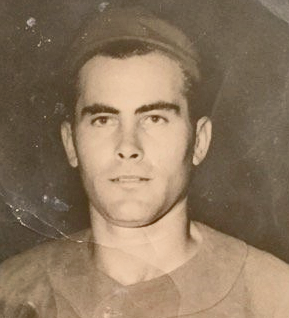
The Mystery MLB Pitcher in the photo featured here is shown in uniform, standing by the smaller man described above as Walter “Cracker” Silvers. The Eagle is not sure how Sandy Silvers knows the uniformed player is also an MLB Pitcher, but we will presume in this inquiry that he has data to confirm that assertion. If we were researching this question for a published formal history project, we would need to see all the documentation at his disposal. Even our for column here, we eventually would need certain evidence or credible testimony to confirm the mystery man’s identity. For now, we will simply hope that someone in our readership has that kind of documentation to support proof of the guy’s identity while we have fun looking for his doppelganger look-alike from the ranks of players from that approximate time period.

For now, identity guesses are invited and welcomed as possibilities as posts in the comment section below this research column.

Thanks for joining us in the fun of the search for one of baseball history’s quietly whispering questions ~ “Who is this guy in the beer company baseball suit?”

Cracker SIlvers (L) and The Mystery Player

Cracker Silvers (L) and The Mystery Player


Close Up of The Mystery Man

Close Up of The Mystery Man

____________________

Darrell Pittman Guesses, So Far

Monty Stratton ~Ruled out for having floppy ears that threaten to break into a full “Don Mossi” at any moment.

Tex Hughson ~ Could be the old Red Sox pitcher. Still a guess, but many of the facial features are similar to our Mystery Man.

____________________

Please post your guesses or evidence of support as a comment below.

Thanks – and have fun!

____________________

ADDENDUM: Sunday, 4/24/2016

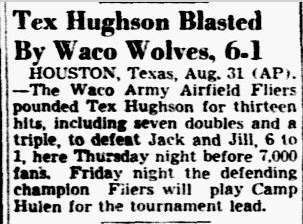
Darrell Pittman: “The evidence mounts, circumstantial though it may be, that the Mystery Man is Tex Hughson. I found this in the Sept. 1, 1944 Dallas Morning News:”

image001

“‘Jack and Jill’ was the name of the liquor store that Mr. Silvers’ father owned, and where the photo had hung for many years.” – Darrell Pittman.

____________________

eagle-0rangeBill McCurdy

Publisher, Editor, Writer

The Pecan Park Eagle

Houston, Texas

https://bill37mccurdy.com/

Safest Baseball Records: Part II

April 22, 2016
In 1877, Jim Devlin of the Louisville Grays pitched 100% of the 559 innings in his club's 60-game season, a record that will never be broken.

In 1877, Jim Devlin of the Louisville Grays pitched 100% of the 559 innings in his club’s 60-game season, a record that will never be broken.


Some excellent points and suggestions were posted as reader comments on yesterday’s column, “Safest Serious Record in Major League Baseball.”

Gregory H. Wolf wrote:

I have two suggestions of records that are most likely to stand forever:

1. Nolan Ryan’s career strikeout total of 5,714. A pitcher would need to average 250 K’s for 23 seasons to break the record. As good as Clayton Kershaw is, he’s exceeded that average mark just once — last year with 301.

2. And what about the career walk total for the Express? 2,795. In the last six seasons (2010-2015) pitchers have issued at least 100 walks just twice. Tyson Ross led the majors with 84 in 2015. At that rate, you’d need to play just over 33 seasons.

StanfromTacoma wrote:

Some records won’t be broken simply because the game is no longer played the way it was. Cy Young’s career win total is unapproachable because pitchers don’t pitch as many innings as they once did. Some of Nolan Ryan’s records are safe for the same reason.

I’d pick Joe DiMaggio’s 56 game hitting streak as the record most unlikely to be broken for reasons unrelated to the different way the game is played today. The two hitters in my lifetime who I would think had the best chance to challenge the 56 game hitting streak, Rod Carew and Ichiro, never really got close.

Greg Lucas wrote:

Can anyone pitch three consecutive no-hitters to break Johnny Vander Meer’s mark? (First you have to be able to pitch three consecutive complete games which would be quite a feat in itself these days!)

Wayne Chandler wrote:

The mental pressures that any of these would be record setters would go through, and the awareness that opponents would have now, would far exceed anything that the current record holders went through. – 24/7 news awareness has hit the sports world, too.

Cliff Blau wrote:

Since I don’t choose to ignore records set in the first 25 years of major league baseball, I’ll go with Jim Devlin’s record of pitching 100% of his team’s innings in 1877. No matter what happens, that record won’t be broken.

All these reader points are well taken: The improbability of breaking some records is simply improbable to impossible, due to StanFromTacoma’s point, “Some records won’t be broken simply because the game is no longer played the way it was.” As Gregory H. Wolf notes, “A pitcher would need to average 250 K’s for 23 seasons to break the record (of 5714 career K’s set by Nolan Ryan.)”. – As Greg Lucas suggests, it’s already improbable in today’s game that any pitcher will ever again pitch three consecutive complete games, let alone ever break Johnny Vander Meer’s consecutive no-hitter feat by make each of those complete games another no hit, no run job. Wayne Chandler points out that today’s record-chasers would have to do so in the light of a 24/7 media world putting pressure on them that no previous record holder, not even Roger Maris, ever had to endure. And the indomitable early history expert, Cliff Blau, nails the impossibility of breaking a record that is already statistically perfect is both impossible to surpass – and a record that speaks perfectly to the point made above by “Mr. Tacoma” when he writes that “(Jim Devlin pitched) 100% of his team’s innings in 1877. No matter what happens, that record won’t be broken.” – No, it won’t be broken, nor will it be attempted again by any 21st century MLB club with any expensive contemporary pitcher. With pitch counts and specializations in pitching, there no are no more superman rubber arm pitchers left in the game today.

I respect, and do not ignore, the truly incomparable records of the 19th century. Some will live forever, but in an exercise of this nature, even Cy Young’s 511 career wins comes either close or over the line for comparison to today’s much shorter, much lighter usage pitching careers.

The Eagle’s Favorite 19th century Unreachable Record

For this voice of The Eagle, it’s Charles “Old Hoss” Radbourn’s 59 pitching wins in 1884. All the man had to do to get those 59 wins (or 60 wins, if you count differently and accept that one extra game the official scorer gave him the win credit for effort) was start and complete 73 games to get them, while also picking up a couple of saves in two relief appearances, 678.2 innings of work, and 448 strikeouts on the season.

Unlike Devlin’s unbreakable pitching record in 1877, Radbourn’s 59 season wins is a pitching feat that is mathematically still possible, but what are the odds of probability on that one ever happening in the 21st century?

Something like .00000000000000000000000000000000001 chances in a million – or maybe a little less.

____________________

Bottom Line

“Records are Made To Be Broken” may be the  adage, but over time, due to changes in the rules and the culture of the game, breaking certain records in baseball becomes either significantly improbable or flat-out impossible.

____________________

eagle-0rangeBill McCurdy

Publisher, Editor, Writer

The Pecan Park Eagle

Houston, Texas

https://bill37mccurdy.com/

Safest Serious Record in Major League Baseball

April 21, 2016
Cy Young's 511 Career MLB Pitching Wins is The Pecan Park Eagle's Pick as the Safest Serious Record in Baseball.

Cy Young’s 511 Career MLB Pitching Wins is The Pecan Park Eagle’s Pick as the Safest Serious Record in MLB History.

Some records may be safe forever. Other records may be teetering on the brink of impossible, on the farthest reach of improbability. From the ridiculous to the sublime, there are a lot of incredibly improbable accomplishments within the current rules of baseball that simply are not going to happen, even if the gradiently possible word “probable” means possible. First, here are a few ridiculous hypothetical examples:

  1. Pitcher Wins 20 Games in One Season Without Ever Pitching to a Batter. ~ HOW? ~ Reliever John Luck enters 20 home games with the score tied, a runner on base, and two outs on the other team. Before he throws a single pitch to the batter in all 20 instances, he picks the runner off to end the inning. Then, in all 20 of his total season game spots, Luck’s home club then scores a run in the bottom of the 9th, making him the winning pitcher on all 20 occasions.
  2. A Batter Breaks the Record for Most Triples Hit by One Player in a Single Inning. ~ Curt Walker of the Cincinnati Reds was the first National Leaguer to hit two triples in one inning of one game on July 22, 1926. Walker and ten others are the only eleven players to have stroked two triples in the same inning of a single game in the entire history of Major League Baseball. Cory Sullivan of the Colorado Rockies was the most recent NL player to do it on April 9, 2006. – The record seems to add a new co-holder about once every 55 years, but what is the probability that any batter will ever have three times at bat in one inning – ever – and be able to use them all to record three legitimate triples in that same stanza?
  3. A Base Runner Steals 6 Bases in One Inning. ~ Has to be a guy who reaches first base twice in the same inning, one who then steals his way home safe on each opportunity. Again possible, but ridiculously improbable.

OK, Let’s Get Serious.

What about the sublimely holy records in baseball? What’s the probability that any of them will ever be broken? Many of us remember the time when Babe Ruth’s 60/714 numbers for most home runs in a season and career received that kind of reverence. The emotional protection of their integrity by Commissioner Ford Frick in 1961, after all, was the reason that led directly to the inclusion of an asterisk to the 61* that Roger Maris slammed to break Ruth’s one-season record that same year. 1961 was also the first year that the American League went from 154 to 162 games in response to expansion. As a result, Commissioner Frick decreed in advance that, if needed, any part of those extra 8 games helped to break Ruth’s record, that an asterisk would be added to Maris’s accomplishment – and, since that turned out to be the case, 61* also became just as famous as the monkey wrench that spoiled any chance for Roger’s joy at the end of a painful media-stressed season. – And by the time Hank Aaron broke Ruth’s “714” career homer mark in 1974, the joy for Aaron had to be filtered through the cowardly anonymous racist threats against his life for even trying.

What about today ~ 2016? ~ What are the most improbable serious records to ever be broken.

The Pecan Park Eagle’s Hands Down Pick for Safest Serious Baseball Record

Cy Young’s 511 Career Pitching Wins (1890-1911) is our hands down pick. Look. The second man behind Young was Walter Johnson with 417 wins – and he last pitched in 1927. With the money in the game today, better pitchers than either Young or Johnson may already have come along, but it isn’t probable now that any pitcher, ever again, will play long enough, and be used often enough, to even come close to either man – or several others behind them. It’s still at the far reach thin-edge of probability – and that close to impossible.

What do you think is the safest serious baseball record out there?

  1. Cy Young’s 511 Career Pitching Wins (1890-1911)
  2. Joe DiMaggios’ 56 Consecutive Game Hitting Streak (1941)
  3. Pete Rose’s 4,256 Career Hits (1984-1986)
  4. Barry Bond’s 762 career home runs? (2007)?
  5. Barry Bond’s 73 one-season home runs? (2001)?
  6. The New York Yankees’ 5 Consecutive World Series Wins (1949-1953)?
  7. Other?

Your input is both requested and appreciated as a public comment on this column. Help The Eagle to come up with a more complete list of the safest serious records in baseball.

Thanks for your support!

Editorial Note: We chose to eliminate from consideration all records that were achieved entirely in the 19th century. Otherwise, Old Hoss Radbourn’s 59 one season pitching wins in 1884 wins in a landslide. Cy Young achieved many of his wins in the last decade of the 19th century, but his record is still considered part of the modern era because of the 11 seasons he pitched in the 20th century.

____________________

eagle-0rangeBill McCurdy

Publisher, Editor, Writer

The Pecan Park Eagle

Houston, Texas

https://bill37mccurdy.com/

Harvey Frommer: A Landscape Writing Artist

April 20, 2016
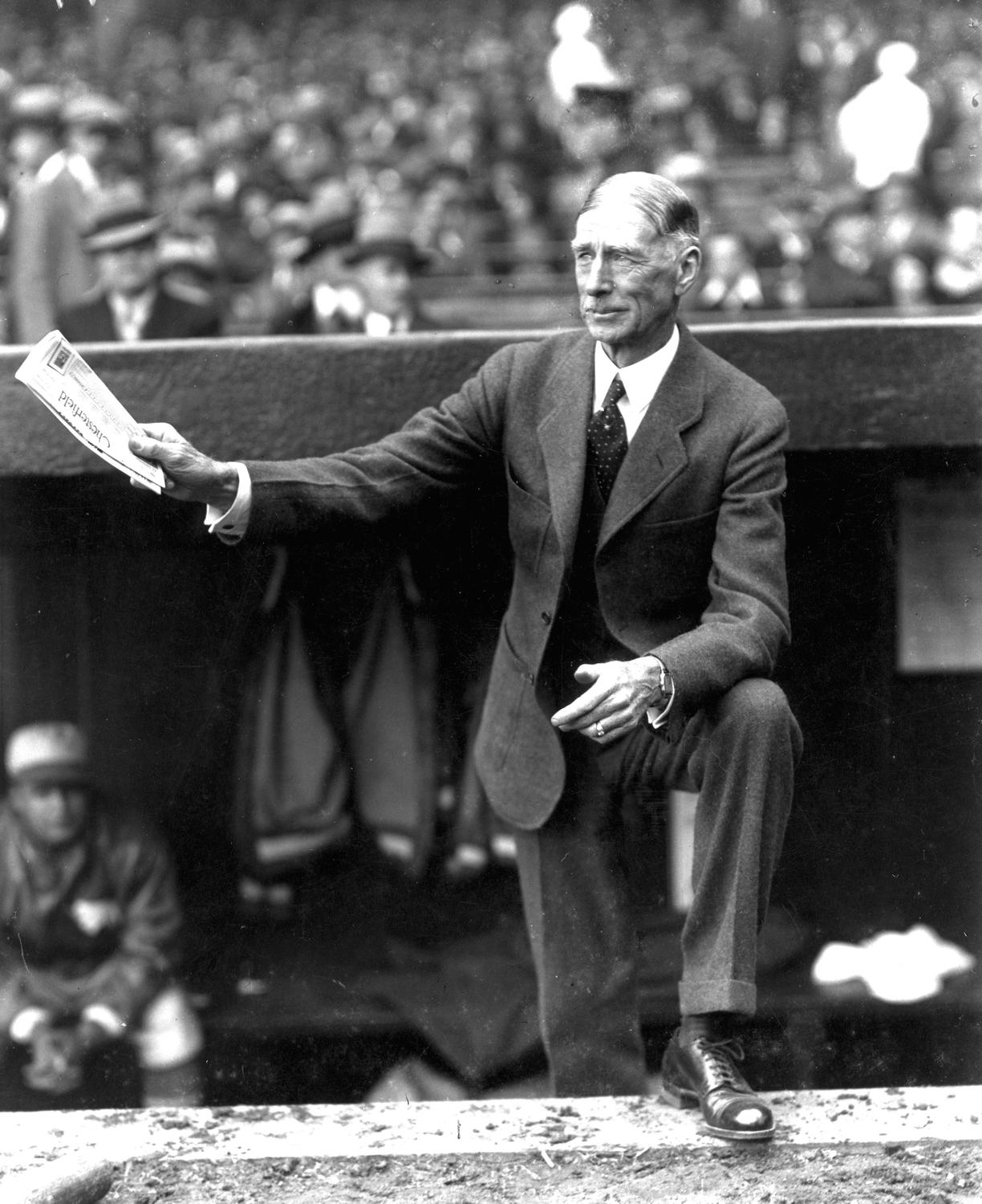
Connie Mack used lineup scorecard to signal his players in the field. My mind hardly ever sees Mack on the field without it.

Connie Mack used his lineup scorecard to signal his players to move in the field. Once that visual of Mack prevails in the mind, it’s hard to see him on the field in any other way.

The linked article by Harvey Frommer at Baseball Gurus.com is a beautiful job of what the best baseball landscape writing is all about. This author of thirty baseball books over the years takes landscape writing to a level it needs to be to bring readers directly into the moment of the subject. In this presentation of Opening Day at Yankee Stadium in the great year-to-be of 1927, Frommer’s words flow smoothly and evenly through facts, thoughts, impressions, and sensory observations that any of us could have known, learned and shared with each other, had we been “available” to have been there and found a ticket for an opening day game played in the original Yankee Stadium, on Tuesday, April 12, 1927, @ 3:30PM.

Enjoy the landscape. You may enjoy seeing the tall and thin Connie Mack walking onto the field at 3:25 PM in his dark business suit and starched high white collar. I’m assuming he also already carried a lineup scorecard card in his right hand, as he leisurely walked into pubic view. Frommer didn’t write anything about the lineup card, but my mind did, as soon as Frommer provided timely information as the sketch portion of the full moving portrait. As you read the article, watch your own mind do the same in some way. That’s what good landscape writers do. They seed plant the tree that grows almost instantly in our own imaginations.

http://baseballguru.com/hfrommer/analysishfrommer80.html

Enjoy! ~ And please dry out, Houston!

____________________

eagle-0rangeBill McCurdy

Publisher, Editor, Writer

The Pecan Park Eagle

Houston, Texas

https://bill37mccurdy.com/


Welcome to Houston

April 19, 2016

After pressing the center right-pointing error, allow the brief flow of the water to play and close. – Then press the arrow in the circle you will find in the lower left hand side of the final still screen to resume an ongoing loop flow of what it’s like to be underwater.

If you are a Houstonian, and don’t need any moving visual aids as a reminder of what it’s like to be under water, simply proceed to the written portion of today’s column. Thanks.

Monday, April 18, 2016 ~ Welcome to Houston!

What else is there to talk about in Houston today? This humble  publisher, editor, and principal writer here at The Pecan Park Eagle has been a resident of this wonderful home Houston town since his parents moved him here without any prior consultation on his birthday, December 31, 1942 – and we never, ever have seen anything like today’s damnable nameless flood in Houston as a local weather catastrophe. Not even the Great Frozen Tundra Ice Storm of 1950. Nor the direct hit blast of Hurricane Alicia in 1983. And not even the sneaky Tropical Storm Allison of 2001 brought upon us the level of suffering, property damage, everyday life chaos, and death that this “2016 Killer Storm With No Name” has producedin some areas nears 17″.

Nada. Nothing else in local memory stacks up to this mess. The loss of thousands to a major earthquake is horrendous, but the loss of those five lives in Houston today is also a grievous.event – and a reminder that we humans are not the most powerful force on earth.

Our prayers and best wishes for recovery go out to all of you. Our home is located about four hundred feet south of the  Addicks Dam, so we came through things OK. Thank God.

The Pecan Park Eagle will get back to baseball and the lighter side tomorrow.

For now ~ Best to All ~ and with a strong wish for an early return to Houston sunshine!

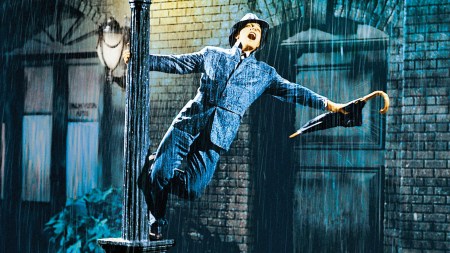
Til then, we’re ….. singin’ ….. and …. dancin’ ….

singin-in-rain1

…. in the rain!

____________________

eagle-0rangeBill McCurdy

Publisher, Editor, Writer

The Pecan Park Eagle

Houston, Texas

https://bill37mccurdy.com/


Managerial Trickery: Like Mentor, Like Martin

April 18, 2016
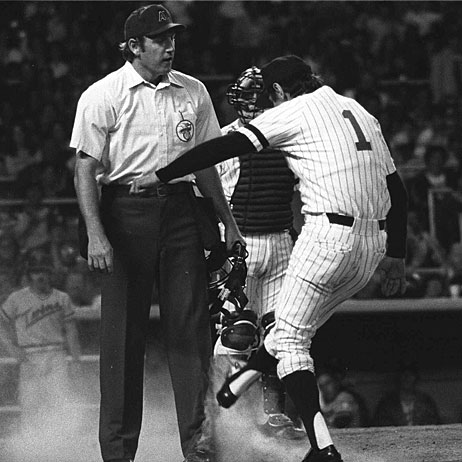
Billy Martin expressing a difference of opinion on a game call by an umpire.

Billy Martin expressing a difference of opinion on a game call by an umpire. – Has this picture ever crossed your own mind when you think of Billy Martin today?


“Billy Martin: Baseball’s Flawed Genius,” the 2015 biography by Bill Pennington, a former beat writer who covered much of the contentious former Yankee’s career in the Bronx, is altogether insightful, factual, three-dimensional, and often funny. The guy that many of us first remember as the black and white TV-pictured second baseman stumbling into the shallow infield grass in the 1952 World Series to make would eventually proved to be a game-saving catch for the Bombers against Brooklyn comes fully alive.

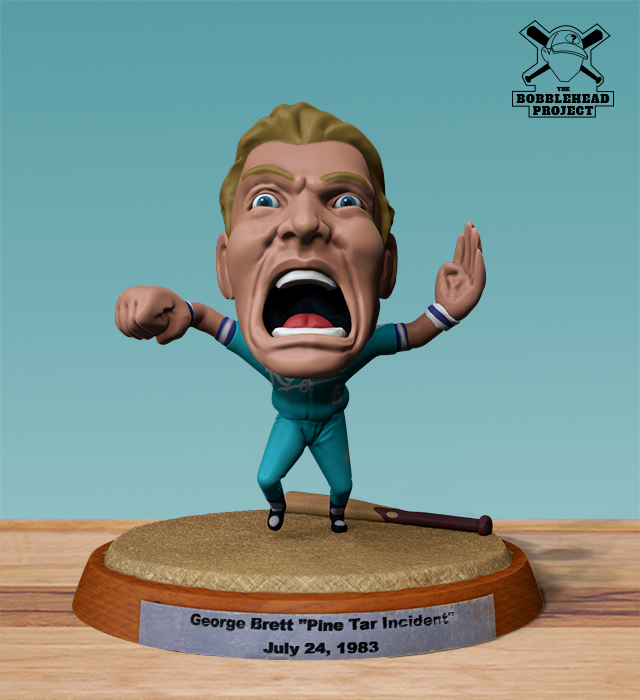
The one aspect that we wanted to share here was how much Billy Martin’s relationship with Casey Stengel honed his already in-your-face attitude about winning to the additional science of trickery as an unsettling effect upon the opposition. – We all remember how “unsettled” George Brett was that time that Billy Martin waited through a game at Yankee Stadium until Brett homered for KC against the Yankees to call the umpire’s attention to how the pine tar on his bat stretched illegally high. Martin’s “helpful” alert to the rules violation only caused Brett to lose his homer, his mind, and the ballgame for KC. – Remember? Brett was a tad distressed by Martin’s attempt to redeem the integrity of the rules governing illegal bats.

Stengel and Martin

The relationship between Billy Martin and Casey Stengel really began when Martin signed with the Oakland Oaks of the PCL as a kid out of high school and Billy failed to make the final cut on the roster of the Oaks in 1947, when Stengel was the manager. An angry and disappointed Martin told Stengel that he was going to regret sending him down from AAA Oakland to Class C Phoenix for the ’47 season. – Sensing it would push Martin’s button to try even harder, Stengel answered Billy’s claim with a challenge of his own. “Prove it!” Stengel told Martin.

Martin more than accepted the challenge. At Phoenix, Billy Martin batted .392 with 230 hits at the Class C Phoenix stop. After finishing at Phoenix, he was called up to play the 15-game balance of games left on the Oaks ’47 schedule. He didn’t a glass of water, average-wise, but his doubles were keys to victory in a couple of games. And he played second base as a kid like veteran under fire. In 1948, Martin easily won a place under Stengel with the Oaks, batting .277 at the AAA level. More importantly, Billy attached himself to Casey on the bench like a Siamese twin whenever possible, discussing game situations and Casey’s strategies for same, and soaking up wisdom as through he were already an apprentice for a first managerial job at age 20. Stengel grew fond of Martin too, calling him “the Kid” – as others also began to refer to Billy Martin as “Casey’s Kid!” Billy sort of became “the kid” that Casey never had. – Billy Martin already had an excellent stepfather who raised him, but “Jack Downey” was not sports-inclined. Casey was the coming of Billy’s baseball dad. After 1948, it was to become a Stengel-Martin manager-player connection for seven more years with the New York Yankees (1950-53, 1955-57). Enough time to fill the mind of Martin with all of the Stengel tricks that Billy learned to use with skill and application to even scenarios that Casey had not seen in his time (i.e., George Brett and the Pine Tar Bat).

A Stengel Trickery Example

Casey even used trickery to help keep his much younger players in line after he became manager of the New York Yankees. The players who liked to carouse, drink, and disregard curfew on the road knew that Stengel was too old to stay up late and watch for clock violators – and Casey knew that they knew this about him too. He also knew that many of his Bronx Bombers enjoyed getting bombed regularly with alcohol.

So what did Casey do?

Stengel sought out the hotel night shift elevator operator who was going to be on duty past curfew time through the early dawn hours. He gave the elevator guy a pen and a baseball and asked him to simply pose as an on-the-job fan who desired their autographs whenever late arriving Yankees finally showed up for the trip to their upper story rooms. After his shift, by whatever financial arrangement Casey had worked out with him, the elevator guy would then leave the signed ball at the desk for Stengel to collect on his way to breakfast.

Casey Stengel. Brilliant. Absolutely. Ingenious.

A Martin Trickery Example

Years later, during Billy’s own managerial career, he instructed his players in the use of something we call the “inning-over, fake-out” play. It wasn’t a play you could use often, or possibly even more than once a decade, but it did work, if a manager had players with some natural acting ability working from the same page. It’s game situation needed to be one in which there were base runners and only one out.

It worked like this: A ground ball is hit to the second baseman. He under hands the ball to the shortstop for a 4-6 force out of the man advancing from first. – Then, even though it’s only now two outs, the infielders, except for the one who took the ball for the force play, all start jogging off the field, as though it’s three-outs, inning over. The shortstop with the ball lingers behind, scratching himself, or pretending to examine the lacing on his glove, and only slowly walking away, but really staying in the area. Then, whenever a remaining runner takes the bait and walks away from his base too, the fielder with the ball runs over and tags him for the real third out. And he leaves the infield too, symbolic “Oscar” in hand.

Pretty darn sneaky, Mr. Martin, but not nearly as cruel as the trick you once played on George Brett.

Thanks for the Memories, Billy Martin

"I know I'll never forget, you!" ~ George Brett

“I know I’ll never forget, you!”
~ George Brett

____________________

eagle-0rangeBill McCurdy

Publisher, Editor, Writer

The Pecan Park Eagle

Houston, Texas

https://bill37mccurdy.com/


Barker Red Sox Grab Front Page

April 17, 2016
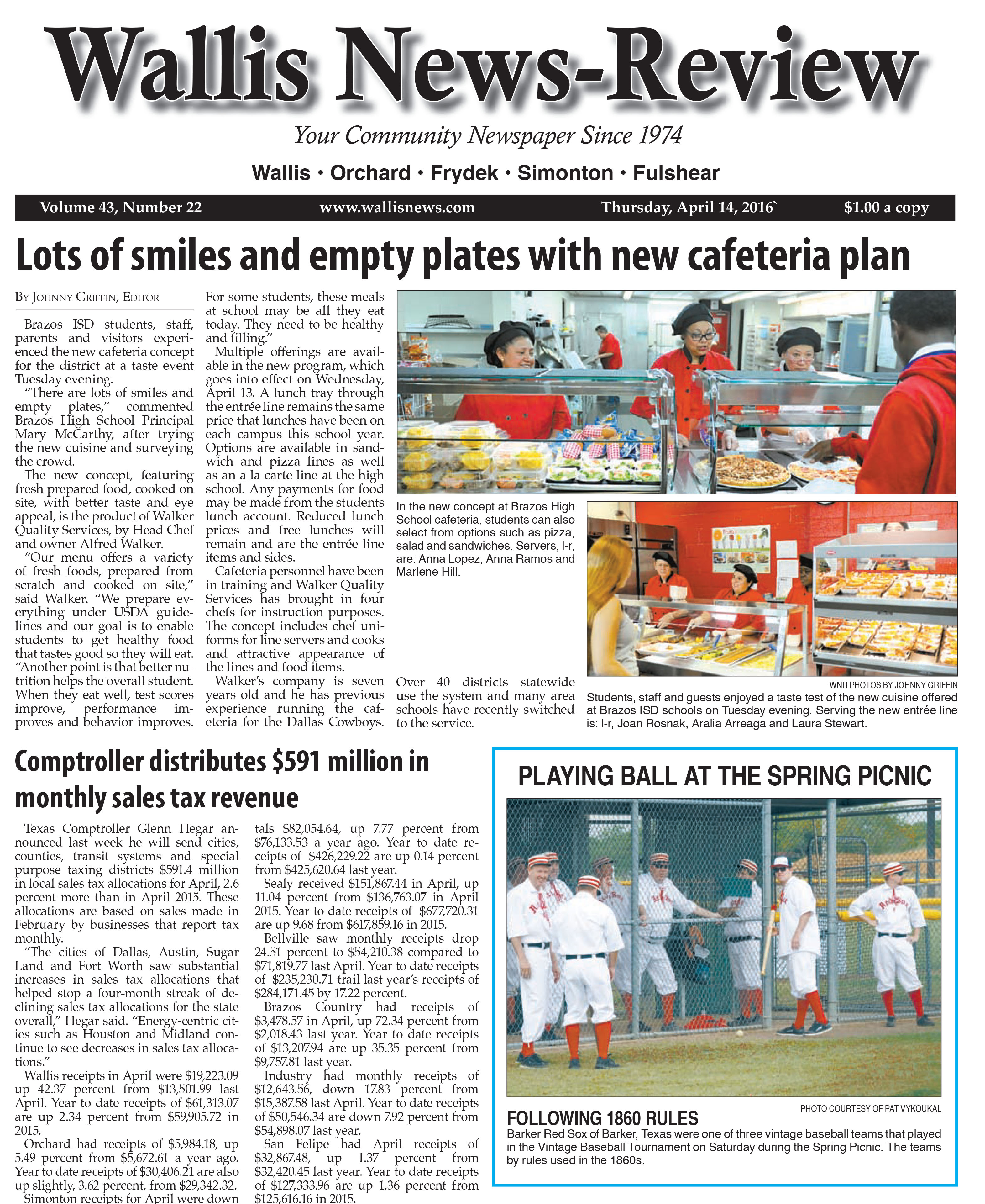
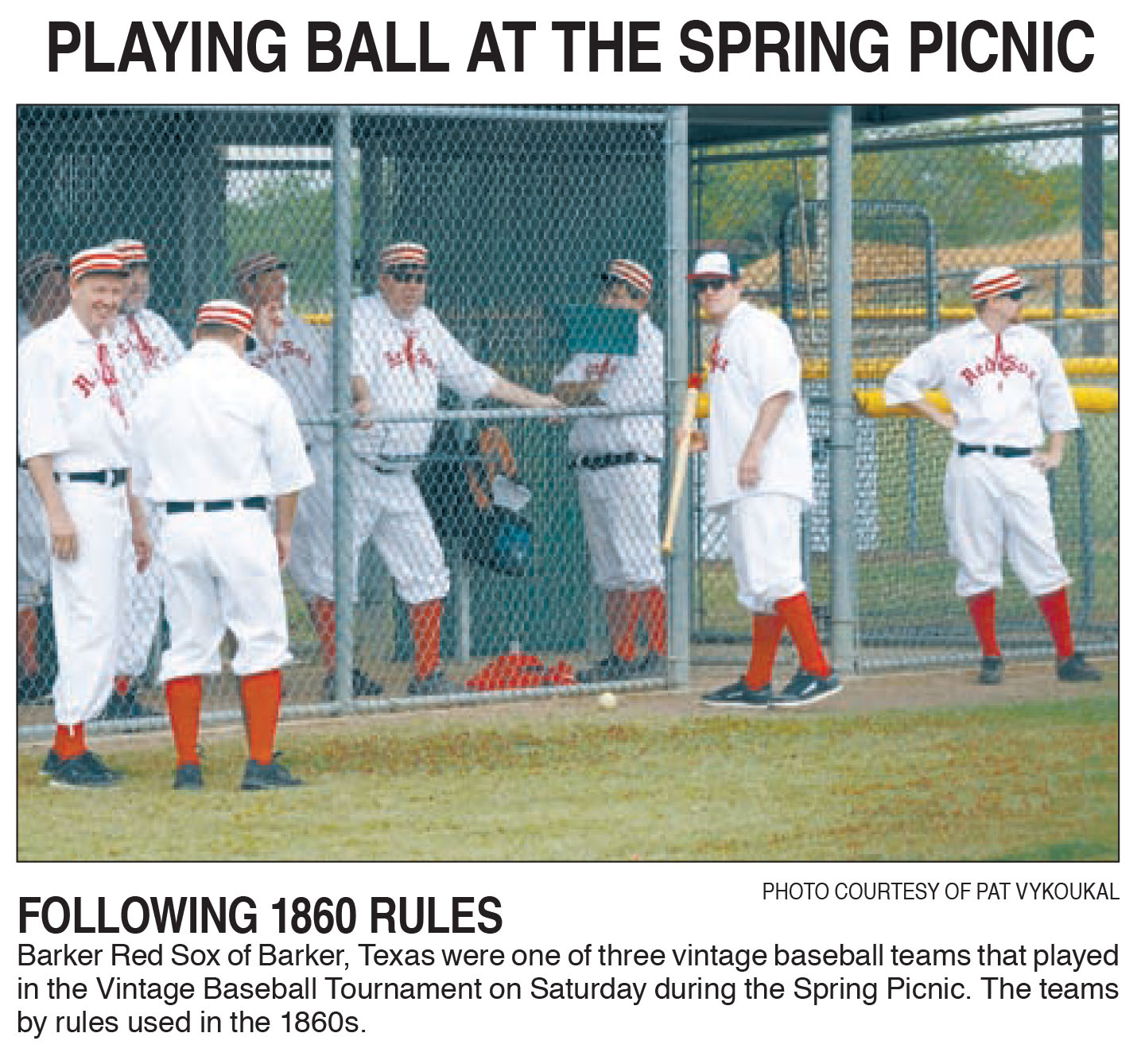
Wallis News-Review Front Page, April 12, 2016 Barker Red Sox Roar!

Wallis News-Review
Front Page, April 12, 2016
Barker Red Sox Roar!

The Barker Red Sox may be the chronological “babies” of the Houston Area Vintage Base Ball Union in 2016, but it didn’t take them long to find the front page attention of the Wallis News-Review, a community newspaper serving Wallis, Orchard, Frydek, Simonton, and Fulshear since 1974.

Here’s a close-up of the Red Sox story box alone. Hopefully, it will be more readable from a tighter view:

The Barker Red Sox get ready for their first game in Sealy. - The tall smiling slender fellow on the far left is manager Bob Copus.

The Barker Red Sox get ready for their first game in Sealy. – The tall smiling slender fellow on the far left is manager Bob Copus.

The Barker Red Sox, the Houston Babies, and the Sealy KayCees were the three vintage ball clubs that came to play the Spring Festival and Picnic last weekend, Saturday, April 9th, in another example of the new-old sport’s rising popularity.

What’s Vintage Base Ball?

Vintage base ballers play by the 1860 rules for base ball, which even includes  dividing the sport’s name into the two words “base” and “ball”.

Players do not use gloves. They have to catch the ball bare-handed. And they also have to adjust to a few rule differences from today. One of which is – a batter may be called out if a fielder catches his batted ball in either the air or on the first bounce.

The equipment is a little different from today’s too. The bats are a little thinner and the base balls are a little softer. The bases, however, are the same as today; they are 90 feet apart. The umpire is known as the “Blind Tom” –  and players who score then have to ring a bell to get their run added to the team’s run total. There are a few others, but the game is still recognizable as the same one that some of us used to play on sandlots forty to seventy years ago. And just as much joy lives again as the freedom of spirit once did on the sandlot when we filled our “lost-in-the-moment” love of the game with all our heart, hope, and energy.

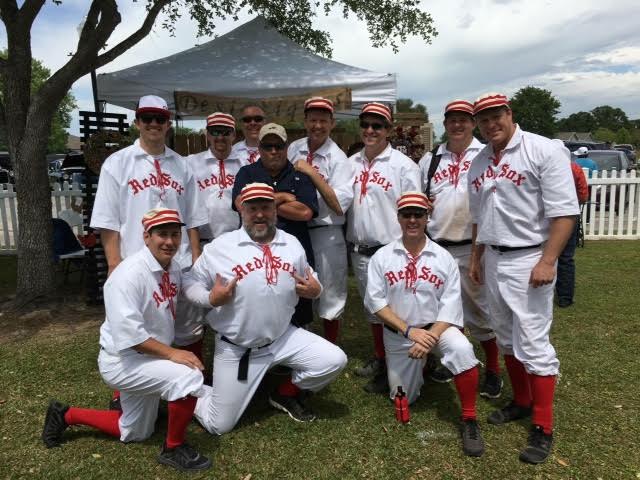
The Barker Red Sox Sealy, Texas April 9, 2016 "True Grit"

The Barker Red Sox
Sealy, Texas
April 9, 2016
“True Grit”

Getting into the Spirit of Those Times

Like all dedicated vintage ball clubs, the Barker Red Sox got into the spirit of things by selecting classic Boston Red Sox uniforms from the 19th century.

No accident there.

Barker Red Sox founder and manager Bob “Chowda” Copus is an original New England kid who finished his adolescent years as a graduate of Klein High School north of Houston before he took his college degree and began his professional life in the Houston area. He is also a close friend. – More – This guy is the “Ace of Spades” and “Jack Armstrong, The All American Boy’ – rolled into one. – The Red Sox will do well under Captain Copus on this lots-of-fun sporadic Saturday date voyage into base ball from the 19th century.

As one result, The Pecan Park Eagle predicts a great run on the local vintage base ball scene for the Barker Red Sox. If it weren’t so politically incorrect today, and rightfully so, these guys may even become “Boston-culture” good enough over time to actually revive the whaling industry on the weekends they aren’t playing vintage ball.

Wish I could give you all of their player names and base ball monikers today, but I cannot. Maybe next time.

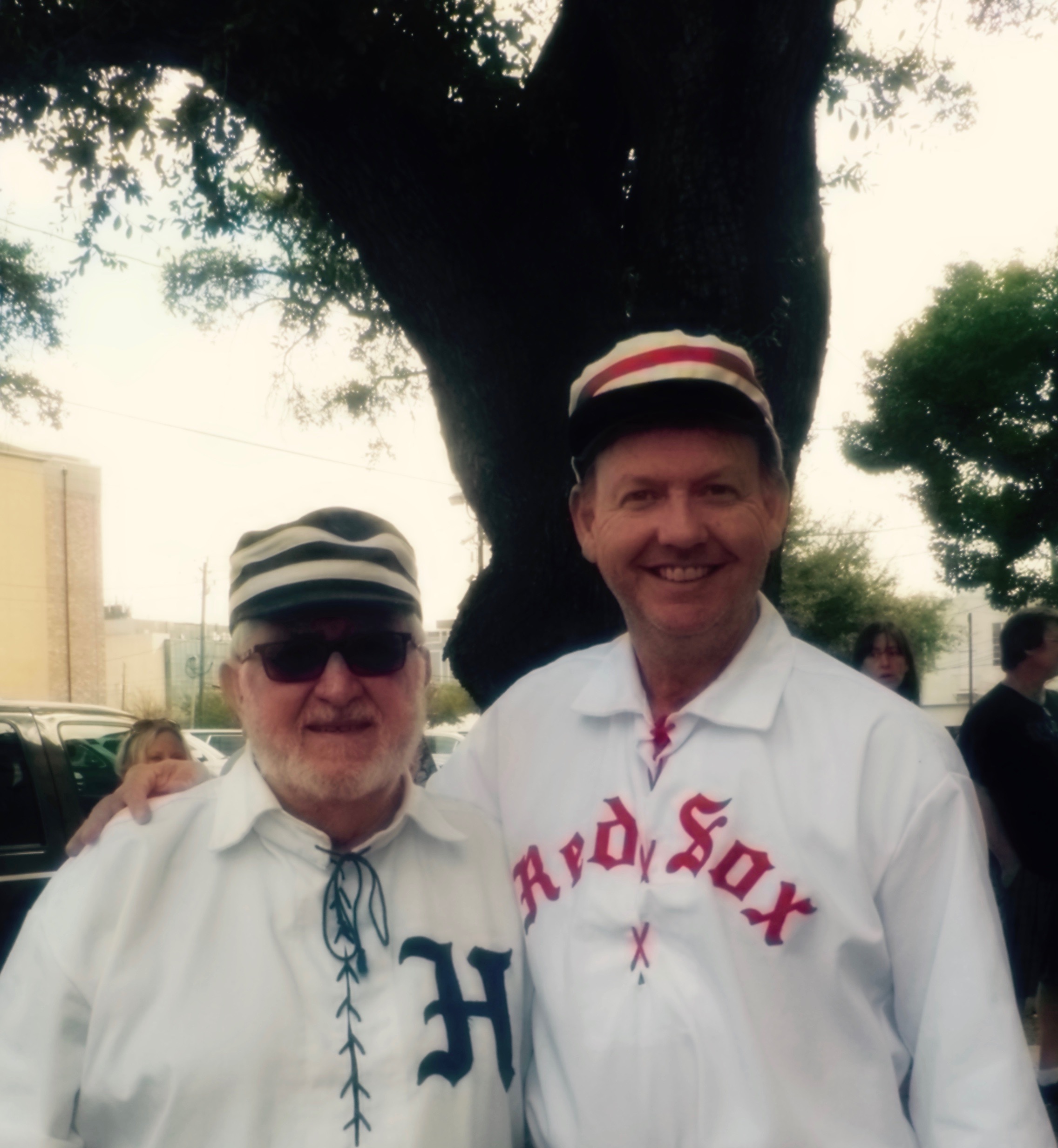
Bill McCurdy and Bob Copus Old friendships are link an ancient oak tree. They possess the power to branch into all kinds of growth directions - especially when one of those limbs is vintage base ball and another is the history of "God's Game".

Bill McCurdy and Bob Copus
Old friendships are akin to an ancient oak tree. They possess the power to branch into all kinds of growth directions – especially when one of those limbs is vintage base ball and another is the history of “God’s Game”.

Looking for Bigger Ink?

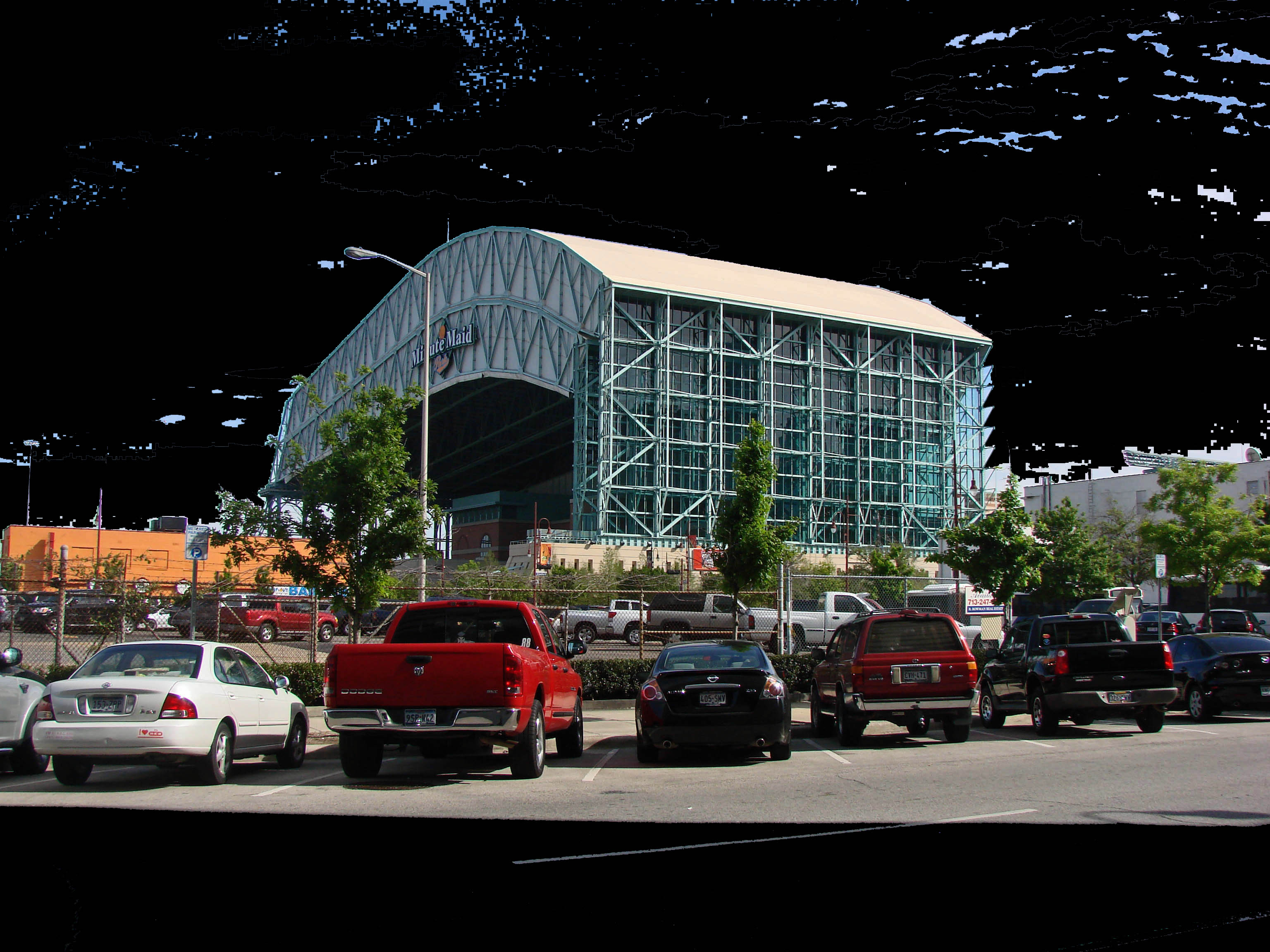
The Barker Red Sox are thinking about going to see a game in uniform during the upcoming series between the Boston Red Sox and Houston Astros at Minute Maid Park. If they do, maybe we will see them next time on the sports pages of the Houston Chronicle. If not then, of course, they will be playing a game against our Houston Babies this summer prior to a Sugar Land Skeeters game at Constellation Field. – Maybe “that’ll” be the day of their next big media breakout.

Whatever will be, will be. Just have fun, Barker Red Sox, That’s what vintage base ball is all about. – The rest of our little vintage base ball community is proud of you for making the front page of any newspaper on your first rattle out of the box.

Play Ball! ~ Vintage Base Ball!

____________________

eagle-0rangeBill McCurdy

Publisher, Editor, Writer

The Pecan Park Eagle

Houston, Texas

https://bill37mccurdy.com/


Astros Game Parking Rates Soar

April 16, 2016
"Only $40 bucks from here to MMP? ~ What a deal! What deal! What a deal!"

“Only $40 bucks from here to MMP? ~ What a great deal!”


Astros Game Parking Rates Soar

Prices for parking on Opening Day ranged from a low $20 to a high of $60. Depending upon where you sat in MMP, where you bought your game ticket, and where you chose to park your car, you could have paid more for your car’s space than you did for your own seat at the game. We know. Price gouging is always present for parking downtown early in the season – or when the Astros play well – or when they are up against teams like the Royals, Yankees, or Red Sox, but, …. this is a not a problem tied to a complex cause, so much, as it is a challenge to the task of finding a solution that is both fair to all – and acceptable to those of us fan-consumers who are picking up the present heavy parking tab for supporting the team by driving downtown to the Minute Maid Park area.

We are about to describe a problem that is much easier to state than it is to untangle with a solution that comes easily to mind. No clue here on that score. I just know there needs to be one by the people calling the shots here – whomever they may be beyond the Astros.

Genesis of the Parking Problem

The problem started during the planning stages of moving the Astros from the Astrodome to the old Union Station site downtown in the late 1990s. The McLane ownership of the club had no plan for buying any of the then decrepit, empty, and cheap property around the new ballpark site for the sake of protecting themselves or the public from future use by those with other business aims and temporary tastes for price gouging.

As I recall, the building of the ballpark at the corner of Texas and Crawford, just north of the beautiful 19th century Annunciation Catholic Church, was somehow supposed to be the elixir that would simply attract independent interests that would somehow improve the neighborhood with restaurants, nightspots, and residential development that would all come together as a major boost rejuvenating the east side of downtown.

That sort of happened. Sort of. But as I recall from an undergraduate economics class I audited at UH a thousand years ago, something else happened that was much stronger. A UH professor, whose thoughts were easier to recall than his name is now, described it this way:

“To maximize the profitability of the ‘supply-and-demand’ chain that is essential to the success of any business plan, the operator must work to maximize his control of both.”

In the world of MLB, a ball club starts with pretty much 100% of the big league baseball supply that aims to meet the local demand for same. If the public believes their local club has a real chance of winning, if the fans can reach the games, if they can enjoy their time at the ballpark, if they afford to come often, and also not be forced to go to a lot of trouble or extra expense to get there, things should work out fine. – Leave any of those factors out of the picture, however, and that same missing essential part becomes a barrier which blocks the club’s access to their fan base demand. Unresolved over time, that negative becomes either the death knell for the ballpark – or the reason for low attendance that drives the owners to relocate the franchise to another city.

The Brooklyn Dodgers are the best example of what happens when a core of great fans no longer find it convenient or affordable to follow their team.

Today people seem only to remember that the Dodgers abandoned the Brooklyn after the 1957 season. The truth is that Brooklyn fan actually started abandoning Brooklyn much earlier. Caught up in the the Post World War II move to the suburbs, thousands of decades-old fans already had moved to new homes in New Jersey, and elsewhere, and they were continuing to do so, even in 1955, the year the Brooklyn Dodgers won their only World Series.

Check what I’m saying carefully. I said the Brooklyn fans were abandoning Brooklyn. Those fans who moved were not abandoning the Dodgers. That same now affordable car that served as their ark to suburban flight also could still serve as their way to night and weekend games at Ebbets Field, except for one problem. Ebbets Field only had room for 200 parked car. There wasn’t even any open space to build new parking space in the ballpark area and any parking that could be found was only available at price-gouging prices. In the end, the Dodgers would have no good choice, but to leave. When reaching the game became too expensive and bothersome to the suburban Dodger fans, the demand for tickets lost out to the fan fears of inconvenience and expense.

When the St. Louis Cardinals made their 21st century move from Busch Stadium II to the new Busch Stadium III, they did the smart thing. They bought first-usage-rights options, as I understand it, on just about every property within a fairly good short mileage or block radius of their new ballpark. That power to control development has allowed the Cardinals to shape the territory around the new ballpark in the best interests of their club – and that “best interest” qualifier extends to keeping the fans involved, engaged by their nearby retail choices, and protected from price gouging by fly-by-night independent parking lots.

The Enron Field to Minute Maid Park Situation

When the Astros opened for business downtown in 2000, the area was surrounded by blight. The old abandoned Ben Milam Hotel stood out front of Union Station on Crawford for years, sort of like a symbol that Houston rats also need a place to live, even if they only attend ballgames as unwanted guests. – They must have been hot dog fans too. The skinny ones we saw loping down Crawford late in the year 2000 were looking pretty plump over at “The Asbestos Inn” (Ben Milam) by 2009. – Now the Ben Milam is gone, elegantly replaced by the beautiful mid-rise residential property that is now in the early stages of opening to people who can afford the lifestyle. – No word on where the rats moved. They rarely, if ever, leave forwarding address cards.

In the general, the downtown ballpark has definitely been a catalyst for real estate improvement in the immediate area. And in spite of Houston’s oil economy problems, its now more diverse economy as not stopped the construction of a lot more residential and commercial projects on the northeast side of downtown. Construction also has made it easier for those who own open parking lots to charge outrageous prices. With far fewer spaces than we had in 2000, it’s simply become a lot easier for the greater demand to drive price on those fewer spaces sky-high.

Unfortunately, that makes Houston 2016 far more like Brooklyn 1957 than it does St. Louis 21st century, with only one difference. – We Houstonians didn’t move far away from our ball club. We have always lived faraway from everything we want to do. We’re Houstonians. And that’s what we do. – But here’s where we come back to our similarity to the suburban Brooklyn Dodger fans.

Again, we’re Houstonians. We drive cars everywhere. All the time. – As long as we can get there in the 25-50 mile one-way home-to-ballpark drive, and not be gouged for parking, or too many other things, we will continue to attend Astros games at MMP.

Important to Remember

As Houstonians, we are more frugal than you might expect. Even those Houstonians who have deep pockets share a common biological/psychological anomaly with the rest of us. – If a Houstonian has deep pockets – or not, he or she also commonly is afflicted with short arms – when it comes to reaching for a wallet or purse in the face of what appears to be extortion. In effect, we Houstonians will not put up with a price gouge for parking – for long – without turning on a dime to reprogram our minds about our current needs for this ancient demand for live baseball.

Besides, you can see the games better at home on big screen HD television – and you never have to miss a play. You can stop the game in its tracks whenever you need to hit the fridge – there is no blaring loudspeaker music – no pretty girls trying to shoot you in the head with a tee shirt – no crammed in little seat with no leg room – nobody passing in front of you and the screen in the middle of a big play – cheaper hot dogs that taste just as good as the ballpark dogs are plentiful – and no special parking fees are required for your car that weren’t already built into your taxes and HOA annual tab.

The Mayor Suggests

http://www.chron.com/sports/article/Frustrations-about-Astros-parking-reaches-the-7249883.php

Mayor Turner suggests we consider parking in remote lots and taking the train to town. And I guess walking or taking a cab to the ballpark from Main Street.

His Honor means well, I’m sure, but he needs to remember. We are Houstonians. We don’t do public transportation, especially if it’s complicated, risky, or something you have to repeat when the game is over. What happens when a game goes past midnight – Are we supposed to just walk back to Main Street and wait on a train (if they are still running) to take us back to a remote lot by 1-2 AM? – Not for me, thank you. Life’s a big enough crap shoot, as it is. And this Houstonian chooses to do his part in service to survival by trying not to be “in the wrong place at the wrong time” whenever possible.

The Day is Coming

Under the present circumstances of growth, it seems that we are on the way in Houston to a time in which all of the present open parking lots of practical service to Minute Maid Park fans are lost to brick and mortar development. When that happens, we will more closely resemble the Brooklyn 1957 picture, even more eerily. (a few hundred spaces controlled by the club; most of the fans living 25-50 miles away.) – What happens then? It’s too late to do what the Cardinals did in St. Louis during the first decade of the 21st century.

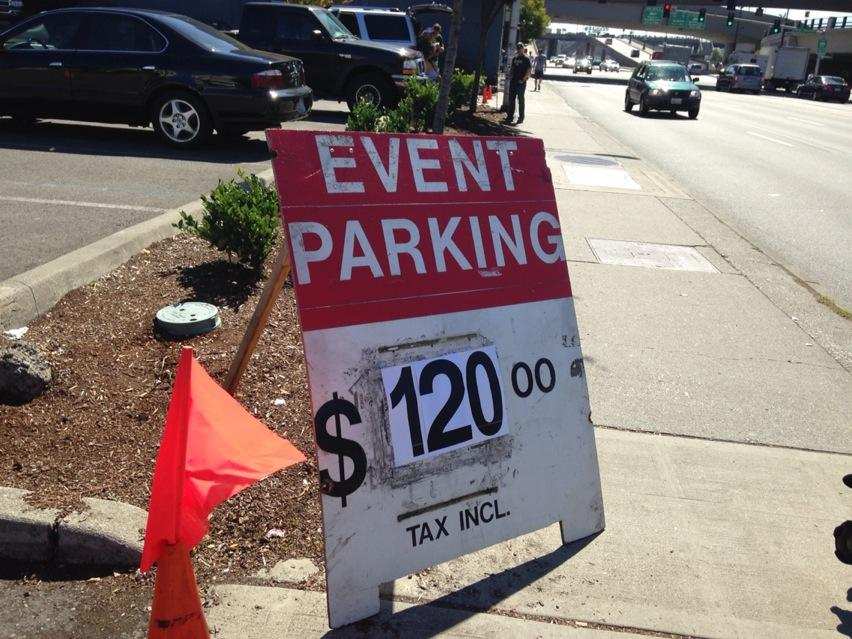
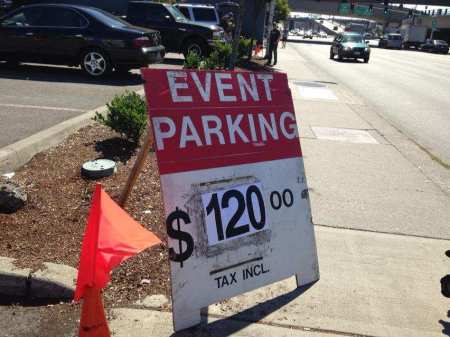
The Seattle Solution for Downtown Venue NFL Seahawks Games
Aren't Downtown Stadiums Grand?

Aren’t Downtown Stadiums Grand?

What happens then?

What happens when we reach the maximum MLB price gouge point in Houston? Does “The Seattle Solution” of  “Let ‘Em Rip – and We’ll Just Play for Whomever Can Still Afford Us” look like an answer for MLB Houston whenever that peak price time comes? And it is coming!’

As was stated here earlier, we don’t see a solution that beats staying home and watching the games a whole lot easier and better at home on television. And we are really clear on this point: The absence of affordable parking downtown is going to be an issue for the average long-commute fan if the Astros remain a contending club on a regular basis. Maybe it will never be as bad as an eight-home-date regular season NFL scenario has come to be in Seattle, but it will be bad enough for us to feel it in our Houston baseball wallets. And we got a bad preview taste of that condition on Opening Day.

____________________

eagle-0rangeBill McCurdy

Publisher, Editor, Writer

The Pecan Park Eagle

Houston, Texas

https://bill37mccurdy.com/