We’re Back ~ and SABR’s the Word

May 17, 2016
    When Irish Eyes Are Smiling     Larry and Kathleen Miggins

When Irish Eyes Are Smiling
Larry and Kathleen Miggins


Morti Update

Morti’s doing as well as expected. All he does is sleep, eat, and smile lovingly at the rest of the family every day, but, at least, he’s not being put down for pretty much following my schedule, give or take a blog column or two. As long as he seems to be pain free in his decline, we would much prefer to see him breathe his last in his own little bed than go through another of those awful, almost fatal trips we took to the vet six days ago. I can’t thank all of you enough who expressed your understanding and support in this matter. And I will never forget each of you who did so. The actions that people take in matters like this one speak loudly for them – and about them. I also appreciate those of you who simply offered your implicit support with a knowing look or a smiling hello in person. I got the message from even that subtle a contact. There’s no one out there among you that I know who “owns” an animal who misunderstands the point. These little, or not so little, creatures are not simply possessions. The also give and receive love as members of our families. Thank God for all the “Mortis” of this world.  I’d hate  to seriously consider how much worse our chances for peace on earth would be without them.

SABR Last Night

Larry Miggins was present for the first time since he fell and broke his leg last November. Accompanied by son John Miggins, Larry came in a wheel chair, but he both looked and sounded great. As per usual, Larry told some wonderful baseball and Irish stories, but I would not even begin to try and recapture here in the linear context of typed print their heart, their humor, or their Miggins’ storytelling signature. In other words, “you shoulda’ been there.” Larry did share with us that his enthusiasm for the Vin Scully cover story article in the May 16, 2016 issue of Sports Illustrated that is now on seller shelves everywhere did prompt him to do something he’s been meaning to do anyway. He called his old high school classmate, Vin Scully, yesterday to “catch up” on things – and to thank him for including the story off Vin’s incredible high school classmate prediction that he would be there someday to broadcast Larry’s first MLB home run. And, of course, as wild as it seems improbable, Vin Scully was the rookie junior man on the Dodger radio broadcast crew when Larry Miggins stepped to the plate at Ebbets Field  as a raw member of the St. Louis Cardinals to face Preacher Roe on May 13, 1952. – And it happened – just as Vin Scully had called the shot and game coverage. “It was the most significant home run of my career,” Larry said, “and it was an event that seriously directed the rest of our lives.” – Larry’s son Robert Miggins of San Antonio also will be traveling to Los Angeles this summer with the President of HEB Foods to attend a Dodger game and meeting with Vin Scully at the stadium during the latter’s last season in the broadcast booth. What a wrap for Scully – 66 years in the booth (and 67, once he finishes his career with the 2016 season) as a baseball play-by-play solo genius – and it all began – as it shall shall soon enough conclude – with another Miggins on board as the second of two baseball family career book ends in the life of the great Vin Scully.

Joe Perez was on deck as President and Owner of the OTW (Over the Wall) Bat Company here in Houston to lay out the history, science, and business of a small Houston operation that has found its way into the swing of competition with the big boys in this field. Colby Rasmus of the Astros is OTW’s most famous local customer, and, as Perez pointed out, it didn’t hurt business at all when Colby became a client last season and then went into that playoff tear with all the home runs. – After all, these are “over the wall” people and that kind of action is good for business. The contents of this presentations were altogether comprehensive and articulately presented. All we can hope to do is give you a smattering of them. – OTW mainly uses maple and ash tree wood. – Most big leaguers are superstitious and demanding of precision in each bat they order – The MLB clubs pay for their player bat orders. – Colby Rasmus probably takes a couple of dozen bats with him on nine-game road trip. – Wood absorbs moisture like a sponge. – During spring training in Florida, a bat may gain 3 oz. of weight from the morning dew. – Too much weight slows the bat speed. – A heavier bat of 44 oz. could not afford the 3 oz. gain. – 46 oz. is the legal upper limit of bat weight. – In arid Arizona, bats lose weight due to the absence of air moisture. – They become brittle and more susceptible to breaking. Members of our SABR chapter have been invited to tour the OTW Bat Company and, hopefully, those of us who are interested will take up Joe Perez on his invitation.

A SABR Chapter Charter Bus Trip to See the Corpus Christi Hooks on Saturday, June 11th is being explored by Mike McCroskey. The trip would include a 3-hour ride from Houston to Corpus Christi, leaving about 1 PM and arriving in time for a tour of Whataburger Park, an included in the price meal, a Hooks game that starts at 6 PM and an immediate return to Houston when things ended. (Although, I’m assuming that, if we ran into a game that was 15-0 after six, we might be free to leave early.  We should be back in Houston some time after midnight. – The cost slides, depending on how many people sign up. – If 30 people sign up, I think Mike said the cost would be $125.00 per person. The big thing now is time. If you are interested, please e-mail Mike McCroskey soon at:

mikemccros@hotmail.com

Jim Kreuz reported on his enjoyable experience attending a baseball Saturday program in Austin with the Rogers Hornsby Chapter in which SABR’s Paul Rogers of Dallas made a measurable impression on everyone. We are hoping to have Paul join us in Houston too one of these fine SABR weekends.  – Tony Cavender‘s Trivia Quiz was won by Tom White and Mike Vance, with the latter agreeing to prepare a quiz for June’s meeting.

Our Larry Dierker SABR Chapter Meeting Schedule through August 2016:

  1. Monday, June 27, 2016, 7:00 PM ~ Spaghetti Western Ristorante on Shepherd Drive at Eigels, south of I-10 West. (Program TBA)
  2. July 2016 ~ No Meeting Scheduled to conflict with too many summer travel plans.
  3. Saturday, August 27, 2016, 4:00 PM ~ Minute Maid Park, Union Station Board Room, Astros President Reid Ryan, Speaker, followed by the Blue Jays @ Astros game. Cost: $35.00 per person. *
  • Jo Russell and Mike McCroskey are in charge of reservations and collections and may be contacted through the earlier e-mail provided for Mike.

Sales, Trades, and Outright Releases

Bob Dorrill, Mike Vance, Joe Thompson, Jim Kreuz, and Tom White brought  collectibles to buy, sell, or giveaway. It went well for most of us members of the hands out and hungry crowd. We went home with some nice and valuable collector’s trinkets – something I needed like another hole in the head. Bottom Line: It was fun.

Have a great Tuesday afternoon, everybody, and stay dry!

____________________

eagle-0range
Bill McCurdy

Publisher, Editor, Writer

The Pecan Park Eagle

Houston, Texas

https://bill37mccurdy.com/


Recipe for a Baseball Dream Cake

May 13, 2016

altuve-rose

____________________

1st 700 GAMES   BA   HITS   HR   SB
PETE ROSE   .296   835   43   29
ROBERTO ALOMAR   .290   794   37   167
JOSE ALTUVE   .306   870   45   182

____________________

Recipe for a Baseball Dream Cake

1) Place your dream in a large bowl, keeping in mind, that if your dream comes true, you won’t find a bowl in the kitchen that will be big enough to hold it.

2) Sprinkle the contents with liberal pinches of hope, expectation, and egotistical certainty that time is really the only chef needed in this exercise, and that the charade of your participation is only important to your personal goal of achieving recognition as a baseball culture pundit.

3) Add some personal words of quotable proof that the expected outcome in this exercise is your eloquently personal prediction. As you do so, throw in the idea that these words shall serve as the yeast that shall make the cake rise to its deliciously forecasted full size and glory.

4) Shake, do not stir, the ingredients – and then place the bowl and its contents in the microwave time machine.

5) Set the timer for the amount of time you project it will take for the dream to be affirmed as true.

NOTE: If the dream has to do with a player career achievement, an ETA (Estimated Time of Actuality) of 15-20 years is suggested. Remember too, the closer your ETA is to the actual outcome date, the more credit you will receive for your Delphic powers.

6) If you pull your cake from the machine to find your predictions fulfilled, celebrate, of course, but be prepared for the reality too that by using the machine, no matter what results it shows, that you also have actually aged the same time it took to travel into the future and find your answer. As soon as the cake is removed from the “time waver”, it ages everything within the immediate structure in which it rests to the same degree. In other words, if you use the “waver” in 2016 on a twenty year ETA setting, it will still be 2016 for everyone else in your neighborhood and city of residence when you are are done, but you, everyone and everything else in your house, and the house itself, will have physically aged 20 years to 2036.

Small Consolation: If you didn’t get the dream cake you wanted, there is one bowl, at least,  in the house that will get rid of the failed cake rise for you, and that’s the toilet bowl in any bathroom in your house. The flush handle should still work, even if it has been twenty years.

Dream on. But stay away from the “time waver”. Life’s tough enough.

____________________

Now I can begin my “as advertised” brief column break. After I wrote that piece, I received the Altuve, Alomar, and Rose box at the top of the page from Mark Wernick. Then the muses hit me. And I could not resist their call. I will try again. Let’s see how far I get this time.

____________________

eagle-0range
Bill McCurdy

Publisher, Editor, Writer

The Pecan Park Eagle

Houston, Texas

https://bill37mccurdy.com/


Morti’s Reprieve

May 12, 2016


Morti McCurdy In His Puppy Years

Morti McCurdy
In His Puppy Years


Part One of this little McCurdy Family Soap Opera appeared as yesterday’s column: World’s Tallest Caterpillar

https://bill37mccurdy.com/2016/05/11/worlds-tallest-caterpillar/

____________________

Part Two: Morti’s Reprieve

Things took an unexpected turn in the vet’s office this afternoon. Because Morti is still eating well; not coughing the way animals with cancers that have spread to the lungs do; not incontinent in any way; and because he is still alert and enjoying our company; the vet presented us with the idea that euthanasia is still an “option” at this point – and not a “requirement.”  After the examination today, the vet could only tell us that the visible bone mass growth on the stomach side of Morti’s  left hind leg is “probably cancerous” – since no lab tests have been performed to confirm that opinion. And if it is cancerous, it “most certainly” will continue to grow and create issues of pain and change that cannot be ignored. When, or if, that happens, “putting Morti down” will become the “requirement” we thought it would be today.

Then the vet added the fact that he could still go ahead and put Morti to sleep today, if that is what we chose to do. And that statement had to be weighed against the vet’s other statement this afternoon that he was surprised to see Morti doing “this well for this long” since his our first consult about the early stages of the problem back in January 2016.

Given that much wiggle room on something I dreaded doing today, anyway, I opted to bring Morti home as we best like him – in the living, still loving and trusting state. Of course, I tried to call Norma and bring her into the decision too, but she had her cell on silence – and I had to make the call for all of us. And, even though I know that decision has set us up for another day of this torture down the line, it will be easier for me to do when we know there is no choice for life that works for Morti at all. – For now, however, his innocent eyes still say, “Love me. And be with me.” And so we shall continue to be, whether it’s only for a few more days – or a few more weeks. For as long as we can help him breathe in every last moment of goodness about life, we shall do so. And Norma agrees with me, which I was sure she would.

If I had avoided the option the vet gave me today, and gone ahead with the procedure, it would have been to selfishly save me from another 24 hours like the one we just had. Now Morti has the precious opportunity for a little more loving time in life. And we get to enjoy it with him.

My apologies for pulling all of you into this little big moment in our personal life, but it felt good to me – and it also helped support me through the past 24 hours. Those who commented or e-mailed their word of support are especially appreciated, but it wasn’t necessary for you all to write. I know you are out there. I feel your presence on a daily basis.

I won’t write any more columns on this subject, but I will find space somewhere down the line to get the word out on the final resolution, whenever that is.

In the meanwhile, I will be taking off a few days from daily column writing. My energies are needed elsewhere for now.

_______________________

eagle-0range
Bill McCurdy

Publisher, Editor, Writer

The Pecan Park Eagle

Houston, Texas

https://bill37mccurdy.com/


World’s Tallest Caterpillar

May 11, 2016
Morti McCurdy, 2004-2016 "World's Tallest Caterpillar"

Morti McCurdy, 2004-2016
“World’s Tallest Caterpillar”


Today is a sad one at our house. It probably would be a better idea if I didn’t even try to write, but I cannot help myself. The day looms for what it is – a day of physical separation looming, but also a day of gratitude for all the good times and mental pictures forever of Morti, 0ur little 10-pound, 12-year 0ld Shih Tzu canine son – and the smallest McCurdy family member – the high-pitch barking one that I shall always best remember as “the world’s tallest caterpillar.”

A couple of months ago, our vet discovered a small internal swelling near Morti’s rear left upper leg. The immediate prognosis was foreboding,  and time proved the worst. Morti has an inoperable cancer that has reached the point of inevitability. Our son Casey and I will be taking Morti back to the vet one last time at 2:00 PM today, Wednesday, May 11, 2016 for euthanasia. My wonderful wife Norma had to say her tearful goodbye to Morti this morning before leaving for a busy day at the hospital.

Today is the day that our little family has to say goodbye to our smallest canine channel of so much love and laughter, but it is far more than sadness that we embrace – again – today. It is the latest reminder of the stuff that really is important in life:

True Love is not a commodity that comes and goes with birth and death alone. Once given or received, Real Love – not appetite-driven love – is forever – because “God Is Love” – and God is also the name for every other source of eternally nutrient spiritual energy available to us, even when it comes bouncing through the door of our lives one golden moment day – looking like the “world’s tallest caterpillar.”

Goodbye, Sweet Morti McCurdy! – Our Love for You is Eternal too! – And you shall live forever in our hearts, especially in all shared smiling family moments that simply seem to find us when we most need them, no matter what.

____________________

Wednesday, May 11, 2016, 8:15 PM

The outcome of today’s ordeal is summarized in Part II of this report,

Morti’s Reprieve,  Thursday, May 12, 2016

Morti’s Reprieve

____________________

eagle-0range
Bill McCurdy

Publisher, Editor, Writer

The Pecan Park Eagle

Houston, Texas

https://bill37mccurdy.com/

Ode to the Baseball Calendar

May 10, 2016

baseball_design_2016_calendar_mousepad-rda5e7c6da1e44a1d997e186b5b833e4a_x74vi_8byvr_512


Ode to the Baseball Calendar

By Bill McCurdy

The Pecan Park Eagle

May 10, 2016


April sings the hope of spring,

May delivers doubt.

June’s the door to reality,

July shouts – in or out.

August rallies stretch-run nags,

September sorts them out.

October crowns the one true champ,

November’s the time – for losers to pout.

____________________

eagle-0range
Bill McCurdy

Publisher, Editor, Writer

The Pecan Park Eagle

Houston, Texas

https://bill37mccurdy.com/


Team Chemistry in Baseball

May 9, 2016
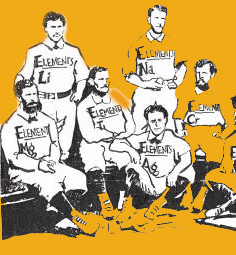
'Elements' sports team

“If were what you call blending in, there’s got to be more to team chemistry than we bring to the periodic table of elements!”


Team Chemistry in Baseball

What is it? In reality?

Once you get past pure good or bad luck, the random, but rotating movement of outcomes from those you like, to those that don’t seem to matter, and, inevitably,  those you hate, what is this thing that winning teams dismiss as credit to the vagaries of “our great chemistry” as they are popping champagne and pouring the bubbly on each other’s head in the winning team’s World Series clubhouse?

Although we don’t seem to know much about it collectively, we’ve all seen the efforts of ego and intelligence that go into creating the kind of chemistry we think is needed to survive the 162-game regular season as a division winner or playoff qualifier for the games that follow for all the marbles – and the one showdown that puts all other baseball trials and accomplishments in the shade – winning the World Series.

And what is the result of winning the World Series? It’s viscerally that 48-hour moment of celebration that begins with the player pile at the pitcher’s mound following the last out, or potentially, the walk-off victory hit by a home club, through the champagne shower, the all night party that follows, the calls to and from family, friends, and celebrities, the smiles and autograph rapture roll of fans, the joyful moment of awakening the next day to the realization that, yes, it’s true, we won it all, to the big  parade down whatever serves your city as the “canyon trail of heroes”, and finally – to the biggest descent you will ever make as a player – to that gradual or abruptly realized moment that finally hits you: the rest of the world now expects us to rejoin them at ground level on planet earth. It is in that moment of realization that we shall never quite get there – or be able to translate that realization to anyone has not personally shared our World Series victory experience as players. – For 48 hours sharply, and for all eternity on a more mellow plane, we understood that our club just ended this baseball season as the only winners – while all other 29 MLB clubs ended their years as 29 losers! – We would never say it, but we knew it. – Even if the club we just beat lost to us in extra innings by one-run in Game Seven, the best they can now claim is simply expressed. – They were the top loser on a list that included 28 other – losers. History will forget them all. – They may even forget us too in time, but, as for now, that little discovery is way down the road of realization for most of us. In the warm amber glow of what we have just done, our victorious club is in gear to dance with the delusion that no one will ever forget what we did here – and WHO we now are!

“We ARE  The Champions! – WE Are The Champions! – We Are the CHAMPIONS  …. OF THE WORLD!

What is team chemistry?

Is it simply a blow-off phrase for something we cannot really describe? If it is important to winning, is it always a positive factor on the team morale side of things? The 1997 Yankees of Manager Billy Martin, Right Fielder Reggie Jackson, and Club Owner George Steinbrenner won the World Series, but they almost killed each other throughout the season in a meteor shower of ego collisions. In the end, their victory celebration in the clubhouse may even have appeared to the uninformed as a love feast, but it was anything but love for each other that drove the Bronx Zoo club that season. – Were they an example of negative team chemistry driving a club to victory? – Or could they be better described as a club with so much talent that they proved themselves capable in the end of winning in spite of themselves – and a flooding slew of narcissistic collisions with each other?

How important is will?

Most of us don’t know beans about what it must be like to travel through a season with 25 to 40 other members of an MLB club and managerial coaching staff and crew over a 162-game schedule that includes 81 road games from Miami, Florida to Seattle, Washington. How do you do that and perform well if you don’t like or get along with some of the people in your group?

Shortstop Joe Tinker and 2nd Baseman Johnny Evers of the famous early 20th century Chicago Cubs “Tinker to Evers to Chance” double play poem supposedly didn’t speak to each other for years due to a feud they had going between them, but they still performed as one of the premier keystone combos of their time. And they had enough “chemistry” to help lead the Cubs to their last World Series championship in 1908. How did they each do it? Did they simply partition the negative personal stuff out of the way  so that they could play to the best of their abilities. – Or did that negative chemistry actually spur each of them to play at a higher level?

And how vital is a winning attitude to success in baseball?

To me, the question almost answers itself, but it speaks even more loudly now. After years of contact and annual meetings in St. Louis as a member of the St. Louis Browns Historical Society, I was privileged to meet and get to know a lot of the old Browns players from the 1940s and early 1950s through their last season of 1953. They were, and still are, some of the nicest people I know in baseball, but their numbers have now “dwindled down to a precious few.”

The old Brownies were no dummies. They understood that their club was one of the “church mice” members of the great American League baseball temple. – These guys had an incentive to play well, all right – and that was so they could be sold to the Yankees or some other monied clubs that were actually trying to win. The Browns ownership used the sale of their talented players to pay the utility bills at Sportsman’s Park.

Losing and low attendance, as always, worked together like an interlocking virus for the AL St. Louis club. Most talented Browns players held out hope for better personal fortune by their individual accomplishments, but losing streaks as a club are built upon the backs of limited ability players who expect to lose. The unspoken question, “I wonder how we are going to lose today?”, was just part of being a St. Louis Brown.

Ned Garver described the lack of Browns fan support at Sportsman’s Park in a talk he once delivered at one of our St. Louis banquets. “Our fans never booed us,” Garver said. “They wouldn’t dare. We outnumbered them.”

Pitcher Ned Garver also stands alone as the poster boy for the futility of accomplishment among the Browns. As many of you know, the 1951 Browns finished 8th and last in the AL with a record of 52 wins and 102 losses – and 46 games back of the first place Yankees. Incredibly, Ned Garver finished with a pitching record of 20 wins and 12 losses for that same sorry club. When he asked for a raise from club owner Bill Veeck over the winter, Veeck turned him down. “We could’ve finished last without you,” Veeck explained.

The eternally cyclical effect in baseball of the morale-production continuum.

How many times have we heard that an alleged tyrant manager is being fired because of his bad effect on the club’s morale and that he is being replaced by a laid-back leader with a two-year contract. Then, nearly two years later, we get the news that the gentle manager is being fired because his happy campers aren’t winning – and that another big-stick disciplinarian is being brought in with his own two-year contract in the interest of getting the club back on the winning track. Some clubs seem to go through this pattern continuously. – What then is the message about the kind of “team chemistry” clubs are seeking in this never finished search for the best balance between morale and production?

– Or is “team chemistry” simply a catch-all laundry chute phrase that we find useful for describing something we always talk about in the thrill of victory – or the agony of defeat – but never quite get around to actually explaining.

Anybody out there have any fresh ideas on the meaning of “team chemistry”? – Is it intangible beyond description? – Or is it simply something, like Goldilocks search for the right temperature of soup, that you just have to go through personally as an owner, GM, or manager until you find what tastes right to you personally.

The Pecan Park Eagle welcomes your comments or columns on the general subject of team chemistry in baseball.

If you simply want to comment, no matter how long, simply leave it in the comment section. And I won’t presume you intend it as a column feature.

On the other hand, if you would consent to write a column on this subject, I will be happy to publish all appropriate on-topic works as separate follow up feature columns as either a single or multiple article piece – or as a series of columns on the same subject – with full credit to each contributor.

For column material submissions, please send them by WORD attachment to a cover e-mail to me at

houston.buff37@gmail.com

Thank you.

Bill McCurdy, Editor, The Pecan Park Eagle


____________________

eagle-0range
Bill McCurdy

Publisher, Editor, Writer

The Pecan Park Eagle

Houston, Texas

https://bill37mccurdy.com/

The Moody Blues MLB Nine

May 8, 2016
Aloysius "Pop" Joy, 1B Washington Nationals Union Association, 1884

Aloysius “Pop” Joy, 1B
Washington Nationals
Union Association, 1884

____________________

Our Moody Blues Catcher, Pop Joy

There was “no joy in Mudville” because Aloysius “Pop” Joy only played one season of 19th century major league base ball – and, according to The Encyclopedia of Minor League Baseball, even that attainment was limited to the 36 games he played for the 1884 Washington Nationals of the short-lived Union Association. “Pop” had 38 hits in 130 times at bat for a batting average of .215. According to Baseball Almanac.com, all of Joy’s 28 hits were also singles.

http://www.baseball-almanac.com/players/player.php?p=joypo01

Pop_Joy2

We found one grainy photo of Pop Joy on the Internet, and, unless this copy was cropped from his 19th century same-sex wedding day picture, it must have been taken from his club’s team picture. We are betting on the latter – and even narrowing that guess to the strong probability the club he represented here was his one and only Washington Nationals of 1884.

Pop Ivy: A Jack Nicholson Ancestor – or Soul-Precedent Lifetime?

In the photo, Pop Joy closely resembles a young Jack Nicholson, as he appeared in both “One Flew Over The Cuckoo’s Nest” and the horror classic, “The Shining.” For those who are familiar with the latter film, it makes one wonder if Pop Joy spent all that bench time he had with the Nationals redundantly writing this line in a little pencil notebook tablet that he probably carried in a hip pocket.  The line we had in mind was: “All work and no play makes Jack (Pop) a dull boy.”

Maybe actor Jack Nicholson is the reincarnation of Pop Joy. Who knows? All we know is that Pop Joy is our poster boy for our MLB lineup of nine former players whose names cleverly suggest that they could fit in well with a team comprised of only those former big leaguers who suffered from bi-polar mood disorders.

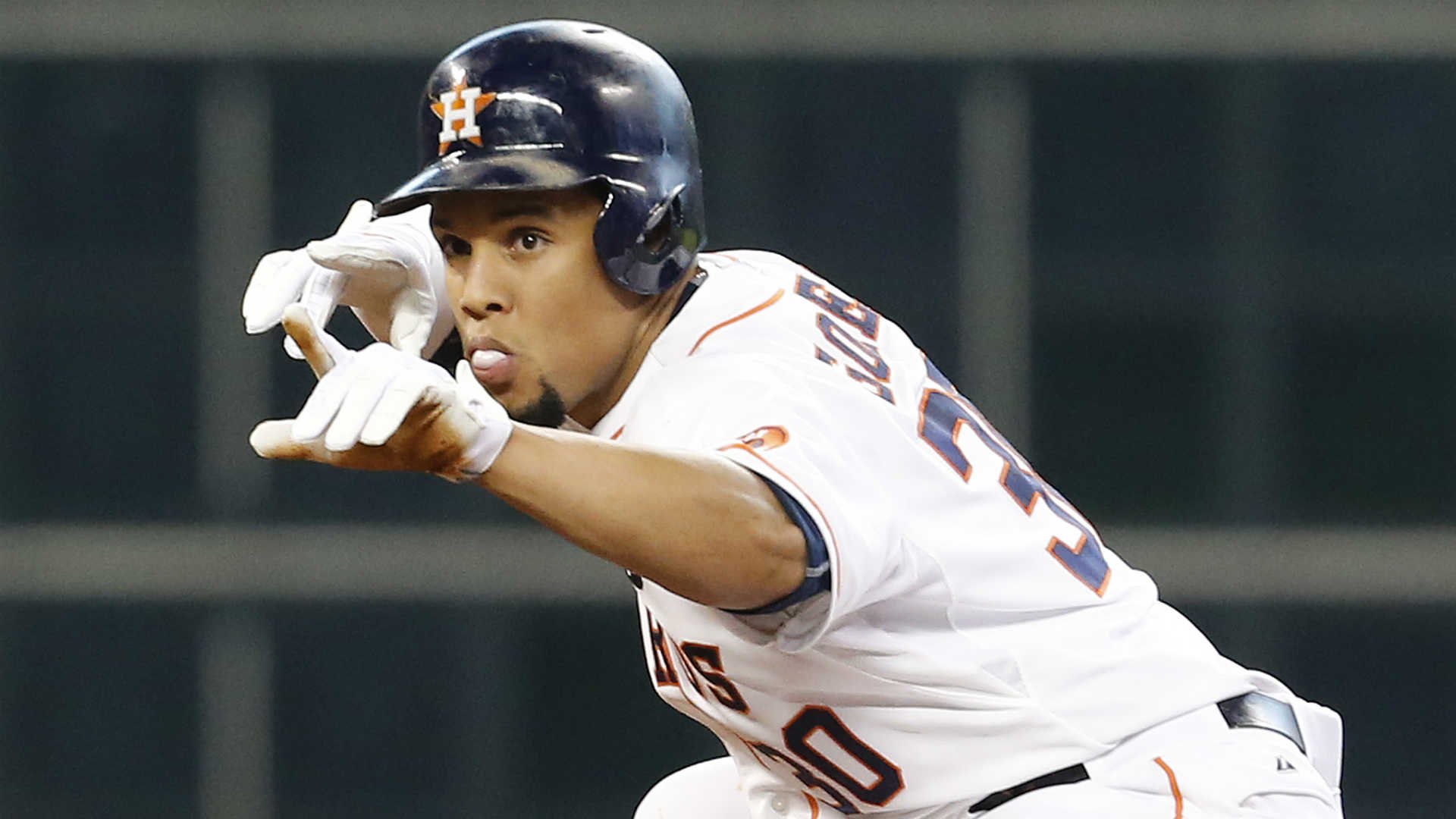
We’re calling the nine here our Moody Blues club. It was just something I had fun doing while I watched the Astros on Roots this Saturday night – and the baseball watching for Astros fans wasn’t too much fun. Neither were those three late innings in which the Astros each time left a tie or a lead dead on the bases by their totally absent clutch hitting. We’ve been wasting time with how well or poorly Carlos Gomez speaks English and the issue of how he handles “asleep at the wheel” reporters who quote him literally. That fact is, Brian T. Smith was dead-on right in his subject matter. – Carlos Gomez is a major disappointment to those who acquired him, thinking he could still hit. For the rest of us, Gomez is just a guy with an attitude who can’t hit when it really counts, as was proven again tonight.

As Tommy Lasorda used to say, Gomez couldn’t hit water if he fell out of a boat when it comes to hitting with runners in scoring position – and Preston Tucker is missing the chance of his career with those ball-free bat swings. With Gattis out of town “to practice catching in Corpus”, Tucker had the door open to show that he belongs in the lineup as the DH. Instead, he used his first Gattis-free game going the Jon Singleton route.

Please, Manager Hinch, if you have to play Gomez and Tucker in the same game, try to figure out a way to not bat them back-to-back.  As for that stunt that Gomez pulled to get kicked out at the expense of the team’s chances for winning late in the game, all I can add is – this was a fitting, if not a good night to work on a Moody Blues MLB All Star Nine. – Remember this spoken philosophical Moody Blues entry to “Morning Begins” in their great album, “Days of Future Past”?

With prior and post apologies, here’s a parody of that beautiful piece of original work. The contamination here was inspired by the Mariners’ 3-2  win in ten.

Cold-hearted orb that rules the night
Removes the colours from our sight
Red's now orange, as we struggle to fight
But time will decide - which is right
And which is an illusion

Pinprick jinx holes - in a mag called "SI"
Let ineptly swinging bats - and opportunity pass by
The mighty plight of forty thousand fans
Challenges attendance - and spawns empty stands
Night games for losers - are a brief interlude
In the end - all they offer - are rare solitude

Brave Helios, wake up your steeds
Bring the warmth the Astros club needs

~ with sincere post-apologies to the original Moody Blues
____________________

.... and here's the club that started in tonight's first inning 
as a much simpler column idea:

The MLB Moody Blues Club Nine

Pitcher – Ellis Kinder (1946-57)

Catcher – Dad Meek (1889-90)

1st Base – Pop Joy (1884)

2nd Base – Andy High (1922-34)

3rd Base – Fletcher Low (1915)

Shortstop – Tony Suck (1883-84)

Left Field – Aubrey Huff (2000-12)

Center Field – Ben Grieve (1997-2005)

Right Field – Art Rebel (1938, 1945)

____________________


Happy-Mothers-Day

…. and we’re not addressing this cheerful loving message to the mothers who failed the Astros in the clutch last night! 



____________________

eagle-0range
Bill McCurdy

Publisher, Editor, Writer

The Pecan Park Eagle

Houston, Texas

https://bill37mccurdy.com/

Dierker and Lucas: Ironies of Baseball Journalism

May 7, 2016
he game looks pretty much the same from up here, but just wait until different people start broadcasting and writing about it. Then watch what happens.

The game looks pretty much the same from up here, but just wait until different people start broadcasting and writing about it. Then watch what happens.


If you read yesterday’s column, “Watch Your Quotations, Sports Writers”, then you already know that it generated from the writing peers and reader reactions to Brian T. Smith’s use of literal quotes from Carlos Gomez for a Houston Chronicle article on Gomez’s poor performance at the plate in Houston since his trade from Milwaukee late last season. At issue was Smith’s use of literal quotes from an “English-as-a-second-language” speaking player – and whether or not that was the best or fairest way to convey the subject’s thoughts. The article was not intended as a politically correct spanking of Smith. We don’t pretend to know his motives here. It was more of a “what were you thinking” question about any writer’s judgment who would go that route in literal print mode with a second language-challenged subject in today’s world.

Greg Lucas, Rick B., and Larry Dierker all had substantive things to say as written comments at the first article site, and these may be viewed in full at:

Watch Your Quotations, Sports Writers

We also felt that the Lucas and Dierker comments were ready for re-presentation here without any unrequested editorial work as historical columns on the issues of how the print and broadcast media handle literal speech differently – and how literal speech is valued differentially by non-fictional and fictional genres. So, here they are, our co-guest “columnists” for The Pecan Park Eagle – and with no disparagement of the good stuff that Rick B. wrote either. These two featured pieces simply were already in hand in column format and focus without any need for further editorial splicing or re-focusing.  The Pecan Park Eagle welcomes future consciously intended pieces on baseball or its culture from all three of you – anytime any of you have something else you wish to share with the rest of our little baseball universe.

The Eagle cannot thank any of you enough for your ongoing quality contributions. Without the involvement of you three guys, and all the other contributors who must go nameless here tonight due to time and space, The Pecan Park Eagle would have gone elsewhere long ago. Our own creative energy feeds on the heart and soul of all your minds and spirits – especially when it comes to all the little nuance things that happen in our baseball culture to make our game the most fascinating drama in all organized sports.

Thank you too, Greg and Larry, for being our “surprise” guest columnists this late Friday evening, May 6, 2016.

___________________


Greg Lucas Legendary FOX Broadcaster Texas Baseball Hall of Fame Inductee

Greg Lucas
Legendary FOX Broadcaster and Baseball Author
Texas Baseball Hall of Fame Inductee

The Double Standard for Literal Expression in Print vs. Broadcast Media

By Greg Lucas

(Originally submitted to The Pecan Park Eagle as a Comment Upon the Above Referenced Link.)

While I don’t advocate doing what Smith did the irony is that if the same player does a TV or radio interview the fans will hear exactly what he says as he says it. There is a double standard that says newspapers should “clean things up.” I think this is correct, not just to make the interviewee sound better, but more importantly to allow the public to know exactly what he meant if not exactly the words he used.

When I was working it often was a problem getting some players whose primary language was Spanish or Japanese to do an interview without an interpreter. The players were capable of communicating in English, but not well schooled in speaking it and did not want to appear to struggle. I totally understood that. As they got better they would attempt to speak in English in the post game group interviews in front of their lockers. Most could not be used on TV or radio, but it was not hard to understand what was trying to be communicated by writers and they would “clean it up” for the newspaper stories. Broken English never made it to print.

The other thing that must be remembered is that no language translates exactly word for word into another. A Spanish sentence if broken down word for word using a dictionary, for example, may not make sense to an English speaker. The reverse is true with English to another language. So many idioms require some real thinking to get the meaning.

In respect to the players who are making themselves available to the media what they are saying (interpretively) is more important than the exact words or grammatical structure they may use. That “realism” is not needed and only makes the reporter appear not to have respect for his subject. Get the meaning right…not necessarily the exact sentence structure.

____________________

Larry Dierker Houston Astros Retired # 49 Legendary Astros Player and Manager Historian and Broadcaster Writer and Author Texas Baseball Hall of Fame Inductee

Larry Dierker
Houston Astros Retired # 49
Legendary Astros Player and Manager
Historian and Broadcaster
Writer and Author
Texas Baseball Hall of Fame Inductee

The Irony Behind the Differential Treatment of Literal Speech in Non-Fiction and Fiction

By Larry Dierker

(Originally submitted to The Pecan Park Eagle as a Comment Upon the Above Referenced Link.)

Greg Lucas mentions irony, a foundational aspect of good writing. Well how ironic is this?

In the early, pre-radio days, the reporters didn’t go down to the locker room for quotes. They embellished, or lambasted (Censurable stupidity on the part of player Merkle…”) as they saw fit. Unless you were at the game (usually fewer than 20,000 people), how could you criticize the writer?

With the emergence of the electronic media, so many fans already knew the score before the morning paper was delivered, the print reporters had to go down to get “quotes” to add too what folks already knew from the broadcast media. Although there were few Latin for Asian players, there were plenty who did not speak the King’s English. There were Irish and Italian accents, southern accents. And there was the common butchery of the language of the unschooled like Shoeless Joe Jackson. The writers didn’t try to capture these dialects. That was for novelists.

So are today’s journalists attempting to be more creative? Far from it. Instead, they are practicing irony by accident. With the litigious nature of modern American culture, writers never begin an interview without hitting the “play” button on their hand-held recorders. That way, there is no chance they will misquote the athlete, thus protecting themselves and their employers from legal action. A Boston accent and a Charleston accent still look the same in print. But grammatical errors, especially the egregious ones such as Gomez’ remarks, are embarrassing.

The irony is that if you were writing a baseball novel and trying for realistic dialogue, you would struggle mightily to get both the grammatical errors and the nuances of dialect right. But when you tape an interview and put in in the paper exactly as it is spoken, it seems anything but artful. It seems cruel.

I don’t mind the literal language. If the player is embarrassed, perhaps he will try to improve his command of English. If not, so be it. As Greg mentioned, you’re going to hear the way the players speak on radio and TV. I don’t think Colby Rasmus is going to work on his accent to sound more educated. I wouldn’t want him to. I would, however, like to be a good enough writer to capture it in print.

____________________

eagle-0rangeBill McCurdy

Publisher, Editor, Writer

The Pecan Park Eagle

Houston, Texas

https://bill37mccurdy.com/


Watch Your Quotations, Sports Writers

May 6, 2016
Carlos Gomez Center Fielder 2016 Houston Astros

Carlos Gomez
Center Fielder
2016 Houston Astros

In a front page article on today’s May 5, 2016 Sports section of the Houston Article, writer Brian T. Smith wrote a column entitled “Hey, Go-Go, bring the sexy back when you can put bat on ball.” Continuing from that first page to page C5, the reference to “Go-Go” is to Astros center fielder Carlos Gomez and the problems he’s been having with the bat – problems that don’t quite earn him a base for emotional flamboyant behavior that isn’t earned by his slumping level of production since joining the Astros late last season.

Fair subject, but Smith chose to quote Gomez, who isn’t particularly skillful or grammatically correct in his use of English as a second language, but nevertheless, a lot more capable than any of us English-only people are in expressing any thoughts in Spanish beyond “Por favor” and “Si, senor” or “Caliente”. As a result, for example, Gomez is quoted by Brian T. Smith as saying the following: “For the last year and this year, I not really do much for this team. The fans be angry. They be disappointed.”

Craig Calcaterra of NBC Sports jumped all over Smith for using Gomez’s literal problem with English thought expression. Calcaterra wrote that “it’s  hard to escape the conclusion that the quote’s imperfect English fits satisfyingly into a column designed to rip Gomez and that it’s going to play right into stereotyping a certain sort of reader who has just HAD it with those allegedly lazy, entitled Latino players likes to engage in.”

http://mlb.nbcsports.com/2016/05/05/sure-carlos-gomez-is-the-problem-in-houston/

Jose de Jesus Ortiz, now of the St. Louis Post-Dispatch, but former colleague of Brian T. Smith at the Houston Chronicle then checked in with this comment: “Latino ballplayers work hard to learn English & deal with the media. No need to disrespect them and then taunt them.”

Watch Where You Step

What a mess. Again. For the innocent multiple offender writer, and we have no idea about the beliefs, record, or intentionality of Brian K. Smith in this matter, he may be like the guy who owns a Great Dane, but still refuses to watch where he steps whenever he goes out in the back yard. If so, he will not have a long wait to repeat one of these “wish I had not gone there” moments when he’s already late for his working trip to Minute Maid Park.

The Old Rules Have Changed

The old literal journalism lesson of using only the literal words of the subject doesn’t work if the interviewee is using English with limited grammatical understanding.  So, what could Smith have done, had he seen the need to avoid misunderstanding?

He could have used parenthetical inclusions to show the correct grammatical usage ….

“I can’t get no (any) satisfaction….” – but that could easily have been viewed in the Smith/Gomez case by sensitive critics (and ethnic offense ‘gotcha’ hawks) as condescending.

Where Brian T. Smith wrote: “For the last year and this year, I not really do much for this team. The fans be angry. They be disappointed,” I would have paraphrased those thoughts in this way: “Gomez is aware that he has not done much offensively to help the club since joining the Astros late in the 2015 season. He also gets it that the fans are both angry and disappointed in his work with the bat.”

OK? Clear enough? The paraphrase confirms that Gomez intelligently understands his Houston situation – and with no inference of blame upon him for everything that’s gone wrong with the Astros this year – so far.

It’s a quick and slippery slope from naivete to stupidity to literally quote anyone using a second language today. Worse, or just as bad as the sometimes innocent adherence to the journalism 101 rule about literal quotation, are the ethnic offense ‘gotcha’ hawks who quickly go to print to condemn the offender as an unforgivable racist – and without investigating or confirming all the facts behind each individual case of alleged transgression.

Chill, people. And as Jon Batiste, the music director on the CBS Colbert Late Show, likes to call his band: “Stay Human”.

____________________

eagle-0rangeBill McCurdy

Publisher, Editor, Writer

The Pecan Park Eagle

Houston, Texas

https://bill37mccurdy.com/


A Curt Walker Retrospective: His 2 Triples Inning

May 5, 2016
Curt Walker, OF MLB (1919-1930) Career BA .304

Curt Walker, OF
MLB (1919-1930)
Career BA .304

Right fielder Curt Walker of the Cincinnati Reds, and an old friend of my father’s back in our shared birthplace home town of Beeville, Texas had a pretty nice career over 12 seasons (1919-1930) in the big leagues. Walker broke into professional baseball in 1919 at the age of 22 after playing college ball at Southwestern University in Georgetown, Texas. Curt’s first minor league rookie stop was at Augusta, Georgia of the Class C Sally League in 1919, but he moved up to the Class B Houston Buffs that same year. To plug in an old expression that was pretty popular in Beeville baseball circles back in the day, Curt hardly “hit a lick” at either of his first two stops, batting an OK .278 at Augusta in 194 at bats, but then dipping to .215 at Houston in only 135 at bats. – And yet, near the 1919 season’s end, Curt Walker made it all the way up to the roster of the New York Yankees, getting there in time to make his MLB debut in an 0 for 1 appearance on September 17, 1919.

I never had enough awareness in time to ask Curt how he made the leap to the Yankees in his first year. Walker died in Beeville on December 9, 1955, during the fall term of my senior year at St. Thomas High school. We had been Houstonians since my 5th birthday and, in 1955, Curt was still only a figure in my father’s life at the time of his death – and my serious baseball history lamp did not really come on until some time in my twenties. Whenever I happened to see Curt Walker on trips with Dad to the downtown American Cafe in Beeville, I saw him at the time more as the town undertaker than I did the former Reds star. It was to become a kid’s perceptual lock on one of my dad’s peers that I would long regret, once I later awoke to my missed opportunity. And I quickly learned that even Dad could not answer all of my Curt Walker questions – like, how does a guy hit .215 for the Buffs in his rookie minor league year and still make it all the way up for one at bat with the New York Yankees near season’s end?

Curt Walker was an outstanding big league outfielder. He had speed, a good contact hitter bat, a strong arm, and lifetime stats that compared favorably with those of fellow Texan outfielder Ross Youngs of the New York Giants, who presence in the Big Apple and early death helped propel him into the Hall of Fame.

This quickie career stat performance comparison is what propelled me back in 2000 to start hounding the Texas Baseball Hall of Fame over the absence of Curt Walker from their membership rolls – in addition to the fact that Youngs was also in the National HOF. I didn’t really think that either Youngs or Walker were deserving of Cooperstown, but I felt strongly that Curt deserved the state Hall honor every inch as much as Ross:

Two Texans Plate trips Hits Runs RBI 2B 3B HR SB BA OBP SA
Ross Youngs 5,336 1,491 812 592 236 93 42 153 .322 .399 .441
Curt Walker 5,575 1,475 718 688 235 117 64 96 .304 .374 .440

Both Youngs (5’8″, 162 lbs.) and Walker (5’9″, 170 lbs.) were little guys, but so were a lot of other players in the 1920s. Both men were BL/TR types. It wasn’t simply my opinion rolling here. By any logical deduction, Curt Walker deserved the state Hall of Fame honor as much as Ross Youngs, who, as stated previously, was already a member.

Curt Walker’s best full season batting average was .337. Curt did that in 1923 as a member of the Philadelphia Phillies. Ross Youngs hit over .350 twice in full seasons as a NY Giant, batting .351 in 1920 – and .356 in 1924.

I kept hounding the TBHOF in behalf of Curt Walker until they finally inducted him the following year. In the absence of any surviving close kin, or my father, I also journeyed to Forth Worth for the TBHOF induction banquet in November 2001 and accepted this honor in Curt Walker’s behalf. – Things move strangely in baseball. In the wake of the Walker induction, I was invited by the TBHOF Board to serve on their selection committee. Then, in 2004, I was asked to serve as their Board Chair and Executive Director. I served in those capacities for three years during the TBHOF’s brief move to Houston in 2004.

On July 22, 1926, in a home game played with the Boston Braves, the Reds defeated the visitors, 13-3, by exploding for 11 runs in the bottom the second inning. In that single inning. the Reds collected four triples, two three-baggers by Curt Walker alone. That rare accomplishment placed Curt on a very short list of only 11 big league players to this date who have done the same.

Can you think of a safer record? The odds against ever getting three times at bat are virtually off the table. – That being said, what are the odds against anyone ever getting three times at bat in a single inning and then – using that opportunity to hit three triples in the same inning to move ahead of the eleven guys tied at two triples each?

Here’s the box score for Curt Walker’s entry into the rare club:

Baseball Almanac Box Scores

Cincinnati Reds 13 – Boston Braves 3.

Boston Braves ab   r   h rbi
Smith cf 5 0 0 0
Bancroft ss 2 0 0 0
  Gautreau 2b 3 0 2 0
Welsh rf 5 1 3 0
Burrus 1b 4 0 1 0
Brown lf 2 1 1 0
  Wilson lf 2 1 0 0
High 2b,3b 4 0 1 1
Taylor Z. c 1 0 1 0
  Siemer c 3 0 1 0
Taylor E. 3b,ss 3 0 0 1
Goldsmith p 1 0 0 0
  Genewich p 2 0 1 0
  Cooney ph 1 0 0 0
Totals 38 3 11 2
Cincinnati Reds ab   r   h rbi
Christensen lf 5 2 1 2
  Allen lf 1 0 0 0
Walker rf 4 1 3 2
Roush cf 5 2 2 1
Hargrave c 5 2 4 1
Pipp 1b 4 0 2 2
  Hudgens 1b 1 0 0 0
Critz 2b 5 1 2 1
  Carter 2b 0 0 0 0
Pinelli 3b 3 2 2 0
Emmer ss 4 1 1 1
Donohue p 5 2 2 1
Totals 42 13 19 11
Boston 0 1 0 0 0 0 0 2 0 3 11 2
Cincinnati 1 11 1 0 0 0 0 0 x 13 19 3
  Boston Braves IP H R ER BB SO
Goldsmith  L(3-4) 1.1 8 6 6 0 1
  Genewich 6.2 11 7 4 1 1
Totals
8.0
19
13
10
1
2
  Cincinnati Reds IP H R ER BB SO
Donohue  W(15-8) 9.0 11 3 2 0 1
Totals
9.0
11
3
2
0
1

E–High 2 (21), Walker (8), Emmer 2 (30).  DP–Cincinnati 1. Emmer-Hudgens.  2B–Boston Welsh 2 (13), Cincinnati Hargrave (13).  3B–Boston Gautreau (4), Cincinnati Christensen (4); Walker 2 (15); Hargrave (6); Pipp (9).  SH–E. Taylor (5); Pinelli (7); Emmer (17).  Team LOB–9.  HBP–Pinelli (3).  Team–9.  U–Barry McCormick, Bob Hart, Cy Rigler.  T–1:35.  A–2,300.

Baseball Almanac Box Score | Printer Friendly Box Scores

____________________

Compulsion Wasn’t Invented in the 21st Century

In spite of his sportsmanship in everyday life and baseball, Curt Walker was no conservationist. Long before I was born, Dad invited Curt to come hunt deer with him at our ranch near Beeville in South Texas. The two hunters split up to hunt in different areas and were separated from each other for most of the morning. I don’t think Dad even saw a deer that day, but he kept hearing Curt’s rifle exploding in the distant forest of ancient oaks that separated them.

“Curt must be a worse shot than I ever imagined,” Dad says he thought silently.

That impression got corrected when the two hunters made contact again near the camp where they had left their trucks.

Curt’s truck contained five bucks – and we’re talking deer here, not dollars. The Walker slaughter haul was way beyond the limit.

“My God,” Dad exclaimed to Curt. “Do you realize the fine and other legal trouble you may have shot yourself into if the game warden stops you on the way back to town?”

“Yeah, I know,” Curt smiled, as he busied himself covering the animals with some kind of tarp. “I just couldn’t keep myself from shooting.”

“What were you thinking, Curt?” Dad then asked.

And Curt stopped what he was doing and turned to face my Dad with his answer:

I was thinking, Bill – you know what? – My granddaddy didn’t save me any buffalo!”

Friends and home town heroes aren’t always perfect. Dad and Curt remained friends for life, even played some town ball for Beeville together, but Curt never was asked back to go hunting at our ranch again.

____________________

eagle-0rangeBill McCurdy

Publisher, Editor, Writer

The Pecan Park Eagle

Houston, Texas

https://bill37mccurdy.com/