Archive for the ‘Uncategorized’ Category

Great Lines from the Movie “Bull Durham”

June 11, 2015
"Bull Durham" 1988

“Bull Durham”
1988


After catching the classic 1988 movie “Bull Durham” on Direct TV sometime in the past week, I had planned to save the DVR in order to go back through it for the “best lines” from that wonderful script. Then I gave it a second thought:

“Come on, Dummy!  Several somebodies have bound to have done that exercise a few hundred times over in the 27 years that have passed since the cult movie’s release. Go Google-find one that fits your own ideas for a good set of picks and then post it here, giving credit where credit is due!”

That turned out to be splendid self-advisory.

Here’s a list of classic quotes compiled by a savvy baseball move writer named Greg Pearson, whose list was published, with contextual explanation in the April 25, 2011 edition of the Milwaukee-Wisconsin JOURNAL SENTINEL:

“Who we play tomorrow?”

– Crash Davis (Kevin Costner), moments after telling the manager he’s quitting rather than being demoted to Class A ball.

“It feels out there. It’s a major rush. I mean, it just doesn’t feel out there, I mean it feels out there. It’s kind of radical in a kind of tubular way, you know.”

– Ebby Calvin “Nuke” LaLoosh (Tim Robbins), responding when asked how it feels to win his first professional game.

“I believe Lee Harvey Oswald acted alone. I believe there ought to be a constitutional amendment outlawing Astroturf and the designated hitter.”

– Crash Davis, when Annie Savoy (Susan Sarandon) asks what he believes in.

“You lollygag the ball around the infield. You lollygag your way down to first. You lollygag in and out of the dugout. You know what that makes you? Lollygaggers.”

– Manager Joe Riggins (Trey Wilson), trying to inspire his sluggish team.

“I want you to breathe through your eyelids.”

– Annie Savoy, offering her unique pitching tips to LaLoosh.

“I want you to throw the next one at the mascot. Just throw it at the bull, all right. Trust me.”

– Crash Davis, offering his pitching advice to LaLoosh.

“Don’t try to strike everybody out. Strikeouts are boring. Besides that, they’re fascist. Throw some ground balls. It’s more democratic.”

– Crash Davis, offering more pitching advice to LaLoosh.

“Why’s he always calling me Meat? I’m the guy driving a Porsche.”

– Nuke LaLoosh, after another mound visit from Davis.

“Candlesticks always make a nice gift. Maybe you find out where she’s registered and get a place setting or a silverware pattern. OK, let’s get two.”

– Coach Larry Hockett (Robert Wuhl), breaking up a mound meeting with half the team that involved topics ranging from pitching troubles to cursed gloves to wedding gifts.


Here the link to the original article:

http://www.jsonline.com/sports/etc/120667079.html

The Sometimes Timeless Wisdom of Will Rogers

June 11, 2015

We’re back. And the beat goes on for The Pecan Park Eagle.

Today we’re simply going to take a look at the wit and wisdom of the late Will Rogers – and how it might fly apply or misfit in our world today.

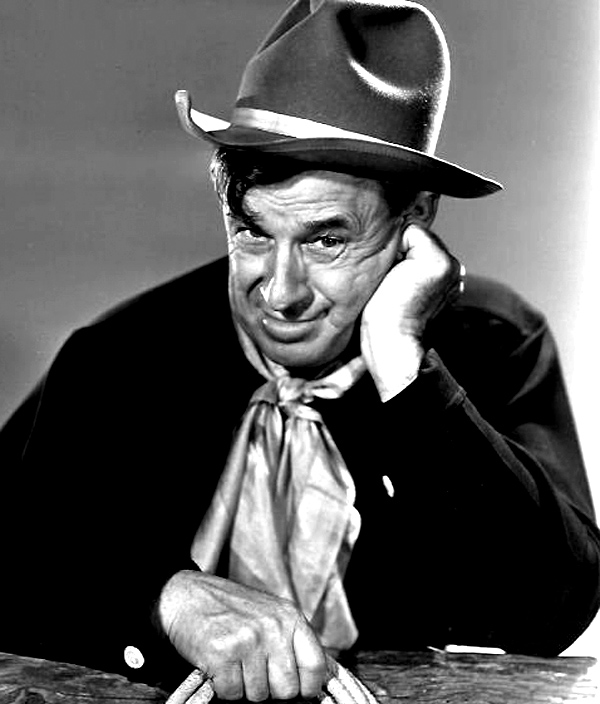
"I can say that I never met a feminist I didn't like because I met Kathryn Hepburn back in the early 1930s and she was a real nice lady." ~ Will Rogers (maybe)

“I can say that I never met a feminist I didn’t like because I met Kathryn Hepburn back in the early 1930s and she was a real nice lady.”
~ Will Rogers (maybe)


The Sometimes Timeless Wisdom of Will Rogers

1) Never slap a man who’s chewing tobacco.

TPPE Comment: Never crack a private joke in the face of a man who’s chewing tobacco. Nellie Fox of the Houston Astros was an avid tobacco chaw guy, through and beyond his last season as an MLB player and an old school fellow all the way. When he learned of the club’s plan to replace the green-painted dead natural grass in the sun-proofed Astrodome roof with a new non-biodegradable plastic field cover  called  AstroTurf in 1966, Nellie wasn’t joking when he asked, “Where will I spit?” The answer supplied itself. Nellie Fox retired after 1965 and never had to face that question as a player. But odds are high that his answer to that question would have been: He would have spat from wherever he happened to be standing. And it would have been pretty obvious on the field where he most often stood.


2) Lettin’ the cat out of the bag is a whole lot easier’n puttin’ it back.

TPPE Comment: The problem with this metaphor always has been the difference in outcomes from the perceived release of an actual frightened cat and the figurative release of secretive information. Let a real cat out of the bag and you are not likely to see that frightened cat again. Let a secret out of the bag and it’s going to bite and scratch several somebodies and – if you are the one who released it – you most probably will be high up on that kind of cat’s hit list.


3) There are two theories to arguing with a woman. Neither works.

TPPE Comment:Oh, Will! Will! Will! – This is 2015! Were you to rise from the dead tomorrow at the same age you were when you and Wiley Post died in that terrible Alaskan plane crash back in 1935, you would certainly have to clean up your act before you fell back into favor, if you ever did, as the iconic American humorists. This is an era in which some topics, unless you’re name in Chris Rock, are totally inappropriate. Your comment regarding women and their unequal capacities for fair and rational debate and disagreement is totally inappropriate for 2015. You could not only get into trouble for saying what you apparently did say long ago about the ineffectiveness of the two theories for arguing with women, you could probably be charged with sexual abuse for even thinking along those lines in the presence of a female mind-reader.


4) Never miss a good chance to shut up.

TPPE Comment: We just blew that opportunity when we signed up for an extension of The Pecan Park Eagle on WordPress. 


5) Always drink upstream from the herd.

TPPE Comment: Hear that, Astros? That’s Will Rogers talking! – It means stop losing and hold on to first place in the AL West!


6) If you find yourself in a hole, stop digging.

TPPE Comment: You should have been with us in Houston a couple of weeks ago, Will. We could’ve used a lot more deep and wide holes than we had on hand for all the rainwater that invaded many of our homes during the flood because the water had no place else to go..


7) The quickest way to double your money is to fold it and put it back in your pocket.

TPPE Comment: What money?


8) After eating an entire bull, a mountain lion felt so good he started roaring. He kept it up until a hunter came along and shot him. The moral: When you’re full of bull, keep your mouth shut.

TPPE Comment: It’s on our bucket list, Will!


9) Good judgment comes from experience, and a lot of that comes from bad judgment.

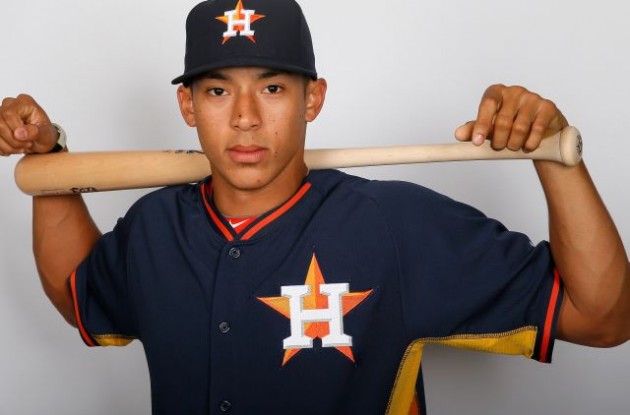
TPPE Comment: If rookie shortstop Carlos Correa turns out to be the proof of the Astros’ recent “good judgment” in the 2012 amateur player draft, let’s hope that a lot of that good judgment karma comes from the fact that back in the 1992 amateur player draft, the Astros had a chance to draft shortstop Derek Jeter, but instead used their pick on a third baseman named Phil Nevin.

Bonehead Play by Villar Rings Bell for Correa Now

June 8, 2015

“CALLING CARLOS CORREA!
CALLING CARLOS CORREA!”

“READY OR NOT,
YOUR TIME HAS COME,
TOMORROW IS TODAY!”
(EVEN IF YOU NOW ARE, AT AGE 20,
THE YOUNGEST PLAYER IN THE BIG LEAGUES.)

It was going to happen soon, anyway. Jonathan Villar just helped Astros management ring the call-up for Carlos Correa from Fresno about a week earlier than many of us expected.

It happened, as you probably know, in that classic pre-2015 Astros pitching and defense meltdown that rescued the club yesterday from the joy of victory and delivered them to the agony of defeat. And Mr. Villar at shortstop made a primary contribution to something that last year was as predictable as the use of another tissue from the box extraction by someone with a Houston environmental sinus problem. – The Astros lost their fourth game in a row for the first time in 2015, incidentally completing their three-game sweep loss to the Blue Jays in Toronto.

Closer Luke Gregerson did his part by blowing his first save since April 24th. Luke just had one of those days in which his impression of “Mr. Hittable” simply served him up as bait-fish to the hungry Blue Jay batters. For every pitcher who loses his stuff in a game, and especially on the road, every town is “a town without pity”. Toronto just ate up Luke on Sunday, only stopping because a walk-off two run single by Chris Colabello in the bottom of the 9th had given the Jays a 7-6 lead for the win.

And that winning run could not have scored had not Astros shortstop Villar not given him the opportunity to be a base runner. earlier in the inning. With Jose Reyes running at second base, Jose Bautista popped a high infield fly that seemed to be coming down directly over second base. Based upon the body language of Jose Altuve, it appeared on TV that the ball was  taking a downward path that was aiming slightly to the first base side of the bag. Altuve seemed to be calling for it and the fact he did was soon confirmed by the Alan Ashby-Geoff Blum broadcast team.

No matter. Villar was coming for the ball no matter what. You could see Altuve backing off at the last second. Fine, except for one thing. Villar was going to have to either go around or through base runner Reyes to reach the ball in time for a catch. Villar tried to go straight to the ball’s descent path, but he collided with runner Reyes on second. Villar tried to reach around Reyes for the catch, but the ball that Altuve could have easily caught, had he not been rhino-run out of the way, simply did what gravity had in mind for all the while. It dropped to earth. The eventual winning run in Jose Bautista was now safe at first.

And so the thing that was going to happen, probably has now happened a few days sooner. Carlos Correa, the poster child for all the club’s future talent is on the way. Tomorrow is today. The future is now. And the timing probably was aided by the loss that slipped up on the Astros yesterday. It was a loss aided considerably by Villar’s bonehead play at shortstop on Sunday.

Remember those concerns that some fans and writers were expressing about a month ago? They were along the lines of “what if the Astros don’t call up Correa in time – and the club goes on to miss the playoffs by one lousy game?”

If that happens, we, at least, now know when that “one lousy game” loss differential occurred. It happened yesterday in Toronto, Sunday, June 7. 2015, when the Astros blew a game to the Blue Jays, 7-6, that they should have won. And might have won, had Carlos Correa already been playing shortstop instead of Jonathan Villar.

Astros: How To Win the Battle and Lose the War

June 7, 2015
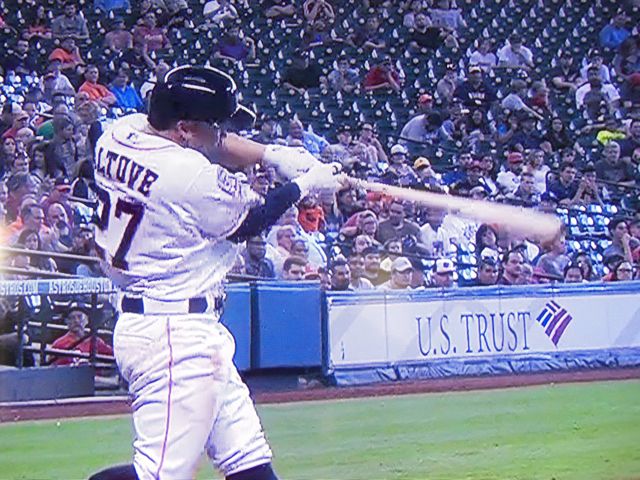
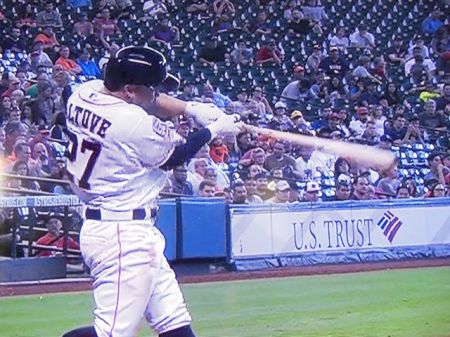
It's 2015. The Astros have on of the best records in baseball. The 2014 AL batting champion is swinging away. - What's missing in this picture?

It’s 2015. The Astros have on of the best records in baseball. The 2014 AL batting champion is swinging away. – What’s missing in this picture?

Accentuate the Positive, Eliminate the Negative

How is it possible that the Houston Astros could be playing so well and yet still drawing game crowds so poorly?

Yes, we understand. From a marketing standpoint, there are some  problems that the club may never acknowledge or own publicly – nor do we expect President Reid Ryan to do so. When your club has the biggest divisional lead and one of the best records in baseball after June 1st, it’s probably no time to say anything that could be interpreted by the media wags as either negative or an internal lack of confidence in the team and, in total candor, this whole, so-far, successful rebuilding process.

As a result, the public face of the Astros may be to publicly celebrate the 21,000 fans who show up to watch a weekend game against another contender, and to pass on addressing the 21,000 seats that remained empty.

Maybe not. But who could blame them, if they did. It’s human to hope that accentuating the positive will drive the negative away and sometimes it does. At others, as the case may be here, the negative will only go away once we accurately identify the problem(s) and explore what we may be able to do about them. And then, once our objectives for change are decided, we commit to doing  those things in some calculated, totally relentless form as an organizational strategy.

What’s this column all about?

So, why does The Pecan Park Eagle think that the wonderful (thanks largely to faith in GM Greg Luhnow) 2015 Houston Astros club seem to be struggling in their campaign to use winning as the card that recaptures the big crowds?

We think the problems effecting mediocre game attendance for an exciting and young winning 2015 Astros ball club are several. Some have fairly clear answers. Others not.

We do not possess the audacity of thinking that we have all the answers about problems and solutions to the attendance issue wrapped up in a bow, nor do we presume that the Astros are not already aware of these things and working on them quietly.

We simply want to put them out here as though they are cards that need be kept in mind and somehow played to win the battle for support from a fan base that really cares about what happens to the Houston Astros.

Here are our cards and, for the sake of brevity, there will not be 52 cards in this pack. So, anyone who doesn’t like what we have to say, please feel free to fall back on the fact that we were not playing with a full deck from the start:

Card # !: Competition with Other Leisure Time and Money Diversions

Baseball is no longer our National Pastime in actuality. Competition from football, basketball, NASCAR, water sports, and other leisure time market activities have changed the landscape over the past forty years as to how Americans and, at least one Canadian city’s citizens use the disposable incomes.

Card # 2: The “Out of Sight/Out of Mind” Hangover

(a) Those two 60% cable TV blackout seasons (2013-14) in the Houston area hurt deeply, we think. They violated the first rule of marketing: “If you don’t want people to buy your product, don’t let them see it.” A number of people have told us that those two blackout seasons were the time they found “other things to do” and lost interest in returning to baseball when the ROOT network finally picked up the dropped ball in 2015.

(b) Even with ROOT, the fans in this state’s other major metro areas don’t get it. Time-Warner controls what cable fans in the Austin-San Antonio and Corpus Christi areas see. My brother lives in the Corpus Christi area. They, as is true in Austin, only get to see the Astros when they are playing that network’s “home” team, the Texas Rangers. About the same circumstance in Austin, Wayne Roberts has written us to express the following: “I still haven’t seen a game this season. Time Warner doesn’t carry Root. Once again, the Astros default the Central Texas market to the Rangers.”

My brother says that once he gets past Jose Altuve, he cannot name another single starter on the 2015 team. He admits also to not thinking about the Astros much as the time goes by.

Let’s expand this card title to include where it leads: “Out of Sight/Out of Mind/Out of Interest/ Out of My life.”

Now do the math. How many fans from the traditionally rich Astros fan bases in Corpus Christi and Austin are variably feeling the same things that John McCurdy of the Corpus Christi area and Wayne Roberts of the Austin area are now feeling.

These are the out-of-town fans, when they cared about the team, that used to fill many of those now empty seats on weekends and during summer vacations.

And what about the kids from those areas that are growing up with exclusive exposure to the Texas Rangers? If they keep their interests in baseball into adulthood, who do we expect them to go see any club? The Rangers are our guess.

The Astros brand needs to get out there statewide again through an expansion of the ROOTS sports network. Even Coca-Cola understands that they have t keep their name out there to avoid being forgotten.

Card No. 3: Sports Talk Radio in Houston

We’ve already beat this card to death at least twice in other columns. The Astros and baseball are pretty much an after thought to the mike jockeys who blab their ways through our ears in drive time about the Texans, the Rockets, and which broadcasters from their staff would have the best shot at dating actress Jessica Alba, if she weren’t already married and they were available too.

This is madness!

How about giving some serious thought to an entertaining radio talk show about baseball only?

Card No. 4: The Operant Conditioning Factor in Being a Baseball Fan

Operant conditioning is a behavioral psychological process that has its roots in the late 19th and early 20th century work of Russian psychologist Ivan Pavlov. Pavlov proved with rats that they could be taught to take a certain path in a maze over time and repetition, if they were always rewarded with cheese at the end of that route after being released into the maze each time at the same entry point.

Pavlov also discovered that if the rats were sometimes denied that cheese reward at the end of their run through the maze that they would start making mistakes about the route again. If the reward was removed totally, the rats would totally stop trying.

As much as we hate to admit it, we humans, and maybe in some particular way, we baseball humans are a lot like Pavlov’s rats on the operant behavioral level. – We are stimulated to go ball games because we enjoy the fun. There’s also cheese for us too. We get it on the nachos.

If we our team is a winner, we probably will have more fun and come even more often.

If we start running into too many inconveniences, like traffic, or parking, etc., we may not come as often, but we will still be there because we care about the Astros – and we still believe the Astros care about us.

On the more extreme side, if you take away our way home cable TV for a couple of years, or baseball goes on strike, or, because of others’ work, we can no longer follow the Astros in our outlying communities, we start thinking the cheese is gone – and start looking for it elsewhere.

Once people find another comfort zone with a pattern that meets their reward needs with something other than baseball, it may be hard to impossible getting these people back – especially, if their last thoughts upon closing the door on the Astros were, “why should I care about the Astros? They didn’t seem to care about me.”

Card No. 5: The Bud Selig American League Squeeze Play on Jim Crane and the Astros

Many longtime fans will no longer attend Astros games because of both the club’s shift to the American League in 2013 and also, because of the way they got there. My own grown son has not been to a single Astros game with me since they moved to the AL because of the way I raised him to feel about the DH. Unfortunately, at my age, I still love the team and any kind of baseball more than I once detested the DH, but I’ve sort of come around to not minding the DH so much after all. (That’s another subject for another day.)

The other big thing with many stayaways from this category is the Bud Selig Factor. Some feel that Selig simply leveraged Jim Crane during the final stages of the deal. Much the way car dealers like Selig must have done in his previous career, he knew he had his buyer on the hook and that the “deal” was the perfect place for hm to get what he wanted – a team that move to the American League to even the AL/NL team alignment at 15 teams each, with three 5-team divisions in each league. With the Astros in this vulnerable spot, Selig would not have to waste further time searching for a fully enfranchised club that could say “NO” to him.

The stayways, as do many of us still attend games because we still care about the Astros, recognize that Selig showed no concern for Houston’s long-time association with the NL, even prior to actual NL membership – and absolutely no interest in the opinions of Houston Astros fans in this matter of transferring the club to the AL.

The irony? In 1997, acting commissioner Selig talked Brewers owner Selig into moving his club from the AL to the NL for the sake of making sure that both leagues could maintain an even number of clubs in each circuit. The result was 16 teams in the NL and 14 teams in the AL. Then, in his pre-2013 move on the Astros, Commissioner Selig mad Huston leave the NL and take Milwaukee’s place n the AL so that both leagues would each have 15 teams.

Very interesting, but very damaging to the fan base that has been alienated by Selig and the way he pulled this stunt on our National League team.

Card No. 6 (and it’s no Joker): Don’t Count 100% on “They’ll get over it. All we have to do is win.”

If what we’ve tried to convey in these few thoughts isn’t clear enough as a call to action on all possible repairs to the Astros brand and statewide TV coverage, we will be wasting your time and ours writing more,

Enough said.

The Night Dickie Thon Went Down

June 6, 2015
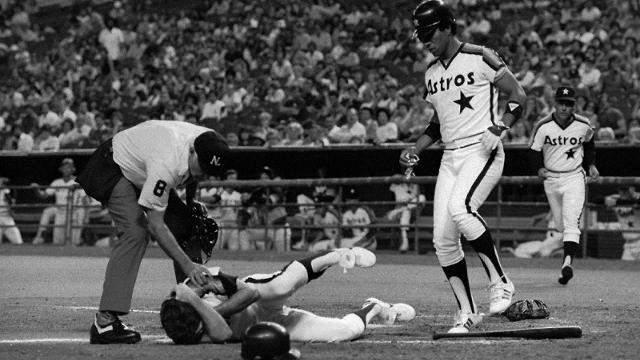
April 8, 1984: Dickie Thon collapses at home plate in the Astrodome  after getting ht in the head with a pitch by Mets hurler Mike Torrez.

April 8, 1984: Dickie Thon collapses at home plate in the Astrodome after getting ht in the head in the 3rd inning with a pitch by Mets hurler Mike Torrez.

It was Sunday night, April 8, 1984. My wife and I had gone to the Astrodome to watch our Houston Astros take on the New York Mets.  The club had gotten off to a 1-3 start going into that game, but we had Joe Niekro starting for us that night and the season was still young and hopeful. Unfortunately, before this evening was done, our Astros hopes for the season would be dimmed from any real chance at finally winning it all – and the talented future of shortstop Dickie Thon would be ruined forever. Sadly, the beaning by Mets pitcher Mike Torrez created serious permanent damage to Dickie Thon’s sight in his  left eye.  The eyesight loss and psychological trauma would work together to keep him from being the hitter he once had been on his way to reaching even greater possible levels of accomplishment.

None of us who were present at the game that night, and our seats were in the purple loge level, but way down the right field line, will ever forget the sickening loud thud sound we heard when the ball struck Dickie Thon’s head. As his body limply collapsed at home plate, I’ve always imagined that everyone else’s first apprehensions probably were akin to ours. We feared that he was dead. Thank God he wasn’t, but here’s how the AP people covered the tragedy:

Wish again that I had the Post and Chronicle coverages, but I don’t have those accesses in my News Archives digital files.

____________________

THON AFRAID OF NOT BEING ABLE TO PLAY AGAIN AFTER BEING HIT BY PITCH TO HEAD

HOUSTON (AP) – Houston Astro shortstop Dickie Thon says he saw an entire spring training of work – and possibly his career – flash before him when he was struck in the head by a pitch from New York Mets pitcher Mike Torrez.

“I was afraid I wouldn’t play again,” Thon told Dale Robertson of the Houston Post. “That’s all I could think about. I thought I was hurt bad.”

Thon was scheduled to undergo minor surgery today to “facilitate his recovery.”

Doctors earlier had said surgery would not be necessary after tests showed Thon suffered a broken bone above his left eye in Sunday’s game against the Mets.

“I hope the good Lord will help me recover quickly,” Thon (said) to the Post Tuesday. “It’s tough to work hard in spring training to get ready, then have something like this happen. But I’ll be back.”

Thon said he recalled that prior to the pitch, “I wanted him to pitch me inside, but not that inside. The ball sailed in on me. When I saw I was going to be hit, it was too late to get out of the way.”

Torrez telephoned the Astros shortstop Tuesday, Thon said.

“He told me he was real sorry,” Thon said. “Ii believe him. It’s one of those things. It’s part of the game.”

The Astros placed their 1983 All-Star infielder on the 15-day disabled list on Monday, but team physician Dr. Bill Bryan said Thon could be sidelined for three weeks.

Dickie Thon: In the days following his bean ball injury of April 8, 1984

Dickie Thon: In the days following his bean ball injury of April 8, 1984

Tests conducted by Dr. Richard Harper on Monday revealed no brain damage from the blow to Thon’s head, but Bryan said he was concerned about decreased vision in Thon’s left eye resulting from tissue swelling in back of the eye.

Craig Reynolds replaced Thon in the starting lineup for a two-game road trip to Philadelphia.

~ Associated Press, Big Spring (TX) Herald, Wednesday, April 11, 1984, Page 10

____________________

Link to the Baseball Almanac Box Score of Dickie Thon’s Career Changing Game of April 8, 1984:

http://www.baseball-almanac.com/box-scores/boxscore.php?boxid=198404080HOU


How About a Baseball-Only Radio Talk Show?

June 5, 2015

“YUM!!! – THIS BASEBALL TALK RADIO TASTES GOOD!”
– Thousands of Main Line, Car-Driving Houston Baseball Fans

If you are a “Cheerio” or “Wheaties” particle, you can only think outside the box for a very short time before you get eaten.

The Pecan Park Eagle is hardly a cereal particle, although one could argue that the depth of our columns sometimes places us in that category. We like to think the generally wading pool depth we deliver on the subjects we embrace is our matter of choice, and not a manifestation of our limitations. We subscribe to the philosophy that column-writing over the Internet manifests from the complex needs of both the writer and the reader, but that in the end, it remains all about communication, and that communication is always about contact for the purpose of dispensing or sharing information that is either educational, entertaining, and/or worthy of interaction on some question of action or change that seems needed.

That mouthful being said, the subject today again is the disappointing state of sports talk radio and the possibility of one suggested remedy that could work, if it is done right by the right savvy people.

Yesterday we had some business out at the Astrodome and the car radio came on tuned to 790 AM where the two former NFL players were already in deep rapture over a football discussion. I punched the button for a change to 610 AM, but all  fell into there were two guys doing a rather expansive post-mortem of the Rockets loss in the NBA basketball finals of a week ago.

As I quickly switched to my big band music station on Sirius Satellite radio, I was also reminded of how pleasant it was to hear Larry Dierker back on the air last weekend in conjunction with the Astros broadcast. Then the thought burst through, again, in just-out-of-the-box cereal form: “Why can’t we have an All Baseball Talk Radio Station – or, at least, a station which does all baseball talk material during the primary rush hour times when people are listening to talk radio. We have no specific data on how many listeners tune in to sports talk radio at home, but our guess is that those folks are about 1% tops. It’s the “out-and-about” driver that keeps radio alive.

Yeah, we know it’s all about market share and the value that programs add to the price of advertising, but we do have a lot baseball fans in this town too. Who among us would not prefer listening to people like Larry Dierker, Bill Brown, Greg Lucas, Jimmy Wynn, Art Howe, just to name a few, along with a baseball-deep knowledgeable guy like Charlie Pallilo, Craig Roberts or Mike Vance thrown into the mix somewhere, over what we have now?

I’m not sure of the actual prime hour ranges such programming would embrace, but the people I’ve just named could figure that out – along with the kind of programming that would work best in sating the appetites of Astros fans and people who really care about the history and rich story lore of the game. The baseball call-in fans, certainly, a smaller number of the baseball fan listening audience, would then have a program choice that spared them long waits on the phone behind football knee injury callers at all of the other places. We think that such a program could attract the thousands of primary baseball fans like the old “bears to honey” metaphor has suggested forever. And the listening needs of these baseball bear fans have been in hibernation on the programming schedules of all other local broadcasters for a very long time.

How about it? Do we simply eat this idea with all the usual dismissive sauce from the “can’t-be-done” company – or does anyone out there have the guts to take this on? The Pecan Park Eagle believes that thousands of Houston area daily car-driving baseball fans would be ecstatic, if you did.

McCullers Pictures Worth Thousand Words

June 4, 2015

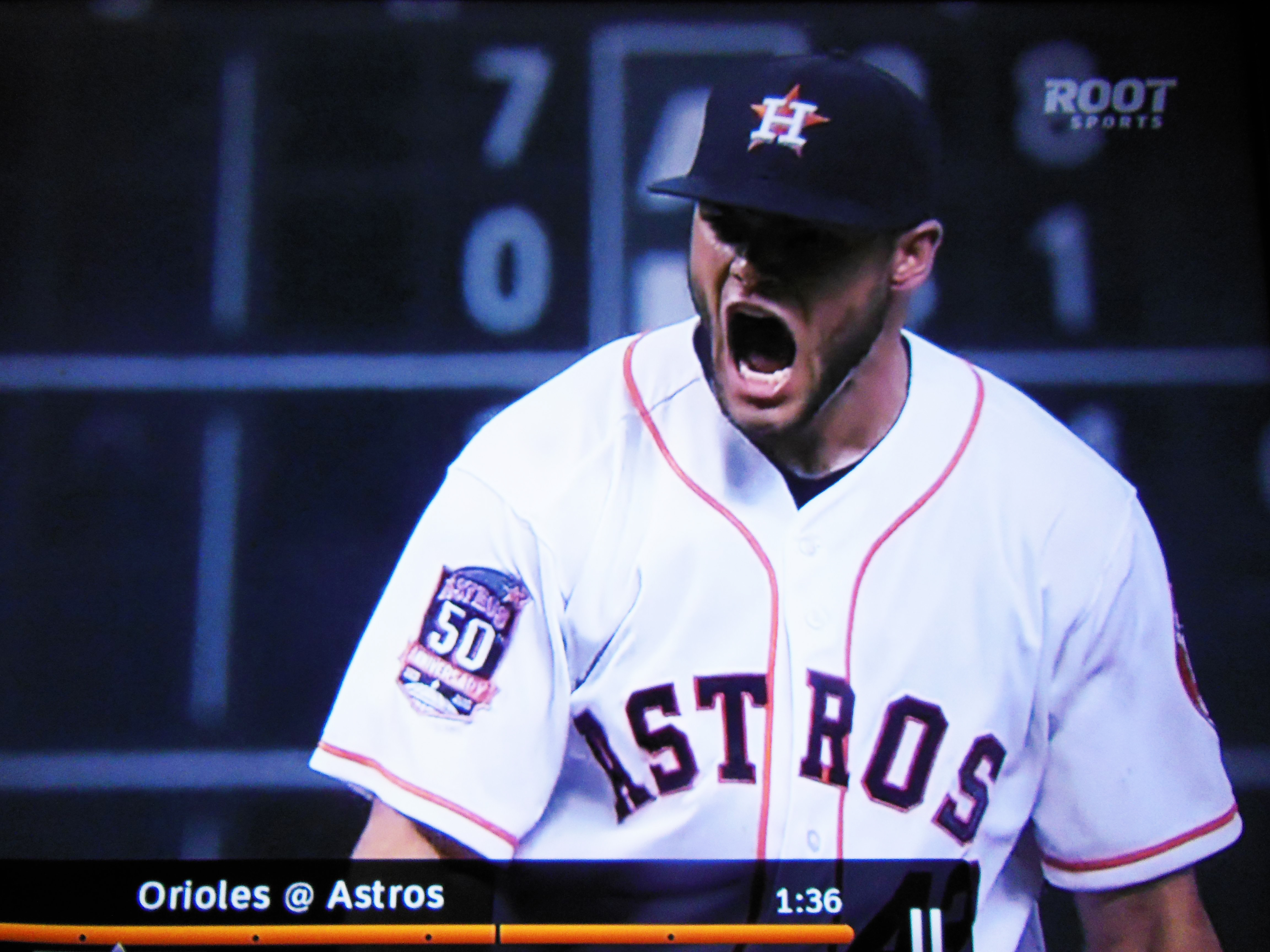
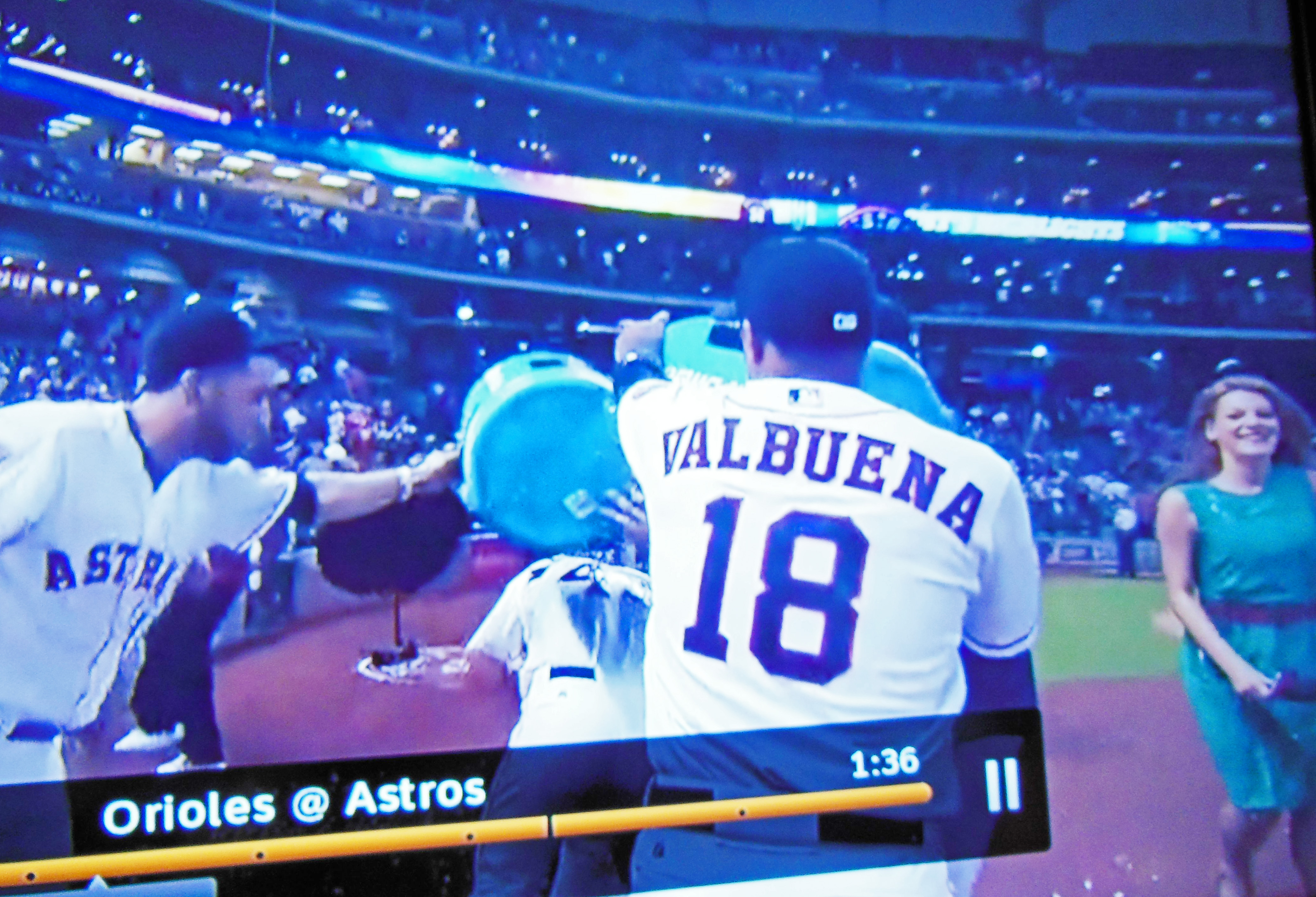
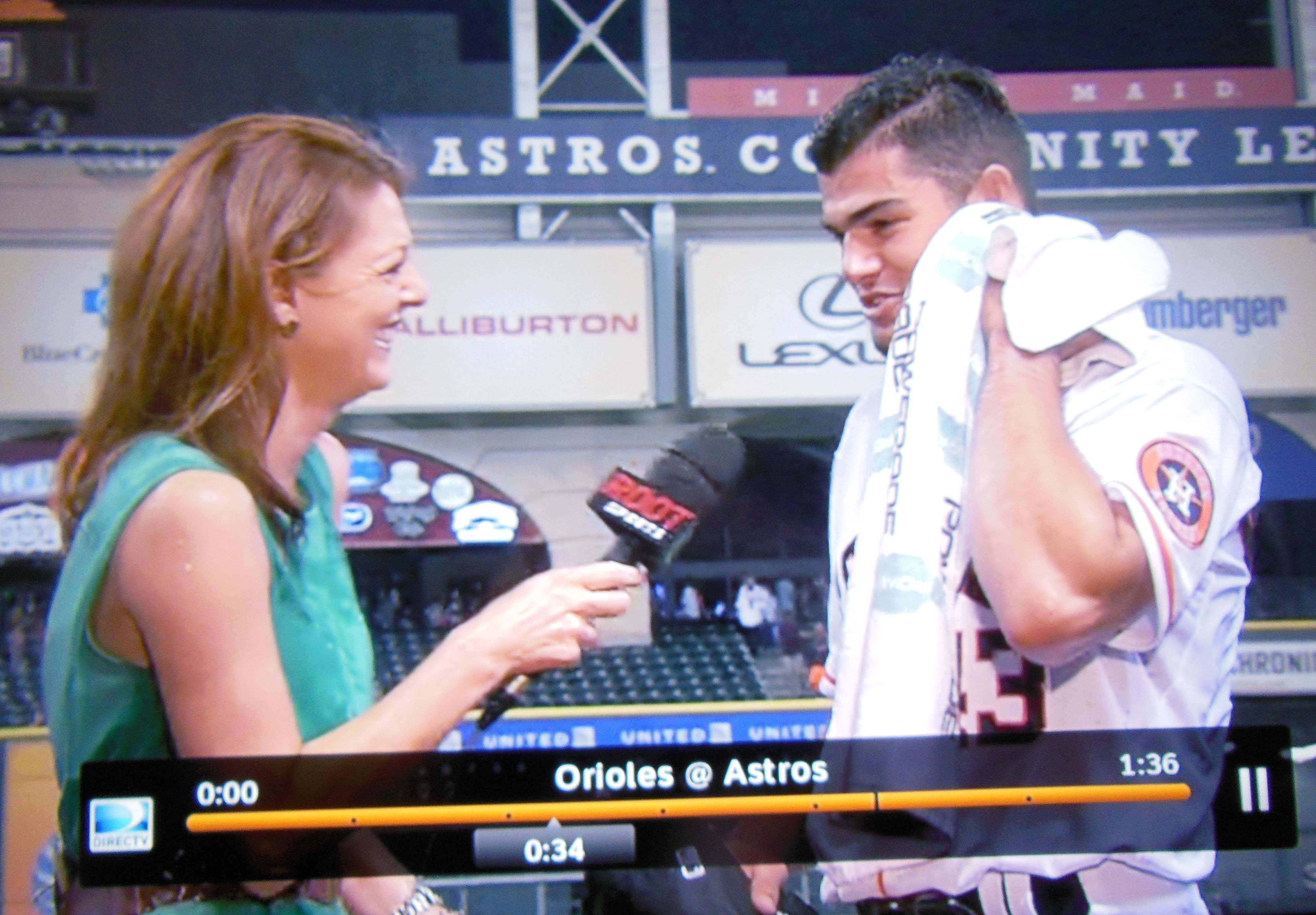
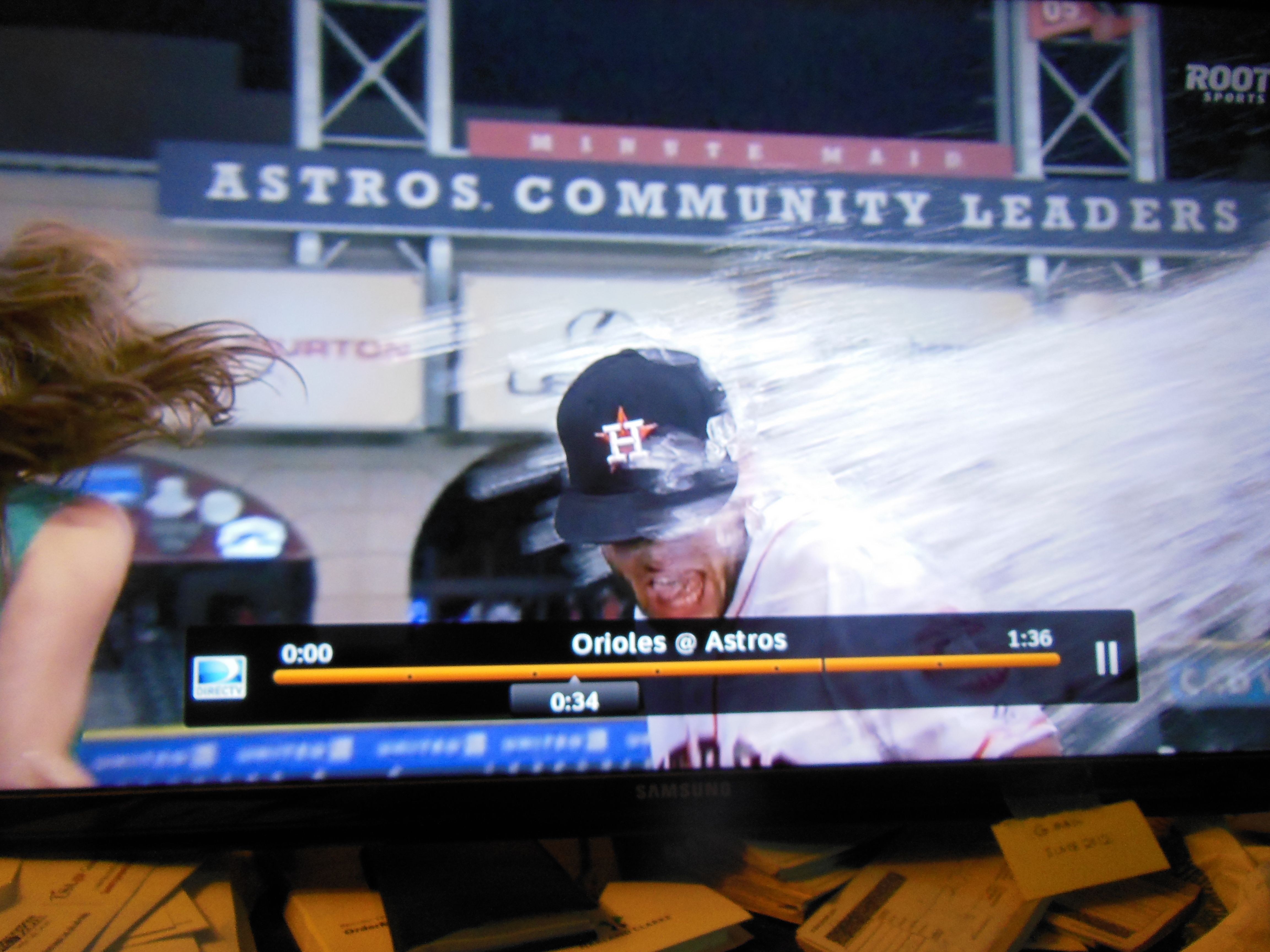
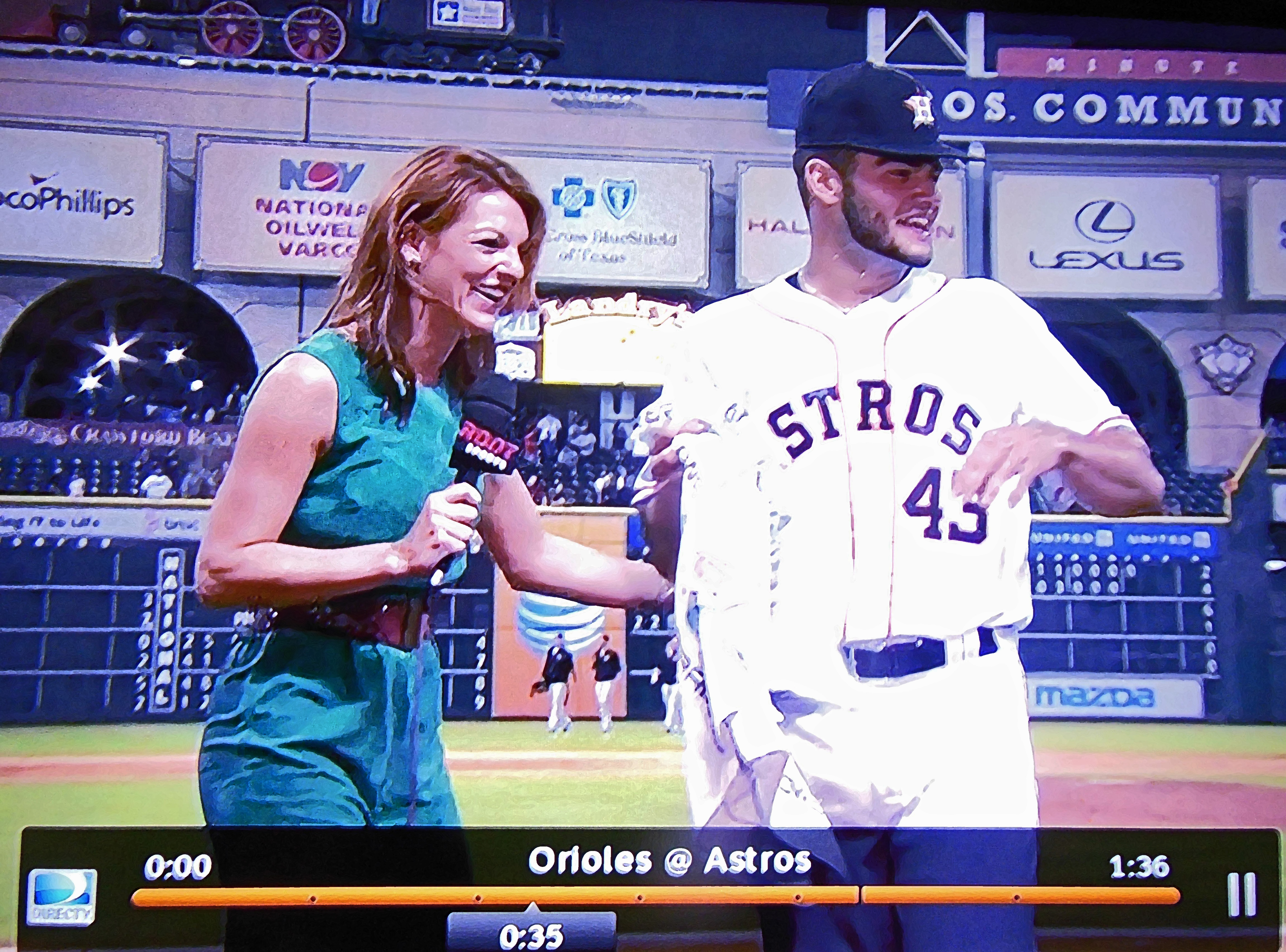
Thanks to the ROOT Sports Network and the fine people who do the Astros Games,, we have some pictures that truly do say more than a thousand words about the joy of 21-year old Lance McCullers after he pitched a complete game, 3-1, win over the Baltimore Orioles on Wednesday night at Minute Maid Park, June 3, 2015, retiring 16 of the last 17 batters, while giving up only 1 run on 4 hits, while walking none and striking out 11. The victory boosted McCullers’ early MLB career record to 2-0 with an ERA of 1.88. McCullers now has 29 Ks in 24 innings pitched.

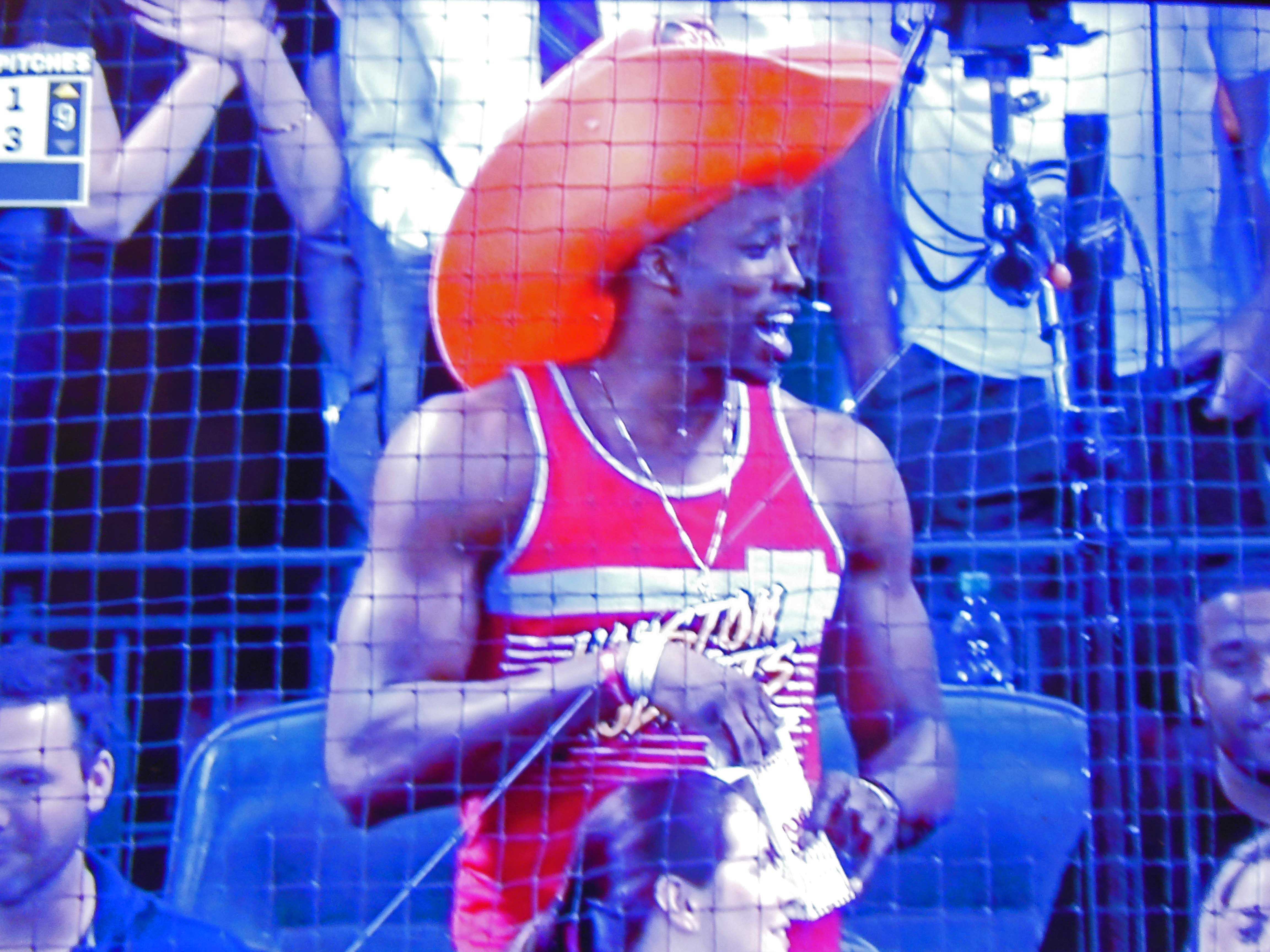
Even Rockets star Dwight Howard was on hand to stand in support of young Lance McCullers when he went out to finish the O's in the top of the 9th. - Dwight Howard's fan appearance at the Astros game last night was made possible by the Golden State Warriors.

Even Rockets star Dwight Howard was on hand to stand in support of young Lance McCullers when he went out to finish the O’s in the top of the 9th. – Dwight Howard’s fan appearance at the Astros game last night was made possible by the Golden State Warriors.

Lsnce let out some kind of a war growl as his last pitch of the game was strike three, ball game, and his 11th K of the night! -  WA-HOOOOOO!!!!!!

Lsnce let out some kind of a war growl as his last pitch of the game was strike three, ball game, and his 11th K of the night!!
WA-HOOOOOO!!!!!!

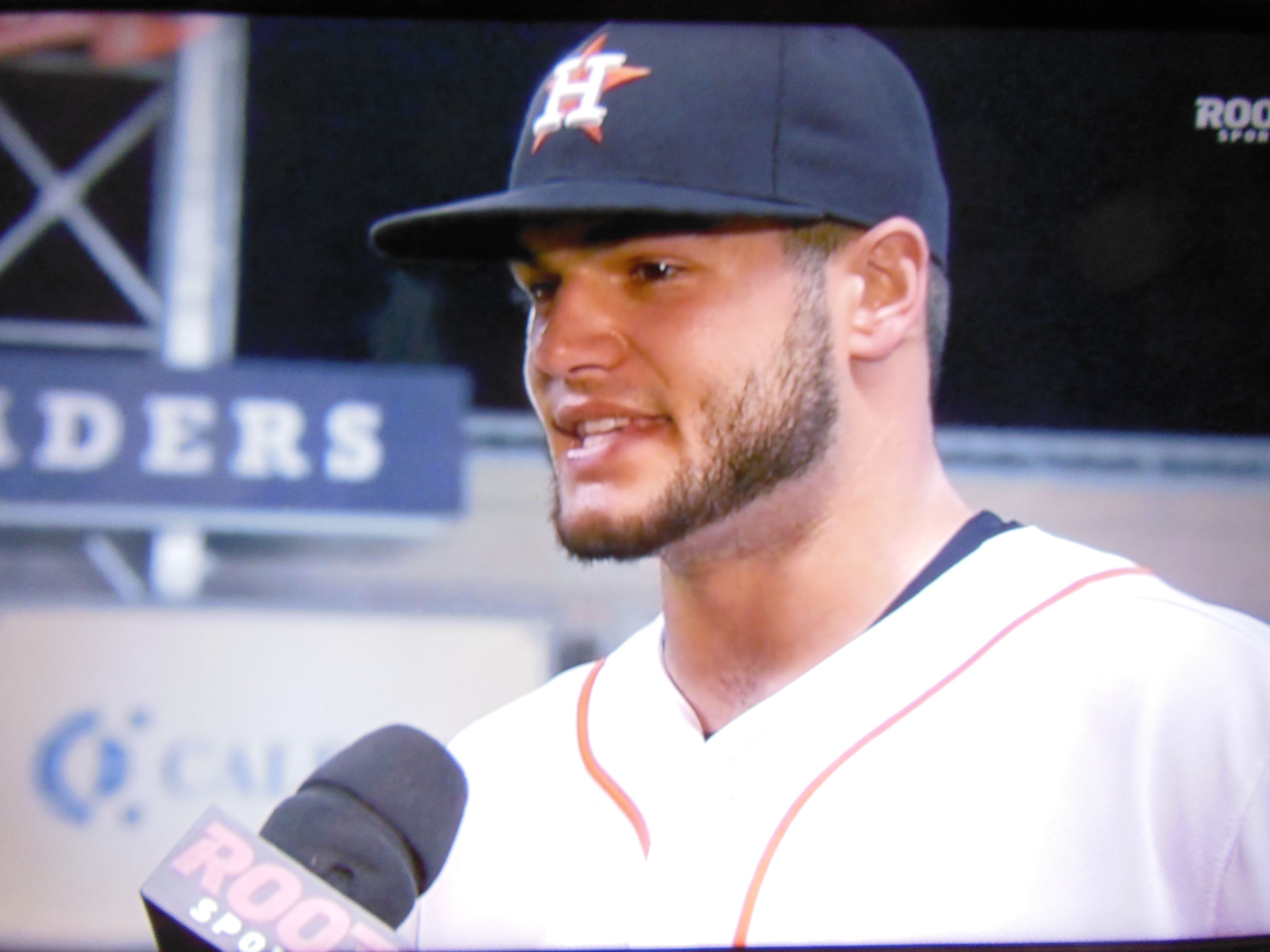
Lance's post-game interview with ROOT Sports field reporter Julia Morales began with the usual laid-back baseball-speak we hear a lot from many players.

Lance’s post-game interview with ROOT Sports field reporter Julia Morales began with the usual laid-back baseball-speak we hear from a lot of players, even from some who make it all the way to the Hall of Fame..

Things lightened up  once Astros teammates Jonathan Villar and Luis Valbuena doused pitcher McCullers with buckets of ice water.

Things lightened up once Astros teammates Jonathan Villar and Luis Valbuena doused pitcher McCullers with buckets of ice water. – Interviewer Morales gives the boys se splash room in the process.

Rookie McCullers recovers in good humor, ready to resume the interview. He simply makes the mistake of thinking that hist cold shower of warm affection is over.

Rookie McCullers recovers in good humor, ready to resume the interview with Hula Morales. He simply makes the mistake of thinking that his cold shower of warm affection and  appreciation s over.

THIS TIME - IT'S ALL ICE!!! WOOOOOOOOOSH! BURRRRRRRRRRRRR!

THIS TIME – IT’S ALL ICE!!!
WOOOOOOOOOSH!
BURRRRRRRRRRRRR!

“ARE THEY OUT OF BUCKETS OVER THERE?” McCULLERS ASKED OF MORALES AFTER THE SECOND BATH. WE CAN’T SPEAK FOR JULIA MORALES, LANCE. ALL WE CAN SAY IS: “IF YOU KEEP PITCHING LIKE YOU DID TONIGHT, THEY WILL NEVER RUN OUT OF BUCKETS – AND THAT’S A GOOD THING. AND. OH YEAH! WELCOME TO THE SHOW! ASTROS FANS ARE VERY GLAD TO HAVE YOU ON OUR TEAM!

Bill Gilbert: Astros Still Flying High

June 3, 2015
Another Fine Astros Monthly Seasonal Comment from Veteran  Astros Evaluator and Special Writer for The Pecan Park Eagle, BILL GILBERT.

Another Fine 2015 Astros Monthly In-Season Comment from Veteran Houston Baseball Evaluator and Special Writer for The Pecan Park Eagle,
BILL GILBERT.

Astros Still Flying High after Two Months

By Bill Gilbert

At the end of April, the Houston Astros surprisingly led the American League West Division by 4 games with a record of 15-7. During the month of May, the lead briefly increased to 7 games before settling back to 4 games with a record of 31-20 at the end of May, the most wins of any American League team.

With almost one third of the season now behind us, it is time to consider what has happened to account for this improvement and to attempt to determine whether or not it will continue. While the 16-13 record in May was not as strong as April’s 15-7 the team has continued to play well in most respects. Relief pitching has been the strong point with an ERA of 2.28, third best in the major leagues. The Astros lead the major leagues in home runs with 84 and are tied for fourth in stolen bases with 43. The team has a positive run differential, scoring 4.38 runs per game and allowing 3.86.

On the other side, Astro batters are second to the Cubs in striking out with 464 and are 25th in batting average at .237 and 23rd in on-base percentage at .305. The ERA for Astro starting pitchers is 4.16 compared to the major league average of 4.06. This is where the team is most vulnerable, particularly with the loss of No. 3 starter, Scott Feldman to a knee injury which will keep him out for about six weeks. The starting pitching stats are buoyed by the work of Dallas Keuchel, who leads the American League with an ERA of 1.76 and is a strong candidate for the AL Cy Young Award at this point. In May, the Astros No.2, 3 and 4 starters, Collin McHugh, Feldman and Roberto Hernandez, all had ERAs over 5.00.

The Astros must fortify the starting rotation to stay in contention. So far, management has chosen to use the farm system with positive results. Lance McCullers Jr. was promoted from AA Corpus Christi in May and had three solid starts with an ERA of 2.40. Two other minor leaguers, Jake Buchanan and Michael Feliz, have also been promoted but have seen only limited action. Other possibilities are available in the minors but a trade for an established major league starting pitcher may be required if the team is to be a serious contender.

Individually, results were mixed in May. Evan Gattis overcame his April struggles, hitting .276 in May with 9 home runs and 22 RBIs. Chris Carter also improved in May with six home runs and 21 RBIs. Rookie, Preston Tucker, promoted from AAA Fresno, had some timely hits and batted .306. Jose Altuve had a down month, batting only .231, and third baseman, Luis Valbuena and backup catcher, Hank Conger were well below the Mendoza line (.200).

Astros minor league teams have performed very well in the past two years and that trend is continuing in 2015. All four of the full-season teams have winning records. Three of the four are leading their divisions and the other is in second place as Astro minor leaguers continue to build a winning tradition. However, the two top prospects do not appear to be quite ready for the major leagues. Carlos Correa, after tearing up the Texas league at Corpus Christi is batting .241 in his first 19 games at Triple A Fresno and pitcher, Mark Appel is 3-1 with a 5.85 ERA at Double A.

The Astros need to start strongly in the month of June after dropping their last two series in May. The schedule gets tougher later in the month with a trip to the West Coast to play Seattle and the Angels, followed by home series against the Yankees and Royals. By the end of June, we should know if the team is likely to be competitive in the season’s second half.

Bill Gilbert

bgilbert35@yahoo.com

June 2, 2015

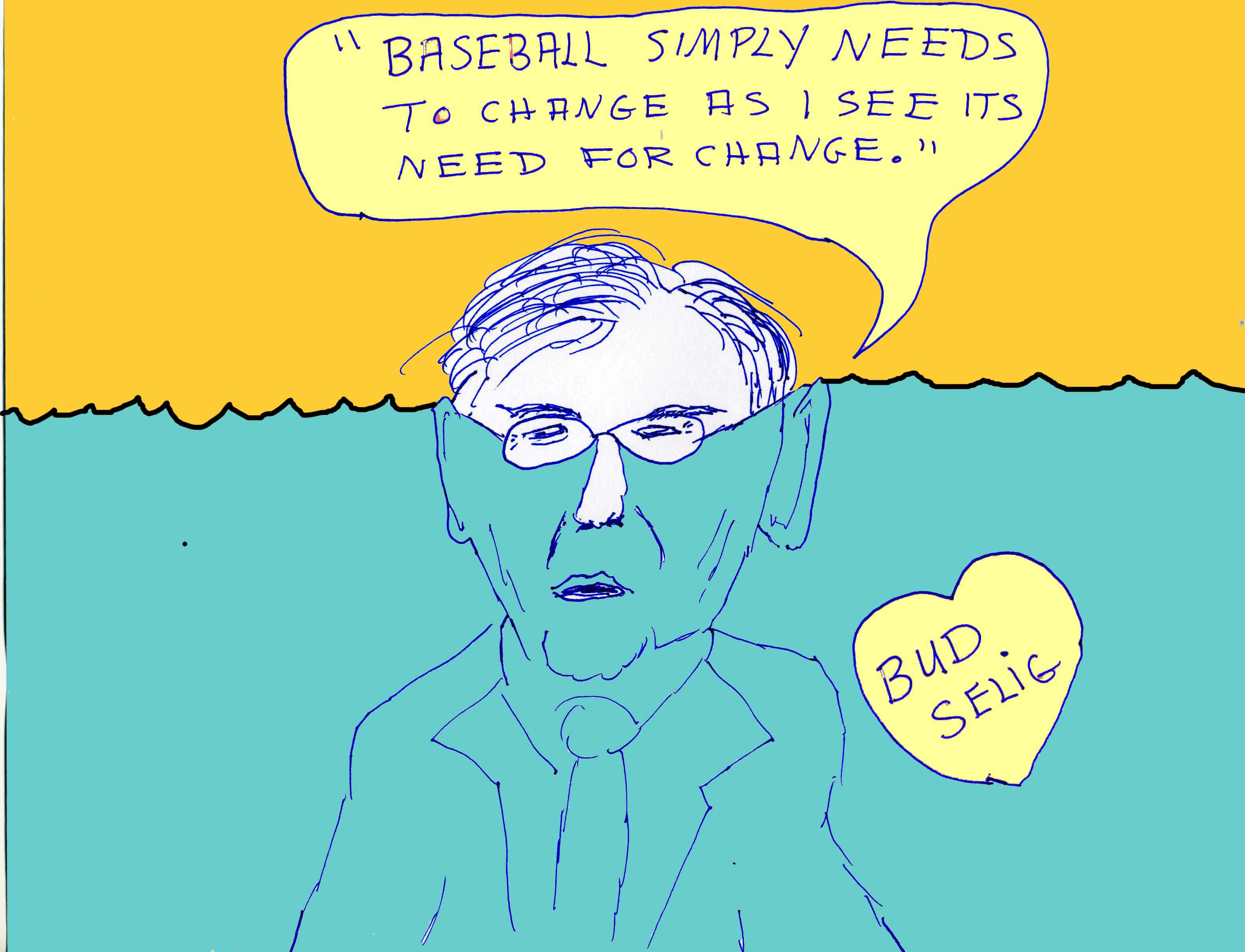
How Bud Selig Got His Way in 1997

June 2, 2015
an original  cartoon creation by The Pecan Park Eagle

an original cartoon creation
by
The Pecan Park Eagle


Back in 1997, the American and National Leagues each had 14 teams in three 5-5-4 club division set-ups per league. MLB also had approved two new franchise clubs late in the year that would add a new team for each league, bringing the MLB total club membership up from 28 to 30 teams..  The Tampa Bay Rays were slated for the American League in 1998; the Arizona Diamondbacks would be headed for the National League, also in 1998.

Now, unless my math is wrong, those changes for 1998 should have given both leagues what they have now had since 2014: 30 clubs; two 15 team leagues; and three divisions per league of a 5-5-5 franchise distribution –  and the perfect formula for ongoing inter-league play during the season.

The league alignment change we now have didn’t happen in late 1997, but why not? I may be wrong here, but I’m guessing that Bud Selig, the owner of the American League Milwaukee Brewers, who just happened also to have been the magnanimous acting Commissioner of Baseball and his car salesman-style interpersonal power and marketing abilities had something to do with it.

Here comes the magnanimous part. The acting commissioner apparently spoke with the Milwaukee Brewers owner and convinced him that one of the now 30 major league clubs in 1998 needed to change leagues so that both the AL and NL could continue to maintain an even number of teams for balanced scheduling.  Brewers owner Selig volunteered to Commissioner Selig that he, with some considerable regret, would offer to allow the Milwaukee franchise to be the club that sacrificed their place in the American League to become a member of the National League –  and all to save the day for everyday balanced scheduling.

Brewers owner Selig admitted in a November 7, 1997 AP article that “for the Milwaukee Brewers, switching to the National League is like ‘coming home’, but he also acknowledged that Milwaukee’s return to the National League, where they played as the Braves from 1953 to 1965, was a mixed bag. “There is sadness over the prospect of ending a 28-year relationship with the American League and its member clubs and anticipation over returning Milwaukee to its root in the National League.”

“Those of us old enough remember the glory days of Aaron, Mathews and Logan, and Spahn and Burdette, review this as coming home,” uttered the humbly pleased owner Selig.

But let’s also be clear, Selig listened to a lot of polling among Milwaukee fans before he made this generous offer to move the Brewers from the American to the National League. Once 75% of the Milwaukee fans polled said they supported the move to the National League, owner and commissioner Selig noted that this display of public support was an important factor in the offer and approval of Milwaukee’s move to the National League.

Isn’t it amazing how things work out over time. The cruel ironies overflow from those agreements between the Commissioner of Baseball and the Owner of the Milwaukee Brewers back in 1997:

(1) Milwaukee’s sacrificial decision to move to the National League in 1998, we suppose, “for the greater good of baseball”, simply was a time bomb in the chain of events that would eventually force the Houston Astros to surrender their place in the National League and move to the American League as a late condition placed upon the sale of the franchise to the Jim Crane group by a now fully empowered Commissioner Bud Selig who apparently didn’t give a twit this time about what the Houston fans wanted or didn’t want.

(2) And Houston was ostensibly moved out of the National League for a similar reason given for moving Milwaukee into the National League back in 1998. It was to help with scheduling. Now, with the Houston move to the AL, each league now would have 15 teams, making it essential that there always be room on the schedule for one inter-league series for the sake of avoiding long lay offs for all teams during the season.

(3) In the end, MLB is what it is – until the commissioner says it’s something else. – Then, everything that used be be thought of as permanent – changes again.

Thanks, Bud Selig, for all of your brilliant contributions to baseball. It’s too bad we fans couldn’t have given you a few of our own ultimatums before you went to pasture. We should have tried, at least, to get you to take that “All Star Game Winner Determines Home Field Advantage” rule with you back to Wisconsin. No team in baseball should be given any direct advantage that they did not also earn directly for themselves. And that idea expands to include not having any owner, who by the “smoke and mirrors, it’s perfectly legal” route also finds him or herself wearing another hat that says “Acting or Permanent Commissioner of Baseball” written all over it.


Marlin Nine Regulars 37 – Marlin Fat Club 0.

June 1, 2015
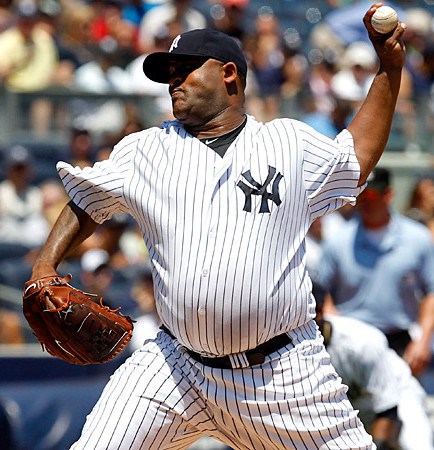
The club that gave up 37 runs and was too exhausted to even finish the game at Marlin, Texas on June 13, 1888 could have used the lp of a pitcher like C.C. Sabathia...maybe.

The club that gave up 37 runs and was too exhausted to even finish the game at Marlin, Texas on June 13, 1888 could have used the help of a big hard-throwing pitcher like C.C. Sabathia…maybe.


______________________________

 AN AMUSING GAME: Fat Men Shut Out.

 Marlin, Tex., June 13 – An amusing game of base-ball was played here yesterday afternoon between the Marlin Base-ball club and the Fat club of the city, composed of the following business men: George Schultz, catcher; P.P. Norwood, pitcher; Lawyer Charles Bartlett, first base; District Clerk C.F. King, second base; Tom Massengale, third base; E.W. Hammons, short stop; C.H. King, left fielder; Charlie King, center fielder; Wm. Shelton, right fielder, mayor of the city, all weighing over 165 pounds.

The game was to be a shut-out, and at the end of their ninth inning they had made no runs, the Marlin nine making a score of 37 at the end of the eighth inning. The fat club reinforced their nine in the field for the last four innings, which did no good. The Marlin club called for their ninth inning, but the other side would not ante; they were completely fatigued. The game was then called — the score standing  37 in favor of the Marlin nine to the Fat club a goose egg – amid the cheers of the spectators.

~ Galveston Daily News, June 14, 1888. (Another fine contribution from the arcane baseball research files of Darrell Pittman.)

______________________________

Wow! Apparently all you had to do to qualify for the roster of the City of Marlin’s Fat Men Base Ball Club back in 1888 Texas was be a white male weighing in excess of 165 pounds! – We do have to wonder how tall these guys were back in the late 1880s? Were they three feet seven inches, ala Eddie Gaedel, – or did the culture of those times see obesity with an even more inscrutable eye than we do in 2015? By those minimal weight standards, we would certainly have little trouble putting together enough fat folk teams, and without the mean-spirited racial and gender exclusions that settled on just about everything back then. Today we could start own rainbow round of many human fat player teams, enough to start our own “Organization for the Professional Growth and Spread of Obesity Baseball” .