Archive for the ‘Uncategorized’ Category

1963-64 Colt .45 “Skinny” Brown Dies

December 21, 2015
Hal "Skinny Brown pitched for the Chicago White Sox, the Boston Red Sox, the Baltimore Orioles, the New York Yankees, and Houston Colt .45s (1951-1964).

Hal “Skinny Brown pitched for the Chicago White Sox, the Boston Red Sox, the Baltimore Orioles, the New York Yankees, and Houston Colt .45s (1951-1964).


Thanks to an alert from Darrell Pittman of Astros Daily.com, The Pecan Park Eagle notes the passing of Hall “Skinny” Brown last Thursday, December 17, 2015 at age 91 in Greensboro, NC. Brown was a right-handed veteran knuckleballer who worked the last 2 years of his 14 seasons in the big leagues with the Houston Colt .45s. Skinny wasn’t a member of the original first year 1962 team, but he got there in time to see his final two seasons translate into a career losing record of 85 wins and 92 losses. His two-year record of 8 wins and 26 losses for the Colt .45s were the difference between Brown retiring with a losing rather than winning mark at age 39.

Rest in Peace, Skinny Brown! And thank you for your service to the establishment of Major League Baseball in Houston, even if the poor support you were given most often brought the roof down on your knuckle-balling head. Every great battle in life produces its casualties and your record here was one of those unfortunate consequences.

Here’s a link to an excellent obituary article on the career and death of Harold “Skinny” Brown at Greensboro.com

http://www.greensboro.com/sports/greensboro-knuckleballer-skinny-brown-lived-hall-of-fame-life/article_a6ecc0cc-1f68-5cc4-8cc8-af1c1def5dec.html

And here are two additional links to coverage given to Hal Brown at Astros Daily.com:

http://astrosdaily.com/history/deceased.html#Brown_Hal

http://astrosdaily.com/players/Brown_Hal.html

____________________

1094

You had to be a Musial to see it Early and Often

December 20, 2015
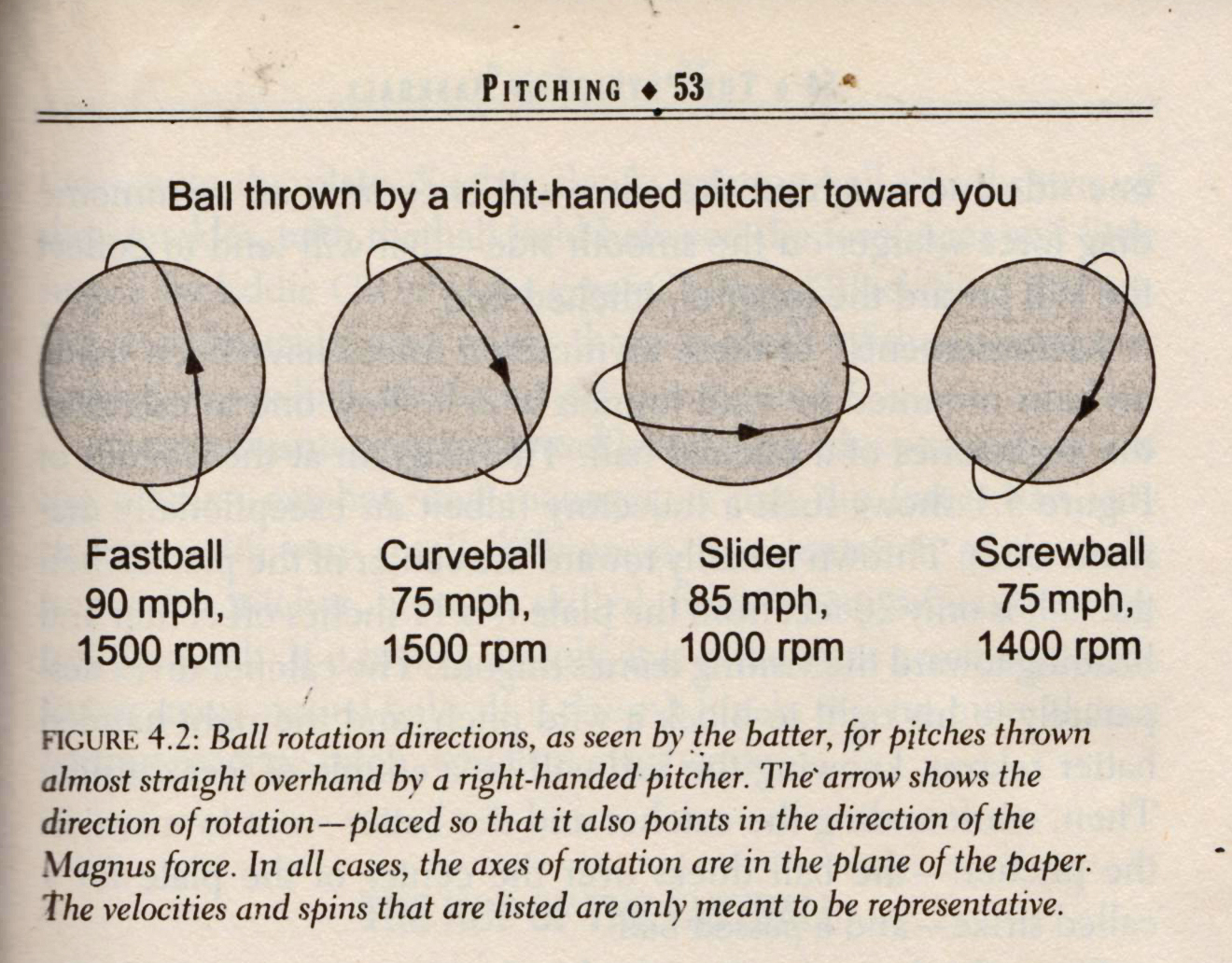
a presentational excerpt from "The Physics of Baseball" by Robert K. Adair, Ph.D.

The featured illustration above is a presentational excerpt here from “The Physics of Baseball” by Robert K. Adair, Ph.D.


Stan Musial was no physicist by degree, but he often spoke about hitting in ways that went way beyond the suggestion that he possessed an uncanny ability to see pitches early in the delivery and to know from memory what their direction of spin meant for him by the time they each reached the plate. Musial denied that he could actually see the spin of the ball.

In a 2009 Joint interview for Sporting News Magazine with Musial and Tony Gwynn, both denied that they could see the spin of the ball coming in, but neither may be able to report accurately what great vision and the unconscious mind is picking up in that minuscule lapse of time that it takes for the ball to reach the plate over the course of pitches in the thousands they have each seen as incredible batters. It almost  goes without saying that a hitter that understands where the ball is going by its spin, who also senses or sees the ball’s directional spin on an  unconscious level, may be processing that information neurologically and be directing him to make almost reflexive adjustments to posture and swing based on where the brain now thinks the ball is going.

The fact that neither Musial nor Gwynn report any conscious ability to see the spin of a pitched ball doesn’t mean they aren’t processing that information subliminally on an unconscious sensory/sight level. And that’s my theory. The TSN article does not address the point.

http://www.sportingnews.com/mlb-news/108638-talking-hitting-stan-musial-and-tony-gwynn

In “The Physics of Baseball”, physics scholar Robert K. Adair goes into detail about the laws governing motion and the action that these various releases of a pitched baseball have to the batters that face them by the time each reaches the plate.

For the featured pitches, as the illustration shows, energy and force builds in the direction of the ball’s spin in a way that causes the ball to break in the direction of the spin by the time it reaches the plate (in this case) from a pitch thrown by a right-handed pitcher to a right-handed batter.

And that’s leaving out all of the other variables of physics that really good pitchers and batters have to learn by trial and error over time of seeing the ball thrown in all these ways in ball parks where little things like local altitude, humidity, game time temperature and wind matter in the successful execution of both hitting and pitching.

Great players don’t have to be physicists to excel at a game which is totally controlled by the laws of physics at its base level, but, like Stan Musial, they have to be really superior on the sensory level to hold the edge over all others. Let’s use Stan Musial as an example here. We could have used Ted Williams or any other Hall of Fame player of noted superior eye sight.

Good pitchers, of course, are not dummies. They know that the batter’s ability to see their grip on the ball or any changes in delivery based upon the pitch that is coming, are advantages they must not give away to the batter, if at all possible. The really smart pitchers also build a pretty good book on the few with “Hall of Fame” conscious or subliminal vision for the early spin – as opposed to all the “cat and mouse” batters who have to rely a lot more on “next pitch guessing” and “Lady Luck” in making bat contact with the ball, where and when it arrives.

Like most, if not all brilliant science writers, Dr. Adair keeps on talking and writing, even when he early to often loses his audience. He still makes some points along the way that enrich our understanding the real base of our game. When a player gets injured running out a triple that turns out to be a foul ball call and a negation of the hit by the umpire, the player remains injured. He’s playing first in line with the laws of physics – and only second in allegiance to the laws of baseball. There are no “do-overs” for broken legs.

We read or listen to brilliant people in the hope of gleaming what we can absorb. Dr. Robert Adair is that kind of source. And he has given us a pretty varied view of the game at its scientific core. He certainly gets my admiration for his easy-to-understand rotation of the ball factor that I have humbly tried to present here in my own language – and we didn’t even get to what he said about knuckle balls.

Addendum: My thanks to Tom Hunter for the inclusion of the material from Sports Illustrated.

One Final Note: Jon Leonoudakis is a wonderful collector of published and verbally expressed baseball quotations. After reading this column today, Jon  sent me one he described as an “Apocryphal Musial story”

I knew I’d heard this story before, but could I not reference it to anything prior to hearing from Jon by e-mail. – Thanks, Jon! – You made my day!

According to Jon, the Musial story goes like this:

A younger guy on the Cards purportedly once asked Stan how to hit the curve ball: Stan (said): “Well, you watch the ball coming out of the pitcher’s hand, pick up the rotation of the ball, and then you whack the shit out of it!”

____________________

"Merry Christmas!"

“Merry Christmas!”

What Happened To The Bench Jockeys?

December 19, 2015
Leo Durocher The Lip wasn't quite as rough during his last managerial stop, but he was never mistaken for the Dalia Lama, even during his brief Astros tenure.

Leo Durocher
The Lip wasn’t quite as rough during his last managerial stop, but he was never mistaken for the Dalia Lama, even during his brief 1972-1973 Houston Astros tenure.


As a kid fan at Buff Stadium in the post WWII years, but only when my dad got his hands on the boss’s seats behind the Buffs dugout, I got an accelerated education on language and phrases that I just never heard much elsewhere – even in the blue collar culture of Houston’s east end, soap worked on tongues as well as hands.

The words and phrases I’m remembering here in technicolor and high quality sound were often to always concepts that were unavailable in the Merriam-Webster Dictionary. In fact, my early childhood lapse of full knowledge on the use of hyphens in formal speech had misled me to believe that “Merriam Webster” probably was somebody’s mom – and that she probably frowned on using words, singularly or roped to each other as expressions, that most people would hear and take in as dirty words and insults.

I learned these words and phrases on one abrupt trip that Buffs manager Al Hollingsworth made onto the field to have a discussion with Frenchy Arceneaux, the home plate umpire. Because this is basically a G-rated column, I won’t reveal the actual words that Al used and expressed in a voice tone loud enough to cover the first ten rows of the immediate area grandstands, but you should be able to figure them out from some brief descriptions:

According to Manager Al, Umpire Frenchy was “the son of a not-so-nice ‘b-word’ lady – asserting also that he was blind as a bat (the night-flying kind). The Buffs manager proceeded to further suggest that the umpire may have also been hampered in his vision of a pitched ball he called strike three because “he had his eyes closed and his head buried in another part of his anatomy during the time the ball sailed low and outside to batter Larry Miggins for what should have been a bases loaded walk with two outs – instead of an outrageously called strike three that killed a vigorous Buffs rally.

Before Al the Manager could get too far beyond his attempt to further canonize Frenchy the Ump “with the other ‘b-word’ that typifies all babies born out of wedlock,” Arceneaux interrupted Hollingsworth long enough to impart his own opinion on the tone of this ‘discussion’. Frenchy raised his right hand and used it to first point at Al – then to the Buffs clubhouse down the left field line. But Frenchy couldn’t stop there. Even though his reasons were obvious to all who could both see and hear, Frenchie felt that Al deserved an explanation for his abrupt ejection from the game.

“This is for being that part of the body that we all sit down upon in this matter, Al,” Frenchy roared. “Besides, as you should know by now, you don’t get to argue balls and strikes in baseball! – What’s the matter with you? Do you have excrement in place as the organic executive in charge of your decision-making?”

Things were brutal back in the day. Bench jockeys was the phrase that best  described those players who excelled at playing with the minds of the other team’s players on the field. We even had it full scale in organized kid ball – and some of the kid team managers would coach third base when their club was batting in an attempt to rattle the other team’s pitcher with the things they said to their man at the plate: “C’mon, Joey, get ready to hit this kid! He’s got nothing but hits to give away with that stuff he’s throwing!” It often worked. And in the little baseball sub-culture of my limited experience, people seldom objected. You were expected to just tune it out and play through it, when it happened.

And here’s a great example from World Series history.

On September 13, 1934, star Detroit Tiger pitcher Schoolboy Rowe made a guest appearance on the Eddie Cantor national radio show. Rowe got so caught up in the enjoyment of things that he finally blurted out to his wife over over the air: “How am I doing Edna?”

It was a salutation that come back to haunt him once the Tigers hooked up with the St. Louis Cardinals in the 1934 World Series.

The Tigers took on the Cardinals in Game Six at Detroit leading in the Series, 3 games to 2, and with Schoolboy Rowe going up against Paul Dean. Rowe would lose to the younger Dean, 4-3, surrendering 10 hits and enduring taunts of “How am I doing, Edna?” from Leo Durocher and the Cardinal bench for the bulk of the day – and worst of all – sending the Series to a Game Seven the following afternoon, October 9, 1934. Apparently the Cardinals had been listening to Rowe on the radio the night he made his affectionate plea to Edna at home.

Game Seven will always be recalled in Detroit as a Tiger nightmare. In the top of the 3rd inning, the Cardinals got to Tiger starter Elden Auker for four runs – and bringing Rowe back into action in this tense game of “no tomorrows” to hopefully stop the bleeding. It immediately rained more of the “How am I doing, Edna?” taunts as Rowe gave up two more of the final three runs scored by the Cardinals for a 7-run tab and, had it been boxing, a TKO win for the Cardinals. The Cardinals would go on to take Game Seven behind Dizzy Dean by 11-0, sending poor Schoolboy Rowe and his den of Tiger mates into a winter of discontent.

And it most probably sent Cardinals shortstop Leo Durocher home with a broad grin of happiness that he had been the leader of the pack in the “How a I doing, Edna?” taunt. “How am I doing, Edna – indeed!”

Were it possible, wouldn’t you love to hear Durocher’s self-congratulatory version of how he pulled off the “How am I doing, Edna?” heckle upon poor Schoolboy Rowe?

At any rate, where are these hecklers of the game in 2015? You see so much palsy-walsy stuff today between base-runners and fielders that it’s hard to imagine a lot of bitter stuff pouring from either dugout during most games.

Has the game simply lost most of its posterior-face people in the 21st century?

You tell me. I’d like to know.

Writer’s Note. In the original version of this column, please forgive me for incorrectly remembering the victim in the “How am I doing, Edna?” story as Elden Auker. I do know better. I forgot so well on a rush-to-publish day that I bypassed my usually tight fact check on anything questionable. I also want to credit and thank friend and legendary baseball man Tal Smith for e-mailing me of my most egregious error. Thanks for your understanding and support, dear readers.

____________________

ppebaseball7


.


The Physics of Baseball

December 18, 2015
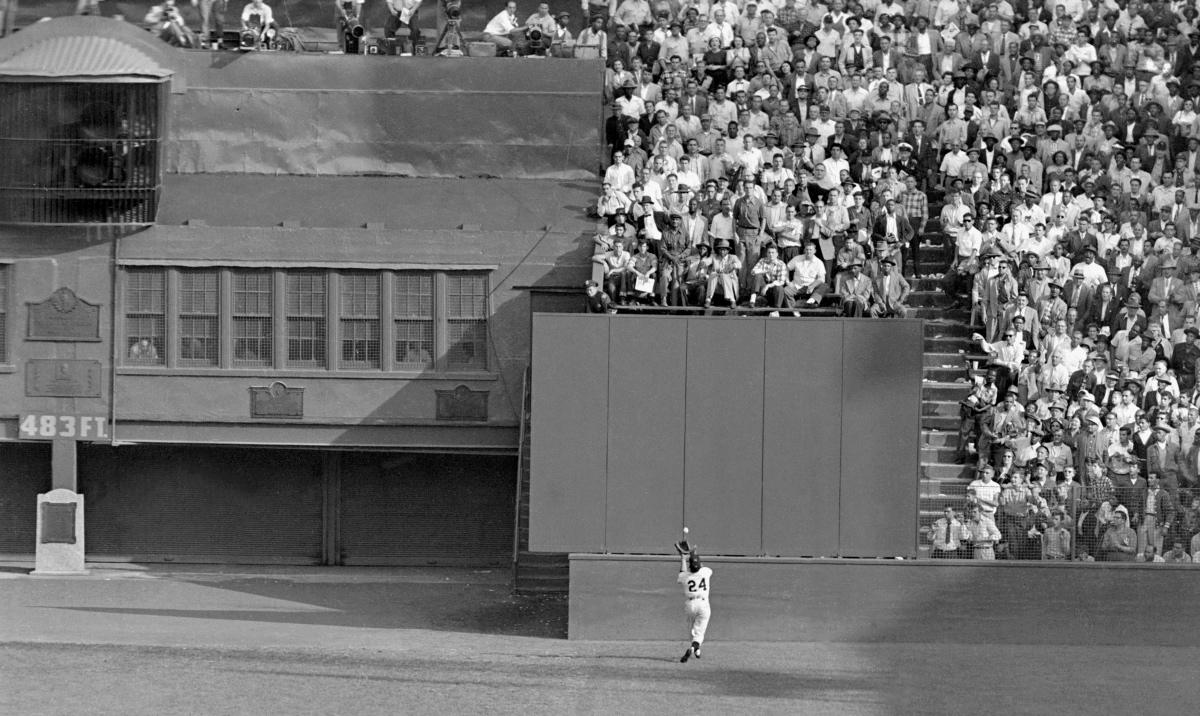
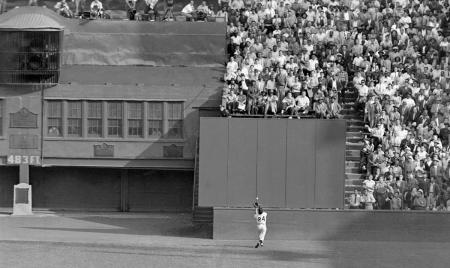
Willie Mays "The Catch" 1954

Willie Mays
“The Catch”
1954


Social historian and research educator George Leonard once expressed it in these paraphrased terms: One cannot begin to research and write the complete history of life on earth until he or she is prepared to start with the Big Bang and then accurately transcribe every physical force and chemical reaction at atom-level change that then has transpired in sequential and aberrant direction levels in the unfolding core process that has continued, so far, to mutate, transform, and continue in apparent conformity to the scientific laws governing evolution on the organic level.

Maybe that’s what National League President and later Commissioner of Baseball Bart Giamatti had in mind for the history of baseball back in 1987 when he asked an old Yale faculty pal and colleague, physicist friend, Dr. Robert K. Adair, to sign on as “Physicist to the National League.” A such, the volunteer mind of Dr. Adair would be asked to take on the “tongue-in-cheek” task of compiling and advising Giamatti on “the elements of baseball that might be best addressed by a physicist.”

Adair took on the fun challenge, but with the serious intent of all researchers worth their salt. He first had to fill in the large blanks of what he didn’t know well enough at the start about the game of baseball and its common mechanical actions on the field. This data was essential to anything he engaged as matters of physics governing the speed and trajectory of batted balls, the movement of thrown pitches, and the effects of wind, humidity, and stadium elevation from sea level upon the flight of batted and thrown baseballs. Gravity, of course, is the factor that makes baseball and the whole game of life possible, but even gravity eases up at higher altitude/thinner air game sites.

The task and the book that resulted became Robert Adair’s magnificent obsession. “The Physics of Baseball” finally reached its first printing in 1990. Fortunately, Bart Giamatti got to read and give his blessing to the first edition, but did not live to see its actual publication. Two other printings followed in 1994 and 2002, with Adair continuously correcting and refining his items of measurement through the third printing.

Although I’ve known of this book for years, I never read it until this week, when I received a Christmas gift copy from friend and colleague Darrell Pittman. Thank you, Darrell! This has been a fun-walk through the scientific stuff that happens. One doesn’t have to be a physicist to understand all of its content, but it does help to have taken a course in physics somewhere along the way.

How much did the alleged curve ball inventor Candy Cummings understand about the physical laws governing force and torque upon a thrown baseball from pitcher to catcher from variable distances of 45′ to 60’6″ when he started using that killer pitch? Probably not much. All he had to remember is what he saw it do the first time – and to recall what he did to the pitch and be able to repeat it a second time.

If you have ever wondered how Willie Mays made “The Catch” on Vic Wertz’s long fly ball to center field at the Polo Grounds in 1954, you may really enjoy this book. What is the science behind any explanation we may offer for “The Catch?” Was it the sound of the ball? Coupled with the first flickering sight of the ball’s flight speed and trajectory? And what was it within Mays’ neurological system and/or experiential history with fly balls that cued him to turn his back and run hard to a specific deep center location? And what allowed Mays to be in just the right, still moving spot – and get his glove up in time to catch the ball as it came down from the sky and descended into his glove over his head as probably the most famous long fly ball out in baseball history?

“The Physics of Baseball” (Third Edition)  by Robert K. Adair, Ph.D. is available in paperback from Amazon.Com, if you are interested.

This whole subject awakens me to how much physics was involved in a poem I wrote almost 47 years ago. Let’s close on that note:

pecan park

Summer Baseball By Bill McCurdy (1969)

Time was when summer meant baseball on a vacant lot,

Chasing a ragged brown horsehide as it zoomed off

As a fungo bat streak across the white heat of the morning sky,

Only to be pursued by a blue-jeaned boy, who just knew, …

He would be there when the ball came down.


From the crack of the bat until the thump in his glove,

The boy knew the baseball like one knows an old friend.

They had met so often on a vacant cty lot before.


Texas Leaguers, Blue Darters, Line Drive Scorchers, Worm Burners, Grass Skinners,

Pop Flies, Sunday Screamers: – It made no singular difference at all to the boy.

He knew that each pursuit would end securely in the web of his Rawlings Playmaker.


No thrill could surpass the loud crack of the bat that signaled to the boy in the field

Of the far chase to come as a result of the music instantly traveling to his ears.

It was the lickety-split quick and sure sound of the long ball firing away a singular alarm:


C-R-A-C-K!


And the boy would race on bare, calloused and sometimes cut-up feet

To a faraway and receding point on the deepest spot of the weed-grass sandlot.


Then, somehow, as though guided by a mysterious inner radar,

The boy would turn his head and look skyward at just the right time,

And at the very moment his old friend, the baseball, was beginning to descend

From that grand eagle-flight ride through the hot and humid Houston summer air.


T-H-U-M-P!


The chase had ended once more in a rightful wedding of ball and glove!

Simple innocence, But it was love, And it was free.


Years later, the boy, now a man, may only dream of one more chance at joy,

One more chance to race the wind, And to follow the flight of his old friend,

Coming down, Coming home.

____________________

NAVY-UH-112715-14

Gil Hodges’ Big Disappearing Moment

December 17, 2015
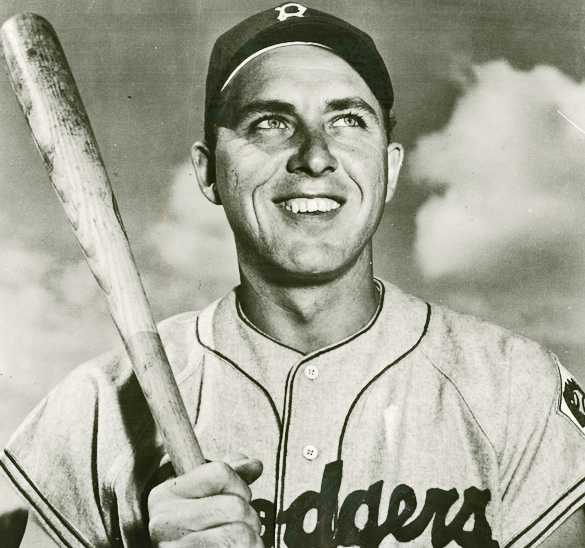
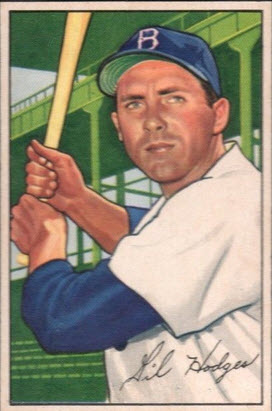
Gil Hodges, 1st Base 1952 Brooklyn Dodgers Gil's 0 for 21 in the '52 World Series helped him disappear on the dark side of the moon once he became eligible for HOF consideration.

Gil Hodges, 1st Base
1952 Brooklyn Dodgers
Gil’s 0 for 21 in the ’52 World Series helped him disappear on the dark side of the moon once he became eligible for HOF consideration.


Sometimes “one special moment” can be the memory of enough voting BBWA writers that gets a player with a good career record into the Baseball Hal of Fame. See Bill Mazeroski for the best example that comes to mind. The guy was an incredible good defensive figure for the Pittsburgh Pirates at second base, but nothing about his everyday performance all the way round, including his hitting, will ever quell the argument that his walk-off HR against the New York Yankees in Game Seven of the 1960 World Series was anything less than the emotionally charged “one special moment” that really opened the door to the great Hall for the fiery team player with good, but not great career numbers for Pittsburgh.

On the other side of the same coin, it may also be argued until the crack of doom that first baseman Gil Hodges should also have been elected to the HOF on the basis of his good, but not great bat work with the Brooklyn Dodgers during their “Boys of Summer” era. The real reason he’s never made it may be the fact that his “special moment” may have been his 0 for 21 (.000 BA) batting performance in Brooklyn’s folding 7-game loss to the New York Yankees in the 1952 World Series. Hodges’ missing bat may have been the difference that allowed the Dodgers to close with two losses at Ebbets Field in a 4-3 Series squeeze by the Yankees. The swelling “0-fer” of his hitting failure at the critical moment for his club in 1952, a failure that left him as the all time worst hitter in play-off baseball history – simply made him, and still makes him, an easy to forget at Hall of Fame voting time, first by the writers –  and now by the veterans’ committee.

Had Gil Hodges gone 1 for 21 – and had that 1 hit have been a walk-off 3-run homer that won the World Series for the Dodgers in Game 7 at Ebbets Field in 1952, is there anyone out there who seriously thinks that Gil Hodges would not have been accorded the same heroic honor wreath that fell upon Mazeroski’s head only eight years later?

Bobby Thomson of the 1951 “Shot Heard Round the World” HR did not have the career record to have earned the Hall of Fame, but one could argue that Hodges did. It just wasn’t meant to be. Take the dark side of the moon route and few ever think of you again.

Here’s a tabular chart of Gil Hodges’ descent into the land of the forgotten as an un-heroic hitter in the 1952 World Series:

GIL HODGES IN THE 1952 WORLD SERIES

WS ’52 Game AB R H RBI W K BA
1 – BRK W, 4-2 3 0 0 0 0 1 .000
2 – NYY W, 7-1 3 0 0 0 1 1 .000
3 – BRK W, 5-3 3 0 0 0 1 0 .000
4 – NYY W, 2-0 2 0 0 0 1 0 .000
5 – BRK, W,, 6-5 3 1 0 0 2 1 .000
6 – NYY W, 3-2 3 0 0 0 0 3 .000
7 – NYY W, 4-2 4 0 0 1 0 0 .000
TOTALS 21 1 0 1 5 6 .000

To examine the 1952 Worls Series box scores yourself, please go to BaseballReference.Com at:

http://www.baseball-reference.com/boxes/BRO/BRO195210070.shtml

In General

My thoughts on Hodges and Mazeroski are ancient, but they were directly kicked again into high gear by a wonderful current article I found this morning at BaseBallAces.Net, a site good for both the evocative and the provocative touches on baseball history. I’ve never met John B. Holway or Gabriel Schechter, the site’s creators, but I feel as though I have known them for a lifetime for over only a very short period of readership time. You may enjoy checking out the column of reference here, “October Mendozans.” It lists the 300 plus worst playoff hitting by Hall of Famers and other high level baseball stars.

http://baseballaces.net/

Have fun!

____________________

Bowman-52-Gil-Hodges

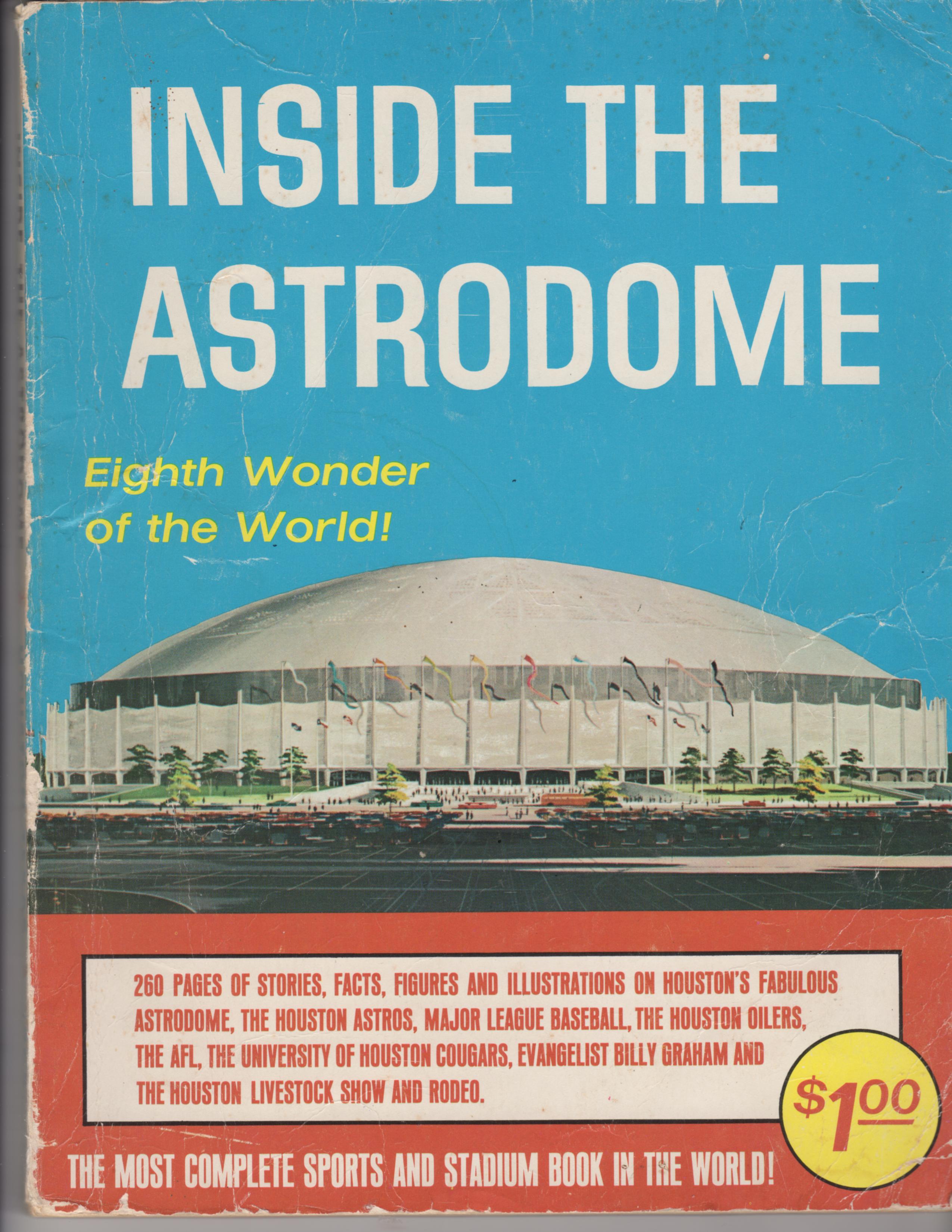
MLB Presents The Astrodome

December 16, 2015

Astrodome-Book-01


MLB Presents The Astrodome

Introduced by Bob Costas and narrated by former UH Cougar and movie actor Dennis Quaid (and brought to my attention for editorial correction here by our good friend Greg Lucas), the one-hour long “MLB Presents the Astrodome” documentary that aired at 8:00 PM on the MLB Network last night came off quite well, covering all the reasons for the Dome’s creation and the milestone events that took place there over the period of its 35-year life as home of the Houston Astros and other major happenings. Dean Hofheinz Mann, the daughter of the late Judge Roy Hofheinz was on board as the primary witness to dome history, but almost everyone else under the Houston sun who had anything to do with the grand old place stopped by to impart their thoughts and feelings for the relatively brief, but highly significant place in Houston history and as an iconic figure in the history of world architecture.

Nolan Ryan spoke simply, but eloquently, in support of the Astrodome’s place in our local history and old clip revealed R.E. “Bob” Smith responding to someone’s early question about the designation of the place as “the eight wonder of the world” by amending that thought to the idea that “we should be recognizing the Astrodome not as the eighth, but as THE wonder of the world. From the players we recall as our early Dome heroes (Jimmy Wynn, Larry Dierker, Bob Aspromonte, Mike Scott, Terry Puhl, Art Howe, and Phil Garner) viewers got to hear the thread of affection for the Dome that runs through them all. Astros historian Mike Acosta contributed his always sound contextual take on what the Dome means to our local history and Tal Smith spoke as one of the principals who put that history in motion. The great Mickey Herskowitz, along with broadcasters Bill Brown, Milo Hamilton,  TV personalities Bob Allen and Dan Rather, among others, chipped in their perceptions of the important Dome years.

Good as it was, the limitations of even a full disclosure documentary on the Astrodome for me is the sudden realization that, unless one already possesses a bond with the Astrodome, even good information on the “old girl” probably will fall short of personalizing that same kind of bond within those who were nor around to have built it within themselves from first hand experience.

Those of us who favor saving the Astrodome need to rally (a) those people who do have the bond – and I’m talking here about the 25,000 to 30,000 people who came to the Astrodome’s 50th birthday party last April 9th and (b) help build a strategy for attracting support from all the others who not have a bond with the Dome, per se, but who do have a passionate bond for historical preservation.

If you are interested, please take a look at the new “Our Astrodome” website that Mike Vance of Houston Arts and Media has started as a program for advancing the cause of preservation for the Astrodome – and ask how you may get involved and help. Here’s the link:

www.ourastrodome.org

Go, All Who Care ~ Let’s Save the Dome! ~ Before It’s Too Late!

____________________

Christmas Spirit Crossings

  1. When the NFL Houston Texans lost star running back Arian Foster again early to injury for the rest of the 2015 season, what Christmas song did Coach Bill O’Brien immediately adopt as his favorite? Answer: “I’ll Have a Blue Christmas Without You.”
  2. A graffiti artist with strong phonetic affinities, recently took a two-word sign on a house he saw and painted two words of his own beneath the first two to better communicate the name of a Christmas song it made him hear. It then read: “FOR LEASE, Navidad.”

____________________

Pecan Park Logo

Bill Gilbert: 2015 MLB Offense Ends Decline

December 15, 2015
Baseball Analyst Bill Gilbert's Final Look at the 2015 Season of the Houston Astros.

Baseball Analyst Bill Gilbert’s Takes a Look at the Offensive Side of the 2015 MLB Season.


Major League Offense Increases in 2015, Ending a Long Decline

By Bill Gilbert

At mid-season, I wrote a report indicating that there were signs that the long decline in offense in the major leagues that began in 2000 was coming to an end. An update at season’s end indicates that the increase in offense is greater than it was at mid-season.

The numbers below illustrate key hitting and pitching statistics for the peak year of 2000 plus 2005 and 2010 followed by each year since 2010.

Year    2000 2005      2010    2011 2012 2013 2014 2015
Hitting


R/G/team 5.14 4.86 4.38 4.28 4.32 4.17 4.07 4.25
BAVG 0.270 0.269 0.257 0.255 0.255 0.253 0.251 0.254
OBP 0.345 0.337 0.325 0.321 0.319 0.318 0.314 0.317
SLG 0.437 0.432 0.403 0.399 0.405 0.396 0.386 0.405
OPS 0.782 0.768 0.728 0.720 0.724 0.714 0.700 0.721
Pitching
ERA 4.77 4.29 4.08 3.94 4.01 3.87 3.74 3.96
WHIP 1.468 1.369 1.347 1.316 1.309 1.300 1.275 1.294
WHIP= walks plus hits per IP

From these figures, it can be seen that the decline in offense continued in all categories in 2014.  However, in 2015, the trend has been reversed. A number of theories have been advanced for the decline in offense since 2000.  Probably the most significant is the greater control over the use of performance enhancing drugs (PEDs).  Other factors are a perceived increase in the size of the strike zone at the low end, the increase in defensive shifting, the arrival of an exceptional group of starting pitchers (Max Scherzer, Clayton Kershaw, Chris Sale, Felix Hernandez, Adam Wainwright, Madison Bumgarner, David Price, Zack Greinke, etc.), the improvement of bullpens with most teams able to send out a series of flame throwing relievers in the late innings and the all or nothing “grip it and rip it” approach taken by many hitters which makes them more vulnerable to good pitching.

Another change since 2000 that has possibly been under-reported is the significant change in walk and strikeout rates:

2000   2005 2010   2011   2012 2013   2014   2015

SO/G/team 6.45 6.30 7.06 7.10 7.50 7.55 7.70 7.57
BB/G/team 3.75 3.13 3.25 3.09 3.03 3.01 2.88 2.83
SO/BB 1.72 2.01 2.17 2.30 2.48 2.51 2.67 2.67

The higher strikeout rate and lower walk rate have both resulted in decreased scoring. The strikeout rate showed a slight decline in 2015 which would tend to increase offensive production.

What has changed in 2015?  The decline may have run its course but a more significant factor may be the arrival in recent years of a number of exceptional young hitters who are beginning to reach the prime of their careers (Mike Trout, Bryce Harper, Giancarlo Stanton, Josh Donaldson, Anthony Rizzo, Kris Bryant, George Springer, Andrew McCutchen, Paul Goldschmidt, Buster Posey, Joc Pederson, Carlos Correa, etc.).

There was talk during the off season last year that some changes, such as lowering the pitching mound, might be appropriate to return more offense to the game.  The evidence in 2015 suggests that any such changes would be premature. With only one data point at this point, it cannot be determined if offense will level out or an upward trend may be beginning.

Bill Gilbert

12/13/15

____________________

baseball-bat-baseball

The Astros Departure of Mark Appel

December 14, 2015
Mark Appel, Pick #1 2013 Amateur Draft

Mark Appel, Pick #1
2013 Amateur Draft


Have you made a big decision that seemed right-as-rain at the moment, but sooner rather than later revealed itself as landmark regret? If not, what planet in the universe are you from?

Well, the autopsies on Stanford pitcher Mark Appel as the first pick of the Houston Astros in the 2013 amateur free agent draft are now rolling in pretty predictably with his late inclusion into a five players for two trade with the Philadelphia Phillies for the purpose of acquiring 25-year old power closer Ken Giles over the weekend and these op/eds will inherently, or specifically, be raising all of the silly, sanguine, sad, and predictable questions that invariably arise from hindsight:

  1. How much stock can a club place in the stats of high school or college ball as indices of future performance at the professional level?
  2. How many really good scouts out there possess the intuitive ability to project a prospect’s future performance based on what they see?
  3. How much is decision-making at the top draft pick level reduced to clubs simply basing their “hopes” on a likable candidate maturing to the level he will need to reach over time with experience and effective coaching?
  4.  How often is disappointment based on the time-discoverable reality that some first picks may already have reached their player growth potential on draft day. These types do not develop further because there really is no dynamic upside beyond where they already are, no matter how teachable they are, or how hard they try.

After the Giles trade, pitcher Mark Appel told one writer that “I can only perform to my God-given ability.” And that statement alone may cover all but two aspects of the truth about Appel. His “God-given ability” may have already peaked on the day the Astros drafted him in 2013. The Astros just didn’t know it.

Had the Astros known, it’s highly unlikely they would have drafted a guy with the first pick, only to include him two years later as a deal-maker addition in a multi-player trade for a highly rated closer.

Had the the Astros also known on draft day 2015, that a kid named Kris Bryant was out there as an alternative to Appel – as one who would be then taken by the Cubs in 2013 and go on to hit .275 and 26 HR in 151 MLB games in 2015, but they didn’t know. Neither did the Cubs.

The larger seminar here goes beyond the unfolding destiny of Marc Appel – or even baseball. The better we get at assessing potential for our own growth, the better our decision-making improves and the lesser we stockpile regrets over “poor” (inadequate) decision-making.

From my own career experience of working with people on issues of growth and change, here is a capsule of words I would use as indicators of potential for change and a high ceiling of performance in some area. None of these qualities are absolute, but they appear too often as change-booster variables to be dismissed. And these are: intelligence, emotional stability, flexibility, the ability to listen, a commitment to learning from experience, and a burning desire to discover and use self-knowledge for self-improvement.

In closing, I am reminded of famous Nolan Ryan scout Red Murff’s story of signing the greater future Hall of Famer from Alvin, Texas. Murff said that he could recognize that young Nolan needed to “fill out” in body weight and muscle growth to become the pitcher he had the potential to be. Murff says he looked at Nolan’s father and saw that the elder Ryan’s rugged muscular build was all else he needed to know about the kid’s potential to sign him for the Mets. – Good work, Red, but I doubt I’d get much argument from you on this closing thought:

Nolan Ryan also possessed all of the “indicators of potential” that I listed earlier.

Good luck to Mark Appel, too! Maybe you will get there in your own time – and maybe we put too much pressure on #1 draft picks to be the human equivalent of energy drinks to our team’s floundering fortunes.

____________________

eagle


Where Do The Current Astros Stand?

December 13, 2015
Costello: "who's on Third for the Astros?" Abbott: "Who's on First?"

Costello: “Who’s on Third for the Astros?”
Abbott: “Who’s on First?”


Where Do The Current Astros Stand …. when it comes to their basic knowledge of the game and their overall club ability to execute in situations which are best served by the combined presence and use of athletic ability, situational knowledge by instruction, game experience wisdom, and the capacity for execution?

By basic knowledge, I mean those distinct areas of offense, defense, and pitching that ultimately determine the success or failure of most championship pursuits. In my estimation, these areas of basic knowledge include all those reasons a half century ago that led to rookies being sent back to the minors for “a little more seasoning” when their MLB play revealed that they needed more playing time to gain wisdom on what they needed to either do or correct about their approaches to certain game situations.

Whereas, none of us might organize any list of these areas of basic knowledge exactly the same, here’s how I see them by offense, defense, pitching, and game intuition (savvy):

Offense

  1. Hitting – knowledge of the strike zone
  2. Ability to make contact with strikes and not swing at balls
  3. Ability to use a batting stance that maximizes the power of one’s personal bat speed
  4. Ability to put the ball in play
  5. Ability to hit for power without excessively striking out
  6. Ability to take and use what the defense gives the batter
  7. Ability to hit safely behind runners, if needed
  8. Ability to run bases with increasing wisdom of pick-off ploys
  9. Ability to work with base coaches on running decisions
  10. Ability to resist pitcher’s attempts to control home plate

Defense

  1. Development of a fielding stance which maximizes range of coverage
  2. Ability to always know the game situation and one’s probable choices before they happen
  3. Basic knowledge about getting in front of balls and one’s glove down on grounders
  4. Knowledge of cut-off strategies and the ones preferred by your manager
  5. Field positioning based upon both game situation and wisdom from game experience about how certain batters seem to hit the ball off certain pitchers – especially in certain situations.
  6. Basic awareness of health hazards that may exist on or near fair play that could either bring injury or prevent a catch for fielders who aren’t sure of a risk in a particular running direction.

Pitching

  1. Basic awareness that pitching is just what Warren Spahn described: “Hitting is timing. Pitching is the art of upsetting that timing on a 100% basis, whenever possible.
  2. The best pitchers are those who continue to learn. Just as the best teachers are those who never stop being students, the best pitchers are those who continue to learn both from their own experience and the observations of others.
  3. As a pitcher learns more about his own particular strengths and weaknesses, he adds tools which further support his strengths – and other tools which help minimize his vulnerabilities.
  4. The greatest of pitching tools are speed, deception, intimidation, and the ability to most often get positive results over time. Some are genetic. Others are developmental. And no tool is guaranteed forever. A lot of young speed ballers fail over time because they either lose their speed, or else, they simply become hittable to smart batters who will almost always catch up to the fast ball pitchers with nothing else going for them.
  5. Speed, variability of speed and ball movement by pitch, pitch location, good pitcher-catcher wisdom and intuition about certain batter weaknesses, and a pitcher’s arm durability, are all principle variables that determine a player’s value on the mound over time.
  6. Pitching is about as Darwinian as things get. Only the strong survive. And the survivors mostly share one common trait. – They are adaptable.

That’s how I see it. Feel free to add your own takes on essential ability.

My own assessment on the abilities of the current roster may change considerably by spring training. GM Jeff Luhnow already has taken steps to acquire the closer we need in Ken Giles and it looks pretty good that he will fid the other starter we need for the rotation before the season begins.

We still are weakened by a batting order that strikes out too much, but letting Chris Carter go was a step in the right direction. I like Colby  Rasmus, but I hope that he works more on cutting down the “K”s and becoming more of a contact hitter. – That’s a wish, not an expectation of faith or even a mild belief.

Third and first base still bother me. Valbuena and Singleton apparently are the default candidates, but they are both on the heavy “K” side – and only Valbuena has shown his ability to hit for power over a full season. Singleton has to show that he can hit anything at all for a full month.

Base running and defensive cut off strategies could sure use some work. I still have two late season memories from key games the Astros lost when the opposition caught Jose Altuve standing innocently off first base for an easy pick. – What’s up with that? And too many memories of runs scoring against the Astros  on poor cut-off man connections.

Catching is hitting weak and quality thin. Hopefully, Stassi can either rise to the occasion and grab this opportunity or quickly move out of the way for a more qualified player to be named later. As for Castro, what’s there to say? – Astros pitchers love him, but so do the opposition’s pitchers. – They get to pitch to him too.


Willard Scott ~ Depart us ~ Please not

December 12, 2015
Willard Scott to Retire from NBC After 65 Years. Started as an NBC Page at age 16,

Willard Scott to Retire from NBC After 65 Years.
Started as an NBC Page at age 16,


Willard Scott ~ Depart us ~ Please not

By Bill McCurdy (c) 2015


Willard Scott ~ Depart us ~ Please not,

Your smiling red face still joy-puckers.

If you leave us right now ~ well, My Gosh, Holy Cow,

Who’ll do the shout-outs for Smuckers?


“Johnny B. Good’s ~ a hundred big ones today,

Deep down in that place ~ where the coolest cats play.

He don’t bang the guitar so good ~ now, they say,

His arthritic fingers hold ~ life’s sorry sad sway.”


Ronald McDonald once came ~ to this luminous life,

He found his beef grease breath ~ all through you.

Those who ate the fat food ~ you so happily knifed,

Gave life to the med phrase ~ “Code Blue” you.


You gave 65 years~ to your NBC cheers,

You saw how acts change ~ or dissolve.

You’re walking proof, Willie ~ that TV sells beers,

And that not all survivors ~ evolve.


Hang around, Willard,

March 7, 2034 is your big day on the Smucker’s jelly label.

____________________

eagle-red