Archive for the ‘Uncategorized’ Category

Second Chance No Help to LaGrange Nine

April 7, 2016
Another great old newspaper find by our ardent frequent research contributor, Darrell Pittman. Thanks again, Darrell, for a most interesting story from our area baseball historsy.

Another great old newspaper find by our ardent frequent research contributor, Darrell Pittman. Thanks again, Darrell, for a most interesting story from our area baseball history.

April 6, 1897

The rag-tag small town amateur club from LaGrange, Texas had little hope, but a lot of heart on that late 19th century day they rode the train to Houston to play the professional city boy club, the Houston Buffs, at Fair Grounds Park. The Buffs needed a warm up game prior to the imminent opening of their new Texas League season. The date of the game was April 6, 1897. It was also Ladies Day at the ballpark and Houston fans turned out to get a glimpse of how the local club was shaping up for the new base ball season.

Even though Houston was the home club, they exercised their option to bat first. Not much could have been expected from the amateur LaGrange club, but they came to play with all the game they could stuff in a loose ends equipment bag.

By the end of seven innings, the LaGrange club had acquitted themselves well. The Buffs led 4-0, but that close loss served as sort of moral victory for the country boys from seventy or so miles west of the big city. All agreed to call it a game due to the tight scheduling of the LaGrange club’s train home late that same afternoon. Tight scheduling? The seven inning game only lasted one hour and thirty minutes, but LaGrange still needed to cut the action short and rush to the depot with a chance of missing their train home.

LaGrange missed their train, alright, but Houston tried to console them with an unscheduled opportunity to play the Buffs again the next day. LaGrange was consoled – and probably buoyed by the ether of their good show the first time of even hoping for an improvement on luck and underdog performance in a second time around.

APRIL 6, 1897 1 2 3 4 5 6 7 ~ R H E
HOUSTON 0 1 0 2 0 0 1 ~ 4 5 0
LAGRANGE 0 0 0 0 0 0 0 ~ 0 4 1

Official Time: 1:35

Umpire: Clark

____________________

April 7, 1897

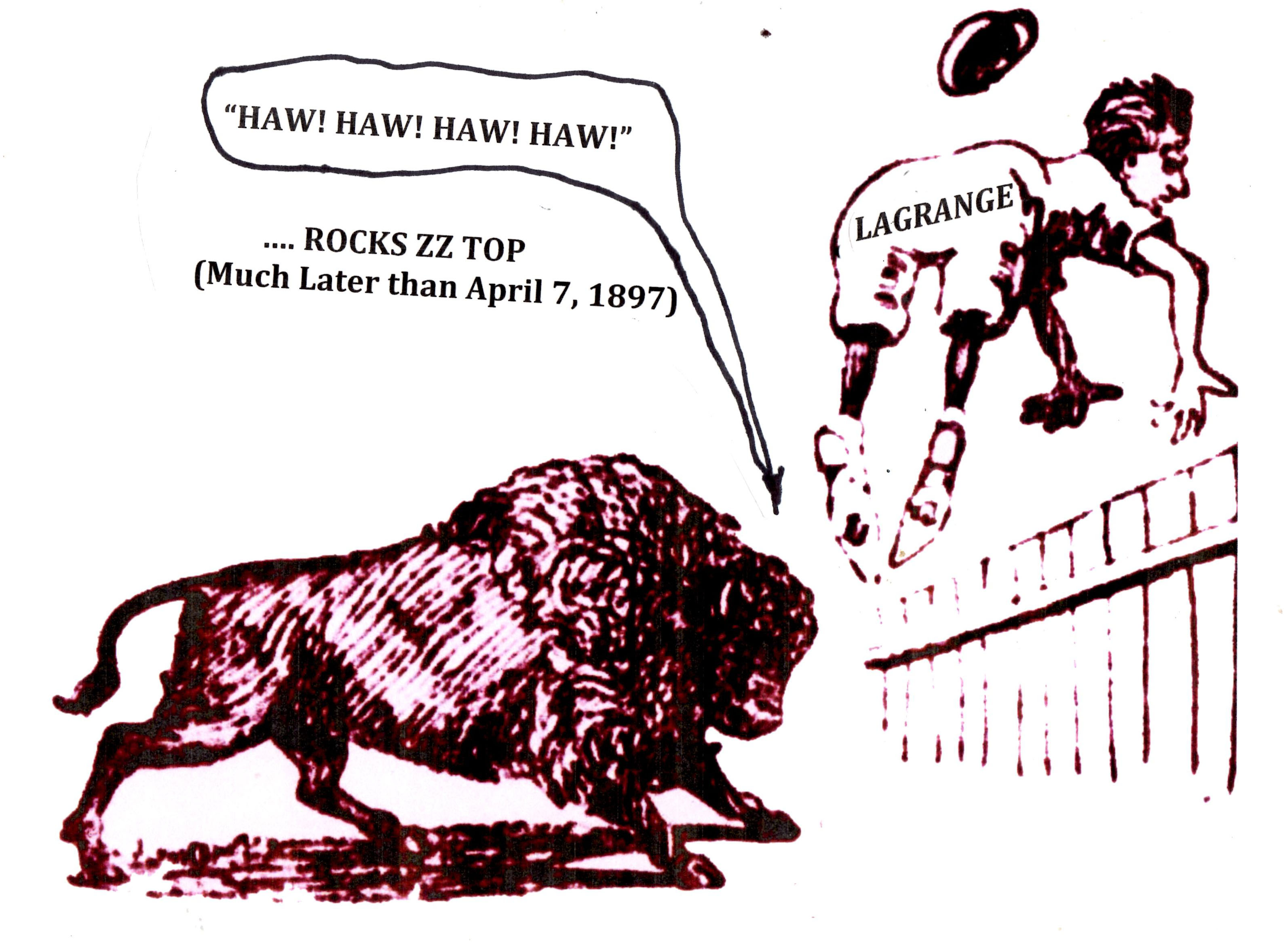
Love isn’t always lovelier the second time around, and neither are gloves, bats, ballgame hopes, and the skills of amateur players. The Houston Buffs really raised the spring heat on the small town small fries that second day, pasting them 26-3 in a game that was called a wrap after eight because of another train the LaGrange nine sorely needed to catch, but also because it was the humane thing to do.

This kind of anecdote always makes me think even more sentimentally than normal about the long-range aftermath. – Do you suppose this experience became part of “grandpa’s shared lore with his grandchildren”  as the 20th century moved in and Father Time took its toll upon those younger LaGrange ballplayers? – And are some of the older attics of LaGrange today, and unknown, as well, to descendants or current residents, still serving as the long-time mausoleums of old gloves, uniforms, and other equipment from that fated two-game series in Houston?

Sometimes ancient baseball stories are like morphine to the baseball mind.

APRIL 7, 1897 1 2 3 4 5 6 7 8 9 ~ R H E
HOUSTON 5 2 0 3 7 3 1 5 ~ 26 21 2
LAGRANGE 1 0 0 0 2 0 0 0 ~    3    6 5

Time: 1:33

Umpire: Clark

____________________

eagle-0rangeBill McCurdy

Publisher, Editor, Writer

The Pecan Park Eagle

Houston, Texas

https://bill37mccurdy.com/

Jumping the Gun, But Parodies are Fun

April 6, 2016
"trio of bear cubs, and fleeter than birds"

“trio of bear cubs, and fleeter than birds”


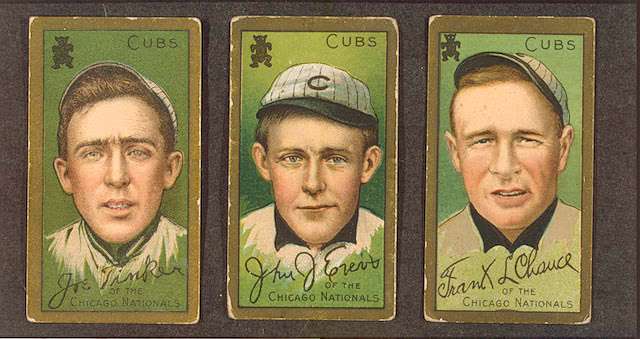
Back in 1910, Franklin Pierce wrote a memorable poem about the already famous Chicago Cubs double play trio. All three of these Cubbies later made the Hall of Fame, but most baseball historians today realize that their adeptness at completing double plays was more grounded on the side of lore than it was in a statistical reality that set them apart from all others.

In that total emotive spirit, and in humble recognition that our simple efforts proceed a single 2016 regular season game in which all three have even played by position on the field with each other, we got caught up in the business last night of writing a parody based on our hopes for such a shining “short-to-second-to-first” trio now on the roster of the Houston Astros.

Here’s the Proud and Indelible Original ~

“Baseball’s Sad Lexicon” by Franklin Pierce, New York Evening Mail, July 12, 1910

These are the saddest of possible words:
“Tinker to Evers to Chance.”
Trio of bear cubs, and fleeter than birds,
Tinker and Evers and Chance.
Ruthlessly pricking our gonfalon bubble,
Making a Giant hit into a double —
Words that are heavy with nothing but trouble:
“Tinker to Evers to Chance.”

And the humble and time-fragile parody ~

“Baseball’s Joy of Hope Lexicon” by Bill McCurdy, Pecan Park Eagle, April 6, 2016

These are the sweetest of double-play words:
“Correa to Altuve to White.”
Trio of Astros, and faster than birds,
“Carlos to Jose to Ty, they bite.”
Ruthlessly shaving all worries to stubble,
Reducing all foes’ hopes — to little but rubble,
In Spanish or English – they’re nothing but trouble:
“Correa to Altuve to White.”

____________________

eagle-0rangeBill McCurdy

Publisher, Editor, Writer

The Pecan Park Eagle

Houston, Texas

https://bill37mccurdy.com/


Baseball as America Fact that George Will Forgot

April 5, 2016
"Psst! ~ Hey, buddy, you need any tickets for Opening Day?" ~ George Will

“Psst! – Hey, buddy! – You Astros fans need any extra tickets for Opening Day at Yankee Stadium today ? I’ve also got some very good deals on top coats -sizes XL to XXXXL!”
~ George Will

Darrell Pittman sent us this nice good-feeling message from journalist George Will that tweeted its way around the Internet yesterday in timed correspondence to the start of the 2016 baseball season. On the sentimental level of things, you have to love it as deep-in-the-mine baseball fans.

Link to George Will message: https://t.co/z8wCinvUFY

As Wills points out, (1) baseball is the game that can be played by ordinary sized people; (2) the game is governed by a clear and fair justice system. i.e, “Three strikes and you’re out;” (3) baseball big league integration in 1947 beat federal support on the time line (1948), Brown vs. The Board of Education (1954), and Rosa Parks (1955); (4) baseball is the big tent among American sports – 20% of all MLB players hail from foreign countries; and (5) baseball forces its work force of teams and players into accountability. If your team doesn’t win, most cities stop supporting it. If your players don’t produce, they are gone faster than anyone can think “George Steinbrenner”.

My only issue is with the general idea that baseball players are ordinary people in all the ways that count beyond physical size ordinariness. “Size matters” in baseball definitely when it comes to pay. Nothing “ordinary people” in the area of salaries. The minimum annual wage for an MLB player is $507,500.

That’s right …. Five Hundred and Seven Thousand, Five Hundred Dollars and No Cents. …. And that makes little to no comparative sense, whatsoever.

Look at this table of the minimum wage pay for MLB players in relation to the prescribed base salaries, without all the extras, for the leaders of our federal government:

An Annual Base Salary Comparison

RANK JOB ANNUAL SALARY
1 MLB MINIMUM WAGE $ 507,500
2 PRESIDENT – USA $ 400,000 *
3 tie CHIEF JUSTICE – SC $ 223,500
3 tie SPEAKER OF HOUSE $ 223,500
5 VICE-PRESIDENT –USA $ 233,000
6 Majority/Minority Leaders $ 193,400
7 Senators/Congress Reps. $ 174,000


  • The President also gets annual budgets for travel ($100,000), expenses ($50,000), and entertainment ($19,000) to eke past the poor MLB minimum wager in annual pay, but even the figures quoted here seem to be lower than the annual cost of wine for all those state dinners and the eggs and egg dye needed for the annual Easter Egg Roll on the White House lawn.

As we know so well, the real power of those jobs in Washington comes not from the legally approved salaries, but from the power they each derive to receive money and other perks from corporate sources that are willing to reward government leaders and legislators for their support of special interest legislation.

The MLB minimum wager only has the power by his performance on the field to influence the club who signed him into this not-so-dire employment circumstance in the matter of what happens next, if anything.

Relative to most of us, and that includes thousands of business owners and small corporation CEOs, the minimum wage MLB player is not your Average Joe when it comes to his base pay. It’s simply no power base for future gain unless he produces in a very measurable way. – And there’s that clear justice presence in baseball that George Will described.

Presidents and Congressmen, on the other hand, have a very different challenge. They don’t really have measurable result stats, except by fable and folklore. When it comes to us ordinary voters, all they have to do is live up to the advice that Joe Kennedy once gave his boys when he told them (paraphrasing here): “Boys, it’s not who you are that counts. It’s who the people think you are that matters.” Throw into the same wash, the earlier dirty laundry of that great New York swindling politician, Boss Tweed, who reminded his fellow felons and all of those like-minded kinds that have come after him what they need to keep in mind when stuff hits the fan.

“The public has a short memory,” said Tweed.

Oh well! Baseball may not be perfect, but it’s a whole lot fairer and more fun than everyday life.

Come on, Astros, let’s go get those Yankees today!

____________________

eagle-0rangeBill McCurdy

Publisher, Editor, Writer

The Pecan Park Eagle

Houston, Texas

https://bill37mccurdy.com/

Bill Gilbert’s Take on the 2016 Astros Season

April 4, 2016
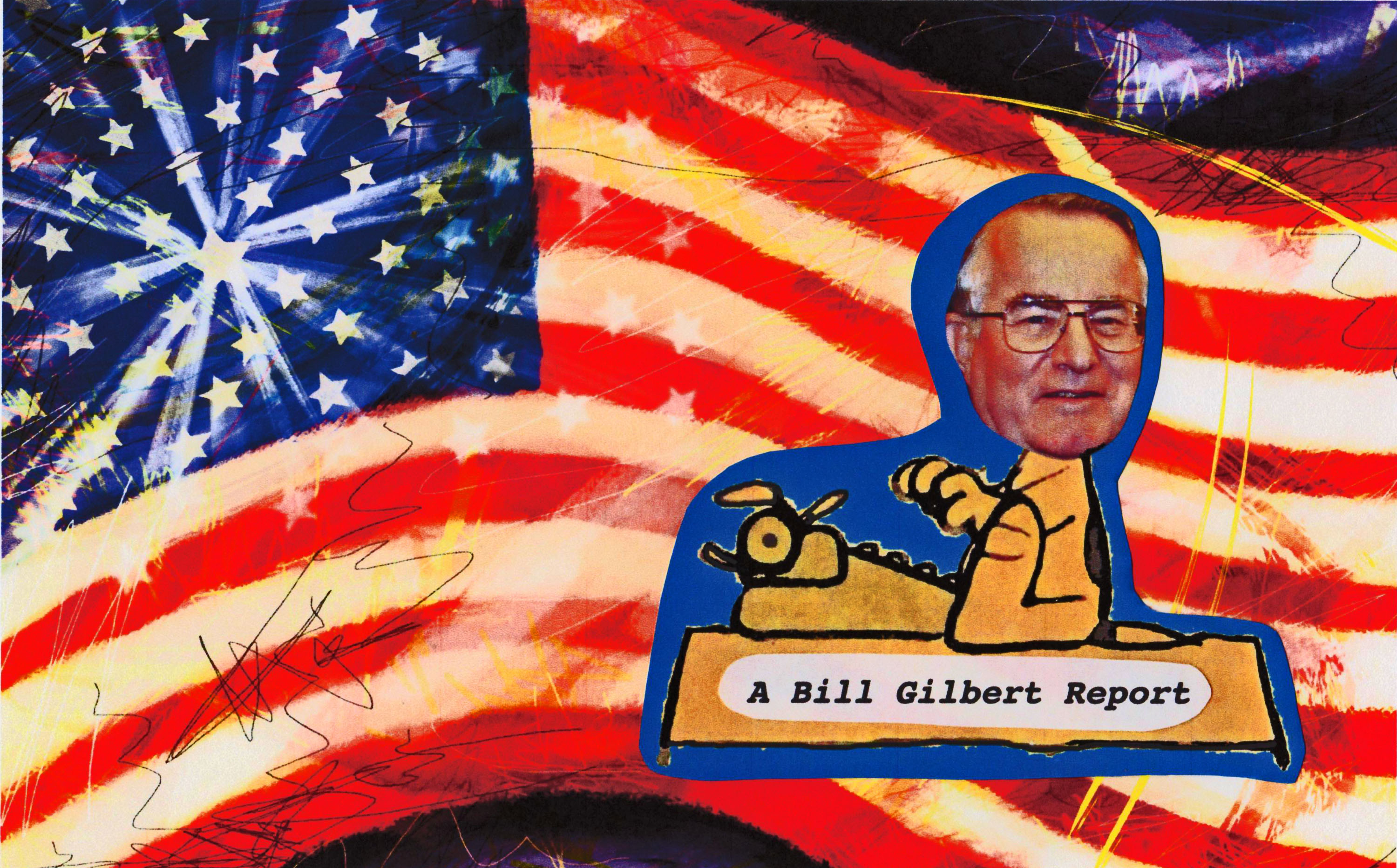
Baseball Analyst Bill Gilbert's First Look at the 2016 Season of the Houston Astros on Opening Day.

Baseball Analyst Bill Gilbert’s First Look at the 2016 Season of the Houston Astros on Opening Day.

What Should Be Expected from the Houston Astros in 2016?

By Bill Gilbert

After a surprisingly successful season in 2015, expectations for 2016 are for an even better year.  Sports Illustrated has picked the Astros to beat the Cubs in the World Series. One of the bookmaking sites in Las Vegas, Vegasinsider.com, has quoted the Astros odds of win- ning the World Series at 13-1, better than those for the Royals, (14-1), the Dodgers (15-1) and the Cardinals (15-1).

Are these expectations realistic?  Possibly not, but the success in 2015 was hardly a fluke.  The Astros outscored their opponents, with a run differential of 111, second only to the Toronto Blue Jays in the American League and they ranked among the major league leaders in home runs, stolen bases, pitching and defense. They had a few soft spots that cost them in the end but they took measures during the off-season to shore them up (bullpen, first base, excessive strikeouts) and, on paper, they are stronger than last year.

What are the primary reasons for optimism?  They should have full seasons from short- stop Carlos Correa and outfielders George Springer and Carlos Gomez.

They have the reigning Cy Young Award winner in Dallas Keuchel, the 2015 American League Rookie of the Year in Correa, the league leader in hits and stolen bases in Jose Altuve and a potential superstar in Springer. They have strong management that is capable of making moves to improve the team and, hopefully, an owner who will provide the cash to get it done.

However, there is a potential downside.  Baseball is an unpredictable game which is one reason so many people enjoy it through a long 162- game schedule. There is a history of teams that have made a strong move up one season, only to regress in the following year.  A prime example is the Cleveland Indians with an improvement from 60 wins in 1985 to 84 wins in 1986 only to fall back to 61 wins in 1987. They did it again with 78 wins in 2006, 96 in 2007, 81 in 2008 and 65 in 2009. Kansas City had a similar experience going from 62 wins in 2002 to 83 in 2003 before falling back to 58 in 2004.

The greatest vulnerability that the Astros have is a serious injury to a key player like Correa, Altuve, Springer or Keuchel. Since all four had excellent seasons in 2015, especially Correa and Keuchel, some drop-off in their production might be expected.  However, this could be offset by an improvement in performance by some of the other players.

Overall, a realistic expectation for the Astros is a record of 91-71, a five game improvement over last year. This should put them in contention for the Division championship with the Texas Rangers with a good chance of another wild card, if they fall short.

Bill Gilbert

billcgilbert@sbcglobal.net

4/3/16

____________________

A Second Invitation: If you missed Sunday’s column, “The Pecan Park Eagle Cartoon All Stars”, because it only reached publication by mid-afternoon, please give it a second look-see see chance. It was late because I got lost in the fun of putting it together. 🙂

Here’s the link:

The Pecan Park Eagle Cartoon All Stars

Thanks. And have a great first week of the new baseball season, starting with the Astros season opening game tonight against New York at Yankee Stadium.

Go Astros! – Our Eagle prediction is a fan-emotional and talent-based appraisal of 108 2016 Astros wins, 17 more than the more conservative, but unquestionably more logically presented prediction by Bill Gilbert of 91 and a squeeze into playoff contention. Our TPPE bid is for that “once every 500 years” season we have been waiting for in Houston since 1962. ~ Let the good times roll, Astros Nation. ~ Let the good times roll.

____________________

eagle-0rangeBill McCurdy

Publisher, Editor, Writer

The Pecan Park Eagle

Houston, Texas

https://bill37mccurdy.com/

The Pecan Park Eagle Cartoon All Stars

April 3, 2016

Good Afternoon, 2016 new season baseball fans!

It’s about time to start another play-on-life baseball season soap opera by spanking the baby with another breath-imparting first pitch. Hope everybody’s ready for the emotionally sudsy ride, especially in Houston, where the prospects of a shooting star and astro-filled orange sky come October have never been brighter. We could not possibly cartoon the best moments of what appears yet to come because of the physical laws governing time and space separation – and the slim, but all important difference between – what we think may happen from our present day perspective – and what actually happens in the immediate six months of tomorrows that lay out-of-sight before us on this date, April 3, 2016.

As a result, we shall simply content ourselves this morning with drawing conclusions from that other time zone that serves our electronic media so handily. That is, whatever happened in the past, starting with the event that happened an hour or 24 hours ago – and all the way back to Eden or the Big Bang – depending on one’s point of view about whenever everything really got started.

We shall use the past impressions of childhood here to present The Pecan Park Eagle Cartoon All Stars – by lineup and ancillary personnel. Please join us now in hearing range of this digital megaphone for the following introductions:

The Lineup

Rpadie "Meep-Meep" Roadrunner

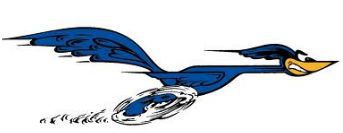
Roadie “Meep-Meep” Roadrunner, SS

  1.  Roadie “Meep-Meep” Roadrunner, SS ~ With incredible range in the middle infield, Roadie has a home-to-first best-time of 1.01 seconds. Anything he hits that cannot be caught on the fly is a potential home run, if not handled perfectly.

    Wile E. Coyote, LF

    Wile E. Coyote, LF

  2. Wile E. Coyote, LF ~ A genuine table setter in the lineup, Wile always brings his own knife and fork. Aided by the extra momentum he derives from batting directly behind Roadie Roadrunner, Wile’s hitting improved by .075 points last season. Wile credits the book he purchased from Acme Publishing, “How To Avoid Indigestion While Eating On The Run”, for his .325 mark last season. With his own good running times, Wile sometimes is able to bump Roadie into his uncatchable hyper-speed pace, and sometimes allowing the “burner-bird” to score from first base on a Coyote swinging bunt.

    Popeye "The Sailor" Mann, 1B

    Popeye “The Sailor” Mann, 1B

  3. Popeye “The Sailor” Mann, 1B ~ Acquired from San Diego in the off-season (Where else do you find sailors who can hit?), Popeye is the best slugging 1st baseman since Jeff Bagwell. In fact a lot of people think he has the same arms and stance as the former great Astros (hopefully) future Hall of Famer.

    Casey "At-The-Bat-Only" Dooditt, DH

    Casey “At-The-Bat-Only” Dooditt, DH

  4. Casey “At-The-Bat-Only” Dooditt, DH ~ Our Casey is not to be confused with his cousin back in Mudville, Casey “At-The-Bat-Only” Didunt. When our Casey’s Pieville club defeated Mudville, 4-2, in the famous game that sucked the joy from that earthy named place with a grand slam home run that stood up in the face of a failed Mudville rally in the ninth, it was our Dooditt slammer from Pieville that did it!

    Charley Brown, 3B Snoop Dogg. Mascot

    Charley Brown, 3B
    Snoop Dogg. Mascot

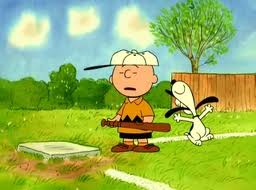
  5. Charlie Brown, 3B ~ Signed for mere peanuts, Charlie Brown has turned into a real spark plug at the hot corner – and, batting behind “Our Casey”, he is expected to become our second speedy lead off man in the lineup. In the featured photo, we see Charlie clowning around at his position with his pet and the club’s mascot, Snoopy “Snoop” Dogg.  We have no clue as to what he plans to do with that bat at 3rd base.

    Mighty Mouse, CF

    Mighty Mouse, CF

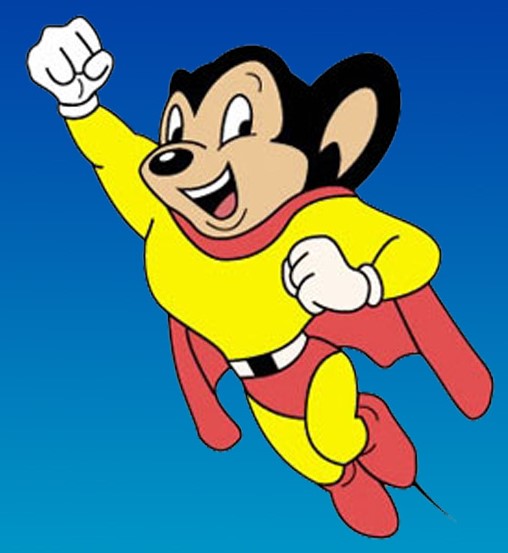
  6. Mighty Mouse, CF ~ Forget “The Catch” by Willie Mays in the 1954 World Series. When our Cartoon-Club’s defensive need arises, its “death to all other flying things” for the most redemptive airborne rodent in the history of biological anomalies. Anytime an enemy striker connects on a moon-bound baseball, our Cartoon-Club manager only has to grab the dugout phone and shout, “sending out a call to you-know-who … sending out a call to you-know-who” …. and guess what? … “Here he comes to save the day …. by tracking the ball down on the fly and making the sensational catch!”

    Donald Duck, 2B

    Donald Duck, 2B

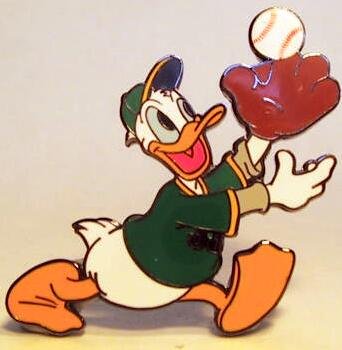
  7. Donald Duck, 2B ~ Who’s got the glove at his position? ~ One guess, guess who! ~ Who’s got the softest kind of sweet glove touch? ~ Who never tries to trip the runners much? ~ Who makes the pivot ~ on the double play? ~ Who gets the throw to first ~ on time each day? ~ Who only errors ~ in a game of bad luck? ~ No one ~ but Donald Duck!

    Lucy Van Pelt, RF

    Lucy Van Pelt, RF

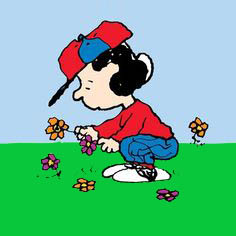
  8. Lucy Van Pelt, RF ~ Lucy is our most versatile starter. She covers right field well; also removes all flowers in her area that could divert a hard-hit grounder into becoming a tough to reach rolling extra base hit; and she also offers psychiatric help to bleacher fans between innings for five cents an opinion.

    Goofy Mann, C

    Goofy “Dog Face” Guy, C

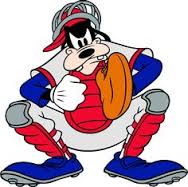
  9. Goofy “Dog Face” Guy, C ~ Is he a dog that dresses like a man? ~ Or is he a man with a face and ears like a dog? ~ We don’t know? ~ All we know is ~ he’s the best catcher we could find! ~ But isn’t that how it often is these days with catchers? ~ If you can find one that handles pitchers and throws out runners well – he can’t hit your grandmother’s age! ~ If you find one that can hit .280 or better ~ well ~ he throws out runners the way hoarders throw out trash! ~ Uh! ~ Right, Astros?

    Raymond "Bugs" Bunny Starting Pitcher

    Raymond “Bugs” Bunny
    Starting Pitcher

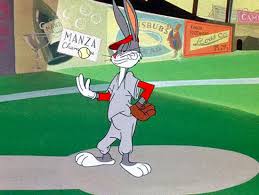
  10. Raymond “Bugs” Bunny, SP ~ Each batter he faces is a “carrot vs. stick” encounter, but he is very good at escaping the high pitch count holes he get into with his uncanny rabbit ball mind and experience with same. Every time he induces another high pop fly with his rising fast ball, Bugs always like to grab a carrot chomp from his glove-hidden orange treat bag and loudly ask the batter as he jogs hopelessly down the first base line in frustration ~ “Eh … (chomp. chomp. chomp) … What’s Up, Doc?”

    Casper "The Ghost" Friendly Reliever/Closer

    Casper Friendly
    Reliever/Closer

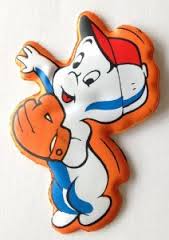
  11. Casper “The Ghost” Friendly, RP/Closer ~ On those occasions in which starter Bugs Bunny needs help, opponents don’t have a ghost of a chance against reliever/closer Casper Friendly. ~ Who wouldn’t have trouble hitting a full house of great pitches that came to the plate as barely visible balls thrown by a barely visible pitcher?

    Mickey Mouse Field Manager

    Mickey Mouse
    Field Manager

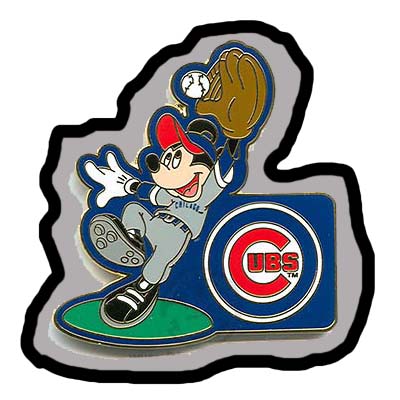
  12. Mickey Mouse, Manager ~ Who else are we going to get to manage the “Mickey Mouse” team that we just put on the field? We also got Mickey in a cash deal from the Chicago Cubs. Mickey is actually an automaton who has been programmed with all the traits for winning baseball that have been derived from Cubs managers since Frank Chance stepped down as their Peerless Leader after the 1912 season.

    Pinocchio Corleone General Manager

    Pinocchio Corleone
    General Manager

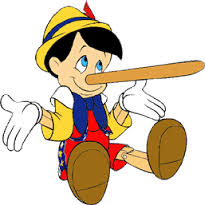
  13. Pinocchio Corleone, General Manager ~ Our GM promises to keep our hopeful lineup in the annual AL pennant hunt by continuing to make each of them yearly contract offers that they cannot refuse, and, at the same time, he is equally committed to remaining honest with the owner, management, the players, the media, and the fans in all matters of importance to the team’s success.

    Porky Pigg Radio Broadcast Play-By-Play

    Porky Pigg
    Radio Broadcast
    Play-By-Play

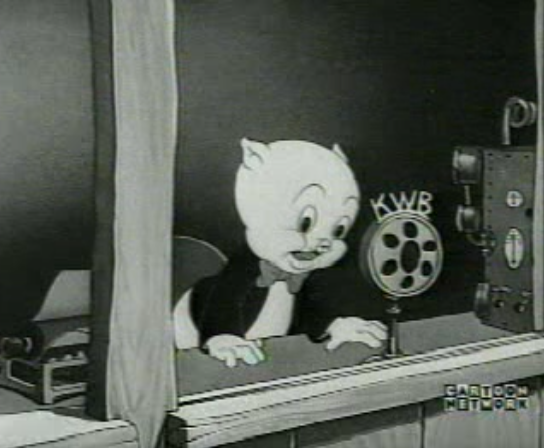
  14. Porky “The Ham” Pigg ~ Porky Pigg has been signed to do the TV/radio simulcast play-by-play for the Cartoon-Club.

    Daddy Warbucks Club Owner

    Daddy Warbucks
    Club Owner

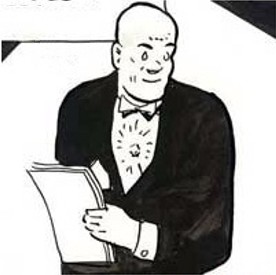
  15. Daddy Warbucks, Club Owner ~ A close friend and look-alike of Houston NFL Texans owner Bob McNair, Warbucks promises that his Cartoon Club baseball team will be in the hunt for the World Series every year, but he has requested that fans and media both need to stop asking him if he plans to sign a quarterback who can actually win games. Warbucks adds that quarterbacks  have no value to him whatsoever. – “Maybe that’s the baseball in me,” he added, “or maybe it also comes from hanging out with my buddy McNair since 2002! – Until he signed the QB from Denver, I was beginning to think that QBs had no importance to winning in football either.” mister-magoo
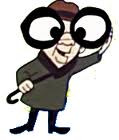
  16. Mr. Jim Backus Magoo ~ Umpire in Chief ~ Uh ~ who else gets this job? ~ It’s gotta be Big Jim Magoo!

pprky-thats-all____________________

eagle-0rangeBill McCurdy

Publisher, Editor, Writer

The Pecan Park Eagle

Houston, Texas

https://bill37mccurdy.com/


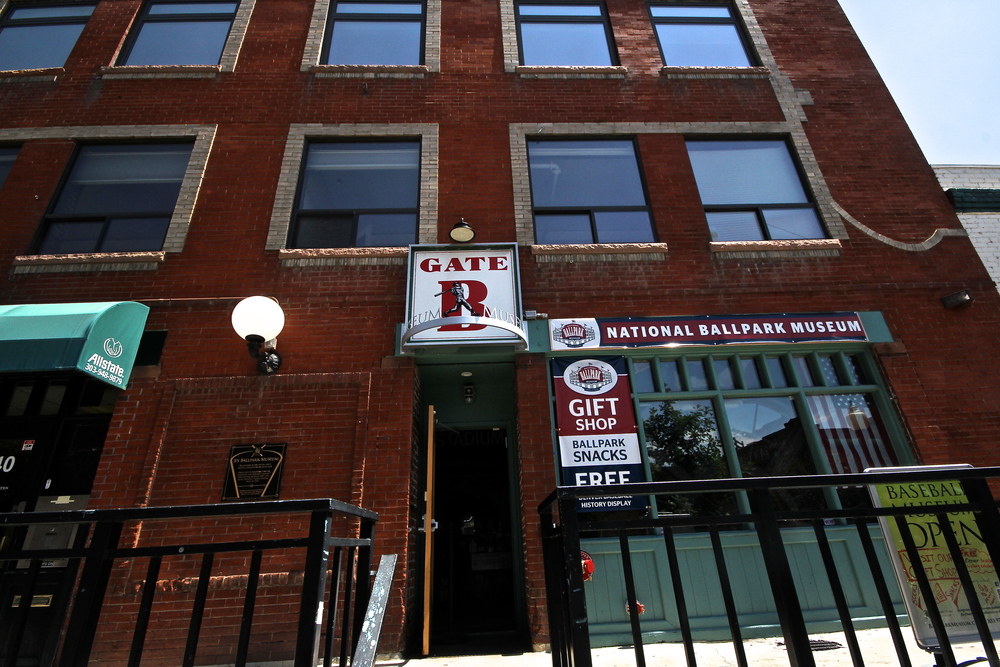
The National Ballpark Museum, Denver

April 2, 2016


The National Ballpark Museum Denver, Colorado Bruce Heberstein, Curator

The National Ballpark Museum
Denver, Colorado
Bruce Hellerstein, Curator

 Taking  a break from doing my 2015 tax return,  decided to chill out with one of my favorite programs to DVR, “Mysteries of the Museum with Don Wildman” on the Travel Network, Channel 283 on Direct TV, Thursday nights at 8:00 PM. This one featured a Polo Grounds aisle seat that now rests in the “National Ballpark Museum” in Denver, a half mile from Coors Field, as an artifact lead-in connection to an ancient baseball story they wanted to tell. Although the TV program’s presentation of this famous baseball story was a little incomplete and overly simplified in service to broadcast time,  it certainly hit home with me as an eye opener to the fact that this I’m sorry I never knew about this place earlier, but I’ve only been to Denver on plane travel stops.

The program used the old Polo Grounds seat as an inanimate witness (oxymoron noted) to the famous Merkle bonehead play in 1908 that ultimately tilted the pennant victory to the Cubs, thus, becoming the Cubs’ ostensible original “curse” rationale for explaining the fact that they have not won another World Series in the 117 years that have now passed since that awful-for-the-Giants day that set up Chicago for entering and winning their last World Series.

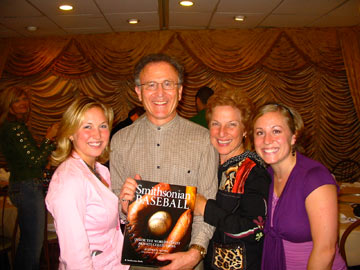
Curator Bruce Hellerstein And Friends The National Ballpark Museum Denver, Colorado

Curator Bruce Hellerstein
And Friends
The National Ballpark Museum
Denver, Colorado

Check out the site and, especially take the time to read the section tagged as “Learn More” under the “Come Visit Us” column. It’s worthwhile as an exposition of how one fan’s passion for the game, its history, and artifact collecting led him to something even bigger – a way to share that love with the world.

Home

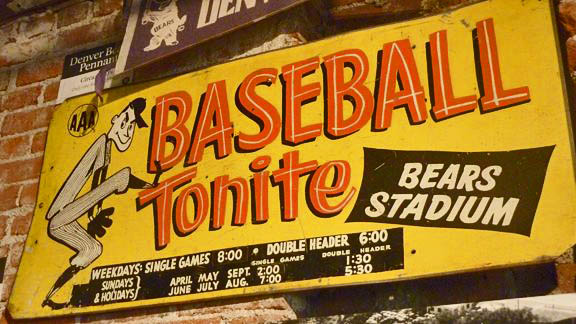
The Denver Bears Played At Bear Stadium ~ Right, Bill Gilbert?

The Denver Bears Played
At Bear Stadium
~ Right, Bill Gilbert?

Congratulations, curator Bruce Hellerstein. ~ It seems as though you’ve done the game of baseball and the beautiful City of Denver proud. Hope to get up there and see your place one of these days.

Regards, Bill McCurdy
The Pecan Park Eagle

____________________

eagle-0range


First HR in Professional League History

April 1, 2016
Ezra Sutton 1st Professional League Home Run May 8, 1871

Ezra Sutton
1st Professional League Home Run
May 8, 1871


Ezra Sutton, May 8, 1871

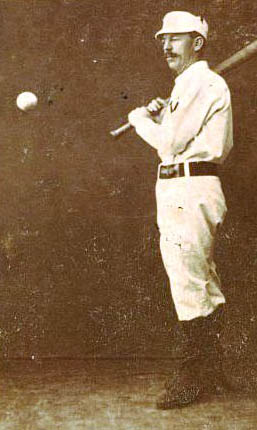
We will most likely will never know who hit the first home run in the history of baseball back in the 1840s Elysian Field days. Perhaps, though, it will be, or already is, available and possible to  reconstruct from some ancient scoring records in a descendant’s attic trunk, the identity of the first player on the famous 1869 Cincinnati Red Stockings’ undefeated independent club to have “run yard”, but we have no clue at the moment. All we know is that the identity of the first HR author is found in the record-keeping data of the first short-lived all-professional team league, the 1871-1875 National Association.

Ezra Sutton hit the first home run by a professional ballplayer playing in a professional baseball league on May 8, 1871. He did so as the third baseman for the Cleveland Forest Citys in a game they played against the Chicago White Stockings. It happened in the 4th inning against pitcher George Zettlein. With Cleveland’s Al Platt running at first, Sutton lined a shot over the head of left fielder Mart King. The force of the blow and the long roll of the ball made it also the most common kind of home in the 19th century, an “inside the park” job that was always a literal run home for the first home run credit, as well.

Later in the game, the sometimes cross-hand-hitting right-side hitter hit another home run, making him also the owner of both the first and second homers in professional league history – and also the first guy to hit more than one home run in a single league game.

Although Sutton’s career spanned from 1871-1875  in the NA through the start of the NL in 1876, and ending for him after 1888, our baseball basher of the first four-base hit only totaled 25 over the course of his 18-year career. And that was pretty good for those days.

As most you already know, home runs were rare in the early days because of soft baseballs, distant or non-existent fences, and a style of hitting that aimed to line the ball over the heads and in the gaps between outfielders. These were the true “hit ’em where they ain’t days” when the wisdom prevailed, until Babe Ruth and the lively ball changed the game forever, that the attempt to hit the ball out of any park back then was mostly dooming one’s chances for reaching base because of the much more probable long fly ball outs they produced.


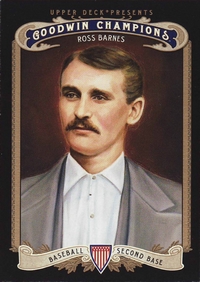
Ross Barnes 1st National League Home Run May 2, 1876

Ross Barnes
1st National League Home Run
May 2, 1876

Ross Barnes, May 2, 1876

Now, if you choose to be pedantic, and to insist upon the creation of the National League in 1876 as the true start of a sustainable professional baseball league, the first home run honor passes to Ross Barnes of the Chicago White Stockings (the “Sox” version that later indelibly came to be  known as the Cubs). Ross Barnes posted the first National League home run on May 2, 1876.

The Pecan Park Eagle elects to keep the honors for first professional league home run attached to Ezra Sutton. Ross Barnes’ honor for being the first in the NL should be good enough, but like Sutton before him, neither was a home run hitter. It was an era in which there were no seasonal home run hitters that really lived up to our expectations of what that term came to mean after the coming of Ruth and the lively ball through the present time in the early 21st century.

Barnes “hit” only six home runs over the course of his 9-year (1871-79, 1881) professional baseball career.

____________________

eagle-0rangeBill McCurdy

Publisher, Editor, Writer

The Pecan Park Eagle

Houston, Texas

https://bill37mccurdy.com/

Houston Brewery To Host Final 4 “Floor” Show

March 31, 2016
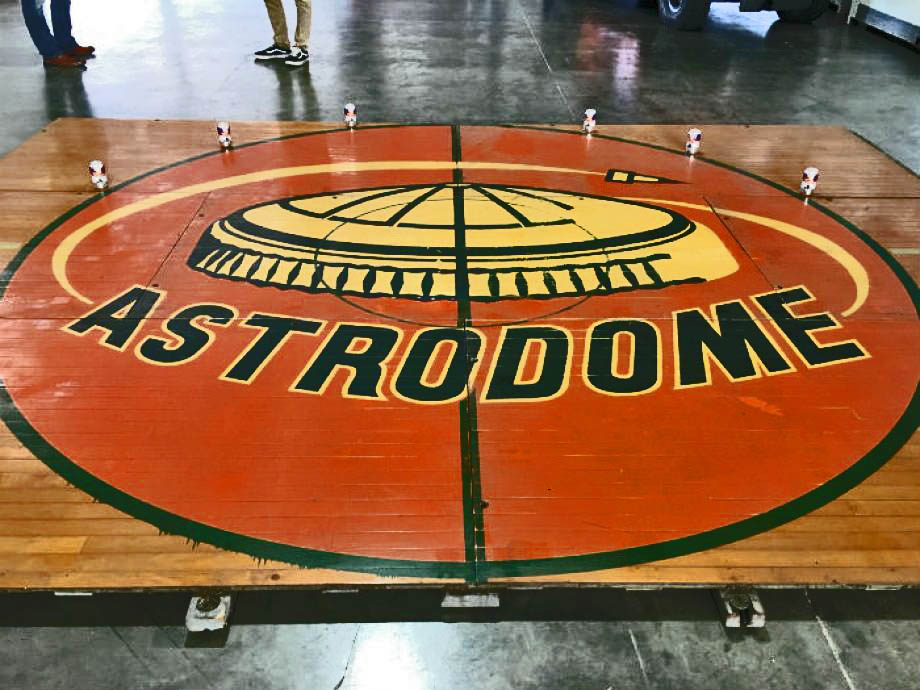
A Section of the 1971 Floor Houston Astrodome Courtesy of the Houston Chronicle

A Section of the 1971 Playing Floor
NCAA Final Four, Houston Astrodome
Courtesy of the Houston Chronicle


“An east side craft brewery, 8th Wonder Brewery, is showing off a 45-year-old piece of Astrodome history from the first time the Final Four was held in Houston. To celebrate the Final Four in Houston this weekend at NRG Stadium, officials from the University of Houston reached out to the brewery to see if they would like to show off a portion of the court used for the 1971 games. The brewery’s owners jumped at the chance to showcase a piece of Dome history, March 30, 2016.” – Houston Chronicle Sports, Chron.Com, March 30, 2016

Check out the Chron.Com story:

http://www.chron.com/sports/college/marchmadness/article/A-piece-of-Astrodome-history-on-display-at-7217393.php#photo-9724347

You may want to check this one out this coming weekend, folks. Coinciding with the return of the NCAA Basketball “Final Four” tournament to Houston, the little privately-owned suds factory is placing a portion of the Astrodome floor used for that same halcyon conclusion to “March Madness” again in our town – with that first time being 1971, a full 45 years ago.

“45” is a number that keeps cropping up in our local sports association with those old and new grounds for amphitheater venues (now moving clockwise) at the Old Spanish Trail, Fannin, Loop 610 South and Kirby Drive large quadrant locale, The 2016 Final Floor takes place this coming Saturday and Monday at the now converted NRG Stadium rodeo “wild bull ride” set into a new first class, thousands-of-butts-in-the-seats basketball championship game arena.

Saturday, April 2, 2016, Schedule

Oklahoma plays Villanova in the 5:00 PM opener.

Syracuse plays North Carolina in the 7:49 PM second game.

Monday, April 4, 2016, Schedule

Saturday’s two winners play each other in the 8:18 PM championship game at NRG.

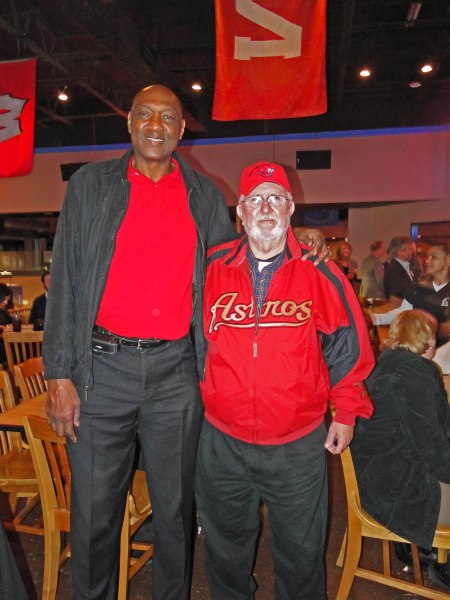
ELVIN HAYES AND UH-EX BILL McCURDY IN RECENT TIMES. ON JANUARY 20, 1968, “THE BIG E” LED UH TO A 71-69 WIN OVER # 1 UCLA BEFORE 50,000 FANS AT THE ASTRODOME THAT CHANGED THE BIG STAGE COURSE OF COLLEGE BASKETBALL FOREVER.

ELVIN HAYES AND UH-EX BILL McCURDY IN RECENT TIMES. ON JANUARY 20, 1968, “THE BIG E” LED UH TO A 71-69 WIN OVER # 1 UCLA BEFORE 50,000 FANS AT THE ASTRODOME IN THE GAME OF THE CENTURY THAT CHANGED THE BIG STAGE COURSE OF COLLEGE BASKETBALL FOREVER.

Tickets

You had better either have them already, know somebody, or be prepared to surrender your scalp to see the game live. The best HD flat screen views will be available, either through your favorite sports bar or home cable/satellite connection to TBS, the cable folks who are handling television for the whole playing event. – I am one of those who each year prefers more and more to watch sports of any kind from my own home man cave. My HD screen is only three feet from my eyes, to the left of my computer writing station, the concession stands and rest rooms are never crowded, and I have yet to stand up in the middle of all the action because I had been forced to allow someone to pass in front of me to get a beer or take a …. short walk to the rest rooms.

A Broader Wonderment About Game Watching

My new preference for the home viewing choice as best for me is certainly affected by the mobility problems that have descended upon me over time, but that’s not the whole thing. My UH Cougar football season tickets locate me in a place that protects me from crowding and the need for continuous aisle standing, but that is not the case for me at Minute Maid Park, where I’ve never bought anything but limited game package seating, and then, not often.

Baseball is just different with me. On a level of its own. I don’t go to baseball games to be shot at by tee shirt cannons – or to have the rest of my hearing blasted away by contemporary rockers who will never be the kind of “two-three the count, nobody on; he hit a high fly into the stands; rounded third – headed for home – he was the brown-eyed handsome man” that Chuck Berry used to be!

Beyond the generational gap that now exists for me – but only on some banal levels – is the fact that baseball, the eternal game, is not a creature that depends upon constant attention-span revival to be the best game ever. It just is. Baseball is an everyday melodrama, with every game playing out its own plot, its own variable levels of suspense and action, intrigue and combat, miserable failure and joyous redemption – or abject sorrow. Those are the qualities that make baseball more like a devotion to  reading great fictional literature – and never really being disappointed in what happens because you have become the kind of fan who has grown in learning what to watch for. Nobody has the ability to bring you to that awareness by tee shirt cannon blasts and loud music bangs upon your ears, brains, and sensitivities.

Great literature is to baseball what The Roadrunner and Wyle E. Coyote are to The Harlem Globetrotters and The Washington Generals. And the same high station exists for baseball in relation to football as a game of children’s war toy soldier figures and robotic toy tanks.

If baseball loses the current generation to short attention spans, it probably also means the end of all great American works of incredible fiction.

Oh, Yeah

Enjoy the Final Four. And your trip to the brewery. If those are your things.

___________________

Was Last Out Strike 3 in WS Perfecto a Swing?

March 30, 2016
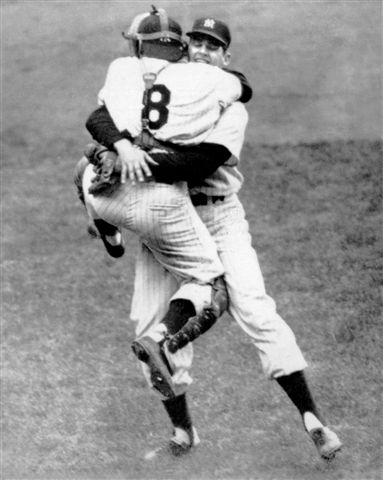
Only Perfect Game in World Series History Don Larsen, New York Yankees October 8, 1956

Only Perfect Game in World Series History
Don Larsen, New York Yankees
October 8, 1956

In the column I wrote about Yogi Berra this week, I described him, among other things, as “the guy who celebrated Don Larsen’s 1956 World Series perfect game by leaping into his arms after Dale Mitchell took a dubious called strike three final out.”

That comment prompted a tempered, but clear rebuttal by e-mail from SABR friend Mark Wernick about the outcome of that pitch. Mark implicitly removes the “dubious” aspect  that has long been associated the question ” was the pitch really in the strike zone” and he places it – where he and other think it belongs: It was a called strike three, alright,  but it should have been ruled a swinging – no question, batter Mitchell’s out – strike three by examining the whole pitch and swing sequence with the kind of cutting board stop action technology available to us today.

When you look at the tape today with our current modern technology for instant replay review of hard to call plays, you can see – clear as day – it was a swinging strike three that simply wasn’t added to umpire Pinelli’s quick call, just prior to Mitchell’s wrists breaking into a swing at the pitch as the ball passes.

Even Mitchell’s quick recoil of the bat to beg for a “swing check on ball four” could not sell any reconsideration by umpire Pinelli. To my eyes, it really looked like a hittable ball that Mitchell missed.

Whether it was in the strike zone as a hittable ball isn’t even the question. He swung at it. And he missed. And just maybe – that was why Dale Mitchell didn’t make a bigger stink about the strike call than he did. Mitchell knew, even if he never said so, that he didn’t deserve a break. He swung. And he missed. On strike three.

Here’s how Mark Wernick expressed it briefly: “One thing about the Mitchell 3rd strike in the perfect game,  which seems to be pervasively missed by so many,  including no less a luminary than George Will:  it was a swinging strike,  not a called strike. Mitchell tried to hold up,  but his bat was well out past the plate when Pinelli rang him up. Freeze this footage at the 2:59 mark,  and you will see clearly that this is a swinging strike 3.”

http://m.mlb.com/…/bb-moments-56-ws-gm-5-don-larsens…

“For all we know,  the  ‘Pinelli missed the call’  wave began before freeze-frame YouTube videos were available to all.  This YouTube phenomenon also helped verify Yogi Berra’s claim that Jackie Robinson was really out,  and that Babe Ruth really pointed towards center field,  while both Root and Hartnett had their backs to him.” ~ Mark Wernick.

Larsen365375CORBIS

The Iconic Visual Moment The World Series Perfect Game Five New York 3 – Brooklyn 0 October 8, 1956

 As one who watched that strikeout in Houston on a grainy 17″ television set between classes as a UH freshman, it never occurred to me to ask for a second look at the pitch. We didn’t have that little technological game-changer at our disposal back on October 8, 1956.

Even if we had been so blessed/cursed, it still may have been impossible to click it off in stop-action mode and told much on the kinds of sets we watched in those days. George Wills says the ball was “a foot and a half” outside. Really? Maybe George Will had his buddy Michael J. Fox fly a 70″ flat screen and game-officials quality replay equipment back from the future to wherever he watched the game at age 15. None of us could really see where the ball was pitched that accurately back in the day, but that didn’t stop many of us from creating and perpetuating the mind-teaser that maybe – just maybe – that third strike “call” was really the umpire’s contribution to the perfect game.

My worst regret? About fifteen years ago, I had about an hour of private time in St. Louis with Don Larsen in the hotel lobby where we were both attending the same banquet that night. All we talked about was the World Series perfect game. – And I never asked him anything on this specific vital detail beyond “was that last pitch really a strike?” Larsen answered with a smile. “It was a strike, alright, and it’s always going to stay a strike.”

It was the strike that immortalized the memory of Don Larsen and the visage of Yogi Berra running to the mound and jumping into Don Larsen’s arms, but no real memory of Dale Mitchell stood out quite so boldly, other than that feint call to doubt that the pitch may have missed the strike zone. I, for one, had no TV memory of the Mitchell swing. I was too busy jumping on a couch in over-the-top celebration with Yogi and Larsen.

I did ask Don Larsen that early 21st century day we talked in St. Louis one question that he, at least, told me was new to him. That news surprised me. It could easily have been the first question any of us might have asked him back anytime after October 8, 1956.

“What was the last thought you had before you released that two-strike pitch to Mitchell in the top of the ninth with two outs?” I asked.

Don Larsen stared at me with those steely blue eyes for a brief moment. Then he spoke in three deliberately quiet words.

“Here. Goes. Nothing.” End of answer. No need to ask more. Larsen’s voice was steady. His face was as frozen as Gary Cooper’s,  just prior to the big shoot-out in “High Noon,” as his piercing blue eyes again met mine as he spoke those three distinct words. His fierce look seem to caution me to ask no more.

“Here. Goes. Nothing.”

It was nothing, alright. The kind of big nothing that will be the big something we shall always use as our legacy memory of Don Larsen – along with the dance that he and Berra pulled off just after the last out.

____________________

eagle-0rangeBill McCurdy
Publisher, Editor, Writer

The Pecan Park Eagle

Houston, Texas

https://bill37mccurdy.com/


The Untold Larry Miggins “Garagiola Story”

March 29, 2016
Larry Miggins One of Baseball's Great Storytellers

Larry Miggins
One of Baseball’s Great Storytellers


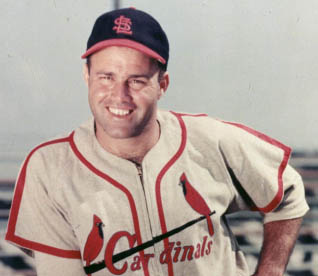
As a kid, I remember being impressed by a 1948 movie called “The Boy with Green Hair”, starring Pat O’Brien and Dean Stockwell. Had this previously unpublished story by my dear friend and former Houston Buff, Larry Miggins, gone public only three years after the aforementioned movie, it may have served as the basis for a sequel-script to the aforementioned film.

The Miggins/Garagiola story happened in 1951, during the St. Louis Cardinals’ only season under manager Marty Marion, and during the Cardinals’ spring training camp in St. Petersburg, Florida.

Garagiola and Miggins hit it off with each other in camp, but they would soon part ways. Joe Garagiola would spend 1951 with the Cards as their back-up catcher, but it would be his last dance for his hometown team. He would be dealt to Pittsburgh prior to 1952 and be retired from baseball as a player by the end of the 1954 season. Larry Miggins would be sent down to Houston for the 1951 season and the chance to help power hitter Jerry Witte lead the Buffs to the 1951 Texas League title. Miggins would spend some brief time with the Cards in 1952, but he too would be done as a player, by mid-season of 1954.

It was an earlier time. Maybe Joe Garagiola didn't want anyone forming mental images of sitting on the john.

It was an earlier time. Maybe Joe Garagiola didn’t want anyone forming mental images of him sitting on the john.


Larry says he tried to get Garagiola to include this true story in his book of several years ago about the funny side of baseball, but Joe declined.

“I can’t do it, Larry,” Garagiola explained. “it’s too delicate a matter to go to print.”


Oh, really? It’s one of the funniest baseball culture stories you may ever hear, and one that Larry Miggins was more than pleased to know that I wanted to do this column about. Yeah, it’s a little on the immodest, personal hygiene side of things, but it is no slight upon the strength, character, courage, good sense of humor and incredible goodness of the man who lived it. Larry was more than happy to give me his full permission for this first publication of a story that needed to be preserved for “posterity”.

____________________

The Previously Unpublished Garagiola Story By Larry Miggins

Here’s the story, as told to me today by Larry Miggins:

“I was hopeful of making the big club roster in 1951 – and ready to try just about anything that might help give me that last extra edge needed that might make a difference. By everything, I’m not talking about drugs, but about playing technique, training, or diet. Anything like that, I wanted to hear more about.

“One day this salesman/farmer came to camp to talk with the Cardinals’ famous trainer, Doc Weaver. He was promoting natural strength ingredients that came from products he says he developed from his own crops. A lot of them included the ground roots of the plants themselves, whatever they may have been. He must have sold Weaver because the guy was given the chance to promote and sell his ideas to us individually as players. I ended up being one of the fellows who agreed to try them. And, mind you, all of this was happening as we went into mid-March, a little late for anything to make much of a difference, one way or the other, but I figured, what have I got to lose?

“To appreciate what happened next, you have to get the picture of what that Cardinal clubhouse was like in 1951. We had four toilets – total – and they were all lined up against one wall, side-by-side. We’re talking no stalls here – just the toilets themselves – with no privacy. If you needed to talk with somebody – and that need matched up with both of you having the same big job more basic need at the same time – here was the time and space to get it all done.

“One day, only a few days after I started eating those plant and root supplements, I was sitting on the far right john – and Garagiola was sitting on the facility to my immediate left. We had enjoyed a good discussion about hitting for about ten minutes, but we were both ready to finish about the same time. – I stood up to wipe myself, but I was suddenly taken aback by what I saw on the paper. – It was totally covered with green marks!

” ‘What the heck’, I exclaimed loud as sunrise, ‘Look at this, Joe!’ I shouted. ‘Look what this stuff I’ve been taking has done to me!’ Of course, I had to show him the tissue.

“Joe looked over in amazement. – Then he even peered into my pot and just started laughing his bald head off! When I reached for the handle, he even grabbed my arm and screamed for joy, ‘Oh, no, Larry! – Don’t flush it. – Just finish getting dressed, as will I!’

“Garagiola then proceeded to gather the rest of the Cardinals around us for their own gander at my doings. Then he raised both hands to the sky to make his point. Even I had slipped up on what day it really was! – I had totally lost myself to thinking only of spring training until this moment.

” ‘It’s St. Patrick’s Day, right guys?’ Joe shouted through his laughter.  ‘And just look at who almost forgot it was St. Patrick’s Day – until he sat down!’

“I took the kidding in good spirit because I knew Joe Garagiola well enough to know that he meant no harm by it. He wasn’t that kind of guy. Almost needless to say, I stopped using the farm supplements. And that kind of greenery went away.”

____________________

Thank you, Larry Miggins, for being a very dear good friend, and one of baseball’s great treasures!

And thank you too, Joe Garagiola. Your greatest contributions to baseball only began once you stopped playing and started talking and writing about baseball and life. Say hello to Yogi for us fans too. OK? We fans already miss both of you!

____________________

eagle-0rangeBill McCurdy
Publisher, Editor, Writer

The Pecan Park Eagle

Houston, Texas

https://bill37mccurdy.com/