Archive for the ‘Uncategorized’ Category

Dierker and Lucas: Ironies of Baseball Journalism

May 7, 2016
he game looks pretty much the same from up here, but just wait until different people start broadcasting and writing about it. Then watch what happens.

The game looks pretty much the same from up here, but just wait until different people start broadcasting and writing about it. Then watch what happens.


If you read yesterday’s column, “Watch Your Quotations, Sports Writers”, then you already know that it generated from the writing peers and reader reactions to Brian T. Smith’s use of literal quotes from Carlos Gomez for a Houston Chronicle article on Gomez’s poor performance at the plate in Houston since his trade from Milwaukee late last season. At issue was Smith’s use of literal quotes from an “English-as-a-second-language” speaking player – and whether or not that was the best or fairest way to convey the subject’s thoughts. The article was not intended as a politically correct spanking of Smith. We don’t pretend to know his motives here. It was more of a “what were you thinking” question about any writer’s judgment who would go that route in literal print mode with a second language-challenged subject in today’s world.

Greg Lucas, Rick B., and Larry Dierker all had substantive things to say as written comments at the first article site, and these may be viewed in full at:

Watch Your Quotations, Sports Writers

We also felt that the Lucas and Dierker comments were ready for re-presentation here without any unrequested editorial work as historical columns on the issues of how the print and broadcast media handle literal speech differently – and how literal speech is valued differentially by non-fictional and fictional genres. So, here they are, our co-guest “columnists” for The Pecan Park Eagle – and with no disparagement of the good stuff that Rick B. wrote either. These two featured pieces simply were already in hand in column format and focus without any need for further editorial splicing or re-focusing.  The Pecan Park Eagle welcomes future consciously intended pieces on baseball or its culture from all three of you – anytime any of you have something else you wish to share with the rest of our little baseball universe.

The Eagle cannot thank any of you enough for your ongoing quality contributions. Without the involvement of you three guys, and all the other contributors who must go nameless here tonight due to time and space, The Pecan Park Eagle would have gone elsewhere long ago. Our own creative energy feeds on the heart and soul of all your minds and spirits – especially when it comes to all the little nuance things that happen in our baseball culture to make our game the most fascinating drama in all organized sports.

Thank you too, Greg and Larry, for being our “surprise” guest columnists this late Friday evening, May 6, 2016.

___________________

 

Greg Lucas Legendary FOX Broadcaster Texas Baseball Hall of Fame Inductee

Greg Lucas
Legendary FOX Broadcaster and Baseball Author
Texas Baseball Hall of Fame Inductee

The Double Standard for Literal Expression in Print vs. Broadcast Media

By Greg Lucas

(Originally submitted to The Pecan Park Eagle as a Comment Upon the Above Referenced Link.)

While I don’t advocate doing what Smith did the irony is that if the same player does a TV or radio interview the fans will hear exactly what he says as he says it. There is a double standard that says newspapers should “clean things up.” I think this is correct, not just to make the interviewee sound better, but more importantly to allow the public to know exactly what he meant if not exactly the words he used.

When I was working it often was a problem getting some players whose primary language was Spanish or Japanese to do an interview without an interpreter. The players were capable of communicating in English, but not well schooled in speaking it and did not want to appear to struggle. I totally understood that. As they got better they would attempt to speak in English in the post game group interviews in front of their lockers. Most could not be used on TV or radio, but it was not hard to understand what was trying to be communicated by writers and they would “clean it up” for the newspaper stories. Broken English never made it to print.

The other thing that must be remembered is that no language translates exactly word for word into another. A Spanish sentence if broken down word for word using a dictionary, for example, may not make sense to an English speaker. The reverse is true with English to another language. So many idioms require some real thinking to get the meaning.

In respect to the players who are making themselves available to the media what they are saying (interpretively) is more important than the exact words or grammatical structure they may use. That “realism” is not needed and only makes the reporter appear not to have respect for his subject. Get the meaning right…not necessarily the exact sentence structure.

____________________

Larry Dierker Houston Astros Retired # 49 Legendary Astros Player and Manager Historian and Broadcaster Writer and Author Texas Baseball Hall of Fame Inductee

Larry Dierker
Houston Astros Retired # 49
Legendary Astros Player and Manager
Historian and Broadcaster
Writer and Author
Texas Baseball Hall of Fame Inductee

The Irony Behind the Differential Treatment of Literal Speech in Non-Fiction and Fiction

By Larry Dierker

(Originally submitted to The Pecan Park Eagle as a Comment Upon the Above Referenced Link.)

Greg Lucas mentions irony, a foundational aspect of good writing. Well how ironic is this?

In the early, pre-radio days, the reporters didn’t go down to the locker room for quotes. They embellished, or lambasted (Censurable stupidity on the part of player Merkle…”) as they saw fit. Unless you were at the game (usually fewer than 20,000 people), how could you criticize the writer?

With the emergence of the electronic media, so many fans already knew the score before the morning paper was delivered, the print reporters had to go down to get “quotes” to add too what folks already knew from the broadcast media. Although there were few Latin for Asian players, there were plenty who did not speak the King’s English. There were Irish and Italian accents, southern accents. And there was the common butchery of the language of the unschooled like Shoeless Joe Jackson. The writers didn’t try to capture these dialects. That was for novelists.

So are today’s journalists attempting to be more creative? Far from it. Instead, they are practicing irony by accident. With the litigious nature of modern American culture, writers never begin an interview without hitting the “play” button on their hand-held recorders. That way, there is no chance they will misquote the athlete, thus protecting themselves and their employers from legal action. A Boston accent and a Charleston accent still look the same in print. But grammatical errors, especially the egregious ones such as Gomez’ remarks, are embarrassing.

The irony is that if you were writing a baseball novel and trying for realistic dialogue, you would struggle mightily to get both the grammatical errors and the nuances of dialect right. But when you tape an interview and put in in the paper exactly as it is spoken, it seems anything but artful. It seems cruel.

I don’t mind the literal language. If the player is embarrassed, perhaps he will try to improve his command of English. If not, so be it. As Greg mentioned, you’re going to hear the way the players speak on radio and TV. I don’t think Colby Rasmus is going to work on his accent to sound more educated. I wouldn’t want him to. I would, however, like to be a good enough writer to capture it in print.

____________________

eagle-0rangeBill McCurdy

Publisher, Editor, Writer

The Pecan Park Eagle

Houston, Texas

https://bill37mccurdy.com/


Watch Your Quotations, Sports Writers

May 6, 2016
Carlos Gomez Center Fielder 2016 Houston Astros

Carlos Gomez
Center Fielder
2016 Houston Astros

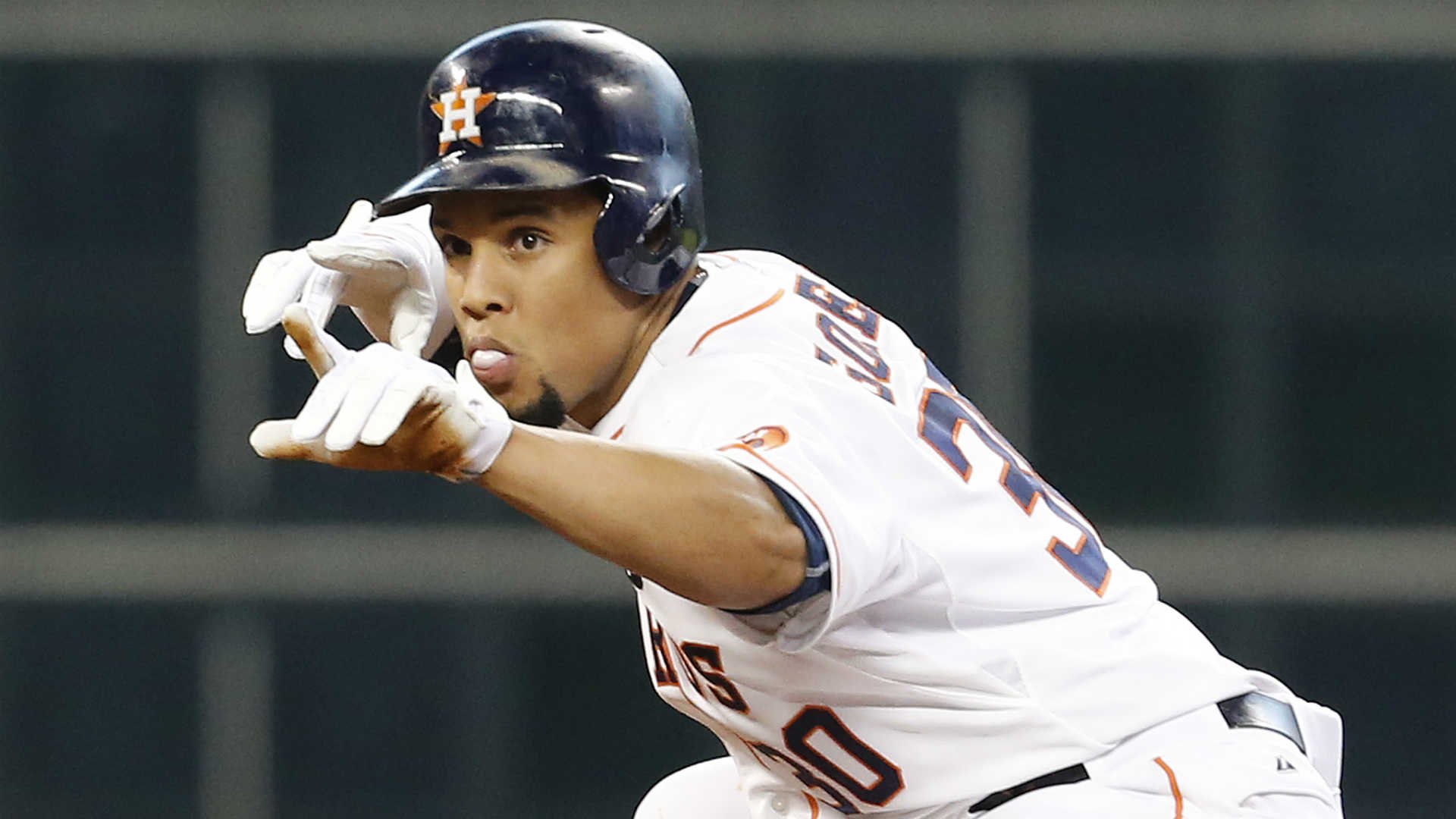
In a front page article on today’s May 5, 2016 Sports section of the Houston Article, writer Brian T. Smith wrote a column entitled “Hey, Go-Go, bring the sexy back when you can put bat on ball.” Continuing from that first page to page C5, the reference to “Go-Go” is to Astros center fielder Carlos Gomez and the problems he’s been having with the bat – problems that don’t quite earn him a base for emotional flamboyant behavior that isn’t earned by his slumping level of production since joining the Astros late last season.

Fair subject, but Smith chose to quote Gomez, who isn’t particularly skillful or grammatically correct in his use of English as a second language, but nevertheless, a lot more capable than any of us English-only people are in expressing any thoughts in Spanish beyond “Por favor” and “Si, senor” or “Caliente”. As a result, for example, Gomez is quoted by Brian T. Smith as saying the following: “For the last year and this year, I not really do much for this team. The fans be angry. They be disappointed.”

Craig Calcaterra of NBC Sports jumped all over Smith for using Gomez’s literal problem with English thought expression. Calcaterra wrote that “it’s  hard to escape the conclusion that the quote’s imperfect English fits satisfyingly into a column designed to rip Gomez and that it’s going to play right into stereotyping a certain sort of reader who has just HAD it with those allegedly lazy, entitled Latino players likes to engage in.”

http://mlb.nbcsports.com/2016/05/05/sure-carlos-gomez-is-the-problem-in-houston/

Jose de Jesus Ortiz, now of the St. Louis Post-Dispatch, but former colleague of Brian T. Smith at the Houston Chronicle then checked in with this comment: “Latino ballplayers work hard to learn English & deal with the media. No need to disrespect them and then taunt them.”

Watch Where You Step

What a mess. Again. For the innocent multiple offender writer, and we have no idea about the beliefs, record, or intentionality of Brian K. Smith in this matter, he may be like the guy who owns a Great Dane, but still refuses to watch where he steps whenever he goes out in the back yard. If so, he will not have a long wait to repeat one of these “wish I had not gone there” moments when he’s already late for his working trip to Minute Maid Park.

The Old Rules Have Changed

The old literal journalism lesson of using only the literal words of the subject doesn’t work if the interviewee is using English with limited grammatical understanding.  So, what could Smith have done, had he seen the need to avoid misunderstanding?

He could have used parenthetical inclusions to show the correct grammatical usage ….

“I can’t get no (any) satisfaction….” – but that could easily have been viewed in the Smith/Gomez case by sensitive critics (and ethnic offense ‘gotcha’ hawks) as condescending.

Where Brian T. Smith wrote: “For the last year and this year, I not really do much for this team. The fans be angry. They be disappointed,” I would have paraphrased those thoughts in this way: “Gomez is aware that he has not done much offensively to help the club since joining the Astros late in the 2015 season. He also gets it that the fans are both angry and disappointed in his work with the bat.”

OK? Clear enough? The paraphrase confirms that Gomez intelligently understands his Houston situation – and with no inference of blame upon him for everything that’s gone wrong with the Astros this year – so far.

It’s a quick and slippery slope from naivete to stupidity to literally quote anyone using a second language today. Worse, or just as bad as the sometimes innocent adherence to the journalism 101 rule about literal quotation, are the ethnic offense ‘gotcha’ hawks who quickly go to print to condemn the offender as an unforgivable racist – and without investigating or confirming all the facts behind each individual case of alleged transgression.

Chill, people. And as Jon Batiste, the music director on the CBS Colbert Late Show, likes to call his band: “Stay Human”.

____________________

eagle-0rangeBill McCurdy

Publisher, Editor, Writer

The Pecan Park Eagle

Houston, Texas

https://bill37mccurdy.com/


A Curt Walker Retrospective: His 2 Triples Inning

May 5, 2016
Curt Walker, OF MLB (1919-1930) Career BA .304

Curt Walker, OF
MLB (1919-1930)
Career BA .304

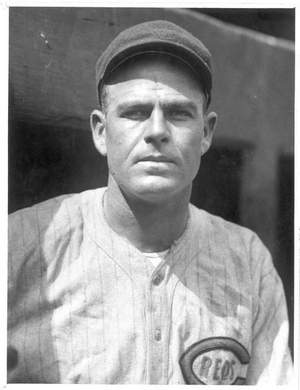
Right fielder Curt Walker of the Cincinnati Reds, and an old friend of my father’s back in our shared birthplace home town of Beeville, Texas had a pretty nice career over 12 seasons (1919-1930) in the big leagues. Walker broke into professional baseball in 1919 at the age of 22 after playing college ball at Southwestern University in Georgetown, Texas. Curt’s first minor league rookie stop was at Augusta, Georgia of the Class C Sally League in 1919, but he moved up to the Class B Houston Buffs that same year. To plug in an old expression that was pretty popular in Beeville baseball circles back in the day, Curt hardly “hit a lick” at either of his first two stops, batting an OK .278 at Augusta in 194 at bats, but then dipping to .215 at Houston in only 135 at bats. – And yet, near the 1919 season’s end, Curt Walker made it all the way up to the roster of the New York Yankees, getting there in time to make his MLB debut in an 0 for 1 appearance on September 17, 1919.

I never had enough awareness in time to ask Curt how he made the leap to the Yankees in his first year. Walker died in Beeville on December 9, 1955, during the fall term of my senior year at St. Thomas High school. We had been Houstonians since my 5th birthday and, in 1955, Curt was still only a figure in my father’s life at the time of his death – and my serious baseball history lamp did not really come on until some time in my twenties. Whenever I happened to see Curt Walker on trips with Dad to the downtown American Cafe in Beeville, I saw him at the time more as the town undertaker than I did the former Reds star. It was to become a kid’s perceptual lock on one of my dad’s peers that I would long regret, once I later awoke to my missed opportunity. And I quickly learned that even Dad could not answer all of my Curt Walker questions – like, how does a guy hit .215 for the Buffs in his rookie minor league year and still make it all the way up for one at bat with the New York Yankees near season’s end?

Curt Walker was an outstanding big league outfielder. He had speed, a good contact hitter bat, a strong arm, and lifetime stats that compared favorably with those of fellow Texan outfielder Ross Youngs of the New York Giants, who presence in the Big Apple and early death helped propel him into the Hall of Fame.

This quickie career stat performance comparison is what propelled me back in 2000 to start hounding the Texas Baseball Hall of Fame over the absence of Curt Walker from their membership rolls – in addition to the fact that Youngs was also in the National HOF. I didn’t really think that either Youngs or Walker were deserving of Cooperstown, but I felt strongly that Curt deserved the state Hall honor every inch as much as Ross:

Two Texans Plate trips Hits Runs RBI 2B 3B HR SB BA OBP SA
Ross Youngs 5,336 1,491 812 592 236 93 42 153 .322 .399 .441
Curt Walker 5,575 1,475 718 688 235 117 64 96 .304 .374 .440

Both Youngs (5’8″, 162 lbs.) and Walker (5’9″, 170 lbs.) were little guys, but so were a lot of other players in the 1920s. Both men were BL/TR types. It wasn’t simply my opinion rolling here. By any logical deduction, Curt Walker deserved the state Hall of Fame honor as much as Ross Youngs, who, as stated previously, was already a member.

Curt Walker’s best full season batting average was .337. Curt did that in 1923 as a member of the Philadelphia Phillies. Ross Youngs hit over .350 twice in full seasons as a NY Giant, batting .351 in 1920 – and .356 in 1924.

I kept hounding the TBHOF in behalf of Curt Walker until they finally inducted him the following year. In the absence of any surviving close kin, or my father, I also journeyed to Forth Worth for the TBHOF induction banquet in November 2001 and accepted this honor in Curt Walker’s behalf. – Things move strangely in baseball. In the wake of the Walker induction, I was invited by the TBHOF Board to serve on their selection committee. Then, in 2004, I was asked to serve as their Board Chair and Executive Director. I served in those capacities for three years during the TBHOF’s brief move to Houston in 2004.

On July 22, 1926, in a home game played with the Boston Braves, the Reds defeated the visitors, 13-3, by exploding for 11 runs in the bottom the second inning. In that single inning. the Reds collected four triples, two three-baggers by Curt Walker alone. That rare accomplishment placed Curt on a very short list of only 11 big league players to this date who have done the same.

Can you think of a safer record? The odds against ever getting three times at bat are virtually off the table. – That being said, what are the odds against anyone ever getting three times at bat in a single inning and then – using that opportunity to hit three triples in the same inning to move ahead of the eleven guys tied at two triples each?

Here’s the box score for Curt Walker’s entry into the rare club:

Baseball Almanac Box Scores

Cincinnati Reds 13 – Boston Braves 3.

Boston Braves ab   r   h rbi
Smith cf 5 0 0 0
Bancroft ss 2 0 0 0
  Gautreau 2b 3 0 2 0
Welsh rf 5 1 3 0
Burrus 1b 4 0 1 0
Brown lf 2 1 1 0
  Wilson lf 2 1 0 0
High 2b,3b 4 0 1 1
Taylor Z. c 1 0 1 0
  Siemer c 3 0 1 0
Taylor E. 3b,ss 3 0 0 1
Goldsmith p 1 0 0 0
  Genewich p 2 0 1 0
  Cooney ph 1 0 0 0
Totals 38 3 11 2
Cincinnati Reds ab   r   h rbi
Christensen lf 5 2 1 2
  Allen lf 1 0 0 0
Walker rf 4 1 3 2
Roush cf 5 2 2 1
Hargrave c 5 2 4 1
Pipp 1b 4 0 2 2
  Hudgens 1b 1 0 0 0
Critz 2b 5 1 2 1
  Carter 2b 0 0 0 0
Pinelli 3b 3 2 2 0
Emmer ss 4 1 1 1
Donohue p 5 2 2 1
Totals 42 13 19 11
Boston 0 1 0 0 0 0 0 2 0 3 11 2
Cincinnati 1 11 1 0 0 0 0 0 x 13 19 3
  Boston Braves IP H R ER BB SO
Goldsmith  L(3-4) 1.1 8 6 6 0 1
  Genewich 6.2 11 7 4 1 1
Totals
8.0
19
13
10
1
2
  Cincinnati Reds IP H R ER BB SO
Donohue  W(15-8) 9.0 11 3 2 0 1
Totals
9.0
11
3
2
0
1

E–High 2 (21), Walker (8), Emmer 2 (30).  DP–Cincinnati 1. Emmer-Hudgens.  2B–Boston Welsh 2 (13), Cincinnati Hargrave (13).  3B–Boston Gautreau (4), Cincinnati Christensen (4); Walker 2 (15); Hargrave (6); Pipp (9).  SH–E. Taylor (5); Pinelli (7); Emmer (17).  Team LOB–9.  HBP–Pinelli (3).  Team–9.  U–Barry McCormick, Bob Hart, Cy Rigler.  T–1:35.  A–2,300.

Baseball Almanac Box Score | Printer Friendly Box Scores

____________________

Compulsion Wasn’t Invented in the 21st Century

In spite of his sportsmanship in everyday life and baseball, Curt Walker was no conservationist. Long before I was born, Dad invited Curt to come hunt deer with him at our ranch near Beeville in South Texas. The two hunters split up to hunt in different areas and were separated from each other for most of the morning. I don’t think Dad even saw a deer that day, but he kept hearing Curt’s rifle exploding in the distant forest of ancient oaks that separated them.

“Curt must be a worse shot than I ever imagined,” Dad says he thought silently.

That impression got corrected when the two hunters made contact again near the camp where they had left their trucks.

Curt’s truck contained five bucks – and we’re talking deer here, not dollars. The Walker slaughter haul was way beyond the limit.

“My God,” Dad exclaimed to Curt. “Do you realize the fine and other legal trouble you may have shot yourself into if the game warden stops you on the way back to town?”

“Yeah, I know,” Curt smiled, as he busied himself covering the animals with some kind of tarp. “I just couldn’t keep myself from shooting.”

“What were you thinking, Curt?” Dad then asked.

And Curt stopped what he was doing and turned to face my Dad with his answer:

I was thinking, Bill – you know what? – My granddaddy didn’t save me any buffalo!”

Friends and home town heroes aren’t always perfect. Dad and Curt remained friends for life, even played some town ball for Beeville together, but Curt never was asked back to go hunting at our ranch again.

____________________

eagle-0rangeBill McCurdy

Publisher, Editor, Writer

The Pecan Park Eagle

Houston, Texas

https://bill37mccurdy.com/


Are the Pitchers Figuring Out Carlos Correa?

May 4, 2016

Carlos Correa, SS ~ 2015-16 Houston Astros

2015 AL Rookie of the Year


Carlos Correa could not have come into this 2016 MLB season with more expectations resting upon him. The AL Rookie of the Year was only around for 99 games from June 9th forward in 2015, but, in spite of a two-month late start he played well enough to win the honor he deservedly earned. When a player hits the big time running like lightning that’s just been released from the bottle, people simply don’t forget you, nor do they fail to put all kinds of expectations upon you for ongoing production on the greatness level. And Carlos was every luminous blip – that fabled luminous flying force in Houston’s 2015 return to promise season. With his bat, his arm, his glove, his athleticism, and his baseball maturity, this then 20-year old man showed up in Houston last summer looking like the greatest dad gum ballplayer to ever come out of Puerto Rico since the until recently incomparable Roberto Clemente. – And that widespread Houston wish may still prove true over time.

But that doesn’t stop some of us from wondering early – about his early 2016 down slide.

So what’s happened this year? Is it simply too early to speculate on his less than stellar downturn at the plate? Is Carlos caught up in the same team malaise that now finds the AL Cy Young winner, Dallas Keuchel, now struggling – and even beatable at home? Are we now in the adjustment phase of Correa’s early career, at a time in which the pitching book has caught up with what Carlos got away with last year? Is it time for Correa and his mentors to counter-adjust to whatever the pitchers are doing differently – and more effectively in 2016? – Is it just me – or does he seem to be striking out more often on falling-off-the-table-sliders out of the zone? Would it help to give him a rest away from the #3 hole for now – or would that simply hurt his confidence to move him down, or even up in the order – maybe shifting places with Springer in the #2 hole for a while?

Here are the major comparative offensive stats for Carlos Correa from 2015 and the limited early season of 2016:

Carlos Correa 1 G PA AB R H 2B 3B HR RBI BB SO BA
2015 99 432 387 52 108 22 1 22 68 40 78 .279
2016 26 111 93 12 24 6 0 3 10 17 27 .258


Carlos Correa2 OBP SLG OPS OPS+ TB GDP HBP SH SF IBB SB/CS
2015 .345 .512 .857 133 198 10 1 0 4 2 14/4
2016 .378 .419 .798 127 39 3 1 0 0 1 3/2

Since any of us can be Astros Manager Hinch on paper, what do you think? Is it too early to tell; is it simply a mountain birthing up from limited data in the 2016 mole hill to even infer that something needs to be done – or does something really need to happen to help Carlos Correa adjust to the way pitchers are handling him these days? If I were a pitcher with a wicked falling away slider, I know I’d be throwing that one to Correa and any other Astros batter I knew who could not stay away from swinging at a two-strike pitch.

____________________

eagle-0rangeBill McCurdy

Publisher, Editor, Writer

The Pecan Park Eagle

Houston, Texas

https://bill37mccurdy.com/

Billy Martin: Baseball’s Flawed Genius

May 3, 2016
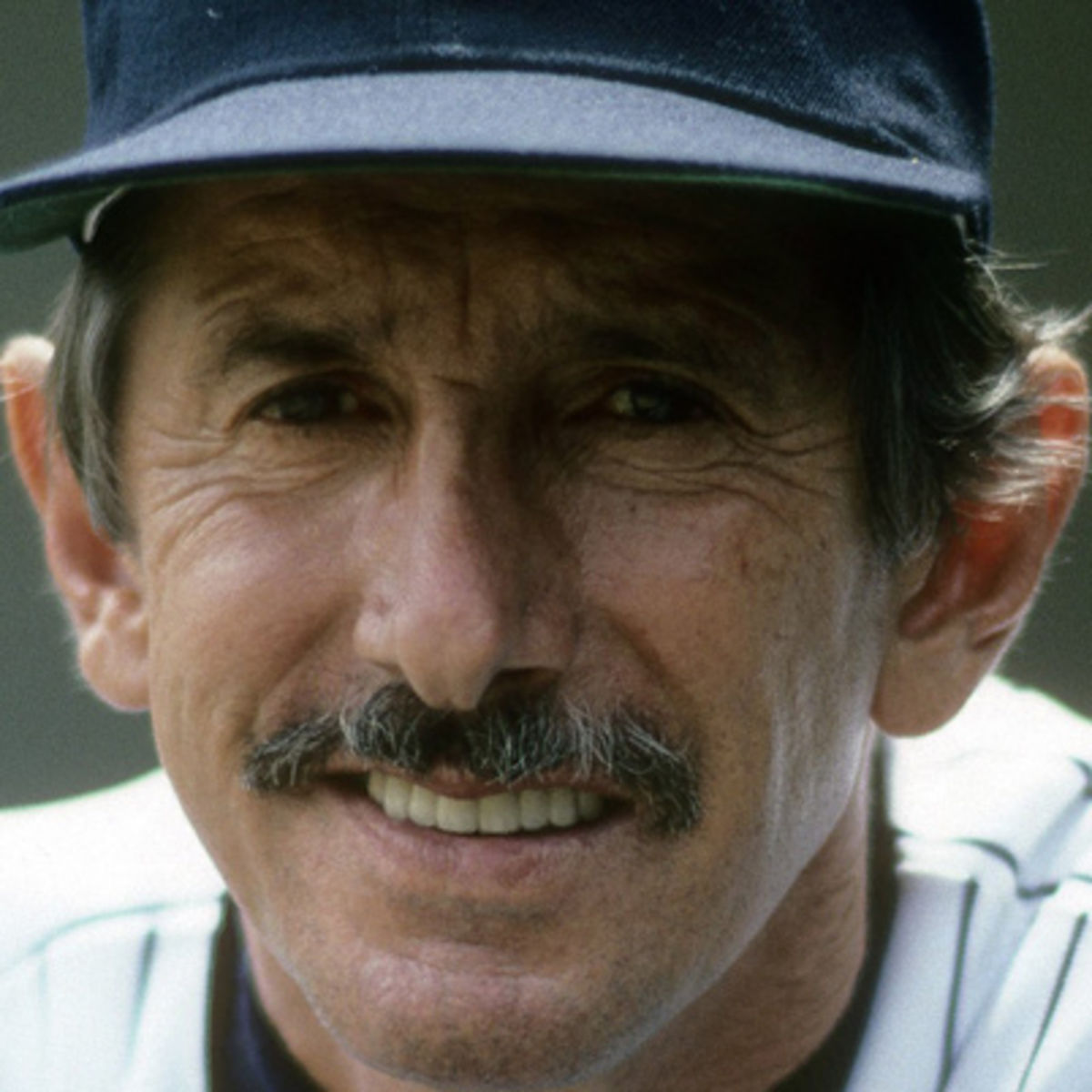
Billy Martin often claimed he could see everything that was going on from a single glance at the field. On April 10, 1976, no one argued the point with him strongly, if at all.

Billy Martin often claimed he could see everything that was going on from a single glance at the field. On April 10, 1976, no one argued the point with him strongly, if at all.


Billy Martin: Baseball’s Flawed Genius

That’s the title that New York Times award-winning writer Bill Pennington gave to his 2015 biography of the late Billy Martin, a beautifully written and researched work based on the author’s experience as a New York Yankees beat writer from the start of Martin’s high profile play as a several times manager for owner George Steinbrenner in 1976. Donald Trump may have become television-famous for shouting “You’re fired”, but the late Yankee owner sort off used that statement daily on somebody handy back in the day – just to clear his throat from all that overnight mucous glop.

The Martin Game Persona

Billy Martin was much more than the sand-kicking manager who sucker-punched people who made him mad, although he claims he never started fights, he simply finished them. By Billy’s definition, that meant he was capable of restraining himself until the other person either made him mad or also appeared ready to throw a punch. That’s when the kid from West Oakland struck first and fast, often ending the rising rancor with a one or two punch knockout of the sometimes anonymous, but always in the end, unconscious foe. – Other people, including umpires, knew about this trait in Martin and they knew that no one was beyond Billy’s reach, once he got close enough – and mad enough. Billy also baited umpires from the dugouts, disagreeing with close calls, and yelling the idea back to them, “You owe me”, not because he thought it would change a ruling this time, but always hopefully – that it might win the next tough call for Billy’s team.

It Only Took Two Yankee Games for Billy’s Style to Shine

Billy Martin also knew the baseball rules as well or better than anyone, as George Brett would come to later learn angrily in the famous “pine tar incident”. In fact, it only took Martin two games deep into his first full-season 1976 debut as the Yankees manager to win over his boss, his players, and the Yankee fans to his way of bully-whipping the umpires against all odds with the rule book, turning a heartbreaking New York road loss into a second chance – and a recaptured Yankee comeback win.

Here’s the deal: On April 10, 1976 at Milwaukee, and after losing on Opening Day, 5-0, to the 2 hit/3 RBI game of Hank Aaron, the Yankees were down again to the Brewers, this time, by 6-0 through six innings. All of the home team’s runs were off Yankee starter Ed Figueroa in 5.1 innings of work, but the Yankees weren’t dead. They scored 4 in the 7th and another 5 in the 9th, taking the script for a 9-6 comeback win into Milwaukee’s last chance in the bottom of the 9th.

As most of you know, things often aren’t easy in baseball.

Although the Yankees still led with two outs, the Brewers already had scored one run in the 9th and now had the bases loaded with two outs – and Yankee reliever Dave Pagan pitching to Brewer third baseman Don Money. – A 9-7 Yankee lead was in grave danger with the tying run now standing on 2nd base.

Wouldn’t you just know it?

Money lifted a high fly to left. The ball had power and arch, as brief silence was quickly slain by the roar of home town jubilation. – It was a Grand Slam! – The Milwaukee Brewers had done the improbable, realizing every sandlot kid’s favorite dream of winning a game with a bases-loaded homer in the bottom of the 9th. – What was left to doubt? – The Brewers were going to win this game over the Yankees by 11-9, and Don Money could go to sleep this night reliving his heroic act in every dream that floated his way.

Oh, really? – Then why is Billy Martin running across the diamond from the third base dugout in rapid rage mode? And why is Yankee pitcher Pagan running from the mound to left field? Does he fear for his life from his own manager?

Pagan was safe from Billy. Martin was after first base umpire Jim McKean.

“You called timeout before the pitch,” Martin screamed above the roar of the home crowd. “He said it over and over, stridently moving quickly into McKean’s face, with hands on hips, stridently repeating his claim in violent bursts – and without even adding its intended meaning. The umpire is supposed to know these things: If an umpire raises his hands and gives the time out sign, no play that results from a pitch thrown after that signal is given, even if the pitcher innocently throws it with no advance knowledge of the time out call, counts for anything. – A home run can not result from a non-pitch thrown during a timeout on the field.

From his dugout, Billy Martin had seen Yankee first baseman Chris Chambliss speaking over his shoulder to umpire McKean – and he had seen McKean give the time out signal in response – with both occurring prior to the time that Yankee pitcher Pagan delivered the pitch that Money had blasted out of the park.

Umpire McKean did not verbally respond to Martin’s incessant and voice-above-the-crowd shouts, but he did finally huddle with his fellow umpires as the public address announcer apprised the crowd that something had arisen that needed to be settled before everyone went home.

Apparently, Billy Martin was the only one in the stadium that had seen the time out signal that umpire McKean knew he had given – and then, after the HR was contested, he had honestly reported it to his fellow arbiters as occurring prior to the “home run” pitch. The umpiring crew had no other choice. The Money grand slam was disallowed. In spite of the loud crowd rage over this reversal of fortune, Money would need to bat again with two outs, the bases loaded, and the Yankees still leading, 9-7.

In slight irony, Martin brought in reliever Ken Brett, the brother of George Brett to finish pitching to Money. Brett got Money on a fly ball out to end the game as a save for himself in the Yankees’ 9-7 win over the Brewers. Sparky Lyle (1-0) got the win; Tom Murphy (0-1) took the loss.

And Billy Martin captured the hearts of all those “New York state of mind” Yankee fans.

And, yes, The Pecan Park Eagle definitely recommends this Martin biography.

____________________

eagle-0rangeBill McCurdy

Publisher, Editor, Writer

The Pecan Park Eagle

Houston, Texas

https://bill37mccurdy.com/


Bill Gilbert: Astros Falter in April

May 2, 2016

Bill Gilbert 03_edited-1

Bill Gilbert is a long time member of SABR, a superb researcher of baseball history, and one of the premier masterful experts on the application of sabermetrics to player evaluation. Before his retirement move from the Houston area to the Hill Country, where he remains an active member in Austin of the Rogers Hornsby Chapter of SABR, Bill also was the founder several years ago of the still flourishing Larry Dierker Chapter in Houston.  The Pecan Park Eagle is most humbly pleased to host Bill Gilbert’s monthly reports during the Astros baseball season – and anything else he cares to write for us on the game of baseball. – Editor, The Pecan Park Eagle.

____________________

Astros Falter in April

By Bill Gilbert

Ongoing Contributing Writer for The Pecan Park Eagle

billcgilbert@sbcglobal.net

After a surprisingly strong showing in 2015, expectations for the Astros were even higher in 2016. It didn’t happen in April as the team finished the month with a record of 7-17. The only major league team with a worse record was the Atlanta Braves at 5-18. The Astros did not win 2 games in a row all month

What went wrong in April after spring training went so well? Almost everything.   They have just not been playing good baseball. Both the starting pitching and the relief pitching, strong points in 2015, have been way below expectations, ranking last in the American League in ERA at 4.97. Opposing batters have hit .284 against the Astro staff and have scored 5.12 runs per game. The Astro batters have hit only .235 and scored 3.5 runs per game, not nearly enough to offset the poor pitching performance.

The numbers don’t tell the whole story. The defense has been shaky at times and they have made numerous base-running mistakes. Situational hitting has been poor and they have not been hitting well with men on base. The last two games of the month in Oakland illustrate some of the problems. The Astros carried a 4-2 lead after 7 innings in the first game, started by an A’s pitcher making his first major league appearance. However, the Astros bullpen gave up 2 runs in the eighth inning and 3 more in the ninth inning, including a walk-off home run to lose 7-4. In the next game, also started by an A’s pitcher just brought up from the minors, the Astros trailed 2-0 in the ninth inning when they loaded the bases with one out. Evan Gattis then grounded into a double play to end the game.

Individually, there were few bright spots in April. Jose Altuve is hitting the ball harder than ever and had six home runs while batting .305 with an on-base average of .400. He also leads the major leagues in stolen bases with 9. Colby Rasmus also has a .400 on-base average along with 7 home runs and 19 runs batted in. George Springer (.278 average, 4 home runs) and Carlos Correa (.271 and 3) have hit reasonably well but not at the superstar level that was expected. Rookie first baseman, Tyler White, started strong but tailed off later in the month as his batting average dropped to .250. None of the remaining players had a batting average higher than .239 or an on-base average over .290. Center fielder, Carlos Gomez (.213 batting average), catcher, Jason Castro (.140) and third baseman, Luis Valbuena (.183) have been especially disappointing. None of the three has hit a home run

The Astros lead the major leagues in striking out with 238, including seven players having 20 or more. At this pace, they will break the major league record of 1535, set by the forgettable 2013 Astros. And they are doing it without Chris Carter. On a more positive note, the Astros have 29 home runs which ties them for seventh place in the major leagues and they have 18 stolen bases which ties them for third. However, they have been caught stealing 10 times, resulting in an unacceptable 64% success rate.

Now to the pitching. The five man starting rotation has ERA’s of 3.97, 4.41, 4.97, 5.56 and 6.65 and has combined for only 8 quality starts (six innings and no more than 3 earned runs). Ace, Dallas Keuchel has only 2 good games in his 5 starts. Unfortunately, only one start has been in a home game where he has been unbeatable since 2014. Rookie, Chris Devenski replaced winless, Scott Feldman, in the starting rotation in the final game of the month and should remain there.

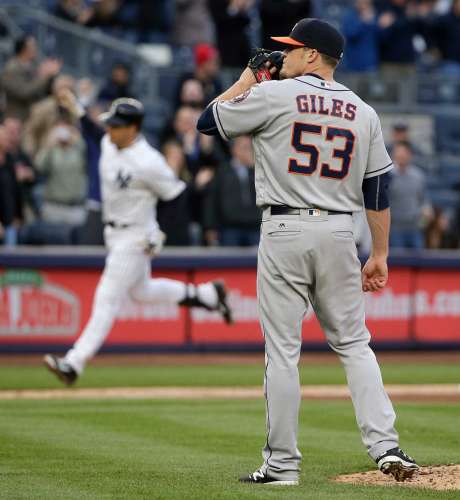
Luke Gregerson has performed well as the closer converting all four of his save opportunities with an ERA of 2.00. However, Ken Giles, obtained in a trade with Philadelphia has been a major disappointment, allowing 4 home runs in 10 innings with an ERA of 9.00. The bullpen ERA was 4.75.

Can the Astros turn it around and get into contention? It’s certainly possible but they need to get started quickly. The May schedule appears less daunting with 16 of the 29 games at home. If things don’t improve in the next two weeks, expect some changes to be made. If it is any consolation, the Texas Rangers began the 2015 season at 7-15 and rallied to win the AL West Division.

Bill Gilbert

5/1/2016

____________________

eagle-0rangeBill McCurdy

Publisher, Editor, Writer

The Pecan Park Eagle

Houston, Texas

https://bill37mccurdy.com/

May Day, Astros! May Day!

May 2, 2016
"I could stop - the Astros losing, With options of my choosing, If I only had a brain. ..."

“I could stop – the Astros losing,
With options – of my choosing,
If I – only had a brain. …”


Turning the Corner?

Question: What does it say when a ten-games-under-.500 team’s lead-off hitter in 2016 MLB cranks a home run to start a game for the fourth time in the new 25-game old season, and then gets only one more team hit for the entire nine innings, and still wins the dad-gum game?

Answers: The lead-off homer guy probably was Jose Altuve of the Astros; the Astros still aren’t hitting, but they got some dad-gum good pitching today; this was one of those days in which the law of averages governing good and bad luck distributions showed up and started working on all the hope deficit payments that are due the Houston club; “damifino”; and lastly – we’ll still have to wait and see.

Wait and See What? As fans, some of us even now must ask ….

  1. Is Altuve (.306) really the only true .300 hitter we have on the club?
  2. Are Altuve and Rasmus (7 HR each) our only regular long ball hopes?
  3. Are Correa (.264) and Springer (.267) simply good hitters that MLB pitchers have quickly figured out?
  4. Is White (.238) the failed big league hitter and mediocre fielder he appears to be?
  5. Are Gonzalez (.213) and Valbuena (.183) our only options at 3rd base?
  6. Why is Carlos Gomez (.213, 0 HR) still our center fielder?
  7. Is Castro (.151) confirming that the Astros can only carry a good glove/no bat catcher?
  8. Is Evan Gattis (.249 career) what’s so beautiful about the DH position?
  9. Is something wrong with Dallas Keuchel (2-3, 4.41) that only home games can cure?
  10. Will young Ken Giles (0-2, 9.00 era, 0 saves) ever recover from the shock and personal weight he apparently feels from the expectations generated by his trade to Houston?
  11. How does Jeff Luhnow feel now about the 5 for 2 players Giles trade with Philly?
  12. Who gets pumped up from the farm, if losing often is still the club pattern by June 1st?
  13. Does the club have a Plan B option for a 2016 roster cake whose yeast refuses to rise?
  14. Or does the club hope that cheaper parking will help fans return to watching loser baseball?

____________________

Upon Further Review

Ask The Pecan Park Eagle again about our hopes for the 2016 Astros on a more positive-minded day. Just don’t do it anytime this month, unless the Astros go 12-2 in the 14 games they have on their schedule between now and May 15th. At the end of this day, May 1st, the Astros record is now 8-17. – “12-2” is what it will take for the club to be a game over .500 at 20-19 by the end of the day, May 15th. – Playing .500 ball by June 1st and being no more than 5 games back of the division leader on that date is our personal base for the resurrection of hope in 2016.

____________________

eagle-0rangeBill McCurdy

Publisher, Editor, Writer

The Pecan Park Eagle

Houston, Texas

https://bill37mccurdy.com/

MISSIONS BAIT and BEAT HOOKS, 7-3

May 1, 2016

out-of-the-park-baseball-15-57494

Thank you, Kyle Burns of the Houston Babies! I finally followed through on your suggestion today, ordering Out-Of-The-Park digital Baseball. Wow! After 65 years with APBA dice and computer baseball, I’ve finally found a game that appears to put the old pioneer in the shade. “OOTP” looks like APBA-On-HGH by initial comparison. Some of us may never purse all the extension opportunities to practice our brains as Commissioner Manfred, Owner Jim Crane, or GM Jeff Luhnow, but a whole lot of us will enjoy playing Manager Larry Dierker with the 1998 Astros.

All I’ve got tonight is my first run with a game at the most basic level – an exhibition game between the Corpus Christi Hooks and the visiting San Antonio Missions at Whataburger Field. My column, however, is more about the possibilities here. The game itself played out most realistically.

MISSIONS BAIT & BEAT HOOKS, 7-3

Teams   1 2 3 4 5 6 7 8 9 R H E
MISSIONS 0 1 4 1 0 1 0 0 0 7 10 0
HOOKS 0 1 1 0 0 0 0 1 0 3 10 1


SAN ANTONIO MISSIONS 7 – CORPUS CHRISTI HOOKS 3.

WINNING PITCHER: LUIS DIAZ, SA (1-0)

LOSING PITCHER: FRED MARTES, CC (0-1)

TIME OF GAME: 2:56

ATTENDANCE, 2,459

Corpus Christi TX (AP) 04/30/16: The San Antonio Missions stormed into Whataburger Field this Saturday afternoon and baited the Corpus Christi Hooks into tossing up a 7-3 loss to the visitors from the Alamo City as if it were broccoli on a kid’s plate. The game marked our first roll of the digital dice on the (new-to-me) OOTP Baseball Game. My head is still swimming from the four tutorials I just watched about all this game can do to help us further lose our souls in the game of baseball, as we also remain protected from the windfall of big money coming in – or big money going out.

For about $40 bucks, one can play this game as simply, or as complexly, as you wish it to be. With access to all major leagues, teams, and players from 1871 through 2015, and all minor league farm prospects from the 20th century forward, we “users” finally have the chance to function as the Baseball Commissioner, MLB club owners, general managers, managers, or players – without the actual risk-reward roll of real-life decision-making, public self-aggrandizement, or fan-fomenting character assassinations.

As GMs, we even have a chance to try and low-ball land key free agents or wait for them to tell us to stick it. – And we may even draft the hottest high school prospect in the nation – and then watch him decide late to pass on our signing offer and just shuffle off to college.

For all I know at this point – and my head is still swimming from the information overload on the four tutorials I watched – a user here could even go to India to search and sign the fastest arm in the Greater Calcutta Cricket League and end up hiring actor John Hamm as a club scout for finding more country men like him.

The game contains every strategy I’ve ever heard about. As manager, you can play the game pitch by pitch, shifting offensive and defensive strategy with each change in the game situation – or simply do what I did on my first crusade into this new digital realm of baseball magic. – Just let the computer run everything in a quickie exhibition game mode. As you hopefully will be able to see a little bit from the line score I’m hoping to copy for this report to The Pecan Park Eagle. As for the box score, I’m two hours new and not yet up to the learning curve on how that’s done. – That will change, but not tonight.

OOTP-17 also gives the user the option to organize and play with fictional players in fictional leagues – even intermingling great stars like Ted Williams into the lineup with other power hitters like Bobby Copus of the Barker Red Sox. For an even bigger miracle, how about the introduction of a guy like Mike McCroskey of the Houston Babies into your lineup? – The difference this time is profound. – McCroskey now possesses the ability to run the bases like Cool Papa Bell!

Sometimes – especially in the digital world – this thing we call reality gets to be a pretty elastic substance.

At any rate, if you are interested in exploring OOTP (Out-Of-The-Park) Baseball for yourself, here’s the link to their site:

https://www.ootpdevelopments.com/out-of-the-park-baseball/

The Game is available for Windows, Apple, Steam, or Lynyx.
____________________

eagle-0rangeBill McCurdy

Publisher, Editor, Writer

The Pecan Park Eagle

Houston, Texas

https://bill37mccurdy.com/

Say What?

April 30, 2016
""I have a list allright!"

“I have a list allright!”


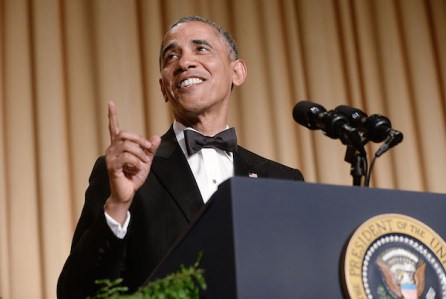
Even if he didn’t write it – even if you don’t like him – give credit to President Obama where credit is due. Last year at the Washington Correspondents Dinner, he got off one of the funniest line’s ever uttered by a sitting president near the end of a second term.

Certainly every president who has survived far enough to see that end coming to all the burden that comes with this toughest political job on earth – all of them – have felt something akin to the emotion that underlay Obama’s clearly stated comment at the 2015 banquet.

Addressing the annual Washington Correspondents Dinner last year on April 25, 2015, President Obama brought down the house with a few well chosen words.

“Some of my advisors have asked me if I have anything like a ‘bucket list’ that I plan to pursue when I leave office,” President Obama stated.

“I told them I don’t have a bucket list,” Obama added, “but I do have a list that sounds a lot like one!”

Thanks for the crisp wit, Mr. President. Even sooner now in 2016, you will get to be the latest president to leave the worst uphill job on earth with a case of perpetual “TGIF”.

This year’s Washington Correspondents Dinner will be held tonight, Saturday, April 30, 2016. The sounds-like “bucket list” can only have grown and growled with the passage into President Obama’s last year in office.

Bucket! ~  A sense of humor sublime is the best healing stitch over time.

____________________

Apologies. Forgive me for the “on-the-run” poor research I did on this attempt at a quickie column tale. I heard it last night on the network news and was so blown away by the comment itself that I mistook it for a remark from this year’s dinner and originally reported the comment as happening at this year’s dinner. – (And that would’ve been something of a time travel challenge, given the fact that the 2016 dinner does not happen until tonight.)

Thanks to an overnight advisory from my collegial friend, reader, and volunteer editor, Tom Hunter of Houston, by way of Denver, I have been able to re-write the original piece in words that make it sound like I had all my ducks in a row on the time facts from the start, except for this humble and embarrassing apology that I must now  make – and that you, my loyal readers, certainly deserve.

An old lesson is duly noted noted here: Even light and brief columns are deserving of the rigorous effort I expend on my longer columns and other items of “serious writing” for publication.

Hoping for your forgiveness and understanding, I remain ~ a flawed, but honest free spirit of hope in our shared search for a better sense of self and clearer contact and contribution with each other for the sake of building a more trusting world. And that’s pretty much how I’ve grown to understand my writing goal in my own words in a poem I wrote years ago:

“To soar once more in spirit, like the Pecan Park Eagle, High above the billowing clouds of a summer morning, In flight destiny – to all that is bright and beautiful.”

~ Excerpt, The Pecan Park Eagle, (1993).

____________________

eagle-0rangeBill McCurdy

Publisher, Editor, Writer

The Pecan Park Eagle

Houston, Texas

https://bill37mccurdy.com/

An Early Look at the Astros’ Trade for Ken Giles

April 29, 2016
Ken Giles Relief Pitcher 2016 Houston Astros

Ken Giles
Late Inning Relief Pitcher
2016 Houston Astros


The Deal: During the 2015-16 off-season, the Astros gave up five pitchers for the 2015 Phillies closer Ken Giles and a very young throw-in middle infielder. The deal swung on the fact that the re-building Phils were willing to give up a one-season effective young closer for more pitching depth. Principal acquisitions were former first guy in the former first round draft choice Mark Appel was showing some signs of becoming a slow-to-no developing  talent – and Vince Velasquez, who had shown in 2015 some MLB promise as either a starter or useful guy out of the pen. Brett Oberholtzer also went to the Phillies as an established MLB upside possibility.

With no further subjective opinion, here are a few of the early 2016 statistical results for six of the seven players involved. We couldn’t find anything from 2016 on 17-year old Jonathan Arauz so we simply included his 2015 rookie league action for the Phillies and duly noted that we had nothing else on him from this year.

It’s a long season and all that good stuff, but here’s how the seven involved players have done, so far, in MLB and minor league action in 2016. Our data covers all six of the pitchers involved. Only further word on the 17-year old infielder is missing.

First up are two tables on the major and minor league players who went from Houston to Philadelphia, showing how the two major and three minor league ex-Astro organization pitchers are doing for Philadelphia this year, through all games of 4/27/16.

1.) New Phillies MLB Pitchers in 2016 through 4/27/16:

PITCHERS AGE W-L ERA G/GS IP/K WHIP
Vince Velasquez 24 3-1 1.78 4/4 25.1/33 0.87
Brett Oberholtzer 26 1-0 8.74 4/0 11.1/12 2.21


2.) New Phillies Minor League Pitchers in 2016 through 4/27/16:

PITCHERS AGE LEVEL W/L ERA G/GS IP/K WHIP
Mark Appel 24 AAA 3-0 1.62 3/3 16.2/14 1.27
Harold Arauz 21 A 1-2 3.94 3/3 16.0/10 1.22
Thomas Eshelman 22 A+ 1-1 1.80 4/4 25.0/22 0.76


These second tables simply show how former Phillies closer Ken Giles is doing in a less specific late-game role for Houston in 2016, and also  how the throw-in young infielder did last year for the Phillies.

3.) New Astros MLB Pitcher in 2016 through 4/27/16:

PITCHER AGE W-L ERA G/GS IP/K WHIP
Ken Giles 25 0-2 7.45 10/0 9.2/14 1.86


4) New Astros Lower Minor League Infielder’s Phillies 2015 Rookie League Player:

SS/2B AGE 2015 G AB R H RBI HR BA OBP OPS
Jonathan Arauz * 17 ROK 44 173 21 44 18 2 .254 .309 .678

* NO AVAILABLE REPORT ON 2016 RESULTS WAS FOUND.

If you have any comment on how you feel the trade seems to be working out, please feel free to leave it as a comment response to this publication.

Thank you.

____________________

eagle-0rangeBill McCurdy

Publisher, Editor, Writer

The Pecan Park Eagle

Houston, Texas

https://bill37mccurdy.com/