Archive for the ‘Uncategorized’ Category

The Fine Art of Biggio and Bagwell

January 16, 2017

bagwell-statue2


biggio-statue2


In 2004, during my tenure as Board Chair and Executive Director of the Texas Baseball Hall of Fame, we voted to induct three prominent members of the Houston Astros family into our Lone Star State Hall. Those inductees included 2nd baseman Craig Biggio, 1st baseman Jeff Bagwell, and broadcater Bill Brown, who only retired this year after thirty years of Hall of Fame quality service to Houston Astros fans.

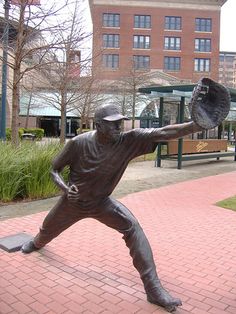
One year earlier, the Houston Astros already had taken it upon themselves to install slightly larger than life separate bronze statuary  of Craig Biggio and Jeff Bagwell completing an implicit double play on the grassy area just beyond the left center field wall at Minute Maid Park in Houston – and doing so from a fair distance of about 90 feet apart. Several years later, on February 10, 2010, writer Larry Granillo wrote this telling comment about the Biggio-Bagwell statues in an article for an Internet publication known as The Sports Daily: “I’m actually surprised to see statues of Bagwell and Biggio already. It seems like teams usually wait (for a Hall of Fame vote, maybe) on something like that. I like the design, though, with Bagwell stretching to catch a double-play toss from Biggio. It works well.”
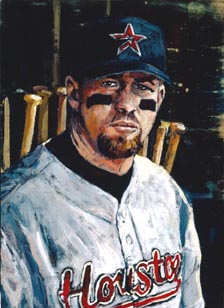
Jeff Bagwell By Opie Otterstad

Jeff Bagwell
By
Opie Otterstad

Granillo simply didn’t get what we Houston fans and the club itself already understood. Even when the statues were installed in 2003, even when we inducted both men together into our state Hall of Fame, we locals just knew, even then: These guys would go onto finish their playing days as the rarest of birds in the sporting world today. Together they would total 35 years of service to the Houston club as career Astros – and they someday would be inducted together into the Baseball Hall of Fame at Cooperstown. In my opening remarks at their 2004 induction into the TBHOF, I even lightly commented that we wanted to give both of them the practice here in Texas before they finally reached “the big Hall” together someday.

“Together” is looking more and more like the only error we all made in our local anticipation of their future honors. With the good to great prospects now riding high that Jeff Bagwell gains the nod to Cooperstown in two days, it looks more and more like we only missed their arrival dates by a couple of years. It could not have been avoided. Once the forces of doubt began to spread to all players who had been muscular power hitters during the zenith years of steroids abuse, there was no way that shadow would miss a fellow like Jeff Bagwell. Even though he had never tested positive for steroids, nor been name or accused by anyone of having done so, Bagwell has been forced to ride out the tide of temporary rejection by the “embarrassed holding back voters” (my term for them). These were the writers who would’ve voted for Jeff in his first year, but still feared that something might still come out later to hurt their own reputations for having supported Jeff Bagwell. Now that more time has passed since Bagwell reached the HOF ballot, these same voters are now less worried about a vote for Bagwell coming back to bite them. – Human character and courage are wonderful traits, aren’t they?
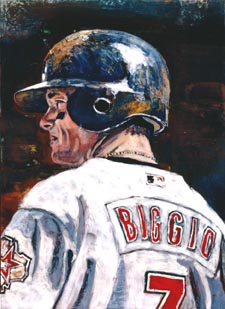
Craig Biggio By Opie Otterstad

Craig Biggio
By
Opie Otterstad

At any rate, the fine art of the statuary, we would like to credit the MMP pieces by name to the sculptor, but we could not locate it on our own on a short deadline. If you have the answer, please leave it with us as a comment upon this column and we will then also add it to the body of this article with credit to you for your very important research contribution.

The phenomenal talent of the great Austin-based, but nationally famous fine artist, Opie Otterstad, is the gem that pours the particular souls of each man all over these two great baseball-cards-that-could’ve-been-but-never-were. Opie even used some kind of bees wax material in the paint he used to do both Biggio and Bagwell as a tribute to the “Killer Bees” identity they started with the Astros.

It’s true. Art imitates life. Now, if only life could imitate these four fine pieces of art by moving others who view them to draw upon their own creative energies, whatever they may be, and do something that further spreads the beauty and joy of life,  what a wonderful world it could be.

____________________

eagle-0range
 Bill McCurdy

Publisher, Editor, Writer

The Pecan Park Eagle

Another Houston Visit By the Wings of Fate

January 15, 2017
Sometimes a picture really is worth a thousand words.

Sometimes a picture really is worth a thousand words.

The New England Patriots have defeated the Houston Texans, 34-16, eliminating another local sports team run at that elusive thing we often reference here in the Bayou City as a major national championship. In our Houston case, it is much easier to reference national championships like The World Series or the Super Bowl than it is to reach them – and actually win them. So far, the 1994-1995 two-year NBA Champion Houston Rockets are the only local club to win the big one in any of the three major sports of baseball, football, or basketball.

Maybe someday, and in the case of we fans who’ve been consciously watching – and waiting – for seventy years, amend that wishfulness to “maybe someday soon,” we will finally receive a visit from the soaring bird of winning’s beautiful winged destiny – and stop the steady flow of low level fights into Houston on all these bad end-of-season’s nights by losing’s ugly bird of fate. It’s probably perched on the head of General Sam Houston out at Hermann Park, even as these digital words hit the page.

And thanks to DavesDailyDose.com for providing the courtesy photo here that describes the redundancy of this downer emotional experience better than anything anyone could possibly write. Although, I have to admit, I only personally feel this bad when it’s an Astros close-call season-ending loss – or a big UH game defeat – or another coaching loss by all the Professor Harold Hill types who come in to successfully guide my Houston Cougars for a couple of years on their stepping-stone ways to more “prestigious” bigger paying territories in the jungle of college football.

Just remember, Houstonians, if you are among one of the Texan fans who are taking the team’s disappointing loss tonight pretty hard, the same old immortal truth remains: The sun will come up again tomorrow.

____________________

eagle-0range
 Bill McCurdy

Publisher, Editor, Writer

The Pecan Park Eagle
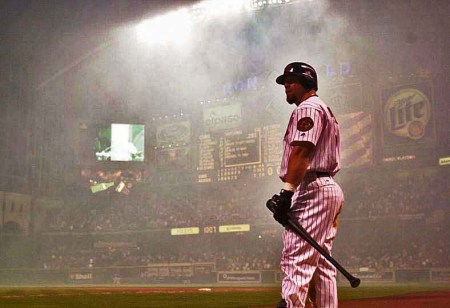
He’s BAGWELL the Baseball Man!

January 14, 2017
Jeff Bagwell, 1B Houston Astrps 1992-2005

Jeff Bagwell, 1B
Houston Astros
1992-2005

He’s BAGWELL the Baseball Man!

By Bill McCurdy


He’s BAGWELL the Baseball Man!

He’s Bagwell the BASEBALL Man!

He fights to the finich – ‘Cause he eats his spinach,

He’s BAGWELL the BASEBALL MAN!


He hits every PITCH he can!

The pitchers all cry for a BAN!

But NOT for wrongdoing – their records he’s screwing,

He’s BAGWELL the BASEBALL MAN!


It’s HIGH TIME to open the GATE!

With the HALL OF FAME – he has a DATE!

They can’t leave him out there – All he did was clout balls fair,

HE’S BAGWELL THE BASEBALL – MAN!

popeyebaseball-1

____________________

Notes

Jeff Bagwell, 1st Base, Houston Astros (1991-2005)

Career: BA .297; 449 HR; 1,529 RBI

Imminent Hall of Fame Induction Approval Pending Announcement

On January 18, 2017

____________________

eagle-0range
 Bill McCurdy

Publisher, Editor, Writer

The Pecan Park Eagle
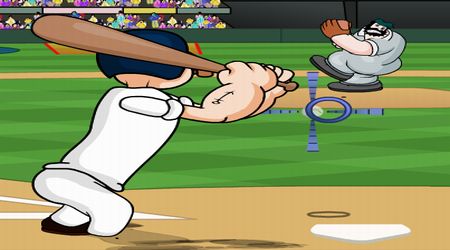
Rules for Vintage Ball at the Post-Age 90 Level

January 12, 2017
The longer we play, the less we recruit, the more we too soon shall need need these vitnage baseball rule modiv=ifications.

The longer we play, the less we recruit, the more we too soon shall need need these vintage base ball rule modifications.

Rules for Vintage Ball at the Post-Age 90 Level

  1. Every game shall begin with an official pulse count for each player as he or she comes to bat for the first time.
  2. Players without discernible pulses will be disqualified from playing in this day’s game and they will not be allowed to play again until further medical examination determines if this absence of a pulse is an indicator of a more serious health condition.
  3. There shall be no ball and strike count.
  4. The batter bats until he or she either makes fair ball contact or dies trying.
  5. Infield fly balls must be caught in the air to be ruled as out plays.
  6. Outfield fly balls caught through the 3rd ground bounce are ruled outs.
  7. Ground balls anywhere that can be stopped by legal defenders while they are still rolling are ruled outs.
  8. Players may attempt stolen bases.
  9. Attempted stealers will be declared out if they also fall down or die en route to the next base and are then tagged with the game ball by a legal defensive player.
  10. McCroskey Rule I: Obviously afflicted players must get to first base on their own.
  11. McCloskey Rule 2: Certifiably afflicted players may use a pinch runner from first base forward, but only if that pinch runner is the biological female descendant of the certifiably afflicted player and has not yet reached her 18th birthday.
  12. Sliding by any runner, player or courtesy runner class, is prohibited in the interest of player safety.
  13. Manually powered wheel chair players are allowed, but motorized transporters of any type are forbidden for use by any player under any circumstance.
  14. Wheel chair bound players will be credited with a put out on any fly ball that lands and remains in their chair on the fly and, from there, never falls to the ground.
  15. Players suffering from anorexic dementia will not be penalized for the first time in each game they run to 3rd base, instead of 1st, as batters of a fair-struck ball. They will be respectfully redirected to 1st base and sensitively warned that further wrong direction base runs from the batter’s box – or base – will result in an automatic out call.
  16. Retired Vintage Ball Managers shall retain the right to shout incoherent words of joy and support for their old teams throughout each game they watch without fear of ridicule from the general crowd of fans. Fans found guilty of trash mouthing the old former managers shall be gingerly asked to leave the game premises at a level of pain that overpowers any futile objections.
  17. Game Length for the 90+ League teams shall be 6, rather than 7, innings. At the end of the 3rd inning, a 30-minutes-long power nap time shall be installed to assure that the final three innings are played at a brisk and healthy pace.
  18. Dead Men Don’t Wear Plaid. (See the 1982 Steve Martin movie by the same name as this rule for the possibility of a full explanation. As you do so, try to remember that “possibility” is not the same as “probability,” and that “probability” only  reaches “certainty” when time and actual game outcomes have reached “actuality” and all possibility of unexpected intervening variable appearance on the side of change has been exhausted as a threat to the certainty that an actual outcome percentile score of 100% finally has been achieved).
  19. Beyond the above specified variance for this oldest of age category leagues, the balance of rules assigned by the 1860 base ball rule covenants shall apply.

That being said ~ Let’s play ball – And have some fun – While we are still able to do so!

The Answer, My Friends, Is Blowing in the Wind

January 10, 2017
Let the Hot Stove League Season Begin!

Let the Hot Stove League Season Begin!


Over the years, we hardcore baseball fans have come to reference this coldest part of the winter as our “Hot Stove League” time for talking up the game prior to the start of spring training in about thirty days. It doesn’t really matter so much what we talk about – since the MLB has little interest in us beyond getting us to believe that we all start each new season with a team that’s capable of reaching the World Series. And, of course, they want that interest to translate into us coming out to the games way beyond the point in time each year that most of our clubs haven’t got a snowball’s chance in hell of reaching anything but the last scheduled game of the regular season.

So, what’s so hot about the stove in this league, anyway, if most of us are going to be watching clubs without enough gas to get there, anyhow?

For one thing, most of us have been blessed with enough light in the lantern to see the metaphorical reference that’s intended by the ancient phrase – the Hot Stove League. – It’s too cold to play now. All we can do is huddle together at the end of the workday and share our hopes and dreams about our teams in the season to come – and we shall do so in the flickering light of a wood-burning stove, huddled together in a circle of concern for hot baseball ideas and the warmth of others listening, talking, and  sharing points of view – and giving each other a hefty feedback noise of “you got that right, brother” comments. “If the team doesn’t do pretty much what you just said about our pitching, this season could go to hell in a hand basket fast!”

“Damn, we’re smart! 

“If we’re so damn smart, how come the club isn’t paying all of us in this original hot stove huddle conference the big bucks to set ’em straight? Don’t they understand that riding around on a tractor in a blizzard for about 12 hours each day is exactly what it takes to jangle out all the right answers about the club’s needs for the coming baseball year?  In the cold darkness of each howling-wind January night, the truth always prevails in vivid lucidity. This hunka-hunka stove pipe love for the game of baseball is relentless, but will this be the year – finally – that ownership listens to our suggestions?

“Not only, no, but hell no! By May, we’ll all be asking ourselves in the sunshine of spring why the club didn’t so something about the pitching while it still mattered? A 2-23 record through the first month ought be speaking loudly to the too-late-now point we’ve been trying to make, or so it seems, since we last passed old Rogers Hornsby at home in the cold, still staring out his front window at something hypnotically as we trudged our way down the sidewalk in front of his place en route to another Hot Stove League meeting.

“Owners, listen up. – Your starters simply can’t give up ten runs over the first five innings in 13 of the first 23 games and still hold out any chance for the team  turning things around. But now you say you’re talking deals for pitching with several clubs? – C’mon, man! – Turning around a caterpillar in its race with that red Corvette that just sped past him – going in the right direction to the finish line – ain’t the biggest morale booster we fans had hoped to see as summer nears.

“Oh well. Maybe we fans should organize ourselves into some kind of advisory group. Call us what you will. ‘Scientific Analyses of Baseball Reasoning, Results, and Recommendations’ sounds pretty cool to that intent here.”

Baseball could call us SABRRR for short. SABRRR ought to chill out some of our Hot Stove League lamentation too. And it sure would  beat the hell out of using the winter months to simply gather together and celebrate our annual need to merely “philosophy into the wind.”

____________________

eagle-0range
 Bill McCurdy

Publisher, Editor, Writer

The Pecan Park Eagle


Can the Current Astros Roster Win in 2017?

January 8, 2017
The 2017 Baseball Season Is Going to Be Very Interesting!

The 2017 Baseball Season
Is Going to Be Very Interesting!


On paper, the late 2016 season additions of another promising infield rookie and a Cuban veteran of proven merit at the plate – and the off-season personnel actions by GM Jeff Luhnow (again for emphasis – “on paper”) suggest that Astros hitting in 2017 may be good enough to win against  the opposition’s pitching better than half the time in 2017. As always, how much better does the 2017 pitching staff need to be to help make the new season’s club good enough to win more often than they lose? More exactly, how good must the pitching be, with improved hitting from both sides of the plate – and improved speed and athleticism on defense, to assure the club of a winning percentage in the .556 to .600 range? Those percentages are not sacred or carved in stone. They simply reflect how often a team must win to finish in the 90 to 97 win range over the 162 game regular season. Again, this range simply reflects my comfort zone for what that game wins range will need to be for the Astros to have a good probability for either a divisional championship or a wild card spot.

As we see it here, both the Astros starting rotation and relief slots are quite murky at this point. And to spare us a ton of explanatory words that we’ve all either said, read, or heard previously, 2016 boiled down to these points: (1) the club lost its Cy Young and we don’t know if Dallas Keuchel will ever pitch at that level again; (2) Colin McHugh weakened in 2016; (3) Lance McCullers was lost to injury; (4) the other filler-starters played out flat; (5) relievers were weak; and (6) Ken Giles, the young “closer of the future”, performed more as a suspect than a prospect. So, the question here is: Does the club go with what they have and hope that everybody gets well or turns it around on the pitching side? Do they trade the heart of the farm for “proven” pitching? Or does Luhnow simply place more hope that the hitters and the new easier to reach fences at MMP will allow the Astros offense to carry the club to a winning level in spite of the pitching holes that still may exist?

____________________

eagle-0range
 Bill McCurdy

Publisher, Editor, Writer

The Pecan Park Eagle

 

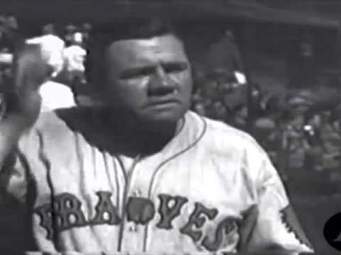
The Babe’s 1935 Goodbye, Game By Game

January 7, 2017
Babe Ruth Boston Braves 1935

Babe Ruth
Boston Braves
1935

We gave into something we’ve always wanted to do in the last 24 hours, and, at age 79, that’s quite a different bird to hatch than the kinds of mind-floaters that once sailed into appetite harbor when we were 29. Accomplishments, risks with the laws of gravity, other battles with nature, and the acquisition of  rare and hard to find automobiles no longer hold the kinds of attraction here they once did, even though a certain 1951 Oldsmobile named “Oscar” still demands some balanced focus from the part of me that connects emotional investment with physical attachment.

That being said, this particular “want-to-do” had to do with an even deeper part of my love for baseball – and, specifically, for Babe Ruth, the greatest hero investment I ever made as a kid.

Until I started fiddling around the other day in research for the column I then wrote about The Babe’s missed opportunity for retirement in the brightest spotlight ever – after the three-homer game at Forbes Field on May 25, 1935, I basically had stayed away from any previous close look at the Babe’s declining production in his fated last season for the first early games of the 1935 season.

I didn’t want to look at Babe Ruth in 1935 than I ever wanted to again see that clip of an aging Willie Mays dropping a can of corn in center field for the New York Mets. Are you with me on that?

This time I went through the box scores of each game that transpired during Ruth’s short stay with the Boston Braves at age 40 in 1935. Now I’m glad I did. This fairly total collapse was made possible by a combination of some pretty ugly traits we find in human nature, both within The Babe, and within the people who used him as a gate-booster.

Babe Ruth’s Game By Game 1935 Season

G# 1935 Pos W> = BOS W AB R H RBI 2BH 3BH HR BA
1 4/16 LF W>NY 4-2 4 2 2 3 0 0 1 .500
2/DH I 4/19 LF L> BRK 2-4 3 0 2 0 0 0 0 .571
3/DH 2 4/19 LF L>BRK 2-4 4 0 0 0 0 0 0 .364
4 4/20 LF W>BRK 7-1 2 0 1 0 0 0 0 .385
5 4/21 LF L>BRK 1-8 2 1 1 1 0 0 1 .400
6 4/23 RF L>@NY 5-6 3 1 0 0 0 0 0 .333
7 4/24 PH L>@NY 1-3 1 0 0 0 0 0 0 .316
8 4/25 DNP L>@NY 1-2 .316
9 4/26 DNP L>@BRK 4-5 .316
10 4/27 LF W>@BRK 4-2 3 0 0 0 0 0 0 .273
11 4/28 LF L>@BRK 3-5 3 0 0 0 0 0 0 .240
12 4/29 LF W>PHI 7-5 0 1 0 0 0 0 0 .240
13 5/04 LF L>SL 0-3 2 0 0 0 0 0 0 .222
14 5/05 LF L>SL 0-7 2 0 0 0 0 0 0 .207
15 5/06 DNP L>PGH 6-8 .207
16 5/08 DNP W>PGH 12-3 .207
17 5/09 LF L>CHI 1-5 2 0 0 0 0 0 0 .194
18 5/10 LF L> CHI 7-14 2 2 0 0 0 0 0 .182
19 5/12 LF L> CHI 1-4 2 0 0 0 0 0 0 .156
20 5/13 DNP L> CIN 1-3 .156
21 5/17 LF W>@SL 7-1 4 0 1 0 0 0 0 .180
22 5/18 LF L>@SL 2-6 2 0 0 0 0 0 0 .171
23 5/19 LF L>@SL 3-7 4 0 0 0 0 0 0 .156
24 5/20 LF L>@CHI 0-5 2 0 0 0 0 0 0 .149
25 5/21 LF W>@CHI 4-1 4 1 1 1 0 0 1 .157
26 5/23 RF L@PGH 1-7 4 0 0 0 0 0 0 .146
27 5/24 RF L@PGH 6-7 4 0 1 0 0 0 0 .153
28 5/25 RF L>@PGH 11-7 4 3 4 6 0 0 3 .206
29 5/26 LF L>@CIN 3-6 4 0 0 0 0 0 0 .194
30 5/27 PH L>@CIN 5-9 0 0 0 0 0 0 0 .194
31 5/28 LF L>@CIN 4-13 2 1 0 0 0 0 0 .188
32 5/29 LF W>@PHI 8-6 2 1 0 1 0 0 0 .183
33 5/30 LF L>@PHI 6-11 1 0 0 0 0 0 0 .181
TOTALS > 72 13 13 12 0 0 6 .181

40-year old Babe Ruth played in parts of 28 games during his 1935 run of 33 contests. He never played a full game. He was overweight, with dead legs, lost flexibility, and slowed risk action at the plate. In spite of an opening day home run off Carl Hubbell of the Giants in the Braves home opener – and an adrenaline aided 4-hit total for his first two hit games, Ruth quickly slipped into his much more common “O FOR WHATEVER” pattern and the practice of his removal from the lineup by substitution, both late and sometimes early in the game.

The obvious facts that explain why Babe Ruth played at all in 1935 are repulsive to fans like me: (1) The terrible Braves club used Babe to boost a gate that gave fans a chance to “rubber neck” the train wreck remnants of his once powerful ability. Only the fans in Pittsburgh on May 25th got to witness a Phoenician return of all the great man used to be. And we suppose those fans who got to see Ruth in his other three single homer games got some lesser taste of yesterday as well. (2) Babe was holding on to the hope that his short-time career as a player would lead him to the manager’s job he always hoped would happen, based upon his pre-signing discussions with the Braves. That was never going to happen. And by the time of his immortal 3-HR game in Pittsburgh, our guess is that The Babe knew the truth. Some think he continued to play rather than quit after the big moment because he didn’t want to disappoint the fans. Maybe so, but I don’t believe it. Babe wasn’t stupid. By that time, he knew he was being used. It isn’t worth further argument. He played 5 more games after the big day at Forbes Field. He went “0 for 9” and finally retired after a failed pinch hit performance in Philadelphia on May 30, 1935.

Babe Ruth’s 6 1935 HR Pitcher Victims

HR 1 off LHP Carl Hubbell of the New York Giants

HR 2 off RHP Ray Benge of the Brooklyn Dodgers

HR 3 off RHP Tex Carleton of the Chicago Cubs

HR 4 off RHP Red Lucas of the Pittsburgh Pirates

HR 5 off RHP Guy Bush of the Pittsburgh Pirates

HR 6 off RHP Guy Bush of the Pittsburgh Pirates

Stats on Babe’s Physical Limitations

They are big and gaudy. (1) Babe attempted no stolen base in 1935; (2) Of his 12 hits, 6 were homers and 7 were singles. Doubles require some running ability. And triples were out of reach.

Some Final Stat Portrayals By Table

RUTH 1935 NUMBER Key %
Games as a Brave 33
Partial Games Played of 33 28
Complete Games Played 0
Plate Appearances 92
Official At Bats 72
Hits 13
Doubles 0
Triples 0
Home Runs 6
Walks 20
Intentional Walks 0
Strikeouts 24
Runs 13
Runs Batted In 12
Total Bases 31
Batting Average .181
Slugging Average .431
On Base Percentage .359
OPS .789
OPS+ 119
Game Ending Double Plays 2
AS/SB, HBP, CI 0 all

We will always remember Babe Ruth’s 1935 season for that “kiss ’em goodbye – and kiss ’em good, far, and hard” day at Forbes Field in Pittsburgh on May 25, 1935. Now I know for sure. None of the other stuff about his difficult time as a player that season will ever matter to me. And no matter what anyone else says, I shall go on wishing that Babe Ruth had been able to do in reality what has only happened otherwise in a movie. May 25th in Pittsburgh would have been the most dramatic retirement in the history of baseball – and maybe in all fields, as well. Only the incredibly talented few get the kind of opportunity that Babe Ruth either didn’t see or refused to take. Maybe he did think the 3 homers day was more of a “I’ve still got it” sign than he did as a perfect time to leave, were it not for his commitments to play before the fans of other places too. I simply don’t believe that obligation and duty kept Ruth from seeing the truth, but who knows for certain?

1935 notwithstanding, a lot of us will die thinking that Babe Ruth was the greatest player in Baseball History.

____________________

Reference Source Credit goes to Baseball Almanac.com for making our Pecan Park Eagle tabular reconfigured presentations possible in a way we designed in the hope of providing a fresh postcard summary of Babe Ruth’s Game-By-Game, Home Run Production, and Season Offense over the course of his brief 1935 final season.

____________________

eagle-0range
 Bill McCurdy

Publisher, Editor, Writer

The Pecan Park Eagle
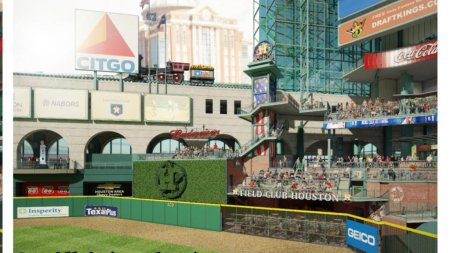
Farewell to Tal’s Hill

January 6, 2017
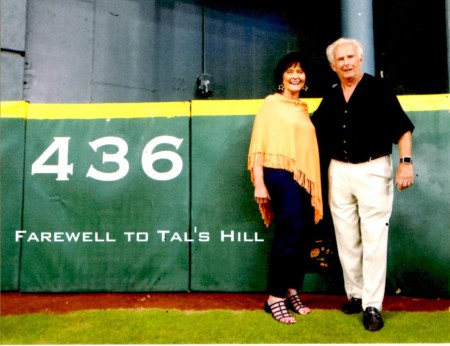
Tal and Jonnie Smith The Top of Tal's Hill Minute Maid Park Houston September 2016

Tal and Jonnie Smith
The Top of Tal’s Hill
Minute Maid Park
Houston
September 2016


Farewell to Tal’s Hill

By Bill McCurdy


Farewell to Tal’s Hill,

That feature sublime.

It made fielders watch,

For the start of their climb.


No glove man could take,

Tal’s Hill all for granted,

And those who first did,

Quickly learned to recant it.


Built as a statement in old Enron Field,

It came with a flagpole for added appeal.

With the deep center distance at 436,

A rising hill 30 played the final run tricks.


The great ones ran up it,

Some wobbled and fell,

But some learned to play it,

Like a challenge from hell.


Remember when Lance, Mr. Berkman, went back?

The Hill made him stagger, his balance to crack.

And while he lay rolling, like a tumbling jack,

The ball came down to him, like a dove to a sack.


Tal’s Hill was much more, than a new field quirk feature,

It stood on its own, as a symbolic creature,

Of all the tough hills, that Houston has straightened,

From Hofheinz to Ford, McMullen to Drayton.


And named for the man, who was there through it all,

Tal Smith is the reason – Houston Baseball walks tall.

Thank you, Tal Smith, for your fifty-year run,

They may take down Tal’s Hill – but you will still be the one.


God Bless America!

God Bless Houston!

God Bless Baseball!

God Bless Tal’s Hill

God Bless Tal and Jonnie Smith!

____________________

eagle-0range
 Bill McCurdy

Publisher, Editor, Writer

The Pecan Park Eagle


Teddy and The Babe: Only One Was a Writer

January 5, 2017
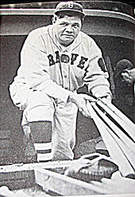
Babe Ruth 1935 Boston Braves

Babe Ruth
1935 Boston Braves


Ted Williams wrote the best exit line possible on his final plate appearance. Babe Ruth wasn’t able to play the best hand ever dealt to a great ballplayer for going out in style. It was so good a hand, in fact, that most fans remember it today as the movies portrayed it – and not as it actually happened.

Why didn’t Babe Ruth retire after that famous game at Forbes Field in Pittsburgh on May 25, 1935 when he crushed 3 mighty home runs? Until that game, everything the Babe had done for his new Boston Braves club had spelled it was time. He couldn’t hit, couldn’t move around well enough to field or runs the bases, and, if that weren’t enough, it was abundantly clear to the Babe that the Braves were not going to promote him to manager, as they had indicated when he accepted the trade to Boston from the Yankees. Heck! Even the 1948 William Bendix version of the “The Babe Ruth Story” showed the 3-Homer Day as his dramatic last game of ball. – It simply wasn’t true. Babe Ruth struggled through five more games beyond the big one, going 0 for 9 in the process, and eventually taking himself out after 1 last failed time at bat on MAY 30, 1935.

Babe Ruth’s Last 6 MLB Games for the 1935 Boston Braves *

1935 GAME POS AB R H RBI 2BH 3BH HR GAME BA
MAY 25 L 7-11 @ PGH RF 4 3 4 6 0 0 3 1.000
MAY 26 L 3-6 @ CIN LF 4 0 0 0 0 0 0 .000
MAY 27 L 5-9 @ CIN PH 0 0 0 0 0 0 0 .000
MAY 28 L 4-13 @ CIN LF 2 1 0 0 0 0 0 .000
MAY 29 W 8-6 @ PHI LF 2 1 0 1 0 0 0 .000
MAY 30 L 6-11 @ PHI LF 1 0 0 0 0 0 0 .000
TOTALS MAY 25 GAME RF 4 3 4 6 0 0 3 1.000
TOTALS LAST 5 G’S OF-PH 9 2 0 1 0 0 0 .000
TOTALS ALL 6 G’S OF-PH 13 5 4 7 0 0 3 .308
  • Chart data derived from the research material available at Baseball Almanac.com.

Babe Ruth was a human being – managed by other human beings. As a ballplayer, he was an actor in the play about his own life. He was not the author or screenplay writer of his glorious baseball career. Had he been the screenwriter, he would have written it as they did for the 1948 William Bendix bio film: He hits the three mighty Forbes Field homers. Then he singles, almost stumbling as he works hard to reach first. Then he takes himself out of the game, calling for a young outfielder to take his place at first. The rookie reaches the Babe bearing a chastened look. He had been trash mouthing the Babe all through the game as a washed up guy who was standing in the way of his own playing time. And now the humble newbie is asking, as he reaches the bag: “Did you call for me, Babe?”

“Yeah, Kid I called for you,” Babe Ruth answers (in so many words). “I want you to take my place here at first. It’s your time now. Give baseball all you’ve got. Take care of the game. And baseball will take care of you.”

Then the Babe trots off the field and never plays again.

Regardless of what you may have thought of the first “Babe Ruth Story” movie, the screenwriter got it right. That’s when Babe Ruth should have walked away from the game, but he did not. In reality, as the six-game chart we derived from Baseball Almanac shows, he played three more games against the Reds and two more against the Phillies, both sets on the road, before he finally gave it up for good in Philly on May 30, 1935. He had taken himself out of that final game after one unsuccessful time at bat and finally quit – adding an 0 for 9 official at bat skein on the tail of the big 3-homer game that could have been his spotlight swan song five days earlier.

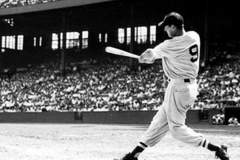
Ted Williams Boston Red Sox 1939-42, 1946-60.

Ted Williams
Boston Red Sox
1939-42, 1946-60.

Had Babe Ruth been the script writer that Ted Williams proved himself to be after his last game ever at Fenway Park in 1960, who knows what he might have written? The “called shot” in the 1932 World Series was pretty good, but Ruth didn’t write that pipe dream. The sports writers did. And, even if he did write it, it wasn’t his Act III closing line. Let’s look at Ted Williams for an education on how the spotlights line up for an exit walk off stage right that no one shall ever forget.

Williams was a real student of all the great hitters. He almost certainly could have had the obvious thought about Babe Ruth’s timing when he proceeded to play five dud games beyond his peerless moment in Pittsburgh.

“He could’ve gone out as the only great hitter in history to hit 3 home runs in his last major league game!” Now there’s no proof that Ted Williams ever thought or said that to himself, or anyone else, for that matter, but given what he did in 1960 in his own last time at bat as a major leaguer in 1960, it  does shed a little support for the calculations that Williams made of his own choice for a memorable exit statement. At age 42 going into the season, it was public knowledge that Williams was playing ball for one last season because Ted did not want with a career line score that showed him batting .254 for 1959. And he already had assured himself that 1960 was allowing him to leave with a healthy .300 plus batting average. When Williams took his place for one last time in left field at Fenway Park for the Red Sox on Wednesday afternoon, September 28, 1960, in a final home game with Baltimore, Boston only had a three game series with the Yankees at The Stadium left to finish the 1960 season with everything important in the standings settled. The Yankees already had clinched the AL pennant; the Red Sox could no longer rise above or fall below the number 7 spot in a league of 8 teams.

It’s called “playing out the string,” folks.

Going into the bottom of the 8th with the Baltimore Orioles leading 4-2, 42-year old Ted Williams came to the plate with nobody on to face 21-year old right hander Jack Fisher. He had been hitless in two official at bats on the day and everyone figured that this would be his last plate appearance at Fenway, unless a big home rally or a tied game dragged the ending into extras.

On a 1-1 pitch, Williams suddenly unloaded on a Fisher pitch with one his signature high fly balls to right. This one was destined for the Red Sox bullpen for Ted’s 29th home run of the year. It also moved Williams’  batting average up to a respectable .319.

Williams wanted the Boston fans to remember them, but he never could bring himself as a player to accept their love. Too many public harangues between Williams and the media, and with some rowdy taunting fans from early on, had soured him on ever acknowledging anyone else at moments of this kind. He again refused to tip his cap to the fans during his brisk home run trot around the plate – nor would he come out of the dugout after the homer to acknowledge their recognition.

The Red Sox rallied for 2 in the bottom of the 9th to defeat the Orioles, 5-4, with no further help from Ted Williams. It was shortly after the game that the Red Sox had played his last game in the big leagues. He would not even make the trip to New York for the last three game series of the year. If fans wanted to remember his last game, Williams would leave them with the memories that he played 21 years for the Red Sox, and that he was now retiring as the last big leaguer to have hit .400 (.406 in 1941) in one season, and that he batted .319 with 29 homers as a 42-year old guy who even homered in his last time at bat as a major leaguer.

Ted Williams knew how to write his own screenplay; Babe Ruth did not.

____________________

eagle-0range
 Bill McCurdy

Publisher, Editor, Writer

The Pecan Park Eagle


Bill Gilbert: Bagwell Gets HOF Nod in 2017

January 4, 2017
Bill Gilbert's 1st analysis of 2017 should whet appetitites for the upcoming Halll of Fame vot.

Bill Gilbert’s 1st baseball analysis of 2017 should whet appetites for the upcoming Hall of Fame vote to the salivation stage.

Rating the 2017 Hall of Fame Candidates Based on Win Shares

By Bill Gilbert

One of the first items of business in baseball each year is the announcement of players elected to the Hall of Fame. This leads to lots of speculation and a little analysis prior to the announcement which is scheduled for January 18, 2017.

Many systems exist for evaluating player performance. One such system, the Win Shares method, developed by Bill James in 2002, is a complex method for evaluating players which includes all aspects of performance – offense, defense and pitching. James has stated that, “Historically, 400 Win Shares means absolute enshrinement in the Hall of Fame and 300 Win Shares makes a player more likely than not to be a Hall of Famer. However, future standards may be different. Players with 300-350 Win Shares in the past have generally gone into the Hall of Fame. In the future, they more often will not”.

The 2017 class of Hall of Fame candidates consists of 15 holdovers and 19 players eligible for the first time. Ten holdovers have over 300 Win Shares, Barry Bonds with 661, Gary Sheffield 430, Roger Clemens 421, Tim Raines 390, Jeff Bagwell 387, Jeff Kent 338, Fred McGriff 326, Sammy Sosa 311, Larry Walker 307 and Edgar Martinez 305. Among the newcomers, there are three candidates with 300+ Win Shares, Manny Ramirez 408, Ivan Rodriguez 338 and Vladimir Guerrero 324.There are no new starting pitchers among the newcomers and only three starters on the list of 34 candidates.

In 2016, two players received the necessary 75% of the vote for election by the Baseball Writers of America (BBWAA).   The 2016 ballot included 17 newcomers and 15 returning candidates. One newcomer, Ken Griffey Jr. (99.3%) was elected on the first ballot. Only two others, Trevor Hoffman (67.3%) and Billy Wagner (10.5%) received the necessary 5% of the votes required to remain on the ballot.

Only Mike Piazza (83.0%) among the holdovers was elected. The only other holdovers with over 50% of the vote in 2016 were Jeff Bagwell (71.6%), Tim Raines (69.8%), Hoffman (67.3%), and Curt Schilling (52.3%).

Several players on the ballot, notably Barry Bonds and Roger Clemens, have the numbers to be elected but remain tainted with the steroid cloud. Many voters have been inclined to wait until more is known about the extent of steroid usage before giving them a pass. Both are in their 5th year on the ballot. Support for both is expected to increase this year but not enough for election. The reluctance to vote for players like Bonds and Clemens is likely to continue to diminish with time but it may not be soon enough for election by the writers. The ballot remains quite crowded.   Some writers have advocated the removal of the restriction of 10 votes per ballot. A total of 440 ballots were cast in 2016 down from 549 in the previous year as writers who had not worked professionally for 10 years were removed from the voter rolls. Last year, voters cast an average of 8.4 votes, up from 5 or 6 votes in previous years. This increase is likely to continue since a reasonable case for election can be made for more than 10 candidates.

The Hall has made a significant change in the voting last year. Players are now kept on the ballot for 10 years rather than 15 years. Players that had already been on the ballot for 10 or more years stay on for 15 but those with less than 10 years will be removed after their 10th year. Raines and Lee Smith are in their last year on the ballot.

Following is a list of Win Shares for the 34 players on the ballot. Players on the ballot for the first time are shown in bold. Voting results for 2015 and 2016 are shown for the holdovers. Many of the candidates received fewer votes in 2016 but their percentages went up because of the reduction in the number of voters.

Player Win Shares 2015 Votes 2015 % 2016 Votes 2016 %
Barry Bonds 661 202 36.8 195 44.3
Gary Sheffield 430 64 11.7 51 11.6
Roger Clemens 421 206 37.5 199 45.2
Manny Ramirez 408
Tim Raines 390 302 55.0 307 69.8
Jeff Bagwell 387 306 55.7 315 71.6
Jeff Kent 338 77 14.0 73 16.6
Ivan Rodriguez 338
Fred McGriff 126 118 20.7 92 20.9
Vladimir Guerrero 324
Sammy Sosa 311 36 06.6 31 07.0
Larry Walker 307 65 11.8 68 15.5
Edgar Martinez 305 148 27.0 191 43.4
Mike Mussina 270 135 24.6 189 43.0
Jose Posada 258
Magliano Ordonez 245
Mike Cameron 243
Edgar Renteria 236
Derrek Lee 233
Curt Schilling 227 215 39.2 230 52.3
J,D, Drew 206
Lee Smith 198 166 30.2 150 14.1
Orlando Cabrera 197
Trevor Hoffman 188 298 67.3
Billy Wagner 182 46 10.5
Pa Burrell 181
Tim Wakefield 176
Melvin Mora 160
Matt Stairs 158
Carlos Guillen 147
Jason Varitek 141
Casey Blake 118
Freddie Sanchez 104
Arthur Rhodes 102

The 28 players elected by the Baseball Writers since 2000 have averaged 350 Win Shares, a figure exceeded by six players on this year’s ballot.

INDUCTEES YEAR WIN SHARE
Dave Winfield 2001 415
Kirby Puckett 2001 281
Ozzie Smith 2002 325
Gary Carter 2003 337
Eddie Murray 2003 437
Paul Molitor 2004 414
Dennis Eckersley 2004 301
Wade Boggs 2005 394
Ryne Sandberg 2005 346
Bruce Sutter 2006 168
Cal Ripken 2007 427
Tony Gwynn 2007 398
Goose Gossage 2008 223
Rickey Henderson 2009 535
Jim Rice 2009 282
Andre Dawson 2010 340
Roberto Alomar 2011 375
Bert Blyleven 2011 339
Barry Larkin 2012 347
Frank Thomas 2014 405
Greg Maddux 2014 398
Tom Glavine 2014 314
Craig Biggio 2015 411
Randy Johnson 2015 326
John Smoltz 2015 289
Pedro Martinez 2015 256
Ken Griffey, Jr. 2016 403
Mike Piazza 2016 309
Average Win Share 2001-16 350

Win Shares are fundamentally a quantitative measure of a player’s accomplishments. A measure of the quality of a player’s offensive performance is OPS+ which compares his OPS (on-base percentage plus slugging average) adjusted for park effects and era with the league average during his career. An OPS+ of 120 suggests that his performance is 20% better than that of a league average player. A similar approach (ERA+) can be used to compare a pitcher’s ERA against the league average during his career.

The following is a rank order of OPS+ and ERA+ for the 34 candidates on the 2017 ballot.

Note on Tabular Data: 1st year 2017 candidates are shown in bold type.

Batters OPS+
Barry Bonds 182
Manny Ramirez 154
Jeff Bagwell 149
Edgar Martinez 147
Larry Walker 141
Gary Sheffield 140
Vladimir Guerrero 140
Fred McGriff 134
Sammy Sosa 128
J.D. Drew 125
Magglio Ordonez 125
Tim Raines 123
Jeff Kent 123
Derrek Lee 122
Jose Posada 121
Matt Stairs 117
Pat Burrell 116
Carlos Guillen 111
Casey Blake 107
Mike Cameron 106
Ivan Rodriguez 106
Melvin Mora 105
Jason Varitek 99
Freddie Sanchez 98
Edgar Renteria 94
Orlando Cabrera 84
Starting Pitchers ERA+
Roger Clemens 143
Curt Schilling 127
Mike Mussina 123
Relief Pitchers ERA+
Billy Wagner 187
Trevor Hoffman 141
Lee Smith 132
Arthur Rhodes 109
Tim Wakefield 105

The Win Shares system favors players with long productive careers like Sheffield and Raines, although it appears to under-rate pitchers, while OPS+ rewards strong offensive players who had shorter, more dominant careers like Edgar Martinez. ERA+ favors relief pitchers since their ERAs are generally lower because they are not charged with runs scored by inherited runners.

Conclusions:

  1. Two players will be elected in 2017, Jeff Bagwell and Tim Raines. Vladimir Guerrero and Trevor Hoffman will come close. Manny Ramirez will not gain much support because of his two failed drug tests. Ivan Rodriguez will eventually be elected but not on the first ballot.
  1. Lee Smith will fail to win election in his final year on the BBWAA ballot.
  1. Guerrero, Ramirez, Rodriguez and Posada should receive enough votes to remain on the ballot.
  1. There will not be a groundswell of support for Cabrera, Renteria, Sanchez, Mora, Cameron, Blake, Stairs, Wakefield and Rhodes among others.
  1. If I had a ballot, I would cast votes for Bagwell, Raines, Schilling, McGriff, Kent, Guerrero, Walker and Mussina. I would also cast strategic votes for Wagner and Posada to keep them on the ballot for further evaluation.


Bill Gilbert

billcgilbert@sbcglobal.net

January 2, 2017

____________________

eagle-0range
 Bill McCurdy

Publisher, Editor, Writer

The Pecan Park Eagle