
By now you have read or heard that the University of Houston Cougars came storming back across the pages of a Hollywood scripted comeback victory over the Texas Tech Red Raiders at Robertson Stadium on the UH campus last night. With exactly 49 seconds left in the game, junior quarterback Case Keenum slithered four yards up the middle on a keeper play, hurling himself into the end zone for what proved to be the winning score of 29-28. A two-point try then failed for UH, but the Cougar kids managed to hold off the longest near-minute on record, one that could have, but didn’t, put Tech in position for a game-winning field goal. Red Raider hopes died on the wings of a Hail Mary pass down the field from “Yosemite Sam” Potts to anybody running down field in a white jersey. The ball got batted away by the UH defenders on about the 12-yard line and the game was done
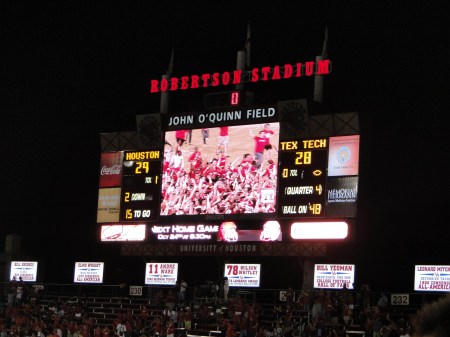
This was an important game for UH, we fans and alumni, and the City of Houston. The record sellout crowd of 32,000 plus may have seemed like nothing by comparison to the crowds that jam Memorial Stadium in Austin, for best nearby example, but the figure was big relative to the plan for building support at UH for a new, much larger venue for football. Such a facility is vital to UH plans for building its way back into national contention as a first tier level athletic program.

When UH first entered the Southwest Conference back in 1976, the Cougars did something that initially made, but eventually broke their highway to NCAA Football Heaven. The Cougars tied for the conference football championship that year and subsequently won or tied for three of four championships in football over the course of their first four years in the SWC. The highlight on UH’s successful mistake was going to Austin on a beautiful Saturday afternoon in 1976 and promptly whacking Darrell Royal’s last UT Longhorn squad by a score of 30-0. To make matters worse, the UH student body also brought a large banner that they unfolded early on in the stands at Austin. It simply read: HOUSTON IS THE UNIVERSITY OF TEXAS!”
Big mistake! The poor, but inspired cousins from the east should never have insulted their rich and powerful relations in Austin on the same day they chose to also smite them and all their legends on their home field of battle. (See David v. Goliath for historical precedent. Even David knew when to keep his mouth shut.) As a result, there was little question from early on that the ancient powers of the old SWC were then loaded to the bear with buyer’s regret over the decision to take UH into the fold. It was also no small wonder, years later, that UH was among those schools who were left out of the move to the Big 12, along with Rice, TCU, and SMU after the Southwest Conference folded. At the same time, UT, A&M, Tech, and Baylor were invited to join the new Big 12 Conference.
Why would the Big 12 take three of the established public school powerhouses, but leave out UH in favor of weak-in-football, private school Baylor? It’s too bad that former Governor and Baylor alumna Ann Richards isn’t around to help explain that one. With the help of late Lieutenant Governor Bob Bullock, I’m betting those two wonderful Texas pundits could quickly clear up any questions we might still have on “Baylor in – Houston out” in the Big 12 move.
To their credit, Texas Tech stands out as the only member of the Big 12’s former SWC four schools who will dare to continue scheduling UH in football. The others may prefer to explain their UH scheduling snubs as strictly an economic issue, but we at UH prefer to believe that it’s more about them making sure that they don’t do anything to help UH use those game opportunities as a device for getting back on all four Cougar paws in the facility, recruiting, and program respect roles race.
If UH keeps winning, time will tell what the truth is. In the meanwhile, keep on keeping on: EAT ‘EM UP, COOGS!

With a record of 3-0 that now includes two wins over respected Big 12 opponents, UH has moved up after this weekend’s results from 17th to 12th in the AP Top 25 Poll. The incredible game played by Cougar Quarterback Case Keenum also deservedly has catapulted the UH junior into the pack of those outstanding candidates for the 2009 Heisman Trophy. Check out the poll for yourself and have a nice week.

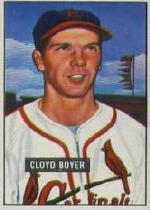 Cloyd Victor Boyer, Jr. was the eldest of three brothers who all played professional baseball up through the major league level. Born in Alba, MO on September 1, 1930, Cloyd pitched in parts of 14 minor league and 5 major league seasons from 1945 to 1961. Two of those seasons for the 6’1″, 188 lb. right hander included service with the 1948 (16-10, 3.15 ERA) and 1953 (4-2, 2.73) Houston Buff clubs. Boyer was a pitcher with a good variety of variable speed options and fair control. He gave up a lot of hits per game (8.6 per innings, career), but he also was effective in getting batters to put playable outs on the field. Over the course of his entire career, he won 137 games and lost 120, recording a minor league career ERA of 3.52. After his active career concluded, Cloyd managed in the minors on five scattered year occasions from 1963 through 1989. He then retired from baseball to his native area of southwestern Missouri.
 The youngest of these three ballplaying brothers was Clete Boyer, who was born on 2/08/1937 in Cassville, MO. Clete was also a right handed hitting third baseman with superior defensive skills. When Clete and Ken faced off against each other in the 1964 World Series as rival third basemen for the Yankees and Cardinals, it was a mighty big day back in southwestern Missouri. – Clete played most of his career for the Yankees and Braves, finishing his major league career with a .242 BA and 162 HR (1955-71.) He never made it to Houston as a player for the Buffs, Colt .45s, or Astros, but we would have loved having him on our resume too.


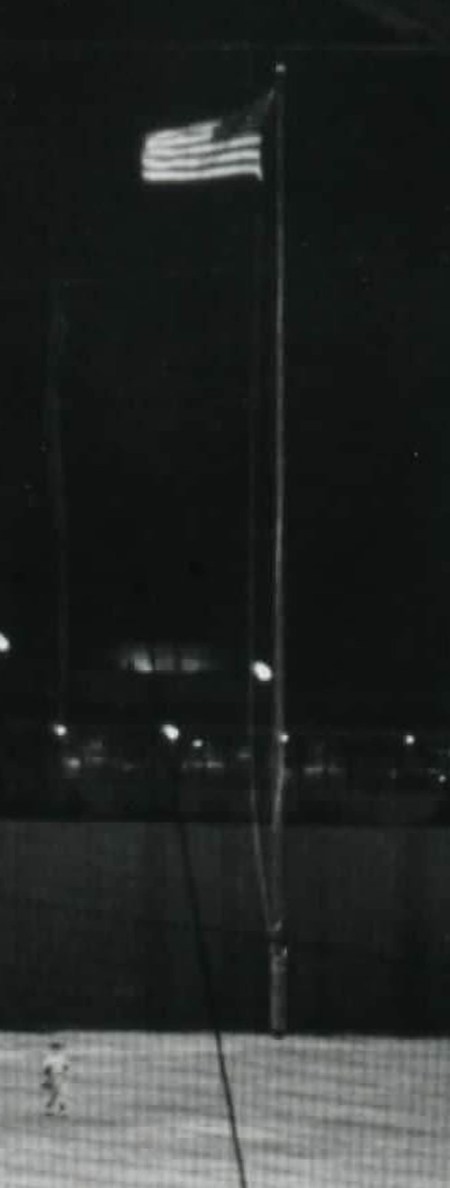 Dead center field in Buff Stadium was 424 feet from home plate. and the outfield pasture also included a free-standing flagpole of some considerable similarity to the one that now resides in Minute Maid Park. It was located about five feet in from the outer wall, but there was no hill to climb.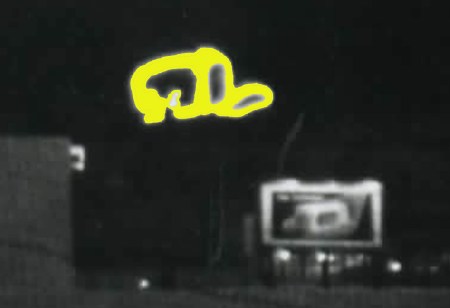
 Aaron Pointer (Batted Right/Threw Right; Outfield) has to be one of the best examples of how life sometimes arms certain people with talents that could take them in several varied directions, but all the while, these opportunities are rising and falling constantly with how the individual makes and uses the decisions he or she finally decides to take responsibility for putting into motion.
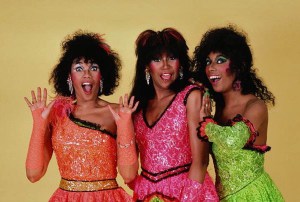 Aaron Pointer batted .402 in 93 games for Salisbury (132 hit for 329 at bats) in 1961 for 19 doubles, 14 triples, and 7 home runs. By breaking the /400 mark, Pointer became the last professional baseball player to exceed that magic mark over a full summer of play. (Rookie League and Mexican League marks are not considered as data on this achievement trail.) At season’s end, Pointer was called up to the 1961 AAA Houston Buffs in time to also hit .375 ( 3 for 8 ) in four games.
 We called him our “Lil Perfesser.” We had no idea that second baseman Ben Steiner actually had played a smidgen of games with the real “Lil Perfesser” of the Boston Red Sox, the great Dominic DiMaggio back in 1946. All we knew is the guy seemed to look the part of a really smart middle infielder when he joined the Houston Buffs after the start of the 1951 Texas League season. At a listed 5’11” and 165 pounds, he looked much lighter, like a guy who needed a paper weight to help him hold his ground at second base on those windy gulf breeze nights at Buff Stadium. Part of his scholarly look is abandoned in this crop shot of Steiner from the ’51 Buffs team photo by virtue of the fact he either chose, or was asked, to remove his glasses for the shot. You may be able to see that he is holding them, and with the natural look simply leaving him looking less professorial and a lot more like the 30 year old career minor leaguer he really was by the mid 20th century.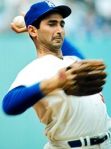
 When Cecil Cooper was named manager of the Houston Astros in late 2007, the fact that he’s black was not covered by the current media as even an interesting footnote to the fact that it then had been a little more than fifty-three years since Houston saw it’s first black baseball player take the field to play for a racially integrated Houston sports team. – Think about it. From the time Houston “welcomed” it’s first black baseball player to the time it saw its first black manager in baseball, fifty-three years and three months had passed.
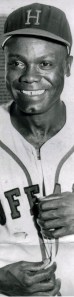 fact that I had just started to drive by that time and needed a good excuse to borrow the family car also factored into the equation. When I borrowed the car, I told my dad why I needed to be there at the ballpark that night. I wanted to see Bob Boyd play for the Buffs as the man who broke the color line in Houston.
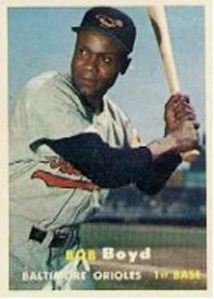 2007, the day that Cecil Cooper made his debut as a manager for the Houston Astros, a day for change, but it had nothing to do with race. Cecil just didn’t get here quite as loudly and, for reasons that have nothing to do with race, he also may leave soon, just as quietly, but maybe not. Maybe the Astros won’t unload all of the 2009 Astros’ failures on the back of their skipper.
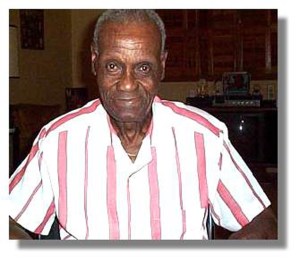 Following his far better than average baseball career, Bob Boyd returned to his home in Wichita, Kansas, where he worked without complaint as a bus driver until he reached retirement age. Bob died in Wichita at age 84 on September 27, 2004. Today, the man who started his career with the Memphis Red Sox (1947-49) of the Negro Leagues is honored as a member of the Negro League Hall of Fame and also the National Baseball Congress Hall of Fame. Hopefully, we shall always continue to remember and honor Bob Boyd and all others who took the first step toward changing things that needed to change. Bob Boyd did his job with grace, dignity, and tremendously unignorable ability.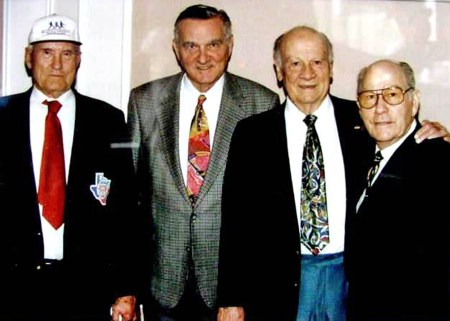

 Houston, Baseball, & Other Musings.
