Archive for the ‘Uncategorized’ Category

My Italian-American All Star Baseball Team

February 4, 2011

Sunny Italy Has Given Us Some Baseball Players.

My All Italian-American Baseball Team / by (Predominant Big League Club)

Pitcher: Mike Mussina (Yankees)

Catcher: Ernie Lombardi (Reds)

First Base: Mike Piazza (Dodgers/Mets)

Second Base: Tony Lazzeri (Yankees)

Third Base: Ron Santo (Cubs)

Shortstop: Phil Rizzuto (Yankees)

Left Field: Yogi Berra (Yankees)

Center Field: Joe DiMaggio (Yankees)

Right Field: Dom DiMaggio (Red Sox)

Their famous name numbers are not voluminous on baseball’s wall of history, but the significant contributions of the few Italian-Americans who have made it to the Hall of Fame level are quite remarkable. My own Italian-American All Star club had to be slightly gerrymandered for the sake of getting all the best bats in the starting lineup. Case in Point: Yogi Berra. Yogi was undoubtedly the best catcher of the group, but I had to put him in left field to make room for the mobility-limited big bat of Ernie Lombardi, whom I then put behind the plate. Yogi played some left field late in his career. Remember? Yogi got to left field in 1960 just in time to have the closest look at Mazeroski’s Series-winning home run leave the yard in Game Seven at Forbes Field in Pittsburgh.

I put another catcher, Mike Piazza, at first base to take advantage of his power. I could have picked a few more natural fielding candidates from guys like Zeke Bonura, Joe Pepitone, Wayne Belardi, or Jason Giambi, but none of these guys, not even Giambi, had the pop in his bat that Piazza possessed.

Third Base was only tough from the standpoint that I wasn’t really sure of Ron Santo’s ethnicity until I Googled the issue. Once confirmed, Ron was a no-brainer. Regardless of ethnicity, Santo was of the best “least honored” third basemen in the history of the game.

The outfield was easy enough with Joe D. available for center field and brother Dom another great defensive, good hitting choice to move over from his routine center field pasture to cover right. We could have fielded an All-DiMaggio Outfield by placing older brother Vince in left, but he couldn’t hit all that well and we needed the spot for Yogi.

The quality here helped make up for the limited quantity of Italian-American candidates.

Five of the guys, Lombardi, Lazzeri, Rizzuto, Berra, and Joe DiMaggio are all members of the Hall of the Fame – and Santo should be as the so-far unrecognized sixth HOF man on that list.  Five of the guys also, and including Mussina, Lazzeri, Rizzuto, Berra, and Joe DiMaggio, were all Yankees during their playing days. Mussina is the only one from that group that even played significant time with another club prior to his Yankees best-years career. The other four guys were career Yankees. Yogi got into four games with the Mets in 1965 during his management of that club, but that slight taint on his Yankees purity hardly counts.

Why so many of the great Italians played for the Yankees, we really can’t say. All we can know for sure is that the Yankees loved Italians and they gobbled them up back in the 1920’s, 1930’s, and 1940’s.

I may have missed someone, but I cannot imagine now who it may have been. If it were do-able, I would certainly  be willing to play your club of nine other Italian-Americans with my guys for a Friday Night DeLuxe Valian’s Pizza anytime, anywhere you want.

How about Mason Park Field on 75th in Houston’s East End? That one worked for me back in the early 1950’s and probably still would.

White Freeway

February 3, 2011

"I'm dreaming - of a white - freeway!"

White Freeway (Sung to the tune of “White Christmas”)

I’m dreaming – of a white – freeway,

Just like the ones we rarely know,

Where the big trucks glisten, and speeders listen,

To hear – cars crash in the snow,

So …

I’m dreaming – of a white – freeway,

With every twitter – that I tweet.

May your twits be merry and bright,

And let’s pray our freeways won’t – be white.

Let’s hope and pray for the best. We’ll have the answer in 24 hours.

The Houston Ice Storm of 1950

February 2, 2011

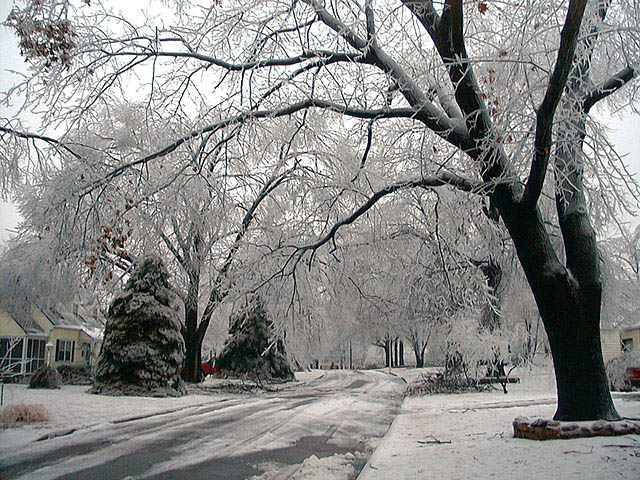
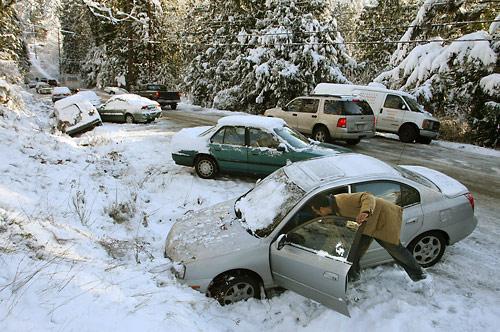
Houston Looked Like This in the Winter of 1950

The exact date escapes me, but I’m pretty sure that it was January of 1950 when a major ice storm hit Houston, knocking out power lines from all the falling frozen tree branches and rendering our un-salted, but frozen-solid streets virtually undrivable, except for the presence of pure Texan drivers who had never seen same and didn’t know any better than to try them out.

Clutch City was Crash City for several days. Hospital emergency rooms and auto body shops were suddenly the hottest service businesses in town – and the only things that were hot in any form. Everybody and everything else were too busy freezing.

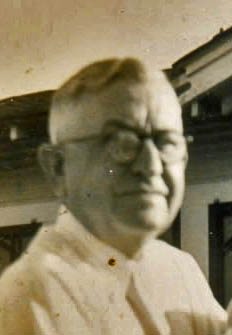
My sweet old Grandfather, Papa Teas, was living with us at the time. He quickly joined the casualty list when he stepped out on the icy backyard steps and mistakenly took a leg-swing at kicking my cat out the way.

Sometime karma comes quick.

“Papa” went into a spin worthy of any virtuoso ballet dancer before landing hard on the ground on his right shoulder. I saw the whole thing and was simultaneously filled with both contempt and concern. I resented the fact that Papa took a whack at my cat, but I was sorry he got hurt. Still, even as I was helping Papa upright himself again, and while I was still feeling concern for his well-being, a part of me held onto “serves you right, old man. You shouldn’t have tried to kick my cat.”

Papa Teas Fell Like A Rolling Stone.

Papa came out of that fall with a broken right arm and, for several weeks, he wore an airplane splint that forced his arm  out on an extended parallel plane with the ground. It had a long open screw-ring line at its bare end – and this protruding element had a way of digging into the sheet rock every time he walked through one of our little narrow interior doorways. Watching my dad’s face cringe in the evening when Papa left the room to use the bathroom was another cheap thrill on a quiet night at our house.

SCRAPE!!! Papa invariably caught the wall corner when he left the room. You could sometimes see the sheet rock dust flare up as he departed. Meanwhile, my ever-patient dad would be sitting over there, like Edgar Kennedy, the old anger-control actor from the Laurel and Hardy movies.

“DOLT!” Dad’s face would almost belch as he rubbed his hand down over his frustrated face, but he never said anything to his father-in-law. He didn’t want to hurt his feelings. And he sure didn’t want to start something with Mom.

Those were some intimate days, my friends. At least, the physical conditions of life were intimate.

Now it’s about to freeze over in Houston again. And I’m just grateful to be living in a house that has several bathrooms. You don’t really appreciate how luxurious multiple bathrooms are until you get frozen inside with a large family in a one-bathroom house.

Yeah, I know. No inside toilet at all would be far worse in sub-freezing weather. Mom and Dad already told me years ago what that one was like. Most of us Americans are lucky beyond our wildest dreams in 2011 – no matter how cold it gets in the next few days.

In Search of Paul Berlin

February 1, 2011

Paul Berlin: King of Houston DeeJays, 1950-2003

Paul Berlin was our man over the airways when America made the biggest move in musical taste it has ever made. He came to Houston in 1950, taking over as a radio disk jockey at KNUZ-AM in time to transition our town from the sweet popular music sounds of the post-World War II Hit Parade music era through the change to those driving, pounding beats of rock and roll. And he did it with style and a taste for history. Paul didn’t kill the old; he simply helped us absorb the new as part of the kind of growth that makes American taste in music and the arts universally eclectic and strong.

Oh yeah, Paul Berlin was one of us young voices when he hit town. He was only 19 and raring to go. He hailed from Memphis and his first job at WHHM-AM. Paul described Memphis as “the only town in America built on a bluff and run on one too.” He thrived in Houston, a town built on level ground and an enormous appetite for growth and new ideas. Once he got here, there would be no further city-hopping for Paul Berlin. He was zeroed-in on his entertaining way to becoming a Houston icon of the airways.

After many years at AM’s KNUZ, Berlin moved into the growing FM market for significant time gigs at KQUE, KSEV, and KBME. At age 72, he finally retired in 2003 after 53 years on the air in Houston.

Some of us came of age listening to Paul Berlin. He wasn’t much older than our early to mid-1950s group and we identified tightly with his appreciation for a wide range of musical styles. Paul knew a little about everyone in music and he generously shared what he knew with the rest of us.

Now he needs to step up front and center, one more time, as master of ceremonies for the Jimmy Menutis August 6th bash in New Orleans.

Did we say “know people” somewhere back there? Paul Berlin earned a ton of honors for his work over the years, including recognition by the Rock and Roll Hall of Fame and induction into the Texas Radio Hall of Fame. He became a close friend to Chuck Berry, Jerry Lee Lewis, Fats Domino, Little Richard, The Platters, a fellow in Houston named Jimmie Menutis, and just about any other giant from early Rock and Roll that comes to mind.

The problem now is this simple: Jimmie and Ruth Ann Menutis would love to ask Paul Berlin to emcee Jimmie’s 87th birthday celebration in New Orleans this coming August 6th, if he’s up to it, but we can’t find him, so far. Paul doesn’t respond to his Texas Radio Hall of Fame e-mail address nor are we able to get any help, so far, from other Houston media people who have better contact info. The Houston phone number for Paul and Inez Berlin is also unlisted.

Yep, Paul Berlin has done a great job of building retirement privacy into his life, but I have to think it would break his heart if the Menutis party unfolded without him because he couldn’t be contacted. – We just have to find him.

If you know how to reach Paul Berlin, or if you have any leads on how we may do it, please get in touch with me here through this Pecan Park Eagle column – or by my e-mail at houston_buff@hotmail.com at your earliest convenience.

Look. We found Jimmie Menutis here without trying. We should be able to find Paul Berlin in Houston with just a little bit of trying.

Thanks for the help.

Ray Dandridge: The Greatest 3B, All Time

January 31, 2011
 

Color Line Quota System Robbed Ray Dandridge of Big League Time.

Two days ago, while I was transporting the nearly age 92 years old Hall of Famer Monte Irvin to the National SABR Day program at the Houston Sports Museum at Finger Furniture, things were going calmly in our discussions until I brought up the name of Ray Dandridge. I told Monte that I always wondered and felt sad about the fact that a great former Negro Leaguer like Ray Dandridge never got his chance to play in a single major league game.

I could sense the change in Monte’s passenger-seat posture as I spoke these words, but Irvin’s own voice soon enough took control of the floor.

“Oh my,” Monte sighed. “That was so wrong that Ray Dandridge never got his chance. We (The New York Giants) could have won it a lot easier in ’51 had we been able to bring up Dandridge from Minneapolis to play third base early enough. Heck! We could won the pennant in 1950, had we been allowed bring him up from the same Millers club, but it just never happened.”

And why not? Why didn’t the Giants ever call up Dandridge? They controlled his contract from 1949 through 1952 – and all he did in that time was tear up AAA with a .362 average in ’49, a .311 mark with 11 homers in ’50, a .324 BA in ’51 and a final .291 in ’52, when he was then age 39.

Did the Giant consider Dandridge too old for the big league jump?

“That wasn’t it,” Monte Irvin says. “I pled with (manager) Leo (Durocher) to call up Ray in 1951. He’d always just fumble around for an answer as to why we were standing pat, but I felt I already knew the answer. You see, we may have broken the color line in 1947, but there was still an unspoken quota system in place in the late ’40s and early ’50s. The Giants already had me and infielder Hank Thompson as their black players and they were reluctant to add more.”

As one result of this color cautious culture, the great Ray Dandridge was denied his performance-earned twilight shot at big league playing time while he was still performing better than most others between ages 36 and 39. Dandridge crossed the age 40 mark late in the 1953 season, finishing out his last season as an active player by hitting .268 with Oakland and Sacramento of the Pacific Coast League.

Ray Dandridge broke into the Negro Leagues with the 1933 Detroit Stars. He spent the next five seasons with clubs in Newark (1934-38) before jumping to the Mexican League for nine of the next ten seasons, returning only in 1944 for another year at Newark. He returned to the States to take over as the playing manager of the New York Cubans before signing with the Giants and a minor league assignment in 1949.

Ray Dandridge, Hall of Fame, 1987.

After his playing career, Dandridge did some scouting for the San Francisco Giants and he also ran some other businesses outside of baseball. He retired in Florida and passed away there in early 1994 at the age of 80. Before he died, Ray Dandridge enjoyed one day for hollow redemption when he was inducted into the Hall of Fame in 1987. How much sweeter could that moment have been had Ray Dandridge been allowed to help the New York Giants win a pennant or two or three in his talented twilight years?

A short time ago, I picked Judy Johnson as my All Negro League Third Baseman, but Monte Irvin has now dented that choice for me in favor of Ray Dandridge. “He was simply the greatest there ever was,” Irvin says. “Ray could out-field and out-hit any other third baseman I ever saw in the Negro Leagues – and the New York Giants really missed out by not bringing him up while he was at Minneapolis.”

I can’t argue with Monte Irvin. I always liked the guy, anyway, but now I’m a full-blown Ray Dandridge fan. Move over, Judy Johnson. My eyesight for greater talent just received a major boost from somebody who ought to know.

SABR DAY IS FOUR-BAGGER

January 30, 2011

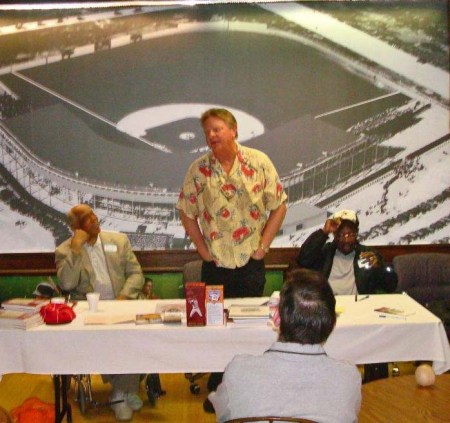
L>R: MONTE IRVIN, LARRY DIERKER, JIMMY WYNN.

The Larry Dierker Chapter of SABR (The Society for American Baseball Research) had a tag-em-all meeting yesterday, Saturday, January 29th, from 2-4 PM in celebration of our National SABR Day gathering at the Houston Sports Museum inside the Finger Furniture Store located on the historic site of old Buff Stadium (1928-1961) on the north side of the Gulf Freeway at Cullen. Sixty-eight members and guest signed the reception book and another twenty to thirty later unregistered show-ups ran the attendance count close to 100. Those who stayed for the whole baseball rodeo hardly missed a subject that had anything to do with the game, and especially with Houston history of same.

Chapter Leader Bob Dorrill

Chapter leader Bob Dorrill spoke about the importance of National SABR Day as the one day of the year that all chapters unite through out the land in a united effort to promote the purposes of SABR to all persons interested in the preservation and celebration of baseball’s history.

As General Manager of our vintage base ball club, The Houston Babies, I received a beautifully framed team photo of the unforgettable club itself, thanks to a brief, but forever appreciated acknowledgment from field Manager Bob Dorrill. All I can say is thanks. I love you guys to pieces. – I just wish that you’d stop going to pieces in the middle of a game. Maybe this year will be better. Go further – I really think it will be. Take it one more foot slide forward: I believe in you, Babies! This year we are going to scorch the pastures of Southeast Texas with all the power of our innate, but, so far, unused playing ability.

In that light, Chapter namesake Larry Dierker talked about Houston’s early professional start in the 19th century as the Houston Babies. On a kidding note, Dierker wondered if any city or town ever began with a more humiliating nickname. Seriously, he then launched into an interesting summary of how Houston flowed and ebbed as a baseball town over the years. He painted a moving picture of the mind with his account of how Houston Buffs fans once started out from homes as far away as five miles away and began their walks to the ball games played at Buff Stadium, the park pictured in the mural behind the table in first featured photo. – By the time these walking fans reached the ball park, their singular steps had flowed together into a river of Buff fans, now converging upon that earlier version of our baseball heaven.

Jimmy Wynn and Monte Irvin both talked openly about their playing days in response to questions from the crowd. Scott Barzilla of SABR spoke briefly about his new book, “The Hall of Fame Index,” and visitor Dick “Lefty” O’Neal was also recognized for his book, “Dreaming of the Majors; Living in the Bush.” Those two gentlemen, along with Jimmy Wynn and SABR’s Bill McCurdy, who recently collaborated on “Toy Cannon: The Autobiography of Baseball’s Jimmy Wynn,” were also on hand after the meeting to sign copies of their various works.

Former Houston Buff Larry Miggins told some of his best anecdotal baseball stories. No one tell ’em quite as well as the old Irishman. Miggins and Vin Scully attended the same high school in New York City. While they were there, Scully predicted that he would be broadcasting major league games and would be behind the mike on the date that Miggins broke into the big leagues with a home run –  and that’s exactly what happened. Scully was calling the game for the Brooklyn Dodgers when Larry Miggins broke into the big leagues for the St. Lois cardinals by hitting a home run off Preacher Roe. – How’s that one for A SABR Day spine-chiller?

Ton Kleinworth of SABR designed and presented a brand new trivia contest called “Name That Player.” SABR’s Mack WIlson then followed Tom with a nice little multiple choice trivia contest. The winner, Mark Wernick of SABR, received a Larry Dierker action figure donated by Mike Acosta of the Houston Astros.

Dave Raymond of SABR and the Houston Astros radio broadcasting crew gave us a nice conservative, but optimistic evaluation of the 2011 club. Dave sees the Astros as having a lot more pop up the middle with the additions of Cliff Barnes at shortstop and Bill Hall at second base. Both are hardscrabble infielders with long ball capacity, but low OBP figures. Low OBP was a problem last year and needs to improve, according to both Raymond anyone else who is paying attention. The pitching is adequate and we may be only a key player development breakthrouh away from getting back into the thick of things.

Greg Lucas of SABR and Fox Sports followed Raymond with a nice cap on the NL Central for 2011. According to Greg, the Cards, Brewers, and Reds are the frontrunners, but the Astros and Cubs may get back into contention on an eye-flick. Lucas only discounts the Pirates due to their bad pitching.

Between the lines of these comments from Raymond and Lucas, the gentle hum of spring hope was beginning to germinate – and isn’t that exactly what it’s supposed to do this time of year?

As for me, I dove deep into history. I (Bill McCurdy) offered the challenge that we need to develop a chapter plan for researching and accurately writing Houston early baseball history from 1861 to 1961. That century span covers the documentable era of time that passed between the formation of the first Houston Base Ball Club through the last season of our minor league Houston Buffs.

Curator Tom Kennedy welcomed one and all to the beautifully refurbished Houston Museum of Sports History. Couched on the site of the still embedded home plate from Buff Stadium on its original spot, owner Rodney Finger and the Finger family deserve incredible appreciation for all they have done and continue to do to preserve this important artifact marking on the trail of Houston’s baseball history. Now, if we can only rouse the same effort on the task of tagging and noting the significance of earlier venues, where the first Houston Base Ball Club was formed in a room above J.H. Evans’s store on Market Square in 1861; where the Houston Base Ball Park existed downtown when our first professional club took the field here in 1888; and when and where, for sure, the first game was played at West End Park on Andrews Street. I refuse to go in the ground until those facts are sorted out and published somewhere by someone who cares about Houston baseball history.

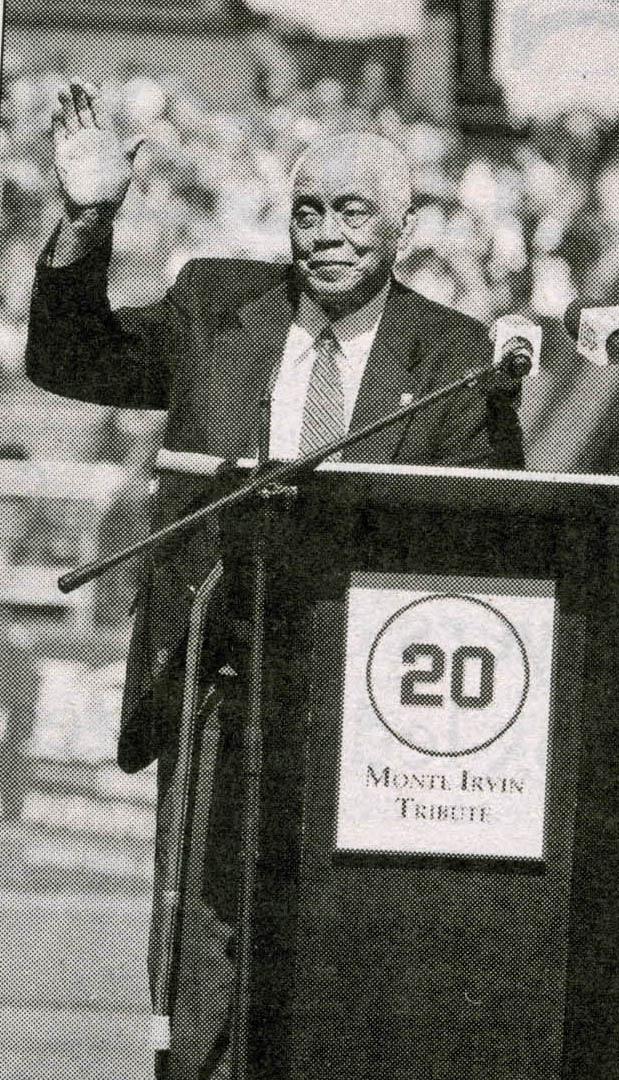
The Giants finally retired Monte Irvin's #20 in 2010.

My extra treat was all tied into the ninety minutes or so that I spent driving Hall of Famer Monte Irvin to and from the meeting, between downtown and the west side. I couldn’t begin to share everything we talked about in the space we have here – and I wouldn’t, anyway, on the grounds that he spoke to me in confidence on a lot of baseball subjects with opinions that are his and his alone to divulge in a public forum.

You probably have figured this one out from hearing him speak: Monte Irvin is one of the kindest, truest gentleman you could ever hope to meet. He attributes his long life to having a wonderful, guiding mother and a whole lot of luck. When pressed, he will concede that genes help out too, but he clings pretty close to the wisdom too that “to become an older person you first have to survive being a younger person” and, as far as Monte is concerned, that’s where the luck comes in.

I can share one Monte Irvin Story. Almost apologetically, I asked Monte about that 1951 steal of home in the first inning of Game One in the Giants’ 5-1 World Series victory over the Yankees. I realize that I probably was about the 5,000th fan to ask, but I couldn’t help myself.

Monte was on third with a triple. Allie Reynolds and Yogi Berra were the battery for the Yankees. And Bobby Thomson, a right-handed batter, as you well better know by now, was at the plate. All of a sudden, Monte breaks for the plate. He is stealing home, and he does so successfully, sliding under Berra’s tag for the Giants’ second run in the first stanza on one of the too few days the ’51 Series went the Giants’ way,

“When did you know for sure you were going to try that steal of home?” I asked.

“I pretty much knew it going in,” Monte says. “I had stolen home five or six times during the season and I also was quite familiar with that slow deliberate delivery style of Allie Reynolds. Reynolds threw hard to make up for the slow delivery, but he usually threw high, which was what he was doing in that moment with our batter, Bobby Thomson. I knew I had a good chance of making it. I also had talked with Leo Durocher prior to the game and he had given me the green light to try, if I saw the opportunity.  By the time Reynolds saw what I was doing, he was already in motion to launch another high, hard one. That didn’t change. The pitch came in high and hard. I came in low and hard. By the time Yogi can get his glove down to tag me, I’m safe. Had Allie thrown it low and hard, he probably would had me. It didn’t work out that way.”

Near 90 showed up for SABR Day in Houston

Before we arrived back at Monte’s place at the end of the day, he had started reminiscing about the many Giant teammates that are now gone. That pretty much is going to happen when you live as long as Monte has. He turns 92 on February 25th.

I finally blurted out, “Listen, Monte, you may have gotten this far by being lucky, but you are here for a reason. And part of that reason, as I see it, is to help baseball people remember what’s really important about the game and life itself. We need you to hang around forever as our role model, our teacher, and our national treasure.”

Monte smiled. “I’ll give it my best shot,” he promised.

SABR Day in Houston was a great day in general. A lucky day for some of us. And a blessed day for us all.
Jimmie Menutis Party Set for Aug. 6; Be There!

January 29, 2011

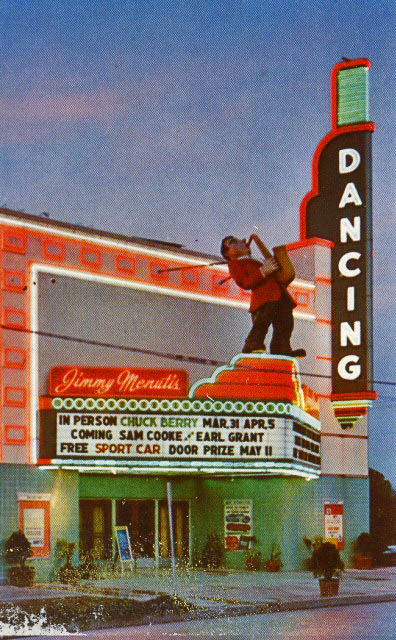
Houston's Cradle of Rock 'n Roll on Telephone Road near Wayside.

OK, Houston! We asked for it! Now we’ve got it and we can’t drop the ball!

Back on August 5, 2010, I wrote a column on the old Jimmie Menutis Club on Telephone Road near Wayside back in the late 1950’s and early 1960’s. It truly was Houston’s “Cradle of Rock ‘n Roll” for so many of us who were coming of age in that era. Everybody played Jimmie Menutis’s place, from Chuck Berry to Sam Cooke to the Platters. You name them. – Jimmie booked them. And Houston fans had a 3-D, front row seat to the most dramatic era of change in American music history.

That article twanged a memory string that vibrated all over the place. Old JM fans came pouring from all those cracks in the walls of history to express their joy of that moment. And just when we thought it could not possibly get any better, out of the blue, we heard from Jimmie Menutis himself! The chords of happy celebration had somehow traveled all the way to the man himself – and suddenly we were all about direct contact with a talking, writing, expressive version of our years ago icon, There was even talk then of a reunion party.

Well, guess what, friends? There is going to be Jimmie Menutis Birthday and Anniversary Reunion Party after all. I just got the preliminary, settled news about it yesterday from Ruth Ann Menutis, Jimmie’s dear wife of 52 years, and we are all invited to attend.

The party is set for August 6, 2011 in New Orleans – a full year and one day from the date of our original discussion here on The Pecan Park Eagle. 87-year old Jimmie Menutis will be turning 88 around that time and he wants to share this moment with his friends and fans – and in a way that is befitting his memory and reputation.

Ruth Ann tells me that her husband may be 87, but that he looks 65 and enjoys excellent health. Jimmie loves people and the shared joy of good music danced and sung together. Our Houston fan base needs to show up for Jimmie this summer – and we can help best now by giving Jimmie and Ruth Ann our early show of hands on the personal commitment to be there.

Based upon the e-mail I received yesterday from Ruth Ann Menutis, here’s what I can tell you about the plan and the arrangements, so far:

Date: August 6, 2011, for sure.

Location: New Orleans, Louisiana. The actual venue is still under review. It’s site depends upon a better firm estimate on the number of people actually coming. I understand that an 80th birthday party for Jimmie drew 300 people. This one is expected to be even larger.

Entertainment: The world-famous Platters will be there, for certain, along with an Elvis Band that is a Vegas favorite. There is another who may also be there, but I am not at liberty to say anything. All I can say is, if this “other” performer also comes, they had better rent a hall with expandable walls. – The family is also trying to contact former Houston disk jockey Paul Berlin to serve as master of ceremonies.

Cost: There is no charge for attending the party. People coming will have to pay their own travel and hotel bills, but the Menutis family is getting a block of rooms at a better rate for those who request first interest in making reservations.

Arrangements: If you wish to reserve a room through the Menutis family, or if you could simply let them know soon that you are committed to coming, please contact Ruth Ann Menutis at a reasonable time of day and communicate your hotel room needs and information on the numbers of people you expect to bring.

Contact information:

US MAIL: Ruth Ann Menutis, 110 Travis St., Lafayette, LA 70503;

Phone: 337-289-3000:

E-Mail:  rmenutis@brandedworksinc.com

This is a big deal, folks, and we who loved Jimmie Menutis need to do our part to make this whole bash a night for Jimmie forever. That starts with making it as easy on the Menutis family as we can with our arrangement needs. I will continue to update new developments here on The Pecan Park Eagle and to fine tune or change things as the Menutis family needs to change them, if necessary, as time goes by. For now, I would say their biggest need is getting the best read possible on how many of us are coming.

So, please spread the word to others who may not ordinarily see The Pecan Park Eagle. We can’t make a big deal out of Jimmie Menutis over the Internet and then miss his summer party in New Orleans. – Hey! This thing could be like Woodstock for Old Rockers, if enough of us show up.

You know what? I like the line I found earlier. It will be A Night for Jimmie Forever.

Brother Orchid Wasn’t Up for Tonys or Oscars

January 28, 2011

Yesterday I had reason to visit my old St. Thomas High School on other research business that took me enjoyably through all of our old “Eagle” newspapers from the time I was there, 1952 to 1956. Neither the material for this story, nor any of my personal misadventures from back then, had anything to do with the reasons that fellow 1956 classmate Ed Szymczak and I were there to meet with STHS curator Anna Henderson, but I simply could not pass on this copy and a few others I digitally photographed for today’s story in The Pecan Park Eagle. It was “funnest” thing I ever did back in the day.

For our Senior Class play in November 1955, Father Walter Scott, CSB, had decided to stage a production of Brother Orchid, an early 1940’s B Grade movie that had starred Edward G. Robinson in the dual personality role as the title character Brother Orchid and his pre-transformational personna, Little John Sarto.

Brother Orchid was a no-brainer for St. Thomas as a good play choice: (1) As an all male school, it eliminated the need for recruiting female actors from Incarnate Word Academy or St. Agnes; and (2) It rode on a Catholic theme. – a bad guy reforms by falling into the healing hands of a Catholic religious order after he’s almost killed running from his old crum-bum companions in crime and is found dying in the woods by one of the flower-breeding brothers.

Long story short: I tried out for the play and got the lead role as Brother Orchid/Little John Sarto. t age 17, I suddenly had more lines to learn in Brother Orchid than I would ever see again. It would prove to be, with cause, my only rodeo as a leading man on stage, but I loved every minute of it, as I think did everyone else who took the ride as actors and stage hands. I can’t see Sam Sacco to this day without getting into the first performance night in which Sam forgot his lines and was simply making things up to say to me.

“&$%@##*&, Sam,” I would say between scenes, “give me the right lines. Everything I’m saying out there sounds stupid because you can’t remember what you’re supposed to say.”

“A good actor doesn’t need lines,” Sam Sacco would shoot back. “A good actor just needs to feel his part and speak from those feelings.

In case you never saw any other plays or movies from Sam Sacco or yours truly, there’s reason enough right there in the Sacco pronouncements.

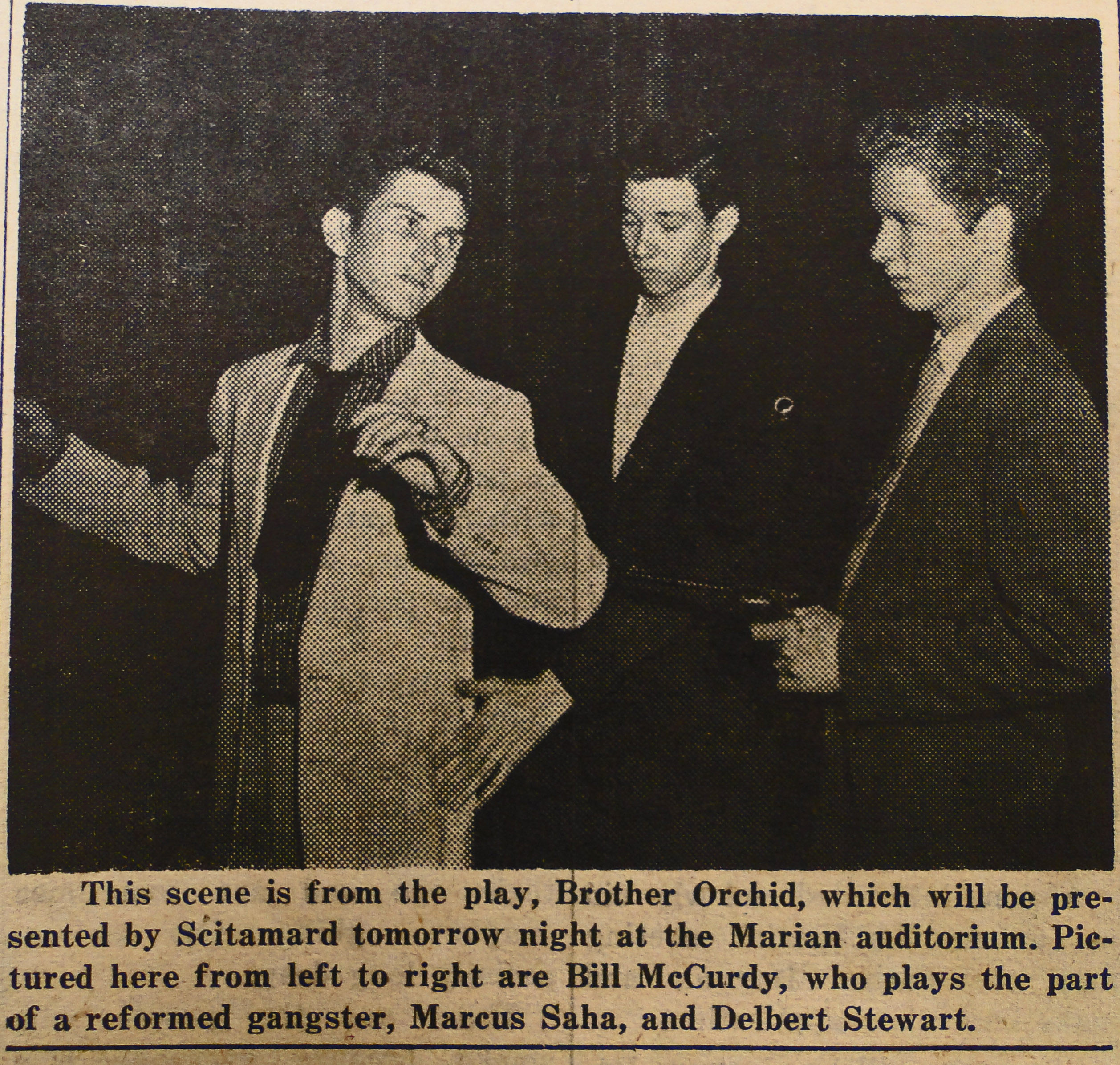
Delbert Stewart as The Gimp (right above in photo) and I also had our moments with the dialogue. Even in 1955, we thought the dialogue was often a little too corny to say, but we still accepted Director Scott’s will – and tried to say our lines, anyway. In the scene above, I’m supposed to turn around and confront The Gimp, who does have the drop on me. I’m supposed to interrupt The Gimp’s stream of vitriol toward me with this brilliant little dirge of dialogue: “Can it cluck-brain! You’re the one who got us all in the hot water!”

In our final rehearsal, I reached a point in which I could not say that line without breaking into laughter. That break would then get Delbert Stewart started on the same hilarity kick. It got worse from there. Pretty soon, all I had to do was turn around and make eye contact with The Gimp and we both would crack up. Thank God for the patience of Father Scott. We worked it out in rehearsal and delivered on stage – with no further fumbles in this area, anyway.

Something did happen shortly before the play that effected the rest of my life, but you need to hear this part in context. It was a very different era and none of our Basilian order mentors would ever have given us advice that was designed to harm our health in any way. Father Scott was just trying to help make up the visage gap that apparently existed between the way the grizzled Edward G. Robinson appeared in this role on-screen and the way I looked as a soap-behind-my-ears 17-year old in a high school play version of the same story.

“Say, Bill,” Father Scott asked me after rehearsal one day, near opening night, “do you smoke?”

“No, I don’t Father.”

“Well, why don’t you think about taking up cigars for the play? It would help you look the part,” Father Scott said. “You can always quit again once the play is finished.”

Made sense to me. I bought some cheap cigars on the way home. And I did quit after the play was finished – but it was fifty years later.

My love affair/addiction with/to tobacco was firmly launched with Brother Orchid. I loved the little kicky rearrangement of my brain cells that came from smoking – and I also learned on stage that I could use the smoke to enhance the attention people paid to my character. In fact, we had a whole scene that was virtually a throw-away until I figured out it all could change with one puff of smoke.

In this early scene, my old gang is on stage discussing my imminent return from prison and fearing the changes it may bring. They pretty well paint me for the audience as a cigar-smoking meanie who could punish those who had horned in on his territories while he was locked up. I’m supposed to enter the scene from the right after one gangster/actor expresses the vain hope that i won’t show. But, after listening to the scene off stage with my lighted cigar in hand, I pick what I think is a better route of entry. – I stay out of sight, but first blow this big cloud of blue smoke on stage  as the announcement that I’m coming.

The audience roars. Then I walk on the stage for the first time to applause. And I’m hooked. If not on the stage, a hundred per cent on smoking.

That one’s on me. I don’t blame Father Scott. And I did finally pull up from cigarettes fifty years later in better shape than I deserved to be.

In the final scene of Brother Orchid, I get shot by a character named Dum-Dum, but I live long enough to deliver one more cornball line: “I go to my God with a good heart because the Florentines have been preserved to do His Work!”

The trouble is – Dum-Dum’s gun doesn’t go off as scheduled. The blank bullet doesn’t fire.

In the interest of time, I fall to the ground, anyway. – Then the gun goes off. And I say my final lines to the titter of murmuring laughter. Then I stand up and we all take a bow for the mercy applause of our supportive audience. Stage careers end for all of us that night. Exiting left and right.

The cast for our play beyond my humbling “Bill McCurdy as Brother Orchid/Little John Sarto” role included; Sam Sacco as Fat Duchy; Delbert Stewart as The Gimp; Marcus Saha as Freckles; Michael Storey as Dum-Dum; Ralph Marek as Solomon; Buddy Negrotto as Dominic Battista; Kenneth Hogan as Brother Nasturtium; Joe Carlotta as Brother Geranium; Marshall Seavey as Brother Hollyhock; and Tom Withey as Abbot Jonquil.

The 1940 movie version of Brother Orchid pops up on Turner Classic Movies every now and then and it is also available from TCM on DVD.

No, I do not have a copy of the film.

Port of Houston Tour Is Free

January 27, 2011

Check it out at http://www.portofhouston.com or call 713.670.2416 for boat tour reservations.

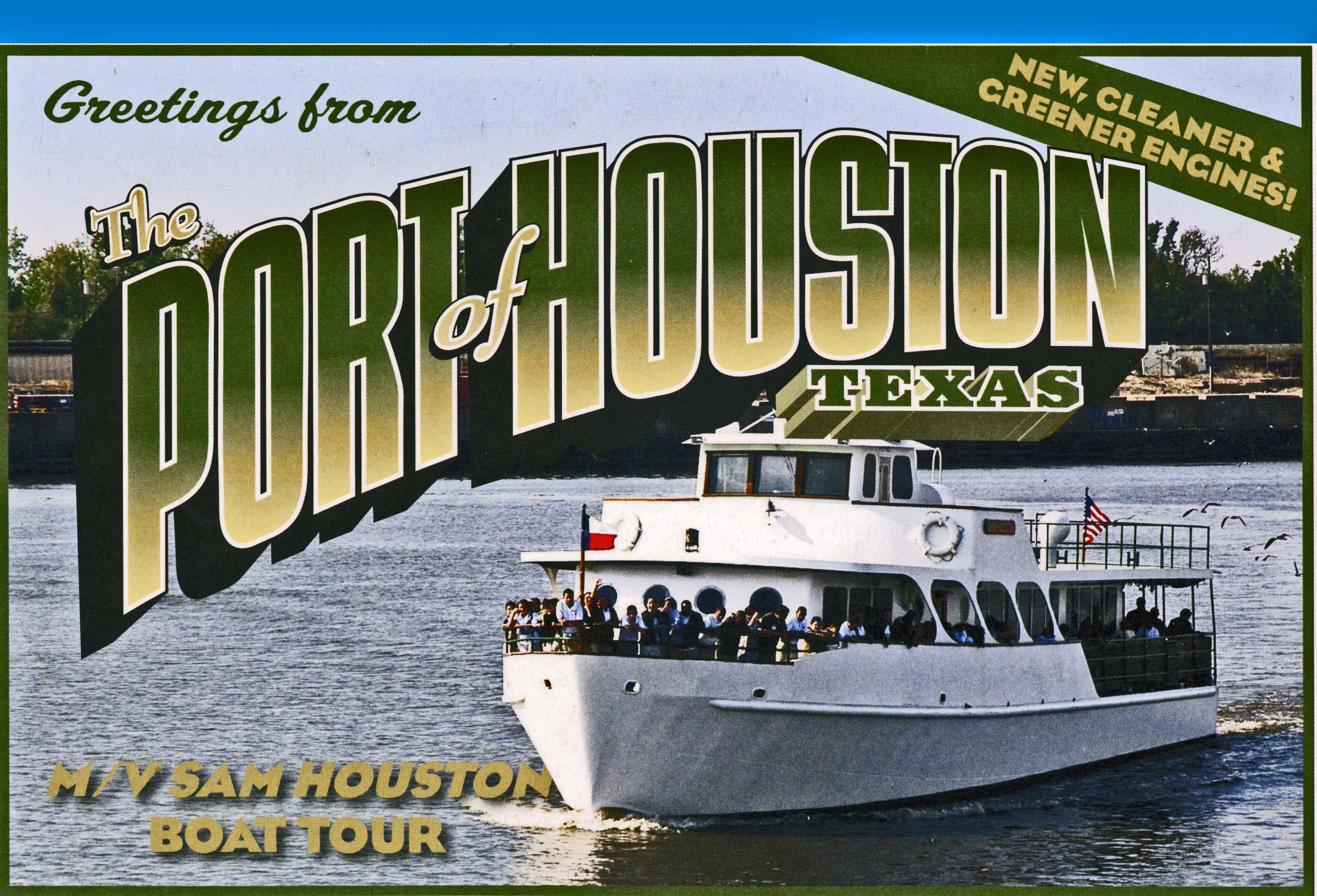
You could have knocked me over with a feather. This freebie boat tour of the Houston Ship Channel has been going on for well over a half century and I didn’t even know about it until this week when my son Neal invited me to go with him yesterday, Wednesday, January 26. It was ninety minute dream day tour with about sixteen other people aboard the M/V Sam Houston, a ship that is designed to comfortably carry 90 passengers.

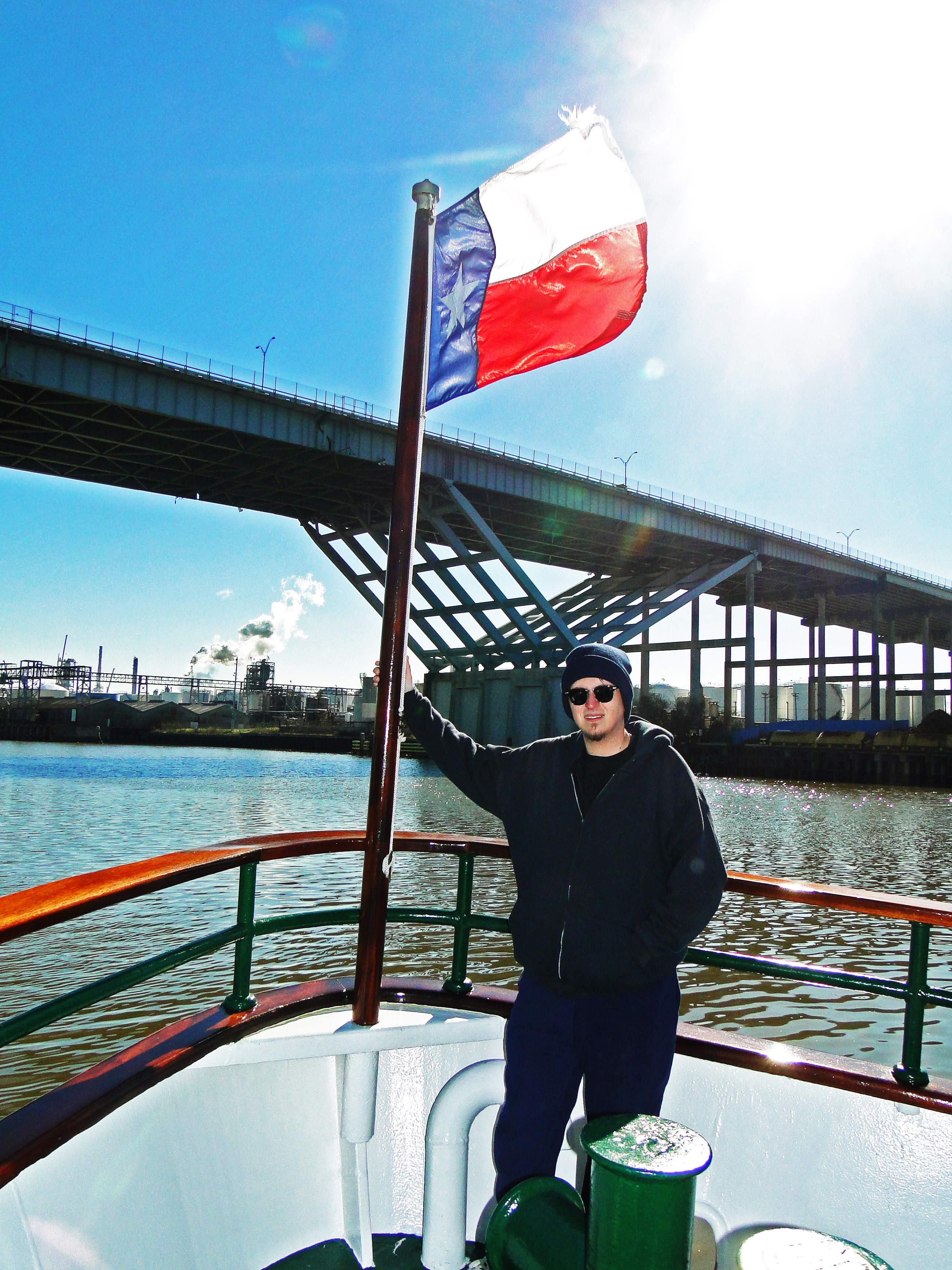
Neal & Bill McCurdy: Standing just inside the bridge where Buffalo Bayou becomes the Houston Ship Channel at the Turning Basin.

Neal and I took the 10:00 AM tour. The routine schedule for all tours works like this:

Monday: Closed. Tuesday, Wednesday, Friday, & Saturday: Two Tours; one at 10:00 AM and another at 2:30 PM. Thursday & Sunday: 2:30 PM only. Closed on all official  holidays and closed for all of each September for annual maintenance work on the M/V Sam Houston.

As a security measure, all reservations must be made 24 hours in advance and all adult “tourists” will need photo identification cards to be allowed into the Port’s tour embarking dock at the Sam Houston Pavilion – and again at tour boarding. Cameras are fine, but no large purses or big travel bags are allowed on the boat.

Looking upstream, Buffalo Bayou begins and ends on the other side of this bridge.

Pelicans are just one of the many wild bird species that somehow make their homes on the murky waters of the Houston Ship Channel.

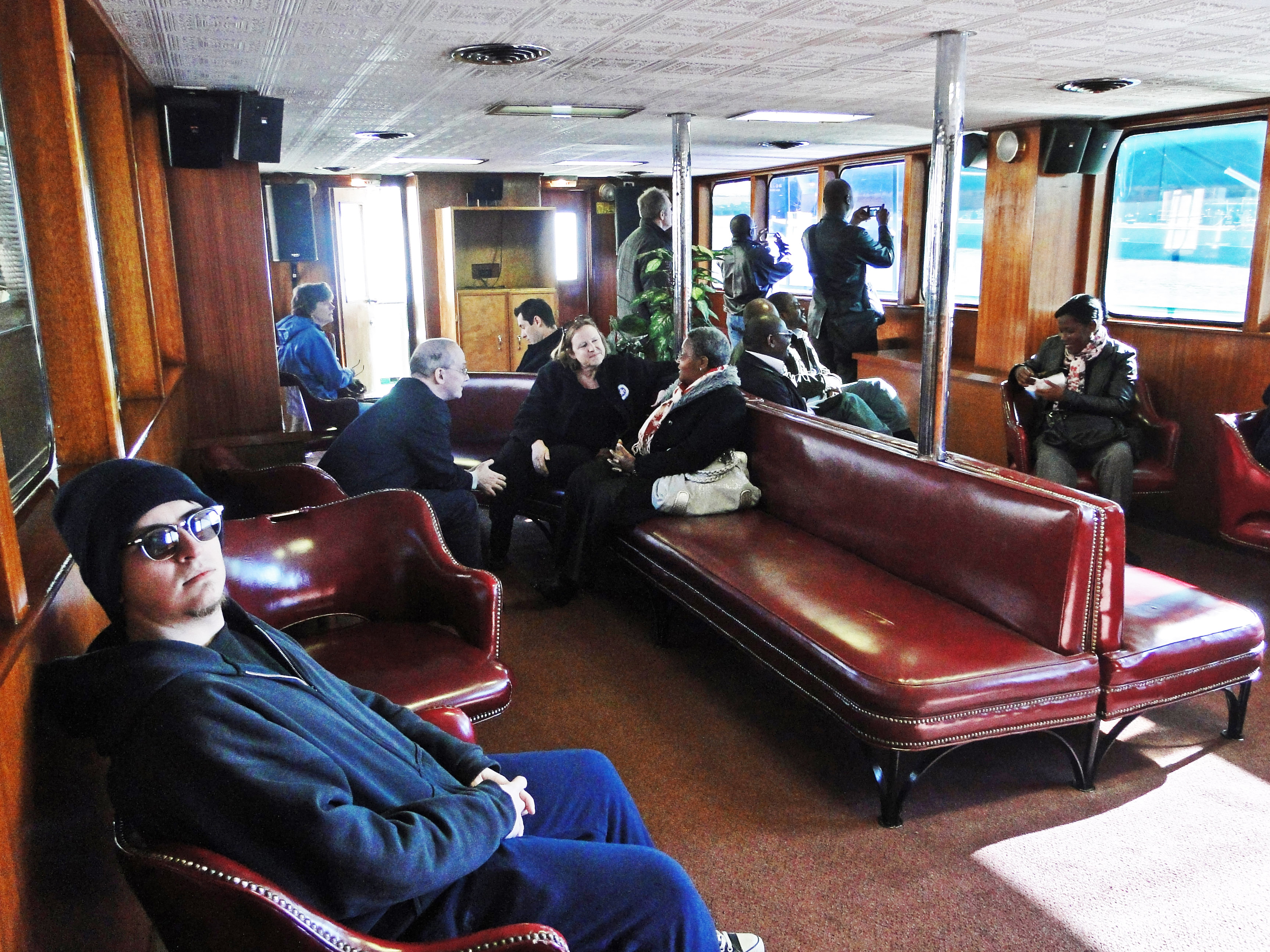
"The Sam" features an air-conditioned interior with comfortable seating and free coffee, plus ample exterior walking space on deck, all around the boat. Our tour included mainly French-speaking people.

We sailed under the big overpass on 610 East.

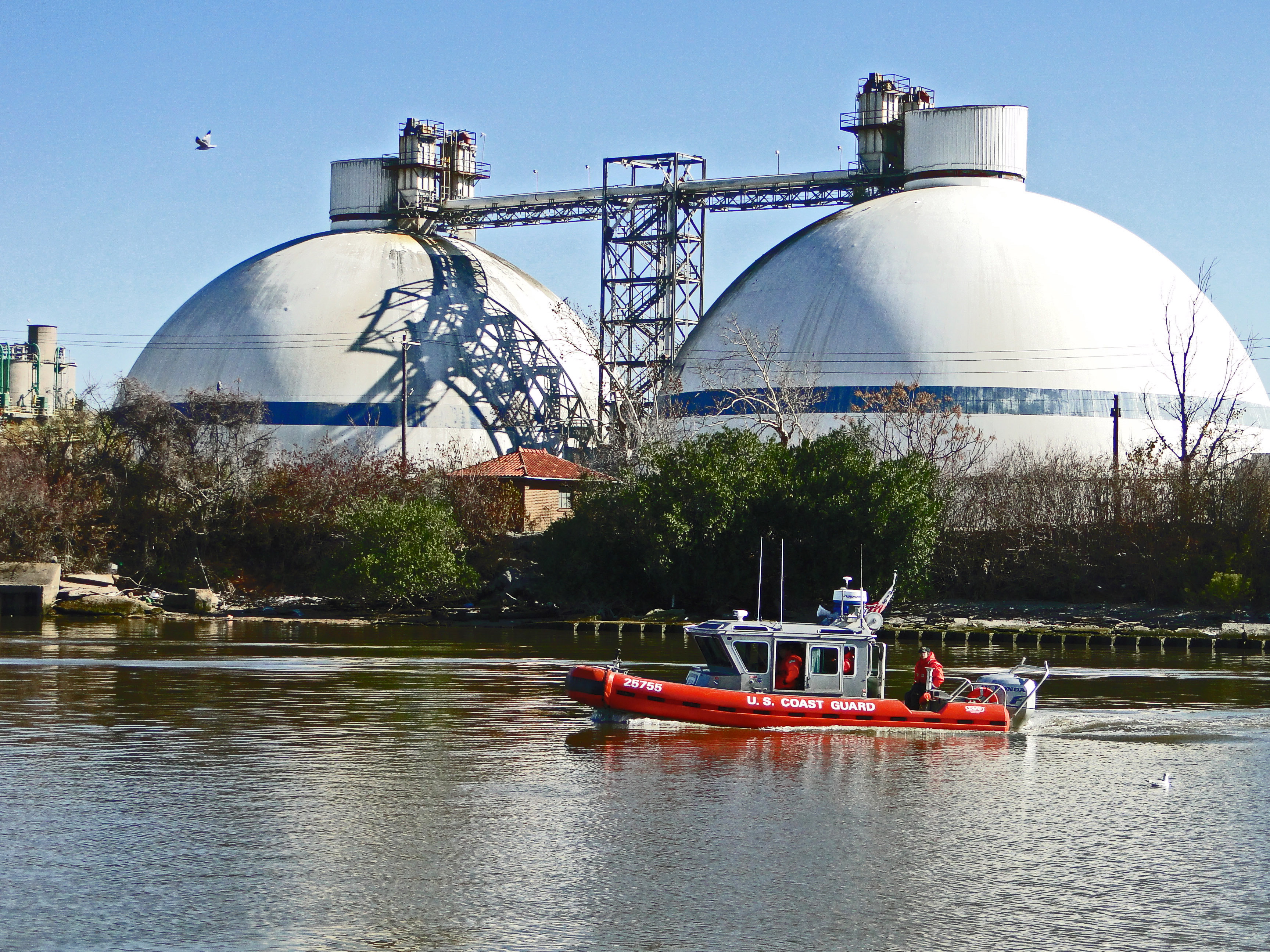
Our captain and/or auditory tour guide (We never saw nor met the person behind the voice) kept us filled with information about what we were passing as we made our 45 minute first half trip down the ship channel. The sights were both expected and surprising. Unloading import docks, massive storage facilities, ships of all sizes, from Coast Guard to Harris County Sheriff ships to cargo cities to tugboats and survey vessels were all out there at once. Energy and activity appeared to be the order of things around here on a daily basis. There was a lot to be done – and all of it had to do with the movement of massive, heavy objects.

In fact, it was the enormity of these ships and this operation that stayed firmest with me. At the Houston Ship Channel, we have a chance to witness the stuff that moves our economy one way or another on a daily basis. It’s almost scary to consider the cost that goes along with bad commerce decisions on this level. The stakes and the risk-reward swings are every dollar as large as the size of the physical operation.

Passing a Monster of the Deep

Colossal-Scale Hydrogen Tanks

Plenty of Outside Walking Room

These ships were designed for the biggest possible haul.

The closer you get, the more "awesome" takes over.

The descendants of the same birds that greeted the Allen Brothers on these waters in 1836, plus some newer ones, are still hanging out as survivors.

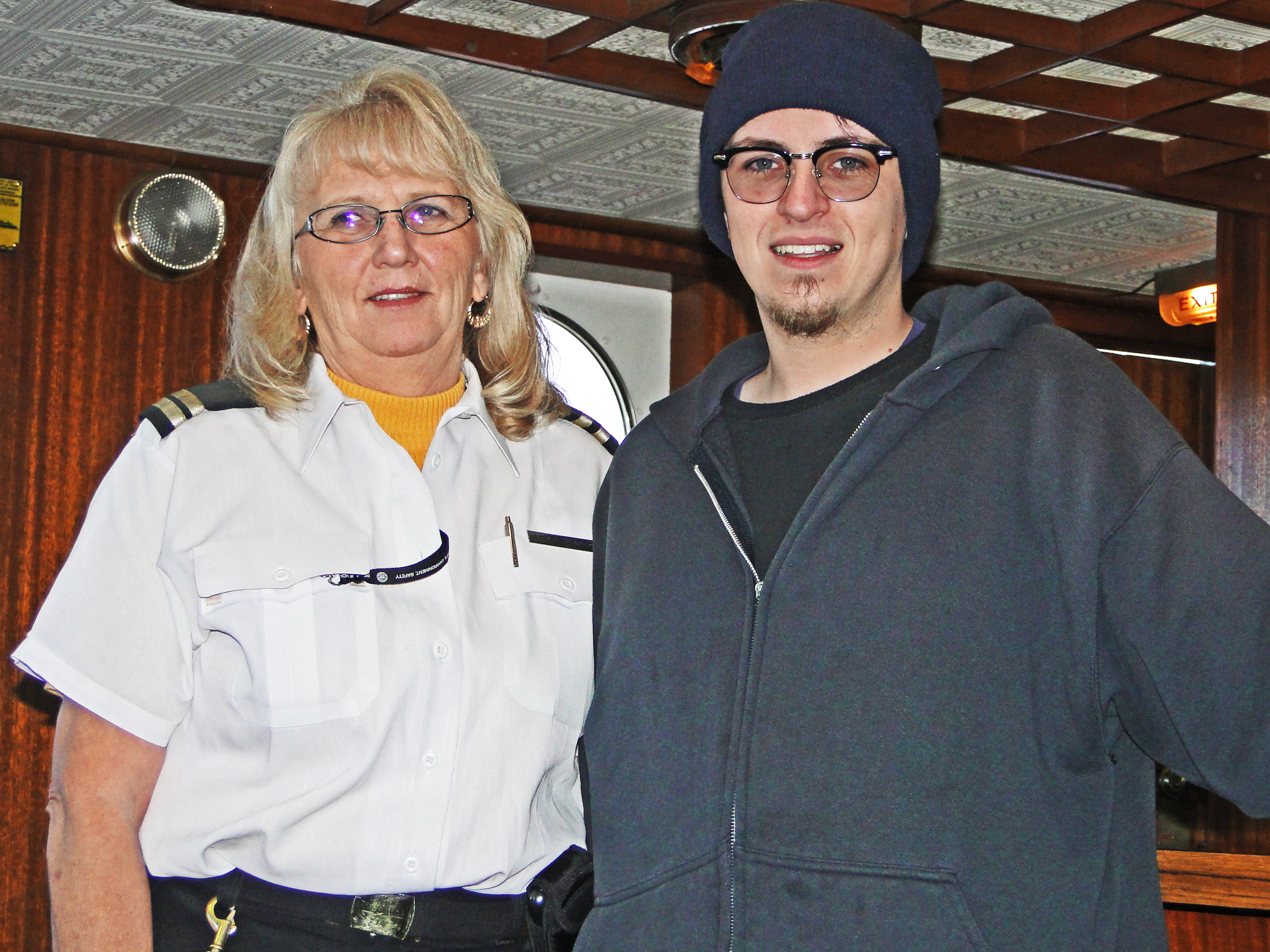
Jennie Johnson of "The Sam" was a gracious host to Neal and me on this trip. Thanks for the information, the coffee, the band aids, and the good company, Jennie!

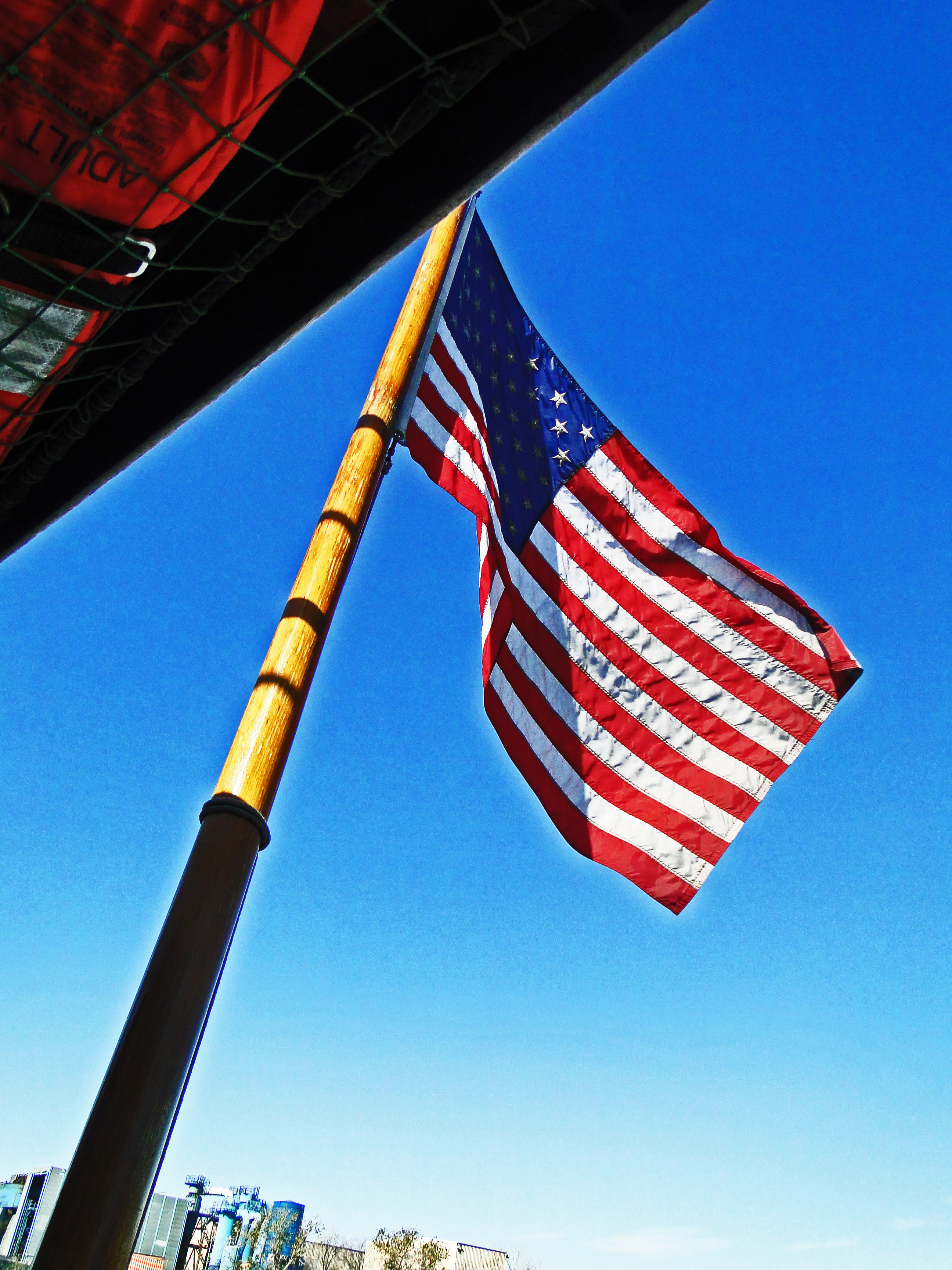
Old Glory Really Shines on a Blue Sky Day!

And it truly was a blue sky day, one that Neal and I will hold together in our hearts and minds as another great father-son moment to remember. I’m very lucky that this great young man came into my life from birth when he did. He has his own life as a young man now, but he still makes time to do some “adventuring” on a random January Wednesday that we both had the time to be together.

No “Cat and the Cradle” remorse here. I’m glad that I always had time for Neal when he was growing up. Now, it seems, he has time for me.

Thank you, son, for another wonderful day.

Houston: One of several depictions of our city on the walls of the Sam Houston Pavilion.

Th Sam Houston Boat Tours are supported with funds collected through a 1% surcharge fee assigned to every ship docking at the Port Houston. The money pays for the running, staffing, and maintenance of the ship and its free touring package – and remember, that includes free coffee. Hang out here for a while and some us might start to discover the sense of entitlement that seems to drive the lives of so many others on much broader fronts

I’m not used to the experience that comes pretty close to feeling as though we are “getting something for nothing,” but I certainly enjoyed the boat ride yesterday. And also the free coffee. I’d recommend it to all of you, but that tout may be coming a tad late. Yesterday, if I recall correctly, we learned that over one million people took the same boat tour between 1958 and 1979 – and I have no idea how many have made the trip since then.

If you haven’t, it’s worth the run.

Pictures Worth 5,000 Words

January 26, 2011

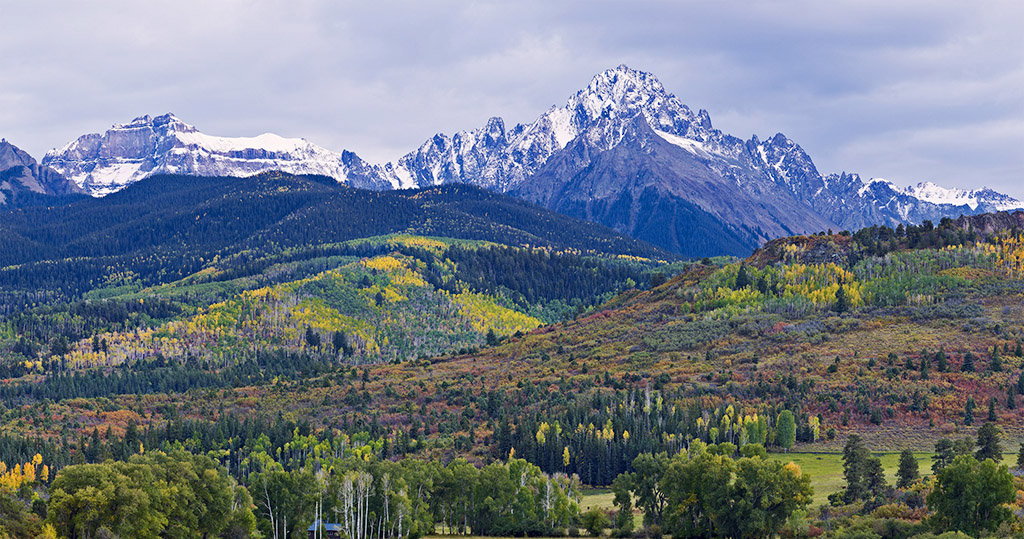
A Rocky Mountain High ... As Close as Your Eye

If a picture is worth a thousand words, these five panoramas, at least, should be worth five thousand units and probably more. Using your cursor as you very slowly circumnavigate these 360 degree perspectives of some beautiful western nature scenes, you will be able to view each vantage point almost as totally as you would in person. You won’t have 3-D vision with these photos, nor will you feel the heat of the sun, the rustle of the wayward western wind, the babbling sound of slowly rolling waters, or the varied aromas of prairie dust and mountainside wildflowers, but you will have just about everything else you need to simulate the journey. And that includes both your memory and your imagination.

Simply click on any of the five links below for a different trip. And, of course, kick back with your cursor ad enjoy.