Archive for the ‘Uncategorized’ Category

Mykawa Road

February 24, 2011

Early Japanese Houstonians were Agricultural Pioneers.

Mykawa Road.

It sounds like a great book title, and maybe that’s one of the reasons it also now serves as the name of a local Houston rock band in 2011, but that’s not what it was about one hundred years ago. Back then, it was not even about the road itself, but the nature of what was going on in that very rural area of SSE Harris County, in what is now covered by zip code area 77048, north of the Sam Houston Parkway, east of Scott Street and south of Griggs Road,

During the 1950s, Mykawa Road was famous to my adolescent generation as the home of the “Hi Nabor” drive-in movie theatre, one of the many in our Houston circuit search for the perfect date flick. You traveled down a long asphalt stretch of two-lane darkness on Mykawa to reach a movie screen that shone brilliantly in the absence of light competition from any other source in the area. The theatre grounds rested upon some of the very rich rice field land made productively famous by the Japanese immigrant to Houston who originally settled here to cultivate the area.

Many people hold the impression that Houston’s Asian community began with the displacement immigration period that followed the end of the Viet Nam War in the 1970s. Not so. We’ve had a smaller Chinese, Korean, Filipino, and Japanese population in the Houston area to some extent dating back to the 19th century. Of these groups, it was the Japanese, and one leader in particular, who led the growth here of a people who came to do a specific contributory kind of work in the greater Houston early community. The Japanese people came here to survive as some of earliest dedicated crop farmers.

Early Grafting of Orange Crops Fails as Houston Proves Too Cold.

Shinpei Maekawa was a Japanese National who came to the Houston area at the turn of the 20th century to raise crops that would prosper in the rich soil available to farmers of this area. Maekawa, whose name was inevitably re-spelled phonetically as Mykawa, was familiar with the abundant rains we receive and he came here with a very good idea that rice crops could flourish in our area.

The long road stretch that fingered its way south to the Japanese farmer’s land easily came to be known as Mykawa Road over time. And the kindly and industrious Mr. Mykawa proved himself right on target with rice. By 1906, his rice fields flourished. Another crop, oranges, did not fare so well. As shown in the previous post card photo, the Japanese came here with good knowledge of grafting as a significant help to orange crop productivity. What the Japanese farmers did not know at the time, as did none of their other racial farming peers, was the hard fact that Houston winters were simply too cold to make raising oranges a practical crop on the upper Texas coast. After a few hard freeze winters wiped everyone out, raising oranges north of the Rio Grande Valley was pretty much abandoned throughout the entire State of Texas.

Harvesting Rice on Mykawa Road in the Early 20th Century.

Planting rice in the Houston area, on the other hand, was here to stay – and it rapidly expanded to include much of the cultivable land west of Houston in the current Katy, Texas area. In fact, most of Houston’s and Harris County’s far western and southwestern neighborhoods have been built on lands formerly used for planting rice.

To the best of my knowledge, and I really have not researched the matter deep enough to be happy with all I don’t know about the impact of World War II on Houston’s Japanese-American population, there was no internment of citizens and land seizure policy that also came down so heavily upon the citizens of Houston. It’s bad enough those suspension of basic rights were illegally forced upon Japanese-American citizens in California.

If you have anything to contribute on how Japanese-American Houstonians may have been effected by World War II internment policies, please comment here. I will try to research the matter further too and post another column on this subject when new information merits the coverage.

A Movie Gimmick Quiz

February 23, 2011

We went to see the movie “Unknown” last night. That’s the new thriller-mystery starring Irish actor Liam Neeson as the scientist who survives a near fatal accident and coma on a professional trip to Berlin, only to find that some other man has assumed his identity and that even his wife doesn’t seem to know him.

I wouldn’t spoil the rest of this story for anything. If you like fast-moving plots with a lot of intriguing thought planted deep inside both the major story line and the actions of the major characters, you don’t want to miss this one. “Unknown” is the best of its kind to come along in quite a while and Liam Neeson is simply perfect in this role as the beleaguered academic who suddenly finds himself as the “stranger in a strange land.”

Everything resolves in the end – and I don’t think you will figure out the whole set of answers in your own mind before the dust all clears. If that does happen, then we need to immediately  put you in charge of the search for Osama bin Laden.

The movie did not completely escape film story cliché. It inspired me to prepare the following brief quiz on what certain things mean when you see them in a movie. Not all of these are from the movie “Unknown,” but I’m betting you will not need an answer list to score a perfect 100% on this test. What follows are ten general movie facts. Read them over and then select the best one of four multiple choice answers as to what they each mean when you see them in a film:

(1) One of the characters has a cough.

(a) He needs a cough drop; (b) It will go away; (c) He needs to see a doctor; (d) He’s going to die.

(2) A woman walking home on a deserted street late at night hears the footsteps of someone following her.

(a) She is about to get the news that she is a lottery winner; (b) Her mother is checking up on her again; (c) It’s just a stranger and has nothing to do with her; (d) She is going to die.

(3) A young couple moves into an apartment building that has graffiti scribbled all over the interior hallways.

(a) The building’s interior designer is on vacation; (b) The couple’s new neighbors are preparing a “welcome wagon” greeting; (c) One of their neighbors turns out to be Andy Warhol and another is Jackson Pollack; (4) As for the young couple, he or she, or both, will be attacked and left for dead before movie’s end.

(4) A young man moves to the city and then can’t decide between marriage to his sober childhood sweetheart back home or the exciting city girl he then meets who likes to drink and party a lot.

(a) He marries the girl from back home and lives happily ever after; (b) He marries several drinking city girls in a row and lives happily ever after for a while each time; (c) He marries the sober girl from back home, stays married, and finally dies of boredom; (d) He finds happiness by staying single.

(5) Pages suddenly blow violently loose from a calendar on the wall near an open window,

(a) Time passes; (b) tornado winds have stricken the city; (c) This is an existential movie and the blowing pages have no meaning beyond this moment in time; (d) Some combination of the first three choices.

(6) An attractive woman walks into the office of a down-on-his-luck chain-smoking detective to ask for his help.

(a) She needs help locating a black bird figurine; (b) She is an e-cigarette nicotine vapor inhalation system sales person; (c) 95% of what she tells the detective will be a lie; (d) Proving why he is a down-and-outer, the detective will find and choose to believe the 5% she tells him that is true.

(7) In a classic thriller-horror movie, the heroic couple survives a night of terror by pushing the monster out a window or down the stairs to his apparent death and then prepares to walk out of the place on their own way to safety and relief.

(a) The monster lives long enough to grab somebody by the leg and fight one last time before he’s finally slain for keeps; (b) The heroic couple gets away, but, when the camera flashes back to where we last saw the monster drop, there’s no one there as “The End” line plays across the screen with a question mark;; (c) If the movie is old enough, there’s a good chance the monster was played by Boris Karloff, Bela Lugosi, or Vincent Price; (d) People easily rise from the dead in these kinds of movies.

(8) When Mars attacks …

(a) Remember this fact: Except for that Michael Rennie film from way back, “The Day the Earth Stood Still,”  the aliens never come in peace. They always come to kill people and plunder Planet Earth; (b) It probably will take a real invasion by Earth aliens to rally all Earthlings to the same side of their mutual cause with all others; (c) Martians are vulnerable to destruction by protracted exposure to Country & Western music; (d) Martians may be conditioned into states of greater affinity for humans through protracted exposure to the music of Lady Gaga.

(9) If you see a Roman chariot racer wearing a wrist watch in Ben Hur ….

(a) You are watching a time traveler from the 21st century NASCAR circuit; (b) The watch will have a sun dial face with no second-hand; (c) It is likely that you have converted an ancient urban legend about the watch-wearing charioteer into your personal hallucinatory delusion;  (d) the film’s continuity editor was out to lunch on the days that this scene was both shot and edited for inclusion in the go-t0-market print.

(10) The overriding message of a film like “Avatar” is …

(a) leave simple cultures alone and their unadulterated presences in the world will make Planet earth a safer, more loving, and more civilized place;  (b) oil exploration corporations, from the Gulf of Mexico to the planet featured in “Avatar,” are the great spoilers of our interplanetary environment and the same greedy groups that produce enough salaries to make movies and their widespread attendance both popular and affordable; (c) if we all could own and operate working avatar bodies in the brick and mortar world, many of us would be in Florida or Arizona for spring training right now; (d) for as long as the subject remains open and credibly reachable at any age, keep dreaming of what you want to do when you grow up,

And while you’re at it, have a nice Wednesday.

2011 Astros: Early Roster Predictions

February 22, 2011

Astros 2011: Who's on First?

Count me among those fans who are happy that the Astros have now put a public face on their plans to rebuild the farm system as the primary talent source for the major league roster. I supported the old skin-shedding of Oswalt and Berkman from the 2010 roster and the decision to go with younger faces at all key roster spots, wherever possible. I applaud Tal Smith and Ed Wade for their re-thinking and re-tooling of the club’s scouting and player development staff – and I like what I’ve seen of the younger players coming in as prospects.

The only black cloud I see is just one of those things that can’t be helped in today’s game, but it deserves comment. Just as Michael Bourn was developing as the icon of our Astros youth or Phoenix bird player redevelopment, he turns around and signs up Scott Boras as his agent. Now the question is: Can we really afford for Bourn to have the career year we need him to have in 2011? If he does, it may simply give agent Boras the opportunity next year to make the Astros an offer on the future of Bourn that they will choose to refuse. What a conundrum!

I don’t see a lot of surprises developing as the Astros cull down to their 25-man roster by opening day. Were it not for our two DL infielders and the two Rule 5 Draft pick pitchers that the Astros are likely to keep, picking it now would be even easier. Given no claims of visionary power or inside knowledge, here’s how I seeing it settle out. Things could change if Brett Wallace squats and doesn’t hit from spring game one, but that would probably just means that Wallace goes down to Oklahoma City while Lee moves to first and Bogusevic takes over in left.

Keppinger and Sanchez will not be fully ready to go on Opening Day, but they should both be back full-bore by late May. I don’t see Tommy “Fair Field/No Hit” Manzella sticking with the club unless Clint Barnes really sucks wind in the spring, nor do I see much future in the infield here for Mr. Downs. I also don’t see any big surprises in the pitching roster from the start, unless we suddenly find Captain Marvel hiding out there in rookie garb.

I look forward to another great year from Billy-Goat-Bearded Brett Myers as we also hope again that this is finally the season that Wandy Rodriguez loses his “Mr. Hyde” alter ego, once and for all.

Nothing original from me on what’s needed this spring: (1) Castro and Wallace have to start showing they can hit MLB pitching; (2) Chris Johnson at third needs to show he can do it again as a hitter; (3) Lee, Bourn, and Pence just need to be the players they already are; and (4) Hall and Barnes need to show us that Ed Wade’s confidence in them is justified as adequate keystone base figures with compensating extra power pop at the plate; and (5) the pitchers need to get their arms in shape and their stuff working without getting hurt before Opening Day.

Here are my early final roster picks. We’ll see how far off I am when the real season starts:

2011 Houston Astros: 2011 Season Opening Day 25-Man Roster Predictions.

Pitchers

Starters

(1)        Brett Myers (BR/TR)

(2)        Wandy Rodriguez (BB/TL)

(3)        J.A. Happ (BL/TL)

(4)        Bud Norris (BR/TR)

(5)        Nelson Figueroa (BR/TR)

Relievers

(6)        Jeff Fulcino (BR/TR)

(7)        Wesley Wright (BR/TL)

(8)        Wilton Lopez (BR/TR)

(9)        Fernando Abad (BL/TL)

(10)    Brandon Lyon (BR/TR) Closer

Rule 5 Draft Pitchers

(11)   Aneury Rodriguez (BR/TR)

(12)   Lance Pendleton (BL/TR)

Catchers

(13)   Jason Castro (BL/TR)

(14)   Humberto Quintero (BR/TR)

Infielders

(15)   1B:  Brett Wallace (BL/TR)

(16)   2B:  Bill Hall (BR/TR)

(17)   3B:  Chris Johnson (BR/TR)

(18)   SS:   Clint Barnes (BR/TR)

(19)   Matt Downs (BR/TR)

(20)   Jimmy Paredes (BB/TR)

Disabled List *

Jeff Keppinger (BR/TR)

Angel Sanchez (BR/TR)

Outfielders

(21)   LF: Carlos Lee (BR/TR)

(22)    CF: Michael Bourn (BR/TR)

(23)   RF: Hunter Pence (BR/TR)

(24)   Brian Bogusevic (BL/TL)

(25)   Jason Michaels (BR/TR)

* As they are able, look for Keppinger and Sanchez to replace Downs and Paredes as the reserve infielders. All plans could change if the Astros decide not to carry either or both of their Rule 5 Draft pitchers (A. Rodriquez & L. Pendleton) on the major league roster for the entire 2011 season.


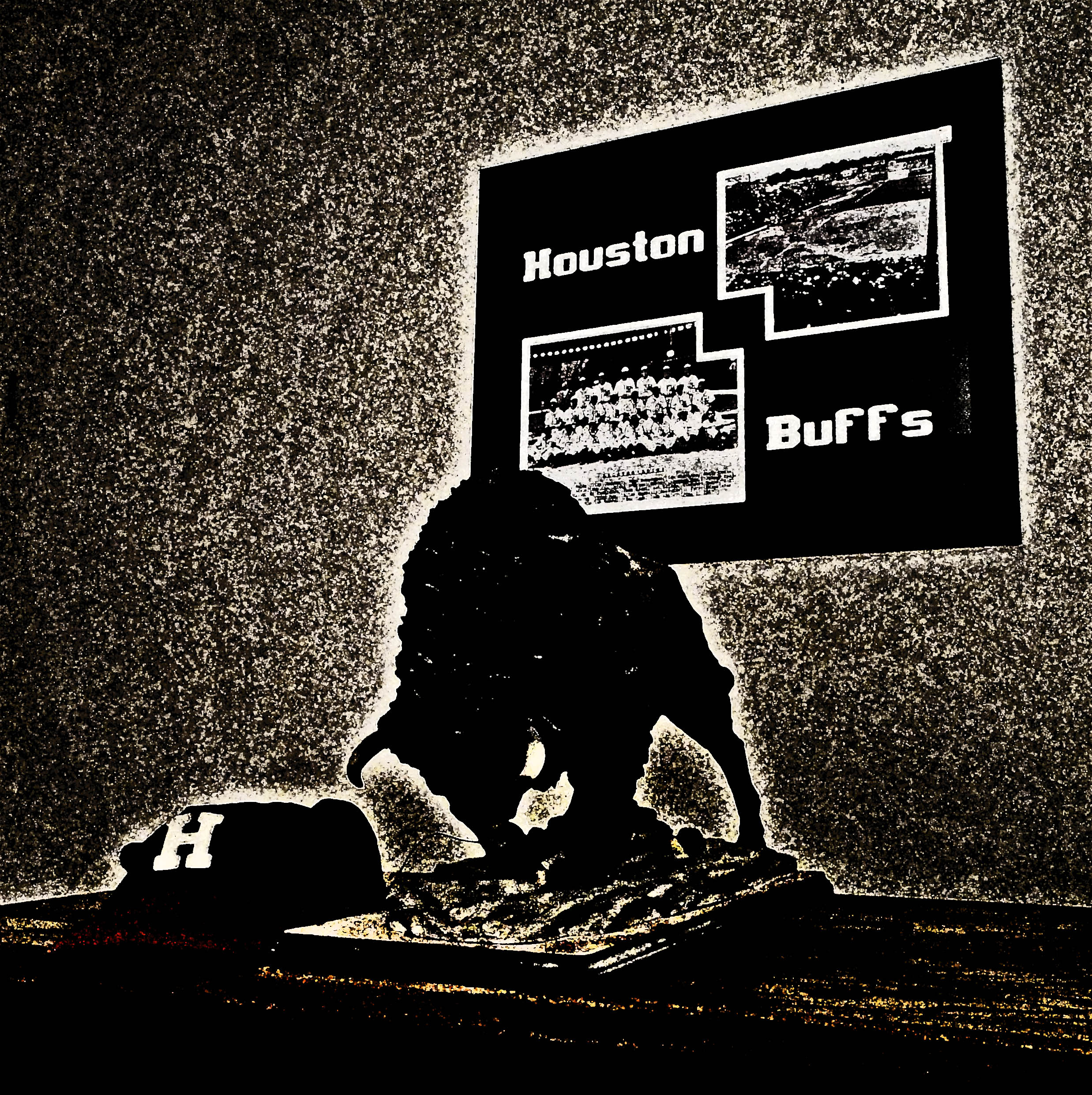
Remembering the Buffs

February 21, 2011

Houston Buffs Forever!


The thundering hooves of memory,

Stir our souls to rise and roar,

In hot pursuit of destiny,

On passion’s fiery shore.


And so it was with baseball,

In sandlot games galore,

Inspired by human buffaloes,

Into the ball bats tore.


We played from light to fading sight,

Our twilight whisper game,

And then we slept to rise again,

And play till we fell lame.


And if the day shall come for us,

When echoes call the herd,

We’ll race with all abandon,

To the place it once occurred.


“Pick up your glove and follow me!”

Is the order of our day.

“It’s time to play the game for keeps!”

Our hearts can’t wait till May.


A Time Travel Trip to NY 1927

February 20, 2011

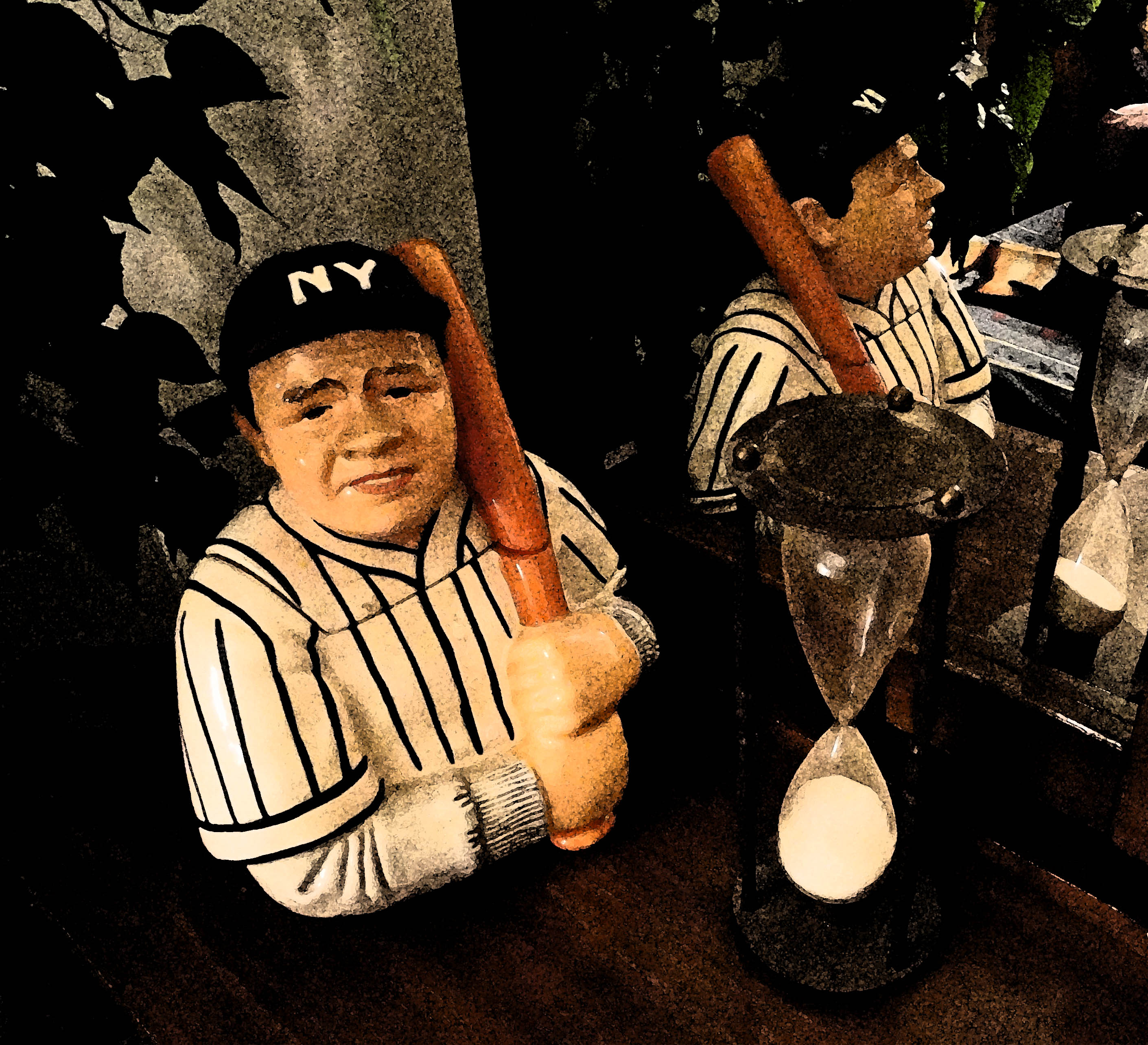
On March 2, 1927, Babe Ruth signed a $70,000 contract with the New York Yankees for 1927, making him the highest paid player in baseball history.

It is Tuesday, February 20, 1927, in New York City and, even though these times will come to be remembered as the Roaring Twenties, most of the country still had a lot of catching up to do on how much freedom is OK on weekends. In South Carolina, on this date, some men are arrested and charged with violating the Sabbath by playing golf on Sunday. It’s good to know we will get passed this form of  prohibition by 2011. There aren’t enough jail cells in the nation to lock up all the Sunday golfers these days.

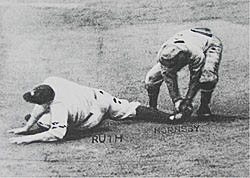
Hornsby Tags Ruth to End '26 Series.

New York City is the late winter of 1926 and early spring of 1927 is still stinging from their seven-game loss to the St. Louis Cardinals in 1926. The team had come home to Yankees Stadium with a 3-2 lead in games before blowing two straight to the pitching magic of the great Grover Cleveland Alexander, first as a starter in Game Six- and then as a shocking reliever in Game Seven. Game Seven and the famous episode contest in which Alexander gets called in to pitch with either a hangover or migraine  against the dangerous Yankee hitter Tony Lazzeri with the Cardinals leading by a run, 3-2, with two outs and the bases loaded. Alexander strikes out Lazzeri and then shuts down New York the rest of the way. As a final stinger, Babe Ruth reaches first as the potential tying run in the ninth, with Alexander still pitching, two outs, and the Yankees still down a run by the same fated score, but with Bob Meusel (.315) now hitting. Inexplicably, Ruth decides to steal second on the first pitch to Meusel. Meusel tries to cover, but misses, and Ruth is thrown out on a swift and accurate throw from catcher Bob O’Farrell to Cardinal Manager/Hall of Famer Rogers Hornsby.to end the Series and send New Yorker dreams of winning a World Series for only the second time into winter hibernation. Makes you wonder. Will the Yankees ever catch up to those five World Series titles won by the Boston Red Sox in the first two decades of the 20th century?

Prohibition against the legal sale of alcohol is still the law of the land in 1927, but smugglers, bootleggers, speakeasys, and home delivery services busily keep America’s thirst for a certain mind-altering substance quenched with great abandonment of moderation. Babe Ruth is one of the earliest supporters of illegal alcohol supply services in the winter of 1927 and he does what he can to keep the movement flowing.

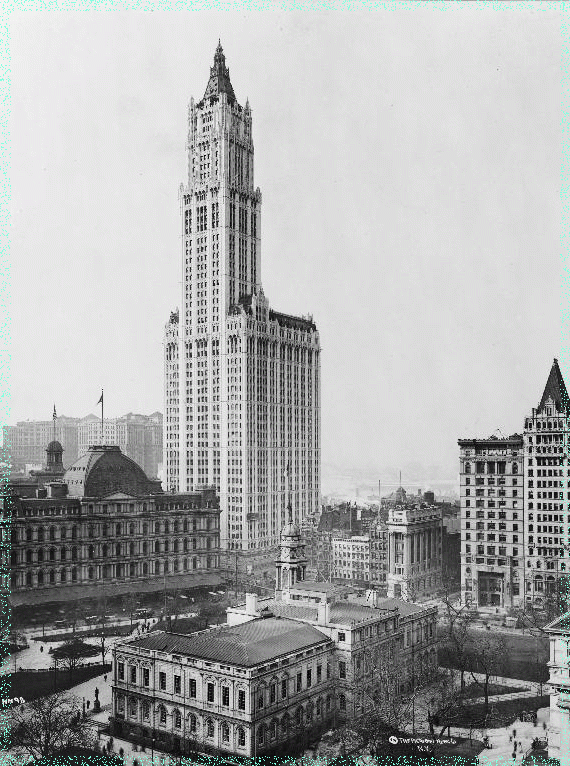
Woolworth Bldg.: At 52 stories, the tallest building in New York, 1913-1930.

The Chrysler (1930) and Empire State (1931) Buildings are still only elegant dream salutes to skyscraping power in 1927. At this time,  the world’s first true scratcher of deep space blue remains the 52-story Woolworth Building, a position is has held as the world’s tallest building since 1913. New Yorkers are getting around town on street cars, subways, elevated trains, shoe leather, and that booming new brain baby of Mr. Henry Ford of Detroit, the Model A spontaneous combustion engine motor car. People smoke cigarettes, cigars, and pipes liked chimneys, and so do the dense belching industrial fire stacks of early 20th century American manufacturing, heating, and waste disposal by incineration. The air is bad, but the money is good, and the people are busy spending time, money, and energy on what makes them feel good – as opposed to exploring questions of what is good for them.

Nobody in New York worries about running out of money, oil, alcohol, nicotine, or good times. These are the 1920s’s, our apparently non-stop celebration of America’s successful venture into the war that ended all wars. The word “rehabilitation” has yet to be invented, but there is some talk of America’s need for moral “reformation.” To that notion, most New York  urbanites are saying, “”23 skidoo to you and the horse you rode in on. – Just take me out to the ballgame, but, since its wintertime, and not yet baseball season, a speakeasy will do.”

On March 1, 1927, a little boy by the name of Harry Belafonte is born in Harlem. Wonder if we shall ever hear from him again?

On March 2, 1927, Babe Ruth becomes the highest paid player in the history of baseball when he signs a 1927 contract with the New York Yankees to play for $70,000 over the course of a mere single season. Wonder again. What can the Bambino possibly do in 1927 to justify that kind of money? Herb Pennock will be the next highest paid Yankee in 1927, and he stands to make only $17,500 on the season.

On March 5, 1927, Notre Dame defeats Creighton, 31-17, to finish the 1926-1927 college basketball season with a record of 19 wins against only one loss. Fourteen years later, the Helms Athletic Foundation will cast a vote that names Notre Dame as the mythical National Champions of College Basketball for the 1926-1927 season.

On March 9, 1927, in Germany, the Bavarian government lifts a two-year ban on public speeches by minor political dissent Adolph Hitler. The matter is so small that it barely finds its way into the footnotes of new German history.

On March 10, 1927, Zenith becomes the first company to obtain an RCA license for the manufacture of home radios. Crosley will follow Zenith by obtaining a competitive license on March 18, 1927. Meanwhile, deep in the labs of radio science, rumor has it that RCA is also working on a newer, even more incredible communications device. If it works, this thing they are calling “television” will be able to bring “radio with pictures” into our homes someday.

On March 11, 1927, Samuel Roxy Rothafel opens the magnificent 5,920-seat capacity Roxy Theatre in Manhattan. The Roxy is the largest, most beautiful, and most comfortable movie palace in the world. With sound coming forth in the form of talking motion pictures, life cannot get much better than this.

It’s 1927. And life is good. And a whole lot of fun.

*************************************************

Photo Note: The Babe Ruth cookie jar used in the column’s pictorial probably avoided paying an MLB licensing fee by not crossing the “NY” on his cap. As far as I know, Babe always wore the famous combined “NY” of Yankee logo fame, even though the earliest days of the New York AL franchise did sport caps with the kind of “NL” that Babe wears here. While attempting to research this uniform question further, I did stumble onto a fact I never knew: Babe Ruth never wore a pinstripe jersey that also contained the famous “NY” logo on the heart-side breast plate. It was on his hat, but nowhere else. The plain pinstripe Yankee jersey with no initials was the Yankee home uniform until after Babe Ruth was out of the game.

What’s in a Batting Order?

February 19, 2011
The Batting Order from 1 to 9 Remains Part Art, Part Science.

How many of you deep blue baseball fans have taken the time to try to explain to your kids and other lesser informed members of your household what goes into the arrangement of your favorite baseball club’s batting order and why it often seems to vary from game to game? My guess is that most of you have made the effort and that many of you were understandably glad when the “students” stopped asking questions like “Why don’t the Astros get themselves a player like Albert Pujols? Don’t we need a player who can hit a lot of home runs too?”

In a few words today, let’s cover the ground you probably need to cover in explaining the batting order lineup of any typical National League team. I refuse to even try to logically explain lineups for the American League because of the “designated hitter” rule that alters the whole strategy of how the game is played. I prefer to live in denial, treating NL baseball as the only version of real baseball – and dealing with the DH only during interleague play, the All Star Game in AL cities, and the World Series in AL parks.

I prefer the “Keep It Simple, Stupid” (K.I.S.S.) approach to explaining bating orders – and not because I’m so smart, but because there are so many places to get totally lost on the subject due to individual variances in philosophy from one school of hitting thought to another. (It almost sounds like rocket science, doesn’t it?)

Well, it isn’t always rocket science, so much, but human ego that prompts these differences. The old “my way or the highway” dies a slow death with some people. If I’m a “run and gun” manager, I’m not going to care so much if you can hit 40 homers per season if you strike out too much, if you can’t hit behind the runner, and if you can’t run when you do hit. If I’m a big percentages guy, I may not be too impressed with your .300 batting average either, if it all seems to come as a result of your record against opposite hand throwing pitchers. I will either platoon, bench, or get rid of you before I start you every day for my club. If you are a .300 average right-handed batter who hits only .230 against right-handed pitchers, you’re not likely to start too many games against right-handers, if I have any choices at all.

Here are the three most universal agreements we find in the component sections of most batting orders. For purposes of brevity here, I will use the most popular descriptions I’ve gown up with to describe them:

(1) Table Setters: Batters 1 and 2. These guys have good base-running speed, good batting eyes, high on base percentages, and hopefully good batting averages. They don’t have much long ball power, but they are good at reaching base. The number 2 guy is especially adept at not hitting into double plays. These guys understand their job: Be on base when the long ball hitters come to bat. Table setters are often middle infielders or center fielders on defense because those are the spots on “D” that also most require speed a requisite quality.

(2) Heart of the Order: Batters 3,4, & 5. These are the guys who drive the ball into the gaps and over the wall. The nmber 3 guy is usually the best hitter on the club for average and power. You want him coming up often with men on base and you want him batting 3rd to be certain that he has a shot from the very inning forward, It helps if he can hit behind runners as a situational hitter as well. The number 4 man is a power guy, and maybe the best home run hitter on the club, Number 5 is a good power ad average batter who looms as a punishment for pitchers who try to work around the numbers 3 & 4 hitters. A great # 5 hitter may save the season or career of a powerful #4 guy who has trouble swinging at pitchers out of the strike zone.

(3) The Ice Man, Batter 6. This is the guy who make the difference between winning and losing. You want him to have power, but more so, you want him to back up the #5 guy in much the same way that # 5 braces #.s 3 & 4. In fact, if batters 5 & 6 are both solid, theory says that the 3 & 4 guys are both going to see better pitches to hit. The quality of your “ice man” is the maker or breaker on your presentation of a lineup that resembles “Murderer’s Row.”

(4) The Bottom of the Order, Batters 7, 8, & 9. Sadly, this is the biggest wasteland n baseball. For Astros fans, it was often thought of as the Ausmus/Everett/pitcher dead-zone, the place where your two worst hitters and the pitcher clogged up the 2nd or 3rd inning and killed the opportunity for scoring. What you hope for here is that your two worst hitters are not bad hitters. Some managers (Larry Dierker comes to mind) would sometimes try to deal with unclogging the dead zone by hiding one of the two worst hitters at the top of the lineup to unclog the total blockade at the bottom in every game.

That’s about it from me on this subject. In sixty years of playing, watching, and studying the game, that’s the most common sense I can make out of batting orders and the thinking that goes into putting them together. The one other thought we do have to keep in mind is that these batting orders are only guaranteed to be in place once in every game – and that’s in the first inning. After that, the set-up/back-up plan is only in effect once another inning starts with the top of the batting order. The thing that does remain constant is the way your lineup backs up each hitter as best you are able with other batters who may punish pitchers for attempting to pitch around your best guys. The better your guys are, the better your batting order works, no matter where they are hitting in the plan for attack.

Happy early feel of spring Saturday, everybody. Baseball season gets closer to us by the day.

Monte Irvin’s Few and Chosen

February 18, 2011

The Giants Retired Monte Irvin's #20 in 2010.

A couple of days ago, I received my mailed copy of “Few and Chosen: Defining Negro Leagues Greatness” by Monte Irvin with Phil Pepe. Triumph Books was the publisher in 2007 and the book is still available over Amazon.Com.

I’ve only had a few hours to quickly read through Monte’s picks as the greatest players by position in the Negro Leagues, but a few entries have really jumped out at me: (1) Yes, Monte truly does pick Ray Dandridge as the greatest third baseman in Negro Leagues history; (2) No, Monte Irvin does not pick Oscar Charleston over Willie Mays as his number one guy in centerfield; (3) There’s the great former Houston Buff Bob Boyd listed as Irvin’s number five choice at first base, and (4) Short-time Houston Buff Willard Brown hit Monte’s list as his number five pick in left field.

Here are Monte’s picks at each position, five players deep:

Monte Irvin’s Few and Chosen Greatest Negros Leaguers By Position:

Catcher: (1) Josh Gibson, (2) Roy Campanella, (3) Biz Mackey, (4) Louis Santiago, (5) Elston Howard.

First Base: (1) Buck Leonard, (2) George Giles, (3) Mule Suttles, (4) Luke Easter, (5) Bob Boyd.

Second Base: (1) Jackie Robinson, (2) Sammy T. Hughes, (3) Newt Allen, (4) Jim Gilliam, (5) Piper Davis.

Third Base: (1) Ray Dandridge, (2) Judy Johnson, (3) Oliver Marcelle, (4) Jud Wilson, (5) Henry Thompson.

Shortstop: (1) Willie Wells, (2) Pop Lloyd, (3) Ernie Banks, (4) Dick Lundy, (5) John Beckwith.

Left Field: (1) Neil Robinson, (2) Minnie Minoso, (3) Vic Harris, (4) Sandy Amoros, (5) Willard Brown.

Center Field: (1) Willie Mays, (2) Oscar Charleston, (3) Cool Papa Bell, (4) Larry Doby, (5) Turkey Stearnes.

Right Field: (1) Henry Aaron, (2) Cristobal Torriente, (3) Bill Wright, (4) Sam Jethroe, (5) Jimmie Crutchfield.

Right-Handed Pitcher: “Smokey” Joe Williams, (2) Satchel Paige, (3) Leon Day, (4) “Bullet” Joe Rogan, (5) Martin Dihigo.

Left-Handed Pitcher: (1) Willie Foster, (2) Slim Jones, (3) Roy Partlow, (4) John Donaldson, (5) Barney Brown.

Manager: (1) C.I. Taylor, (2) Candy Taylor, (3) Buck O’Neil, (4) Vic Harris, (5) Dave Malarcher.

Owner/Organizer/Pioneer: (1) Rube Foster, (2) Gus Greenlee, (3) Cum Posey, (4) Effa Manley, (5) Alex Pompez.

Greatest Negro Leagues Teams: (1) Pittsburgh Crawfords, (2) Homestead Grays, (3) Kansas City Monarchs, (4) Newark Eagles, (5) New York Cubans,

Each chapter goes into some detail on the reasons behind Monte’s choices for the aforementioned rank orders – and that’s good. Any lineup that doesn’t include Satchel Paige, Oscar Charleston, Cool Papa Bell, or the great multi-talented Martin Dihigo as starters is deserving of some close explanation, but Monte Irvin takes on that task pretty well in a book that is only 207 pages in length.

Monte Irvin owns two of the last pair of living eyes on the talent that flowed through the old Negro Leagues. We need to listen to Monte as well as we can, while we are able. Monte Irvin turns 92 years old a week from today, Friday, February 25, 2011, and he remains as sharp as a tack on the subjects of life in general and baseball in particular.

Thank you for making your home among us in Houston, Monte Irvin; thank you for this wonderful book on the “Few and Chosen;” and, however you may choose to spend it, have a very happy 92nd birthday celebration next Friday. The world is a better place because of you.

The Mick: Last Boy/Lost Man.

February 17, 2011

Jane Leavy’s 2010 book on Mickey Mantle, “The Last Boy,” probably won’t be the last biography on Mickey Mantle, but it is hard to see how future authors are going to be able to combine stories of The Mick’s all-out debauchery with any more tales of how old Number 7 also turned his drunken, groping attentions to them as well. With Mantle now dead these days for about a thousand years, Jane Leavy probably has the last word on that level of contact with one of the great Yankees all sewn up.

Be that as it may, as long as fans shall continue to buy anything that has “Mickey Mantle” in the title or his all American smiling face on the dust jacket front cover, make no mistake: There will be another book coming down the publisher pike, sooner or later.

I felt a curious combination of thoughts and emotions as I read “The Last Boy:”

“So what?” There wasn’t anything there that was really new or surprising. Mantle grew up in the mining country of Oklahoma with a father who drove him to either use baseball as his ticket out-of-town, or else, stay home and choke his way to an early death in the footsteps of his father as a miner.

Mantle never grew up. He married his home town girl friend to please his father, but he quickly found the bright lights of Manhattan with the help of running mates Whitey Ford and Billy Martin, after his father died so early in his big league career.

The 1950’s weren’t like this early “Dr. Phil Era” of the 21st century. Celebrities like Mantle didn’t get tried daily on television programs like Entertainment Tonight, even though Mantle had nights to rival any of those that actor Charlie Sheen is now having. Writers didn’t report it, and, if  you had enough money and power behind you, it all got swept under the rug pretty quickly back in the day.

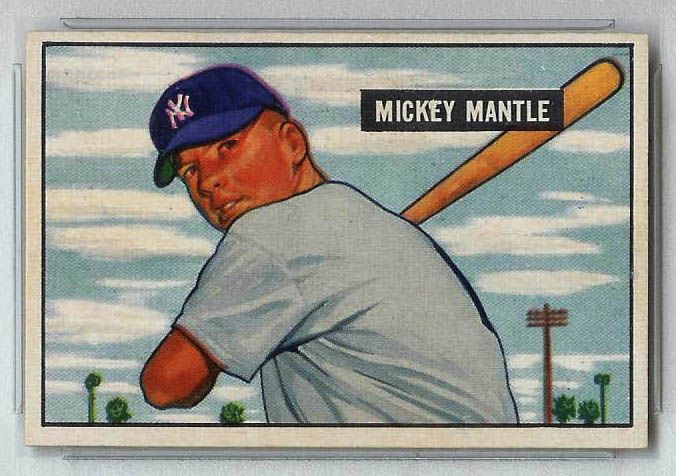
The Holy Grail: A 1951 Bowman Mickey Mantle Rookie Card.

For a raw, uneducated kid like Mickey Mantle, who was basically a guy who never really learned to socialize or experience any joy in reading, learning, or even making a cultural connection to the rest of life through movies, there was only this tremendous talent for baseball and the raw, never satisfied hunger for a chemical alteration of consciousness through alcohol and sex. “Booze and broads,” as the Sinatra Era taught them, were all about feeling good and having fun, but they were really his only easy defense against guilt, horrendous self-esteem, and a total inability to be a sober friend, a loyal relationship partner, or a father to his children. As Mantle’s sons would learn over time, they would only be able to have a relationship with their father once they became old enough to become his drinking buddies. (And that’s a sad tale that exceeds our time and space here for fair treatment.)

Buff Stadium, April 8, 1951.

I only got to see Mickey Mantle play one time – and that’s when he and the 1951 New York Yankees came through Houston in the spring and really put it on the Houston Buffs, 15-9. Here’s a link I once wrote about that experience on my old blog site at ChronCom:

http://www.chron.com/commons/persona.html?newspaperUserId=billmccurdy&plckPersonaPage                                   =BlogViewPost&plckUserId=billmccurdy&plck PostId=Blog%3abillmccurdyPost%3a5624d402-68be-4d6a-b330 40dd0f3f7c8b&plckController=PersonaBlog&plckScript=personaScript&plckElementId=personaDest

In his post-career days, Mantle finally made a too-little, too-late recovery from alcohol. By this time, he was dying from cancer, but one of the things he still bemoaned was the fact that he had played long enough to drop his career batting average to .298. That .300 magic mark meant a lot to Mantle, and he hated having taken this statistical hit upon his overall record. If you read his various comments on that subject, it appears to be right up there on a level with his general disappointment with himself as a human being. Not surprising, is it? After all, success on the field was about all that Mantle had to help him feel worthwhile in any human way.

Had Mantle simply not played the 1968 season, a year that found him going 103 for 435 (.237), he could have closed after 1967 with a career batting average of .302 and still had 518 career home runs. It would not have erased all the demons that haunted Mickey Mantle near the end of his life, but it would have meant something to The Mick, no matter what.

Sorry things went down so hard, Mick! A lot of us kids who grew up idolizing you didn’t know about any of this painful other stuff you carried as your load. We just loved you, anyway – and what you did on the field is all we saw. You were one of our baseball gods, and on that level, you will never stop being our hero.

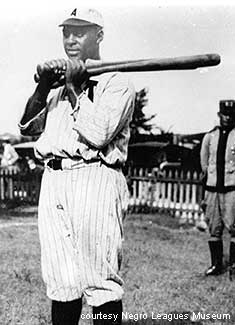
Oscar Charleston: One of the Greatest

February 16, 2011


Played CF like a Tris Speaker.

Handled the bat like a Babe Ruth.


Consult with sabermetrics genius Bill James and Oscar Charleston rises to number four on the list of best players of all time. Check with 92-year old Monte Irvin, and the old bats left throws left star of the Negro League also rises all the way to the apex as a serious candidate for the forever arguable title, “the greatest of them all.” According to Monte Irvin in a brief conversation we had on our drive together to this year’s National SABR Day celebration in Houston, Oscar Charleston in his own say-hey-day had to have been the ultimate personification of what we think of today as the five tool guy. That’s not exactly what Monte said. What Monte said was, “Oscar Charleston! Oh my! He may have been the greatest! He could do it all! From what I heard, there just wasn’t anybody else like him for all the things he could do better than most.”

That translates to me that Oscar Charleston could hit for average and power. He could throw hard with accuracy. He could run like a deer. And he could catch anything that he could get his glove on. And I have to trust Monte’s judgment on this one. After all, Monte Irvin was there to see him, and in time to know those players personally who saw him performing at his earlier best.

Monte Irvin only saw Oscar Charleston play once, and that was late in his career, after age had forced him to move from center field to first base, but that ravage had not stopped the outpouring of legend that occurred even then. Older players and fans regaled in retelling stories of how Charleston could take a fly ball in medium deep center field and then throw a strike to the catcher at home plate. We’re not talking one-bounce here; we are talking on-the-fly and through the strike zone on throws from the healthy hits region of center field.

Oscar’s hey-days range was so great that the left and right fielders basically guarded the lines and tended long foul balls. Charleston covered the rest of the ground. When Willie Mays came along, people compared his fielding ability to that of Oscar Charleston. Oscar Charleston actually started with comparisons as the “black Tris Speaker,”  but, as Willie Mays achieved fame in his own right, people began to shift comparisons to the newst star light, and Oscar Charleston’s legend lived on as the old-school version of Willie Mays.

The world forgets most of us and whatever we do, but the world remembers forever the truly great at things we care about. And that list of forever famous American investments definitely includes baseball. And a center fielder named Oscar Charleston.

Oscar Charleston was born on October 14, 1896 in Indianapolis, Indiana. He joined the Army at age 15 and served out most of his enlistment time in The Philippines. After the service, he immediately began his baseball career with the Indianapolis ABC’s in 1915. Over time, Charleston served as a center fielder, fist baseman, and manager for the ABC’s, the Chicago American Giants, the Lincoln Stars, the St. Louis Giants, the Harrisburg Giants, the Philadelphia Hilldales, the Homestead Grays, and the Pittsburgh Crawfords. His career batting average was .348, but like most of the other great Negro Leaguers, integration came too late for Oscar Charleston against “official” major league pitching.

Oscar Charleston was an intelligent, fiery leader who once pulled the hood off a KKK buffoon in a down South confrontation with racists that threatened to grow ugly until Oscar made his bold move. Ignorance and evil backed off under the exposure to light and all further ugliness was avoided.

Sadly, death came early for oscar Charleston. He passed away on October 6, 1954 at the age of 57.

Oscar Charleston was later posthumously inducted into the Baseball Hall of Fame in 1976.


The Orange Show for Visionary Art

February 15, 2011

The Orange Show, 2401 Munger St., Houston, TX.

Like contemporary art itself, The Orange Show in Houston does not lend itself easily to a neat and complete description that would mean much to a number of readers. Aficionados of the normal Houston Homeowner Association neighborhood would scream at first glance. This place has nothing to do with “fitting in,” or blending its exteriors into shades of grey or brown-tone fade for the sake of sameness – and it’s been that way at 2401 Munger Street in the Houston East End off the Gulf Freeway before you get to Telephone Road wile heading south since 1956.

A fellow named Jeff McKissack was the father  of The Orange Show back in 1956, when he started collecting and bringing home all kinds of paint and other building materials from demolished Houston architectural sites and began the conversion of his place into an ongoing, living tribute to the fruit orange, the color orange, and/or all things colorful in life. The former Houston mailman also had a background as a welder in the Houston shipyards after his tour in the military during World War II and he possessed the kinds of skills needed for converting vision into actual works of contemporary art. His whole house became a living creature of the art that originated in his mind, heart, and soul.

Lesson Number One: If homeowner associations controlled every square inch of urban life, there would be no spontaneous art in Pleasantville.

Orange Show Founder Jeff McKissack (1902-1980).

Ironically, McKissack’s major basic work on The Orange Show took place during the late innings of Houston’s reputation period as a killer of anything architecturally classic for the sake of more space for parking lots, strip centers, and billboards.

Lesson Number Two: Artist Jeff McKissack was building for Houston history while many Houston entrepreneurs were tearing things down for little more than their own personal gain.

It’s not really clear if or when the business of creative intent began to take over McKissack’s plan as an active effort to take his art to the people, rather than simply allow them to find it, but he opened his home as “The Orange Show” on May 9, 1979. To his disappointment, Houstonians failed, at first, to flock like flies to honey when the production opened.

McKissack withdrew in disappointment. Seven months later, and only two days shy of his 78th birthday, Jeff McKissack died of a stroke in the middle of his apparently stillborn creation, The Orange Show, on January 26, 1980.

Lesson Number Three: For The Orange Show, the death of founder Jeff McKissack turned out to be a Phoenix Bird experience.

Within a year of McKissack’s death art patron/civic leader Marilyn Lubetkin rallied a diverse group of Houstonian supporters to save The Orange Show for posterity. Along with people like Dominique de Menil to the rock group ZZ Top, a consortium was put together to purchase the stilled, but still vibrant Orange Show property and its collections from McKissack’s heirs.

The Orange Show Foundation was established in 1981 to re-open The Orange Show and promote support for its programs of contemporary art and art education to children. Today the Orange Show continues to flourish in the East End as a tribute to a Houstonian who believed in art and the expressive preservation of Houston hero.

For further information on The Orange Show and its range of public art programs, check out their official website.

http://orangeshow.org/

Jeff McKissack and my dad weren’t too different by way of background. Jeff was a little older than Dad, but they both grew up in small towns and moved to Houston as a result of World War II. Both were welders; both worked in Houston shipyards; and both bought property in the East End as places to raise their children. Both also found other income-producing lines of work after the big war ended and settled into lives as the men who took care of their families.

Like McKissack, Dad had a talent for art and storytelling too. He simply never gave himself permission to act upon these abilities until a heart attack later almost took him totally out of the game. And then he put them away again, once he recovered from the immediate threat of death. Like a lot of people, Dad had to almost die to take a peek at life outside the box. And maybe that was enough for Dad. Who am I to know or judge?

All  know is, thank God for Lesson Number Four: Jeff McKissack brought Technicolor, but especially orange, to the visual history of Houston. Hope you take the time to check out The Orange Show or its annual art car parade someday. I think you will have a good time.