Archive for the ‘Uncategorized’ Category

Who’s On First?

April 27, 2011

Costello: "Well then who's on first?" Abbott: "Yes!"

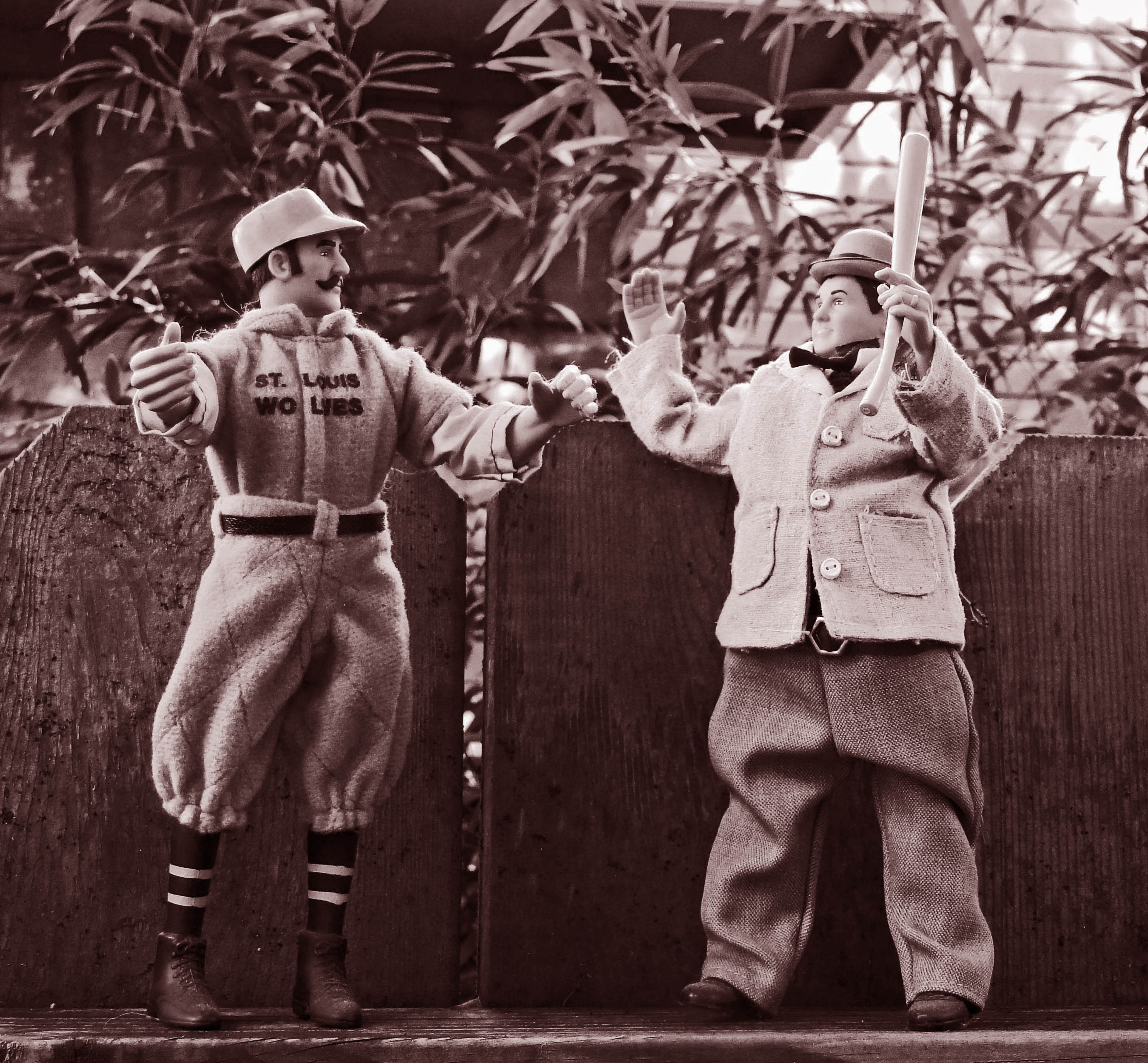
The routine never grows old to those of us who love baseball. The Hall of Fame even uses it as a greeting sound to visitors at their Cooperstown museum and exhibit hall. The recorded voices of the late comedians Bud Abbott and Lou Costello go on forever in tandem daffiness there over their perpetual misunderstanding of what each is saying in the vain effort to nail down the name of the player assigned to first base and other positions on the diamond for the legendary, but fictional St. Louis Wolves.

Subtract Bud Abbott as the manager of 1895 St. Louis Wolves and insert Brad Mills of the 2011 Houston Astros and the whole absurd collision of misunderstandings goes away with all the fun too:

Costello: Well, then who’s on first?

Mills: Brett Wallace.

Costello: Thanks, Brad. Now who’s on second?

Ouch! As long as “who” can be anywhere, including first, we’ve got no comedy wedge-point, but thanks to Abbott and Costello and the St. Louis Wolves, baseball rides an ongoing comedy premise that never dies or even ages.

Here it is again in complete script form for your whatever-time-of-day-it-is reading amusement. This time through, if you haven’t done so previously, pay attention to the fact that “the boys” eventually name eight of the nine players at each position in the field. If you use a strong fingers and toes count, you will be able to identify the one position on the field that they never tie to a player’s name in their insane routine.

Sometimes we get to hear or read this comedy classic on a day it does us the most good. Hoping this is one of those thirty times for you too, here it is again in all its unedited glory:

“Who’s On First?” by Bud Abbott and Lou Costello.

Abbott: Well, Costello, I’m going to New York with you. Bucky Harris the Yankee’s manager gave me a job as coach for as long as you’re on the team.

Costello: Look Abbott, if you’re the coach, you must know all the players.

Abbott: I certainly do.

Costello: Well you know I’ve never met the guys. So you’ll have to tell me their names, and then I’ll know who’s playing on the team.

Abbott: Oh, I’ll tell you their names, but you know it seems to me they give these ball players now-a-days very peculiar names.

Costello: You mean funny names?

Abbott: Strange names, pet names…like Dizzy Dean…

Costello: His brother Daffy

Abbott: Daffy Dean…

Costello: And their French cousin.

Abbott: French?

Costello: Goofe’

Abbott: Goofe’ Dean. Well, let’s see, we have on the bags, Who’s on first, What’s on second, I Don’t Know is on third…

Costello: That’s what I want to find out.

Abbott: I say Who’s on first, What’s on second, I Don’t Know’s on third.

Costello: Are you the manager?

Abbott: Yes.

Costello: You gonna be the coach too?

Abbott: Yes.

Costello: And you don’t know the fellows’ names.

Abbott: Well I should.

Costello: Well then who’s on first?

Abbott: Yes.

Costello: I mean the fellow’s name.

Abbott: Who.

Costello: The guy on first.

Abbott: Who.

Costello: The first baseman.

Abbott: Who.

Costello: The guy playing…

Abbott: Who is on first!

Costello: I’m asking you who’s on first.

Abbott: That’s the man’s name.

Costello: That’s who’s name?

Abbott: Yes.

Costello: Well go ahead and tell me.

Abbott: That’s it.

Costello: That’s who?

Abbott: Yes. PAUSE

Costello: Look, you gotta first baseman?

Abbott: Certainly.

Costello: Who’s playing first?

Abbott: That’s right.

Costello: When you pay off the first baseman every month, who gets the money?

Abbott: Every dollar of it.

Costello: All I’m trying to find out is the fellow’s name on first base.

Abbott: Who.

Costello: The guy that gets…

Abbott: That’s it.

Costello: Who gets the money…

Abbott: He does, every dollar of it. Sometimes his wife comes down and collects it.

Costello: Who’s wife?

Abbott: Yes. PAUSE

Abbott: What’s wrong with that?

Costello: I wanna know is when you sign up the first baseman, how does he sign his name?

Abbott: Who.

Costello: The guy.

Abbott: Who.

Costello: How does he sign…

Abbott: That’s how he signs it.

Costello: Who?

Abbott: Yes. PAUSE

Costello: All I’m trying to find out is what’s the guys name on first base.

Abbott: No. What is on second base.

Costello: I’m not asking you who’s on second.

Abbott: Who’s on first.

Costello: One base at a time!

Abbott: Well, don’t change the players around.

Costello: I’m not changing nobody!

Abbott: Take it easy, buddy.

Costello: I’m only asking you, who’s the guy on first base?

Abbott: That’s right.

Costello: OK.

Abbott: Alright. PAUSE

Costello: What’s the guy’s name on first base?

Abbott: No. What is on second.

Costello: I’m not asking you who’s on second.

Abbott: Who’s on first.

Costello: I don’t know.

Abbott: He’s on third, we’re not talking about him.

Costello: Now how did I get on third base?

Abbott: Why you mentioned his name.

Costello: If I mentioned the third baseman’s name, who did I say is playing third?

Abbott: No. Who’s playing first.

Costello: What’s on base?

Abbott: What’s on second.

Costello: I don’t know.

Abbott: He’s on third.

Costello: There I go, back on third again! PAUSE

Costello: Would you just stay on third base and don’t go off it.

Abbott: Alright, what do you want to know?

Costello: Now who’s playing third base?

Abbott: Why do you insist on putting Who on third base?

Costello: What am I putting on third.

Abbott: No. What is on second.

Costello: You don’t want who on second?

Abbott: Who is on first.

Costello: I don’t know. Together: Third base! PAUSE

Costello: Look, you gotta outfield?

Abbott: Sure.

Costello: The left fielder’s name?

Abbott: Why.

Costello: I just thought I’d ask you.

Abbott: Well, I just thought I’d tell ya.

Costello: Then tell me who’s playing left field.

Abbott: Who’s playing first.

Costello: I’m not…stay out of the infield!!! I want to know what’s the guy’s name in left field?

Abbott: No, What is on second.

Costello: I’m not asking you who’s on second.

Abbott: Who’s on first!

Costello: I don’t know. Together: Third base! PAUSE

Costello: The left fielder’s name?

Abbott: Why.

Costello: Because!

Abbott: Oh, he’s center field. PAUSE

Costello: Look, You gotta pitcher on this team?

Abbott: Sure.

Costello: The pitcher’s name?

Abbott: Tomorrow.

Costello: You don’t want to tell me today?

Abbott: I’m telling you now.

Costello: Then go ahead.

Abbott: Tomorrow!

Costello: What time?

Abbott: What time what?

Costello: What time tomorrow are you gonna tell me who’s pitching?

Abbott: Now listen. Who is not pitching.

Costello: I’ll break you’re arm if you say who’s on first!!! I want to know what’s the pitcher’s name?

Abbott: What’s on second.

Costello: I don’t know. Together: Third base! PAUSE

Costello: Gotta a catcher?

Abbott: Certainly.

Costello: The catcher’s name?

Abbott: Today.

Costello: Today, and tomorrow’s pitching.

Abbott: Now you’ve got it.

Costello: All we got is a couple of days on the team. PAUSE

Costello: You know I’m a catcher too.

Abbott: So they tell me.

Costello: I get behind the plate to do some fancy catching, Tomorrow’s pitching on my team and a heavy hitter gets up. Now the heavy hitter bunts the ball. When he bunts the ball, me, being a good catcher, I’m gonna throw the guy out at first. So I pick up the ball and throw it to who?

Abbott: Now that’s the first thing you’ve said right.

Costello: I don’t even know what I’m talking about! PAUSE

Abbott: That’s all you have to do.

Costello: Is to throw the ball to first base.

Abbott: Yes!

Costello: Now who’s got it?

Abbott: Naturally. PAUSE

Costello: Look, if I throw the ball to first base, somebody’s gotta get it. Now who has it?

Abbott: Naturally.

Costello: Who?

Abbott: Naturally.

Costello: Naturally?

Abbott: Naturally.

Costello: So I pick up the ball and I throw it to Naturally.

Abbott: No you don’t you throw the ball to Who.

Costello: Naturally.

Abbott: That’s different.

Costello: That’s what I said.

Abbott: you’re not saying it…

Costello: I throw the ball to Naturally.

Abbott: You throw it to Who.

Costello: Naturally.

Abbott: That’s it.

Costello: That’s what I said!

Abbott: You ask me.

Costello: I throw the ball to who?

Abbott: Naturally.

Costello: Now you ask me.

Abbott: You throw the ball to Who?

Costello: Naturally.

Abbott: That’s it.

Costello: Same as you! Same as YOU!!! I throw the ball to who. Whoever it is drops the ball and the guy runs to second. Who picks up the ball and throws it to What. What throws it to I Don’t Know. I Don’t Know throws it back to Tomorrow, Triple play. Another guy gets up and hits a long fly ball to Because. Why? I don’t know! He’s on third and I don’t give a darn!

Abbott: What?

Costello: I said I don’t give a darn!

Abbott: Oh, that’s our shortstop.

Costello: (makes screaming sound)
Home Runs, Steroids, and The Hall of Fame

April 26, 2011

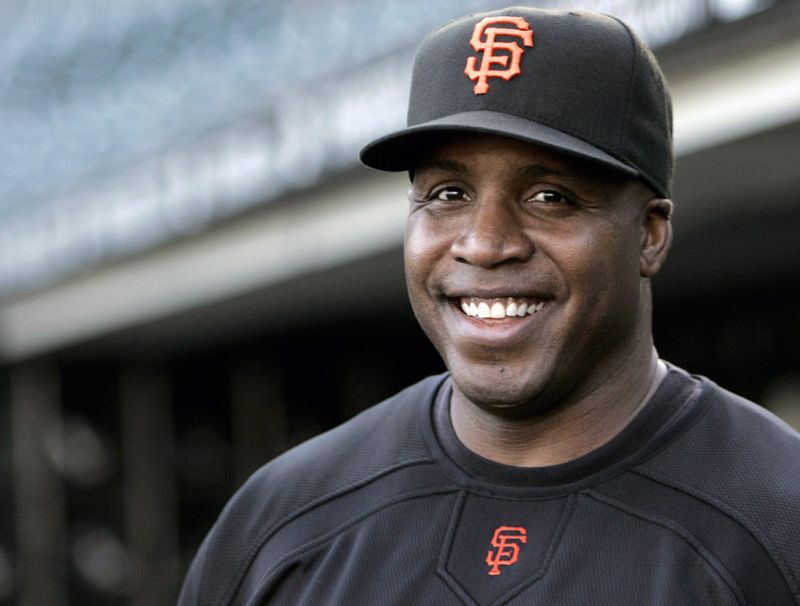
The HOF has shunned Pete Rose, the all-time hits leader for gambling. Should it do the same to HR-Leader Barry Bonds for steroids and lying?

If there’s a clearer scoreboard on how baseball aims to treat players smeared with the taint of steroids in years to come, the way the game treats its greatest home run leaders after they retire seems brighter as a guidepost than any other for the road-signing we are getting elsewhere. After all, home runs are the big power play in baseball. Steroids cannot give you fast wrists, or make contact between bat and ball, but they sure as hell can can make the balls fly farther that do run into a powerful wooden surface.

So, far, at least, none of the great home run hitters of recent years who’ve even been mentioned in the same breath with steroids have made it into the Hall of Fame, or even come close, after achieving voter eligibility. Mark McGwire, Sammy Sosa, and now Rafael Palmeiro are our main poster boys these days for that  reality.

Will it be this way forever? Who knows, but it is the way it is for now.

Of the twenty-five (25) players with 500 or more home runs in their careers, fifteen (15) are members of the Hall of Fame – and all made it there prior to the explosion of the steroid issue.

Of the ten (10) others, two (2) (Alex Rodriguez and Jim Thome) are still active players.

Of the eight (8) others, three (3) (Sammy Sosa, Mark McGwire, and Rafael Palmeiro) have been rejected for the HOF by low vote totals, so far.

The remaining five (5) men (Barry Bonds, Ken Griffey, Jr., Manny Ramirez, Frank Thomas, and Gary Sheffield) remain at variable points through their five year periods of eligibility clearance for HOF consideration following retirement.

Among the members on this premier list of home run sluggers who are not in the Hall of Fame, only Ken Griffey, Jr. seems to me like a can’t-miss selection on the first ballot. Maybe Jim Thome will make it too, at some point, but all the others have received the sting of the “S” word interlaced into the narrative of their playing careers.

Hopefully, we will resolve our reactions to this mess someday. For now, the baseball world seems split apart by all the competing forces that have arisen from the “steroid era.”

Baseball people don’t want to reward cheaters so enough HOF voters simply ignore the accomplishments of players they either know or strongly suspect of cheating. On the other hand, a lot of us don’t much care for a Hall of Fame concept that ignores some of the game’s premier statistical  achievements because of either the scandal associated with their accomplishment (Pete Rose) or the unfair ways they achieved their totals (McGwire, Sosa, et al). The net effect is that we are left with a Hall of Fame that suddenly rejects candidates with major character defects as it coincidentally ignores their statistical impacts upon the game. How long can we ignore the issue in the hope that time will simply take all of this unfortunate ugliness away?

I don’t believe in asterisks. When Roger Maris broke Ruth’s single season home run record in 1961 by hitting 61, the record was his. Period. The fact it took him a 162-game schedule to do it wasn’t his fault. Baseball added those extra games, not Roger Maris, and I accepted him as the new home run king in spite of the fact that he broke the previous record of my still all-time greatest hero, Babe Ruth. Tacking a blooming asterisk onto Roger’s 61 HR in 1961 made as much sense as tacking an asterisk on to the 755 career homers of Hank Aaron would have made. After all, Hank did his thing in the era of extended game seasons too, but nobody put any asterisks on his accomplishment.

As baseball, we need to find a better way of recognizing great record accomplishments under one roof. We do not need “juiced” and “non-juiced” versions of the Hall of Fame or asterisks that denote special circumstances attendant to some records and record-holders. A record is either a record or it isn’t. And a certain player either did it or he didn’t.

The Hall of Fame was never a choir boys’ society. Never was. Never will be. The problem is, our game’s public relations wishes always seem to reach out to the great achievers in the hope that they will all will themselves into the greatest role models of all time. Unfortunately, these great achievers cannot, or will not, always come out smelling like roses or Hank Aarons. We’re much more likely to find great things being done by players with certain flaws of character.

If perfect character is the prerequisite for the Hall of Fame, then we may as well shut the place down or rename the Hall of Fame into something like the “St. Abner Doubleday of Cooperstown Baseball Choir Boy Society.”

At any rate, here’s our 500 HR Club list. Look it over and tell us what you think too:

The 25 Members of the 500 HR Club & Their HOF Status

(1) Barry Bonds (L) – 762

(2) Hank Aaron (R) – 755 – HOF

(3) Babe Ruth (L) – 714 – HOF

(4) Willie Mays (R) – 660 – HOF

(5) Ken Griffey, Jr.  (L) – 630

(6) Alex Rodriguez (R) – 618

(7) Sammy Sosa (R) – 609

(8) Jim Thome (L) – 591 

(9) Frank Robinson (R) – 586 – HOF

(10) Mark McGwire (R) – 583

(11) Harmon Killebrew (R) 573 – HOF

(12) Rafel Palmeiro (L) – 569

(13) Reggie Jackson (L) – 563 – HOF

(14) Manny Ramirez (R) – 555

(15) Mike Schmidt (R) – 548 – HOF

(16) Mickey Mantle (B) – 536 – HOF

(17) Jimmie Foxx (R) – 534 – HOF

(18t) Willie McCovey (L) – 521 – HOF

(18t) Frank Thomas (R) – 521

(18t) Ted Williams (L) – 521 – HOF

(21t) Ernie Banks (R) – 512 – HOF

(21t) Eddie Mathews (L) – 512 – HOF

(23) Mel Ott (L) – 511 – HOF

(24) Gary Sheffield (R) – 509

(25) Eddie Murray (B) – 504 – HOF

(Bold-type used above for players who are still active.)

My Favorite Buffs Logo Year: 1947

April 25, 2011

Heart Buff Logo of the 1947 Houston Buffs.

At age nine, the 1947 Houston Buffs were my first team of hometown heroes, with second baseman Solly Hemus standing out as my first baseball hero. We used to call him by the nickname the sportswriters tagged him – “The Little Pepper Pot” fit both the man and his game. Even us brand new cutting-our-teeth on baseball fans could see it – and feel it.  Hemus was the driving spirit of a club that included several fine ball players in Hal Epps, Eddie Knoblauch, Al Papai, Johnny Hernandez, and Jack Creel, just to name a few of the stars that flew across the sky of manager Johnny Keane’s universe.

The 1947 Buffs took a narrow starightway first place finish away from the Fort Worth Cats before going on to capture the Texas League Shaughnessy Playoffs and also the prized Dixie Series championship over the Mobile Bears of the Southern Association.

As old Blues yes, Frank Sinatra used to sing, “it was a very good year!” Naturally, when you start off baseball as a kid following a team that wins everything there is to win, and you are old enough to understand that is exactly just what happened, it spoils you with all those great expectations. I thought the Buffs were supposed to win it all every year. Seasons 1948 through 1950 quickly, if painfully, corrected that wrong idea as the Buffs went into the kind of struggle and fall patterns that came from the parent St. Louis Cardinals sending all their better prospects to play for their AAA clubs in Columbus, Ohio and Rochester, New York.

No doubt about it, however, at least, not in my mind, that the 1947 season also produced the finest Buffalo jersey logo in the local Texas League AA club’s history. The simple circle with the detailed buffalo silhouette inside was always both my first glimpse and forever fetish symbol of Buff celebration. In fact, I never understood why the club did not simply stick with something that worked so well over the years that followed. They also used a deep burgundy red for the color accent on caps and uniform piping and sox that season. The whole look was great, but, like many of the players from year to year, everything in minor league ball, including uniform styles and colors,  has always been about constant annual mass turnover,  makeover, and sometimes, a roll into a disheartening downgrade in local talent. Because the Buffs were a Cardinals farm club, the only predictable carryover feature was the ongoing presence of red as the team’s primary color and, most of the time, the Buff uniforms from 1948 through 1958, the last Cardinal season here, would look pretty much like the parent club St. Louis outfits, without the birds on the bat. (Two buffs on a bat would have bent the stick past its breaking point, I think.)

Speaking of buffaloes, we’ve always assumed that the Buffalos/Buffs nickname tag stuck in Houston because it naturally derived its identity from our our downtown Houston waterway, Buffalo Bayou. That’s probably true, although I’ve never read anything from a deceased primary source that explained it exactly in those terms, or gave anyone credit for the naming. As we get into our SABR (Society for American Baseball Research) project here this summer on the first one hundred years of Houston Baseball: 1861-1961, we will have to look into this naming question even further. We my never learn who came up with “Buffaloes,” but there’s no reason not to dig a little deeper into it anyway to see what turns up.

Ben Steiner models the more Cardinal-like uniform of the 1951 Buffs.

Wish we knew better today what has survived from these earlier times as artifacts of Houston’s sartorial minor league past. The 1947 and 1951 Buff jerseys would have a special place for display at the Houston Sports Museum at Finger Furniture on the Gulf Freeway, if they still existed and could be loaned out to this fine place in the name of public service. Both of those seasons saw the Buffs through to Texas League championships, although the ’51 Buffs lost the Dixie Series to the Birmingham Barons.

Have a great week everybody – and let’s hope we get something wet in Houston today from our 20% rain forecast possibility. The drought is having an awful impact on all living things in our area. When April already feels like a Houston August, and you have lived trough that condition already in a previous year, you have to wonder what this August is going to be like.

A 2011 Houston Easter Tale

April 23, 2011

NASA Had 4 Shuttles to Give Away for Easter, But the Easter Bunny Had 5 Giant Eggs for 5 Different Cities On His NASA Easter Egg Delivery List! - What Could That Possibly Mean?

Once upon a time, in the spring of 2011, the United States of America came to a point of creative, economic, and political bankruptcy in its will to carry out the exploration of outer space with all the scientific fervor it deserves. As a sad result, President Barak Obama recommended that we simply shut down further active NASA programs of space discovery and leave that task to the resources and designs of private interest groups.

As a result, plans quickly flew into motion for dismantling the active flight physical infrastructure of NASA, sort of in the way we did back in the 1920s and 1930s when we gave up as a nation on electric rail travel as a preferred medium of mass transit in favor of busses and cars that ran on the availability of cheap gasoline. There would be no going back to direct space flights either once we shredded ourselves of the materials and people who made it possible. Like the rail tracks that we dug up fast a long time ago, we had to burn our newest bridges behind us too on publicly supported space flight.

As a major celebrity event in dismantling NASA, it was announced that four American cities would be awarded one of the four historic space shuttles for public display in their communities. It was first easily assumed that Houston and Cape Canaveral would be the two no-brainer sites for two of these shuttles. After all, these were the sites of NASA’s Mission Control and Mission Launching facilities.

Not so fast, presumptuous villagers of the hinterlands! – The Obama Administration wanted NASA to take community bids on where they each should go. As twenty cities quickly joined in the hunt for landing a shuttle, it all too suddenly became  a decision that would now be decided upon political capital – and not based upon historic merit.

“Houston, we have a problem! We deserve one of those shuttles on historic merit, but this is now a political thing – and it’s being run under the waving hand of the Obama Administration – and Texas didn’t vote for Obama in 2008!”

Sure enough. Here comes the NASA-hired pre-Easter Bunny – and he’s packing a basket with five city eggs, but only four can possibly contain shuttle awards. What to do? What to do? What to do? Our Texas senators and representatives started speech-making, but they revved up way too late, said too little, and had no clout. “Red-State-Itis” has a real bad effect upon the hearing of Blue State Leadership Ears.

"I first got some bad news for you, Houston!" cried the NASA Pre-Easter Bunny.

“Crack open those first four eggs, Cape Canaveral, Suburban Washington, DC in Virginia, Los Angeles, and New York City. “said the Bunny. “Houston, don’t go anywhere. Just sit back a while. – Seattle, Dayton, Chicago, – all the rest of you – just hobble on home now and boil your own eggs. There’s nothing else here for any of you today. Better luck next time.”

The rabbit spoke deliberately. As the first four of five eggs were cracked open, here’s what we discovered:  (1) the space shuttle Atlantis will be displayed at the Kennedy Space Center Visitor Complex in Florida; (2) the Endeavour’s home will be the California Science Center in Los Angeles; (3) the Discovery, at the Smithsonian’s National Air and Space Museum Steven F. Udvar-Hazy Center in Virginia; and (4) the test shuttle, Enterprise, will reside at the Intrepid Sea, Air & Space Museum in New York.

And what did all of these four shuttle-award states of Florida, California, Virginia, and New York have in common with the space program? They were all states who supported Barak Obama for President in 2008.

"Fagedaboutit, Houston!" - NY Senator Charles Schumer.

Senator Charles Schumer of New York, now quickly forgetting about all the support the City of Houston gave his Big Apple after the tragedy of 911 ten years ago, jumped at the opportunity to function as an a(rrogant) hole in the usually gracious veneer of Empire State empathy for the pain of others.

Houston was shocked and hurting from the NASA pre-Easter egg drop that robbed the birthplace and home of the space program and its people of the honor and respect it deserves as the half century center of everything this nation has done in space. Stunned by the NASA political rebuff, we quickly, but only momentarily displaced the reason why we had been so successful as the home of NASA’s great space endeavour.

That’s when the Easter Bunny said, “Go ahead, Houston, open your own egg and hold tight to what you find there. It’s what makes you great with anything you do – and it’s what your people are made of. God gave it to you, not the government, and no one can ever take it away from you. It’s what allowed you to steer the space program to greatness and, you gotta believe me here, no boat-floating space museum in the East River in New York City will ever take that base of your character away from you!”

The big heart of Houston popped out of the little box inside the fifth egg. It was our reminder: We ARE as a people the Heart of Houston! And you should never underestimate the heart of a champion, Senator Schumer!

Our day will come. In fact, it’s already here. It’s just a matter of time now until the rest of the world completely catches on to who we are, all we have done, and what we shall still take action to do next. And Houston’s role in anything we’ve ever accomplished in space, as with medicine, shall never be forgotten. It’s just up to Houstonians now to make sure that we honor our history with NASA as it should be honored.

As for the Easter Bunny’s faith in Houston, we gotta believe in ourselves too. As for Washington, DC, we “don’t gotta” believe. There’s another election coming up in 2012 – and any politician, of elected or appointed position, of either major party or otherwise, who deprived Houston of a shuttle for political reasons needs to feel, then and there, the total weight of all the political retribution we can also bring to bear upon him or her too with all our legal right and economic might.

Our Big Bunny Friend Says: "Houston, you're a good egg, the very best, and this looks to me like the beginning of a beautiful friendship!"

Happy Easter weekend, Houston! And Happy Easter to all our friends in other places too!

Who Was Mayor of Houston When…?

April 22, 2011
T

Obscuria Houstonia Quiz #2?

Today’s second Obscuria Houstonia quiz reveals another catch to the answers: Unless a reader correctly identifies the answer in the comment section that accompanies the inquiring story post, the question will remain an unanswered enigma until someone does. Whenever correct answers occur, I will acknowledge them as replies to correct answers provided in the comment section.

These little ytivia excursions are intended simply for fun and some minor educational purpose on the subject of Houston’s more arcane historical facts. I have no interest or intention of running them all the time, but, when the whim strikes, look out. Here we’ll go again.

Today’s feature is totally about the history of Houston mayors. All you have to do here, if you are interested in trying, is name the ten mayors in Houston History who were in office when these identified events occurred? In each case, the mayor variably may have had something to do with the creation of the identified event – or, more likely, simply been the person in office when the thing expressed unfolded.

Obscuria Houstonia Quiz #2: Who was Mayor of Houston when…?

(1) …Houston selected it’s first mayor ever?

(2)…Texas joined the United States of America?

(3)…the State of Texas seceded from the Union to join the Confederacy?

(4)…the original Houston Base Ball Club was founded in the city at a meeting on the second floor above J.H. Evans’ Store on Market Square?

(5)…the Civil War ended?

(6)…the city fielded its first professional “base ball” team?

(7)…the person who would hold that office longer than any other was first elected?

(8)…Houston launched both the professional football Oilers and the professional baseball Colt .45s?

(9)…Houston opened the Astrodome?

(10)…Houston opened the downtown baseball park first known as Enron Field?

... Good luck – and have a loving, blessed, and restful Easter Weekend too!

Texas: The Prize of San Jacinto

April 21, 2011

This map shows the prize of San Jacinto. When the afternoon battle of April 21, 1836 was won, this is how the Republic of Texas would look in the nine years of its existence from 1836 to 1845.

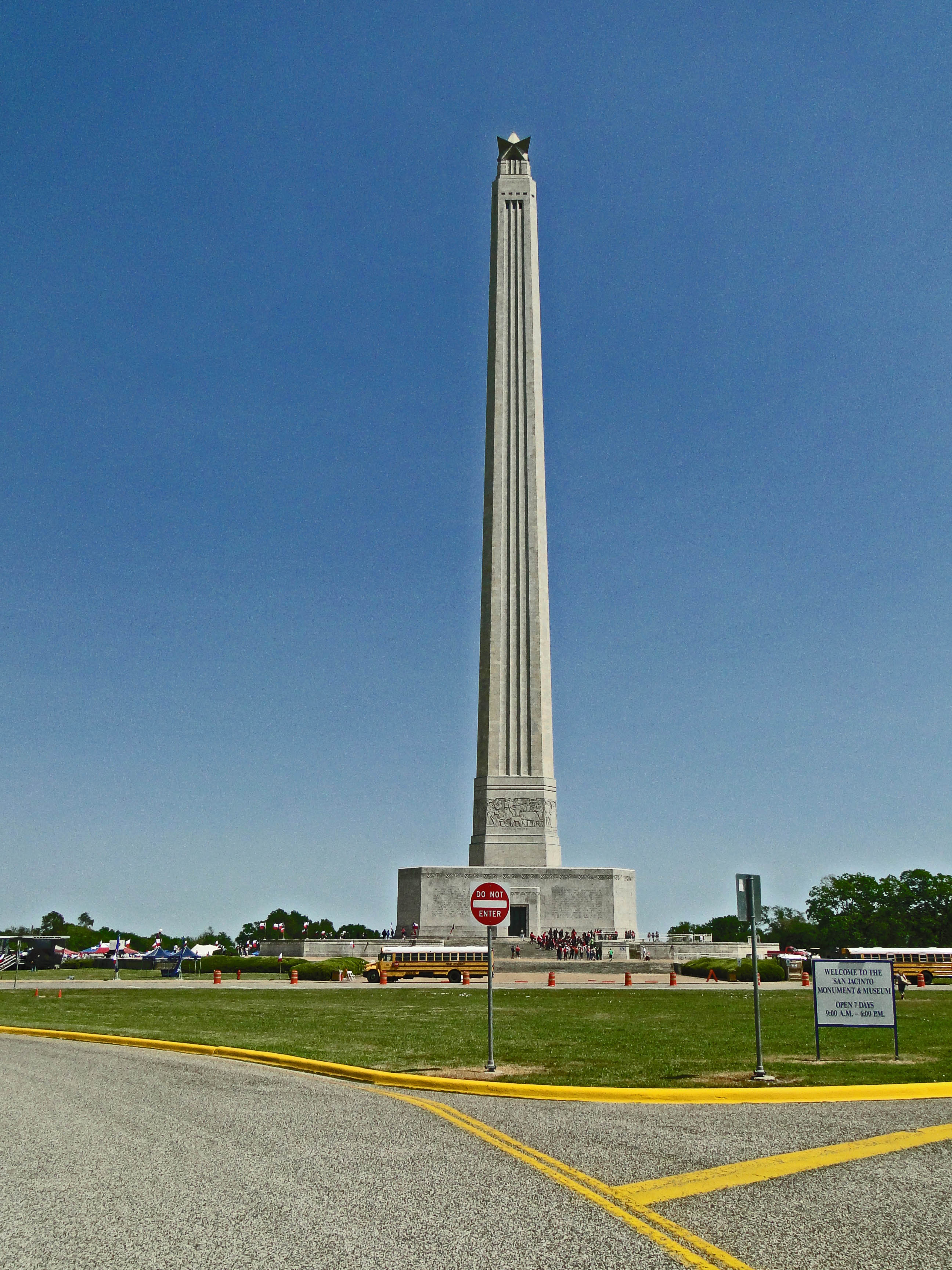
Happy real San Jacinto Day, everybody. Today, April 21, 2011 is the actual 175th anniversary of the Battle of San Jacinto on the marshy plains east of Houston. On the heels of last Saturday’s expansive reenactment battle presentation, another official commemoration takes place again this morning at 10:30 AM at the San Jacinto Monument. Admission is free, but there will be a small fee charged to those who wish to go inside the monument auditorium and view the 35-miunte fim entitled “Texas Forever: The Battle of San Jacinto.”

The victory of General Sam Houston’s Texian forces over the much larger Mexican army directed by General Antonio Lopez de Santa Anna in a surprise 18-minute afternoon battle on this date in history led directly to the surrender of Mexico’s official claims upon the territory known as Texas as it appeared in the map shown here.

When Texas joined the Union in 1845, the United States paid Texas $10 million to cede territory that later became critical parts of New Mexico, Oklahoma, Kansas, Colorado and Wyoming. As the only nation-state to join the United States of America, Texas negotiated the retention of a power that no other state owns. Texas retains the right to subdivide itself into five smaller states, each with their own two senators and other appropriate representation in the House. Safe to say, it is unlikely that Texas will ever give up his power as a single unit to increase their votes in Congress through five divided smaller units of government on the state level.

In case you are wondering,  the famous “Six Flags Over Texas” is more than a corporate name for large amusement parks in the Metro areas of Dallas and San Antonio. The six nation flags that have flown over this land in eight transitional periods since the coming of the European invasion have included (1) Spain (1519-1685), (2) France (1685-1690), (3) Spain (1690-1821), (4) Mexico (1821-1836), (5) Republic of Texas (1836-1845), (6) United States (1845-1861), (7) Confederacy (1861-1865) and (8) United States (1865-present). Spain and the United States came here twice. We don’t expect Spain to ever return and we do hope (or, at least most of us do) that the United States stays forever.

Sam Houston

General Sam Houston strongly favored Texas joining the United State of America in 1845 and he was bitterly opposed to those who pushed for Texas’ secession from the Union in 1861. Even old Sam couldn’t win ’em all.

As Governor of the State of Texas when the majority political forces voted in favor of secession, Houston refused to swear allegiance to the newly forming Confederate States of America and resigned from office. To avoid bloodshed, Houston then refused a Union Army offer to put down the rebellion and he retired to live in Huntsville, Texas. Long before the Civil War could be ended, and his beloved Texas reunited with the union, Sam Houston died in Huntsville at the age of 70 on July 26, 1863.

Texas has long been stereotyped as the land of big-mouthed bragging ranchers and oil men, and many people still come to Houston expecting to see mountains in the background and tumbling tumbleweeds blowing down Main Street, but today, “that ain’t us,” if indeed, it ever really was. Texas today, particularly in the largest Metro areas of Houston, Dallas-Fort Worth, and San Antonio-Austin is a bustling multi-cultural population of people working for some of the most powerful hi tech industries in the world.

The economic and cultural diversification of Texas is changing the face of the state, but I also think it is making us stronger. Last Saturday at the Battlegrounds, I was really impressed by the ethnic diversity of the large crowd that came for a good time mixed with a big lesson about Texas history. Every ethnic and age group that is Houston today seemed to have turned out for the occasion.

If we can simply, and complexly, continue to remember that San Jacinto was about the battle for freedom from dictatorial control, we shall be able to continue our fight as a people for making Texas what it was always intended to be – a free state – as much as possible – from the diversion of power to the service of special interest groups only.

I don’t really live in a blue sky world.

Nothing will ever be perfect in that regard. Politics will always exist, but it cannot improve if the people take the gas and throw away their active involvement. If we all forget the lessons of history and decide to simultaneously go to sleep at the wheel, watch out. (That last sentence doesn’t exactly read like a Willie Nelson song title, but I’m sure there’s a melody and lyric theme in there somewhere.)

How about something like these words as a wrap on the day. We’ll have to recruit Willie himself for the melody:

KEEP ON SMILIN’, ALL YOU TEXANS! (c) 

Verse:

We fought at San Jacinto til the battle was won,

But when we got it finished we had only begun,

To build this Land of Texas into all it could be,

A place of hope and promise  in a country that’s free.

Chorus:

Keep on smilin’, all you Texans,

You’ve got much – so dry those eyes!

Keep on smilin’, all you Texans,

Time to celebrate your prize!

(Whatever it is!)

Time to feast with grateful eyes!

(Whatever your biz!)

Time to reach out for the skies!

(Whatever your fizz!)

… Keeeeeep on, SMILIN’ …………. all-you-TEXANS!

Bop-Doo-Ba-Dooba-Bop-Do-Wap!!!! …….BOOP!!!………….. BAM!!!!


 Nothing new. We’re still waiting on an answer to our question from yesterday: Who was Hamshire Fannett and what did he do to establish himself as a true blue Houstonian? Here are a couple of hints: “Hamshire Fannett” was/is the name of this real Houstonian’s alter ego when he  performed in a certain capacity as an entertainer. Secondary hint: Fannett’s work as an entertiainer was not the most politically correct thing he ever did, but he himself might argue that it was as a simple matter of personal identity.

California High Schooler Has 4 Straight No-Hitters

April 20, 2011

Steven Perry Goes for His 5th No-No Thursday, April 21.

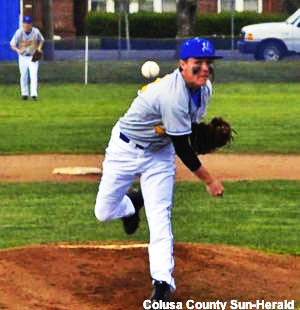
Incredible. A top California high school shortstop prospect has just boosted even greater interest in him as a pitcher by throwing his fourth straight no-hitter in a row in this 2011 season. The full story of Steven Perry is well enough told by Jonathan Wall of RivalsHigh@Yahho.Com at this link.

http://rivals.yahoo.com/highschool/blog/prep_rally/post/California-high-school-pitcher-throws-four-strai?urn=highschool-wp1095

My interest is in what this kind of feat actually says about the young man’s ability and how much it says about his physical/mental/emotional development as it speaks for his superior pace and ability ahead of his peer competition. Some kids are simply superior to the others of their age group at a moment in time – and that’s a big factor in their performances beyond the pale of everyday expectation.

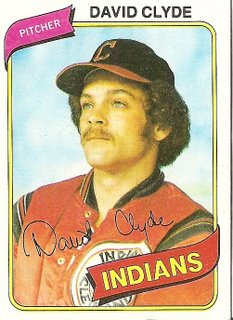
David Clyde was 11-15 with the 1978-79 Cleveland Indians.

Remember David Clyde of Westchester High School in Houston back in 1973? Clyde was great enough to be selected as the first pick in the draft that year and taken immediately from his high school graduation to the roster of the Texas Rangers. It was a decision based more on a pure   bloodthirst by Texas for doing something to spike attendance at the gate then it was any sound baseball decision that the kid was ready for the majors and that proved to be true with serious permanent consequences for the baseball future of young Mr. Clyde.

Clyde was 7-18 over three ineffective seasons with the Rangers from 1973-75. He then bounced out of the big leagues for a couple of years before coming for two final years with the Cleveland Indians in 1978-79, finishing his five-season MLB career with a record of 18-33 and an ERA of 4.63. Then he was done. At age 24, baseball was all over for young David Clyde of such bright hope.

You have to hope that nothing like that happens to the young Perry kid.

Highly touted pitcher Stephen Strasburg of the Washington Nationals is still recovering from that torn ulnar collateral ligament that sent him to the DL last year. You hope his injury wasn’t hastened by his early call to the big leagues, although he was already 21 when he was taken by the Washington Nationals as the first pick in the 2009 draft. Strasburg also pitched his way through three minor league clubs in 2010 (7-2, 1.30 ERA) before joining Washington last year in time to go 5-3, 2.92 ERA before his arm injury that continues to sideline him into the 2011 season.

You just never know, but I really do believe that the “too much, too soon” pressure for some people increases the chance of injury, and especially with pitchers. Notwithstanding the fact that some people thrive on excessive pressure from the start, experience and observation of how that works in baseball tells me that, most often, pressure works in a damaging way upon young people. Before they have a chance to develop some wisdom about how to listen to and use their own strengths and weaknesses in the best ways, the naive desire to please takes over and causes many to play themselves into harm’s way.

In the meanwhile, it’s still hard to not wish young Steven Perry good luck when he goes for his fifth consecutive no-hitter tomorrow night.

No pressure there, right?

 OBSCURIA HOUSTONIA.  What’s that?

Every now and then, I’ve decided to add a fairly arcane and mostly obscure question about Houston history at the end of an article. The question may or may not have anything to do with today’s main subject and, as the only real hint I’m leaving today, the question for April 20, 2011 is pretty much totally disconnected from the subject of injury to early baseball phenoms.

If you know the answer to this one (OH Question #!), please record it here in the comment section. Whoever posts correctly first will hit my new “OBSCURIA HOUSTONIA” scoreboard with credit for a right answer. When we get enough right answers going, we may even start running an ongoing scoreboard. OK? OK.

Here’s OBSCURIA HOUSTONIA Question #1:

Who was Hamshire Fannett and what did he do to quietly memorialize himself as a true blue Houstonian?

Longest Professional Game in Baseball History

April 19, 2011

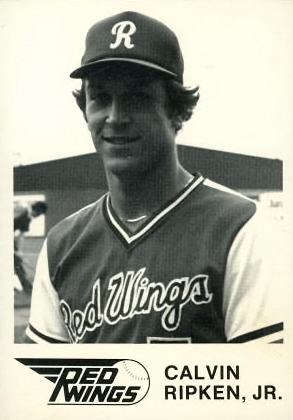
Cal Ripken, Jr.. 3B, Rochester Red Wings

It started thirty years ago on Easter Saturday, April 18, 1981. The longest professional game in baseball history began to play out its tired and weary way to a 33-inning 3-2 conclusion that would ultimately unfold over three dates in time before it pinged to a ragged conclusion June 23, 1981. In the end, the home town Pawtucket Red Sox defeated the visiting Rochester Red Wings on a single in the bottom of the 33rd off the bat of Pawtucket first baseman Dave Koza.

The game began before an International League crowd of 1,740, but it started at 8:25 PM due to a half hour delay caused by trouble with the lights. It was an omen for “late start” playing directly into “late finish” – as in latest finish ever for any International League game. The league had a rule ending or suspended any game from starting a new inning beyond 12:40 AM of the next day, but Dennis Cregg, the umpire who worked home plate for this game in McCoy Stadium in Pawtucket that night, had a rule book copy that contained no reference to the time-top rule. As a result, the game played on in zombie-like speed into the wee small hours. Finally, some time after 3:00 AM, someone called league president Harold Cooper. Mortified by the news, Cooper ordered that the game be stopped at the end of its current 32nd inning, if not ended by a score differential, and rescheduled for continuation later.  The inning finally droned to a halt 4:07 AM with score still tied at 2-2.

What a way to drift into Easter Sunday. Only nineteen fans remained in te stands by this time and all were given season passes for their willingness to stick-it-0ut to the very end. No note is made of what the married ones received from their wives after stumbling home that late in the pre-dawn hours of Easter Sunday morning. I can’t see that going so well in a number of instances.

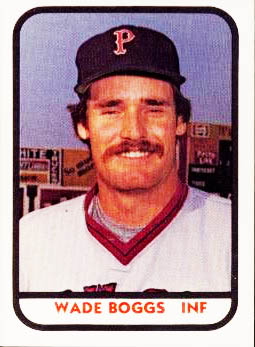
Another interesting sidebar note is the fact that each club featured future Hall of Famers playing third base. Cal Ripken, Jr. handled those honors for Rochester that night. Wade Boggs played thrid base for Pawtucket. Ripken ended up setting a record with two teammates for most plate appearances in a game with 15. Ripken was 2 for 13 in official trips. Wade Boggs was 4 for 12 with a game-ting RBI in the bottom of the 21st.

Wade Boggs, 3B, Pawtucket Red Sox

Following the suspension, the same clubs were set to play a fresh game at 11:00 AM on Easter Sunday morning. That sounded like a stroke of bad timing anyway, but it was mainly the fear of injury that led the two teams to reschedule the continuation of their unsettled marathon for the next regular trip to town for Rochester. The game would be continued in the top of the 33rd at McCoy Stadium on June 23, 1981.

As so often proves true, the spell, tempo, and mood of the continued game was no longer controlled by the tempo of the original production. After Rochester went down harmlessly in the top of the 33rd, Pawtucket quickly put men on base in the bottom half and won on the Koza hit described earlier. It was a game for the ages, setting numerous records that were only reachable because of its longevity.

The time of the game, 8 hours and 25 minutes, set a record of its own as the longest game ever played by the clock.

For further information, here’s a nice little summary of the whole ordeal.

http://en.wikipedia.org/wiki/Longest_professional_baseball_game

Fat Elvis Is Coming!

April 18, 2011

…and he won’t be staying at the Heartbreak Hotel.

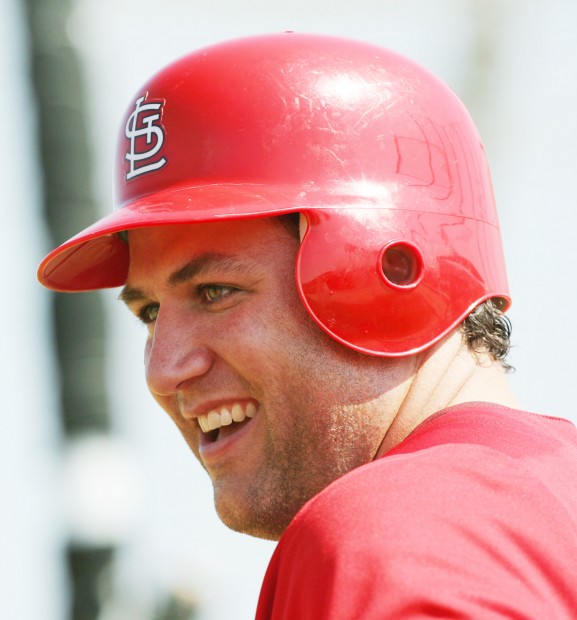
Fat Elvis is coming in eight days. He’s traveling with the St. Louis Cardinals this season and he’s due to arrive in time for the redbirds’ three-game series with the Houston Astros next week at Minute Maid Park, Tuesday through Thursday, April 26 through 28.

Oh, and if he keeps it up between now and then, he will be coming back to town carrying one of the best batting averages, home run marks, and runs batted in records in the current National League season. At this Monday morning scribble time, Lance Berkman is hitting .308 with 10 runs batted in and 6 home runs on the season as the mostly-everyday right fielder for the now 8-8 St. Louis Cardinals.

As one of his fans from his Rice University and Houston Astro days, I couldn’t be happier for the 35-year-old bright, funny, and talented man from New Braunfels at this late point in his career.  Lance Berkman’s career marks (.296 BA and 333 HR) still hover on the top side of a great career and I would love to see him finish off his remaining time, whatever that turns out to be, as productively as possible, as long as he does it against anyone but our home town Astros.

Somehow I have this image of Lance coming up late in a game at MMP with the Astros leading 2-1 with two birds on base and then watching old “Berkie” either push an opposite field fly into the Crawford Boxes, or else, lashing an uncatchable drive into the gap in right center. I hope it doesn’t happen, but come on now, if you’ve been watching baseball long enough, you’ve also sniffed this script before: Old hero comes back to victimize his former team as a member of their biggest rival club.

We’ll see. Meanwhile, I will try to find a way to ward off my worst fears about the return to Houston of Lance Berkman with this little book I’ve been reading. I’ve sworn not to reveal its title to the haggard little old lady who sold the book to me at the corner of Texas Avenue and Crawford after a game the other night, but I was also led to believe by the old girl that it’s OK for me to ask questions of you that have  arisen from my reading of this work.

That being said, do any of you know where I can find a 16-legged black spider and a three-headed chicken?

San Jacinto Reenactment: Sam Wins Again.

April 17, 2011

On April 21, 1836, the original Battle of Jacinto delivered Texas independent of Mexico in less than eighteen minutes. On April 16, 2011, on the 175th anniversary, Texas won again.

“Well, son,” said the obviously Hispanic father standing next to me at the reenactment battle’s end to his 8-9 year old son, “that one made it Houston 1 – Mexico 0.” Everyone enjoyed a good laugh. Unfortunately, or fortunately, the man left no scoring updates from more recent times.

Saturday’s celebration was not the commemoration of a racist Anglo/Hispanic division, which it really isn’t, but an honorable presentation of how the “Texian” residents of the Mexican Province of Texas rallied together in the early 19th century, Anglo and Hispanic alike, to free themselves from the tyrannical control of Mexico’s political dictator, General Santa Ana. Much earlier, Santa Ana had thrown out the Mexican Constitution of 1824 so that he could rule the country with a solitary and power/greed-driven iron hand and the Texians who settled this vast area to the north had rallied together under the leadership of General Sam Houston to resist that control and to avenge the losses of their comrades in arms at LaBahia in Refugio and the Alamo in San Antonio.

"I would give no thought of what the world might say of me, if I could only transmit to posterity the reputation of an honest man." - Sam Houston.

In a famous strategy called “The Runaway Scrape,” Sam Houston had lured Santa Anna’s much larger army east from San Antonio on a cut-and-run path that eventually would lead to its ultimate defeat on the plains of San Jacinto in the late afternoon battle of April 21, 1836.

Santa Ana was defeated and forced to sign a document that freed the people of Texas to form their own nation and, in the process of establishing their freedom to form the nine-year history of the Republic of Texas (1836-1945), it made Texas the only state that ever later joined the United Sates as a former nation unto itself.

All of that history was celebrated again yesterday by people of all discernibly different racial and ethnic backgrounds. On a day that also featured great Texas food, music, arts, and crafts around the base of the San Jacinto Monument, a good time was had by all.

 As most of you already know, Texas ceded away much of its land when it joined the United States of America in 1845. That extra land included portions of current states New Mexico, Colorado, and Wyoming. When Texas entered the Union in 1845, it retained for itself, as the then largest state by area, the right to later subdivide itself into five separate states, each with their own set of two senators.

Don’t hold your breath waiting for that one to ever happen. The strength of Texas is in its people, it size, and in its mystique of the Lone Star. You don’t throw all that away, even for the sake of particularizing special interests power through a handful of new senators.

Beautiful Texas!

Beautiful, beautiful Texas,

Where the beautiful Bluebonnets grow,

We’re proud of our forefathers,

Who fought at the Alamo.

There are some folks who still like to travel.

To see what they have over there,

But when they go look,

It’s not like the book,

And they find there is none to compare,

With beautiful, beautiful Texas.

– excerpt from “Beautiful Texas,” a song written by former Texas Governor Pappy Lee O’Daniel.

San Jacinto Monument

You can live on the plains or the mountains,

Or down where the sea breezes blow,

But you’re still in beautiful Texas,

The most beautiful place that I know.

– O’Daniel.