Archive for the ‘Uncategorized’ Category

Carroll’s Call: The Subject That Refuses to Die

February 4, 2015

surgery2

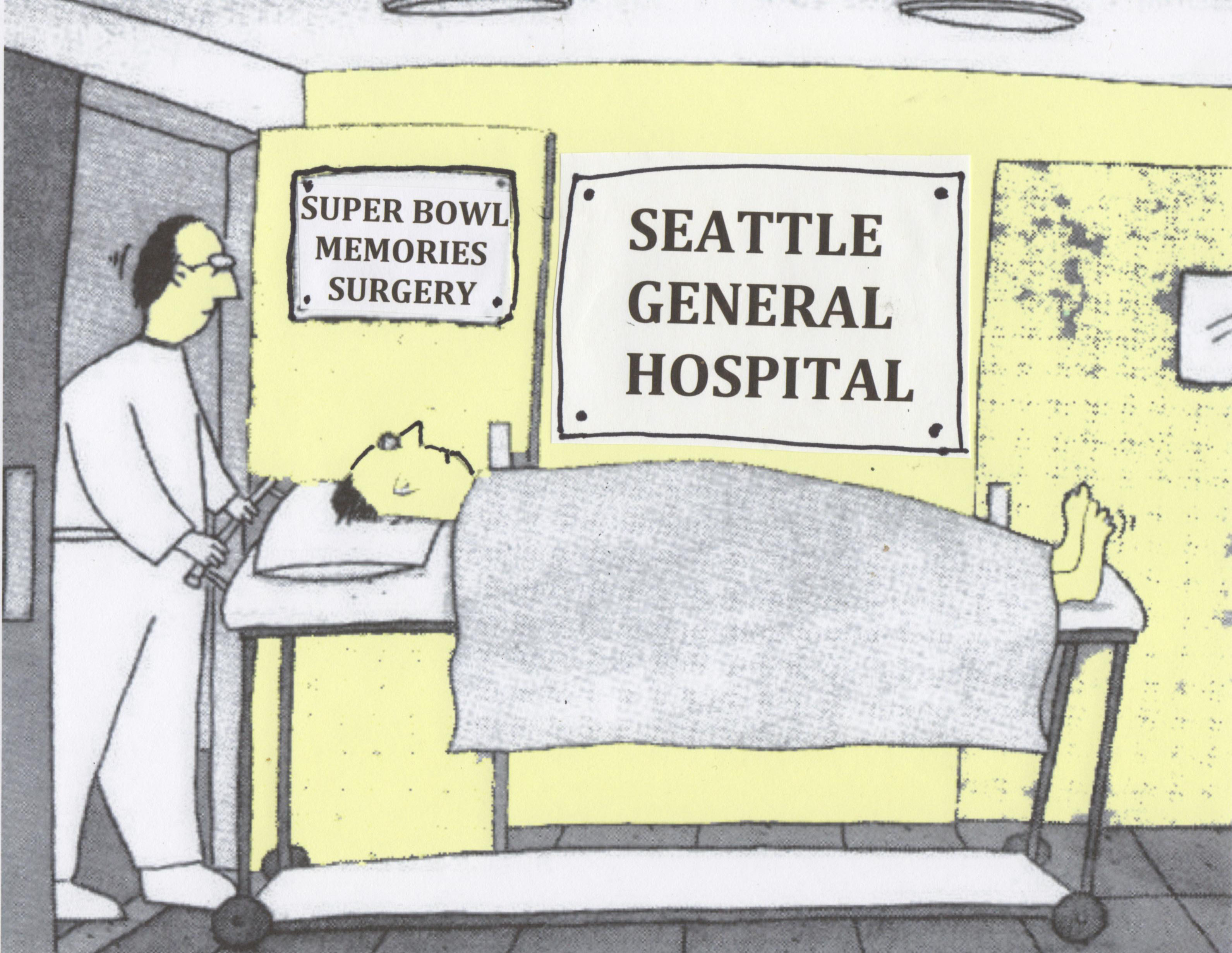
After 44 hours of post-Super Bowl redundancy in social and network media focus upon the Pete Carroll Pass Call and New England interception that killed Seattle’s almost certain chances of winning with Marshawn Lynch, their human tank runner, at the one-yard line, I thought I had finally escaped further mention of the subject when I climbed upon the operating table again today for some further skin cancer surgery on my now battle-worn nose.

As per usual, the needle descending into my nose from both sides several times was the only rough part. After that measure, my job as patient is to lay still and let the surgeon do his thing.

That’s how it started. Business in the doctor’s office per usual.

Then, with my nose covered in protection of me from flowing blood, and my eyes gauzed shut from the bright glare of the closely placed surgical lights, my doctor had one more thing to say as he began to cut into me with his scalpel.

“What did you think you about that ending to the Super Bowl? Wasn’t that a crazy ending to a very good game?”

I was speechless. My faced was covered. My body was cut into. My throat was filled with distastefully swallowable saliva. I had many thoughts. No speakable words.

“Ugrospcrcarrollstupido” – or something like that – is all I could say. And the doctor had no further questions.

I’m home tonight, feeling OK, but I really have nothing further to say about the Pete Carroll decision beyond the fact that it’s no mystery who fired the final deadly shot at their almost certain Seattle Super Bowl Hope Fulfillment March. – “The Butler did it!” – Rookie Patriot defensive back Malcolm Butler, that is. The other comment I have is about that now famous old movie title, “Sleepless in Seattle.” – Great as it was, it was really quite prophetic as well. The biggest State of Washington city didn’t even begin to understand what “Sleepless in Seattle” really meant until this past Sunday night. We also have to have some considerable empathy for the Seattle fans. – That Sunday dagger-to-the-heart play was the sort of thing we used to get down here in Southeast Texas from the Houston Oilers on a fairly regular basis.

At any rate, even though they will now need to redo their list of selections, that ESPN list of worst coaching decisions in sports history that ESPN published a while back will now require some refreshment Check out the list, especially item #7, when Kevin Steele briefly served as the Baylor football coach during the late 1990s. Although the stakes were not even close to what was lost in the Super Bowl, Steele threw away certain victory over UNLV on September 11, 1999 in Waco by going for “pile-it-on” points near the opponent’s goal line on the last play of the game. Steele’s Bears held a 24-21 lead with 20 seconds to go and only needed to take a knee to preserve a win, but they chose to go for what Steele later described as a “statement” score and ran the ball from the UNLV 8-yard line.

It turned out to be a statement, alright – a statement about stupid decision-making. The Baylor ball carrier was separated from the ball near the goal line. A fumble recovery and a 99 yard TD run by a fast UNLV defender then gave the visitors the surprising, but totally preventable 27-24 win as time expired, leaving Steele and Baylor with nothing but a heaping helping of chagrin and self-mortification..

http://espn.go.com/page2/s/list/worstdecisions.html

One more thing. – If you too are due for any kind of medical or dental surgery for the rest of this week, please ask your doctor to get his questions out of the way before he takes the knife or drill to you.


Who Hit The Last Astrodome Home Run?

February 3, 2015
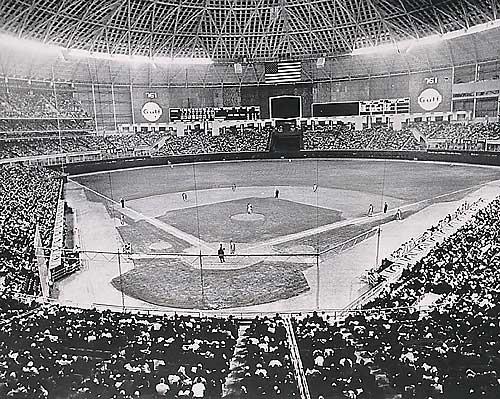
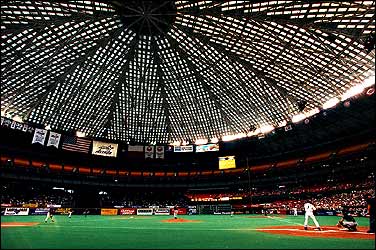
The Astrodome

The Astrodome

The date was Sunday, October 3, 1999. Under manager Larry Dierker, the Houston Astros were playing their last game in their 35-year history at the Astrodome. The year 2000 would see the team begin their first year of the new downtown venue we know today as Minute Maid Park.

In that last Dome date, the Astros would put the wraps on another successful winning season under Dierker (97-65) by going on to defeat the Los Angeles Dodgers, 9-4, that day behind ace lefty Mike Hampton (22-4), who coincidentally left his own mark in the process of closing down the club’s dome-home, as he fought through seven good innings of work to get the decision and become the last winning MLB game pitcher in the history of the Astrodome.

Larry Dierker sort of kids these days about starting to worry when the Dodgers put over “3” runs in the ninth and were still batting. With the new score now still riding comfortably at 9-4, Houston, Dierker apparently allowed his mind to roam into the scary world of “what if.”

“What if the Dodgers pulled off a miracle rally and defeated the Astros, 10-9?”

The very thought of such a disaster poured gallons of cold water on the idea of team plans for a post-last-Astronomer-game celebration the Astros had planned for their players to mark their departure from a familiar place to a new downtown location venue in 2000 for the club’s future pursuits of happy baseball destiny.

Not to worry, Dierk! – The Astro closed the door on the Dodgers at 9-4 and went on to a happy post-game “Goodbye, Dome!” party.

The answer to our column title question also brings with it a dose of its own lingering sadness and melancholia.

Astros 3rd baseman Ken Caminiti hit the last Astrodome home run in MLB service history. – Rest in Peace, “KC”!

Check out the box score at Baseball Almanac for more details on Caminiti’s homer and other items of factual interest about the team’s last moment of joy in the same stadium whose future as a landmark of world-important architecture still hangs today in the precarious balance between the interests of deserving preservation and those who want to tear it down because of its interference with their own purely commercial plans.

Here’s the box score link for the last Astrodome MLB game at Baseball Almanac:

http://www.baseball-almanac.com/box-scores/boxscore.php?boxid=199910030HOU

 Important Addendum Note: Earlier today, I received an important reminder from Mike Acosta, the highly respected records and significant items authentications specialist and artifact preservationist for the Houston Astros. Here’s what he said by e-mail this Tuesday, February 3, 2015, in response to today’s column:

____________________

“Hi Bill!

“I just read your latest edition of The Pecan Park Eagle about the final Astros home run in the Astrodome.  While Ken Caminiti did hit a home run on 10/3/99 during the final regular season game, he also hit the very last home run in the Astrodome during Game 4 of the NLDS against the Braves on 10/9.  It was a three-run shot off Hall of Famer John Smoltz in the 8th inning.  Caminiti saddled up next to Bob Aspromonte as the bookend of a third base duo that hit the first and final Astros home runs in the Astrodome.

“I thought I’d pass that note along.  Always look forward to your e-mails!

“Thanks!”

~ Mike Acosta, Houston Astros

____________________

Thank you, Mike! I’m glad I got it right, but I only got it right by accident. Thank you for coming to the rescue. I had overlooked the playoffs that followed the regular season and I allowed myself to think of the regular season ending as also the end of all MLB games there. Just another example of how important it is, although sometimes an unavailable luxury, to have some one else who knows the game working with us as a colleague or editor on anything we write.

Getting it right – not being right – is what drives me in my efforts, so please feel free to let me know anytime I get it wrong or only “get lucky” with my conclusions. I try to get things right, but, hard as I try to always do every job to the best of my ability, I long ago gave up on the expectation of ever being perfect or immune to human error.

Regards, Bill McCurdy, The Pecan Park Eagle

____________________


Legacy Plays in Sports: Add Carroll’s Pass Call

February 2, 2015
Bob Costas: "Pete Carroll, can we talk about that play that cost Seattle the Super Bowl in the final seconds?" Pete Carroll: "I'll pass!"

Bob Costas: “Pete Carroll, can we talk about that play that cost Seattle the Super Bowl in the final seconds?”
Pete Carroll: “I’ll pass!”

“The Butler did it!”

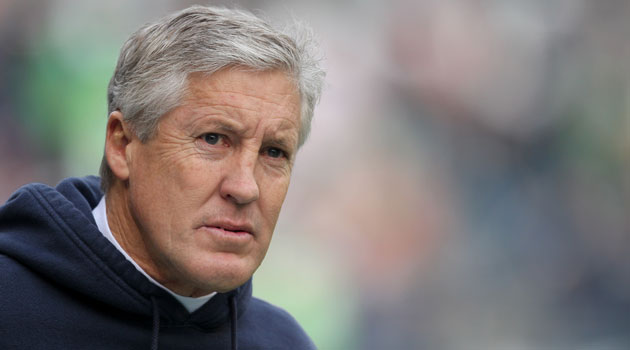
Will New England defensive back rookie Malcolm Butler always be remembered mostly for the interception that saved the Super Bowl “49” victory for the Patriots over the Seattle Seahawks in the final seconds of the game? For that matter, will Seattle coach Pete Carroll most often be remembered for the pass call that led to his team’s defeat when he had three chances at the one-yard line to try to score on the run with the human battering ram Marshawn Lynch at his disposal? We shall see. Legacy plays write their own ticket in our cultural memory bank. They just get there under the force of their own steam of joy and desolation. No other energies can put them in this special bank; no defensive spins on the facts will keep them out.

Legacy plays in sports may be positive or negative, but they all share a common feature. – They overshadow every other reason for remembering the individual who performed them or set in motion the circumstances that caused them.

Bobby Thomson and Ralph Branca from baseball’s 1951 “Shot Heard ‘Round the World” are the best examples of how the yin and the yang often works in these moments. In direct response to Thomson’s “miracle” homer that delivered the 1951 NL pennant to the New York Giants, Bobby Thomson, an otherwise average to mediocre hitter is now remembered with great embellishing regards for his ability because of those few nanoseconds it took to hit a rather ordinary and shallow-distance home run that changed our image of him forever because of the hit’s extant importance. Similarly, journeyman pitcher Ralph Branca is now most easily recalled as the sympathetic victim of this history-jolting action.

Don Larsen’s 1956 only perfect game in a World Series is another great legacy play, maybe even the brightest star in sports heaven. Don Larsen may have been a mediocre MLB pitcher, but 59 years later, people who get the chance only want to talk about what he did at Yankee stadium on the afternoon of October 3, 1956. I know that personally to be true. About fifteen years ago, Don Larsen spent about an hour with me, one-on-one in St. Louis, talking about “the game.”

Of course, people in New England, especially, might argue that Bill Buckner’s moment in Game Six of the 1986 World Series replaced Don Larsen’s positive moment as the biggest legacy play in sorts history. It certainly ranks high for many of us as the largest, most looming negative legacy play in history. Given the fact that any respectable list of legacy plays would vary somewhat from any other – and that most lists would only grow with continuous contemplation by the person who complied them – we wouldn’t begin to suppose that there is an unarguable first choice as the most remembered.

We just think that it will be a long time, if ever, before the names of Don Larsen or Bill Buckner are forgotten for what they each separately did in 1956 and 1986.

It’s an endless theme in sports and general life. Who wants to be remembered forever for s single act of negative consequence? We feel sure that, if Pete Carroll were here for us to ask, he would certainly answer: “Not me!”

Please feel free to share your own favorite positive and/or negative sports legacy moments below as comments upon this column. We would all love to know what you think.


Three Amigos of “One-Hit Wonder” Astro History

February 1, 2015

one-hit-wonders

Thanks to the dauntless, eye-blinding research a fellow named George Rose, a big little book entitled “One-Hit Wonders” from 2004 went through a revised edition second printing in 1979. In brief, it is a brief career sketch of 75 men who are in the record books among the approximately 200 total field of players who made it to the big leagues long enough to register one hit, and one hit only, as the sum total of their offensive accomplishments with the bat at the game’s highest level of play.

All of these players had minor league careers that ranged from immediate and early flame-out spurts – to brief steadiness for four or five years – to many seasons of distinguished minor league production. They share only that MLB “one-hit wonder” common ground as the sum total of their major league experience and their slippage away from further opportunity is both common and individual as an explanation for how they ended up in each other’s company.

Although it’s not clear if the book’s treatment of three men who achieved their one-hit wonder status is the grand total for Astros – or simply the total number of Astros included in Rose’s book, we shall list them here for your edification and opportunity for further research into the possibility of others.

Unless further research or author clarification proves us wrong, the Three Amigos of Houston Astro “One-Hit Wonder” History are:

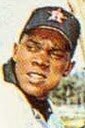
(1) Greg Sims.

Greg Sims

Greg Sims

19-yeear old outfielder Sims broke into the Astros lineup for the first time on April 15, 1966 and went hit less.  He finally got his lone MLB hit, a seeing-eye single, against veteran pitcher Terry Fox of the Phillies on May 14, 1966. (The book incorrectly reports the date of Sims’ only MLB hit game as May 20, 1966.)

Sims was 1 for 6 in 7 games before an attempt was made to return him to the Pirates as a returnee from the earlier Rule Five draft, The Pirates didn’t want him, so Sims accepted a minor league assignment with the Astros and then played several good years as a minor leaguer without ever returning to the majors with any club.

One interesting note: When the Astros bumped Sims from their 1966 roster, it was a choice they made between him or a fellow named Nate Colbert. They kept Colbert, so let’s give them their due. The Astros have made some good personnel decisions in the past.

Link to the MLB & Minor League Record of Greg Sims at Baseball Reference.Com:

http://www.baseball-reference.com/players/s/simsgr01.shtml

Link to the Box Score of the One MLB Hit Game of Greg Sims at Baseball Almanac.Com:

http://www.baseball-almanac.com/box-scores/boxscore.php?boxid=196605140PHI


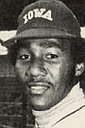
(2) Jesus de la Rosa.

Jesus de la Rosa

Jesus de la Rosa

By the time he reached the Astros for his first MLB game on August 2, 1975, de la Rosa was only four days shy of his 22nd birthday, but he had been playing in the clubs minor league system since 1969, having signed as one of those eager family kids from The Dominican whose celestial dream was always getting off the island and becoming a big league baseball player. As a first and third baseman. de la Rosa was eager to go. In his first try, de la Rosa was retired as a pinch hitter for pitcher Wayne Granger in the late innings of an 8-7 Astros loss at San Francisco.

The following day, August 3, 1975, de la Rosa got his second chance as a pinch hitter for pitcher Jose Sosa in the top of the 9th against Pete Falcone of the Giants. This time he cracked a double and scored a run as Houston rallied for two, but still lost to San Francisco by 5-4. It would turn out to be, of course, the only hit of Jesus de la Rosa all too brief MLB career. He would make more out in a third and final appearance to secure his career MLB batting average at .333, but he didn’t play log enough to buy his mama a house.

Link to the MLB & Minor League Record of Jesus de la Rosa at Baseball Reference.Com:

http://www.baseball-reference.com/players/d/dela_je01.shtml

Link to the Box Score of the One MLB Hit Game of Jesus de la Rosa at Baseball Almanac.Com:

http://www.baseball-almanac.com/box-scores/boxscore.php?boxid=197508031SFN


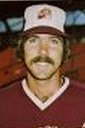
(3) Craig Cacek.

Craig Cacek

Craig Cacek

Traded by the Mets to the Astros in a December 1975 minor league deal, first baseman Craig Cacek finally got an MLB call-up by Houston in 1977 when star first sacker Bob Watson went on the DL with a hand injury. Cacek made his big league game debut on June 21, 1977 as a first base starter for Houston against a pretty fair pitcher named Steve Rogers in a contest played in Montreal. Cacek would get his lone hit off Steve Rogers.

In the Rose book, Cacek described the memory of his only big league hit on page 129-130 in wonderfully personal terms: ” My recollection was that Rogers shut us out on three hits, and I got one of the three. [It was] a big bouncer hit over the mound and was cut off by either the 2nd baseman or shortstop in shallow center field, and there was no play on me.”

Someone from the Astros collected the ball and gave it to Cacek after the game. “I still have that ball, it is a nice keepsake, but bittersweet in a way because I always believed I could have done more in the show.”

Cacek  must have been a real competitor. Real competitors never give up, even if they don’t reach their highest goals. These disappointment just go where all regrets go in the memory banks of our human egos. – They just transform their way into “woulda, coulda, shouldas!”

22-year old Craig Cacek played in a total of 7 Astros games in 1977, but never got another hit, ending his one-chance run at the big leagues with a 1 for 20 mark and a batting average of only .050 – an outcome, indeed, that left plenty of room for a fellow’s “woulda, coulda, shoulda” second guessing on the way to the greater peace that comes from finally accepting that life is what it is – we live only in the here and now – and that here’s never any going back for any of us. The past should only be our teacher – and not our torture. The also great lesson here too is – There are a lot of other ways in life for us humans to find ourselves on at least one “one-hit wonder” list in some area of life.

Link to the MLB & Minor League Record of Craig Cacek at Baseball Reference.Com:

http://www.baseball-reference.com/players/c/cacekcr01.shtml

Link to the Box Score of the One MLB Hit Game of Craig Cacek at Baseball Almanac.Com:

http://www.baseball-almanac.com/box-scores/boxscore.php?boxid=197706210MON


Appendices Comment:  We know what the author says about himself,with help from the photo on the back of “One Hit Wonders” about his Michigan background. We don’t really  think that the author of “One-Hit Wonders” is the same George Rose who played infield for our 1956 St. Thomas High School Eagles, but, in case it was you, George – and you were just using someone’s else photo and story to cover your humility as the true author of the book, you should have spoken up much sooner to our large and growing active alumni group. You could have sold a lot more books.

~ Editor – The Pecan Park Eagle 🙂


If Only Common Sense Were More Ecumenical

January 31, 2015

let-there-be-light

Thanks again to Father Gerald Beirne of snowbound Rhode Island for hanging out by the fire of his computer keys and virtually writing most of our columns for The Pecan Park Eagle this week. Stay warm, Father Gerald, and keep those hot ideas and stories pouring into our land of Houston sunshine and smiles of appreciation. – Editor.

If Only Common Sense Were Less of a Parochial Gene – And More of an Ecumenical Phenomenon

During a Eucharistic Congress, a number of priests from different orders are gathered in a church for Vespers. While they are praying, a fuse blows and all the lights go out.

The Benedictines continue praying from memory, without missing a beat.

The Jesuits begin to discuss whether the blown fuse means they are dispensed from the obligation to pray Vespers.

The Franciscans compose a song of praise for God’s gift of brother darkness.

The Dominicans revisit their ongoing debate on light as a signification of the transmission of divine knowledge.

The Carmelites fall into silence and slow, steady breathing.

The parish priest, who is hosting the others, goes to the basement and replaces the fuse.


Once Upon a Future Time Machine

January 30, 2015
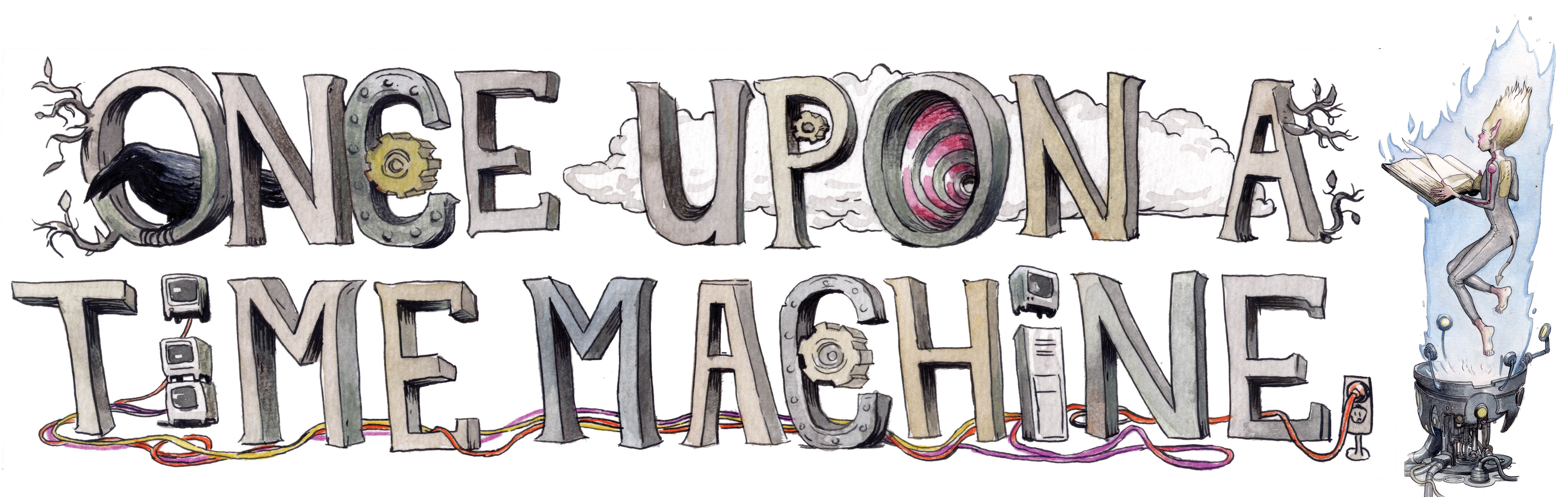
Someday, we'll do it more than ... ONCE UPON A ... future ... TIME MACHINE!

Someday, we’ll do it more than …
ONCE UPON A
… future …
TIME MACHINE!

As anyone who ever took a course or studied basics physics already knows, the light images of our earthly past are out there from yesterday’s views to billions of light years away in space. They are a pulsating sequence of light images that inherently show all features, organic entities, activities, and patterns of motion from the big bang to now to forever.

When our technology and genius catches up to the task, it is possible that we shall one day have some high quality HD digital moving images from recaptured light from earth of everything from an event like the Gettysburg Address – to that dance where your great-great grandmother first met your great-great grandfather. As for the problems of recapturing the sound that goes with them, we hall have to leave that problem also to the geniuses that will solve the elementary process of recapturing lost sound waves.

In the meanwhile, check out what some have done to digitize high resolution natural light color into these old originally black and white negative still shots from the 19th and early 20th centuries.

My favorites are the street view of 1864 Atlanta and the late 19th century street scenes of New York City.

Thanks again to Father Gerald Beirne for sending us this virtual portal through the mind of H.G. Wells in the past to the digital wizards of today and, finally, back to the future.

Click the following link and buckle your seat belts for a really fun ride back in time:

http://www.liveleak.com/ll_embed?f=d6d9d5385aee 

Time-Machine030-680uw

On The Streets Where We Lived

January 29, 2015
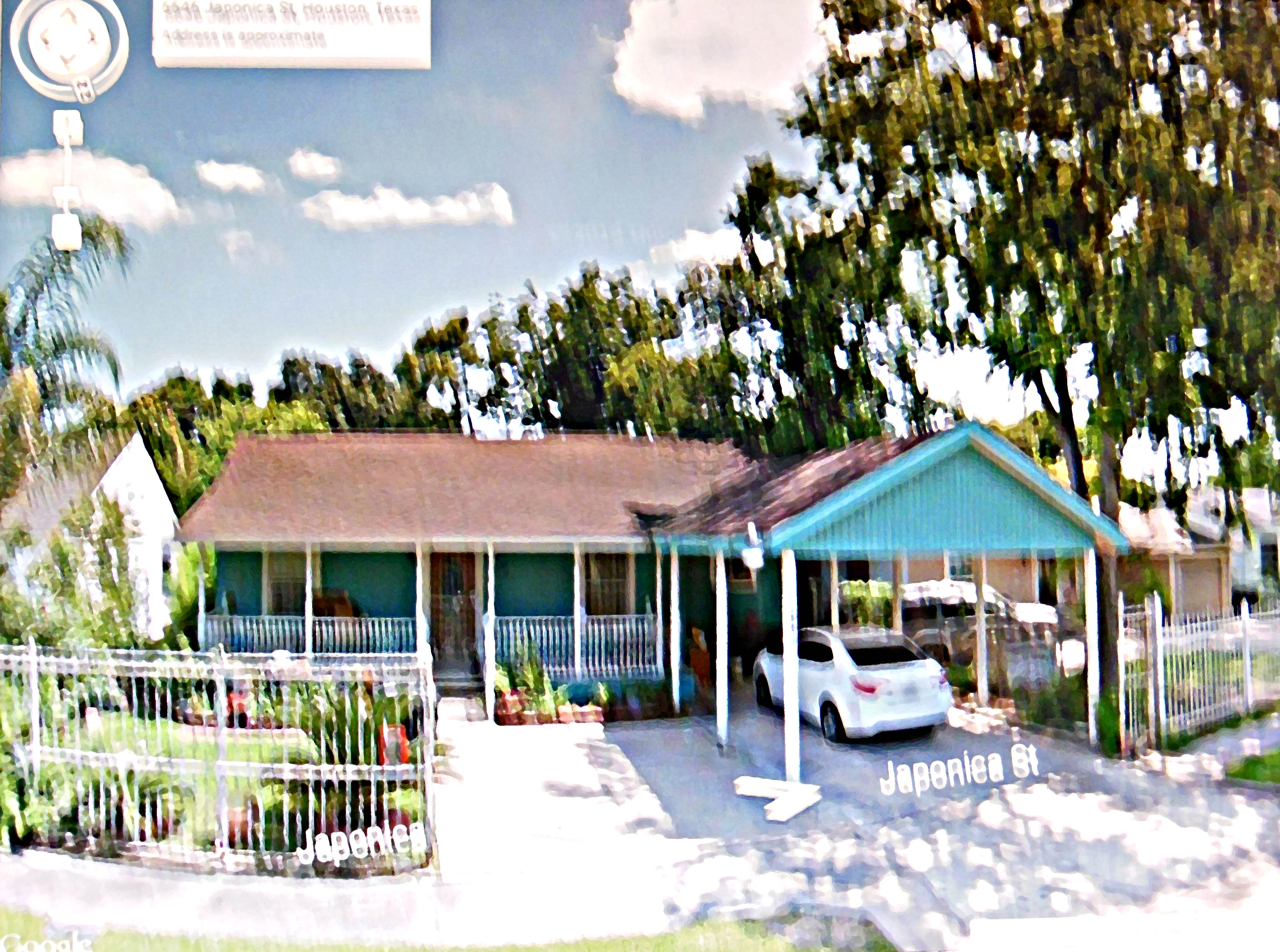
Home of The Pecan Park Eagle 6646 Japonica Street Houston, TX 77087 1945-1958

Home of One Pecan Park Eagle
6646 Japonica Street
Houston, TX 77087
1945-1958

Our good SABR friend, Father Gerald Beirne, is busy this week fighting the cold of that rampaging blizzard in New England at his snowed-in abode in Narragansett, RI and he has chosen to spend the time warming our hearts in more hospitable climes with warm and fuzzy high tech sites that are designed to open the bucket of nostalgia confetti that hangs over most of our heads.

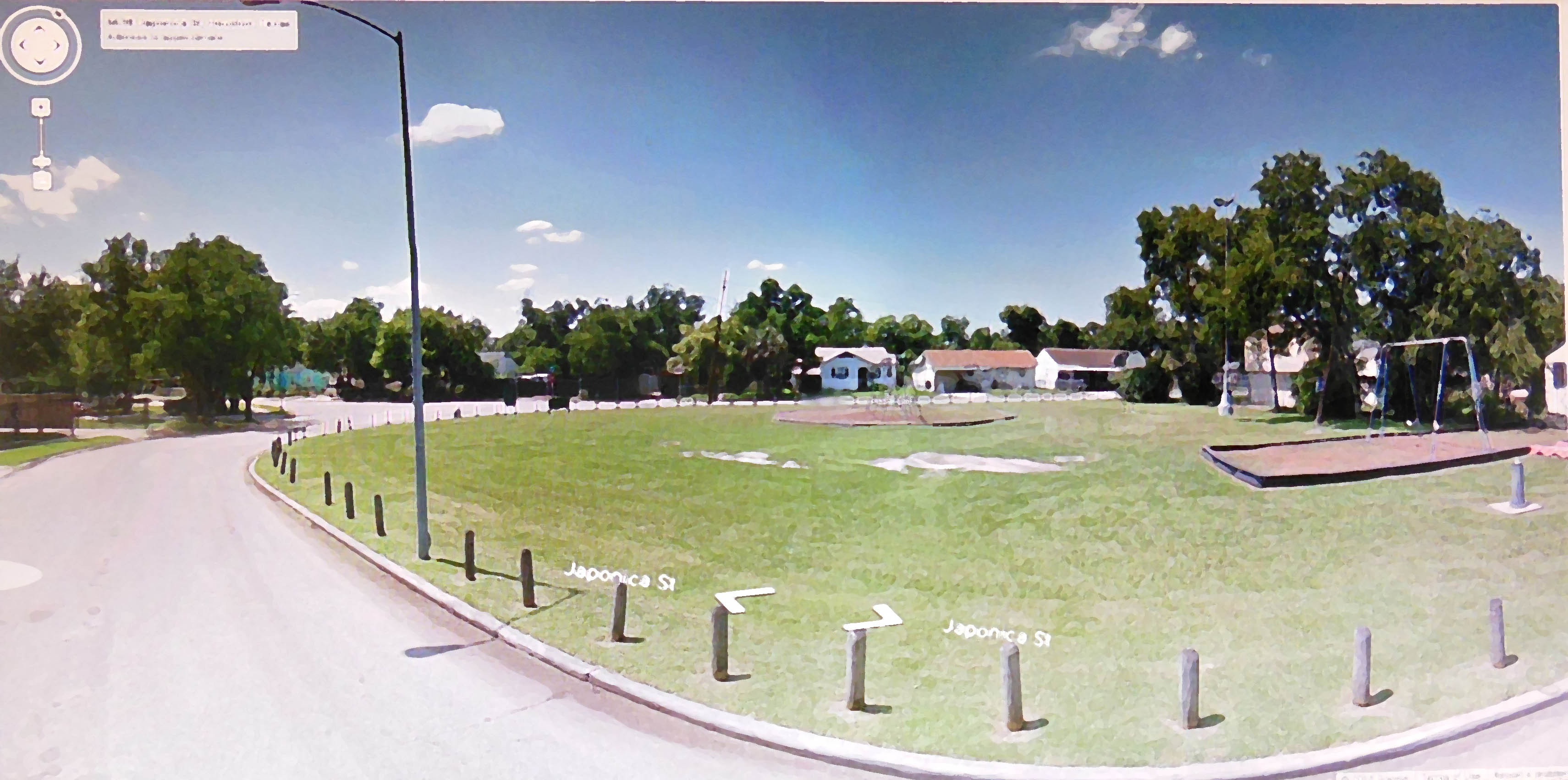
This website is sort of a “Goggle Maps Made Even Easier” vehicle for instantly viewing any place in your childhood years that may have been special to you. For example, if you want to see a piece of Pecan Park in Houston, where I grew up, as it exists today, just use the link below and type in “6646 Japonica, Houston, TX 77087” and, voila, there’s our little house i Southeast Houston off the Gulf Freeway at Griggs Road, looking far now than it ever did when we lived there some seventy years ago. Then, if you use the little drag-and-see tools there to move around the neighborhood, you will even find our not-so-famous “Eagle Field” sandlot, catty cornered across the street from our old north-facing home site, now officially known as “Japonica Park.” It’s too cluttered now with small children’s playground equipment to handle the kinds of games we used to play.

Eagle Sandlot Park 1947-1952 Now Japonica Park Japonica @ Myrtle Streets Houston, TX in 2015

Eagle Sandlot Park
1947-1952
Now Japonica Park
Japonica @ Myrtle Streets
Houston, TX in 2015

Of course, you may want to just check out the two photos taken here from our own search and go straight to your own. Just insert the full street, town and city address of your own history and watch what happens.

And please – those of you who will – consider sharing your experience in the search with a comment on this Pecan Park Eagle site, and not as an e-mail to me that leaves everyone else out in the rain on your particular observations . We’re all on this time-limited ride of life together – even if we do enter and exit on our own time schedule. The more we are able to share the joys and sorrows of our own journeys, the tighter our chances grow for becoming more connected to our common ground as human beings.

Here’s the magically visual time machine link that will take you back to where you each started, if it’s on their maps. Have fun!

http://www.vpike.com/

Have fun! Let us hear from you, if you will. And thanks agin, Father Gerald Beirne, for this wonderful gift!

– The Pecan Park Eagle

50th Anniversary of Astrodome Baseball is April 9

January 26, 2015
April 9, 1965: Astros defeat the Yankees, 2-1, in first baseball game played in the new Harris County Domed Stadium. ~Photo Courtesy of AstrosDaily.Com

April 9, 1965: The Huston Astros defeat the New York Yankees, 2-1, in the first baseball game ever played in the new Harris County Domed Stadium.
~Photo Courtesy of Astros Daily.Com

Where is the love?

Fifty years ago this coming April 9th, the first baseball game was played in the then brand new Harris County Domed Stadium, aka the Astrodome. April 9, 1965 also marked the first time that the newly re-christened, then three-years old MLB franchise took the field indoors in their brand new home as the “Houston Astros”?

We ask again, “Where is the love?”

What plans do the Houston Astros, Harris County, and/or the City of Houston have to honor this historic date and occasion with an appropriate nod of public appreciation for an important date in both our local history – and in the world history of covered architectural venues for the public presentation of certain sporting events that previously – from the beginning of civilized time and their individual sporting game inventions – had to be played – or canceled – at the mercy of nature’s strongest climatic elements?

The fact that little, if anything, has even been whispered about this important upcoming moment this close to April 9th is also surprising in light of the preservation movement that exists to save the Astrodome from demolition by the “bucks-alone-matter” Houston developer crowd that for years already has torn down so much of our local architectural heritage for the construction of parking space and strip centers.

Once more, “Where is the love?”, and just as importantly, “What are the plans in place for a celebration of this internationally important anniversary by the local entities that benefited the most from the creation of the Astrodome in the first place?

The Pecan Park Eagle has no earthly idea at this publication date what any of the “big people” are planning, if anything, and frankly, we are beginning to care less daily about the big entities, and what they do and don’t do, by the moment. Even as I write, it’s brought home to me good and hard that there are simply too many egos piling into this pie to suit my digestion.

Personally, I do hope something worthwhile happens in behalf of the old steel–framed icon of new era stadium construction. Beyond all personal agendas, she’s still special in the hearts of us everyday people.

And what did actually happen on April 9, 1965 at the brand new domed stadium in Houston?

The brand new Houston Astros defeated the New York Yankees, 2-1, in a final exhibition game prior to the start of the regular season, but let’s allow historian Bob Hulsey of Astros Daily to give you the best account ever written about that special moment:

http://www.astrosdaily.com/history/19650409/

If you also want to see Mickey Mantle trudging toward home to cap the first home run in the Astrodome that night – or watch Jimmy Wynn of the Astros later racing toward home with the winning run, try this old movie coverage link too:

https://www.youtube.com/watch?v=MCNfSjG3me0

Now, if you would also like to see the 50th anniversary of the first Astrodome baseball game acknowledged in some appropriate way, please leave your expression of wishes, ideas, or plans for what should happen as a detailed statement in the comment section that follows this column. Don’t send them to us as comments. That will only force us to enter them as comments for you – but without your identification at the top of the post. – Also, be sure to note who you think should be taking the lead in planning this historic recognition of a big moment in Houston history. Unless one or more of the founding entities feels some responsibility for leadership in this matter, this one is tailor-made after a half century for all original factions to simply do nothing and then say “we thought so-and-so was going to do it.”

Thanks, friends!


Colt .45’s/Astros Managers Through The Years

January 25, 2015
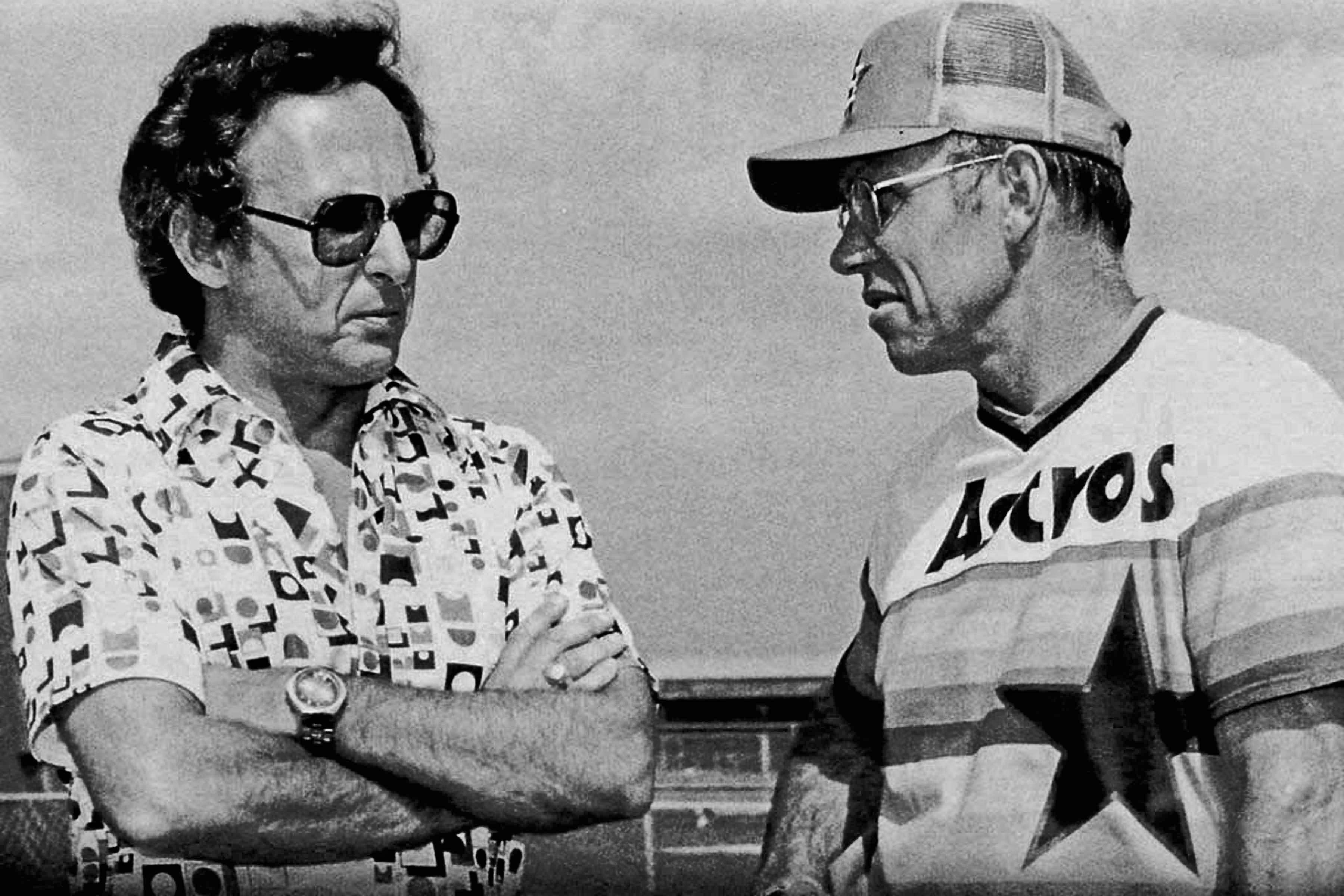
BILL VIRDON, SHOWN HERE WITH THEN  ASTROS PRESIDENT TAL SMITH, IS STILL THE GAMES-WON LEADER IN FRANCHISE HISTORY.

BILL VIRDON, SHOWN HERE WITH THEN ASTROS PRESIDENT TAL SMITH, IS STILL THE GAMES-WON LEADER IN FRANCHISE HISTORY.


Houston Colt .45’s/Astros Managers Through The Years

Here’s the list of Managers, Years of Service, & W/L Records:

Houston Colt .45’s

1) Harry Craft (1962-64) (191-280)

Houston Colt .45s & Astros

2) Luman Harris (1964-65) (70-105)

Houston Astros

3) Grady Hatton (1966-68) (164-221)

4) Harry Walker (1968-1972) (355-353)

5) Salty Parker (1972) (1-0)

6) Leo Durocher (1972-73) (98-85)

7) Preston Gomez (1974-75) (128-161)

8) Bill Virdon (1975-82) (544-522)

9) Bob Lillis (1982-1985) (276-261)

10) Hal Lanier (1986-88) (254-232)

11) Art Howe (1989-93) (392-418)

12) Terry Collins (1994-96) (224-197)

13) Larry Dierker (1997-2001) (448-362)

14) Jimy Williams (2002-04) (215-197)

15) Phil Garner (2004-07) (277-252)

16) Cecil Cooper (2007-09) (171-170)

17) Brad Mills (2010-12) (171-274)

18) Bo Porter (2013-14) (110-190)

19) A.J. Hinch (2015) (pre-1st season, o-0)

Salty Parker 1936 Tigers

Salty Parker
1936 Tigers

Baseball Almanac includes the 1-0 record of one-game temporary manager Salty Parker in 1972, but Parker is not included in this otherwise excellent pictorial review of all the permanent managers over at Houston Chron.Com. Take a look We think you will enjoy their presentation.

Here’s the Chron.Com link:

http://www.chron.com/sports/astros/gallery/Astros-managers-through-the-years-94639/photo-6932104.php

Ernie Banks Holds Some First Houston Records

January 25, 2015
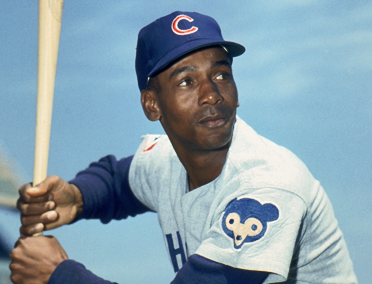
Ernie Banks 1931-2015 Rest in Peace

Ernie Banks
1931-2015
Rest in Peace

It’s a sad day for baseball and the human race. When Ernie Banks died in Chicago yesterday, 01/23/15, in Chicago, and just eight days shy of his 84th birthday, we surrendered a very special human being – a guy whose love of the game he played hardly needs amplification from the likes of me – or anyone else. His “Let’s Play Two” state of mind and his Hall of Fame accomplishments on the field speak for themselves: 512 career MLB home runs, 1,305 runs, and 1,636 RBI, all as “Mr. Cub”, speak loudly for themselves.

But how many of you know the eternal Houston connection to these totals? If not, it’s no big matter to fill you in to this small part of the big picture that was the MLB career of native Texan Ernie Banks:

Back on Opening Day at Colt Stadium, April 10, 1962, Ernie Banks of the Chicago Cubs became the first oppositional player in Houston’s brand new first day big league history in the 7th inning of the game played between his Cubs and the brand new Houston Colt .45s to set one of those forever-records with one swing of the bat in the 7th inning. With nobody on and Ernie Banks hitting against Houston’s lefty starter, Bobby Shantz, Ernie got hold of a pitch and sent it hurdling far and away to the great record bok in the sky. With the Cubs trailing, 1-0, at the time, Ernie’s out-of-the-park blast at once became the first run and rbi registered against a Houston big league team – and the first home run ever hit against them, as well. Banks also picked up a single in that game to go 2 for 4 on the day and the only Cub to have a multiple hit game against Houston – another first and forever record against Houston for Smiling Ernie Banks, even if his Cubs did get battered, 11-2, by the end of the day.

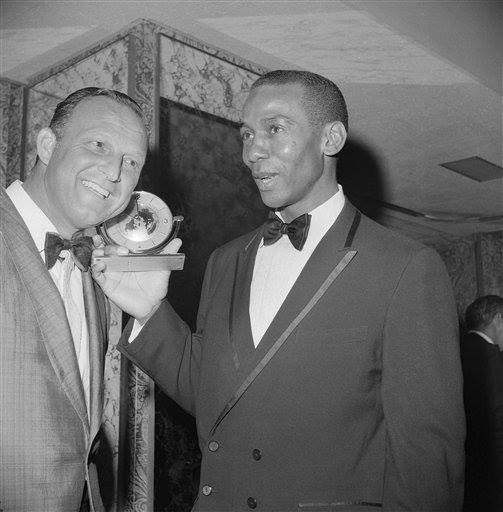
Photo of Stan Musial and Ernie Banks at NY Awards Dinner on 2/02/69 that was sent to writer friend Ron Paglia by Steve Russell, Executive Director of the Mid Mon Valley All Sports Hall of Fame in Donora, PA and then wired to The Pecan Park Eagle..

Photo of Stan Musial and Ernie Banks at NY Awards Dinner on 2/02/69 that was sent to writer friend Ron Paglia by Steve Russell,
Executive Director of the Mid Mon Valley All Sports Hall of Fame in Donora, PA and then wired to The Pecan Park Eagle. Ernie had been honored that night by the NY Chapter of the BBWAA with their annual “Good Guy” Award.

We Houstonians also knew that Ernie Banks was both a great player and a really “good guy.” We got to watch him on a regular basis during the last ten seasons (1962-71) of his nineteen year career and, for that fact, we should be eternally grateful. Ernie Banks was the total embodiment of the spirit and character of all those who play, coach, or follow baseball for “the love of the game” – and an old James Bond movie theme song occurs to me here – “Nobody Does It Better!”

And nobody, but nobody did it better in that area than the lean, sweet man that was Ernie Banks of Dallas, Texas and the Chicago Cubs!

Rest in Peace, Ernie Banks! We are also happy for your spiritual homecoming, but we are going to miss your personal spirit among us in all the baseball seasons yet to come.


Baseball Almanac Box ScoresChicago Cubs 2, Houston Colt .45s 11
Chicago Cubs ab   r   h rbi
Brock cf 3 0 0 1
Hubbs 2b 4 0 0 0
Williams lf 4 0 1 0
Banks 1b 4 1 2 1
Altman rf 4 0 0 0
Santo 3b 3 0 0 0
White ss 1 0 0 0
  Rodgers ph,ss 1 0 0 0
Barragan c 3 0 1 0
Cardwell p 1 0 0 0
  Gerard p 0 0 0 0
  Morhardt ph 1 0 0 0
  Schultz p 0 0 0 0
  Warner p 0 0 0 0
  McKnight ph 1 1 1 0
  Lary p 0 0 0 0
Totals 30 2 5 2
Houston Colt .45s ab   r   h rbi
Aspromonte 3b 4 3 3 0
Spangler cf 3 3 2 1
Mejias rf 5 3 3 6
Larker 1b 4 1 1 1
Pendleton lf 4 0 1 1
Smith c 4 1 2 1
Amalfitano 2b 3 0 1 1
Buddin ss 3 0 0 0
Shantz p 4 0 0 0
Totals 34 11 13 11
Chicago 0 0 0 0 0 0 1 1 0 2 5 0
Houston 1 0 4 0 0 0 3 3 x 11 13 2
  Chicago Cubs IP H R ER BB SO
Cardwell  L (0-1) 2.2 5 5 5 2 1
  Gerard 2.1 1 0 0 1 0
  Schultz 1.0 4 3 3 0 1
  Warner 1.0 1 0 0 0 0
  Lary 1.0 2 3 3 1 0
Totals
8.0
13
11
11
4
2
  Houston Colt .45s IP H R ER BB SO
Shantz  W (1-0) 9.0 5 2 2 2 4
Totals
9.0
5
2
2
2
4

E–Smith (1), Amalfitano (1).  DP–Chicago 1, Houston 2.  2B–Houston Smith (1,off Cardwell).  3B–Chicago McKnight (1,off Shantz), Houston Spangler (1,off Cardwell).  HR–Chicago Banks (1,7th inning off Shantz 0 on, 1 out), Houston Mejias 2 (2,3rd inning off Cardwell 2 on, 0 out,8th inning off Lary 2 on, 2 out); Smith (1,3rd inning off Cardwell 0 on, 2 out).  SF–Brock (1,off Shantz).  Team LOB–4.  SH–Buddin (1,off Schultz).  HBP–Amalfitano (1,by Schultz).  Team–5.  SB–Aspromonte (1,2nd base off Lary/Barragan).  CS–Amalfitano (1,2nd base by Warner/Barragan).  HBP–Schultz (1,Amalfitano).  U-HP–Dusty Boggess, 1B–Stan Landes, 2B–Vinnie Smith, 3B–Mel Steiner.  T–2:32.  A–25,271.

Baseball Almanac Box Score | Printer Friendly Box Scores