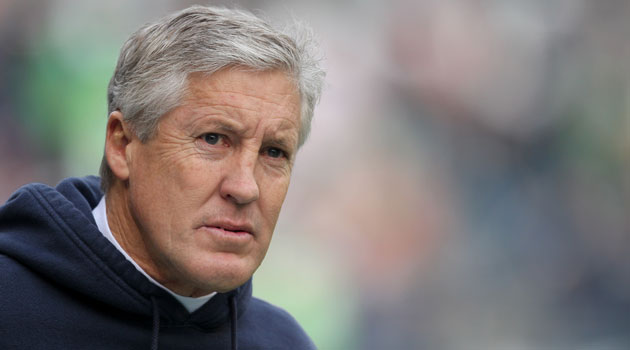
Bob Costas: “Pete Carroll, can we talk about that play that cost Seattle the Super Bowl in the final seconds?”
Pete Carroll: “I’ll pass!”
“The Butler did it!”
Will New England defensive back rookie Malcolm Butler always be remembered mostly for the interception that saved the Super Bowl “49” victory for the Patriots over the Seattle Seahawks in the final seconds of the game? For that matter, will Seattle coach Pete Carroll most often be remembered for the pass call that led to his team’s defeat when he had three chances at the one-yard line to try to score on the run with the human battering ram Marshawn Lynch at his disposal? We shall see. Legacy plays write their own ticket in our cultural memory bank. They just get there under the force of their own steam of joy and desolation. No other energies can put them in this special bank; no defensive spins on the facts will keep them out.
Legacy plays in sports may be positive or negative, but they all share a common feature. – They overshadow every other reason for remembering the individual who performed them or set in motion the circumstances that caused them.
Bobby Thomson and Ralph Branca from baseball’s 1951 “Shot Heard ‘Round the World” are the best examples of how the yin and the yang often works in these moments. In direct response to Thomson’s “miracle” homer that delivered the 1951 NL pennant to the New York Giants, Bobby Thomson, an otherwise average to mediocre hitter is now remembered with great embellishing regards for his ability because of those few nanoseconds it took to hit a rather ordinary and shallow-distance home run that changed our image of him forever because of the hit’s extant importance. Similarly, journeyman pitcher Ralph Branca is now most easily recalled as the sympathetic victim of this history-jolting action.
Don Larsen’s 1956 only perfect game in a World Series is another great legacy play, maybe even the brightest star in sports heaven. Don Larsen may have been a mediocre MLB pitcher, but 59 years later, people who get the chance only want to talk about what he did at Yankee stadium on the afternoon of October 3, 1956. I know that personally to be true. About fifteen years ago, Don Larsen spent about an hour with me, one-on-one in St. Louis, talking about “the game.”
Of course, people in New England, especially, might argue that Bill Buckner’s moment in Game Six of the 1986 World Series replaced Don Larsen’s positive moment as the biggest legacy play in sorts history. It certainly ranks high for many of us as the largest, most looming negative legacy play in history. Given the fact that any respectable list of legacy plays would vary somewhat from any other – and that most lists would only grow with continuous contemplation by the person who complied them – we wouldn’t begin to suppose that there is an unarguable first choice as the most remembered.
We just think that it will be a long time, if ever, before the names of Don Larsen or Bill Buckner are forgotten for what they each separately did in 1956 and 1986.
It’s an endless theme in sports and general life. Who wants to be remembered forever for s single act of negative consequence? We feel sure that, if Pete Carroll were here for us to ask, he would certainly answer: “Not me!”
Please feel free to share your own favorite positive and/or negative sports legacy moments below as comments upon this column. We would all love to know what you think.
 Houston, Baseball, & Other Musings.
 The Pecan Park Eagle