Archive for 2012

Astros Lose 2012 Season Opener, Part 1 0f 2

April 7, 2012

Part 1 0f 2 / This pictorial is a 2-part series due to loading limitations: The "Young Gun" 2012 Houston Astros showed up for their season home opener against the Colorado Rockies on April 6th. (See Part 2 of 2 for the rest.)

A 43,000 plus standing room only crowd arrived early. Some fans came for justice on the field that would help us all forget the crimes of defeat the Astros fell into during the 2011 season. Others just looked over at the nearby Harris County Criminal Courts Building as a symbol of life's other passage into equity and prayed for mercy.
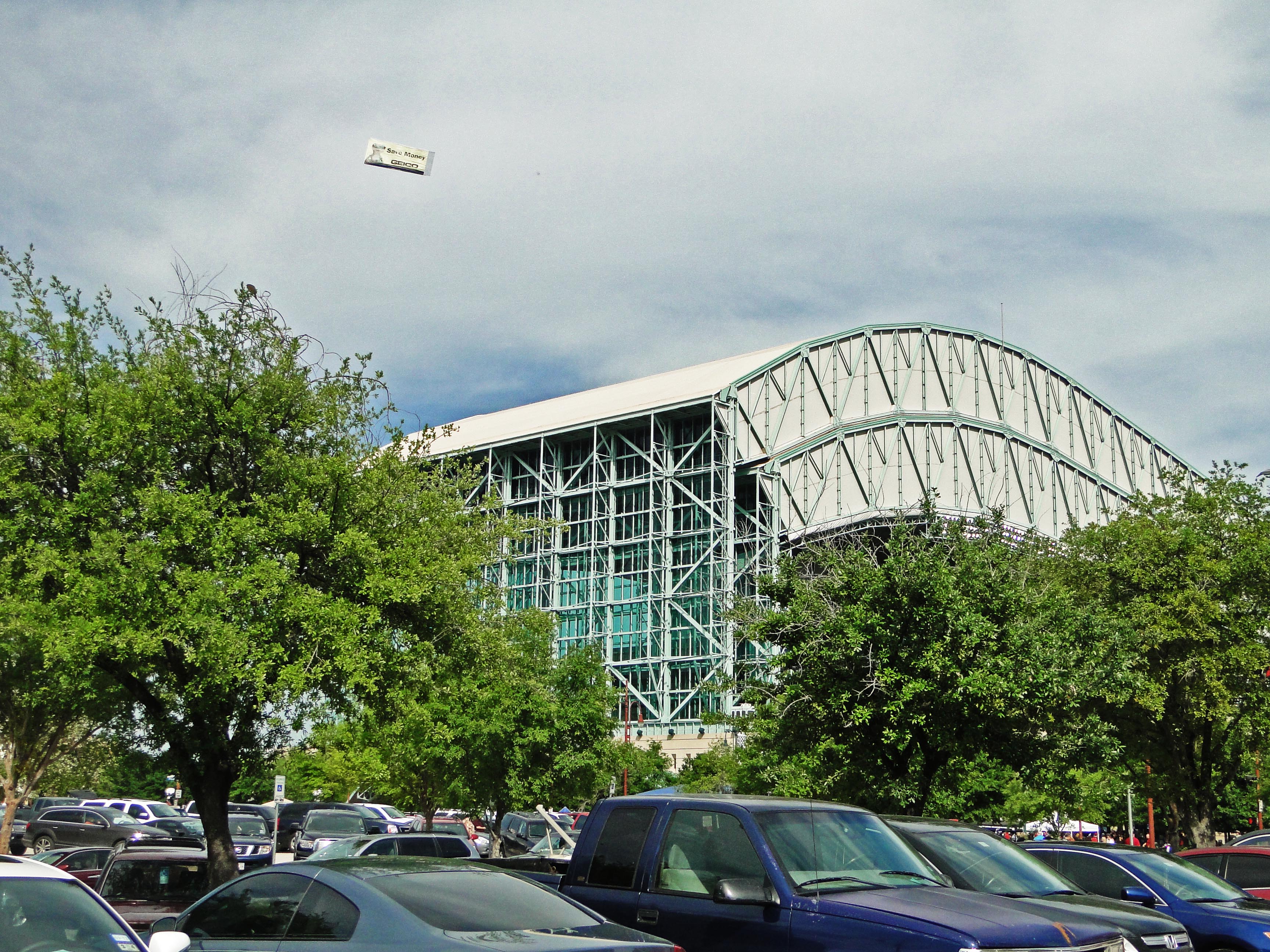
The roof was rolled back wide open for Opening Day in Houston, 2012, the first under new ownership by the Jim Crane Group - and the club's last as a National League team prior to their departure in 2013 to the American League after 51 seasons in the senior circuit.
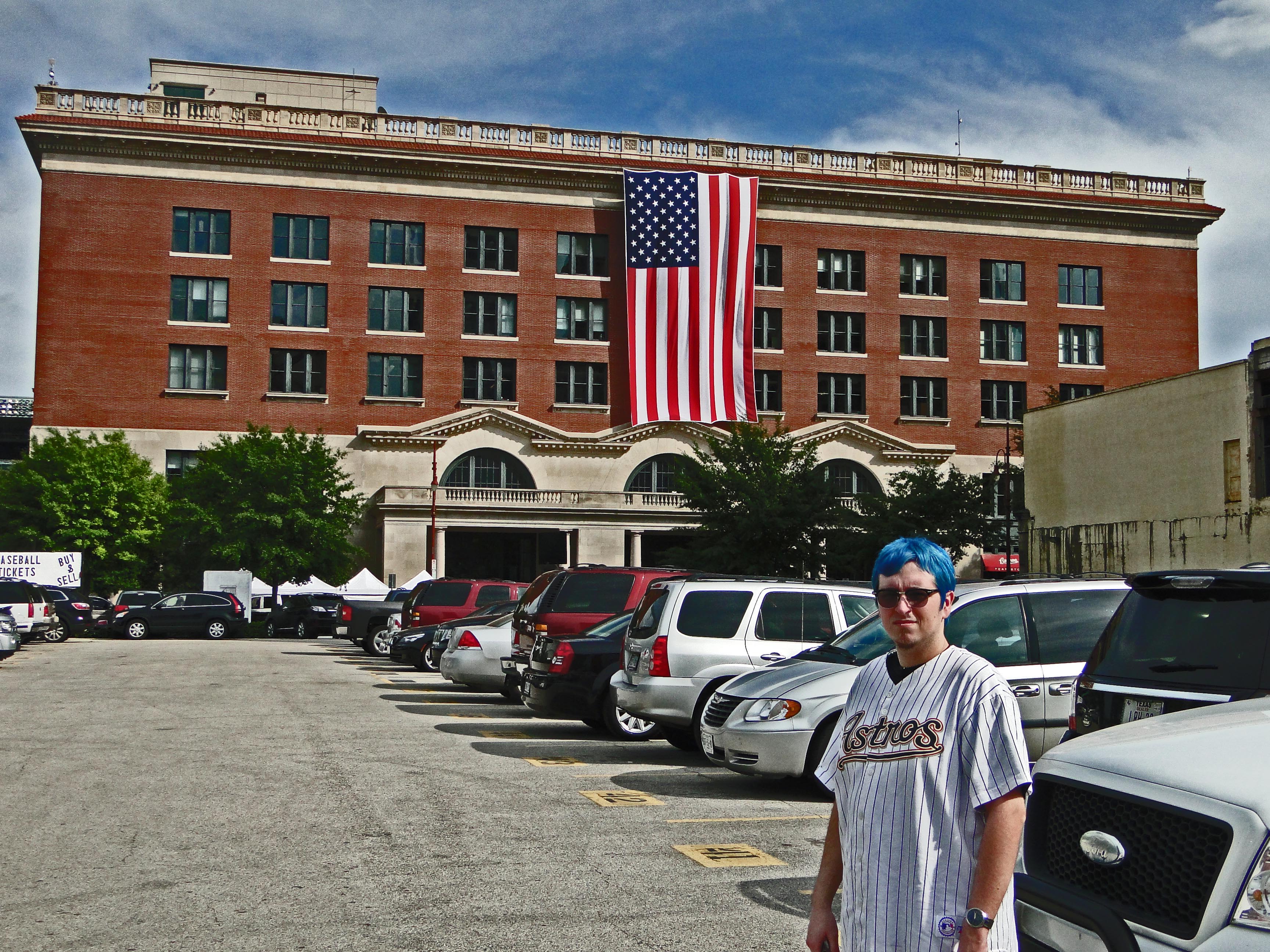
One close-to-home fan, my son, Neal McCurdy, came prepared to communicate his blues over the Astros' move to the American League next year in his own unique form as a visual statement. Neal assures me that, unlike tattoos, the case he's making is not a permanent feature, but one that will grow out and go away. Hopefully, that will all work itself out before Neal has his next job interview.
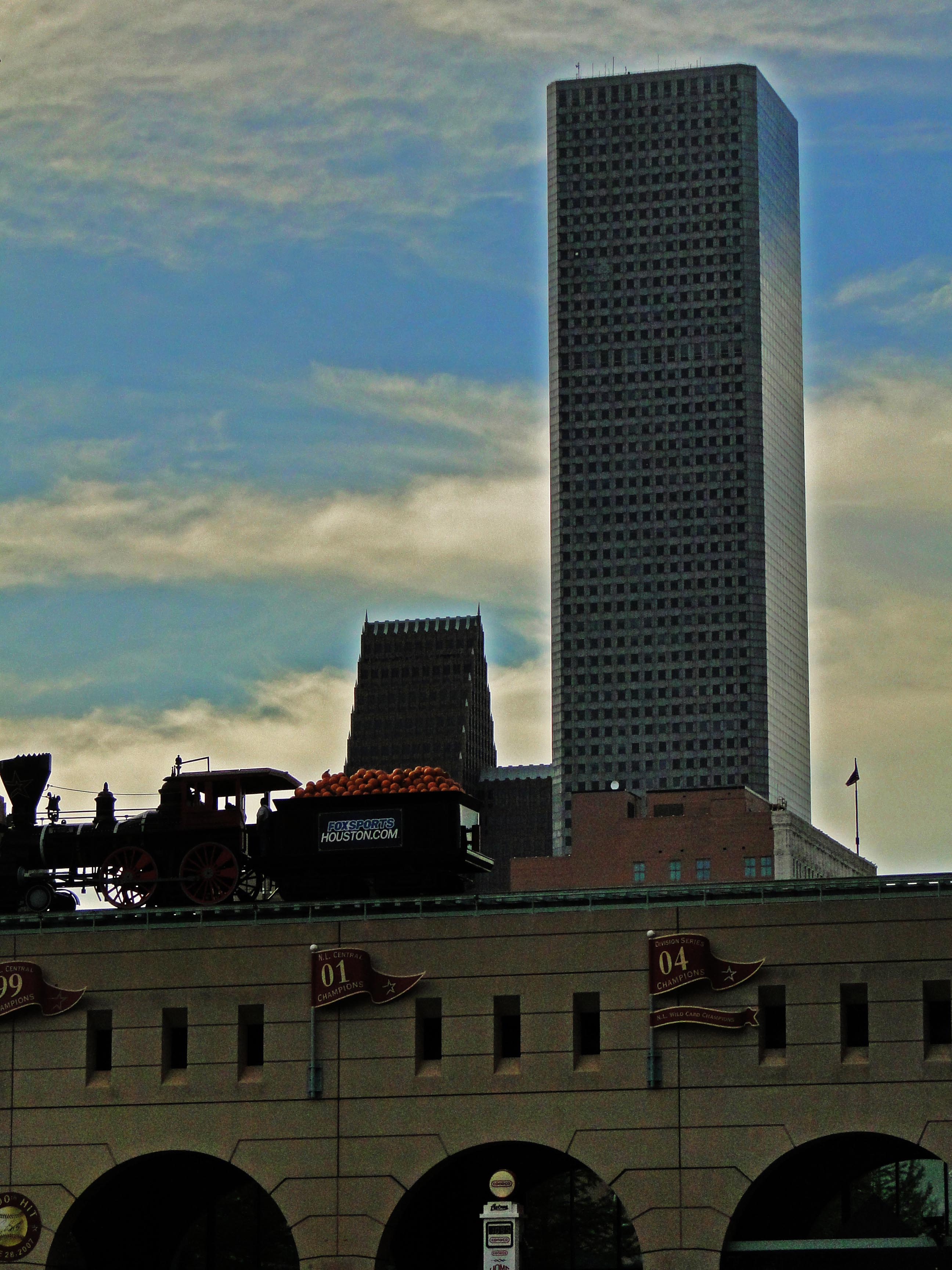
In spite of the facts about baseball rebuilding, some fans brought their spring hopes to Minute Maid Park in the form of great expectations.
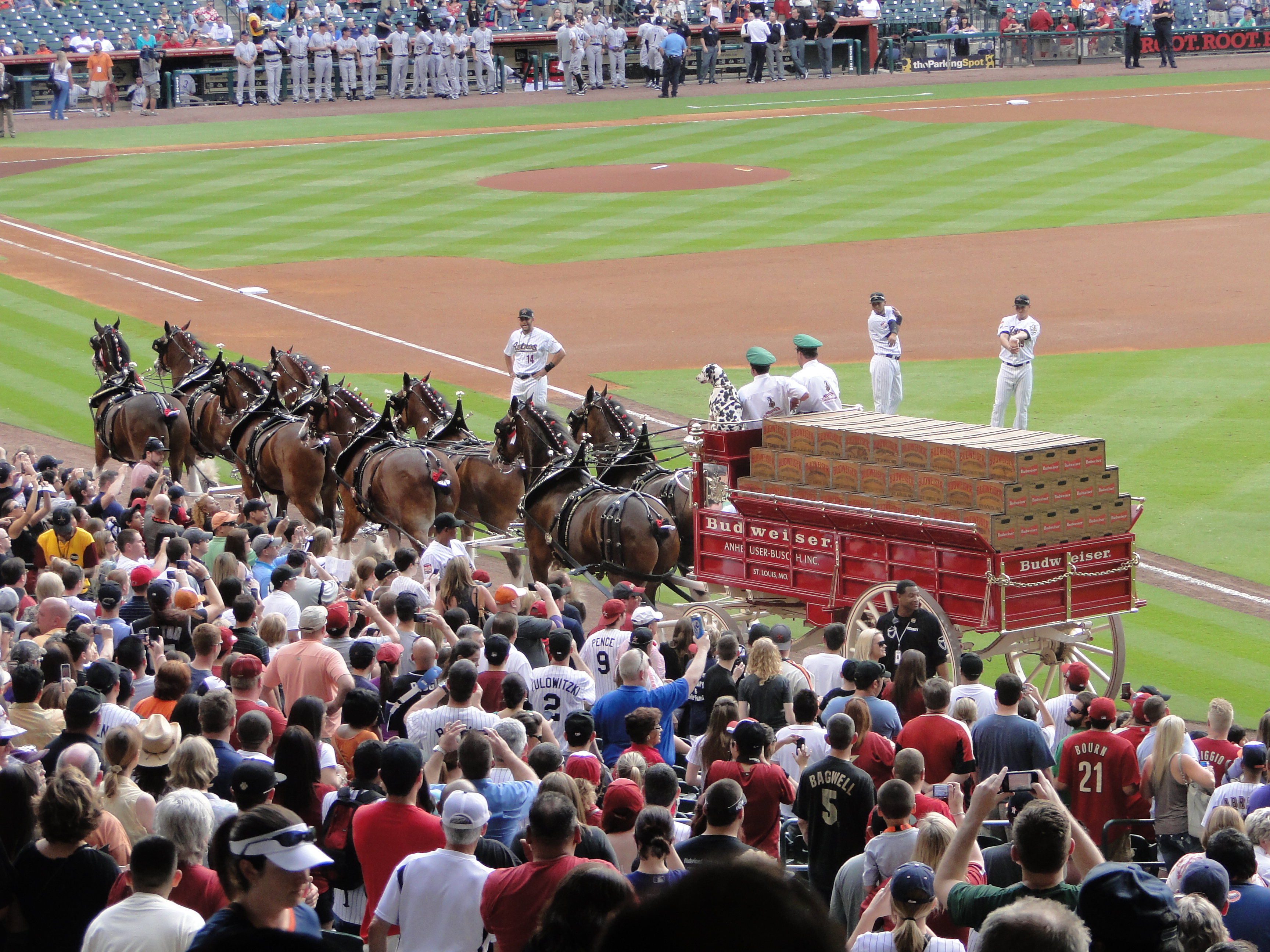
Other fans simply transferred their spring hopes to the goal of running into the Budweiser Clydesdale Team before the evening ended. Based upon the fan behavior down the right field line, I'd say that many fans succeeded in finding Mr. Bud.
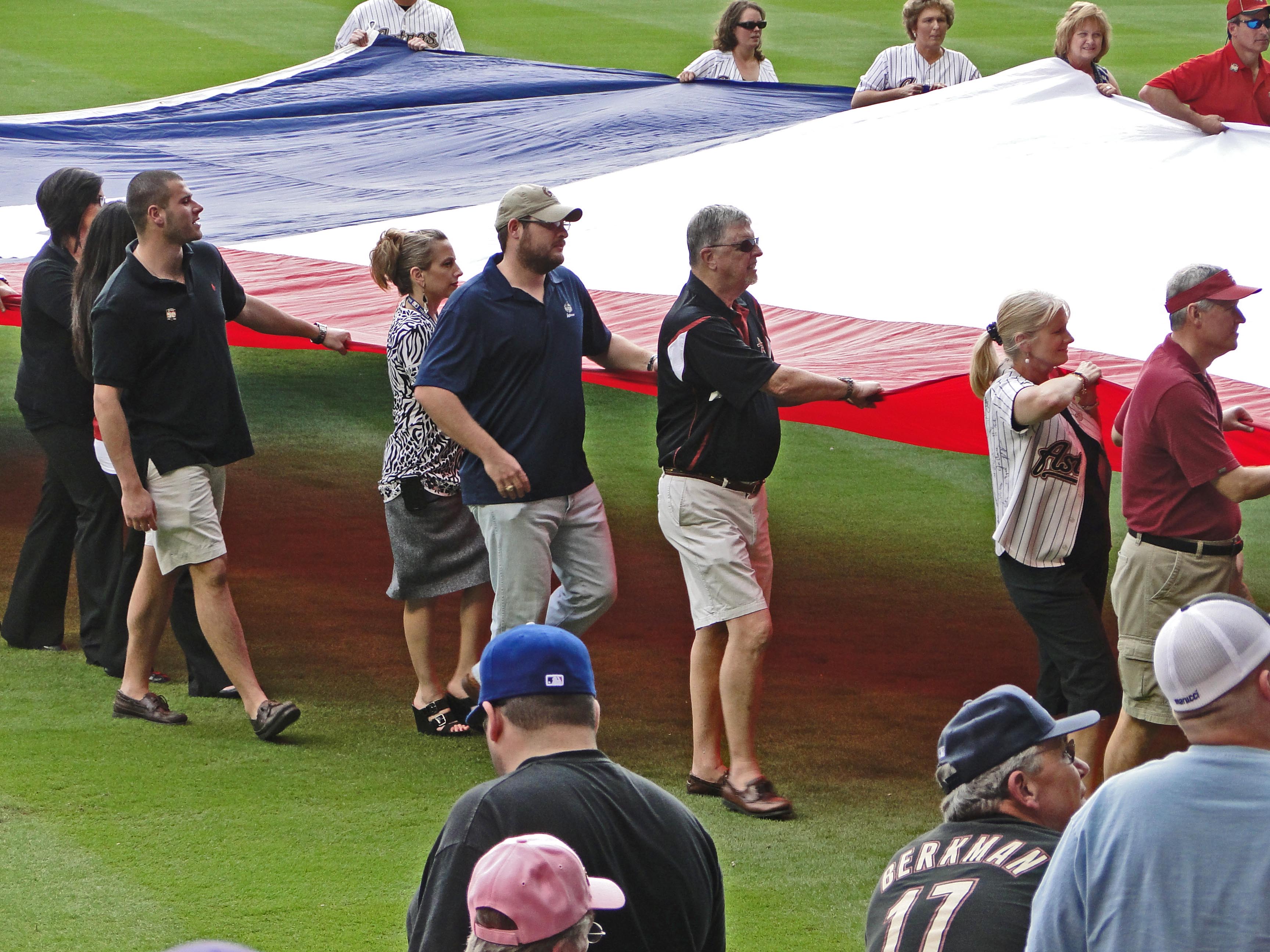
Bob Dorrill of SABR (sun glasses, dark shirt & white shorts, center) and wife Peggy (not shown here) helped present the colors prior to the game.
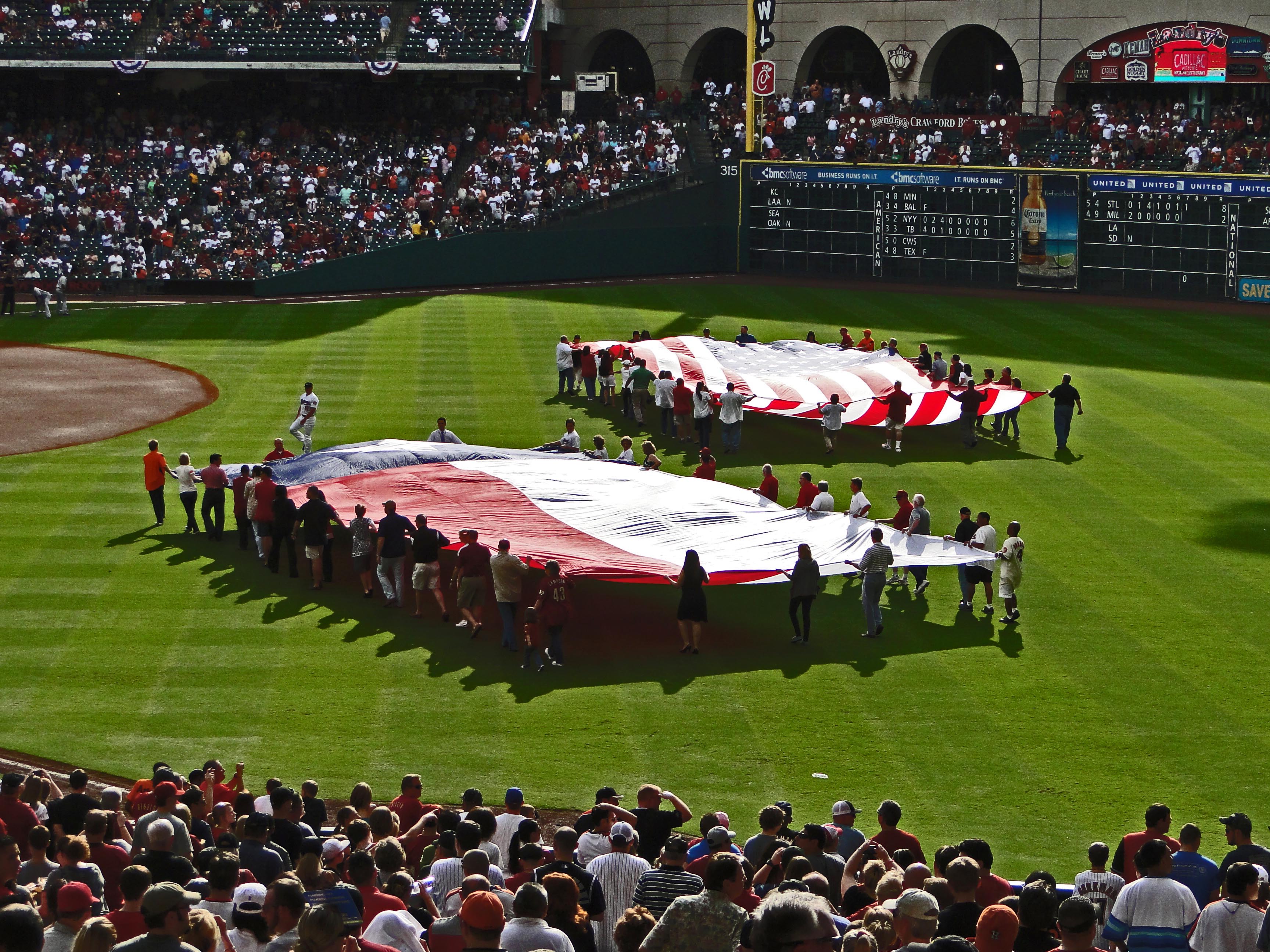
The state and national flags added a beautiful touch to Opening Day.
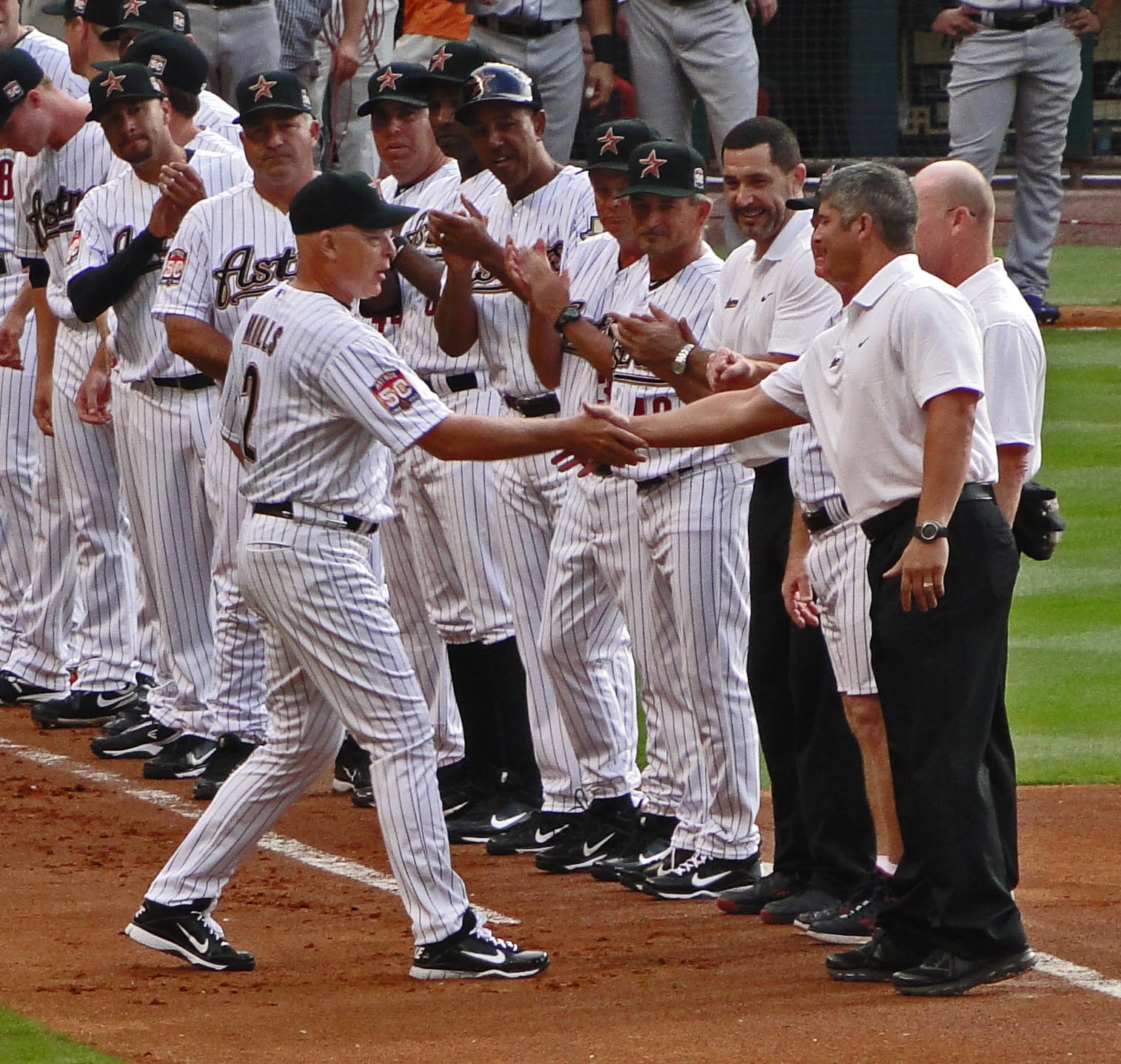
Astros Manager Brad Mills shakes hands with his future prior to the first pitch on Opening Day.

As old Dizzy Dean used to love saying, April 6, 2012, Good Friday and Passover, was also very much "a great day for baseball!"

See Part 2 of 2 in this pictorial review of Opening Day in Houston at the following link:

https://thepecanparkeagle.wordpress.com/2012/04/08/astros-lose-2012-season-opener-part-2-of-2/
Babies Make Page One of Chronicle Sports!

April 6, 2012

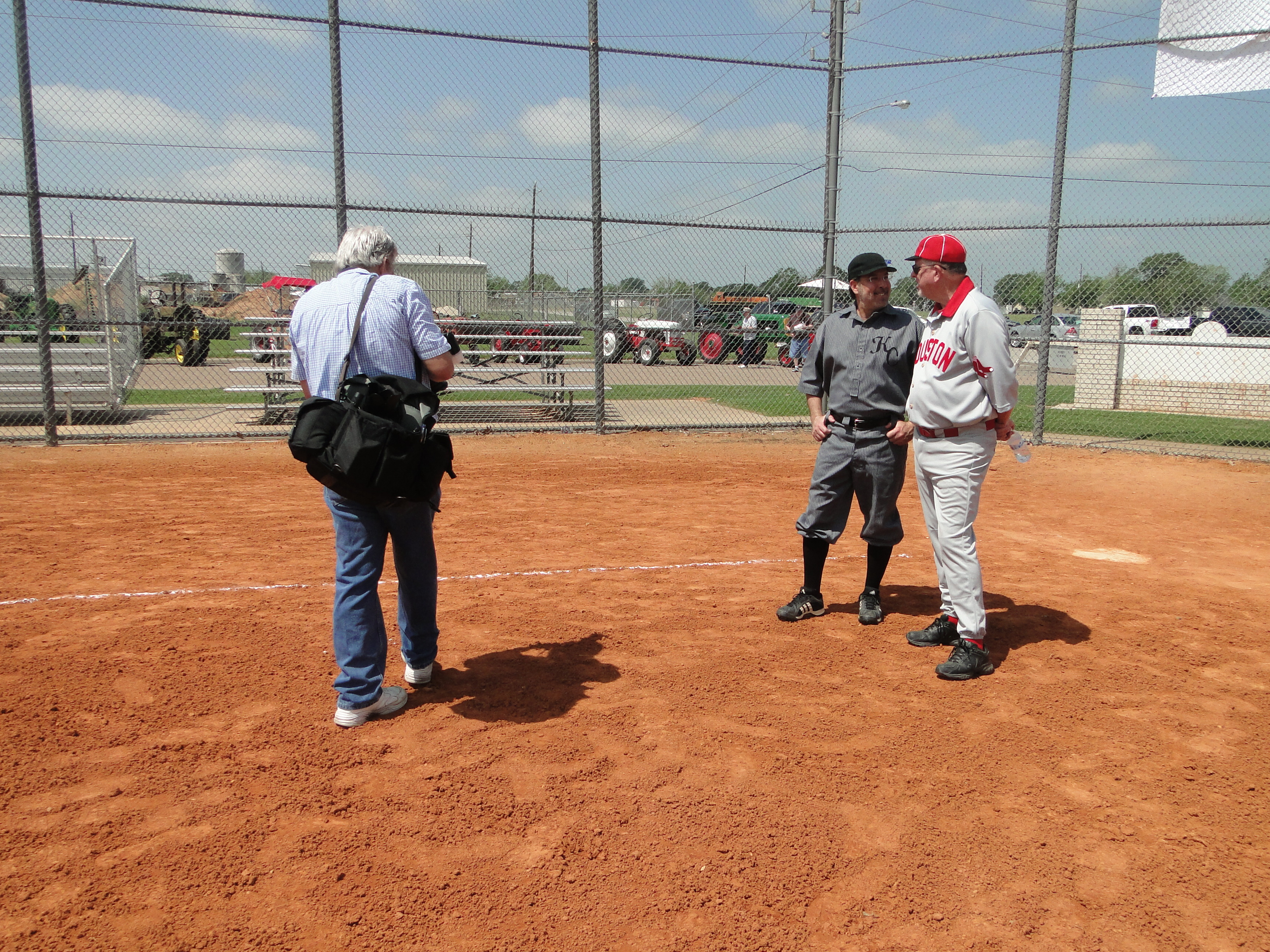
Houston Chronicle photographs managers Tom Flores of the Katy Combine (L) and Bob Dorrill of the Houston Babies after the latter took their 2012 opener in Sealy by 13-4 on March 31.

Thank you Houston Chronicle Sports Media writer David Barron!

Today the vintage base ball club we know and love as the Houston Babies cracked the big time of sports coverage in our dear old home town. Our opening game, 13-4, win over the Katy Combine last Saturday, March 31st, in Sealy, Texas was duly reported by the astute Mr. Barron and placed and then placed on the front page of the sports section of the Houston Chronicle – on Opening Day for MLB Houston Astros.

Talk about about a high cotton feeling! For those of us who are vintage base ball and ancient Houston fans, this is the real McCoy!

Larry "Longball" Miggins, 1st Base, Houston Babies

Larry “Longball” Miggins of the Babies stands tall in the Barron piece as a visual testament on the casualties to blood vessels in the hands from gloveless baseball, but it doesn’t stop him or any of the other Babies from loving the time they each have with the grand old game as it was played in its infancy. The Barron article captures that connection it makes with players and fans in a remarkably clear way,

Check out today’s Houston Chronicle – or link on to the same story as it appears online at ChronCom with far more pictures.The story was, and may still be at this posting, the front page story on Google earlier:

http://www.chron.com/sports/article/Houston-Babies-compete-under-1860-baseball-rules-3463089.php#photo-2784602

The Baseball Movie Hollywood Stars

April 5, 2012

Joe E. Brown loved baseball and he was a very good athletic baseball actor. His son, Joe L. Brown, also later served as General Manager of the Pittsburgh Pirates from 1955 to 1976.

As an avid baseball movie fan, I am moved from time to time to put together some kind of thought collection on the subject. I’ve done a thing or two in the past on the worst actor/athletes in the history of baseball movies. In my book, the three worst are: (1) Anthony Perkins; (2) Ray Milland, and (3) Gary Cooper.

Today I’m simply presenting my 25-man roster for a team based on actors and the positions they played in the movies also noted here. There wasn’t a lot to choose from on the clearly talented side. Please note too that all three of the actors who made my ‘worst athletes” list here also made my 25-man roster. It just goes to show you how deep this problem really is.

On the bright side, my picks for best three actor/athletes are: (1) Kevin Costner; (2) Dennis Quaid; and (3) Charley Sheen. All three of these guys also made the team too.

If you would like to check out the film credits for any of these actor/athletes, or if you would just like to look up anything that has anything to do with any movie ever made, just follow this link to the Internet Movie Data Base and pig out on all the reference facts available there. And if you put together your own player or baseball movie list, it is my hope that you will also post it here as a comment on this subject,

http://www.imdb.com/

Now here’s my roster for the BASEBALL MOVIE HOLLYWOOD STARS:

C: Kevin Costner (Bull Durham, 1988)

C: James Earl Jones (Bing Long, etc., 1976)

C: Paul Douglas (It Happens Every Spring, 1949)

P: Ray Milland (It Happens Every Spring, 1949)

P: James Stewart (The Stratton Story, 1949)

P: Ronald Reagan (The Winning Team, 1952)

P: Louis Gossett, Jr. (Don’t Look Back, etc. 1981)

P: Dennis Quaid (The Rookie, 2002)

P: Dan Dailey (The Spirit of St. Louis, 1952)

P: Joe E. Brown (Elmer the Great, 1933)

P: Tim Robbins (Bull Durham, 1988)

P: Billy Dee Williams (Bingo Long, etc., 1976)

P: Charley Sheen (Major League, 1989)

1B: Gary Cooper (Pride of the Yankees, 1942)

2B: Frank Lovejoy (The Winning Team, 1952)

3B: John Cusack (Eight Men Out, 1988)

SS:  Don Harvey (Eight Men Out, 1988)

INF: Corbin Bernsen (Major League, 1989)

IF/OF: Anthony Perkins (Fear Strikes Out, 1957)

IF/OF: Wesley Snipes (Major League, 1989)

LF: William Bendix (The Babe Ruth Story, 1948)

CF: Tommy Lee Jones (Cobb, 1994)

RF: Robert Redford (The Natural, 1984)

OF: Ray Liotta (Field of Dreams, 1989)

OF: Burt Lancaster (Field of Dreams, 1989)

Manager: Walter Matthau (The Bad News Bears, 1976)

3rd Base Coach: Tom Hanks (A League of Their Own, 1992)

1st Base Coach: John Mahoney (Eight Men Out, 1988)

Bench Coach: William Frawley (Alibi Ike, 1935)

Bull Pen Coach: Rosie O’Donnell (A League of Their Own, 1992)

What Are We Going To Do With The Astrodome?

April 4, 2012

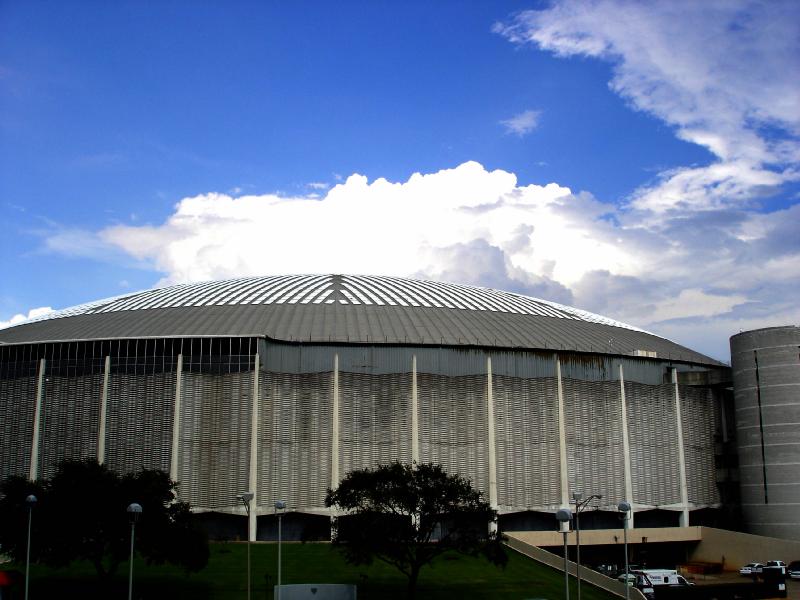
The Astrodome, Looking South from the Reliant Stadium Parking Lot in 2002.

What are we going to do with the Astrodome?

Are we going to make an active decision about the future of grand old lady of all American sports venue innovations – or are we simply going to continue using it as  a basis for periodic nostalgia stories by the local media on what it used to mean to the Houston sporting community as it also continues to fall apart, beam by riveted beam, at the taxpayer’s expense?

This two-month span alone, March and April 2012, we’ve again had stories by both Channels 11 and 2 on the conditions of the Dome’s interior that also have  swept quickly over the absence of a clear plan for the structure’s future and the high costs of either keeping it stagnant, as is, or tearing it down. If the pattern of the past continues, we will continue to avoid an active decision and simply wait until some other news outlet or under-financed planning group steps forward to raise the “astrodome” name to consciousness again, sometime in the next two years.

It’s time for that to change, but talk is cheap. People like me don’t have the money to make anything happen on this scale, but there are a number of individuals, groups, and corporate concerns in this town who could make it happen to the good, if these interests could all agree upon and come to terms with how the building could be used in service to some commercial end that also satisfied its need for preservation as one of the most important architectural buildings in the world.

The Astrodome remains as the landmark fulfillment of a change in multi-purpose stadium construction that was the first to protect even sports like baseball and football from weather extremes. Before the Houston dome, there were no facilities out there big enough for indoor baseball or football. After the Astrodome, many would continue to follow.

Do we really want to let this landmark either continue its path to see – or simply put it on the execution block as nothing more than the latest Houston building to be torn down for additional parking space?

The idea that we may do the latter makes me ashamed of Houston – and that’s not a feeling I bear easily when I hear it coming toward our city from outsiders, Isn’t there anyone out there with both the will and the resource access who might be willing to step forward and take leadership on a “Put the Heart Back in the Astrodome” campaign?”

To me, buildings are like bodies. They only remain alive, for better or worse, when the stir of human hearts and souls are beating within them. Once the people leave, they begin to fall apart, slowly but surely. And the Astrodome essentially went dark after the Astros abandoned her after the 1999 baseball season.

I like the idea of a commerce and cultural center that would convert the Astrodome into a place that housed retail, entertainment, and dining businesses – along with separate historical museums on Houston Sports, Commerce, Energy, Education, Medicine, Houston Arts and Museums, NASA, and the Ship Channel. Maybe the Greater Houston Partnership could even move their base of operations there and help work to keep the Dome growing as the most dynamic salesman that Houston ever had.

The good possibilities from an even more finely tuned model of my humble prototype are endless. But they just won’t start without human will, devotion, heart, money, and energy being infused into them.

Please leave a comment on what you think we should do about the Astrodome, and, if you also are the person or group that is willing to take a leadership role in making something constructive happen, please feel free to make a public commitment here too at The Pecan Park Eagle.

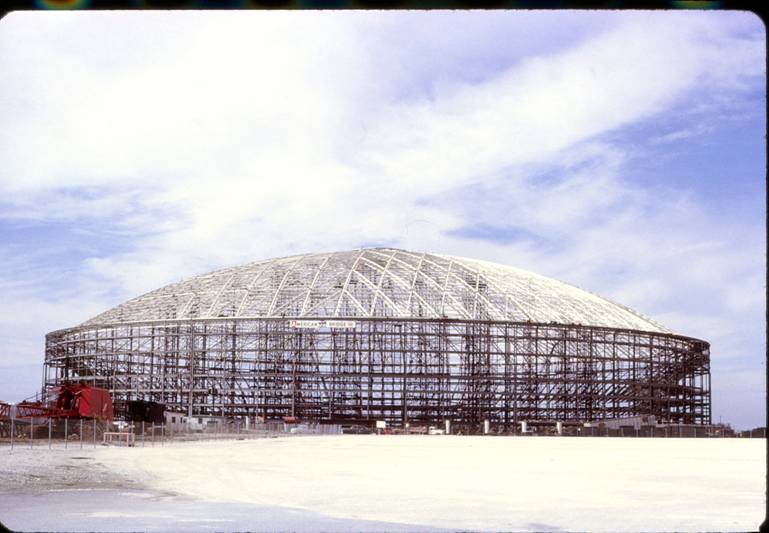
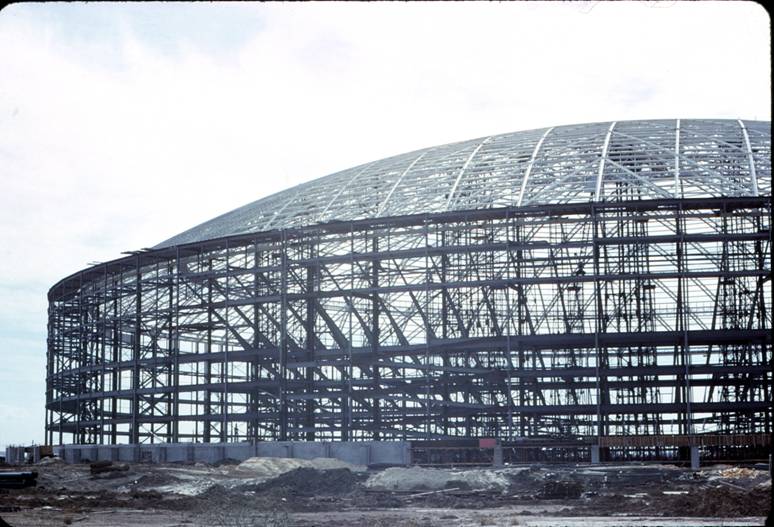
PM Addendum Here’s asuggestion submitted later in the day of this posting by architectural artist Patrick Lopez that comes complete with two photos of the Astrodome’s skeletal structure:

Patricks Lopez Says:First let’s keep the Astrodome , strip it to the structure , cover it in glass to become a giant greenhouse for 21st century science,


“The Future Astrodome Nature and Ecology Center, a glass dome study center , an arboretum or our local plants and  a vast aquarium for the study of our local gulf coast aquatic sea life ,and bird life , the gold of the institution, to keep our waters ,birds and fish , air and earth here in Texas , all safe from pollution “


“The all glass building is to become a science center for our local schools and universities, class rooms and lecture halls for continuing study of our nation’s fight against pollution .” – Patrick Lopez


“A Teaching center ,of environmental study  where people from all over the world would visit here to find answers about the latest technology in pollution elimination , Clean air , clean water , a clean earth , all studied  here at Houston’s World Nature Center”

Vintage Ball and the One-Bounce Out

April 3, 2012

Houston Babies @ Katy Commerce Field, 2011.

The 1860s rules for playing the game of base ball are not that hard to follow. Once you snap to the fact that no one is playing with a glove, no one is leading off or stealing bases as runners, and no batter is running full-bore past first base on an infield play. The defense can put you out for running past first base if anyone with the ball tags you before you get back. Once you get that much and then note that the pitching is basically lobbing the ball in there to be hit as though it were a sandlot game, and that no one was reaching by a walk or HBP, you’ve got it. What you’re watching is pretty much baseball as we know it – except for one more big difference – the one-bounce out.

Balls caught on the first bounce cause the batter to be out – even if he simply fouls a pitch that a catcher takes on the first bounce. He’s out.

The effect is to the discouragement of pull hitters. Most of these long high drives on a reasonably level field are going to be easy pickings for an agile outfielder who catches up to that long high first bounce. The one-bounce out is also the main reason why successful vintage ball clubs are adept at liners in the gaps – balls that lace their way into alleys and become worm-burning grounders. No fielder is going to harvest those hitters for very many one-bounce outs.

The one-bounce out decision by fielders is also affected strongly by the presence of base runners. If a team needs to hold down scoring, their fielders better catch some no-bounce flies. Otherwise, their club is going to lose some ground on the score board. Here’s how it works:

Let’s say you club is in the field and that your opponent has runners on second and third with either one or no outs. Their next batter then hits a looping fly ball to left. The left fielder has to run for it, but he is in position to take it on either the fly or one bounce. Either will produce an out, but both runners are off and running hard to home.

If the left fielder takes it on the first bounce, the batter is out, of course, but the runners are allowed to keep the advances they have earned. If they each reach home and ring the “tote me” bell, two runs will have scored for the opposition.

If, on the other hand, the left fielders takes the batted ball on the fly, the batter is out and the runners are forced to go back to the bases from which each came. There is no double or triple play in prospect by these rules – and no penalty for running on any batted ball.

If the fly ball catch is the third out of the inning, of course, there is no scoring on the play, but, if the third out comes vis-a-vis a one-bounce out catch, any runners crossing the plate before the catch is made will be allowed. Any runners still en route to the plate will not count as runs on a first-bounce third out play that happens before they reach their destination.

I can’t think of any 1860s playing rules that would make today’s game better, other than the attention that some rules pay to the importance of good sportsmanship and civil behavior, Unfortunately, the financial stakes in today’s 21st century game and the willingness of some to break the rules to gain some kind of edge makes that expectation today an unreality.

Today it takes rules and enforcement in the hope of preponderant compliance with everything deemed important.

Longball Meets Bonnie Parker; Recruits Ball Girls

April 2, 2012

If these girls are the Ghosts of Bonnie Parker they claim to be, do you really want to call "Ghostbusters?" If you were Larry "Longball" Miggins of the Houston Babies, the post-game answer to this question in Sealy, Texas on Saturday was --------- "You don't call anybody!"

This late development just came in as a report from one our stalwart Houston Babies, first baseman Larry “Longball” Miggins. Apparently getting out of Sealy after the vintage base ball games yesterday was a little tricky, even for an old man with gimpy legs:

“Great game yesterday fellas, We finally woke up in the 4th and had a big inning. After the game, I was approached by some of the girls in the Bonnie and Clyde gang. Bonnie talked me into taking a picture with her and her girls with the promise of possibly being ball girls for our next game. Well here is wishing. It is amazing how convincing pretty girls can be. I was ready to go rob a bank with them after the game, but the authorities in Sealy were already on to them and extra officers were on hand as we drove by to case the bank. Good thing as my legs were so sore that I would have been limping into the bank and probably missed the get away car.  Enjoy the Rest of your weekend and thanks to the good folks in Sealy, Katy Combine and Boerne for a great day. – Longball (Miggins)” 
          Thank you, Longball, for this excellent report on your near misadventures in the lengthening shadows of our spring Saturday post-game time in Sealy. And thank you for not getting arrested on a foolish bank robbery attempt. The Houston Babies can’t afford to lose your valuable service at first base.
          Now, if those pretty lady ghosts in the picture with you are really interested in becoming ball girls for the Houston Babies, just tell them to proceed at their earliest convenience and get in touch with our General Manager.
          That would be me.

Babies Bring Home Bacon from Sealy!

April 1, 2012

The Houston Babies and the Katy Combine squared off at the Sealy, Texas Spring Quilting Festival on March 31, 2012. The Babies won their only contest of the day, 13-4, over Katy. In a second game, Katy also fell to the Boerne, Texas White Sox by a 5-2 count.

A late 19th century sports writer for the Houston Daily Post might have written it this way:

Following a pleasant spring morning day trip up the road west of town, the Houston Babies Base Ball Club descended upon the quiet village of Sealy, Texas Saturday and immediately seized their eyes upon the sight of boundless festive opportunity. Scrambling quickly and firmly upon the pig of good fortune, and fueled unfailingly by their superior ginger of spirit, the urbane Babies fastly slaughtered and roasted their rural neighbors in base ball, albeit in the civilly prescribed manner put forth by the gods of the game, and then proudly brought home the bacon of victory to all their cranks in the fair City of Houston. By nightfall, the entire colorfully spirits-boosted sporting community of Houston was up and about and lifting their cups of joy to the cherished  memory of General Sam.

By noon Saturday, the aspiring and delightful White Sox of Boerne, Texas also arrived in Sealy to witness the Babies coming back from an early 0-4 deficit due to some muffing fingers a-field, but in time to turn the crank on a hitting display that decidedly vanquished all hope for a Katy club survival. The Hajduk family led the Babies in a glowing blaze of Father-Son Glory. Father Larry Hajduk, the old shuffling Buffalo from Buffalo, New York again pitched a complete game victory in the 2012 season opener for the Babies, giving up only two earned runs on the day. Son Alex Hajduk, known alternately as Beef, or “Son of Kong,”  went three for five with a double and a fences-clearing home run to inspire and direct the bombastically devastating Babies offense.

In the second game, the Boerne White Sox were able to lay a second wounding defeat upon dear Katy with the import help of two “temporary revolvers” named Alex of the Hajduk and Schmelter families and one kiddo named Kyle from the surnamed Burns familial group.

In the ongoing absence of sufficient minimal player numbers for a tourney match game against the same talent-providing Babies in a third championship contest of the day, the Houston Babies exercised their civil spirit and declined to take a forfeit victory over Boerne under the circumstances, but they and all others in attendance  implicitly acknowledged that the Houston Babies, indeed, had won the day and the base ball tourney by both their performance on the field against Katy – and also off the field in conjunction with their Boerne win declination. The Babies’ gracious actions stood tall this afternoon as a straight-from-the-heart Houston-style tribute to good sportsmanship.

Raise your glasses tonight and come see us play the next time out, Houston. The next vintage ball action in these parts is scheduled for May 5, 2012 in Katy, Texas. Stay tuned for further details.

In the meanwhile, here’s the Babies Box Score from today’s action in Sealy and one more photo of the Katy-Boerne clubs.

Houston Babies Box Score Activity, March 31, 2012.

Player                    Nickname           ( AB – R – H)   Extra Base Hits

Kyle Burns            3rd Degree           (5- 3-3)

Phil Holland          Hoover                 (4-1-1)                      2BH

Bob Stevens           Crowbar              (1-0-0)

Alex Hajduk           Beef                     (5-3-3)                     HR, 2BH

Larry Miggins        Longball               (5-1-2)

Bill Hale                Slick Willie            (3-0-2)

Jo Hale                  Red                      (2-1-2)

Robby Martin      Speedy                   (5-1-1)

Mike McCroskey   No  Wheels          (1-0-0)

Larry Hajduk         Buffalo *             (4-1-2)    (W) / 2 Earned Runs

Robert Pina            Slick                  (4-0-0)

Alex Schmelter      Keed                  (4-2-2)

Totals                                           (42-13-16)

Babies Team BA, This Game = .381

Katy                     220 000 0 –  4

Houston            025 600 x – 13

Final Score: Houston Babies 13 – Katy Combine 4.

Field Manager:  “Baseball Bob” Dorrill

General Manager:  Bill “Doc” McCurdy

* Newer nickname suggestions for hurler Larry Hajduk: (1) “Double Duty” and (2) “CG” for Complete Game.

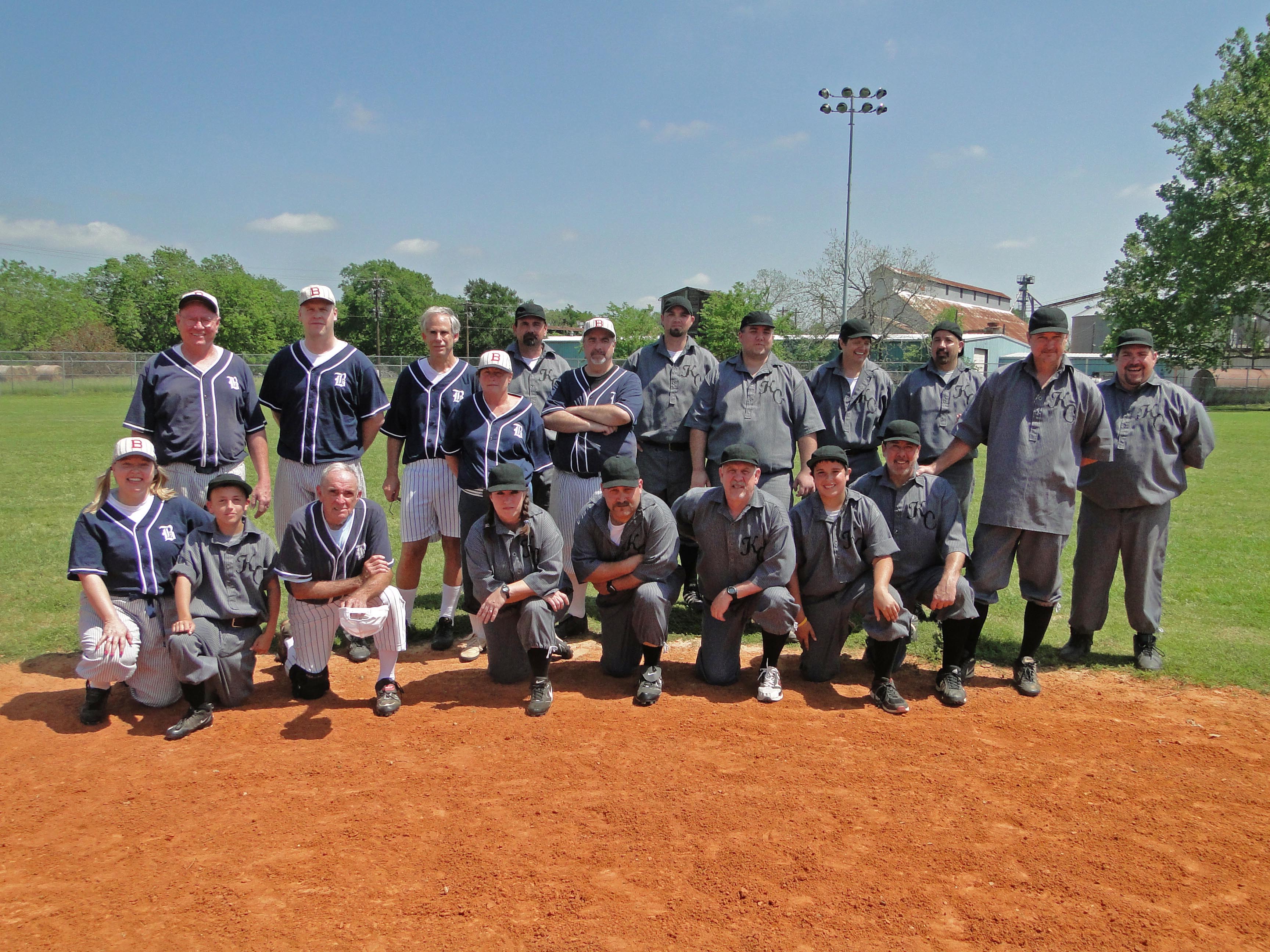
Sportsmanship and Camaraderie are essential to the spirit of vintage base ball, played by 1860 rules. Here are members of the Boerne White Sox and the Katy Combine gathering for a game picture after the 5-2 Boerne win at Sealy, Texas on Saturday. March 31, 2012.

Houston Babies in Action Today!

March 31, 2012

The Houston Babies are in Tourney action at Sealy today, Saturday, March 31st.

The Houston Babies vintage base ball team joins  with clubs from Katy and Boerne today for tourney action at the Spring Picnic and Airing of the Quilts festival in Sealy, Texas today, Saturday, March 31st. Action begins about 10:30 this morning, but continues through the afternoon in the middle of numerous other festival activities.

Sealy, Texas is an easy 50 mile drive west on I-10 from Houston and the spring weather today is predicted to be perfect among the wild flowers for this old-time, family fun celebration of the good life. Here’s a link to further info on the festival and the base ball tournament:

http://www.allacrosstexas.com/events/events.php?spring-picnic-and-airing-of-the-quilts&id=1848

If you’ve never seen baseball played by 1860’s rules with no gloves, come on out. The Houston Babies once existed as the first professional baseball team in Houston. Come on out and help support their glorious return to play in the 21st century too. We will appreciate the boost from your energy.

For further information about the Houston Babies and how you can join in the fun as a player, sponsor, or new team founder, please feel free to get in touch with either Babies Club General Manager Bill McCurdy (houston_buff@hotmail.com) or Babies Field Manager Bob Dorrill  (BDorrill@aol.com) and talk over how you can become involved. Both will be at today’s game and are open to your questions.

It’s spring again. – Let’s play some vintage base ball.


Hunger Games Are Soul-Starved

March 30, 2012

Suzanne Collins: hungry enough to write what came to her while TV channel surfing.

Empty = Deprivation + Death-Measured Recreation = Hunger Games.

Back in the first decade of the 21st century, aspiring American writer Suzanne Collins was channel surfing the TV cable menu one night when she noticed that segments of a reality show featuring competition began to blur with pictures of our invasion of Iraq. This imagery mix quickly morphed into her writing canal for a trilogy of books that started with The Hunger Games, published in 2008 and now in theaters as a 2012 first movie of three (so far) planned in this trilogy storybook franchise.

Hey! Even Harry Potter started small!

In the Hunger Games, all that remains of post apocalyptic USA is a North American nation called Panem, a place where ambition, drive, culture, and productivity pretty much have gone to seed in spite of the flourishing plant life observable in the lush and green hills and valleys of the movie’s real life North Carolina back drop setting.

Panem is ruled by dictatorial, sadistic leaders who are now well into the 75th year of their annual “Hunger Games” celebration. In the Hunger Games, each of Panem’s 12 districts is required to provide two adolescents, one male and one female, and each between the ages of 12 and 18, to compete in a battle to the death in the forest near the capital, but under close scrutiny from high-tech television coverage.

What’s the point? And why do they even bother honoring one winner each year? The Hunger Games are ostensibly designed to help take people’s minds off their general misery. One winner is allowed because, well, as the leadership figures, “the people need to hope for something.” If not for that hunger for hope, the games may as well be about killing them all and celebrating the absolute presence of desolation and despair.

Panem is no paradise. We get it.

What we don’t get (what I don’t get) is how anyone could find anything substantial to like in this story’s plot or progression from the original premise that these fictional futuristic world games were supposed to instill hope – regardless of how this first of the three planned movies ends. I won’t spoil the end of the opening franchise movie for those of you planning to see it – but  I do choose to clarify that I only saw The Hunger Games on a date night trip with my wife. I never read the book, but reviews confirm that the movie is true to the book’s plotline.

Maybe the real “hunger games” are the ones we now play with out children’s future. Our kids and the next dozen generations aren’t going to have a chance to pay off the debt we have been piling up for them, yet we continue to do it, rather than take some kind a stand. We also keep telling our kids that they need a college education, but we’ve made it so expensive that most can hardly afford to set foot on a college campus without taking on a huge lifetime of personal debt with them, even if they actually do graduate. We raise them in activities that award trophies for everyone who shows up breathing. Then we send them out into a world where getting a job is now a problem even for those who have earned the opportunity by their educational qualifications.

Then there’s the worst “hunger game” of them all. We send our brave young men and women out to do the noblest of service to country as warriors for America. And then we leave them on foreign soil with no clear plan for victory or coming home alive again.

Maybe I’m getting too old to remember what that deeper hunger is all about, but I don’t think so. Real spiritual hunger emanates from the soul of our beings, as far as I’m concerned. Call it what you will, based upon your own beliefs, but reach deeper for it than the plot line of this new hot book/movie – and certainly dig deeper than the forces that control our political and economic decisions and defer them onto the backs of those generations that will follow us.

Hunger games? – We “ain’t” seen nothing yet.

The Knickerbocker Rules of 1845

March 29, 2012

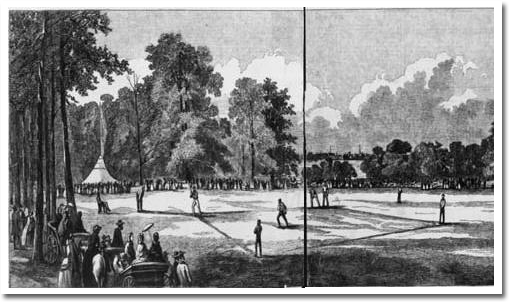
Elysian Fields, Hoboken, NJ, 1845

Preeminent baseball historian John Thorn, the Editor of Total Baseball, has now written a masterful book entitled “Baseball in the Garden of Eden: The Secret History of the Early Game.” If you don’t mind in-depth intellectual explanations that clearly define baseball’s rise from the cultural ooze of numerous influences, this is the book for you. Just be forewarned: This is not a book to lull your brain to sleep as bedtime fare. It’s the kind that kindles reconstructed thought on the issue of baseball’s beginnings.

Thorn clearly points out the names of individuals and groups that have been forgotten, along with those who’ve probably been given too much credit for the evolution of rules that basically continue to govern baseball through the 21st century. He also credits Alexander Cartwright and the Knickerbocker club for coming up with the twenty rules that gave the game its point of play. Thorn acknowledges the great probability that all of these rules came from various sources and that the Knickerbockers simply spelled them out as successful ways to define play, winning, and the preferred attitude for players of the game. If you want further explication of each, I recommend you read the book. Thorn covers them pretty thoroughly from pages 71 to 77.

The interesting evolution rope is to watch baseball evolve as Thorn sees it. It begins on many levels by many separate, but similar forms of bat, ball, and base play by disconnected groups of children in the colonies. By the 1830s, up and coming young New York men of money and letters in Manhattan begin to form clubs to play some kind of stick ball games that they prefer to stage on the open meadows of the Elysian Fields across the Hudson River in Hoboken , New Jersey.

The Knickerbockers, Gothams, New Yorks, Magnolias, and Eagles are all variously successful and similarly remembered as clubs that formed to play internally among their own memberships. Rules began to form from the experiences of all, by trial and error, and these comprised the heart of the 1845 Knickerbocker Rules. As the way to winning and the point of the game sharpened, it became easier for more young men to play the game in justification of the time they spend on the activity. Interest in winning also began to attract gamblers, increasing “fan” interest and pushing for extra-mural play between clubs and the rapid growth of the sport from amateur to professional status.

How did baseball grow into a professional sport?  Just follow the money. Ask John Thorn.