Posts Tagged ‘History’

U TOOT WE TOTE.

January 9, 2010

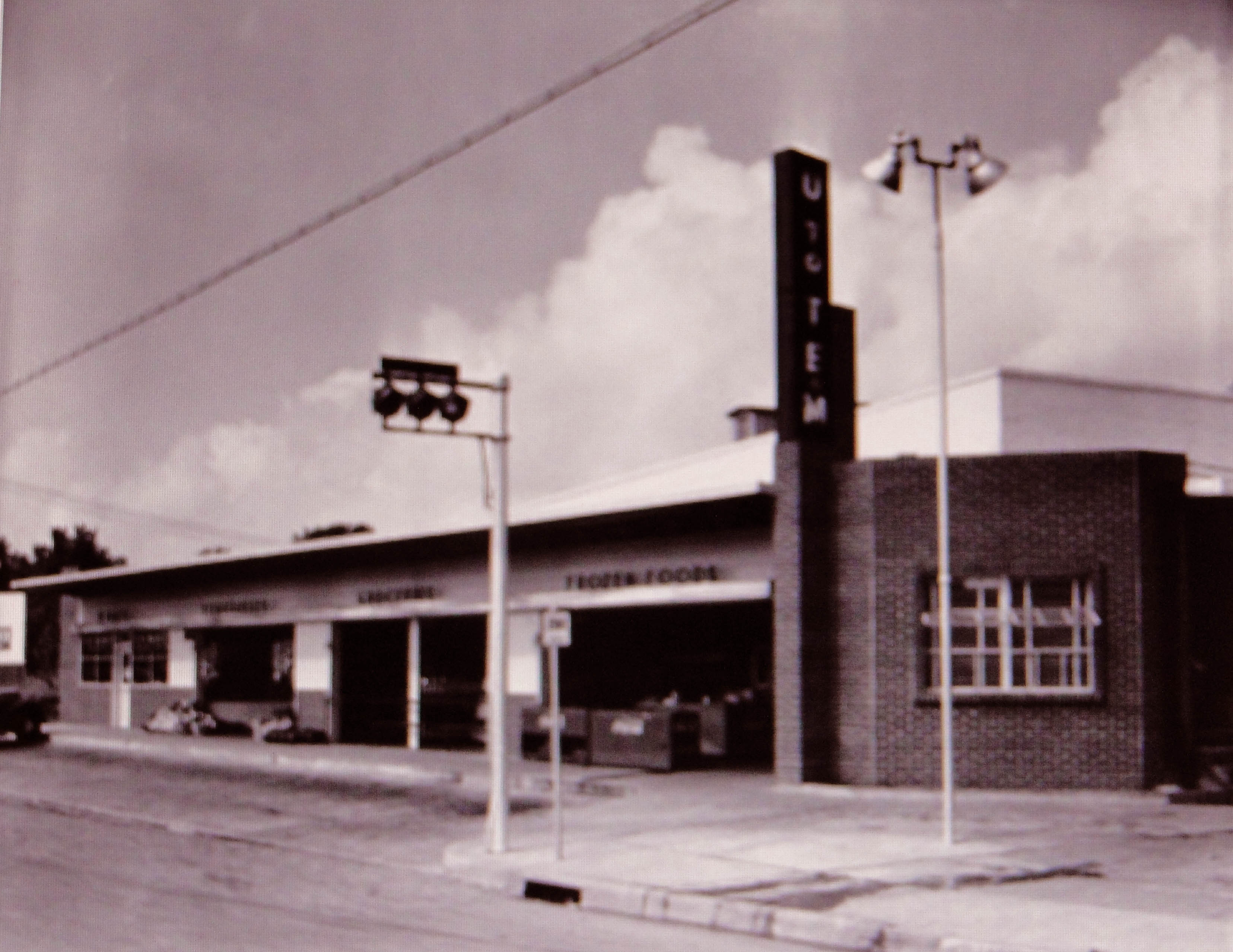
U Totem used to be one of the Big Two convenience store chains in the Houston area. Along with 7-11, there was little room in this market for competition from the growing Circle K chain that seemed to be taking over the rural market all across rural Texas and the greater southwest.

LeRoy Melcher (1912-1999) of Houston bought controlling interest in the U Totem chain in 1950, becoming its president in 1953. He expanded the chain to a network of one thousand stores over thirteen states, solidifying the company’s control with the acquisition of Fairmont Foods in 1969. Circle K finally caught up with U Totem in 1983 when it purchased all the company’s stock for $225 million dollars. All the stores were subsequently renamed Circle K as the brand “U Totem” faded from the retail food business.

My memories of U Totem go back to one of the early stores in their chain. – Let me qualify that claim. I don’t know for sure how this particular place actually became part of the eventual U Totem chain, but the name similarities are hard to write off as purely “coincidental.”

This place existed in Houston in the years immediately following World War II. It was the first convenience store of personal memory, although I was far too young then to be concerned with issues of convenience when it came to shopping. I was the just the right age, however,  to be duly  impressed by a catchy business name.

The name of the place was U TOOT WE TOTE.

U TOO WE TOTE was located on the south side of Lawndale in the block just east of the 75th and Lawndale intersection. It was an early convenience store and its name was also its original marketing message: Shop here in the convenience of your own car. Just drive up and honk your horn (U TOOT). We will come out and take your order and then bring it to your car for you. (WE TOTE).

At some point, the store decided it didn’t need to provide curb service to be attractive to customers seeking an easy way at odd hours to purchase the grocery items they needed. This one eventually became a U Totem. I just don’t know if U Totem took over U TOOT WE TOTE – or if the U TOOT WE TOTE name simply evolved into U Totem. I’m betting on the latter.

Convenience was not the operative word for Houston shopping in 1954. Full service grocery stores usually closed at 8:00 PM and stayed closed all day Sunday due to the old blue laws. You also could not purchase many items beyond pure groceries in these stores during that era. Drugs, clothes, and music were items you had to purchase in specialty stores that handled those kinds of products, and these places also operated on more limited opening hour schedules.

By the late 1950s, the time was right for convenience stores. Next up would be the diversification of products offered through grocery stores. Then came Sam Walton and everything changed forever.
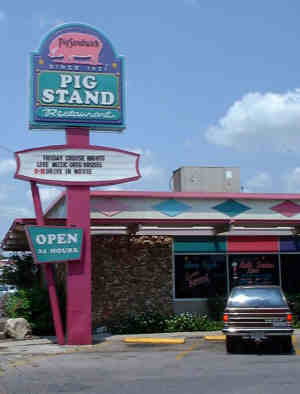
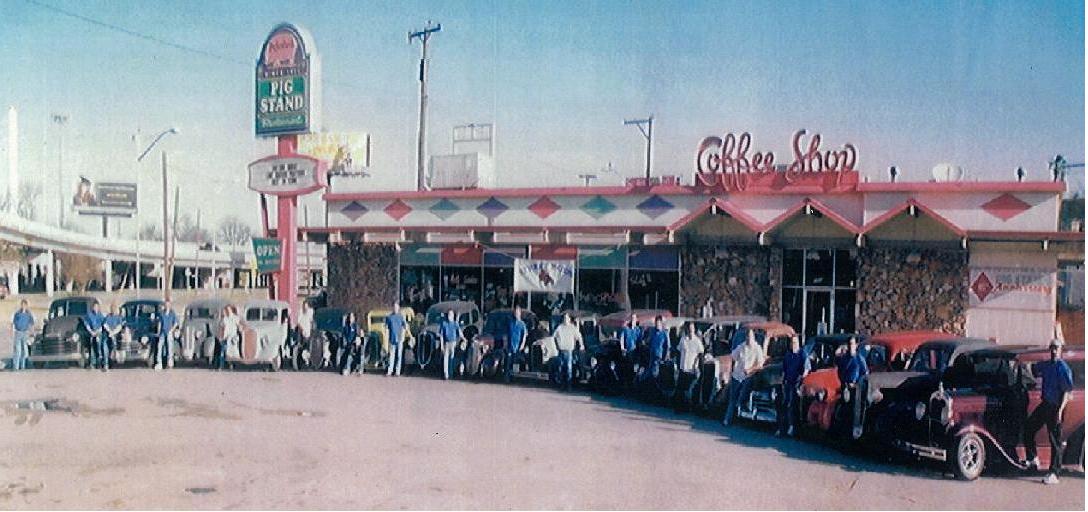
Remembering the Pig Stand.

January 8, 2010

Do you remember the last Pig Stand restaurant, the one that used to operate on Washington Avenue? This Houston Pig Stand  closed its doors forever sometime in the last decade or so. It is now the site of Sawyer Park, which, according to local historian and man-about-town Mike Vance of TV Channel 55,  is now one of the hottest sports bars in the city these days.

The subject came up for me as Mike Vance and I were conversing via e-mail last night on the subject of Houston’s drive in restaurant history. Mike had asked me what I remembered or knew of any burger business that may have have preceded Prince’s in Houston. The local Prince’s Drive In chain opened in 1934.

Well, even I am too young to recall anything prior to 1934. All I could think of was the Pig Stand, even though they were famous for their pig sandwich. I’m not sure they even offered burgers too. As a kid of age five, I remember my parents taking us there to the one on Washington Avenue while we were still living in the Heights. Seems to me there was also a Pig Stand in the Heights itself, but my memory of that possibility may be shaky. I couldn’t even recall the curb service on Washington. My memories are of eating a pig sandwich inside the place.

The Pig Stand holds quite a place in Texas restaurant history, The first one opened in the Dallas area in 1921 as American entrepreneurs scrambled to take advantage of new market needs generated by the growing populariy and presence of the automobile. Places offering “curb service” became the call of the times as Americans travelled further, ate out more, and got lazier about how they dined. It wasn’t long before the Pig Stand chain of the 1920s expanded into San Antonio, Houston, Beaumont, and even into California, on a coast-to-coast expansion of places offering both “drive through” and “curb service” purchase of those “oink-o-licious” pig sandwiches.

The Pig Stand movement reached its big trough days during the 1930s when 130 stores opened all around the country. The chain takes credit for the mass introduction of several food items beyond the star pig sandwich too. These included Texas toast, deep-fried onion rings, and the chicken fried steak sandwich. The Pig Stand stores were among the first to offer fluorescent lighting, neon lights, and air conditioning as well.

Mary’s Pig Stand on Broadway in San Antonio is now the Alamo of them all, staying open in good faith and tribute to a bygone era and a business that once played its part in the eventual destruction of the family home evening meal. I only wish they were closer to home in Houston. Those delicious pig sandwiches were good enough to have  earned a week’s full of condemnation from health specialists like Dr. Oz of daytime television medicine, but they were still sooooooooo soooie-goooie good!

We’d love to have your memories of the Pig Stand here too as comments. Also, if you can think of any burger businesses that were big in Houston prior to Prince’s, please feel free to write about them too.

Dawson, Blyleven, & The Hall of Fame.

January 7, 2010

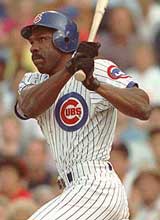
Andre Dawson Elected to Baseball Hall of Fame.

It took him nine ballots over nine years to finally get there, but former Montreal Expo/Chicago Cub slugger Andre Dawson finally arrived as a selection for the Baseball Hall of Fame on Wednesday, He collected 420 votes from the 539 eligible voters of the Baseball Writers’ Association for 77.9%, or just over the 75% a candidate needs for selection according to the rules in place.

Coming close with no cigar in 2010 were 13-time nominee and former pitcher Bert Blyleven (400 votes/ 74.3%) and first time candidate and second baseman Robbie Alomar (397 votes/73.7%).

Dawson finished 15 votes over the minimum number of 405 votes he needed this year after falling 44 votes short of the mark in 2009. Blyleven fell 5 votes short of election after picking up 62 new votes this year over his 438 vote total in 2009.

What happened to bump these changes? Did the BWA electoral group  suddenly go through a wholesale change of actual voters who feel that much more positively about Dawson and Blyleven in 2010? Did the passage of another year’s time simply soften certain hearts in the wake of all the other bad news in the world about terrorism, bailouts, Ponzis, and health care? In a way, I can see that happening with some writers. “You know,” I can see some writer saying to himself or herself, “I can’t do much about all the lousy things that are going on in this crummy world, but I can sure do something about Andre Dawson out there twisting in the wind of the Hall of Fame vote all these years! I’m changing my vote in 2010 from no to yes!”

Could happen. There’s a certain “he’s suffered long enough” factor at play with candidates like Andre Dawson. It’s so big, in fact, that it almost dragenetted Bert “When do I get in?” Blyleven into the mix for 2010 as well.

Add to the voting climate the impact of last week’s Veterans’ Committee selection of manager Whitey Herzog and umpire Doug Harvey to the Hall of Fame as a factor affecting the BWA vote of Tuesday. After the Herzog/Harvey announcement, there had to have been some writers who thought: “Well, if they’re going to let those two bozos in the front door this year, there’s no way I can keep passing on Andre Dawson or Bert Blyleven!”

Andre Dawson subscribes to the old “cream rises” theory about his selection. Said Sir Andre, only one day ago: “If you’re a Hall of Famer, eventually you’re going to go in, no matter how long it takes.”

Dawson’s accomplishments as a hard-hitting right-handed outfielder may have entered into the mix of his selection somewhere too. In his twenty-one year career (1976-1996), Dawson had 438 home runs and 1,591 runs batted in. “The Hawk”, as he came to be known, earned the National League Rookie of the Year honors during his first full 1977 season at Montreal. Ten years later in Chicago, Dawson was picked as the NL Most Valuable Player, becoming the first member of a last place club to have earned such an honor. Along with Barry Bonds and Willie Mays, Andre Dawson is one of only three players to have combined 400 home runs and 300 stolen bases into a single career. He also played for Boston and Florida during his career, but he never made it with a club that qualified for the World Series.

Personally speaking, I’m happy to see that Andre Dawson finally satisfied the gauntlet runners who have been postponing his date with Hall of Fame destiny. Don’t bet on Bert Blyleven missing the cut again next year either. His time is finally nearing. Barring the sudden appearance of some Tiger Woods-like event in his personal life, Bert Blyleven will be selected for the Baseball Hall of Fame in 2011 by a comfortable margin.

A Pitch to Remember.

January 6, 2010

"You could've knocked me over with a feather!"

Of all the billions and billions of birds in this world, the unluckiest of these will forever be the seagull that just happened to intersect air space with a Randy Johnson fastball once upon a time on a field, and in a game, now reasonably forgotten as to game day particulars.

What we are likely to remember almost as much on the general impression level is what happened to all the big league pitches he threw in twenty-two years that didn’t bring “death to flying things” nor delay the actual playing of games. These ultrasonic “K” pitches  only delayed and derailed the  individual career hopes and team victory aspirations of whoever found themselves batting against Randy Johnson.

When year in and year out, otherwise superior hitters start playing some games just to keep from getting killed more than anything else, a manager has to know that he’s got a special weapon in his starting rotation when he sends a fellow named Randy Johnson out there to pitch. Several fortunate big league managers, including the Houston Astros own Larry Dierker, got to have that reassuring experience. Aside from J.R. Richard of the Houston Astros in an earlier era of primal batter’s fear, Randy Johnson probably was the scariest pitcher that anyone in the big leagues ever had to face.

Beyond human fear installation and avian assassination, Randy Johnson got positive game outcome results, big time.

Look at his base record. Res ipse loquitur.

The 6’10” lefty Randy Johnson has finished his MLB career (1988-2009) with a record of 303 wins, 166 losses, an ERA of 3.29, and 4,875 strikeouts as a starter for the Montreal Expos, Seattle Mariners, Houston Astros, Arizona Diamondbacks (twice), New York Yankees, and San Francisco Giants.

A surefire first-time selection for the Hall of Fame in five years never walked this tall into the tiny village of Cooperstown, New York.

Frank Liuzza: Houston Says Goodbye to a Good Man.

January 5, 2010

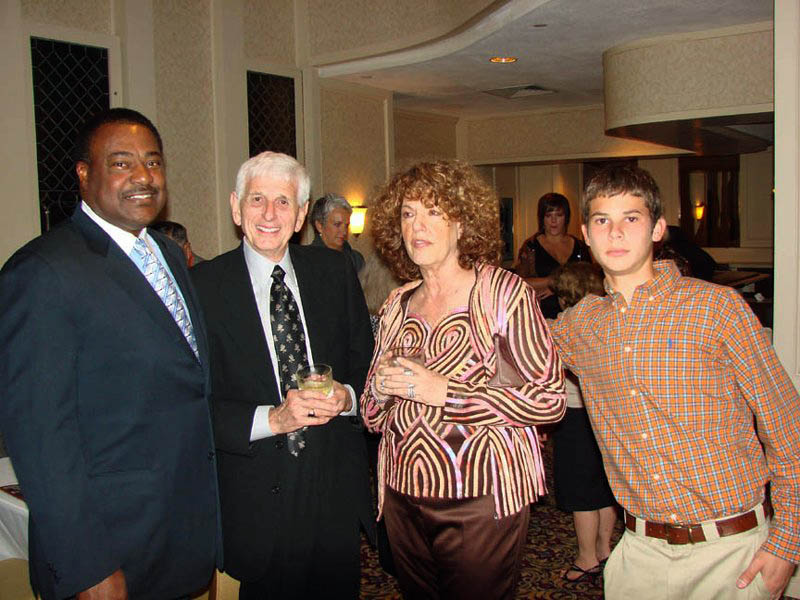
At the 2007 Texas Baseball Hall of Fame Banquet: Former Big Leaguer Don Baylor; Houston Black Buffs Founder Son, Frank Liuzza; Dr. Sue Hepler-Liuzza, Spouse; & Frank Liuzza Grandson, Randall Taliaferro.

Houstonian Frank Liuzza died in St. Luke’s Hospital this past Saturday, January 2, 2010, at the age of 80. With his passing, Houston surrendered one its genuinely caring citizens. Frank was  a man of great integrity, outspoken honesty, and clear passion for life, family, true friendship, the history of this city, the arts, music, and everything that had anything to do with fast cars.

Like his father, John Liuzza, and his uncle, James Liuzza, before him, Frank loved the great game of baseball. He was a fine hitting and fielding lefty first sacker for St. Thomas High School, St. Thomas University, and the University of Texas in the years immediately following the end of world War II. He had hopes for a professional career, but those were dashed by injury and a greater call to military service duty with the U.S. Army during the Korean War. After the war, Frank used his undergraduate degree work in accounting at the University of Houston to embark upon a successful lifetime career as a commercial real estate broker.

In the short late-in-life time I knew Frank Liuzza as a personal friend, and he was just that, a true friend, I learned how driven he was personally by the business life  and everyday living experiences of his Italian immigrant grandfather and family in the Houston fifth ward. Frank had an outstanding head for detail, great respect for the work ethic, total loyalty to the idea of family, and complete love for everyone before him and after him in the Liuzza family bloodline, from grandfather to grandson.

Frank Liuzza and I bonded as friends in 2007 on the wings of circumstances that now still ring like the plotline of a twilight zone story. All you may need to know to more fully appreciate the tale is this fact: All of my adult life, or so it seems, I’ve been looking for documentation on an old Negro League baseball club that once existed here as the “Houston Black Buffs.” All I’d been able find through the early fall of 2007 were a few scattered box scores and game action reports from the Houston newspapers of the 1930s.

Then one day, in the fall of 2007, I received a phone call from a former Tulane University graduate school friend and colleague, Dr. Sue Hepler. We probably had not talked in fifteen to twenty years and our relationship had nothing to do with baseball. Sue had just wanted to reach out and see how I was doing. Even she had no previous idea of how my recent years have become so immersed in the fields of baseball writing and research. We are both mental health field professionals by trade.

When Sue learned of my baseball passion, she said, “You know, Bill, the funny thing is, I’m married to a guy here in Houston whose family once owned a local black baseball team. I think they were called the Houston Black Buffs.”

You could have knocked me over with that proverbial feather.

Dr. Sue Hepler-Liuzza was married to Frank Liuzza, whose father and uncle founded the Houston Monarchs (later known as the Black Buffs) in 1924. The family owned the club through its final straw year of 1954, when Frank Liuzza himself came home from Korea in time to close the books on an era that had ended.

I was Board President of the Texas Baseball Hall of Fame back then. We recognized Frank Liuzza and his family history with the Houston Black Buffs at our November 2007 banquet. And that’s how Frank and I met – and how the history of the Houston Black Buffs came out of the shadows.

I last saw Frank Liuzza in September 2009, when we both went over to TV Channel 55 to record some material for Houston baseball and community history with Mike Vance, one of our local media’s foremost historians. Even though we didn’t see each other often or know each other for long, I will miss Frank Liuzza as the good friend and great Houstonian he truly was.

Footnote: This article was published by The Pecan Park Eagle blog on WordPress.Com on Tuesday, January 5, 2010. It is dedicated, henceforth, to the deserved and lasting memory of Mr. Frank Liuzza and also equivalently to the ongoing, soaring soul of his life partner, Dr. Sue Hepler-Liuzza.

Oscar Holcombe: The Plastic Man of Houston Politics.

December 29, 2009

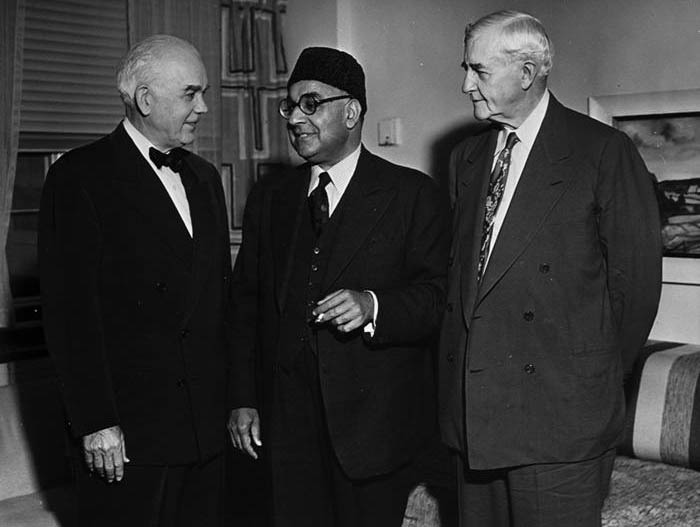
Oscar F. Holcombe was an absolutely amazing Houston politician. Had he lived to celebrate the December 31st birthday that he shares with me and God knows how many others, he would need 121 candles to torch each of his

Houston Mayor Oscar F. Holcombe, Pakistani Prime Minister Ali Khan, & Houston Power Mogul Jesse Jones, 1950.

earthly years. Born in in Mobile, Alabama on December 31, 1888, Holcombe’s family moved to San Antonio when he was very young. After growing up in the Alamo City, Holcombe moved to Houston at age 18 and started making a living in construction. Holcombe married Mary Grey Miller on May 3, 1912. They had one daughter.

By age 26, he had formed the O.F. Holcombe Company as his own construction business. He was on his way to using his business savvy and political contacts as a pathway to riches as one of Houston’s new millionaires.

In 1921, Holcombe entered politics and was elected for his first term as Houston’s mayor. He would end up serving as Houston’s mayor for 22 years, but over 11 non-consecutive terms across four decades. He was the most resilient politican in Houston’s history, adapting to changes in the times and rarely losing his broad appeal in the face of fast growing and changing Houston voter demographics. Holcombe was a soft spoken business-oriented conservative who advocated and believed strongly in the city’s physical expansion of its georgraphic boundaries and in the growth and maintenance  of public services like libraries, adequate sewage, and the development of a superior municipal auditorium for special shows and functions downtown.

Holcombe’s mayoral terms extended from 1921 to 1929; from 1933 to 1937; from 1929 to 1941; from 1947 to 1953; and from 1956 to 1958.

During the early 1960s, Houston renamed the section of Bellaire Boulevard east of Southside Place which runs through the Texas Medical Center, as Holcombe Boulevard. In the late 1980s, the municipality of West University Place also renamed Bellaire Boulevard as Holcombe Boulevard within the space of its jurisdiction.It was a fitting tribute to a man who had personified the Houston boomtown spirit as clearly as it had been drafted by local mover and shaker Jesse Jones. Holcombe was the man to have in office whenever Houston leaders wanted to get some new development deal done and under construction. His actions invited a hoarde of reform candidates along the way, including the late Roy Hofheinz, but people always seemed to come back to Holcombe, even after they threw him out for a term or two.

Was Holcombe dishonest? I can’t say. All I can tell you from what I recall and have since read more about is that he was a superlative politician. Does that help answer the question?

As for sports, Holcombe was was mayor during the time that Buff Stadium was built and opened four miles to the east of downtown Houston in 1928. He fell time-short of being in office when Houston won their battles for major league baseball and football, but I think he supported those goals in general, even if he did not support the personal gain that passed to his old rival Roy Hofheinz through baseball. During the great “bigger is better” era of  Houston shaker thought, Holcombe favored “bigger and wider” as goals that were good for Houston – and quietly profitable for those that did the actual financing and building of growth and expansion.

Oscar F. Holcombe passed away in Houston on June 18, 1968 at the age of 79.

The Ballad of Eddie Gaedel.

December 22, 2009

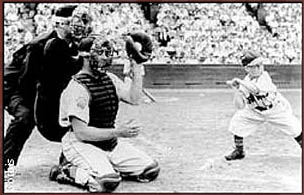
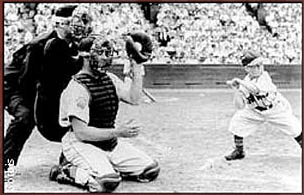
In further deference to the spirit of this off-season, and to the fact that time is short as we run smack dab into Christmas in only three more days, here’s another parody I wrote ten years ago about the time on August 19, 1951 that St. Louis Browns club owner Bill Veeck sent a vertically challenged person (a so-called “midget” back in the pre-PC days) into a game against the Detroit Tigers. It only happened once, but it turned a memory that shall last forever. Here it is again for your last minute Christmas shopping pleasure or displeasure, “The Ballad of Eddie Gaedel”, as sung to the tune of “Rudolph the Red-Nosed Reindeer”:

The Ballad of Eddie Gaedel
(sung to the tune of “Rudolph, The Red-Nosed Reindeer”)
by Bill McCurdy, 1999.

Bill Veeck, the Brownie owner,
Wore some very shiny clothes!
And if you saw his sport shirt,
You would even say, “It glows!”

All of the other owners,
Used to laugh and call him names!
They wouldn’t let poor Bill Veeck,
Join in any owner games!

(chorus)
Then one humid summer day,
Bill Veeck had to – fidget!
Got an idea that stirred his soul,
He decided to sign a – midget!

His name was Eddie Gae-del,
He was only three feet tall!
He never played much baseball,
He was always just too small!

(chorus)
Then one day in Sportsman’s Park,
Eddie went to bat!
Took four balls and walked to first,
Then retired – just-like-that!

Oh, how the purists hated,
Adding little Eddie’s name,
To the big book of records,
“Gaedel” bore a blush of shame!

Now when you look up records,
Look up Eddie’s O.B.P.!
It reads a cool One Thousand,
Safe for all eternity.

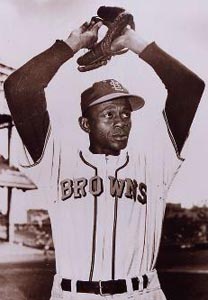
Remembering the St. Louis Browns.

December 20, 2009

Ned Garver won 20 games for a club that lost 102.

A lifetime ago, before there was a major league club in Houston, those of us who grew up here had to pick one of the sixteen existing clubs to follow. We were all first Houston Buffs of the AA Texas League fans, of course, but we weren’t boondocks-dumb to the fact that the best brand of baseball was the variety played in either the National or American leagues, in most cases. We also were ego-loaded to the idea that a club like our ’51 Buffs could most likely take a team like the Pirates, the Senators, the A’s, or the Browns in a best of seven series any day of any October week during that era.

I had two favorite big league clubs, one from each major league. Not surprisingly, the first of mine was the St. Louis Cardinals of the National League. The Cards were the major league parent of our Houston Buffs and they were loaded with former Buffs who had stampeded their ways to the big time through the gates of Buff Stadium. My other club was an American League entry, but it wasn’t one that many fans chose to follow, even from among those people who lived in the city that had been its home since 1902.

How could you not like the only club that ever sent a midget into a real game as a batter?

The St. Louis Browns were simply awful most years. The rest of the time they were downright terrible. Except for their great club of 1922, the one led by Hall of Famer George Sisler to a one-game-short miss of the 1922 American League pennant, the 1944 Browns were the only club in franchise history to win an AL pennant. It wasn’t much to shout about. Any time you have to give an assist to a guy like Adolph Hitler for creating the manpower shortage that opened the door for the Browns to walk into their lone lucky title break its – well, its flat out embarrassing.

The Browns won the 1944  American League title at the wire over the Detroit Tigers and then lost the World Series in six games to their same neighborhood Cardinal rivals.

"Never look back. Something might be gaining on you." - Satchel Paige

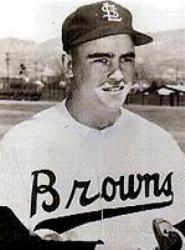
I came aboard as a Browns fan during the 1951 season, mainly because of one man. That was the year that Browns pitcher Ned Garver won twenty games (20-12, 3.73) for a team that finished in last place with a record of 52-102. It was a case of unfortunate underdog misidentification, but my admiration for Garver’s achievement against the odds, plus the presence of the great Satchel Paige on their roster, plus Eddie Gaedel (see photo of midget batter), well, the short of it is simple. These all sucked me into accepting the Browns as my club in the American League.

It was a short-lived romance. After two more seasons in St. Louis (1952-53), the Browns departed the Mississippi River city in favor of a 1954 reincarnation on the east coast as the Baltimore Orioles. It was a move that rang the bell on other franchise relocations to soon come, and I hated it as deeply as though I had grown up with the Browns in St. Louis. As if I need now any help with compiling further reasons to dislike her, the Baltimore mayor who led the Browns transformation to Orioles just happened to have been the father of current House Speaker Nancy Pelosi.

Several years ago, I wrote a parody version of “Casey at the Bat” to express the meter and merit of my sadness over the Browns’ last game in St. Louis. In the nostalgic spirit of the season, and in memory of that long ago 1953 moment in Sportsman’s Park (renamed Busch Stadium), here’s what happened on September 27, 1953 in St. Louis, Missouri:

The Lost Hurrah: September 27, 1953
Chicago White Sox 2 – St. Louis Browns 1.

(A respectful parody of “Casey At The Bat” by Ernest L. Thayer in application to the last game ever played by our beloved Browns.)

by Bill McCurdy (1997)

The outlook wasn’t brilliant for the Brownie nine that day;
They were moving from St. Louis – to a place quite far away,
And all because Bill Veeck had said, “I can’t afford to stay,”
The team was playing their last game – in that fabled Brownie way.

With hopes of winning buried deep – beneath all known dismay,
The Brownies ate their cellar fate, but still charged out to play.
In aim to halt a last hard loss – in a season dead since May,
They sent Pillette out to the mound – to speak their final say.

The White Sox were that last dance foe – at the former Sportsman’s Park,
And our pitcher pulsed the pallor of those few fans in the dark.
To the dank and empty stands they came, – one final, futile time,
To witness their dear Brownies reach – ignominy sublime.

When Mickelson then knocked in Groth – for the first run of the game,
It was to be the last Browns score, – from here to kingdom came.
And all the hopes that fanned once more, – in that third inning spree,
Were briefly blowing in the wind, – but lost eternally.

For over seven innings then, – Dee bleached the White Sox out,
And the Browns were up by one to oh, – when Rivera launched his clout.
That homer tied the score at one, – and then the game ran on.
Until eleven innings played, – the franchise was not gone.

But Minnie’s double won the game – for the lefty, Billy Pierce,
And Dee picked up the last Browns loss; – one hundred times is fierce!
And when Jim Dyck flew out to end – the Browns’ last time at bat,
The SL Browns were here no more, and that was that, – was that!

Oh, somewhere in this favored land, the sun is shining bright;
The band is playing somewhere, and somewhere hearts are light;
And somewhere men are laughing, – and little children shout,
But there’s no joy in Sislerville, – the Brownies have pulled out.

Radio Days, Part Two.

December 17, 2009

Yesterday’s little trip into our electronicly audible past brought forth a lot of private e-mails and some public commentary on all of your early memories of our very much shared radio days. Today it might help put a temporary cap on the subject to just list some of the actors, characters, and sponsors that were the backbone of this whole wonderful experience back in the day. As much s possible, I will try to list these items here in some crude alphabetical order, but I can’t promise anything. Please feel free to comment and add to the lst in the comment section that follows:

Abbott and Costello, Fred Allen, Gracie Allen, The Original Amateur Hour with Major Bowles, Amos and Andy, Gene Autry, Jack Benny, Bobby Benson and the B-Bar-B Riders, Edgar Bergen, Boston Blackie, The Bickersons, Les Brown and His Band of Reknown, George Burns, Eddie Cantor, Cato, Jerry Cologna, Perry Como, Bing Crosby, Dennis Day, Cecil B. DeMille and the Lux Radio Theatre, Jimmy Durante, Fibber McGee and Molly, Gangbusters, Arthur Godfrey, Mr. District Attorney, The Great Gildersleve, The Green Hornet, announcer Bill Goodwin, Sterling Holloway, Bob Hope, Clem Kaddidlehopper, Danny Kaye, Sky King, Edward R. Murrow, Let’s Pretend, The Happy Gang of Buster Brown, Lifebuoy Soap, Life with Luigi, Charley McCarthy, Smilin’ Ed McConnell, The Mean Widdle Kid, Captain Midnight, Tom Mix, Digger O’Dell, Ovaltine, Oxydol, Joe Penner, Ma Perkins, Porcyurcorkis, The Quiz Kids, The Lone Ranger, Inner Sanctum and Host Raymond, Eddie “Rochester” Anderson, The Shadow, Frank Sinatra, Red Skelton, Baby Snooks,  The Sixty-Four Dollar Question, Mortimer Snerd, Superman, Danny Thomas, announcer John Scott Trotter, announcer Harry Von Zell, Wheaties (Breakfast of Champions), The Whistler, announcer Don Wilson, and “Thanks for the Memories,” and – “Goodnight, Mrs. Kalibash, wherever you are!”

As I leave you with the lyrics to the Lifebuoy Soap radio commercial jingle, all I can add is that It’s been a fun trip.

“Singin’ in the bathtub, singin’ for joy,

Livin’ the life of – Lifebuoy!

Can’t stop singin’ – because I know,

That Lifebuoy really stops ………..

B ……. OOOOOOOOOOOOOOOO!”

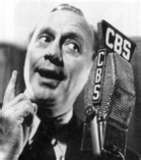
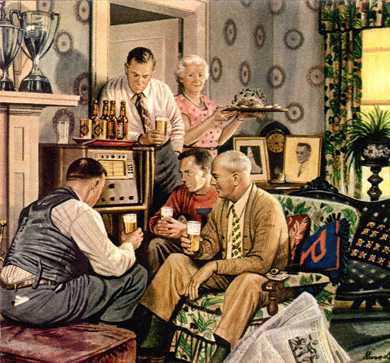
Radio Days.

December 16, 2009

Once upon a time, long before television came along and eventualy helped radio drift into the hands of the talk show jerks who now rattle on endlessly about sports and politics while we are trapped in our cars, the old home radio really was the great theater of the mind that some of us older folk remember it to be, Now we’ve given up that medium for what? Some guy rattling on for forty-five minutes about why Gary Kubiak should be fired as head coach of the Houston Texans? Or some other cool sports jerk calling our town “H Town” because he thinks that phrase sounds cooler to the national audience than the proud and simply powerful name of “Houston”? Or turning your ear and mind over to those radio personalities who want to ladle your brain with the thought that the world is coming to an end unless you buy into what they are selling at the 100% level?

Please. Minds be still. Click off the clamor of late 2009 car radios and find peace in recollections of a more pleasant time. I think they call them the good old days because time works pretty much like a colander. It sifts out anything watery and distasteful, the stuff we don’t want, and it allows us to keep only what is delicious. And for all of the 1930s and most of the 1940s, home radio was the greatest cafe in the world for everything that was delicious in the forms of drama, comedy, horror, or adventure.

Return with me now to those thrilling days of yesteryear’s home radio. “The Lone Ranger rides again!” I cannot begin to contain all I could write into a single blog, but what I will try to do here is share with you my personal recollections, as they come back to me spontaneously in bits and pieces. If you’re old enough, some of these recollections will be as familiar to you as sliced bread and peanut butter and jelly for lunch on a hot Houston summer day, but you will also have your own memories too. Today I really encourage you to add whatever strikes you too as comments on this article. Home Radio was our once precious and shared adventure, and it lives on to this very moment in the souls of everything we still value and pursue.

OK, here we go. …

A door opens, followed by the clattering sound of so many items hitting the floor. It’s Fibber McGee’s closet. Do you remember Fibber McGee & Molly? They used to live on Wistful Vista. … There’s a guy standing still at the street corner near the McGee house. He’s being held up at gunpoint by another man. All’s quiet until the man with the gun repeats something he’s apparently said before to Jack Benny, the silent man with his hands in the air. “I said, ‘Your money or your life!” the guman shouts. “I’m thinking! I’m thinking!!” Benny answers. …. Around the corner, from a second floor open window on the street side of the Mystic Knights of the Sea Lodge Hall, we can see two men talking. One of the men is wearing a medical examination light on his forehead, apparently getting ready to perform some kind of optometric exam of the other. They are so close we can hear their conversation. “Kingfish,” says the rotund sort of apprehensive-looking patient in this scene, Andy Brown, “I never knew that you had any training to be an eye doctor!” “Oh yes, Andy,” says the Kingfish. “Why only this morning I removed a Cadillac from a man’s eyes!” …. Moving further down the street, we see that a crowd has gathered. They are gazing up  and pointing skyward at a red and blue object as it streaks across the city skies. “LOOK! UP IN THE SKY! …. IT’S A BIRD! … IT’S A PLANE! … NO, IT’S SUPERMAN!” …. Superman? Where is that absent-minded reporter Clark Kent when you really need him to cover a big story? …. It’s almost lunch time. We duck into a little grill and bar that seems like a good place to catch a cool one and a cold cut sandwich and chips. A baggy-faced man in a white shirt, green bow tie, and a bartender’s apron is leaning on the bar and chompimg on a big cigar as he answers a ringing phone. “Duffy’s Tavern, where the elite mete to eat. Archie the Manager speaking; Duffy ain’t here!” …. After a couple of Grand Prize beers and ham and cheese special, we walk further down the main drag. Turning into a nearby heavily wooded neighborhood, we are all of a sudden confronted with the coming of a monster thunder and rainstorm. We have no choice, but to beat a quick path to the nearest doorway of a most mysterious mansion. As we knock on the massive front door, it slowly creaks open, apparently of its own accord, but creaking all the way. The door opens into a pool of blackest darkness. We are stopped in our tracks and then stunned by a low-sounding voice that first only speaks to us from from the pitch black. “Good afternoon, I’m your host Raymond.” Then the body behind the forboding voice steps forward into the flickering light, and we find ourselves staring into the menacing white eyes of a tall thin man dressed all in black. “Welcome to Inner Sanctum!” the man says as his smiling voice breaks into a maniacal cackle of insane laughter. “Feet don’t fail us now,” we shout as we hightail it out of there, in spite of the storm. … Stopping off at a dry cleaner to literally get our clothes dried, we meet a man there who just came in to pick up his suit. He’s arranging to pick it up on credit until Saturday. The guy’s name is Joe Penner. He looks pretty disconsolate, even though the dry cleaning man let him have the suit on the cuff. “What’s the matter, Mr. Penner?” we couldn’t help but ask as he walked out the front door. “Same old thing,” Joe answers. “I was going to the horse track today, but my wife found my paycheck and blew all our money on the rent!” … Now late in the day, it’s getting close to the time we must go back to the future. Just enough time left to take in the last musical set of the Pappy Lee O’Daniel Light Crust Doughboy Band  in person as they finish up their live broadcast at the radio station. It was great to hear again that great closing musical  entreatment of the fans for support:

“If you like our songs and you think their fine, sit right down and drop a line, the Light Crust Doughboys of Burrough’s Mill!”

That’s it for now. Hope you enjoyed this little trip half as much I did, folks. And please add your own radio recollections in the comment section below this article.