Posts Tagged ‘History’

The Houston Buffs’ Cubs Years, 1959-61

July 8, 2010

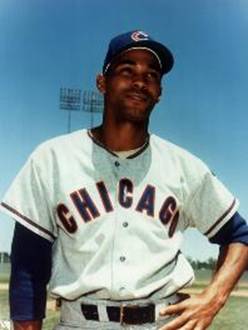
Future Hall of Famer Billy Williams played LF and batted .323 with 26 HR for the 1960 Houston Buffs.

By the time the Houston Buffs settled into their last three years of minor league baseball from 1959 to 1961, the dye had been cast that the city’s real future now rested in the major leagues as one of the new expansion clubs. When former St. Louis baseball great Marty Marion and his group of independent investors then purchased the minor league franchise and ballpark of the Houston Buffs from the St. Louis Cardinals after the 1958 season, it most likely took place with a view toward a future that far surpassed their immediate plans to move the ball club up to the next level with the AAA American Association from the AA Texas League.

The Marion group worked out a minor league player supply group with the Chicago Cubs and agreed to start playing in the American Association in 1959 as the AAA affiliate of the Chicago North Siders. For all the Cardinal fans of the Houston area, the change resulted in quite a culture jolt. No longer would the Buffs be wearing the Cardinal red and deep Navy blue trim of the vaunted and cherished St. Louis NL club.

When the 1959 Buffs took the field on Opening Day 1959, they did so in the Powder blue caps, lettering, and trim on the Cloud white uniforms that were the style of the Chicago Cubs. Even though we Buff  fans were told that these guys on the field were our Buffs, and we knew they were, part of our fan souls kept waiting for the “real Buffs” to show up in their Cardinal red gear. It took us a while to adjust. After all, the Buffs had been a Cardinal farm club from the early 1920s. That nearly four decades of Cardinal influence was extremely powerful.

Those three final years of the Houston Buffs were mostly forgettable on the field. Playing first under Rube Walker and then again under former Buffs manager Del Wilber, the 1959 Buffs finished dead last in the five-team American Association West Division with a horrendous record of 58-104. Houston fans seized upon an obvious conclusion: “Buffs, you say? I don’t think so! These guys not only dress like the Cubs! They play like them too!”

The 1959 roster did contain some notables. Future Houston Colt .45 Pidge Browne broke in at first base with a .261 batting average and 12 homers. Former Browns outfielder Jim Delsing played regularly at a low performance level (.233 BA, 4 HR). Delsing is best remembered as the guy who pinch ran for Eddie Gaedel after the little vertically challenged batter (midget) walked in his only plate appearance for the St. Louis Browns on August 19, 1951. – Dave Hoskins, the black pitcher who broke the color line in the Texas League with Dallas back in 1952, also spent a little time pitching for the Buffs as part of his twilight song in baseball.

1960 was the season for memorable names during the Buffs’ Cubs years. Billy Williams played left field for the club, batting .323 with 26 homers on his last minor league stop on the way to his Hall of Fame major league career with the Cubs. Ron Santo played third base in 1960, hitting .268 with 7 homers. The ’60 club also included outfielder Sweet Lou Johnson (.289, 12 HR), outfielder-manager Enos Slaughter (.289, 1 HR in 58 times at bat), plus pitchers Mo Drabowsky (5-0, 0.90) and Dick Ellsworth (2-0, 0.86). The 1960 club did much better, finishing 3rd in  now eight-club circuit, but they lost in the first round of the playoffs for the league championship.
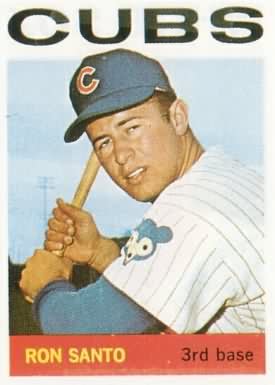
Ron Santo and Billy Williams were the best of the Buffs-Cubs years.

The 1961 last edition of the Houston Buffs went through four managers: Grady Hatton, Fred Martin, Lou Klein. and Harry Craft. Interesting! The Buffs’ last manager, Harry Craft, would also become the first manager of the new major league Houston Colt .45s in 1962.

First baseman Pidge Browne (.250, 9 HR in 62 games) and shortstop J.C. Hartman (.259, 6 HR) both played well enough to join manager Craft on the first voyage of 1962 Colt .45s. The club also included another future Houston major leaguer. Dave Giusti (2-0, 3.00 in 3 games) also pitched a few innings for the last Buffs.

In spite of their 73-77 fourth place record, the 1961 Buffs celebrated their last season by advancing to the finals of the American Association playoffs before losing the crown in six games to second place Louisville.

The big story of the Cubs years, however, was not what happened on the field, but how the Marion group ownership may have affected the future identity of Houston’s major league club. Here’s how I understand it as one who was not intimately involved in the process of the franchise award. I do invite Mickey Herskowitz to weigh in here on this matter as a comment on this column. I would love to see us get it right as we can for history:

The competition between the groups of Roy Hofheinz and Marty Marion for the new major league franchise was heated and unfriendly. When Hofheinz and the Houston Sports Association got the bid from the National League (and I’ve always surmised that HSA was the only group that a serious chance), the Marion group mde HSA pay through the nose for Buff Stadium and the club’s AAA territorial rights.

It’s my understanding from several sources that Hofheinz was so embittered by the Marion group “hold up” that this experience was all he needed to settle a decision that he probably would have made anyway: (1) the new Houston NL club wold not use Buff Stadium while they were awaiting the completion of the new domed stadium off OST and Main. They would build a temporary field there that would allow fans to watch the domed stadium as it progressed under construction. (2) The major league club would not be known as the Houston Buffs, even though there was strong popular sentiment in town for keeping the revered name of the club that had meant Houston baseball from the early years of the 20th century.

Had Marion’s group been awarded, the new NL franchise, I think they would have kept the “Houston Buffs” identity at the major league level, but I have no idea what their stadium plans might have included. I have always thought that the domed stadium plan was always anchored only to the HSA group. More light on all these details is needed.

At any rate, the three years of the Buff’s Cubs era are fairly forgettable on the field. I still can’t believe those guys in the Cubs-look-a-like uniforms really were real Buffs.

Any comments or questions on what really happened between the Hofheinz and Marion groups are most welcome, but please leave them here as public replies – not as private e-mails to me. Everybody needs a chance to get involved in this quagmire.

The All Star Game: The Hype is in the Name itself

July 5, 2010

Guess who hit the first home run in All Star Game history back in 1933? Hint: He had a reputation for the compulsive pursuit of food, drink, women, and some of the mightiest home runs ever swatted by an unofficial sultan of same.

When Chicago Tribune sports editor Arch Ward came up with the idea for an annual All Star Game to be played between the very best players of the American and National Leagues, it’s doubtful he foresaw the mutations that would change the game from one that players and fans in 1933 really cared about to the watered down event it has become today in 2010.

America changed. So did baseball. Television and population increase were at the heart of it all, but, of course, things never are quite that simple. The spread and growth of new people with new interests over the years has allowed baseball to move teams, expand the number of major league franchises, and to pitch its game to the public far  differently – but this market momentum has all taken place in the middle of a much greater and far more diversified competition from other sports and other new leisure-time attractions.

Net effect? With almost twice the number of clubs that existed in 1933 (30 now to 16 then), the Baseball All Star Game has become less of a “best players in baseball” contest and more of a “most popular players from each team” competition.

As an Astros fan, I’m happy that our great defensive center fielder, Michael Bourn, got selected as our team representative, but that fact doesn’t cause me to vacate the belief that there are a number of other guys from other clubs out there who are far more deserving this year than our .260-hitting Astros guy. As good as he is, I don’t even think that Michael Bourn is actually better than pitcher Roy Oswalt at this point in his MLB career. I just think that Oswalt’s poor W-L record from poor hitting support has made him a less popular choice than Bourn, plus the NL does have some good pitchers out there with records that make them more deserving, but I think you get my point, anyway.

The All Star Game is what it is. It’s a break in the pennant race and a chance for fans to watch an exhibition game between some of the best and just about all of the most popular players from each of thirty major league teams. Plus, the home run hitting contest conducted the night prior to the game is still fun to watch as a friendly father-son/daughter playground activity.

It’s just too bad that the outcome of this meaningless recess from the school of pennant race reality has to determine something as important as home team advantage in the World Series!

Commissioner Bud Selig says he made the change in the interest of helping the players and fans care more about the outcome of the All Star Game.

Oh really, Mr. Selig? Is that what you were thinking?

If so, well then – how about making the runner-up in the home run hitting contest seal the deal by kissing the posterior of the winner at home plate during the trophy presentation? An incentive to win built on that level might even get Mark McGwire to come out of retirement to take on all those sluggers from that House of Representatives steroid investigation committee in a special home run hitting contest between him and them only!

And the McGwire-Effect would really make about as much sense as the All Star Game winner does as the determining factor on home field advantage in the World Series.

Baseball Item Searches: Basic Rules of the Road

July 3, 2010

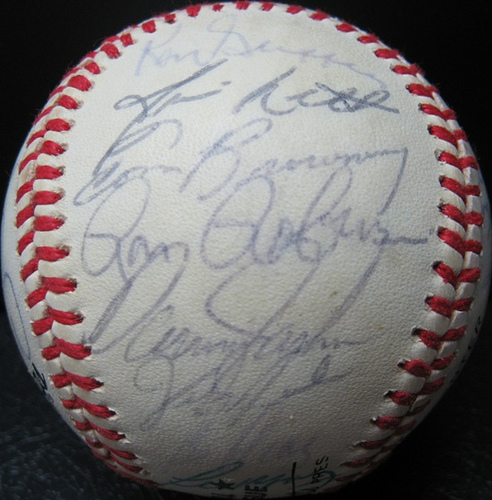
Golden Rule: Never trace over fading signatures with a new pen to make them easier to read. You have just destroyed the historical/commercial value of the item when you have done so.

What’s the difference between a collectible and an artifact? It’s all in the eye and the motivation of the beholder. If you keep something of history because it has commercial value, or you simply like gathering items into your own control, it’s a collectible. If you search for, find, and save an item because you know it is important to history, and your further search from there is for a place where it will be protected and put to use by historians and the interested public, it’s an artifact.

Both are important concepts to a better understanding of our own motivations. The word “artifact” just sounds nobler than collectible because it is. All artifacts may also be viewed as collectibles, but not all collectibles have much to any value as artifacts of history. For example, the ball that Babe Ruth hit for his 60th home run in 1927 is clearly an artifact that might have become one of the uniquely revered and traded collectible items in the world. Fortunately, however, the Ruth #60 homer ball is in safekeeping and on display at the National Baseball Hall of Fame in Cooperstown, New York as one of the unique artifacts in baseball history.

In recent years, baseball card companies have seized upon the addiction-seed and consumer-need for uniqueness that runs rampant among collectors. As a result, these companies have produced an ironic stream of “limited edition” cards, and always for “a few dollars more” in price above the normal “see-em-everyday” cards that everyone else buys at a cheap rate. These rarer baseball cards will likely never be collectibles on the level of the famous 1909 Honus Wagner cards, unless someone wants to start a museum dedicated to the dual history of greed and compulsion.

Some things stand out that collectors and researchers need to keep in mind when they are searching for those true dual-identity collectibles and artifacts in all those attic trunks out there,  somewhere. Here are a few of the big ones:

(1.) Carpe Diem: Go into the search with as much knowledge as you can bring to the table, but never put off an open opportunity to search because you think you aren’t ready. That special old dusty trunk in your grandmother’s attic may not be there later when you think you are ready. Check it out now – before someone else throws it out or hauls it away.

(2) The Golden Rule: If you run across an old baseball, or any other item, with faded signatures, do NOT trace over these original writings with a fresh ballpoint pen or marker point. The artifactual and collectible value of these items is destroyed from the moment that anyone works them over with a new pen.

(3) Handling: Use cloth gloves when handling old items, especially anything that is highly sensitive to chemical reaction with oils from the skin. Be careful where you touch items. Keep your bare hands off signed balls as much as possible and never put your fingers on the front side of photos. Common sense is the major rule here, but remember the gloves. They will save you a lot of heartache that cannot always be undone.

(4) Storage: Keep old items out of the sunlight, especially items that have been signed. The sunlight, and even the artificial light of a home or office, will eat up the color in the item faster than you can ever imagine. Put your collectibles/artifacts in a sock drawer or safe deposit box until they are either supplied with protective light ray covers or relocated to a professionally curated museum storage environment. Cooler temperatures are also better for items that are being stored. Never leave them in one of those hothouse storage rooms that get up to 120 degrees in the shade during the summertime.

(5) Appraisals: Get your items appraised as collectibles and artifacts. That may or may not require you to seek the counsel of more than one expert. As per usual, experts in the commercial collectible field may or may not be aware of an item’s value as an artifact of history – and an expert on history may or may not be aware of an item’s commercial value.

(6) Insurance: If you have homeowner’s insurance, explore the cost of adding an itemized list of valuable items to your policy.  Make sure you have photographed and described each item for insurance purposes – and placed your own copy of the list in either a safe deposit box or a secure separate location from your residence.

(7) Make a Record: Write down what you know about the item you are keeping, including how you came to control it. Make sure the record is placed in storage with the item. If something happens to you, the item cannot speak for itself. Make sure your record includes some affirmation of your will for the item in the event of your own demise. Even our close family members and friends may not know our minds as to the disposition of our collections unless we have spelled out our intentions for them somewhere. Very expensive items should be included in one’s official will.

Those are the basics. Other tips are most welcomed here as comments on this article.

Watty Watkins: Houston Sandlotter Made It Big

July 1, 2010

George "Watty" Watkins, OF, BL/TR HT: 6'1" WT: 175 Lbs

Born in Freestone County, Texas on June 4, 1900, but mostly raised on the sandlots of Houston, George “Watty” Watkins turned out to be one of our local boys who really made good.

Breaking in with Marshall and Houston in 1925, Watty played for Austin, Houston, and Beaumont over the next couple of years before earning the starting job as center fielder for the 1928 Houston Buffs in that very special year. The Buffs took the Texas League pennant and Dixie Series championship in 1928 and, even more importantly, it all took place in the first season of their splendid new home in the East End – in the place we Houstonians all came to know and love as Buff Stadium.

Watkins hit .306 with 177 hits, 32 doubles, 21 triples, and 14 homers for the 1928 Buffs, as he also established himself as a killer defensive player in the large central pasture of old Buff Stadium. An even more powerful year with Rochester in 1929 (,337 BA, 20 HR) earned Watty a promotion to the 1930 parent St. Louis Cardinals.

Watkins went “lights on bright” in 1930, hitting .373 and playing  a big role in the St. Louis pennant victory. The Cards went on to a 4-2 loss to the Philadelphia A’s in the 1930 World Series, but talent would rematch the clubs in the 1931 Classic. It would be the bat of Watty Watkins, including a home run, that fired a Game Seven victory for all the marbles this time. Watty Watkins was King of the World when he came home to Houston that winter.

After hitting .312 with the 1932 Cardinals, Watty dropped to .278 in 1933 and was dealt to the New York Giants prior t the 1934 season, thus, sadly missing the cardinal emergence as the Gashouse Gang.

Faltering offensive production for  the Giants in 1934, the Phillies in 1935, and the Phillies-Dodgers in 1936 ended the big league career of Watty Watkins. In spite of the fact that his last four big league seasons played out like the post-midnight segment of Cinderella’s big evening, questions about Watty’s playing health over that period of time may possibly explain his sudden offensive drop off the cliff. It was an era of poor diagnostics and few good choices on medical corrections. Combine that state of medical science in what passed back then for sports medicine – and mix that again with a “shut-up-and-play” personality like George “Watty” Watkins – and we have a formula for an unexplained flat tire on the highway to baseball greatness.

Watty wasn’t quite ready to hang ’em up after the 1936 season. He came back to play 100 games for his hometown Houston Buffs. He batted a most respectable .273, but here’s the more telling story of his lost power ability. Of his 105 Buff hits in 1937, Watkins collected only 21 double doubles and 4 triples with 0 (nada) homers. By the time I was born on December 31, 1937, Watty Watkins was about three months past the date of his last trip to the plate as a professional baseball player.

As a kid growing up in Houston, the echo of his name from the writings and words of the men who witnessed his play as fans or covered his play as reporters reached my ears long before I ever had the presence of mind to look into this background on my own.

George Watkins stayed active in the Houston baseball community until his death in Houston on June 1, 1970, just three days short of his 70th birthday. He was buried at the Broyles Chapel Cemetery in Palestine, Texas.

The rest of the story goes on from here. The other day, I received a wonderful e-mail message from a fellow named John Watkins, who introduced himself to me as the great-nephew of George “Watty” Watkins. John also sent me a scanned copy of the original program from the opening of the initial Houston Sports Museum back in the 1960s. Watkins had learned about me from one of my Pecan Park Eagle articles on the reopening of the museum at Finger’s.

I would especially like to invite John Watkins to comment further here on his great-uncle. Watty Watkins was one of the best all-time Buffs and he had one of the hottest starts in major league history. I’m sure we could all benefit from John’s family view on this great former Buff and Cardinal.

June 30: Landmark Variety Fair Closes Doors at Day’s End

June 30, 2010

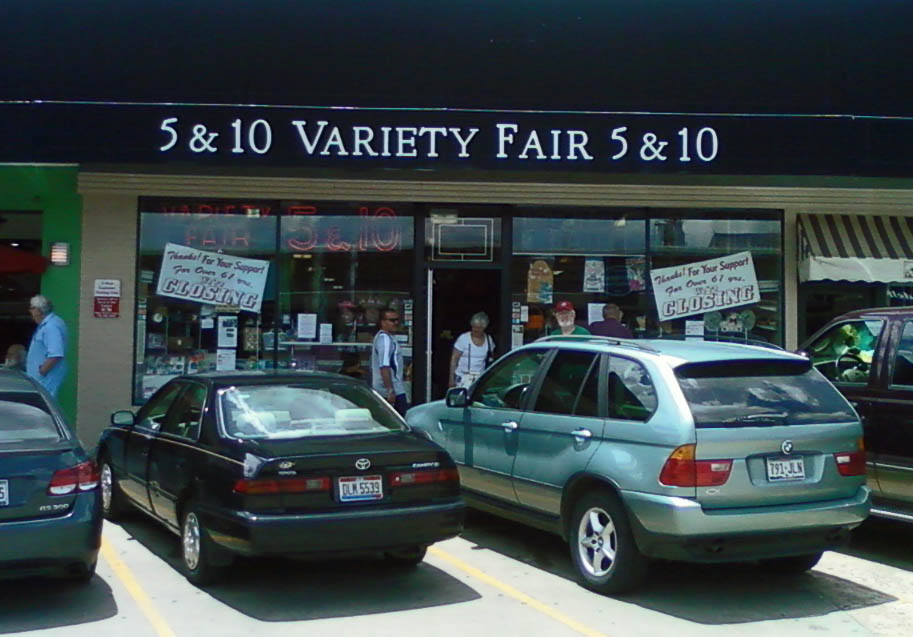
Summer clouds reflect for the last time today off the window of a store that has been open to the kids and young at heart of Houston since 1948.

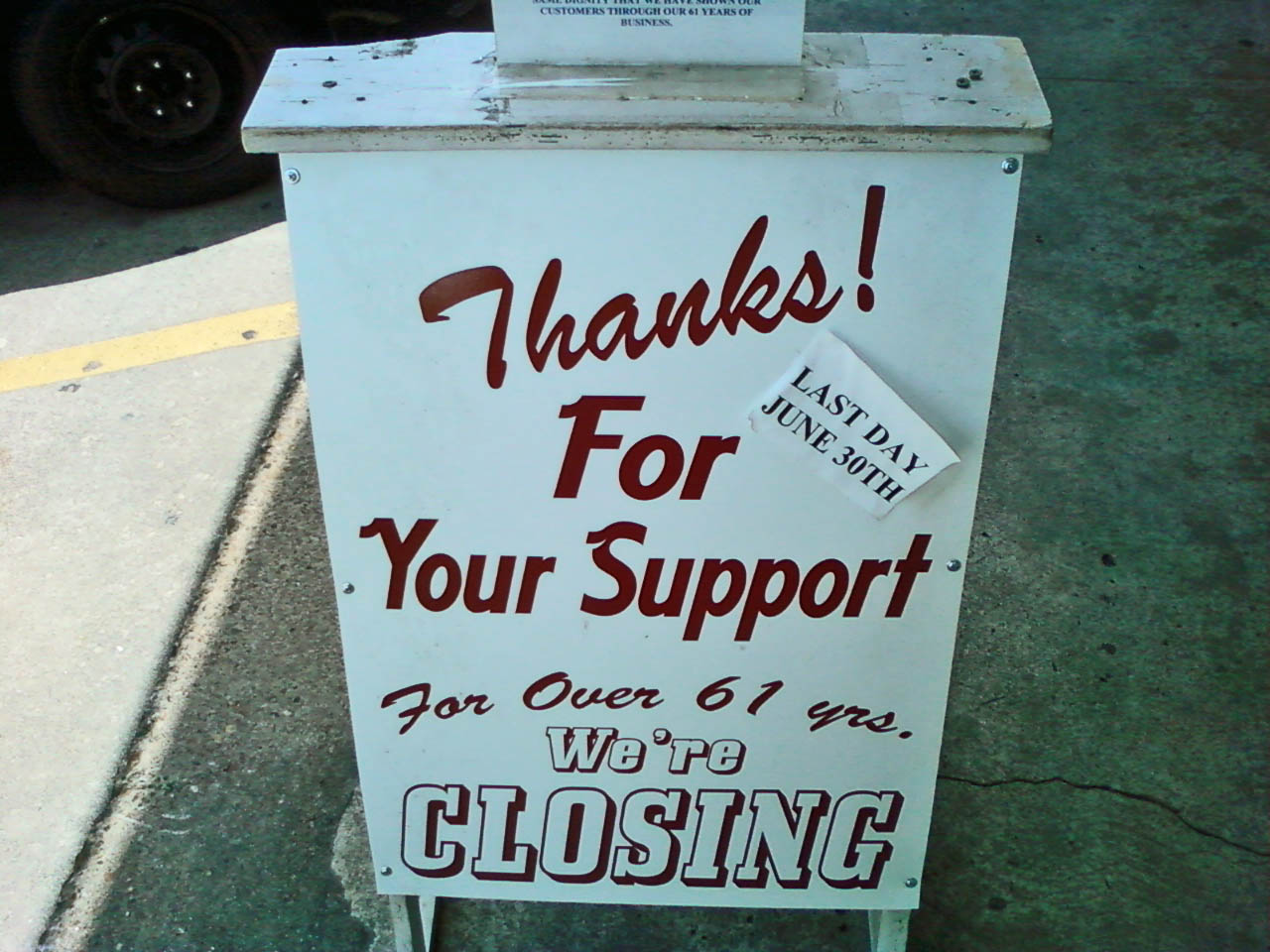
Today, June 30, 2010, is the last day for business in the 61 plus year life of the Variety Fair Five and Dime Store at 2415 Rice Boulevard in the Village Shopping Center west of Rice University.

The rent’s getting too high for the store to keep running on a business model that’s been outdated for the sale of children’s toys for at least half the time the store has been open. That fact alone, however, cannot possibly tell it all. It just measures the end game dollar epitaph on Variety Fair. What began and lived on as an incredibly inspired and loving gift to all from a shining soul named Benny Klinger is now gone forever at the close of Wednesday business for the most basic of business reasons. Stores that lose money eventually close their doors. This door-closing simply took sixty-one and some odd number of extra months years to get here.

So, what hasc kept Variety Fair open all this time? Today is the last opportunity to sort of, maybe, find out for yourself, first-hand.

If you’ve never been there before, or you haven’t been there in a long time, you owe it to yourself to drop by the store today, if at all possible. Take the kids and grandkids with you too. They will never again see anything real along these same Variety Fair merchandising lines in their lifetime. That’s for sure.

There's plenty of angle storefront parking within two blocks either way of Variety Fair. Everything in the store is for sale at 50% off its normal low price.

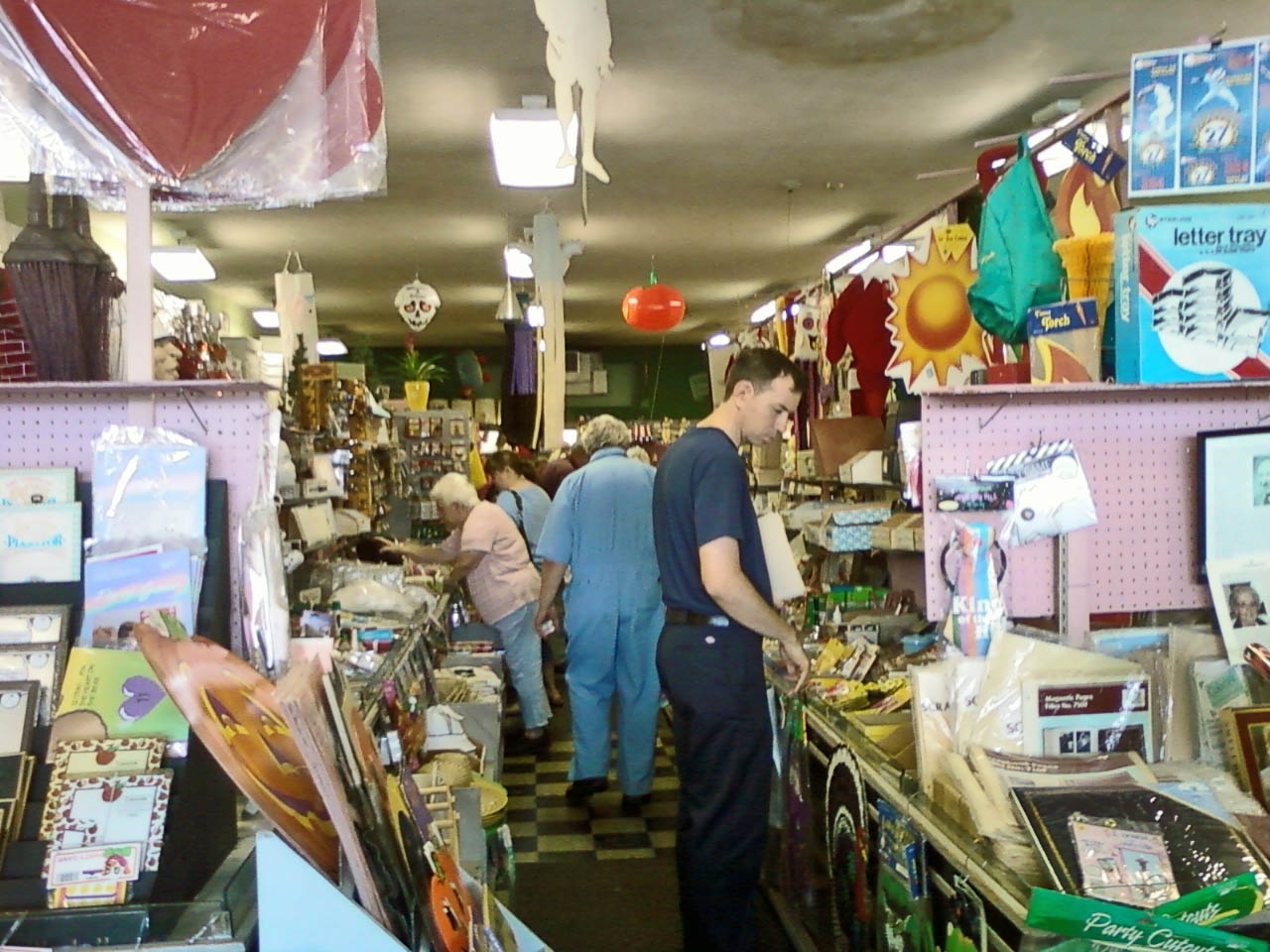
To those who don’t look too deeply at what happened at Variety Fair for over six decades, what they see may seem to be a perplexing case of chaos triumphing over order. Cheap toy merchandise is piled high and deep in stalls and shelves all over the place. There are no computer records of what is in stock. There aren’t even any computers. You simply have to turn things over on the shelves to discover what may be underneath – or look for the general theme of toys in the area you may be searching. Pretty soon you snap to how easy it is to find the Halloween gift section apart from the Christmas toy area.

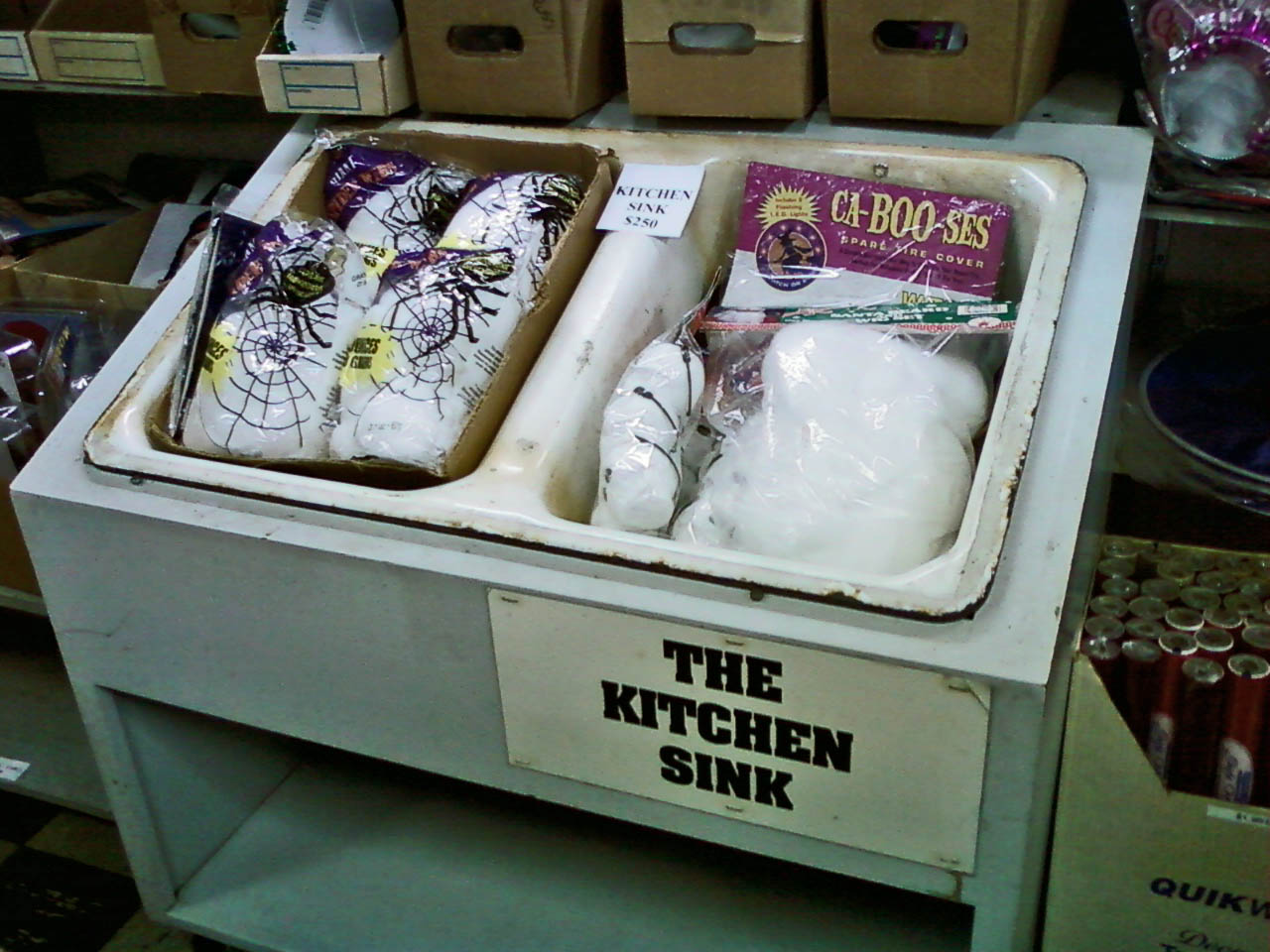
Even the kitchen sink is for sale today!

You will be able to shop in air-conditioned comfort with your neighbors.

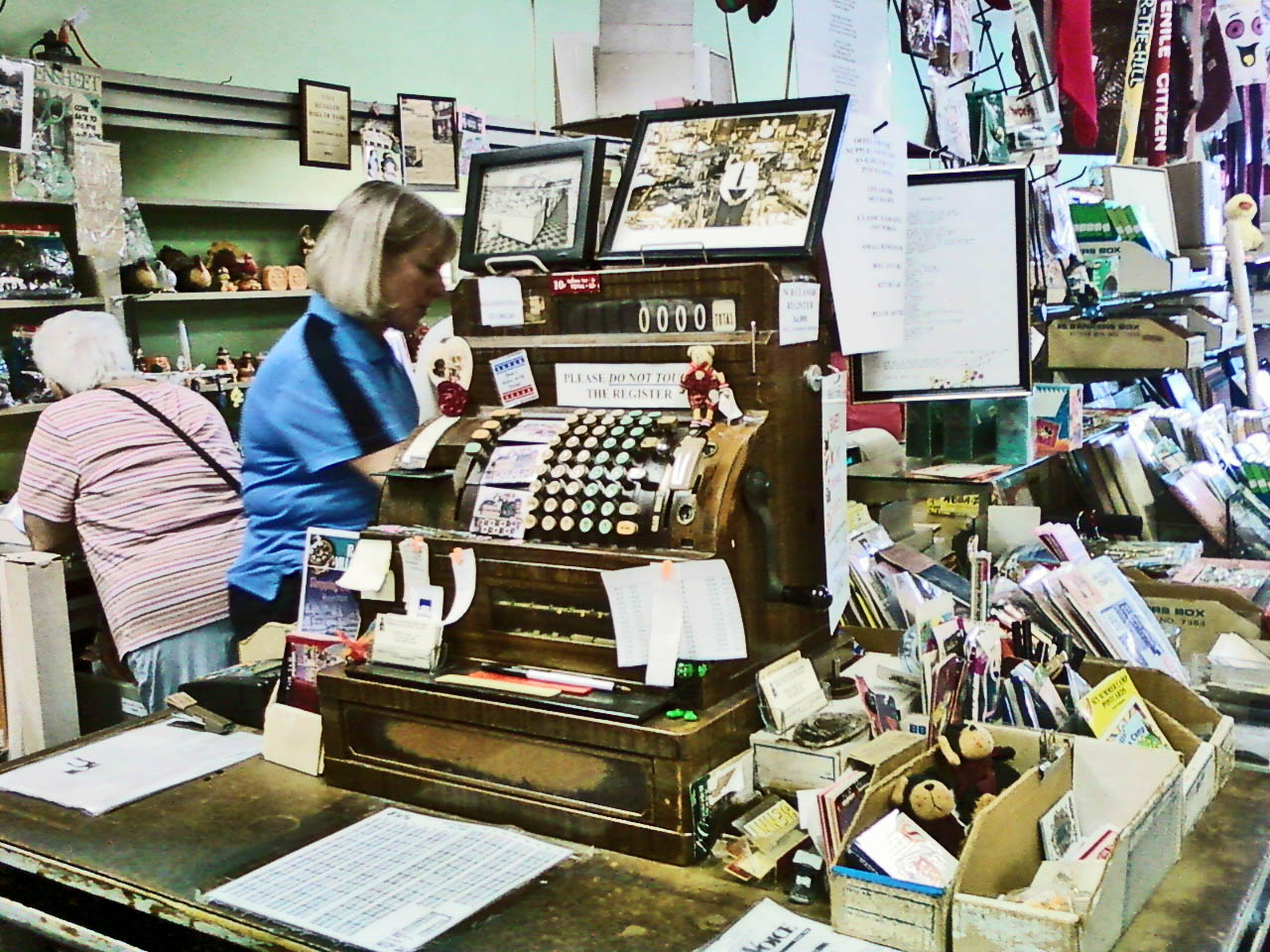
When your shopping is done, the family will ring up your sale at this classic cash register. You will get a written receipt from a handy nearby adding machine. That's Benny's daughter and store owner Cathy Irby in blue ringing up a customer as this photo was taken, as were all others here, on June 29th.

As a kid, I didn’t grow up in the Village area. My only trip here came about 1949, when I was 11 and my brother John was 7. Our mom had brought us to Variety Fair by car for a look-see visit that one time because she had some other shopping business in the Village that day. My memory of this trip was not so much tied to Variety Fair. These kinds of stores were a dime a dozen back in the late 1940s. No. My recollection was tied to the nice man who ran the store. He made us laugh and feel good about ourselves. He made us glad that we had dropped in to just look around and say hello.

That man was Benny Klinger.

Ask Benny Klinger if he was having a nice day and you would get this kind of answer: "I always have a nice day. Got it worked out with the man upstairs. There's a little 4x4 square of blue sky that travels over my head all day, no matter where I walk. It never rains on my parade. Now, don't you think you deserve the same deal? If so, I'll put in a good word for you. In the meanwhile, maybe you will find something here in the store that will help make the sun shine a little brighter until the real thing comes along!"

You just don’t meet a Benny Klinger everyday. In all the times as an adult that I “just dropped in” to the store near Christmas time and kid birthdays, I know that I was also stopping by for a dose of Benny. He knew how to reach everybody with something good, positive, loving, and giving – whether you bought anything or not. When Benny Klinger passed away in 1998, I felt a great personal loss – and I was simply one his thousands of customers, not some central character in his daily life.

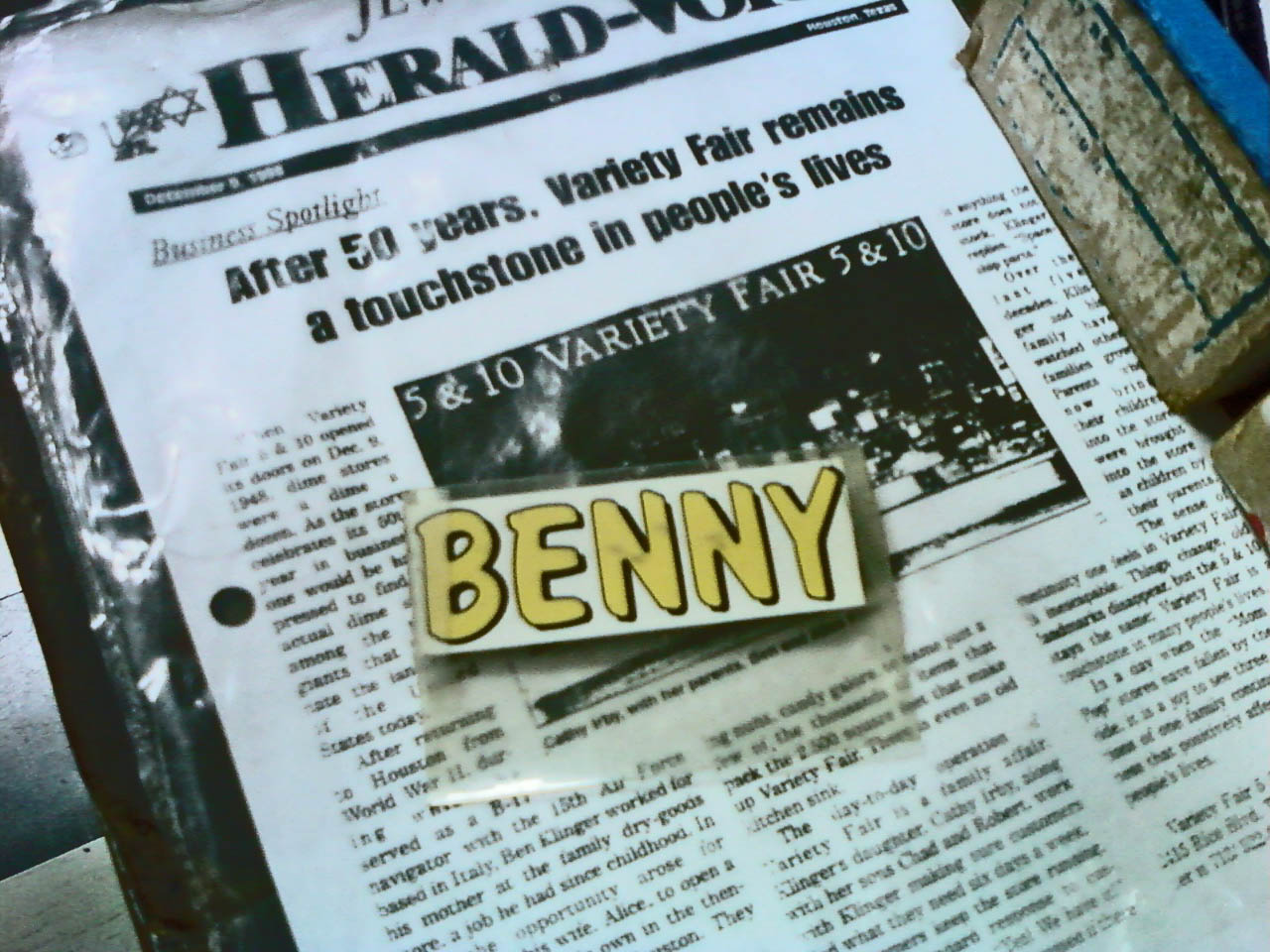
Benny's working name tag has remained by the register since he put it there on his last store day in 1998. If he could only come back and put it on again today, the store wouldn't have to close, but that isn't going to happen. Is it?

There are physical reminders of Benny throughout Variety Fair. Even if there were not, his ghost would still find you. My grown son Neal and I went to Variety Fair for our last trip there yesterday. We both left the store feeling better about everything. We also left with a few last chance souvenirs of the man and the store.

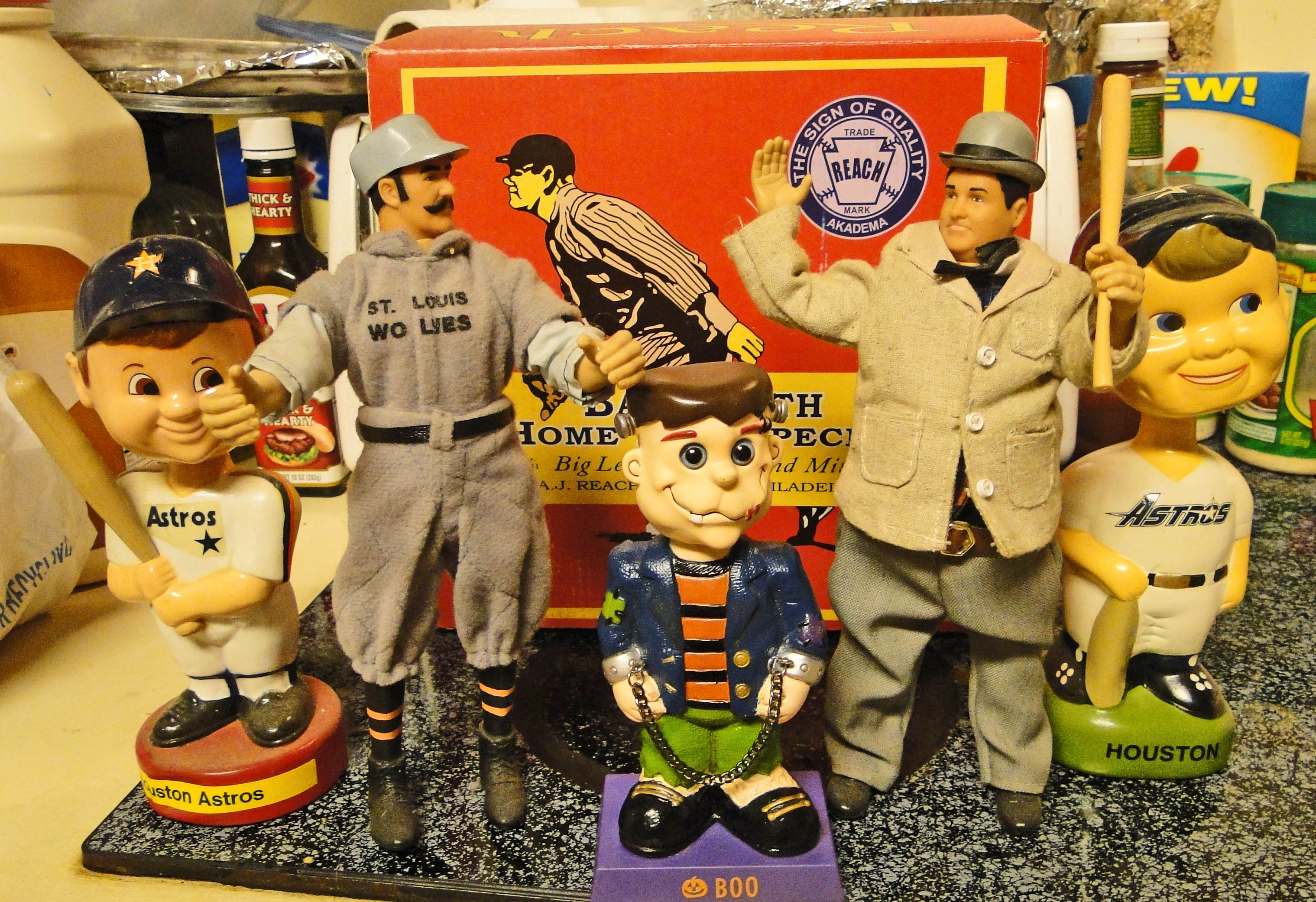
On our last trip to Variety Fair, we bought some toys for the kids in our lives, and I bought this little Frankenstein bobble head, just in case we decide to recreate "Abbott & Costello Meet Frankenstein" in our home baseball museum. Unfortunately, Frankie's tied up in another role for now. He's playing the part of the 2010 baseball season in our summer recreation of "Berkman & Lee Meet Frankenstein."

Thank you, Benny Klinger! And now that you are where you are, please don't forget to put in a good word for the rest of us!

Variety Fair is not the triumph of chaos over order. It is the victory of love over money. And that is why the place lasted for as long as it did.

Monte Irvin’s #20: In Case You Haven’t Heard…

June 29, 2010

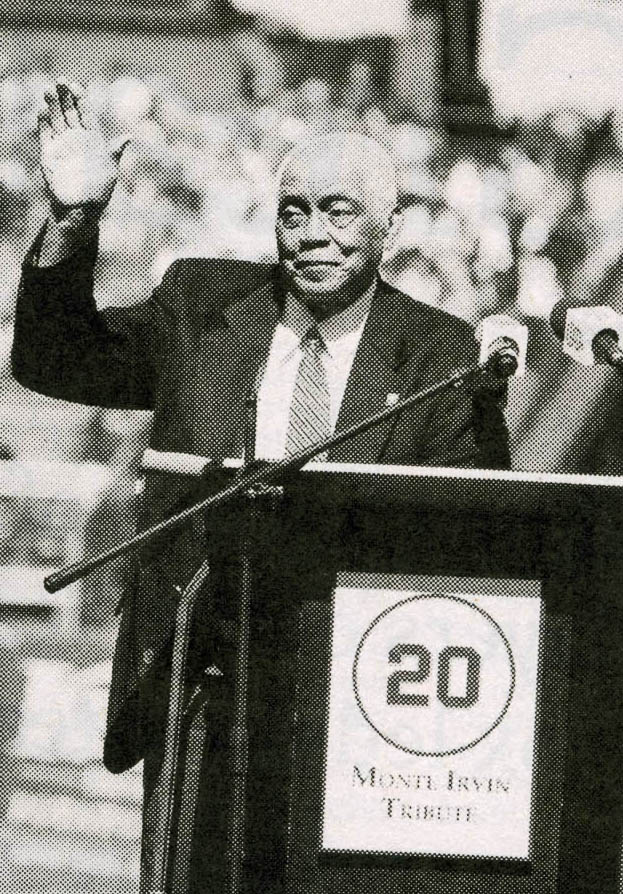
Photo by Tony Avelar: Associated Press

In case you haven’t heard, Houston resident and Larry Dierker SABR Chapter member Monte Irvin picked up a nice little honor last weekend on the west coast. The also Baseball Hall of Fame inductee from 1973 had another much deserved honor come his way on Saturday, June 26, 2010 at AT&T Park in San Francisco when the home town Giants retired his number 20 from the days Irvin used it during the franchise’s long tenure at the Polo Grounds in New York. Monte Irvin never played for the Giants in San Francisco, In fact, he retired as a player after the 1956 season – and that ws a full two years before the Giants played their first game in San Francisco.

The Giants’ list of retired numbers includes a classy ad tasteful blend of players from both their terms in New York and San Francisco. The addition of Monte Irvin in 2010 just made it even classier, but he’s in fine company among the other New York men: pitcher Christy Mathewson and manager John McGraw are both there from the pre-numbered jersey era as Giants of greatest honor. They are accompanied in that special company of former New York Giants by first baseman Bill Terry (#3), outfielder Mel Ott (#4), and pitcher Carl Hubbell (#11). Monte Irvin (#20) now takes his rightful place among the former New Yorkers. Willie Mays (#24 – Did I really need to tell you that one?) is the only honored former Giant who played with the club in both New York and San Francisco, but great play on the bay would produce other from 1958 forward in San Francisco. The SF members include pitcher Juan Marichal (#27), first baseman Orlando Cepeda (#30), pitcher Gaylord Perry (#36), and first baseman Willie McCovey (#44). Jackie Robinson (#42), of course, is there as the universally retired number by all major league teams.

The Giants group of honored former players all share this fact in common: They are each, one and all together, inducted members of the National Baseball Hall of Fame in Cooperstown, New York. The cream doesn’t rise any higher in this bottle. Cooperstown is the jar of baseball greatness – or should be. And Monte Irvin most certainly is. Great then. Great now. Great forever.

Our Houston SABR chapter has been twice privileged to host Monte Irvin for Minute Maid Park board room meetings and wonderful lectures and discussions of Monte Irvin’s life and times in baseball. At age 91, Monte talks freely, informatively, and often humorously about the old days of Negro League baseball, about how he might have become the man to have broken the color line, and about the time that a young Fidel Castro tried out as a pitcher to play for his Cuban winter league club.

“Castro didn’t make it. He was too wild and we had to let him go,” Irvin told us at his last Houston SABR appearance. “”Of course, then he (Castro) went off to the mountains from there and became a dictator. … If we had only known that he wanted to be a dictator, we could have kept him with us and made him into an umpire.”

At his number retirement ceremony in San Francisco, Monte expressed his appreciation in the strongest terms of gratitude. ” Now I feel my life in baseball is complete,” Irvin told the sellout crowd prior to the Giants game against the visiting Boston Red Sox.

At 91, Monte Irvin is alert and upbeat about baseball and life in general. As an optimist of the first order, Monte showed his metal to the nth degree when we tried to throw a SABR birthday party for him on his natal day last February 25th. “Let’s do it next year,” Monte pled. “I just want to take it easy this time around.”

God Bless you, Monte Irvin. And thank you for being an important member of our Houston baseball community.

Book Review: “1921”

June 28, 2010

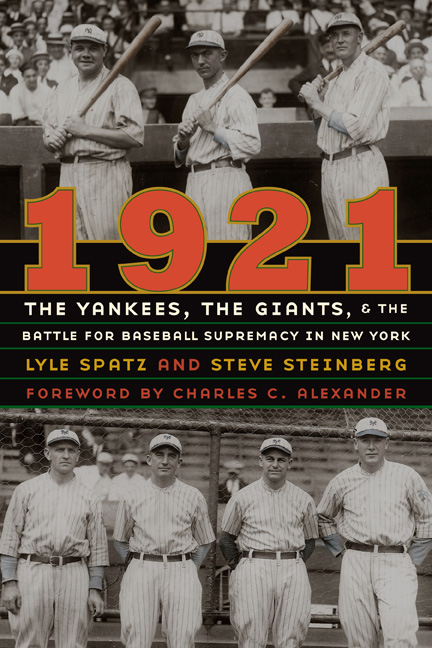
When I ordered “1921” by Lyle Spatz and Steve Steinberg, my first motives were tied to my curiosity about how the book handled the relationship between New York Giants Manager John McGraw and old-time family friend of my father, Curt Walker. I had always heard that McGraw thought highly of Walker. When I grew old enough, I wondered why McGraw had dealt a talented young guy like Curt Walker away to the Phillies, even if it were for Irish Meusel.

I learned the answer to that one and much more. What a great read this book turned out to be.

“1921” is about a great transitional year in baseball history, one that reflects consciously on those times as a greater symbol of all the change going on in American culture at the same time. It was a battle between the old Giants of John McGraw and the young Yankees of Babe Ruth for the heart of New York; it was a period of struggle for baseball’s credibility with the fans over the harm done by the Chicago Black Sox scandal; and it was a death rattle battle between the old small-ball kings of the dead ball era and the power-game circus that had been awakened by the bat of George Herman “Babe” Ruth.

1921 also was the year following the season that baseball ostensibly introduced a new livelier ball. Some still argue that nothing along those lines actually happened, but that doesn’t alter the fact that the “old apple” was now leaving the yard at a record pace by 1921, and largely off the bat of a former foster kid from St. Mary’s School in Baltimore. Add to the performance changes the fact that, by 1921, baseball and its major league umpires had really clamped down upon trick pitch artists and the use of scuffed baseballs in big league games. In brief, everything was happening on the side of making things better for hitters and worse for pitchers.

The competition between the Giants and Yankees also cranked up higher due to the fact the two clubs used the same Polo Grounds venue for their home field. When the tenant Yankees began to out-draw the landlord Giants, the latter finally gave the former their eviction notice and the race was on for the American Leaguers to build a new home. Using the hope that fed on the new troughs of income that grew from the feats of the Babe, the Yankees acquired some reasonably priced land just across the East River in the Bronx from the Polo Grounds. Then they started working on the place that will always be remembered as “The House That Ruth Built,” the original Yankee Stadium. The new just-across-the-bridge ballpark would be ready for the Yankees’ start of the 1923 season.

It didn’t matter what the Giants did. The Jazz Age light was lit in 1921 and the Prohibition Era Party boys, the power-bound New York Yankees, were leading the way to a new kind of rebellious national fascination with sensory excess and athletic achievement by the talented few. The fact that few of the flapper-era Yankees lived to see a ripe old age is not too surprising to those who study such things in this more health-conscious, actuarial age of the early 21st century. Dr. Oz would have gone nuts as the team physician for the 1921-29 Yankees.

“1921” pays good reference attention to what was going on in America during this great season and the authors do a fine job of giving us a good detail track on how game outcomes, injuries, deals, and personnel changes effected the pennant races. Casey Stengel joined the Giants in a deal with the Pirates, putting him in a position to play against the very club that will years later elevate him to the Hall of Fame as their manager.

I also learned that McGraw acquired the rookie Curt Walker from the same Georgia minor league club that launched Ty Cobb to the majors – and that Curt came with scouting recommendations that placed him ahead of Cobb at the same early stage of development.

Walker came to the Giants late in the 1920 season from Augusta of the Class C Sally League for the purchase price of $7,000. Ty Cobb had been purchased from the same club by the Detroit Tigers in 1905 for $700.

In New York, Walker quickly earned McGraw’s praise as a complete young ballplayer as he did all things well while filling in for the injured future Hall of Fame right fielder, Ross Youngs, who, like Curt Walker, was another native Texas son.

McGraw finally traded Curt Walker and catcher Butch Henline to the Phillies in the early summer of 1921. He sent the boys there, along with $30,000 cash, in exchange for disgruntled Phillies outfield star Irish Meusel. Meusel was at the top of his game in 1921  and he went on to be a key factor in the success of the Giants that season. Curt Walker was a part of the “give something to get something” price that Meusel cost the Giants. That point is clear to me now.

The Giants would go on to defeat the Yankees in the 1921 World Series, but the Yankees would turn it around by taking the 1922 World Series for their first big win of all time. The next year, 1923, the Yankees moved to Yankee Stadium. You don’t need me to tell you what happened from there.

“1921” is a well-researched and well-written book. I give it my full recommendation as an important new work in the chronicles of baseball history.

Remember Korea

June 25, 2010

foot-soldiering on another lonely, dangerous road in the "forgotten war"

Korea today is still remembered in irony as “the forgotten war,” the three-year “police conflict” between the good democratic forces of the west and the evil communist forces of the east that transpired after the close of World War II and prior to the start of our complex policy unraveling in Viet Nam.

On June 25, 1950, sixty full years ago this morning, North Korea invaded South Korea, threatening to take over the western-organized democracy of South Korea and spreading the totalitarian dictates of the communist world upon another nation of free people. The long-story-short version of what happened next is that the United States and UN Allies got involved in an official “police action” that would thwart these ambitions and eventually draw the two nations into a peace agreement that would split the two nations at the 38th parallel for as long as that agreement could be defended.

The 1953 “cease fire” phase of this agreement still involves the US and international supervision some sixty years later. There never was a peace agreement, just an unholy cessation of conflict that could still flare up again today if the North Koreans ever think a blink on our side means weakness. In 2010, South Korea thrives as a western economy with an elevated standard of living while North Korea starves under the heavy hand of dictator Kim Jong Il and his failed communist economy. By no vote of the people, the North Koreans are a nation that can afford to pursue nuclear weapons, but one that also cannot feed or provide meaningful jobs for its population.

1950 now seems like a lifetime ago because, for me, it was. I remember the day the war broke out. The Houston Press covered the news in bold type headlines that scared the bejabbers out of all of us on the sandlot. Back then, we braced for the big atomic bomb war about as often as the newspapers could come up with another scary warning. And this was no warning. This was war.

At age 12, I was pretty much resigned to the idea that I was only about six years away from being there, or somewhere like Korea, by the time I reached 18. It didn’t happen in my case, but I simply missed the crisis points for being called later – and something else happened to get in the way.

When I tried to go into the army voluntarily through the ROTC in college, I twice failed the hearing exam when I went up for contract. That result was one of the strange disappointments of my early adult life. I wanted to serve in the military, but I was rejected for reasons of physical well-being. By the time I might have been called to Viet Nam, I was considered too old to be called into the infantry without a bill of perfect health. As a result, I became one of those still young Americans who wasn’t burning flags in protest to Viet Nam, but I wasn’t out there putting his life on the line in a foreign country either. Instead, I was home, down in the trenches with those working with gangs and the violently disturbed on the streets of New Orleans. It was a different kind of war. It just didn’t feel the same to me, but that’s not important at all beyond my own nose.

My point today is simple and it is important: Remember Korea. Remember all who have served in the military, especially those who still serve to this day in the mine fields of conflict that are Iraq and Afghanistan. If it were not for our brave younger people, none of us would be free to debate whether our borders are worth defending or not. And it wouldn’t matter one iota what Arizona is doing or not doing to either defend America or offend those who want to come here on their own without regard for our southern border.

Thank you especially, Korean vets. It’s about time America fully remembered and honored what you people did for the rest of back in the early ’50s.

In The Big Inning …

June 24, 2010

In The Big Inning ...

In the beginning, God created the heavens and the earth so that people would have a place to play His great Gift to humankind, the game of baseball.

Now the earth was formless and empty, darkness was over the surface of the deep, and the Spirit of God was hovering over the waters. He knew that it was going to be very hard for fielders to follow and catch high fly balls in games played under these circumstances.

Problem solved. God said, “Let there be light,” and there was light.

God saw that the light was good, and he separated the light from the darkness. Man saw that light contained a built-in profit motive, After quickly organizing energy and utility companies who would provide light to consumers for a fee, man separated his kind into those who came to baseball games as players, and those who came to baseball games as fans. Players were paid a salary based upon their abilities to play and the power of their agents to shake down team owners for big bucks over time. Fans were separated into those who could variably afford tickets – and those who could not afford tickets at all. Those who could afford tickets would be rewarded with variably good seats in the light, based upon their abilities to pay. Those fans who could not afford tickets would be left outside in the darkness.

God called the light “day,” and the darkness he called “night.” And there was evening, and there was morning on the first day. Baseball team owners saw that most of humanity worked during the light of day and slept in the darkness of night. And so those men who owned teams said, “Let there be artificial light to brighten the darkness and make baseball game attendance by fans preferable to sleep once the sun goes down.”

And God said, “Let there be an expanse between the waters to separate water from water.” And the team owners-appointed Commissioner of Baseball said, “Let there either be a territorial expanse between the regional waters of differing teams for marketing purposes – or let there be a retailing contract among all teams that will charge fans for even writing our copyrighted team names on their tee shirts with a magic marker.”

So God made the expanse and separated the water under the expanse from the water above it. And it was so. So the Commissioner of Baseball too made the commercial expanse happen by collectively grouping all the waters of product marketing profit together so that all conceivable revenue streams flowed through his hands. And it was so self-serving.

And God continued through His steps of Heavenly Creation for six full days. And on the seventh day, He rested. And the Commissioner of Baseball has continued through his always-growing steps of revenue stream development, as he has from the beginning until now. And he never rests.

And that’s the gospel truth.

Houston Sports Museum: A Few Notes

June 23, 2010

80 36" steel buffalo medallions rimmed Buff/Busch Stadium from 1928 to 1961.

The Houston Sports Museum enjoyed a nice open house crowd last Saturday at their location on the site of Buff Stadium last Saturday, June 19th. According to Curator Tom Kennedy, a good time was had by all during the 12:30 PM – 1:30 PM meet and greet autograph session with baseball figures from all segments of Houston’s baseball history. Jack Schultea was there representing Houstonians who went on to play pro ball. Larry Miggins attended as a former Buff from the 1940s and 1950s, but he also played a short while with the parent St. Louis Cardinals club – and he is now a member in good standing of SABR, the Society for American Baseball Research. J.C. Hartman was on hand as a transitional figure. Hartman was one of the few last Buffs who also then played for the new major league Houston Colt .45s. – Carl Warwick, a pinch-hitting hero with the St. Louis Cardinals in the 1964 World Series, also came as a former Colt .45. And all these guys were accompanied by former Houston Astro Jose Cruz, current Houston Astro Michael Bourn, and former Buff/Colt .45/ Astro Hall of Fame announcer Gene Elston. – What a lineup!  – What a crowd! – What a day! – And what an opportunity for Houston to keep its history honored and growing.

Support Fingers: Here’s the catch, folks – and hopefully all of us who love baseball history can do our part to support the program. For the museum to succeed over time, the Finger Furniture store that preserves and protects it on this most special site of our minor league heritage must succeed in the retail sales market in this singular store location on the Gulf Freeway at Cullen. I probably don’t have to tell you how competitive the furniture business is in Houston. – For now, all we can do is think first of Finger’s when we need a furniture purchase – and spread the word to our friends as well. Store owner Rodney Finger has earned at least a “first look” Mulligan from all Houston baseball fans when it comes to that next furniture purchase. Please keep Finger’s in mind.

Museum Donations: As a result of the little publicity I’ve given to the Houston Sports Museum, a woman up in Livingston has contacted me about donating her father’s scrapbook to the museum. Her dad was an outfielder named D.L. “Country” Smith and he played with the Houston Buffs for a short while back in the late 1930s. He also took the time along the way to put together a scrapbook with photos and letters from Branch Rickey and former Buffs President Fred Ankenman. I’ve put the family in touch with Tom Kennedy for further exploration.

Those Buffalo Medallions:

This profile was my earliest and most lasting image of Buff Stadium.

The buffalo medallions that once rimmed the exterior walls at Buff Stadium came up again as part of HSM Curator Tom Kennedy’s talk to our Houston Chapter of SABR earlier this month. The eighty (80) thirty-six (36) inches in diameter medallions were the jewels in the royal crown of Houston baseball’s beautiful ballpark in the East End. A couple of these beauties now reside at the Houston Sports Museum as steely strong reminders of Houston’s thick and lasting baseball heritage.

Check the top photo here and you will see the configuration of how these medallions outlined the ballpark. Imagine the impression they made on the nine-year old kid that was me when I saw them for the first time in 1947. They were like magnets to me. Once in their presence, I couldn’t wait to get back. I was addicted to baseball from before I even heard the first crack of the bat.

It was an addiction from which I’ve never even tried to recover.