Posts Tagged ‘History’

Satch Davidson Dies in Houston

August 24, 2010

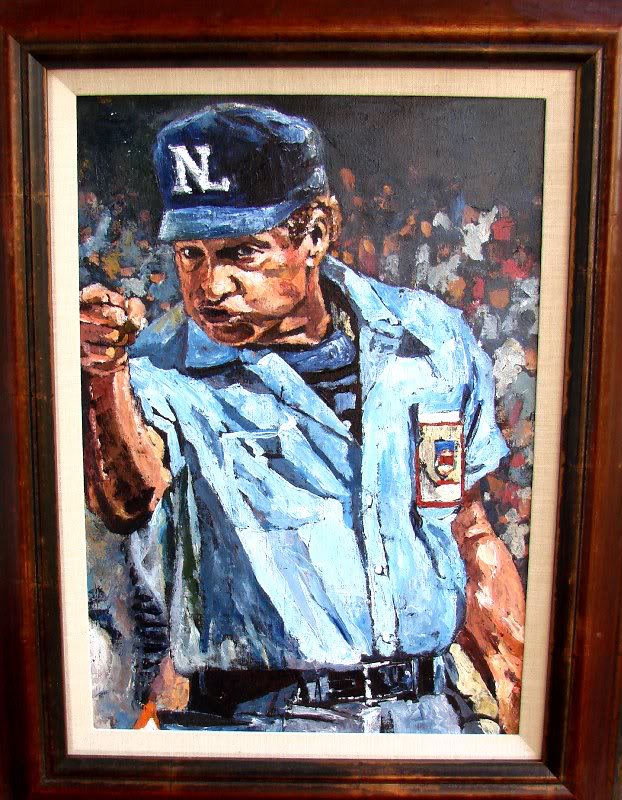
Former NL Umpire Satch Davidson in a 2005 oil piece by Opie Otterstad.

Sad news fills my heart today. Former National League umpire and ongoing good friend to baseball, Satch Davidson, passed away in his Houston home this past Saturday, August 21, 2010. He was 75.

Word came here from Satch’s widow, Lynn, shortly after I had completed and published the column I wrote yesterday on The Father of All Umpires, Bill Klem. Details of his death and memorial service plans were still pending at this writing deadline. Keep checking with the Houston Chronicle online for further information.

I was blessed to get to know Satch a little better on a personal basis during my four years as active Board President of the Texas Baseball Hall of Fame from 2004 to 2008. As a longtime Houston resident from his service years through retirement, Satch Davidson was most deservedly, and most enthusiastically, inducted into the Texas Baseball Hall of Fame on November 11, 2005. Texas people, and especially Houston people, are most appreciative of all that Satch did and continued to do as a representative of baseball to the community at large.

“Satch” acquired that only first name he accepted as his own during his boyhood years in his native home town of New London, Ohio. As a young fan of the old Bowery Boys movies, Davidson’s favorite character from the gang was “Satch,” the comedic sidekick to gang leader Leo Gorcey, whose own character shifted in name over the years from Mugs McGinnis to Slip Mahoney.

Mugs was my guy. If only I had grown up in Satch’s neighborhood, we could have both gone on from there to our various careers as Mugs McCurdy and Satch Davidson, but it wasn’t to be.

As an adult, Satch Davidson actually met and became fast friends with actor Huntz Hall, the fellow who played Horace Debussy “Satch” Jones in that almost endless stream of Bowery Boys/East Side Kids films that poured out of hollywood as Saturday afternoon kid’s fair stuff from the late 1930s into the 1950s.  As part of Satch’s TBHOF induction “goody bag,” we also gave him a DVD set of Bowery Boy movies that hit home harder than the plaque or artwork of himself that he also received, but that was Satch. He never lost track of what was really important.

Speaking of such, Satch’s attraction to sports soared early. After playing as a three-sport man at WIlmington College and Ohio State University, Satch played a little professional football and baseball before settling into his major life work as a National League umpire from 1969 through 1984. During those years, Satch spent the baseball off-season a referee in the midwest for NCAA Division I basketball games.

Davidson embraced his umpiring job with great fairness and a unmistable flair for the dramatic call. The expression captured in the accompanying 2005 painting here by artist Opie Otterstad says it all.

Satch bristled when people tried to draw him into discussions about items like the “phantom gimme out call” on second base during double plays. “There is no such thing as a ‘gimme’ on any out call,” Satch would state firmly. “A runner is either safe or out – and he is really neither until the umpire gives the signal.”

Sounds a lot like Bill Klem and “it ain’t nothing until I call it,” Don’t you think.

Stach was no fan of game time instant replays on the big screen of big league ballparks and was a leader in fighting for their elimination on crucial play situations. Satch had some help into that position when a Cincinnati fan once hit him in the head with a flying soda can after instant replay on a  Davidson call was made to look doubtful on the big screen.

Satch Davidson saw some memorable action as a big league umpire. He was behind the plate for five no-hitters – and he was also there when Hank Aaron hit his 715th home run to surpass Babe Ruth in April 1974. Davidson also was behind the plate for the famous home run by Carlton Fisk of the Boston Red Sox in Game Six of the 1975 World Series against the Cincinnati Reds.

In addition to his Texas Baseball Hall of Fame induction, Satch received the Al Somers Man of the Year Award, an honor  granted for outstanding service to Major League Baseball and also the Sports Professionals Foundation Lifetime Achievement Award.

Satch also has served as an instructor for the Southern Umpires Camp in Atlanta, Georgia and the Harry Wendlestedt School for Umpires in Daytona Beach, Florida.

During the 1994 baseball season, Satch even saw duty as the pitching coach for the San Antonio Tejanos of the Texas-Louisiana baseball league.

When you come down to it, Satch Davidson was a baseball renaissance man. He loved the game. And he loved teaching people about the game and how to care about it. He also approached life with the kind of fairness and certainty of outlook that made him successful as both an umpire and tight friend of the game. He was the total package of the only kind of teacher worth having: He came. He saw. He learned. He taught what he learned to others. And then he went back to earn some more.

Baseball has again surrendered one of its true-blue family members. And we’re all going to miss him.

Say hello to the other “Satch” and old Mugs for me, Mr. Davidson. Our loss is their gain.

Late News (8/31/10): A memorial to celebrate Satch’s life will be held on Saturday, September 18, 2010 at 10:00 AM at Geo H. Lewis & Sons 1010 Bering Drive, Houston, Texas 77057. Please visit the website www.geohlewis.com for further details.

“It Ain’t Nothing Until I Call It!”

August 23, 2010

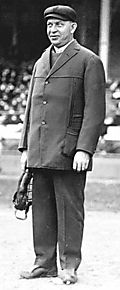
Bill Klem invented the "safe" and "out" hand signs.

Even if we hate umpires, the game of baseball could not survive for long without them exerting a real place of fair authority over what happens on the field. They are the judge and jury of everything that happens on the field, from Little League to Major League. Take away that power and the game soon dies.

Before a fellow named Bill Klem came along at the turn of the twentieth century, there was something of a danger to the integrity of the game because baseball had failed to back its officials to the nth degree. A few players got away with two-fisted attacks upon umpires and some umpires even got fired for trying to fine owner’s pet players for assaulting behavior toward them on the field. Top that with the presence of bully managers like John McGraw of the New York Giants and baseball had the potential of making itself over into something that resembled what professional wrestling was to become by the the mid-twentieth century – little more than a sideshow entertainment in which the umpires were little more than a prop in service to the melodrama.

Baseball survived as a legitimate sport and much of the credit has to go to Bill Klem for all he did to build unshakeable support for the umpire’s authority in the game. The issue that got settled is probably best summarized in this heated exchange between the bombastic John McGraw and arbiter Bill Klem. In a rage over one of Klem’s umpiring calls, McGraw lashed out that “I can have your job removed from you over this call!” Klem quickly responded, “If it’s true that you can have my job because you don’t like my call, then I don’t want this job, anyway!”

In an interesting tale of two adversaries, Klem and McGraw actually became close friends over time, often having lunch together when the opportunity presented itself, even though their on-field vitriol continued on the through McGraw’s last 1933 season as manager of the Giants.

McGraw didn’t get Klem’s job and “The Old Arbitrator” held his ground.   From 1905 to 1941, he held forth as a major league umpire, becoming the on-field official who developed the universal hand signals for strike/ball, safe/out. and fair/foul. Klem recognized that no umpire had a voice to carry this ongoing heart-of-the -game news to fans throughout any large ballpark so he developed and used, and guided others to use the very signals we still rely upon today to know the result of every action on the field.

Klem also developed the crouching, over-the-shoulder  of the catcher view on balls and strikes and the

Bill Klem, Hall of Fame Umpire

regular use of chest protectors by plate umpires, plus the straddle view on long balls hit closely down the line. Klem is famous today for getting across his umpiring role as the supreme authority in games with this simple answer to a real game-in-progress question, “Is that ball fair or foul?”

“It ain’t nothing until I call it,” Bill Klem snapped.

Over the course of his 26-season career, Bill Klem worked in 18 World Series. No other umpire has worked more than 10. He also was one of the umpires who worked the first 1933 All Star Game, returning as an umpire in the 1938 All Star Game, as well.

Klem hated the nickname “Catfish” that a minor league manager once hung on him in the heat of the moment. The manager yelled something like, “Hey, Klem! You big catfish! You don’t speak. You don’t smile. You just stand back there like a big old catfish, breathing through your gills!”

The manager got tossed, but the “catfish” name stuck. Legend has it that Klem would toss a player for even whispering the word within earshot of his presence. Klem once even ejected a player when he caught him in the dugout quietly drawing a picture of a catfish.

Bill Klem passed away in 1951 at the age of 77. Two years later, Klem and fellow umpire Tommy Connolly became the first two umpires to be admitted to the Baseball Hall of Fame.

As an aside, my ninth grade home room teacher at St. Thomas in 1952-53 was “Mr. Klem,” a nephew of the famous umpire. When spring came and I played freshman baseball for one of the three feeder teams into our all-star freshman club (I also played for them), I played for the squad managed by Mr. Klem of New York. – He called us the “Giants.”

Funny how history rattles around in sidebar ways sometimes, isn’t it?

Houston: Where Hope Floats

August 22, 2010

Allen Parkway, 1960.

Allen Parkway, 2010.

You Houstonians already know these facts. Allen Parkway is a short, but important traffic artery leading into downtown Houston from the west at Shepherd Drive and ending 2.3 miles later at the I-45 section that skirts the immediate west bank of the tall buildings at Sam Houston Park near City Hall.

Through the 1950s, this busy, winding travel path to the south bank of Buffalo Bayou was known as Buffalo Drive. The name was changed to clear up confusion with another road in Houston near West University Place that is still called Buffalo Speedway. The name selected for the true bayou partner street fell quickly to “Allen Parkway” in honor of John Kirby Allen and Augustus Chapman Allen, the founders of Houston.

The towers of the 1960 vista are basically now covered by the monsters of the second. Houston has grown so much in the past fifty years – and it hasn’t been all physical. Thanks to the prevailing culture of can-do energy and adaptability, the city has survived wars, a number of economic crises, and important changes in the old culture that kept Houston spiritually small back in the days of racial segregation.

Houston was founded as an inland port and railroad transportation center. It grew as a rice, cotton, and cattle town. Then it leapt into prominence as the oil capital of the world. Now it builds on its still important energy center status as a growing international community manning an ever-diversifying economy in the world marketplace.

At the same time Houston changes, the forces that support our community’s memory and preservation of the area’s history are growing stronger by the day. It is important we adapt and change to both our needs for spiritual growth and the demands of the changing marketplace, but it is also important that we don’t give up connection to where we’ve come from. Our city’s history also contains some discriminatory values and practices in its past that we never want to forget or repeat. We will not forget those either.

For the city to embrace hope, there has to be hope and opportunity here for all law-abiding citizens.

As you’ve probably figured out by now, if you’ve been reading my columns for long, I’m a 100% Houston guy. This city has owned my heart forever and always will. We may not always be right, but we never stop working to get it right for the greater good of Houston, whatever that turns out to be..

Now, if we could just figure a way to dome the city for air conditioning in August each year, I might start believing that we could actually turn this town into the garden spot of the world. Have a nice Sunday, folks. I’m on my way to the take out service at Pappasito’s now. Nobody else around here wants to leave the house.

Early Houston TV Programs & Personalities

August 21, 2010

Bunny Orsak: Channel 13’s “Kitirik” mascot from 1954 to 1971.

Thinking for long on the subject of Houston’s early TV years brings to mind a ton of pleasant memories and so many unforgettable personalities. I’m going more for volume than explication this morning. with a look back at what’s still with me off the top of my pointed head by way of a Saturday morning notion of how each fits together by group association.

Here’s what I’ve come up with. Please feel free to add your favorites and all the others I’ve forgotten in the comment section of this column:

Local Station Caricature Figures: Kitirik of Channel 13, Milk Drop Mo, Cadet Don, Jock Mahoney.

Early Station Singers and Musicians: Howard Hartman, Marietta Marek, Don Estes, Johnny Royal, Paul Schmidt and the Tune Schmidts, Curly Fox, and Miss Texas Ruby.

Dick Gottlieb

1950s Station Announcers, News People, and Personalities: Dick Gottlieb, Lee Gordon, Bob Dundas, Bob Marek, Guy Savage, Paul Boesch, Pat Flaherty, John Wiessinger, Gus Mancuso, Lloyd Gregory, Bruce Layer, Jack Hamm (artist), Joy Mladenka, Page Thompson, and Jane Christopher.

1960s People: Carl Mann, Sid Lasher, Gene Elston, Loel Passe, Dave Ward, Dan Rather, Anita Martini, Larry Rasco, Doug Johnson, Bill Ennis, Bill Worrell, and Dan Rather.

Early Kiddie Shows: Crusader Rabbit, Mr. I. Magination, Mr. Wizard, Smilin’ Ed McConnell, Buster Brown,  Kukla, Fran, and Ollie, Howdy Doody, Mr. Rogers, Captain Midnight, Sky King, Batman, and Superman.

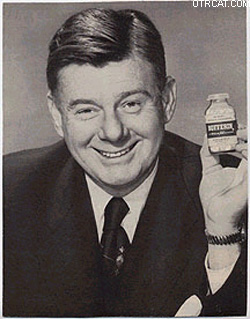
Arthur Godfrey, Hawking Aspirin.

Early Variety and Game Shows: The Texaco Star Theatre with Milton Berle, Arthur Godfrey Time, The Gary Moore Show, Stop the Music, Toast of the Town/Ed Sullivan, The $64,000 Question, Beat The Clock, Name That Tune, Who Do You Trust?, Twenty Grand, I’ve Got A Secret, What’s My Line?,  The Tonight Show with Steve Allen, George Gobel, The Jackie Gleason Show, and Password.

Early Sitcoms: My Little Margie, The Life of Riley, I Married Joan, Leave it to Beaver, Ozzie and Harriet, Amos ‘n Andy, The Addams Family, and Mr. Peepers,

Early Westerns: Gunsmoke, Cheyenne, Paladin, Wyatt Earp, The Lone Ranger, Wagon Train, Sugarfoot, Grizzly Adams, The Rifleman, The Cisco Kid, Roy Rogers, and Gene Autry.

Early Drama/Adventure/Cop Shows: Dangerous Assignment with Brian Donlevy, Boston Blackie, I Led Three Lives, One Man’s Family, Playhouse Ninety, Studio One, Dragnet, Route 66, Outer Limits, and The Twilight Zone.

Sports: Major League and Houston Buffs Baseball, plus one game of College Football every Saturday and a Red Grange telecast of the Chicago Bears or Cardinals from the NFL every Sunday – and it was all there for us on that tiny little fuzzy black and white TV screen with the visible horizontal separator lines running all across the picture, but so what? What did we know back then about the greater possibilities that lay ahead for us down the technological advancement line in years to come? Based on the “nothing” we had prior to TV, we thought we had died and gone to Heaven!

Family Famous Last TV-Related Words from Our Mom Back in 1952: “Hey, kids, why don’t we all sit down and watch ’em blow up that atomic bomb out in Nevada before you leave for school today?”

Early TV Was Like Radio with Pictures

August 20, 2010

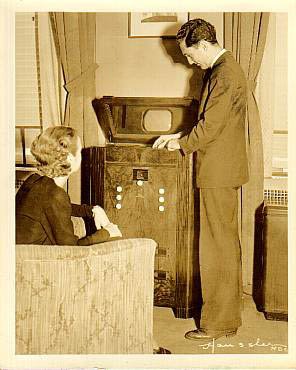
TV Reached Houston on January 1, 1949.

It came. We saw. It conquered us all. It was the middle of the 20th century and our communication media preferences were changing fast, from radio to television, and from big movie theaters out there in the world to those little theaters that moved just for us in our own homes. What a wild world it was turning out to be.

In spite of the fuzzy, squint-sized black & white pictures that came with our first 10 inch screen TV sets, the medium rapidly addicted us all to the idea that we could actually possess in our own homes, and for our own personal use, with no one sitting in front of us to block our view, a little machine that produced moving pictures for our individual home entertainment.

At first, television broadcasters and their home audiences shared this state of mind in common: Neither really knew what they were doing. Some may argue that this truth still holds today, but if it does, it is no longer a condition we may attribute to naiveté.  If it’s still true today, it’s now due to the kind of missing creativity that spawns reality television programming over great storytelling.

Back in 1949, when TV first came to Houston, everyone labored with two wrong handles on the new medium. Broadcasters and viewers alike treated the medium as either (1) radio with pictures; or (2) the movies with a small screen.

Nobody really knew what kind of baby had landed on their doorstep – and we especially misunderstood and underestimated the potential and demand for interaction that television would produce as the medium matured. In the beginning, people just saw it as a medium for putting out pictures that other people could watch for the sake of movement alone. Old movies became popular fare at local stations and slapstick comedy, boxing, and wrestling were all big too – because they all moved rapidly into action..

The early news broadcasts were literally radio with pictures. You got to watch a man sitting behind a desk literally reading the news from the typed paper in his hand. The only movement was the reporter’s lips as he read – and the papers being placed down on the desk as each page of reading was finished.

At commercial break time, the news man might pull out a Camel cigarette from his coat pocket and light one up to show you how mild and satisfying it was before he placed it down in the ash tray to keep on smoking as he finished reading the news.

At KPRC-TV in Houston back in 1950, the news, weather, and sports  were  handled by Pat Flaherty (Thanks for the correction on Pat’s last name, Bill Bremer!), John Wiessenger, and Bruce Layer. There were no anchor women back in the day and all the broadcast faces were white. Fortunately, in spite of our many ongoing imperfections, we have grown up as a people since the middle of the last century, but we should never forget from whence we came – so we don’t ever go back. Not everything in the good old days was all that good or fair, but it was interesting.

Weatherman Wiessinger of Channel 2 always began his weather-casts with this statement: “Good evening, ladies and gentlemen! Let’s see what the weather’s been doing.” He would then turn over his right shoulder, and using a stick of chalk as his pointer, he would indicate on a blackboard that contained an outline of the USA where the big weather-makers were occurring. Sometimes he drew clouds so that we might have an idea of what the next norther was going to look like. Lightning bolts made for a nice storm symbol too, but the rain drops he drafted were often hard to figure. The board would then be flipped to show the State of Texas – where Wiessinger would write the high/low temps from around the area. Sometimes the temps from the previous day would have to be erased first. That discovery always seemed to irritate John.

Once again, it was radio with pictures in that news era. Even if broadcasters had a bigger image of their job, they lacked the technology to do much more than what amounted to radio with pictures.

Bruce Layer on sports was a favorite of mine. I didn’t know about it back in 1950, but Bruce Layer had broadcast the first Houston Buff game back on April 11, 1928, the season opener for the Houston Buffs in their very first official game at the then new Buff Stadium. Bruce was knowledgeable in a droning sort of way, but he liked the Buffs – and that made him alright with me.

One live program I really enjoyed each spring on Channel 2 was a weekly pre-season show called “The Hot Stove League.” Moderated by Lloyd Gregory with the help of Bruce Layer and writer Clark Nealon, The HSL was dedicated to examining the upcoming season of the Houston Buffs from about eight weeks over the time that led into the regular season. The show would feature guests like Buffs President Allen Russell and the Buffs manager and featured players as they became available.

Lloyd Gregory had been the arguably leading sports writer in Houston from the late 1920s forward, He is the guy who gave Joe Medwick his “Ducky” nickname during the latter’s 1934 season in Houston. After a female fan wrote Gregory, suggesting that Medwick should be called “Ducky” because he walks like a duck, Gregory just picked it up and put it on poor Joe and it stuck. For life.

This small slice of memory is pretty much how local programming worked here until the coaxial cable reached Houston and connected us to live broadcasting from New York on July 1, 1952. The flow of live TV into Houston via cable began to change everything, but I don’t think TV really separated itself from radio until the late 1970s, when satellite pictures and videotape enhanced the availability of fitting action pictures a thousand times over to the field of news reporting.

Just my thoughts. – Have a nice weekend, everybody!

The Taint on The Thomson Shot

August 18, 2010

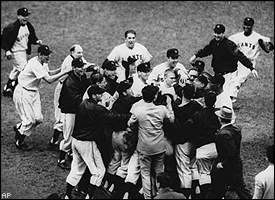
Oct. 3, 1951: "The Giants Win The Pennant!"

Most of us have heard the call by Giants broadcaster Russ Hodges:

“Branca throws. There’s a long drive. It’s going to be — I believe! — The Giants win the pennant! The Giants win the pennant! The Giants win the pennant! The Giants win the pennant! Bobby Thomson hits into the lower deck of the left-field stands. The Giants win the pennant! And they’re going crazy! They’re going crazy! Oohhh-oohhh!”

The date was October 3, 1951. It was 3:57 PM at the Polo Grounds in Upper Manhattan, the hallowed ground of Coogan’s Bluff hovered nearby. The home team New York Giants had runners on first and third, with one out; right handed batter and third baseman Bobby Thomson was batting with the Brooklyn Dodgers leading 4-2 in the deciding Game Three of the special playoffs to decide which of the two tied National Leaguers would take the pennant and go on to the World Series to oppose the mighty New York Yankees.

The story of the year to this point had been the incredible comeback of the Giants from 13.5 games back of the Dodgers late in the season to tie for first on the last day. Now something was about to happen to put a cap on the experience that would practically be all that any of us saw for the next forty to fifty years. Bobby Thomson was about to hit a line drive homer into the left field stands off right handed Dodger relief pitcher Ralph Branca that would win the game and the pennant for the Giants, 5-4, in a walk off blast is still remembered and revered as “The Shot Heard Round the World!”

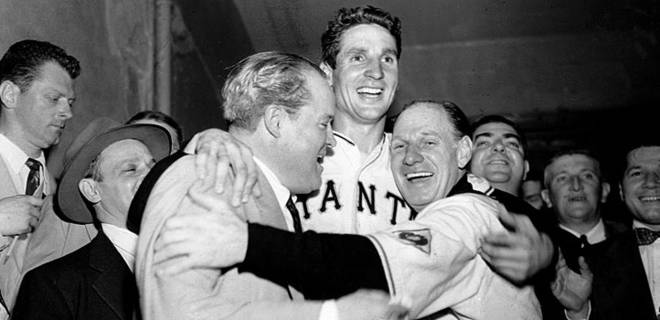
Bobby Thomson celebrates his famous "shot heard round the world."

The death of 86-year old Bobby Thomson yesterday, August 17, 2010, at his home in Savannah, Georgia came after years of declining health, but it now no longer brings about the pleasantly magical memory of his famous home run also, but also the more recent disclosures that came out in fact and evidence just prior to the fortieth anniversary celebration of “the shot heard ’round the world” back in 2001.

According to an Inside Baseball story from 2001, it is now known that the Giants had been stealing pitch signs by binoculars from their clubhouse in dead center field over what roughly appears to be the period of their great comeback in 1951 – and that includes the period of their playoff games with the Dodgers and one particular time at bat for Bobby Thomson. Of course, if it’s true, those shenanigans at the Polo Grounds would not explain nor help the Giant’s’ also improved play on the road, but it sure puts a taint upon the thrilling memory of Thomson’s shot.

Thomson’s home run has always been one of my most cherished baseball memories. The thought that he may have known what pitch was coming is a real spoiler. I still don’t like to think of it very often, but his death, and my dedication to the truth, won’t allow me to escape the conclusion that he most probably did know what was coming when he swung.  Bobby Thomson’s responses to the straightforward question in a 2001 interview by Joshua Prager cause him to come off more as an “artful dodger” than a “moral giant.”

Examine that segment of inquiry, read more; then decide for yourself. Here’s how writer Joshua Prager described that part of his 2001 interview with Bobby Thomson at age 77:

Mr. Thomson, now a widower, has never spoken publicly of sign-stealing and has never raised the subject with Mr. Branca. ‘” guess I’ve been a jerk in a way,” he says. ‘That I don’t want to face the music. Maybe I’ve felt too sensitive, embarrassed maybe.”

Mr. Thomson sits on his couch, wearing the tweed jacket and tie he wore to church that morning. Suddenly, he uncrosses his legs, squares his feet with his shoulders and puts his fists together, right over left, as if gripping a bat. He hunches his torso forward and turns his head toward his left shoulder. He looks out of unblinking eyes into his fireplace.

Did he take the sign?

From the batter’s box, “you could almost just do it with your eyes,” Mr. Thomson says.

His hands relax. He drops his arms to his sides.

Did he take the sign?

“I’d have to say more no than yes,” he says. “I don’t like to think of something taking away from it.”

Pressed further, Mr. Thomson later says, “I was just being too honest and too fair. I could easily have said, ‘No, I didn’t take the sign.’ “

He says, “It would take a little away from me in my mind if I felt I got help on the pitch.”

But did he take the sign?

“My answer is no,” Mr. Thomson says.

He adds: “I was always proud of that swing.”

For a much more detailed account what writer Joshua Prager says transpired on the sign-stealing set-up, check out the whole 2001 story at this link: http://joshuaprager.com/wsj/articles/baseball/

My Top Ten Early Rock ‘n Roll Hits

August 17, 2010

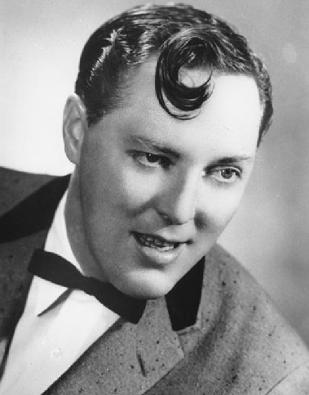
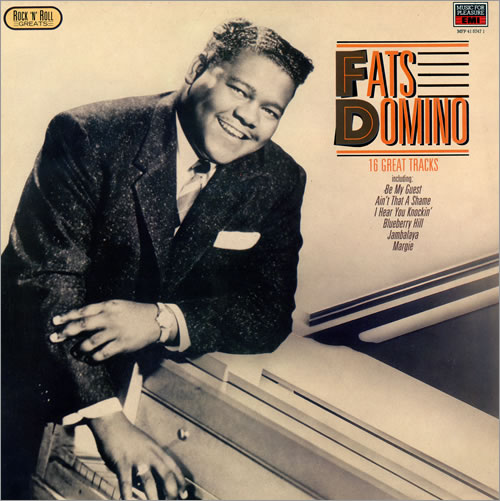
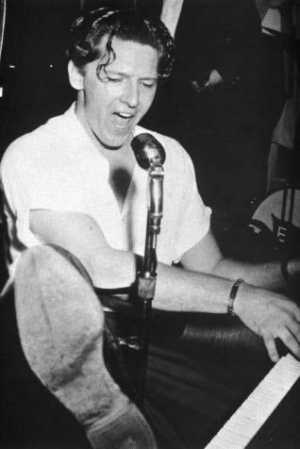
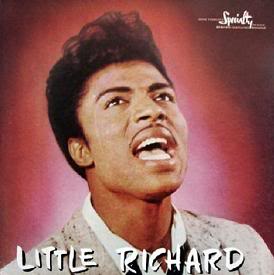
This has to be said up front. There really is no way to come up with a Top Ten Early Rock ‘n Roll Hits list that doesn’t leave someone or something deserving totally out of the picture. When it come to all the early performing giants, people like Little Richard, Chuck Berry, Fats Domino, Jerry Lee Lewis, and Elvis, we could take almost any of their songs and justify its place on a legitimate list.

With that much in mind, what I’ve tried to do here is simply list the songs that came along and struck me hard, from 1954 through 1957, when I was 16 to 19 years old, when Jimmy Menutis’s club in Houston was about to start its reign, as the mind-set, music, and culture changing songs of that era. The songs I love from that era are ten times greater, at least, so that means that my final top tem bunch leaves out many great hits – and even some great artists – people like Buddy “Cricking” Holly, for gosh sakes. That being said, here’s my list:

Turner's work fore-ran the great radio crossover of "black music" to mainstream radio, but it all begin to happen in 1954.

(1) “Shake, Rattle, and Roll” (1954). Who among us from that era could ever forget the beat and the lyrics of the song – and the deep, happy voice of the man who performed them, Big Joe Turner? “I’m like a one-eyed cat, peepin’ in a seafood store! – I can look at you and tell you ain’t no child no more!”

“Shake, Rattle, and Roll” should be the unarguable first rock ‘n roll song on everyone’s list. If it’s not, you weren’t listening at the moment of the genre’s big bang experience, when the music you could only hear on all black radio stations suddenly got too big and too commercial to be passed over any longer by the all-white “Goodnight, Irene” – playing music stations. I may be wrong, but I think “Shake” was the first to make it all the way over to Houston’s two most popular white AM radio DJ’s, Paul Berlin of KNUZ and Bob Byron of KILT.

"Maybelline" was a real gas pedal pusher.

(2) “Maybelline” (1955). This one blows past our earliest discovery of Elvis in “That’s All Right” and I don’t know how many other songs by Little Richard and Fats Domino, plus all those great group hits. like “Earth Angel” by The Penguins, but it was the great Chuck Berry at his “drivin’ fool” first best effort at singlehandedly taking over the new music that both accelerated and satisfied the angst of our testosterone-pumping, adolescent minds, bodies, and souls – and especially so when we climbed behind the wheels of our muscle machines and hit the Gulf Freeway for Galveston with our girls by our sides on those ever always practical bench car seats that used to be the app that made our driving world a happy place to be.

“As I was a motivatin’ over the hiil, I caught Maybelline in a Coupe DeVille; Cadillac rollin’ on a open road; nothing out-run my V-8 Ford.”

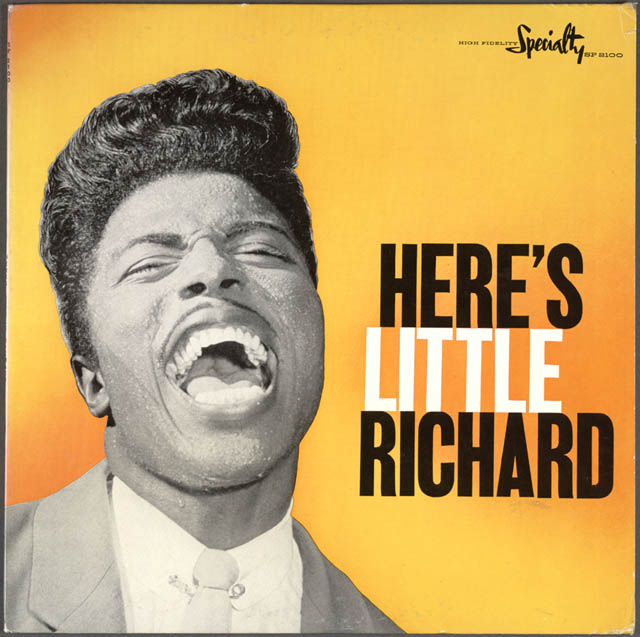
(3) “Long Tall Sally” (1955). Little Richard is one of the music artists with a legitimate claim on the “Father of Rock n’ Roll” title if it weren’t for the fact the presence of so many others in that category suggests that the change was a process movement in music and not a sudden birth in high C section from the rhythm and blues genre. If anything, rock n’ roll came together in a way that united early black and white music folk forms, taking a whole lot from black rhythm and blues, but also borrowing from white country and western too.

We could easily substitute “Tutti Frutti” or “Rip It Up’ here and lose nothing from the idea that Little Richard was a major first contributor to the earliest echoes of rock ‘n roll.

Bill Haley and The Comets hit us big time!

(4) “Rock Around The Clock” (1955). No rock and roll song ever landed harder upon my generation of the 1950s, not even “Blue Suede Shoes.” When a bunch of us first heard it, we had all gone together as a group to the Loews State Theater in downtown Houston to see the highly touted new movie of teenage rebellion called “Blackboard Jungle.” Unknown to us until that moment, the movie started with Bill Haley and the Comets performing this now iconic song for the first time that any of us had ever heard it.

“One! Two! Three O’Clock! Four O’Clock Rock! ~ Five! SIx! Seven O’Clock! EIght O’Clock Rock! ~ Nine! Ten! Eleven O’Clock! Twelve O’Clock Rock! ~ We’re Gonna Rock! Around! The Clock Tonight! …”

What happened next was both amazing and original to the situation. We were all on our feet cheering. And dancing in the aisles. We’ve been dancing and cheering ever since. And “Rock Around the Clock” remains today the same as it was from public birth – The International Anthem of Rock ‘n Roll Joy!

Fats Domino: "Baby, don't you let your dog bite me!"

(5) “I’m In Love Again” (1955). So many other great hits from the music genius of Fats Domino would fit here. This one just happened to hit my teenage ears over the car radio on a night I was driving home from another new venture into falling in love. Unfortunately, it was neither my first nor last trip over the falls of bittersweet pain, but good old Fats did his part that night in helping to write the soundtrack of my early times life.

“Yes, it’s me, and I’m in love again! – Had no lovin’ since you know when! OOH-WEE, BABY! – OOH-OOH-WEE! BABY DON’T YOU LET YOUR DOG BITE ME!”

It wasn’t her dog that bit me back in the day; nor was it the bittersweet music of good old Fats that tore into my heart and soul where women were concerned. I just had some growing up to do about love and what was really possible in a relationship between a man and a woman, including the big bopper lesson that learning about love is a lifetime school.

Carl Perkins

(6) Blue Suede Shoes (1956). Carl Perkins wrote it. Elvis Presley gave it immortality.  In the minds of many, it remains as the greatest rock ‘n roll hit of all time. – I remember going to see Carl Perkins perform at the old Sam Houston Coliseum in Houston around this time. The place was packed because of “Blue Suede Shoes” hit and we were literally swept away in the human crush of a packed house when Perkins finally got around to doing his famous number. It was also around this same time period tha Carl’s friend, ELvis, was making and releasing his own version of “Blue Suede Shoes” in a much faster and hipper tempo and style on a record that would carry the hit to other galaxies.

Perkins wrote the song one night after he came home from playing a high school prom and over-hearing a young man telling his date, “Listen, when we’re dancing, please try not to step on my blue suede shoes. OK?” Sometimes good things happen when we are paying attention.

Right Carl?

Jerry Lee Lewis

(7) Great Balls of Fire (1956). Substitute “Whole Lotta Shakin’ Goin’ On” or any other favorite Jerry Lee Lewis song here and I have no problem with the change as long as the man and his dawn-stormin’ music makes the list. Jerry Lee was the most insanely talented early contributor to “R&R” from the country/white Protestant gospel culture that produced him.

The life and music of Jerry Lee Lewis left everybody breathless and with a whole lot of shakin’ goin’ on.

(8) “Good Golly, Miss Molly” (1957). Little Richard returns to the list with a hit that was big enough to impress a 10-year old future President of the United States. Young Bil Clinton of Hope, Arkansas was busy picking up the saxophone and the music of Little Richard around the time this mega-hit came out. He loved it so much that he would one day prevail upon the “Father of Rock n’ Roll” to perform “Good Golly, Miss Molly at a party celebrating his 1993 presidential inauguration while he, the new American President, accompanied “LR” on the sax. (This act would have been big at Jimmy Menutis back in the day.)

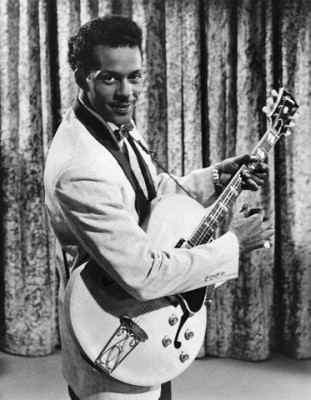
(9) Johnny B. Goode (1957). “Go, Johnny, Go!”  The hard-driving lyrics of this classic rock ‘n roll number by Chuck Berry still pound the message of the genre out there at a rate faster than the culture of that time could absorb it. It was about freedom of artistic expression on a level that went way beyond the in-bred marriage of the majority white culture to the values of prudence and control of the arts, two qualities that eventually go beyond directing energy and start choking creativity.

“Long live rock ‘n roll! Deliver us from the days of old” – Chuck Berry.

"Thank you! - Thank you very much!"

(10) “Hound Dog” (1957). By this time in 1957, you could have picked a number of other Elvis Presley hits for this lace in the Top Ten List. I chose “Hound Dog” because I think it represents something of a final victory point in the culture war for rock ‘n roll’s right to survive. as an everyday part of our main culture life. Back in 1954-55, the airways were battling to play rock ‘n roll live over the air on pretty much of a case-by-case basis. Artists like Little Sylvia Vander pool were being banned for “suggestive” lyrics. Sylvia took the ban for a little song called “Fine Love,” in which she sang about “fine love…fine kisses…right here.”

The lyrics to “Hound DOg” were fairly innocuous, but they were being sung by Elvis Presley, and it was now 1957, and rock ‘n roll was here to stay.

Places like the Jimmy Menutis club in Houston helped seal the deal on “R&R” becoming a permanent part of our everyday American lives. Thank you, Jimmy!

Long live rock ‘n roll! And long live Jimmy Menutis and his contributions to American music history!

Also, please comment below. We’d love to hear your own top ten lists too.

A Letter to Jimmie Menutis

August 15, 2010

This morning brought a pleasant surprise. It was an overnight e-mail letter to the readers of the Pecan Park Eagle from the one and only Jimmy Menutis. It’s already posted where Jimmy left it as a two-part comment on the PPE article headlined as “Jimmy Menutis: Houston Heart of Rock ‘n Roll,” but I wanted to repeat his two messages here to make sure that no one misses them:

(1) From Jimmie Menutis to Pecan Park Eagle Readers, 08/15/10, 5:06 AM ~

I am very happy to see all the reply and fond memory. I too have great memory of all my friends and customers. Guess what…..my wife of 50 years and I still dance the whip.
We are living in new orleans, also have a condo in the metropolis o w.gray in Houston. We have a business in Lafayette, la and spend time there.

We are considering having a reunion In new Orleans with one of the name artist if you wish to be invited send your name and address by mail to

Jimmie menutis
110 Travis street
Lafayette, la. 70503

Circulate this message to others you know would want to attend.

Regards
Jimmie

(2) From Jimmie Menutis to Pecan Park Eagle Readers, 08/15/10, 5:09 AM ~

Love to hear from all my friends.

Jimmie Menutis
110 Travis St.
Lafayette, La. 70503

Email
Rmenutis@brandedworksinc.com

Response Letter to Jimmie Menutis from Bill McCurdy, The Pecan Park Eagle ~

Dear Jimmie,

It is both an honor and a joy to hear from you. Although you have never met most or all of us who have written our happy recollections here lately of your once-great club on Telephone Road, we hope you will easily see from what has been written how big you still are in our hearts and memories of that wonderful period in our earlier lives.

I am also posting your contact information a second time here so that our readers will be able to contact you directly about their availability for a reunion party in New Orleans, Lafayette, or Houston somewhere down the line. My guess is that a Houston party might require the rental of a pretty large hall, sort of a “Jimmy Menutis II” site, if you please.

My wife and I would love to join you and Mrs. Menutis for such a party, if you decide to have one, and I also invite you to use this site to get out information to your many fans, as well, about a party, about the music of those good old days, or anything else you may be up to in these new good old days that you care to share with the general public. All you have to do is post it here as a comment following this article – or else, drop me an e-mail if it’s a whole new subject.

Thanks again for writing, Jimmie. And long live rock ‘n roll and the Menutis legacy.

Regards,

Bill McCurdy, Editor, The Pecan Park Eagle

Time for an Astros Baseball Movie

August 14, 2010

The Hollywood summer movie list and the 2010 Houston Astros baseball season share this much in common: Neither has been very good – and both movies and the Astros have now reached the same point in which supporters of each spend more on concessions than they now do on tickets.

Maybe we were missing the boat by not suggesting this earlier, but its high time we had a good new baseball movie based upon the Astros. How about we use current movie titles with do-over scripts to make these film offerings more attractive. In this way, we shall also help the movie industry recover its own losses as we work hard to benefit our primary client, out hometown Astros.

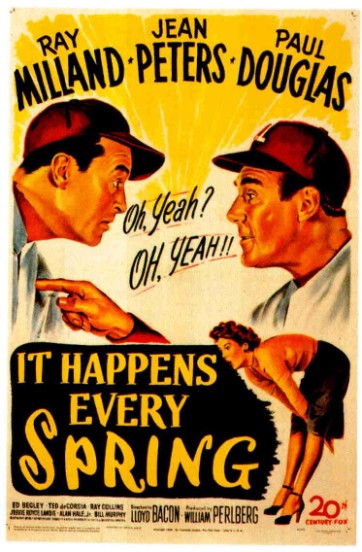
In the spirit of the new re-make philosophy on old popular movies, I would like to start with a re-make proposal for the 1949 baseball movie classic, “It Happens Every Spring.” In this version, former Astros manager Larry Dierker is puttering around in his “build-your-own-senior-citizen-prescription-drugs-home-lab” when he accidentally invents a fluid that is repellent to wood. By placing the precious fluid in a sponge that he fits into the pocket of his old pitching glove, Larry finds that he is again able to pitch in spite of the injury that ended his original pitching career early. He goes to the Astros with a plan for making a comeback, without divulging how he plans to accomplish the same. Once Owner Drayton McLane, Jr., President Tal Smith, and General Manager Ed Wade recover from a case of falling down hysterical laughter, Dierker proposes that he be allowed to tryout in full view of their entire group and Field Manager Brad Mills.

A hasty tryout is arranged for Minute Maid Park. Larry promptly goes through the eight starters on 24 pitches and 24 swinging strikes for 8 K’s and an immediate contract to return as staff ace for 2011. He more than fills the gap, going 50-1 in the regular season, 7-0 in the playoffs, and 4-0 in the World Series against the New York Yankees. Dierker’s only loss came at the hands of Pittsburgh on the only day he forgot to bring his magic elixir with him to the ballpark. Because it took the Astros so long to reach this moment of glory, the original title of the first movie was altered sufficiently to match the Astros’ reality. The Dierker version is called, “It Happens Not Quite Every Spring.”

The summer movie titles offer other possibilities. Here are a few that I see, but perhaps you see others. If so, please add your suggestions as comments to this idea:

“The Expendables” – It’s the story of just about every player who remains on the 2010 Astros roster, but the featured stars need to be Roy Oswalt and Lance Berkman.

“Inception” – General Manager Ed Wade dreams that he can build a Word Series club in Houston purely from former players and prospects acquired from the Philadelphia Phillies. In the movie, Wade talks about the importance of building a strong farm system and he proceeds to draft and sign all of his 2011 choices at 50% of the expected market cost, but that part of the movie turns out to be only a dream within the dream and an accomplishment that never happened. When he awakens at his desk in the movie’s final scene, an aide is handing Wade a trade proposal that has just arrived by e-mail from the Seattle Mariners. Wade is staring seriously at the message as the camera slowly moves in for a tight shot of his face. An Ed Wade voice-over quietly whispers as a thought we all hear: “Seattle Mariners. Who in the heck are the Seattle Mariners?” (Movie fades to black. “The End” flashes on-screen.)

“The Other Guys” – This plot builds around the history of the World Series since 1962, Houston’s first season in the big leagues. The primary angle here is how it’s always “the other guys” who win the World Series – and how the Houston club hardly ever (once, so far) gets to even go to baseball’s big show. This movie is not recommended for any Houston adult who may already be suffering from a serious inferiority complex – nor for any Houston child needing to build healthy self-esteem.

Despicable Me – For the first time in history, Hollywood makes a movie about a major league bullpen and they decide to shoot the film in Houston and use members of the Astros relief pitching staff. No parts have been cast in bronze, so far, but Matt Lindstrom is said to be in line as the top candidate for the title role. We hear that only a confirmed back injury stands in his way.

Salt – When the sign “No Pepper Games” goes up on the field at Minute Maid Park, Geoff Blum rebels against the prohibition by changing the name of the “bunt and catch” exercise to that other favorite table seasoning and just encourages everybody to keep right on playing. The decision keeps the game alive and also scratches an ancient Blumian itch to resist new rules-making by faceless figures of authority.

Step Up – In the most improbable animated film since “Fantasia,” the Houston Astros respond to some magic dust that gets stuffed in the A/C system at Minute Maid Park by a small mystical child. They step up so often that they rally from sleeping with Pittsburgh to ripping the Reds and Cardinals – and then going on to bake the Yankees in the 2010 World Series. As i said, it’s an animated fantasy.

Toy Story – This one sort of embodies the best parts of many current summer hits. Brad Mills dreams that the Astros get rid of all players who are either expendable or despicable by dumping them on the other guys. He then dreams that GM Ed Wade steps up to the plate and opens a magic toy shop where twenty-five very compatible and virtually unbeatable players are assembled and made available with a five-year warranty on their competitiveness potential at the highest level. All but one of these players is kept on Wade’s new Astros roster when a space has to be made for the return of Larry Dierker and his wondrous new “whip-it-on-’em” out pitch.

“Eat, Pray, Love, Have a Sense of Humor” – Easiest movie plot of all: (1) Grab a great old ballpark hot dog! (2) Pray to God we all survive this down-time in Astros history; (3) Keep on loving the Astros and baseball in Houston in spite of the down times we are going through now; and, (4) Keep a sense of humor about this time and everything else that runs amuck every now and then. It’s the only way to survive – and the only known way that those first three items in this movie title make any real sense.

Have a dreamy weekend, everybody – and let us hear your own new Astros movie plots from any old or new movie title that comes to mind.

Hughes News: Howard’s First Marriage

August 13, 2010

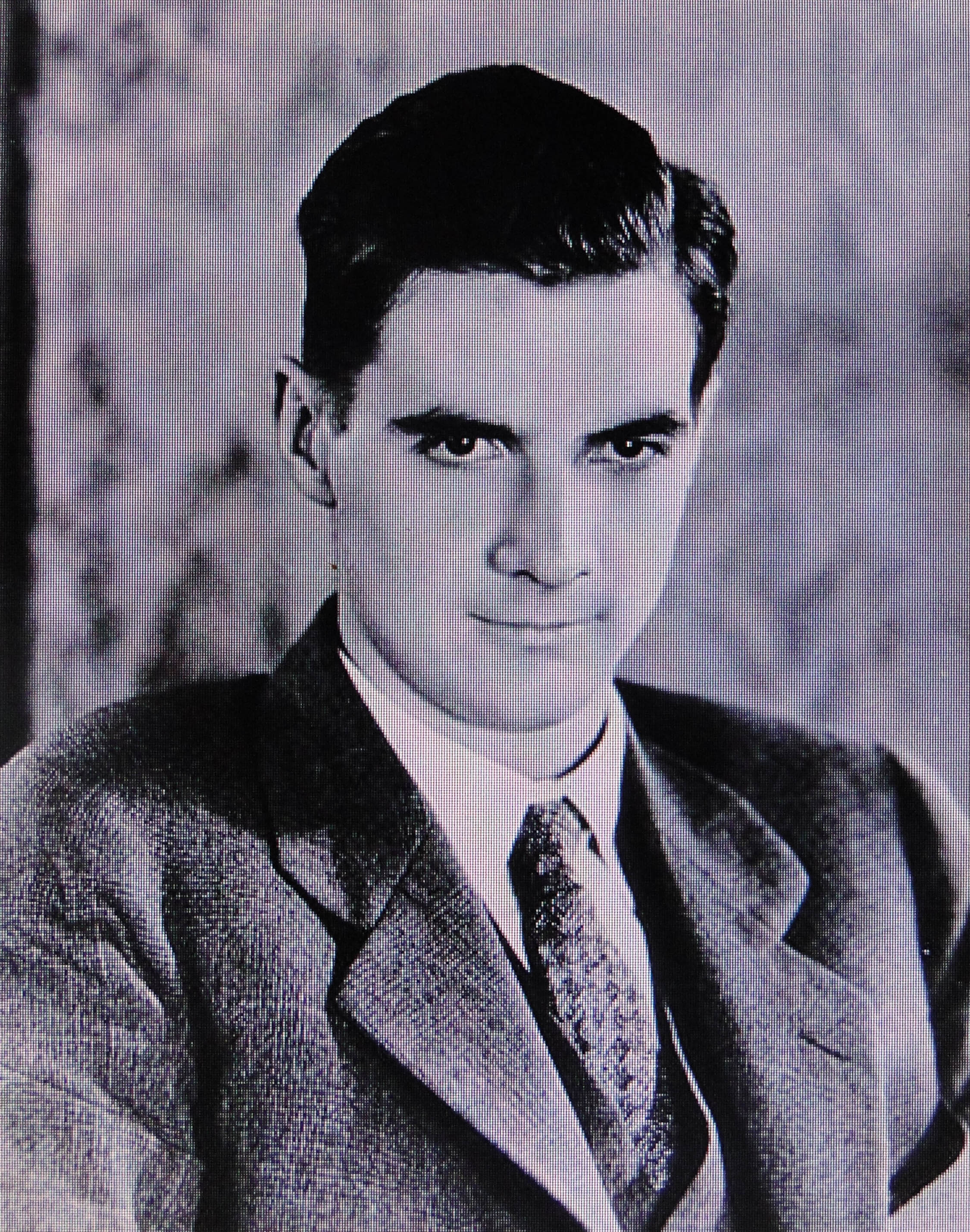
Howard Hughes, Jr.

Of all the famous figures to come out of Houston over the course of history,none was ever more mysterious, more talented, richer, or more powerful than the late Howard Hughes, Jr. The attention he drew to aviation design was only matched by the futility of ego he drafted into the motion picture industry and the women he helped make famous by very personal interest and investment in their acting careers. Actresses Jane Russell and Jean Peters leap immediately to mind as the two greatest beneficiaries of Howard’s “benevolence,” but starlet Terry Moore of “Mighty Joe Young” movie fame is quickly recalled as one of the solid others.

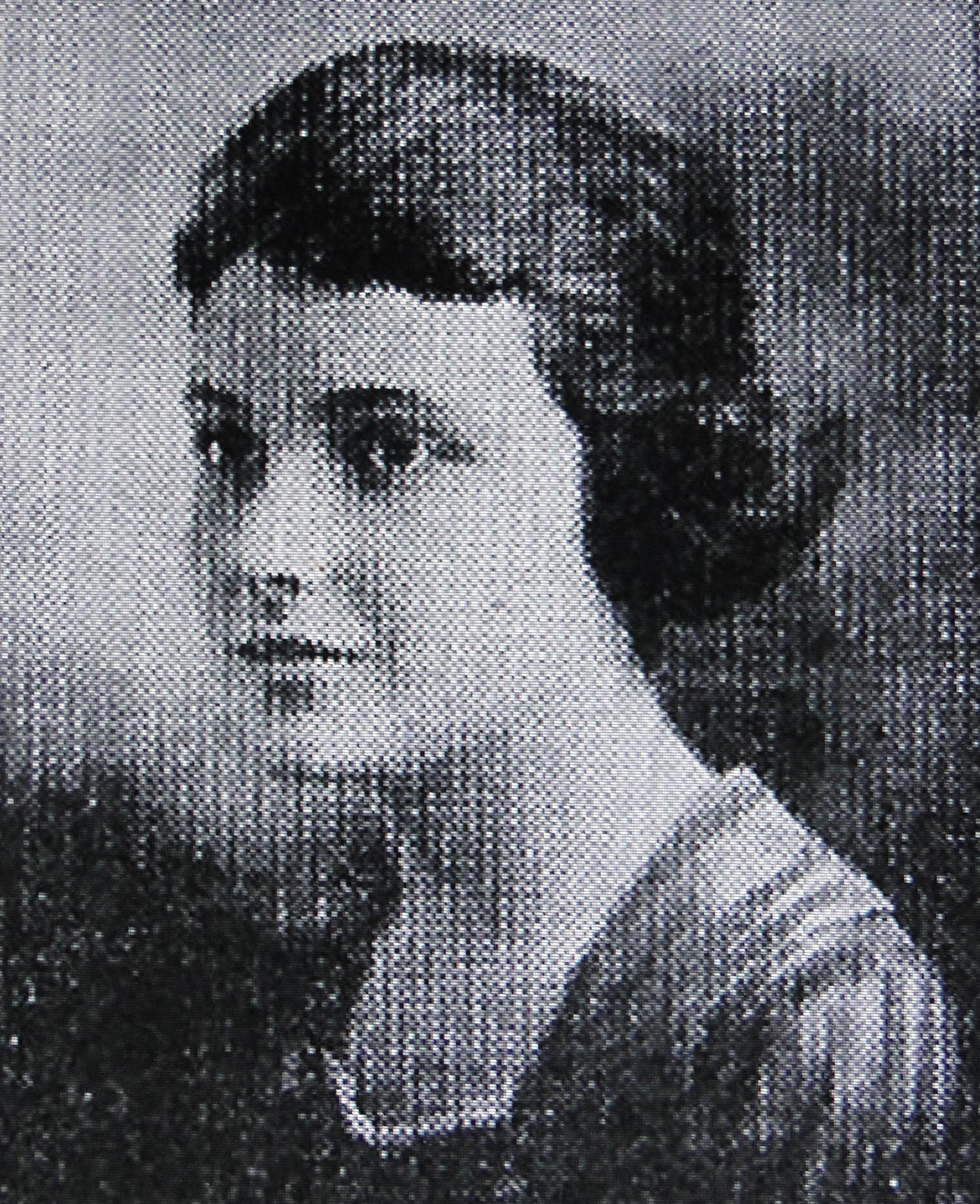
Ella Botts Rice Hughes

There are ample biographies on Howard Hughes out there – and quite a bit of information available even more easily over the Internet. That being said is being said here as simply my notation that any occasional column I write on the subject as “Hughes News” is simply anecdotal or sidebar to what we do not ordinarily see in the mainstream print about him. Today’s facts and questions are items  that you will not necessarily see without some serious or accidental search and find time in some library or personal collection somewhere.

Today’s contribution comes from a research colleague and new friend of mine named Randy Foltin. I’m not at liberty to talk abut it here, but Randy is currently working on one of the most exciting Houston history projects I’ve seen in a very long time. In the process, he sometimes uncovers peripheral information that he has no time to dally-dabble search these items because of his own research goals. As I’ve also learned over the years, the blessing/curse of historical research is that we find things of interest that we weren’t looking for, but, if we dabble into them too much for too long, we endanger the time and energy we need to spend on our particular research goals.

Sometimes, too, it’s not so easy yo know when a side junket in research is not a waste of time, but a new way of learning about the main research subject. That was not the case here. The case here was that Randy had turned up some long ago photos and information about Howard Hughes that he wanted it to pass on to me because of my general interest in Houston history. These photos had to do with young Howard’s early Houston education and his even earlier than we thought, or knew, connection with the woman who would become his first wife. The other recognition comes straight from Randy Foltin as a shrewd body language observation about young Howard Hughes from an early school class picture.

First of all, the individual photos of young Howard and his first bride are ancient. The one of Ella is the same photo used in the South End Junior High School “annual,” sometime between 1917-19, in which she also was proclaimed as the “Football Queen.” Howard Hughes also was a student at South End  back then, but it is unlikely that he and Ella were connected as a couple that early. For one big thing, she was two grades ahead of Howard at the time. For another, she was then the toast of the school jocks at the same time that the nerdier younger adolescent Hughes was busy developing both the first radio broadcasting tower and the first motorized bicycle in Houston.

By the way, South End Junior High School, south of downtown between Fannin and San Jacinto, later became better known as San Jacinto High School.

At any rate, Howard and Ella finally did get together, I understand, with the help of certain family connections, and they were married in Houston on June 1, 1925, about three months prior to Howard’s 20th birthday, but after the death of both parents and his assumption of control of the family business.

Howard and Ella moved to Los Angeles shortly after their 1925 marriage to help Howard fulfill his goal of producing movies. He succeeded as a filmmaker, but his Houston marriage didn’t work out. Ella moved back to Houston in 1929 and filed for a divorce. And Howard was already on his way. To other women. To more movies. To grand aviation projects. To great wealth. And to his final role as the most powerful and eccentric recluse in the history of the world.

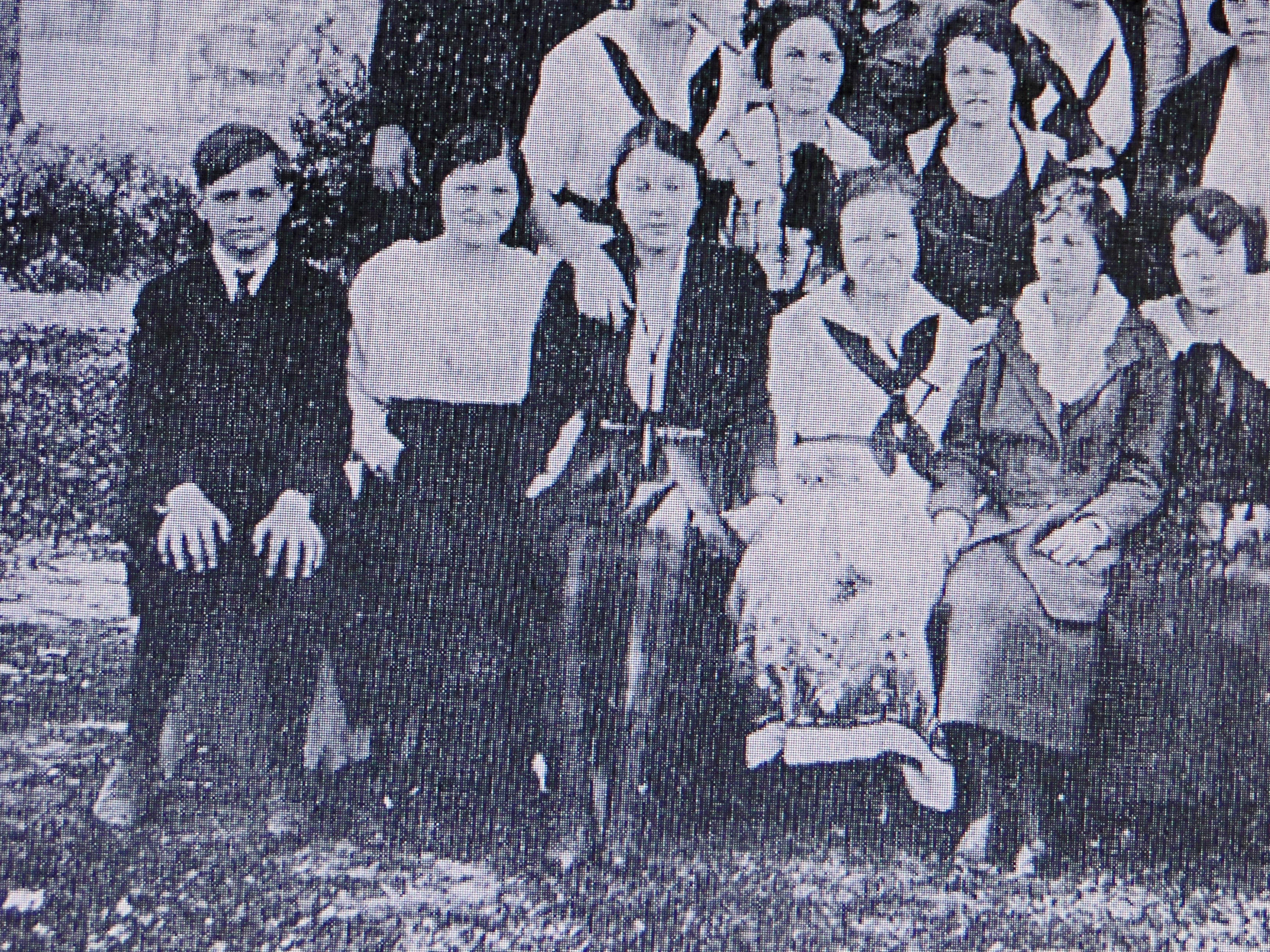
And the words “different” … “powerful” … and “recluse” all lead us to Randy Foltin’s other photo find and the observations he also attached to the display, awaiting confirmation that young man in the lower left hand front row of this South End Junior High School photo is, indeed, Howard Hughes. (What you cannot see here because it makes the photo too small for publication value – is the list of names of all students in the photo and showing one in about that lower left side spot as “Howard Hughes.”)

My call, from the second sectional crop of the young man on the lower left is that I believe it is Howard Hughes as a very young boy. Now let’s look at the photos – and then conclude with Randy Foltin’s observations about the body language communication we see in this picture of Howard Hughes.

Is that Howard Hughes on the lower left side, front row?

I am 99.999% sure that Mr Dark Suit Left is Howard Hughes.

According to Foltin, Hughes sits apart from his classmates as he eventually sat apart from all people. I agree with Randy completely. That’s what the picture says. Notice his self-containment. His hands are planted firmly on his own knees, ready to pull himself up by his own boot straps, if need be.  There isn’t a hint of emotional outreach to others here – and that’s pretty much how Hughes both lived and died. All people were little more than props in the life of this genius narcissist.  – and that trait is what eventually helped him die of malnutrition as the world’s richest man.

Randy Foltin saw that distance in the class photo and I could not resist placing my own impression of it here as a lifelong student of Howard Hughes. The man was an almost autistic genius, with the rare skill for combining strong business principles and creative vision in one human package. He simply lacked empathy for others and the drudgery issues in the human condition bored him to tears.

A prime example of Hughes’s self-centeredness in the wake of human tragedy is the great earthquake that struck Nicaragua in December 1973. Hughes was “reclusing” in the capital city of Managua at the time. Once the mighty quake hit, Howard mobilized his whole crew to the goal of getting out as fast as they possibly could – and that’s exactly what they did, escaping to the safer environs of Las Vegas, Nevada. By contrast, that was the same disaster that cost baseball great Roberto Clemente his life. While Howard Hughes was “getting the hell out of Dodge,” Roberto Clemente was getting himself killed in a plane crash while trying to fly away from the safety of his own home in Puerto Rico. His plane was loaded beyond capacity with essential supplies and it crashed into the ocean after it tried taking off, killing all the crew, and Clemente, upon impact.

The contrast between Hughes and Clemente here is stark, but it best makes the point of explaining who we are are talking about when we discuss the missing parts of loner Howard Hughes. He simply lacked a capacity for really caring about what happened to others.

Because he had no truly selfless empathy for others, Hughes did not know how to hire people who might be capable of acting with “tough love” empathy for the self-destructiveness they might have seen in him, the world’s sickest rich man. As the result, Howard Hughes, the man who once sat alone in a class photo, also died alone. surrounded by a staff who would rather let him die than get fired for standing up and saying “no” to the death choices he was making by the way he lived.

Thanks for the input, Randy Foltin. I’ve been looking for a bully pulpit on Howard Hughes for a very long time.