Posts Tagged ‘Baseball’

Murmurs of Murderers’ Row

March 29, 2011


The 1927 New York Yankees, The Stuff that Baseball Dreams Are Made Of.


Little is left to say about them. They roared through the new power-driven baseball world of the Roaring Twenties, winning 110 games during the 1927 American League season and then rolling over the Pittsburgh Pirates of Pie Traynor and the Waner Boys in a four-game sweep. Babe Ruth and Lou Gehrig battled each other all season for the pure Yankee privilege of breaking Babe’s pure Yankee record of 59 home runs in a single season. Gehrig finally ran out of gas, but the Bambino poured it on in September to finish with 60. The slumping Gehrig had only 47, but both totals were far more than any other hitter in the big leagues could muster in 1927.

The 1927 New York Yankees were the hammer that established and reaffirmed this one baseball franchise in The Bronx as the kingpins of the game. Nobody did it better. And no other club, from there to the part of kingdom come we now know as 2011 would do it more often. When we  think of World Series, most of us think of it as “New York Yankees versus who?” When we think of World Series winner, most of us simply mind slip into the next forward gear, “New York Yankees over whomever!”

And the deal is simple. You don’t even have to like the Yankees to think this way. You just have to be around the game long enough on a year in, year out, day in, day out basis. If that doesn’t condition you into thinking that the Yankees always have the best chance of winning over any of the other clubs, you are either lying about your closeness to the game, or else, you are completely steeped in a state of denial that is only fully available to fans of the Boston Red Sox.

Back to home runs for a minute. In 1927, Babe Ruth’s 60 home runs were more than all but three clubs in the major leagues hit as a team – and all three of those clubs were National League teams. The New York Giants hit 109; the St. Louis Cardinals hit 84; and the Chicago Cubs hit 74. Of the 439 homers struck by all American League hitters in 1927, Ruth (60) and Gehrig (47) of the Yankees had 107. That’s a healthy 24% plus a few percentage points more of the league total.

And the ’27 Yankees were not just Ruth and Gehrig. Look at this typical starting lineup for the club that came to be known as Murderer’s Row:

(1) Earl Combs, cf BL/TL (.356 BA; led AL in hits with 231 and triples with 23.)

(2) Mark Koenig, ss BR/TR (.285 BA, 150 hits, 19 doubles)

(3) Babe Ruth, ef BL/TL (.356 BA. led AL with 60 HR; 158 Runs; 137 Walks; .486 OBP; and .772 SLG.)

(4) Lou Gehrig, 1b BL/TL (.373 BA, led Al with 52 doubles; 175 RBI; and 447 total bases.)

(5) Bob Meusel, lf BR/TL (.337 BA, had .393 OBP and 103 RBI)

(6) Tony Lazzeri, 2b BR/TR (.309 BA; had 18 HR and 102 RBI.)

(7) Joe Dugan, 3b BR/TR (..269 BA)

(8) Pat Collins, c BR/TR (.275 BA; .407 OBP)

The pitching staff featured Hall of Famers Herb Pennock (19-8, 3.00) and Waite Hoyt (22-7, 2.63), plus the great Urban Shocker (18-6, 2.84), Wilcy Moore (19-7, 2.28), and a few other terrific arms that any club today would kill to possess.

I don’t really expect the 2011 Yankees to walk over anybody or even reach the World Series. On the other hand, if they got there, as per forever, it would be soon lost among the least surprising outcomes in baseball history. In the Hall of Great Expectations, the New York Yankees carry the biggest load in all of sports, not just baseball. Some of their fans will not even allow them the liberty of an occasional off-day, let alone a multiple game slump or complete off-year.

Blame the ’27 Yankees. That’s pretty much where the Yankee search for perfection got front-loaded. And that idea wasn’t hurt any by the Yankee clubs of Marse Joe McCarthy in the late 30s and early 40s or the Casey Stengel boys of 1949 and the 1950s. All the Yankees needed from there to totally seal their ridiculous aspirations was to be purchased someday by an owner who thought the team could literally win every game.

I think that one happened too.

For me, the 27 Yankees and their gaudy 110-44 record were an accomplishment of great astonishment to my childhood years of early study about the history of the game. Ruth and Gehrig became, and will always be, my  two biggest heroes from baseball history as one result.  This time of the year, they are a reminder that the baseball season is upon us again. Time for those enjoyable pauses from everyday life that only take place at the ballpark.

Thank God for baseball. And thanks too, God, for the ’27 Yankees.


Early Houston Buffs and Browns Connection?

March 28, 2011

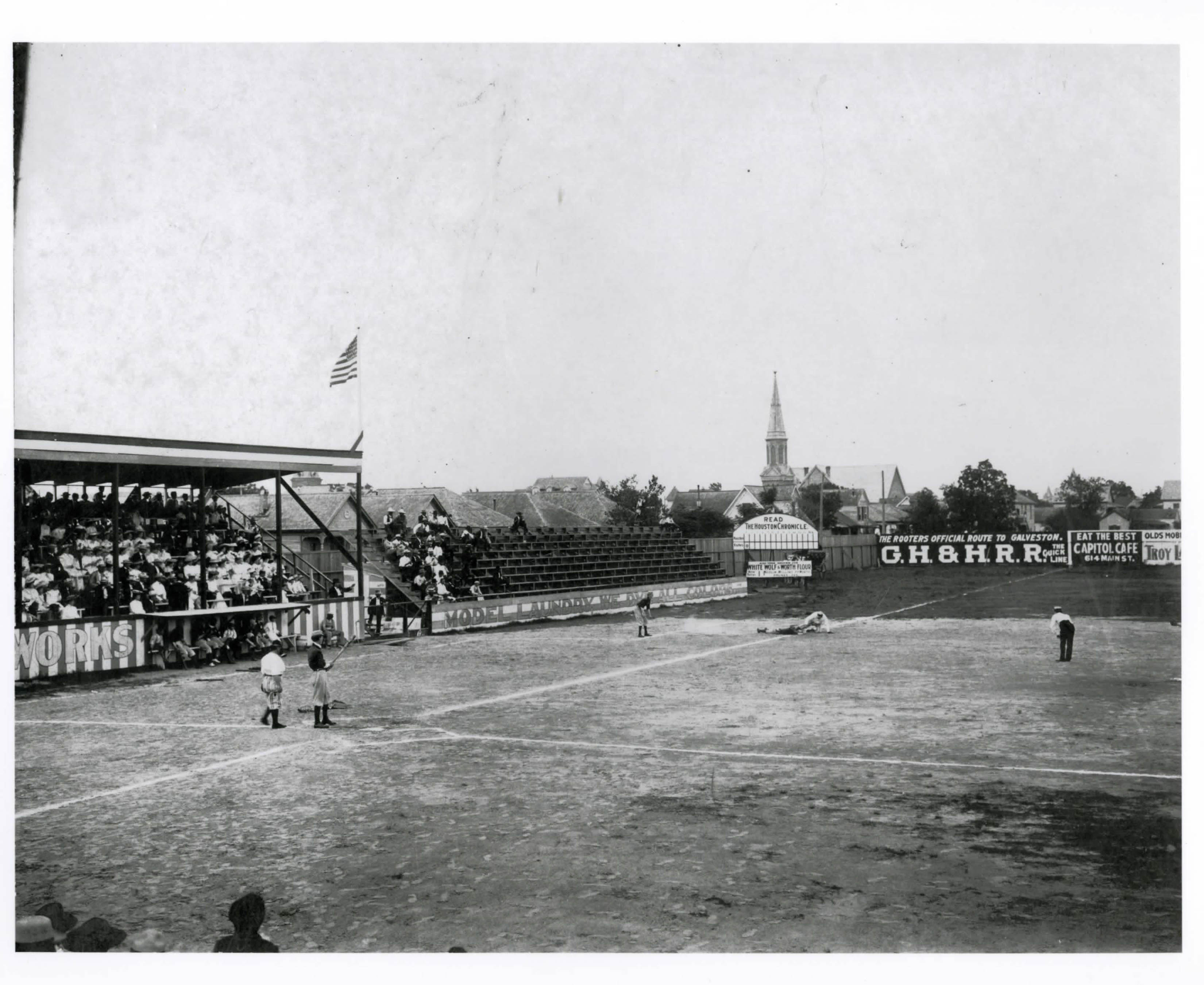
West End Park, Home of the Houston Buffs, 1907-1927. Published by permission of the City of Houston Public Library, Houston, TX.

Thanks to another little article from the Houstorian, some new/old/recycled questions and answers about the Houston Buffs and West End Park are again recycled and now come at us hard as researchers, loudly begging for further exploration. As we move further into our new SABR Chapter major research project, “Houston Baseball, 1861-1961, The First One Hundred Years,” this is the sort of thing that our team will need to explore with effort that goes way beyond quick and easy, incomplete conclusions.

The Houstorian article, for example, concludes that in 1909,  “the (Houston) Buffaloes were part of the St. Louis Browns farm system,” and it seems to be a conclusion based largely on the fact that, by 1910, “the following Buffaloes were playing for the St. Louis Browns: Roy Mitchell (P), Jim Stephens (C), Frank Truesdale (2B), Patrick Newnam (1B), Hub Northen, Joe McDonald, Art Griggs, Dode Criss, Alex Malloy, and Bill Killefer.” From what I was able to confirm through the minor league data files at Baseball Reference.Com, the Houstorian’s conclusion are correct as to the joint participation of most of these players as both Buffs and Browns.

Houston may have had some kind of working agreement with the Browns in 1909. That factor needs further research. It is rash, however, to conclude that the Buffs were part of the Browns “farm system” in 1909. Back then, major league clubs did not own minor league clubs. That kind of ownerships was viewed as sinister to the idea of a level playing field among all big league clubs. Further study of the Browns-Buffs arrangement in 1909 is needed. That’s the only true and safe end we may now touch based on what we know, so far.

Here’s a link to the Houstorian article that stirs up historical information like a first scratch in the ground of artifacts:

http://houstorian.wordpress.com/2009/02/14/100-years-ago-february-14-1909/

If you are a member of SABR, the Society for American Baseball Research, or if you think you might be interested in joining us in the biggest research challenge in Houston Area Baseball History as a new member of SABR, please get in touch with me, Bill McCurdy, @ houston_buff@hotmail.com

We are in the early stages of organizing our research work plan for scouring all available resources that will provide us with the best information we can find on the growth and evolution of baseball in the Houston area from the time of its first organization in 1861 as the “Houston Base Ball Club” through its last season as the minor league Houston Buffs in 1961.” If you have a passion for baseball, time for research, the patience and eyes for studying old newspaper and other public records on microfilm at the library, please consider joining our team. The final product will be a scholarly published historical work on the full history of baseball in Houston prior to the coming of the major leagues in 1962. Profits from this book will be dedicated to the support of SABR and its other programs in the Houston area – and everyone who does the research and writing that makes it possible will get their names credited to this legacy work on a major aspect of Houston and Harris County history.

If you have the time, the passion, and the patience for it, we need your help now.

The Houston Baseball History Project Wants You!

Joe E. Brown’s Baseball Movie Trilogy

March 26, 2011

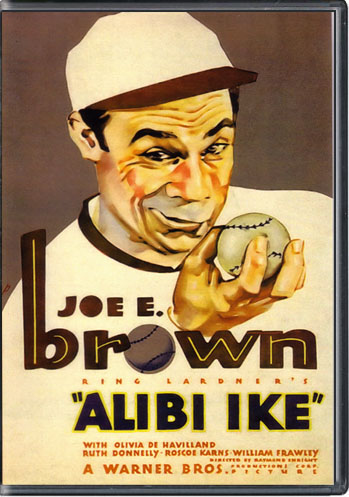
Alibi Ike (1935)

Many of you may not remember comedian Joe E. Brown. The guy worked America’s funny bone in movies a very long time ago now. In fact, he was 80 years old when he passed away in 1973, so you are duly forgiven, but still regretfully deprived if he played no part in your earlier cultural education about life in America and our special love for the game of baseball.

Known for his rubbery face, his very large mouth, and his long-winded, comically framed ability to hold a singly sung or shouted note,  Brown made a trio of movies during the 1930s that were all dedicated to one of the most overworked fiction themes in baseball novel and movie history.

These movies were “Fireman Save My Child” (1932), “Elmer the Great” (1933), and “Alibi Ike” (1935). All cast Joe E. Brown as the naive country bumpkin with incredible talent for baseball. “Fireman,” the first, is both the worst and hardest to come by as far as viewings are concerned. It may hit the screen at TCM (Turner Classic Movies) every now and then, but I’ve never seen it there. In fact, I haven’t seen it in years. “Elmer” and “Ike” are both easier to see and acquire through TCM or by DVD. Order them at TCM or through Amazon.

Famed sports writer Ring Lardner had a hand in writing the scripts for both “Elmer” and “Ike” and maybe that’s why each of these movies had Joe E. Brown coming up as the star that finally led the Cubs to pennant and World Series victories back in the 1930s. After all, Cubs fans of that era were starting to get a little fed up in 1933 with the fact that they had not won it all since 1908.

In each case, Joe’s baseball character falls into the beguiling hands of the slick city girl hustler who leads him astray – and into the deeper clutches of mobster-based gangsters who entrap or kidnap him as a result of gambling losses into missing “the big game” until he is able to fee himself and get back to the ballpark in time to save the day.

The ploys of each film run together for me now. I do recall that Lucille Ball’s character actor for Fred Mertz (William Frawley) plays Joe’s Cubs manager in “Alibi Ike,” while the great Olivia DeHavilland makes her screen debut in the same film as his home town girl. She would go on to take a supportive sctress Oscar four years later in “Gone With The Wind.”

In “Fireman,” Brown stars for the Cardinals; the other two films arrest him as a Cubs hero. In “Ike,” a climatic scene plays out through a night game at Wrigley Field.  It’s supposed to be Wrigley Field in Chicago, but the film was actually shot at the lighted Wrigley Field in Los Angeles. The fact that Wrigley Field Chicago would not have lights until 1988 did not bother the continuity folks working the “Alibi Ike” script one little iota.

Whoever handled continuity for “Alibi Ike”  must also have had a kid who later handled the casting of right-handed New Yorker Ray Liotta as Shoeless Joe Jackson in “Field of Dreams.” Who’s going to notice the difference, or even care? Right?

"Are you ready to win another big pennant for the Cubs, Ike?"

“Ready to win another pennant for the Cubs, Ike?”

Joe E. Brown’s son, Joe Brown, later served a successful term as General Manager of the Pittsburgh Pirates, causing the elder Brown to cast his lot as a dedicated Bucs fan. In 1950, while the younger Brown was coming up as the GM for the Pittsburgh farm club Waco Pirates, the late Buddy Hancken served there too as the club’s field manager. According to Buddy, Joe E. Brown was so involved in his son’s movements there that he came to Waco for about a month and sat on the bench with the club in uniform to be a part of it all. This field access also provided the old showman with an opportunity to act out some of his own shadow-ball routines on the sidelines as the mood and inspiration struck.

One doesn’t have to be crazy to be a baseball fanatical, but it helps. It also helps if the fanatic possesses some entertaining talent. And Joe E. Brown had far more of the latter than he did of the former. Baseball misses his insanely talented dedication to the game.

St. Thomas High Honors Father Wilson April 5th

March 25, 2011

St. Thomas High School, 4500 Memorial Drive, Houston, Texas.

First of all, I need to clarify and apologize for any wrong impressions I may have left here about St. Thomas Baseball as a result of my March 6th column, “St. Thomas Baseball Show DisappointsThat being said, I did write then that “This was my first time out there since Craig Biggio took over as coach last year, so I really have no grounds for complaint about the way the game was presented at St. Thomas on Tuesday. For all I know, yesterday’s show-time (a March 15th game with Kingwood) was an aberration of spring break.”

My complaints were about the non-use of the public address system as anything but a music noise filler, the absence of attention to lineup changes and batting announcements, the missing pageantry of the pre-game National Anthem, and the fact that there was no concession stand service.

Yesterday I heard from Mr. Tommy Schulte, Director of St. Thomas Alumni Relations. Mr. Schulte had slipped on over to Father Wilson Field to check out my complaints at a game played this week. As it turns out, in short, the experience we had back on March 15th, indeed, was all due to spring break. With the general student population off doing their various spring break things, no one was there on campus last week to do all the little game attendant things that usually go with St. Thomas baseball as a matter of form.

Everything is back to super well done normal for St. Thomas this week.

Again, my apologies. I should have waited to check all this out with an informed source before I went to print. Although I did qualify my review issues as possibly due to spring break, I could have simply held back until the facts could be checked. As it were, I only decided to do the article after I arrived home. By then, I had been swayed by the weight of my worst critical thoughts. It’s a common affliction among those of us who spend most of our lifetimes in recovery from perfectionism.

Forgive me, St. Thomas folks. If I were not also a St. Thomas guy, and had the subject been anything but how to present a baseball game when you have in your possession all the tools to do it right, I probably could have held onto some objective restraint with my keyboard over a time frame that would have allowed for adequate fact-checking before publication. My bad, but it won’t happen again, not with St. Thomas, at least.


Father James Wilson, CSB

Now comes some long overdue happy news – and it’s news that also goes out as a special invitation to all St. Thomas alumni.


On Tuesday, April 5th, at 6:45 PM, immediately prior to a big game with district rival St. Pius X, St. Thomas will unveil and dedicate a bust of the late Father James Wilson, CSB at the campus baseball field that also bears his name. What you may not read elsewhere is the fact current Baseball Coach Craig Biggio was the driving force behind the development of this special honor to the man who put St. Thomas High School on the serious championship map in the State of Texas back in the early 1950s. After hearing stories about the impact that Father Wilson had upon the baseball program and generations of young aspiring scholar athletes, Coach Biggio wanted to see the school go a step further in honoring the good man who put so much positive energy in motion more than a half century ago.

So, the invitation is this simple. Come on out for a free look at the fine baseball team that Mr. Biggio has put together on April 5th – on a night that St. Thomas High School pays special tribute to the other man who put all this conquering energy together in the first place, the Reverend James Wilson, Community of St. Basil.

St. Thomas has won ten (10) State of Texas baseball championships at various levels of designated competition in 1952, 1953, 1954, 1955, 1956, 1958, 1963, 1990, 2008, and 2011. The championship chain started with Father James Wilson. It goes on today with Coach Craig Biggio.

If you need an added incentive, here’s one for you: The first one hundred St. Thomas alumni who check in with Alumni Relations Director Tommy Schulte on the evening of April 5th will also receive a free alumni association t-shirt.

Who could ask for anything more?


Our Downtown Baseball State of Mind

March 24, 2011


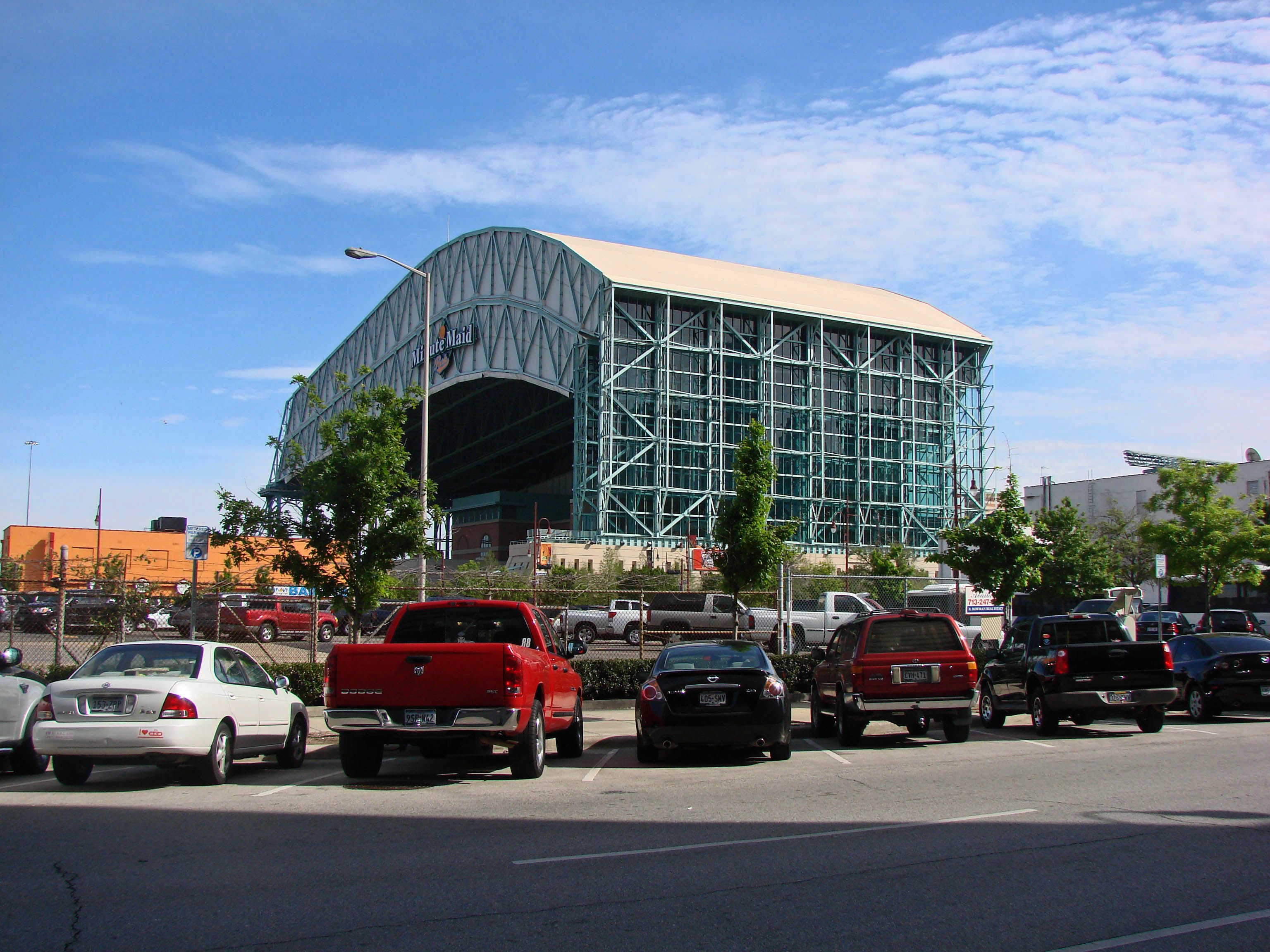
Downtown Baseball. Most often, it's an easy drive, in and out.


My barber asked me the other day if I had gone to the rodeo this year. Beyond the fact that I am not now, and never have been, a rodeo guy, the thought of the drive from the west side to that congested monster site next to the Astrodome alone is enough to steer me away from such a trip. My barber admitted to the same feelings about the bottle-neck traffic that still controls Kirby at the 610 Loop South area. That problem was one of the same reasons I was happy a few years ago when plans materialized for the downtown baseball park at Union Station. I don’t know how many times I got caught in one of those one or two gate exit traffic clogs at the Astrodome parking lot and went away mumbling “never again.”

Of course, the call of baseball for people like me was strong enough to get me back on a temporarily erased memory of the last traffic jam, but the general effect of Astrodome parking lot and area street congestion was impacting how often I attended games as the years went by. It was just awful. And there wasn’t really any way for it to get better. Texans football fans have the same problem in 2011. Only the tailgaters escape it by arriving early and leaving late. Baseball isn’t a tailgater’s game. At least, the last time I looked, it wasn’t.

So, why is downtown so much better for auto traffic?

The big difference is easy to see. Downtown offers a far more diffuse traffic  situation, one serviced by the same freeways that all serve downtown for daily business, but without the density impact from all those other cars that are involved in our weekly morning and afternoon rush hour traffic. Downtown is a grid of about twelve streets moving north and south and a like number moving east and west –  and they all connect, one way or another with freeways departing downtown in every direction. When baseball schedules itself for a game downtown in the evening, or on weekends, the traffic infrastructure is set up to make the drive to and from the ballpark as easy as it can be for fans coming from and going to all points on the compass.

I can’t help but think of the one condition that would make going to a major league baseball game in Houston even easier – and that would be to live downtown in one of the overdeveloped high rises that sprouted up faster than the area could develop the other kinds of residential services for the neighborhood that are needed to make the downtown residential life an attractive option. For now, there aren’t enough grocery stores and convenient shopping centers and other entertainment/eatery places, not to mention medical, dental, and veterinary services, and gas stations, to get people to cut the cord on their present suburban area dependencies.

Change is big. It comes in parts of letting go of the old and grabbing on to the new. Today, downtown needs a few more amenities we can grab onto and finally say, “That’s it. That’s all I needed. Downtown, here I come.”

For me, for now, the easy ride, to and from the west side out either I-1o or Memorial Drive will have to do. It’s worked for me, so far, since the year 2000.


Rain, Rain, Go Away!

March 23, 2011


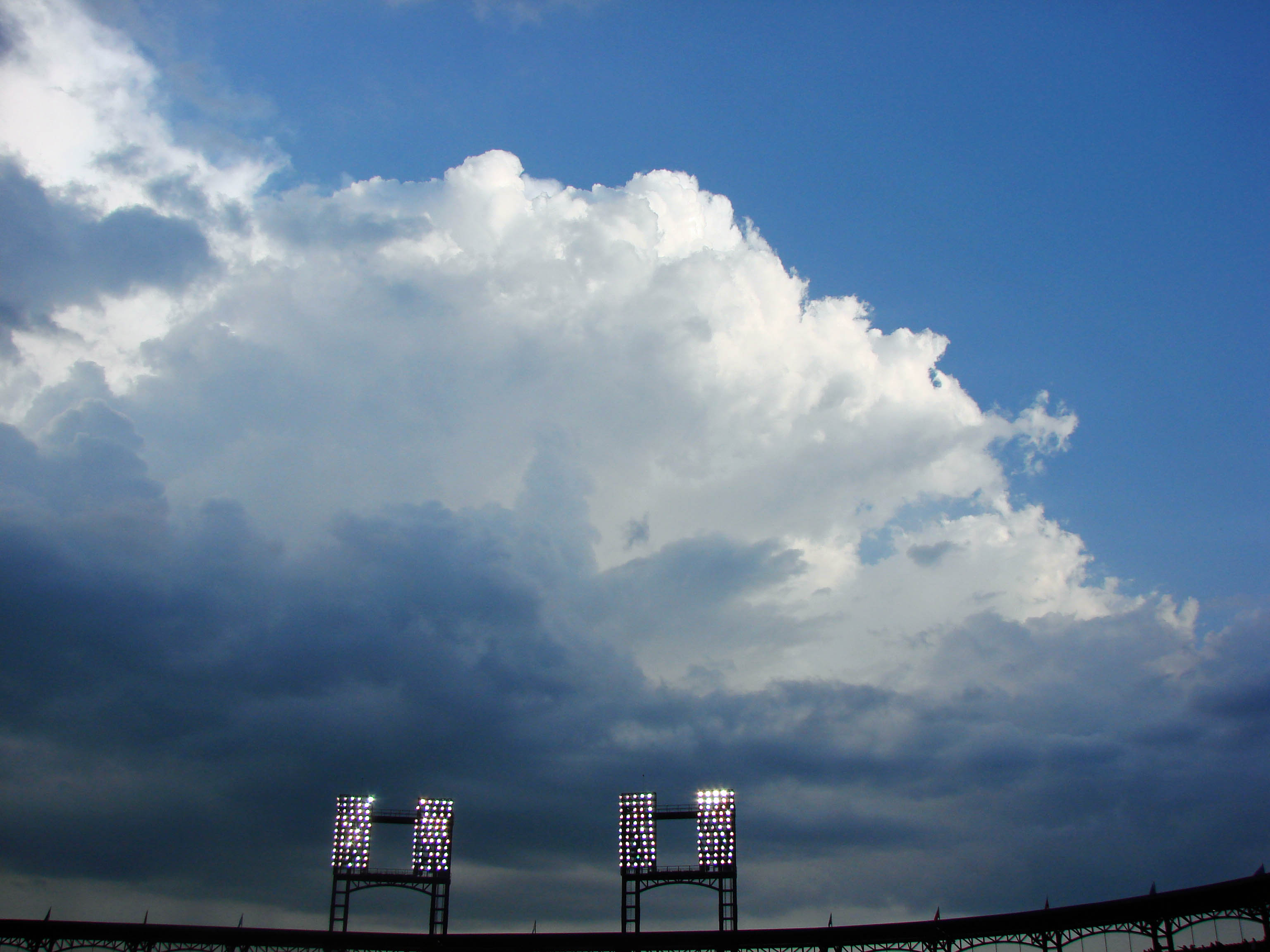
Busch Stadium III, St. Louis, Summer of 2007.


My first road trip to Busch Stadium III in the summer of 2007 corresponded with my visit with friends and a journey to St. Louis for the annual convention of SABR, the Society for American Baseball Research. It was a wonderful time, one which also gave me a little first hand exposure to vintage base ball down on the banks of the Mississippi River beneath the imposing Memorial Arch that frames downtown St. Louis.

It was a trip too wonderful in so many ways. Next to my Houston home town, I am more at home in the baseball-crazy city of St. Louis than anywhere else. Maybe that has its roots in the fact that all my friends there are deep red Cardinal or dark earth-toned and orange-hearted Brown fans from ancient days, but so what? When you like the company of the people you meet anywhere, you generally like the place too.

The part of the trip that stands out in my mind this morning is what I found missing in the newest St. Louis ballpark. Unlike our Minute Maid Park, the place has no roof to keep away the threat of rain. That lead picture is for real. Before the first game I watched there even got underway, those clouds rolled in and dumped enough rain to put the playing of the game briefly in doubt, adding about forty minute delay to the first pitch.

I’m not going to argue aesthetics here. There’s no question in mind that ballpark panorama is far more impressive without the presence of a high bulky retractable roof in either closed or open position, but, hey, I’m a Houstonian. I’m spoiled. Thirty-five years of the Astrodome spoiled most of us into expecting that a game scheduled shall always survive as a game played.

No rain checks here. Who needs rain checks in Houston?


Allen Russell, Houston Buffs President, 1946-53.


Well, there was a time we needed them in Houston too. In fact, some of my earliest experience as a nine-year old first time Buffs fan in 1947 centers on watching Houston Buffs President Allen Russell (the guy I first remembered as “the man in the white shirt”) going out there and pouring gasoline all over the soaked-with-water infield from a similar-to-St.-Louis pre-game rain and then lighting a match and blowing up the whole thing for the sake of recovering the dryness we needed for a game of baseball.

KA-BOOM!!! And the rainwater went away in a quick-rising puff of billowing black smoke.

No such remedial tactics were deployed sixty years later during that still recent summer in St. Louis. Such an approach in recent times would be written off as both inappropriate and too dangerous to fans and employees alike. Although I must add in Allen Russell’s behalf, he never allowed his grounds crew to take the risk of actually starting these ballpark fires. They would help do the ground-soaking with gasoline. Then Russell himself would go out to actually light, throw, and run from the match of ignition. That sight itself was worth the price of admission because he never got far in his escape from the explosion that ensued behind him and the blast itself too always seemed to first shake then stir him to an even quicker pace.


Houston Papers Loved Russell's War on Rain Checks.


As a kid, I thought Allen Russell fought rain-outs because he loved baseball so much that it broke his heart, as it did mine, to hear that a game had been cancelled due to rain. I was too young to understand the role that lost income dollars played in Russell’s war on the weather and just about anything else that hurt the gate.

Years ago, my good friend Jerry Witte, the late slugger of Houston’s 1951 Texas League champions, told me this supportive story of how fine-tuned Allen Russell’s pulse was to factors effecting game attendance. This is not my point, but we already know that Russell installed the first air-conditioned ladies room in baseball because he recognized that “comfort” was big as a factor in attracting more women to Buffs games. No need to cool the men’s room. The guys will come to the ballpark, regardless. Always have. “But we have to make it nicer for the ladies,” Russell boasted.

At any rate, it was early August of 1951 and the Buffs were starting to pull away from the rest of the pack in the Texas League. “We were out there starting our pre-game warm-ups on the field at Buff Stadium when Allen Russell then did something he never did prior to games. He came out on the field as though he wanted to tell us something. Finally, a few of us got tired of just watching him pace and went over to ask what he wanted.”

Russell must have been slightly taken aback by the players’ solicitous turn in his direction, but he chose his words carefully. As Jerry Witte remembers it, Russell answered in these terms: “You guys know how proud I am of your team success, so please take what I’m about to say in the right away. I will never ask you to give anything less than your best, but try to remember too: If the fans start taking it for granted that the Buffs are going to win, some of them may stop coming to see us play. – OK, that being said, – go get ’em.”

Enough said. Nothing stopped the Buffs in 1951 until they reached the Dixie Series. Then they lost to the Birmingham Barons in six games.


Ralph Kiner: Man with a Jack-Hammer Swing.

March 21, 2011

Post WWII MLB Homers? Nobody Did It Better Than Ralph Kiner.

Way earlier than any of our wildest thoughts that players could actually consume or rub on  substances that would enhance their abilities to mash a baseball from here to kingdom come, there was a fellow named Ralph Kiner, doing it better than anyone else in his MLB era, and doing it as a member of a club that even then was regarded as one of the doormats of big league baseball, the Pittsburgh Pirates.

Kiner was one of the great heroes of us kids in the minor league boonies because we mainly only heard or read of his explosiveness through the little information we got in our local papers or through the more detailed stories that came our way through The Sporting News. To add to the Kiner intrigue, he also happened to be one of those rare 1950 Bowman cards that was hard to find. The day I finally found a Kiner card in a routine package buy at Haenel’s Groceries helped send a rumble through or little corner of Pecan Park. Kids with more than one nickel to spend descended upon the store in search of their own Kiner – and in the wild hope of also picking up a maverick Musial or Williams card that might have also slipped out of the factory and into our hungry hands with the rare appearance of the Pirate prodigy.

Prodigy he was.

From 1946 through 1952, Ralph Kiner of the Pirates either led or tied for the National League lead in homers in seven consecutive seasons, and sometimes even coming close as a threat to Babe Ruth’s single season record with this line of these straight annual totals: 23, 51, 40, 54, 47, 42, and 37. Kiner’s 40 homers in 1948 tied him with Johnny Mize for  the MLB lead. That happened a second time in 1952, when Kiner tied Hank Sauer for the big league front line in long balls. On four other occasions (1947, 1949, 1950, and 1951), Ralph Kiner led the big leagues in home runs all by himself.

The Pirates traded Ralph Kiner to the Chicago Cubs early in the 1953 season. H continued to hit home runs through the 1955 season, but never lef the league again. He retired from his ten season MLB career (1946-1955) with 369 career home runs and a respectable career batting average of .279. His production highlights also included an NL RBI title in 1949 and slugging average titles in 1947, 1949, and 1951. He also led the NL in walks in 1949, 1951, and 1952, and also took the On Base Percentage crown in 1951.

Ralph Kiner was elected to the Baseball Hall of Fame in 1975. It was a much deserved individual honor for a guy never got close to a winning team season or a World Series without coming up with a ticket. To those of us who grew up as kids without eyes to see him play, we could only imagine him as a man who swung a bat that contained all the power of a jack-hammer. Given the dream-cloud high arch that the better mike men would tell us about over the radio when Kiner unloaded a blast, we could imagine these hard hit balls as they took flight into the blue.

Funny thing is – some of our fondest childhood baseball memories are the game radio scenes that only played out in our minds through good descriptive broadcasting and our own willingness to let these games unfold across the courses of our boundless imaginations.

Ralph Kiner, now 88, was once one of the really big stars in this theatre of the mind. And on this beautiful first full day of a new spring in 2011, I can only hope that he is doing well.

Thanks for the memories, Mr. Kiner!

Night Baseball Came to Houston in 1930

March 19, 2011

July 22, 1930: The lights went on for the first time at Buff Stadium in Houston.

Buff Stadium opened in Houston for the first time on April 11, 1928 at a cost of $400,000. it would be another two years, three months, one week, four days, and $250,000 before the club played its first night game on July 22, 1930. For a little more than half the cost of its original construction tab, Buff Stadium was finally empowered with the potential for doubling its annual attendance through night games.

Attendance history tells the story. In 1927, the last year of play in old West End Park on Andrews Street near downtown, a thrid-place Buffs club drew 141, 857 fans for the entire season. In 1928, their first year in the sparkling new jewel of the minors known as Buff Stadium, the first place Buffs pulled in 186, 459 fans on the season to their new site some four miles east of downtown.

It was an improvement, but hardly enough to justify the cost of change. Houston was still a workingman’s town. Given the limitations imposed by daytime baseball on fans, no new ballpark or championship team was going to be big enough to get people off work for frequent attendance at games during the work week.

After 1928, it didn’t take long for the Cardinals ownership and City of Houston officials to start hammering out a plan for adding the lights that had not been included in the original construction of the 11,000 plus seats venue. It wasn’t going to be cheap by the price on electrical work of this kind in the late 1920s and first year into the 1930s. That $250,000 construction tab represented a little more than 50% of the original cost of the entire unlighted ballpark and land. The Buffs and their supporters argued successfully that the cost would be worthwhile. With lights, the Buffs would be free to schedule games in the evening, away from the times that most people worked and smack dab in the zone  of a brand new territory of leisure time that offered little competition from other summertime entertainment options. With no television and limited radio, the movies were and eating out were the only serious competitors for the Houston leisure dollar and time investment going into the era of the Great Depression.

By 1951, winning night baseball in Houston was helping the Buffs draw more fans than the major league St. Louis Browns.

By 1931, the year of Dizzy Dean, Joe Medwick, and the great Texas League champion (108-51) Houston Buffs, the team drew 229,540 fans in their first full year of night game options, but attendance fell significantly in 1932 with the growing impact of the Depression and a third place club replacing Dean and Company. Only 112,341 showed up for all 77 homes games played that season. That’s a dismal average of 1,459 fans a game.

Things did not improve at the gate during the 1930s. Night baseball proved to be no magical elixir that could erase the deeper root touches of the economy upon Houston’s purse strings. Fortunately for baseball, the costs of running a club was low enough to make survival for most teams possible through the lean Depression years.

The Texas League shut down during the major World War II years (1942-1945). It was only after the war that night baseball began to take off in Houston as folks hoped it might some fifteen years sooner. With the dynamic Allen Russell now running the club as President for the St. Louis Cardinal parent organization, Houston used night baseball as a a ticket for playing themselves into the picture as a future expansion city site for a new 1962 ball club to be known as the Colt .45s.

The eight years of Allen Russell’s leadership proved to be the hint of all that could be in store for Houston’s baseball future. When Houston burst past the 400,000 fans mark in 1948, outdrawing the season fan base of the St. Louis Browns, it appeared that the city was well on its way as a prospective site for either a franchise shift or new club award in the majors. Things don’t work out that easy.

Houston got played a little in 1953 as the potential new home of the Cardinals during the period of the Fred Saigh meltdown, but that’s when August Busch stepped up to rescue the Redbirds by purchasing the franchise with his beer baron money. Houston would have to wait another seven years before it finally got the nod from the National League in 1960 as a 1962 expansion club.

Houston’s home attendance during the 1946-1953 Allen Russell Era showed these major facts: (1) Houston will support winning baseball, but will not tolerate losing for long: (2) the 1948 high water mark was offset the following season by the introduction of television into the Houston market for the first time. Once television arrived, baseball and all other forms of payment-for-leisure activities would have a competitor that would never go away.

Here are the Russ Era attendance figures:

1946: 7th place, 161,421;

1947: 1st place, 382,275;

1948: 3rd place, 401,383;

1949: 7th place, 263,965;

1950: 8th place, 255, 809;

1951: 1st place, 331,201;

1952:  8th placee, 195,246;

1953: 6th place, 203,543

Like most things so advertised, night baseball was never the silver bullet that cured all things that ailed the game, but it is hard today to see how the game could have survived into the year 2011 without it. Given the cost of player salaries and other overhead factors today, it’s impossible to see how baseball could have survived anywhere for long in the 21st century with an all day game schedule.

Those 1950 Bowman Cards

March 18, 2011

Former Site & Same Building for Haenel's Groceries at Myrtle & Redwood near Griggs Road in Pecan Park, Houston, Where Baseball Card Collecting Began for Many of Us in 1950.

Mr. Haenel put those little flat-wrapped baseball cards out there for us to find on the shelf near the single checkout stand of his store in the summer of 1950, which just happened to also be the highest-flying year our Pecan Park Eagles sandlot club would ever know as a competitive, self-starting gang of taking-on-all-comers baseballer specialists.

In 1950, Bowman baseball cards were all we had, al anyone had. For a nickel, you bought five cards and a flat stick of bubble gum that also had enough power to aromatically charge every card in the deck with its unique sugary smell. Open that deck, There are the cards. There’s the pink slab of gum. And there’s that smell. Hold any of the cards up to your nose and the results were always the same. They all smelled like bubble gum.

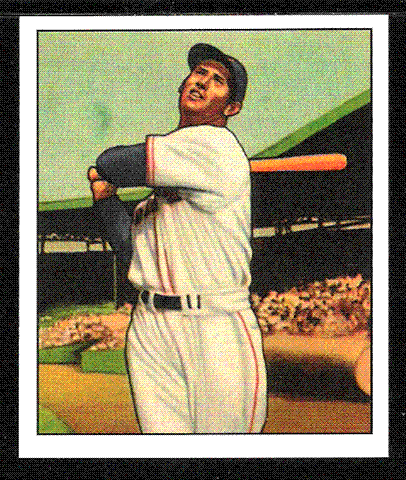
Ted Williams, Bowman Card # 98, 1950.

Even though the price seems pretty cheap today, nickels weren’t all that easy to come by in the summer of 1950. We tried buying Cokes, Pepsis, RC Colas, and Dr. Pepper and selling these for a profit on the streets nearer home, but that didn’t work out too well. It got so hot that we drank up all the profits. Mainly, we had to drum up extra chores that our moms would pay us to do, and that wasn’t easy either since most jobs around the house were already on our “expected to do for free” lists. We did do pretty well on soft drink bottle searches and, one way or another, we managed to keep going back to Haenel’s with out nickels.

There were 252 cards in that 1950 Bowman set and the company had no competition nationally from anyone else. Topps would not hit the card scene until 1951, but by 1955, Bowman would produce its last set before being ought out by Topps, the new king of the industry.

I always preferred the 1950 Bowman to all others. I’m sure that much pf that attraction was due to my younger age, but that wasn’t the whole attraction. A big part was their artistic look. Whereas, the later Topps cards were purely photographic, the 1950 Bowmans were hand-painted images of photos. To me, they just bore a classier superhero look, adding to the powerful auras we already projected upon our distant major league role models.

It also seemed as though Bowman used that hero-worship to play us like so many little squeaky violins. It seemed to work this way: The bigger the star, the harder it was to find his card. I never got a Ted Williams card straight out of the store, for example. I had to trade several others for one. The same happened with Ralph Kiner, who, even though he played for the “Lousy-then-too” Pirates, was also the home run king of his era.

You could find all the Ron Northeys, Wally Westlakes, Ken Heintzelmans, and Clyde Vollmers you never wanted in an average pack. Those were the ones that found their numerously available ways into our bicycle spokes. Even we were not so stupid in 1950 as to waste Ted Williams as a noise maker.

Today, I have one card that remains from my once quite healthy 1950 Bowman collection and it survived by accident, falling its way into a box I’ve since unpacked that contained a number of little mementos from childhood. You guessed it. It’s a Clyde Vollmer.

Marty Marion, Dead at 93

March 17, 2011

Arthur Richman (L) & Marty Marion, 2003.

Marty Marion is dead at 93. He passed away Tuesday night, March 15, 2011, in St. Louis, and leaving this world with the reputation of having been one of the greatest defensive shortstops in baseball history and a Cardinal icon. Over the course of his 13-season career (1940-1950, 1952-1953), Marion batted only .263, never hitting .300, but his defensive ability won him the National League’s 1944 Most Valuable Player Award and eight selections for the NL All Star team. Known as “Slats” for his long and limber frames – and as the “Octopus” for his ability to reach and stop just about every ball hit his way, Marion was respected as the greatest shortstop in Cardinals history until Ozzie Smith came along and, even then, some of the old-timers still hung around to argue his case.

Bud Thomas, Marty Marion, & Stan Musial, 2003.

As a player, Marion was an 11-season Cardinal (1940-1950) and a 2-year limited service guy for the old St. Louis Browns. Marty managed the 1951 Cardinals and then took his talents down the hall at old Sportsman’s Park/Busch Stadium I as the playing manager of the 1952-1953 Browns and the last mentor in that club’s history. He later took over as manager of the 1954 Chicago White Sox during the season and then stayed on to mentor the Sox through the 1955 and 1956 seasons.

In the late 1950s, Marty Marion served as president of a group that purchased the Houston Buffaloes of the AA Texas League and their stadium property from the Cardinals and moved the franchise up to participation in the AAA American Association for three final seasons (1959-1961).

Marion and Company hoped to use their position in Houston to gain the first major league franchise awarded to that booming area, but that 1960 nod went instead to a group led by Judge Roy Hofheinz and their commitment with Harris County to building baseball’s first domed stadium. The competition created enough acrimony to make the subsequent and MLB-required purchase of the minor league territorial rights from the Marion group a tense and expensive proposition for Hofheinz and his Houston Sports Association. The unpleasantness killed any hopes that some of us held for our town going into major league baseball as the “Houston Buffaloes” or “Buffs.” Once settled, Hofheinz then ditched the whole decades old club identity as Buffs in favor of their new his-ego-blessed name, the “Houston Colt .45’s.” Three years later, the club would Hofheinz-morph again into the “Astros,” and the new ballpark would transform into the “Astrodome,” Eighth Wonder of the World.

Very quietly, and little known to most people, Marty Marion was the straw that stirred the drink on Houston’s new Major League Baseball back in the early 1960s.

And now he’s gone. As a player. As a manager. As an entrepreneur. As a living icon of St. Louis baseball history.

Marty Marion & Bill McCurdy, 2003.

Old teammates like Red Schoendienst and Stan Musial will argue forever that Marty “Slats” Marion belongs in the Hall of Fame anyway  for his defensive ability and winning baseball savvy. A story that the late Red Munger once told me strongly suggests that the part about the “savvy” is nothing less than 100% true.

Back in 1947, according to Red Munger, he was pitching against the Brooklyn Dodgers at Ebbets Field when Jackie Robinson reached second base on a double down the left field line and began that little hop-hop dance off the bag in an effort to distract the Cardinal pitcher. All of a sudden. Marty Marion had called a quick timeout and was standing behind Munger with his glove covering his lips as he spoke.

“Hey, Red,” Marion whispered, “I’ve counted the hops this guy takes when he leaves the bag and how many steps he takes going back. We can pick him off. When you hear me sneeze out loud, just turn and throw a low hard one to the third base side of the bag. OK?”

“Gotcha,” Munger whispered into his own glove, as he never even looked in Robinson’s direction. “Let’s pick this guy off!”

Before he could even throw another pitch to the plate, Munger heard the Octopus sneeze. “AH-CHOO!”

Munger stepped off the rubber and wheeled a perfect throw to second. Marion’s glove awaited. ‘YOU’RE OUT!” The umpire called.

Not even close. Munger and Marion had caught Robinson a step off base he could not regain. The embarrassed, but fiery Robinson got up, but he didn’t run straight to his dugout. He first trotted by Munger on the mound, just slow enough in passing to leave a teeth-clenched message:

“You will never get away with doing that again!” Robinson spouted.

“And you know what?” a smiling Red Munger added. “Jackie was right. We never did it to him again, but that one time it worked was worth a lifetime of good memories, – Are you asking me if Marty Marion belongs in the Hall of Fame? Hell fire, man. Open the doors this afternoon.”