Posts Tagged ‘Baseball’

1951: New York Yankees 15 – Houston Buffs 9.

July 15, 2010

Sorry to be getting this story to you so late. It’s actually my third attempt. The first time I wrote it up back in 2003, it became part of the book I did with the late Buff slugging star Jerry Witte, “A Kid rom St. Louis” in slightly different form. Today’s version is pretty much of a reprint on the column I wrote over at ChronCom, the Houston Chronicle website, on July 7, 2008.

What stirred to repeat it here was the news that longtime Yankee Stadium public address announcer Bob Sheppard has died at age 99. Sheppard had worked the Yankee Stadium games from 1951 through 2006, becoming the franchise’s iconic voice over the process of time.

Thanks to my dad, I got to see the Yankee club that started Sheppard’s career in New York – and that 1951 team included Joe DiMaggio in his last season and Mickey Mantle in his first. And I got to see them both together in the same outfield at Buff Stadium, even getting to stand there on that field with them behind the spillover spectator ropes as a kid fan on the first standing room row.

How blessed can a lucky kid from the East End have been, so, in honor of Sheppard, my father, and the memory of a lifetime, here it is again, one more time.

The Houston Post, April 9, 1951

The date was April 8, 1951. It was a typically hot and humid 3:00 PM Sunday afternoon baseball game at Buff Stadium. Because of the very special circumstances, my dad had driven 13 year old me, my 9 year old little brother John, and my 13 year old Pecan Park best friend Billy Sanders to a pre-season exhibition game at the old ballpark.

The New York Yankees were coming through town to play the Houston Buffs in a single game. The great Joe DiMaggio was set to play center field for the Yankees, with 18-year old rookie spring training phenom Mickey Mantle playing right fieldI. Everybody in Houston wanted to see this game. And it would turn out to be a game and afternoon that all of us would remember forever.

Oh my! I only wish that I had been able to take my Kodak Brownie camera with me to that special game on that particular day, but I learned too late that I had no more film and, with Dad springing for the tickets, I knew better than to ask him for extra money as an advance on my allowance – just for film. Dad had his own ideas about what was important and he didn’t suffer well from requests that seemed extravagant. As a result, 57 years later, you will just have to settle here for pictures that still exist vividly in my mind as best I am to develop them for you in words.

We left for the game only about forty-five minutes prior to its scheduled start. That fact alone bothered me. Since we didn’t have tickets, I worried that we might not be able to get into the ballpark due to an almost certain sellout. Anxiety didn’t matter. Dad already had settled into his “don’t worry about it” mode and there was nothing left for me to do but keep my fingers crossed and pray. Yes, I prayed about stuff like this when I was 13.

When we reached the Cullen Boulevard exit going north up the Gulf Freeway from the southeast, our red 1950 Studebaker immediately oozed into bumper-to-bumper traffic and slowed to an inch-by-inch pace over the last 500 feet of street-trekking into the Buff Stadium parking lot.

“Oh, My God!” I muttered from the back seat.

“Don’t get the Lord involved in this one!” Dad affirmed, as he lit another Camel and began to bongo the steering wheel with his right hand.

I didn’t say it, but I thought it: “If we had gotten the Lord involved earlier, we wouldn’t be going through this and left the house earlier, and with my Kodak Brownie camera already loaded with film!”

By the time we reached the ticket gate, we already knew that we would be lucky if the SRO tickets were still available. Buff Stadium held 11,000-seated tickets, but club president Allen Russell was already roping off about twenty feet from the outfield in left and right field. By taking that measure and just making every ball that flew or rolled into the outfield SRO section a ground rule double, Russell would be able to get an extra 2,500 to 3,000 fans into the ballpark for the big game.

Once Dad bought our tickets for the left field crowd, I didn’t mind at all. I knew that we now had a chance to fight for a front-of-the-rope position deep as possible toward center field – and very near the great Joe DiMaggio.

It happened. We did it. We battled for four spots in left center on the front rope line and won. To our left during the game, the great Joe D. was often no more than fifty feet away. Once he even came over and, running toward us, he caught a fly ball directly in front of us. In my mind I whispered, “Nice catch, Joe!”, but the actual words could not escape my lips. I can still hear the sound of his footsteps as his charge came closer and closer. For whatever reason, I wasn’t worried about him crashing into us. And he didn’t.

I could squint into the further distance and see the young Mickey Mantle in right field. He looked so very young because he was. He was only five years older than my friend Billy and me. I remember thinking, “Wow! In five years, I could be either playing pro baseball too or else, serving with the army in Korea.”

Neither happened. I never had the talent of a Mickey Mantle. And they settled the Korean War before I could get there.

Once in a while during the game, when the Yankees were in the field, I would close my right eye to block out the sight of Yankee left fielder Gene Woodling. As I did, it was to help my fantasy that it was I, not Woodling, playing left field for the Yankees. What an outfield that was on April 8, 1951: Mantle in right; DiMaggio in center; and McCurdy in left!

In my dreams, small things never occurred to me.

The game itself did not disappoint, except for the fact that none of my Yankee adulation had removed my first loyalty to the Buffs. The Buffs jumped on the Yankees early, but couldn’t hold them for the full nine innings.

Going into the 9th, the Yankees led, 13-6, paced by Mickey Mantle’s 5th inning, 3-run homer over our heads and over the double-deck fence in left center that rose behind us. 2-run homers earlier by both Russell Rac and Frank Shofner had not been enough to keep the Buffs in contention.

Then something happened in the 9th that may have never occurred before or since. I know the facts of this story from my interviews with former Buffs slugger Jerry Witte, when we were working on his biography “A Kid From St. Louis” a few years ago.

Jerry Witte had been asking Joe DiMaggio all day for a souvenir bat. Nothing happened until the top of the 9th, when Joltin’ Joe crashed a homer of his own to left with one man on base. As the game moved to the bottom of the 9th with the Yankees now leading 15-6, DiMaggio sent his home run bat over by way of a bat boy as his gift to Jerry Witte.

When Jerry Witte came to bat against veteran hurler Max Peterson with two Buffs on base in the bottom of the 9th, he decided on impulse to use the DiMaggio bat for his last time up against the Yankees.

Lo and behold! Deploying the same bat that Joe D. had used to crank a homer in the top half of the 9th, Jerry Witte unloaded a “Fair Maid Bakery” blast to center field in the bottom of the 9th to make the final score in the game New York Yankees 15 – Houston Buffs 9!

As Witte trotted home at the end of his home run pace, he says he stole a look for DiMaggio in the Yankees first base dugout. He said that DiMaggio was falling all over himself with laughter for having supplied Witte with his weapon of last productive resort.

After the game. Jerry Witte got Joe DiMaggio to sign the bat for him. He still owned the bat at the time of his death in 2002. If there was ever another instance in organized baseball of two players from opposite teams both homering in the 9th, or any other inning, of the same game, using the same bat, I’ve never heard of it.

I will always be grateful to my Dad for taking us to the biggest game in my childhood memory. I’m also glad that he didn’t buy our tickets in advance. Had he done so, we would have missed out on our up close and personal experience in the outfield with the great Joe DiMaggio on a hot April day in Houston back in 1951.

Things do have a way of working out for the best. Sometimes.

Pitching and the Hall of Fame

July 14, 2010

Cy Young's Pre-Modern Media Era & Physique Didn't Help Him Build His Case Much for the First Hall of Fame Class, But Those 511 Career Wins Spoke Loud & Clear Enough!

Cy Young

Charlie Sheen

Which of these Cleveland pitchers looks more like a Hall of Fame candidate? The guy on the right with the fit-looking body and the”Wild Thing” nickname? Or the guy on the left with the big waist and the 511 big league wins?

You guessed it. The Baseball Hall of Famer in the above photos is the one and only Cy Young. Charlie Sheen may earn one in the Hall of Fame for OC/Addictive Disorders someday, but that’s neither here nor there for our purposes in this discussion. Charlie’s image is just here to show again how you can’t judge a book by its cover when it comes to the Baseball Hall of Fame.  If they expelled all members who got to Cooperstown with something less than an Adonis-like body this afternoon, Babe Ruth, Cy Young, Yogi Berra, Honus Wagner, and Ernie Lombardi, among so many others, will be on the street by nightfall.

I want to talk about pitchers and Cooperstown today? What s the benchmark for greatness that gets some people in the door while keeping other, perhaps, even more deserving members out? Has it changed over the years? Or does it simply hang on the thin air of popular spin, a candidate’s personality dominance, or a political pull with veterans committee members, or simply a guy’s eternal association with some great moment in baseball history?

With pitchers, “300 wins” seems to have become the standard for serious Hall of Fame consideration of starting pitchers, although, if you look at all pitchers in the Hall of Fame, it’s easy to see that the “300” club line has not always been the standard. Just look at the career records for all pitchers in the Hall of Fame at Cooperstown, New York (Graph Courtesy of Baseball Almanac.Com):

PitchersBOLD Indicates Statistical Leader For HOF Pitchers
Name [Link To Full Stats] Games Starts Wins Losses ERA K BB
Grover Alexander (bio) 696 600 373 208 2.56 2,198 951
Chief Bender 459 334 212 127 2.46 1,711 712
Mordecai Brown 481 332 239 130 2.06 1,375 673
Jim Bunning 591 519 224 184 3.27 2,855 1,000
Steve Carlton 741 709 329 244 3.22 4,136 1,833
Jack Chesbro 392 332 198 132 2.68 1,265 690
John Clarkson 531 518 328 178 2.81 1,978 1,191
Stan Covelski 450 385 215 142 2.89 981 802
Dizzy Dean 317 230 150 83 3.02 1,163 453
Don Drysdale 518 465 209 166 2.95 2,486 855
Dennis Eckersley 1,071 361 197 171 3.50 2,401 738
Red Faber 669 483 254 213 3.15 1,471 1,213
Bob Feller 570 484 266 162 3.25 2,581 1,764
Rollie Fingers 944 37 114 118 2.90 1,299 492
Whitey Ford 498 438 236 106 2.75 1,956 1,086
Pud Galvin 697 682 360 308 2.87 1,799 744
Bob Gibson 528 482 251 174 2.91 3,117 1,336
Lefty Gomez 368 320 189 102 3.34 1,468 1,095
Burleigh Grimes 616 497 270 212 3.53 1,512 1,295
Lefty Grove 616 457 300 141 3.06 2,266 1,187
Jesse Haines 555 388 210 158 3.64 981 871
Waite Hoyt 674 423 237 182 3.59 1,206 1,003
Carl Hubbell 535 431 253 154 2.98 1,677 725
Catfish Hunter 500 476 224 166 3.26 2,012 954
Fergie Jenkins 664 594 284 226 3.34 3,192 997
Walter Johnson 802 666 417 279 2.17 3,509 1,363
Addie Joss 286 260 160 97 1.89 920 364
Tim Keefe 599 593 342 225 2.62 2,543 1,234
Sandy Koufax 397 314 165 87 2.76 2,396 817
Bob Lemon 460 350 207 128 3.23 1,277 1,251
Ted Lyons 594 484 260 230 3.67 1,073 1,121
Juan Marichal 471 457 243 142 2.89 2,303 709
Rube Marquard 536 404 201 177 3.08 1,593 858
Christy Mathewson 635 551 373 188 2.13 2,502 844
Joe McGinnity 465 381 246 142 2.66 1,068 812
Hal Newhouser 488 374 207 150 3.06 1,796 1,249
Kid Nichols 620 561 361 208 2.95 1,868 1,268
Phil Niekro 864 716 318 274 3.35 3,342 1,809
Jim Palmer 558 521 268 152 2.86 2,212 1,311
Herb Pennock 617 420 240 162 3.60 1,227 916
Gaylord Perry 777 690 314 265 3.11 3,534 1,379
Eddie Plank 623 529 326 194 2.35 2,246 1,072
Old Hoss Radbourn 528 503 309 195 2.67 1,830 875
Eppa Rixey 692 553 266 251 3.15 1,350 1,082
Robin Roberts 676 609 286 245 3.41 2,357 902
Red Ruffing 624 536 273 225 3.80 1,987 1,541
Amos Rusie 462 427 245 174 3.07 1,934 1,704
Nolan Ryan 807 773 324 292 3.19 5,714 2,795
Tom Seaver 656 647 311 205 2.86 3,640 1,390
Warren Spahn 750 665 363 245 3.09 2,583 1,434
Don Sutton 774 756 324 256 3.26 3,574 1,343
Dazzy Vance 442 347 197 140 3.24 2,045 840
Rube Waddell 407 340 193 143 2.16 2,316 803
Ed Walsh 430 315 195 126 1.82 1,736 617
Mickey Welch 564 549 307 210 2.71 1,850 1,297
Hoyt Wilhelm 1,070 52 143 122 2.52 1,610 778
Vic Willis 513 471 249 205 2.63 1,651 1,212
Early Wynn 691 612 300 244 3.54 2,334 1,775
Cy Young 906 815 511 316 2.63 2,803 1,217
Name [Link To Full Stats] Games Starts Wins Losses ERA

Yesterday I made the point that Joe Niekro’s 221 career wins places him above fifteen predominantly starting pitchers who are members of the Hall of fame. I might add that Gaylord Perry’s brother, Jim Perry, had a similar experience to Joe Niekro. Both these brothers of Hall of Fame pitchers Phil Niekro and Gaylord Perry were excellent in their own rights, but neither ever earned serious Hall of Fame consideration. And what did Joe Niekro and Jim Perry share in common in this comparison? Both came up about 79 to 85 wins short of the “300” win mark.

The 22-year career of the great Bert Blyleven (287-250, 3.31) is our greatest example of how foreboding that “300 win” gate on the Hall really is. People who oppose Blyleven point to his 250 losses as a barrier to his consideration, but these critics fail to take into account that Bert played for a lot of mediocre teams from 1970 to 1992. He’s lucky to have won 287 games, playing under those circumstances,

The relievers in the Hall of Fame are evaluated more on the basis of “save” totals, but where does that leave the middle relief guys who pick up far fewer wins than starters and virtually no “saves” in this era of increasing specialization?  Other than “out in the cold” from the Hall of Fame, I have no idea.

It’s also going to be interesting to see how things shift on the “300 win” door as time goes by from here. With starters going fewer innings, starters are losing wins to relief staffs that cannot hold leads. (See Roy Oswalt of the Astros, for example.) Where does that leave people like Oswalt who do have the ability to put up Hall of fame numbers, but do not get their wins over time? It most likely leaves them on the same bench with people like Bert Blyleven – on the outside, looking in.

I’m not sure Roy Oswalt is a Hall of Fame candidate, although I once thought he might be. Roy cannot get his wins unless he ends up playing for a club with a strong pen. Plus, we’re not even sure he wants to play long enough to qualify for consideration with enough wins. Players today make so much money that even the really durable ones may choose to walk away from shorter careers as big leaguers for the sake of some other new career or retirement direction. If that happens enough, the “300 win club ” shrinks even  further and the HOF has to either shut the door on new candidates, or else, start looking at pitchers and their qualifications for greatness far differently than their win totals.

What do you think? Please record your own thoughts on what qualifies a pitcher for the Hall of Fame as a reply to this column on the subject.

Also, speaking of greatness locally, please check out the column I wrote yesterday in support of the Astros retiring Joe Niekro’s number 36 this season or asap. If you agree, please weigh in there by leaving a comment on that subject with that column. That link is as follows:

https://thepecanparkeagle.wordpress.com/2010/07/13/its-time-to-retire-joe-niekros-astros-36/

It’s Time to Retire Joe Niekro’s Astros #36

July 13, 2010

Joe Niekro Has Been the Astros Franchise Wins Leader for 25 Years! His Total MLB WIns Exceed Those of 16 Great Starting Pitchers in the HOF at Cooperstown.

Sometime in the next couple of weeks, Roy Oswalt may tie and surpass Joe Niekro as the all time leader in pitching wins for the Houston Astros before he then moves on via a trade to a contending club. That trade may not happen, but it seems likely and right for all concerned at this point in time that it will.

Whether the Oswalt trade happens or not, whether Roy breaks Joe’s Houston record before he goes or just stays, it’s high time we put the contributions of the late Joe Niekro in perspective and see that the time to retire his Astros uniform #36 is not maybe. Not ten years from now. Not five years down the road. But now. Right Now. 2010 Now. Before this season of so much good time to tend the garden of honoring our ball club’s past slips quietly into history. Now is the time to get it done.

Most of you know the bare bones that support the body of work that qualifies Joe Niekro for the number retirement honor, but let’s cover them briefly for those who don’t know:

(1) 144 Franchise Wins. In his eleven seasons as a Houston Astro (1975-85), Joe Niekro compiled more wins than any other pitcher in Houston MLB franchise history. Now Roy Oswalt stands right behind Joe with 143 wins, If Oswalt ties or breaks the record, he won’t be breaking a record that’s only stood for six months to two years. Joe Niekro has held the wins record for a quarter century – ever since he passed Larry Dierker for the honor in 1985 on his way via a deal that would send him to the New York Yankees that same season.

(2) First Back-to-Back Twenty Win Seasons. Joe Niekro rolled in 1979-80. The crafty right handed knuckleballer, who mixed his signature pitch with an excellent fastball and tough change, became the first pitcher in franchise history to win twenty or more games in consecutive seasons. His 21 wins and 5 shutouts in 1979 both led the National League. His performance got him on the 1979 All Star team and his production won him the The Sporting News Pitcher of the Year for 1979 Award. He also finished second to Bruce Sutter in the Cy Young Award voting.

(3) Joe Pitched Houston to It’s First Division Crown in 1980. After the Astros dropped their last three games of the 1980 season and fell into a tie with the Dodgers for the division lead in the NL West, Joe Niekro got the call from Manager Bill Virdon to pitch a one-game playoff in LA that would decide the division crown and send the winner on to the playoffs. Niekro gave up six hits in pitching the Astros to a 7-1 win and their first playoff appearance. Joe then defeated the Phillies, 1-0, in Game Three of the NLCS that the Astros ultimately lost in five outings.

Phil Niekro, Bill McCurdy, Joe Niekro (2005)

(4) Induction into Texas Baseball Hall of Fame, 2005. Joe Niekro was inducted into the the Texas Baseball Hall of Fame in 2005, just a little more than a year prior to his sudden death from a brain aneurysm at his home in Florida. This is also around the time I got to know Joe a little personally due to my work at the time as Board President of the TBHOF. He was a fine fellow, as is his brother, Cooperstown Hall of Famer Phil Niekro. – For their careers, the Niekros are the winningest brother pitchers in MLB history. Both men excelled due to the knuckle ball pitch they learned from their father. Phil Niekro knuckled 318 career wins; Joe registered 221. Their Niekro tab of 539 victories is approached only by the 529 wins put together by brothers Gaylord (314) and Jim (215) Perry in their major league careers.

(5) Joe Niekro’s Place Among the Pitching Greats of Baseball History. Here’s where we get into the less obvious reason why the Astros should honor joe Niekro by retiring his number 36. Get this. – When you really look at the pitching record of Joe Niekro, you are looking at a guy who easily could’ve also gotten the nod for the Hall of fame at Cooperstown and joined with his deserving brother Phil. Joe Niekro’s 221 career wins for his entire MLB career (1967-88) are greater in number than the totals for fifteen predominately starting pitchers who did get the nod for induction into the HOF at Cooperstown.

Again, Joe Niekro won 221 major league games – more than the following fifteen Hall of Fame starters: Chief Bender (212), Jack Chesbro (198), Stan Covaleski (215), Dizzy Dean (150), Don Drysdale (209), Lefty Gomez (189), Jesse Haines (210), Addie Joss (160), Sandy Koufax (165) Bob Lemon (207), Rube Marquard (201), Hal Newhouser (207), Dazzy Vance (197), Rube Waddell 193), and Ed Walsh (195).

Will 2010 be Joe Niekro's Next Rainbow Year? This time at Minute Maid Park?

If Joe Niekro were alive today, he would be the first in line to shake the hand of Roy Oswalt for becoming the career leader in pitching wins for the Astros, if that is to be. Joe Niekro was all class. And he was an even greater pitcher than his lifetime acknowledgements reveal.

It would be both fitting and an act of class for the Astros organization to retire # 36 before this season ends. Joe Niekro is not going to be any more deserving if we wait any longer. He’s deserving now – and he has been justly deserving for a very long while. It’s time to recognize him with the kind of honor that would really be noticed at this point in history. It would be a shame to go into the upcoming 2012 50th anniversary of the franchise celebration with #36 not already hanging from the rafters at Minute Maid Park – and waiting until 2012 is an embarrassing thought in itself.

Please, Astros. Do it now. Retire #36 before this 2010 season ends. A lot of devoted Joe Niekro fans would show up for that one. There’s no question in my mind.

While we are building for the future. Let’s stop long enough to honor someone appropriately who was a major part of our first winning taste of victory. His name was Joe Niekro. His number was 36.

My Choice for Astros’ New Batting Coach

July 12, 2010

"You really want to know what makes me sad, Carlos??? ..."

The causes of bad hitting are not hard to identify. They’re just sometimes hard to pin down and correct in a given situation.

In a general nutshell, the causes of bad hitting are these: (1) good pitching; (2) poor natural hitting ability; (3) bad hitting mechanics; (4) terrible coaching; (5) reflex failure due to injury or aging; (6) eye problems; (7) bad habits off the field that deplete performance ability; and (8) bad mental attitudes at bat that include lack of confidence and everything that falls between trying too hard and not giving a flying-flip what happens at the plate.

Although I like Astros icon Jeff Bagwell, I personally don’t think that the current Mendoza Land Doze of the 2010 Astros has anything to do with the absence of good coaching from Sean Berry. If we were going to fire Berry in the name of “changing something,” I have a guy in mind whom I like better than Baggy for this job. In fact, here’s a link to the fellow whom I think would have been the best new batting coach choice for the problems of the troubled hitters of the current Astros team:

http://www.youtube.com/watch?v=WEbzM2FUP9s

Good Luck, Sean Berry, and have a nice Monday, everybody!

Oswalt Closes on Niekro as All Time Astro Winner

July 11, 2010

One win behind Joe Niekro, Roy Oswalt got to the top in Houston faster than anybody!

As of this day and morning date, Sunday, July 11, 2010, Roy Oswalt has compiled 143 wins pitching only as a Houston Astro from 2001 to 2010. Roy trails knuckleballer Joe Niekro by a single victory  on the list of all time biggest franchise pitching winners. Joe Niekro registered 221 total wins in a 22-season total career (1967-1988) and he bagged 144 of these babies as a Houston Astro hurler in eleven seasons from 1975 to 1985.

The question now is: Which will come first – Roy’s Houston franchise record-breaking win as a pitcher – or his trade for future value to a 2010 title contender in this year of the “Expensive Veterans for Sale As We Build For the Future” campaign down at Minute Maid Park?

Time will tell – and time is short. The trading deadline is coming up on July 31st and, as the Houston Chronicle covers more completely this morning, the Seattle trade of the more affordable Cliff Lee to the Texas Rangers has elevated Roy Oswalt to the top rung of most desirable candidates still out there on the vine. Only Roy’s heavy-bucks contract and how much the Astros will have to eat of it to swing a deal stands in the way.

At any rate, if Roy’s going to tie and pass Joe Niekro for the all time lead in franchise pitching wins, he had better get them quickly. In terms of fewest innings pitched to get there, Roy Oswalt already has reached the second rung on the ladder faster than anyone before him.

If we have to give him up, we are going to miss him. As an Astros fan, I will simply hope that the Reds of our own division don’t come up with the best, most workable deal for Roy. His loss to Houston would be greatly compounded if we had to deal with Roy coming back to pitch against us in three home stands each season over the next five to eight years. The only worse trade would be for the Astros to deal Oswalt to the Cardinals. Thank God the Cards are cool on pitching, for now. They are, aren’t they?

For the record, here’s the Top Ten List of Biggest Winners among Houston Pitchers for the entire period of the major league franchise from 1962 through this date in 2010. The list includes the number of innings that each pitcher worked to get there:

(1) Joe Niekro (144 wins in 2270.00 IP)

(2) Roy Oswalt (143 wins in 1923.33 IP)

(3) Larry Dierker (137 wins in 2294.44 IP)

(4) Mike Scott (110 wins in 1704.00 IP)

(5) J.R. Richard (107 wins in in 1606.00 IP)

(6) Nolan Ryan (106 wins in 1854.67 IP)

(7) Don Wilson (104 wins in 1748.33 IP)

(8) Shane Reynolds (103 wins in 1622.33 IP)

(9) Bob Knepper (93 wins in 1738.00 IP)

(10) Ken Forsch (78 wins in 1493.67 IP)

Have a peaceful Sunday, everybody!


1949 Again: An All Star Team from Hell

July 10, 2010

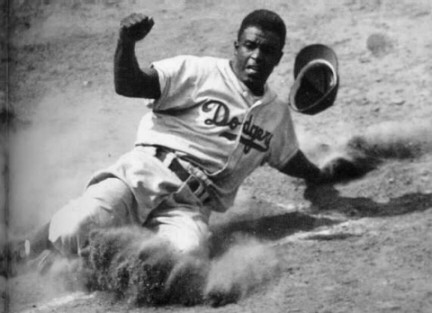
Jackie Robinson and his NL-leading .342 BA is our second baseman.

I had so much fun with the 1949 article yesterday that I couldn’t resist feasting upon all this talent by putting together a starting lineup and roster from hell. Maybe, I should say it more plainly: hell for anybody who played us.

How many clubs in 2010 wouldn’t mind having this lineup and roster in the chase for this year’s World Series? Why, with these guys taking the rosters places of those players who are there now, the Baltimore Orioles, Pittsburgh Pirates, and Houston Astros might even still have a chance at the 2010 World Series title. The problem for owners would be payroll. These guys would have to be signed in 1949 at 1949 prices and then time-traveled here for action in 2010. Any owner who brings this bunch here to 2010 first, and then tries to sign, won’t be able to afford them:

Starting Lineup, ’49 Club,  B/H Preferences, & Notable 1949 Stats:

(1) Jackie Robinson, 2b   (Dodgers) (BR/TR) (.342 BA, Led NL)

(2) George Kell, 3b   (Tigers) (BR/TR) (.343 BA, Led AL)

(3) Stan Musial, 1b   (Cardinals) (BL/TL) (.338 BA, 207 H, 39 HR, 131 RBI)

(4) Ralph Kiner, lf     (Pirates) (BR/TR) (.310, 54 HR, 117 RBI)

(5) Ted Williams, rf     (Red Sox) (BL/TR) (.343 BA, 150 R, 43 HR, 159 RBI) *TW

(6) Joe DiMaggio, cf   (Yankees) (BR/TR) (.346 BA) *JD

(7) Vern Stephens, ss   (Red Sox) (BR/TR) (.290 BA, 39 HR, 159 RBI)

(8) Roy Campanella, c  (Dodgers) (BR/TR) (.287 BA, 22 HR, 82 RBI)

Pitchers (League Leader Totals in Bold Type):

Mel Parnell       (Red Sox) (BL/TL) (25-7, 2.77) (27 CG) (277.1 IP)

Warren Spahn    (Braves) (BL/TL) (21-14, 3.07) (25 CG) (151 SO)

Virgil Trucks       (Tigers) (BR/TR) (19-11, 2.81) (6 SHO) (153 SO)

Ellis Kinder         (Red Sox) (BR/TR) (23-6, 3.36) (6 SHO) (.793 W%)

Bob Lemon          (Indians) 22-10, 2.99)

Vic Raschi          (Yankees) (BR/TR)  (21-10, 3.34) (37 GS)

Don Newcombe    (Dodgers) (BR/TR) (17-8, 3.17) (5 SHO)

Preacher Roe         (Dodgers) (BR/TR) (15-6, 2.79) (.714 W%)

Allie Reynolds      (Yankees) (17-6, 4.00)

Joe Page                (Yankees) (BL/TL) (13-8, 2.59) (27 SV)

Howie Pollet        (Cardinals) (BL/TL) (20-9, 2.77) (5 SHO)

Catcher:

Yogi Berra           (Yankees) (BL/TR) (.277 BA) (20 HR)

Infielders:

Ted Kluszewski, 1b   (Reds) (BL/TL) (.309 BA)

Bobby Doerr, 2b        (Red Sox) (BR/TR) (.309 BA)

Luke Appling. ss/3b  (White Sox) (BR/TR) (.301 BA)

Outfield:

Enos Slaughter    (Cardinals) (BL/TR) (.336 BA) (13 3bh)

Roy Sievers            (Browns( (BR/TR) (.306 BA) ((16 HR) (AL ROY)

*TW WIlliams lost batting championship by percentage points to George Kell in 1949; tied Vern Stephens for AL-lead in RBI with 159.

*JD DiMaggio missed the first half of the season due to a mysterious toe injury, but if Joe can walk on nine toes, I’ll still take him as my center fielder over anyone else.

———————————————————————————————————————

It’s a sweet lineup and roster. I wouldn’t mind seeing these guys in their prime playing the final two games as the Houston Astros in the current home series with the Cardinals this weekend. Of course, it might seem a little weird watching the likes of Musial and his ancient Cardinal buddies going up against the present team from St. Louis.

It probably wouldn’t happen. As we discussed yesterday, Musial was no LeBron James.

It still would be a great collection of talent on one team. Don’t you think? Is the Pope Catholic?

Astros Sweep Pirates

July 8, 2010

"She'll be comin' round the mountain when she comes!"

(The following lyrics work to the tune of “Comin’ Round the Mountain:”) *

Chorus One:

If we played the Pittsburgh Pirates every day!

If we played the Pittsburgh Pirates every day!

We could glide right to a pennant!

With the Astros sure to win it!

If we played the Pittsburgh Pirates every day!

Chorus Two:

If old Lance could hit ’em twice a bit more often!

If old Lance could hit ’em twice a bit more often!

We could let our hard hearts soften,

‘Stead of shopping for a coffin!

If old Lance could hit ’em twice a bit more often!

Chorus Three:

If sweet Roy could throw those goose eggs every time!

If sweet Roy could throw those goose eggs every time!

He’d be through with Astro-costin’,

‘Cause he’d soon be up at Boston!

If sweet Roy could throw those goose eggs every time!

—————————————————————–

*Indulge me, folks. This sort of word-rambling is my favorite remaining avenue of celebratory expression.

The Houston Buffs’ Cubs Years, 1959-61

July 8, 2010

Future Hall of Famer Billy Williams played LF and batted .323 with 26 HR for the 1960 Houston Buffs.

By the time the Houston Buffs settled into their last three years of minor league baseball from 1959 to 1961, the dye had been cast that the city’s real future now rested in the major leagues as one of the new expansion clubs. When former St. Louis baseball great Marty Marion and his group of independent investors then purchased the minor league franchise and ballpark of the Houston Buffs from the St. Louis Cardinals after the 1958 season, it most likely took place with a view toward a future that far surpassed their immediate plans to move the ball club up to the next level with the AAA American Association from the AA Texas League.

The Marion group worked out a minor league player supply group with the Chicago Cubs and agreed to start playing in the American Association in 1959 as the AAA affiliate of the Chicago North Siders. For all the Cardinal fans of the Houston area, the change resulted in quite a culture jolt. No longer would the Buffs be wearing the Cardinal red and deep Navy blue trim of the vaunted and cherished St. Louis NL club.

When the 1959 Buffs took the field on Opening Day 1959, they did so in the Powder blue caps, lettering, and trim on the Cloud white uniforms that were the style of the Chicago Cubs. Even though we Buff  fans were told that these guys on the field were our Buffs, and we knew they were, part of our fan souls kept waiting for the “real Buffs” to show up in their Cardinal red gear. It took us a while to adjust. After all, the Buffs had been a Cardinal farm club from the early 1920s. That nearly four decades of Cardinal influence was extremely powerful.

Those three final years of the Houston Buffs were mostly forgettable on the field. Playing first under Rube Walker and then again under former Buffs manager Del Wilber, the 1959 Buffs finished dead last in the five-team American Association West Division with a horrendous record of 58-104. Houston fans seized upon an obvious conclusion: “Buffs, you say? I don’t think so! These guys not only dress like the Cubs! They play like them too!”

The 1959 roster did contain some notables. Future Houston Colt .45 Pidge Browne broke in at first base with a .261 batting average and 12 homers. Former Browns outfielder Jim Delsing played regularly at a low performance level (.233 BA, 4 HR). Delsing is best remembered as the guy who pinch ran for Eddie Gaedel after the little vertically challenged batter (midget) walked in his only plate appearance for the St. Louis Browns on August 19, 1951. – Dave Hoskins, the black pitcher who broke the color line in the Texas League with Dallas back in 1952, also spent a little time pitching for the Buffs as part of his twilight song in baseball.

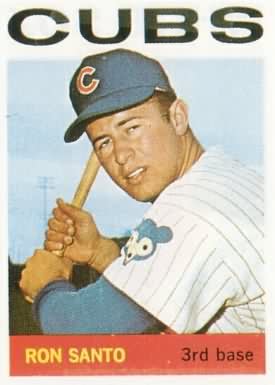
1960 was the season for memorable names during the Buffs’ Cubs years. Billy Williams played left field for the club, batting .323 with 26 homers on his last minor league stop on the way to his Hall of Fame major league career with the Cubs. Ron Santo played third base in 1960, hitting .268 with 7 homers. The ’60 club also included outfielder Sweet Lou Johnson (.289, 12 HR), outfielder-manager Enos Slaughter (.289, 1 HR in 58 times at bat), plus pitchers Mo Drabowsky (5-0, 0.90) and Dick Ellsworth (2-0, 0.86). The 1960 club did much better, finishing 3rd in  now eight-club circuit, but they lost in the first round of the playoffs for the league championship.

Ron Santo and Billy Williams were the best of the Buffs-Cubs years.

The 1961 last edition of the Houston Buffs went through four managers: Grady Hatton, Fred Martin, Lou Klein. and Harry Craft. Interesting! The Buffs’ last manager, Harry Craft, would also become the first manager of the new major league Houston Colt .45s in 1962.

First baseman Pidge Browne (.250, 9 HR in 62 games) and shortstop J.C. Hartman (.259, 6 HR) both played well enough to join manager Craft on the first voyage of 1962 Colt .45s. The club also included another future Houston major leaguer. Dave Giusti (2-0, 3.00 in 3 games) also pitched a few innings for the last Buffs.

In spite of their 73-77 fourth place record, the 1961 Buffs celebrated their last season by advancing to the finals of the American Association playoffs before losing the crown in six games to second place Louisville.

The big story of the Cubs years, however, was not what happened on the field, but how the Marion group ownership may have affected the future identity of Houston’s major league club. Here’s how I understand it as one who was not intimately involved in the process of the franchise award. I do invite Mickey Herskowitz to weigh in here on this matter as a comment on this column. I would love to see us get it right as we can for history:

The competition between the groups of Roy Hofheinz and Marty Marion for the new major league franchise was heated and unfriendly. When Hofheinz and the Houston Sports Association got the bid from the National League (and I’ve always surmised that HSA was the only group that a serious chance), the Marion group mde HSA pay through the nose for Buff Stadium and the club’s AAA territorial rights.

It’s my understanding from several sources that Hofheinz was so embittered by the Marion group “hold up” that this experience was all he needed to settle a decision that he probably would have made anyway: (1) the new Houston NL club wold not use Buff Stadium while they were awaiting the completion of the new domed stadium off OST and Main. They would build a temporary field there that would allow fans to watch the domed stadium as it progressed under construction. (2) The major league club would not be known as the Houston Buffs, even though there was strong popular sentiment in town for keeping the revered name of the club that had meant Houston baseball from the early years of the 20th century.

Had Marion’s group been awarded, the new NL franchise, I think they would have kept the “Houston Buffs” identity at the major league level, but I have no idea what their stadium plans might have included. I have always thought that the domed stadium plan was always anchored only to the HSA group. More light on all these details is needed.

At any rate, the three years of the Buff’s Cubs era are fairly forgettable on the field. I still can’t believe those guys in the Cubs-look-a-like uniforms really were real Buffs.

Any comments or questions on what really happened between the Hofheinz and Marion groups are most welcome, but please leave them here as public replies – not as private e-mails to me. Everybody needs a chance to get involved in this quagmire.

Astros Sign McCurdy

July 7, 2010

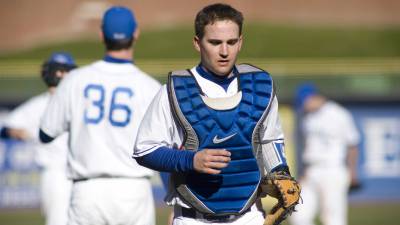
Ryan McCurdy is from Duke University. If he makes it all the way to the top, he will become only the second McCurdy in history to reach the major leagues of baseball.

The Houston Astros have signed a McCurdy! No, not this one. In spite of current circumstances, the club isn’t that desperate for playing talent. Their guy is named Ryan McCurdy, a 22-year old catcher out of Duke University. The (BR/TR) 5’10”, 175 pound young man is the same height and about twenty pounds heavier than I was at that age. He was born in Tampa, Florida in a general area of the country where I have a few scattered McCurdy relatives, but no known connection to this young man beyond the facts that we are both baseball guys, both the same height, and three days off from each other on our natal birthday celebrations. Ryan was born on 12/28/87. I was born on  12/31 – just a tad bit earlier in 1937.

If Ryan McCurdy makes it the top, he will become only the second McCurdy to make it to the big leagues. The other was Harry McCurdy, also a catcher, who had some pretty good years with the Houston Buffs (1924-25) and in the majors with the Cardinals, White Sox, Phillies, and Reds. Harry batted .361 in a full season for the 1925 Buffs and .282 over his ten seasons in the bigs (1922-23, 26-28, 30-34). After his retirement, Harry McCurdy made his home in Houston and served for many years as the Principal of Hogg Junior High School in the Heights. We used to get his calls all the time at our house from parents trying to locate Harry for conferences.

Harry McCurdy, Catcher

We weren’t related to Harry McCurdy either, but we did  have one possible relative, also on the McCurdy side, to make it to the big leagues. My late dad always claimed that we were related to Bob Myrick, who went 3-6, 3.48 as a right-handed pitcher for the New York Mets from 1976-78. I never met Bob Myrick nor really tried to determine if we were distant cousins from the family’s earlier days in Mississippi because it just didn’t matter to me, but I do have to admit: I hope the Ryan McCurdy kid makes it, even if he’s no relation. After all, there haven’t been many of our name to get there before Ryan – and that one was a catcher too.

I don’t know much about the player Ryan McCurdy beyond the facts that he enjoyed an outstanding high school hitting career and that he played college ball at Duke University. Like Mr. Castro’s Stanford, Duke s no dumping ground for dummies. I wouldn’t mind seeing the Astros put in a spot where they have to choose between, or else, platoon, two catchers from Stanford and Duke.

Ryan McCurdy, Catcher, Greeneville {TN) Astros

If Ryan McCurdy is going to make it as a serious challenger at catcher for the Houston Astros someday, like all our other young guys, he’s going to need time to develop on the vine. The direction that Ed Wade is taking now is a good one: With enough talent in the minor league orchards, the big club doesn’t have to pick the few good ones too soon for the longtime greater good.

Young McCurdy isn’t exactly off to a blazing start. He’s one single for nine times at bat in his first few games as an Appalachian Rookie Leaguer. At least, they gave him a good uniform digit to wear. The number “3” doesn’t carry with it the burden of too much expectation, does it? Of course, at catcher, I think the expectation load is much heavier if the club assigns number “8” to your back!

Good Luck, Ryan McCurdy! You can bet for sure that I will be pulling for you!

The Fruits & Nutts All Stars

July 6, 2010

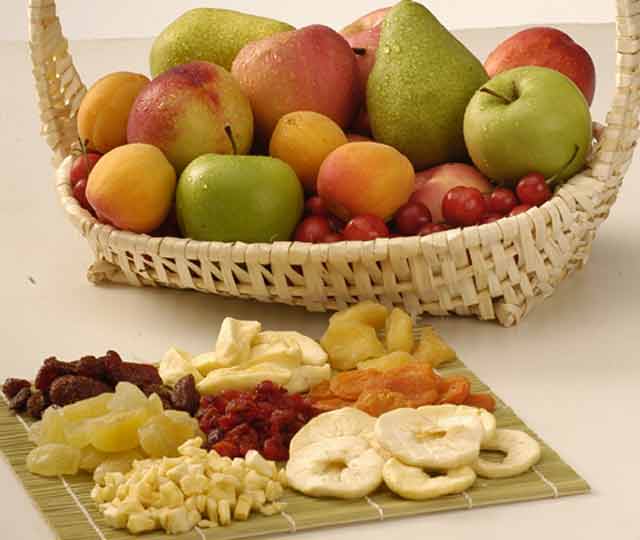
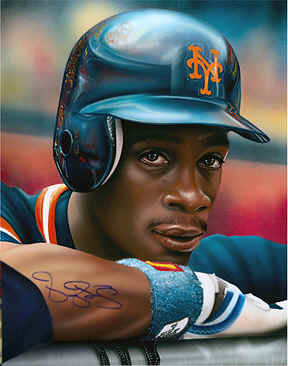
The Fruits & Nutts All Star Team! ... What? You can't find Darryl Strawberry in there somewhere?

Pardon me, folks. It seems the summer heat, the collapse of the Astros, and a Fourth of July weekend discovery (the hard way) that we need a new roof at the old homestead before the next flood rain blows in (and that just “ain’t” going to happen in time, based on the weather casts) has me thinking even more steadily on the light side of things for subject matter here. Having a water leak at home, I find, is a little like having BP in charge of the weather: You know you are going to keep on getting polluted again, but you can’t always predict when and how bad it’s going to be this time.

At any rate, I’m falling back this morning on my eternal pursuit of new (at least, to me) All Star teams from baseball history that are based more on theme name than actual performance merit. Today, I’d like to present a club I’ve never tried to assemble at any previous moment of baseball madness. I call these guys The Fruits & Nutts All Stars:

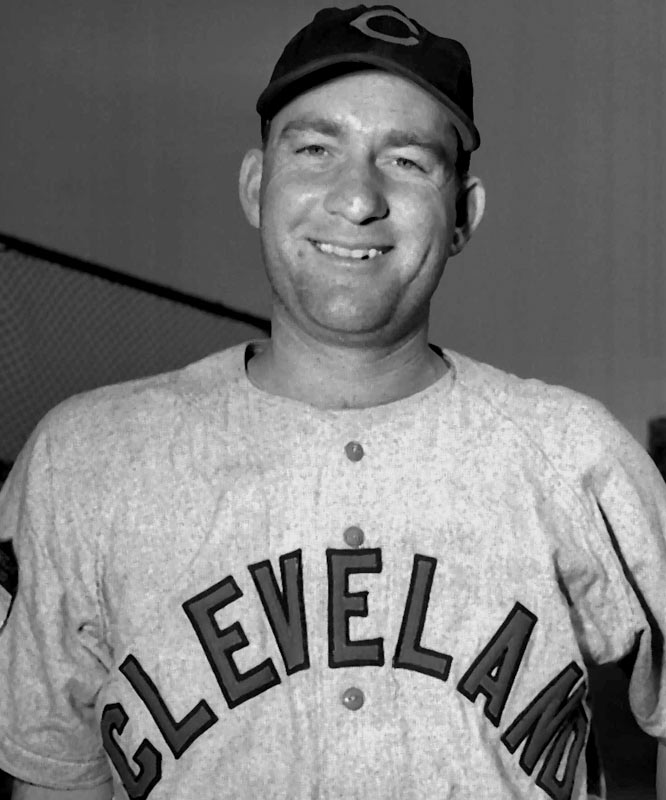
Bob Lemon would have been our best choice for pitcher, but the team needed his bat and glove at shortstop.

Pitcher: Russell Peach. This nifty little lefty posted a 10-2 record with a 1.74 ERA for two minor league clubs in Bluefield and Miami back in 1973. Although Peach never cobblered his way to the big time, he was sweet on the mound while he lasted.

Catcher: Joe Cherry. I picked this rube straight off the lower minor league vine from 1964. Cherry busted out a .306 average with 9 HR at two sites that year. His work at Sarasota and Lynchburg never carried him to the top because nobody else ever picked him to go that high.

1st Base: Johnny Nutt. Crop scarcity ruled at first base. When I could find no fruits to fill this bowl, I had to take an outfielder named “Nutt” and place him on the spot in the hope that he will be one of those pasture ball chasers who can also stretch, scoop, and grab at the biggest out bag on the field. Johnny Nutt hit .281  with only a single HR for Oklahoma City way back in 1919. We will have to hope he can stretch it.

2nd Base: Jacob Almond. This Jake’s the real deal. We plucked him from the 1944 Class D ball roster of Albermarle as the only “legit” second base choice available – or at least, that we could find. Almond brings the nutty flavor of a Class D ball .244 batting average to the lineup.

3rd Base: Harold Apple. We had to go way out on a limb for this pick. A right-handed pitcher with a 5-2 record and a 1.83 ERA for AA York back in 1963, we resisted the temptation to leave him on the hill as a back up to Peach because our need for a guy at the hot corner was greater. Apple goes to third base with a .196 batting averages, a lot of doubt, and our sincere best wishes and highest unfounded hopes.

Shortstop: Bob Lemon. I know. We may be really nuts for placing one of the greatest pitches in baseball history at shortstop. Maybe all we need is to let Bob pitch as the remedy for so many weaknesses and sins at every other spot in the lineup basket, but we didn’t play the hand that way. Lemon was 23-7 with a 2.72 ERA for the 1954 AL Champion Cleveland indians, but we have him down to play at short – where he batted .300 in 1939 for Springfield and New Orleans.

Guess who bats clean up on this dazzling squad?

LF: Jim Lemon. One can never really squeeze too many Lemons into a Fruits & Nutts All Star team lineup – and most especially if one is slugging Jim Lemon, our choice for left field. We are taking Jim for his 1960 season with Washington, a year in which he hit .269 while banging out 38 HR too. GO BIG JIM!

CF: Nick Orange. On paper, Orange reads like a well-rounded lead-off hitter. We drafted Nick for his 1940 .353 BA with Class D Johnstown in the hope that his fantasy production for our F&N club could actually surpass all the things he once failed to do in reality beyond 1940. Nick’s early record reads like one of the “might-have-been” boys from the World War II years.

RF: Darryl Strawberry. What can I tell you that you don’t already know? The guy’s power numbers jump off the record book page as one the great “might-have-been” players of all time. We are taking Darryl for his 1988 year and the .269 BA with 39 HR he cranked out for the New York Mets. Sadly, Darryl Strawberry was not among those almost greats whose career was halted by war. The only war that ever stopped Darryl was the personal one that dominated what should have been his most productive years.

But, hey! The purpose of this exercise was not to dissect the psyche of Darryl Strawberry, but to present the starting (and finishing) position roster for the Fruits & Nutts All Stars as an exercise in playful diversion from tougher topics. Hope you can hang with this healthy bowl of fiber-worthy warriors.

Pardon me, but the skies just darkened outside. Looks like it’s going to rain.