Posts Tagged ‘Baseball’

Pearland Made Us Proud

August 29, 2010

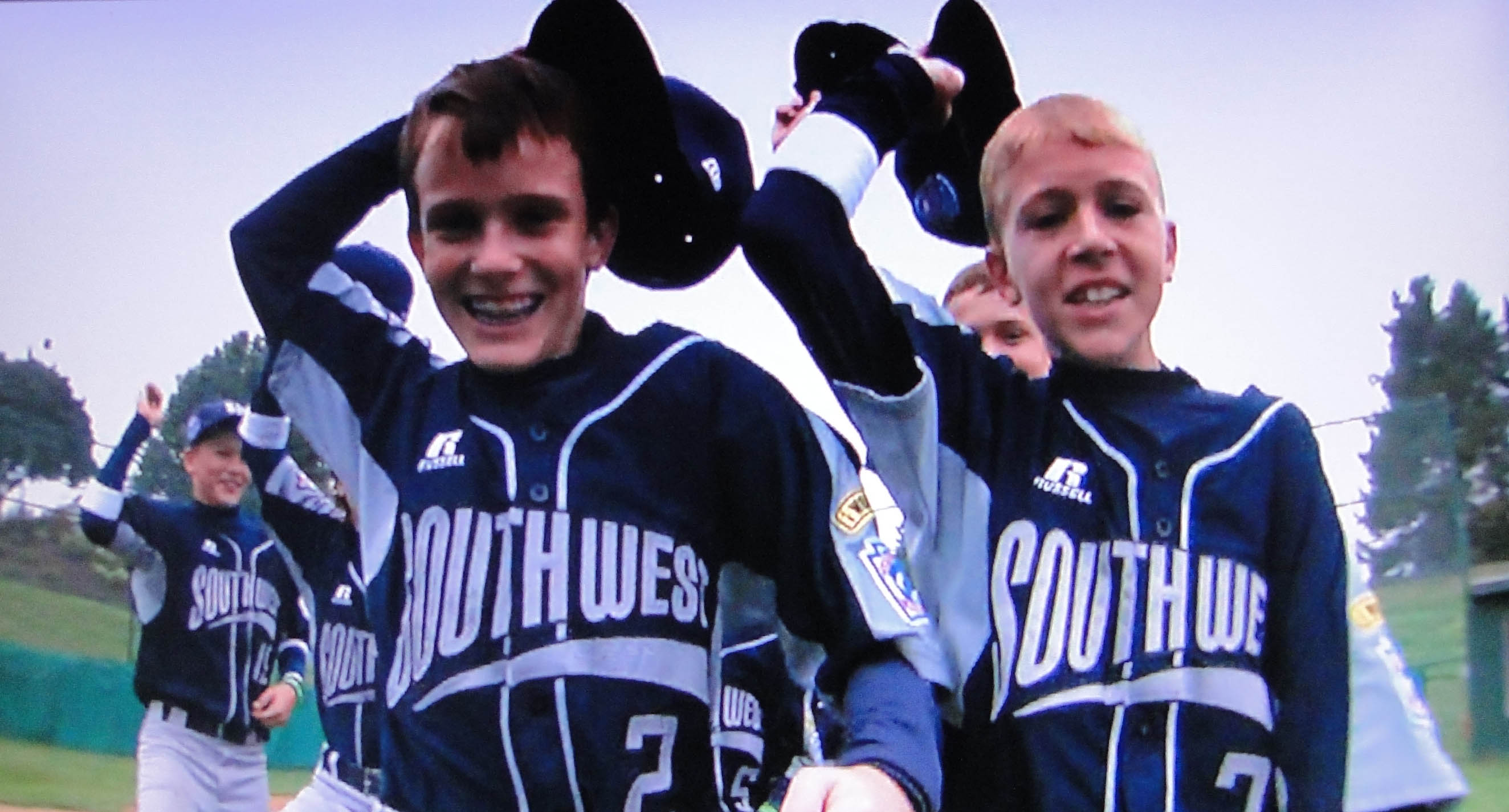
The Pearland Kids didn't wreck the car. They just ran out of gas.

By now, most of you know that Pearland, Texas bowed to Hawaii Saturday afternoon in the American LLWS Division Finals – and that Hawaii will square off today against Japan, the winner of the LLWS International Division title, also yesterday, by a 3-2 score in seven innings over Taiwan. There was nothing close about the Pearland @ Hawaii game. The Hawaiians took it 10-0, ending the game in five innings by the ten-run mercy rule, as out-of-gas Pearland walked away with only two hits. It wasn’t pretty, but it’s one of those things that happens every now and then, even among evenly matched clubs, when you play enough games over pretty much of an everyday business. If they played that same game again today, who knows, the results might turn out to be exactly the opposite.

Pearland wasn’t involved in a car wreck on Saturday. The other fine little club just caught our boys on a day they had run completely out of gas. It happens. Look a Taiwan, They went into their game with Japan hitting in the high .400s as a team, and with a record in the tourney that included victories of 23-0 and 18-0, but not Saturday, not against Japan. Saturday, Taiwan wobbled away with only 2 runs and 4 hits.

Does Taiwan still have the ability to crush Japan, if they played again today? No question. It simply wasn’t meant to be and isn’t going to happen. Instead, Pearland (Texas) and Taiwan will play at 10:00 AM Central Sunday in the Preliminary Consolation Game for 3rd Place prior to the 2:00 PM Central Sunday  Championship Game between Hawaii and Japan. And both games unfold again at Lamabe Field in Williamsport, Pennsylvania.

In this LLWS, Pearland’s Mike Orlando really stood out as everything a Little League coach needs to be as a teacher and role model to the kids. He never abandoned them when they needed his encouragement, and he put their final departure from the championship run in the perspective it needed to be all along – and was – with the Pearland kids.

“I’m proud of you guys,” Orlando told his team in defeat. “I kept telling them that I didn’t care about the the results. I tried to keep the spirits up, and I just kept reminding them that thousands of Little Leaguers would trade places with them in a second.”

Message delivered, heard, and there for the players as a whole piece of very grown up thought for that moment in time of losing that otherwise feels like a sudden free fall into a giant hole in the ground.

Life is full of moments that may feel like the end of the world if we haven’t had some kind of emotional experience with sane survival – and the formula for sane survival laces its way through the simple words of Mike Orlando to his kids.

What we don’t win from, we try to learn from. If it doesn’t kill us, like the old saw goes, it will make us stronger the next time we are facing a similar kind of situation. People who get that connection, learn and move on with their lives on the wings of wisdom. People who don’t get it, well, they just stay stuck on blaming circumstances and other people for their disappointments and bad feelings – and they gear up for becoming dedicated losers. The only real losers in life are those people who refuse to learn their own lessons from the pain of a bad outcome and who always need to blame others and circumstances for their setbacks.

Fortunately for the kids from Pearland, they had Mike Orlando as a coach. His lessons were all about having gratitude for the experience, learning from what happened, and moving on in the joy of knowing they just had a rare and beautiful experience that others would have loved having for themselves.

Good Luck to Mike Orlando, the kids of Pearland, and the people who make up that community. You’ve made the whole Houston area proud of you.

LLWS: Who Says There’s No Crying in Baseball?

August 28, 2010

Back in 1950, we never sang for our fathers - and we never danced our way into a game - but who knows? Maybe we should have. It's just not the way we were.

The Little League World Series in Williamsport. Pennsylvania and the College World Series in Omaha, Nebraska are both on my “bucket list,” but, like the rest of you Houston area fans who didn’t make it this year, we probably missed one the best opportunities we shall ever have this time. With Pearland perched on the steps of winning the American division crown today and then facing the International Champion either Taiwan or Japan, tomorrow for all the marbles, we may have missed our best shot at being there as local support to some of our regional kids at the LLWS this very time around.

I really like the way the spirit of Little League comes across over the ESPN screen – and also the way commentators Bobby Valentine, Orel Hershiser, and Nomar Garciappara handle the coverage and their contact with the kids. Each is a walking role model for the players to follow on ow to walk around with a major league mentality about baseball and life.

Most of the coaches, especially Mike Orlando of Pearland and the two gentlemen from Japan and Hawaii have both impressed me in their handling of the kids. As for enthusiasm and obvious respect for authority, no other team beats the Japanese kids. They live and die with their in-game play outcomes – and they listen, listen, listen to their coaches. It’s not hard to see how they took over the automobile and technology industries for years.

One uncomfortable coach and player moment came about in the Thursday Pool B American Division playoff elimination game on Thursday. As Letterman likes to say, i wouldn’t give that coaching problem to “a monkey on a rock,” but it was there, all of a sudden, and the people involved were going to have play through it and eventually get over it.

Take Orlando's HR in the top of the 6th gave Pearland a 6-5 lead over Auburn, Washington.

Because of restrictions on the use of pitchers, the coach from Washington (whose name I cannot readily find – and it’s just as well – because my comments here are driven more to the situation than the man) so, as I was saying, the Washington coach had his own son pitching with the game tied at 5-5 and one man out.

It was a bad spot for both the coach and his son. What happened next is almost easier to tell in pictures than words. (By the way, the son’s name escapes me too.)

The Washington pitcher collapsed on the mound in tears. He had allowed the lead run to score in the last inning of play.

Coach said three things to his pitcher/son once he reached the mound: (1) "Will you stop?" (referring to the crying); (2) "Gimme the ball;" and (3) "Go to right field."

Look! Baseball is about winning and losing. And it’s a game that comes ready to teach us about the joy and heartbreak of each. We still need to remember that kids are not grown ups. Their abilities to feel OK about themselves are still tied to pleasing the important adults in their lives.

The Washington kid had just finished pitching his club out of contention in the Little League World Series and, if he’s anything like some of us, he had just given up a home run that he will see in his mind forever. I certainly hope that he heard something from his father/coach before the day was too far done – and way beyond the scorching tone of disappointment he got from his dad in the moments that followed.

I have to think that fathers and sons would be better off never being put in these kinds of game situations. We play baseball to win and we have to learn that it is a team game to win or lose, no matter who gives up the winning home run or makes the error that costs the game because, sooner or later, unless you’re Joe DiMaggio or Willie Mays, it’s going to be you.

I only coached my son in kid baseball a single season as head coach. That was enough for me. The rest of the time, I either helped out or watched quietly from the stands.

Maybe Little League needs to look at what they can do to here. Maybe coaches need to not pitch their own kids in games like this one.

What do you think?

Brad Ausmus Finally Retires

August 27, 2010

At Age 41, Former Astro Catcher Brad Ausmus is Done.

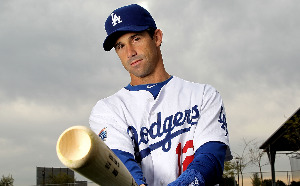
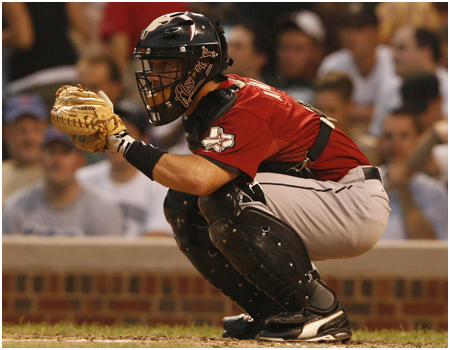
Word out of Los Angeles from reliable sources is not surprising. After 18 seasons in the big leagues, former Houston Astros catcher and pitching coach on the field, a catcher named Brad Ausmus, will not be returning in 2011 for another limited duty spin on the bench for the Dodgers or any other MLB club.

At 41 – the man is done. And he will leave as one of the smartest men to ever put on the tools of ignorance and squat for a living in baseball. The former Dartmouth University alumnus somehow escaped all of the Ivy League nicknames that writers could have crowned upon him for his brainy background, but that did not stop him from showing us all over time just how the powerful the combination of intelligence plus ability plus MLB experience plus the ability to communicate wisdom to others as coaching information together all carries the weight of a value that goes way beyond that of a player’s individual statistics.

Ausmus was one of the greatest handlers of pitchers to ever play the game – and he did it with a flair for oozing every ounce of confidence in pitchers about their own abilities. You can’t get a pitcher to relax and use his own best abilities for long unless he really believes in himself and that truism is something that Brad Ausmus just seemed to naturally understand. If anything, he inspired confidence as much as he taught or picked up on issues of technique and mechanical performance. The catcher who do both of those things is a cut above all others – and Brad Ausmus was such a catcher.

Maybe the “Dartmouth Dandy” or the “Daring Datmouthian” would have either worked as monikers for Ausmus. Or maybe not. He didn’t need them anyway to get the job done – and his abilities extended to working with both the young and the veteran members of the Astros staff while he was here.

Brad Ausmus trained young pitchers for success – and he made it beyond easy for exceptional veterans like Roger Clemens and Andy Pettitte to join the staff at Houston in confidence that they were working with a battery mate that totally knew what he was doing behind the plate.

Statistically speaking, the offensive career of Brad Ausmus is not much to write home about. In eighteen seasons (1993-2010), Brad Ausmus batted .251 with 80 career homers and a career slugging average of .344. Over his past two seasons (2009-10) as a limited duty backup catcher for the Los Angeles Dodgers, Brad had only appeared in 51 games through August 26th of this current 2010 season. His main value to LA has been in his role as a coach on the ground of active duty, but the absence of success under the Joe Torre managerial tenure and wholesale personnel questions seem to negate the continuation of Ausmus in his current role. Until the Dodgers figure out what they want to do now, even Brad Ausmus can’t help them.

Old Number 11 Lives on in Astros Club Lore.

Brad Ausmus did a little traveling in his big league days. He started out with the San Diego Padres (1993-96) before being dealt to the Detroit Tigers for the latter part of the 1996 season. The Tigers then traded Ausmus to the Houston Astros for his first tour of duty here (1997-98) and those first two NL Playoff Runs under new manager Larry Dierker.

Then, because the Astros still didn’t understand the jewel they held in their hands, Ausmus was dealt back to the Tigers for the 1999-2001 seasons. After a huge fall from playoff grace, the Astros reacquired Brad Ausmus in time for an eight-season run (2001-08) that would see the Astros return to the playoffs under Dierker in 2001, and then, under new manager Phil Garner, get close to the pennant in 2004, and then take the NL flag and go all the way to the World Series for the first and only time in 2005.

Brad Ausmus made the American League All Star Team with the 1999 Detroit Tigers, Upon his return to the Astros, Ausmus also captured Gold Glove Awards at catcher in 2001, 2002, and 2006.

Brad Ausmus’s greatest Astros moment came in the deciding game of the NLDS battle with the Atlanta Braves at Minute Maid Park in 2005. With the Astros needing only one more win to move into the championship round against the St. Louis Cardinals, the Braves jumped all over the Astros and led 6-1 going into the bottom of the eighth. Then thunder began to strike from Astro bats.

Lance Berkman crunched a grand slam in the bottom of the eighth to bring the Astros back to mere 5-6, one-run deficit. Then, in the bottom of the ninth, with two outs and Brad Ausmus batting, things looked pretty much “over and done with” for the trailing Astros.

That’s when Brad Ausmus lifted a high fly to deep left center. The ball bounced arguably over the HR line on the high wall for a game-tying swat. The two teams would then spend almost another nine innings trying to break the 6-6 tie before Houston rookie Chris Burke finally  lifted a home run into the left field Crawford Boxes to sudden death the 7-6 Houston win and send the Astros on to a pennant series win over the St. Louis Cardinals.

Were it not for the 9th inning game-saver shot by Brad Ausmus, the whole parade of iconic drams that unfolded from there, including Roger Clemens’s great  extra inning relief appearance, never would have happened.

And now Brad Ausmus finally takes leave of his valued role as the flight instructor who still sits down in the co-pilot seat for every flight with his trainees. In my view, Brad Ausmus is quitting just in time to begin a beautiful new career as a full-time coach and manager – if that’s what he wants to do.

Good Luck, Brad Ausmus! Maybe we will see you in Houston again someday for a charm-filled third tour of duty with the Astros as a full-time teacher, coach, or even manager.

Who knows? I just have a hunch, or maybe it’s a baseball wish,  that our paths will cross again in Houston in some kind of way down the line.

Papai Was a Rollin’ Stone

August 26, 2010

Al Papai Won 20+ For Both the '47 & '51 Champion Buffs!

Al Papai was a rolling stone. Wherever he worked his knuckleball magic was his home.

In ten of his fourteen-season minor league career (1940-58) years, the wobble-ball expert worked in different cities beneath the major league level, building a career mark of 178 wins, 128 losses, and an ERA of 3.29.

On four occasions, Papai won 20 plus games in minors. His first two big years found him going 21-10 for the 1947 Texas League and Dixie Series Champion Houston Buffs, returning to post a 23-9 mark with the 1951 Texas League Champion Buffs. Papai also pitched for the Buffs in 1952 and 1953, but failed to come close to 20 wins. His other two 20 plus win seasons came about for Al with the 1955 Oklahoma City Indians (23-7) and once more in 1956 with the Memphis Chicks (20-10).

In four seasons at the major league level (1948-50, 1955) with the Cardinals, Browns, Red Sox, and White Sox, Al Papai also chipped in another 9 wins and 14 losses with a 5.37 ERA. Papai’s control and the character of his wobbler pitches were a little too hittable at the major league level, but he was hell on wheels in his four seasons as a minor league big-time winner. Papai definitely had the stuff against the much tougher high minor league competition of that era to have become a big time winner in the big leagues of that time. It just didn’t happen.

At 6’3″ and 185 pounds, Al Papai was a popular Buff during his Houston days – and a guy with a droll sense of humor that everyone seemed to appreciate. Example: Al Papai escorted a beautiful young lady in a bathing suit named Kathryn Grandstaff to home plate at Buff Stadium in 1951 to be honored as “Miss Houston Buff.” The club had asked teammate Larry Miggins to do these honors originally, but the very modest and bashful Mr. Miggins was too embarrassed to escort what he considered a “nearly naked” young woman into a public appearance under these circumstances. The absence of much clothing did not bother Papai in the least.

Later, when Kathryn Grandstaff changed her name to Kathryn Grant and went on to Hollywood as the new wife of singer Bing Crosby, Papai called up the memory of that time he escorted the beautiful young actress at Buff Stadium. “Hope she remembers who made her what she’s become today,” Papai offered.

Al Papai passed away at his home in Springfield, Illinois on September 7, 1995 at the age of 78. That was the around the same time we were preparing in Houston for “The Last Round Up of the Houston Buffs” and I was helping former Buffs President Allen Russell with putting together his mailing list to all the former Buffs we could locate.

Sadly, we learned from Al Papai’s widow that his invitation had arrived on the day of his funeral. Allen Russell was so touched by the irony of this near miss that he brought Al’s widow to Houston to represent him among all the former teammates who were left behind to grieve his loss.

In addition to Papai, we’ve lost most of the former Buffs who were alive and able to attend that 1995 great reception at the Westin Galleria in late September 1995. including Allen Russell himself. Among the players who made it there that day, only Solly Hemus, Larry Miggins, and Russell Rac, plus program emcee, Milo Hamilton. After the Sunday lunch and reception, the last of the old Buffs went together to watch the Astros take on the Cardinals at the Astrodome. The spirit of Al Papai was very much present with all of us that afternoon.

As a kid, I really woke up to baseball in 1947. Al Papai, the original old knuckleballer, is the first pitcher I ever saw. He had a lot of influence upon my later interest in the careers of Joe and Phil Niekro.

Chalk that one up to the “small wonders” category of explanations. And have a memorable Thursday, as long as the memories are worth keeping.

The Astrodome: No Way to Treat a Lady!

August 25, 2010

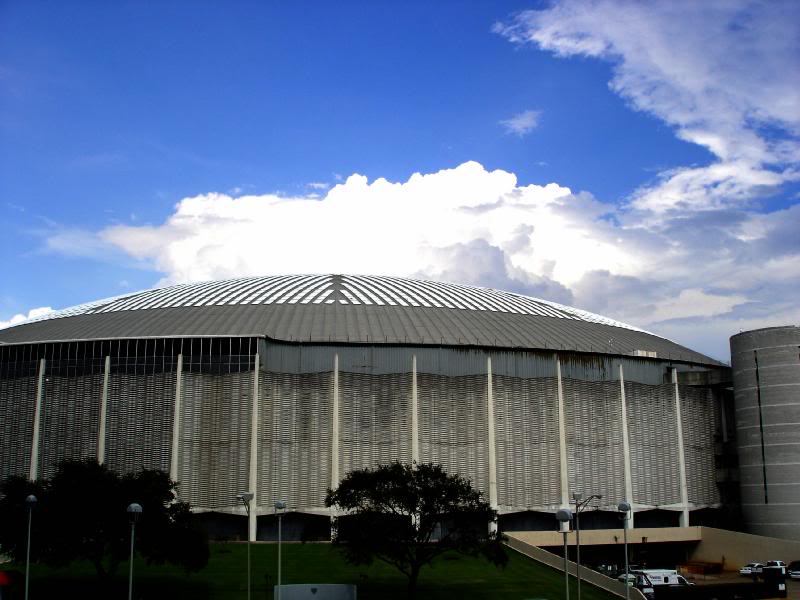
We need to make a clear decision on the Astrodome. The old girl deserves a better fate than the one she's now getting by default. As a big part of our local past, we need to decide her future with a little more dignity than she's so far received.

In the 46 years of her life, the Astrodome spent the first 35 of those years (1965-1999) as home to the Astros, Oilers, Rodeo, and numerous and myriad other notable sporting events and concerts, crusades, and even one national political convention. Everybody from Pastorini to Presley played the house that Judge Hofheinz established once upon a time as The Eighth Wonder of the World.

Things were great at the Dome. Then everything changed just prior to this last turn of the century. The Oilers left Houston without the NFL once the city rejected their bid for major help in building a new stadium. Then the Astros threatened to leave if we didn’t do the same for baseball and, this time, we were persuaded to “step up to the plate” and keep major league baseball from leaving too.

Once the Astros moved downtown to the new baseball retro design park at Union Station in 2000, the Astrodome found itself reassigned to purgatory, if not hell. Local interests led by Bob McNair and the Rodeo got us another NFL team in 2002 by building us a second retractible roof new venue designed mainly for football and things were looking good again, except for one thing.

Everybody, except for the rats and the tax collector, forgot about the Astrodome. For the past eleven years (2000-2010), it’s been allowed to sit and rot away before our “we-don’t-even-want-to-look” eyes as one flamboyant pie-in-the-sky plan after another has failed to fly with iron butterfly wings.

So the Dome sits and rots some more. And we pick up the two to three million dollar annual tab from the county as the tax on our no-decision point of view.

Personally, I agree with the position expressed by Houston Chronicle writer Richard Justice in an article he wrote within the past week on this same subject. We ought to do something to preserve the Astrodome by putting it to some constructive, big plan use. If we’re not going to do anything, then I say, “tear her all the way down and let the pictures and memories we shall always have for her be her last testimony as the first great domed stadium in the world.”

What we are doing now with the Astrodome is no way to treat a lady.

Satch Davidson Dies in Houston

August 24, 2010

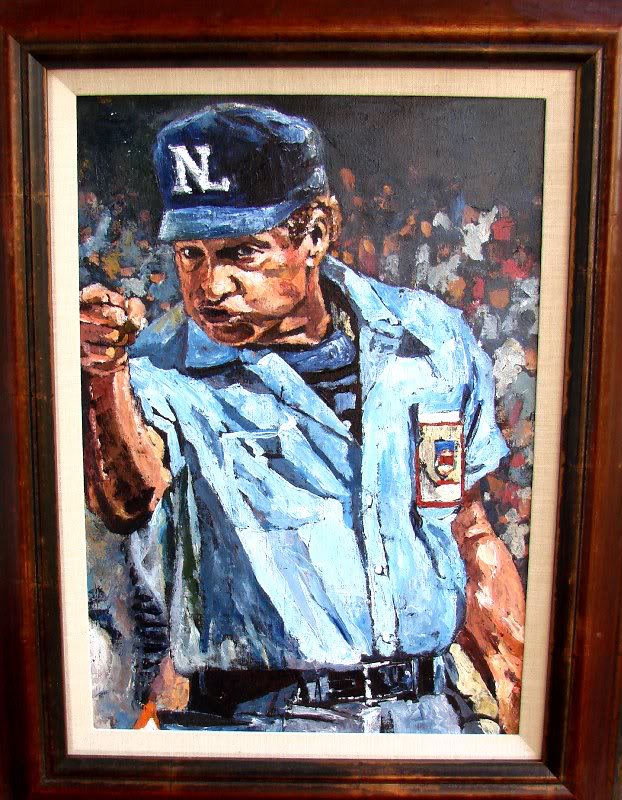
Former NL Umpire Satch Davidson in a 2005 oil piece by Opie Otterstad.

Sad news fills my heart today. Former National League umpire and ongoing good friend to baseball, Satch Davidson, passed away in his Houston home this past Saturday, August 21, 2010. He was 75.

Word came here from Satch’s widow, Lynn, shortly after I had completed and published the column I wrote yesterday on The Father of All Umpires, Bill Klem. Details of his death and memorial service plans were still pending at this writing deadline. Keep checking with the Houston Chronicle online for further information.

I was blessed to get to know Satch a little better on a personal basis during my four years as active Board President of the Texas Baseball Hall of Fame from 2004 to 2008. As a longtime Houston resident from his service years through retirement, Satch Davidson was most deservedly, and most enthusiastically, inducted into the Texas Baseball Hall of Fame on November 11, 2005. Texas people, and especially Houston people, are most appreciative of all that Satch did and continued to do as a representative of baseball to the community at large.

“Satch” acquired that only first name he accepted as his own during his boyhood years in his native home town of New London, Ohio. As a young fan of the old Bowery Boys movies, Davidson’s favorite character from the gang was “Satch,” the comedic sidekick to gang leader Leo Gorcey, whose own character shifted in name over the years from Mugs McGinnis to Slip Mahoney.

Mugs was my guy. If only I had grown up in Satch’s neighborhood, we could have both gone on from there to our various careers as Mugs McCurdy and Satch Davidson, but it wasn’t to be.

As an adult, Satch Davidson actually met and became fast friends with actor Huntz Hall, the fellow who played Horace Debussy “Satch” Jones in that almost endless stream of Bowery Boys/East Side Kids films that poured out of hollywood as Saturday afternoon kid’s fair stuff from the late 1930s into the 1950s.  As part of Satch’s TBHOF induction “goody bag,” we also gave him a DVD set of Bowery Boy movies that hit home harder than the plaque or artwork of himself that he also received, but that was Satch. He never lost track of what was really important.

Speaking of such, Satch’s attraction to sports soared early. After playing as a three-sport man at WIlmington College and Ohio State University, Satch played a little professional football and baseball before settling into his major life work as a National League umpire from 1969 through 1984. During those years, Satch spent the baseball off-season a referee in the midwest for NCAA Division I basketball games.

Davidson embraced his umpiring job with great fairness and a unmistable flair for the dramatic call. The expression captured in the accompanying 2005 painting here by artist Opie Otterstad says it all.

Satch bristled when people tried to draw him into discussions about items like the “phantom gimme out call” on second base during double plays. “There is no such thing as a ‘gimme’ on any out call,” Satch would state firmly. “A runner is either safe or out – and he is really neither until the umpire gives the signal.”

Sounds a lot like Bill Klem and “it ain’t nothing until I call it,” Don’t you think.

Stach was no fan of game time instant replays on the big screen of big league ballparks and was a leader in fighting for their elimination on crucial play situations. Satch had some help into that position when a Cincinnati fan once hit him in the head with a flying soda can after instant replay on a  Davidson call was made to look doubtful on the big screen.

Satch Davidson saw some memorable action as a big league umpire. He was behind the plate for five no-hitters – and he was also there when Hank Aaron hit his 715th home run to surpass Babe Ruth in April 1974. Davidson also was behind the plate for the famous home run by Carlton Fisk of the Boston Red Sox in Game Six of the 1975 World Series against the Cincinnati Reds.

In addition to his Texas Baseball Hall of Fame induction, Satch received the Al Somers Man of the Year Award, an honor  granted for outstanding service to Major League Baseball and also the Sports Professionals Foundation Lifetime Achievement Award.

Satch also has served as an instructor for the Southern Umpires Camp in Atlanta, Georgia and the Harry Wendlestedt School for Umpires in Daytona Beach, Florida.

During the 1994 baseball season, Satch even saw duty as the pitching coach for the San Antonio Tejanos of the Texas-Louisiana baseball league.

When you come down to it, Satch Davidson was a baseball renaissance man. He loved the game. And he loved teaching people about the game and how to care about it. He also approached life with the kind of fairness and certainty of outlook that made him successful as both an umpire and tight friend of the game. He was the total package of the only kind of teacher worth having: He came. He saw. He learned. He taught what he learned to others. And then he went back to earn some more.

Baseball has again surrendered one of its true-blue family members. And we’re all going to miss him.

Say hello to the other “Satch” and old Mugs for me, Mr. Davidson. Our loss is their gain.

Late News (8/31/10): A memorial to celebrate Satch’s life will be held on Saturday, September 18, 2010 at 10:00 AM at Geo H. Lewis & Sons 1010 Bering Drive, Houston, Texas 77057. Please visit the website www.geohlewis.com for further details.

“It Ain’t Nothing Until I Call It!”

August 23, 2010

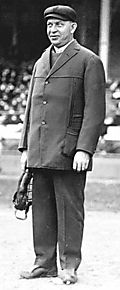
Bill Klem invented the "safe" and "out" hand signs.

Even if we hate umpires, the game of baseball could not survive for long without them exerting a real place of fair authority over what happens on the field. They are the judge and jury of everything that happens on the field, from Little League to Major League. Take away that power and the game soon dies.

Before a fellow named Bill Klem came along at the turn of the twentieth century, there was something of a danger to the integrity of the game because baseball had failed to back its officials to the nth degree. A few players got away with two-fisted attacks upon umpires and some umpires even got fired for trying to fine owner’s pet players for assaulting behavior toward them on the field. Top that with the presence of bully managers like John McGraw of the New York Giants and baseball had the potential of making itself over into something that resembled what professional wrestling was to become by the the mid-twentieth century – little more than a sideshow entertainment in which the umpires were little more than a prop in service to the melodrama.

Baseball survived as a legitimate sport and much of the credit has to go to Bill Klem for all he did to build unshakeable support for the umpire’s authority in the game. The issue that got settled is probably best summarized in this heated exchange between the bombastic John McGraw and arbiter Bill Klem. In a rage over one of Klem’s umpiring calls, McGraw lashed out that “I can have your job removed from you over this call!” Klem quickly responded, “If it’s true that you can have my job because you don’t like my call, then I don’t want this job, anyway!”

In an interesting tale of two adversaries, Klem and McGraw actually became close friends over time, often having lunch together when the opportunity presented itself, even though their on-field vitriol continued on the through McGraw’s last 1933 season as manager of the Giants.

McGraw didn’t get Klem’s job and “The Old Arbitrator” held his ground.   From 1905 to 1941, he held forth as a major league umpire, becoming the on-field official who developed the universal hand signals for strike/ball, safe/out. and fair/foul. Klem recognized that no umpire had a voice to carry this ongoing heart-of-the -game news to fans throughout any large ballpark so he developed and used, and guided others to use the very signals we still rely upon today to know the result of every action on the field.

Klem also developed the crouching, over-the-shoulder  of the catcher view on balls and strikes and the

Bill Klem, Hall of Fame Umpire

regular use of chest protectors by plate umpires, plus the straddle view on long balls hit closely down the line. Klem is famous today for getting across his umpiring role as the supreme authority in games with this simple answer to a real game-in-progress question, “Is that ball fair or foul?”

“It ain’t nothing until I call it,” Bill Klem snapped.

Over the course of his 26-season career, Bill Klem worked in 18 World Series. No other umpire has worked more than 10. He also was one of the umpires who worked the first 1933 All Star Game, returning as an umpire in the 1938 All Star Game, as well.

Klem hated the nickname “Catfish” that a minor league manager once hung on him in the heat of the moment. The manager yelled something like, “Hey, Klem! You big catfish! You don’t speak. You don’t smile. You just stand back there like a big old catfish, breathing through your gills!”

The manager got tossed, but the “catfish” name stuck. Legend has it that Klem would toss a player for even whispering the word within earshot of his presence. Klem once even ejected a player when he caught him in the dugout quietly drawing a picture of a catfish.

Bill Klem passed away in 1951 at the age of 77. Two years later, Klem and fellow umpire Tommy Connolly became the first two umpires to be admitted to the Baseball Hall of Fame.

As an aside, my ninth grade home room teacher at St. Thomas in 1952-53 was “Mr. Klem,” a nephew of the famous umpire. When spring came and I played freshman baseball for one of the three feeder teams into our all-star freshman club (I also played for them), I played for the squad managed by Mr. Klem of New York. – He called us the “Giants.”

Funny how history rattles around in sidebar ways sometimes, isn’t it?

The Taint on The Thomson Shot

August 18, 2010

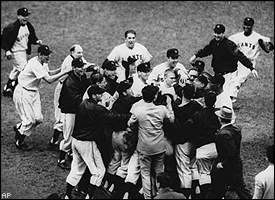
Oct. 3, 1951: "The Giants Win The Pennant!"

Most of us have heard the call by Giants broadcaster Russ Hodges:

“Branca throws. There’s a long drive. It’s going to be — I believe! — The Giants win the pennant! The Giants win the pennant! The Giants win the pennant! The Giants win the pennant! Bobby Thomson hits into the lower deck of the left-field stands. The Giants win the pennant! And they’re going crazy! They’re going crazy! Oohhh-oohhh!”

The date was October 3, 1951. It was 3:57 PM at the Polo Grounds in Upper Manhattan, the hallowed ground of Coogan’s Bluff hovered nearby. The home team New York Giants had runners on first and third, with one out; right handed batter and third baseman Bobby Thomson was batting with the Brooklyn Dodgers leading 4-2 in the deciding Game Three of the special playoffs to decide which of the two tied National Leaguers would take the pennant and go on to the World Series to oppose the mighty New York Yankees.

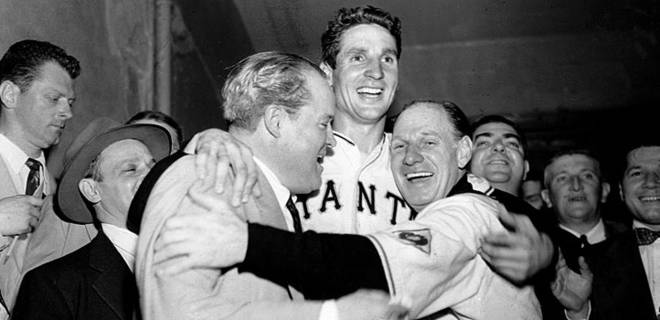
The story of the year to this point had been the incredible comeback of the Giants from 13.5 games back of the Dodgers late in the season to tie for first on the last day. Now something was about to happen to put a cap on the experience that would practically be all that any of us saw for the next forty to fifty years. Bobby Thomson was about to hit a line drive homer into the left field stands off right handed Dodger relief pitcher Ralph Branca that would win the game and the pennant for the Giants, 5-4, in a walk off blast is still remembered and revered as “The Shot Heard Round the World!”

Bobby Thomson celebrates his famous "shot heard round the world."

The death of 86-year old Bobby Thomson yesterday, August 17, 2010, at his home in Savannah, Georgia came after years of declining health, but it now no longer brings about the pleasantly magical memory of his famous home run also, but also the more recent disclosures that came out in fact and evidence just prior to the fortieth anniversary celebration of “the shot heard ’round the world” back in 2001.

According to an Inside Baseball story from 2001, it is now known that the Giants had been stealing pitch signs by binoculars from their clubhouse in dead center field over what roughly appears to be the period of their great comeback in 1951 – and that includes the period of their playoff games with the Dodgers and one particular time at bat for Bobby Thomson. Of course, if it’s true, those shenanigans at the Polo Grounds would not explain nor help the Giant’s’ also improved play on the road, but it sure puts a taint upon the thrilling memory of Thomson’s shot.

Thomson’s home run has always been one of my most cherished baseball memories. The thought that he may have known what pitch was coming is a real spoiler. I still don’t like to think of it very often, but his death, and my dedication to the truth, won’t allow me to escape the conclusion that he most probably did know what was coming when he swung.  Bobby Thomson’s responses to the straightforward question in a 2001 interview by Joshua Prager cause him to come off more as an “artful dodger” than a “moral giant.”

Examine that segment of inquiry, read more; then decide for yourself. Here’s how writer Joshua Prager described that part of his 2001 interview with Bobby Thomson at age 77:

Mr. Thomson, now a widower, has never spoken publicly of sign-stealing and has never raised the subject with Mr. Branca. ‘” guess I’ve been a jerk in a way,” he says. ‘That I don’t want to face the music. Maybe I’ve felt too sensitive, embarrassed maybe.”

Mr. Thomson sits on his couch, wearing the tweed jacket and tie he wore to church that morning. Suddenly, he uncrosses his legs, squares his feet with his shoulders and puts his fists together, right over left, as if gripping a bat. He hunches his torso forward and turns his head toward his left shoulder. He looks out of unblinking eyes into his fireplace.

Did he take the sign?

From the batter’s box, “you could almost just do it with your eyes,” Mr. Thomson says.

His hands relax. He drops his arms to his sides.

Did he take the sign?

“I’d have to say more no than yes,” he says. “I don’t like to think of something taking away from it.”

Pressed further, Mr. Thomson later says, “I was just being too honest and too fair. I could easily have said, ‘No, I didn’t take the sign.’ “

He says, “It would take a little away from me in my mind if I felt I got help on the pitch.”

But did he take the sign?

“My answer is no,” Mr. Thomson says.

He adds: “I was always proud of that swing.”

For a much more detailed account what writer Joshua Prager says transpired on the sign-stealing set-up, check out the whole 2001 story at this link: http://joshuaprager.com/wsj/articles/baseball/

More Sandlot Summer Memories

August 16, 2010

Sooner or later, my mind always returns to the sandlot in Pecan Park, the one we called Eagle Field, the one that is today celebrated at the East End Houston corner where Japonica and Myrtle streets “Y” together as “Japonica Park.”. The site was dedicated as a small city park in 1942, even though it only takes up the space that developers could have used to squeeze in four to six more little box houses like the ones we all lived in. They just didn’t, thank God, they just didn’t.

Joy in the moment never got any better than it once did in that time and space around the year 1950. I was 12 years old and playing at the apex of my sandlot glory that summer, as were several of my Pecan Park Eagle buddies. We simply had no way of knowing, as kids in a relatively trouble-free world, that this moment, for many of us, was as good as it would ever get for the every summer day availability of joy.

Hit and run. Catch and throw. Laugh and shout. Sweat and slide. Bare feet and callouses. Tee shirts and no shirts. Cornflower blue skies and billowing cotton candy white clouds. Skinned up knees and strawberry rump stains. All these and more were both the actions and the theater of our life upon the sandlot. But all were part of our daily deal with what we knew as life back in the day.

The older I get, and the longer I consider the question, “what makes life good or bad,” the more I come to appreciate that it all seems to turn on whether or not we once had a period of joy in our childhood or not – and here’s where life can seem to deal a very unfair hand to some people.

A small decanter of magic dirt from the 1950 home plate area of Eagle Field, collected in May 2010.

In working with people over the years, I met a lot of folks who seemed to know little more than abuse or neglect as kids. They had no golden sandlot memories. Only emotional pain and deprivation of love and protection filled their childhoods. These folks have a hard time seeing life’s normal adult setbacks as anything more than more of the same pain that’s always been there. They can’t buy into “it’ll get better” because it never was good. First base on the road to hope for these people is finding some time of joy in the past, even if it were simply a solitary thing or a single day.

New joy feeds best on the memory of a previous experience. Failing that, new joy feeds on the hunger for it. It’s where we live in the moment at peace, or in full body and soul engagement, with life.

Some of us were lucky enough to have grown up with two loving parents. Others of us were even luckier to have also grown up also with the love and joy that flowed from sandlot baseball as it was widely played through the early 1950s.

The sandlot soul never dies.

Time for an Astros Baseball Movie

August 14, 2010

The Hollywood summer movie list and the 2010 Houston Astros baseball season share this much in common: Neither has been very good – and both movies and the Astros have now reached the same point in which supporters of each spend more on concessions than they now do on tickets.

Maybe we were missing the boat by not suggesting this earlier, but its high time we had a good new baseball movie based upon the Astros. How about we use current movie titles with do-over scripts to make these film offerings more attractive. In this way, we shall also help the movie industry recover its own losses as we work hard to benefit our primary client, out hometown Astros.

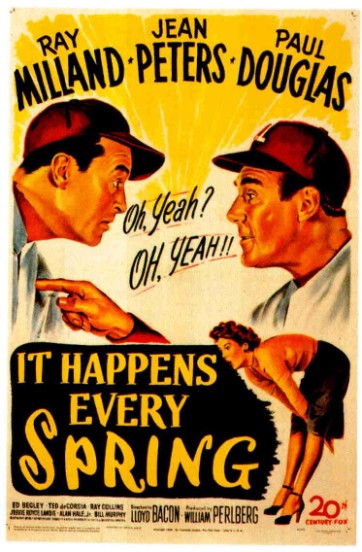
In the spirit of the new re-make philosophy on old popular movies, I would like to start with a re-make proposal for the 1949 baseball movie classic, “It Happens Every Spring.” In this version, former Astros manager Larry Dierker is puttering around in his “build-your-own-senior-citizen-prescription-drugs-home-lab” when he accidentally invents a fluid that is repellent to wood. By placing the precious fluid in a sponge that he fits into the pocket of his old pitching glove, Larry finds that he is again able to pitch in spite of the injury that ended his original pitching career early. He goes to the Astros with a plan for making a comeback, without divulging how he plans to accomplish the same. Once Owner Drayton McLane, Jr., President Tal Smith, and General Manager Ed Wade recover from a case of falling down hysterical laughter, Dierker proposes that he be allowed to tryout in full view of their entire group and Field Manager Brad Mills.

A hasty tryout is arranged for Minute Maid Park. Larry promptly goes through the eight starters on 24 pitches and 24 swinging strikes for 8 K’s and an immediate contract to return as staff ace for 2011. He more than fills the gap, going 50-1 in the regular season, 7-0 in the playoffs, and 4-0 in the World Series against the New York Yankees. Dierker’s only loss came at the hands of Pittsburgh on the only day he forgot to bring his magic elixir with him to the ballpark. Because it took the Astros so long to reach this moment of glory, the original title of the first movie was altered sufficiently to match the Astros’ reality. The Dierker version is called, “It Happens Not Quite Every Spring.”

The summer movie titles offer other possibilities. Here are a few that I see, but perhaps you see others. If so, please add your suggestions as comments to this idea:

“The Expendables” – It’s the story of just about every player who remains on the 2010 Astros roster, but the featured stars need to be Roy Oswalt and Lance Berkman.

“Inception” – General Manager Ed Wade dreams that he can build a Word Series club in Houston purely from former players and prospects acquired from the Philadelphia Phillies. In the movie, Wade talks about the importance of building a strong farm system and he proceeds to draft and sign all of his 2011 choices at 50% of the expected market cost, but that part of the movie turns out to be only a dream within the dream and an accomplishment that never happened. When he awakens at his desk in the movie’s final scene, an aide is handing Wade a trade proposal that has just arrived by e-mail from the Seattle Mariners. Wade is staring seriously at the message as the camera slowly moves in for a tight shot of his face. An Ed Wade voice-over quietly whispers as a thought we all hear: “Seattle Mariners. Who in the heck are the Seattle Mariners?” (Movie fades to black. “The End” flashes on-screen.)

“The Other Guys” – This plot builds around the history of the World Series since 1962, Houston’s first season in the big leagues. The primary angle here is how it’s always “the other guys” who win the World Series – and how the Houston club hardly ever (once, so far) gets to even go to baseball’s big show. This movie is not recommended for any Houston adult who may already be suffering from a serious inferiority complex – nor for any Houston child needing to build healthy self-esteem.

Despicable Me – For the first time in history, Hollywood makes a movie about a major league bullpen and they decide to shoot the film in Houston and use members of the Astros relief pitching staff. No parts have been cast in bronze, so far, but Matt Lindstrom is said to be in line as the top candidate for the title role. We hear that only a confirmed back injury stands in his way.

Salt – When the sign “No Pepper Games” goes up on the field at Minute Maid Park, Geoff Blum rebels against the prohibition by changing the name of the “bunt and catch” exercise to that other favorite table seasoning and just encourages everybody to keep right on playing. The decision keeps the game alive and also scratches an ancient Blumian itch to resist new rules-making by faceless figures of authority.

Step Up – In the most improbable animated film since “Fantasia,” the Houston Astros respond to some magic dust that gets stuffed in the A/C system at Minute Maid Park by a small mystical child. They step up so often that they rally from sleeping with Pittsburgh to ripping the Reds and Cardinals – and then going on to bake the Yankees in the 2010 World Series. As i said, it’s an animated fantasy.

Toy Story – This one sort of embodies the best parts of many current summer hits. Brad Mills dreams that the Astros get rid of all players who are either expendable or despicable by dumping them on the other guys. He then dreams that GM Ed Wade steps up to the plate and opens a magic toy shop where twenty-five very compatible and virtually unbeatable players are assembled and made available with a five-year warranty on their competitiveness potential at the highest level. All but one of these players is kept on Wade’s new Astros roster when a space has to be made for the return of Larry Dierker and his wondrous new “whip-it-on-’em” out pitch.

“Eat, Pray, Love, Have a Sense of Humor” – Easiest movie plot of all: (1) Grab a great old ballpark hot dog! (2) Pray to God we all survive this down-time in Astros history; (3) Keep on loving the Astros and baseball in Houston in spite of the down times we are going through now; and, (4) Keep a sense of humor about this time and everything else that runs amuck every now and then. It’s the only way to survive – and the only known way that those first three items in this movie title make any real sense.

Have a dreamy weekend, everybody – and let us hear your own new Astros movie plots from any old or new movie title that comes to mind.