Posts Tagged ‘Baseball’

Steroid Sanctimony Bleeding on Bagwell

January 8, 2011

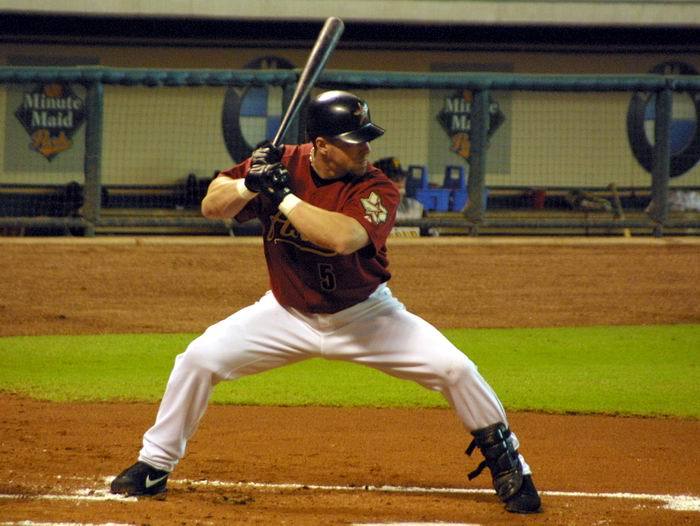
Jeff Bagwell May Have Muscled Way Out of Cooperstown.

I was disappointed that Jeff Bagwell got only 41.7% of the BBWA first ballot vote for the Hall of Fame. After all,  Jeff arrived for eligible voter consideration as the only first baseman in history with over 400 home runs and 200 stolen bases on his career resume. Maybe that’s not good enough for a first try admissions ticket, but he also did a few other things that should have drawn him objectively closer to the 75% that all candidates need for induction into baseball’s temple of highest honor. He also had an adjusted OPS rating of 130 or higher over 12 consecutive seasons. Bagwell and Lou Gehrig are the only first basemen in history to pull that off. Bagwell also stood alone as the only first baseman ever to produce a 30 homer, 30 stolen base season too – and he did that one twice. Thrown in the fact that he also put up six consecutive seasons of at least 30 homers, 100 RBIs and 100 runs scored and, for his career, that he drove in more than 1,500 runs and scored more than 1,500 runs.

Based on his honest, measurable numbers of meaningful baseball accomplishment, Jeff Bagwell deserved more votes than he got on his first HOF ballot. I have tried in the days that have passed to put this result aside as OK and not too ominous an omen for the future. Then I read an online article by Bernie Miklasz, a sports columnist for the St. Louis Post-Dispatch. I suggest you read it too:

http://www.stltoday.com/sports/columns/bernie-miklaus/article_166ca6ea-6369-56ce-8b4d-dca2ba7d2eff.html

Miklasz makes some great points about the hypocrisy  of our baseball writer culture. Now, without admission, conviction, or clear evidence, the muscular achievers of the so-called steroid era are being shut out of the HOF for moral reasons (the HOF’s integrity clause) by the same group of people who cheered a few of them (notably McGwire) as the resurrection of baseball back in the late 1990s. Miklasz also duly notes that the HOF apparently was able in past years to overlook offenses of racism, vis-a-vis segregation, and past other drug abuse issues, (amphetamines, for example), to clear the way for induction of players who in other ways “may have” violated the so-called integrity clause.

Now comes Jeff Bagwell, unaccused by the Mitchell Commission or the peer likes of any Jose Canseco types – and what does he get? Here’s what 58.3% of the eligible voters of the Baseball Writers of America gave him: (1) Suspicion. (2) Conviction on Suspicion: The man’s never staged his own trial to clear himself. Plus, he had muscles at a time when having muscles was bad. (3) Inaction to Take: What do we do? How about nothing! Until Bagwell, or somebody, clears his name, let’s just sit back and treat Bagwell and a few others as though they never did anything of note in their baseball careers. Let Jeff Bagwell serve as the poster boy for all the great players to come that shall also be stained by  factors of physical, associative, or cultural inference in the shadows of the steroid era. Treat them as though they never existed.

If that happens, I say, “let there be a pox upon the houses of all voters who handle Jeff Bagwell and others in this manner.”

Join Us for SABR Day in America on January 29

January 6, 2011

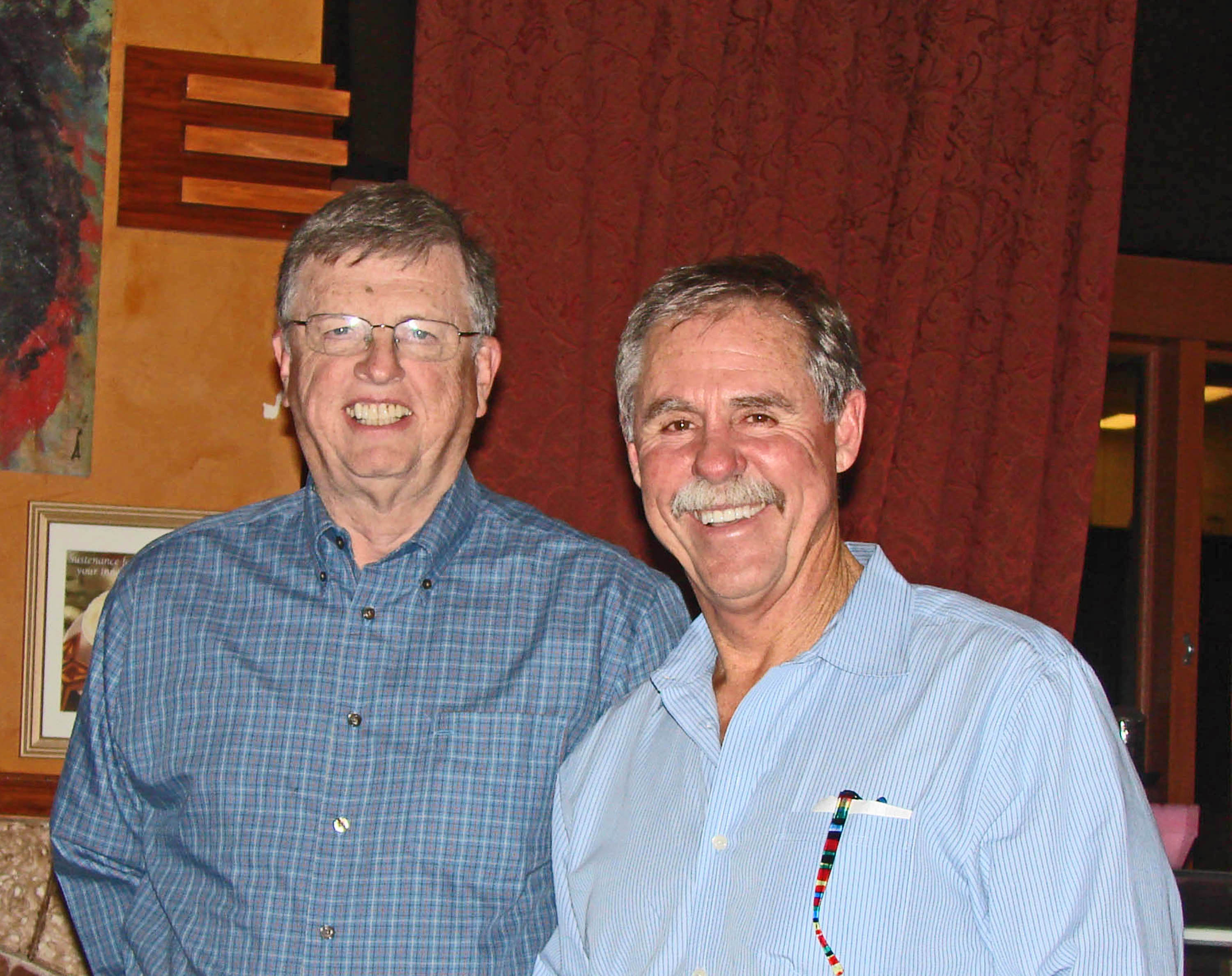
Larry Dierker SABR Chapter Leader Bob Dorrill (L) and former Houston Astros Manager Phil Garner are all smiles after a past monthly program meeting in Houston.

What is SABR?

SABR is an acronym (pronounced “saber”) for the Society for American Baseball Research. The non-profit, baseball-fun-dedicated organization was established in August 1971 in Cooperstown, NY by a fellow named Bob Davids of Washington, DC.  The Society’s mission is to foster the research and dissemination of the history and record of baseball in a way that honors accuracy and celebrates the game publicly.

Over the years, SABR has expanded all over the United States and into some American cell communities in foreign nations. Some members are dedicated to the development of better statistical methods for evaluating baseball achievement, but most members are simply deep blue fans of the sport’s narrative history and the annual pennant races.

You don’t have to be a stat-head or expert on anything to become a member. You simply need to possess a love for the game and a desire to hang out with people who share your interest in the sport.

What does SABR membership cost?

The annual membership fee for SABR is $65.00 person, however, people under age 30 and over age 65 pay only $45.00 per person. Cheaper rates are available for multi-year membership plans and a full detail on “how to join” is available online through SABR’s national headquarters in Cleveland, Ohio at http://www.sabr.org/sabr.cfm?a=cms,c,67,35 People interested in joining through the Larry Dierker Chapter in Houston may prefer to make contact with our local chapter leader, Bob Dorrill, by e-mail at BDorrill@aol.com – or simply call Bob at 281.361.7874.

What do SABR members get for the money?

Beyond baseball friendship opportunities and local programs that money absolutely cannot buy, SABR members get incredible support for any baseball research or writing they may care to undertake, plus free annual copies of SABR’s own research products and a chance to immerse themselves in baseball at the SABR annual national convention that is held every summer in a major American city. This year, the SABR convention is set for July 6-10 in Long Beach, CA.

The Larry Dierker Chapter in Houston gives member for a monthly speaker’s/light Dutch treat evening meal meeting with baseball people like Larry Dierker, and other former Astros like Jimmy Wynn, Norm Miller, Phil Garner, Kevin Bass, Chris Sampson, etc. The local chapter also includes Jimmy Wynn, Hall of Famer Monte Irvin of the old New York Giants, and Larry Miggins of the iconic Houston Buffs.

What is SABR Day in America on January 29?

SABR Day in America is an annual day in which SABR chapters all across the country meet on the same day to try and get the word out to the rest of you about SABR and how it may help you build an even fuller experience with your love of baseball. You don’t have to be an expert or ever take on anything in the way of formal research to join. All you need is a desire to get closer to the game. – Getting closer to the game is one thing that will happen for every person who joins SABR.

If you would like to know more, simply contact SABR or our local representative, Bob Dorrill – or – simply show up at our Houston Chapter meeting on Saturday, January 29th, from 2:00 PM to 4:00 PM at the Houston Sports Museum on the Gulf Freeway (I-10 S) at Cullen Blvd. inside the Finger Furniture Store.

Mr. Rodney Finger of Finger’s and Mr. Tom Kennedy, HSM Curator, are our hosts that day – in the same museum that Rodney’s grandfather established back in the 1960s in honor of the fact that the store now sits on the site of what was once the ground that held Houston’s famous “Buff Stadium from 1928 to 1961.

Larry Dierker, Jimmy Wynn, Larry Miggins, and Monte Irvin will all be there for SABR Day so please join us. Come and immerse your soul in all things baseball. You will be among kindred spirits and welcomed with open arms. Don’t let this day slip by on some dryer pursuit when it could be one of the most fulfilling, important days of your life. All you have to do is show up.

Showing up. It’s half of what life’s fulfillment is all about.

Will Bagwell Grab HOF Brass Ring on First Try?

January 5, 2011

Bert Blyleven Likely to Finally Make it in 2011.

Jeff Bagwell (449 HR, among other things) gets his first shot at the Baseball Hall of Fame today. Bert Blyleven (287 Wins) probably finally gets his 75% vote total for election. And a whole lot of other arguably worthwhile candidates arrive for their first or umpteenth ballot check off from writers who may either hoist them to the Hall of Fame or leave them dangling in cruel suspension for years over everything from  questions of performance deservedness to the taint of suspicion about their use of steroids as active players.

In 2010, Mark McGwire (128 votes/23.7%) appeared on the ballot as the poster boy for steroid reputational delay of support. It’s likely that Big Mac will be joined in 2011 by Rafael Palmeiero and that these two men will be joined in limbo someday by Barry Bonds and Roger Clemens when both of these great ones also finally become eligible for consideration. It’s simply the dirty-business issue that won’t go away – and the stain of implicit blame could spread even broader, depending on voter memories of “Popeye-like” muscles that suddenly disappeared again in some players once their playing careers were all said and done.

Here’s how the ballot of top candidates looks as we await the results to be announced today. It’s likely that Bert Blyleven will finally make it through the golden door, but we will know for sure about that guess at 1:00 PM. Roberto Alomar could also make it in this time.  A player has to garner 75% of the vote total  for HOF election – and that is never as easy as it first looks. I’ve included the vote totals and percentage that each top candidate on the ballot in 2010 received. The list of new candidates follows in alphabetical order:

Returning Player Candidates (2010 Vote Totals/Vote %):

Andre Dawson (420/77.9%) – elected in 2010

Bert Blyleven (400/74.2%)

Roberto Alomar (397/73.7%)

Jack Morris (282/52.3%)

Other Leading Candidates in 2011:

Along with Jeff Bagwell, Fred McGriff, Barry Larkin, Edgar Martinez, Don Mattingly, Dale Murphy, John Olerud, Lee Smith, Alan Trammell, and Larry Walker, among other notables, are also on the 2011 ballot for consideration.

Good luck to Jeff Bagwell on his first try!

Baseball’s 1st Performance Enhancing Chemical

December 27, 2010


There’s a difference between mind-altering and performance enhancing chemicals in baseball. Alcohol, nicotine, and caffeine have been around forever – or for what passes for the beginning of forever in most professional baseball circles, the 1876 start of the National League. These for-sure items, and a little stray loco weed thrown in to boot, may have altered some outlooks for quite a few players from the dawn of the baseball clock, but none ever proved to be “enhancers” of improved results on the field in the long run.

As we’ve sadly learned in recent years, a few true performance-enhancing drugs, hormonal producers like HGH and others, have slipped into use to produce stronger and faster healing athletes over the past two decades, apparently, that have literally made a major mockery of the record books, especially on the power-hitting side of the ledger. Now, while we are still in the legal-cultural side of trying to figure out what to do with the players and records involved, I thought it might be a little dark-sided fun this morning to take a look at where this problem began in the narrative of baseball fiction.

It started in the 1949 movie, “It Happens Every Spring,” starring British-born actor Ray Milland as the second most unathletic actor to ever take on the role of a baseball player in a film. (The worst miscasting came later, in 1957, when some other doe-doe Hollywood studio stupidly starred Anthony Perkins as Jimmy Pearsall in the movie, “Fear Strikes Out.” No one before, since, or probably forevermore will ever do a worse job than Perkins, but Milland gave Tony a pretty good run.)

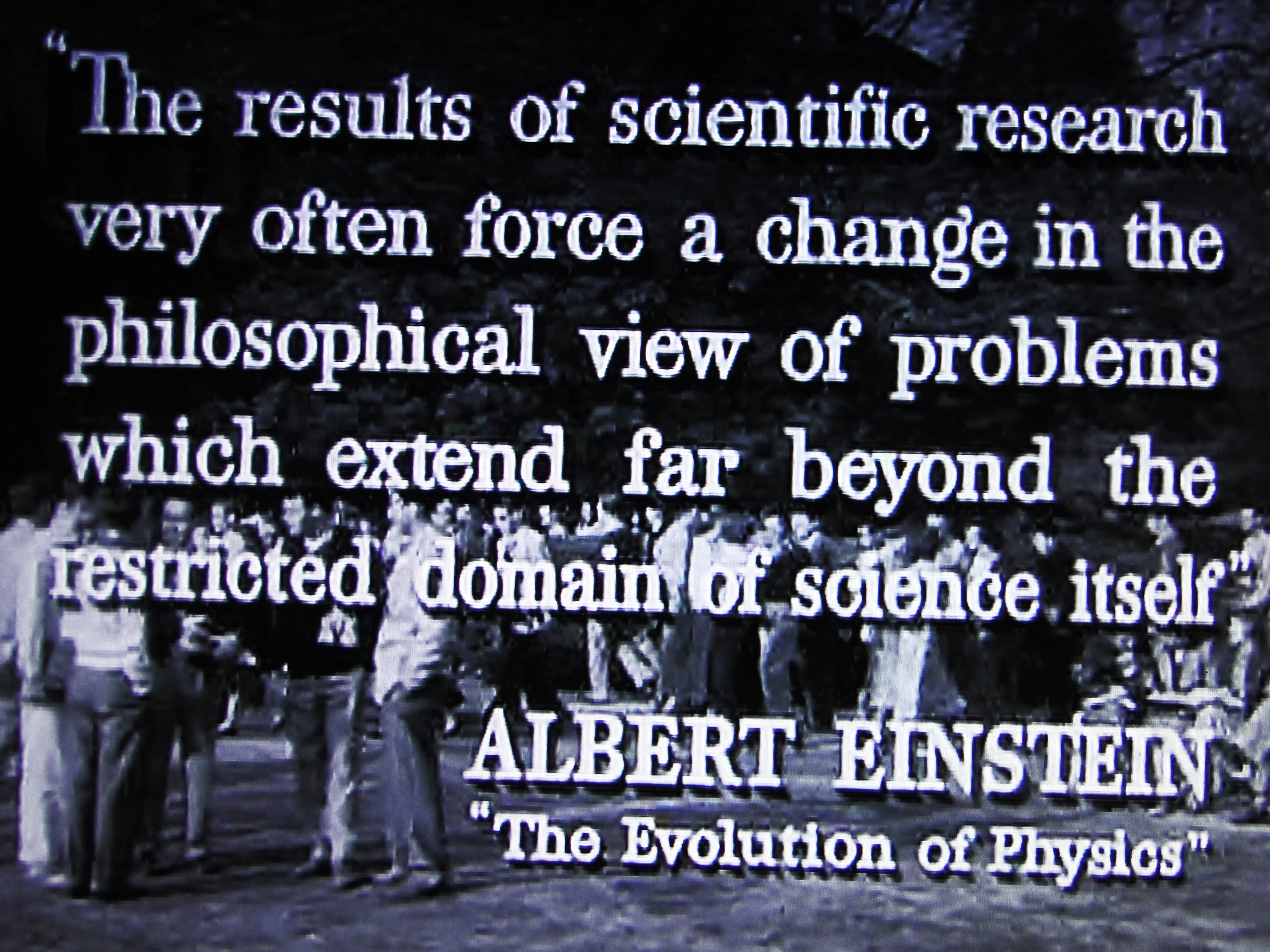
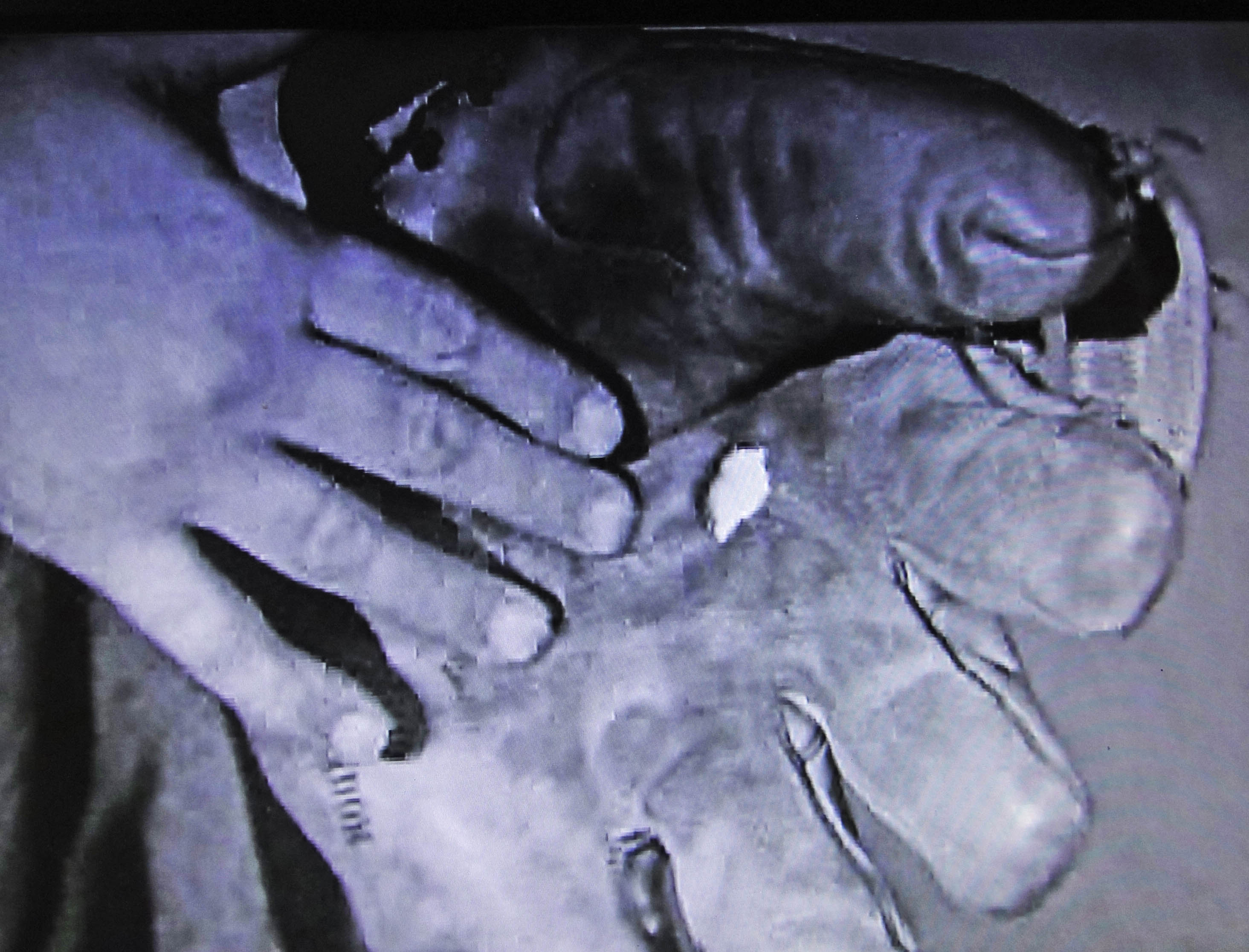
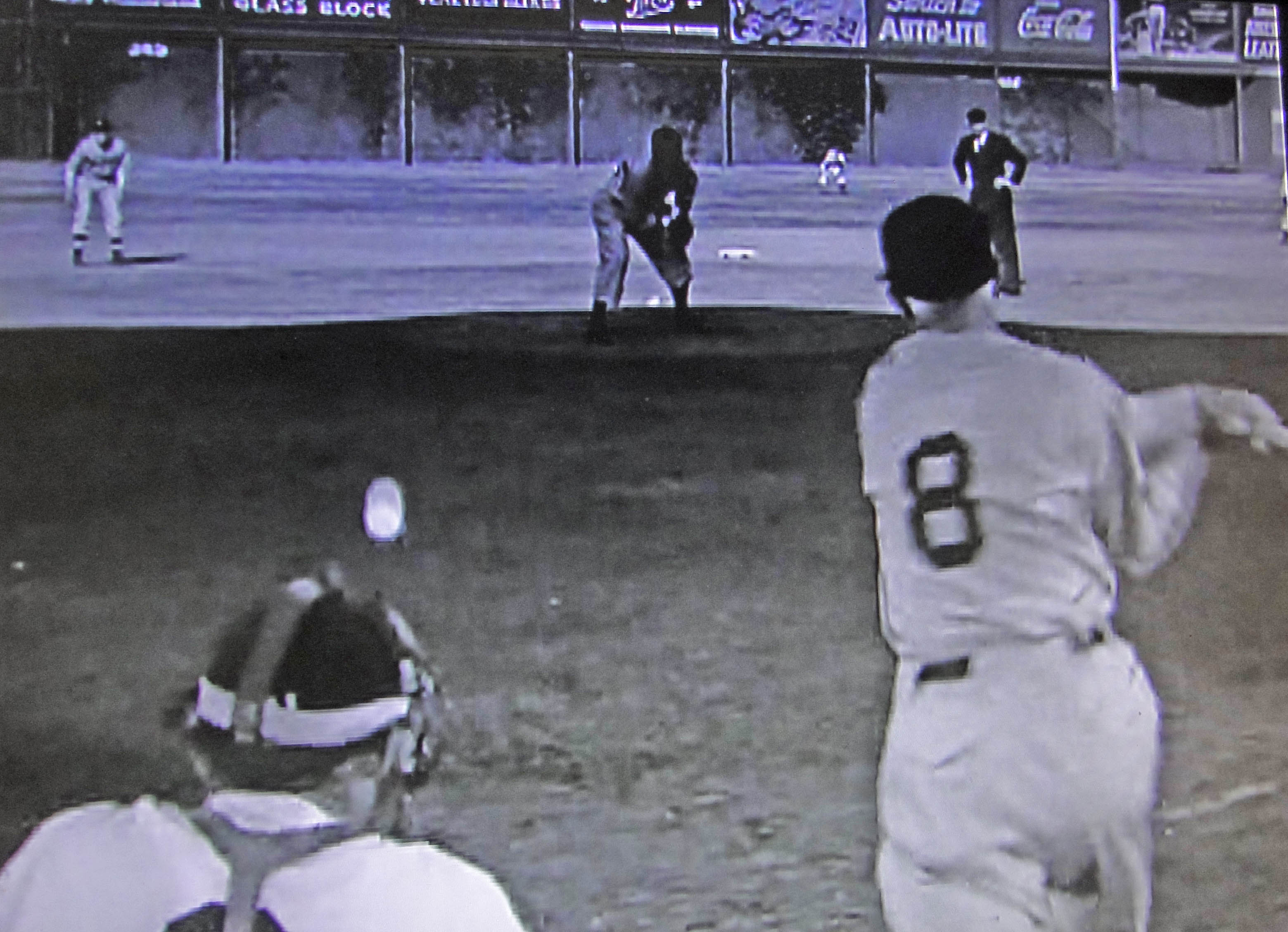
The movie just played again this morning on cable. So, with the help of the DVR, I was able to capture these critical stills from the show itself. The one in the top here is the alleged quote from Einstein on the way scientific breakthroughs change our view of things. Interesting idea, but that is hardly what happened in the movie, “IHES.”

What happened is that a college professor, then a major league baseball team, and finally a major league team owner and a complicit university  were all able to parlay an unethical performance-enhancing substance into a revitalized college teaching and research career, a major league pennant, and an endowment subsidy for scientific research at the professor’s university, thanks to the gratitude of the team owner who bathed in the windfall of secret scientific breakthrough.

Here’s how it happened:


Simply soak a small sponge rag in the wood-reppelant fluid and place the wet rag in the glove behind the hole. A little contact between the ball and the liquid mix made the next pitch impossible to hit. The ball would literally jump over a swinging bat to avoid getting hit on its way to the catcher's glove. In the movie, nobody ever checked the glove.


In the movie, a chemistry professor’s months of experimentation is destroyed when a home run from a student baseball game crashes through the window of his laboratory and destroys his material in their beakers. While cleaning up the mess, the professor learns that he accidentally has discovered a wood repellant substance. While rolling the baseball that caused the damage down the surface of the research table, he sees that the ball simply guides itself around anything made of wood.

Professor Milland cannot make more of the substance that causes this wood repellant behavior because it is all a result of the accident and the confluence of chemicals that randomly came together. As a baseball fan, however, Milland immediately recognizes how he could use the stuff he is able to collect in a few bottles to help his favorite St. Louis club win the pennant.


"Mike Kelly" threw a ball with more hops than Barnum's fleas.


Milland takes an immediate secret sabbatical from his college post and journeys to St. Louis. He manages to get through all resistance from the club owner and manager by striking out the entire St. Louis club in practice. Signed to a pitching contract as “Mike Kelly,” Milland then pitches St. Louis to a pennant that is won on the last day of the season with his own bare-hand catch of a line drive up the middle. Kelly had pitched this last game on his own because his catcher-roommate and the manager had used up his special baseball concoction the night before, thinkng it was hair tonic.

Milland had told his roommate that these mystery bottles contained hair tonic to head off curiosity about the secret substance. It was the only time in the movie that Milland suffers a penalty for lies or deceptions, but the setback proves temporary. Forced to win a game on his own, Milland succeeds, but suffers a career-ending injury from the last-out catch. The St. Louis owner then learns of Milland’s college background and decides to build a new science building for the university – under the condition that Milland is forgiven for his deception and made chairman of the science department. Milland also gets the girl, who also happens to be the daughter of the college president.

The movie doesn’t cover how St. Louis fared in the World Series without Ray Milland/Mike Kelly, but we are left to presume they also won that one too, even without performance-enhancing assistance.

So, what’s the harm here, anyway? St. Louis got another pennant. The St. Louis club owner and fans were made happy. And major league baseball and all the other fans never even knew what hit them. It just goes to show you what’s possible when you secretly have the only pitcher in baseball who can use a little liquid stuff to make any baseball totally unhittable.


My 19th Century MLB All Stars

December 24, 2010

"Hit 'em where they ain't." - Wee Willie Keeler.

It’s Christmas Eve, but I could not resist completing my cycle on the historic all-star teams by taking on the 19th century icons who started it all for the great game of baseball. My only trouble here was finding a lefty I preferred to any of the wildly famous righties we all mostly know about. So, in a growing mood of seasonal generosity and complete reversal on reality, I chose to select four pitchers, all right handers,  to my 19th century team from the era. So, the team that often made it through whole seasons with only one starter and a talented backup, hereby  gets a lights-out stable of four great ones on my club.

A little irony is a nice seasoning almost every time.

For starters, I had to go with the man who won 48 games in 1883 and then followed that by posting 59 victories in 1884, the great Old Hoss Radbourn. My next guy eventually became more famous for making balls then throwing them. That would be Al Spalding, who went 252-65 with a 2.13 ERA in only seven 19th century seasons of work. 19th Century hurler # 3 is the man we annually associate with “best two pitchers in the major leagues this year.” – Cy Young had an incredible 511-316, 2.63 record over 22 seasons in the big leagues. His service time in seasons split equally between the 19th and 20th centuries, but his best winning years came early. 372 of his wins came in the 19th century. Finally, my fourth guy, Tim Keefe, would most likely be my first guy, if you really pushed me to picked one from the litter. From what I’ve read, many people far closer to that era than any of us shall ever be considered Keefe to have been the best pitcher of his time.

At any rate, here are my guys. Not surprisingly, all are members of the Hall of Fame. If you have time on this bust Christmas Eve, please, feel free to post yours here too. If not, and God Willing, we’ll still be here after cross over the holiday season bend.

Meanwhile, here is My 19th Century MLB All Star Club:

RH Pitcher # 1 – Charles “Old Hoss” Radbourn (309-194, 2.68 ERA in 11 19th century seasons)

RH Pitcher # 2 – Al Spalding (252-65, 2.13 in 7 19th century seasons)

RH Pitcher # 3 – Cy Young (511-316, 2.63 in 22 total seasons; 372 wins in 11 19th century seasons)

RH Pitcher # 4 – Tim Keefe (342-225, 2.63 in 14 19th century seasons)

C – Mike “King” Kelly (.308 BA)

1B – Dan Brouthers (.342 BA)

2b – Ed Delahanty (.346 BA)

3B – John “Muggsy” McGraw (.334 BA)

SS – Hugh Jennings (.313 BA)

LF – Joe Kelley (.321 BA)

CF – Wee Willie Keeler (.341 BA)

RF – Billy Hamilton (.344 BA)

Happy Christmas, Everybody! ~ And may your days be merry and bright!

My 21st Century Dawn Team (2001-2010)

December 23, 2010

Ichiro Suzuki: Poster Boy for my 21st Century Club.

Today marks the fifth era MLB all-star team of this coverage. Previously, and in this order, we have gone through the (1) post-World War II (1946-1960); early 20th century (1900-1945); (3) afternoon 20th century (1961-1985); and (4) 20th century night train (1986-2000) clubs. All these teams and your comments are published here in The Pecan Park Eagle under separate posts over the past few days.

We will pick up the 19th century club later, but today’s 21t century club, to date, brings us up to the moment for now as we unplug here long enough to put the finishing touches on Christmas preparations. If you have the time, please post your comments of agreement or disagreement with my selections in the commentary section that accompanies this column.

Thank you, and if we do not meet again tomorrow, please accept my best wihes for a safe and happy holiday season!

Enough said. Here’s My 21st Century Dawn Team (2001-2009):

RH Pitcher: Roy Halladay

LH Pitcher: Andy Pettitte

C – Joe Mauer

1B – Albert Pujols

2B – Robinson Cano

3b – Chipper Jones

SS – Derek Jeter

LF – Manny Ramirez

CF – Torii Hunter

RF – Ichiro Suzuki


And Before We Go … Happy 100th Birthday to My Late Father, “Wee Willie McCurdy!”

Dad was born in Beeville, Texas on December 23, 1910. He also died there on July 7, 1994 at the age of 83, exactly five weeks following the sudden and unexpected death of my mom. Dad was doing fine until Mom died. Once she passed, he just seemed to shutdown and go, I still miss both of them, especially near their December birthdays and Christmas time. Mom was a South Texas girl, born on December 5, 1915 in Kenedy, Texas. She had a stroke on their 58th wedding anniversary, May 30, 1994, and died four days later on June 3rd at the age of 78.

Dad never played professional ball, but he was a pretty steady 5′ 6″, 135 pound, BL/TR outfielder for the St. Edwards Broncos in Austin back in the late 1920s and then for a few years of town ball with the Beeville Bees/Blue Jays. As I’ve written here earlier, my first memory was of Dad fielding a base hit in right field at the fair grounds field in Beeville and making the throw in to second base. I was about two years old at the time and it was also my first, but hardly the last, impression of baseball.

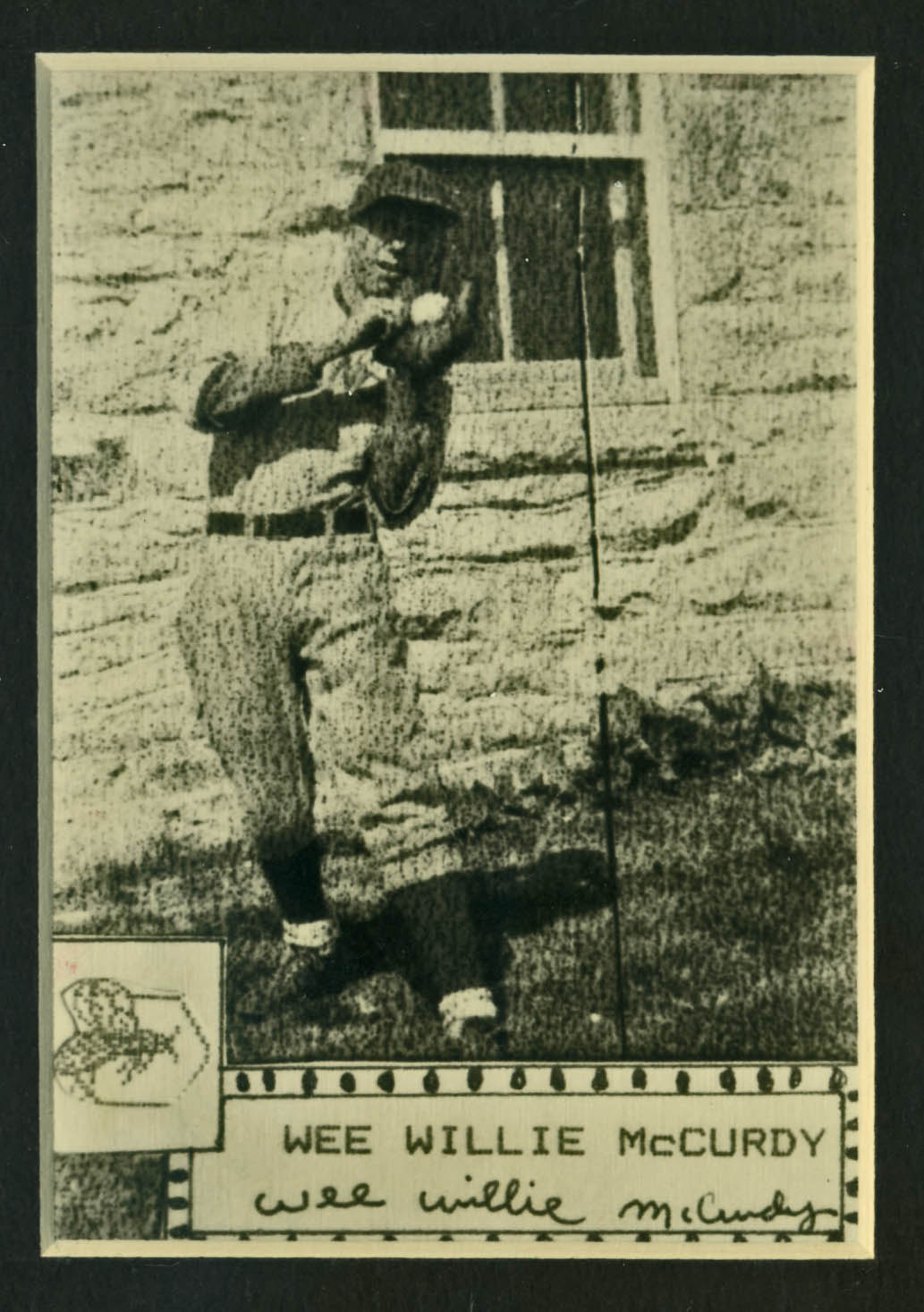
Dad never had his own baseball card so, years go, I made the one of him you see here from his old St. Edwards photo. He didn’t say much, but he smiled when I gave it to him. That was enough for me. I only I wish I could have done more in life, while he was still here, to let him know how much I loved him. Among so many other intangible gifts I received from my dad, baseball ws a big one. He’s the man who taught me the rudimentary rules of the game and encouraged my own participation in the sport. For that gift alone, I am now years deep into the business of working on the expression of my gratitude.

Happy 100th Birthday, Wee Willie McCurdy! Hope you’re still playing and following the game, wherever you may be. Just know that wherever that is, as always, my love still reaches out to you this morning as fast as a line drive rope off the left field wall.

My 20th Century Night Train All Stars (1986-2000)

December 22, 2010

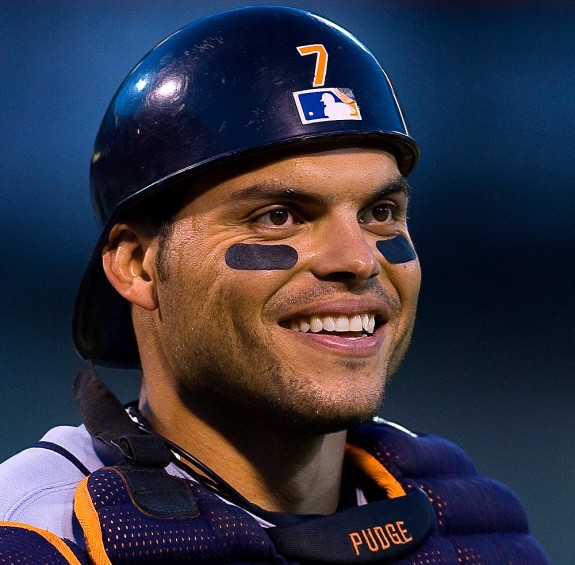
Ivan "Pudge" Rodriguez is my Night Train All Star Catcher.

The 20th century went out with a bang of talent that was some near time later found suspect of using performance-enhancing substances. I passed on one of the three most famous of these (Mark McGwire) in favor of another (Barry Bonds), but not because of the steroid cloud. In spite of his lights out years in 1998-1999, McGwire’s performance during the whole period here was not up to snuff with the overall hitting job turned in by Bonds from 1986 to 2000.

As per usual, feel free to agree, disagree, or modify my picks the way you see it. I will always listen – and maybe even change one or two of mine, if you make me a strong enough case for so taking that action. If my disagreements hold up to your objections, you will know it here by the fact that nothing will change on “my ballot.” But so what? Our opinions belong only to us. Ever try to cash one at the bank?

Just one note. I left “DH” off the selections chart yesterday because it is a position that exists only in the American League. Informally, I will say here that there i someone from this era who deserves, at least, an unofficial nod, even on something as minor as this era appraisal. – Hail to Edgar Martinez, the arguably most famous and effective DH of all time. This era was also his time to shine.

Here are my Night Train (1986-2000) 20th Century All-Stars:

RH Pitcher: Roger Clemens

LH Pitcher: Tom Glavine

C : Ivan Rodriguez

1B: Frank Thomas

2B: Roberto Alomar

3B: Wade Boggs

SS: Barry Larkin

LF: Barry Bonds

CF: Ken Griffey, Jr.

RF: Tony Gwynn

Please note that I have recovered some considerable memory of the American League in this era. It’s because we have now entered an era in which the American League deserves to be better remembered.

That’s it from me. Let’s hear from you.

MY EARLY 20TH CENTURY (1900-1945) MLB ALL STARS

December 20, 2010

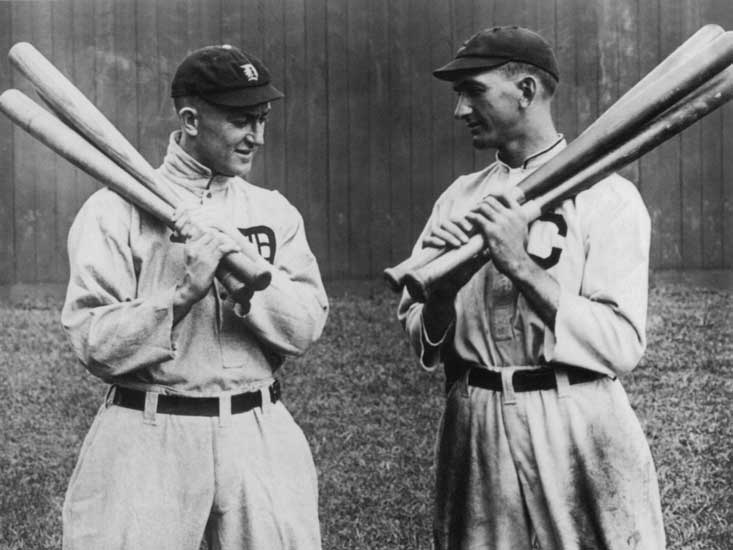
TY COBB (L) AND SHOELESS JOE JACKSON WERE EASY CHOICES FOR ME.

That Post World War II (1946-1960) MLB all-star exercise of a couple of days ago was so much fun that I thought I’d do another, and this one goes back into an era of even more pristine clear choices among players that few, if any of us, ever saw play in person. In spit of anything you might think, I am not among the personal witness crowd. Even us baseball Methuselahs don’t go back that far. I’m talking about an all-star team that covers the early 20th century, starting with the 19th century 1900 formation of the American League through the last year of World War II, 1945.

Any advantage on selection-making among us members of the older group here is that we have two resources to draw upon for making our picks: (1) the vast bibliography and statistical analysis sites available to all; and (2) the childhood stories we heard about these men from our father and grandfathers.

I did learn something from all of you who wrote me or The Pecan Park Eagle about your own choices for the Post WW II all-star group: (1) your preponderant choice of Warren Spahn over my Bob Feller choice convinced me that we need the freedom to pick one righty and one lefty as our preferred pitcher. If I had to do it over again I’d still pick Feller as my righty because of my long since-childhood affection for him, but I too would add Warren Spahn as my lefty guy for that era. (2) It’s better to not repeat the Feller pass on this earlier all-star group. With Feller, I took him as my starter for the post-war era in spite of the fact that most of his great years came earlier. That really wasn’t fair. The new suggested rule on this one is: Try to pick players who did most of their best work during the era in focus. That rule will keep me from picking Sy Young as a pitcher since he  won 367 of his 511 wins prior to 1900. Had the rule been in mind-place earlier, I would have chosen Robin Roberts as the righty on my post war group.

Here, without further comment, are my starting ten for the early 20th century team (1900-1945). If you need statistical/literary support for these, those materials are easily a mere Google away from your fingertips as you read:

Pitcher (R): Walter Johnson

Pitcher (L): Lefty Grove

Catcher: Mickey Cochrane

1st Base: Lou Gehrig

2B: Rogers Hornsby

3B: Pie Traynor

SS: Honus Wagner

LF: Shoeless Joe Jackson

CF: Ty Cobb

RF: Babe Ruth

As you did the last time, please register your agreement or disagreement with my choices in the comment section below. There’s not as much room for variance here as there was on the post war squad, but some does exist. To make my picks, for example, I had to pass over a few guys named Christy Mathewson & Grover Cleveland Alexander (RHP), Rube Waddell (LHP), Bill Dickey (C), George Sisler (!B),  Nap Lajoie, Eddie Collins, & Frankie Frisch (2B), Jimmie Foxx & Jimmy Collins (3B), Rabbit Maranville (SS), and Tris Speaker, Harry Heilmann, & Al Simmons (OF).

Every player on my club (except for the banned Joe Jackson), as well as the others of reference, are members of the Hall of Fame. That “HOF” status is the universal thread that unites all, but Shoeless Joe. The reason Joe Jackson isn’t there in the HOF is because of his expulsion from baseball as a result of his alleged participation in the 1919 World Series fix. Most of the time, I think of Joe as a Hall of Famer, anyway. My tendency to do that even influenced me to first write here that all of my all-stars were Hall of Fames. Then I heard from good SABR friend Bill Hickman with the reminder that Joe is not really an official member and I made the correction I am recording here. Still, in my own mind, Joe Jackson is innocent of all charges in the White Sox scandal until proven guilty – and also a Hall of Famer based on his game day production over the years he played through 1920.

Your picks don’t have to be Hall of Famers, but they probably will be, anyway, unless you also choose Shoeless Joe or one his also banned seven Black Sox brothers for your own lineup. In the early 20th century, the Hall of Fame did a pretty good job of picking up the people who deserved the honor.

I know it’s only four days until Christmas Eve, but happy early baseball all star hunting, anyway!

My Post World War II (1946-1960) MLB All Stars

December 18, 2010

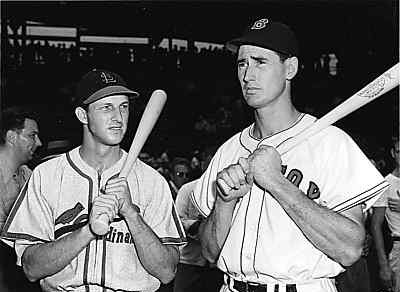
My Two Greatest Hitter of All Time: Stan Musial & Ted Williams.

My Post World War II (1946-1960) MLB All Stars

There will be no one group of nine that fills the bill for all of us on this one. These are just my picks, the stars that lit nights and guided the best and worst summer days of my growing-up years in Houston, with nothing more to help me keep up with them all but the Houston Post, The Sporting News, the Mutual Game of the Day on radio, DIzzy Dean and the TV Baseball Game of the week, and some very early and primitive long distance reporting by the first evening sports announcers at TV channels 2, 11,, and 13.

If you were around at the time, you will have your own choices – and we would like to hear who they are in the comment section of this column. There are no right or wrong answers here – just differences based on factors of personal preference, but, as Bum Phillips was wont to always say: “I’ll be happy to put my guys on the field to play “”yurn” any day of the week.

Here are my starting nine. They are all Hall of Famers, but that was just a common thread that easily fell into a stitch pattern through my entire nifty nine. In the old days, at least, the Hall of Fame didn’t miss often on awarding the signature of greatness to the folks who deserved it, based on their performances on the field. Mine are these:

Pitcher: Bob Feller. He came right out of WWII and won 26 games in 1946. The post war years were not his best, but he could still win big and get you the innings and fan people too. He certainly played well enough to get my long distance attention.

Catcher: Roy Campanella. Roy was the first black MLB catcher and the steady heart of those great post-war Dodger teams in Brooklyn. He could hit with pop and a high catcher average – and he has an arm that runners respected mostly as a stop sign on spurious stealing attempts.

1st Base: Stan Musial. In my book, the only “wrong” answer in this exercise will come when somebody submits a lineup that does not include “The man somewhere – either at first or in the outfield. As a kid, he was easily the best all-around hitter that I ever saw in person, even if those Musial performances were generated in spring training against our Houston Buffs. Musial’s 1948 NL batting title year, won by the .376 batting average that sprang from 230 hits and 39 homers, left the greatest impression on my 10-year old mind.

2nd base: Jackie Robinson. Robinson was my guy from the start of that 1947 year that saw him break the color line and then go on to steal home in the World Series against Yogi Berra. Robinson followed Musial ’48 by taking the 1949 NL batting title with 203 hits that produced a .342 mark. Although he played variously in the field, I’m putting him down as my second sacker, even at the cost of passing on another favorite, a little guy named Nellie Fox.

3rd base: George Kell. The MBS radio Game of the Day must have been partial to the Tigers and Red Sox because it seems like those two teams kept popping up all the time on the air, and maybe even more so when Kell played in first Detroit and then Boston. Kell had no power, but, oh Lardy, could he hit. His .343 mark won the 1949 AL batting title. As a fielder, we was no Brooks Robinson, but he was smooth enough to get the ever  done at one of baseball’s toughest positions.

SS: Ernie Banks. Hard as it was for me to pass on Phil Rizzuto, Pee Wee Reese, Marty Marion, Chico Carrasquel, and Luis Aparicio, I had to go with my partiality for shortstops that don’t hit like shortstops – and few represent that model any better than Ernie Banks. Ernie’s 44 HR and .295 BA in 1955 were clearly antithetical to our usual expectations at short. It was only after time moved beyond our current era of  reference and into the 1960s that we would discover Ernie’s secret. He could hit for power and average because he was really a first baseman.

LF: Ted Williams. In my book, Teddy Ballgame and Stan Musial are the two greatest pure hitters for average and power that ever lived. I cannot pick one over the other.  Rogers Hornsby had better career stats and a similar reputation from the right side of the plate, but the Rajah didn’t have to trade his bat for plane, guns, and bullets in two wars on his slightly more peaceful run on greatness, as was the case with Ted – and Stan also lost time to military service,

CF: Willie Mays. He was simply the arguably greatest five-tool center fielder to ever play the game. His iconic “catch” in the 1954 World Series is sufficient testimony to the fact. Mays lost his only potential challenger to the title of best center fielder ever when he personally dumped a dink fly to right center at Yankee Stadium in Game Two of the 1951 World Series. Another rookie named Mickey Mantle destroyed a knee on the play when he pulled up to avoid collision with center fielder Joe DiMaggio on the catch and managed to trap his heel in a drainage grating in the turf to set up the damage. Had Mantle not lost a lot of speed as  result of that injury, and also been forced to play the balance of his career in pain, Mays would’ve had a formidable challenger for the honor.

RF: Mickey Mantle. He was simply a man who was great in spite of unfortunate injuries and a lifetime of serious addictions and bad habits. I’ll take him on my team and how could I not? I thought he was great from the time I first saw him homer against my Houston Buffs in April 1951. On that day, DiMaggio still owned center field for the Yankees and the 19-year old Mantle played right field.

Those are my picks, folks. How about yours?

It’s Saturday morning. Merry Christmas shopping too.

Farewell to Rapid Robert

December 16, 2010

Bob Feller WAS "Take Me Out To The Ballgame"

“Nobody lives forever and I’ve had a blessed life. I’d like to stay on this side of the grass as long as I can, though. I’d really like to see the Indians win a World Series.” – Bob Feller, September 2010.

Bob Feller died in a Cleveland hospice yesterday, December 15, 2010, from the lingering weakness of his recent  pneumonia bout and the acute effects of his progressive leukemia, a disease he has been fighting through chemotherapy since its diagnosis in August of this year.

The death of Feller takes away the arguably greatest Cleveland Indian of all time. There was a fellow named Tris Speaker who put in some quality seasons as a playing manager for the Tribe, even leading the men from the banks of Lake Erie to a World Series title in 1920. Speaker, however, played a few very productive years for the Boston Red Sox before coming over to Cleveland and then even finished with the Philadelphia Athletics.

Bob Feller was all Cleveland Indian, all the way. For eighteen seasons (1936-1941, 1945-1956) Feller compiled a career record of 266 wins, 162 losses, and Earned Run Average of 3.25, with 2,581 career strikeouts thrown in to boot. He won at least 20 games in six seasons over three different decades.

Rapid Robert (that’s what they called him, as you probably know) lost three seasons to true grit military service (1942-1944) when he joined the Navy on December 8, 1941, the day after Pearl Harbor. Unlike a lot of ball players, Feller didn’t grab a military baseball uniform to improve his new groups’ fleet team. He served as a gun captain on the USS Alabama for three years, earning many medals and commendations for his performance under fire.

Feller marked his best win total season in his second season back from the war wen he won 26 game for the 1946 Indians. Two years later, Bob was a 19-win contributor to the most recent Cleveland World Series champions, the 1948 Indians. He had enough gas in the tank to register one last 20-win season by going 22-8 for the 1951 Indians. Three years later, now older and surrounded by an incredibly talented group of pitching teammates, Feller still managed to kick in a 13-3 record for the 1954 Indians and one more pennant for Cleveland.

Bob Feller's fastball once won a race with a quarter horse.

Bob Feller was all about amazement. He had a fastball to rival the speed of the great Walter Johnson before he was even 18 years old. In fact, Feller broke into the big leagues as an Indians reliever on July 19, 1936. On August 23, 1936,  a full two months prior to his 18th birthday, he made his first big league start. By then, Bob had proved to the Indians that he was already too good to ever see a single day in the minor leagues.

Feller’s accomplishments and records are almost too many to list in this brief discouse, but among his impressive stats are these: (1) The man pitched in 570 regular season games, completing 279 of the 484 games he started; (2) He led the American League in strikeouts seven times; (3) He pitched three no-hitters, including the only opening day no-no, and he also pitched twelve (12) one-hitters; and (4) In 1946, he pitched 36 complete games and 10 shutouts; the different era 2010 Indians only recorded 10 complete games and 4 shutouts as a complete staff.

The Cleveland Indians retired Bob Feller’s #19 in 1957, the first year following his last season as an active player. He was inducted into the Hall of Fame in 1962 during his first year of eligibility.

Bob Feller pitched in a special era for exceptional greatness on the mound. Four of his late 1940s, early 1950s pitching teammates, Bob Lemon, Early Wynn, Satchel Paige, and Hal Newhouser also later made it to the Hall of Fame. (Thank you, Mark Rejmaniak and Bob Dorrill, for your assistance in helping me thaw the brief brain freezes on accurate reporting of this whole Cleveland HOF pitching class from that 1948 to 1956 Cleveland Indian era.) And not just “by the way,” Bob Feller also played with four position players who made it on merit to the Hall of Fame too; center fielder Earl Averill played with Feller during the 1930s, and center fielder Larry Doby, second baseman Joe Gordon, and shortstop Lou Boudreau were leading forces of support behind that great array of Indian pitchers near the mid-century mark. What a talent ride those post World War II Indians enjoyed. And Bob Feller was the ancient superstar light that guided the team from his youthful days in the Great Depression through the last season of Eisenhower’s first term as President.

Baseball’s Bob Feller of Van Meter, Iowa was everything to the City of Cleveland that the NBA’s LeBron James of Akron, Ohio chose not to be. Feller was Mr. Cleveland Sports. Forever. Loyal. Committed. And dedicated to the idea of staying alive long enough beyond age 92 in the hope of seeing his beloved home town Indians win another World Series title. He didn’t make it, but it wasn’t because of any lack of character and heart. Bob Feller had both. And that’s how I will always choose to remember one of my heroes from all those MBS Network, Mutual Game of the Day radio broadcasts of big league baseball back in the early 1950s. You could hear the force and passion of Bob Feller’s fastball over the radio, even down here in the boondocks territory of a place called Houston, Texas.

Much to my delight, but now tempered by saddened sense of irony with the passing of Bob Feller, I had an opportunity to speak in August 2009 before a crowd that included Hall of Famers Bob Feller, Sparky Anderson, Robin Roberts, Phil Niekro, Joe Morgan, and Ozzie Smith. The occasion was the 2009 Joe Niekro Knuckle Ball at Minute Maid Park, where I had been  asked by Natalie Niekro to recite a poem I had written in honor of her wonderful dad, the late Joe Niekro.

It was an awesome humbling experience to perform anything in the presence of these men and so many other distinguished people from the local and national baseball communities. All I could do is turn the energy and grace crank over to God and give it my best shot. And so I did, for better or best effort. There was no room open for failure that night, and God flew me through on angel wings to make sure it did nor happen. I shall always be grateful for the way it turned out.

Now, a little more than a year and a third later, three of those Hall of Famers who came here to honor Joe Niekro in support of the Joe Niekro Foundation’s work against brain aneurysms are all gone. In addition to Bob Feller, we’ve also have lost Sparky Anderson and Robin Roberts since August 2009.

“Nobody lives forever …” … not Hall of Fame pitchers … nor World Series Champion managers of teams from both major leagues … nor little people, like most of the rest of us. All we can do, as I wrote yesterday, and much earlier in the day that Bob Feller unexpectedly left us, “Life ain’t over till we start living like it is.”

Rapid Robert Feller never gave up on life. He went down to his last day, still hoping to live long enough to see his beloved Indians win another World Series. Now the hope of Bob Feller has to live on in the hearts of all living Indian fans.

Only people die. Hope lives forever, even when its bearer dies. All it needs is some other being to pick it up and live in its behalf until the dream is realized.

Goodbye, Bob Feller. Cleveland will miss you. Baseball will miss you. And we fans will miss you too.

Analog: Hope breathes on for the Cleveland Indians. True Cleveland fans will not give up Bob Feller’s hope for the Tribe because that one also has belonged to a multitude of Indian fans for longer than any of us can remember.

Just as a World Series crown will eventually come to us fans of the Houston Astros, Cleveland will have their day again too. Someday.

You gotta believe! Otherwise, nobody cares when the Bob Fellers of this world pass away – and fans stop going to ballgames. It’s the trinity of faith, hope, and love that keeps even the game of baseball alive and growing. Bob Feller died yesterday, leaving us a legacy of three virtues to carry forward. For me, it’s the power and importance of Feller’s Legacy that I’m feeling today. Can you feel it too?

We all need to pick it up and allow it to revitalize our own faith, hope, and love of the game and it’s not that hard to do. Just open your mind and heart, The triple treat legacy of Bob Feller will swoop right in and do all the work for you. It’s as easy as living the lyrics to “Take Me Out to the Ballgame.”

See you at the ballpark, baseball fans!