Freedom is the Fox and We are the Hunters

July 3, 2017


Even as an adolescent “scholar”, I wondered about the final third facet of Thomas Jefferson’s famous “life, liberty, and the pursuit of happiness” inclusion in our American Declaration of Independence, but not because I didn’t like it, but because I was already old enough to know that some of the things I’d already found it fun to pursue in the name of happiness could get you in a little trouble. So, if my limited experience, and what I saw also happening to my friends also were also true pursuits of happiness, what were we supposed to get from Mr. Jefferson’s message?

The rub was – I wasn’t old enough at age sixteen to understand that my confusion about the third part was based upon my immature grasp of the second part – that thing that Jefferson called “liberty”.

Like Janet Joplin sang, about a dozen years beyond my salad days, some of us recognized “liberty” as a synonym for “freedom” – and, as Janet belted it out a half generation later, we already found ourselves holding onto only a slightly tougher version of “freedom’s just another word for nothing left to lose.”

Freedom is never just another word for “nothing left to lose”. Freedom is the “fox” that invites that misunderstanding for the sake of hiding that there always is a consequence – a price to pay – for everything we do – even those things we do in the name of freedom.

Want to try out the freedom of living rich in your pursuit of happiness? Go ahead and live off this credit card with that five-digit line of credit you received in the mail, Mr./Ms. College Graduate, and don’t worry about a thing. You will hear from us when it’s time.

Freedom is the fox. And we are the hunters on the “pursuit of happiness” trail. Count on the fox showing up at any time – and maybe even bringing some low profile friends from the same lair when he arrives. And remember too. Some of the costs we pay for our naivete or ignorance or blindness or stupidity – or plain old passion – simply come in the form of prices that go painfully beyond money. These are the ones that bring us to blood, sweat, and tears.

The quick answer to this universal dilemma goes like this: Every disappointment causes a certain kind of pain. Get the lessons of that pain and we don’t have to repeat that same experience. Fail to get it – or fail to even look – and it will be back – in some similar form – until we either get it or suffer loss at a more expensive or deadlier level.

How about simply avoiding the pursuit of happiness altogether?

The alternative is the attempt to live in risk-free seclusion from disappointment in our pursuits of happiness – to breathe quietly without living – and that’s no life at all.

As best I can see it now, freedom as a real state of independence only becomes possible when we come to realize that it is only one hemisphere in another large universal ball that includes responsibility as its other half. – We only get to keep the freedom we see if we come also to see that each freedom we claim has a responsibility that goes along with it – and that includes our understanding that others have the same rights and responsibilities we enjoy and embrace.

If none of us give each other the right to be different from us, then none of us are really free. Or responsible. Or independent.

HAPPY INDEPENDENCE DAY, EVERYBODY!

********************

Bill McCurdy

Principal Writer, Editor, Publisher

The Pecan Park Eagle


2017 Astros: Artists of the Miracle Rally

July 2, 2017

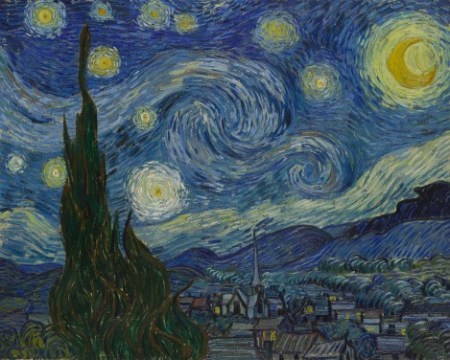
If Vincent Van Gogh had been watching the bottom of the 8th in the Astros Game 2, 7-6, rally win over the Yankees on 7/01/17, here’s what he might have painted in celebration of that starry night.


Indeed, the 2017 Houston Astros are the Michelangelo of the Miracle Rally in major league baseball, but maybe we should allow some credit also to Vincent Van Gogh for the “Starry, Starry Night” level quality that showed up in the bottom of the 8th of Game 2’s 4-run rally and 7-6 victory margin over the Yankees on Saturday. If you are a Houston fan, it was just that star-splendidly beautiful – with daubs of color and light spread all over the place from that winning double down the left field line by Yuli Gurriel off ace NY reliever Aroldis Chapman. That skimming sideboard bumper and bouncer off the far left field corner wall drove home the tying and eventual winning runs at a time in which a missed pitch by Gurriel would have put the home boys back on the field – still a run back – with no guarantee they could hold on, prevent further Yankee scoring in the top of the 9th, and then reignite things again in their last chance time at bat shot by finding those tying and winning runs in a second wonder rally.

No need for “what-if” wondering here about last night. The Astro Artists got it done in the 8th. And that proved enough.

On a less confident level, it will be interesting to see if our current Astros pitching staff can actually improve with rest. If not, some arms need to show up that can help keep all this great hitting ability and terrific baseball savvy together for victory in all those short series hills that have to be climbed at the end of the year.

********************

Bill McCurdy

Principal Writer, Editor, Publisher

The Pecan Park Eagle


SABR Not Attracting Young People

July 1, 2017

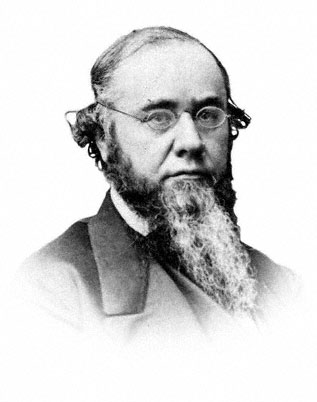
Who am I?
(a) Civil War Sec. of War Edwin Stanton?
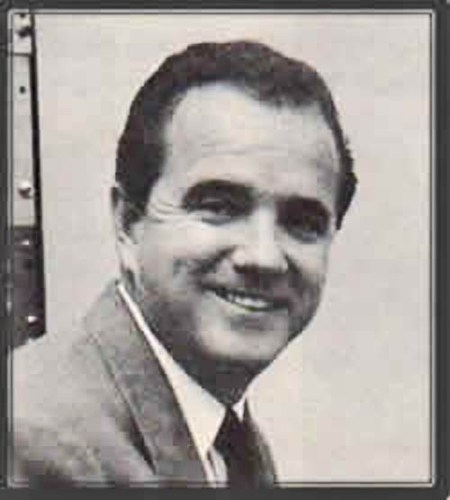
(b) SABR Member John Doe?
(c) Yankee Reliever Mike Stanton?


My dear St. Thomas fellow writer friend, Rob Sangster, sent me this link to an article that appeared yesterday in the July 30, 2017 New York Times. It was called “Baseball’s Analytics Society Sees a Problem: Avg. Age, Members” and the writer was fellow named Filip Bondy. It proved to be yet another valid take on news that goes way beyond baseball – and that is, that younger Americans, and I would add Millennial age people to the foreground of that growing face of change, are no longer interested in many cultural pursuits that still captivate their aging grandparents.

SABR, indeed, is a perfect demographic example of the issue.

SABR (THE SOCIETY FOR AMERICAN BASEBALL RESEARCH) was the brainchild of L. Robert Davids, who on August 10, 1971, gathered 15 other baseball researchers at the National Baseball Hall of Fame in Cooperstown, New York, to form the organization. The 2017 annual SABR convention, in fact, is now underway through tomorrow,  June 28-July 2), and that’s undoubtedly inspired the timely Times piece. I’m guessing the convention may have hosted 8-10% of its total 5800 person membership in New York and that most attendees were older than the just-under-60 average age – and that most were male – and that all possessed at least one ready-to-wear cap and/or jersey from his favorite team and that he had gray hair with a probable gray beard to match.

Going to a small group SABR discussion in July, especially if the AC is not working, can invite fantasized memories of what it must have been like to attend a Lincoln cabinet meeting at the White House during the summers of 1862, 1863, 0r 1864. I recall going to a SABR meeting in Houston on summer night, some time in the past four years, and sitting near a fellow whose face and facial hair reminded me so much of Lincoln’s Secretary of War, Edwin Stanton, that I just couldn’t resist dropping a harmless goodbye line on him at meeting’s end.

“Goodnight, friend! – And please say hello to the President for me when you get home! – Will you please?'”

I then explained what I said and he got it. He even knew who Edwin Stanton was. And he probably also knew that Stanton had never had a time at bat in any early 19th century base ball game either. I should have checked him out for his depth of peripheral knowledge about the early history of the game. Maybe next time. When Lincoln doesn’t need him home so much and will allow him to borrow the SABR time warp passage key.

Hope you get where I’m going with this seems to be – meandering set of observations. The SABR mind leaves no stone unturned. Although some younger people might argue the nuance of irony that “the SABR mind leaves no thought unstoned” as their own sober review of us.

In case you’re wondering, I am neither stoned now – nor do I ever get stoned. I simply enjoy a playful mind at a time in my life in which I’ve come to realize certain truths. To me, it is more important that our children survive in ways that are important to them than it is to keep alive commitments that are important to us. As long as they can grow in their capacities for giving others, including those who come after them in age, the right to be different from them too, things should work out for our kids. And for baseball too.

Baseball will always be bigger than SABR, no matter how many ways some of our members create to measure the game’s productivity. SABR was never placed here as the answer to what’s missing from baseball. Maybe nothing is missing. Maybe all some people are doing is what egos always try to do. That is – to put their own marks on the face of the game. The game doesn’t need to be shorter. And it probably will not get much longer. We need to stop and simply ask ourselves: What is it I get out of baseball that fills my life so sweetly? Or completely? Or Whatever?

Give any subject the right question – and chances go way up that you may find the truth in ways that were never before available.

Along that line, we have made some terrific progress in the way we frame fresh starts over the past sixty years. When I finished undergraduate school in 1960, for example, it was all about going for the answers in life that would guarantee a complete journey to the land of “happily ever after.”

So much for that one.

There now seem to be more of us who’ve come to realize over time, through our own sometimes painful experience, that it’s more important to get the right questions about living in peace and love today, each day, moment to moment, in the here and now, one breath of life at a time.

Give it a try. Ask the questions of yourself. For yourself: If I am spending this much of my life engaged in so many ways with baseball, what am I getting out of it? Really?

And then maybe it will begin to make sense why many of the much younger population feels little attraction to SABR. They are not us. They have their own needs. And they may need baseball differently than we do.

Here’s the referenced link that sparked this modest epistle:

********************

Bill McCurdy

Principal Writer, Editor, Publisher

The Pecan Park Eagle

Farrell and Owens: The Vaudeville Act

July 1, 2017

In real life, they called themselves the Dalton Gang.


Another fantasia adventure with former Colt .45 pitchers Turk Farrell and Jim Owens. I never met Owens, but I did have lunch with Turk Farrell and two other guys at the Old Capitol Club on Halloween Day in 1972. We all arrived at 11:00 AM, ostensibly to discuss a community service project, but we didn’t finish until 2:00 PM – and it was mostly liquid – most of the time we were there. By that time, Turk was retired from baseball, but he was a great social companion that only moment I ever spent any personal time with him. Five years later, when Farrell was killed in a car accident in England, the sorrow was deepened for me by that one day of contact. Funny how that works, isn’t it?

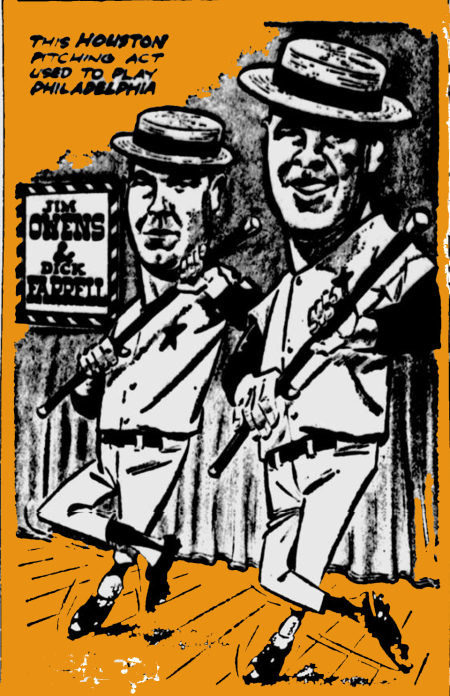
At any rate, bear with me here. The following parody of an old vaudeville act was inspired by an article and cartoon I received overnight from Darrell Pittman. You may find those base source materials more interesting than this little Saturday morning parody that decided to write itself through me today. Knowing the number from “Gypsy” upon which it’s based, may or may not help. The inspirational article follows as the conclusion of this rather lengthy column.

Farrell-Owens Vaudeville Act Parody

(Sung to the Chorus number “Extra! Extra! From the movie “Gypsy”)

Bullpen Occupants Chorus:


Extra! …. Extra!

Hey, look at the bullpen

Historical news is being made!


Extra! …. Extra!

We’re drawing a red line

Around the biggest scoop of this decade!


A barrel of charm? …. Not much!

A fabulous thrill? …. No way!

The biggest little headline …. in vaudeville!


Presenting! …. In person!

That 2-Man Bundle of pitching dynamite

Farrell and Owens! …. alias Turk-n-Stein!


[applause]


Turk-n-Stein:


Hello, everybody! ….

Our act’s called Turk-n-Stein!

…. What’s yours?


Turk-n-Stein Singing in harmony:


Let us …. Entertain you!

Let us …. Pitch our style!


Let us pitch a few tricks!

Some old and then …. Some new tricks!

We’re very versatile!


And if we pitch good

You’ll feel good …. Sure should!

We want your spirits to climb


So LET US …. Do our DAMN THING!

And we’ll put the NL …. On its ear!

And YOU’LL have a good time too …. Colt fans


We said …. You’ll …. Have …. A real good …. Time!


(Turk-n-Stein tap dance off stage right to an up tempo beat orchestration of “Shuffle Off to Buffalo”!)

Thank you, Darrell Pittman for this contribution.

Legible Re-Print of the Farrell-Owens Article

Transcribed by Darrell Pittman

Victoria Advocate, July 3, 1965:


Astros’ Farrell and Owens Run Lively Act in Houston

By TOM TIEDE

Newspaper Enterprise Assn.


NEW YORK (NEA) – If ever a member of the Houston Astros baseball team becomes the first man to go into orbit without a space ship, Dick Farrell and Jim Owens can take credit for the launching.


The daffy duo of the Texas pitching staff once owned a nine-foot boa constrictor and one of the places they kept it was on the couch of their, uh, pad.


“The snake and the couch matched perfectly,” chortles Farrell. “So we invited guys in to sit down. A few people went flying out of the room, believe me.”


The Farrell & Owens act has been an almost continuously running feature in major league cities since the turn of the decade. Performances have been largely after dark, in pubs and ball parks.


Reviews have been mixed. Had they played in the American League, Boston might have banned it.


The Throwing Thespians are no strangers to bottle or battle. Once, in an attempt to divide and conquer, Philadelphia’s Gene Mauch assigned the two to different rooms on the road.


Farrell & Owens would have none of it. They kept their television sets blasting until 5 a.m. every night for a week. At the end of the sleep strike, many members of the bleary-eyed Phillies threatened to quit baseball. Mauch relented and tossed them back together.


Other clubs took firmer action. When Farrell completed what the Los Angeles Dodgers considered a “half-hearted” season (8-7) in 1961, the Bums’ brass was hedging on whether or not to keep him.


Farrell made up their minds for them. He pushed teammate Norm Larker into a motel swimming pool – fully clothed – and was promptly unloaded to Houston.


In Texas the Farrell-Owens routine is the best on the bill. Without them the Astro home bookings, even in the new theater, would be unspeakably dull.


For example, Farrell livens things up by admitting he throws spitters. It’s illegal as marijuana, of course, but he bluntly confessed a few years back that he served a wet one to Stan Musial.


“Everyone loads them up once in a while,” he pointed out.


Now 29 apiece, Farrell & Owens claim they’re rounding the corners off their act. “I don’t want to spoil my chances of making more money,” says the former. “You’ve got to grow up some time,” says the latter.


But the high spirits are still there.


Drop around their pad some time for a lift.

********************

Bill McCurdy

Principal Writer, Editor, Publisher

The Pecan Park Eagle

Houston DJ Icon Paul Berlin Has Died

July 1, 2017

PAUL BERLIN, 86
1930-2017
REST IN PEACE


Legendary Houston Disk Jockey Paul Berlin is dead at age 86 at his home in the city, following a brief illness. For whatever reason, we only learned of his passing today, thanks to a thoughtful reader that sent us the link to this nice article by David Barron of the Houston Chronicle.

http://www.houstonchronicle.com/news/houston-texas/houston/article/Radio-disc-jockey-Paul-Berlin-dies-at-age-86-11243111.php

The date of Paul’s death and Barron’s article already are a week old from the June 23, 2017 moments they each occurred. Thanks for the nice job you did, David Barron! and thank you, especially, Paul Berlin, for being the guy that played the soundtrack of our lives for all of us young pups who started the long climb to coming of age listening to you spin the music that came from two main AM radio station places in the early 1950s – and those included KNUZ and KILT.

Most of us chose KNUZ because that’s where you were.

Through those sound wave portals at KNUZ came the basic original stomp-and-boom rock and roll music that was Chuck Berry – and Little Richard – and Elvis Presley – and Jerry Lee Lewis – and Fats Domino – and Buddy Holly – and all the lesser individual light single artists and great groups – like the Pretenders – to get our blood passions flowing on a connection link to each other – as our early selfish adolescent tastes spelled out what we wanted for ourselves and from each other in life – and how we wanted “happily ever after” to turn out in the long run – whatever that was.

Paul Berlin was our Pied Piper – and he didn’t even need a flute or a Nottingham Forest suit of clothes to get us there. He just had to be the young adult figure in our lives who seemed to know how to talk with us in ways that didn’t scream new rules in our ears – and even someone who could make some of the same mistakes that some of us also made and live to learn from these and move on.

Amazing! Only yesterday I was sharing an old Paul Berlin story with a friend of mine who now lives in Memphis. Berlin was a native Memphian, getting his start in radio there before moving to Houston in the early 1950s. The story I shared was legendary Paul Berlin. He used to describe Memphis as the only city in the country that had been built on a bluff – and run on one too. I always understood that the city itself, indeed, was built upon a topographical bluff above the high eastern bank of the Mississippi River, but I never really understood the other part. Assumption always flows in my mind that it had something to do with political chicanery at city hall or the chamber of commerce.

I’ve got to share this next story because it’s the primary incident of reference I had in mind – and it deserves to be remembered as maybe a lesson that also spared some of us the same kind of fate down the line – and not something that gets shoved away and buried under an avalanche of “wonderful Paul Berlin” tales – which are OK too. They simply aren’t everything. And this is certainly no hack at the wonderful character of the man that was Paul Berlin. We loved him for the very reason he may have gotten into some short-term trouble over what happened here. – Paul wasn’t that much older than quite a few of us back then and, as we all get to learn in some way, immaturity is not restricted to ages ending in the syllable “teen”.

Once Upon A New Years Eve

I can’t remember the exact year, but it had to have been some time in the 1954-59 range. It was a New Year’s Eve – and Paul found himself working that night – and maybe with a little help from the same stuff that a lot of people imbibe on New Year’s Eve who aren’t working. As listeners, all we could tell, and maybe that’s all it was, is that Paul seemed a little different that night. – Different, as in “silly different.”

He began to kid that he had brought some reading material to keep himself company as he worked alone on a night that everyone else was celebrating as the world’s biggest annual party night.

It was when Paul named the three books he’d brought to read – and then followed that revelation by pointing out to us over the air the irony of the authors’ names for each that his working shift suddenly was ended for the night by someone else at the station – and Paul got the rest of the night off.

The books Paul Berlin named were “Under the Grandstand”, “Yellow Stream”, and “Antlers in the Treetop”. Perhaps, you are familiar with the names of their authors – and why this information shortened Paul’s workload that long ago New Year’s Eve night.

If Paul ever talked about that night again, I do not recall. We were just glad to get him back on the air at his normal times. And, who knows? Maybe Paul helped model a jam that a few of us were able to avoid down the road because of our concern for him.

Sweet Dreams, Old Friend

Here’s the link to Paul Berlin’s obituary. His memorial service is planned for late July.

http://obits.dignitymemorial.com/dignity-memorial/obituary.aspx?n=Paul-Berlin&lc=7472&pid=185903552&mid=7459752

Godspeed, Paul Berlin. Rest in Peace. And say hello to Chuck Berry for all of us.

********************

Bill McCurdy

Principal Writer, Editor, Publisher

The Pecan Park Eagle

Shrine of Eternals Induction Day: 7/16/17

June 30, 2017

A Baseball Reliquary Reminder:

By Terry Cannon on June 27, 2017 in news Re-published here in The Pecan Park Eagle in the implicit hope that our California colleague, Terry Cannon, will not mind our efforts to expand his good news and wry baseball historian’s honorable sense of value and humor all wrapped into one voice further out to an even broader audience. The link to the publication site that owns this eloquent presentation in behalf of The Baseball Reliquary is as follows:

http://www.baseballreliquary.org/2017/06/shrine-eternals-induction-day-july-16-2017/


The Baseball Reliquary will present the 2017 Induction Day ceremony for its nineteenth class of electees to the Shrine of the Eternals on Sunday, July 16, 2017, beginning at 2:00 p.m., at the Donald R. Wright Auditorium in the Pasadena Central Library, 285 E. Walnut Street, Pasadena, California. Doors to the auditorium will open at 1:30 p.m. Admission is open to the public and free of charge. The inductees will be Charlie Brown, Bob Uecker, and Vin Scully. The keynote address will be delivered by Dave Mesrey. In addition, the Baseball Reliquary will honor the recipients of the 2017 Hilda Award, Cam Perron, and the 2017 Tony Salin Memorial Award, Dr. Richard Santillan.

For further information, contact the Baseball Reliquary by phone at (626) 791-7647 or by e-mail at terymar@earthlink.net. The 2017 Induction Day is co-sponsored by the Pasadena Public Library and is made possible, in part, by a grant to the Baseball Reliquary from the Los Angeles County Board of Supervisors through the Los Angeles County Arts Commission.

Following is a brief preview of the afternoon’s festivities:

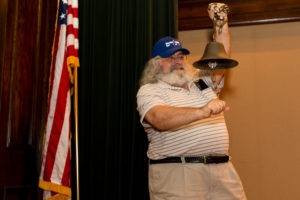
The program will commence with an Induction Day tradition: the ceremonial bell ringing in memory of the late Brooklyn Dodgers fan Hilda Chester; everyone who attends is encouraged to bring a bell to ring for this much-anticipated sonic cacophony. The National Anthem and “Take Me Out to the Ball Game” will be performed by the SYMPHOMANIAX, the flagship musical quartet representing the San Fernando Valley Symphony Orchestra.


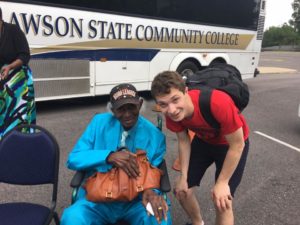
Cam Perron (right) with former Negro League player Roosevelt Jackson, who turns 100 this December.

The first presentation will be the Hilda Award, established in memory of legendary Brooklyn Dodgers fan Hilda Chester to recognize distinguished service to the game by a baseball fan. The 2017recipient, CAM PERRON, began writing letters to veteran players of the Negro Leagues when he was in middle school. While his initial purpose was to obtain the players’ signatures, Perron soon became obsessed with the Negro Leagues, and the unsung heroes of those bygone leagues who were so unrecognized in the world of sports. Perron’s hobby had turned into a passion, and by his freshman year in high school, he began organizing annual Negro League reunions and reconnecting players who had been out of touch for over 50 years. Not only has he located over 100 previously undiscovered former Negro Leaguers, but he has been instrumental in obtaining pensions for many of the players through a program offered by Major League Baseball, a payout that was often life-changing. A 2016 graduate of Tulane University, Perron, now 22 years old, continues his important Negro Leagues research and regularly communicates with former players. He was recently spotlighted on HBO’s Real Sports with Bryant Gumbel.

Dr. Richard Santillan

The second presentation will be the Tony Salin Memorial Award, named in memory of the late baseball author and historian, and established to recognize individuals for their commitment to the preservation of baseball history. The 2017 recipient, DR. RICHARD SANTILLAN, has taught Chicano Studies for the past 45 years in the California State University system. A founding member of the Latino Baseball History Project at California State University, San Bernardino, Dr. Santillan has, since 2011, served as the lead author for the Mexican American baseball book series in conjunction with the Arcadia Publishing company. This summer, the series will release its eleventh book on Houston and Southeast Texas, and its twelfth book on El Paso. Three more books will be released in 2018 on the San Gabriel Valley (Southern California), Kansas City, and Sacramento.  To date, nearly 2,500 vintage photos and stories have been published, the most comprehensive photo collection to be made available to the public in the history of baseball research on Mexican American communities in the United States. The philosophy of the book series is to showcase Mexican American baseball and softball photos through the lens of race, class, gender, political and civil rights, the border, prejudice and discrimination, and how baseball and softball served as political tools to advance equality and social justice. Dr. Santillan and his wife, Teresa, recently donated their Los Angeles Dodgers collection, one of the largest private Dodgers collections in the world, to the Baseball Reliquary; it is housed at the Institute for Baseball Studies at Whittier College.

Dave Mesrey

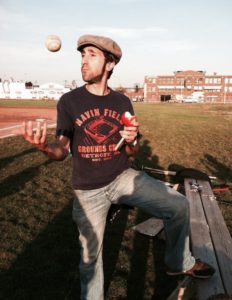
Following the award presentations, the 2017 keynote address will be delivered by DAVE MESREY, a Detroit, Michigan-based writer, historian, and preservationist. A founding member of the Navin

Field Grounds Crew, the grassroots collective of baseball fans which worked to preserve and maintain the site of Detroit’s Tiger Stadium from 2010-2016, Mesrey and the NFGC are now hard at work with the Friends of Historic Hamtramck Stadium to restore an old Negro Leagues ballpark near Detroit. Mesrey is also founder of the Bird Bash, Detroit’s annual tribute to the late, great Mark “The Bird” Fidrych (Shrine of the Eternals Class of 2002). A self-described Birdbrain, Mesrey has written extensively about the 1976 American League Rookie of the Year.

Charlie Brown

The keynote address will be followed by the formal induction of the 2017 class of electees to the Shrine of the Eternals. Born in 1950, CHARLIE BROWN is the stocky, round-headed kid created by the late cartoonist Charles M. Schulz. The embodiment of our aspirations and failures, Charlie suffered the ignominy of loss and disappointment with the grace and aplomb that only a cartoon character can muster. The setting for many Peanuts morality plays is the baseball field, a perfect arena for Charlie’s whimsical, thought-provoking, funny, and pathetic exploits. From his perch atop the pitching mound, Charlie imagines himself as the reincarnation of Christy Mathewson, preparing to zip a blazing fastball, puzzling knuckler, or nasty fadeaway past the opposing batter. In point of fact, however, Charlie has only one pitch, a slow straight ball, that is batted with such force back through the mound that the ensuing line drives routinely undress him. He fares even worse as manager: by one count the career record for the Peanuts team is 2-930, the two wins coming on the heels of forfeits. Charlie embraces and embodies awfulness. While the other kids are celebrating Mickey Mantle, Charlie extols the talents of one Joe Shlabotnik, a noodnik no-talent washout. It appears laughable, but there’s a real wisdom in this: there can be only one Mickey Mantle, but anyone can be Joe Shlabotnik. Yes, Charlie Brown may be a blockhead, but in his unshakeable belief in himself and his imagination, he will always be a winner. Charlie’s induction will be introduced and accepted by CRAIG SCHULZ, the youngest son of cartoonist Charles M. Schulz.

Bob Uecker

Born in 1935, BOB UECKER underwhelmed fans with six season’s-worth of uninspired play as a lowly backup catcher (career .200 batting average) for the

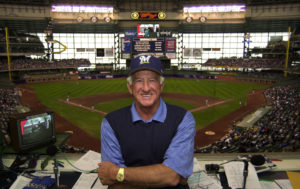
Braves, Cardinals, and Phillies (1962-1967). Proving an exception to F. Scott Fitzgerald’s maxim about the absence of second acts in American lives, Uecker would discover unexpected celebrity and a brand-new career after retirement from the game. A natural, wry wit mixed with self-deprecating humor that mocked his baseball ineptitude enabled him to achieve pop culture stardom. Well-received guest spots on The Tonight Show led to appearances in TV ads for Miller Lite beer and other products, culminating in a recurring role in the sitcom Mr. Belvedere. Uecker’s unlikely and successful transformation continued to develop in baseball-themed comedies (like Major League) and a host of other entertainment vehicles. Uecker has been the radio broadcast voice of his hometown Milwaukee Brewers since 1971, and was honored by the Hall of Fame in 2003 with its Ford C. Frick Award for excellence in broadcasting. Due to his broadcasting commitments with the Brewers, Bob Uecker will be unable to attend the ceremony. His induction will be introduced and accepted by JAY JOHNSTONE, former major league outfielder, author, and raconteur, who played for eight teams during a twenty-year big league career. Johnstone was one of the game’s craftiest pranksters and best storytellers, as he recounted in his three books: Temporary Insanity, Over the Edge, and Some of My Best Friends Are Crazy.

Vin Scully

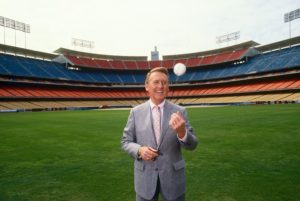
Born in 1927, VIN SCULLY served as the urbane and lyrical voice of the Brooklyn and Los Angeles Dodgers for 67 years. Considered by many the greatest sportscaster of all time, the always eloquent and gentlemanly Scully was admired far beyond the reach of local airwaves: he also broadcast a total of 28 different Fall Classics to a national audience. His iconic calls of the Bill Buckner muff in 1986 and Kirk Gibson’s heroic home run in 1988 have now passed into the realm of the Homeric. Scully’s descriptions of events occurring on the diamond, entwined with vivid reveries, poetic anecdotes, and spontaneous riffs retrieved from his vast store of baseball memories, have enthralled generations of baseball fans. His retirement at the end of the 2016 season was a milestone in baseball history, widely commemorated across America, culminating with the presentation of the Presidential Medal of Freedom to him by President Obama at The White House that November. Due to a previous commitment, Vin Scully will be unable to attend the ceremony. His induction will be introduced by LISA NEHUS SAXON, a trailblazing sportswriter who was one of only three women in the U.S. who covered Major League Baseball full-time from 1983 to 1987. While working as a beat reporter and sports columnist for daily newspapers in Southern California for more than two decades, covering the Angels, Dodgers, Raiders, and major college football and basketball, Saxon steadfastly fought for equal access and equal pay, paving the way for women who followed her. As a special bonus, Los Angeles folk singer and music historian ROSS ALTMAN will perform a song he has written for the occasion, entitled “Vin Scully From the Bleachers.”

Donald R. Wright Auditorium

Free parking is available in the University of Phoenix underground parking structure, which is located just north of the Pasadena Central Library on the corner of Garfield Avenue and Corson Street. The entrance to the parking structure is on Garfield.

Before and after the ceremony, we invite you to visit the Baseball Reliquary exhibition, Game Changers, which is being presented from July 3-July 30 in the display cases in the North Entrance, Humanities Wing, and Centennial Rom of the Pasadena Central Library.

********************

Bill McCurdy

Principal Writer, Editor, Publisher

The Pecan Park Eagle

If It Can Draw your Blood, It’s Not Paranoia

June 30, 2017

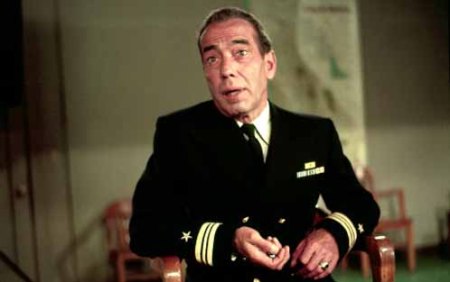
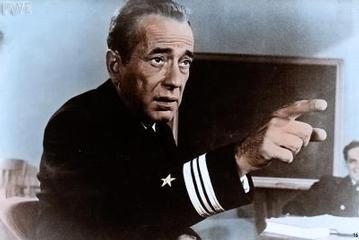
Lieutenant Commander Philip Francis Queeg, Retired
US NAVY and Former Captain of The USS CAINE
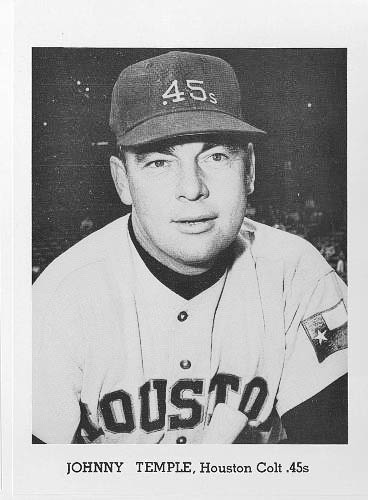
A Reportedly Good Friend of a Gunnery Mate named Johnny Temple.

“Johnny told me some time ago about the problems he’s been having with certain umpires and their unfair treatment of him. When he asked me what I thought he should do about it, I did what I’ve always done. I weighed out all the issues with geometric precision, just as I did that time on The Caine, when all those leftover strawberries from the Captain’s table in my quarters turned up missing.

As per usual here, some things just didn’t add up. I recommended to Johnny that he follow the oldest rule in my book in his case too.

“Johnny,” I said, “you’ve got some things here that could be due to coincidental fallout actions, things that were unpleasant to you, but nonetheless, never the result of any malevolent intention by these certain umpires. – You also have some strong reasons to believe your fears that these crummy guys are out to get you and that they won’t stop until they do.

“In cases like yours, there’s only one way to go. And that is to never disregard the voices of suspicion. They will not go away until they are proven correctable.

“Til then, they will come in the dead of night and wake you up in a cold sweat. And this will go on until the guilty parties are caught in their act of conspiring against you and proper justice is executed upon them – and also upon any others we have yet to identify who may be aiding their evil plan.

“Until judgment day is yours, buy you a pair of these steel ball bearings and roll them around in your hand like I do when the pains of suspicion get too bad. It won’t solve the problem, but it will help reduce the attendant symptoms of involuntary drooling and sporadic bouts of incontinence. I don’t know what else I’d do without my balls.”

~ Lieutenant Commander Philip Francis Queeg, Retired
US NAVY and Former Captain of The USS CAINE

**********

Thank you again for the refreshing content of this ancient article from the Victoria Advocate, Darrell Pittman. We liked the late Johnny Temple and will hope this flare up with the men in blue was little more than a bad short-term case of the Baseball Player Problems with Authority Virus.


Victoria Advocate, July 2, 1963:

Temple Charges Umpires Unfair

HOUSTON (AP) – Fiery Houston Colt infielder Johnny Temple – thrown out of three games this year and fined each time – says there are “six or seven umpires in this league who are out to get me.”

Temple said he could produce a witness who heard a National League umpire say he was “out to get” him. He did not identify the witness.

“I’ve got to get some protection from somewhere,” Temple said Sunday night following the Colts game with St. Louis in which the veteran infielder engaged in a heated conversation with plate umpire Frank Walsh over a called strike.

Temple didn’t get the boot Sunday night as Colt manager Harry Craft rushed onto the field to intercede.

Walsh called a strike on Temple and Temple said something. The umpire said something, too. Then Johnny flared. That much was obvious from the stands.

**********

The source face for this column

**********

“Whatever you do, Johnny, don’t forget the silver balls!”

**********

Bill McCurdy

Principal Writer, Editor, Publisher

The Pecan Park Eagle

Some Major Firsts in Astros Franchise History

June 29, 2017

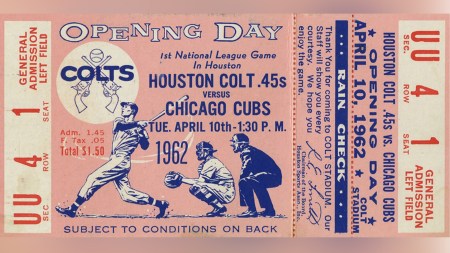
Opening Day, April 10, 1962
Colt Stadium, Houston
Colt .45s 11 – Cubs 2.
“It was a day of firsts.”


We couldn’t resist rummaging through our own suggestions for further research from yesterday’s column, “Forever Firsts in Houston MLB History.”

Forever Firsts in Houston MLB History

We tried to simply run a table on which players, friend and foe alike, who contributed so much to the anchor game in Houston’s 55 season MLB history without going to the extreme of listing the names of those who became the first to catch or drop fly balls down either sideline in the process. Even with Retrosheet, you would need a lot more library help to go that arcane on the project, but that was never the point anyway.

Going in, we always knew that original Astros Bob Aspromonte was grabbing up a lot of the significant “game firsts” in that famous first franchise regular season game of April 10, 1962. That was confirmed rather quickly this morning. For a while, it seemed he might even have bagged them all in the first inning, if the rest of the Colt .45s could have kept that bottom of the first going. Jeez, he was busy. But so was Mr. Shantz, Senor Mejias, and a few others.

Here’s our Pecan Park Eagle Table of Big Franchise First Finds. Please still use the link to check out the play-by-play account from yesterday’s column from which all these below were gleamed. We left out a number of less notable marks by design.

The great thing about these marks is the fact that they are unbreakable. Nothing on any timeline measurable scale will ever be “earlier than earliest” – and that goes for first baseball games as much as it does for first loves. And what sweet memories they both each brew in the hour glasses of our minds:

Here’s our Pecan Park Eagle Table of Big Franchise First Finds:

FIRST PLAYER POSITION INNING OUTS RUNNERS
PITCH Bobby Shantz P T 1st 0 0
FOE BATTER & 1ST K Lou Brock CF T 1st 0 0
FOE HIT Billy Williams LF T 1st 2 0
FOE SINGLE Billy Williams LF T 1st 2 0
HIT Bob Aspromonte 3B B 1st 0 0
SINGLE Bob Aspromonte 3B B 1st 0 0
RUN Bob Aspromonte 3B B 1st 0 1st
RBI Al Spangler CF B 1st 0 1st
TRIPLE Al Spangler CF B 1st 0 1st
DOUBLE Hal Smith C B 2nd 0 0
STRIKE OUT Don Buddin SS B 2nd 1 2nd
DOUBLE PLAY Don Cardwell (B) 6-4-3 T 3rd 0 1st
WALK Bob Aspromonte 3B B 3rd 0 0
HOME RUN Roman Mejias RF B 3rd 0 1st & 2nd
FIELD ERROR Joey Amalfitano 2B T 5th 0 0
HIT BY PITCH Joey Amalfitano 2B B 6th 0 0
SACRIFICE BUNT Don Buddin SS B 6th 0 1st
FOE HOME RUN Ernie Banks 1B T 7th 1 0
FOE RUN & RBI Ernie Banks 1B T 7th 1 0
FOE DOUBLE PLAY Hal Smith (Batter) 6-4-3 B 7th 0 1st & 2nd
CAUGHT STEALING Joey Amalfitano 2B B 7th 2 0
FOE TRIPLE Jim McKnight PH T 8th 0 0
FOE SAC FLY Lou Brock CF T 8th 1 3rd
STOLEN BASE Bob Aspromonte 3B B 8th 2 1st
AT GAME’S END
1ST COMPLETE GAME Bobby Shantz P
1st FRANCHISE WIN Bobby Shantz P


***********

Bill McCurdy

Principal Writer, Editor, Publisher

The Pecan Park Eagle


Forever Firsts in Houston MLB History

June 28, 2017


Forever Firsts in Houston MLB History

And so many of them go back to that Opening Day Game of the first Houston MLB season when the club suited up as the Colt .45s and took the field at Colt Stadium in Houston. Their opponents were the Chicago Cubs. The date was April 10, 1962. The starting Houston pitcher was Bobby Shantz. And the first batter Shantz faced and retired was Lou Brock, in the early going of his Hall of Fame path.

See how easy this offering column works. The preceding paragraph contained several bold type answers to some questions about Houston MLB firsts. Some know them by heart, but most more recent fans do not know about them at all.

We thought you might enjoy going through the box score and Retrosheet play-by-play record of that game to find other obvious and not so obvious firsts in franchise history so that’s what follows from here. Look ’em over. The find and remember the firsts that are important to you. Later on you may even be able to entertain and impress a few fellow fans as to how much you know about the arcane corners of our “Houston Firsts” history as a big league town.

The best part may even come later for you folks who like to impress your friends or the people you my be dating. It will come when you tell your audience to go look it up when they give you anything like a doubtful eye. Because when they do, they are going to find you’re right.

Also, if you don’t mind, and you do discover some “first(s)” that you think any Colts/Astros fan ought to know, please post your finds as a comment in the section below this column.

Thanks,

The Pecan Park Eagle

**********

The Retrosheet Data on Houston’s First Season Opening Game

Houston Colt .45s 11, Chicago Cubs 2

Day

Game Played on Tuesday, April 10, 1962 (D) at Colt Stadium

CHI N    0  0  0    0  0  0    1  1  0  -   2  5  0
HOU N    1  0  4    0  0  0    3  3  x  -  11 13  2
BATTING
Chicago Cubs                 AB   R   H RBI      BB  SO      PO   A
Brock cf                      3   0   0   1       0   2       2   0
Hubbs 2b                      4   0   0   0       0   0       3   1
Williams lf                   4   0   1   0       0   1       2   0
Banks 1b                      4   1   2   1       0   0      11   1
Altman rf                     4   0   0   0       0   1       1   0
Santo 3b                      3   0   0   0       1   0       2   0
White ss                      1   0   0   0       1   0       0   4
  Rodgers ph,ss               1   0   0   0       0   0       0   2
Barragan c                    3   0   1   0       0   0       3   2
Cardwell p                    1   0   0   0       0   0       0   3
  Gerard p                    0   0   0   0       0   0       0   0
  Morhardt ph                 1   0   0   0       0   0       0   0
  Schultz p                   0   0   0   0       0   0       0   0
  Warner p                    0   0   0   0       0   0       0   0
  McKnight ph                 1   1   1   0       0   0       0   0
  Lary p                      0   0   0   0       0   0       0   0
Totals                       30   2   5   2       2   4      24  13
FIELDING - 
DP: 1. Rodgers-Hubbs-Banks.
BATTING - 
3B: McKnight (1,off Shantz).
HR: Banks (1,7th inning off Shantz 0 on 1 out).
SF: Brock (1,off Shantz).
GDP: Cardwell (1,off Shantz); Barragan (1,off Shantz).
Team LOB: 4.
Houston Colt .45s            AB   R   H RBI      BB  SO      PO   A
Aspromonte 3b                 4   3   3   0       1   0       0   1
Spangler cf                   3   3   2   1       2   0       0   0
Mejias rf                     5   3   3   6       0   0       4   0
Larker 1b                     4   1   1   1       1   0      12   1
Pendleton lf                  4   0   1   1       0   0       1   0
Smith c                       4   1   2   1       0   0       4   0
Amalfitano 2b                 3   0   1   1       0   0       4   4
Buddin ss                     3   0   0   0       0   1       1   4
Shantz p                      4   0   0   0       0   1       1   5
Totals                       34  11  13  11       4   2      27  15
FIELDING - 
DP: 2. Buddin-Amalfitano-Larker, Shantz-Amalfitano-Larker.
E: Smith (1), Amalfitano (1).
BATTING - 
2B: Smith (1,off Cardwell).
3B: Spangler (1,off Cardwell).
HR: Mejias 2 (2,3rd inning off Cardwell 2 on 0 out,8th inning off Lary 2 on
2 out); Smith (1,3rd inning off Cardwell 0 on 2 out).
SH: Buddin (1,off Schultz).
HBP: Amalfitano (1,by Schultz).
GDP: Smith (1,off Warner).
Team LOB: 5.
BASERUNNING - 
SB: Aspromonte (1,2nd base off Lary/Barragan).
CS: Amalfitano (1,2nd base by Warner/Barragan).
PITCHING
Chicago Cubs                 IP     H   R  ER  BB  SO  HR BFP
Cardwell L(0-1)               2.2   5   5   5   2   1   2  15
Gerard                        2.1   1   0   0   1   0   0   9
Schultz                       1     4   3   3   0   1   0   8
Warner                        1     1   0   0   0   0   0   2
Lary                          1     2   3   3   1   0   1   6
Totals                        8    13  11  11   4   2   3  40
Schultz faced 4 batters in the 7th inning
HBP: Schultz (1,Amalfitano).
Inherited Runners - Scored: Warner 2-1.
.
Houston Colt .45s            IP     H   R  ER  BB  SO  HR BFP
Shantz W(1-0)                 9     5   2   2   2   4   1  33

Umpires: HP - Dusty Boggess, 1B - Stan Landes, 2B - Vinnie Smith, 3B - Mel Steiner
Time of Game: 2:32   Attendance: 25271
Starting Lineups:

   Chicago Cubs                  Houston Colt .45s        
1. Brock               cf        Aspromonte          3b
2. Hubbs               2b        Spangler            cf
3. Williams            lf        Mejias              rf
4. Banks               1b        Larker              1b
5. Altman              rf        Pendleton           lf
6. Santo               3b        Smith               c
7. White               ss        Amalfitano          2b
8. Barragan            c         Buddin              ss
9. Cardwell            p         Shantz              p

CUBS 1ST: First game for Houston franchise; Brock struck
out; Hubbs grounded out (shortstop to first); Williams singled
to right; Banks grounded out (third to first); 0 R, 1 H, 0 E, 1
LOB.  Cubs 0, Colt .45s 0.

COLT .45S 1ST: Aspromonte singled to left; Spangler tripled to
right [Aspromonte scored]; Mejias grounded out (pitcher to
first); Larker reached on a fielder's choice [Spangler out at
home (first to catcher)]; Pendleton grounded out (pitcher to
first); 1 R, 2 H, 0 E, 1 LOB.  Cubs 0, Colt .45s 1.

CUBS 2ND: Altman popped to second; Santo grounded out (shortstop
to first); White grounded out (second to first); Debut game
for Elder White; 0 R, 0 H, 0 E, 0 LOB.  Cubs 0, Colt .45s 1.

COLT .45S 2ND: Smith doubled to center; Amalfitano grounded out
(pitcher to first) [Smith stayed at second]; Buddin struck out;
Shantz popped to second; 0 R, 1 H, 0 E, 1 LOB.  Cubs 0, Colt
.45s 1.

CUBS 3RD: Barragan singled to center; Cardwell grounded into a
double play (shortstop to second to first) [Barragan out at
second]; Brock struck out; 0 R, 1 H, 0 E, 0 LOB.  Cubs 0, Colt
.45s 1.

COLT .45S 3RD: Aspromonte walked; Spangler walked [Aspromonte to
second]; Mejias homered [Aspromonte scored, Spangler scored];
Larker flied out to center; Pendleton popped to third; Smith
homered; GERARD REPLACED CARDWELL (PITCHING); Amalfitano
grounded out (shortstop to first); Debut game for Dave
Gerard; 4 R, 2 H, 0 E, 0 LOB.  Cubs 0, Colt .45s 5.

CUBS 4TH: Hubbs grounded out (first unassisted); Williams
grounded out (pitcher to shortstop to first); Banks lined to
right; 0 R, 0 H, 0 E, 0 LOB.  Cubs 0, Colt .45s 5.

COLT .45S 4TH: Buddin grounded out (shortstop to first); Shantz
grounded out (shortstop to first); Aspromonte singled to center;
Spangler grounded out (first unassisted); 0 R, 1 H, 0 E, 1 LOB. 
Cubs 0, Colt .45s 5.

CUBS 5TH: Altman reached on an error by Amalfitano; Santo forced
Altman (pitcher to shortstop); Smith dropped a foul fly hit by
White for an error; White walked [Santo to second]; Barragan
grounded into a double play (pitcher to second to first) [White
out at second]; 0 R, 0 H, 2 E, 1 LOB.  Cubs 0, Colt .45s 5.

COLT .45S 5TH: Mejias flied out to left; Larker walked;
Pendleton grounded out (shortstop to first) [Larker to second];
Smith popped to third; 0 R, 0 H, 0 E, 1 LOB.  Cubs 0, Colt .45s
5.

CUBS 6TH: MORHARDT BATTED FOR GERARD; Morhardt made an out to
second; On a bunt Brock grounded out (pitcher to first); Hubbs
grounded out (pitcher to first); 0 R, 0 H, 0 E, 0 LOB.  Cubs 0,
Colt .45s 5.

COLT .45S 6TH: SCHULTZ REPLACED MORHARDT (PITCHING); Amalfitano
was hit by a pitch; Buddin out on a sacrifice bunt (catcher to
first) [Amalfitano to second]; Shantz struck out; Aspromonte
flied out to center; 0 R, 0 H, 0 E, 1 LOB.  Cubs 0, Colt .45s 5.

CUBS 7TH: Williams struck out; Banks homered; Altman grounded
out (first to pitcher); Santo walked; RODGERS BATTED FOR WHITE;
Rodgers popped to first in foul territory; 1 R, 1 H, 0 E, 1 LOB.
 Cubs 1, Colt .45s 5.

COLT .45S 7TH: RODGERS STAYED IN GAME (PLAYING SS); Spangler
singled to shortstop; Mejias singled to center [Spangler to
second]; Larker singled to right [Spangler scored, Mejias to
third]; Pendleton singled to third [Mejias scored, Larker to
second]; WARNER REPLACED SCHULTZ (PITCHING); Smith grounded into
a double play (shortstop to second to first) [Larker to third,
Pendleton out at second]; Debut game for Jack Warner;
Amalfitano singled to pitcher [Larker scored]; Amalfitano was
caught stealing second (catcher to second); 3 R, 5 H, 0 E, 0
LOB.  Cubs 1, Colt .45s 8.

CUBS 8TH: Barragan flied out to right; MCKNIGHT BATTED FOR
WARNER; McKnight tripled to center; Brock hit a sacrifice fly to
right [McKnight scored]; Hubbs lined to left; 1 R, 1 H, 0 E, 0
LOB.  Cubs 2, Colt .45s 8.

COLT .45S 8TH: LARY REPLACED MCKNIGHT (PITCHING); Buddin flied
out to right; Shantz grounded out (shortstop to first);
Aspromonte singled to shortstop; Aspromonte stole second;
Spangler walked; Mejias homered [Aspromonte scored, Spangler
scored]; Larker flied out to left; 3 R, 2 H, 0 E, 0 LOB.  Cubs
2, Colt .45s 11.

CUBS 9TH: Williams grounded out (second to first); Banks singled
to center; Altman struck out; Santo flied out to right; 0 R, 1
H, 0 E, 1 LOB.  Cubs 2, Colt .45s 11.

Final Totals      R   H   E  LOB
 Cubs             2   5   0    4
 Colt .45s       11  13   2    5

********** 

Update: Since yesterday, we've written a follow up column on what 
those major first records are from the first Houston MLB Opening 
Day game of April 10, 1962.


Here's the link to second part of this two-column piece:

https://bill37mccurdy.com/2017/06/29/some-major-firsts-in-astros-franchise-history/

**********
Bill McCurdy

Principal Writer, Editor, Publisher

The Pecan Park Eagle


Frank Lane’s 1972 Take on Baseball

June 27, 2017

“I’ve been in baseball forty years and anybody who knows me knows I’m not forever harping back to the good old days. Still, when players used to get together years ago, they’d talk about winning ball games and getting base hits. Now when they get together all they generally talk about is money.”
~ “Trader Frank” Lane
November 18, 1972,


I ran into an interesting UPI article from 1972 about how football had taken over the public’s heart, discarding the more boring game of baseball to a back seat of athletes that seemed to care more about the money than the actual game they played. The article is anonymously written, but it is heavily reliant upon the directly quoted input of the old drifter GM the game of baseball once knew as Trader Frank Lane. As one who also remembers that time as a baseball fan, my memory is a little different. I remember the change that was well under way by 1972, but I also recall it as a time of change that had greased its wheels on the merger of the AFL and the NFL, the first Super Bowl of 1967, and the emergence of football all over the television screen as an apparent market result of this new harmony in the football world. This article seems to tie baseball’s decline also to the emergence of the player’s union and all of those fat new contracts that were suddenly appearing and whetting the players’ appetites for bigger pieces of the pie than they ever dreamed possible earlier. The funny thing is, when you read the quoted column here, that the big deals these baseball players were getting by 1972 read like total chump change in comparison to today’s reality.

A Shot in the Slightly Lighted Dark. The action appeal of the NFL probably draws fans more heavily from the same people that enjoy Duane Johnson movies, whereas, baseball is more likely to be attractive to movie fans of Sir Anthony Hopkins.

Just read the piece and leave a comment, if you are generously inclined to do so.

**********

The following is excerpted from the Camden (ARK.) News, Tuesday, November 18, 1972, Page 6:

FOOTBALL GAME OF EMOTION

HONOLULU (UPI) – The game with all the emotion today, the one that stirs the fans the most, unquestionably is football.

You don’t need any polls to tell you that.

There used to be a time when baseball was America’s leading emotional game. Not only from the standpoint of the fans who’d discussed the game by the hour, argue about it and live by it. But also from the standpoint of the players, who creating a rich history of their own, realized they were and delighted in it.

Today much of the emotion has disappeared from baseball. The motivation which used to be a trademark of such once-great organizations as the St. Louis Cardinals, New York Yankees and New York Giants simply doesn’t exist to anywhere the degree it once did.

Certainly the baseball players of today don’t get half as emotional about their work as the football players do. To the great majority of baseball players, it’s merely a job and little more.

“I’ve always been called the ‘champion’ of the ballplayers, the only one who always defends them,” says Frank Lane, the Milwaukee Brewers Exec.

“They call me that, I suppose, because I honestly like ballplayers and make no secret of the fact. That doesn’t mean that I am blind to the change that has taken place in them. Baseball actually is an emotional game, highly emotional. It was, anyway, and to some extent that emotion is still there. But the fact is they’re prouder of their players’ association today than the clubs they work for. The fans? They come third with a good percentage of the ballplayers.

“I’ve been in baseball forty years and anybody who knows me knows I’m not forever harping back to the good old days. Still, when players used to get together years ago, they’d talk about winning ball games and getting base hits. Now when they get together all they generally talk about is money.”

There’s no question the players’ strike of last spring hurt baseball.  It hurt the players, the owners and the general image of the game.

Marvin Miller, the Head of the Players Association, is an extraordinarily capable man. He has done a remarkable job in the players’ public behalf, but even he’d admit the players’ public relations have been handled poorly.

The way it is now most people think the ballplayers are enormously greedy. They think every ball player is a millionaire when in fact only 22 out of 660 major leaguers earn as much as $100,000 per year and more than half the remainder receive less than $40,000 (per annum) and average less than five years at their occupation.

As matters now stand, the fans generally have an incorrect impression of ballplayers and the players have that same incorrect impression of club owners. The players peg most of their owners as cheapskates, and that makes a man like Frank Lane laugh.

“I remember signing Stan Musial for $90,000 one year when I was general manager with the Cardinals,” he said. “I had occasion to call up Gussie Busch (Cards’ owner) and after telling him what I did he said, ‘I’ve never had a $100,000 ballplayer. Do you mind making Stan’s salary $100,000 instead of $90,000?’ I told him I didn’t mind at all. It was his money.”

That was 16 years ago when there was more emotion in baseball. More among the owners, the players and the fans.

Frank Lane remembers another episode. This one took place last spring shortly before the players’ strike.

Jim Lonborg, Ken Sanders, Jim Colburn and Ellie Rodriquez of the Brewers were sitting around the clubhouse in Tempe, Ariz., talking with Lane about the profit and loss in baseball.

“You think there’s a lot of profit in running a major league ball club?” he asked the players.

“There certainly is,” they chorused.

“You think so,” Lane countered. “What would you say if I told you three clubs in the American League made any money at all last year?”

“We’d never buy that,” said one of the players.

“In other words, you think only owners make money.”

“Yup.”

“OK, I’ll tell you what I’ll do,” said Lane. “I’ll make each of you this same proposition: I’ll give you each a $10,000 contract to start with and see to it that you each share proportionately in the club profits, assuming there are any at the end of the season. Say we make a million dollars. Each of you would get one 20th of that. In effect, each of you’d be a four per cent owner in the club. Whadd’ya say?”

“O, Jeeze, no,” the players all said.

It was an offer they could refuse easily, without any emotion at all.

**********

Bill McCurdy

Principal Writer, Editor, Publisher

The Pecan Park Eagle