How Much is that Strikeout in the Window?

February 22, 2019

John Smoltz: His strikeouts didn’t come cheap!


Nolan Ryan Strikeouts

QUERY: A reader in the Greater Sugar Land area wants to know ~ How much did Nolan Ryan’s career record 5,714 strikeouts each cost his various contract ownerships over the course of his 27-year (1966-1993) $25,725,150 MLB PLAYER compensation career?

ANSWER: $4,502.13 was the cost per each of Nolan Ryan’s 5,714 K’s.

Determining formula is provided by (Career MLB Income/Career K Total = Career Cost per K.

John Smoltz Strikeouts

It could have been much worse on ownership’s pocketbook, had Ryan pitched most of his time in the economic payment era that followed his own. For example, another Hall of Famer, John Smoltz, began his 21-year MLB pitching career in the twilight years of the Ryan period and worked almost all the way through the first decade of the 21st century (1988-2009).

Smoltz’s career MLB income of $135,657,946 was almost $110,000 more than Ryan’s, but he struck out only 3,084 men ~ a little more than half the Ryan K total for a whopping average Smoltz cost each of $43,987.66 per K.

WOW! ~ And “OUCH!” too!

Closing Question for Further Thought: Will the baseball market for always increasing player salaries ever reach a point in which the heart of the game’s fan support simply replies to the new ticket prices generated by these always expanding increases by staying home?

Apparently, some in baseball think that there’s no limit to the average fan’s wad of expendable cash. Otherwise, they wouldn’t keep asking for more as agents, taking more as players, and raising ticket prices as clubs.

Loyalty in baseball is a two-way street. We fans have to be loyal to the real needs of our players ~ and appreciatively loyal to our local club in their efforts to bring us a winner. ~ But players and clubs need to express their loyalty to the fans who make it all possible by doing everything within their abilities to keep their product affordable to the income base that represents any normal fan base.

Lose sight of the probability that the demands of players and clubs for more money each year will increase much faster than the average season ticket and spot game ticket buyers disposable income supply can ever hope to climb at those same rates and we are looking at a brand new ball game that really turns out to be one we’ve seen over time. That’s the one in which the big market clubs from the east and west coasts regain their dynastic control of the World Series as most others either just hang in there as well-paid foes, with some who will scrape up enough cash for a one-season run at the Series once in a blue moon.

In the name of our shared loyalty to the game, let’s hope that we can find a way to keep the beautiful game of baseball from out-pricing the loyal fans who have supported its greatest period of growth until they had to give up buying the  groceries their families needed because that expense got in the way of paying for season tickets.


******************************

Bill McCurdy

Principal Writer, Editor, Publisher


RIP, Don Newcombe

February 21, 2019

Don Newcombe
1926~2019

The great Don Newcombe is gone. Dead at age 92, the baseball world has once more surrendered, one more time, one of the last great figures of that 1946-57 period in which the Brooklyn Dodgers, more than any other MLB club, steamed over the color line that barred identified blacks ~ or negroid coloreds ~ from playing professional baseball with so-called identified whites.

Jackie Robinson, of course, broke the professional white baseball color line in 1946 as a Dodger prospect and player for their farm club, the Montreal Royals. He then broke it again at the major league level for the 1947 Brooklyn Dodgers. Then came guys like catcher Roy Campanella and pitcher Don Newcombe to make the Dodger commitment to superior pay for superior talent ~ regardless of color ~ the bell of fairness that would ring for everyone over ignorance, prejudice, and racist hate.

Don Newcombe also was one of my special heroes for the way he could just take over a game whenever he started out by just blowing away the first three batters he faced. As a 15-year-old, I even got to see him do his magic in person one time ~ and even if it happened in a not too serious game ~ I shall treasure the memory and thank my dad for it ~ forever.

Brooklyn Dodgers pitcher Don Newcombe, who was in the military at Brooke Army Medical Center in San Antonio in 1953, was spending a lot of his time pitching for the site’s semi-pro level baseball team. I was 15 when my one chance to see Newcombe pitch came up. We lived in Houston, of course, but this opportunity was about to arise in the most unlikely place I could think of, given the added fact that it was not going to be in our big city home town.

It happened like this:

One day, dad read in his US Mail subscription to the Beeville Bee-Picayune (That’s the newspaper started by his father and my grandfather) that the Brooke Field San Antonio club was coming down to our original home town with plans to pitch Newcombe against the Beeville Blue Jays at the Bee County Fair Grounds Park on the following Sunday.

To make it short, that set us in motion on a family trip to Grandmother McCurdy’s house on the 180-miles one-way trip to Beeville, driving southwest from Houston to Beeville for the game down US Highway 59. Dad, my 11 year old brother John and I went to see the game on Sunday afternoon. Mom and our nearly 2-year old baby sister, Margie, stayed with Grandmother McCurdy while we were busy with baseball stuff.

As for the game, it was more like a keg party that only once-in-a-while broke into some kind of serious baseball game. And it was always Newk’s team that supplied the “serious” part of any offensive explosion. The more the game wore on that day under the simmering hot South Texas sun, the more players on both sides started beer-quenching their thirsts and best abilities for the game of baseball.

By the middle innings, Brooke Medical held a commanding double digit lead over Beeville’s double-aught nothing-doing total in runs or hits scored. In the four or five innings that Newcombe worked from the mound, I cannot remember the Blue Jays so much as coming up with a loud foul off “Newk”. A couple of Beeville boys took some hard rib plunks ~ and maybe one walked. The rest of them haplessly struck out.  ~ Then mid-way into the game, Newk took himself out of “the game”, but he remained in the lineup in right field ~ just in case.

The final score escapes memory. Brooke had close to 20 runs; Beeville had a couple of 8th or 9th inning “mercy” runs off somebody not named Newcombe. And the separate two-team beer party joined together as one happy-in-shared dehydration mob. The younger Beeville players seemed to gather around Don Newcombe post-game like little ducks ~ just soaking up advice too from the big league giant as he laughed and pointed out things to each of them as they did a post-game “shoot-the-shot” with each other ~ (or something like that.)

Don Newcombe could have destroyed a lot of Beeville baseball hopefuls that day, but he chose not to do so. I left there at game’s end with more respect for him than ever. I was too young to see whatever problems he might later have with alcohol, but that’s how addictions work. ~ I don’t think Newk saw them coming his way either, but that seems to be the way substance addictions take control. By the time you realize you have an addiction, it already has you.

Fortunately for the great Don Newcombe, his eventual recovery from his later problems with alcohol would be a gift that passed him on to those he also mentored as something like a “life crisis lessons teacher” ~ and his actions in the world in this regard stood taller as a triumph ~ and far greater than all the good stuff he ever did on the mound as one of the great hard ball throwing pitchers in baseball history.

Rest in Love and Peace, Don Newcombe!

Here’s the obituary link, plus another link about his time in San Antonio:

Dodgers great Don Newcombe dies at 92; trailblazing pitcher was mentor to many

https://www.expressnews.com/150years/military-sports/article/Breaking-racial-barriers-in-S-A-6285452.php


******************************

Bill McCurdy

Principal Writer, Editor, Publisher


What Really Led to the DH?

February 20, 2019

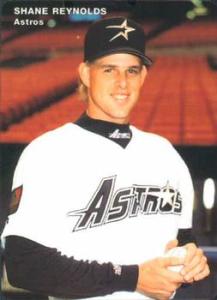
Shane Reynolds

As one who has grown to appreciate and prefer the DH addition to baseball, I only became fully aware of how that major change in the rules for all, but the NL, came to be until last night ~ and it wasn’t really served up on a spoon. It came seeping into my old noggin from the peripheral answers I was getting to another direct question I had asked of two very sharp former Astros pitchers who spoke at the February 18, 2019 meeting of our Larry Dierker Houston SABR Chapter.


Those two former Astros pitchers were Shane Reynolds and Chris Sampson.

After hearing both speak separately on how closely they worked with different catchers. I asked both of them through Shane Reynolds for their thoughts on why catchers, who learn so much about the strike zone from their constant work with it on defense, could not also use that experience to be better hitters themselves. Both sort of shook their heads and smiled.

Reynolds got us past the “good question” leaning-in phase of this inquiry by offering his belief that the physical wear-and-tear of a catcher’s work, with all its labor on every defensive pitch and the heavy sweat-laden equipment that just got heavier as the game moved on ~ these things ~ simply wore the guys down from the primary efforts they were expected put in on the defensive demands of their position.

As I now later recall, Sampson pretty much gave a non-verbal wave of support to Reynolds’ wear-and-tear opinions. ~ i.e., even if a guy has talent for becoming better as a hitter, he gives all his major energy to the side of his job that his club needs him to serve on defense. Few hitters have enough talent to overcome the defensive demands of catcher. Yogi Berra, Bill Dickey, Mickey Cochrane, Roy Campanella, Carlton Fisk, and Johnny Bench jump to mind, but, as you know, those guys also are all members of the Hall of Fame.

Former Astros President and General Manager Tal Smith was in the SABR crowd. It was Tal Smith’s offering that MLB clubs historically were most often willing to give up a poor hitting catcher to the bottom of the lineup for the sake of his superior defensive skills. Chris Sampson followed Smith’s remarks with one of baseball’s oldest bromides of justification for the focus on defense: “Defensively, a club has to be strong up the middle.”

Even our 1950 Pecan Park Eagles remembered the “be strong up the middle” caveat, but our challenge was even more basic. It meant we had to have five guys show up early enough to pitch, catch, and play second, short, and center.

The Real Reason for the DH

Then it hit me. The answer to my unasked question at SABR Monday night has been dangling before my eyes all this time that the DH has been in place. I simply didn’t see it in its full glory. And I don’t think I’ve been alone in this missed deduction.

The DH didn’t take root in baseball simply because the pitcher alone could not hit. ~ It was generated by the notorious presence of usually three guys at the 7th, 8th, and 9th place bottom spots in the batting order who couldn’t hit a fly with a flit gun.

Chris Sampson

The DH was there to break up the three-man bottom of the batting order ~ the pitcher, the catcher, and one other player down the strong defensive middle who could usually sneak into another starter role as a defensive man ~ and this fellow was very often the “good field/no hit” shortstop. ~ The DH would take out the 9th batting pitcher and that improvement would promote the goal of building a batting order in which there also would be no 8th or 7th holes left to kill the offensive threat at the bottom of the lineup. Our 2017 World Series Champion Houston Astros did a great job of doing exactly that ~ building a hitters’ lineup in which there was no place for opposing pitchers to relax.

The DH lives today as the key goal for every club’s primary bonus offensive aspiration ~ whenever possible ~ and that is to have a nine-man hitting lineup in which each player listed is capable of reaching base on an average to better-than-average percentage of the time.

We Also May Need to Re-Think the Way We Use Catchers

Maybe we need to re-think how we use catchers as another position in which their regular rotation, as it does with pitchers, helps their season performance level. After all, catchers are throwing the ball hard every game almost every pitch they return to the pitcher, plus a few others they throw on out plays ~ or other attempted steal plays. Why should we take a starting pitcher out after 100 pitches ~ and then leave catchers in the game for 200 pitches daily for as long as he says he can go in all the days that follow? It seems pretty clear that the ongoing exhaustion derived from the defensive chores of their job keep most catchers from developing as even average hitters.

If catcher hitting could improve with time off between starts, as we do with starting pitchers, how much time would he need ~ and how many catchers would be needed to create a situation in which a catcher went into most games with enough physical recovery time to maybe help them improve their hitting too. Again, the whole thing turns upon whether or not we believe that an ongoing state of exhaustion is the major culprit behind the priority the game places on catcher defense as the two major reasons why most catchers do not hit better than they do.

What do you think?


******************************

Bill McCurdy

Principal Writer, Editor, Publisher

They’re Only Pretty Good to Old Nap

February 18, 2019

Nap Lajoie
Baseball Hall of Famer


They’re Only Pretty Good to Old Nap

The other day I ran into this brief space filler story of the sports pages of the 1928 Port Arthur News. It bore the same title as this Eagle column and it was really little more than something we continue to see from some older great players when they are asked to assess the comparative greatness of contemporary front-runners from the leaders of their own eras.

Some late 1920s writer apparently had just sparked the opinion of future Hall of Fame first class inductee Napoleon Lajoie on what he thought of the 1928 New York Yankees as he now watched them play from the grandstand.

Here’s how it went:

NEW YORK.  April 12. ~ The New York Yankees may be the greatest ball club in the world to some people, but to Larry Lajoie, famous second baseman of other days, they are just a pretty good ball club. 

“Of course, you could see a lot of loafing going on,” says Lajoie, but if that club is the greatest of all times, you just know that we had a lot of clubs in my time who were world champions and didn’t know it.”

~ Port Arthur (TX) News, April 12, 1928, Page 26 of 34.

Poor Larry Lajoie. He just couldn’t see that what appeared to him as loafing was really nothing more nor less than the simple luxury that descends upon players who make better money. ~ The 1928 Yankees could afford to pay somebody else to go pick up their pay checks. The 1908 Cleveland Naps ~ in the first of Lajoie’s three-year run at his top annual salary of $12,000 ~ could not ~ and that limitation extended to the mighty Nap himself.

Interesting too though, even with the differences opening up in the salaries of the home run breakout era of the 1920s and the low ball pay of the dead ball era of the first two 20th century decades, that only Ruth had any real performance and persona power to drive his annual take up near the six digit figure range. Only Ruth could pull in 80K a year ~ a figure that today couldn’t buy a club a raw rookie for more than a short-time in spring training ~ if that much.

It is fun ~ and I do write those three words with a smile ~ to play with the best career data we have now, courtesy of Baseball Reference.com ~ and check out the cost of each career home run by ~ let’s say ~ Babe Ruth and Nap Lajoie.

Be advised ~ if necessary ~ that we are playing with rough approximation on the career incomes of any two men who ever played the game of baseball ~ and especially during the early years of the low pay modern 20th century era.

The formula for this overly simple figured data is this: We divide each player’s gross career income totals by the number of home runs each man hit during his career. ~ The answer gives us the raw cost to ownership in total for each man:

Babe Ruth earned $856,850 during an MLB career in which he hit 714 career regular season home runs.

BR HR COST = ($856,850 / 714 HR) = $ 1,200.07 = The per unit cost of each Babe Ruth home run.

Nap Lajoie earned $88,100 during an MLB career in which he hit 82 career regular season home runs.

NL HR COST = ($88,100 / 82 HR) = $ 1,O74.39) = The per unit cost of each Nap Lajoie home run.

OK, before we get carried away with errant conclusion about Nap Lajoie’s relatively comparable HR cost efficiency in his comparison with Babe Ruth, let’s examine one more player to confirm why “money can’t buy you love” ~ when love is measured in home run totals.

Hunter Pence ~ now signed to a minor league contract by the Texas Rangers ~ has spent his 11 seasons in the big leagues (2008-2018) collecting a total of $125,435,000 in salary. During this time, Pence has smashed a career regular season total of 224 HR.

Using our same formula for determining the cost of each home run, Hunter Pence’s cost per HR is $559,977.68.

OUCH! Hunter Pence’s homers better be the very red and very sweet and unsqueezed king brand for that kid of money. All it serves us is to stand as a blink toward serious “cost of the game” research of how the cost of everything today is now driven by the players’ power to drive salaries and benefits through the roof for catches that bring down the ceiling of the business universe with a few incidental planet captures also made by chance and pure good luck on the way down.

Hey! With a gross income from baseball of about $125,435,000 going into our mid to late 30s, most of us could also have settled for a minor league paper with Texas in 2019. ~ And ~ if it didn’t work out, what the heck, it just didn’t work out!


******************************

Bill McCurdy

Principal Writer, Editor, Publisher


Nolan Ryan’s Reign as The Million Dollar Man

February 17, 2019

Nolan Ryan and Sandy Koufax
1980

Remember all the hub-bub that fell out into news stories when the Houston Astros signed Nolan Ryan in November 1979 as the first Million-Dollar-Pitcher in MLB history? According to New York Times sources, Ryan’s first year 1980 salary as an Astros tipped the scales at $1,125,000 for that first season.

Unlike today’s more recent contracts, however, it didn’t really ever skyrocket higher from there. At Houston, it remained at $1,125,000 for four straight seasons (1980-83) and then dropped to an even $1,000,000 for 1984. Then it rose in 1985 when the Astros raised it to $1,350,000, before dropping it again to the familiar dip figure of $1,125,000 for each of the next two seasons (1986-87).

The Astros-Ryan-Million-Dollar-Annual-Salary-Dance was heading into its final run in Houston when the team cut his salary again to the $1,000,000 bottom line for 1988. That year would be the last of nine seasons in which it was OK to rise a few dollars above the original $1.25 mil as long as a salary never slipped below $1 mil as some kind of informal unwritten description of ego-bending failure for the man whose talent and home area appeal were the two original ingredients that made it all possible in the first place.

Going into 1989, $1,000,000 a year as a symbol of incredible success was no longer the exclusive province of Nolan Ryan, but it would land with the sting of failure to be asked again to take less than that much money to pitch anywhere in the big leagues for the gentlemanly larger-than-life baseball talent from Alvin, Texas.

And wouldn’t you just guess what happened next? With Nolan Ryan coming off a less than brilliant 1988 year, New Jersey-grounded owner John McMullen asked the famous Texas fireballer to take a pay cut for 1989. Now the number that once had defined Nolan Ryan as baseball’s greatest pitching success by giving him the first one-million dollar annual salary would take it all away with another of those classic reversals of fortune.

Now, for Nolan Ryan alone, over this brief moment in time, pitching a baseball in the big leagues for anything less than a million dollars a year symbolically had become the signature on failure. This latest offer would take Ryan back to a salary that paid out less than $1 million a year.

John McMullen didn’t understand that part of the equation ~ less than a mil represented failure to Ryan ~ and it cost the Astros and all of us fans a lot of bitter pain, loss, and big disappointment.

The other possibility exists that McMullen did understand that an offer to Ryan of less than a million would drive him away ~ and that rejection was exactly the reaction he was hoping to create in the elder pitcher. That outcome would then supposedly show the fans that the Astros had made an attempt to keep Ryan, but that the elder pitcher wasn’t willing to take a justifiably small salary decrease for the sake of the team.

If this second possible motivation was behind McMullen’s Ryan-pay-cut offer plan, it failed miserably. After Ryan’s rejection of McMullen’s downgrade offer, by whatever way in which it was communicated back to McMullen, you probably know the rest of this sad and angry Astro fans story.

That other Texas team, the Texas Rangers, signed the 42-year old Ryan to pitch for them in 1989 at his highest salary in history to this point at $1,800,000. Ryan would pitch five seasons for the Texas Rangers, never falling below the $1.4 mil he received in 1990 ~ and then taking his money through the roof in 1991 at $3.3 mil in 1992, $4.4 mil in 1993, and $3.757 mil in his final season of 1993.

On the field as a Ranger, Nolan Ryan used the time to pitch the 6th and 7th no-hitters of his career while also adding the final 51 of his 324 career MLB wins, and also showing Robin Ventura a new way to part his hair, and then going into the Baseball Hall of Fame with 98.8% of the BBWAA vote in 1999.

Wonder who the idiot was that didn’t vote for Nolan Ryan?


******************************

Bill McCurdy

Principal Writer, Editor, Publisher


What If Astros Added BB Movie Heroes to Roster?

February 16, 2019

“Now listen up, Lanigan! ~ Once we join the Astros, try not to draw everyone’s attention to that hole in the pocket of my glove, OK?” ~ Pitcher King Kelly.


What If the Astros Added BB Movie Heroes to Roster? More correctly, what if they had the magical power to add some of the great fictional baseball movie characters to fill their few weaker roster spots on the 2019 “Take It Back” Astros roster that is currently taking shape.

Yeah, we know, the real world doesn’t turn on the presence of movie magic. In MLB today, you have to have General Managers like our Jeff Luhnow and his Army of Analytics to churn out data on what’s needed and who’s available to meet those needs, but this the first Saturday after Valentine’s Day ~ and this 81 year old kid is playing with the idea of how great we could really be in 2019 with just a little magical help with the roster in a few places.

Limiting myself to fictional movie characters only, I drafted seven players from the movies that I felt we could go to Opening Day with right now, if we were given the magical signal that all the changes here had been approved and made real by the baseball gods.

If you know these characters, you will have some idea of why the fellows shown in bold type below could help the Astros “take it back” in the next World Series this autumn.

You may even want to leave your own suggestions for change or additions to this talent infusion in the comment section below. If you do, please stick to fictional baseball movie characters. We’re not looking for the reincarnation of Babe Ruth or Lou Gehrig.

What follows is the 2019 Houston Astros “TAKE IT BACK” Roster, as we see it:

R# POS NAME MLB/MOVIE MOVIE TITLE
1 SP1 Justin Verlander MLB
2 SP2 King Kelly MOVIE It Happens Every Spring
3 SP3 Gerrit Cole MLB
4 SP4 Wade Miley (L) MLB
5 SP5 Nuke LaLoosh MOVIE Bull Durham
6 SP/R Collin McHugh MLB
7 SP/R Brad Peacock MLB
8 R Will Harris MLB
9 R Ryan Pressly MLB
10 R Rey Guduan (L) MLB
11 R Chris Devenski MLB
12 Clr1 Roberto Osuna MLB
13 Clr2 Ricky Vaughn MOVIE Major League
14 C Crash Davis MOVIE Bull Durham
15 C Rob Chirinos MLB
16 C Monk Lanigan MOVIE It Happens Every Spring
17 1B/IF/DH Yuli Gurriel MLB
18 2B Jose Altuve MLB
19 3B Alex Bregman MLB
20 SS Carlos Correa MLB
21 DH/OF/1B Roy Hobbs MOVIE The Natural
22 LF Michael Brantley MLB
23 CF/UTIL Joe Hardy MOVIE Damn Yankees
24 RF George Springer MLB
25 OF/DH Josh Reddick MLB

Here’s just one lineup that could hit the ground running in the second game of the season. In dutiful respect to Justin Verlander, Mike “King” Kelly ~ the guy with the wood repellent stuff that repels all bats trying to hit it once Kelly doctors each baseball prior to each pitch’s delivery from a sponge that rests behind the large hole in his pitcher’s glove pocket:

One Houston Astros Lineup

Springer, RF

Altuve, 2B

Hardy, CF

Hobbs, DH

Bregman, 3B

Correa, SS

Brantley, LF

Gurriel, 1B

Lanigan, C


Kelly, P


How do you like dem egg rolls, Mr. Goldstone? ~ Could the Astros become the first undefeated baseball team in MLB history with this magical lineup? ~ When you play with magic, even the impossible downshifts to the only highest levels of improbability. 🙂

In the end, any possibility is better than none.

******************************

Bill McCurdy

Principal Writer, Editor, Publisher


Greatest Movie Runs at MLB Incredibility

February 15, 2019

Perhaps our column title slightly overstates our case. Almost all baseball movies, whether they deserve the viewing time we give them or not, usually reach for and achieve the incredible on some level. And why not? Baseball is the sport which invites its fans and media to anticipate the improbable great joy, but to also find something magical about it.

For example: Once Upon a Time, the greatest legendary slugger, a fellow named Babe Ruth, not only blasted a home run to center field at Wrigley Field to deaden the spirits of the Chicago Cubs in the 1932 World Series, he apparently also “called his shot” on the way to leading the New York Yankees to another victory in Game Three of a Four Game sweep of the World Series. ~ And there’s never been any argument that he didn’t forecast his actions either. …. Right?

These just happen to be nine of the many baseball movies that effected me deeply as a kid, but most-to-all of them required me to make a little credibility stretch that was vital to me loving them too.

My favorite baseball movies aren’t even on today’s list. In no particular order, my favorites include: The Natural ~ Field of Dreams ~ Bull Durham ~ League of Their Own ~ Eight Men Out and Major League. There were others, but this is more than enough for today.

Let us hear from you if you’ve ever been put off by bad acting, bad script, or the absence of baseball ability by an actor in a key role. I would love to hear from you in the comment section below.


9. Gary Cooper
as Lou Gehrig
Pride of the Yankees (1942)


Gary Cooper had the physical resemblance and personality for his role as Lou Gehrig and he did a masterful job of acting in both his delivery of Lou’s famous “happiest man” speech at Yankee Stadium and his portrayal of how this horrible disease that killed him takes over the body in the early stages.

Credibility Stretch: Cooper was not a ballplayer. We’ve all read the stories of how they reversed the jersey and allowed him to swing right-handed and run to third from home for film that would later make it appear that he had been hitting left-handed. He was just more at home riding horseback than he was hitting a horsehide ball.


8. Robert Young
as “Larry Evans”
Death on the Diamond (1934)


Well named. Ballplayers are dying faster than the guys pulling hamstrings, but this one ends well when the club’s star player, Larry Evans, both helps the club solve the crimes as he also leads his team to the championship in one of those typical fast-moving and fast-talking film adventures of the early tinny sound years of movie history.

Credibility Stretch: It’s a little hard to believe that ballpark security was that poor at the big league level, even if it is “only a movie” and the year was way back in the depression culture 1934. They could have renamed this one as “The Gashouse Gang Gets Gassed”.


7. Dan Dailey
as Dizzy Dean
Pride of St. Louis (1952)


I’ve always loved the fact that this movie features Dailey as Dean playing at a stadium that is supposed to be Buff Stadium in Houston (but is not) and that it features Dailey as Dean wearing what appears to be a ’51 Buffs uniform (about 20 years past the 1931 time of Dizzy’s big year in our town.)

Credibility Stretch: Dan Dailey was no Dizzy Dean. Speaking in “twang” is not enough to make an actor credible as this unique and funny personality. And Dailey’s movements on the mound are not enough to convince me that he could have thrown the ball for 60 feet, six inches on every pitch at any speed. The script also sucked.


6. James Stewart
as Monty Stratton
The Stratton Story (1949)


Jimmy Stewart does a good job as the small town Texas boy who sees his MLB pitching career ended by a hunting gunshot injury that costs him the loss of a leg. The movie is the story of the man’s rise from depression and despair to pitch again on a limited basis with the help of a prosthetic leg and a whole lot of heart and help from family and friends. And he does it at kind of semi-pro All Star Game, again, at another venue that is posing as Buff Stadium.

Credibility Stretch: On one leg or two, the Jimmy Stewart version of Monty Stratton just shows up again as proof that great actors are, more often not, pitchers who would not last more than a game or two at the Grade D ball level. Stewart, at least, has the power to convince his audiences to forget their “lying eyes” and to buy into what he’s trying to sell as the powers of the character he’s playing.


5. Edward G Robinson
as Hans Lobert
Big Leaguer (1953)


As former big leaguer Hans Lobert, “Edward G” conducts a spring training camp for young prospects of the NY Giants, managing to get into all kinds of mentoring ship problems the young 18-22 year olds may be having finding the key to their futures. Lobert weaves his way into becoming the Darth Vader of either their success or vexation paths as serious baseball players. Edward G’s character is cool, calm and deliberate. Very convincing in a soap opera kind of way. They could have titled this one “Days of Our Diamond.”

Credibility Stretch: Remember. This is Edward G. Robinson in the lead role. Whenever one of the rookies reacts by word or action in opposition to leader Lobert, you keep waiting for him to light up a cigar and hit back with that famous, “Oh, a wise guy, huh?” It simply never happens. But neither does the story line. You can’t fix all their aches and pains by helping them find a girl.


4. William Bendix
as Babe Ruth
The Babe Ruth Story (1948)


We’ve been over this road in mind and print here more often than I care to remember, but this first animated version of my 10-year old lives still contains points that make me cry in sadness, appreciation and longing for Babe Ruth. That closing scene in which Ruth is in the hospital, the kids are singing the baseball anthem outside his window, and they are now wheeling the Bambino out of his room and down the hall for experimental drug treatment ~ and the whole thing ends on scenes from a kids’ sandlot game while an angelic chorus concludes “Take Me Out to the Ballgame.” As the film ends, even now, it’s still hard for me to type and also think about that moment too much at the same time.

Credibility Stretch: What stretch? Everything in the movie looked absolutely real to me. And that includes the time a teenage Babe left a round hole in a St. Mary’s School window glass with an errantly thrown baseball and, a few minutes later, throws it back outside through the same hole from 60 feet away inside ~ without shedding even one extra sliver of glass.


3. Ronald Reagan as
Grover Cleveland Alexander (1952)


One thing can be said for Ronald Reagan for sure. He may not have been able to act like Lawrence Olivier, or worse, even come close to pitching with all the ability of the real Grover Cleveland Alexander, but. like him or not, he was keen enough as a major politician to have gotten himself elected President of the United States and the worldwide leader of the real “Winning Team” ~ The United States of America.

Credibility Stretch: It’s the same one that came with every film we may have watched featuring Ronald Reagan. ~ As a viewer, and if you’re really honest with yourself, you will have to admit that you never really get over the fact that you are watching Ronald Reagan in any movie he makes ~ and not the character he is supposed to be playing. By looks, behavior, or skill, Reagan was no Alexander.


2. Ray Milland
as Mike “King” Kelly
It Happens Every Spring (1949)


A baseball fan/university research chemist accidentally invents a wood-repellant liquid. He cuts a quarter size hole in the pocket of a baseball glove and loads it up with the “stuff” in a sponge placed strategically behind the glove-pocket-hole and then rushes off to the big leagues with a few bottles of his magic to try to win a World Series for “St. Louis” under an assumed name. Although the movie never clarifies if Mike Kelly’s team is NL or AL, assume it to be the Cardinals. This kind of luck never fell into the hungering laps of the old Browns club.

Credibility Stretch: Not once do the befuddled batters ask for or simply receive any help from the umpires on a requested inspection of Kelly’s glove and that doozy of a pocket hole. For that matter, the St. Louis management or other players ever seem to notice or raise any question about Kelly’s possible use of a foreign substance.
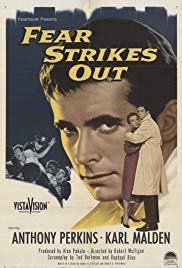
 

9. Anthony Perkins
as Jimmy Piersall
Fear Strikes Out (1957)


Jimmy Piersall: “Pop, I hit .346 at Birmingham this year. (1951)

Piersall’s Father: “Well, that’s not Boston, is it, Son?”

That paraphrased exchange between Piersall and his dad was pretty much the dynamo of “Fear Strikes Out.” Piersall keeps trying to please his dad, but never quite makes it. Then finally explodes from his mortal fear of failure and has a full-blown psychotic mental breakdown ~ one that includes running the bases backwards on the heels of a home run and then climbing the screen behind home and yelling all the anger that had been building. Perkins’ ability to act far out runs his inability to play baseball with even a smidgeon of credibility.

Credibility Stretch: Anytime actor Perkins was shown throwing a baseball.


******************************
Bill McCurdy

Principal Writer, Editor, Publisher


To Montreal With Love

February 13, 2019

Montreal red-hearts-

Tomorrow just happens to be Valentines Day so this little homecoming story fits in fine.

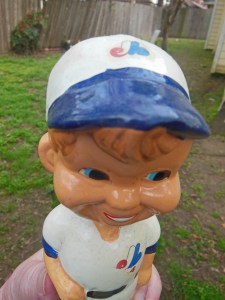
Years ago, while Norma and I were meandering through the Strand Area in downtown Galveston ~ closer to the beginning of their reign in Canada than the end, I ran across this Montreal Expos bobblehead in one of the little loose ends gift shops that still exist to bait the appetites of Sunday afternoon Houston tourist perusers.

It reminded me of two close friends from Montreal that I have known for nearly fifty years ~ and longer than my quite lengthy marriage to Norma. Their names are Serge and Ginette Masse’ ~ and they were my apartment neighbors back in the day that Serge and I were just getting started with our health careers in the Texas Medical Center.

Serge was finishing his residency at MD Anderson. The same Dr. Serge Masse recently retired as one of Canada’s foremost oncologists. Now Serge and Ginette live out the life of grandparents, world travelers and passionate contributors to the arts and needs of their beloved Montreal.

The bobblehead I once found in Galveston, which flew from the USA as “Le Grand Orange,” is now on the ground in Montreal and on his way to his new, but permanent home with my good friends. They know that he’s coming and they’ve seen what he looks like. And I get the satisfaction of assurance that this little special item will avoid any garage sales that my wife and son may plan for my stored things, should I be called upon to make an unexpected trip of my own anytime and eventually in the nearby or far-reaching future.

It is better to give those things that we love ~ to the people we love ~ while we still have the options of conscious decision-making at our disposal.

Here’s the “South of the Border” song parody I wrote that already has reached Serge and Ginette prior to the arrival of “Rusty” via e-mail.

Happy Valentine’s Day, Everybody!

******************************

With All My Love to Serge and Ginette Masse’


North of the Border! ~ Up Montreal Way!

That’s Where We Fell in Love ~ ‘Neath the Stars Above,

To Watch the Expos Play!


Then We Were Abandoned! ~ Our Team Went Away!

South of the Border! ~ Down Washington Way!


Prepare My Homecoming! ~ Our Spirit Still Lives!

I’m Coming Home to You Two! ~ In a Late Passing Through! 

By the FedEx I Flew ~ Just for You ~ Both of You!


Look for Me Thursday! ~ Or by Friday for True!

Please Treat me Gently! ~ And I’ll Never Leave You!


My Name is now “Rusty” ~ Le Grand Orange One!

And if you find me a shelf! ~ I’ll be a Good Little Elf!

And Your New Shining Sun!


I Never Stop Smiling!  ~ Get Used to It Now!

I’m What You Might Call a ~ Bobble~Head~Sacred~Cow!


February 14, 2019

Happy Valentine’s Day,

Love and Peace, Forever,

Your Ancient Houston Friend,

Bill McCurdy


******************************

Bill McCurdy

Principal Writer, Editor, Publisher

What’s Critical to the Astros Lineup Going In?

February 10, 2019

Hot Stove League Conversation


What’s Critical to the Astros Lineup Going In?   Let’s start with the obvious. The Astros can’t afford to again have injuries that take Altuve down ~ and Correa way down ~ from their normally superior levels of performance. Those two guys must be well, again play well, and, hopefully, stay well for the entire season.

Next we have to stop avoiding the fact that we are trying to win without a first-rate, good-hitting catcher. Mike Stassi is a good back up, but he’s little more than a dead spot at the bottom of the batting order as a starter. We need to have no soft spots in our batting order. I don’t where we are going to find him, or at what cost, but we need that kind of leader-hitter catcher in our lineup as soon as possible.

Third, an along those same lines, we need a DH who is a consistent threat to hit ~ not a streaky guy like Evan Gattis, who’s still easy for the smart pitchers to pitch around when he’s hot. I liked the Gattis disposition; I just didn’t like the fact that we couldn’t count on him more often than his talent or style of play allowed.

Fourth, the Astros need to do whatever they can to help Josh Reddick find his offensive groove. Great as he is on defense, and as a terrific team player, he can’t stay in the lineup at age 31 with another .242 season at the plate.

It’s too bad we can’t take Jake Marisnick’s glove and Tony Kemp’s bat into one player and place him out him out there in center as we move Springer to right. That would take care of the outfield. That is, unless someone finds a way to awaken the home run genie that supposedly lives within the heart of young Kyle Tucker. Then we might have to re-think the outfield pattern all over the place.

Fifth, is a wait and see ~ since we’re still waiting to see if Marwin Gonzalez is truly gone for good. Without him, our roster is going to need several guys who can fill the utility position gap that will be created by the loss of that one super valuable utility man.

By The Way: There is no truth to the rumor that a deal that would have sent Marwin Gonzalez to Miami was killed when heavily invested owner Derek Jeter rejected a condition put forth by the player’s agent that the team would need to change their identity to the Miami Marwins as a condition of the transaction being finalized! 🙂

Below are the records of the seven men I’ve penciled in as our starters, even though I came close to dropping Reddick along with Stassi and Gattis. Apparently, the Astros already have cut bait on the latter.

Check out the current Astros roster too. (I don’t know what happened to Evan Gattis. He’s no longer on the roster).

It would be great if some of you would post your own thoughts here on what you think the Astros need to do about their season-starting nine hitters from the talent currently on hand. That link follows the table:

2019 Astros Starters / McCurdy Picks, Minus Two

BATTER AGE B/T POS BA G H R RBI HR SB W SO
C
Y Gurriel 34 R/R 1B .291 136 156 78 85 13 5 23 63
J Altuve 28 R/R 2B .316 137 169 84 61 13 17 55 79
A Bregman 24 R/R 3B .286 157 170 105 103 31 10 96 85
C Correa 24 R/R SS .239 110 96 60 65 15 3 53 111
M Brantley 31 L/L LF .309 143 176 89 76 17 12 48 60
G Springer 29 R/R CF .265 140 144 102 71 22 6 64 122
J Reddick 31 L/R RF .242 134 105 63 47 17 7 49 77
DH

Astros Roster Link

http://m.astros.mlb.com/roster/


******************************

Bill McCurdy

Principal Writer, Editor, Publisher


Rest In Peace, Frank Robinson

February 9, 2019

“Frank Robinson (1935-2019): Hall of Fame outfielder who hit 586 home runs in his career (10th all time). The only player to win MVP awards in both the AL and NL. He also won two World Series rings with the Baltimore Orioles. Robinson managed 16 seasons in the majors and was MLB’s first black manager.” ~ Baseball Reference.com

Baseball Reference put it succinctly well ~ as clearly as Frank Robinson’s brain and bat made it obvious in those moments of loss by others to one of his teams what he had done to contribute to that outcome. Frank Robinson went into the Hall of Fame when players still needed rare greatness and measurable achievement in ways that also made it as clear that an inductee was going into the Hall of Fame as one of the best to ever play the game.  The now days of “very good” were not yet upon us as a ticket to the final resting place of honor for people like Cy Young, Babe Ruth, Rogers Hornsby or Willie Mays ~ and Frank Robinson unquestionably ranked among them. Not many did them better ~ and some things he did as a brainy and athletic human being were on a level all his own.

As much as he did as a role model for racial justice and equality in baseball during the still early MLB integration years, Frank was also most admirable for recognizing that he most appreciated the fans who cheered him in their own faith and trust as an individual performer as both a player and a manager.

What a guy we just gave up. ~ We’ll miss you, Frank, but we also know that you’ve given it your best for as long as you could. ~ We’ll all remember you. ~ And those of us who pray will remember you there too!

Rest in Peace, Good Man!

******************************

Bill McCurdy

Principal Writer, Editor, Publisher