 When Cecil Cooper was named manager of the Houston Astros in late 2007, the fact that he’s black was not covered by the current media as even an interesting footnote to the fact that it then had been a little more than fifty-three years since Houston saw it’s first black baseball player take the field to play for a racially integrated Houston sports team. – Think about it. From the time Houston “welcomed” it’s first black baseball player to the time it saw its first black manager in baseball, fifty-three years and three months had passed.
Thursday, May 27, 1954 shall forever remain a special date in my personal memories of the Houston Buffs. That was the date that Bob “The Rope” Boyd made his debut as a first baseman for the Houston Buffs in old Buff Stadium. (They called it Busch Stadium by then, but I stood among those who never bought into the name change when August Busch bought the St. Louis Cardinals and all their organizational holdings, including the Houston Buffs and the ballpark, a year earlier in 1953.)
Buffs General Manager Art Routzong had purchased the contract of Boyd from the Chicago White Sox about a week earlier than his debut in an effort to help the club make their eventually successful run at the 1954 Texas League championship. That was quite a club, one that also featured a rising future Cardinal star at third base named Ken Boyer.
Bob Boyd would prove to be the hitting and defensive specialist that the club needed to anchor the right side of the Buffs infield as strongly as young Boyer held down the left side. Boyd hit .321 for the ’54 season and he followed that production with the ’55 Buffs by posting a .309 mark.
It all started on a night of great change in the face of Houston sports.
I was drawn to the ballpark that 1954 twilight eve as a 16-year old kid who wanted to see Bob Boyd break the color line and, hopefully, have a good first night for the Houston Buffs. The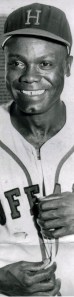 fact that I had just started to drive by that time and needed a good excuse to borrow the family car also factored into the equation. When I borrowed the car, I told my dad why I needed to be there at the ballpark that night. I wanted to see Bob Boyd play for the Buffs as the man who broke the color line in Houston.
Although I had grown up in segregated Houston, I was blessed with parents who taught love and acceptance over hate, even though they also had been raised with that blind acceptance of segregation as the way of life. Whatever it was, my parents held beliefs that left the door open for me to actively question the unfairness of segregation and to also embrace Jackie Robinson as a hero when he broke the big league color line in 1947.
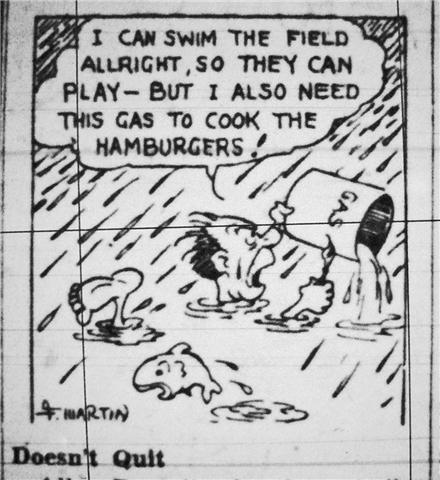
No one in the family or the neighborhood wanted to go with me that night, so I went alone. I also bought a good ticket on the first base side with a little money I had earned that week from my after-school job at the A&P grocery store. I also had to buy a dollar’s worth of gas as my rental on the use of dad’s car.
There were only about 5,000 fans at the game that night and almost half of them were the blacks who were then still forced to sit separately in the “colored section” bleachers down the right field line.
The atmosphere was contrasting and electric. The so-called “colored section” fans were rocking from the earliest moment that Bob Boyd first appeared on the field in his glaringly white and clean home Houston Buffs uniform to take infield with the club. While we felt the rumble of all the foot stomping that was going on in the “colored section,” only a few of us white fans stood to show our support with the understated and reserved applause that we white people always do best at times when more raw-boned enthusiasm would have been better.
“Enthusiasm” evened into a loud foot-stomping roar from all parts of Buff Stadium when Bob Boyd finally came to bat in the second inning for his first trip to the plate as a Houston Buff and promptly laced a rope-lined triple off the right field wall. Even those whites who had been sitting on their wary haunches prior to the game rose to cheer for Bob Boyd and his first contributions to a Buffs victory, and, whether they realized it or not, to cheer for another hole in the overt face of segregation in Houston.
Here’s a taste of how iconic sports writer Clark Nealon covered it the next morning in the Houston Post:
“Bob Boyd Sparkles in Debut As Buffs Wallop Sports, 11-4”
by Clark Nealon, Post Sports Editor
“Bob Boyd, the first Negro in the history of the Houston club, made an impressive debut Thursday night.
“The former Chicago White Sox player banged a triple and a double and drove home two runs as the Buffs pounded the Shreveport Sports, 11-4, and Willard Schmidt recorded his sixth victory without a defeat.
“Before one of the largest gatherings of the year – 5.006 paid including 2,297 Negroes – the Buffs started like they were going to fall flat on their faces again, got back in the ball game on bases on balls, then sprinted away with some solid hitting that featured Dick Rand, Kenny Boyer, and Boyd.
“Rand singled home the two go ahead runs in the first, added another later. Boyer tripled with the bases load for three runs batted in and Boyd tripled in a run in the second and doubled in another to start a five-run outburst in the fourth that settled the issue. …
” … Boyd was the center of attention Thursday night, got the wild acclaim of Negro fans, and the plaudits of all for his two safeties and blazing speed on the bases.”
Yes Sir! Yes Maam! May 27, 1954 was a big day in Houston baseball, Houston sports in general, and a moment of positive change in local cultural history. So was Tuesday, August 28,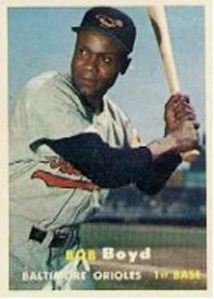 2007, the day that Cecil Cooper made his debut as a manager for the Houston Astros, a day for change, but it had nothing to do with race. Cecil just didn’t get here quite as loudly and, for reasons that have nothing to do with race, he also may leave soon, just as quietly, but maybe not. Maybe the Astros won’t unload all of the 2009 Astros’ failures on the back of their skipper.
In Houston baseball and general sports history, there was only one Bob Boyd. By the time professional football and basketball arrived here, integration was already a part of the total team package. The job of proving that race should not be a factor never had to ride again on the back of one individual player. Bob Boyd already had unlocked, opened, and oiled that gate for all who have come after him – and he did it all back in 1954.
After the 1955 Buffs season, Boyd’s performance at AA Houston earned him a second shot at the big leagues with the Baltimore Orioles. Bob had made a promising start with the Chicago White Sox (1951, 1953-54), but now. after Houston, the now 29-year old lefthanded first bagger seemed primed for a really fine major league career.
In 1956, it was time for Bob Boyd to shine in the big leagues, indeed!
Bob Boyd roped off full season batting averages of .311, .318, and .309 in his first three Oriole seasons (1956-58). His 1959 full season average dropped to .265, but he bounced back in 1960 to hit .317 in 71 games for Baltimore. Boyd played one more limited time season in 1961 for Kansas City and Milwaukee, completing his 693-game big league career with a total batting average of .293 with 19 home runs over nine seasons. Bob Boyd played three more seasons in the minors after 1961 (1962-64) and then retired completely as an active player. Interestingly too, most of Boyd’s last three years were spent in the minor league farm system of the then baby new National League Houston Colt .45s at San Antonio and Oklahoma City.
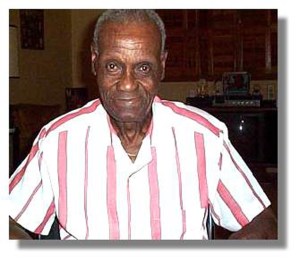 Following his far better than average baseball career, Bob Boyd returned to his home in Wichita, Kansas, where he worked without complaint as a bus driver until he reached retirement age. Bob died in Wichita at age 84 on September 27, 2004. Today, the man who started his career with the Memphis Red Sox (1947-49) of the Negro Leagues is honored as a member of the Negro League Hall of Fame and also the National Baseball Congress Hall of Fame. Hopefully, we shall always continue to remember and honor Bob Boyd and all others who took the first step toward changing things that needed to change. Bob Boyd did his job with grace, dignity, and tremendously unignorable ability.

 First of all, allow me to make one fact perfectly clear. I love Lance Berkman as a baseball player, and especially as a Houston Astros baseball player. He’s one of our guys, one of our Houston heroes in a game of local loyalty that cries out for the constant presence of both good guys and bad guys.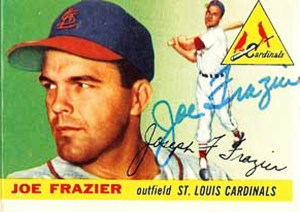
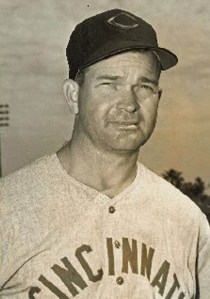
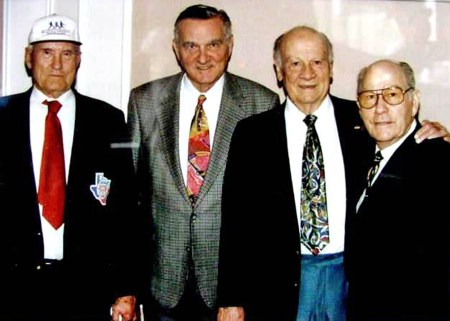
 Les Fleming, as you can readily see from the old Cleveland cap he is wearing (far left), got some big league time with the Indians. He sort of looked like the Bluto/Brutus character from the Popeye cartoons. In fact, I think that’s why I became a big Popeye fan as a kid. When Popeye was beating up Bluto for Olive Oyl, I felt he was also beating up on Les Fleming for all of us Buffs fans. – The third guy, however, was unquestionably my most hated Buffs bad guy enemy. Joe Frazier approached the plate in the late innings pretty much in the style that his nickname suggests. He just slithered up there as Buff fans hissed their contempt for his presence on our turf.
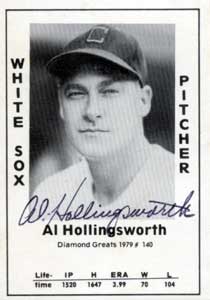 ’51 Houston Buffs Manager Al Hollingsworth wasn’t exactly your shy and retiring type. When something happened on the field that caused Al to take exception with an umpire’s ruling, Buff fans could count on Hollingsworth to walk (or rage) out of the dugout and go make his own personal opinion abundantly clear to the men in blue.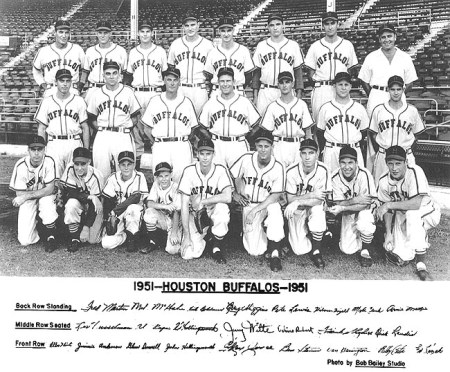
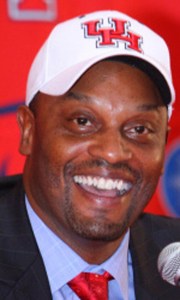 When my University of Houston Cougars roared back on the road yesterday to defeat the No. 5 ranked Oklahoma State Cowboys, 45-35, in their own house, I wondered how long it would take for us to hear from the wolves of other universities who may be interested now in hiring away our gifted second year head coach, Kevin Sumlin.
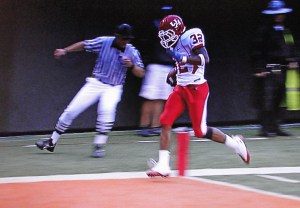 a brief time in high school, when I flirted impractically with the idea of going to Notre Dame, UH was always my school. I was going to have to work to get through college and UH was the one school back then that seemed to cater to students in my circumstance. And it worked for me too.
 That’s Houston Buffs President Allen Russell in the business suit and hat at the far left of today’s featured first photo. He’s showing some kind of report in early 1950 to St. Louis Cardinal coaches Runt Marr (next to Russell) and Freddy Hawn (far right). That’s Kemp Wicker, the first of two managers who commanded the Good Ship Buffalo at the start of the ’50 season wearing the “Houston” jersey. Little Benny Borgmann would soon replace Wicker and manage the Buffs for most of their ride into the Texas League cellar that most inglorious year, but that kind of field performance disaster never stopped Allen Russell. It simply provided a different kind of marketing challenge.
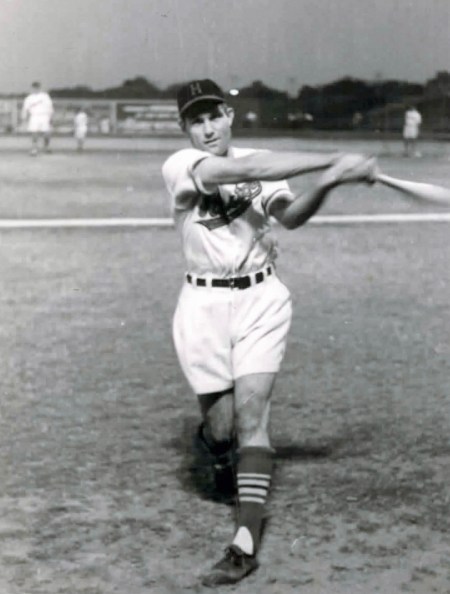 As modeled in the photo by the Buffs’ sluggung first baseman Jerry Witte, the Buffs agreed to wear shorts, as I also covered in a recent article. The ostensible reason given for this change was that the Buffs wanted to do all they could to make sure their players were made as comfortable as possible in the searing, humid Houston summer heat.
 In 1946, the year that Russell took over as Buffs President, the Buffs drew 161,000 fans and the major league St. Louis Browns drew 526,000. The very next year, 1947, the Buffs outdrew the Browns by 326,000 to 282,000. By 1948, the Buffs again won the gate battle, 401,000 to 336,000. The Browns edged a bad Buffs team in 1949 by 271,000 to 254,000, but an 8th places Buffs club in 1950 still edged a 7th place Browns club by 256.000 to 247,000. The Buffs won again in 1951 by 333,000 ro 294,000 By 1952, St. Louis was reaping the benefits of Bill Veeck’s second year at the Browns helm. The Browns outdrew the Buffs by 519,000 to 195,000 in 1952 – and they edged them again in 1953, the last year of the Browns, by a 297,000 to 204,000 count.
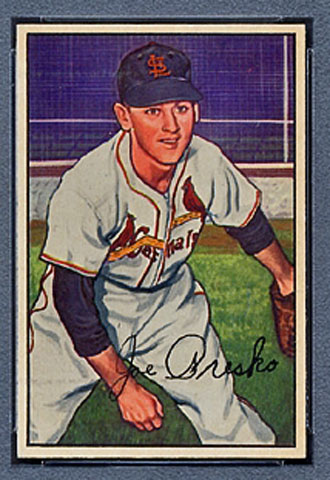
 “Little Joe” Presko didn’t have much trouble with his height while he was toiling in vain as a righhanded starting pitcher for the hapless 1950 Houston Buffs. The Buffs made it all the way to the Texas League cellar that year in spite of people like “Little Joe” and his 16-16 record with the 3.14 ERA. Joe also hit with some authority for the ’50 Buffs, slamming 3 HR on the season, a rare feat for any Houston pitcher back in the day. All the while he was here, however, Presko’s reported height and weight stood firm at a constantly reported 5’9″ and 165 lbs. Iconic Buffs radio announcer Loel Passe even called him “Little Joe” – and that description sure worked for me. At age 12 during the 1950 season, I noticed that Presko was one of the few Buffs who stood barely taller than me. I only reached 5’11” at full growth, eventually, but I achieved most of that height very early.
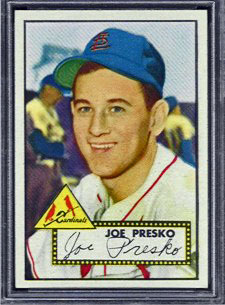 Presko enjoyed his best season in the big leagues in his rookie 1951 year. He won 7, lost 4, and posted a 3.45 ERA over 12 starts and 3 relief jobs. In his four seasons with the Cardinals, he won 24 and lost 36. His two seasons with Detroit would later add only one win and one loss to his career MLB record.
 Joe Presko pitched one more minor league season following his last year as a major leaguer with the 1958 Tigers. He pitched for two AAA clubs in that 1959 season. He was 4-5 at Charleston and 0-3 at Toronto.
 The great 1931 Houston Buffs will always be remembered as the club that served as Dizzy Dean’s showcase and launching pad to his Hall of Famous baseball career with the fabulous Gashouse Gang, the 1934 St. Louis Cardinals. Dean (far left) posted a 26-10 record with a lights out 1.57 ERA with the ’31 Buffs.
 By the time the young man from Sancti Spiritus, Cuba arrived here in 1951 as a member of the Houston Buffs pitching staff, the 26 year old righthander was already drawing favorable comparisons to the great big league Cuban hurler of the 1920s, Adolfo Luque of the Cincinnati Reds. Rubert had stormed onto the scene in 1946, going 13-6 with a 1.72 ERA for the Class C West Palm Beach club. – He then bettered that mark with the same team in 1947 by pumping his record up to 23-12 1ith a 1.76 ERA. Want more? Rubert went over to Class C Tampa in 1948 and pulled off a 22-7 record with a 2.11 ERA.
 That’s “Black Mike” Clark and the bust of Eddie Kazak showing up in this cropping from a team photo – and they were just two of the guys who helped Octavio Rubert and the ’51 Buffs make their day in the baseball sun a mostly happy one. The party was only spoiled by Houston’s six-game loss to Birmingham in the Dixie Series. Our excuse? A mysterious stomach illness hospitalized Vinegar Bend Mizell and made him unavailable for the Buffs’ Series cause at crunch time.
 Houston, Baseball, & Other Musings.
